This is the first stop on Sven Wunder’s musical journey. Wunder takes the listener somewhere around the easternmost part of the Mediterranean Sea, around the Levantine Sea, where he paints a colourful portrait and illustrates the regions flora through sound.
The fruitage is a vivid bouquet where Wunder fuses colours and pigments by using traditional and modern instruments merged with arrangements and melodies that stretches from popular to folk music by portraying tulips, red roses, hibiscus, hyacinths, chamomile, magnolia, daisies etcetera. With both fine and thick brushes are these flowers being pictured in a both modern and classic idiom.
The outcome is prismatic. It stands between Anatolian rock and European jazz-funk with ponderous drum patterns, groovy organs, far-out synthesizers, enchanting Saz and impetuous bass lines. Eastern Flowers sweeps through time and space and points towards the future. It could appeal both psych and prog listeners, folk or jazz aficionados and as well the gourmet hip hop connoisseurs.
Buscar:black flower
“I wrote these six new pieces with simple French words that a student learning French can understand. It is always intended for fanciful dances and musical fantasies” - Bernard Fevre
Legendary Parisian disco pioneer and producer, Black Devil Disco Club is back and has announced the release of a new album via UK independent imprint Lo Recordings on the 1st December.
‘Etincelles’, which translates as ‘sparks’ in English, is the follow up to 2020’s ‘Lucifer Is A Flower’ and will be digitally available and released on limited edition coloured vinyl wrapped in screen printed sleeves with lazer cut triangles designed by the award winning Non Format team. A truly future perfect and infectious collection of electronic sounds and beats, the new album features six brand new tracks including the lead single ‘L Mer Sur L’enfer’ which was inspired by Salvador Dali and will be available from the 3rd of November.
With a story as deep and strange as the music itself, Black Devil is the alter ego of Bernard Fevre, a French composer of electronic library music with a highly sought after back catalogue that includes the magnificent ‘Strange World Of Bernard Fevre’.
Having grown up and worked in Paris, it was the African clubs and rhythms in the city that inspired him to make his celebrated debut album ‘Black Devil Disco Club’ with only a small arsenal of electronic keyboards, a vocoder and looped conga drums. One of the most enigmatic electronic masterpieces ever made, the record was so ahead of it’s time that no one could believe it was made in 1977 on it’s release in ‘78. When it was re- issued in 2004 on the Rephlex label many thought it was a hoax and that the music was made by Aphex Twin or Luke Vibert but when Lo Recordings put out the ‘28 After’ album in 2006, the truth was finally revealed.
Soul To Burn features highly inventive and memorable avant-rock songs by trio of celebrated musicians, Reciprocate. The germ of the notion that would flower into Soul To Burn came when Reciprocate’s vocalist/guitarist Stef Kett reflected on the idea of funk rock. It ought, he thought to himself, be the best of genres but so often in practice it ends up being the poorest. True enough. Kett decided to approach the problem from a fresh angle, multiple fresh angles, grinding angles, creating an “alt-soul” in which the soul gets to stretch and burn, applied with the power of a rock’n’roll trio but dynamism and agility, rather than cumbersome bulkiness. Reciprocate is a super-group made up of highly celebrated musicians from the UK DIY music scene – their singular, searing-hot power conjured by Stef Kett (Shield Your Eyes) in tandem with drummer Henri Grimes (Shield Your Eyes, Big Lad) and Marion Andrau (The Wharves, Underground Railroad) on bass. The result is the excellent Soul To Burn, which proceeds at a cadence all of its own, halting and blasting, ducking and weaving, zooming away from its distant cousins: Taste era Rory Gallagher or Mr Zoot Horn Rollo of Captain Beefheart’s Magic Band. That’s particularly evident on “Self Regarding Floor Sweepings”, with echoes of “When Big Joan Sets Up” from Beefheart’s Trout Mask Replica, especially with Kett’s added harmonica as the trio hit the winding dirt track, slaloming and swerving. Here is an album of full throttle soul, an avant-rock made up of ear worms so intoxicating they borrow from deep in the mind down deeper into the heart – it’s the cool, weighty groove of Tony Joe White leathering it at full throttle, fuelled by virtuosic back beats that remind of somewhere between the rolling rock of Mitch Mitchell and the fractured noisebeat of Lightning Bolt’s Brian Chippendale: immediate, innovative, virtuosic, exhilarating. Key to the impact of Soul To Burn is Grimes’ drumming, a force unto itself, which sometimes feels like it’s engaged in a creative and playful tussle with Kett’s virtuosic vibrato guitar. Take “Rhodia”, which sounds initially like a radical reworking, an anagram of Free’s “All Right Now”, on which Grimes doesn’t so much hit the groove as hammer it into the ground. Reciprocate tend to be averse to mere repetition, too full as they are of ideas, possibilities. But they know how to hit a riff, as on “Pissed Hymn”. Kett’s vocals are unconventionally impassioned - no vibrato or performative hollering. Rather they climb, up and and again up from the pit of the soul. There’s a sense throughout that this music is hard wrought, squeezed through small apertures, produced against the odds, born to trouble as the sparks fly upwards. There are quieter moments, however, such as the exquisitely beautiful “Ressypressocate”, which affirm the ultimately tender place from where this album proceeds, notes plucked like black flowers, twisted and cherished. Reciprocate demonstrate an astonishing virtuosity, nuance and musical sensitivity manifested through their deep mutual understanding and synergetic interactions. There are moments of sync and camaraderie that remind of the very late Beatles, those rare moments during the Let It Be Era when they loosened up, reassumed their old understanding. But then Kett’s lets fly with a long, looming note and suddenly we’re somewhere else again. With Soul To Burn, Reciprocate set out their stall of intoxicating, super catchy good-time, big heart music – a human album delivering a human message of love and love lost. By the album’s end, you’ll feel pushed and pulled through the mill, wiped out, blissfully exhausted, strangely serene
- A1: Tour Guide
- A2: Runnin
- A3: Ya Mama And Stuff
- B1: Soul Flower (We've Got)
- B2: Bonita Keeps On Passin' Me By
- B3: Otha Otha Fish
- C1: 4 Better Or 4 Worse
- C2: Award Tour Guide
- C3: Trust, Part Ii03 43
- C4: It Ain't Nothing Like (Feat Kriminul)
- D1: Interlude
- D2: Lyrics 2 Let It Go
- D3: Doin' Time (Sublime Feat The Pharcyde)
- D4: Pharcyde Of The Moon (Bizarre Tribe Feat Black Moon)
- A1: The Tinker And The Crab (Mono Mix)
- B1: Wear Your Love Like Heaven (Mono Mix)
- A special 7 inch single presentation of the classic Donovan tracks (The Tinker and the Crab / Wear Your Love Like Heaven) taken from his seminal double album A Gift from a Flower to a Garden.
- This presentation, showcasing tracks from both album discs, is housed in a 'King's Road purple' coloured sleeve with gold foiling.
- Pressed on black vinyl and limited to 500 copies only.
- A1: Smashed To Bits (In The Peace Of The Night)
- A2: Little Blue Butterfly
- A3: The Bunker
- A4: Kameradschaft
- A5: Frost Flowers
- A6: A Slaughter Of Roses
- B1: The November Men
- B2: Power Has A Fragrance
- B3: Despair
- B4: The Odin Hour
- B5: The Bunker, Empty Operation Ummingbird
- C1: Gorilla Tactics
- C2: Kapitulation
- C3: Flieger
- D1: The Snows Of The Enemy (Little Black Baby)
- D2: Hand Grenades And Olympic Flames
- D3: Winter Eagle
- D4: Let The Wind Catch A Rainbow On Fire
Yellow Opaque Vinyl[72,06 €]
A commemorative edition of the two Death In June albums Take Care And Control (1997) and Operation Hummingbird (1999) packed into a single, normal sized, foil blocked LP sleeve and retitled Death In June - Operation Control. In total a limited run of 1,000 x double LPs. All LPs will be packed in black inner sleeves, and there will be no posters/postcards or download code. It will be attractive to both collectors and those who don't have these titles, which haven't been available since 2007, when both were deleted from the Death In June catalogue due to an internal dispute. This has now been resolved.
- A1: Smashed To Bits (In The Peace Of The Night)
- A2: Little Blue Butterfly
- A3: The Bunker
- A4: Kameradschaft
- A5: Frost Flowers
- A6: A Slaughter Of Roses
- B1: The November Men
- B2: Power Has A Fragrance
- B3: Despair
- B4: The Odin Hour
- B5: The Bunker, Empty Operation Ummingbird
- C1: Gorilla Tactics
- C2: Kapitulation
- C3: Flieger
- D1: The Snows Of The Enemy (Little Black Baby)
- D2: Hand Grenades And Olympic Flames
- D3: Winter Eagle
- D4: Let The Wind Catch A Rainbow On Fire
A commemorative edition of the two Death In June albums Take Care And Control (1997) and Operation Hummingbird (1999) packed into a single, normal sized, foil blocked LP sleeve and retitled Death In June - Operation Control. In total a limited run of 1,000 x double LPs. All LPs will be packed in black inner sleeves, and there will be no posters/postcards or download code. It will be attractive to both collectors and those who don't have these titles, which haven't been available since 2007, when both were deleted from the Death In June catalogue due to an internal dispute. This has now been resolved.
- A1: Smashed To Bits (In The Peace Of The Night)
- A2: Little Blue Butterfly
- A3: The Bunker
- A4: Kameradschaft
- A5: Frost Flowers
- A6: A Slaughter Of Roses
- B1: The November Men
- B2: Power Has A Fragrance
- B3: Despair
- B4: The Odin Hour
- B5: The Bunker, Empty Operation Ummingbird
- C1: Gorilla Tactics
- C2: Kapitulation
- C3: Flieger
- D1: The Snows Of The Enemy (Little Black Baby)
- D2: Hand Grenades And Olympic Flames
- D3: Winter Eagle
- D4: Let The Wind Catch A Rainbow On Fire
A commemorative edition of the two Death In June albums Take Care And Control (1997) and Operation Hummingbird (1999) packed into a single, normal sized, foil blocked LP sleeve and retitled Death In June - Operation Control. In total a limited run of 1,000 x double LPs. All LPs will be packed in black inner sleeves, and there will be no posters/postcards or download code. It will be attractive to both collectors and those who don't have these titles, which haven't been available since 2007, when both were deleted from the Death In June catalogue due to an internal dispute. This has now been resolved.
Color Vinyl[42,82 €]
For fans of Mt. Eerie and Wolves In The Throne Room. Experimental, highly idiosyncratic take on black metal from Oakland California / Olympia Washington two piece. Recorded, mixed and mastered by Nicholas Wilbur (The Microphones, Have A Nice Life, Planning For Burial). Previous releases with on cult DIY label An Out Recordings. 2018 split release with Thou. Ragana is a duo whose members alternate duties on drums, guitar, and vocals to produce some of the most unique and affecting dark music in metal today. The two-piece came together in 2011 in the DIY punk scene of Olympia, WA and are now based in Olympia and Oakland, CA. In their time together so far, Ragana have self-released five albums and teamed up with genre-favourite Thou for a split release in 2018. The following year, Ragana released their heralded We Know That The Heavens Are Empty EP and have quietly been working on new music ever since. The band signed with The Flenser in late 2022 and now present their forthcoming debut album for the label, Desolation's Flower. On Desolation's Flower, Ragana draws upon a number of influences from the flora and fauna of their Pacific Northwest origins to the darkly nostalgic folk of Mt. Eerie and, yes, their Olympian forebears Wolves In The Throne Room, synthesising them into an experimental, highly idiosyncratic take on black metal. Held together by an intense focus on raw emotion and haunting atmospherics, Ragana shifts seamlessly from tender, mesmerising vocal harmonies to piercing, heart-ripping screams and back again, yielding music that is heavy, beautiful and punishing all at once. Written over the past few tumultuous years, Desolation's Flower is the band's most devastating effort to date, containing seven incantations of loss, rage, pain and hope. Expertly engineered by the masterful Nicholas Wilbur at the Unknown Studio in Anacortes, Washington (Planning For Burial, drowse, Divide and Dissolve, Have a Nice Life), the album serves as the culmination of the past decade plus of the band's ethos and execution.
Black Vinyl[38,03 €]
For fans of Mt. Eerie and Wolves In The Throne Room. Experimental, highly idiosyncratic take on black metal from Oakland California / Olympia Washington two piece. Recorded, mixed and mastered by Nicholas Wilbur (The Microphones, Have A Nice Life, Planning For Burial). Previous releases with on cult DIY label An Out Recordings. 2018 split release with Thou. Ragana is a duo whose members alternate duties on drums, guitar, and vocals to produce some of the most unique and affecting dark music in metal today. The two-piece came together in 2011 in the DIY punk scene of Olympia, WA and are now based in Olympia and Oakland, CA. In their time together so far, Ragana have self-released five albums and teamed up with genre-favourite Thou for a split release in 2018. The following year, Ragana released their heralded We Know That The Heavens Are Empty EP and have quietly been working on new music ever since. The band signed with The Flenser in late 2022 and now present their forthcoming debut album for the label, Desolation's Flower. On Desolation's Flower, Ragana draws upon a number of influences from the flora and fauna of their Pacific Northwest origins to the darkly nostalgic folk of Mt. Eerie and, yes, their Olympian forebears Wolves In The Throne Room, synthesising them into an experimental, highly idiosyncratic take on black metal. Held together by an intense focus on raw emotion and haunting atmospherics, Ragana shifts seamlessly from tender, mesmerising vocal harmonies to piercing, heart-ripping screams and back again, yielding music that is heavy, beautiful and punishing all at once. Written over the past few tumultuous years, Desolation's Flower is the band's most devastating effort to date, containing seven incantations of loss, rage, pain and hope. Expertly engineered by the masterful Nicholas Wilbur at the Unknown Studio in Anacortes, Washington (Planning For Burial, drowse, Divide and Dissolve, Have a Nice Life), the album serves as the culmination of the past decade plus of the band's ethos and execution.
10 year anniversary edition of the 6th Baby Woodrose album limited to 500 copies on clear vinyl. All Baby Woodrose albums have a different vibe and with Third Eye Surgery they have made their space rock album. For the first time Lorenzo Woodrose integrates the heavy psych of his side projects Dragontears and Spids Nogenhat with the fine song writing of Baby Woodrose. No matter how much the fuzz guitar is wailing or the echo machine is tripping, there's always a good song hiding beneath the rumble. Several of them clocks in at 6 minutes so there are only 9 songs on Third Eye Surgery. Songs like Nothing is Real and Love Like a Flower have an Eastern flavour thanks to the sitar of Vicki Singh while Just a Ride sounds like a trip to India in more than one way. Even though the central songs on Third Eye Surgery like Waiting for the War, Bullshit Detector and the title song are very spaced out there are also a few tunes that sticks out. Dandelion is a sweet and melancholic psychedelic pop song and is also a duet with Emma Acs while Honalie is a dreamy ballad that makes time stand still. Almost. Third Eye Surgery has been recorded in the Black Tornado studio in Copenhagen and is engineered by Anders "Evil Jebus" Onsberg and produced by Lorenzo Woodrose. The artwork is made by German artist Kiryk Drewinski who has worked with the band several times before and also did the artwork for the demo collection Mindblowing Seeds and Disconnected Flowers released in 2011.
‘Life And Death - The Five Chandeliers Of The Funereal Exorcisms’ pulls back the veil unto a nocturnal scene populated by shadows, embers burning coldly in the underworld. Marina Zispin is your guide, siren and protector both. Marina Zispin is the negative space between musicians Bianca Scout and Martyn Reid. Love And Death is the duo’s debut release, five chandeliers of melancholic, vibrant synth pop twinkling in the inky blackness. Both originally hailing from the North East of England and forming a musical partnership before lockdown, Bianca Scout and Martyn Reid initially worked remotely. Having relocated to South London and Newcastle respectively, Marina Zispin was born in earnest after the duo could begin writing and practising in the same space. Bianca Scout is a celebrated musician and dancer with a number of solo and collaborative works in her discographywhile Martyn Reid is a mainstay of the UK noise and power electronics scene, most recently with solo project Depletion. Marina Zispin largely eschews both Scout’s deconstructed approach to song and Reid’s focus on visceral, noise- based productions; the result is a new entity, the underground pop star that exists only in darkened dreams. Marina Zispin, then, is an avatar cajoled, nurtured and directed by Scout and Reid. Analogue electronics redolent of the early 80s Cold Wave and Synth Pop era form the base of the Zispin worldview, with Bianca Scout donning the Marina disguise, embodying the character over five songs of swooning drama, playful melodic interplays and tear-stained, doe-eyed sentiment. Flowers In The Sea opens with an austere 4/4 beat and hypnotic synth parts before Scout/Zispin floats in across the lagoon. Scout’s vocal tone is an instant winner, sweet like honey pouring down over the cold, robotic productions and stereo-panned synth work. We can almost see the petals drift into the horizon before being pulled under by the artist’s sadness. Ski Resort bursts out with a Jacno-inspired bassline and backing that could have been buried in a French disco in 1982 (think Stereo or Linear Movement) before Scout’s narrative details frivolousness and regret before a magical shift for the final coda into major key. Backworth Gold Club closes Side A, a mysterious rigid beat and minor chord synth arpeggios swimming in space, floating and obscure. On Side B, Hymn carries the tone on, church-like synths holding down the pattern for Zispin/Scout to float above in a flowing gown of reverb. The marriage of Reid’s cold musical backbone and Scout’s effortless vocal and co- production is in full flow here, the vocals at times rising to the rafters of this nocturnal place of worship, at other points they’re fuzzy samples cutting in and drifting out or sung with an extreme autotune, abstract and perfect in the moment. Surprise Party is the most straightforward pop bullet, Scout/Zispin’s vocal peering out more from the fog, perhaps revealing more than usual: vulnerability, maybe, the wandering muse of the artists behind the veil or just another layer of mystery behind the enigma? Marina Zispin’s Life & Death - The Five Chandeliers Of The Funereal Exorcisms ends as it began, scintillating in obscurity, leaving everything unanswered but open.
- A1: Blind
- A2: Mr. Jones
- A3: Totally Nude
- A4: Ruby Dear
- A5: (Nothing But) Flowers
- B1: The Democratic Circus
- B2: The Facts Of Life
- B3: Mommy Daddy You And I
- B4: Big Daddy
- B5: Cool Water
Die letzten 3 Alben im Katalog der Band werden zum ersten Mal seit ihrer ursprünglichen Veröffentlichung wiederveröffentlicht auf 140 gr. black Vinyl.
Little Creatures, ursprünglich 1985 veröffentlicht, enthält die Klassiker "And She Was" und "Road To Nowhere".
True Stories, ursprünglich 1986 veröffentlicht, enthält "Wild Wild Life" und "Love For Sale".
Naked, das ursprünglich 1988 veröffentlicht wurde, enthält "(Nothing But) Flowers" und "Blind".
Die letzten 3 Alben im Katalog der Band werden zum ersten Mal seit ihrer ursprünglichen Veröffentlichung wiederveröffentlicht auf 140 gr. black Vinyl.
Little Creatures, ursprünglich 1985 veröffentlicht, enthält die Klassiker "And She Was" und "Road To Nowhere".
True Stories, ursprünglich 1986 veröffentlicht, enthält "Wild Wild Life" und "Love For Sale".
Naked, das ursprünglich 1988 veröffentlicht wurde, enthält "(Nothing But) Flowers" und "Blind".
- A1: Love For Sale
- A2: Puzzlin' Evidence
- A3: Hey Now
- A4: Papa Legba
- B1: Wild Wild Life
- B2: Radio Head
- B3: Dream Operator
- B4: People Like Us
- B5: City Of Dreams
Red Vinyl[32,73 €]
Die letzten 3 Alben im Katalog der Band werden zum ersten Mal seit ihrer ursprünglichen Veröffentlichung wiederveröffentlicht auf 140 gr. black Vinyl.
Little Creatures, ursprünglich 1985 veröffentlicht, enthält die Klassiker "And She Was" und "Road To Nowhere".
True Stories, ursprünglich 1986 veröffentlicht, enthält "Wild Wild Life" und "Love For Sale".
Naked, das ursprünglich 1988 veröffentlicht wurde, enthält "(Nothing But) Flowers" und "Blind"
Lucky number 17? You better believe it. We here at Brown Acid have been scouring the highways and byways of America for even more hidden stashes of psych/garage/proto-punk madness from the so-called Aquarian Age. There’s no flower power here, though—just acid casualties, rock stompers and major freakouts. As always, the songs have been officially licensed, and all the artists get paid. Kicking off this trip, Grapple’s “Ethereal Genesis” is a heavy psych gem from 1969 written by J. Bruce Svoboda, a.k.a. Jay Bruce, formerly of The Hangmen and The Five Canadians (who were actually the same San Antonio band). The latter’s 1966 garage favorite “Writing on the Wall” has been endlessly covered, but Grapple were never heard from again. With a guitar riff that blatantly rips off Sabbath’s “Black Sabbath,” Image’s mostly instrumental lysergic obscurity “Witchcraft ’71” (originally unveiled that very year) also boasts a horror-movie organ intro, a voodoo drum break and some championship chanting. Private press heads might recall late Image drummer John Beke from his ’80s reemergence with country rockers Crossfyre. Stone Hedge were a seven-piece rock band out of Michigan with a penchant for Creedence and anthropomorphism. “Smokey Bear” is their 1972 tribute to the official mascot of the U.S. Forest Services—not to mention the A side of their sole single—and it recalls the kind of organ-drenched swamp jam that soundtracked many a Burt Reynolds flick back in the day. If you think being a Southern rock band from Milwaukee doesn’t make much sense, that’s probably why Crossfire changed their sound along with their name—to Bad Boy—after signing with United Artists. Bad Boy’s severely underappreciated second album, Back To Back, is a 1978 hard rock jewel, but you can hear their boogie-woogie roots on this rare 1975 single. With a band name like Primevil and song title like “Too Dead To Live,” you probably expect some gnarly proto-metal riffage. Instead, you a get a harmonica-drenched, soul-infused rock rave-up from 1972. Primevil would release their sole LP two years later: Entitled Smokin’ Bats at Campton’s, it’s a reference to their trusty singer, harp player (and bat smoker?), Dave Campton. Brown Acid regulars already know Pegasus from their appearance with “The Sorcerer” on our Seventh Trip. “Ready to Rave” is the flipside to that 1972 single, in which they explain how they like their whiskey cold and their women hot. It’s another killer glimpse of what might have been if these one-and-done Baltimore hard rockers had been able to keep it together. One of two obscure singles released by Texas musician Bobby Mabe in 1969 (the other appears under the name The Outcasts), “I’m Lonely” delivers a heavy dose of vocal soul to the otherwise psych-garage presentation. Fans of fellow Houstonians the Moving Sidewalks—whom Bobby and his Outcasts may well have gigged with—will especially dig this one. Cedar Rapids, Iowa, may not be known as a cultural mecca, but they did give us Truth & Janey. This deadly hard rock trio delivered their holy grail full-length, No Rest for the Wicked, back in 1976. “Around and Around” is a Chuck Berry cover that originally appeared on a 1973 single the band released under the earlier name Truth. Originally released in 1973, “High School Letter” is the debut single from San Diego rock squad Glory. This infectious bonehead cruncher features future Beat Farmer Jerry Raney and the original rhythm section of Iron Butterfly in bassist Greg Willis and drummer Jack Pinney. Glory is what they got up to after their former bandmates left for L.A.’s garden of Eden. “Jack the Ripper” is a mercilessly bootlegged Cleveland classic from 1978 with a serrated punk edge and vocals that recall Mick Blood of Aussie savages the Lime Spiders. Or maybe it’s the other way around—the Lime Spiders formed the year after Strychnine carved off this lethal paean to the infamous Whitechapel slasher of olde.
KAU (previously KAU trio.) is an instrumental trio based in Brussels. Representing various European backgrounds, the Belgian capital and melting pot proves to be a never ending source of inspiration for the band. Taking influences from jazz, groove and dance music, their aim is simple but straightforward: to make your heads bob. The formula they use to do so has been the same since their early days: improvisation, never ending jam sessions and an open-mindedness towards various genres and styles. This gives their music an organic and vibrant feel. Furthermore, the three boys' long-lasting friendship is at the heart of it all, always relying on what brings them together: their love for music. The KAU cycle is bound to repeat itself and to birth something new - over and over again.
"The Cycle Repeats" is KAU's debut album, due on September 22 on SDBAN Ultra, the home of ECHT!, Black Flower, Glass Museum, STUFF. and more. It represents a milestone in the band's musical journey: it's their firm decision to present a strong and unified trio playing music that stands out through the combination of 80's synths, acoustic drums and electric bass. Moreover, the album succeeds in capturing the energy of their infectious and legendary live shows.
Highlights are album opener "Kampala", which has a throbbing bassline, jazzy synths and heavily modified arpeggiators at its core. The album's first single "Little Steps" starts with a strong hip hop groove, morphing into Herbie Hancock-style chords. "Amulet" is inspired by breakbeats, fast paced grooves and pentatonic bass lines. Both "Kautokeino" and "Alaska" are an invitation to travel to the utmost remote places of this earth, using intense sequencing and suffocating subbasses into an epic finish, probably demonstrating the trio in its most sincere form.
In short: with André Breidlid on drums, Matteo Genovese on bass and Jan Janzen on synths, KAU are a trio of childhood friends with a pan-European identity, whose music reflects the city they grew up in: unapologetic, richly diverse and with a spontaneous groove underlining it all. With their new album "The Cycle Repeats" they directly aim for your dancing shoes and souls.
Woods are in bloom again, inviting you to disappear into a new spectrum of colors and sounds and dreams on Perennial. Formed in Brooklyn in 2004, Woods have matured into a true independent institution, above and below the root, reliably emerging every few years with new music that grows towards the latest sky. Operating the Woodsist label since 2006 and curating the beloved homespun Woodsist Festival for the musical universe they’ve built, Perennial is the sound of a band on the edge of their 20th anniversary and still finding bold new ways to sound like (and challenge) themselves. Perennial grew from a bed of guitar/keyboard/drum loops by Woods head-in-chief Jeremy Earl, a form of winter night meditation that evolved into an unexplored mode of collaborative songwriting. With Earl’s starting points, he and bandmates Jarvis Taveniere and John Andrews convened, first at Earl’s house in New York, then at Panoramic House studio in Stinson Beach, California, site of sessions for 2020’s Strange To Explain. With a view of the sparkling Pacific and tape rolling, they began to build, jamming over the loops, switching instruments, and developing a few dozen building blocks. The album’s resulting 11 songs, 4 of them instrumental, are in the classic Woods mode--shimmering, familiar, fractionally unsettling--but with the half-invisible infinity boxes of Earl’s loops burbling beneath each like a mysterious underground source. From source to seed to bloom, each loop unfolds into something unpredictable, from the jeweled pop of the aching “Little Black Flowers” to the ecstatic starlit freak-beat of “Another Side.” They are blossomings both far-out and comforting, like the Mellotronic cloud-hopping of “Between the Past,” or sometimes just plain comforting, like the widescreen snowglobe fantasia of the instrumental “White Winter Melody,” touched by Connor Gallaher’s pedal steel. Woods have long used the studio as a place of songwriting, naming 2007’s At Rear House after their shared dwelling and recording space. But Perennial also carries with it an even longer view of Woods. Emerging from the process alongside the music was Earl’s reflection that “perennial plants and flowers are nature’s loops,” an idea rolling under the album’s lyrics like the loops themselves. It certainly applies to the band, too, who have quietly tended to a long, committed project of being a band in the weird-ass 21st century, both individually and communally. Though separated by coasts, the communal sprit carries through Earl, Taveniere, and Andrews’ collaboration, a living embodiment of the freedoms rediscovered every time a new collectively created piece of music emerges. For nearly two decades, Woods have survived subgenres, anchored in the fertile soil below hashtags like lo-fi and freak-folk and psychedelic and indie, and built a shared history that’s something to marvel at. As the flagship band for Woodsist, they’ve accumulated a striking extended family of collaborators (and Woods alum) that have made the label one of the most dependable imprints in the kaleidoscopic low-key underground. It’s a glow that’s transferred whole to the blissed-out Woodsist Fests held in Accord, New York in recent years, which have folded in a wide range of diverse sounds, from the the jazz cosmoverse of the Sun Ra Arkestra and adventurous legends Yo La Tengo, to a hard-to-even-count family tree of contemporaries, like Kevin Morby (who served a few tours of duty as Woods bassist) and Kurt Vile (who released his 2009 debut on Woodsist), a living community in sound. Perennial carries all of this, shaped by decades, but made in the moment, and here right now. The smell of the flowers doesn’t remain, but sometimes the flowers do. Jesse Jarnow Recorded and mixed by Jarvis Taveniere at Panoramic House in Stinson Beach, CA with additional recording at The Ship in Los Angeles, CA and Cottekill Bird Sanctuary in Stone Ridge, NY. Produced by Jarvis Taveniere and Jeremy Earl. Mastered by Timothy Stollenwerk at Stereophonic Mastering in Portland, OR. Jeremy Earl - vocals, guitars, drums, percussion, sk-5, mellotron, vibraphone, autoharp, loops Jarvis Taveniere - guitar, bass, upright bass, hammond, vocals John Andrews - piano, organs, mellotron, drums, vocals Connor Gallaher - Pedal Steel Kyle Forester - sax, wurlitzer
Adrian Borland and Graham Bailey might be better known as members of legendary post-punk group The Sound, but the two were childhood friends and had been playing together even earlier in The Outsiders, and continued their deep musical rapport as a duo, creating these intense and engaging songs as Second Layer at the same time as their higher profile band output. Following our release of Courts Or Wars, combining their early material, we are proud to reissue their only full length album, World Of Rubber.

Fueled by experimentation in both song construction and recording techniques, the duo leave you enveloped in what The Quietus described as, “a monochrome worldview morbidly obsessed with the dehumanizing effect of war, nuclear weapon annihilation, and the fracturing and negation of the self within an increasingly distorted and technologically mediated society.” Indeed, the goal had been to make each album a concept album, with this to be titled: Second Layer’s World Of Rubber. Alas, this was to be the first and last of those efforts. New detailed liner notes from Graham Bailey shed considerable light on the creation of this cold classic and its immediate aftermath.
Bailey’s inventive construction and deconstruction of various electronics, effects boxes and tape loops form the propulsive base for these songs. Borland’s guitar playing is jagged and unleashed. Above it all is an undeniable sense of melody and Adrian’s distinctive vocals. Soon, they would wonder where Second Layer ended and The Sound began, but World Of Rubber would stand as a document of this fertile period. It would also be a lasting testament to their desire to push the boundaries of their creativity. Dark and brooding the result is what Bandcamp described as “brutally bleak, blank-eyed post-punk that remains chillingly compelling.”
To celebrate 50 years of hip-hop this issue will be dedicated to the genre with a stunning cover featuring the Notorious B.I.G.
The cover image image was taken by renowned photographer B+ who captures Biggie at unique time and the cover article is written by Michael A. Gonzales.
The issue features articles and insight from Notorious B.I.G., Super Cat, Blackalicious, Yo-Yo, Rap Zines, Grand Master Flowers, B+, Sue Kwon, Lady B, Schoolly D, MIKE, T. Eric Monroe and much more…
Simply calling Curtis Harding a soul man feels reductive. Harding's voice conveys pain, pleasure, longing, tenderness, sadness and strength-a full gamut of emotions. Today his voice takes on an optimistic lilt with his his new album, If Words Were Flowers. If Words Were Flowers is Harding's first new music since 2018, a follow up to his critically acclaimed 'Face Your Fears" album. It features songs like " Hopeful" , where Harding croons with devotion over a classic soul groove, textured with infectious horn playing, background singers and modern psychedelic flourishes. Harding fuels his psychedelic sound with the essence of Soul but isn't bound by it. Instead, his songs convey an eclectic blend of genres leaping from the many musical lives he has lived from following his evangelical Gospel-singing mother on tour around the country as a child to rapping in Atlanta, forming a garage band with The Black Lips' Cole Alexander to singing back-up for Cee Lo Green. Through these experiences he fully embraces life's darkest intricacies and conjures dynamic, addictive melodies.
Limited purple coloured vinyl. First time reissued, includes the original cover artwork. Out of print in any format for 30 years. Most of us likely missed MUDHONEY’s ‘Five Dollar Bob’s Mock Cooter Stew’ when it first cratered here on Earth in late 1993, but we can ALL learn from our previous mistakes RIGHT NOW!!! Out of print in any physical format for 30 years (!), here is their Reprise mini-LP for all to devour in real-time and roll in its naked glory. Initially recorded by the band as an offering for their fans to devour while they were between full-length albums, the majority of ‘Five Dollar’ was recorded in one short, inspired burst on August 1, 1993, between the hours of 9:30 and 10:15 PM (with friend and Fastback Kur(d)t Bloch egging them on from the production booth). They smashed this out in just 45 minutes. It might be the band at their most ‘Stooge-esque’ since there is no flowery imagery; nothing to misinterpret; just in-your-face blunt despair (in that department, Black Flag’s ‘Damaged’ LP comes to mind, especially in Mudhoney’s gleefully punishing highlight: ‘No Song III’). Within two seconds of any of these songs hitting your mind (maybe even within one second), you knew it could only be Mudhoney. You can instantly recognize it, because they truly own it/you/the universe. Track listing: 1 In The Blood 2 No Song III 3 Between Me & You Kid 4 Six Two One 5 Make It Now Again 6 Deception Pass 7 Underide
- A1: Nailing Honey To The Bee
- A2: That Girl Suicide
- A3: Nevertheless
- A4: Evergreen
- A5: Starcleaner
- A6: Let Me Stand Next To Your Flower - Live
- B1: Hide & Seek - Live
- B2: In My Life
- B3: Mary Please
- B4: Talk-Action=Shit
- B5: Oh Lord
- B6: This Is Why You Love Me
- C1: Not If You Were The Last Dandy On Earth
- C2: Swallowtail - Live
- C3: Feel So Good
- C4: Fucker
- C5: #1 Hit Jam
- D1: Ballad Of Jim Jones
- D2: Free & Easy - Take 2
- D3: Stolen
- D4: Mansion In The Sky
- D5: Sue
Vol.1[28,99 €]
This comes for the first time on 180g vinyl in a gatefold sleeve. Re-mastered for vinyl.This 22 track compilation spans the years 1995 - 2004 featuring key tracks from all their albums as well and live recordings and many unreleased tracks.BJM has been essential in the development of the modern U.S. garage scene, and many LA and SF musicians got their start playing with Newcombe, including Peter Hayes of The Black Rebel Motorcycle Club. Originally Newcombe was heavily influenced by The Rolling Stones' psychedelic phase - the name comes from Stones guitarist Brian Jones combined with a reference to cult leader Jim Jones, but his work in the 2000s has expanded into aesthetic dimensions approximating the UK Shoegazing genre of the 1990s and incorporating influences from world music, especially Middle Eastern and Brazilian music.
Repress!
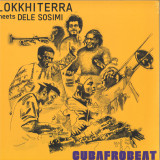
Funkiwala Records presents the third in the series of "Lokkhi Terra meets"albums, with the London fusionistas creating another unique sound-clash, this time with ex-Fela Kuti keyboardist and legendary UK Afro-beat ambassador Dele Sosimi, and members of his critically acclaimed Afro-beat Orchestra.
This particular collaboration has been bubbling away for a few years now, teasing audience expectations with a handful of sold out shows each year in between both bands busy schedules.
Featuring the two pianos of Kishon Khan and Dele Sosimi – Cuban percussionists/vocalists Geraldo De Armas (Yoruba Andabo), Oreste Noda (Ariwo), Javier Camilo (Ibrahim Ferrer) - a horn section led by Justin Thurgur (Bellowhead) featuring Yelfris Valdes (Sierra Maestra) and Graeme Flowers (Kyle Eastwood) to name a few – this is an All-star cast.
Kishon Khan's Lokkhi Terra have over a number of years now been quietly establishing themselves as one of London's more unusual heavyweight outfits, described as "Stunning Headliners… A majestic multi-cultural blend of sounds… effortlessly builds bridges between rolling Indian raga rhythms, Afro-Cuban grooves, Acid Jazz/funk and free flowing improvisation" (Timeout London). Included amongst the band members are London's top Cuban musicians, adding their infectious rich musical history to the city's melting pot.
When the band wanted to explore Cuban links with another of their favourite traditions, Afrobeat, who better to bring in then one of the Afrobeat originators – maestro Dele Sosimi – "Sosimi creates some of the most bewitching grooves in modern African music" E Jazz News.
Bringing together two Yoruba speaking musics - with different accents, from different sides of the Atlantic - Havana meets Lagos in London – A Cuban-Afrobeat-Experience. CUBAFROBEAT.
All About Jazz 4star review
A younger version of London's Grand Union Orchestra, founded by world-jazz pioneer Tony Haynes in 1982, Lokkhi Terra was put together by keyboard player Kishon Khan in 2005. Both ensembles have made a specialism of jazz / South Asian fusion, with Lokkhi Terra also giving as much attention to music from Cuba, where Bangladeshi-born, London-based Khan lived for a while in the early 2000s.
Cubafrobeat, as the title foretells, is a blend of Cuban dance music and Nigerian / Yoruban Afrobeat—a fusion rendered seamless by the synergies existing between Afro-Cuban and Yoruban music, language and mythology. The album is Lokkhi Terra's third and partners the band with the keyboard player and vocalist Dele Sosimi .
A young-going-on-child-prodigy member of Fela Kuti's Egypt 80, Sosimi went on to become musical director of Femi Kuti's Positive Force, before relocating to London and setting up Dele Sosimi's Afrobeat Orchestra, the finest Afrobeat band outside Nigeria, bar none, now with a string of consistently engaging albums under its belt. Cubafrobeat features Sosimi as lead vocalist on all four tracks, and on Fender Rhodes on two of them. His singing plays a prominent role in the Afrobeat Orchestra, but, such is the whirlwind impact of the band in full instrumental flight, that Sosimi is often thought of first and foremost for his keyboard and arranging talents. That may change by the time 2018 is over. Cubafrobeat is the third album in as many months to feature Sosimi as guest vocalist, spotlighting the gravitas, air of mystery, intimacy and ferocity his voice can bring to an occasion.
The first of these albums was the genre-bending spiritual-jazz band Emanative's Earth (Jazzman). One of the stand-out tracks, "Ìyáàmi," features Sosimi making obeisance to the titular Mother Goddesses of the Yoruba spirit worlds. His raw and intense invocations carry the track for nine mesmerising minutes. Otherwordly is not the half of it. Next up was dub / reggae / jazz band Soothsayers' Tradition (Wah Wah 45s), which featured Sosimi as lead vocalist on the compelling "Sleepwalking (Black Man's Cry)." Earth and Tradition are both outstanding albums and have previously been reviewed here.
Cubafrobeat is a total stonking blinder, too. It is an effectively nuanced affair, opening with the fiery "Afro Sambroso" and closing with the relatively reflective "Rumbafro." Sosimi's vocals light up the music, as do the several solos from trumpeters Graeme Flowers and Yelfris Valdes Espinosa and trombonist Justin Thurgur (a member of both Lokkhi Terra and the Afrobeat Orchestra). Sosimi and Kishon Khan's intertwining Fender Rhodes solos on "Cubafro" are also a delight, as is the drum and percussion section throughout.
The sound of summer, for sure, Cubafrobeat has enough depth and variety to make it something for all seasons.
Songlines 4star review
Lokkhi Terra are one of London's most authentic groups. They are a Latin-flavoured collective whose keyboard player and bandleader Kishon Khan segues from percussive montunos to complex Bengali rhythms and back, with jazz chops sparking funky and outward-looking fusions. Their collaboration with Dele Sosimi, Britain's foremost Afrobeat ambassador, has been bubbling for a while; here four tracks at ten minutes see musical conversations that never lose their sense of flow. An extensive line-up of stellar players, including trumpeter Yelfris Valdés, conguero Oreste Noda and trombonist Justin Thurgur, highlights the genre-crossing potential of world traditions. Opener 'Afro Sambroso' showcases batá drums from Gerardo de Armas Sarria before the track links Cuban grooves with Afrobeat. 'Timbafro' crackles and sways via Khan's organ, Sosimi's vocals and Oscar Martinez's timbales. 'Cubafro' features dazzling interplay between Khan, Sosimi and Javier Camillo's Spanish-language vocals. 'Rumbafro' is all rumba choruses, Yoruba vocals and Afrobeat horns. Rooted in their sources, but with musical threads intertwining, separating and reconfiguring – with grooves at a premium – this is a fusion lover's dream
N8noface is globally acclaimed as one of the most fresh and raw acts of the United States. For his debut in Oráculo N8noface presents an album where reviews some of his classic tracks exploring his most dark and minimal side, but not forgetting his unique new-punk sound for the likes of Sleaford Mods.
His proposal is extremely minimalistic but effective at the same time with that classic 90’s west-coast attitude that could remind even to the best era of Cypress Hill.
The whole thing surely deserves a place in the best vinyl collections. Presented in a one-off truly limited edition of 300 copies, lacquered pressed on 180gr. high quality solid black vinyl. All tracks have been specially restored and remastered for long cut vinyl by Daniel Hallhuber at Young and Cold Studios.
Released on RCA Records - new album from singer/songwriter/actress/US superstar. This collection is Miley’s eighth studio album and the follow up to 2020’s 'Plastic Hearts'. 2023 finds Miley the strongest and most confident she’s ever been, with the music and imagery of 'Endless Summer Vacation' serving as a reflection of that. Recorded in Los Angeles and produced with Kid Harpoon/Greg Kurstin/Mike WiLL Made-It/Tyler Johnson, Miley describes the album as her love letter to LA. The full tracklisting has not yet been revealed, but does of course include the massive #1 single 'Flowers'. Extensive promo/marketing activity across all media outlets. Upcoming UK promo trip plus nationwide TV ad campaign. Formats are standard black vinyl LP and standard CD.
The apartheid boycott In the 80s, the world – rightly - stepped up its boycott against South Africa’s apartheid government. But this had unexpected and sometimes adverse consequences for South Africa’s music professionals and consumers. Musicians still needed to work live shows both at home and abroad, and to make and sell records. The youth still aspired to clubbing and partying at the weekend after hard, poorly paid jobs under the thumb of an oppressive government. Music was their sanctuary: specifically, African- American inspired soul, jazz, boogie, disco and funk. Unique diversity Producing musical excellence was nothing new for South Africa, even in the 80s: both traditional and jazz music of various genres had been performed, showcased and recorded for decades with the assistance of some of the most skilled and ingenious sound-engineers and producers in the world, the jazz players rivalling their American peers in many cases. But what makes Mzansi 80s popular music unique is that it had to – and for the most part, did- appeal to a multi-ethnic, multilingual population almost like no other in the world, for its geographical size. There may have been many tribal and political differences between Zulu, Sotho, Xhosa, Tsonga and others day-to-day, but when it came to the weekend, those differences often melted away for a while on the dancefloor. Paul Ndlovu had kwaZulu fans as well as Shangaan followers; Black Moses and the Soul Brothers had followers and fans with everyone..and so on. And everyone- detractors and lovers alike- were content to settle on the monicker ‘Bubblegum’ as a general description. Mzansi took disco- and slowed it down a bit.. ..exactly as 90s and early 2000s South African DJs and mixers took House- and slowed it down a bit to develop Kwaito, Gqom and – later – Amapiano. The Roland TR-707 sampler came along in 1985- at just the right time for the flowering of Mzansi disco and boogie. And in the artful hands of arrangers, engineers and producers such as Peter “Hitman’ Moticoe, whose work figures on several of the tracks here, it became something unique to South Africa. 'Yebo! Rare Mzansi Party Beats from Apartheid's Dying Years' compiled by John Armstrong is out BBE Music on x3 vinyl set in a gatefold sleeve, CD, and across digital platforms for download and streaming.
A native of Los Angeles, Henry Franklin came of age while the city was producing a crop of exciting jazz talent. Frankin’s lasting impact on jazz can be evidenced by the long list of legends who sought him out for tours and recording sessions, Stevie Wonder, Bobby Humphrey, Freddy Hubbard, & Pharaoh Sanders to name a few. Franklin’s solo output is best remembered for his two solo outings with the Black Jazz label- “The Skipper” & “The Skipper At Home”. Together, they form one of the most compelling diptychs in the entire post-bop canon. Recognised by his peers and contemporaries, Franklin’s entry for Jazz Is Dead gives the living legend his flowers and recognises the contributions The Skipper has made as one of jazz’s most influential heartbeats.
Repress! Essential garage Zamrock/soul/funk: the first official reissue of the celebrated band’s one and only album.
The musical style that became known as Zamrock came to embody the economic despair that
followed the 1973-1974 oil crisis, which flung Zambia into recession and exacerbated a wide
range of social tensions. Much of Zamrock also captured the controversy of wider politics in
Africa and the world. Perhaps the finest example of this is Black Power by The Peace.
The Boyfriends, from Kitwe’s Chamboli Mine Township, supplied the founding members for Zamrock’s most
famous band, WITCH, and kick started one of Zamrock’s best bands, Peace. Their sole Zamrock entry, Black
Power, recorded at Malachite Film Studio circa 1973/4 and issued circa 1975, sounds like nothing else in the
Zamrock canon: a lost message drifiting from the flower power era, imbued with a fiery Zambian voice.
The next chapter of the Natural Information Society is here. Since Time Is Gravity, credited to Natural Information Society Community Ensemble with Ari Brown, presents a newly expanded manifestation of acclaimed composer & multi-instrumentalist Joshua Abrams nearly 15 year, 7 albums &-counting flagship ensemble. Joining the core NIS of Abrams (guimbri & bass), Lisa Alvarado (harmonium) Mikel Patrick Avery (drums) & Jason Stein (bass clarinet) are Hamid Drake (percussion), Josh Berman & Ben Lamar Gay (cornets), Nick Mazzarella & Mai Sugimoto (alto saxophones & flute), Kara Bershad (harp) & Chicago living legend of the tenor saxophone Ari Brown. Recorded live to tape at Electrical Audio & The Graham Foundation, cover painting Vibratory Cartography: Nepantla, by Lisa Alvarado. 2xLP on Eremite USA, 2xLP & CD on Aguirre/Eremite Europe. Out 14-04.
Since first developing Natural Information Society in 2010, Joshua Abrams has been gradually expanding the group’s conceptual underpinnings, its musical references & the sheer number of the group’s members. Its music is, in a sense, an expansive form of minimalism, based in repeated & overlaid rhythmic patterns, ostinatos & modality. Its roots, its scale & its meaning become clearer in time. If time is gravity, it also allows us to carry more. Having begun as fundamentally a rhythm section with Abrams’ guimbri at its core, the version here can stretch to a tentet, including six horns.
Abrams has been expanding his minimalism gradually, but he has long understood a key to minimalism’s potential: the breadth of its roots in the late 1950s & early 1960s, ranging from the dissatisfaction of young European-stream composers with the limitations of serialism to the simultaneous dissatisfaction of jazz musicians with the dense harmonic vocabulary of bop & hard bop. The former began exploring rhythmic complexity & narrow tonal palates in place of harmonic abstraction (Steve Reich’s Drumming, Philip Glass’ Music with Changing Parts; perhaps above all Terry Riley’s In C & his late ‘60s all-night organ & loop concerts); the later reduced dense chord changes to scales (signally with Miles Davis' Kind of Blue, but rapidly expanding with John Coltrane’s vast project). In the 1950s the LP record opened the world with documentation of Asian & African musics, key influences on both minimalists & jazz musicians. If John Coltrane’s soprano saxophone suggested the keening shehnai of Bismillah Khan, the instrument was rapidly taken up by two key minimalists, LaMonte Young & Riley, similarly appreciative of its flexible intonation, the same thing that kept it out of big bands.
If the guimbri, the North African hide-covered lute that Abrams plays with NIS, involves a rich tradition of hypnotic healing music associated with the Gnawa people, Abrams’ music also touches on other musics as well — other depths, memories & healings, different drones, rhythms & modes. As the group expands on Since Time Is Gravity, he has made certain jazz traditions in the same stream more explicit as well. If there is a mystical & elastic quality involved in the experience of time, both in direction & duration, you will catch it here. The parts for the choir of winds expand on the roles of Abrams’ guimbri, Mikel Patrick Avery & Hamid Drake’s percussion & Lisa Alvarado’s harmonium: at times, the winds are almost looping in the tentet version, each hitting a repeating note in turn, at once drone & distinct inflection on temporal sequence. The brilliance of the work resides in Abrams’ compositions, the NIS’ intuitive execution & in Ari Brown’s singular embodiment of the great tenor saxophone tradition, including the oracular genius of Eddie “Lockjaw” Davis, & Yusef Lateef. The three pieces by the expanded NIS featuring Brown —the opening “Moontide Chorus” & “Is” & the ultimate “Gravity”— have an immediate impact, & togther might be considered a kind of concerto for tenor saxophone. Here Brown presses almost indistinguishably from composed melody to improvised speech, getting so close to language that he might have a text. Everything here is a sign. Note the tap of the Rhythm Ace that links “Moontide Chorus” to “Is”, the attentive heart always present, even when signed by a machine. There’s a link here to the methodologies & meanings of dub music & the linear & vertical collage of beats, textures & tongues: treated with reverence, a sample of a beat-box can be as soulful, as hypnotic, as a mbira or a tamboura. If those pieces with Brown are heard as a suspended concerto, the three embrace & enfold the other works, like the sepals of a flower. That placement will also touch on the mysteries of our perception of time.
Particularly in “Is”, but elsewhere as well, a phenomenon of transcendence arises in which time appears to be tripartite, at once moving backwards & forwards & standing still. This is an act of technical brilliance certainly, but also an illumination of music’s ability to represent temporal consciousness through polymetrics. This particular listener has only heard it before in a few places, including the horn shouts & bowed basses of Coltrane’s Africa, in moments of Charles Mingus’ The Black Saint & the Sinner Lady, in certain pieces where tapes were literally running backwards, & earlier still in Dizzy Gillespie’s Cubana Be, Cubana Bop, in which the composer George Russell & conguero Chano Pozo found a music that spoke at once in the voices of Stravinsky’s Rite of Spring & the vestigial rites, rhythms & songs of the Yoruba language & Santeria religion of inland Cuba.
In Joshua Abrams’ compositions & the realization of them by the NIS, in the time of one’s close listening & memory thereof, distinctions between the “natural” & the “social”, the “quotidian” & the “transcendent” are erased, suspended or perhaps irrelevant. Consider two of the ensemble pieces, one named for nature, the other social science. In “Murmuration” the repeated wind figures of flute & alto saxophone combine with the interlocking patterns of harp, guimbri & frame drum (tar) to create a perfect moving stillness, not an imitation but a witness to the miracle of the starlings’ astonishing collective art, a surfeit of beauty that might be the ultimate defense tactic.
“Stigmergy” takes its name & concept from the Occupy movement’s Heather Marsh, who proposes a social system based on a cooperative rather than competitive models, one in which ideas are freely contributed & developed as ideas rather than an individual’s property. In its form, Abrams’ “Stigmergy” is the closes thing to traditional jazz, a series of accompanied solos by each of the wind players. However, the composed accompaniment is a radically collectivist notion: a repeated rhythmic figure, call it ostinato or riff, in which the different winds each play only a note or two of the figure, a concept both more collectivist & individualistic in its conception than any typical unison figure. It suggests another of the underlying recognitions that propel the Natural Information Society, the group as social organism, the teleology of hypnotic anarchy, all parts in place, functioning systematically, evolving & expressing itself, its nature & society, as a transformative organism.
George Lewis has described music as “a space for reflection on the human condition”. This suggests that, rather than a “distraction”, at least some music might serve as a distraction from distraction. It’s a focus, a clarity, a awareness, an external invitation to interiority, as if music itself is a model for form & contemplation, an organism contemplating for us or as us. If that is a possibility, & I am sure I have heard such musics, than this music is among them. How many of our rhythms, melodies & harmonies (cultural, historical, biological, psychic) might such music carry, translate & transform in the particulate ecstasy of our own murmuration? (Stuart Broomer, April 2022)
Eponymous collaboration between Jim Ghedi & Toby Hay - their first
since 2018's 'The Hawksworth Grove Sessions' and their debut for Topic
Records
Postponed for two years due to the small matter of a global pandemic, finally, as
some semblance of normality took shape, in February 2022, the duo headed into
Giant Wafer Studios, mid-Wales, with very little rehearsal time and recorded the
entire album live, with no edits or overdubs over three days.
Jim Ghedi and Toby Hay are both prolific, praised and established artists in their
own right. Hailing from South Yorkshire, Ghedi's previous work has often been
instrumental, exploring the natural world and his relationship to it, as seen on
2018's A Hymn For Ancient Land but also developing into using his voice,
songwriting and traditional material on his more recent album, In The Furrows Of
Common Place. Toby Hay, hailing from the Cambrian mountains, professes
likewise, that the landscape serves as eternal muse and the spiritual groundwork
of his entrancing guitar playing which has dazzled critics and listeners alike
throughout his career. All of this makes their collaboration with the world's oldest
independent label and custodians of UK folk music, Topic Records, a natural
home for this exceptional record.
The album arrtwork includes beautiful liner notes by Andrew Male, senior
associate editor of Mojo magazine; film, radio and TV writer for Sight and Sound
and Sunday Times Culture.
- A1: In My Heart (Feat Gregory Porter - Resound Nyc Version)
- A2: Extreme Ways (Feat The Temper Trap - Resound Nyc Version)
- A3: South Side (Feat Ricky Wilson - Resound Nyc Version)
- A4: Flower (Find My Baby) (Find My Baby)
- B1: In This World (Feat Nicole Scherzinger, Marisha Wallace - Resound Nyc Version)
- B2: Helpless (Feat Margo Timmins, Damien Jurado - Resound Nyc Version)
- B3: Signs Of Love (Resound Nyc Version)
- B4: The Perfect Life (Feat Ricky Wilson - Resound Nyc Version)
- C1: When It's Cold I'd Like To Die (Feat Pt Banks - Resound Nyc Version)
- C2: Slipping Away (Resound Nyc Version)
- C3: Second Cool Hive (Feat Oum, Sarah Willis - Resound Nyc Version)
- C4: Hyenas (Resound Nyc Version)
- D1: Last Night (Resound Nyc Version)
- D2: Run On (Feat Danielle Ponder, Elijah Ponder - Resound Nyc Version)
- D3: Walk With Me (Feat Lady Blackbird - Resound Nyc Version)
RESOUND NYC - Das neue Album von MOBY! Nach seinem gefeierten Album ”Reprise” (Mai 2021), auf dem unter anderem Kris Kristofferson, Mark Lanegan, Jim James und Skylar Grey zu hören waren, hat Moby nun 15 seiner legendärsten New Yorker Tracks aus den Jahren 1994 bis 2010 neu interpretiert und instrumentiert. Mobys 20. Studioalbum ist nicht nur eine Reflexion über die vielleicht entscheidendste Zeit in seinem Leben, sondern auch über sein einstiges Zuhause, New York City. Dort wurde er geboren, dort nahm seine Karriere ihren Anfang – im Punkrock und als DJ in Underground-Clubs.
»Bevor ich Punkrock für mich entdeckte, war ich im Classic Rock zu Hause«, sagt Moby. »Mein erstes Konzert war 1978 Yes im Madison Square Garden. Es war also mehr als verlockend, sich noch einmal mit meinen Liedern auseinanderzusetzen und zu gucken, ob sie einer traditionelleren, nicht-elektronischen, orchestralen Bearbeitung standhalten.« Begleitet wird Moby auf diesem Album von großartigen Künstlern wie Nicole Scherzinger, Gregory Porter, Ricky Wilson und Amythyst Kiah.
- A1: In My Heart (Feat Gregory Porter - Resound Nyc Version)
- A2: Extreme Ways (Feat The Temper Trap - Resound Nyc Version)
- A3: South Side (Feat Ricky Wilson - Resound Nyc Version)
- A4: Flower (Find My Baby) (Find My Baby)
- B1: In This World (Feat Nicole Scherzinger, Marisha Wallace - Resound Nyc Version)
- B2: Helpless (Feat Margo Timmins, Damien Jurado - Resound Nyc Version)
- B3: Signs Of Love (Resound Nyc Version)
- B4: The Perfect Life (Feat Ricky Wilson - Resound Nyc Version)
- C1: When It's Cold I'd Like To Die (Feat Pt Banks - Resound Nyc Version)
- C2: Slipping Away (Resound Nyc Version)
- C3: Second Cool Hive (Feat Oum, Sarah Willis - Resound Nyc Version)
- C4: Hyenas (Resound Nyc Version)
- D1: Last Night (Resound Nyc Version)
- D2: Run On (Feat Danielle Ponder, Elijah Ponder - Resound Nyc Version)
- D3: Walk With Me (Feat Lady Blackbird - Resound Nyc Version)
RESOUND NYC - Das neue Album von MOBY! Nach seinem gefeierten Album ”Reprise” (Mai 2021), auf dem unter anderem Kris Kristofferson, Mark Lanegan, Jim James und Skylar Grey zu hören waren, hat Moby nun 15 seiner legendärsten New Yorker Tracks aus den Jahren 1994 bis 2010 neu interpretiert und instrumentiert. Mobys 20. Studioalbum ist nicht nur eine Reflexion über die vielleicht entscheidendste Zeit in seinem Leben, sondern auch über sein einstiges Zuhause, New York City. Dort wurde er geboren, dort nahm seine Karriere ihren Anfang – im Punkrock und als DJ in Underground-Clubs.
»Bevor ich Punkrock für mich entdeckte, war ich im Classic Rock zu Hause«, sagt Moby. »Mein erstes Konzert war 1978 Yes im Madison Square Garden. Es war also mehr als verlockend, sich noch einmal mit meinen Liedern auseinanderzusetzen und zu gucken, ob sie einer traditionelleren, nicht-elektronischen, orchestralen Bearbeitung standhalten.« Begleitet wird Moby auf diesem Album von großartigen Künstlern wie Nicole Scherzinger, Gregory Porter, Ricky Wilson und Amythyst Kiah.
After 3 individual pieces on the Hamburg label PUDEL PRODUKTE, the longplaying work of the man from the Pension Stammheim is finally released. It quickly becomes clear that this is a real capacity record: 6 (on vinyl) or 8 pieces (on electricity) from the cosmos of a man who means business. You can already tell by the fact that the record is only called ROTTE and not something else. Rotte makes ROTTE and nothing named, nothing labelled, nothing carefree commodes and prisoners certainly not.
It is relatively easy to approach ROTTE. Just listen and do nothing else. No, nothing. Nothing at all. Don't give away flowers, smoke cows, talk yourself or listen to the net. Don't try to get out of the Bermuda Triangle in the process! Concentrate as if you were reading a book by Suhrkamp. Be action-less in the here and jazz. Beat the six kinds of wood out of the coffin and leave only the steel screws!
Take Rotte and ROTTE seriously. Man and work. With him, though, black is absolutely a colour. My ketamine is my petrol. First Takes only. Drilling without Club of Gore. Undisputed truth. No Lounge. The lyrics on Rotte are not a party.
It might seem a bit TOO colourless, a bit TOO intense, a bit TOO hard and dark. Too much psycho-babble. But the songs bring it and you. They are designed in such a way that nothing else works during them. Nobody would think of peeling an egg at Russian roulette. That's how you have to see it.
The songs were musically supervised by Jörn Elling Wuttke and Oliver Bradford (Thee Church Ov Acid House), by DIE NERVEN producer Ralv Milberg, by Douglas Creed (BPitch Control + Freude am Tanzen), Boris Nielsen (Käptn Peng) and Peter Armster.
There is a congenial mutual autocorrection between lyrics and music. Individually, this cannot be heard and it is not offered. By the way, you don't hear anything else at the Federal Criminal Police Office at the moment. So please.
A1 Fliege gegen Scheibe
Written & produced by Oliver Bradford, Jörn Elling Wuttke, Christian Rottler
Lyrics: Christian Rottler
A2 Butterbrot und Peitsche
Written & produced by Peter Armster, Christian Rottler
Lyrics: Christian Rottler
A3 Gaffa, Farbe und Zustimmung
Written & produced Jörn Elling Wuttke, Christian Rottler
Lyrics: Christian Rottler
B1 Autosuggestion
Written by Boris Nielsen, Christian Rottler, produced by Boris Nielsen, Marc Eggert
Lyrics: Christian Rottler
B2 Deichtorhallen
Written & produced by Oliver Bradford, Jörn Elling Wuttke und Christian Rottler
Lyrics: Christian Rottler
B3 Dunkelwach
Written by Mario Willms, Christian Rottler, produced by Mario Willms
Lyrics: Christian Rottler
White Vinyl
Did you know that miracles happen every day? We don't always see it that way We look at the state of the world and think, "It'll be a miracle if we make it out alive." But miracles are what humans do. We're Earth's most inventive and unpredictable species, when we're allowed to be. Also the most destructive. Miracle-Level is Deerhoof's mystical manifesto on creativity and trust. It celebrates the infinite small wonders of existence that spontaneously present themselves, when not obstructed by our death-driven masters. Musically, Miracle-Level is vulnerable, brave, and brimming with spicy surprises. Deerhoof's 19th album is also their their first to be recorded and mixed in a recording studio. Production was entrusted to Mike Bridavsky, at No Fun Club in Winnipeg, Manitoba. This is also their first album written entirely in Satomi's native language. Deerhoof once again speak in a secret code that only their fans understand, in which hooks abound, and genre is nonexistent.
Tape
Did you know that miracles happen every day? We don't always see it that way We look at the state of the world and think, "It'll be a miracle if we make it out alive." But miracles are what humans do. We're Earth's most inventive and unpredictable species, when we're allowed to be. Also the most destructive. Miracle-Level is Deerhoof's mystical manifesto on creativity and trust. It celebrates the infinite small wonders of existence that spontaneously present themselves, when not obstructed by our death-driven masters. Musically, Miracle-Level is vulnerable, brave, and brimming with spicy surprises. Deerhoof's 19th album is also their their first to be recorded and mixed in a recording studio. Production was entrusted to Mike Bridavsky, at No Fun Club in Winnipeg, Manitoba. This is also their first album written entirely in Satomi's native language. Deerhoof once again speak in a secret code that only their fans understand, in which hooks abound, and genre is nonexistent.
Recommended If You Like: Boredoms, OOIOO, Blonde Redhead, Guerilla Toss, Rolling Stones, Liars, Marnie Stern, Yoko Ono, Battles. Cover by acclaimed photographer and artist Kunie Sugar White Vinyl / White Cassette available while stocks last. Did you know that miracles happen every day? We don’t always see it that way. We look at the state of the world and think, “It’ll be a miracle if we make it out alive.” But miracles are what humans do. We’re Earth’s most inventive and unpredictable species, when we’re allowed to be. Also the most destructive. Miracle-Level is Deerhoof’s mystical manifesto on creativity and trust. It celebrates the infinite small wonders of existence that spontaneously present themselves, when not obstructed by our death-driven masters. Musically, Miracle-Level is vulnerable, brave, and brimming with spicy surprises. Deerhoof’s 19th album is also their their first to be recorded and mixed in a recording studio. Production was entrusted to Mike Bridavsky, at No Fun Club in Winnipeg, Manitoba. This is also their first album written entirely in Satomi’s native language. Deerhoof once again speak in a secret code that only their fans understand, in which hooks abound, and genre is nonexistent.
- A1: The Leaders - Wait A Minute
- A2: Archie Shepp - Song For Mozambique
- A3: Oliver Lake Quartet - Tap Dancer
- A4: Karl Berger And Friends - Guitar Vibes
- B1: Sun Ra Arkestra - Mayan Temples
- B2: Muhal Richard Abrams Octet – Laja
- B3: Andrew Cyrille & Maono - Metamusicians’ Stomp
- C1: The John Carter Octet - Ode To The Flower Maiden
- C2: Diedre Murray, Fred Hopkins - Zebra Walk
- C3: Joseph Jarman, Don Moye Feat Johnny Dyani - Mama Marimba
- D1: Sun Ra Arkestra - Love On A Far Away Planet
- D2: The Don Pullen Quartet - The Sixth Sense
- D3: World Saxophone Quartet
Woke rhythms and high-spirited grooves from the vaults of two seminal Italian jazz labels, between the 70s and 80s. Intensely curated by Khalab.
Hyperituals is a philological investigation that deeply delves into the possibilities of sound, rhythm, remix, and endless sampling. Inspiring listening, interpretation, and reinterpretation.
This volume is dedicated to the catalogue of the Italian Black Saint. Thanks to a constant, cutting-edge, and meticulous commitment, Black Saint & Soul Note established themself as two of the most important imprints for international jazz. They always placed the artists, their visions, and their music at the centre, giving them total freedom of creative expression. By combining jazz tradition with the political vanguard sentiment of the time, the two labels were able to press and produce more than five hundred records, many of which are by some of the brightest names in creative jazz or the ‘avant-garde’ of the era.
Curated by Khalab, the selection - focused on rhythms, grooves, and Afrocentric traditions - blends moments in which the rhythmic aspect is powerfully explicit, with others in which the kinetic aspect dialogues on different levels with African American cultural contexts.
After three years of deep work, Stas Karpenkov's debut album is released on Gost Zvuk in the form of an abstract, free-form study. The album is saturated with the Black Sea breeze and the natural beauty of the peninsula, a land associated with the life of the author. It's a musical representation of its surrounding reliefs, an ode to the cyclicity of the waves, and a journey through soundscapes. These manifestations of maritime romance also include the experience of co-producing with Terrence Dixon and Kuzma Palkin on a couple of tracks that play an important role in the idea of the record.