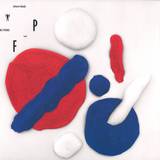
The fourth release on Trevor Jacksons Pre- Label is by SKULL. A visceral journey into experimental noise and no wave avant grade beatscapes
The last SKULL release 'SNAPZ' appeared on Jacksons own Output Recordings label in 1999. A seminal collection of tracks that had previously featured on the first two legendary Mo wax 'Headz' compilations (also featuring Autechre, Beastie Boys, Air, and DJ Shadow) as well as tracks that had also appeared on Kevin 'The Bug' Martins notorious Macro Dub Infection albums during the mid 90's.
Reactionary sonic statements aimed at the coffee table world of Trip Hop, fuelled by his dissatisfaction and dissillustionment with Hip Hop of the time, Trevor pushed himself into uncomfortable and far more extreme areas than he had before, areas he felt unable to explore with his Underdog productions, which were mainly being utilised for major label remixes at the time.
Influenced as much by the industrial pioneers, post punk and new wave of the past as the burgeoning post rock scene in the mid 90's, This new set of previously unreleased recordings originally produced between 1996-2000 are equally as intense and visceral as the early releases. Dusty samples, raw beats, tape loops, and primitive effects combine to sound as relevant now as when they were initially created.
Cerca:black label
This special collector's edition electronically reproduced stereo 7' single (only 200 copies), comes in two fantastic coloured vinyl options (100 x red vinyl and 100 x purple vinyl). A refreshingly new take on mono to stereo conversion. Elvis fans growing up in the 1960's and 1970's unwittingly listened to his 1950's catalogue in electronically reprocessed stereo, love it or loathe, it was pretty much all there was back then unless you could afford to track down expensive mono copies. To better understand where the electronically reprocessed stereo versions originate from, we need to go back to 1961, at which point RCA had begun the process of taking Elvis' 1950's mono masters and converting them into a stereo sounding effect. By 1960 when Elvis returned from the army, he was recording in true stereo and as far as RCA were concerned, mono was a thing of the past. You just need to listen to the sound quality of the 1960 'Living Stereo' version of the 'Elvis Is Back' album, to appreciate just how much the recording industry had moved on in just two years. Such was the demand for stereo records in the early 1960's most major labels had created their own process for converting mono into stereo or 'fake' stereo as it became known, with some labels producing better results than others. Opinions on Elvis' 1960's electronically reprocessed stereo versions are mixed, with some recordings making the transition from mono to stereo effect better than others. Some DJ's actually preferred playing the electronically reprocessed stereo versions, believing they gave a wider fuller sound on the dancefloor. By late 1970's, RCA had once again begun to re-issue original mono masters, giving many fans their first opportunity to hear how these tracks were originally issued. By the time compact discs had arrived on the scene in the 1980's, electronically reprocessed stereo was well and truly dead and buried. Very few electronically reprocessed stereo recordings ever made it onto a digital format and the few that did are now highly collectible. Recorded at RCA Studio 1, New York on the 30th of January 1956, My Baby Left Me is a driving powerhouse rockabilly masterpiece with a real Sun Records vibe to it (produced by Steve Scholes with Elvis on vocals and acoustic guitar, Scotty Moore on electric guitar, Bill Black on bass and D.J. Fontana on drums). Our flip side Blue Moon Of Kentucky is another rockabilly classic which first appeared as the opposite side to That's All Right (Sun 209) in 1955 (Elvis' first single). Blue Moon Of Kentucky was recorded on the 7th of July 1954 at Sun Records (produced by Sam Phillips with Elvis on vocals and acoustic guitar, Scotty Moore on electric guitar and Bill Black on bass). Both tracks have been painstakingly re-engineered to create a stereo effect sound. The result is a bigger, sharper sound that jumps straight outta the grooves at ya! One reviewer described the process as - it's as if a veil has been lifted off the tracks'. Both tracks are taken from the forthcoming album titled 'Elvis Presley - The 50's In Stereo' (mono to stereo re-visited). For best results play this killer double-sider very loud!!!
Tachyon Audio is a new vinyl label that's focused on forward-thinking sounds in the techno realm targeting sweaty, dark places, with large, high-quality sound systems.
Inhabitants make a strong offering with their first EP as a duo, IGC. These two primates are often found inhabiting dark spaces, forging ahead on complex math equations. Their distinct, driving, mathematical, and drumming techno is a result. Expect more solid work from these two mysterious beings on Tachyon Audio as the label continues its progression.
Tachyon Audio is coming out of the gates strong with a diverse EP that touches on three techno sounds that are helping to lead the march forward into the future of sound production. The first Tachyon release comes from the mysterious dark studio of Inhabitants, who's inaugural release as a collaboration is sure to move feet on a diversity of dance floors. The A-side track, Mut14 (sc8.18 Mix) (A1) is a futuristic pounder that weaves its way into a frenzy with subtle yet penetrating synths that sweep through the soundscape. The simple and sound drumline will keep even the pickiest selectors satisfied. Side A ends with two separate open-source NASA space samples. The first, Iota_20_0.998_h (A2), is the repeating sound of two orbiting neutron stars. The second sample (A3) is two 50 solar mass black holes spiraling into an inevitable collapse, eventually becoming one. These samples are poised for reuse in production and make for good intro and looping material for performances.
The second side of the EP starts with the dark broken beat track, Mut7 (B1), that starts with a solid groove and works its way into a breakdown that captures the mind with a chopped and effected late 1990's Frankie Bones vocal. By the end of the track you'll be left wanting it to forge on, as it can flow well with a wide range of techno sub-genres, especially the dark, more broken beat tip. Inhabitants then continue to make their impression with Mut10 (B2), a track molded around an originally crafted 303 line that morphs and builds throughout and creates an atmosphere that separates itself from the remainder of the EP with a lighter, yet heady feel.
M=100 (2 - 50 Solar Mass Black Holes)
There were several groups within the Detroit music scene that shared the name of 'The Holidays'. From the 1950's through to the late 1960's our version of The Holidays who took their name from a group members car, a 1954 Oldsmobile 'Holiday', would record for the Star-x, Markie, Master and Holiday record Labels. Founding member James Holiday would also briefly pursue a solo career with releases on the Markie, Syco and Blue Rock labels respectively.
In 1969 James joined by his brother Jack, a baritone saxophonist and the former leader of the band within influential Detroit DJ 'Frantic' Ernie Durham's legendary Gold Room at the 20 Grand Theatre. The brothers together, with Maurice White and former Contours member Joe Billingslea formed 'The New Holidays' who recorded the 'Popcorn' Wylie produced song Maybe So, Maybe No' (Soul Hawk 1008). This current in demand 45 featured If I Only Knew' on the flipside, an excellent cover version of a previous Jimmy (Soul) Clark recording If I Only Knew Then (What I Know Now)' This was recorded at a later session to Maybe So, Maybe No' and featured a slightly different line up with Joe Billingslea making way for a youthful Elliot Smith.
By 1972 The Holidays found themselves without a label, so they formed their own, Marathon Records. Their initial release was the excellent double sider I'm So Glad (That I Met You)/Too Many Times' (Marathon 257). Both songs were written by James Holland and Sylvester Potts another former member of the Motown group 'The Contours' and were recorded under the artist name of 'The Fabulous Holidays.
Into 1973 and their next release was the soulful ballad Getting Kind Of Serious' (Marathon 18475) a Fritz Hale and Fredrick Charles Hawkins composition backed with an instrumental version. Followed by Ego Tripping' (Marathon 18475) an upbeat funky little mover backed with the ballad Lazy Day' written by James Holland, Anthony Hawkins and Fritz Hale.'
During 1975 The Holidays resumed their acquaintance with former record store owner Ronald Holmes a collaboration which led to the release of another excellent double sider This Is Love b/w The Love We Share' on the Rob-Ron (RR-75) label. The Love We Share' was recorded twice. Firstly as the issued 45 version under the shortened title of The Love We Share' and as an unissued longer version under the title of (Been Together Too Long) The Love We Share' with slightly different lyrics. During 1976 a further Holland/Holmes collaboration saw the release of the message song Procrastinate (Why Do We)' (Ron-Hol 76). After this release Ronald Holmes and the Holidays parted company.
During late 1976 into 1977 the Holland brothers wrote and produced two further songs which they recorded with Charles Hawkins (a founding member of the Psychedelic Rock and Funk Band, 'Black Merda') The up tempo dance track You Make Me Weak' and the less frenetic Lost Love' although never issued at the time both songs can be found on the recently released Soul Junction cd album Getting Kind Of Soulful' (SJCD5012). A later discovery of a alternative take of You Make Me Weak' (Take 2) is now available on vinyl for the first time backed with their uptempo dancer I'm So Glad (That I Met You)' The Motorcity continues to yield its long lost legacy.
The night is what makes a big city come to life. Right after sundown, the hectic buzzing of downtown makes way for adventure playgrounds, bathed in neon light, revealing their countless chances and opportunities. It's when you'll find the subway spitting out it's purpose seeking passengers by the minute. A coming and going of restless people passing through. All it takes is a few hours, before the sunrise makes it all disappear. Mental Bend captures the magic of that very moment in their dreamy soundtracks. If you close your eyes, you can see blurry pictures passing in slow motion, accompanied by their atmospheric songs. Grainy black and white snapshots, fragments of memories lighting up somewhere in the farthest corner of the cortex. 'One Step' is the Berlin-based indietronica duo's visually vivid debut album, released on Enfant Fenou. Mental Bend are all about letting go. Sissip (voc/synth/bass) and Hendrik Havekost (beats/production) know how to trust their instincts, crafting their hypnotic signature sound, somewhere in between electronica, ambient and dream pop. Before founding the band in 2013, the two were already shaping their skills in all kinds of different formations and styles of music. As soon as they got together, they had a viral mini hit with their song 'Take My Hand', praised on various tastemaker blogs and generating over 100.000 likes on Soundcloud in no time. The band's first long play record 'One Step' is all about important experiences and decisions, small as well as big steps, all a part of making progress, which in the end can even be life changing. It was a step, that recently got Mental Bend their record deal on Mo's Ferry's sub label 'Enfant Fenou'.
The third release in Danse Club's Black Series is a collaborative effort between Dutch tech house hero Lauhaus and countryman Rik Woldring with a standout remix from Boris Werner. Lauhaus has long been at the heart of the underground electronic music scene, releasing on go-to imprints like 100% Pure and Area remote as well as his own Soweso and We Dig. labels, whilst Rik Woldring is very much a talent on the rise who has impressed in Amsterdam with his unique after hours DJ sets. Together the pair crafts some infectious and charismatic grooves that fit perfectly with the increasingly essential Danse Club . Opening track 'Context' is a tight arrangement of looping bass, silky and silvery percussion and myriad sonic effects that create intrigue from start to finish. It's the sort of thing that makes you sweat on the floor but has enough detail to keep your mind occupied, too. Boris Werner, another stalwart of the Dutch tech scene, turns in a superb mix of 'Context'. His remix is deeper and more stripped back, with bobbling drums and perfect claps driving the thing along. Subtle pads warm things through and shadowy voices bring a sense of light night mischief to proceedings. Lauhaus & Rik Woldring then turn in 'Aint No Time', a liquid bit of shape shifting tech house funk that is rich with colourful melodies and well placed spoken word musings. It's music for the floor that is fun as well as functional and last track 'Spearmint' is just the same. This ones a bit tougher and more taught with rubbery synth and basslines wrapping round each other for 9 heady minutes as delightful synth patterns slowly smear and spread in the skies up top. Another cultured release from the Danse Club label that proves tech house, when done well, is still a hugely rewarding genre.
Keysound Recordings presents a weightless album from label boss Blackdown. 'Those Moments' is his first solo LP, features fellow 'Margins Music' contributors Trim, Dusk & Farrah and, like the imprint's Rollage sub series, is centered at 130 bpm. Each of the tracks is a distillation of a fleeting moment. The tracks and LP itself are short and constrained, relying on only voices, synths and sub bass. The album came about in a quick intense burst and many of the tracks represent snapshots of brief instances - a bitter-sweet moment of inflection, a moment of positivity, digital over stimulation, awe, loss, intensity, anger, nostalgia, regret, honesty, relief and joy. 'I'd had a tough 6 months...' explains Blackdown. 'I'd had to hold it together and not lose my nerve. Early on in the months I'd so nearly had a massive, positive life change but... it slipped out of my grasp. I was so focused on holding it together, I couldn't allow myself to really write music. Then, when things resolved themselves, and I'd figured out this new weightless way of working, 'Those Moments' just came flooding out. I'd heard other musicians talk about this - but that had never happened to me.' Recent releases from Rinse FM's Blackdown include a contribution to the #SaveFabric CD, three 4 track 12's of the new Rollage sub series ('WDYM!', 'Keysound Sessions Anthem' and the 'C-Troit' EP) and a remix of Jamakabi & Terror Danjah's 'Juicy Patty.'
Tact Recordings launch their new vinyl only sub-label 'Tactics' this November, with the first EP coming courtesy of Yard One, who deliver three excellently programmed cuts in the shape of 'Tactics Vol.2'.
Launched by Yard One, aka Jordan Bruce and Larry Jones, and Richard Fletcher (who produces under numerous guises including Adventures In Daydreams and Fletcher), Tactics is set to become the labels latest project with a focus on solely vinyl releases. Inspired by the 2012 Various Artists release 'Tactics Volume 1' on Tact Recordings, which featured productions from Isherwood (Sharingtones/Imprints/Lize Records), journalist Per Boisen-Moller, and label regular Luke Black, the sub-label is set to showcase a more stripped back and minimal side to the Tact Recordings family with releases coming courtesy of Yard One, Fletcher, Luke Black and their close friends only.
The EP opens up with 'Avenoir', a raw and hypnotic production that utilises a multitude of lasers, glitches and pops at the forefront to keep listeners firmly on their toes, whilst a delicate and captivating melody floats fluently amongst ever-evolving percussion shots and twisting bass licks below.
On the flip, 'Granular Movements' snakes its way through swinging drums and hazy, jazzy melodies to reveal an effortless rolling groove, before 'Hexad' keeps the focus on percussive elements strong, whilst a moody bassline goes to work under layers of meditative pads and subtle background nuances to punctuate an excellent debut offering from the label. (Vinyl Only).
On the Corner's DJ tool and eclectic favourite, Versus is back for a second instalment. There are some familiar faces occupying this tasty wax and some new comers pushing the needle further-out On the Corner.
As 2015's Versus sold-out we'd already acquired some fresh production talents and sent stems over to new and old friends alike.
Get your atlases out as we criss-cross the globe introducing you to artists from afar-afield as Nairobi, Manchester, Pune, Iringa, Detroit, and South London.
We kick off with Jinku, self-proclaimed space monkey hitting OtC wax for the first time. The producer is one-fifth of the East African Wave, a collective of young DJ Producers who are revolutionising the East African arts scene. As a 'sponge' of different influences, Jinku lays down a balearic reworking of fellow Nairobian, Makadem's 'Nyako'.
Of the returning artists none is quite as mysterious as the elusive and incomparable Black Classical - discordant-Ra-like organ meets Brazilian poly-rhythmic percussions bludgeoned with a heady slab of rave breaks make for 'Jeje': already a firm fave of Gilles Peterson.
Boundary pushing Contours brings a new swing to the 'Agama' groove, following the underground smash from Al Dobson Jr back where it all started with the release of Tamar Collocutor's first album in 2014.
Wonky psychedelic perambulations through the Traab al-Beidaan (Sahara) from Sam Jones who adds another construct to his mantle. Group as Salaam have a cassette release forthcoming and this construct comes from field recording sessions conducted during a feast out in the shadow of Africa's largest Windfarm by label head Pete OntheCorner. Vibes!
On the B-side, sprightly producer Daisho from the Indian hotbed of Pune brings a layered percussive heater hanging in the atmosphere with ominous synth b-lines and rightly tipped to be in the realms of and early Four Tet mover.
The release enters into a deeper shamanic dance territory in the final third: the beathead's elixir, M.I.X.G. and their massive xylophone (Embaire) are back and gets a heavy acid rerub as South London's FYI Chris appear OntheCorner wax again with
'Drop the beat'.
Peter Croce, head of Detroit's Rocksteady Disco brings it deep into the early hours for this euphoric 4am fix of OntheCorner's
afro-latin-electronic party experimentalists, Penya.
Reissue for Tomorrow's Modern Boxes the eight track second solo album by Thom Yorke
Tomorrow's Modern Boxes is the eight track second solo album by Thom Yorke. The album is a sketchy laptop creation. It plays like a journey on a night bus with an edgy atmosphere of unpredictability, mixing melancholy, urban soul with some lurching monotony. Yorke's alienated falsetto mumbles and whimpers over furtive dubsteppy beats that could be coming from the headphones of the passenger beside him.Tomorrow's Modern Boxes deepens on repeated listening, with Yorke locating moments of beauty and calm in the eye of his anxiety.
Printed with a metallic silver laminate and multi-tone black, the LP format of the album is pressed onto heavyweight 180g white vinyl completed with undersize 75mm centre labels, housed within heavy white board inner and outer sleeves. (Side B contains a locked groove.)
- A1: Cool Out
- A2: All Because Of You
- A3: Don't It Make You Feel Good
- A4: Love The Feeling
- A5: Positive Forces
- B1: Lucky Fellow
- B2: Never Know What You Can Do (Give It A Try)
- B3: Love Oh Love
- B4: Ella Weez
- B5: Could This Be Love
- C1: So In Love You
- C2: I Think I'm Falling In Love
- C3: Closer To The Source
- C4: Give This Love A Try
- C5: Right Or Wrong
- D1: Now That I Found You
- D2: Get To This (You'll Get To Me)
- D3: Lover's Holiday
- D4: Time Brings On A Change
Acid Jazz are pleased to announce details of the definitive Leroy Hutson compilation - Anthology : 1972-1984 on 20th October. Erstwhile Impression, Leroy Hutson's catalogue has become increasingly coveted over the years and this compilation collects his Curtom recordings together with two newly discovered tracks including Positive Forces which is available as an instant grat track when pre-ordering the album.
Native of Newark New Jersey, Leroy Hutson grew up In a part of the world that spawned many of Soul's all-time groups, amongst them, The Parliaments and the Manhattens. Smitten by the music he was to join a local quartet, The Nu-Tones and despite never recording the youthful Hutson experienced the thrill of being a singer. On splitting up, Hutson found himself studying in Washington DC and once more in the company of supremely talented artists including Carla Thomas and future collaborator Don Hathaway. Various recordings came and went with little chart success before, along with Hathaway he became central to a group of singer, songwriters and players under the tutelage of Curtis Mayfield at his Curtom label a relationship that initiated Hathaway's chart topping career when the pair co wrote the all-time classic and million seller The Ghetto.
Early 1971 saw Hutson replace Mayfield in the Impressions as he left to concentrate on his solo career, the transition was seamless and although relatively brief saw the band in the pop and R&B charts. His debut on the Billboard chart as a solo artist arrived with Love Oh Love, the first of a dozen Curtom singles he recorded during an exciting and turbulent decade for black American music.
The seven albums Hutson released on Curtom between 1973 and 1979 are a legacy that remain highly respected, almost revered amongst soul cognoscenti, an untold influence on an entire generation of musicians throughout the eighties. The demise of Curtom in the early eighties saw Hutson relocate to Elektra, where in 1982 he released Paradise - highly acclaimed and much loved for a time it looked like that release may spell the end but some twenty-seven years later, the newly monikered 'Lee' Huston unveiled Soothe You Groove You.
It is a distinct honour and privilege to welcome the legendary musicianWally BadaroutoDiskotopiawithThe Unnamed Trilogy Vol.1, a collection of recent solo work presented for the first time as a limited-edition 12" and select digital EP,marking the first vinyl release of his solo music since 1989.The release has already gained a great deal of excitement following its announcement on FACT magazine, The Vinyl Factory, Resident Advisor and other media in early August.
Wally Badarou is a visionary musician who over the years has forged a history that is immensely storied, diverse and creatively rich. He has not only released timeless solo material such as the incredible Echoes LP in 1984 (part of which reached a new generation of music fans when the track Mambo was sampled for Massive Attack's Daydreaming), but has also recorded on classic albums with luminaries such as Grace Jones, Sly & Robbie, Mick Jagger, Fela Kuti, Robert Palmer, Jimmy Cliff, Black Uhuru and Talking Heads to name just a few. Both co-founders of Diskotopia have been huge fans of Mr. Badarou's work since before the label's inception and are elated to present The Unnamed Trilogy Vol.1 to the world at large.
Having been endorsed by Andrew Weatherall on his June 2017 NTS radio show, the band were inspired to release this four-track vinyl EP on their own label Big Shanty Records.
A heady mix of influences colour The Spellbinder Project sound, with elements of jazz, post punk, psych and funk in the blend. These tracks were produced by Malcom Catto, head instigator of the Heliocentrics and collaborator with DJ Shadow, together with Mike Burnham, who has worked extensively with Little Barrie.
The core band of Sean Pereira Summers (guitar), Michael Levison (bass) and Michael Rathbone (drums) are joined live by Lascelle Gordon from Vibration Black Finger on percussion and Chris Williams from Led Bib on saxophone.
Anthone and Katsunori Sawa team up again under their BOKEH alias delivering a 12" single on The Weevil Neighbourhood.
On A side "Lancashire", BOKEH explore the realms of Drum & Bass tempo challenging the how-low-can-you-go with extremely deep subs while "Fast Fiver" on the B side doubles up on your regular 4/4 while on a heavy dub chord's leash.
The release comes on black vinyl. The center label artwork is done by Lee Noble (No Kings Records/ Bathetic).
- A1: Original
- B1: Jackknife Lee Remix
Third Man Records is proud to announce the release of "The Blackout," a limited edition U2 12" in conjunction with Island Records. The limited edition U2 12" will be available for Record Store Day Black Friday, November 24th."The Blackout" marks the first physical release from U2's eagerly awaited new album, SONGS OF EXPERIENCE, due later this year. The 12" includes both the original album version backed by an exclusive remix by the band's longtime collaborator, Jacknife Lee. Hailed by Rolling Stone as "a dynamic new track," "The Blackout" was revealed this summer via a surprise live video, filmed during U2's blockbuster Joshua Tree Tour 2017.Third Man co-founder Ben Blackwell said, "The sound quality of this incredibly special record is a perfect example of the caliber of product Third Man Pressing is capable of producing. We couldn't be more proud." TMR's "The Blackout" 12" will be extremely limited, with just one single pressing at Third Man Pressing, the label's state-of-the-art vinyl production facility in Detroit. Black vinyl editions will be available at all participating Record Store Day shops.
To progress towards a civilization which does not unconsciously perpetuate or aggravate inequality and poverty, we need to accept our many differences. For those who prefer uniformity or others who would rather avoid proximity, the celebration of diversity might sound ridiculous.
A certain measure of discomfort is required to reach compassion. But peace through diversity is no prophet's fantasy. It is no harder to imagine than the magical fact that we are alive right now.
The eternal act of dancing is one of the most active form of contemplation. Facing our own selves in the mirror of movement, we realize that we indeed are reflections of one another at all times. What will our own actions and thoughts feed around us
With over 30 years of combined dancefloor experience, Possible Futures have been witnesses to the wildest fauna and flora the great nocturnal jungle has to offer.
Sourcing their inspiration from the many shades of color that co-exist between black and white, it is through the open and eclectic selections of inspired and devoted luminaries that Possible Futures have found their manyfold sound: Frankie Knuckles, Larry Heard, Francois K, Carl Craig, Moritz von Oswald, DJ Harvey, Theo Parrish, Chez Damier, Ron Trent, DJ Deep or Moodymann, amongst so many others, have dedicated their lives to the flourishing of diversity on the dancefloor.
While the minds of Possible Futures float in the air with their bodies rotating behind the turntables, their feet are steadily rooted in reality, enabling their musical knowledge to unfold beyond the night. Through their own record label, Possible Futures share their therapeutic musical blends.
The first two cuts come from the grooves of Argentine old hand Leonel, a family friend of long date. 'Antares' and 'Bunda' drag their dusty trails across different genres, to be enjoyed at 45 rotations per minute. Curative properties guaranteed.
Finnish visual artist and filmmaker Hannu Karjalainen's music draws inspiration from ambient, drone, modern classical and dream pop. His first album Worms In My Piano was released in 2007 on Osaka Records and the second album, Hintergarten in 2009 on Simon Scott's Kesh Recordings. A Handful Of Dust Is A Desert, his third album - and the first under his full given name - arrives after a prolonged break.
Hannu Karjalainen's association with Karaoke Kalk started with his remix of Dakota Suite's The End Of Trying Part III on The Night Just Keeps Coming In in 2009 which also featured remixes by the likes of Hauschka, Deaf Center, Loscil and many more. Now, luckily for all concerned, Hannu is releasing a full length album on the label in the form of the exquisite record A Handful Of Dust Is A Desert.
The album opens with the track Angel which is a truly heavenly composition reminiscent of Boards of Canada's finest work. The Emigrant makes effective use of sinister synth-lines and delicate glockenspiel patterns to invoke a kind of science-fiction soundtrack atmosphere. Throughout the record, our ears are graced with truly sublime sound-scapes and transcendent textures.
The title track is actually the shortest tune on the album, but in no way less evocative. It's looped piano melodies are comparable with Susumo Yokota's later recordings in their minimalism and poise. A Year In a Day continues to walk the fine line between ambient and electronica - which is one of the albums great virtues: it shows how lively and eventful ambient music can be. Certainly ambient music benefits from having a strong pulse as Karjalainen demonstrates in various tracks on the album. The song Love Is A Black Lion features a sample from the afore mentioned Dakota Suite tune The End Of Trying Part III, and therefore somehow closes a circle.
This powerfully contemplative album comes to a controlled landing with the majestic Breaks My Heart She Aria, another in a long line of mesmerizing drifts, with a floating choral voice delicately enveloped in strings and pitched percussion.
A Handful of Dust Is A Desert is instantly captivating and for lovers of ambient music, dream listening. As an artist who trained in photography and is mostly active in the world of visual art, Hannu Karjalainen clearly enjoys a great deal of creative freedom in his music. This is the kind of desert you won't mind getting lost in and even take pleasure in roaming through the expansive sonic landscapes and horizons it embodies.
2023 Repress
This the first time this title has been available on vinyl . At the risk of further labouring a rather obvious point, with Thank God for Mental Illness, their third collection of absolutely stunning music in 1996, the Brian Jonestown Massacre parallels the prolific and effortless brilliance of the Rolling Stones at their fevered late-1960s peak, the sheer scope of their achievements is stunning — rarely are bands quite so productive, or quite so consistently amazing. Thank God is the BJM's down-and-dirty country-blues outing, all 12-odd tracks supposedly recorded on a single July day at a cost of just $17.36 .The Brian Jonestown Massacre is a psychedelic rock band originally from San Francisco, California, led by guitarist/singer Anton Newcombe. Since 1995 The Brian Jonestown Massacre has released numerous albums, first for Bomp! Records, the label which gave them their start, and later for TVT and Tee Pee. BJM has been essential in the development of the modern U.S. garage scene, and many LA and SF musicians got their start playing with Newcombe, including Peter Hayes of The Black Rebel Motorcycle Club.Originally Newcombe was heavily influenced by The Rolling Stones' psychedelic phase - the name comes from Stones guitarist Brian Jones combined with a reference to cult leader Jim Jones, but his work in the 2000s has expanded into aesthetic dimensions approximating the UK Shoegazing genre of the 1990s and incorporating influences from world music, especially Middle Eastern and Brazilian music.