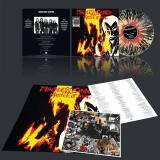
Ursprünglich 1968 in New York auf Barakas eigenem Label Jihad veröffentlicht, ist "Black And Beautiful Soul And Madness" ein leidenschaftliches Zeitdokument der 1960er Jahre. Man könnte es leicht für eine verschollene Veröffentlichung von ESP-DISK halten, fügt es sich doch nahtlos zwischen Sun Ra, The Fugs und Albert Ayler ein. Die Band nutzte ihre Stimmen auf vielfältige Weise: mal singend im Stil von Doo-Wop und Soul, mal rappend im Stil der Last Poets, und oft auch beides gleichzeitig. Emotional fesselnd und von enormer Kraft, wird dieses Werk nun erstmals wieder auf Vinyl zugänglich.
Peter Brown's P&P label is possibly the most collectible of all the Disco-era independent labels. The distribution was always patchy, the records would often appear out of nowhere and then disappear equally fast. Many of the artists were one-off productions or working under hastily conceived pseudonyms.
In short, P&P has all the ingredients of the perfect label for diggers everywhere with records still being discovered some 40 years later. Little is known about Marta Acuna but plenty is known about the production team of Patrick Adams and Lonnie Johnson who were just way ahead of everyone else on this spacey Disco jam from 1977. It's been consistently popular on the cooler dance-floors for the last 20 years but suddenly the 7" has sprung into demand. A mint copy isn't far off £100 these days, so it seemed a good time to finally make the 7" available again.
As per usual, this will be on the original 7" P&P label and mint (which is near impossible to find these days). Always handy to have a guaranteed banger on a crisp 7" pressing and that P&P label looks so good. Black Vinyl in P&P Disco Sleeve.
out of Stock
Last delivered 2 years ago available to reorder, subject to availability
Handpicked by MoBlack, here are eight tracks that lended the dynamic vision and artistic stimulation for what is now a bastion of Afro House. Collected from the label's artists, friends and inspirations of past and present, "House of Mo'" comprises musical snapshots from Mimmo Falcone's journey as a DJ, producer and label head. Reverberating rhythms and grooves attached to memories made on and off dancefloors, these sonic wonders are part and parcel of the House the label built, go-to jams that speak of the spirit that binds its growing family.
Tread lightly, listen hard, and feel at home.
out of Stock
Last delivered 3 days ago available to reorder, subject to availability
Gilles Peterson presents Norma Winstone Live at Maida Vale is a live album that comes as part of an amazing collaboration between BBE Music and UK DJ and radio legend Gilles Peterson. Pre-empting the future release of Gilles' compilation BBC Sessions Vol 2 – Maida Vale: the end of an era on BBE Music, this Norma Winstone concert is an absolute must have for anyone who is part of the Jazz fanbase. Released as a vinyl LP this recording captures vocalist and composer Norma Winstone with a group of contemporary and emerging musicians that include her sons Leo and Alex Taylor on drums and vocals respectively, the world renowned tuba player Oren Marshall, pianist and composer Elliot Galvin (Shabaka Hutchins, Emma-Jean Thackray) and saxophonist Mark Lockheart (Polar Bear, Radiohead, Robert Wyatt). As BBE Music celebrates 30 years as one of the UK's (and the world's) pre-eminent and innovative Black music record labels this collaboration with Gilles Peterson is an apt partnership to curate, release and highlight some of the music from Gilles' groundbreaking BBC Sessions recorded at the globally famous Maida Vale studios. To feature a concert by a legend such as Norma Winstone, who has worked with everyone from Joe Harriot to Michael Garrick to Ian Carr's Nucleus in her over 50 year career, is clearly a highly personal moment for Gilles as he described the Maida Vale gig as 'possibly the biggest highlight of all my years at the BBC'. Released on BBE Music as a five track vinyl LP, Gilles Peterson presents Norma Winstone Live at Maida Vale comes in a gatefold sleeve which features photographs from the session and sleeve notes by the excellent music and culture writer Emma Warren.
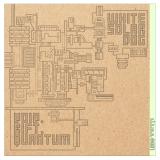
The legends of the golden era of Italian soundtracks and library music go by many names, but the backbone of that era’s definitive sonic identity is most often identified as I Marc 4 (also known as Marc 4 or I Marc Quattro). While the moniker might be less familiar to the uninitiated, it is a simple acronym derived from its founding members: Maurizio Majorana (bass), Antonello Vannucchi (organ), Roberto Podio (drums and percussion), and Carlo Pes (guitar). The number "4" serves to highlight the core synergy of these four master musicians. Their journey began in Rome’s vibrant jazz scene of the 1950s and early 1960s, where they honed their craft as members of the RAI national orchestra and collaborated with the most prominent jazz and pop icons of the day. However, it was their pivotal role in defining the Italian cinematic sound of the 1960s and 1970s that secured their legacy. Their unmistakable style was an eclectic fusion of beat, jazz, classical, and Latin influences—textured with early synthesizers, experimental sound effects, and a blend of electronic and baroque instrumentation. Consequently, their initials are etched into the credits of countless landmark recordings by legendary composers such as Nino Rota, Armando Trovajoli, Gianni Ferrio, Alessandro Alessandroni, Piero Umiliani, and Ennio Morricone.
Beyond their work as session luminaries, they produced a vast body of library music under their own name at the legendary Telecinesound Studios in Rome. These recordings were released through prestigious library labels like Sermi, Ricordi, and Fonit Cetra, as well as through their own imprints: Nelson Records, Silver Men, and Silver Music, spanning a definitive series of sixteen albums. Ten of these volumes were issued on Nelson Records during the 1970s, featuring the now-iconic military stencil design. Each release was color-coded: red (G.L.P. 1001), dark blue (G.L.P. 1002), gold (G.L.P. 1003), light green (G.L.P. 1004), brown (G.L.P. 1005), black (G.L.P.1006), light blue (G.L.P. 1007), yellow (G.L.P. 1008), orange (G.L.P.1009), and cool green (G.L.P. 1010). The series was completed by two elusive companion releases: S.M. 2001 on Silver Music and S.M. 2002 on Silver Men, both presented in the same distinctive brown sleeve. Rediscovered in the 1990s and 2000s, these Nelson releases have since achieved cult status among collectors, producers, and DJs worldwide. The final two installments, S.M. 2001 and S.M. 2002, remain the rarest and most enigmatic of the set.
Often overlooked, they contain some of the most profound "hidden gems" in the group’s catalog. The tracklist traverses a wide stylistic spectrum: from the rare groove and proto-hip hop energy of "Trama Nella Metropoli", "Beat Morbido", and "Candy", to the lush cinematic atmospheres featuring the ethereal vocals of Edda Dell'Orso on "Summer In Love", "On The Rain", and "Arcobaleno". The collection is rounded out by sophisticated jazz pieces like "Flauti Ensemble", "Passeggiata", and "Atmosfere Dolci”. Sonor Music Editions has meticulously curated the finest moments from these two rare albums for this first-ever dedicated reissue. Bringing together the best of Silver Music (S.M. 2001) and Silver Men (S.M. 2002), this release retains the iconic stencil artwork but introduces a striking silver finish. This design choice honors the original ten-album sequence while shedding new light on these outstanding recordings—works that remain, in every sense, golden.
out of Stock
Last delivered 67 days ago available to reorder, subject to availability
The third release for Parallel Line comes from Aberystwyth-born, Berlin-based, Severin Black. He works closely with woodwind, electronics, low-end and feedback, runs his own label Archaic Vaults, and has played everywhere from the ICA to a 460-year-old church with a giant pipe organ. The last album, Country Music, featuring Pavel Milyakov and Vanessa Bedoret, showed how far his Celtic-rooted improv style has reached across the experimental dub community.
The EP opens up with a flute loop leading the eerie track "Brandy", not quite like anything else. "Yarmouth" goes darker and more ritualistic, with haunted stepper vibes. Then the B-side is nine minutes of "Cautious (Dub)", a stretched-out live take that takes you on a slow, dreaded journey.
Mastered by E-mura, artwork by Zodiak. Photo by Thom Mac Gillavry.
out of Stock
Last delivered 73 days ago available to reorder, subject to availability
Soul Music legend Candi Staton returns to her down-home Alabama roots on her 32nd album, Back to My Roots. The twelve-track Americana set features an array of Staton-penned originals and some well-chosen covers.
"These songs represent my roots," Staton adds as she reflects on her many trials and triumphs. "Even the new songs on some level represent something I've experienced and that's what real soul music is about." Back to My Roots was produced by Staton with her second eldest son, Marcus Williams, a professional drummer who has toured with the likes of Peabo Bryson, Isaac Hayes, and Tyler Perry. They brought in Mark Nevers of Lambchop fame, who produced three of Staton’s prior Americana albums for Honest Jon’s and Thirty Tigers, to sweeten certain tracks. “Some of the first songs I ever heard were songs like `Peace in the Valley’ and `It’s Gonna Rain,’” says Staton. “The new songs or cover songs are tracks that remind me of that era when I was growing up as a child and evolving as a young woman. That’s why I named the album Back to My Roots because I’m going back to the roots that made me who I am.”
Staton received the Americana Music Association UK’s highest honour, the International Lifetime Achievement Award, at the UK Americana Music Awards ceremony at Hackney Church in London last year for her southern soul work that stretches from her 1969 Muscle Shoals hits to her more recent collaborations with the likes of Americana kings Jason Isbell and John Paul White.
The album opens with a mid-tempo Bonnie Raitt-styled contemporary blues “I Missed the Target Again” that finds Harry Connick Jr.’s longtime guitarist Jonathan DuBose Jr. (aka the Prophesying Guitarist) showing off his skills that set the tone for the song and the album.
Staton’s older sister, Maggie Staton Peebles (who alongside Staton was a member of the Jewel Gospel Trio in the 1950s), joins her for two duets. The first, “It’s Gonna Rain,” features just a drum, steel guitar and vocals. “My mother used to sing that song to us all the time when I was a child,” Staton recalls. “It’s a really soulful kind of song I wanted to revisit.” They then take turns leading Thomas Dorsey 1939 gem “There Will Be Peace in the Valley” that Elvis Presley popularized in the 1950s.
“Hang on in There” is a new, mid-tempo song that has an old school gospel flavour and features vocals from veteran bluesman, Larry McCray.
While in Europe in 2023 for her farewell concert tour that took her to the Glastonbury Festival and Love Supreme, Staton and her British band, PUSH, went into a London studio to record a new version of The Rolling Stones’ 1972 gem, “Shine A Light.” “I love the way that came out,” Staton says. “We put a big choir on it and put our own twist on it.”
From there, Staton revives another Thomas Dorsey classic, “The Lord Will Make a Way Somehow,” with a bluesy vibe. When Al Green started recording gospel in the early 1980s, he re-introduced this song into the culture.
“God’s Gonna Use Me Anyway” is a new mid-tempo blues with subtle Caribbean influences.
The mood takes a turn on “1963.” It’s a poignant, spoken-word reflection on September 15, 1963, when four black girls were killed in the Birmingham Church bombing. “I was in the city that day and I remember the chaos and horror after the bombing,” Staton recalls. “Just thinking of how racism and hatred caused those men to kill those girls was so emotional for me that I could only do it in one take.”
It's a perfect segue into "Reach Down and Touch Heaven," a haunting, plea for divine intervention into the affairs of mankind. "That's straight Baptist," she says. "I used to be a church pianist back in the 1960s. I've never played piano on one of my records before so that's a unique song for me because I’m finally playing on one of my records. The message of that song is about the homeless. It came to me when a homeless person on the street asked me for $5. When God touches your heart to help somebody else that’s heaven to God’s hears. So, when we reach into our purse or wallet to help someone, we’re touching heaven."
Staton offers love as an antidote to hate on the bouncy, Motown-styled, “Love Breakthrough.”
Her publicist brought Aaron Frazer & the Flying Stars of Brooklyn NY’s 2017 cut “My God Has a Telephone” to Staton’s attention. She shifts the track from a retro 1960s groove to more of a 1980s Malaco Records arrangement, a subtle but distinct variation. Staton brought in her longtime friend and STAX Records legend, William Bell (“I Forgot to Be Your Lover” and “Trying to Love Two”), to add raspy seasoning to the track.
The album closes with the wistful, “In God’s Hands We Rest Untroubled,” that was originally written and recorded by the late country star, Lari White, who died in 2017 at the age of 52. “Lari sent me that song to consider at least ten years ago and I always loved it,” Staton says. “The record label didn’t want it on the album or something, so I just held it.”
Staton says, “I grew up hearing a lot of these old songs when they were new songs. I toured with the Jewel Gospel Trio in the 1950s and we got to know people like Mahalia Jackson, Sam Cooke and others who sang these types of songs. So, I’m sort of paying tribute to them and the influence they had on me by refreshing these songs and making new songs in the old style.”’
Finally for this time round we have Tieum back again on the UM label with one of his greatest EPs from the just before the dawn of the new millennium. Tcher No Beat #5 was one of the best records on the label with the classic track “French People Piss Me As” with the samples from Cartman from South Park! Such a memorable 12” from the 90’s that has been out of reach for most collectors. A split of coloured and black vinyl for this release. Big respect to Tieum for such amazing music from that with its awesome programming and production still stand up well today!
out of Stock
Last delivered 74 days ago available to reorder, subject to availability
Finally for this time round we have Tieum back again on the UM label with one of his greatest EPs from the just before the dawn of the new millennium. Tcher No Beat #5 was one of the best records on the label with the classic track “French People Piss Me As” with the samples from Cartman from South Park! Such a memorable 12” from the 90’s that has been out of reach for most collectors. A split of coloured and black vinyl for this release. Big respect to Tieum for such amazing music from that with its awesome programming and production still stand up well today!
out of Stock
Last delivered 74 days ago available to reorder, subject to availability
DYING VICTIMS PRODUCTIONS is proud to present the highly anticipated debut album of Poland’s TORPOR, Ɖungeon Ɖescent, on CD and vinyl LP formats. TORPOR were formed in Warsaw by three school friends and music fans under the huge influence of Bathory. While recording their first release, Burning Realms / Behold the Spell of Black Fortress, in dusk of 2017, the band were laying their music foundations inspired by the epic side of black and the haunted / melancholic side of early ‘80s heavy metal. Since their last release – 2021’s The Ancient Tales EP, which was actually recorded in 2019 – TORPOR parted ways with their drummer, who alongside Mike Magister I.V. and Franciszek Archont, was a founding member of the trio. Upon the arrival of a new drummer and long-time friend, Bloodhammer, they recorded their debut album. It marks the result of their work and path undertaken. "We knew it was our direction to follow and polish, so now, after some time, we can happily present our debut album, Ɖungeon Ɖescent,” the band state. “It is our first real record that pictures our vision exactly how we liked to. After years of wandering around basement rehearsal rooms and two self-released demos, we are finally coming out of our lairs with this LP under the banners of DYING VICTIMS." Their past connections with fellow labelmates ARMAGH and FUKKIN’ VENGEANCE somewhat explains TORPOR’s link to the idiosyncratic side of ancient heavy metal, which has taken far more prominence on Ɖungeon Ɖescent over the first-wave black metal side – but that’s only part of the picture. Some might call it “cleaning up,” others might liken it to a harnessing of feral energies, but TORPOR’s emphatic-yet-stoic strut conveys equal amounts of energy and mystery, finesse and fine-tuning. Of course, the power-trio can kick into high gear when they want to, be it heroic gallop or even hypnotic blast, but their sense of movement from one moody segment to the next imparts a narrative flow that’s part and parcel of their lyrical imagery. Or, perhaps it’s true swords & sorcery metal without belaboring the point – no “COOL IMAGERY DUDE” without the music & atmosphere to back it up, more specifically – that harkens to a glorious, sadly bygone era. However you approach this Ɖungeon Ɖescent, TORPOR have surely delivered a cult classic in the making. Passion, authenticity, the reverberating ring of truth…ancient powers arise from time immemorial
60 Years celebrates six decades of of pianist and composer Horace Tapscotts radical and uplifting musical and social vision. Digging deep into the Arkestra"s archives, the album gathers breath-taking unreleased material, including previously unheard compositions, from every stage of the band"s development - from Tapscott"s earliest iterations of the group, recording at home in 1961, to the current incarnation of the band, led by the new generation of young musicians. Remastered from archival sources by the Arkestra"s longstanding engineer Wayne Peet, 60 Years is presented by The Village, a label operated by members of the Pan Afrikan Peoples Arkestra. With archival photographs documenting the Arkestra"s history, the album arrives with liner notes featuring track-by-track commentary from Arkestra members past and present. In the words of Mekala Session, "This release is the culmination of 60 years of Black history through sound". South Central"s musical colossus is still very much awake, and 60 Years reveals the secrets of the Ark.
DYING VICTIMS PRODUCTIONS is proud to present JORDSJØ’s highly anticipated new album, Pestkrønikene, on CD and vinyl LP formats. JORDSJØ released their first tape in 2015. With the fourth tape, 2017’s Jord, the band got a wider audience outside their native Norway and subsequently released full-lengths on such labels as Karisma, Pancromatic, and Apollon. The band works as a duo in the studio, but for the last eight years, they have played live as a quintet. JORDSJØ are led by multi-instrumentalist Håkon Oftung, who has been a part of Oslo’s psychedelic, progressive, and heavy rock undergrounds for many years, and has played in Black Magic, Tusmørke, The Chronicles of Father Robin, Wobbler, Zenon, and labelmates FLIGHT to mention but a few. He’s joined by longtime companion and childhood friend Kristian Frøland, who plays drums and percussion, and also produced and mixed Pestkrønikene. Pestkrønikene is a part of JORDSJØ’s 10-year anniversary, and their ninth release overall. The record started out as a compilation of studio outtakes from 2020-2025, but then took on a form of its own, with the songs linked together thematically. Lyrically, those themes reflect war, upheaval, the fall of kings and the rise of a new dawn, and cults and sects. Sonically, Pestkrønikene encapsulates the JORDSJØ experience as well as extends beyond it. Mythical and magickal, the album honors the band’s background in hard rock and heavy metal, and combines this with their own analog and organic blend of progressive / psychedelic folk rock.
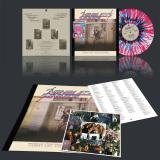
The name RUTHLESS in itself means “without mercy.” Since the early 1980’s, lead by vocalist Sammy DeJohn, the band has stayed true to its style of metal, from the classic first EP “Metal Without Mercy” (1984) and the debut cult album “Discipline Of Steel” (1986), to the later albums “They Rise” (2015)” and “Evil Within” (2019), they’ve never wavered on the power of bands like JUDAS PRIEST, ACCEPT and BLACK SABBATH, always staying true to their roots.
Their latest album “The Fallen” was released in January 2024 on their new label Fireflash Records (WOLF, HOLY MOSES a.o.), followed by a European tour as support act for their fellow believers JAG PANZER, cementing their reputation as a magnificent live band. Now, RUTHLESS are proud to announce the release of their next studio album “Curse Of The Beast”. The band has created an album full of power and passion, combined with the classic 80s metal sound, ready to become a future classic and a must-have for anyone who loves traditional heavy metal like METAL CHURCH, JUDAS PRIEST, EXCITER, and others. “Curse Of The Beast” was recorded along with producer Ron Sandoval (KERRY KING a.o.), who also did the final mix and mastering. The album will be released on July 17th, 2026. “We can't wait for you all to hear it. We have a couple of surprises on this one and it's going to destroy,” reveals vocalist Sammy. Immediately afterwards, the band will play selected shows in Europe, along with MINDWARS as well as THE TROOPS OF DOOM, including the legendary “Headbangers Open Air.”
Archeo Recordings is a record label. Old, lost, obscure and forgotten gems and a boundless focus on the new Balearic scene for a wider audience of collectors, DJs and music lovers. All releases are limited edition. This release is a Limited Edition 12" (100 on Red and Black Marbled vinyl). New life and an expanded treatment for this 1990 French House classic with the 2 Original tracks + 2 special dancefloor Remixes by none other than Marcoradi.
out of Stock
Last delivered 34 days ago available to reorder, subject to availability
Reissue of the debut album by Laghonia, one of the most important bands of Peruvian rock. Originally released in 1960, "Glue" will be cherished by lovers of Latin American rock, pop and psychedelia as practiced by other similar classic bands such as Traffic Sound, We All Together, Black Sugar and Telegraph Avenue. After four brilliant singles, in 1969 the Peruvian band New Juggler Sound, formed by Saúl Cornejo (guitar), David Levene (lead guitar), Ernesto Samané (bass), Carlos Salom (organ) and Manuel Cornejo (drums), changed their name to Laghonia and released their debut LP "Glue" on the MAG label. The album included those previously released tracks, which were very influenced by the British rock scene of those years, to which they added fiery guitars bursting with fuzz and wah-wah, the ever present and hypnotic Hammond organ sound and Latin American percussion and rhythms. The result was a wonderful mix of mid-60s British beatmelodies, Jimmy Hendrix's intense rock, Cream's heavy blues and Santana's Latin rock. "Glue" is regarded as one of the key albums of Latin American psych and garage rock and is an essential record for any fan of those genres. Deluxe edition: 180g vinyl LP in tip-on jacket and insert with liner notes.
T. VINCENT: LIVE IN LONDON! (Total Pleasure/Virgin Music Group) offers up the opportunity to relive or experience for the first time that enthralling evening, a historic occasion that found Annie Clark, Buckley and the orchestra reimagining 19 classics, staples and rarely played deep cuts spanning the St. Vincent catalog from 2007’s solo debut Marry Me up to 2024’s multiple-GRAMMY-winning All Born Screaming.
Album Background
A complete live recording of St. Vincent's triumphant BBC Prom performance at The Royal Albert Hall with The Jules Buckley Orchestra. Featuring reimagined works from across her entire career, this is a chance for fans to experience an evening that Rolling Stone UK called "A glorious re-imagination," what The Times Of London classified as "Here's how to do a classical crossover," and about which Far Out Magazine UK said "There are certain gigs that are always destined to be great -- like St. Vincent, at the Royal Albert Hall, with an orchestra."
Ever since the late 1950s bossa-nova revolution, Brazil’s influence on French music has been undeniable. Pierre Barouh, Georges Moustaki and a vast array of lesser known artists, all made the Musica Popular Brasileira (MPB) an axis of promotion at the service of a cool and metaphysical, modern and mixed Brazilian lifestyle. Some were seduced by the poetic languors of the bossa, some were looking for fun, and others just loved the American hybridization of jazz-bossa, jazz-samba.
What is bossa nova? One of its creators, Joao Gilberto said: "Its style, cadence, everything is samba. At the very start, we didn't call it bossa nova, we sang a little samba made up of a single note - Samba de uma nota so .... The discussion around the origins of bossa nova is therefore useless”. It is nevertheless useful to remember that these magnificent Brazilian songs, which the guitarist describes as samba, were shifted and balanced around improbable chords. "I like things that lean, the in-betweens that limp with grace," said Pierre Barrouh, quoting Jean Cocteau.
With emotion, arrangements for violin and supple guitar licks, bossa nova rapidly changed. A transformation that can be heard in the Tchic, tchic, French Bossa Nova 1963-1974 compilation, the result of a cultural reappropriation, which traveled through the United States and supplemented itself in France.
A musical revolution that has remained significant, bossa nova was born in Rio. From 1956 to 1961, Brazil lived through its golden years. In five years, the country had invented its modernist style. Elected president in 1956, Juscelino Kubitschek de Oliveira, an elegant man with a broad forehead, brandished a promising slogan: "Fifty years of progress in five years". He quickly got to work. Not worried about increasing debt, he launched the project for a new federal capital, Brasilia, designed by the communist architect Oscar Niemeyer. Volkswagen opened state-of-the-art factories and created the “fusquinha”, the Beetle. In Rio, the Vespa made its first appearance. The Arpoador Surf Club crew run into the “girl” from Ipanema, Helô Pinheiro - the tanned garota ("chick"), between a flower and mermaid, who at 17 walked by the Veloso bar, where the fiery author and composer, Tom Jobim and Vinicius de Moraes, were getting drunk on whiskey. From then on, bossa symbolized cool.
In 1958, Joao Gilberto recorded Chega de Saudade, which the directors of Philips denied, calling it "music for fagots". The marketing director, who believed in it, secretly pressed 3000 78-inch vinyls and distributed them at schools around Rio, creating a tidal wave.
American jazzmen then took over. In particular, trumpeter Dizzy Gillespie and guitarist Charlie Byrd. In November 1962, the Brazilian Ministry of Foreign Affairs funded a "Bossa-Nova" concert at Carnegie Hall in New York, inviting the genre’s pioneers. Unprepared, the show soon turned to disaster. But the troupe was invited to the White House by Jackie Kennedy. The first lady loved "the new beat" and in particular Maria Ninguem, a song by Carlos Lyra, later covered by Brigitte Bardot.
In Brazil, the 1964 military coup quickly ended this euphoria. The destructive atmosphere that ensued pushed many Brazilian musicians to leave, if not to exile. Thus, Tom Jobim, Sergio Mendes and Joao Gilberto arrived to the United States. In New York, Joao Gilberto met saxophonist Stan Getz. At the time, he was married to the Bahianese Astrud Weinert Gilberto, who had a German father. She had never sung before, but she knew how to speak English. Getz therefore asked her to replace her husband on The Girl From Ipanema. The Getz/Gilberto record with Tom Jobim on piano, was released in March 1964. Phil Ramone, the "pope of pop" was in charge of sound.
Bossa nova arrived in Paris through the classic “guitar-voice” channel (Pierre Barouh, Baden Powell, Moustaki…) But France loved jazz and Paris had already welcomed its American contributors. All these good people were to pass through Saint-Germain-des-Prés. The cabaret l'Escale became the Mecca of Latin American sound where one could find Pierre Barrouh and his friends, such as the Camara Trio, samba-jazz aces, whose only record was published by the Saravah label. With a band strangely called Les Masques (a band that included Nicole Croisille and Pierre Vassiliu, among others), the Camara Trio recorded an interesting Brazilian Sound, including the track Il faut tenir which is present on this tasty compilation of rarities.
Other enlightened musicians can also be found on the compilation, such as Jean-Pierre Sabar (songwriter for Hardy, Auffray, Leforestier ...) and the French pop rock organist Balthazar. In 1975, Sabar recorded Aurinkoinen Musiikkimatka on a Finnish label, which featured the crazy Vai, Vai, included on this record. We are now following the footsteps of Brazilian electronic musicians such as Sergio Mendes, Eumir Deodato or Marcos Valle who created funk and disco sounds on their keyboards and synthesizers. A style that influenced Véronique Sanson when she wrote Jusqu’à la Tombée de la nuit in 1969 for Isabelle de Funès, the niece of Louis and a great friend of Michel Berger - Sanson did end up singing this track on her 1992 Sans Regret record.
The pinnacle of exoticism and travel, Sylvia Fels’ Corto Maltese includes bongos, sea mist and ocean sounds. The title was taken from Jacky Chalard’s concept album written in 1974, Je suis vivant, mais j’ai peur (I am alive, but I am scared), based on Gilbert Deflez’s science fiction novel.
However, bossa nova extended the scope of popularity. "In the 1970s, I was a fan of Sergio Mendes, Getz / Gilberto. I fell in love with this music that I knew because I had been an orchestral singer, " explained Isabelle Aubret, who in 1971 delivered a composite record of covers by the very funky Jorge Ben, Orfeu Negro, Tom Jobim, Vinicius de Morais and Jean Ferrat. "I recorded this album for Meys Records in Paris, far from Brazil, with wonderful musicians, François Raubert, Roland Vincent, Alain Goraguer...". The latter wrote the arrangements for Casa Forte, a very percussive title borrowed from Edu Lobo, one of the initiators of the bossa who spent time in California. "Jazz and bossa came together and produced very rhythmic music. I love singing, it allows me to dream, to have fun, to feel a high on stage, and these songs brought me joy, made me swing, my singing felt like a dance.”
The world tours of French singers and their desire for the tropics, often brought them to Rio with its hills, forests, caipirinhas and tanned bodies. There are surprises though, like this Iemenja (Iemenja is the goddess of the sea in the Afro-Brazilian candomblé religion). Not unlike the composer and musician Jean-Pierre Lang, based in Sao Paulo, Claire Chevalier taught Brazil to Brazil. In 1970, the singer and painter published a 45-inch vinyl, Mon mari et mes amants (My husband and my lovers), under the improbable pseudonym of Clarinha (little Claire). She was then living in Rio, with her husband, Joël Leibovitz, who founded a band called Azimuth, and who owned a record label specialized in "sambas enredos" songs for samba school parades.
For its B side, she asked Pierre Perret to come up with lyrics for a song composed by Carlos Imperial: "Oh goddess of the sea, o goddess Iemenja, I bring a white rose to adorn your long hair ..." . "Perret came to see us, and we had fun, remembers Joël Leibovitz. We wrote Lemenja for fun, we recorded it at the Havaí studio, behind the Central do Brasil the central station. Erlon Chaves, the arranger who worked with Elis Regina, joined us" adding his share of Afro-Brazilian percussions and funky brass to the mix.
There is a common misunderstanding in Franco-Brazilian history: that bossa, admittedly hedonistic, is perceived as funny, even though the poets who wrote the texts are often philosophizing on the human condition. Its French interpreters pull it towards a carnival inspired universe, far removed from its fundamental essence. Thus, Jean Constantin covered the famous Samba da minha terra, an ode to the art of samba written by the classic Bahian composer Dorival Caymmi, renaming it with the enticing title of Pas tant de tchi tchi pompon: "On your pier there is no tchi tchi / when you arch your back, you know everything is alright ”(lyrics by Gérard Calvi). This expedited bossa aims for the absurd, but retains a certain elegance.
Indeed, Jean Constantin was not an idiot, the rather large man had a huge mustache and liked fantasy, (Les pantoufles à papa, Le pacha, inspired by cha-cha-cha-cha, salsa and jazz) but he was also the lyricist of Mon manège à moi interpreted by Edith Piaf, the composer of Mon Truc en plume by Zizi Jeanmaire and the soundtrack of François Truffaut’s 400 Blows. Le Poulpe, published in 1970, from which this bossa is extract, was arranged by Jean-Claude Vannier, an accomplice of Serge Gainsbourg’s Melody Nelson. In short: "There is enough of samba / By looking at the parasol / Because my poor cabeza / Is going to die in the sun".
Even the American actress Marpessa Down, who was at the heart of the bossa nova revolution with her role as Euridyce in Marcel Camus’ film Orfeu Negro, winner of the 1959 Cannes Palme d'or, fed the clichée with Je voudrais parler au petit cuica - "Tell me how you manage to always make people want to dance / It's true, I must admit that I cannot resist your magic" - in consequence, once can hear the cuica, a little drum inherited from the Bantu.
But bossa nova had many angles. Societal, of course, pushing actresses who were symbols of women's liberation like Brigitte Bardot, Jeanne Moreau, or Sophia Loren to engage in the exercise of accelerated bossa. In February of 1963, Sophia Loren made a record in French in Rome, Je ne t'aime plus, featuring the song De jour en jour, a bossa written by two Italians, Armando Trovajoli and Tino Fornai, which was released a little later by Barclay. Bossa accompanied the 1960s, a decade of moral liberation. Ann Sorel, who interpreted La Poupée des favellas, caused a sensation with L’amour à plusieurs, a provocative song written by Frédéric Bottom and Jean-Claude Vannier. As for the actress Andrea Parisy, she displayed her bourgeois cheekiness in Marcel Carné's Les Tricheurs before interpreting Les mains qui font du bien. And Magalie Noël, the friend of Boris Vian, who sung Johnny fais-moi mal, was hired to sing Une énorme Samba, composed by Alain Goraguer (arranger to Gainsbourg, Bobby Lapointe and Jean Ferrat) with lyrics by Frédéric Botton.
But in the end, of what wood is bossa nova made of? The answer is given by Christianne Legrand, daughter of Raymond the conductor, and sister to Michel the composer: "With me, with jà" - jà means "immediately" in Portuguese. In 1972, the singer, an expert in vocal jazz and a member of the Double Six, published Le Brésil de Christianne Legrand. Two songs included on the Tchic Tchic compilation that demonstrate how bossa, jazz, funk, rock, etc. work like a swiss army knife: the music is used to denounce broken systems, or miracles, HLM et ciné roman, Cent mille poissons dans ton filet, two songs from the O Cafona soundtrack, a successful telenovela broadcast, at the time in black and white, on TV Globo. The first was adapted in French by the fighter and friend of the Legrand tribe, Agnès Varda. The second is content with a play on words, jostling them into a summer fun.
Véronique Mortaigne
out of Stock
Last delivered 3 months ago available to reorder, subject to availability
analoque records returns with its third release, welcoming Andrei Ciubuc for a tightly crafted 3-tracker. True to the label’s timeless character, the record moves through rolling grooves, old-school energy and deep-rooted aesthetics.
High-quality mastering and cut, pressed on 180g black vinyl.
out of Stock
Last delivered 3 months ago available to reorder, subject to availability
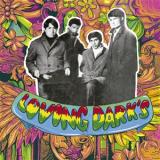
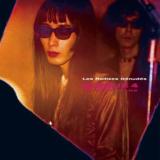
Los Amantes Oscuros" brings together for the first time on vinyl the recordings made between 1968 and 1969 by pioneers of Bolivian garage rock, Loving Darks, originally released on their three EPs. A selection packed with proto-punk covers of hits by the Stones, Cream, Tony Hatch, and more-often surpassing the originals in attitude and power. Their original records are highly sought after and are virtually impossible to find in any condition_ If we had to choose the Latin American country where the rawest and wildest garage and beat records of the '60s were recorded, Bolivia would be one of the clearest contenders. For some strange reason-surely related to the country's extreme conditions, its high altitude, and the influence of huayno-Bolivian recordings are truly unique and fascinating. A multitude of bands sprang up under the influence of groups-mainly British-that dominated the international charts. From the ashes of two of Bolivia's most important seminal bands, Los Black Byrds and The Turtles, two new groups fundamental to the history of Bolivian rock would be born: the mythical Climax and the legendary Loving Darks. "Los Amantes Oscuros" brings together for the first time on vinyl the recordings this band made between 1968 and 1969, originally released across three EPs on the local Lyra label. Their repertoire is packed with covers such as 'El Adivino,' a sped-up reinterpretation of 'Fortune Teller,' or even 'Algo de títere,' a reworking of 'Jumpin' Jack Flash.' They also adapt the classic 'Call Me' by Tony Hatch and 'Toad' by Cream, from whom they borrow the cover of one of their most iconic albums for the artwork of their EP "Complicado." In fact, 'Complicado'-a proto-punk version of the Rolling Stones' 'Complicated' and their signature track-is a perfect example of how a Bolivian band could outdo the British giants in attitude and power. Their importance lies in having paved the way for new sounds, styles, and aesthetics within a still-emerging scene. This compilation is a joint release with the Peruvian label Rey Record and includes an insert with notes on the band's history. First time vinyl reissue.
out of Stock
Last delivered 3 months ago available to reorder, subject to availability
DJ Support: Louie Vega, Ralf Gum, Jihad Muhammad, Zepherin Saint, Mr. V, Doug Gomez DjPope, DJ Beloved & Brutha Basil to name a few.
Sean McCabe’s Good Vibrations Music label opens the vault doors for a peek inside some of its closely guarded & much-loved releases courtesy of this special limited edition 12 inch. Featuring 4 new to vinyl releases & including a raft of luminary names from across the soulful spectrum this is sure to be a be a hot fave with long standing fans of the label.
Glenn Underground’s Jazz-Funk fuelled rework of 'This Place' kicks things off and needs no introduction… heavily supported & much loved through the soulful circles & beyond with the likes of Louie Vega, Dave Lee, Jimpster, Jamie 3:26 & Fred Everything (to name a few!) all loudly banging the drum – people have been clamouring for this to be on vinyl. You spoke, we listened!
Up next is 'Modulate', a collaborative force of the highest order between Sean & long-time friend Black Sonix. Expertly fuzzying the lines across Deep, Soulful & House is somewhat of a speciality for the duo respectively and there’s bags of all 3 intertwined throughout alongside a hefty sprinkling of sun-kissed, Latino-inspired pianos.
'Still Standing Here' kicks things off on the B-side and begin in March 2022 as vocalist Madeeha recorded an accapella vocal idea in a phone voice message, quietly singing into her phone to avoid waking the neighbours. She sent the idea to drum & bass producer from Bristol, DJ Mixjah, who then approached friend Sean McCabe with the idea. Together they produced a hypnotic afro-tinged soulful backing track to fit with the voice message, with an intention to re-record it in a studio environment. Sean and Mixjah soon realised that the music they had created blended perfectly with the sincerity, intimacy & rawness of Madeeha's heartfelt performance in the original voice message and decided to stick with it. A firm fave for Atjazz, Crackazat , DJ Spen & Emmaculate.
Wrapping things up is 'You Don’t Know', a slick & energetic dancefloor bubbler from London based producer/DJ ‘David Bailey’ and Canadian soulful songstress ‘MissFly’. David Bailey is a firm favourite amongst the London house music community. He’s produced standout releases on labels such as Idris Elba's 7wallace, Makin Moves, Good Vibrations Music, Rhemi Music & Unquantize. MissFly is known for her soulful serenades and ability to write songs 'on the fly' in the studio. She has carved out an impressive discography on soulful house nuggets such as '1972,' 'Wanna Love You' and 'Thankful'
Dreamlike longing, the lament of what may be forever lost, and unrelenting rage define the dark rock band from Stuttgart Vast moments of calm are built only to be torn down unexpectedly, demanding the listener's full emotional commitment. Since their 2019 debut EP Black Awakening, which received strong press coverage and worldwide airplay, ASTRAYA have continued to guide listeners toward new horizons of realization. Their fully handmade wall of sound is crowned by the ethereal vocals of Melina Abele, shining like sun rays through black clouds. In 2024, ASTRAYA joined forces with the Italian label These Hands Melt, under which they are now releasing their highly anticipated second LP "Atropine".
Fenomenon are a trio hailing from Stavanger, on the west coast of Norway. Throughout their career they have released four full-length records, effortlessly moving between future jazz, downtempo, soul, and broken beat.
Their lush debut 12" Pacific Memories on Nuphonic made considerate waves and made the ears of many DJs perk up. As a result, the tracks "Pacific Memories" and "Solara" were featured on many big-name compilations and mix CDs such as Tom Middleton's The Sound Of The Cosmos, Hed Kandi, and MTV Summer Lounge. The latter was also featured in Michael Bay's sci-fi thriller The Island, featuring Scarlett Johansson. The follow-up single visjon.nord was only released as a white label promo due to the unfortunate demise of Nuphonic in 2002.
Pacific Memories: The Early Tapes collects tunes from both these EPs complemented by songs recorded around the same time. Originally released on CD only in 2006 by the Norwegian label Beatservice, it's now available on vinyl for the first time for its 20th anniversary. If you're a fan of Jazzanova, The Cinematic Orchestra, Kinobe, and Blue States, you can't miss this.
Pacific Memories: The Early Tapes is available as a 20th anniversary edition on black vinyl.
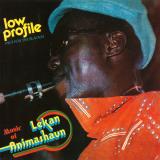
Strut Records proudly presents a new reissue of the original Afrobeat classic Low Profile (Not For The Blacks), recorded and composed by Afrika 70 saxophonist and bandleader Lekan Animashaun and produced by Fela Kuti. After years touring the world as Fela’s baritone saxophonist, Animashaun stepped forward to lead the legendary Egypt 80 band following Tony Allen’s departure, remaining the group’s musical director until Fela’s death in 1997. He continued on subsequent tours with Seun Kuti until 2016. Lekan began recording his only solo project, Low Profile, in 1977. The album was composed and recorded across sessions at home in Nigeria and on tour with Fela, who both produced the recordings and added keyboards to the album’s title track. ‘Low Profile (Not For The Blacks)’ referenced a government campaign during the country’s 1970s oil boom: “It was inspired by a speech by Olusegun Obasanjo, Nigeria’s military Head of State, when he urged black people to keep a low profile about their wealth and not to behave in a vulgar, arrogant way,” explains Lekan. “I argued that low profile is not just for the blacks, as everyone is human, regardless of race.” On the flip side, the simmering Afrobeat anthem ‘Se Rere’ (which translates as ‘Do Right’) delivers Animashaun’s message of living with integrity: do right, and you will reap what you sow.
The song later became the band’s opening number during Fela’s live performances both in Nigeria and internationally throughout the 1980s and ’90s. Despite recording beginning almost two decades earlier, Low Profile did not receive an official release until 1995, when it finally surfaced on Fela’s Kalakuta label. One of only a handful of albums led by core members of Kuti’s band, Low Profile captures a pivotal moment in Afrobeat history. Over time, the original has become a rare and highly sought-after record, and this new reissue places the spotlight back on a modest but influential Nigerian legend. Strut’s reissue features the complete original artwork, is fully remastered by The Carvery, and includes brand new liner notes by Lekan Animashaun himself.
Kitchen Knife Conspiracy emerged in 1998, blending death metal, hardcore, nu-metal, and thrash metal into a volatile concoction labeled ‘stompcore’ early in the band’s career. Forged in the industrial, run-down steel mills of Youngstown, Ohio, the group has laid down brutal riffs and relentless grooves over the course of five full-length albums, one EP, and a live DVD set.
The band has always diversified their sound from album to album: their debut, Sin-Pathetic, leans proudly into death metal and thrash. Their sophomore effort, Handicapitated, bears influence from hardcore, nu-metal, and sludge. Worst Case in Stereo, recorded and produced by Steve Austin of Today is the Day, “stands firmly in the shadow of grind-kings like Obituary,” as reviewed by Cleveland Scene. Their fourth effort, A Friend in Need...Is a Friend to Kill, incorporates a large dose of thrash and grind. Their most recent album, Seven Deadly Sins, is an ambitious concept record dealing with the faults of man, handing
out hardcore beatdowns with hints of black metal throughout. The future is now at hand as Kitchen Knife Conspiracy signs with a new label as diversified and ambitious as their own discography and issue the 25th Anniversary of Handicapitated on a Limited Edition (250 copies) White and Blue Splatter.
Stompcore looks to expand to a wider audience—a Kitchen Knife
Conspiracy is the blunt force weapon ready to deliver the killing strike.
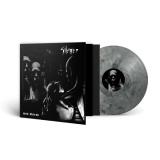
PRESENTED ON NUMBERED VINYL. Peaceville presents a very special collection of tracks from the more black metaloriented acts on the label, featuring a variety of new & recent bands, among firmly established legendary acts & influential names, with plenty of great showcases for what is to come in 2023, & also including a majority of exclusives. This pressing of 'Dark Side of the Sacred Star' is presented on limited numbered vinyl.
Shinichi Koboyashi’s music as Bot1500 has such a beautiful signature to it. Using the layers and language of ambient IDM, artfully arranged pads & chords and crisp vectored breaks, he’s been creating a beautiful and highly individual sound.
The Black Sea, His first album since 2022’s Surreal on AD93’s sister label Lith Dolina, spaces things out more and focuses inward with a palette of minimalism and increased emotional resonance. It’s been a focus for Shinichi across his self-published studio work in the last few years.
The album’s tracks feel increasingly rooted in the principles and logic of dub. Utilising more space, more silence, and more focus on the simplicity and elegance of the composition folded into radiant arrangements of melody, snare, shade and echo.
The sea is both an inner landscape and a geographic image that hangs over the record’s mood. A dark humid summer night, like that on Japanese coasts. A small boat sails aimlessly. An eerie tone, but with a glimpse of beauty. The water is melancholic, enveloping, and endless.
Each track is written at 140bpm save for last track “White Flocks” at 120, for the image of heading south to close out.
out of Stock
Last delivered 19 days ago available to reorder, subject to availability
This new album compiles several songs made in the years following Black To Comm's classic "Alphabet 1968" album. Originally released on the seminal Type label in 2009 (and to be reissued on Cellule 75 this year) "Alphabet 1968" combined the sound of vintage shellac and vinyl loops with broken electronics and field recordings, the press release mentioning disparate influences "ranging from Moondog to Basic Channel by way of Bernard Herrmann". In a beautiful one-page review in The Wire magazine (later reprinted in his book Ghosts Of My Life) Mark Fisher compared Richter's music to JF Sebastian’s miniature automata in Blade Runner ("with their bizarre mixture of the clockwork and the computerised, the antique and the ultramodern, the playful and the sinister"), ETA Hoffmann's inventor-magicians and Auguste Villiers de l'Isle-Adam's 1886 tale of Thomas Edison's (fictitious) construction of an artificial human.
Now titled "Coh Bâle" (inspired by a strange dream) these recordings were supposed to become a follow-up to said album but for reasons unknown it never materialized and the album seemed forever lost. At the time Richter started to dive deeper into several strains of (so-called) world music aka the folk music of Southeast Asia and Eastern Europe as well as liturgical and medieval music, the Kraut-Electronica of Harmonia and several certain Mediterranean experimentalists from the 1980's who started to merge their mostly electronic and field recording based compositions with traditional musics from all over the world by way of new sampling technology.
Many of the songs for the album were recorded while travelling and at various residencies around Europe: a detuned piano in a Thessaloniki basement (Richter played at a children's birthday party there), vintage synthesizers in the GRM studios in Paris, decaying acoustic instruments found in an old Black Forest mansion, childrens' voices at a workshop in Karlsruhe's ZKM Institute; then mixed on headphones in the ICE trains running between these places and his hometown Hamburg.
"Coh Bâle" is taking inspirations from old Nonesuch Explorer and Ocora LP's, Crammed Records, 80s Mediterranean Ambient (Nuno Canavarro, Roberto Musci) combined with the DIY spirit of Deux Filles and Flaming Tunes and the playfulness of Asa Chang & Junray. The songs are both mysterious and transparent, intricate and frugal, vibrant and patient. One of the album's unexpected climaxes is a gorgeous (artificial) berimbau version of the Welsh traditional "Iechyd o Gylch".
No two songs feature the same instrumentation and many acoustic sources (pianos, flutes, wood percussion, viola, tablas, autoharp) were disassembled and later coalesced into new configurations or used as virtual instruments; later combined with samples, field recordings, electronics and (on a few tracks) autotuned vocals reminding of recent works by the likes of Claire Rousay or More Eaze.
We had to wait for a worldwide pandemic for Richter to dig deep into the vaults and finally bring these recordings to light. This is the 2nd release from his archives after the "Diode, Triode" LP which presented Musique Concrète/Acousmatic recordings made at INA/GRM and ZKM. Another massive Double-CD (MM∞XX Vol. 1 & 2) was released last year featuring collaborations with 33 artists such as Andrew Pekler, Richard Youngs, Eric Chenaux, Maja Ratkje, Radwan Ghazi Moumneh of Jerusalem In my Heart, GRM boss François Bonnet (Kassel Jaeger), Felix Kubin, Timo van Luijk (In Camera, Af Ursin), Luke Fowler and many others, showing Richter's versatility and his willingness to reinvent himself for every new release.
Marc Richter is widely known under his Black To Comm moniker, having released (at least) 12 albums under this alias in the last 20 years. He is currently signed to the Thrill Jockey label. Richter composes soundtracks for film and has worked with visual artists such as Mike Kelley and Ho Tzu Nyen. He also records as Jemh Circs and Mouchoir Étanche for his own Cellule 75 label (named in tribute to the late Luc Ferrari).
out of Stock
Last delivered 3 months ago available to reorder, subject to availability
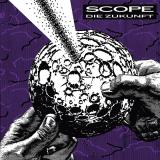
At the dawn of European techno, before the genre had fully taken shape, a small number of records hinted at what was to come—stripped-down, machine-driven and forward-looking. One of those records was “Die Zukunft” by Scope, a project formed by André Fischer (Recall IV) and Holger Wick (Konzept).
Originally released in 1989 on the now cult Suck Me Plasma label—founded by Talla 2XLC—"Die Zukunft” holds a special place in history as the label’s first release, marking a key moment in the transition from EBM and New Beat into early techno.
Scope’s sound captures this transitional phase with remarkable clarity. Built on minimal drum machine patterns, cold synthetic basslines and sparse melodic fragments, their music sits somewhere between late-80s electronic body music and the emerging techno aesthetic. Driven more by repetition and tension than by traditional song structures, the tracks create a hypnotic, forward-moving energy that reflects the experimental spirit of the time.
This reissue of “Die Zukunft”, limited to 500 copies on black vinyl and 200 copies on purple vinyl, brings together all original tracks from the first pressing alongside the iconic Cybotron Mix, offering a complete snapshot of Scope’s output at a pivotal moment in electronic music history.
out of Stock
Last delivered 40 days ago available to reorder, subject to availability
At the dawn of European techno, before the genre had fully taken shape, a small number of records hinted at what was to come—stripped-down, machine-driven and forward-looking. One of those records was “Die Zukunft” by Scope, a project formed by André Fischer (Recall IV) and Holger Wick (Konzept).
Originally released in 1989 on the now cult Suck Me Plasma label—founded by Talla 2XLC—"Die Zukunft” holds a special place in history as the label’s first release, marking a key moment in the transition from EBM and New Beat into early techno.
Scope’s sound captures this transitional phase with remarkable clarity. Built on minimal drum machine patterns, cold synthetic basslines and sparse melodic fragments, their music sits somewhere between late-80s electronic body music and the emerging techno aesthetic. Driven more by repetition and tension than by traditional song structures, the tracks create a hypnotic, forward-moving energy that reflects the experimental spirit of the time.
This reissue of “Die Zukunft”, limited to 500 copies on black vinyl and 200 copies on purple vinyl, brings together all original tracks from the first pressing alongside the iconic Cybotron Mix, offering a complete snapshot of Scope’s output at a pivotal moment in electronic music history.
out of Stock
Last delivered 40 days ago available to reorder, subject to availability
In the early 1990s, Frankfurt stood at the forefront of a rapidly evolving electronic music landscape, where the raw energy of EBM and New Beat was mutating into the earliest forms of techno. Emerging from this fertile environment, Noise Control delivered “Modulator E.P.” in 1992—an overlooked yet striking document of that transitional moment.
Following their earlier releases, “Operation S.B.” (1989, New Zone) and “My Flight” (1989, Zoth Ommog), “Modulator E.P.” marked the project's return and a clear progression towards a more stripped-down, club-oriented sound. Originally issued as the first release on the short-lived Neo Ego label, the EP captures a style in flux, moving between industrial body rhythms, early techno structures and acid-inflected sequences, reflecting the hybrid character of the German electronic underground at the time.
Limited to 300 copies on black vinyl and 200 copies on violet transparent vinyl, this reissue presents all four original tracks in full, alongside the highly sought-after Razormaid remix of “Tehniska Musika”.
out of Stock
Last delivered 3 months ago available to reorder, subject to availability
In the early 1990s, Frankfurt stood at the forefront of a rapidly evolving electronic music landscape, where the raw energy of EBM and New Beat was mutating into the earliest forms of techno. Emerging from this fertile environment, Noise Control delivered “Modulator E.P.” in 1992—an overlooked yet striking document of that transitional moment.
Following their earlier releases, “Operation S.B.” (1989, New Zone) and “My Flight” (1989, Zoth Ommog), “Modulator E.P.” marked the project's return and a clear progression towards a more stripped-down, club-oriented sound. Originally issued as the first release on the short-lived Neo Ego label, the EP captures a style in flux, moving between industrial body rhythms, early techno structures and acid-inflected sequences, reflecting the hybrid character of the German electronic underground at the time.
Limited to 300 copies on black vinyl and 200 copies on violet transparent vinyl, this reissue presents all four original tracks in full, alongside the highly sought-after Razormaid remix of “Tehniska Musika”.
out of Stock
Last delivered 89 days ago available to reorder, subject to availability
Stanz Amor delivers a five-track EP that blends crunchy sound design, tribal influences and driving grooves into a cohesive statement of energy, movement and atmosphere. Hailing from Blackpool UK, Stanz Amor emerged in 2023 with a distinctly old-school approach, channeling groove, rhythm and intensity into a modern context, which he showcases on his Backspin Records debut EP 'Mercurial'. ??Opening with 'Kong', the EP sets the tone with an old school spirit reimagined through a contemporary lens. Loopy structures, banging percussion and textured, gritty elements create a hypnotic flow designed for peak-time moments. 'Mercurial' raises the intensity, propelled by fast-paced hi-hats and shimmering rides that injectconstant motion, while a rolling low end gives the track serious weight. A striking Latin vocal lingers throughout, leaving a lasting impression long after the track fades. On the B-side 'Count' shifts the energy into a groove led by rolling bongos, underpinned by a heavy sub and catchy, repeating vocals that lock into a tight, circular rhythm. 'Yawhoo' follows with a punchy kick, rumbling foundation and driving percussion, elevated by a cheeky vocal and a whistle straight out of the 90s rave era, adding a playful, nostalgic edge. The closing track is a remix of 'Count' by Steve Redhead, who reinterprets the original with forceful yet hypnotic percussion and finely detailed vocal work. A Belgian techno mainstay since the early 2000s, Redhead is known for his uncompromising, groove-driven sound and lasting influence within the underground. ??With this release, Stanz Amor delivers a focused and effective collection built on groove, repetition and dancefloor functionality. Released on Regal's Backspin Records, a label rooted in the underground and dedicated to honoring techno's origins while pushing its future, the project balances nostalgia with modern clarity, designed to resonate in clubs and leave a lasting impact.
out of Stock
Last delivered 19 days ago available to reorder, subject to availability
Celebrating 30 years of the legendary label, we pick legendary bombs and unreleased gems from Black Vinyl Records rich catalogue. From its inception back in 1996 Black Vinyl Records has always been a label for the serious DJs. Tony Humphries, Paul Trouble Anderson, Ricky Morrison, Justin Berkman, David Morales, Bobby & Steve and most serious Underground DJ’s supported the original vinyl release of Kerri Chandler’s early masterpiece ‘My Old Friend Alan’, dedicated to label founder Alan Russell, and it gained many more supporters following its recent digital re-Master. The David Harness remix of Tedd Patterson’s ‘Roots’ appears on vinyl for the first time here and was featured in no less than 25 Traxsource DJ charts after it’s digital release in 2022, including luminaries such as DJ Pope, Quentin Harris, Kevin Yost, Charles Dockins, and many more. The vocal mix of ‘Fever Tension’ by Fresh & Low has always been a sought after gem, only ever appearing on a ‘Re:Cuts’ release in early noughties, and ‘Rising Into Joy’ by Arnold Jarvis was championed by Danny Rampling, Paul Trouble Anderson, Andy Ward, Deli G and all the 'heads' and is the definition of a Soulful House Classic.
out of Stock
Last delivered 55 days ago available to reorder, subject to availability
Legendary DJ, producer, radio host, and founder of the Acid Jazz and Talkin' Loud labels, Gilles Peterson, has curated another exceptional collection of tracks and rare versions from the renowned Dutch Timeless Jazz label, which celebrates its 50th anniversary in 2025. The Timeless Jazz Classics Vol. 2 double album features tracks and standout performances by Louis Hayes, Machito And His Salsa Big Band, Mike Nock Quartet, George Adams - Don Pullen Quartet amongst others. Notably, it includes two special tracks, the previously unreleased version of "Morning Song" (Live In Bremen 1978) by Eric Kloss & Barry Miles and bonus track "La Placita" (Live In Willisau 1978) by Marion Brown Quartet.
Timeless Jazz Classics Vol. 2 is available on black vinyl, includes an insert with liner notes, track-by-track information by Gilles Peterson and affixed on the protective sleeve is the 50th Anniversary Timeless Jazz sticker.
Fasst genau zehn Jahre nach dem letzten Studioalbum veröffentlicht die Band 2024 ihr bislang letztes Album "Zeitgeist", insgesamt das fünfte und das erste auf eigenem Label Vier Promille! 4 PROMILLE DRESCHEN WIEDER IN DIE SAITEN, SPUCKEN INS MIKRO, RUPFEN DEN BASS UND VERMÖBELN DIE FELLE! SEID IHR "BEREIT" FÜR ZEITGEIST-PUNKROCK?! 12 neue Tracks haben es auf die Platte geschafft und schon beim "Intro" wird klar, dass es hier ordentlich zur Sache geht, die Vorab-Single "Bereit", der Titeltrack selbst sowie "Lied Vom Rhein" und "Blackout" zeigen eine erstaunlich Bandbreite und Hitdichte. Dem reinen rumpeligen Oi! und räudigen Streetpunk haben 4 Promille schon spätestens mit Alte Schule 2006 abgeschworen, dennoch finden sich in ihrer Version von Punkrock, Deutschpunk oder einfach Punk immer noch derer Spuren. Die Promillos freuen sich höchstprozentig, dass es für sie unabhängig, DIY-mäßig und selbstgestaltet weitergeht! 4 PROMILLE auf Zeitgeist sind: Jason Kubke-Schlagzeug, Gesang - Martin Bayer-Gitarre, Gesang - Ralf (Basspromillo) Schmidt-Bass - Thomas (Pommes) Müller-Gesang, Gitarre Diese nun erhältliche Vinylversion heißt Rote Weiß Marbled LP, ist eher hellrot, aber wer ganz genau hinschaut, findet den Mamoreffekt. Rot Weiß weil Fortuna Düsseldorf. In Gedenken an Jason Kubke.
2026 repress of classic fourth album by U.K. Psychobilly legends DEMENTED ARE GO! Originally released in 1991 on FURY RECORDS / U.K.! Mark 'Sparky' Phillips - vocals * Antanoid 'Horseman' Thomas - drums * Lex 'Luther Boy Wonder' - Guitar * Billy 'Space Cadet' Munster - Slap bass Initially released by the legendary rockabilly / psychobilly label Fury Records in 1991, DEMENTED ARE GO's "Orgasmic Nightmare" is brought back to life again for all you cellar beasts and demon angels! Twelve tracks of 100% psychobilly mayhem for all you stompers and wreckers out there! Classic (black vinyl here)!
2026 repress of classic fourth album by U.K. Psychobilly legends DEMENTED ARE GO! Originally released in 1991 on FURY RECORDS / U.K.! Mark 'Sparky' Phillips - vocals * Antanoid 'Horseman' Thomas - drums * Lex 'Luther Boy Wonder' - Guitar * Billy 'Space Cadet' Munster - Slap bass Initially released by the legendary rockabilly / psychobilly label Fury Records in 1991, DEMENTED ARE GO's "Orgasmic Nightmare" is brought back to life again for all you cellar beasts and demon angels! Twelve tracks of 100% psychobilly mayhem for all you stompers and wreckers out there! Classic (black vinyl here)!
Alex Puddu's, second volume of the groundbreaking album of the soundtrack of The Golden Age of Danish Pornography from 2014, finally will be released as a new reissue on the artist's own label Al Dente in his entire original track list and with a brand new cover. The music on this record is inspired by and composed by Alex Puddu for "The Golden Age of Danish Pornography" - a collection of vintage hardcore short films from the early seventies,1971-74 directed by Danish porn pioneer Freddy Weiss - available on DVD from Pink Flamingo Entertainment.
New to the label family artist HAL from Leipzig (with previous releases for Masa Series, Counterchange Recordings & Kann Records) makes his a.r.t.less debut with "Halcyon" for the second release in the XTR series, a three-track journey through dreamy, dubby and slightly acid-touched deep techno, music made for the magic morning hours. The vinyl comes in various random special editions, including glow in the dark, pearl like green and holographic purple, marbled and some black copies for the purists. Enjoy!
out of Stock
Last delivered 4 months ago available to reorder, subject to availability
WRWTFWW Records is thrilled to announce their 5th archival release taken from cult Tokyo label FORM@ RECORDS' catalogue, this time with the first-ever vinyl edition of Re-Form Ver-1.0. The remarkable, yet not widely known, 1999 remix compilation is now available as a limited edition 45rpm cut double LP housed in a heavyweight sleeve, as well as in digital format.
Originally only available on CD in extremely limited quantities, Re-Form Ver-1.0 resurfaces as a fascinating document of FORM@ RECORDS' late-1990s creative peak. Re-imagining key pieces from the label's catalogue, the remix collection offers a rare glimpse into Tokyo's electronic underground, where techno, house, ambient, and IDM breathe freely through FORM@'s soulful and exploratory vision.
Highlights include two remixes of Missing Project's adored gem "Poisson D'Avril" (including its well known ethereal ambient Galaxy Dub which appeared on Music From Memory's Virtual Dreams II) as well as the otherworldly Fossil (aka the legend Virgo) Mix of Penance's "Cure & Soul". Throughout, the compilation balances dancefloor sensibility with introspective listening, embodying the warm human approach to machine music FORM@ RECORDS excels in.
Another essential time capsule from a crucial era of underground music, Re-Form Ver-1.0 echoes the spirit of Warp's Artificial Intelligence era, alongside the forward-thinking energy of Ken Ishii, Carl Craig, The Black Dog, and Ian O'Brien, while keeping its feet and individuality firmly rooted in local context - the magic recipe for creating a universal, timeless language of electronic expression.
Re-Form Ver-1.0 follows the vinyl edition of Virgo's Landform Code (1998) and Remnants (1999), as well as the FORM@ compilations Art Form I (1997) and Art Form 2 (1998), further expanding WRWTFWW's archival series dedicated to uncovering hidden gems of late '90s Japanese electronic music.
out of Stock
Last delivered 4 months ago available to reorder, subject to availability
The Bug Club sind mit einem neuen Album zurück. Seit ihrem letzten Album sind ganze sieben Monate vergangen. Wo waren sie denn? Every Single Muscle, das fünfte Album der Band, ist das dritte, das von Sub Pop, dem angesehenen Label des walisischen Duos aus Seattle, veröffentlicht wird. Seit Very Human Features, das im Juni 2025 rauskam, sind die Lieblinge von BBC 6 Music und KEXP auf ihrer Nonstop-Tour quer über den Atlantik geflitzt, wie sie es früher auf der Severn Bridge gemacht haben. Verschiedene Festivalauftritte im Sommer haben sie davon abgehalten, Urlaub zu machen - wer braucht schon Urlaub, wenn man in Wales lebt? - bis es Zeit war, wieder ins Songwriting-Studio zu gehen. Das ist wahrscheinlich immer noch ein Schlafzimmer in Caldicott, das von einem Windhund namens Ted frequentiert wird (aufgepasst - er taucht in einem der Songs auf). Die Songwriter Sam (Gitarre, Gesang) und Tilly (Bass, Gesang) sind immer bescheiden und behaupten sogar, dass sie während des Songs ,It's Our Manager David" nur ,herumsassen und nichts taten". Das ist eindeutig eine Lüge. Every Single Muscle startet mit ,Miss Wales 2012" voll durch und bezieht sich dabei auf einen Wettbewerb, den sowohl Tilly als auch Sam tatsächlich gewonnen haben. Es ist der erste von vielen Tracks auf dem Album, die weniger als zwei Minuten lang sind, und gibt den Ton für das bisher punkigste Album von The Bug Club an, das sowohl an die kurzen, knackigen Snaps ihrer allerersten Singles als auch an das Grunzen ihrer jüngsten Veröffentlichungen erinnert. Das Album ist so vollgepackt mit Riffs und eingängigen Hooks, dass Sam tatsächlich um Erlaubnis bittet, im zweiten Track ,A Good Day For Dying" ein Solo einbauen zu dürfen. Er bekommt zwei Sekunden Zeit. Glücklicherweise fragt Sam später noch einmal und bekommt mehr Zeit. Auf achtzehn Songs gibt's genug klassisches Gitarrenspiel von Sam und Tilly, um selbst die lautstärksten Bug Club-Fans zufrieden zu stellen und die Behauptung der Band, sie seien ,nur technisch versiert auf ihren Instrumenten", klar zu widerlegen. Dieses Album ist ein Beispiel für effizienten Maximalismus - so wie wenn dein Vater das Auto für den Urlaub vollpackt. Bring mit, was du willst; der Platz ist knapp, aber sie kriegen es irgendwie rein. Zu den Texten: Während ,Very Human Features" hervorragend alltägliche Dinge aufzeigte und ihre Absurdität hervorhob, schauen The Bug Club auf ,Every Single Muscle" genauer auf sich selbst. Allerdings nicht so sehr auf introspektive Weise, sondern eher so, wie ein Außerirdischer ein gefangenes Exemplar auf einer intergalaktischen Trage untersuchen würde. Horrorfilme haben ihr ,Body"-Subgenre, jetzt bekommen auch Garage-Rock-Alben ihres. In einem völlig neuen Sinne des Wortes selbstbezogen, wird die menschliche Form und Verfassung im Laufe des Albums aus jedem Blickwinkel beleuchtet und untersucht. Wir spüren eine surreale Distanz zum Selbst, die den allgegenwärtigen, von Langeweile geprägten Humor hervorbringt; im letzten Song verkündet Sam, dass er ,es satt hat, ein Mensch zu sein". The Bug Club scheinen dem Konzept, ein Mensch zu sein, fast misstrauisch gegenüberzustehen - als wären sie in einem Kostüm aufgewacht, das sie nicht anziehen wollten und nicht ausziehen können. Ist drei die magische Zahl? Wahrscheinlich nicht. Aber Every Single Muscle - das dritte Sub-Pop-Album von The Bug Club - kommt dieser Vorstellung nahe genug, um den durchschnittlichen seltsamen Menschen davon zu überzeugen, dass es so sein könnte.
Das Indie-Pop-Quartett Veps aus Oslo ist zurück mit seinem dritten Album ,ChurchyardStreet 8B", dem ersten beim schwedischen Indie-Label PNKSLM Recordings (ShitKid, Clutter, Vegas Water Taxi etc.). Die Band hat sich als eine der interessantesten Indie-Bands Nordeuropas etabliert. Helena, Laura, June und Maja kennen sich schon seit der Grundschule und gründeten die Band im Alter von 14 Jahren. Ihre brillante Debüt-EP ,Open The Door" (veröffentlicht 2021 bei Kanine Records) ebnete den Weg für ihr ebenso großartiges Debütalbum ,Oslo Park" und den Nachfolger ,Dedicated To". Mit gerade einmal 22 Jahren auf diesem Planeten stehen Veps erst am Anfang ihrer Karriere, haben aber schon eine Fülle von Erfahrungen gesammelt, während sie weitermachen, mit ihrem neuen Album "ChurchyardStreet 8B", ihrem bisher besten Werk.
Back in 2023, Bruce was approached by a band of young and ambitious lads, who wanted him to mix their debut album 'Nacre'. Being fans of his music, they hoped to utilise his renowned, club-informed and emotive sound design to add a shade of hypnotism and psychedelia to their singular strand of post-rock. The band of course were Quade, and the union proved to make perfect sense: Bruce excelled in gracefully fulfilling the band's vision, sealing their relationship for projects to come.
A couple years on, both Quade and Bruce had really proved the scope of their abilities: the sophomore album 'The Foel Tower' won the hearts of fans and critics across the board, who celebrated its "gorgeous" and "tender" sound to great acclaim. The world they had built clearly stood defined and dignified, though at the same time, Bruce couldn't help but wonder if there was more to be said. Besides, the sheer abundance of emotion and rich textures therein, suggested a great deal of potential for further exploring. So with the band’s blessing, he embarked on versioning the album.
Bruce was off the leash: total freedom leant him the ability to dub in wild style, weaving and wrestling with drum, bass et al, connecting to the arrangements' true feelings and expanding them to full frame. The "doomer sad boy, ambient-dub, folk, experimental post-rock" of the original, was blown into a whole new, hypnotic realm: through rattling analogue distortion and huge spaced out effects, Bruce's efforts stand as an exploding supernova of dub and noise, refracted through the band's themes of grief, beauty and the great British countryside.
To be released on his label Poorly Knit, this remix album once again proves Bruce's deft of touch and skill in reworking material. Maximising the sonic potential of such a promising and talented band he marks his personal contribution towards what will surely continue to be a fulfilling and illustrious musical journey for Quade.
Available digitally and on super limited cassette (50 copies)
Full colour sleeve with rare use of the Italian only movie artwork.
A few years ago I issued the soundtrack to Virgin Witch, the score to an underground 1971
kinky British London / posh stately home horror that seemed more like an excuse to show as
many racy cars and devilish nude scenes as possible. This fleapit film was written by Hazel
Adair - the writer of legendary long-running TV series Crossroads, and her business partner at
the time Ken Walton (yes, the wrestling commentator). Virgin Witch was cheap and successful
enough to allow the whole team another go at the sexploitation game through their newly
formed production company Pyramid Films. Sex Clinic was the quick follow up; I say Sex Clinic,
the initial cinematic title was Clinic Xclusive, which was also called With These Hands, which
was also called La Masseuse Perverse. This film also came out in 1971 and they used the
musical services of Ted Dicks once again. Dicks had originally met Adair in 1960 through a cast
member performing in his first musical, Look Who’s Here.
If you are not aware of the great Ted Dicks, his quick bio reads as follows: born London 1928,
was educated through both grammar and art school and after National Service flirted with both
art and music. He worked with a series of very talented song writers - including Barry Cryer -
finally sparking properly with writer Myles Rudge. Together “Dicks and Rudge” had a hit with
their musical And Another Thing which starred Lionel Blair and Bernard Cribbins. Their talents
were spotted by producer George Martin and they followed this show success up with a series
of truly classic novelty pop chart hits, again with Cribbins - “Hole In The Ground” and “Right Said
Fred”. If you are not aware of the classic A Combination Of Cribbins LP they wrote, go and find
it. It includes “Gossip Calypso”, a triumph of novelty song writing that somehow manages to
squeeze in the lyric “Oxy-aceteline welder”, and is possibly the only song ever to do so. They
wrote further hits (winning an Ivor Novello for “A Windmill In Old Amsterdam”) and were in
constant demand throughout the 1960s and 1970s, working with artists such as Petula Clark,
Matt Munro, Bruce Forsyth, Topol and Kenneth Williams.
By the late 1960s Ted had also penned a handful of instrumental library cues including the
classic “Busy Boy” for the Standard Library company that got picked up as the theme for the
brilliant TV kids fantasy show Catweazle in 1970. It’s a light, kooky, hummable tune that lodged
its way deep in the mind of any child under 12 over the following decade.
When I first got the reels for Sex Clinic I’m not sure what I was sonically expecting - much of
Dicks’ music blends musical hall with jazz and some brilliant novelty - and maybe I was also
imagining a different kind of film to the one that was actually made. Turns out Sex Clinic is more
like a sleazy drama than an erotic adventure - I’ve read reviews that call it “nothing more than a
naked Crossroads”. Even knowing this I had no idea what the music was going to sound like. So
I was thrilled when it was almost the musical opposite of what I imagined. We have here a great,
easy jazz score. Not a proggy, wild or free jazz score, this is lightish, vibes-led, bluesy and really
charming, which gets slightly more lively when the naked pool party sequence kicks off, and
drifts effortlessly into more seductive midnight moods as and when required. And having now
seen the film, musically it’s unusually at odds with the on screen nudity, blackmail and revenge.
But like most of Ted’s work, the music sticks in your mind. Unlike the film. Which I suggest you
try and avoid unless you like watching plump randy middle aged men with terrible hair pursue
women half their age.
TRACKLISTING: There were no notes or titles to any of the cues on the reels. So I have just simply labeled the sides as per the reels that came in:
A kickstart without brakes – straight into the heart of the German-speaking rock scene with performances at Rock am Ring, Rock im Park, Lollapalooza, and more. And all of this completely independently – without a label, without a booking agency, without a producer. Because wasting time was never on the agenda for the punk & alternative trio from Frankfurt since their very first performance in May 2023 at the Warsteiner Band Contest, which they won right away. If we ended the band description at this point, everything would sound perfect. But if you take a closer look at the dozen singles that Friends Don't Lie have released in just 18 months, you'll discover a second layer: vulnerable lyrics about self-doubt, fears, and big emotions. At the same time, it becomes clear that the band also takes a political stance. It's about discontent – against racism, resentment, selfishness – against all forms of hatred. Friends Don't Lie are thus becoming the voice of a generation, as we last saw with acts like Kraftklub and Casper. In May 2026, Uncle M Music will release their long-awaited debut album, Zenit der Dramaturgie. Ten German-language rock/punk songs that set the bar extremely high and bridge the gap between Donots and Kraftklub.
Uroš Umek returns to eudemonia for the label's 21st outing, delivering another set of high-quality electronics as Zeta Reticula.
The EP carries a vibrant, optimistic energy throughout. "The Human Scientific Vessel" leads the way as a club-ready electro cut with a driving rhythm and clean, melodic synth lines. The energy stays high as the EP moves into the broken rhythms of "Black Liquid Spawned Wildlife" and "Yellow Dwarfs," where Umek explores more complex, atmospheric territory without losing the dancefloor focus.
The EP balances dancefloor energy with musical songwriting, making for an engaging listen from start to finish.
Wer sich Drunks Debütalbum ,A Derby Spiritual" aus dem Jahr 1996 noch einmal anhört, wird feststellen, dass es charmanter, sanfter und - wenn ich das so sagen darf - farbenfroher ist, als es sein stoischer Slow-Core-Ruf aus den 90ern vermuten lässt. Und man könnte sogar bemerken, dass Rick Alversons Stimme einen bisher ungeahnten, von Niederlagen gezeichneten Tom-Petty-Singsang aufweist. Der Sound der Band aus Richmond ist zweifellos zurückhaltend, knarrend und karg. Doch die Jahrzehnte haben diesem alten, traurigen Kerl einen wärmenden bernsteinfarbenen Schimmer verliehen. Das Black-Hole-Radio-Stück am Ende des atemberaubenden Openers ,Collarbone" scheint das Kommen von ,Yankee Hotel Foxtrot" vorherzusagen. Und hier in der seltsamen Gegenwart könnten Stücke wie ,Germany Skies", ,Gideon's Trumpet" und ,Gizmo" nahtlos in den heutigen Indie-Country-Boom eingefügt werden. Der seltsame Walzer aus Akkordeon und Geige in Stücken wie ,Indeliberate Matrimony" und ,Coming Home" klingt - wage ich es noch einmal zu sagen - wie Mellencamp aus der ,The Lonesome Jubilee"-Ära am Boden eines Fasses Schnaps. Alversons Lyrik schwankt zwischen dem hoffnungsvollen Nihilismus seines zeitgenössischen Songwriter- und Dichterkollegen aus Virginia, David Berman, und dem tiefgründigen Post-Beat-Minimalismus von Robert Creeley. Ich schwöre, wenn er in dem hoch-und-einsamen, von der Mundharmonika getragenen ,Window Sill" seufzt: ,I feel willy-nill/I pissed upon your window sill", klingt das im Lenderman'schen Sinne des Wortes verdammt romantisch. Im Rahmen des 30-jährigen Jubiläums von Jagjaguwar wird ,A Derby Spiritual", Jags zweite Veröffentlichung überhaupt, zum ersten Mal auf Vinyl gepresst. Ein drei Jahrzehnte langes Unrecht wird endlich wiedergutgemacht. Tatsächlich erscheinen im Rahmen der Feierlichkeiten zum 30-jährigen Jubiläum des Labels eine Handvoll dieser frühen Veröffentlichungen aus der Charlottesville-Ära von Jagjaguwar auf Vinyl.
DYING VICTIMS PRODUCTIONS in conspiracy with DE PANKRAKER RECORDS is proud to present SHEWOLFF’s highly anticipated debut mini-album, We’re All Gonna Fukking Die, on CD and 12” vinyl formats. Hailing from Belgium, SHEWOLFF emerged from the underground as a solo-project of K. Von Shewolff, which eventually formed into the solid three-piece band it is today. They find their origins in raw, punk-driven blackness galore, faithfully returning to the old-school spirit of making music by modest and primitive means. A five-song digital-only demo was released in 2023 - songs which contain absolute fury towards the known and long-overdue established order, existential live-or-die sentiment, and a small tribute paid to the old-school believers who came before them. Now, SHEWOLFF blend all that together on the debut mini-album We’re All Gonna Fukking Die.
With six new tracks pushing towards a final and inevitable end, this bleakly titled record is actually invigorating and inspiring: railing against the dying of the light with a paradoxically dark metalpunk sound, familiar in its stomping swagger but exuding cantankerous charisma that’s all their own. The aesthetic signposts are planted firmly in the ground – think Hellhammer, pre-Viking Bathory, Darkthrone’s record-nerd era, early Midnight, the almighty Venom, or even labelmates like KARLOFF, HELLCRASH, and Germany’s LUCIFUGE – but SHEWOLFF manage to stir some diabolical little twists into the bubbling brew, with K. Von Shewolff’s vocals in particular imparting a femininity that’s fierce, frightening, and fucking going for the throat.
Les Rallizes Dénudés returns with Disque 4 -’76 Studio et Live-, the latest in the ongoing series of official archival releases from the celebrated Japanese underground band.
In 1991, Les Rallizes Dénudés released what would become the only official albums issued during the band’s lifetime: ’67-’69 STUDIO et LIVE, MIZUTANI / Les Rallizes Dénudés, and ’77 LIVE. What no one knew at the time was that Takashi Mizutani was already deep into preparing another record.
Disque 4 reconstructs the track list Mizutani had put together for that fourth album. This includes the single “White Awakening," recorded in 1976 at the studio in Takadanobaba BIG BOX as part of the sessions that would become known among collectors as the “Virgin Demos.” Production and mastering of this archival release were handled once again by Makoto Kubota, assembling the album from the masters left behind by Mizutani, utilizing newly discovered tapes as additional sources.
Prepared by Mizutani using a variety of formats, including U-Matic, open reel, and DAT, the tracks were originally labeled with working titles such as “Disque 4” and “Record No. 4,” indicating that Mizutani intended them for inclusion on a possible fourth album. The recordings were taken primarily from studio sessions that all seemed to have taken place around 1976, which aligns with the claim that Mizutani himself once made that “there exists an album of studio recordings made with the same members as ‘77 LIVE.” His notes also suggest an attempt to sequence the tracks as a vinyl LP, splitting them into A and B sides. It's not hard to imagine that in the era of CDs in the early 1990s, an album on analog LP would have been an extremely difficult sell. Thus, the “Fourth Album” had become another lost piece of the intricate Rallizes myth.
Les Rallizes Dénudés may be notorious for the colossal volume and extended song lengths in their live settings. But this work, centered around studio recordings and condensed onto a single LP record, transcends the common impression of the band’s aggressive flood of noise. Instead, the “lyricism” at its core emerges with striking clarity. And needless to say, this is precisely the charm of the Rallizes that continues to captivate fans worldwide today.
out of Stock
Last delivered 4 months ago available to reorder, subject to availability
Tim Wright is a musician, composer and video artist based in York. He is perhaps best known as a producer of unusual electronic dance music released under his own name and the pseudonym Tube Jerk. His music has been released by some of the key labels in the field including Tresor, Mute/Novamute, Sativae and GPR. Remix credits range from scorn through Cristian Yogel to Laurent Garnier and Goldfrapp.
Tim also works for the Japanese choreographer Saburo Teshigawara as a composer and sound designer. his compositions for Teshigawara include the original music for metamorphosis (2014), a commission for Goteborgsoperans Danskompani, Sweden; darkness is hiding black horses (2013) for the ballet de l'opera de paris, France; and compositions for installations at the Yokohama Triennale 2008, the Shanghai Zendai museum of modern art and the ikon gallery in Birmingham.
the producer, multi-instrumentalist, DJ and record collector Gabriel Cyr AKA Teleseen releases 5th album 'The Emotional Life of Savages' via French imprint Goldmin Music.
African rhythms, Latin heat and otherworldly electronics collide like neurons, processed through a New York state of mind. The pancontinental sounds are mirrored in his own life, which has oscillated back and forth between various countries.
A jazz background combined with a love for house and techno are ingrained in the grooves. Also key is the samba, baile funk and MPB that inspired him while living in Rio de Janeiro, plus the sounds he reabsorbed on returning to NYC's club scene.
This wide range of influences spanning the global underground coalesces into a rich, vital and coherent whole. Warm and soulful, but also evoking an intoxicating, heady atmosphere, the hypnotic and ultra-rhythmic tracks subtly shift and build to fever pitch, due primarily to deft polyrhythmic drums and percussion - both played and sequenced.
"Working on this record I finally found myself able to manifest a certain sound I'd been hearing in my head for years, combining the rhythmic intensity of afro-house and afro-Brazilian music with the more cosmic sounds of Detroit and deep house", explains Cyr on his musical vision.
The gentle sundowner glow of 'Myrtle Avenue' with its textured synth waves and wandering Parrish-esque keys acts as a precursor to the potent nocturnal adventure to follow: 'Espelhos' captures a similar essence to Black Science Orchestra's classic 'Save Us (The Jam)', before the heat goes up and heads go down for the eastern-tinged, autotune-laden fire of 'Khalil'.
The album then intensifies further still on the percussion-heavy, big bottomed cosmic throb of 'Jaguar', whilst Brazilian flavour meets tech house rush on 'Fundos', before the party reaches its feverish close on the wiggling batucada- meets-tribal-house of 'Temporada De Seca'.
Born in the north eastern United States, as an adult Cyr has always been nomadic. He has sought to live and immerse himself in other cultures and absorb their sounds, but eventually always succumbs to the Big Apple's magnetic pull. Back home, a key inspirational catalyst for the album was the Brooklyn-based party Africainoir, where he's a resident DJ.
Alongside cutting his teeth producing illbient/hip hop and working as an engineer, he ran his own studio for period, before starting his own label Percepts, on which to release his dub techno style debut. He has since released on 100% Silk, Boomarm Nation and Feel Up Records, and now 'The Emotional Life Of Savages' marks Teleseen's first album for Goldmin.
First ever vinyl release of this massive classic psychedelic black rock funk compilation. Lovingly reproduced for audiophiles on black vinyl and packaged in a fully artworked sleeve and labels and shrinkwrapped. Limited edition vinyl press! “One of the best compilations of formerly released material ever made. A classic” “The whole compilation is pretty damn sweet, but anything dug up by Iron Knowledge is essential listening”!
Sixteen killer 70s reggae funk and soul cuts from the likes of John Holt, Lee Perry, Cornel Campbell, The Cimarons, The Chosen Few and more featuring superb reggae takes on songs by artists including The Jackson 5, William DeVaughn, Diana Ross and The Supremes, War, The Temptations, Roberta Flack, The Stylistics and others!
Well-documented is the influence of American black music on Jamaican styles of the 1960s – from the birth of ska music, when The Skatalites ska-ified the jump-up southern USA rhythm and blues music of Rosco Gordon, Louis Jordan and Fats Domino, through to the creation of rocksteady when Jamaican artists like The Techniques, The Paragons, Alton Ellis and The Melodians turned to the slower rhythms and soulful harmonies of groups such as The Impressions and The Drifters for inspiration.
Less-well established is that in the 1970s Jamaicans didn’t (shock!) stop listening to American black music styles, with many 70s reggae artists as invested in soul, funk and the proto-disco sounds of Philadelphia, as was the case with rhythm and blues in the previous decade. In the 1970s, while Jamaica promoted its own roots reggae styles around the world, powerhouse USA soul labels such as Motown, Philadelphia International and Stax Records were at the same time all popular on the island.
This interaction between American and Jamaican music was not limited to Jamaica. In Britain, first-generation Caribbean-émigré children in the 1960s and early 70s grew up with an equal love of both soul and reggae, which manifested itself in the home-grown arrival of lovers rock in the mid-1970s.
Soul Jazz Records’ new ‘Reggae Island Soul’ tells this story of how soul and funk-infused reggae in the 1970s united the sounds of Jamaica, USA and the UK into a highly addictive cultural hybrid of styles.
**RED VINYL**Bookending “This Is My Blood “ are two cinematic hypnotist slide lute pieces that evoke contemporary deserted landscapes. They were improvised and made for “ Maquina”, a film shot in the Colorado desert during a psychedelic trip by film maker Joaquim Pujol. The works on here, like the ecstatic second piece invite a return to long form listening. They explore contemporary darkness and contemplate personal loss. There is solely one vocal piece, “ Remission”. A worldwide concert tour of this material is slated for 2026/2027. Since studying the lute in New York with Patrick O'Brien in the 1990s, Van Wissem has gone on to create works equally as rooted in classical Renaissance and Baroque forms of lute music, as contemporary sounds spanning drones, electronics and field recordings. Throw in some of his formative influences from the no wave and industrial scenes, alongside a dedicated approach to minimalism and this has resulted in Van Wissem producing distinct and singular work whose sound is often a marriage of opposites; meditative and intense, forward thinking but with a sense of the arcane. The Quietus has called him "probably the most famous lutenist in the world”. Jozef Van Wissem is an avant-garde composer and lutenist who plays a unique all-black baroque lute. His timeless music is often described as hypnotic, minimal, and hauntingly atmospheric, merging beauty with a dark, meditative edge. His lyrics have a mythical Christian appeal, incorporating themes of love, faith, and the afterlife, often with a repetitive, mantra-like quality. Bridging classical traditions with modern sounds like drones, electronics, field recordings and voice. He collaborates with filmmaker and musician Jim Jarmusch, including the award-winning soundtrack for Only Lovers Left Alive, for which Van Wissem won the Cannes Soundtrack Award in 2013. He also scored the Sims Medieval Video game ( 2011), Uncle Howard ( 2016) Land (2018), Irma Vep (2022), Queens (2023) and Un Prince (2024). He did a world tour in duo with Jarmusch in 2025 and their 5th record “ The Day The Angels Cried” was released. Van Wissem tours extensively, performing in diverse venues from rock festivals to churches, and has worked with artists like Tilda Swinton and Zola Jesus. In 2019 he was commissioned by Cinematheque Francaise to score the silent horror film Nosferatu (1922). He released the soundtrack in 2022 on his own Incunabulum label. The New York Times wrote: Beginning with a solo played on the lute, his performance will incorporate electric guitar and distorted recordings of extinct birds, graduating from subtlety to gothic horror. “My soundtrack goes from silence to noise over the course of 90 minutes,” he said, culminating in “dense, slow death metal.” In 2024 Van Wissem did a sold out nationwide American tour with the film. A worldwide tour is slated for 2026/2027
First Word Records is extremely proud to welcome back Kaidi Tatham, with a brand new 12-track album entitled 'Don't Rush The Process'.
This is Kaidi's 4th solo album under his own name, following on from 'An Insight To All Minds' (2021), 'It's A World Before You' (2018), and 'In Search Of Hope' (re-pressed in 2020), all released on First Word, along with several EPs from 2017 onwards.
To bring you up to speed, Kaidi Tatham is a legendary multi-instrumentalist born in the Midlands and based in Belfast. Once dubbed "the UK's Herbie Hancock" by Benji B, he's a virtuoso on the keys and a true innovator in sound production as one of the original creators of the Broken Beat sound. Over the years his musical prowess has blessed numerous projects, recently with the likes of DJ Jazzy Jeff, Andrew Ashong and with longtime accomplice, Dego. This in addition to session and remix work for artists such as Mulatu Astatke, Slum Village, Marcos Valle, Amy Winehouse, Soul II Soul, Nubya Garcia, Rosie Frater-Taylor and Leroy Burgess, along with First Word label mates Eric Lau, Children of Zeus, Allysha Joy and Darkhouse Family. Kaidi is also a revered DJ known for rocking parties globally, whilst his solo catalogue spans tons of EPs and releases for labels such as Dego's 2000 Black, Alex Nut's Eglo Records and Theo Parrish's Sound Signature.
This new album 'Don't Rush The Process' opens with an intro of sweet strings on 'Mystery Solved', ahead of lead title track, which is on a mid-tempo boom bap vibe, before switching to a more uptempo boogie vein, with the assistance of The Easy Access Orchestra, who also appear on 'We Chillin' Out', which is on a similar boogie tip. 'All I Need' is some gospel flavoured hip hop, whilst 'Knocknee Donkey' steps things up in a jazz-funk fashion. The second half of the album takes on a very Brazilian flavoured stance, with a set of delicious latin flavoured grooves on 'Any Flavour', 'Runnin' Tru', 'What A Dream' and 'Sooretama', the latter featuring the additional prowess of pianist Robert Mitchell. There's a touch more of the hip hop beats thrown in via 'Funky Fool' and the album closes out in inimitable Kaidi style with a short message: 'Mind Yourself'.
A hugely prolific artist, here he adds to an already impressive catalogue, a body of work that falls within the cracks of jazz and dance music, exemplifying modern British black brilliance; uncompromising, innovative, groundbreaking, intricately sophisticated and deeply funky. His fanbase expands on every release and it's no surprise that that fanbase includes a diverse set of peers such as Madlib ("ahead of his time"), Gilles Peterson ("a key part of an entire movement"), K15 ("a limitless source of inspiration") and Kyle Hall.
'Don't Rush The Process' is released on vinyl & digital worldwide, July 2022 via First Word Records.
out of Stock
Last delivered 2 years ago available to reorder, subject to availability
The new label R.I.T.M.O. launches its journey with a clear statement of intent: VOID RIFT QUANTUM, a six-episode cosmic voyage by WHITE SOLAR DOG, complemented by two premium remixes from UNIVAC and PROMISING YOUNGSTER. The EP opens with “VOID RIFT QUANTUM” a dark, expansive electro exercise where crushing basslines, syncopated rhythms, and a dialogue between vocoders and acid lines evoke an interplanetary landscape. On “I.N.S.I.D.E.” the intensity ramps up through driving percussion, tribal voices, razor-sharp breaks, and an almost ritual force that propels the body into physical and mental trance.
UNIVAC’s reinterpretation of the title track unleashes his full arsenal: a steely remix of relentless energy that pushes the original into a hard-edged industrial realm, stamped with the unmistakable signature of the Catalan producer. “MOVE YOUR BODY” showcases WHITE SOLAR DOG’s most direct side: classic electro with heavy bass, pads, and bright melodies, where the machine calls the dancefloor to action without compromise. The journey reaches its most ethereal point with “SING TO ME” where a female vocal intertwines with broken rhythms, crystalline atmospheres, and fresh acid incursions—cementing WSD’s personal hallmark: equal parts intensity and spirituality. The release closes with Promising Youngster’s remix, which takes the vocal elements of “SING TO ME” and guides them into a hypnotic state, suspended between the dreamlike and the club. With VOID RIFT QUANTUM, R.I.T.M.O. presents its inaugural catalog, distilling the power of contemporary electro and the otherworldly vision of WHITE SOLAR DOG. A debut that clearly establishes its coordinates: impact, exploration, and progressiveness, introduces itself to the world through an inaugural catalogue that distills the present and future of electro: mysticism, power, and precision.
All covers are handmade. They feature a fluorescent strip along the sides for easy identification, and under black light, the Spanish version of the cover is visible. Each disc contains three handmade inserts: a pop-up of R.I.T.M.O., a template, and a paper synthesizer model based on the actual synthesizers used to create the album (a different one on each disc). Each disc comes in a plastic sleeve.
All covers are handmade. They feature a fluorescent strip along the sides for easy identification, and under black light, the Spanish version of the cover is visible. Each disc contains three handmade inserts: a pop-up of R.I.T.M.O., a template, and a paper synthesizer model based on the actual synthesizers used to create the album (a different one on each disc). Each disc comes in a plastic sleeve.
out of Stock
Last delivered 3 months ago available to reorder, subject to availability
Superonda’s debut release, Aurora Spectralis, introduces the latest project from Mahatmos, a duo emerging from long-established practices in electronic music, sound design and composition for moving images. Released on 12” vinyl and digitally, the EP unfolds across four tracks of electronic ambient music shaped by atmosphere, con1nuity and restrained propulsion. Ambient textures open a broad emotional and spa1al field, while slow, insistent rhythms provide steady forward motion.
Superonda has created a space for Mahatmos to sharpen their focus on sound as material. Modular synthesis, analogue instruments and live processes techniques are balanced with precision and restraint, resulting in music that moves between progressive and hypnotic forms, informed as much by underground club culture as by cinematic composition.
Mahatmos is a Rome-based duo with complementary and deep-rooted practices. Gianluca Meloni brings a long-standing presence in techno and experimental music scene, with international releases and performances (as Laertes and as part of Modern Heads). Maurizio Loffredo contributes an extensive background in composition, production and sound engineering across popular music and film, with a refined sensitivity to timbre, structure and sonic narrative.
Superonda is a Rome-based label founded by artists engaged in deep sonic research and advanced technical exploration. Operating as an open platform, it connects collaborators working across recording, synthesis and composition, approaching music as a process-driven practice rather than a fixed genre. Each release stands as a distinct exploration, linked by shared sensibilities rather than formal constraints.
The physical edition of Aurora Spectralis is conceived as an extension of the work itself. Alongside a standard black vinyl pressing, a limited run of color and marbled copies has been produced, each one unique. Variability and tactility are embraced as part of the object’s identity, reinforcing the record as something to be experienced gradually, over time.
out of Stock
Last delivered 5 months ago available to reorder, subject to availability
“Dance Music That Hurts” — the motto of Work of Intent.
Hurts, because it goes straight to your heart.
There’s no better way to put it.
His productions are rooted in the UK underground,
dripping with both techno and pop sensibilities.
This is “big room” like you’ve never experienced it before—
music you can’t ignore, driven by storytelling and raw emotion.
He’s found a home on labels such as Monkeytown, Turbo, and REKIDS, and continues his relationship with Laurent Garnier’s COD3 QR .
Founder of the clandestine edit factory *Emotional Weaponry*,
he continues to receive support from industry heavyweights.
Former manager of *DAYTIMERS*, the UK-based collective championing
South Asian sounds, stories, and voices,
and a highly sought-after mix engineer for some of the UK’s most exciting prospects.
We’re beyond happy to welcome Roshan Chauhan aka Works Of Intent to the family.
Feels like the beginning of a long, dramatic love story.
Credits:
Written and produced by *Works of Intent*
Distributed by *One Eye Witness*
out of Stock
Last delivered 10 days ago available to reorder, subject to availability
SILENCER's merciless emotional firestorm "Death – Pierce Me" is one of the few albums truly deserving the designation ‘cult’. From humble beginnings in the extreme underground, it rose to become a widely acclaimed masterpiece with a massive following.
To celebrate the album’s 20th anniversary, Lupus Lounge reissues this pioneering depressive metal milestone in lavish editions worthy of its legacy. "Death – Pierce Me" will be available as a 48-page hardcover CD book edition including a bonus track, and as part of a complete box set featuring a gatefold vinyl edition, a 12" version of SILENCER’s 1998 demo, and additional bonus materials.
When SILENCER released their sole full-length album under the same title as their 1998 demo, the time seemed ripe for an emotionally devastating strain of black metal incorporating doom elements and expressing bleak emotions of bereavement, loneliness, and despair. This emerging subgenre became known as ‘depressive black metal’, sometimes more extremely labeled ‘depressive suicidal black metal’.
Around 1998, this movement coalesced around Swedish acts SILENCER and SHINING, alongside Quebec’s MALVERY and US band XASTHUR, drawing influence from earlier pioneers such as Norway’s STRID and Germany’s BETHLEHEM.
While SHINING gained notoriety, SILENCER faded into obscurity, surrounded by rumor and legend. With only one historical interview, no live performances, and no follow-up album, the band became mythic. Through word of mouth alone, "Death – Pierce Me" continued to grow in stature, culminating in an IMPALA Silver Award in 2021 for 20,000 verified European sales.
Red Axes step into the fabric presents series with a release that feels both inevitable and deeply personal. Known for their hypnotic, psychedelic approach to club music, the Tel Aviv–based duo bring a narrative-driven sensibility that aligns seamlessly with fabric’s legacy of long-form storytelling and forward-thinking curation.
Across years of performances at fabric and other key global institutions, Red Axes have developed a reputation for sets that unfold patiently and unpredictably, drawing dancers into a world where groove, tension, and atmosphere take precedence over genre or trend. Their contribution to the fabric presents series reflects this ethos: a carefully sculpted journey that prioritises mood, momentum, and emotional depth, while remaining firmly rooted in the physical language of the dancefloor.
Formed by Dori Sadovnik and Niv Arzi, Red Axes emerged from Tel Aviv’s underground with a sound shaped by post-punk, acid, krautrock, and cosmic disco influences. Over the past decade, they have built a catalogue defined by raw textures, twisted melodies, and a distinctly human looseness, qualities that translate as powerfully in the club as they do on record. Their releases and remixes for labels such as Phantasy, Correspondant, Running Back, Dark Entries, and Permanent Vacation have established them as artists who consistently operate just outside the expected.
As DJs, Red Axes are celebrated for their ability to stretch time on the dancefloor, weaving obscure selections, unreleased material, and leftfield classics into slow-burning, trance-inducing narratives. This approach has seen them invited to venues and festivals including Panorama Bar, De School, Bassiani, Dekmantel, Sonar, and Primavera Sound, where their sets are defined not by peaks alone, but by the tension built between them.
With the forthcoming fabric presents Red Axes release, the duo deliver a statement that captures years of shared musical intuition and a deep respect for the club as a communal, transformative space. It is a mix that rewards close listening as much as physical immersion, a snapshot of Red Axes at their most focused, expressive, and uncompromising.
To mark the launch of their forthcoming fabric presents album, the duo unveil the lead single, “Hot Rod To Hell”, a bold reworking of Man Parrish and Roy Garrett’s 14-minute spoken-word electro epic, reimagined through Red Axes’ signature psychedelic lens.
Stripped back and refocused, the original’s narrative tension is transformed into a hypnotic, downtempo house track built for late-night immersion. A rolling, elastic groove anchors the track, while pulsing low-end, subtly warped synth lines, and tightly controlled percussion create a sense of slow, smouldering momentum. The spoken vocal elements drift through the mix like fragments of memory, lending the track a ritualistic, cinematic quality without overwhelming the dancefloor.
out of Stock
Last delivered 69 days ago available to reorder, subject to availability
Hardt Antoine returns to Crosstown Rebels with emotive new release ‘One More Night’, featuring Charlotte OC. Set for release on 24th April 2026, the French-Jamaican artist links with the UK singer-songwriter, backed by a remix from Echonomist.
A warm, late-night glow pulses through ‘One More Night’, as Hardt Antoine returns to Damian Lazarus’ Crosstown Rebels for his first original release on the label, adding to his captivating remix of Henri Bergmann & Wentink’s ‘Guardian Angel’ in 2024. Anchored by Charlotte OC’s striking delivery, the track draws on the pull of classic disco and modern club sensibilities, balancing introspection with pure dancefloor drive.
On remix duties, Greek DJ/producer Echonomist reshapes the original into a blissful voyage, layering skippy rhythms and shadowy textures for an emotive late-night ride. Rounding out the release, ‘Dreamstate’ offers a complementary original from Hardt Antoine, leaning further into his melodic instincts with a fluid, atmospheric groove.
Hardt Antoine’s output and sound draws on his French and Jamaican heritage, weaving house, techno, soul, and 80s influences into a sonic identity defi ned by rich melodies and groove-led songwriting with recent releases on the likes of Innervisions and KompaktMeanwhile, Charlotte OC brings her distinct vocal talents to Crosstown for the very first time. Following a return to her hometown of Blackburn and a renewed creative focus, her recent work leans into raw, self-assured songwriting, blending vulnerability with strength - qualities that sit at the heart of ‘One More Night’.
out of Stock
Last delivered 20 days ago available to reorder, subject to availability
Demon Records are proud to present Osmium Deluxe - the first recordings credited to the funk-rock ensemble Parliament-Funkadelic.
Since its re-release in 1990, Osmium has been distributed numerous times by various labels in America, Europe and Japan under alternate titles – including Rhenium and First Thangs. A number of these reissues have featured material that was not included on the original album, such as unreleased tracks and singles that were taken from the same time.
This in-demand, black-vinyl version of the Record Store Day 2024 sell-out compiles together everything from that period 2 LPs and includes; the full Osmium album, the single sides that never made the album, unreleased tracks, demos and jams – all of which made their debut vinyl appearance as one package in 2024.
Many of these recordings are still as far-out as they sounded when first released. However, the tracks here represent the genesis of what would become P-Funk and the entity that would give the world ground-breaking albums Maggot Brain (1971), Mothership Connection (1975), and One Nation Under a Groove (1978). An essential addition to anyone’s collection.
Purple Haze started out in Linköping in 1981. When singer Christer Göransson joined them towards the end of the year, they soon changed their moniker to Genocide (after the Judas Priest song of the same name) and supported local metal heroes Axewitch. A final name change was to follow: In August 1983, the band, now called Mindless Sinner, recorded a four-track demo entitled »Master Of Evil«, consisting of the title track, “Broken Freedom”, “Key Of Fortune” and “Screaming For Mercy”. This attracted Swedish label Fingerprint Records, and they in turn released the NWOBHM-inspired material as a mini-album with an awful cover and getting the band’s name wrong (spelling it Mindless Sinners). By then, the line-up of the band was Anders Karlsson (bass), Magnus Danneblad (guitar), Jerker Edman (guitar), Tommy Johansson (drums) and vocalist Christer Göransson. »Master Of Evil« originally saw the light of day on Fingerprint in January 1984. This was followed by the second album »Turn On The Power« in 1986 as Christer Göransson explains: “Well, »Turn On The Power« was actually recorded in October 1984, the same year as »Master Of Evil« was released. But the record label was almost out of business by 1985, so as a result »Turn On The Power« didn’t come out until January 1986, and shortly after the label went bust.” Just like on the debut, the cover was once again pretty weird. “Same story,” says the singer. “Blame the label again. We wanted a band photo for the cover but once more Fingerprint didn’t listen. We didn’t know who this girl was at all. And once again we saw the cover for the first time when we visited our local record store.” “I guess »Turn On The Power« was more of a straight heavy metal album compared to »Master Of Evil«,” describes Christer Göransson the band’s follow-up record, “better playing and better songs on »Turn On The Power«. Even though we love »Master Of Evil«. I guess it didn’t sell that much as the label went bankrupt, but the reactions were great.” Mindless Sinner played as much as they could in Sweden at the time but didn’t venture outside their home country. Over the years, their music has often been compared to the Tygers Of Pan Tang from England but Christer Göransson doesn’t see too many similarities: “We really love Tygers Of Pan Tang but I don’t think they were a big influence. It was more Judas Priest, Iron Maiden, Saxon, Black Sabbath, Ozzy Osbourne and Dio.” Shortly after the release of »Turn On The Power«, the band cut their name short to Mindless. According to Christer Göransson, this is why: “It was the sign of the times really. We wanted a more melodic kinda style and we just thought it was better to change the name to Mindless. But looking back now we should have stuck to our guns.”
Increasingly essential US artist Ben Hixon drops sublime deep house EP on Kai Alce's faultless NDATL Muzik. The six classy tracks will appeal to those who appreciate the subtleties of the classic Midwestern sound.
Ben is a Texas-born, but Brooklyn-based artist who has become a firm favourite of true deep house heads in the last year or so. He has put out several EPs on Dolfin, all of which find a perfect sweet spot between immersive atmospheres and late-night drive. Dusty analogue textures and frayed edges define his drums, while the subtle details are intelligent and add effortless emotion. He is a perfect fit for NDATL Muzik, the Atlanta label that has long been a flagbearer for well-crafted house grooves like these.
'Taping' kicks off with heavy kicks that swing under gentle chords that are perfect for after dark. There's a persuasive bump in the beats that will get early evening dancers primed and ready for more. Next up we have 'Y Do U Get So Nervous' - a mastery of sampling with nagging vocal hooks, cascading piano keys and wet finger clicks all adding soul to another low-key but all-consuming groove. 'Area Code 336 Phone Rings' is a higgledy-piggledy tapestry of toms and stuttering kicks with vocal fragments to match - the thrill is the looseness of it all. The smouldering and meandering 'December Blackout' is for gazing off it into the distance at the busy yet muted jazz keys that twinkle like faraway stars. 'It's Like A Vision' picks up the pace with more closely stacked kicks but still oodles of cuddly warmth and smudged synth work, before '0823' ends with a decidedly heavy feel - spare, lump drums unfurl beneath forlorn synths that feel utterly bruised and heartbroken.
Ben Hixon's deft artistry makes these quiet, texture tunes irresistibly danceable yet emotionally profound.
out of Stock
Last delivered 62 days ago available to reorder, subject to availability
'At the beginning of the 1960s, at the Berklee College of Music, Byard Lancaster met some feisty friends: Sonny Sharrock, Dave Burrell and Ted Daniel. It is easy to see why he rapidly became involved in free jazz. Once he was settled in New York, he appeared on Sunny Murray Quintet, recorded under the leadership of the drum crazy colleague of Albert Ayler.
'In 1968, the saxophonist and flutist recorded his first album under his own name: It’s Not Up To Us. The following year he came to Paris in the wake of… Sunny Murray. He would come back to France in 1971 (again with Murray) and in 1973 (without Murray for a change). This is when he met Jef Gilson, the pianist and producer who encouraged him to record under his own name again. On Palm Records (Gilson’s label), he would release four albums: Us, Mother Africa, Exactement and Funny Funky Rib Crib.
'Us, the first of the four records was recorded on November 24th, 1973 with Sylvin Marc on electric bass (a Fender… Lancaster?) and the evergreen Steve McCall on drums.
'On the album, the trio works from the John Coltrane model; free jazz shook up by the timely contributions of the bassist, followed by a mesmerizing atmospheric music. Then, Lancaster delivers a sinuous solo path, which is a reminder of his unique tone. On the album’s companion single, the trio launches into great black music of a different genre which would lead the clairvoyant François Tusques to claim that Byard Lancaster is an “authentic representative of soul/free jazz”, to sum up this is Great Black Music!'
out of Stock
Last delivered 5 months ago available to reorder, subject to availability
Purple Haze started out in Linköping in 1981. When singer Christer Göransson joined them towards the end of the year, they soon changed their moniker to Genocide (after the Judas Priest song of the same name) and supported local metal heroes Axewitch. A final name change was to follow: In August 1983, the band, now called Mindless Sinner, recorded a four-track demo entitled »Master Of Evil«, consisting of the title track, “Broken Freedom”, “Key Of Fortune” and “Screaming For Mercy”. This attracted Swedish label Fingerprint Records, and they in turn released the NWOBHM-inspired material as a mini-album with an awful cover and getting the band’s name wrong (spelling it Mindless Sinners). By then, the line-up of the band was Anders Karlsson (bass), Magnus Danneblad (guitar), Jerker Edman (guitar), Tommy Johansson (drums) and vocalist Christer Göransson. »Master Of Evil« originally saw the light of day on Fingerprint in January 1984. Christer Göransson takes us back to the early days of Mindless Sinner saying: “We wanted to record an album, but we couldn’t afford the studio cost. We were lucky to win a music contest, and the price money paid for the studio. I remember walking into the studio, and we thought it was like a spaceship in there, with all the buttons and flashing lights everywhere. We recorded the four songs that would become »Master Of Evil«. We then gave the tape to the Axewitch guys, and they played it to their record label at the time Fingerprint/Web Records and they liked it so much that they signed us as well.” Over the years, the music of Mindless Sinner has often been compared to the Tygers Of Pan Tang from England but Christer Göransson doesn’t see too many similarities: “We really love Tygers Of Pan Tang but I don’t think they were a big influence. It was more Judas Priest, Iron Maiden, Saxon, Black Sabbath, Ozzy, Dio etcetera. That kinda stuff.” In addition to the four tracks of the original edition of »Master Of Evil«, the current High Roller Records pressing also contains the five songs of the band’s first demo tape from early 1983 (including “Mindless Sinner”, “Higher And Higher”, “We All Go Back”, “Heavy Metal Will Never Die” and “City Games”). All nine tracks were mastered by Patrick W. Engel at his Temple Of Disharmony in November 2025. Cutting by SST Germany on Neumann machines for maximum quality on all levels ... The ultimate audiophile re-issue of this Swedish metal classic!
Following the success of the first vinyl release from the Moroccan label Sotor Records, featuring Zadig, Perc & Oscar Mulero, Sotor writes a new chapter in its discography with its second vinyl release. Meaning "lines" in Arabic, Sotor reflects its commitment to championing the diversity of the techno genre.
The label's ninth release, "Processing Range," is a musical ode to the lines of space-time. With four original tracks from the Portuguese producer, Sotor invites you on a techno journey between mental tension and physical release.
The album opens with DJ Dextro's "Controle," which delivers a massive, sharp rhythm, dystopian synths, and a true immersion into a techno black hole.
The journey continues with the second track on side A. This time, DJ Dextro unleashes an uncompromising version of "Blue Dot," achieving a precarious balance while showcasing his signature percussive style. The Portuguese artist delivers the perfect track to unleash a crowd.
On the B-side, DJ Dextro offers us the eponymous track, "Processing Range." We're quickly drawn into an allegory of this decadent modern world where humanity is rushing towards its own destruction. Expect dusty techno rhythms and that sumptuous synth that sounds like the end of times. Probably a future classic!
And you'll finish on a gentler but no less dynamic note from DJ Dextro. He concludes the EP with "31 Atlas," which will leave you weightless with its galloping bassline and abyssal synth.
out of Stock
Last delivered 3 months ago available to reorder, subject to availability
Black w/ Orange Splatter Vinyl. VALVE Videospiele und IPECAC RECORDINGS pflegen eine Partnerschaft, die fast 15 Jahre zurückreicht, als wir die PORTAL 2-Soundtracks veröffentlichten. Seitdem wurden einige der bedeutendsten Videospiel-Soundtracks veröffentlicht, darunter TEAM FORTRESS 2, DOTA 2 und die gesamte HALF-LIFE-Reihe. Diese gehören zu den meistverkauften physischen und digitalen Veröffentlichungen des Labels Ipecac. HALF-LIFE: ALYX wurde ursprünglich digital als Serie von 11 Kapiteln von 2020 bis 2022 veröffentlicht, und die physische Veröffentlichung vereint diese in zwei verschiedenen Formaten: 4CD-Falt-Digipak mit allen 72 Songs der Serie 2LP Gatefold 180gr Vinyl mit 21 vom Komponisten ausgewählten Songs sowie einer Download-Karte mit allen 72 Songs. Es gibt ein anderes Cover als bei der CD sowie ein 24x36-Faltposter. Die Standardvariante ist schwarz mit orangefarbenen Sprenkeln und die Indie Store-Variante ist orange mit schwarzen Sprenkeln.
Orange w/ Black Splatter Indie Exclusive. VALVE Videospiele und IPECAC RECORDINGS pflegen eine Partnerschaft, die fast 15 Jahre zurückreicht, als wir die PORTAL 2-Soundtracks veröffentlichten. Seitdem wurden einige der bedeutendsten Videospiel-Soundtracks veröffentlicht, darunter TEAM FORTRESS 2, DOTA 2 und die gesamte HALF-LIFE-Reihe. Diese gehören zu den meistverkauften physischen und digitalen Veröffentlichungen des Labels Ipecac. HALF-LIFE: ALYX wurde ursprünglich digital als Serie von 11 Kapiteln von 2020 bis 2022 veröffentlicht, und die physische Veröffentlichung vereint diese in zwei verschiedenen Formaten: 4CD-Falt-Digipak mit allen 72 Songs der Serie 2LP Gatefold 180gr Vinyl mit 21 vom Komponisten ausgewählten Songs sowie einer Download-Karte mit allen 72 Songs. Es gibt ein anderes Cover als bei der CD sowie ein 24x36-Faltposter. Die Standardvariante ist schwarz mit orangefarbenen Sprenkeln und die Indie Store-Variante ist orange mit schwarzen Sprenkeln.
Just when you thought you had heard it all.... Evil Grave were an exceptionally unique underground rock band from Malta that shook the islands with uncompromising attitude and dark imagery. In the early 1970s they ruled the Maltese scene and were voted best band in national polls. Heavily influenced by Black Sabbath and early progressive rock with a traditional Maltese flavour, Evil Grave never released any material during their existence. Several low budget demos were recorded at the time but, over the following years, the name Evil Grave simply vanished into obscurity. Until now! During a recent vacation to the islands, label owner Lee Dorrian became aware of the band and has spent the past three years tracking down as much information about them as he possibly could. With the blessing of original guitarist/songwriter John E Zammit Pace, we are excited to release this ungodly artefact upon the work for the very first time. Death From Malta, gathers together all known existing material from the band, the sound quality of which is decidedly lo-fi but, if anything, this only adds to the mysterious vibe of this simply enigmatic band.
It is with some degree of surpriseand delight that we were contacted by John Andrew Fredrick, the founder and omnipresent member of Santa Barbara’s the black watch to see if Blue Matter would be interested in putting out their newest album. Of course we were. One listen was more than enough to convince us that it would fit perfectly on to the label. Perhaps a little more indie than other albums we’ve released, but sowhat? ‘Varied Superstitions’ is an intriguing collision of Cure-style indie and trippy psych which had us buzzing right away. the black watch (lower case intentional) wasformed in 1987 by John Andrew Fredrick in Santa Barbara, California, and he has been (and still is) it’s guiding light. They have released 25 albums over the last 38 years and show no sign of ageing. With a fantastic band behind him, John has presented us with a wonderful batch of songs ranging from mesmeric psych to indie/punk. In late 2025 John paid a brief visit to the UK to see friends and also to do a couple of live acoustic performances. The Bevis Frond was lucky enough to share the bill with John at London’s Betsey Trotwood for a wonderful evening of acoustic revelry. Not only is he a hugely talented musician/songsmith, but a thoroughly decent fellow. It’s a true privilege to be able to put out ‘Varied Superstitions’ on our label.
Out Loud is the debut solo album from Gary Klebe, guitarist/vocalist of the power-pop band Shoes. Formed in Zion, Illinois in 1974, Shoes was influenced by British Invasion groups of the 1960s and artists like Big Star, Bowie, the Move, Todd Rundgren, Nils Lofgren. The band first gained attention by self-releasing records on their own Black Vinyl Records label before signing to Elektra Records. Albums like Black Vinyl Shoes, Present Tense, and Tongue Twister earned them critical acclaim and cult-favorite status, with songs such as “Too Late,” “Tomorrow Night,” and “Your Imagination” becoming genre touchstones. Shoes’ melodic craftsmanship and independent spirit have made them hugely influential, inspiring generations of power-pop and indie rock bands.
“III” is an intimate, cinematic and dream-like body of work — written, produced and mixed by Morita Vargas, and recorded in Buenos Aires between 2014 and 2025. The album was mastered by Rafael Anton Irisarri at Black Knoll Studio (NY), adding depth and clarity to its carefully built sonic landscape.
The visual world of the record is an essential part of the release. The cover artwork was crafted by Juliana Guglielmi, Ariadna Aylen Barrios, and Noelia Garreffa, whose combined vision creates a unified visual narrative that reflects the album’s emotional depth and atmospheric essence. The LP layout and full manufacturing realization were carefully executed by Ilja Tulit, translating the complex design ideas into their final tangible form of a vinyl release.
“III” marks a special release for Hidden Harmony Recordings. Morita Vargas was among the first artists released when the label began in 2020–2021, and her work played an important role in shaping the spirit and direction of Hidden Harmony.
Give It Back! was the sixth studio album by American psychedelic rock band The Brian Jonestown Massacre, originally released in 1997 by record label Bomp!. First time on 180g audiophile vinyl. Notably, this is the only album that features Peter Hayes, who later founded the Black Rebel Motorcycle Club. The sessions for the record were filmed for the documentary Dig!. Though only a couple of minutes of these sessions appear in the film.
"Frank Virgilio is a Neapolitan DJ who, since 1978, has performed exclusively with vinyl records, a format that has never replaced by other technologies CDs, USB sticks. His career began almost 50 years ago in a small private club in Parco Margherita, Naples, has expanded beyond his hometown to stunning places: Capri, Ischia, Porto Cervo, at the legendary "Music on the Rocks" in Positano, as well as abroad. Today, Frank is also an acclaimed record producer and DJ-remixer, collaborating with several European labels, where he has earned the nickname of "Visionary Remixer". This album, released later than expected, conveys profound emotions. Among the 7 tracks, fully remastered by the ever-present and historic Dom Scuteri, are some sumptuous covers that are absolute dance floor fillers, and thus a slice of Frank Virgilio' s musical paradise, beautifully represented by Gianni Somma's artwork."
out of Stock
Last delivered 4 months ago available to reorder, subject to availability
Writings on the topic that go off in all directions, mind-numbing lectures given by academics, and testimonies, most of them heavily doctored, from those who “lived through that era”: so many people today fantasize about the early days of punk in our country… This blessed moment when no one had yet thought of flaunting a ridiculous green mohawk, taking Sid Vicious as a hero, or – even worse – making the so-called alternative scene both festive and boorish. There was no such thing in 1976 or 1977, when it wasn’t easy to get hold of the first 45s by the Pistols or the Clash. Few people were aware of what was happening on the fringes of the fringes at the time. Malcolm McLaren was virtually unknown, and having short hair made you seem strange. Who knew then that rock music, which had taken a very bad turn since the early 1970s, would once again become an essential element of liberation? That, thanks to short and fast songs, it would once again rediscover that primitive, social side that was so hated by older generations? Who knew that, besides a few loners who read the music press (it was even better if they read it in English) and frequented the right record stores? Many of these formed bands, because it was impossible to do otherwise. We quickly went from listening to the Velvet Underground to trying to play the Stooges’ intros. It’s a somewhat collective story, even though there weren’t many people to start it.
The Guilty Razors were among those who took part in this initial upheaval in Paris. They were far from being the worst. They had something special and even released a single that was well above the national average. They also had enough songs to fill an album, the one you’re holding. In everyone’s opinion, they were definitely not among the punk impostors that followed in their wake. They were, at least, genuine and credible.
Guilty Razors, Parisian punk band (1975-1978). To understand something about their somewhat linear but very energetic sound, we might need to talk about the context in which it was born and, more broadly, recall the boredom (a theme that would become capital in punk songs) coupled with the desire to blow everything off, which were the basis for the formation of bands playing a rejuvenated rock music ; about the passion for a few records by the Kinks or the early Who, by the Stooges, by the Velvet mostly, which set you apart from the crowd.
And of course, we should remember this new wave, which was promoted by a few articles in the specialized press and some cutting-edge record stores, coming from New York or London, whose small but powerful influence could be felt in Paris and in a handful of isolated places in the provinces, lulled to sleep by so many appalling things, from Tangerine Dream to President Giscard d’Estaing...
In 1975-76, French music was, as almost always, in a sorry state ; it was still dominated by Johnny Hallyday and Sylvie Vartan. Local rock music was also rather bleak, apart from Bijou and Little Bob who tried to revive this small scene with poorly sound-engineered gigs played to almost no one.
In the working class suburbs at the time, it was mainly hard rock music played to 11 that helped people forget about their gruelling shifts at the factory. Here and there, on the outskirts of major cities, you still could find a few rockers with sideburns wearing black armbands since the death of Gene Vincent, but it wasn’t a proper mass movement, just a source of real danger to anyone they came across who wasn't like them. In August 1976, a festival unlike any other took place in Mont-de-Marsan – the First European Punk Festival as the poster said – with almost as many people on stage as in the audience. Yet, on that day, a quasi historical event happened, when, under the blazing afternoon sun, a band of unknowns called The Damned made an unprecedented noise in the arena, reminiscent of the chaotic Stooges in their early adolescence. They were the first genuine punk band to perform in our country: from then on, anything was possible, almost anything seemed permissible.
It makes sense that the four+1 members of Guilty Razors, who initially amplified acoustic guitars with crappy tape recorder microphones, would adopt punk music (pronounced paink in French) naturally and instinctively, since it combines liberating noise with speed of execution and – crucially – a very healthy sense of rebellion (the protesters of May 1968 proclaimed, and it was even a slogan, that they weren’t against old people, but against what had made them grow old. In the mid-1970s, it seemed normal and obvious that old people should now ALSO be targeted!!!).
At the time, the desire to fight back, and break down authority and apathy, was either red or black, often taking the form of leafleting, tumultuous general assemblies in the schoolyard, and massive or shabby demonstrations, most of the time overflowing with an exciting vitality that sometimes turned into fights with the riot police. Indeed, soon after the end of the Vietnam War and following Pinochet’s coup in Chile, all over France, Trotskyist and anarcho-libertarian fervour was firmly entrenched among parts of the educated youth population, who were equally rebellious and troublemakers whenever they had the chance. It should also be noted that when the single "Anarchy in the UK" was first heard, even though not many of us had access to it, both the title and its explosive sound immediately resonated with some of those troublemakers crying out for ANARCHY!!! Meanwhile, the left-wing majority still equated punks with reckless young neo-Nazis. Of course, the widely circulated photos in the mainstream press of Siouxsie Sioux with her swastikas didn’t necessarily help to win over the theorists of the Great Revolution. It took Joe Strummer to introduce The Clash as an anti-racist, anti-fascist and anti-ignorance band for the rejection of old-school revolutionaries to fade a little.
The Lycée Jean-Baptiste Say at Porte d’Auteuil, despite being located in the very posh and very exclusive 16th arrondissement of Paris, didn’t escape these "committed" upheavals, which doubled as the perfect outlet for the less timid members of this generation.
“Back then, politics were fun,” says Tristam Nada, who studied there and went on to become Guilty Razors’ frontman. “Jean-Baptiste was the leftist high-school in the neighbourhood. When the far right guys from the GUD came down there, the Communist League guys from elsewhere helped us fight them off.”
Anything that could challenge authority was fair game and of course, strikes for just about any reason would lead to increasingly frequent truancy (with a definitive farewell to education that would soon follow). Tristam Nada spent his 10th and 11th unfinished grades with José Perez, who had come from Spain, where his father, a janitor, had been sentenced to death by Franco. “José steered my tastes towards solid acts such as The Who. Like most teenagers, I had previously absorbed just about everything that came my way, from Yes to Led Zeppelin to Genesis. I was exploring… And then one day, he told me that he and his brother Carlos wanted to start a rock band.” The Perez brothers already played guitar. “Of course, they were Spanish!”, jokes their singer. “Then, somewhat reluctantly, José took up the bass and we were soon joined by Jano – who called himself Jano Homicid – who took up the rhythm guitar.” Several drummers would later join this core of not easily intimidated young guys who didn’t let adversity get the better of them.
The first rehearsals of the newly named Guilty Razors took place in the bedroom of a Perez aunt. There, the three rookies tried to cover a few standards, songs that often were an integral part of their lives. During a first, short gig, in front of a bewildered audience of tough old-school rockers, they launched into a clunky version of the Velvet Underground's “Heroin”. Challenge or recklessness? A bit of both, probably… And then, step by step, their limited repertoire expanded as they decided to write their own songs, sung in a not always very accurate or academic English, but who cared about proper grammar or the right vocabulary, since what truly mattered was to make the words sound as good as possible while playing very, very fast music? And spitting out those words in a language that left no doubt as to what it conveyed mattered as well.
Trying their hand a the kind of rock music disliked by most of the neighbourhood, making noise, being fiercely provocative: they still belonged to a tiny clique who, at this very moment, had chosen to impose this difference. And there were very few places in France or elsewhere, where one could witness the first stirrings of something that wasn’t a trend yet, let alone a movement.
In the provinces, in late 1976 or early 1977, there couldn’t be more than thirty record stores that were a bit more discerning than average, where you could hear this new kind of short-haired rock music called “punk”. The old clientele, who previously had no problem coming in to buy the latest McCartney or Aerosmith LP, now felt a little less comfortable there…
In Paris, these enlightened places were quite rare and often located nex to what would become the Forum des Halles, a big shopping mall. Between three aging sex workers, a couple of second-hand clothes shops, sellers of hippie paraphernalia and small fashion designers, the good word was loudly spread in two pioneering places – propagators of what was still only a new underground movement. Historically, the first one was the Open Market, a kind of poorly, but tastefully stocked cave. Speakers blasted out the sound of sixties garage bands from the Nuggets compilation (a crucial reference for José Perez) or the badly dressed English kids of Eddie and the Hot Rods. This black-painted den was opened a few years earlier by Marc Zermati, a character who wasn’t always in a sunny disposition, but always quite radical in his (good) choices and his opinions. He founded the independent label Skydog and was one of the promoters of the Mont-de-Marsan punk festivals. Not far from there was Harry Cover, another store more in tune with the new New York scene, which was amply covered in the house fanzine, Rock News (even though it was in it that the photos of the Sex Pistols were first published in France).
It was a favorite hang-out of the Perez brothers and Tristam Nada, as the latter explained. “It’s at Harry Cover’s that we first heard the Pistols and Clash’s 45s, and after that, we decided to start writing our first songs. If they could do it, so could we!”
The sonic shocks that were “Anarchy in the UK”, “White Riot” or the Buzzcocks’s EP, “Spiral Scratch” – which Guilty Razors' sound is reminiscent of – were soon to be amplified by an unparalleled visual shock. In April 1977, right after the release of their first LP, The Clash performed at the Palais des Glaces in Paris, during a punk night organised by Marc Zermati. For many who were there, it was the gig of a lifetime…
Of course, Guilty Razors and Tristam were in the audience: “That concert was fabulous… We Parisian punks were almost all dressed in black and white, with white shirts, skinny leather ties, bikers jackets or light jackets, etc. The Clash, on the other hand, wore colourful clothes. Well, the next day, at the Gibus, you’d spot everyone who had been at this concert, but they weren’t wearing anything black, they were all wearing colours.”
It makes sense to mention the Gibus club, as Guilty Razors often played there (sometimes in front of a hostile audience). It was also the only place in Paris that regularly scheduled new Parisian or Anglo-Saxon acts, such as Generation X, Siouxsie and the Banshees, the Slits, and Johnny Thunders who would become a kind of messed-up mascot for the venue. A little later, in 1978, the Rose Bonbon – formerly the Nashville – also attracted nightly owls in search of electric thrills… In 1977, the iconic but not necessarily excellent Asphalt Jungle often played at the Gibus, sometimes sharing the bill with Metal Urbain, the only band whose aura would later transcend the French borders (“I saw them as the French Sex Pistols,” said Geoff Travis, head of their British label Rough Trade). Already established in this small scene, Metal Urbain helped the young and restless Guilty Razors who had just arrived. Guitarist for Metal Urbain Hermann Schwartz remembers it: “They were younger than us, we were a bit like their mentors even if it’s too strong a word… At least they were credible. We thought they were good, and they had good songs which reminded of the Buzzcocks that I liked a lot. But at some point, they started hanging out with the Hells Angels. That’s when we stopped following them.”
The break-up was mutual, since, Guilty Razors, for their part, were shocked when they saw a fringe element of the audience at Metal Urbain concerts who repeatedly shouted “Sieg Heil” and gave Nazi salutes. These provocations, even still minor (the bulk of the skinhead crowd would later make their presence felt during concerts), weren’t really to the liking of the Perez brothers, whose anti-fascist convictions were firmly rooted. Some things are non-negotiable.
A few months earlier (in July 1978), Guilty Razors had nevertheless opened very successfully for Metal Urbain at the Bus Palladium, a more traditonally old-school rock night-club. But, as was sometimes the case back then, the night turned into a mass brawl when suburban rockers came to “beat up punks”.
Back then, Parisian nights weren’t always sweet and serene.
So, after opening as best as they could for The Jam (their sound having been ruined by the PA system), our local heroes were – once again – met outside by a horde of greasers out to get them. “Thankfully,” says Tristam, “we were with our roadies, motorless bikers who acted as a protective barrier. We were chased in the neighbouring streets and the whole thing ended in front of a bar, with the owner coming out with a rifle…”
Although Tristam and the Perez brothers narrowly escaped various, potentially bloody, incidents, they weren’t completely innocent of wrongdoing either. They still find amusing their mugging of two strangers in the street for example (“We were broke and we simply wanted to buy tickets for the Heartbreakers concert that night,” says Tristam). It so happened that their victims were two key figures in the rock business at the time: radio presenter Alain Manneval and music publisher Philippe Constantin. They filed a complaint and sought monetary compensation, but somehow the band’s manager, the skilful but very controversial Alexis, managed to get the complaint withdrawn and Guilty Razors ended up signing with Constantin with a substantial advance.
They also signed with Polydor and the label released in 1978 their only three-track 45, featuring “I Don't Wanna be A Rich”, “Hurts and Noises” and “Provocate” (songs that exuded perpetual rebellion and an unquenchable desire for “class” confrontation). It was a very good record, but due to a lack of promotion (radio stations didn’t play French artists singing in English), it didn’t sell very well. Only 800 copies were allegedly sold and the rest of the stock was pulped… Initially, the three tracks were to be included on a LP that never came to be, since they were dropped by Polydor (“Let’s say we sometimes caused a ruckus in their offices!” laughs Tristam.) In order to perfect the long-awaited LP, the band recorded demos of other tracks. There was a cover of Pink Floyd's “Lucifer Sam” from the Syd Barrett era – proof of an enduring love for the sixties’ greats –, “Wake Up” a hangover tale and “Bad Heart” about the Baader-Meinhof gang, whose actions had a profound impact on the era and on a generation seeking extreme dissent... On the album you’re now discovering, you can also hear five previously unreleased tracks recorded a bit later during an extended and freezing stay in Madrid, in a makeshift studio with the invaluable help of a drummer also acting as sound engineer. He was both an enthusiastic old hippie and a proper whizz at sound engineering. Here too, certain influences from the fifties and sixties (Link Wray, the Troggs) are more than obvious in the band’s music.
Shortly after a final stormy and rather barbaric (on the audience’s side) “Punk night” at the Olympia in June 1978, Tristam left the band ; his bandmates continued without him for a short while.
But like most pioneering punk bands of the era, Guilty Razors eventually split up for good after three years (besides once in Spain, they’d only played in Paris). The reason for ceasing business activities were more or less the same for everyone: there were no venues outside one’s small circuit to play this kind of rock music, which was still frightening, unknown, or of little interest to most people. The chances of recording an LP were virtually null, since major labels were only signing unoriginal but reassuring sub-Téléphone clones, and the smaller ones were only interested in progressive rock or French chanson for youth clubs. And what about self-production? No one in our small safety-pinned world had thought about it yet. There wasn’t enough money to embark on that sort of venture anyway.
So yes, the early days of punk in France were truly No Future!
out of Stock
Last delivered 6 months ago available to reorder, subject to availability
Killer Groove Records proudly presents "Keep Your Step", the explosive comeback by Italian rock steady & early reggae ambassadors The Appetizers, a soulful celebration of reggae's timeless spirit.
"Keep Your Step" marks the band's much-awaited return, landing April 10th on limited edition LP, CD digipack and digital format featuring two exclusive bonus tracks.
The Appetizers deliver a masterclass in roots reggae music with their highly anticipated second studio album, bridging Jamaica's golden age with contemporary relevance. "Keep Your Step" is a heartfelt sonic journey where the band blends rocksteady and early reggae with funk and soul influences to create a sound that's both genuine and refreshingly modern.
The fourteen tracks move fluidly between infectious dancefloor fillers and socially conscious lyrics. From the laid-back swing of "Feel Like Dancing" to the hypnotic rhythm of "Thicker Than Water", the band demonstrates their versatility while remaining true to the roots of Jamaican sound. "A Message from The Meters" pays tribute to the legendary funk pioneers, while the instrumental "Catch This" and "Make It Reggay" highlight the band's musical prowess and the deep connections between reggae and funk.
Meanwhile, tracks like "Fussy Girl" and "Behind My Shoulders" explore love's complexities with humor and soul. The album's heart lies in its social consciousness. "Cool and Deadly", "The Life", "Stormy Weather" and the album title track "Keep Your Step" tell stories of perseverance through life's struggles.
With the hopeful anthem "We Shall Overcome," The Appetizers deliver a timely message about genuine human connection in a social media-dominated era. The digital edition closes with "Get Some Rollin'" and "Swing and Sway," rounding out the journey with two additional gems.
"Keep Your Step" pays homage to Jamaican music legends, from Jackie Mittoo and Tommy McCook to Toots & the Maytals, while carving out The Appetizers' own distinctive sound. This is a groove made for both the dance floor and the soul, proving that reggae's power to inspire, unite, and uplift remains as vital as ever.
The production stays true to The Appetizers' signature sound: organic tones, deep groove, and that live-room vibe you only get when real musicians are locked in together. Luca Monza and Claudio Mambrini, the band's core members, handled the artistic production. Mastering came courtesy of the great JJ Golden (Black Pumas, Sharon Jones & The Dap-Kings, Jr. Thomas & The Volcanos, The Frightnrs) at Golden Mastering in Ventura, California. JJ is one of the most trusted engineers working in this sound, ensuring every ounce of warmth and authenticity came through.
The Appetizers are a rocksteady and early reggae band formed in Milan in 2020 by musicians deeply embedded in the Italian and international reggae scene. Musicians from different paths united by a shared vision: recreating that vintage Caribbean and American sound with authenticity, respect and a forward-thinking edge.
Drawing inspiration from Jamaica's golden era and channeling the soul of Delroy Wilson, Alton Ellis, the early Wailers, and The Upsetters, The Appetizers carry forward the essence of bass culture with a pure, fully organic approach.
Their debut album Listen Up! (2022), released via Belgian imprint Badasonic Records (home to The Slackers, The Aggrolites, David Hillyard & Victor Rice), featured ten original tracks and a dub cut by Victor Rice. Distributed across Europe, the UK, the US, and Japan, it quickly earned international recognition among reggae connoisseurs and selectors worldwide.
Following extensive touring, including shows with The Slackers, Black Uhuru, Skip Marley, and more, the band returned to the studio to record "Keep Your Step", their second album produced by Killer Groove Records. Here the band expands its musical language, weaving together the spirit of historic Jamaican labels like Studio One and Treasure Isle with '60s funk, arriving at a warm, organic, and timeless sound: soul, Jamaican roots, and modern sensibility in perfect balance. Their lyrics explore heartbreak, social issues, and reflections on life and music, performed with dedication and respect for tradition while always pushing forward.
If you're into The Skatalites, The Ethiopians, and those classic Caribbean rhythms, this one's for you.
Vinyl LP pressing. Bad Brains is the self-titled debut studio album recorded by hardcore punk/reggae band Bad Brains. Recorded in 1981 and released on (then) cassette-only label ROIR on February 5, 1982, many fans refer to it as The Yellow Tape because of it's yellow packaging. Though Bad Brains had recorded the 16 song Black Dots album in 1979 and the 5-song Omega Sessions EP in 1980, the ROIR cassette was the band's first release of anything longer than a single. In coordination with the band, Org Music has overseen the restoration and remastering of the iconic Bad Brains' recordings. The audio was mastered by Dave Gardner at Infrasonic Mastering and pressed at Furnace Record Pressing. This Punk Note edition comes with alternate packaging artwork from designer John Yates (Stealworks). The artwork is a nod to Reid Miles and Francis Wolff, and their amazing work at the Blue Note label
Suncraft is an underground rock band from Oslo, Norway. After appearing on the scene with their debut in 2021, they"ve ratcheted up their sound a notch in every conceivable way with their furious and fun new album Welcome To The Coven. Formed in Oslo in 2017, Suncraft built their early identity on mid-tempo stoner rock, but Welcome to the Coven shows the band has broadened their foundation significantly. The album channels classic rock swagger, punk urgency, and flashes of blackened intensity without settling into pastiche or genre collage - think Turbonegro meets Venom with the odd helping of blast beats thrown in and you"re on your way. The album"s eight tracks move fluidly between heavy riffing, hook-forward choruses and sudden shifts in mood, giving the record a restless, forward thinking character that keeps its 40-minute runtime lean and engaging. Welcome To The Coven is a confident step forward for a promising band which emphasizes their sharpened songwriting and willingness to push beyond scene expectations. The album is available on red or black vinyl from Norwegian purveyors of heavy rock label All Good Clean Records.