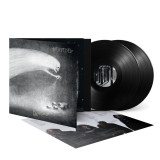
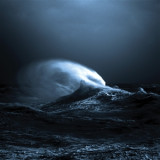
Far above the skylark sings And beats the air with joyful wings Till all the sky with music rings At high noon of the day With 2022's critically acclaimed album Ghosts, enigmatic Shropshire group HARESS markedout their own place in a growing landscape of artists navigating the world of the traditional and the rural in new ways. Ghosts led to the normally reclusive Haress venturing out from their base in the Shropshire Hills for live performances with the likes of Godspeed You! Black Emperor, Shovel Dance Collective, Big Brave, Steve Von Till and appearances at Supersonic and Krankenhaus Festivals - not to mention making fans of everyone from Kevin Martin to James Holden in the process. Skylarks is perhaps the natural conclusion of these past few years for the group. Whereas previous Haress recordings have embraced something of the unknown in the process of their making, Skylarks sees a well-travelled group of musicians carefully craft long and expressive pieces of music in a powerful and instinctual way. The music here might be long, but it never sprawls out of control. The telepathy present in live performance has been harnessed and used to carefully compose and arrange these four pieces, narrating a journey through landscape and time that is as powerful as it is beautiful. Inspired by found folk songs, the power of nature and the power of community and Ben Myers' brutal tale of resistance The Gallows Pole, Haress have created a genuinely epic soundtrack to a world both past and future, real and imagined. The ambience and atmosphere of the recording (expertly captured by Phil Booth of JT Soar Studio on location in the group's hometown of Bishop's Castle) is entirely natural, the sound of an ensemble playing live in the room around you. The only vocal interjection this time comes from a choir of voices, replicating the communal singing that has been the centrepiece of Haress live performances. When the voices emerge, it feels truly euphoric and heavy. Not heavy as in metal, but heavy as in the Earth itself - a primal, joyful gut punch to the system. "This blissed-out psychedelia is not quite pastoral – there’s nothing twee about these unwinding grooves – yet evokes water and wood, light and shadow, a place of forgotten labour and the absent human form with a beguiling grace" - Luke Turner on Ghosts, The Quietus Albums Of The Year 2022 "That timelessness of the old sounds but with an added tripped out modernity and dissonance hooked into the past by the power of drone is magical and exhilarating stuff – they are truly spellbinding – ancient and modern like British ragas or a damp searching for the soul of England take on the desert blues of a Tinariwen" - Jon Robb reviews Krankenhaus Festival 2023, Louder Than War
Search:black light
- A1: Private Property
- A2: Wrack My Brain
- A3: Drumming Is My Madness
- A4: Attention
- A5: Stop And Take Time To Smell The Roses
- B1: Dead Giveaway
- B2: You Belong To Me
- B3: Sure To Fall (In Love With You)
- B4: Nice Way
- B5: Back Off Boogaloo
- C1: Wake Up
- C2: Red And Black Blues
- C3: Brandy
- D1: Stop And Take Time To Smell The Roses (Original Vocal Version)
- D2: You Can't Fight Lightning
- D3: Hand Gun Promos
- A1: Original
- B1: Instrumental
First single from the Smith Brothers’ upcoming second full-length album, Street Light Moon, released on Ubiquity. Recorded in Austin, Texas, and produced by Adrian Quesada (Black Pumas) at his Electric Deluxe studio.
- Opening
- Sapphire
- Zephyrs I
- Nward Landscapes
- A Dark & Graceful Wilderness
- Spirit Masked Wolf
- Nights Tender Reckoning
- Mother Destroyer
- Concealed Descent
- Unworld
- Phoebus
HEXVESSEL erkunden auf ihrem epischen siebten Album "Nocturne" liminale Räume, z.B. zwischen Licht und Dunkelheit sowie Natur und Einsamkeit. Die sich kontinuierlich wandelnde finnische Band besinnt sich wieder auf ihre Wurzeln im Folk und im psychedelischen Rock, indem sie akustische Zwischenspiele, kosmische Synthesizer und geisterhafte Pianoklänge kunstvoll mit den frostgesponnenen Fäden ihres Black Metal Geflechts verwebt. "Nocturne" klingt sowohl vertraut als auch unverhohlen progressiv, da HEXVESSEL ihre eigene Tradition mit einer frischen Neuerfindung ihres charakteristischen Sounds vermischen. Der Keim für dieses Meisterwerk wurde durch die Aufführung eines Auftragswerks beim Roadburn Festival 2024 gesetzt, das ursprünglich den Titel "Music for Gloaming: A Nocturne" trug. Mit diesem Album nimmt das Projekt eine ausgearbeitete physische Gestalt an. Dieses opus magnum verbindet den rauen Geist von Quorthons Black Metal mit dem komplexen Minimalismus zeitgenössischer Komponisten wie Philip Glass, György Ligeti und Avro Pärt. Den eklektischen Charakter von "Nocturne" unterstreichen ausgewählte Gastauftritte wie der ätherische Gesang von Saara Nevalainen oder die harschen Stimmen der Avantgarde Black Metal Vorreiter Yusaf Vicotnik Parvez (DHG/DØDHEIMSGARD) und ORANSSI PAZUZUs Juho Vanhanen. HEXVESSEL stammen zwar aus dem finnischen Tampere, die Band wurde aber vom englischen Sänger und Songwriter Kvohst alias Mat McNerney gegründet, nachdem er im Jahr 2009 in das nordische Land gezogen war. In vielerlei Hinsicht spiegeln HEXVESSEL die Natur ihres Gründers wider. Der Sänger und Songwriter war schon in vielen erfolgreichen Gruppen und Projekten aktiv, deren Spektrum von der britischen Black Metal Band CODE über einen Abstecher bei den norwegischen Legenden DHG bis hin zu den Rock-Shootingstars BEASTMILK reicht, die er später mit GRAVE PLEASURES fortsetzte. Mit "Nocturne" laden HEXVESSEL alle dunklen Seelen der Erde zu einem transzendentalen Nachtritual ein, das unter anderem die Klangvisionen von DARKTHRONE, TANGERINE DREAM und Philip Glass aus der toten Vergangenheit erweckt und mit neuem Leben erfüllt.
With their seventh full-length "Nocturne", HEXVESSEL explore the liminal spaces between light and darkness, nature and solitude on an epic album. The ever evolving and shifting Finnish band has reawakened their treasured roots in folk music and psychedelic rock as they artfully weave acoustic interludes, cosmic synths, and spectral piano into the frost-spun threads on their black metal loom. "Nocturne" sounds both familiar and fearlessly progressive as echoes of tradition entwine with a fresh reinvention of their characteristic sound. The seed of this masterpiece was sown by the performance of a commissioned work at Roadburn Festival 2024 that was originally entitled: "Music for Gloaming: A Nocturne". With this album, it arrives fully fleshed in recorded form. This opus magnum blends the raw spirit of Quorthon's black metal with the intricate minimalism of contemporary composers such as Philip Glass, György Ligeti, and Avro Pärt. Its eclectic nature is elevated and underlined by select guest performances, including the vocals of Saara Nevalainen, as well as the avant-garde black metal luminaries Yusaf Vicotnik Parvez (DHG/DØDHEIMSGARD), and ORANSSI PAZUZU's Juho Vanhanen. While HEXVESSEL are based in Tampere, Finland, they were founded by English singer & songwriter Kvohst aka Mat McNerney after he moved to the country in 2009. In many ways, HEXVESSEL reflect their founder. The vocalist and songwriter has instigated and been involved in various bands ranging from UK black metal act CODE, a stint in Norwegian legends DØDHEIMSGARD, and to rock shooting stars BEASTMILK – later 'continued' with GRAVE PLEASURES to name but a few of his success stories. With "Nocturne", HEXVESSEL invite all souls on earth to a transcendental night ritual that is imbued with DARKTHRONE, TANGERINE DREAM, Philip Glass, and sounds unearthed from the dead past, now instilled with new life.
- Ramping
- Cross-Temporal Sync
- Mosh
- Particles
- The Cyclical Culture
- The Violet Lux
- The Alignment Movement
- Zero-Ones
- Countdown
- Reclaimers
- Quantum Modern
PHASE SHIFTING INDEX is a time capsule record of Jeremy Shaw's vast original artwork that includes audio excerpts, voiceover passages and music composed by There in Spirit and Konrad Black. Shaw's seven-channel video, sound and light installation-that premiered at Centre Pompidou in 2020-uses science fiction, documentary, visual effects and synchronisation to induce an ecstatic experience in narrative temporality. Each video details the belief systems of one of seven fictional subcultural groups spread across time that aspire to induce parallel realities that could redirect the evolution of the human species through embodied forms of ritual, ideology and movement. The vinyl release serves as a gathering of the piece's key audio elements, focussing on their importance to the engineering of the artwork and their stand-alone listening qualities. Side A of the record follows the dramaturgy of the artwork in full-swing, including audio segments from four of its five distinct chapters. Written by long time collaborators Konrad Black and Jeremy Shaw together as There in Spirit, "Cross- Temporal Sync" soundtracks the strobing peak of the installation at the moment when all seven disparate videos fall into a unified choreography in which every person on every screen performs the same ecstatic series of slow-motion movements. The pulsing, hypnotic dirge aligns with the locked choreography in mood and action, caught somewhere between ecstatic trance and somatic takeover. A steady sub line, clipped stabs and a swooping choral gasp harmonise with the dancers movements onscreen while restrained filters open slowly to reveal a submerged melody that builds in intensity towards the chaotic rupture of Black's "Mosh". Here the score breaks into digital shards as heard through analog bodies colliding and pixelating into each other. The dancers eventual dissolution into "Particles" sounds like the field recording of a disembodied neural cosmos. The B-side of the record contains a narrative outline edit of the artwork comprised of music, excerpts and pieces of narration from each video. Listeners can follow along in an accompanying thirty-six page booklet of full-bleed film stills documenting each of the seven groups as they move through the five chapter dramaturgy. Composer Konrad Black's authentically backwards-glancing production and sound design is as disparate as the groups represented on screen. From the bespoke-16mm-tribal-techno of "The Cyclical Culture" and retro-cyber-funk of the "Zero-Ones," to the VHSdark- wave of "The Violet Lux" and skewed vocal/piano minimalism of the "Quantum Modern," each group exists in its own custom-made world out-of-time. The record ends where it began, with the full sequence of "Ramping" playing out as each subcultural world begins to lose control, galvanise, sync, rupture, atomise and scatter throughout the universe, only to loop back into another inevitable beginning. Phase Shifting Index premiered at Centre Pompidou, Paris, in 2020 and has since been exhibited in nine international venues including ARoS, Denmark, MONA, Tasmania, MAC, Montreal and Hamburger Bahnhof, Berlin
- Nomenklatura
- Aeon
- Doomsday Party
- Human Black Box
- Killjoy
- I Am Ultraviolence
- Electronegative
- In The Cold Light
- Killjoy
- I Am Ultraviolence
- Electronegative
- In The Cold Light
- Flesh Doll For Sale Bonus Track
- From Zero To Nothing
- Shout Bonus Track
From "Spirit Of The Air"'s violence, "Cross Over"'s industrial poundings, the PCP-infused minimalism of "High On Angel Dust", to "Someone Was There" mixing techno and hardcore, Derniere Danse Part II outlines what Manu le Malin is as a producer : not afraid to visit experimental soundscapes nor ashamed to go straight to the dancefloor point... But always soaked in darkness. This is a black gateway to the world of MKNK's head, through five of his all-time favorite tracks, including one unreleased, all remastered by Scan X and Deathmachine.
But before pressing play, consider yourself warned : the first track "Spirit Of The Air", with its tortuous intro, piano break, screams samples and references to The Exorcist saga, is relentless, violent and unpredictable. And things don't go softer with "Cross Over", also an extract from his Fighting Spirit album (2002), a downright industrial attack that sounds particularly up-to-date.
Unreleased "High On Angel Dust" then shows Manu's admiration to the label PCP (hence the powdery title) and its founder Marc Acardipan. An oddity in his discography that almost never saw the light of the day : the synths and TR-909 based track was recorded in one night, and completely forgotten in a DAT for 28 years! "Someone Was There", from the soundtrack of Jalil Lespert's 24 Mesures, and the esteemed classic "One The Way Home", available as a bonus in the digital release, conclude this handpicked selection.
Diverse, personal, tormented and yet dancefloor compatible, Derniere Danse Part I and Part II feature some of Manu's best works. But they also are a stepping stone : MKNK will now open to new artists exploring every dark corner of what hardcore music can be.
Limited edition double “Black & White Swirl” vinyl housed in a deluxe gatefold sleeve with beautiful artwork throughout.
Following 2023’s JUNO award winning album ‘when we were that what wept from the sea’, ‘The love it took to leave you’ features 11 new pieces of emotionally scorching music.
The album was recorded over a week in 2023 at The Darling Foundry, a 144-year-old former metalworks facility in Montreal with a voluminous main room that still maintains its raw architecture of brick, concrete and steel. From the album’s opening track Stetson charts a carefully sequenced ride, travelling through intense territories punctuated with tragic melodies that seek transcendence, epic and frenzied shredders, and many shades of scary beauty, betrayal, and redemption.
- Caravan
- Beginning To See The Light
- Mood Indigo
- Honeysuckle Rose
- Here's That Rainy Day
- Love For Sale
- S Wonderful
- In The Still Of The Night
Bridgewater and Charlap curate a repertoire that only they can present: exploring the deep understanding of jazz tradition alongside impeccable phrasing and a once-in-ageneration dynamic range, bringing a level of sophistication that is sure to be considered a masterpiece for generations to come.
Available on 4-panel digipak CD and 180g black vinyl.
Belgian label Music Man Records presents Boccaccio Life 1987-1993, a new compilation offering a fresh perspective on the legacy of the iconic Belgian club Boccaccio - often associated with the short-lived New Beat movement. The 40-track compilation highlights the raw and futuristic early house and techno sounds that were heard in the pioneering club.
Located in rural Destelbergen (Belgium), just a stone's throw from Ghent, Boccaccio has secured its place among legendary venues like Paradise Garage in New York and The Haçienda in Manchester. Its bold fusion of emerging electronic genres such as New Beat, Acid, House, and Techno was way ahead of its time, drawing music lovers and clubbers from across Belgium and beyond. Sundays at Boccaccio were unlike anywhere else-offering sounds you couldn't hear anywhere else.
Boccaccio Life 1987-1993 is carefully curated by resident DJ Olivier Pieters and club regular Stefaan Vandenberghe, standing as the ultimate testament to a club that was more than just a venue. For those who experienced it, it was a community - a way of life. Hence the club's full name: Boccaccio Life.
This compilation stands as a testament to an innovative time in electronic music, capturing the raw, futuristic sounds of early house and techno. It sheds light on another side of Boccaccio, one that goes far beyond the short-lived New Beat scene. A carefully curated selection of 40 tracks, resonating with those who were there by offering familiar classics, while also reaching a new generation-those who never experienced it firsthand.
With tracks from Blake Baxter, Virgo, Frankie Knuckles, Tyree, and A GuyCalled Gerald, the unmistakable influence of black American pioneers is clear-the originators of the first analog house and techno sounds. On the other hand, UK sound innovators such as The Orb and LFO bring both sharp textures and rough breakbeats to the table.
Club staple tracks include dreamy excursions from Roger Sanchez under his Egotrip moniker, the relentless basement house of Circus Bells by Robert Armani on Dance Mania, an uplifting take on a hip-house cut from The D.O.C. (Portrait of A Masterpiece in the CJ Ed-Did-It Mix), a timeless remix of UK Formation's Age of Chance from 1994, and an alternate take on The Tape by Boccaccio club regular and Belgian producer Frank De Wulf, taken from his B-Sides project.
While not always the obvious hits, these tracks have gracefully withstood the test of time, and were exclusive to Sundays at Boccaccio. Now, they are finally available to experience together in one collection,offering a timeless snapshot of a unique era.
Belgian label Music Man Records presents Boccaccio Life 1987-1993, a new compilation offering a fresh perspective on the legacy of the iconic Belgian club Boccaccio - often associated with the short-lived New Beat movement. The 40-track compilation highlights the raw and futuristic early house and techno sounds that were heard in the pioneering club.
Located in rural Destelbergen (Belgium), just a stone's throw from Ghent, Boccaccio has secured its place among legendary venues like Paradise Garage in New York and The Haçienda in Manchester. Its bold fusion of emerging electronic genres such as New Beat, Acid, House, and Techno was way ahead of its time, drawing music lovers and clubbers from across Belgium and beyond. Sundays at Boccaccio were unlike anywhere else-offering sounds you couldn't hear anywhere else.
Boccaccio Life 1987-1993 is carefully curated by resident DJ Olivier Pieters and club regular Stefaan Vandenberghe, standing as the ultimate testament to a club that was more than just a venue. For those who experienced it, it was a community - a way of life. Hence the club's full name: Boccaccio Life.
This compilation stands as a testament to an innovative time in electronic music, capturing the raw, futuristic sounds of early house and techno. It sheds light on another side of Boccaccio, one that goes far beyond the short-lived New Beat scene. A carefully curated selection of 40 tracks, resonating with those who were there by offering familiar classics, while also reaching a new generation-those who never experienced it firsthand.
With tracks from Blake Baxter, Virgo, Frankie Knuckles, Tyree, and A GuyCalled Gerald, the unmistakable influence of black American pioneers is clear-the originators of the first analog house and techno sounds. On the other hand, UK sound innovators such as The Orb and LFO bring both sharp textures and rough breakbeats to the table.
Club staple tracks include dreamy excursions from Roger Sanchez under his Egotrip moniker, the relentless basement house of Circus Bells by Robert Armani on Dance Mania, an uplifting take on a hip-house cut from The D.O.C. (Portrait of A Masterpiece in the CJ Ed-Did-It Mix), a timeless remix of UK Formation's Age of Chance from 1994, and an alternate take on The Tape by Boccaccio club regular and Belgian producer Frank De Wulf, taken from his B-Sides project.
While not always the obvious hits, these tracks have gracefully withstood the test of time, and were exclusive to Sundays at Boccaccio. Now, they are finally available to experience together in one collection,offering a timeless snapshot of a unique era.
Belgian label Music Man Records presents Boccaccio Life 1987-1993, a new compilation offering a fresh perspective on the legacy of the iconic Belgian club Boccaccio - often associated with the short-lived New Beat movement. The 40-track compilation highlights the raw and futuristic early house and techno sounds that were heard in the pioneering club.
Located in rural Destelbergen (Belgium), just a stone's throw from Ghent, Boccaccio has secured its place among legendary venues like Paradise Garage in New York and The Haçienda in Manchester. Its bold fusion of emerging electronic genres such as New Beat, Acid, House, and Techno was way ahead of its time, drawing music lovers and clubbers from across Belgium and beyond. Sundays at Boccaccio were unlike anywhere else-offering sounds you couldn't hear anywhere else.
Boccaccio Life 1987-1993 is carefully curated by resident DJ Olivier Pieters and club regular Stefaan Vandenberghe, standing as the ultimate testament to a club that was more than just a venue. For those who experienced it, it was a community - a way of life. Hence the club's full name: Boccaccio Life.
This compilation stands as a testament to an innovative time in electronic music, capturing the raw, futuristic sounds of early house and techno. It sheds light on another side of Boccaccio, one that goes far beyond the short-lived New Beat scene. A carefully curated selection of 40 tracks, resonating with those who were there by offering familiar classics, while also reaching a new generation-those who never experienced it firsthand.
With tracks from Blake Baxter, Virgo, Frankie Knuckles, Tyree, and A GuyCalled Gerald, the unmistakable influence of black American pioneers is clear-the originators of the first analog house and techno sounds. On the other hand, UK sound innovators such as The Orb and LFO bring both sharp textures and rough breakbeats to the table.
Club staple tracks include dreamy excursions from Roger Sanchez under his Egotrip moniker, the relentless basement house of Circus Bells by Robert Armani on Dance Mania, an uplifting take on a hip-house cut from The D.O.C. (Portrait of A Masterpiece in the CJ Ed-Did-It Mix), a timeless remix of UK Formation's Age of Chance from 1994, and an alternate take on The Tape by Boccaccio club regular and Belgian producer Frank De Wulf, taken from his B-Sides project.
While not always the obvious hits, these tracks have gracefully withstood the test of time, and were exclusive to Sundays at Boccaccio. Now, they are finally available to experience together in one collection,offering a timeless snapshot of a unique era.
Belgian label Music Man Records presents Boccaccio Life 1987-1993, a new compilation offering a fresh perspective on the legacy of the iconic Belgian club Boccaccio - often associated with the short-lived New Beat movement. The 40-track compilation highlights the raw and futuristic early house and techno sounds that were heard in the pioneering club.
Located in rural Destelbergen (Belgium), just a stone's throw from Ghent, Boccaccio has secured its place among legendary venues like Paradise Garage in New York and The Haçienda in Manchester. Its bold fusion of emerging electronic genres such as New Beat, Acid, House, and Techno was way ahead of its time, drawing music lovers and clubbers from across Belgium and beyond. Sundays at Boccaccio were unlike anywhere else-offering sounds you couldn't hear anywhere else.
Boccaccio Life 1987-1993 is carefully curated by resident DJ Olivier Pieters and club regular Stefaan Vandenberghe, standing as the ultimate testament to a club that was more than just a venue. For those who experienced it, it was a community - a way of life. Hence the club's full name: Boccaccio Life.
This compilation stands as a testament to an innovative time in electronic music, capturing the raw, futuristic sounds of early house and techno. It sheds light on another side of Boccaccio, one that goes far beyond the short-lived New Beat scene. A carefully curated selection of 40 tracks, resonating with those who were there by offering familiar classics, while also reaching a new generation-those who never experienced it firsthand.
With tracks from Blake Baxter, Virgo, Frankie Knuckles, Tyree, and A GuyCalled Gerald, the unmistakable influence of black American pioneers is clear-the originators of the first analog house and techno sounds. On the other hand, UK sound innovators such as The Orb and LFO bring both sharp textures and rough breakbeats to the table.
Club staple tracks include dreamy excursions from Roger Sanchez under his Egotrip moniker, the relentless basement house of Circus Bells by Robert Armani on Dance Mania, an uplifting take on a hip-house cut from The D.O.C. (Portrait of A Masterpiece in the CJ Ed-Did-It Mix), a timeless remix of UK Formation's Age of Chance from 1994, and an alternate take on The Tape by Boccaccio club regular and Belgian producer Frank De Wulf, taken from his B-Sides project.
While not always the obvious hits, these tracks have gracefully withstood the test of time, and were exclusive to Sundays at Boccaccio. Now, they are finally available to experience together in one collection,offering a timeless snapshot of a unique era.
Carrying on from recent archival releases from masters of Indian classical tradition such as Kamalesh Maitra and the Dagar Brothers, Black Truffle is pleased to present a previously unheard recording of a concert by Pakistani vocalist Salamat Ali Khan. Born to a musician family in Hoshiarpur in the northwestern state of Punjab, Khan moved with his family to Lahore in Pakistan after the 1947 partition of India, becoming a child musical prodigy. Khan was a master of the kyhal form of Hindustani classical vocal music, a style integrating influences from Middle Eastern musical traditions that gives the singer a great deal of improvisational freedom. Travelling widely across the globe from the 1960s until his death in 2001, Khan approached ragas performed in the kyhal style as expressive forums for risk-taking improvisation, enlivened by ceaseless ornamental invention.
This remarkable recording was captured by Michael Hönig (of krautrock legends Agitation Free) in concert at Berlin’s Neue Nationalgalerie as part of the MetaMusik festival in 1974 (which also featured Nico, Tangerine Dream, and Roberto Laneri’s Prima Materia, among many others). Khan, who is also heard accompanying himself on a specially tuned alpine zither (in place of the traditional swarmandal, an Indian style of zither), is joined by Shaukat Hussein Khan on tabla and Hussein Bux Khan on harmonium. The lack of a familiar underlying tanpura drone gives this performance a weightless, floating quality, with all three of the musicians playing masterfully with the interaction between silence and the pulse propelling each section of the raag.
As Khan explains in his opening remarks, this performance of the rainy season Raag Megh is divided into three parts, each with its own tempo and rhythmic scheme (tala). The opening vilambit, in a twelve-beat tala, stretches out for over twenty minutes, lingering for a long time in a space of meditative calm, Khan lightly strumming the zither while exploring the lower end of his range in languorously extended notes. Virtuoso tabla interjections at first barely state the tempo, and the interplay between musicians is so spacious that we hear scraps of audience noise and the squeak of the harmonium’s mechanism in between the notes. Gradually picking up rhythmic definition and melodic complexity, after around fifteen minutes the music builds dramatically, with Khan letting out emotive yelps and swooping scalar shapes ranging across his full vocal range. This flows seamlessly into the following jhaptal, at a faster tempo in ten beats, which then makes way for the concluding teental, very fast in sixteen beats, which becomes a frantic improvisational exchange of daring rhythmic disruptions from the tabla, flowing harmonium melodies, and a stunning variety of vocal approaches from Khan, ranging from rapid-fire staccato consonants to guttural growls.
Accompanied by stunning black and white concert photographs, the LP also contains a moving and entertaining recollection from acclaimed German musicologist Peter Pannke, looking back on his experience assisting Khan and his musicians in Berlin at the Metamusik festival (including a mouth-watering description of a feast cooked by the maestro himself). As Pannke describes in his account of attending the concert, the beauty and spiritual intensity of this music leaves the listener speechless.
Germany's iconic deep funk collective digs into a new soundscape: "A Higher Frequency" was recorded with a nine-piece live to tape at legendary MPS studio in the Black Forest, adding an airy, jazzy flavour to their trademark raw and breaks-heavy funk. Ten tracks full of spiritual grooves, soulful themes, loose funkiness and organic interplay, captured with state-of-the-art 1960s gear in a super-vibey room - but the title A Higher Frequency is not just about the pristine analogue sound quality of the recording, it is also a reference to a trancendant wavelength where minds meet and music connects.
Together with long-time friends and collaborators Daniel Kimaz on flute and Guillame Métenier, who worked his magic on the studio's historic Bösendörfer grand piano and Hammond organ, the group spent a week in the Black Forest, with full focus on the mission to capture the live energy and togetherness of the ensemble.
The result is an album bursting with positive energy and power, rooted in a universal funk groove with excursions into many colourful branches like outernational, cinematic, soulful jazz, psychedelic & disco.
The common thread is a propulsive, driving-forward feel: "Open The Gate" welcomes us with hard-hitting breakbeats and dramatic crime brass, followed by the cool groovin' piano-led soul jazz of "Get Loose", while "Spinning" takes us on a ride through cinematic horn choruses and folky-psych flute and guitars. "Back And Better" is Nichola Richards' time to shine, laying her sweet vocals over the sparse hiphop-infused soul beat to tell a comeback story. "Sweet Company" is a lighthearted uptempo tune inspired by TV and library themes of the 1960s. The swampy groove of "Sparks Of Joy" best reflects the fun of the band playing together and "Phantom Power" combines a trademark Mocambo breakin' theme with an unusual instrument, an electric phin from Thailand – a nod to the many so-called "world music jazz" recordings that the MPS studio gave birth to. On "Can't Stop This Fire", soul singer Carlton Jumel Smith from New York City takes over the mic as a special guest and brings the house down with a heavy funk delivery. "When We Roll" builds another highlight where bouncy drums play off disco-jazz horn themes and finally, the gospel-flavoured cine-soul epic "Homebound" drives it all home.
The vinyl record comes in a limited first edition in hand-made tip-on sleeve.
The Ottawa composer/performer and head of Black Bough Records plays every instrument on his CST debut: an accessibly avant-garde work of dark/ambient modern chamber music. Mark Molnar has been a linchpin of the Ottawa experimental music scene for over two decades, spanning contemporary classical, electroacoustic, industrial/noise, and improv. As a string player in a wide range of projects, an organizer and curator of innumerable shows, and via his own avantgarde label Black Bough Records, Molnar's unflagging contributions to independent music culture in Canada's capital city have been significant. EXO is his Constellation debut: a remarkable and bracing suite of post-classical composition on which Molnar plays every instrument. Meticulously self-recorded, primarily with strings, harp, and piano, EXO balances thematic melodicism, polytonality, and dissonance across three elegiac pieces of exquisitely expressive dynamism. This is exacting modern chamber music that blends formal and harmonic complexity with a solemn emotive sensibility accessible to a broad audience. Listeners that yearn for some edge and disquietude in a landscape of often all-too-approachable post-classical music should find EXO eminently worth their time and attention. While Molnar is a highly trained string player, and studied music under Aubrey Wolfe, microtonality with James Tenney, and composition with R. Murray Schafer, his trajectory has been entirely and intentionally outside the academy, signalling a socio-artistic commitment to DIY culture, forged from an early passion for the sonic worlds of post-hardcore, post-punk, no-wave, free improv, power electronics, and other independent/underground musics. His classically-informed works have been described as "tense currents of musical modernism invigorated with punk's raw vitality." EXO carries an undercurrent influenced by dark industrial and ambient metal in particular, with microphones purposely placed to pick up the low-end frequencies of the piano body, and of a bass drum positioned as a resonant skin in the acoustic space; an electroacoustic strategy organically meshed to the crisply defined and pristinely recorded pointillisms and polychords of strings, harp, and piano, which feed into this noisefloor of crepuscular sub-bass disquietude and decay. It's a production aesthetic that lends EXO a distinct undertow of tension and feeling, a sort of roiling maximalism where the chamber instrumentation traces arcs and waves of form and flow as if drawn from a dark, impervious ocean below. It also reinforces the profound hermeticism of Molnar's process, as a forbiddingly solitary creative act of immersion and navigation. The album artwork, featuring semiabstract stills of the sea by British photographer Ed Allen, further reifies this metaphor. The album's opening piece 'Sub Luna' (and its shortest at 8 minutes) showcases Molnar's adeptness at naturalistic and flowing complexity: tight cascades of climbing and descending chordal clusters hold their polytonal densities for various durations, yielding to more clarified harmonic suspensions and motifs, as melodic themes led primarily by violins in the higher registers provide a fractured lyricism. Molnar says: "the opening and closing figures of this piece act as opposing shorelines; the shorelines provide a reliable expression of range and key signature, and the tides come in and swallow them up, the motion of a body that addresses the relationship between states of lucidity and melodic figures." On 'Terre Sacer' everything happens in soupier waters, as a slow and doleful theme, anchored by grinding bass notes, circles in a gyre of dark resonances, until glistening strings gradually ascend to enrobe a plaintive and gently harrowing single-voiced ostinato over the composition's final third. Molnar's drone, ambient, minimalist, and goth-industrial influences are on display here. Side Two of EXO features the 18-minute multi-movement 'pallida Mors' (pale death): a waterfall of heterophony introduces dense chordal movements where strings are recorded and mixed to evoke pipe organ, in the album's most overtly dissonant and (anti)liturgical sequence. This gives way to ever more open and fragile spaces, before a resurgence of dark clusters and noise treatments introduces a final repeating piano coda, shrouded in devastated bass resonance, settling into what Molnar calls "a meditative hollow." Constellation is honoured to release this work by Mark Molnar, a longtime fellow-traveler whose selfless and boundlessly generous activities as an independent arts enabler sometimes obscure his own accomplished and uncompromising artistry. We trust EXO can help shed some much deserved light on this fine composer. Thanks for listening.
LIMITED 300 ONLY CRYSTAL CLEAR VINYL WITH PURPLE BLOB AND BLACK SPLATTER. HOUSED IN FULL COLOUR MATT SLEEVE WITH POLYLINED INNER BAG AND DOWNLOAD CODE. NON-RETURNABLE.
Following his two sold out releases ‘Vertigo’ & ‘Water Music’ on Riot Season last year, the ever prolific Ivan The Tolerable returns with ‘An Orphan Form’
A beautifully strange and immersive suite that feels both otherworldly and rooted in something organic. Drawing on kosmische drift, loose-limbed jazz, and warped psychedelic textures, the record moves like a half-remembered dream.
Field recordings and nature sounds weave in and out, grounding the swirling synths and off-kilter rhythms in real earth and air. It's a record that doesn’t follow a straight line, but instead wanders, curious, alive, and quietly spellbinding.
Recorded in winter 2024 in Middlesbrough, UK and Utrecht, Netherlands
Oli Heffernan: bass/guitars/synths/drones/field recordings/electric piano
Mees Siderius: drums/percussion/vibraphone
Elsa Van Der Linden: saxophones/flutes
Repress now on 140 gram black vinyl comes with download code. SLOW AIR is the fourth album by Still Corners. Evoking the atmospheric sounds Still Corners are known for, SLOW AIR continues the band's journey with an album full of tension and brooding all the while wrapped in a reverb laden dream. Written in the hill country in Austin, Texas, Slow Air nods towards a classic sound with emphasis on the guitar, both acoustic and electric, combined with the alluring and ghostly voice of Tessa Murray.
After over 50 events of Bristol's beloved Club Blanco, the city's anointed high priest of night, Chez de Milo, is crystallising his party's dimension-hopping hedonism into a label, calling on an extended family of esteemed producers and musicians to make it happen.
First up is Johnny Aux, aka Quinn Whalley (Paranoid London, Sworn Virgins, Decius), delivering two offerings accompanied by remixes from Jamie Paton and Chez de Milo himself.
Supersonic blends a hyperspace bassline with euphoric 90s synth elevation that delivers us to a blissful dance floor crescendo, where you've been dancing for hours—maybe days— when the sun appears over the horizon and pierces through the club's blacked-out windows. Chez de Milo's re-rub wraps you up vines of a living, breathing forest, where all your favourite flora and fauna summon you to the dappled light of a clearing, front left of the booth.
On The Train locks you into a rolling groove, and electro slaps and smacks. It feels covered in equal parts space dust and the dust of an old crate of records, where this forgotten banger has been buried deep for 25 years, waiting for the right hands to pull it out. Jamie Paton veers off down a stranger track, conducting a driving Italo beat with eerie soundscapes dissected by lasers and a brooding bassline.
- The Withering Stench Of Hope
- Devoid Of Light
- Funeral Throne
- In Writhing Rapture
- Cancerous Bane
- Unending Hunt
- Ash Drapes The Earth
- In The Shade Of The Devil's Horns
- Triumphant Death
Obwohl ANTROPOMORPHIA für "Devoid of Light" insgesamt zweieinhalb Jahre im Studio verbrachten haben, verloren sie dabei nie ihre Vision aus den Augen: Nämlich eine Vielzahl von harten musikalischen Texturen, einschließlich fanatischer Aggression, misanthropischer und nihilistischer Texte mit dunklen Emotionen wie Wut, Verzweiflung und Schmerz zu dunklen und bedrückenden Klanglandschaften zu kombinieren. ANTROPOMORPHIA wurden 1990 im niederländischen Tilburg aus der Gruft gehoben. Als Pioniere ihres Genres wurden sie schnell zu einem Fundament der Death Metal Szene in den Niederlanden. Trotz gelegentlicher Unterbrechungen konnten ANTROPOMORPHIA ihren Status als Underground-Ikonen mit einer Reihe gefeierter Veröffentlichungen kontinuierlich festigen. Ihre kompromisslose Herangehensweise und der sich ständig erweiternde Malstrom musikalischer Texturen brachte einen stetig wachsenden Einfluss von Black Metal Elementen in die musikalische und visuelle DNA der Niederländer. Jetzt kehren ANTROPOMORPHIA mit "Devoid of Light" zurück und zeigen der Welt, dass sie immer noch danach dürsten, die Grenzen der Death Metal Szene zu überschreiten. Dreht die Regler auf 10 und lasst dieses monströse Album von der Leine!