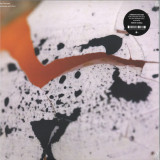
The “Tumult Hands” duet is made by Jacek Sienkiewicz and Jerzy Przezdziecki - the producers
whose composition has - to a large extent- defined the Polish techno music. Sienkiewicz - as
early as Recognition - started his adventure with music in the late 1990s. Subsequent records,
already under his own name, were released, among others, at Cocoon Records, Trapez, Klang
Elektronik and WMFRec. Przezdziecki started publishing a little later. Over the last two
decades, he has been presenting various types of electronic music, among others, as Praecox,
Epi Centrum and Jurek Przezdziecki.
“Tumult Hands” has two EPs on its account – “Tumult Hands EP” (2014) and “Tropic
Factory” (2016). Both were published by Recognition. So a full record was a matter of time.
The album titled: “TH” (Recognition, 2022) has been prepared for many years. The repertoire
was created mainly out of improvisation. As artists themselves say, “it is the result of
discovering and accepting a chance event.” For both producers, close contact with
instruments was important during their composition; the type of interaction between the maker
and an electronic device. Individual works have been maturing for a long time. Paradoxically -
the lapse of time did not cause them to be ageing but vice versa - allowed them to mature and
gain natural weight.
“TH” brings very diverse music. In part, it is the repayment of the debt that Sienkiewicz and
Przezdziecki incurred towards the most creative techno period, that is, the 90s of the 20th
century. The lovers of experimental dance music from before the quarter of the century will
easily capture in the duet’s themes the art of Cristian Vogel, producers known from the tin
series of Chain Reaction record company or early recordings of Richie Hawtin (Plastikman,
F.U.S.E.). This is a very similar, non-standard approach to sound structure and an original
approach to rhythmic structures. Minimalist melodies, accompanying e.g. the opening of the
“enter TH” or “pow” set, contribute to the composition an element of some sublimity and
metaphysical anxiety. Obviously, it is still the dance music but the duet - to some extent by
abandoning the club functionality (understood in the techno convention) - has given its music
a definitely sophisticated, artistic elegance.
Publishing cooperation between such important makers, as well as high quality of recordings,
leads us to see “TH” as something more than just another techno record. It is an event and an
electronic adventure that all lovers looking for dance music will appreciate.
out of Stock
Last delivered 19 months ago available to reorder, subject to availability
"Catch me in the corner not speakin'/Crushed out heavenly/ U.G. rock the sweet daddy long fox minks/Chicken and broccoli, Wally's look stink"
Ghostface Killah released his debut solo album 25 years ago on October 29, 1996. Produced by fellow Wu-Tang Clan member RZA, Ironman found inspiration in sources ranging from blaxploitation films to classic soul and charted a whole new direction for hip-hop in the process. The album features classic bangers like Daytona 500 featuring Raekwon and Cappadonna to soulful emotionally moving cuts like All That I Got Is You with Mary J Blige. To commemorate the 25 year anniversary Get On Down is proud to present Ironman in a 2xLP set available on both ‘Blue & Cream’ and ‘Chicken & Broccoli’ half-n-half colored vinyl, each version housed in a deluxe gatefold jacket, packed inside a ‘shoebox’-style 2nd outer jacket embossed with the year 1996.
The Entertains were a vocal group from Cleveland Ohio whose line up at different times varied between four to five members. Initially signed to Belkin Productions in Cleveland the group were persuaded by Nick Holiday to move to his Pittsburgh Steel Town Records Label. The group had already been working on two songs penned by C-Way Productions Richard Calloway who had strong links with Cleveland through his work with Jesse Fisher and Lester Johnson at Way Out Records. The two songs in question being “Love Will Turn It Around” and Why Couldn’t I Believe Them”, demo cuts of both songs where touted around to several major labels with 20th Century showing some serious interest, but the owner reputedly turned down 20th Century’s advances and instead chose to release the songs on his own Steel Town Label. Recorded at Jerree’s Studio in New Brighton P.A with the musical arrangements being provided by Don Groton, The Entertains 45 received limited local airplay reputedly due in part to Holiday’s refusal to provide a set of Dining Room furniture for an influential local radio promotion man. Greater radio play was eventually received with “Love Will Turn It Around” gaining air time on WANN, Annapolis Maryland’s largest Black radio station, courtesy of Disc-jockey Charles “Hoppy” Adams. For a time, a popular tune throughout Baltimore, Washington and Delaware without breaking out nationally. Wider appreciation of the Entertains 45 would come from foreign shores as copies of the 45 found their way in the UK. The effervescent dance side of the 45 “Love Will Turn It Around” was heavily championed by Legendary DJ Colin Curtis and became a firm favourite with the dancers within the Highland Room of the Blackpool Mecca and subsequent Northern Soul venues of the time. The Entertains line up on the Steel Town sessions where Donald Rice, Howard Rice (the cousin of Donald) Alfred Wilson and Andrew Wright the lead vocalist on all The Entertains songs. During 1978 Richard Calloway held a second recording session on The Entertains again at Jeree’s Studio’s which yielded a further two songs “I’ll Answer You With Love” and “Your Love I Give It Up” which due to lack of finance at the time of their conception remained in the can. These two songs have now been brought to life through Soul Junction’s licensing deal with C-Way Production’s in the format they originally intended for. The A-side of the release is the emotional charge stepper “I’ll Answer You With Love” with the opening monologue parts been performed by Howard Rice. While the B-side “Your Love I Give It Up” is a punchier up-tempo version of Richie Merrett’s earlier C-Way Records recording “I Gave It Up”, the flipside to “You’ll Always Have Yesterday Standing By” (C-way 103).
In later life Donald Rice would perform with Lonnie Turner Jr a former member of the Detroit groups The Mighty Lovers (Boo-Ga-Loo and Soulhawk) and Innervision (Private Stock and Ariola America) and his daughter Africa Turner in a vocal combo known as The Ambassadors Of Soul, sadly Donald has now passed. It is believed that the other members of The Entertains are still out there performing solo or as members of other different groups.
Choki Biki Records is proud to present: Coakley Collabs Vol.1! A new collaboration EP curated by DJ and Producer Josh Coakley; a Dublin based DJ & Producer. Coakley Collabs Vol.1 consists of six Techno orientated collaborations between Josh Coakley and other Irish talent including; blk., Sharpson, jxck, KIRK, Karl Seery and Black Traffic. Each track varies between a blend of Acid, Electro, Trance and Breakbeat, under the umbrella of Coakley’s signature Techno sound. Josh Coakley & Karl Seery – W.O.T.U You might be familiar with the introductory track: W.O.T.U by Coakley and Dublin producer Karl Seery, as it has already received serious airtime on BBC Introducing thanks to Jaguar. This techno banger features an array of rave stabs and classic hardcore breaks, which perfectly represents the collaboration between Coakley’s signature techno sound, and Choki Biki’s Nu-Rave aesthetic. Josh Coakley & blk. – Detroit Next up is Detroit featuring prolific techno producer blk..This dubby – techno track features the iconic acapella of Fedde Le Grande’s iconic ‘Put Your Hands Up For Detroit’. Its use of 808 programming gives an authentic replication of the early Detroit techno productions. Its contemporary hard-hitting nature is influenced by the likes of FJAAK, which blends nicely with its clear influence from Jeff Mills. Josh Coakley & Black Traffic – Fade To Grey Fade To Grey comes from Josh Coakley’s Collaboration with Scott Prendergast AKA Black Traffic. The pair have composed a track that tows the lines between Trance and Melodic Techno. Black Traffic’s signature use of rich textures and melodies contrast with Coakley’s ‘in your face’ techno drum programming. Fade To Grey is already making the rounds in Irish clubs as it was featured in Four Four Magazine as track of the week. Josh Coakley & KIRK – Illusionist Illusionist is an Acid Techno track from Coakley and Carlow based producer KIRK. Illusionist steers away from the direction of the ‘retro’ Detroit sounding Techno and moves towards the more atmospheric sounds of European Acid Techno producers such as A.S.Y.S. & T78. Its arpeggiated 303 programming and use of psychedelic vocal samples creates an atmosphere that would be right pounding throughout a club in Amsterdam. Josh Coakley & Jxck – MYB Next up is MYB, an Electro-Breaks collaboration between Coakley and Jxck. This syncopated belter is sure to make you do exactly what it says on the tin; Move Your Body! Featured by the one and only HOUZ, this Break track has already seen serious support from Techno and Electro DJs alike. With a return to a ‘4 to the Floor’ beat halfway through, this heavy hitter is sure to keep an audience on their toes. Josh Coakley & Sharpson – Who’s In The Garden (feat. Wax White) The Final Track of Coakley Collabs Vol.1 takes a total turn with Who’s In The Garden?. This track is a double collaboration between Coakley, Choki Biki label boss Sharpson, and Irish Hip-Hop group Wax White. This high tempo breakbeat track has a cheeky, lighthearted nature to it thanks to the use of happy hardcore sounding synths and Wax White’s hilarious Dublin Mannerisms thrownout throughout the track. The track comes to a screeching halt with an Electro Breaks breakdown supplied by Sharpson. Coakley’s intricate arrangement and production skills really shine through in this final track, as its numerous ideas fit tightly knit together.
out of Stock
Last delivered 8 months ago available to reorder, subject to availability
Amy Winehouse’s Live at Glastonbury 2007 will be available on vinyl for the first time from June 3. It captures her performance on the Pyramid Stage at that year’s festival, 15 years ago this summer.
Winehouse’s show, her second at Glastonbury, will be released in a 2LP black vinyl set. They bring back to the fore one of the most memorable highlights of her all-too-short career, capturing not only her unique artistry and song craft, but the singer and writer’s trademark, between-songs banter and the sheer love for her emanating from the festival crowd. Highlights include “Rehab,” “You Know I’m No Good,” “Love Is A Losing Game,” “Valerie,” and “Tears Dry On Their Own,” as well as her cover of Toots and the Maytals’ “Monkey Man.”
Amy played a second set later the same day on the Jazz World Stage, and returned to the Pyramid Stage the following year, firmly establishing herself as part of the world-famous festival’s remarkable history. The artwork for the forthcoming release includes recollection of the performance by Glastonbury Festival’s co-organizer Emily Eavis. “Amy Winehouse was a Glastonbury-goer through and through,” she says. “She either came and played or, when she wasn’t working, came and camped. She played in the blistering heat and the heavy rain, and there were so many magical moments to her performances.”
out of Stock
Last delivered 4 years ago available to reorder, subject to availability
Between the late 70s and the early 80s, pop music was in a transitional phase. After a return to the roots of punk, rock was morphing into new wave, while disco was rapidly declining and the electronic revolution, already on the rise, was ushering in the transition from analog to digital. This period also saw the emergence and relatively brief flowering of a commercially dominant style that mixed soul influences (especially Stevie Wonder and Ear th Wind & Fi re) , folk/pop songwriting and jazz sensibilities in equal measure, creating a hybrid easy on the ears but also emotionally and musically rich. It was the style represented by artists like Christopher Cross, Michael McDonald, Gino Vannelli and Kenny Loggins, who were all influenced by black music. They belonged to a larger trend that took place in all major music producing countries, including Italy where, like so many other things, the style was not merely imported or copied, but reshaped into a specifically local version based on the nation's tastes and cultural traditions. In Italy, a soulful and sophisticated approach to pop music was embraced not only by established names like Mina, Alan Sorrenti and Loredana Berté, but also, and perhaps most importantly, by an entire generation of writers, arrangers and musicians who had grown up listening to early fusion, to Steely Dan's refined recordings, and to Quincy Jones's productions. So, with this compilation we hope to give new exposure to artists and songs that, despite having moderate or little success when first released, must be regarded as among the creative peaks of Italian pop music. "Paisà Got Soul" features pop veterans Peppino Di Capri, Mario Lavezzi and Alberto Radius alongside atypical singer-songwriters (Enzo Carella, Enzo Cervo, Gino D'Eliso), Italo-disco heroes (Stefano Pulga), international hit composers (Beppe Cantarelli, who has co-written for Aretha Franklin and Mariah Carey), Brazilian-born naturalized Italians (Jim Porto) and complete unknowns (Franco Camassa, I Ricci, Massimo Stella).It brings together little gems that in most cases are no longer available on the market, or only available in their original and now very rare vinyl format. We believe they all deserve to be rediscovered today, partly because of the recently renewed interest in "yacht rock", as this music style has been retrospectively named, and partly because they provide further evidence that Italian artists rework international music styles in creative and original ways.
Compiled and conceived by David Nerattini partnered by Pierpaolo De Sanctis
out of Stock
Last delivered 4 years ago available to reorder, subject to availability
LOVE & FIRE is the seventh full-length studio album from the multi-platinum selling reggae hybrid band The Black Seeds. It was developed over the past few years, beginning with a series of creative sessions in 2018 at the band’s creative incubator The Surgery in Wellington, New Zealand.
The original plan was to then do a classic “band in a room recording,” which got thrown out the window once the pandemic hit and lockdowns began. At that point, the group got creative, working remotely between various home studios of the band members, and the result is as strong a record as they’ve ever done, managing to capture the feelings of the past few years in a cohesive set of new songs.
The Black Seeds continue to evolve musically while defying expectations, yet still always seem to sound like no one else but themselves.
Repress, note new price. Black vinyl issue of the long sold out RSD compilation. Housed in heavy duty slipcase box. FOR FANS OF… Daptone Records, Big Crown Records, 45s, Soul, Funk, R&B. This is the follow up to our first volume of Soul Slabs, which is a collection of tracks from our 7” release series. For many of them, it's the first time they'll be appearing on an LP. Soul Slabs Vol. 2 is a collection of A-sides from the 7” catalog of Loveland Ohio’s Colemine Records. Specializing in heavy soul, funk, and R&B, Colemine prides itself on authenticity and an old school production style, while still making songs that seem fresh and are moving the genre of soul forward. This 3LP collection of 27 tracks puts their diverse catalog on full display, many of these songs being presented for the first time on an LP. Featuring artists such as Durand Jones & The Indications, Kelly Finnigan, Ben Pirani, Jr. Thomas & The Volcanos, Delvon Lamarr Organ Trio, Monophonics, Ikebe Shakedown, The Dip, The Sure Fire Soul Ensemble, Soul Scratch, and more!
"To kick off the yearlong celebration and provide the perfect summer soundtrack, Capitol Records and UMe will release a newly remastered and expanded edition of The Beach Boys career-spanning greatest hits collection, Sounds Of Summer: The Very Best Of The Beach Boys, on June 17. Originally released in 2003, the album soared to no. 16 in the US and stayed on the chart for 104 weeks. Now certified 4x platinum for sales of nearly four and a half million albums, the collection has been updated in both number of songs and audio quality, expanding the original 30-track best of with 50 more of the band’s most beloved songs for a total of 80 tracks that span their earliest hits to deeper fan-favorite cuts and from their 1962 debut album, Surfin’ Safari through to 1989’s Still Cruisin’.
Assembled by Mark Linett and Alan Boyd, the team behind 2013's GRAMMY® Award-winning SMiLE Sessions and last year’s acclaimed boxed set, Feel Flows – The Sunflower and Surf's Up Sessions 1969-1971, Sounds Of Summer features nearly every US Top 40 hit of The Beach Boys’ incredible career, including “California Girls,” “I Get Around,” “Surfer Girl,” “Surfin’ U.S.A.,” “Fun, Fun, Fun,” “God Only Knows,” “Good Vibrations,” “Be True To Your School,” “Wouldn’t It Be Nice,” “Kokomo,” “Barbara Ann,” “Help Me, Rhonda,” “In My Room,” and many others. Fifty additional tracks showcase a broad mix of songs from across their wide-ranging catalog with some of the many highlights including “All Summer Long,” “Disney Girls,” “Forever,” “Feel Flows,” “Friends,” “Roll Plymouth Rock,” “Sail on Sailor,” “Surf’s Up,” and “Wind Chimes.”
The collection boasts 24 new mixes including two first-time stereo mixes, plus 22 new-and-improved stereo mixes, which in some cases feature the latest in digital stereo extraction technology, allowing for the team to separate the original mono backing tracks for the first time.
The expanded edition of Sounds Of Summer will be available in a variety of formats, including a 3CD softpack, and as a Super Deluxe Edition 6LP vinyl boxed set on 180-gram black vinyl in two options – a standard set or a numbered, limited edition version featuring a rainbow foil slipcase and four collectible lithographs. Both versions will feature color printed sleeves that replicate the original “Capitol Catalog” sleeves that highlight the entire Beach Boys discography, and all formats will include a booklet with new liner notes and updated photos. The original 30-track version will also be available in its newly remastered and upgraded form on single CD or double gatefold LP on standard weight vinyl or as a higher-end limited edition numbered version pressed on 180-gram vinyl with a tip-on jacket and a lithograph. "
Includes 2 bonus tracks.
Originally released in 1983 this hugely rewarding record acted as a round up of the group’s career to date and was of immeasurable value to fans. It’s aged well, too.
Comprising of A and B sides from their Rough Trade released singles plus extracts from sessions for Radio 1, Capital Radio and EMI Records, this LP contains unique versions of such classic tracks as “The Jet Set Junta” and “He’s Frank (Slight Return)”.
Oddities, and jocular moments run through the album, including John Peel introducing “Fat Fun” and thinking aloud that those Monochrome boys might be having a pop at him. The fact that it includes a wish list of the band’s best songs to this point in their career is another reason to recommend it.
Previously they may have made a handful of slightly-off-target albums, but this 1983 compilation is a front-to-back joy, fast, restless and perfectly sequenced. It plays like a cohesive album.
Includes 2 bonus tracks from the February 1979 Peel Session ‘Love Goes Down The Drain’ & ‘Noise (Eine Kleine Symphonie)’.
“The year's indisputable soundtrack pinnacle” - Peter Travers, ABC
“The year’s best film score” - The New Yorker
“Greenwood’s latest score - and the one that might be likeliest to finally win him an Oscar” - Stereogum
Jane Campion’s masterful ‘The Power of the Dog’ is the most honoured film of the year. The critically acclaimed original score by Academy Award and BAFTA-nominated composer Jonny Greenwood
has won Best Score at 13 major critics organisations and is now SCL nominated for Outstanding Original Score for a Studio Film.
This incredible score recently received the Academy Award nomination for Best Original Score, BAFTA nomination for Best Original Music, Golden Globe nomination for Best Original Score
along with loads of other nominations.
As well as the score, the film has been incredibly popular this awards season, picking up many nominations.
The soundtrack is available on digipack CD and black vinyl LP with digital download code.
Press - Features in Pitchfork, NPR, NME, BBC, The Guardian, Brooklyn Vegan.
Radio - 6 Music, Scala Radio Mark Kermode.
Online - Full online & social marketing campaign by
Lakeshore, Invada & Netflix.
out of Stock
Last delivered 4 years ago available to reorder, subject to availability
"“The New Backwards” was conceived by Peter “Sleazy” Christopherson in 2007, revisiting stray tracks which hadn’t seemed to gel with the material he had chosen for the more somber “Ape of Naples” from 2005, COIL’s initial posthumous release, a sort of requiem and a kiss-goodbye to his then recently deceased partner John Balance.
Significantly different to its sister release, this album collects the brilliantly chaotic and outrageously rhythmic material from the original sessions for the album that was begun as early as 1993 and had originally been conceptualised as the follow-up to “Love’s Secret Domain”. These songs are as diverse and wild as the places they originated from, partly infamously spawned in Sharon Tate’s former home in the Hollywood Hills, the Nine Inch Nails home base in New Orleans and London’s Swanyard, remixed and restructured with the help of long-term friend Danny Hyde in Thailand, this collection has its own unique flow and an atmosphere not found on any other COIL release.
Both “AYOR” and “Backwards” had by the time the album was first released already become favourites in COIL’s manic live performances. Some of the other tracks had only leaked in demo versions and are here presented updated and polished as Christopherson and Hyde intended them to be heard. It is interesting to consider Balance’s vocal contributions, too. Whilst on the albums COIL did release at the time this material was first put aside (“Black Light District” and “ElpH”) his voice is all but absent, his vocal performances and his lyric writing here are arguably more closely indebted to the previous “Love’s Secret Domain” era, especially the epic “Copacaballa” is noteworthy in that respect.
The New Backwards” effectively became the final official COIL studio release of all new material whilst Peter was still alive and is here presented for the first time fully supervised by Danny Hyde, its co-creator.
The stunning cover uses a detail from artist Ian Johnstone’s “Cubic Raven” painting, licensed from the estate of IJ..
It is high time to rediscover this timeless album now!
Recorded at Swanyard, London and at Nothing Studios, New Orleans, 1996.
Thanks to everyone there, especially Trent Reznor who made it all possible.
Written & Produced by Coil & Danny Hyde.
Remixed by Peter Christopherson & Danny Hyde, Bangkok 2007.
For that session Coil were: Peter Christopherson, Jhonn Balance & Drew McDowall.
Mastered by Jessica Thompson.
Front artwork by Ian Johnstone.
Artwork licensed from The Estate of Ian Johnstone.
Layout Cold Graves and Oleg Galay."
"“The New Backwards” was conceived by Peter “Sleazy” Christopherson in 2007, revisiting stray tracks which hadn’t seemed to gel with the material he had chosen for the more somber “Ape of Naples” from 2005, COIL’s initial posthumous release, a sort of requiem and a kiss-goodbye to his then recently deceased partner John Balance.
Significantly different to its sister release, this album collects the brilliantly chaotic and outrageously rhythmic material from the original sessions for the album that was begun as early as 1993 and had originally been conceptualised as the follow-up to “Love’s Secret Domain”. These songs are as diverse and wild as the places they originated from, partly infamously spawned in Sharon Tate’s former home in the Hollywood Hills, the Nine Inch Nails home base in New Orleans and London’s Swanyard, remixed and restructured with the help of long-term friend Danny Hyde in Thailand, this collection has its own unique flow and an atmosphere not found on any other COIL release.
Both “AYOR” and “Backwards” had by the time the album was first released already become favourites in COIL’s manic live performances. Some of the other tracks had only leaked in demo versions and are here presented updated and polished as Christopherson and Hyde intended them to be heard. It is interesting to consider Balance’s vocal contributions, too. Whilst on the albums COIL did release at the time this material was first put aside (“Black Light District” and “ElpH”) his voice is all but absent, his vocal performances and his lyric writing here are arguably more closely indebted to the previous “Love’s Secret Domain” era, especially the epic “Copacaballa” is noteworthy in that respect.
The New Backwards” effectively became the final official COIL studio release of all new material whilst Peter was still alive and is here presented for the first time fully supervised by Danny Hyde, its co-creator.
The stunning cover uses a detail from artist Ian Johnstone’s “Cubic Raven” painting, licensed from the estate of IJ..
It is high time to rediscover this timeless album now!
Recorded at Swanyard, London and at Nothing Studios, New Orleans, 1996.
Thanks to everyone there, especially Trent Reznor who made it all possible.
Written & Produced by Coil & Danny Hyde.
Remixed by Peter Christopherson & Danny Hyde, Bangkok 2007.
For that session Coil were: Peter Christopherson, Jhonn Balance & Drew McDowall.
Mastered by Jessica Thompson.
Front artwork by Ian Johnstone.
Artwork licensed from The Estate of Ian Johnstone.
Layout Cold Graves and Oleg Galay."
Mieko Shimizu is a London based Japanese singer, songwriter, composer and producer. Mieko first erupted onto the UK electronic scene as Apache 61; her searing alter ego, fusing layers of cross-woven breaks and battling shards of sub-bass within stateless melodies drawn from the fringes of the avant-garde. Garnering plays by John Peel she quickly build herself a name across the underground scene. Originally trained in Jazz, she cites the multidisciplinary performance artist Meredith Monk and composer Terry Riley as early influences, but also draws inspiration from many genres.
Phenomena of the mind is a re-mastered EP of selected tracks from the album of the same title released in 2006, the year after the London Terror attacks. Something dispirited and unexplainable lay heavy in the air of this immense city that we lived and breathed. In the title song “ Phenomena of the mind” Mieko’s intense Japanese rap echoed the din of the chaotic streets we walk.‘Visualise’, she says, try to imagine a way to fight our way our way out of this ominous struggle.
In the track “Signal Found”, the theme continues to shattered Dance Hall beats that reverberate to the “Twisted Sound” of “Broken down” “London Town”. “Have you lost a plot? Are you ok?” she asks?
In the track ‘Black Salt” a dark melancholic theme floats over fragmented, glitchy beats compounded by the repetition of the word “black” which hammers the constant bombardment of racism prescient of the call for freedom that “Black Lives Matter.”
Wonderland Magazine has described Mieko’s music as “beautiful poetic verses and stunning musical arrangements and Mark Taylor describes Mieko in Record Collector as “An avant-garden artist pushing boundaries”
• Re-mastered EP of selected tracks from the album of the same title released in 2006
• Premiering the re-release at Twenty One in Southend on 21st April
• Mark Taylor describes Mieko in Record Collector as “An avant-garden artist pushing boundaries”
Black Truffle is pleased to present Landscape and Voice, a radical new work (and rare vinyl release) from major Japanese sound artist Toshiya Tsunoda. Undoubtedly one of the most influential artists working with location recordings since the 1990s, Tsunoda’s work possesses a rigorously searching quality that sets him apart from his contemporaries. Tsunoda is known to many listeners for the subtle atmospheric poetry of his early Extract from Field Recording Archive series, which focussed on vibrations recorded in various indoor and outdoor environments in his native Miura Peninsula, often inside pipes, bottles and other vessels. In more recent years, his work has explored the implications of his claim that field recording should be seen as ‘depiction’ rather than ‘documentation’. He has explored disorienting editing and processing in his works with Taku Unami, and, perhaps most radically, represented Maguchi Bay as a kind of kinetic sculpture for shaking speakers by removing all but the inaudible low frequencies from a field recording (Low Frequency Observed at Maguchi Bay).
One of the recurrent concerns of Tsunoda’s recent work, as he explains in the crystalline liner notes accompanying this release, is ‘exploring how I can establish a subjective relationship with an environment, rather than seeing it merely as an object to be recorded’. This has taken various forms, from documenting simultaneously an outdoor environment and the blood flowing through the listener/recorder’s body (captured with a stethoscope) on The Temple Recordings, to representing his own experience of the landscape as made up of ‘grains of space and time’ by inserting looped fragments into field recordings in Grains of Spring.
On Landscape and Voice, this meeting between subject and object becomes an almost mystical union between the natural and the human. As with all of Tsunoda’s work, a relatively simple concept leads to compelling, thought-provoking results. Landscape and Voice combines vowel sounds spoken by six voices with short, looped fragments of field recordings, their noise character suggesting consonants: voice and landscape thus join together in something like words. The record consists of three pieces, each using a different, richly evocative field recording, which periodically freezes, catching on a looped fragment to which is synchronised an abruptly looped spoken vowel sound. The lengths between these interruptions vary, as do the tempi of the loops. The interruption of these lushly immersive recordings of the world – bristling with bird song, rushing water, distant traffic, and clinking metal – only serves to intensify them, as if the depicted environment itself had been returned to the listener each time it abruptly reappears. At the same time, the constant interruption creates an uncannily frozen effect, as if the recorded environment were an object rather than a stretch of recorded time. When combined with the bare human presence of the vowel sounds, the result is both austere and magical. Pressed on 45RPM for maximum fidelity, in a gorgeous sleeve designed by Lasse Marhaug with liner notes from the composer, Landscape and Voice is a radical proposition from one of the deepest thinkers in contemporary sound.
out of Stock
Last delivered 4 years ago available to reorder, subject to availability
Grönland Records announce a revised, remastered reissue of “Sleepwalkers” by DAVID SYLVIAN. Available as a gatefold 2LP with exclusive art print and as a gatefold digipack CD, this new edition also features the previously unreleased track “Modern Interiors”.
in the 00s, DAVID SYLVIAN produced two of his strongest and most solitary statements, BLEMISH and MANAFON. but those records don’t tell the whole story. during that the same period, SYLVIAN created an alternate body of work: a series of collaborations and side projects with leading talents of pop and improv, electronic and contemporary classical music. the best of these recordings are gathered here on SLEEPWALKERS, meticulously sequenced and remixed: the fruits of one-off meetings and lifelong partnerships, they jump from bliss to intrigue, romance to sensuality, as arch experiments lead into the lushest pop.
the single ‘world citizen – i won’t be disappointed,’ written with RYUICHI SAKAMOTO, is a sublime example, with an impeccable melody and lyric warmed by SYLVIAN’S gorgeous tenor. SYLVIAN has worked with SAKAMOTO for close to three decades. by contrast, on ‘pure genius,’ a collaboration with CHRIS VRENNA aka tweaker, he sounds like he’s walked into a heist flick, singing the part of a delusional, dangerous bedroom genius. as sylvian explains, tracks like this ‘give me a chance to write in a way that’s completely non-personal, playful. it’s an exercise of some kind, working within the parameters of a given assignment.’
intrigue of a different kind drives ‘sugarfuel,’ with music by JEAN-PHILIPPE VERDIN, aka READYMADE FC. the lyrics offered ‘an opportunity to grapple with a more overt sexual theme than anything i’d previously attempted, as suggested by a vocal sample in the original track provided, a threateningly insistent ‘i’m on your side.’ so i took that as my point of entry and ran with it. i would love to write more on this subject should i find the right context. you’re always aware of walking a thin line exploring sexuality with language alone. the failings of the great and the good are strewn all around.’
NINE HORSES’ ‘wonderful world’ strolls in on a black tie bassline and the echoing coos of swedish chanteuse STINA NORDENSTAM, whose high chirps brush hands with SYLVIAN’S lead; there’s the blistering ‘money for all’ by FRIEDMAN and SYLVIAN, an oblique response to the fallout of 9/11 and the war on iraq. this is followed by the last known recording of SYLVIAN’S singing voice in over a decade, ‘do you know me now?’, a live studio recording later augmented by JAN BANG, EIVIND AARSET and ERIK HONORÉ. it’s certainly a title that’s become more relevant over time as SYLVIAN, in the latter stages of his career, repeatedly comes face to face with a new generation of admirers fixated on the life and times of the band formed by his younger self. SYLVIAN is one of only a handful of musicians to have successfully moved on from overt pop beginnings into a domain all his own but is consistently plagued by the misguided desires or expectations of some unfamiliar with his evolution to do a u-turn, pick up where he left off in the late 90s. although this compilation, as well as his writing for NINE HORSES, adequately shows SYLVIAN’S traditional love of melody is
intact, that it’s consistently remained part of his output, there’s no denying his focus has shifted, evolved.
the refusal to embrace complacency, the need to cover new ground ‘as older generations of popular musicians have a moral duty to explore despite, or because of, the greater possibility of failure’ will, i believe, lead to a reassessment of his later work that embraces a sightly more complex relationship with what we’re referring to as ‘melodic’, accompanied by an exploration of improvisation without dogma or beholden to any ‘givens’ for which he’s not infrequently been castigated. for SYLVIAN, there are no such boundaries. it’s obvious that different facets of his work co-exist without conflict but not necessarily for the majority of his audience. again, this places SYLVIAN in the odd, rare, unenviable(?) position of moving forwards leaving many in his devoted audience behind as, should he decide to return to music, it’s unlikely he’ll be aiming to placate an audience in love with work that preceded the 00s. in fact we’ve no idea where new work, should it surface, may lead.
SLEEPWALKERS also spotlights the innovators who contributed to MANAFON and BLEMISH. CHRISTIAN FENNESZ hangs a crackling, shimmering curtain behind the vocal on ‘transit,’ matching his signature mass of sui generis sounds to sylvian’s stately performance. and the title track began with an instrumental handed to SYLVIAN by MARTIN BRANDLMAYR of POLWECHSEL, soon after the first recording session for MANAFON. spite crackles in the gaps between the percussion, and onkyo artists TOSHIMARU NAKAMURA and SACHIKO M set the stage for the scathing lyrics in the chorus.
it cuts close to the bone and so do the two spoken word cuts, ‘angel’ and ‘thermal,’ produced by SAMADHISOUND recording artists JAN BANG and ERIK HONORÉ (and featuring ARVE HENRIKSEN on trumpet). SYLVIAN describes the latter work as a ‘love poem’ to his daughter. ‘‘thermal’ reflects on a period when our time in sonoma, ca was coming to an end. we’d stayed in temporary accommodation which had lulled us into a false sense of security. we had pear, apple, lemon, and figs trees growing in the yard. a small but exotic paradise. a cocoon. but the cracks were beginning to show in the relationship between ex-wife INGRID CHAVEZ and i which is where i think this underlying sense of anxiety, which runs throughout the poem, is derived from, coupled with the need to provide physical and spiritual stability to the children, the youngest of whom was just under two at the time. the poem is addressed to her. our world was dissipating, coming apart at the seams, but we were an island unto ourselves.’
‘five lines’ marked the start of a new partnership with acclaimed young composer DAI FUJIKURA, who at the time of recording was also working on remixes of MANAFON for what became DIED IN THE WOOL. the string quartet was performed by the celebrated ICE ENSEMBLE and written for SYLVIAN, who FUJIKURA cites as an early influence. says SYLVIAN, ‘the composition moves through numerous changes in time signature but as i had no knowledge of what these were i just relied on my gut instinct, and responded, as i always do, with what felt right to me, composing an entirely new melody in the process. some months later i was working in a studio in london and dai dropped by. i rather tentatively asked if he’d like to hear a rough mix of the song as it stood, painfully aware that my contribution might make no sense to him at all but, to my relief he loved the result.’
there’s one further new addition to this collection, the first official release of a track composed in response to the tsunami in fukushma, ‘modern interiors’, featuring SYLVIAN once again in collaboration with BANG and AARSET.
like 2000s EVERYTHING AND NOTHING, SLEEPWALKERS is a retrospective of a particular decade when SYLVIAN was free of major label interference and could follow his own instincts without having to explaining himself – but it’s also an eye-opening complement to his solo releases. as SYLVIAN explains, ‘some collaborations seem to be a one-off exchange but you can never be too certain of that fact. others have been long term. in this respect, RYUICHI comes to mind. there’s others with whom you hope to continue working as you feel you’ve barely scratched the surface. other times offers come out of the blue, welcome, inspired. regardless, it’s wonderfully explorative to have so many possibilities to juggle with. each collaboration seems timely. it’s as if there’s a rightness to the exchange at a given moment in time.’
in the meantime, we hope you enjoy the work presented here, personally selected, remixed and sequenced and entirely remastered. these are the orphans, abused, estranged, exotic, migrating from diverse corners of the globe, brought together under one roof which they're learning to share despite their differences.
‘as many of you will already be aware, despite relatively continuous work on solo albums, i’ve maintained strong ties with a number of musicians throughout my life in one context or another. on this new collection, let’s call it SLEEPWALKERS 2.0, a selection of collaborative work produced over the period encompassing blemish through to manafon, i’ve included compositions by nine horses as well as more fleeting flirtations and one-offs. neglected offspring. represented also is long term friend and writing partner, RYUICHI SAKAMOTO, as well as more recent but potentially equally productive partnerships such as CHRISTIAN FENNESZ, ARVE HENRIKSEN and contemporary classical composer DAI FUJIKURA.
i hope you enjoy the work presented here, personally selected, remixed and sequenced and entirely remastered. these are the orphans, abused, estranged, exotic, migrating from diverse corners of the globe, brought together under one roof which they're learning to share despite their differences.
we contain multitudes. we’re nothing if not contradictory.’
DAVID SYLVIAN, 2010
(consistency is contrary to nature, contrary to life: aldous huxley)
out of Stock
Last delivered 4 years ago available to reorder, subject to availability
SUMMER OF SOUL (…Or, When The Revolution Could Not Be Televised) Original Motion Picture Soundtrack accompanies Ahmir “Questlove” Thompson’s directorial debut documentary SUMMER OF SOUL, which won the Grand Jury Prize and Audience Award at the Sundance Film Festival. Like the documentary, most of the audio recordings that were recorded during the 1969 Harlem Cultural Festival have not been heard for over 50 years, keeping this incredible event in America’s history lost – until now. The SUMMER OF SOUL (…Or, When The Revolution Could Not Be Televised) Original Motion Picture Soundtrack is a joyous musical celebration and the rediscovery of a nearly erased historical event that celebrated Black culture, pride and unity. For the album, Questlove carefully selected 16 live renditions of jazz, blues, R&B, Latin, and soul classics performed over the course of The Harlem Cultural Festival in 1969 as chronicled by the film. Performers include The 5th Dimension, Gladys Knight & The Pips, B.B. King, Nina Simone, The Staple Singers, David Ruffin and Sly & The Family Stone! Extensive promo & marketing activity across all media outlets. The CD format was released in Jan. Standard black vinyl 17 track double LP in gatefold sleeve. Promo/marketing activity.
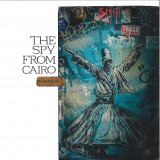
The Spy from Cairo (aka Moreno "Zeb" Visini) returns with his 5th studio album on Wonderwheel Recordings: "Animamundi" features some special collaborations from his travels & live shows from over the past few years. The album reflects the move from his home in NYC to his mother's home in a quiet village in Italy to take care of her in her older age. It's been a difficult transition with Italy's challenging experience with the pandemic, including some of the strictest measures enforced on the public. He recalls by stating "This album was conceived between 2020 and 2021 in Italy, between lockdowns, restrictions, and various pandemic mandates. Its message is of hope and positivity - a reminder that we are all spiritual beings… Free spiritual beings… and that freedom can't be broken."
"Animamundi" is a reconfirmation that The Spy from Cairo overcomes all obstacles & delivers a diverse progression of his iconic "Arabadub" sound, with the help of collaborators like Andalucian vocalist Carmen Estevez, Mexican vocalist Mambe Rodriguez on the heavy hitting "Criminal," Egyptian vocalist Adii Small on "Beautiful Baraka," and former touring band member, the multi-instrumentalist and vocalist Fatima Gozlan from Hungary. The music can vary from heavy deep electronic synths and live eastern instrumentation with Zeb playing oud, saz, chiftelli, bass, percussion, and other instruments, all along giving it his signature dub mixing style.
The songs take inspiration from a wide range of musical traditions and cultures, including Turkish (on "Cosmic Pasha," "Qanun in Dub" – using the qanun, an instrument popular across the Middle East, with a sound between the European harp and a dulcimer – and "Black Sea," which utilises a typical Dabke melody), Egyptian ("Mizmirized," sampling riffs from a mizmar), Indian ("Seeds of Culture), and Sufi ("Divination," a devotional composition), fusing these reference points with healthy doses of cumbia, funk, reggae, psychedelic, and dub. Thematically, "Animamundi" deals with some of the struggles Zeb – and all of us – have faced the last two years, through the lens of his personal experiences. Yet, the tone of the record manages to remain positive, like an uplifting dance through the world's sounds; after all, "Animamundi" means "soul of the world" in Greek. With album art by Sam Angeli and layout design by Marcial Arts, this beautiful album is a truly well-rounded worldwide collaboration.
"Animamundi" will be released digitally on March 4th, 2022, with the LP to follow shortly after.
out of Stock
Last delivered 4 years ago available to reorder, subject to availability
In Trux We Pux is an editorial project organized by the Porto based label and collective Favela Discos. Focusing on the city’s thriving experimental and improvised music scene, it sets out to portrait in a series of four volumes some of the characteristic sounds and collaborative practices that have been in development in Porto during the last few years.
In Trux We Pux 02 contains the first of Favela Discos’ collective pieces to be published, and it was chosen to represent a long series of site-specic pieces developed by the collective since its formation. Most of the time these pieces remain lost in time or in the label’s archives.
Desilusão Óptica is an audiovisual piece developed for the festival Serralves em Festa 2017 and was recorded between the concert and rehearsals. The piece is influenced by the book Musicophilia by Oliver Sacks, and tries to explore the notion of auditory hallucination, in this case based on the idea of a phantom sound unconnected to its object.
Starting quietly with a single flute note, Desilusão Óptica slowly grows fuller but more uncomfortable as the pitch rises gradually in a hypnotic effect. The sound we hear is a mix of the sound produced live, its manipulation and repetition, thus the piece exists between the time when it happens, its immediate repetition and ghosts of past sounds.
The flute, delayed and sampled, embodies both the sounds it produces and memories of past sounds, creating a confusion between objecto and sound. The sound is produced by an object but is at the same time separated from it, like in Mulholland Drive when we watch a singer emotionally dedicated to a performance and whose voice keeps on singing even when her body collapses.
Like in Dub Music, the musicians are divided into two groups: those who play, in this case divided by winds, percussion and electric guitars, and the dub master / sound manipulators who launch samples of previous recordings and manipulate the sound that is produced live, through loopers and delay pedals.
In Trux We Pux is an editorial project organized by the Porto based label and collective Favela Discos. Focusing on the city’s thriving experimental and improvised music scene, it sets out to portrait in a series of four volumes some of the characteristic sounds and collaborative practices that have been in development in Porto during the last few years.
Milteto is an informal orchestra born out of the Favela Discos collective somewhere in 2014. The idea, that had been around for a while, was materialized for a concert in one of the first events hosted by Favela, in the extinct Picadilly Pub in Porto, a small strip club turned underground venue. It was one of those wet pre-covid nights where the condensation dripped down the mirrored walls, in a loud endurance contest that resulted in a fainted audience member.
For a very large number of reasons, it would be hard to define Milteto’s whole “career” in an album: the band has always inhabited the live context, trying to create massive immersive sound experiences for both the listeners and the musicians, subconsciously seeking to achieve transcendence by volume.
So, in reality this is a momentary reflection of an always mutating entity, instead of trying to define the several years of drastically different experiences in just 45 minutes, they took to the album as just another live presentation where they adapted to the idea of what a record could be as if they would adapt to a venue.
Faced with the idea of creating an album that reflected the project’s mutability, the band looked at the medium itself for inspiration, as the vinyl record has two sides, they thought that maybe it would be a good idea to reflect that on the music. So the recording sessions were split into two days, with two different groups of guests. One side set to recreate a more physical manifestation of the band, the other a more mental side, the first teeming with percussion, the other with electronic devices and synthesisers.
In Trux We Pux is an editorial project organized by the Porto based label and collective Favela Discos. Focusing on the city’s thriving experimental and improvised music scene, it sets out to portrait in a series of four volumes some of the characteristic sounds and collaborative practices that have been in development in Porto during the last few years.
In Trux We Pux 04 is the last in a series of four records organized by Favela Discos, set out to shine a light on Porto’s thriving experimental and improvised music scene. Throughout the collection the label tries to expose the eclectic sound and collaborative practices that have been in development in the last few years in the city by promoting the collaboration between artists and the creation of new collective improvisation pieces.
As the first album dwelled into the electronic spectre of the scene, this volume veers itself to the physical side of experimental and improvised explorations. Although there is space for outsiders manipulating the sound by electronic means, most of the music in this album is plucked, bowed, percussed or sung. The artists themselves are as varied as the music they played, among the 13 artists that collaborated for the creation of this album are many promising newcomers but also some of the more recognizable and relevant names in the scene, with the presence of the Sonoscopia founder Gustavo Costa, João Pais Filipe one of the most characteristic drummers in Portugal, and the DIY duo and underground staple Calhau!.
As we could suspect, the diverse selection of musicians, while providing us a view on the various kinds of musical languages that populate the city’s scene, also creates a dynamic collection of sounds. Spanning a large gamut of sub-sub-genres, from near-musique concrète to tribal noise, the album is a rollercoaster collage that miraculously achieves logic and cohesion, like a voyeur listener taking us on a journey through an abandoned mall where most of the bands in Porto rehearse, whose halls reverberate with a cacophony of music.
40-plus years since its original release, the pop-punk-new wave inventions of Anthony
Moore’s ‘Flying Doesn’t Help’ are freshly remastered, blasting the sparkling, angular
sounds into today with perfect vitality.
After spending the early years of the 1970s making experimental music first as a solo
artist, then with Slapp Happy and Henry Cow, 1976’s ‘OUT’ sessions had reinvigorated
Anthony’s youthful love of the naive pop melodies of pop radio, the undeniable excitement
of songs. While ‘OUT’ ultimately went unreleased at the time, the iconoclasm clouding the
late ’70s air was addictive and transformative for Anthony. England seemed to be roiled
as violently as it had been in counter-cultural days a decade earlier; the UK pop charts
breathlessly reflected the changing spectrum with equal parts aging hippie and prog
delicacies alongside new ascendant sounds: rough-hewn pub and punk rock, plus dub
reggae and disco and ska and Stiff and Krautrock. This proved to be an ideal environment
for Anthony to make records by exploring, as he puts it, the “deep connection between
minimalism, repetition, working with tape and celluloid and forming the modules of a
three-minute pop song.”
Caught up in a no-holds-barred era, Anthony was more than happy to play the out-of-hishead madman, raving through outrageous exchanges with the press, while ‘Judy Get
Down’ received Single Of The Week honours from the NME (with review penned by Brian
Eno). Represented by Blackhill Enterprises, Anthony did production work throughout
1978-1979, on Kevin Ayers’ ‘Rainbow Takeaway’, Manfred Mann’s Earth Band’s ‘Angel
Station’ and the first This Heat album, meanwhile cutting his own songs on a dead time
deal at Workhouse Studio with engineer / producer Laurie Latham. Through the wee
hours of countless nights, the two pieced together ‘Flying Doesn’t Help’, with a little help
from friends (an inspired bunch, including Bob Shilling, Charles Hayward, Chris Slade,
Robert Vogel, Festus, Matt Irving, Sam Harley, Bernie Clark, Edwin Cross and Martine
Moore on the telephone).
Building upon the axis of pop and experimental impulses that distinguished ‘OUT’, and
informed further by the raw sensibilities exploding everywhere, ‘Flying Doesn’t Help’
blasts out of the speakers with its own unique blend of sophistication and aggression,
Anthony’s keyboard flashes between arpeggiations and outright stabs among the noise of
slicing guitars, funk basslines and the reverbed blare of the drumkit. Opening with
Anthony’s greatest hit, ‘Judy Get Down’, and containing a noise-laden remake of the
Slapp Happy/Henry Cow number, ‘War’, among other delightful sweet-and-salty
confections, ‘Flying Doesn’t Help’ never stops moving, fuelled with raw outrage and dark
satirical intent, churning with the energy of next-gen types like Tubeway Army and DEVO,
while shimmering with the elegance of the still-challenging old guard types, like Cale and
Bowie.
Clearly, ‘Flying Doesn’t Help’ was steeped in the time, and the original release reflected a
deep mistrust of the corporation mindset. Information was a dubious concept, and
connections to any recognizable organization were seen as untrustworthy, so facts like
musician credits were left out of the package, and even Anthony’s name was altered (he
was credited as A. More on the album and Tony More on a single release). The label
name QUANGO was conceptual as well, standing for ‘Quasi Autonomous NonGovernmental Organization’; each record was sealed with red tape that the listener was
required to cut through in order to get to the music. Rather than recreate the conditions of
the original release of ‘Flying Doesn’t Help’, this reissue instead embraces the changed
environment of the current time and place: instead of no credits, now they are complete,
with Anthony’s full name restored and even the artwork subtly ‘relocated’ to reflect a new
set of relationships. All of which brings the forward-looking sounds of ‘Flying Doesn’t Help’
into the more independent-minded 21st Century syntax where it belongs.
Following on from their ground-breaking 1988 self-titled EP, Godflesh's
debut full-length was an absolute game-changer and still stands as one
of industrial metal's most defining documents to this day
Drawing from post- punk and industrial acts like; Swans, Big Black, Killing Joke
and Throbbing Gristle as much as the more metallic and punk influences that
informed guitarist/ vocalist Justin Broadrick's previous band Napalm Death, the
pounding, drum- machine powered sonic assault of 'Streetcleaner' sounded like
nothing else at the time, breaking down people's perceptions of what a metal
band could sound like. You can still feel the album's broad influence everywhere
from the dense atmospheres of post- metal to the abrasive beats of modern
industrial and techno outfits, but despite its many imitators, there's still nothing
else that quite captures the feelings of paranoia, anxiety and urban decay that
'Streetcleaner' so deftly articulates.
‘Black Pride’ is the seminal Lovers Rock tune from Brown Sugar pressed loud for the first ever time on this new one-off press limited-edition (just 1,000 copies worldwide) 12” on Soul Jazz Records!
Brown Sugar formed in London in 1976 made up of teenagers Pauline Catlin, Caron Wheeler and Carol Simms. After Brown Sugar Caron Wheeler became known worldwide as the vocalist in Soul II Soul and Carol Simms launched a successful solo career under the name ‘Kofi'. “Black Pride” was originally released on the Lovers Rock label, a fledgling reggae label formed by musicians Dennis Bovell and John Kpiaye and producer Dennis Harris. Brown Sugar were unique – not only were they one of the most important of the first wave of lovers rock groups, they were the only group who managed to successfully blend together a reggae roots consciousness with a lovers rock sensibility. The classic ‘Black Pride’ perfectly reflects this unique sound.
out of Stock
Last delivered 4 years ago available to reorder, subject to availability
The Mankunku Quartet's 1968 album 'Yakhal' Inkomo’ clocks in at just over 30 minutes of jazz perfection. This compact, and to-the-point, album would sit comfortably in amongst some of the best works in the catalogues of any of the quintessential jazz labels such as Blue Note, Prestige and Impulse. 'Yakhal' Inkomo’, however, was originally released on the South African record label World Record Co., which resulted in it becoming an elusive and sought-after piece for jazz collectors. First press copies sometimes fetch as much as £1,000 on the collectors' market. It has been long regarded as one of the finest South African jazz albums and DJ / broadcaster Gilles Peterson cemented this when he included it in his "best of genre" focussed radio show, 'The 20 - South African Jazz'.
Tenor saxophonist Winston "Mankunku" Ngozi recorded the session on 23rd July 1968 at the Manley van Niekerk Studios, in Johannesburg. It was recorded by Dave Challen and produced by Ray Nkwe. The session is built up of two original works by Mankunku on the A-side, 'Yakhal' Inkomo' & 'Dedication (To Daddy Trane and Brother Shorter)', and on the B-side, the Horace Silver composition 'Doodlin', and a John Coltrane number 'Bessie's Blues'. What is striking is how the Mankunku-penned compositions not only hold their own next to Silver and Coltrane but they are, arguably, the better tracks on the record - a testament to the beautiful writing and playing of Mankunku.
'Yakhal' Inkomo' features the great musicians; Agrippa Magwaza on bass, drummer Early Mabuza, and pianist Lionel Pillay. Pillay was of Indian descent, making this a mixed-race group, thus the very recording of the album was an act of resistance as it broke the apartheid restrictions of the time. The title of 'Yakhal’ Inkomo' means “the bellow of the bull”, the Black audience would have understood this as coded community symbolism and an act of protest but it escaped the attention of the white government.
For this edition, we have enlisted the services of Abbey Road Studios mastering, and lacquer-cutting engineer Miles Showell to cut a special half-speed master from the audio taken off the original master tapes. Miles has previously worked on our Arthur Verocai, Marcos Valle and Ian Carr re-issues, and once again we are blown away by the richness and clarity of Miles' work. We have also presented it as a replica copy using the cover artwork and labels from the primary World Record Co. original version.
On the sleeve notes, Ray Nkwe the producer and the President of the Jazz Appreciation Society of South Africa writes "This is the LP that every jazz fan has been waiting for" and Ray was not wrong, it's a stone-cold timeless jazz classic.
• Half-speed mastering at Abbey Road Studios
• Repressed with an OBI strip as well as a deluxe tip-on sleeve
• One of the finest South African jazz albums
• "This is the LP that every jazz fan has been waiting for" Ray Nkwe
London-based composer/bassist, Daniel Casimir returns with his solo debut album Boxed In, a dynamic collision of pulsing modern jazz and orchestral instrumentation.
Featuring Casimir's quintet of fellow British jazz luminaries, including Nubya Garcia, Moses Boyd, Al MacSween and James Copus, the album astutely bridges traditional and contemporary jazz forms enveloping strings, woodwind & brass arrangements.
Boxed In represents Casimir's debut set of compositions written for orchestra. Despite his interest in writing for orchestra while studying jazz and classical music, attending conservatoires and completing a masters degree at Trinity Laban, he was never given the opportunity or choice to fulfil his aspiration. Casimir notes that as only one of two black musicians in his study cohort the normalisation of the situation made it almost easy to miss its inherent injustice.
Coming up through the essential development foundation Tomorrow's Warriors, Casimir has gone on to feature on all of Nubya Garcia's recorded output to date as well as projects by Makaya McCraven and Ashley Henry and has performed with Lonnie Liston Smith and Jason Rebello amongst others.
This album reflects the experiences of navigating prescribed labels traditionally placed on black musicians. As well as being inspired by Wayne Shorter's hybrid orchestral jazz projects, Boxed In was also influenced by a conversation Casimir had in 2018 with legendary composer and producer Quincy Jones who talked a lot about classical music orchestration.
The album is also inspired by Derek Owusu's book Safe which reflects on the Black British male experience and becomes the broad thematic skeleton of Boxed In with the track Safe split into three parts across the album, the first of which opens proceedings in a purposeful up-tempo style with stylistic touches of Roni Size-esque drum & bass (in part courtesy of producer/polymath Moses Boyd). The album's title track follows, with Garcia's soaring tenor taking lead, followed by New Waters and the introduction of vocalist Ria Moran.
Flute, woodwind and brass melodies envelop Casimir's charming string arrangments on Your Side and Safe Part 2, showing off Casimir's command and ease in an orchestral setting. Get Even and Rewind The Time confirm Casimir's penchant for weaving brooding pop vocals with jazz composition while the fanfaric Into The Truth leads literally into The Truth where Copus and MacSween engage throughout to the track's triumphant close.
The closing track Outro is a lively Afrobeat-tipping style with Casimir's deft bass manoeuverings and large ensemble arrangement on full show.
out of Stock
Last delivered 4 years ago available to reorder, subject to availability
A question popular among followers of Thrash Metal is undeniably this, “Which is considered the fastest Thrash Metal album of all time?”. There would be a high percentage of answers supporting “Reign In Blood”, Darkness Descends” or “Pleasure To Kill”. Now here’s a startling reality. Wehrmacht’s debut album makes those albums sound as if they were meant to be listed under progressive Metal. The sheer ferocity of these guys is enough to convince you why they were considered the fastest Heavy Metal band in the underground. So what is it that makes this record worthy of being called an underground classic? Right from production to musicianship, the concoction of several different ideas results into one colossal and inevitably unique style of their own. Many of you would probably wonder that there might just be a natural leaning towards sloppy playing especially considering my description of their astoundingly fast nature earlier. But the major surprise here is that all the musicians are extremely tight and precise with no single riff, solo or beat falling out of place. Tito Matos is one of the most versatile Thrash singers one has ever heard till date. His clarity of words and ability to keep up with the rest of the band with his lightning fast singing is simply commendable. The songs in here are all ridiculously speedy pieces of Thrash Metal with practically little or no remorse for the listener. The title track with that brilliant rendition of the famously eerie “Jaws” theme kicks off the onslaught with a tearing main riff that shreds away with speed and precision. Teutonic, Bay Area and a few east coast Thrash Metal bands have been instrumental in forging the whole genre altogether but taking the intensity a couple of notches higher was undoubtedly achieved by bands like Cryptic Slaughter, Soothsayer and finally Wehrmacht. For a year that was 1987, “Shark Attack” was way ahead of its time and has been highly regarded as the release that influenced many a band in the Grindcore and Black Metal genres. To testify this statement of mine, U.K Grindcore pioneers Napalm Death have covered Wehrmacht on one of their studio compilations, thus proving the exemplary effect this band had in the years to come. Yet the irony still stands out as to why only the most devoted of Thrash Metal/Crossover freaks know about this band. As for some of you guys, quit wasting your time listening to the senseless offshoots of Grindcore and shitty Black Metal and get a hold of this classic instead.
For fans of Blue Öyster Cult, Blue Coupe, and Classic Rock! Albert Bouchard is best known as one of the founding members of Blue Öyster Cult. The original band sold millions of albums for Columbia Records with such classic songs as “Don’t Fear the Reaper” and the #1 hit on the Billboard Mainstream Rock chart “Burnin’ For You”. As a songwriter, he wrote many BÖC songs including the very popular “Astronomy” (which was covered by Metallica on their 1998’s release Garage Inc) and the live staple “Cities on Flame with Rock and Roll”, which he also sang lead vocals. “Imaginos 2 – Bombs Over Germany (minus zero and counting)” sees Albert continuing the Trilogy of Imaginos, a concept album about an alien conspiracy that is brought to fruition during the late 19th and early 20th century through the actions of Imaginos, an agent of evil. The album weaves scripts and poems by the late Sandy Pearlman. It features guests Ross The Boss (Dictators), Joe Cerisano (Silver Condor, TSO), and reunites original Blue Öyster Cult members Eric Bloom, Donald “Buck Dharma” Roeser and Joe Bouchard, as well current BOC member Richie Castellano, who all contribute to this latest installment. The album also features reworks of classics like “Cities on Flame with Rock and Roll”, “The Red and the Black”, and “Dominance and Submission”. Due to the overwhelming response to Imaginos II, we are now releasing a Double LP gatefold version which includes an extended version of “Independence Day”, plus the bonus “When War Comes (Instrumental Mix)”.
"Robot Hive/Exodus" is the second of initially four albums reimagined and individually curated by a band member, in this case Dan Maines, and reissued as part of the Clutch Collector's Series. The first album in this new series was Blast Tyrant, curated by Jean-Paul Gaster. TheRH/E artwork is in the vein of the original "Blast Tyrant" yet strikingly different. The vinyl release is remastered and manufactured on 180-gram colored vinyl which in turn is stored in extra heavy sleeves. The gatefold jacket is printed on metalized polyester paper, and each album includes a numbered insert autographed by the band. As an extra special element this 2xLP includes a 7" with two tracks: "What Would a Wookie Do?" and "Bottoms Up, Socrates". These two songs were originally among the 16 songs written and recorded for Robot Hive/Exodus back in 2005 but were left off the final album for time purposes. We are glad to have these recordings return home as part of the RH/E Collector’s Series limited to 7,500 units worldwide.
Robot Hive/Exodus (Ltd. Collector's Series/2LP+7"):
- The 12" colors are "Metallic Silver" with "Metallic Gold"
- Bonus 7" with two additional tracks
- Remastered Audio
- Limited Edition
- 2xLP 180g Colored Vinyl
- Artist Autographed Numbered Insert
Here is a quote from Dan, who quarterbacked this project re the two tracks on the 7" (the 7" is black vinyl in its own sleeve):
"What Would a Wookie Do?", and "Bottoms Up, Socrates" were among the 16 songs written and recorded for Robot Hive/Exodus back in 2005. For time purposes these two were left off the final album. We are glad to have these recordings return home as part of the Robot Hive/Exodus Collector’s Series.
On textstar+ Jan Jelinek brings together the material from the CMYK series, four EPs he released between 1999 and 2002 under the pseudonym farben (the German word for both colours and paints), on a vinyl double LP for the first time. The selection of tracks has been remastered from the original tapes, joined by two additional pieces that appeared on compilations during the same period.
A Polaroid. Still life with tangled leads and consumer electronics, late twentieth century. Black and various shades of dirty white are the dominant non-colours. The image’s spatial depth remains diffuse, the links between its elements speculative. A note stuck to the wall (a legend, perhaps, or an all-explaining blueprint in text form?) is impossible to decipher. You can’t see what connects the picture’s signs. You have to hear it.
farben says: Every sound is a text. A bearer of meaning in search of a reader. Hoping the ideas inscribed in its autonomous existence will be understood as intended. While its beauty lies precisely in misunderstanding, in reading the coded message a new way every time. A thousand colours of sound, a thousand different ways to hear, to see, to understand.
On textstar+ Jan Jelinek brings together the material from the CMYK series, four EPs he released between 1999 and 2002 under the pseudonym farben (the German word for both colours and paints), on a vinyl double LP for the first time. The selection of tracks has been remastered from the original tapes, joined by two additional pieces that appeared on compilations during the same period. Another new element is the Polaroid, showing the origins of a world: Jelinek’s home studio in Berlin at the time.
farben says: Move your body! The project has its roots in Jelinek’s love of house as a reductionist vision of soul. Of four to the floor as a proposition that can be accessed anywhere. Of electronic dance music as a realm of possibility that can be continually expanded. farben was written as contemporary house music. As a text about excitement and euphoria. The arrangements were made directly while recording to DAT, on a twelve-channel mixing desk. Several track titles suggest a link to live concerts, coupled with the context of machine music and bedroom recording. Others affirm pop music’s most extravagant stock phrases about various states of love.
Jelinek produced the tracks with the aim of making music for dancefloors. An idea that failed very productively. In the locations to which it was originally addressed, the project barely figured. But people did listen, and they listened all the more closely to this music that opened up new acoustic and associative scope for house. farben is the opposite of genre: a music spawning new terms (clicks & cuts, micro-house) that never manage to fully capture it.
farben says: Signifiers. The four CMYK EPs are designed as a network of references that cannot be missed but that can also never be precisely deciphered. The vectors of sound, word and image point to Isaac Hayes and Ornette Coleman, to Detroit and the first generation of the Red Army Faction, to Karl Marx and Friedrich Engels. So multifarious that they are distorted to the point of recognition. Overall we hear sonic docufictions whose appealing vagueness derives precisely from this oscillation between clarity and ambiguity, which is also the source of their poetry: the lyricism of the pure circulation of signs.
The artwork is based on photographs of former Red Army Faction members, broken down into the four colours of the CMYK model. The motifs dissolve into individual dots of a single colour, so close to the faces that their expressions are only hinted at. Taken together, the individual colours compose a new whole out of fragmentary material, defying definition and thus maintaining their vibrancy. The same occurs on the level of sound. The sampler Jelinek used for these tracks had to be fed with floppy disks, imposing a memory limit of 1.44 megabytes per audio quotation from soul or jazz records. As a necessary consequence of this, the individual references, like the dots of colour, are dissolved into details and abstractions. They appear as splinters that recombine in new ways to create new meanings. The joy of collapsing metaphors.
farben says: New departures. Even two decades after its original release, textstar+ does not come across as an epitaph to the modern era. Instead, it appears as a euphoric affirmation of the utopias of the twentieth century, translated into new sound texts via the aesthetic strategies of abstraction, collage, networking and speculation. 1.44 megabytes of history, one thousand signifiers, one album. From “Live ...” to “... Love”.
Arno Raffeiner, 2021
out of Stock
Last delivered 12 months ago available to reorder, subject to availability
Adrian Quesada announces the release of ‘Boleros Psicodélicos’,
a sprawling and singular tribute to the golden era of balada music.
The brand-new album from the GRAMMY-nominated guitarist,
producer and Black Pumas co-founder serves as a celebration of
the super funky, slightly delirious and deeply soulful sounds that
transcended the cultural boundaries of Latin America throughout
the late 1960s and early 1970s.
Featuring vocals from Puerto Rican icon, GRAMMY-winner and
former Calle 13 member iLe, Colombian-American visionary
Gabriel Garzón-Montano, Mexican R&B star Girl Ultra, as well as
Angelica Garcia, Gaby Moreno, contributions from living legends
such as Marc Ribot and Beastie Boys musician Money Mark, and
many more, ‘Boleros Psicodélicos’ consists primarily of original
Adrian Quesada compositions, as well as covers of La Lupe’s
‘Puedes Decir De Mí’, Jeanette’s ‘El Muchacho De Los Ojos
Tristes’ and other balada classics.
All twelve tracks were produced, engineered, mixed and largely
performed by Adrian Quesada, honouring and extending the
influence of a personal obsession that he has cultivated over the
past 20 years.
Similar to his acclaimed 2018 album ‘Look At My Soul’, which
traced the deep roots and relationship between Latin and Texas
music, Adrian Quesada sees every song on ‘Boleros Psicodelicos’
as both a history lesson and a step towards a newly imagined,
more united future: “I always wanted to pay tribute to that sound
that I was already hearing in my head without realizing that people
had already done it. Balada changed the face of Latin music
forever. If something like that happened today, it would be normal
because everyone’s connected on Instagram. Think how powerful
this sound had to be for everyone to be connected through the
songs. As someone who grew up speaking two languages and
living on both sides of the border, I love how much music can
transcend barriers and boundaries. It really is a universal
language, especially back then.”
out of Stock
Last delivered 4 years ago available to reorder, subject to availability
Benefits are an issues-based music collective from Teesside in the
North East of England. They write songs about the urgencies that
concern them, and they play them loud.
Forming in 2019 and consisting of Kingsley Hall on vocals, Robbie
Major and Hugh Major on synths and noise, and Jonny Snowball
on drums, they quickly evolved from a standard shouty punk rock
outfit into a minimalist, overtly political band that merges noise,
hip-hop and industrial rock, creating an effect that feels urgent,
darkly hilarious and unsettling all at once.
Thus far, Benefits have been completely DIY yet, via a succession
of digital singles and accompanying videos through 2021, they
built a following that enabled them to complete a sold-out headline
UK tour in March 2022. They also gained fans in high places,
including Sleaford Mods, Black Francis, Garbage and Elijah Wood
and Steve Albini.
James and Ryan of Yard Act were also instant admirers and that’s
where their label Zen F.C. comes in. Using their ill-gotten major
label gains Zen F.C. are pressing Benefit’s single ‘Flag’ (backed
with ‘Empire’) on vinyl.
On working with Yard Act, Kingsley comments: “I think Benefits
come at some of the same subject matter that they talk about but
from a slightly different angle (and by ‘slightly different’ I really
mean ‘more frequent swearing’, though we've never said the C
word in a song unlike...ahem). We appreciate every bit of help
we’ve had off them, we just wish we could somehow repay that
kindness (not monetarily mind, we're totally skint).”
Yard Act’s James Smith says of the release: “Lots of bands are
saying all this stuff so what makes Benefits so special? Why do I
need to be told what I already know over and over again by a
shouty man from Teesside? Well, because no one else is saying it
with such physicality they sound like their voice box is about to
leap from their throat and eat your eyeballs. With that little bit of
influence we’ve garnered and the small fortune of money we now
have kicking about, I’m so glad we can play a part in spreading the
word on Benefits, because I think they’re well on their way to a
classic debut album, and I’m going to fucking love being able to
brag about how important I was in making it all happen.”
3rd album by Have You Ever Seen the Jane Fonda Aerobic VHS? Artist: Have You Ever Seen the Jane Fonda Aerobic VHS? Genre: Garage pop Formats: Digital + vinyl (Black Vinyl + Ltd Edition Yellow Vinyl) Finnish“flower-garage”3-pieceHave You Ever Seen the Jane Fonda Aerobic VHS? have carved out a unique sound for themselves, opting to use keyboards instead of guitars. This is after songwriter Ekku Lintunen and drummer Janne-Petteri Pitkälä, on seeing the film Drive, instantly decided to form an 80ssynth-pop band as a side project to the garage-rock act they were in at the time. When Susse Stemma-Sihvolacame in on vocals, bringing her scuzzed out bass tones with her, it ended up being garage-rock with a twist. They are further shaped by the aesthetic and sonics of the underground cassette culture punkbands in their small town of Kouvolarely on, as well as the thread of styles that have tied the towns musical history together through the decades. Amish-mash of 60s girl-groups, punk, glam, grunge and NYC/Manchester indie coming together generates their electrifying style that has given rise to one of the most exciting and infectious bands to come out of the Nordics in recent years. Lintunen likens his songwriting to crafting surreal movies. Starting with a picture in his mind, he throws out lyrical phrases to create this image for the listener. Enough is held back though that there are more questions than answers. Like all great films, the listener interprets as they do. After their debut album Teenage Sweetheartwas released in autumn 2015and following with their sophomore album Jazzbelle 1984 / 1988the trio have been praised in the international music media, and gathered fans around the world.
3rd album by Have You Ever Seen the Jane Fonda Aerobic VHS? Artist: Have You Ever Seen the Jane Fonda Aerobic VHS? Genre: Garage pop Formats: Digital + vinyl (Black Vinyl + Ltd Edition Yellow Vinyl) Finnish“flower-garage”3-pieceHave You Ever Seen the Jane Fonda Aerobic VHS? have carved out a unique sound for themselves, opting to use keyboards instead of guitars. This is after songwriter Ekku Lintunen and drummer Janne-Petteri Pitkälä, on seeing the film Drive, instantly decided to form an 80ssynth-pop band as a side project to the garage-rock act they were in at the time. When Susse Stemma-Sihvolacame in on vocals, bringing her scuzzed out bass tones with her, it ended up being garage-rock with a twist. They are further shaped by the aesthetic and sonics of the underground cassette culture punkbands in their small town of Kouvolarely on, as well as the thread of styles that have tied the towns musical history together through the decades. Amish-mash of 60s girl-groups, punk, glam, grunge and NYC/Manchester indie coming together generates their electrifying style that has given rise to one of the most exciting and infectious bands to come out of the Nordics in recent years. Lintunen likens his songwriting to crafting surreal movies. Starting with a picture in his mind, he throws out lyrical phrases to create this image for the listener. Enough is held back though that there are more questions than answers. Like all great films, the listener interprets as they do. After their debut album Teenage Sweetheartwas released in autumn 2015and following with their sophomore album Jazzbelle 1984 / 1988the trio have been praised in the international music media, and gathered fans around the world.
“Radiant Bloom“ is the third full-length album from New England rock outfit, ASTRONOID. Often hard to categorize, the band has been dubbed "shoegaze black metal" due to their unique ability to weave together songs containing soaring, lush guitars over classic blast-beats. Coming in over the top are singer / guitarist Brett Boland's Mew-like vocals, a band he openly cites as a major influence. The band's last two albums, 2016's “Air“ and 2019's “Self-Titled“ follow up, have cemented ASTRONOID as trailblazers in the hard music genre with tons of support coming from the music press and some high profile tours under their belts with the likes of Periphery, Animals As Leaders, Between the Buried and Me, Coheed and Cambria and many more. While “Radiant Bloom“ is still squarely "Astronoid" and their sound is still remarkably obvious to those who know them, the album is focused more on song structure and arrangements, as they explored a more "pop" approach to writing. The combination of classic ASTRONOID songs written in that style leads to what is easily the band's most complete work to date, “Radiant Bloom“ is available as Ltd. CD Edition, Gatefold colored LP and Digital Album
Over the course of eight studio albums, Mary Gauthier has firmly planted herself as a truth teller, a songwriter unafraid to dive into the emotional core of her chosen subject. Her poignant songs move people deeply and often evoke an emotive response. It is one of the many things that connect her so deeply to her fans, and why they love her. On Dark Enough To See The Stars, she mourns the loss of dear friends that include John Prine, Nancy Griffith and David Olney, but Gauthier takes a slightly different course by offering an optimistic side of herself with songs that celebrate the joy of new love and personal contentment. With The Band-inspired opening track “Fall Apart World”, the tender and thoughtful “About Time” and the eternally grateful “Thank God For You”, it’s evident that with Gauthier’s life experience she takes nothing for granted. She also looks at love from a different perspective in remembrance of her departed colleagues and mentors with songs such as “How Could You Be Gone” and “’Til I See You Again”. The title track, co-written with Beth Nielsen Chapman, is a realization that through loss and darkness there can be a beautiful sense of clarity and an understanding about what truly matters.
“Radiant Bloom“ is the third full-length album from New England rock outfit, ASTRONOID. Often hard to categorize, the band has been dubbed "shoegaze black metal" due to their unique ability to weave together songs containing soaring, lush guitars over classic blast-beats. Coming in over the top are singer / guitarist Brett Boland's Mew-like vocals, a band he openly cites as a major influence. The band's last two albums, 2016's “Air“ and 2019's “Self-Titled“ follow up, have cemented ASTRONOID as trailblazers in the hard music genre with tons of support coming from the music press and some high profile tours under their belts with the likes of Periphery, Animals As Leaders, Between the Buried and Me, Coheed and Cambria and many more. While “Radiant Bloom“ is still squarely "Astronoid" and their sound is still remarkably obvious to those who know them, the album is focused more on song structure and arrangements, as they explored a more "pop" approach to writing. The combination of classic ASTRONOID songs written in that style leads to what is easily the band's most complete work to date, “Radiant Bloom“ is available as Ltd. CD Edition, Gatefold colored LP and Digital Album
Federico Albanese is a composer born in Milan, Italy in 1982, and currently based in Berlin. His musical versatility is a natural gift that pushes him to explore music in all its facets. Albanese's compositions are airy and cinematic, blending classical music, electronics and psychedelia. Federico started studying piano and clarinet as a child before becoming fascinated by rock music. As a teenager he studied bass and became a self-taught guitarist and soon became one of the leading figures of Milan's underground scene, performing in several bands. Influenced by black music, folk, electronic, modern and contemporary classical music his skills as a composer soon emerged, He worked for 5 years as prop man in several film sets. This experience made him understand the power of the connection between music and images and helped him to develop his personal musical path. In 2007 Albanese met singer and songwriter Jessica Einaudi and together they founded the avant-garde duo ""La Blanche Alchimie"". Composing songs with Jessica he rediscovered his love for the piano, which from that moment on, became his main instrument. Since then Federico has scored several films, short films and documentaries, including a documentary on a project commissioned by Ermenegildo Zegna in the National Museum of XXI Century Arts in Rome. In February 2014, Federico Albanese will release his debut album entitled ""The Houseboat and the Moon"". He found a place, an imaginary place, where, whenever he wanted to, he could jump on and just float away. On this moving shelter, traveling across memories and imagination, lulled by water and led by the moon, Federico wrote the 13 compositions of his debut. He recorded all of the piano parts with a 1969 German tape recorder, the Uher Royal Deluxe, which allowed him to catch all of the tiny hidden shades, the imperfections, the noises of the piano and its surrounding space. Federico melts this rarefied sound with electronics, live recordings, strings, and homemade instruments. The result is a combination of contrasts and colors with a variety of atmospheres that wonderfully represents Federico's musical universe. Vinyl: thick gatefold covers, 180g vinyl,free download.
When dubwise music really started to come into its own in the early to mid 70s, it made overnight stars of backroom boys who had hitherto worked behind a mixing desk to serve those who were beginning to hoist reggae to an international stardom that it had long deserved, but that it had only achieved on short and non-sustained bursts until Chris Blackwell decided to throw a lot of promotion and money at the work of Bob Marley and his fellow Wailers in 1972. Of those men, there was no bigger star than the late Osbourne Ruddock, the great King Tubby’s and the man who, from a tiny home-made studio in the Waterhouse district of Kingston, Jamaica, did more than most to reposition the boundaries that production and mixing of Jamaican recordings.
A much sought-after Kristin Hersh side project. Black Vinyl LP. Back on vinyl for this bracing, ever twitching opus made of seven fluid pieces that fold into one continuous mantra. An essential release from the Throwing Muses’ offshoot helmed by Kristin Hersh and Bernard Georges, with Chalk Farm’s Rob Ahlers on drums. “Menacing, stalking, spirals of lean, hungry riffs.” Drowned In Sound 9/10.