Ruhig verlief die Karriere von Sieges Even nicht. Nach den ersten beiden Alben verzeichneten sie den ersten Besetzungswechsel auf der Sängerposition, auf den Album „Sophisticated“ (1995) und „Uneven“ (1997) betrieben die Holzwarth Brüder (Bass und Drums) die Band weiter.
Doch man fand sich wieder mit Gitarrist Markus Steffen zusammen
und rekrutierte den Ausnahmesänger Arno Menses, der zuvor als Schlagzeuger aktiv war. Mit diesem Line Up eroberte man die Herzen der Progfans, aber auch die von anspruchsvollen Metalheads. Erneut waren Sieges Even zum richtigen Zeitpunkt am richtigen Ort.
„The Art Of Navigating By The Stars“ wurde in dem Black Solaris Studio von Uwe Lulis (heute auch bekannt als Gitarrist von Accept) aufgenommen und erschien bei InsideOut Music, damals im SPV Vertrieb. Es folgten traumhafte Kritiken, auch für die im Anschluss stattfindende Tournee.
Natürlich war 2005 nicht an Vinyl zu denken, so dass diese Wiederveröffentlichung bereits von vielen Fans erwartet wird.
Aber auch die CD ist seit einigen Jahren „out of print“, so dass auch hier Handlungsbedarf bestand. Die Grafiken der Doppel-LP im Gatefold wurde vom Originalkünstler Thomas Ewerhard erstellt und das Audiomaterial getrennt für Vinyl und CD remastert.
Das Konzept rund um „The Art Of Navigating By The Stars“ begeistert heute noch ebenso wie die sowohl vertrackte und harte, aber eben auch gefühlvolle Musik. Hier waren Sieges Even einfach die deutschen Großmeister.
Sieges Even‘s career has not been quiet. After the first two albums, the band had its first change of singer. On the albums „Sophisticated“ (1995) and „Uneven“ (1997), the Holzwarth brothers (bass and drums) kept the band going. But they ended up with the guitarist Markus Steffen and recruited the outstanding singer Arno Menses, who was previously active as a drummer. With this line up, the band has won the hearts of prog fans, but also of demanding metalheads. Once again, Sieges Even was in the right place at the right time.
„The Art Of Navigating By The Stars“ was recorded in the Black Solaris studio by Uwe Lulis (also known today as Accept‘s guitarist) and released by InsideOut Music, then distributed by SPV. This was followed by dream reviews, also for the tour that followed.
Of course, there was no question of releasing a vinyl in 2005, so this reissue is already expected by many fans. But the CD has also been „out of print“ for a few years, so it was also necessary to act in this context. The graphics of the double LP in gatefold were made by the original artist Thomas Ewerhard and the audio material was remastered separately for the vinyl and the CD.
The concept of „The Art Of Navigating By The Stars“ is still exciting today, as is the music, which is both complicated and hard, but also full of emotion. In this sense, Sieges Even were simply the great German masters.

Поиск:black one
Все
Higher Octave is a pairing of two guys intrinsic to the UK rave and hardcore scene. David Salvi, owner of Pro-One Records, the label to originally release this record along with a slew of other artists such as Law & Auder, Bay B Kane, Submania, Utomica and DJ Hopa, who is the other half of Higher Octave. David was also half of the group Utomica, whose Rok A Bye track was repressed by Vinyl Fanitiks in 2020 and has long since sold out.
David always credits Hopa as the guy with the ideas… he was out at all the raves and was always on point with how tracks should sound and any new trends that were incoming were hot on his radar. David was the guy with the studio, ready to help make Hopa’s ideas into reality.
A sought after release, originally released in 1992, with ‘Raise The Bones’ being the track that had the most rotations in the clubs and on the pirates back in the day.
Limited pressing on 180g heavyweight black vinyl, presented in a black inner sleeve with a Vinyl Fanatiks 3mm spined housebag.
Emile Mosseri is an Oscar and GRAMMY nominated artist, earning acclaim for his scores for the films Minari (2021) and The Last Black Man In San Francisco (2019) Recently worked with Kaitlyn Aurelia Smith on the critically acclaimed album, "I Could Be Your Dog / I Could Be Your Moon" (2022). On Heaven Hunters, Mosseri looks inwards, using his distinctive sound and gift for musical storytelling for his most personal work. Produced by The Haxan Cloak, Heaven Hunters explores the weight of choosing one path in life, putting to death every other possible future, and finding comfort in redefining happiness.
For Mosseri, the search for Heaven _ a concept of perpetual happiness void of suffering _ is a fruitless effort that blocks us from finding peace and balance in life as it really is. Driven by Mosseri's poignant lyrics and intimate singing, Heaven Hunters is a celebration of the highs and lows that create that equilibrium, built around songs of longing, love, heartbreak, familial struggle, and domestic bliss. It is a vulnerable, heartfelt album that is both expansive and cinematic in its dynamic scope and deeply stripped down and exposed in its emotional core, ready to be experienced as intimately as possible.
Sieges Even‘s career has not been quiet. After the first two
albums, the band had its first change of singer. On the albums
„Sophisticated“ (1995) and „Uneven“ (1997), the Holzwarth brothers (bass and drums) kept the band going. But they ended up with the guitarist Markus Steffen and recruited the outstanding singer Arno Menses, who was previously active as a drummer. With this line up, the band has won the hearts of prog fans, but also of demanding metalheads.
Once again, Sieges Even was in the right place at the right time. „The Art Of Navigating By The Stars“ was recorded in the Black Solaris studio by Uwe Lulis (also known today as Accept‘s guitarist) and released by InsideOut Music, then distributed by SPV. This was followed by dream reviews, also for the tour that followed.
Vol.1[29,83 €]
Vol.1 Black Vinyl[28,15 €]
Vol.2 Black Vinyl[31,51 €]
Crass Records, alongside One Little Independent Records, reissue
their iconic three volume compilation series, ‘Bullshit Detector’, on LP,
available in both classic black and special edition grey vinyl.
‘Bullshit Detector’ was the name of a series of compilation LPs put
together by the anarcho-punk band Crass and released on their own
label. Three editions were released between 1980 and 1984,
consisting of demo tapes, rough recordings and artwork that had
been sent to the band.
The sound quality of the ‘Bullshit Detector’ series was mixed and
often basic, or even poor, as Crass would master the tapes directly to
record without any additional production or enhancement. For Crass,
the expectation of a polished performance was missing the point.
After punk had already been co-opted, re-packaged and sold back to
us, ‘Bullshit Detector’ volumes 1-3 were, and still are, seen by many
to capture the purest ethos of punk culture, an event that inspired
hundreds to take to their bedrooms and garages and join the DIY
revolution.
Crass believed in the power of community and that their movement
was for everybody. These compilations are an admittedly harsh but
important part of that story; when Crass gave punk back to the
people.
Sleeve notes from ‘Bullshit Detector Three’ read: “Don’t expect music
when the melody is anger, when the message sings defiance, three
chords are frustration when the words are from the heart.”
Vol.1[29,83 €]
Vol.1 Black Vinyl[28,15 €]
Vol.2 Grey Vinyl[33,19 €]
Vol.2 Black Vinyl[31,51 €]
Crass Records, alongside One Little Independent Records, reissue
their iconic three volume compilation series, ‘Bullshit Detector’, on LP,
available in both classic black and special edition grey vinyl.
‘Bullshit Detector’ was the name of a series of compilation LPs put
together by the anarcho-punk band Crass and released on their own
label. Three editions were released between 1980 and 1984,
consisting of demo tapes, rough recordings and artwork that had
been sent to the band.
The sound quality of the ‘Bullshit Detector’ series was mixed and
often basic, or even poor, as Crass would master the tapes directly to
record without any additional production or enhancement. For Crass,
the expectation of a polished performance was missing the point.
After punk had already been co-opted, re-packaged and sold back to
us, ‘Bullshit Detector’ volumes 1-3 were, and still are, seen by many
to capture the purest ethos of punk culture, an event that inspired
hundreds to take to their bedrooms and garages and join the DIY
revolution.
Crass believed in the power of community and that their movement
was for everybody. These compilations are an admittedly harsh but
important part of that story; when Crass gave punk back to the
people.
Sleeve notes from ‘Bullshit Detector Three’ read: “Don’t expect music
when the melody is anger, when the message sings defiance, three
chords are frustration when the words are from the heart.”
Vol.1[29,83 €]
Vol.1 Black Vinyl[28,15 €]
Vol.2 Grey Vinyl[33,19 €]
Vol.2 Black Vinyl[31,51 €]
Crass Records, alongside One Little Independent Records, reissue
their iconic three volume compilation series, ‘Bullshit Detector’, on LP,
available in both classic black and special edition grey vinyl.
‘Bullshit Detector’ was the name of a series of compilation LPs put
together by the anarcho-punk band Crass and released on their own
label. Three editions were released between 1980 and 1984,
consisting of demo tapes, rough recordings and artwork that had
been sent to the band.
The sound quality of the ‘Bullshit Detector’ series was mixed and
often basic, or even poor, as Crass would master the tapes directly to
record without any additional production or enhancement. For Crass,
the expectation of a polished performance was missing the point.
After punk had already been co-opted, re-packaged and sold back to
us, ‘Bullshit Detector’ volumes 1-3 were, and still are, seen by many
to capture the purest ethos of punk culture, an event that inspired
hundreds to take to their bedrooms and garages and join the DIY
revolution.
Crass believed in the power of community and that their movement
was for everybody. These compilations are an admittedly harsh but
important part of that story; when Crass gave punk back to the
people.
Sleeve notes from ‘Bullshit Detector Three’ read: “Don’t expect music
when the melody is anger, when the message sings defiance, three
chords are frustration when the words are from the heart.”
Band: VORNA Album: Sateet palata saavat Release Date: September 27th Clichés almost always have a true core. That artists from the (European) Far North tend to melancholy is one thing that has already been confirmed many times. VORNA is no different. The band from Tampere has been in existence since 2008, and still is today in its original line-up. The six-piece group is well-rehearsed and has continuously developed its sound over the years. With pride and self-confidence the musicians grasp their playing as "Finnish melancholic metal". This means songs with a dark mood and an emotional state-of-mind, which cause reactions from the developing atmosphere. The melancholy comes to bear on different levels, but without ever slipping into pessimistic gloom. VORNA's access to the heavy spectrum is broad and open-minded. The six musicians are guided by their emotions and transform them into dark tuned music. Starting from a base between Folk and Black Metal, the Finns have enriched their playing since 2008. The symphonic extension of the third album underlines the atmospheric and melodic composition of the songs. "Sateet palata saavat" means something like "Return to Rains". In other words: something is brewing before the sky opens its floodgates and the power of nature discharges. This picture fits very well to what VORNA musically have to offer. "Sateet palata saavat" develops to be tense and intense. VORNA's vocals, left in Finnish, don't compromise the access to VORNA's "Finnish melancholic metal". The underlying emotions can be empathized and create an interaction with the listener right from the beginning. The organic songwriting of VORNA underlines the down-to-earth approach, the Finns are following. Partially, however, "Sateet palata saavat" sounds uncanny and creepy.
Fredfades is finally ready with his second album as a solo artist. The producer and DJ and has remained active as a musician ever since his debut single in 2008. Since he released his debut solo album 'Warmth' six years ago he's ben diving into a bunch of different genres and cross-ing musical landscapes such as ambient, hip-hop and house, which has led to releases and productions across labels like his own Mutual Inten-tions imprint, as well as bigger labels like Stones Throw, Fresh Selects and Jakarta Records. This sonic voyage has resulted in ‘Caviar’ - an album that tells the story of a producer who's ready to let go of his youthful love and indulge himself to electronic music.
Fredfades name is more often seen on foreign club posters than back home in Norway. This has colored the musical expression of the Oslo-born multi-artist, and on ‘Caviar’ he is gathering inspiration from every corner of the world where he has traveled. You can clearly hear the inspi-rations from the sounds of Rome, Manchester, South-Africa, Detroit, New York, Berlin, Paris and the Balearic ocean, which are all well repre-sented throughout the album's eight tracks. If you close your eyes and put your ears close to the speakers you will hear loons, running water, African percussion instruments, roaring saxophones, bit-crushed samples, moaning women, TB 303’s, bottom-heavy basslines and recordings of whales communicating at the bottom of the ocean. Everything seamlessly put together for Fredfades’ own sonic world view. The album features a bunch of talented friends of Fred, such as Telephones or the vocalists MoRuf and Kristian Hamilton.
Despite being known as more of a progressive and edgy DJ that haunts down a lot of indie and private press electronic music, Fredfades has cultivated a more elegant and controversial output in his own music. His progressions often consist of dwelling jazz chords from electric pianos or mellow sub-filtered synth patches that creates space where he can unleash rowdy basslines, rhythm sections and leads just as confident and captivating as the man himself. On the jazzy ‘Tenerife 1994’ you can hear a tribute to one of Fred’s greatest heroes in music: Pharoah Sanders, while on ‘My Heart Is On The Edge’ and ‘Summer of Love’ the energy and euphoria is boiling over and directs your mind towards the summer raves which Fredfades is known to throw down in Oslo.
On the LP covers backside Fredfades is posing with a Korg Wavestation in front of the block where he grew up in the suburbs outside Oslo, while the front cover is showing an airbrushed illustration of Caviar from sturgeon - ‘From block to Beluga’. The black vinyl contains magic grooves created by an electronic musical convertite, with the power to transport the listener from a perpetual winter to the 90s warm dance floors and the 'Second Summer of Love’.
A famous anthem once begged: “Don’t Make Me Wait.” Sometimes, though, it’s good to make ‘em wait—even just a little bit. Case in point: The production duo of Fabrizio Mammarella and Phillip Lauer, known to clubbers, DJs and music heads as Black Spuma.
Three years after their last EP—and nearly a decade into their production existence—the duo have finally given us a full-length manifesto. Sure, there have been a smattering of remixes and EPs over the years on labels like Futureboogie, International Feel and Live At Robert Johnson. But on their new LP “No No No,” the Spumas at last get to stretch out and give us their full-meal-deal.
The pair birthed the tracks at Lauer’s famed Pyramide III studio, with 10 tunes finalised and selected remotely, thanks to the wonders of high-speed Internet. While the Spumas are well-known (both together and as solo acts) for their melodic, 80s-tinged club workouts, the album format has allowed the guys to push their sound into parts unknown. The album drops at the end of May on Permanent Vacation, and it distils all the things we love about the duo: The melody, the playfulness and the musicianship of two veterans in full command of their powers.
Take the tune “Obereggen,” which expands a punchy, staccato bassline into that sweet spot where trance and italo can play next to each other. Or the cut “Fracture,” which is built on a Detroit-like chassis but makes room for gorgeous pads, subby bass and a nimble breakbeat.
For the established fans, there’ll be plenty to latch onto, including the title cut (and first single), which sounds like something Robocop may have produced if he’d taught a violence diversion program.
Meanwhile, cuts like “Dillingen” remind us of one of those lost Eurythmics B-sides that show up in the dark corners of MixesDB. The album was mixed and mastered by Lopazz, and boasts a colourful cover from Berlin-based artist Ilja Karilampi.
So, 17 years after initially meeting, we finally have a full album from these Spuma Men. And in the end, it was worth the wait.
Fronted by former South London lovers rock vocal harmony group, Alpha (sisters Jackie & Jean Heron and Marlene Richardson), Take Three was the brain-child of writer/producer trio "S.H.E." - Steve Sinclair, Peter Hinds & Kevin Ellis.
Meeting each other at The Factory community centre in Paddington (now known as the Yaa Asantewa centre and in the last few years, The Yaa Centre) Steve & Kevin began a partnership writing and directing their own theatre productions as part of The Black Theatre Co-Op, which called the centre home at the time. When a song they had written together for one of their productions received praise and plaudits, the path toward writing and producing records began, bringing in more seasoned hand Peter Hinds - formerly a member of key brit funk groups Light of the World and Beggar & Co, and player with Incognito, Imagination & Loose Ends - to complete the circle.
Following on from Freestyle's reissue of the group's first single around this time last year, in the form of 1983's Tonight's the Night, we decided to drop another killer 12" from the Take Three vaults - this time it's their last single released as Take Three in 1985. Can't Get Enough (of Your Love) was originally licensed out to, and released by Andy Sojka's seminal Elite label. It features two super extended mixes - the A side's "Soul mix" showcases the girls's harmonies pinned down by a big & heavy synth bass groove before moving into boogie-dub territory, while the B side "Reggae mix" introduces an ofbeat skank heightening the vocal stylings' lovers-esque tendancies.
Black Light Smoke is the electronic music moniker of Jordan Lieb - producer, songwriter, and award winning film and TV composer. A Chicago native, Jordan transplanted to New York City in 2001, where his career as a multi-disciplined musician has taken flight in many forms.
Currently residing in upstate New York, Black Light Smoke returns to Scissor and Thread for his first full length debut-album: Ghosts.
The 12 tracks (plus three digital bonus tracks) span everything from 90s house, smooth and deep soulful beats, dusty grooves and thoughtful treaties on the state of creativity, capitalism and identity.
It’s a collection that sits together as a listening experience perfectly, building peaks and sliding into serene troughs, all with a strong sense of radical thought and creative experimentation. Tracks bend and warp in unexpected directions, while gritty, distortion and overdrive counterpoint classic rave stabs and vocal samples. Taken as a whole, the album could be the soundtrack to a night drive through the city, as much as certain tracks will no doubt find themselves woven into the sets of the more leftfield and genre pushing DJs. Either way, it’s an essential release from one of the most exciting and vital producers out there and the first artist signed to Scissor and Thread back in 2011.
The album title, Ghosts, tells two stories. One is personal - an artist embracing the shadows of his past in order to move forward and complete a body of work. The second story is a search for the original meaning of house music - not just the usual sample, appropriation or casual nod to the originators of house - but a meditation on the living story of Black America in which house music is an inseparable chapter. Both stories are a reflection on grief and the transformation of trauma into celebration.
100% of Jordan Lieb’s personal proceeds from this record will go to Little Bit Foundation, empowering students living in poverty to achieve their academic goals.
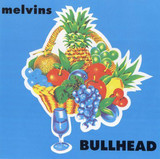
**BACK IN PRINT ON SINGLE LP**After three albums filled for the most part with quick song bursts and the occasional longer track, the eight-song long Bullhead found the Melvins stretching out a bit more at points, this time allowing the heavily stoned tempos plenty of time to really sprawl all over the place. There are fewer sudden shifts between fast and slow moments as well, and a lot more pure lava-flow beat-over-head feedback sludge and noise. It's not all ten mph deliberation, though - "Zodiac" shows the trio at full speed and blasting aside anything that might be so foolish as to get in its way, not to mention one unhinged Osbourne vocal lead. If grunge was achieving breakthrough status in Seattle, it was being perfected in its rawest sense on this album. Opening cut "Boris" does all this in excelsis - the band's longest recorded song at this point, nearly ten minutes long, it practically drips from the bongwater of eight million potheads, with Osbourne invoking his own brand of demons over the deep crawl of the music. Osbourne here really has got the dramatic, theatrical Ozzy Osbourne attitude down, with the occasional double-tracked vocals adding to the off-kilter intensity of the performances. Crover again shows his worth on the drums - he plays things slow most of the time but, crucially, never once sloppily - while Black keeps the bass going, however relatively unheard under Osbourne's guitar attack. "It's Shoved" is the not-so-secret highlight of Bullhead, Crover's brisker drum work and Black's sharp bass playing heralding a wild lead-guitar melody and a great ensemble performance. However, efforts like "Anaconda," with its slowly uncoiling power, and the intense "If I Had an Exorcism," which gets all the more wired and wound up as it goes (Black's bass here is some of her best), are no slouches. (All Music)
Tidal Waves Music proudly presents ‘Fly By Night’ for the FIRST TIME on vinyl (the album was only released as a limited compact disc back in the early nineties).
This unique record comes as a deluxe 180g vinyl edition (strictly limited to 500 copies) with obi strip.NonReturnable.
This vinyl edition also features the original painted front cover artwork by Virgil Grady (known for his work with Tribe records) and back photography by acclaimed Detroit scene photographer & author Barbara Barefield, whose work has appeared in many renowned publications such as The New York Times, LA Times, People magazine and countless others.
Released exclusively for Record Store Day 2023 (UK/Europe) and available in participating stores on April 22, 2023.
Wendell Harrison was born in Detroit in 1942 where he began formal jazz studies for piano, clarinet and tenor saxophone. At 14, while still in high school, Harrison started performing & recording professionally with artists such as Marvin Gaye, Grant Green, Sun Ra, Hank Crawford … and many others.
In 1971, Harrison began teaching music at Metro Arts (a multi-arts complex for youth) where he also connected with Marcus Belgrave, Harold McKinney and Phil Ranelin…soon after they formed the (now
legendary) Afro-centric TRIBE record label and artist collective. TRIBE used the Metro Arts complex as a vehicle to convey a growing black political consciousness. Wendell Harrison also published the very popular TRIBE magazine, a publication dedicated to local and national social and political issues, as well as featuring artistic contributions such as poetry and visual pieces.
In 1978 Harrison and McKinney co-founded REBIRTH, a non-profit jazz performance and education organization, in which many notable jazz artists have participated. Around the same time Wendell Harrison
also created the WENHA record label and publishing company, which released many of his (now classic) recordings as well as those of other artists, such as Phil Ranelin, Doug Hammond and Reggie Fields (The Real ShooBeeDoo).
In the early 1990s, Wendell Harrison was awarded the title of “Jazz Master” by Arts Midwest. This distinction led Harrison to collaborate with fellow honorees and gave him the chance to tour throughout the UnitedStates, Middle East and Africa. Even to this day Wendell Harrison's recordings for the TRIBE, WENHA and REBIRTH labels have a large worldwide fanbase.
It is on WEHHA in 1990 that Harrison released (and self-produced) the opus: ‘Fly By Night’ which we are proudly presenting you today. ‘Fly By Night’ is a monster of an album featuring an all-star line-up that
includes Doug Hammond (Mingus, Lonnie Liston Smith) on drums, Kirk Lightsey (Chet Baker, Calvin Keys) on piano, Cecil McBee (John Hicks, Pharoah Sanders, Alice Coltrane) on bass, Jaribu Shahid (Sun Ra) on contrabass and Pamela Wise (Tribe) on Piano. Harrison is killing it here with this selected ensemble (guys he grew up with in Detroit in the late 50’s, when hard bop was the thing and Miles and Coltrane were the heroes of the day). This group of talented veterans are taking this classic album to unseen heights.
On ‘Fly By Night’ the gloves come off…no more jazzy-funk or poppy-jazz. Wendell picks up his tenor for one tune but the remainder of the sessions he performs on clarinet. Wendell’s mastery coaxes the sweet piquant sound of the instrument and as it re-emerges in the contemporary jazz scene. The eight handpicked tunes demonstrate the fertile new directions Wendell Harrison has been working on, combing standards with a fresh new approach.
On these amazing recordings (recorded at the Rebirth Studios in Detroit) the listener is invited to experience a synthesis of what has been and what is now. The record shows Wendell’s trademark proficiency. All of the above makes this incredible record both timeless and as relevant today as it was back when it was initially
released.
XLR8R: "great release as one would expect"
Hunee: "everything is going up in smoke and descending lightly and gently like black feathers falling on snow"
Sven Vath: "catches my heart"
Ame: "great”
Esther Duijn: "outstanding”
Darko Esser: "mindboggling EP”
Pitchfork: "nice apocalyptic vibes”
Black smoke coming from the chimney; we have a blast off! Intergalactic Gary launches massive 4 tracker from his his lab.
- A1: Reach For Love
- A2: Hollywood Nights
- A3: Love To Shine
- A4: Keep On Dancin’
- B1: Reach For Love (Mark Kamins Ny Remix)
- B2: Hollywood Knights (Instrumental)
- B3: Reach For Love (Dub)
Factory Benelux presents a limited edition 180gm vinyl singles collection by Marcel King, best known for his sparkling 1984 dance single ‘Reach For Love’ on Factory Records, as well as the youthful vocalist on ‘SadSweet Dreamer’ by Sweet Sensation, a UK number one back in 1974 Limited to just 1000 copies, Reach For Love: Singles 1983-88 features both sides of the infectious electro single co-produced by Bernard Sumner (New Order) and Donald Johnson (A Certain Ratio) and released as Fac 92 in April 1984, as well as a previously unreleased demo for ‘Love To Shine’, the planned follow-up single on Factory produced by Tony Henry of 52nd Street. (NON-RETURNABLE).
The album also features ‘Hollywood Nights’, a later single cut by Marcel with Gee Bello of Light of the World, along with a rare US remix of ‘Reach For Love’ by noted New York DJ Mark Kamins, and extended dub and instrumental versions.
King was invited to record for Factory in 1983 by Joy Division/New Order manager Rob Gretton, a devotee of soul and black music, and prime mover behind the famous Hacienda nightclub. ‘Rob was a massive fan of Marcel and thought he was as good a singer as Michael Jackson,’ explains Tony Henry. Not just a gifted and
plaintive soul singer, King also wrote both sides of his Factory single, ‘Reach For Love’ and ‘Keep On Dancin’, both paeans to perseverance and enduring Hacienda classics.
A classic video clip for the single, filmed at The Hacienda with local breakdancing crews, is available in.
Alas ‘Reach For Love’ was destined to remain an underground hit rather than a chart topper. Rob Gretton blamed Factory’s disdain for conventional promotion. ‘At Factory we still basically believe that you don’t have to hype a group in any way, and that a record should success on its own. But it’s getting increasingly difficult.
We put a record out by Marcel King and it’s hardly sold at all. The charts are wide open to hyping and marketing.’
Adds Bernard Sumner: ‘Marcel was an incredibly talented guy, but a tragic figure. He used to sleep in a car in Moss Side and was a bad heroin addict.’ A troubled but pioneering artist, Marcel sadly passed away in 1995 after suffering a brain haemorrhage.
1000 copies only of FBN 47 will be available on Record Store Day on 22 April 2023, pressed on 180gm black vinyl. The sleeve is based on original artwork for the Factory single and also includes a press interview with Marcel from 1984.
Richard Pryor contained multitudes, each fully inhabited character funnier and more
insightful than the last, so it’s no wonder when he took the stage at The Comedy Store in
Hollywood in 1973, it’d be a full 15 minutes before he spoke to the adoring audience as
himself. No, he needed to start where he started, on the streetcorner, with all the wit,
wisdom, and general jackassery of Wino & Junkie. Throughout a set full of hard jokes and
detailed character sketches (including the men of the Saturday night police lineup in his
hometown of Preoria, Illinois—the first and riskiest stage he knew), the audience has the
chance to get caught up in the silliness so inherent to Pryor while never losing sight of the
issues America had yet to face (and hasn’t still). There are sex jokes that hit so hard the
women in the audience take an audible refractory period, drug advice that has you weighing
the relative trip-laden merits of dope and acid, and a call-and-response on sandwiches that
proves the irresistibility of zealous Black midwestern preachers; there’s a litany of celebrities
whose names and projects have blurred in Pryor’s mind, but whose faces and friendship so
clearly light him up; there’s even fighting advice (don’t fight Italians, their mothers get
involved, and try to avoid a paternal cowboy whuppin’, because no one wants to get hit with
a chair). And then you get hit with the hardest punch: Pryor reaching out from 50 years past
to make the truth plain. You never hear about civilians accidentally killing cops, so why is it
that cops are always “accidentally” killing Black men? As it turns out, 1973 and 2023 aren’t so
far apart that the legendary Richard Pryor can’t bridge the gap.
'Malombo music is an indigenous kind of music. If you listen to it, you can feel that it can heal you, if you’ve got something wrong. It’s healing music.'
Lucky Ranku
"Lucas ‘Lucky’ Madumetja Ranku (1941-2016) was one of the greatest African guitarists of his generation. He first made his name with the Malombo Jazz Makers – the successor group to the legendary Malombo Jazzmen, formed in Mamelodi township by guitarist Philip Tabane, drummer Julian Bahula and flautist Abbey Cindi. When Tabane left the Jazzmen in 1965, Bahula and Cindi called on Lucky to replace him, and the Malombo Jazz Makers were born. Building on the popularity and success of the original Malombo Jazzmen, the Malombo Jazz Makers become immensely popular, touring widely, winning numerous jazz competitions, and recording two successful albums for the Gallo label.
The deep and hypnotic Down Lucky’s Way was their third album. Recorded in 1969, it was the first Malombo Jazz Makers album to feature additional instruments, and the first to feature Abbey Cindi on soprano saxophone as well as flute. But more than anything else, Down Lucky’s Way is a transfixing showcase for Lucky Ranku’s sui generis guitar virtuosity. Quite different from their previous recordings, the album shifted the Jazz Makers’ sound toward hypnotic, extended compositions, layered by organ bass and guitar overdubs. Of all the Malombo Jazz Makers recordings, Down Lucky’s Way is the deepest of mood, and the richest of vision.
However, through one of the erasures that are ubiquitous in South African musical history under apartheid, it seems that the record may not ever have been properly issued. Original copies are outrageously rare – only a few are known among collectors. When we asked Lucky about the album, he was unaware it had ever been released, and had never seen a copy. Perhaps it was pulled; perhaps it was pulped; perhaps Gallo simply took their eye off the ball. Nobody knows, but it is not impossible that the apartheid authorities were involved, for by 1969, the Malombo Jazz Makers were well known to them.
Julian Bahula’s introduction of malopo drums to the music of the original Malombo Jazzmen was a moment of crucial political and cultural radicalism for South African jazz. Traditionally used by BaPedi people for healing, the malopo drums of Malombo music re-centered jazz
around indigenous sounds and culture, and over the next decade, the Malombo Jazz Makers became deeply involved in political opposition to apartheid. Their recovery of indigenous sounds made them the musical standard bearer for the Black Consciousness movement, and they toured South Africa clandestinely with the writer and anti-apartheid activist Steve Biko. They also broke apartheid laws by playing with the white rock group Freedom’s Children, sometimes appearing on stage in masks or made up with UV paint to avoid detection by the authorities; they appeared regularly at the rule-bending Free People’s Concerts organized by David Marks, where Marks’ clever exploitation of a loophole – mixed audiences were prohibited from attending ticketed concerts where anyone was being paid, but the law said nothing about private functions played by artists for free – meant people could come together in defiance of apartheid laws. The notorious Special Branch would raid their concerts; Lucky remembered police storming an auditorium, throwing smoke bombs.
Eventually the political situation became too dangerous, and the band were being actively sought by the police. Though Abbey Cindi remained in South Africa, both Julian Bahula and Lucky Ranku went into political exile in the UK, where Bahula founded the group Jabula with Lucky and former members of Cymande, Steve Scipio and Michael ‘Bami’ Rose. With Jabula, Julian and Lucky worked tirelessly for the anti-apartheid movement, raising funds and awareness all over Europe and in the US. They played with Dudu Pukwana’s Spear in the joint formation Jabula-Spear, and worked together in Bahula’s Jazz Afrika formation, and Bahula organized the first Concert for Mandela in 1984 (it was Jabula that supplied the chorus for The Special A.K.A.’s hit single ‘Nelson Mandela’). Lucky also played and recorded with Chris McGregor’s South African Exiles Thunderbolt group. After the fall of apartheid, they both remained living and working in the UK. In 2012 the South African government awarded Julian Bahula the Gold Order of Ikhamanga for his cultural work during the struggle against apartheid.
Until his death in 2016, Lucky continued to play with countless groups and musicians. putting together the band Township Express with Pinise Saul, and leading his own African Jazz Allstars. The influence of his playing on the international perception of South African township music was immense, and he was held in the highest regard by his peers – ‘Lucky was a guitarist who could bring any house down’, said Michael ‘Bami’ Rose.
But despite his continuous presence on the UK live circuit over four decades, Lucky Ranku never recorded an album as leader. And so as well as restoring an important lost piece of South African musical heritage, Down Lucky’s Way is a precious opportunity to hear one of Africa’s foremost guitarists stretching out, in focus and in his element."
First issue since 1969 of the Malombo Jazz Maker’s unknown third album.
Liner notes featuring interviews with Julian Bahula and Lucky Ranku.
Fully licensed from Julian Bahula.
Inspired by the rawness and honesty of artists like Elliott Smith, Julien Baker, Adrianne Lenker & Sufjan Stevens, Callum Pitt imbues his indie-folk with grand, orchestral, chamber pop sensibility plus an alt-rock edge. Despite using music often as a canvas to openly discuss depression & anxiety, as well as political unrest, Callum still manages to imprint feelings of optimism and unity, alongside genuine warmth and honesty, throughout his songs.
This debut album In The Balance pinpoints back to one night in 2019, where Pitt was handed an earth-shaking reminder of how much hangs in the balance with each passing second. Minutes after he waved goodbye to his brother and parents as they left his house, a fire engine hit the back edge of their car. They were all unharmed. But if the car was in the engine’s path a fraction of a second later — if Pitt had said one more word at the doorstep — it would have ploughed directly into the drivers’ side.
28-year-old Pitt has been working on his craft for a decade, beginning in the Newcastle pub scene and gradually refining his thoughtful, poetic songwriting voice. He won the Alan Hull Award for songwriters in 2019, and the Fender Player Plus competition in 2021. Meanwhile, he’s studying a masters in Occupational Therapy, and has worked with children, young people and adults with disabilities through various outlets, including therapeutic music work. These are experiences that shaped In The Balance, his first true body of work, giving him a new perspective on the cathartic and unifying power of music.
FINALLY BACK IN STOCK ON LP!!! Ozma was recorded soon after Melvins made the move from Washington to San Francisco, and was their first release to include the diminutive yet mighty Lorax (Lori Temple Black) on bass. In fact, the first sound one hears at the album’s opening is Lori standing on her tiptoes to switch on her amp, thereby warning the listener of the onslaught to come. Distorted, down-tuned doom riffs start, stop, lurch sideways with no warning, and seem to end before they start. Buzz Osborne adds extraneous guitar static and vocal squeals. Drummer Dale Crover plays as if he’s inside a barrel going over Niagara Falls; the long, slow fall allows the space between beats to grow and grow until he crashes into the water with the vessel blasting apart in an explosion of drum rolls. The classic Melvins heavy grind is set up and broken up by assorted odd sidetracks: “Revulsion / We Reach” flows forward slower and slower until it eventually melts into a gooey feedback drone. “Raise a Paw” is a superball paddled against one’s head by a grinning village idiot. “Love Thing” enlists in the Kiss Army before getting dishonorably discharged.