Returning with its final instalments, Die Schachtel's Decay Music series extends its explorations of inspired contemporary experimental efforts of the ambient, ethereal, and emotively abstract with Luigi Turra and Elio Martusciello’s “Liminale” and Sergio Armaroli and David Toop’s “And I Entered Into Sleep”, two astounding electroacoustic gestures of blurred space and time, plumbing complexity of meaning bound to sonority. Creatively groundbreaking and inspired, radically rethinking the terms of what ambient music can be perceived to be, they stand among the most striking efforts to appear within the series to date.
Reconfiguring the notion of bridge building on a multitude of terms, it feels fitting that the tenth and final installment of Die Schachtel’s Decay Music series, Sergio Armaroli and David Toop’s “And I Entered Into Sleep”, was co-created by an artist whose work featured in the first suite of LPs issued by Brian Eno’s Obscure Records in 1975, the groundwork toward which Decay Music’s own efforts nod. Since that auspicious debut, “New and Rediscovered Musical Instruments” — his split with Max Eastley — David Toop has been regarded as a pioneer in British experimental and improvised music: a sonic voyager who has continuously challenged the sources and materiality of sound through rigorously thoughtful performances, a vast catalog of recordings, and a steady flow of highly influential texts. Be it as a member of Alterations, his group breaking group with Peter Cusack, Terry Day, and Steve Beresford that ran between 1977 to 1986, or through is noteworthy work with artists like Rie Nakajima, Thurston Moore, Paul Burwell, Rhodri Davies, Lee Patterson, Ryuichi Sakamoto, Akio Suzuki, Elaine Mitchener, and numerous others, collaboration has always played a central role within Toop’s singular practice, but few can claim the sprawling sense of beauty and intimacy that’s achieved by “And I Entered Into Sleep”, his first recorded outing with Sergio Armaroli.
A composer, percussionist, vibraphonist, and multidisciplinary artist, Armaroli has been issuing radical and forward-thinking musical gestures for decades, working as one of Italy’s most noteworthy interpreters of composer’s like Giacinto Scelsi, John Cage, Franco Evangelisti, Giancarlo Schiaffini, and Walter Branchi, as both a solo performer and member of the highly regarded Rib Trio, as well as forging a singular practice as a composer, intertwining his efforts as a painter, concrete percussionist, fragmentary poet and sound artist, within a total art, rooted “within the language of jazz and improvisation” as an “extension of the concept of art”. Like Toop, Armaroli’s career has been populated by many collaborators, notably with Riccardo Sinigaglia, Alvin Curran, and Walter Prati, among others, setting the stage for a remarkable meeting between the pair.
Featuring Armaroli on vibraphone and prepared vibraphone and Toop on electronics, “And I Entered Into Sleep” is “a sonic journey, a Proustian suggestion à la Recherche, into the unconscious between electronic and acoustic sounds”. Using a bell that sounds at the beginning of Proust’s “À la Recherché du Temps Perdu”, which reappears more than 3,000 pages later — signaling a transition of phases, as well an auditory trigger of memory — as a departure point, as an association to the percussive vibraphone pulses that thread the album’s two sides, the pair weave a striking interior world of immersive psychological depth. Feeling almost subaquatic at times, like captured glimpses of rumbling, shadowy ecosystems lost within murky ambiences, before washing ashore in a series of pointillistic, highly detailed alien landscapes of the mind, each artist’s markedly different sound-sources, and treatment of the subsequent material elements, dance in abstract grace, incorporating subtle nods to minimalism, free jazz, and musique concrète within its seamless total form of sparse texture and tone.
Easily one of the most striking and memorable releases by either artist to appear in recent years, Sergio Armaroli and David Toop’s “And I Entered Into Sleep” traverses uncharted realms at the borders of literary reference, sound art, ambience and abstraction through delicately musical sounds, revealing new depths at every turn. Issued as the tenth and final album in Die Schachtel’s Decay Music series, highlighting inspired contemporary experimental efforts of the ambient, ethereal, and emotively abstract.
Suche:black out
The Argentine-born producer, now based in Munich, presents his long-awaited
debut album Bleeps Don't Cry, born out of a period of emotional upheaval in the
artist's life, and marks an immersive sonic journey through bw's evolving inner
world.
The record blends hypnotic, dub-infused rhythms with haunting atmospheres and
introspective ambient explorations. With this release, bw presents a raw, strippeddown aesthetic and a deeply personal approach to modern electronic music.
Both the artist and his self-titled label, bw, exist as a refined underground entity
with a keen ear for quality and contemporary techno. His tracks are crafted with
minimal yet vital elements, each sound added like a crucial ingredient, emotionally
expressive and essential to the whole.
- A1: From Darkness 01 18
- A2: Disappearance 04 34
- A3: Past Into Presence 02 32
- A4: Search Party 02 58
- A5: Forest Manipulations 03 22
- A6: Miscarriage 01 17
- A7: Who’s There? 00 59
- A8: The Pond 02 02
- A9: Mindfuck 01 20
- A10: I'll Take Noah 00 55
- A11: Wall Paintings 02 45
- B1: Death And Confusion 04 23
- B2: Visions 01 20
- B3: The House 03 55
- B4: What Have You Become? 01 41
- B5: Alone In The Dark 01 50
- B6: Ritual 02 07
- B7: Theo 02 29
- B8: Reunification 03 58
- B9: Open Eyes 02 25
- B10: Past Darkness 04 11
Erik K Skodvin summons his alter ego Svarte Greiner for a dive into the dark, wintery Swedish forest with the score to the psychological thriller/horror film “From Darkness” (orig: Ur Mörkret).
The film is director Philip W. Da Silva's debut and is set largely at night, deep in a Swedish nature reserve where mining used to take place. Loss, mental health and Nordic mythology come together in a story that revolves around the search for a missing woman. The score follows an eclectic and atmospherical path throughout the narrative with an uneasy underlaying vibe; although one with occasional points of refuge in the otherwise vast darkness. There is a gloomy, barely tangible sound of Nordic folk tradition buried in the music, even if it comes across in a different, more abstract way, where the various instruments are often used more as sound sources that are improvised (and abused) into becoming their own element. Skodvin performed and recorded the majority himself. In addition, he commissioned free improviser Axel Dörner to participate with his unique, custom-built electro-acoustic interface, which, along with Claudio Puntin's processed reeds and additional electronics, has been built into the elaborate backdrops to create an entire world that balances on the border between the approachable and the elusive - not unlike the journey of the protagonists. Skodvin's partner in Deaf Center, Otto A Totland, appears on piano in the stand out piece “What have you become?”.
The result is a harrowing yet deeply melancholic journey through the human psyche. One that echoes through the dark forests, cabins and lost mines of the desolate Swedish woodlands.
“It is presumed that as humans mined ore in the 1800s, they had many mishaps and dug too deep, leading them to assume they had unleashed some evil spirit that was guarding the ore. She was referred to as "Cave Wraith". It was said that she employed darkness to lure miners to their deaths. They prohibited villagers from visiting during the darkest months of the year. Some used sacrifices to subdue the evil entity.”
The vinyl is released in an edition of 150 numbered copies, with screenprinted artwork on black cardboard inside a screenprinted PVC sleeve, incl. Riso-printed insert with liner notes by Mike Lazarev, 180g vinyl.
DJ H0TLINE lands on his own imprint CALL 808 with an eclectic four-track EP – now on vinyl for the very first time! „Mars 96“ launches you right into martian orbit with wicked Jungle and playful Techno. On the flipside you forget about time and space with a deep Dubstep cut and finally touch down with floating Ambient.
Named after a failed Russian space mission in 1996 the record comes with an insert with more information – and even the hand stamped label matches the rust-red surface of Mars.
CALL 808 is more than a Cologne-based label, it’s a music hotline that pays artists up to 1000x more per listener than the average streaming service. Try it out & support local artists: 0900 3 808 303 (only 1,50€/min. Available in Germany.).
Product info: 12'' hand-stamped black vinyl + insert. + download
Small first pressing – limited copies available!
DJ H0TLINE landet auf seinem eigenen Label CALL 808 – mit einer abwechslungsreichen Vier-Track-EP, jetzt zum allerersten Mal auf Vinyl!
„Mars 96“ schickt dich direkt in den Orbit, mit wildem Oldschool-Jungle und verspieltem Techno. Verlier dich auf der B-Seite in Raum und Zeit mit einem deepen Dubstep-Track und schwebe mit Ambient in die Stratosphäre hinab.
Benannt nach der gescheiterten russischen Weltraummission von 1996, kommt die Platte mit einem Insert mit Infos und handgestempeltem Label – rostrot wie der Mars.
CALL 808 ist mehr als ein Kölner Label, es ist eine echte Musik-Hotline, die ihren Künstler:innen bis zu 1000× mehr pro Hörer:in auszahlt als Streamingdienste. Ruf an und hör selbst: 09003 808 303 (nur 1,50 €/Min.).
Produktinfo: 12'' schwarzes Vinyl (Hand-gestempelt) + Insert + Download
Kleine erste Pressung – wenige Exemplare verfügbar.
- A1: W.r.u
- A2: T. & T
- B1: C. & D
- B2: R.p.d.d
Remastered using pure analogue components only, from the master tapes through to the cutting head.
Ornette Coleman, who died in June 2015 from cardiac arrest, must be counted as one of the most influential musicians in the jazz genre. His importance does not only lie in his ground-breaking recordings in the late Fifties and early Sixties, but lies more significantly in the educational effect of his work – in the fact that he always went beyond himself to the very end.
Just a little more than a month after his ground-breaking release "Free Jazz", Coleman recorded the present album, in which he perhaps distanced himself somewhat from the conceptual idea, but still guided his quartet to ever more richness of detail and creativity. "Ornette!" was the first recording with bass-player Scott LaFaro and Coleman, and the difference in approach between LaFaro and Charlie Haden is noticeable from the very first note of "W.R.U.". His playing is more direct and agile, and one can hear how he drives Coleman and Don Cherry actively onwards and more aggressively than Haden’s warm, languid phrasing.
The tracks, with titles that are taken from the works of Sigmund Freud, are all gems and serve as a wonderful starting point for the musicians’ improvisations. By now, Coleman felt himself comfortable in lengthy pieces, and neither he nor his fellow musicians had trouble in filling out time, never once lacking for new ideas. Ed Blackwell deserves a special mention – he shows himself here at his very best. "Ornette!" is a superb release and an absolute must for all fans of Coleman and creative, improvised music in general.
Experience the ultimate OneRepublic compilation with The Collection - a selection of their biggest hits! Featuring global chart-toppers like “Counting Stars,” “Apologize,” and “I Ain’t Worried,” to anthems like “I Lived,” “Run,” and “Good Life.” Available on 1LP black vinyl, OneRepublic: The Collection is a must-have.
The Modulator, AKA Freddy Fresh is back in town !
LTD 100 COPIES !!!
To share this event in the best way i asked him a few questions...
Official Interview now begins :)
Tool : The last Analog Records USA was in 2000... Why did you stop it and why do you wish to realese vinyls again ?
Mr Fresh : Ii actually never stopped I just made alot of other styles of music that I do not think were proper for my Analog and E.M.F. labels (Analog is now run by Mike McLure of SAuto Kinetic we work together on that label and Electric Music Foundation is all my label.. we did some great digital releases on E.M.F. recently with ADSX / Scott Radke/Dave Olson / Poor Boy Rich etc.. and can be found here
for me my last Techno Analog vinyl 12” Release was in 1997 Quiver 12"
But I did release a few Techno/Electro style tracks on my Electric Music Foundation labels as 12” singles
in 2003 I made these
Black Out
Orange Krush
I always continue to make music and have hundreds of unreleased songs that I think some are not worth putting on 12” single as I fear to weird, experimental etc.. I try to isolate myself and make unique music hopefully not sounding like what others are making but try to be my own self
Tool : What are you favourite machines or software to make music these days ?
Mr Fresh : I still use many vintage synths like my Jupiter 8, Arp 2600, Roland System 100M, 303’s etc.. but now I also use some Eurorack Modules E950, Clouds, Metropolis Sequencer etc.. also TR8, Twisted Electrons Acid 8, Teenage Engineering Factory, PO Calculators, Korg Volca Sampler, Electrix Filter Factory, Space Echo (Boss) and MPC 4000 controlling Hardware and I usually record random ideas to a flash recorder and sometimes import into ableton tracks etc.. then use Reaktor or some other soft synths but I always start Analog. I also use Critter and Guitari Looper to record organic sounds to use for percussion.
Tool : What are your forthcoming projects on vinyl in the near future ?
Mr Fresh : I have a remix electro style for New Zealand Independent Cardboard and Computers soon on 12” single
I have COMACID EP coming out of Belgium on 12” single very soon which features some older tracks (Binder, Scared, Slow Death, Spacefunk) mainly re-release of Techno/Acid stuff all analog of course
Then I have two releases with Toolbox Records and possible new stuff with Acid.Paris and hopefully we start a nice relationship with Toolbox for a long term ha ha! My daughters start school next month so I am preparing new Eurorack Modules and getting Syncussion to really hit it and spend some serious time in the studios. I am really inspired to do the more electronic vibes now and feeling the A.C.I.D. alot lately with the newer technology
Jackie Mittoo’s ‘Reggae Magic’ is a new collection from the great Jackie Mittoo. The album features a mixture of classic tunes and rarities from the period 1967-74, when Mittoo was at the height of his musical powers. Mittoo’s solo career began after the end of The Skatalites in 1965. He began pushing new musical boundaries, creating a uniquely identifiable organ-led funky reggae sound that owed as much to Booker T and The MGs, Jimmy Smith, Stax and Motown as to the post-ska and emergent rocksteady island rhythms of Kingston, Jamaica. His solo work at the legendary Studio One spanned seven albums and hundreds of singles.
Aside from producer and founder Clement ‘Sir Coxsone’ Dodd, it’s hard to think of anyone more central to the sound and success of Studio One than Mittoo; keyboard player extraordinaire, songwriter, arranger, musician, truly the Keyboard King at Studio One. Jackie Mittoo had been the youngest founding member of The Skatalites (at age 16), probably the most important group in Jamaican music. After they split, he became leader of the three pivotal groups at Studio One – The Soul Brothers, The Soul Vendors and Sound Dimension. He also became musical director for Studio One, helping create countless hits for singers Ken Boothe, Bob Andy, The Wailers, John Holt, Delroy Wilson and more – unforgettable tunes like Alton Ellis’ ‘I’m Still in Love with You’, Marcia Griffiths’ ‘Feel Like Jumping’, The Heptones’ ‘Baby Why’ and others. Between 1965 and 1968, many of the tunes created at Studio One can be attributed to Mittoo – timeless instrumental tracks, recorded either under his own name or those of The Soul Brothers, Soul Vendors and Sound Dimension, that have become the basis for literally 1000s and 1000s of Jamaican songs over many decades, giving the music an unsurpassed longevity.
The endurance of his music was as a direct result of significant developments in Jamaican music in the 1970s, namely the creation of three important new styles: Dub, Deejay and Dancehall. In the early 1970s Mittoo’s instrumental tracks were used as the musical source for a series of classic Studio One dub albums. At the same time Deejays at Studio One, including Dillinger, Prince Jazzbo and Dennis Alcapone, began toasting over these same popular rhythms to create their own new songs. In the mid-70s, a new generation of Studio One singers and deejays, including Sugar Minott, Freddie McGregor, Johnny Osbourne, Michigan & Smiley and others, began once again creating new melodies over these original instrumentals, signalling the birth of a new Jamaican style that became known as ‘dancehall’.
As dancehall swept across the island, rival producers copied these now classic rhythms. These original Jackie Mittoo-driven tunes spread like a virus throughout Jamaican music; be they the instrumental cuts to tunes such as Alton Ellis’ ‘Mad Mad’ , ‘I’m Just A Guy’, Larry Marshall’s ‘Mean Girl’, Slim Smith’s ‘Rougher Yet’, and instrumentals such as Mittoo’s classic ‘Hot Milk’ or ‘One Step Beyond’, The Sound Dimension’s ‘Real Rock’, ‘Heavy Rock’, ‘Full Up’, ‘Drum Song’, ‘Rockfort Rock’ … and the list goes on. These tracks became a constant soundtrack to the island, emitting from the ever-present sound of speaker boxes strung up around dancehalls. This recycling travelled even farther afield; The Sound Dimension’s instrumental ‘Real Rock’, updated by Willie Williams on his classic ‘Armageddon Time’ was in turn covered by The Clash. Lily Allen sampled Mittoo’s debut solo single ‘Free Soul’ for number one hit ‘Smile’; Dawn Penn’s ‘You Don’t Love Me (No, No, No)’, accompanied by The Soul Vendors, was revived by Penn and producers Steely & Cleevie in 1994, since covered by Rihanna, Ghostface Killah, Stephen Marley, Damian Marley and Beyonce. And so it goes; an endless time-leaping, continent-hopping diasporic musical map of the world with all roads essentially leading back to one man – Jackie Mittoo.
The Keith Tippett Group's Dedicated to You, But You Weren't Listening is a landmark in cutting edge fusion/avant-jazz. A vital and profoundly adventurous Jazz-Rock record that still swings very hard, it was first released on Vertigo in 1971.
Original copies are now very tricky to score and, as most of you really should know, it’s aged ridiculously well.
A legendary work, this Be With re-issue has been newly remastered from the original Vertigo master tapes, demonstrating just why this deserves to be back in press. The stunning gatefold jacket fully restores Roger and Martyn Dean's original, arresting album artwork to complete this must-have reissue.
Alive and bursting with a joyful energy that has to be heard to be believed, Dedicated to You, But You Weren't Listening flirts with perfection. It's truly magical and forever essential.
A brilliant jazz pianist, composer, arranger and bandleader "who could make the outlands of modern music feel like the most hospitable of places" (The Guardian), Keith Tippett's second album is oft-regarded as his Canterbury album.
Indeed, not only does he draw heavily on Soft Machine members past, present and future but the album title itself archly references a Soft Machine composition. Ray Babbington handles bass alongside Neville Whitehead and the drums are shared between Brian Spring (Nucleus), Robert Wyatt(!) and Phil Howard (who would go on to replace Wyatt in Soft Machine). Gary Boyle (Isotope) is on guitar whilst the great percussionist Tony Uter is enlisted for his conga and cow bell expertise. Elton Dean on Alto Saxello, cornetist Marc Charig and Nick Evans on trombone round out this quite stunning ensemble.
Dedicated to You, But You Weren't Listening presents a collective of superhuman musicians really, *really* enjoying themselves in the studio. The sheer exuberance of the performance is totally infectious. It's wild, energetic, atmospheric and, bluntly, bordering on chaotic at points. In a word, it's beautiful.
Robert Wyatt's drumming opens the record with a bang on the majestic Be With favourite "This Is What Happens". Some have described his work here as "easily the most inspired of his career on record." It's an ultra-funky conga-driven groove that truly sparks via the duelling interplay between the three horn players. In the background, Keith's insistent piano, in conversation with those unignorable drums, is the anchor that keeps this piece rollicking away. Breathtaking.
The epic, energetic "Thoughts to Geoff" is a 10-minute jammer that tends towards the dissonant and improvisational but becomes more fluid, laconic and melodic as it unravels. The interplay between soloists and ensembles is particularly dazzling here - blazing solos by Evans, Charig and Tippett himself in a flourish of angular arpeggios interspersed with chordal elocution. Phew.
Up next, the no less-urgent Mingus-referencing "Green and Orange Night Park" is a soaring example of ambitious jazz mixed with rock aggression, with Dean strutting his stuff by launching into a scorching solo. An absolutely jaw-dropping piece. Arguably the highlight of this album of huge highlights!
Though much of the album tends to fall on the raucous side ("Gridal Suite" approaches free-jazz at its most chaotic and, dare we say it, "difficult"), there are a few more sedate, at times spacey numbers, such as the deeply impressionistic "Five After Dawn". The rhythmically complex "Black Horse" is the most accessible track here, a sort of swinging Big Band number with tight grooves, soaring horn & reed melodies, a sizzling Boyle guitar solo and tasty electric piano riffs from Tippett. An hypnotic climax to a staggering record.
This Be With edition of Dedicated to You, But You Weren't Listening has been re-mastered from the original Vertigo master tapes, Simon Francis’ mastering working together with Cicely Balston's cut at Abbey Road Studios to weave their usual magic with these wonderful recordings. The stunning gatefold sleeve has been restored in all its brainchild glory so you know you're dealing with the definitive reissue, here. Now, are you listening?
- 1: Filing Our Papers
- 2: Unmade Bed
- 3: I Think Of How It Ends
- 4: The New Kid
- 5: You'd Be Stars
- 6: Pretty Words
- 7: The House I Grew Up In
- 8: Growing
- 9: Same Car
- 10: Cool Girl
- 11: What Kind Of Winner
- 12: Out Of Service
- 13: Throwing Rocks
Black Ice Vinyl. On her debut album One Sided, 20 year-old Georga-native Sydney Rose wrestles with growth: growing up, growing apart, growing within. While the singer/songwriter’s 2022 EPs You Never Met Me and This Kind of Thing Doesn’t Last showcased intimate lyricism with the help of understated synths, muted drum machines, and stacked harmonies, One Sided returns to her stripped-back roots, offering tenderhearted meditations on childhood, love, and the evolution of friendship, with a guitar in hand. After Feb 2025 single, We Hug Now, had huge viral success, Syndey Rose has sold out shows all over the US, UK, and Europe.
DJ Support: Fred P, Mark Farina, Harvey Sutherland and more
When two underground icons like James Curd and Fred P join forces, the result is more than just acollaboration-it's a cross-continental meeting of deep house minds. The track was born in James Curd's Adelaide studio while Fred P was in Australia, capturing a rare and organic creative moment between two respected figures in house music. James Curd, known for his work with Greenskeepers and his extensive catalog across labels like Classic, Defected, and DFA, brings a playful yet precise groove, while Fred P, the introspective deep house pioneer behind Black Jazz Consortium, adds soulful depth and hypnotic finesse. The remix package elevates things even further. Harvey Sutherland, a staple in Australia's modern funk and electronic scene, brings his analog synth wizardry-his remix credentials include Disclosure and Jamiroquai. Austin Ato, a UK house innovator with a DFTD remix for Groove Armada, injects vibrant dancefloor energy. And Junior Sanchez, a long-time figure in New York's club culture, rounds it out with a heavyweight version - he's flipped everyone from A-Trak to Madonna. This is a lineup that speaks volumes before you even hit play.
- Star Wars And The Revenge Of The Sith (7:29)
- Anakin's Dream (4:44)
- Battle Of The Heroes (3:42)
- Anakin's Betrayal (4:05)
- General Grievous (4:05)
- Palpatine's Teachings (5:25)
- Grievous And The Droids (3:27)
- Padmé's Ruminations (3:18)
- Anakin Vs. Obi-Wan (3:56)
- Anakin's Dark Deeds (4:04)
- Enter Lord Vader (4:13)
- The Immolation Scene (2:39)
- Grievous Speaks To Lord Sidious (2:48)
- The Birth Of The Twins And Padmé's Destiny (3:39)
- A New Hope And End Credits (13:05)
Mutant, in association with Walt Disney Music and LucasFilm, are proud to present a 20th anniversary celebratory pressing of John William's original score to the iconic final chapter of the Star Wars prequel trilogy - Star Wars: Episode III - Revenge of the Sith.
Following a powerful return to cinemas this spring, George Lucas' 2005 science fiction epic has continued to capture the hearts generation after generation. Returning for his sixth Star Wars film, John Williams brings the tragedy of Anakin Skywalker to life with a masterful flair. From the opening fanfare's hard pivot to the action packed dogfight, Williams weaves between kinetic adventure, and haunting heartbreak with grace and precision. In a series full of the absolute pinnacle of music ever committed to film, Revenge of the Sith sits proudly side by side, while feeling wholly unique.
Long out of print on physical media, and only being pressed on Vinyl for the second time ever, this limited edition release features incredible original artwork by Matt Ferguson and is pressed on 2x 140gm black vinyl.
- God Given Name
- T.o.n.y
- Dancing In The Dark
- Would've Been The One
- Sandcastle Disco
- I Decided - Album Version
- Valentine's Day
- 6: O'clock Blues
- Ode To Marvin
- I Told You So
- Cosmic Journey
- This Bird
“Solange’s 2008 critically-lauded album was hersecond, but the first where she stretched out andshowed the vision and creativity that fans havecome to expect. This Motown-influenced albumdebuted #9 on the Billboard Top 200 and featuresproduction by Pharrell Williams, Mark Ronson,Thievery Corporation, Bilal and others.” - MusicWorld Entertainment
‘Sol-Angel and the Hadley St. Dreams’ is nowavailable on black vinyl.
Ostinato as resistance: Rafael Anton Irisarri’s landmark work reimagined. Marking the tenth anniversary of the American composer’s critically acclaimed album 'A Fragile Geography', this new edition arrives renewed, both sonically and visually.
First released in 2015 (Room40) during a period of personal upheaval and creative reinvention, it endures as a testament to resilience, transformation, and the connection we hold with the places that shape us.
Written in the aftermath of a devastating theft, A Fragile Geography was born out of loss. Just days before a cross-country move to New York, Irisarri’s entire Seattle-based studio was wiped out. Instruments. Recordings. Archives. Gone without a trace. He arrived on the East Coast to an empty room and the daunting task of starting over.
“This album wasn’t just a record; it was a lifeline,” Irisarri reflects. “It became a way to process the emotional chaos that followed: uprooting, instability, and ultimately, the slow, intuitive rebuilding of a life.”
Composed and recorded in the rural woods of the Hudson Valley, the album took shape in seclusion, surrounded by nature, and through a process guided by improvisation. Embracing limitations, Irisarri wove textural layers of field recordings with half-remembered melodies from his Seattle years, piecing them together like fragments of memory. Tracks like “Displacement,” “Hiatus,” and “Persistence” juxtaposed haunting stillness with restless momentum, mapping an inner terrain of grief, catharsis, and rebirth.
Among its defining sounds is “Empire Systems,” a monumental centerpiece built around a simple four-chord progression, organ textures, and guitar drones. Gradually, the track expands into layers of immersive loops and thick, enveloping distortion that wash over the listener like a rolling wave. Often cited as the album’s most majestic passage, it captures Irisarri at his most sonically ambitious. With a harmonically saturated structure crafted from restraint and repetition, it remains one of his most recognizable compositions: an exercise in the art of maximal minimalism.
From the outset, “Reprisal” received praise from BBC’s Mary Anne Hobbs, who championed the track on her radio show. Her support played a key role in introducing Irisarri’s work to wider audiences and solidifying his place within the lineage of electronic, drone, and experimental sound artists. A slow-burning elegy, the piece emerges from a haze of distortion and sub-bass, with dense, unrelenting drones carrying a sense of mounting tension. Just as it seems to collapse under its own weight, flickers of guitar emerge like distant light through fog. It’s a meditation on dissonance, resolve, and the elusive possibility of release.
The closing track, “Secretly Wishing for Rain,” is steeped in saudade: a longing for Seattle’s dour grey skies, lush green landscapes, and desaturated sunsets. Through it, Irisarri mourns a vanished chapter of life bound to the city, a time documented in scattered mementos and cherished collections, now permanently gone. A reflection on what could never be recovered: an era lost to time. Julia Kent’s looped cello motifs added a melancholic warmth to the track, marking the first collaboration between the two artists and sparking a musical dialogue that would keep growing in the years that followed.
More than a career highlight, A Fragile Geography has laid the foundation for Black Knoll studio, which Irisarri rebuilt from the ground up. The studio has since grown into a creative hub for countless projects, with Irisarri engineering records for iconic music figures like Terry Riley, Ryuichi Sakamoto, William Basinski, MONO, Devendra Banhart, Grouper, Emeralds, Steve Hauschildt, Julianna Barwick, and many others. Carried by its lasting influence, the album has quietly captured the ear of a younger generation, its sound and emotional arc finding new listeners in unexpected corners.
The album’s new visual language was reimagined in collaboration with Mexico City–based designer Daniel Castrejón. Irisarri captured ghostly images at Gaztelugatxeko Doniene, a historic coastal site in Bermeo, Euskal Herria. Castrejón then treated the photographs with distressed textures and spectral overlays. The final artwork channels the rugged, elemental forces that shaped both the music and Irisarri’s aesthetic, renewing his ties to ancestral ground inspired by the Basque homeland of his bloodline.
Mastered by Stephan Mathieu with exceptional attention to detail, this anniversary edition uncovers every nuance in the sound design, enhancing clarity and presence. With each listen, new elements emerge, inviting discovery and reconnection.
“I don’t experience this album as a document of grief anymore,” says Irisarri. “I hear adaptation and I'm reminded that when everything falls apart, something meaningful, maybe even beautiful, can emerge.”
Ostinato as resistance: Rafael Anton Irisarri’s landmark work reimagined. Marking the tenth anniversary of the American composer’s critically acclaimed album 'A Fragile Geography', this new edition arrives renewed, both sonically and visually.
First released in 2015 (Room40) during a period of personal upheaval and creative reinvention, it endures as a testament to resilience, transformation, and the connection we hold with the places that shape us.
Written in the aftermath of a devastating theft, A Fragile Geography was born out of loss. Just days before a cross-country move to New York, Irisarri’s entire Seattle-based studio was wiped out. Instruments. Recordings. Archives. Gone without a trace. He arrived on the East Coast to an empty room and the daunting task of starting over.
“This album wasn’t just a record; it was a lifeline,” Irisarri reflects. “It became a way to process the emotional chaos that followed: uprooting, instability, and ultimately, the slow, intuitive rebuilding of a life.”
Composed and recorded in the rural woods of the Hudson Valley, the album took shape in seclusion, surrounded by nature, and through a process guided by improvisation. Embracing limitations, Irisarri wove textural layers of field recordings with half-remembered melodies from his Seattle years, piecing them together like fragments of memory. Tracks like “Displacement,” “Hiatus,” and “Persistence” juxtaposed haunting stillness with restless momentum, mapping an inner terrain of grief, catharsis, and rebirth.
Among its defining sounds is “Empire Systems,” a monumental centerpiece built around a simple four-chord progression, organ textures, and guitar drones. Gradually, the track expands into layers of immersive loops and thick, enveloping distortion that wash over the listener like a rolling wave. Often cited as the album’s most majestic passage, it captures Irisarri at his most sonically ambitious. With a harmonically saturated structure crafted from restraint and repetition, it remains one of his most recognizable compositions: an exercise in the art of maximal minimalism.
From the outset, “Reprisal” received praise from BBC’s Mary Anne Hobbs, who championed the track on her radio show. Her support played a key role in introducing Irisarri’s work to wider audiences and solidifying his place within the lineage of electronic, drone, and experimental sound artists. A slow-burning elegy, the piece emerges from a haze of distortion and sub-bass, with dense, unrelenting drones carrying a sense of mounting tension. Just as it seems to collapse under its own weight, flickers of guitar emerge like distant light through fog. It’s a meditation on dissonance, resolve, and the elusive possibility of release.
The closing track, “Secretly Wishing for Rain,” is steeped in saudade: a longing for Seattle’s dour grey skies, lush green landscapes, and desaturated sunsets. Through it, Irisarri mourns a vanished chapter of life bound to the city, a time documented in scattered mementos and cherished collections, now permanently gone. A reflection on what could never be recovered: an era lost to time. Julia Kent’s looped cello motifs added a melancholic warmth to the track, marking the first collaboration between the two artists and sparking a musical dialogue that would keep growing in the years that followed.
More than a career highlight, A Fragile Geography has laid the foundation for Black Knoll studio, which Irisarri rebuilt from the ground up. The studio has since grown into a creative hub for countless projects, with Irisarri engineering records for iconic music figures like Terry Riley, Ryuichi Sakamoto, William Basinski, MONO, Devendra Banhart, Grouper, Emeralds, Steve Hauschildt, Julianna Barwick, and many others. Carried by its lasting influence, the album has quietly captured the ear of a younger generation, its sound and emotional arc finding new listeners in unexpected corners.
The album’s new visual language was reimagined in collaboration with Mexico City–based designer Daniel Castrejón. Irisarri captured ghostly images at Gaztelugatxeko Doniene, a historic coastal site in Bermeo, Euskal Herria. Castrejón then treated the photographs with distressed textures and spectral overlays. The final artwork channels the rugged, elemental forces that shaped both the music and Irisarri’s aesthetic, renewing his ties to ancestral ground inspired by the Basque homeland of his bloodline.
Mastered by Stephan Mathieu with exceptional attention to detail, this anniversary edition uncovers every nuance in the sound design, enhancing clarity and presence. With each listen, new elements emerge, inviting discovery and reconnection.
“I don’t experience this album as a document of grief anymore,” says Irisarri. “I hear adaptation and I'm reminded that when everything falls apart, something meaningful, maybe even beautiful, can emerge.”
Off The Record (faitiche 39), the new album by French collagist Roméo Poirier, is an amusing romp through the discarded history of recording studios. It contains fourteen miniatures based on accidental recordings of studio talk, revealing things that were never meant for the public: we hear instructions from studio staff, scraps of talk between musicians, or just microphones being adjusted, as well as false notes, false starts: everyone stops. Start again: 1, 2, 3, 4!
Poirier’s approach recalls Accumulation, an artform practiced by Arman, Jean Tinguely and Daniel Spoerri that involved piling up everyday items into assemblages. The objects themselves often remained unaltered, the artistic gesture consisting in the careful curating of a distinctive selection. Poirier’s audio collages explore similar terrain. The fourteen pieces on Off the Record combine more than a thousand found sounds from studio archives into complex miniatures. The audio content of these outtakes is twisted, stretched, cut, reassembled, slowed down and accelerated. Voices cut into a microgroove, from a very old recording, intertwine with digital voices gleaned from YouTube. All of them in dialogue, engaging the listener with the impression of being part of a new music group.
Poirier uses the mundane routine of setting up before the actual recording gets underway to tell a universal story about working in a recording studio. And he manages something few achieve, transforming specialist knowledge into a narrative whose beauty goes far beyond its immediate subject. It speaks to everyone, because the story is told in a musical language that is open and accessible, evoking magical images reminiscent of Oz – a world consisting less of events than of camp hallucinations, captured in grainy black-and-white photographs. En passant, Poirier shows us how the notion of material accumulation can produce great art.
Written and produced by Roméo Poirier, mastered by Stephan Mathieu, photos by Roméo Poirier, graphic design by Tim Tetzner.
2025 Repress
Portland was produced by our mate Dave Clark aka Sparky and was the first record we released in 2002, about a year before the first ever Numbers party took place.
Originally recorded live to tape using an MMT8, a Microwave II, and an ESi32 in the summer of 1998, it was released on an old label of ours named Stuffrecords and formed part of a somewhat rambling compilation called STUFF001. We hastily stuck this record out without any proper distribution, because at the time we didn't know any better. Despite this the record did pretty well, selling 500 copies to a few select stores who had faith in what we were doing.
Fast forward a year or so to when Numbers kicked off and the track became one of the first bonafide anthems in the club. It was our tune and it would tear the roof off at any of our parties.
A couple of years later, we booked DJ Pete, aka Substance, to play. We're talking about the record in the pub when he suddenly informs us that Ricardo Villalobos is crazy about it and even charted it. This was a deep, almost Drexciyan electro track and here was the king of crazy experimental minimal house music caning it in his DJ sets.
Not long after that night, the Numbers label was up and running and the idea to re-release Portland with a remix from Mr Villalobos was brought up almost as a kind of pipe-dream. Now in 2013, with a little help from Gerd Janson, it has finally happened. Recorded live in one take and clocking in at over 30 minutes long, it's cited as an "experiment" by Ricardo. Designed to play at two speeds, at 33rpm its almost like an early 90s Black Dog track stretched out to infinity, whilst at 45rpm, it's a club-ready groover with an almost Dopplereffekt rhythm to it - the sort you could imagine sneaking into a DJ Assault or Godfather Ghettotech mix. Somehow, it also manages to be classic Villalobos.
To finish off the record Dave gave us a two unheard tracks from those original Portland sessions in 1998. The malevolent electro of 'Jigsaw' would instantly have become another Numbers anthem if only Dave had let us hear it ten years ago, and closer track 'Wilson St' heads down an ambient route.
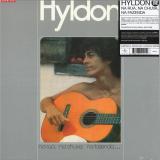
"Na Rua, na Chuva, na Fazenda" is a landmark 1975 album by Hyldon, a key figure in Brazilian soul music. His debut release was one of the top-selling albums that year, capturing the vibrant musical spirit of the 1970s and reflecting the influence of the black power movement alongside artists like Tim Maia and Cassiano. With a mix of MPB, soul, and funk, Hyldon brought his unique sound to life, collaborating with influential artists and contributing to the Brazilian music scene. With a mix of MPB, soul, and funk, Hyldon brought his unique sound to life, collaborating with influential artists like Azymuth. The album, which features the iconic title track, is a celebration of love with timeless songs like 'As Dores do Mundo', 'Na Sombra de uma Arvore' and 'Meu Patuá.' Produced by Guti Carvalho with arrangements by Hyldon and Waldir Arouca Barros, the studio band included the talented musicians from Azymuth (José Roberto Bertrami, Alex Malheiros and Ivan Conti "Mamao"), making it a memorable piece of Brazilian musical history. This album has earned cult status over the years, securing its place as one of the most coveted Brazilian records of all time. Once incredibly rare and expensive, it's now at the top of every serious collector's wishlist. After being unavailable outside of Brazil for years, it's finally been reissued - don't miss your chance to own this legendary piece of music history.
Tauche ein in die magische Klangwelt von Olafur Arnalds: Found Songs kehrt zurück - erstmals als transparente Vinyl-Edition! Ursprünglich 2009 auf schwarzem Vinyl veröffentlicht und lange vergriffen, erscheint dieses intime Meisterwerk nun in einer streng limitierten Neuauflage. Die sieben Stücke entstanden in einem außergewöhnlichen Projekt: ein Song pro Tag, sieben Tage lang - direkt geteilt mit der Welt. Zwischen zarten Klaviermotiven, subtilen Elektronik-Elementen und kammermusikalischer Tiefe entfaltet sich ein eindrucksvolles Porträt eines jungen Komponisten, der die Grenzen zwischen Klassik, Pop und Ambient neu definiert. Found Songs ist ein poetisches Zeitdokument - roh, ehrlich und voller Gefühl. Ein Muss für alle, die Musik als Kunstform erleben. Step into the delicate sound world of Olafur Arnalds: Found Songs returns - for the first time ever on clear vinyl! Originally released in 2009 on black vinyl and long sold out, this intimate masterpiece is now reissued in a strictly limited edition. Born from a unique project - one song per day for seven days, shared instantly with the world - these seven pieces blend fragile piano, subtle electronics, and chamber textures into a deeply personal portrait of a young composer redefining the boundaries between classical, pop, and ambient. Found Songs is a poetic time capsule - raw, honest, and profoundly moving. A must-have for those who experience music as art.
- A1: You Can't Bring Me Down
- A2: Lost Again
- A3: Alone
- A4: Lovely
- A5: Give It Revolution
- B1: Get Whacked
- B2: Send Me Your Money
- B3: Emotion No. 13
- B4: Disco's Out, Murder's In
- B5: Go'n Breakdown
Lights… Camera… Revolution is the fourth studio album from Venice Beach, L.A. heavyweights Suicidal Tendencies. Suicidal’s flirtation with the mainstream (complete with obligatory criticism of ‘selling-out’) went Gold in the US with over half a million copies sold, and to this day remains an essential record in any Metal or Punk collection. It is an excellent record for fans of Anthrax, Metallica, Biohazard and Black Flag. Lights… Camera… Revolution is available as a 35th anniversary edition of 2000 individually numbered copies on red coloured vinyl