Courtesy Of Balance Recordings presents their 10th Release to date. A compilation of 9 pieces of timeless house music that will rock the underground parties and twisted after hours alike. Showcasing the talent of artist hailing from Chicago, Montreal, London and Geneva and France, this triple pack is bound to become yet another classic on the Balance Catalogue. Dont Snooze Baby!!!
Search:black pond
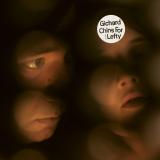
Chins For Lefty is the debut album and first recording by Gichard, a new duo chronicling the absurdities of end-stage capitalism and mouldering social rituals from their vantage point in Glasgow, Scotland. Recorded primarily in the band’s home studio straight to tape, Chins For Lefty combines gorgeous, ramshackle melody, DIY kosmische punk, drum machine + synth and, in vocalist/lyricist Lisa Jones, an absurdist commentator on the human condition as it navigates the anxieties of the modern world. Instrumentalist Chas Lalli’s swirling music accompaniment stitches an evocative mix of musical styles, the ragged wind beneath the lyrics’ wings.
Although the duo first collaborated in their previous group Dragged Up, their disparate musical and artistic backgrounds make for an alluring mix in Gichard. Lalli has spent the last 20 years in the Glasgow underground, most notably in the noise rock group VOM, while Lisa Jones’s practice was in poetry and spoken word. Beginning as co vocalist in her previous band, in Gichard her lyrics are centre stage; the vision concocted alongside Lalli amounts to a total world-build.
Chins For Lefty scans almost like a novel, with each track elucidating a skewed universe that bears only some resemblance to the one you and I partake in. Like all works of fiction Gichard’s songs are rooted in reality and the lived experiences of its authors, but here characters are exaggerated, social mores and habits are pulled apart to reveal their inherent alienness. Universal emotions are laid bare, the bright light of anxious examination searching out every hairline fracture in our relationships. Distorted and cracked, the mirror that Gichard hold up to our world is also pretty damn funny.
Opener Cholesterol Test launches an expansive, cosmic guitar and synth intro that belies the Tascam-tape recorder it was recorded onto, like a Chromatics cut substituting anxiety for overt sexuality. Here Jones intones an apology to a non-responsive recipient, in the medium of a long voice note forensically deconstructing an interaction from the night before. Over punk guitars and shuffling, lo-fi drum machine splutters, the narrator in Asking The Apes “prefers things to people” before being taken hostage in the city zoo to confess an obsession which consumes the protagonist, ending with the immortal two liner “I sleep in a cocoon of old newspapers at the end of your street / And I think I have been fired from my job,” On album standout Posthumous Hologram, the narrator is faced with a human simulacra, in this case an undead pop star; the face of the encroaching technological singularity. Yes, it does requests, it can do My Way in 200 different language options. But what are the implications? While you’re left pondering, the alternating deadpan verse delivery and undeniably catchy chorus keep you company.
By the time Break Up With Johnny Dogbirth rattles into view, the band are satirising a suburban inanity blown up to cartoon proportions, soundtracked with a drawled musicality that recalls Rowland S. Howard’s post-Birthday Party balladeering. This approach is furthered on Human Resources: over an angular guitar+bass track, Jones’s short story recalls Dry Cleaning’s erudite lyrical post punk. On Soft Face, Lalli’s guitar and drum machine are swathed in echo and delay, as Jones dissects dating rituals with a west of Scotland drollness. Hamming It Up brings a porcine perspective in a short story that begins with the line “I was breastfeeding discreetly in the service station. She didn’t mind.” What follows is a passage punctured with canned laughter and a narrative involving tribute acts, modern farming techniques.
Brilliant first single Your Private Hell closes the album, the closest the group get to earnest perhaps, filtered through a surreal central Scottishness. While Your Private Hell might seem like a sardonic take down of romance, perhaps it’s the very distillation of love in all its awkwardness, selflessness and weirdness. Here there’s a distinctive Glasgow-ness to this doomed romance: the protagonist falls for an outsider, offers them cheap jarred hot dogs and carbolic soap (the infamous, excoriating soap dished out in schools and government buildings throughout Scotland), offers to cover up a murder, stalks them in the all-night Spar. It’s a short story of intrigue, murder and the irresistible pull of self-sacrifice to share in someone else’s suffering. If that’s not love, what is it? You can see this vision mapped out in black and white on their video for 'Your Private Hell'.
Oslo’s Sex Judas feat. Ricky announces 2 x LP for Norway’s Snick Snack Music
The band’s varied concept album portrays a break-up of epic proportions and releases Jabnuary 2025
Digital Release Date: 3rd May 2024
Vinyl Release Date: Jan 2025
“Are you ready for the big disaster? The moment when everything unravels?
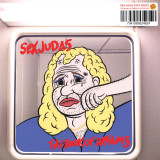
On their third album, Sex Judas feat. Ricky portrays a break-up of astronomical proportions. The band's mascots, Sex Judas and Ricky, embodied by artist Sindre Goksøyr, find themselves in the midst of a separation, and their feelings are sprayed all over the big screen.
But what is actually going on? Sex Judas feat. Ricky consists of the musicians Tore Gjedrem (Ost & Kjex), Sidiki Camara, Ivar Winther, Tracee Meyn, Tore Brevik, Kristian Edvardsen and Linn Nystadnes, a stellar team part of Oslo's musical underground. Together, they play a mixture of funk, disco, post-punk, traditional music from Mali and electronica that always moves the dance floor, with two previous critically acclaimed albums on the Scottish Optimo Music and a Norwegian Grammy to show.
Sex Judas’ third album, ‘The Book Of Dreams / After Sex’, is a double disc and a two-part musical affair. In the first part, Sex Judas' version of the breakup is depicted in a band format, with music inspired by the alternative 80s. Think Grace Jones, Tom Tom Club, DAF, No Wave, and the Compass Point Studio backing band in a blissful cocktail.
In part two, depicting Ricky’s breakdown, the band has created their most experimental music to date in close collaboration with contemporary composer Ole-Henrik Moe. The songs influenced by Ole-Henrik's tones are fluid and beautifully ambient, with inspiration ranging from 30s and 40s film music, Norwegian folk, contemporary electronica and IDM topped with Moe’s modern string arrangements.” - Snick Snack Music
- A1: Cangilón
- A2: Piedras
- A3: Aquí
- A4: Agua Pa Fantasmas
- B1: Rio De Las Tumbas
- B2: Viento
- B3: Mi Viejita
- B4: No Hope
- C1: Radio Chomio (Con Eli Wewentxu)
- C2: Rio Radio Correspondencia Anfibia
- C3: 3Eee
- C4: F Collect
- C5: Even Heaven Is Uneven
- C6: El Azar
- D1: I, You
- D2: Heterodina
- D3: Sin Conexión
- D4: Sss1
- D5: Sss2
- D6: Sss3
he initial seed for this project was planted in 2020 when Nicolás Jaar wrote the song “Piedras” for a concert at the Museum of Memory & Human Rights in Santiago, Chile, which commemorates the victims of human rights violations during the military dictatorship led by Augusto Pinochet between 1973 and 1990. Between 2022-2023 it took on a new form as a radio play entitled 'Archivos de Radio Piedras', which was shared on a dedicated Telegram channel. In 2024, the play was converted into a 24 channel installation at the University Museum of Mexico City (MUAC), where it was exhibited for 5 months.
Piedras 1 and 2 is a collection of the tracks featured within the play, all new music by Jaar, but partly presented within the play as the music of Salinas Hasbún (the name a composite homage to Jaar's grandmothers, Graciela Salinas and Miriam Hasbún).
The play follows two friends mourning the disappearance of Salinas Hasbún, a musician and writer who vanished in the early 2020s. Although they live in a future where technology is advanced, they
resort to DIY radio methods because the anonymous group “Las 0cho” has launched a worldwide attack on undersea internet cables, causing a global internet blackout.
The play's central theme revolves around the idea that truths, memories and identities speak from the cracks (“rasgaduras”), or the "in-between" spaces ("en el entre"). This concept is supported by the
way much of the narration unfolds - in the liminal spaces between radio frequencies. The instability and transitory nature of a constantly shifting radio dial becomes not just a metaphor but the structure of the play itself. It’s in these moments of noise, static and interference that the deeper revelations of the story emerge. This disjointed, ever-changing medium mirrors the way memory and trauma operate within the play - non-linear, slipping through the gaps, found in fragments or ordinary moments, rather than direct transmissions of “official” historical accounts.
This notion reaches its climax at the end of the narrative, when a text is discovered in which Salinas speaks of finding a new number in a small pond in a cave mentioned in the first episodes of the radio play. This pond, inside the “cochlea of the world”, is seen as a way to introduce real-life randomness to computation. Embodied in the salt lakes of northern Chile, home to the world’s oldest bacteria, this randomness disrupts the rigid order of binary code, paving the way for a transformation of digital life.
First solo release by Nicolás Jaar since 2020’s Telas and Cenizas.
Artwork by Taychin Dunnvatanachit.
Siamese Twins embarks on its 10th release milestone with the acclaimed Thai performance artist Tul Waitoonkiat. In หนึ่งคำถาม (One Question), Waitoonkiat's poetry is conjoined into a versatile sonic meeting of minds, created in collaboration with producers Black Merlin, Sapphire Slows, and Sleep D. Aligning seamlessly with Siamese Twins' trademark ethos of cultural reflection and interdisciplinary exploration.
Waitoonkiat, known for his socio-political work "2553," which reflects on the 2010 military crackdown in Thailand, has presented his novel "Silence is Violence" through multidisciplinary art exhibitions across Bangkok. One of these collaborations with Siamese Twins’ Khun Fluff in 2022 established a profound connection and laid this release's foundational recording layer. The recorded poem explores existential themes, pondering the endless cycle of questioning and the dichotomy between silence and imagination, darkness and light, with its contemplative imagination setting the stage.
The A-side unveils George Thompson's universe, known in the terrestrial realm as Black Merlin, with two noirish cinematic explorations that compose Waitoonkiat’s trademark expressive and enigmatic voice into the release's fabric. Showcasing Thompson’s ability to create hypnotic, depth-charged soundscapes that captivatingly feed into a broader story rather than claiming center stage.
The B-side begins with a delicate approach to sound design, crafted through the Buchla synthesizer by Japanese modular artist Sapphire Slows. The charm of this version lies within the sustained notes that gently inhale and exhale between enigmatic vocoder effects and layers of beauty, nature, and technology.
B2 closes with a seven-and-a-half-minute peak timer revolving around a pulsating bassline and driving force of drum energy. One craving for packed warehouses and bush raves by the Australian wizards of OZ and Butter Sessions label owners, Sleep D, aka Corey Kikos and Maryos Syawish.
Season 2 formed in late 2024, bringing together seasoned Melbourne musicians with previous and current projects including Parsnip, The Stroppies and Phil and the Tiles. The five piece, comprising Carolyn Hawkins, Claudia Serfaty, Charlotte Zarb, Freya McLeod and Matt Powell, quickly set to work writing winsome, DIY, shimmer-pop hits that careen through your mind in a gratifying dizzy rush.
With a clear collective vision and little time to waste, Season 2 spent 2025 writing and recording, appearing live only a handful of times. Finally, this April, the band are primed for their debut release, a full-length album entitled 'Power of Now'. ‘Power of Now ‘is a cerebral explosion of melody, hooks, drones and rhythm. In the vein of The Feelies, The Vaselines and The Clean, Season 2 have whipped up a sonic whirlwind. It's a giddy thrill of snappy slap, catchy gang vocals and crystalline guitar refrains.
'Abundance of Power' is a bittersweet bop of ponderous bass, crisp chord flashes and grounded vocals that dwell on slighted futures and bored realities. 'Becomes a Dream' is a delirious race of scrappy strumming and flying phrases that unsettle as much as they pinball endorphins - "pour the ink into the sand, watch the dog it bites the hand". "Tell me something, elbows on the table, I'll tell you nothing, leave you tugging at the cable" they sing on the peppy future single 'Tugging at the Cable', capturing a certain innocent, wide-eyed expressiveness. Season 2 do sparky well, their songs are instant rewards, tunnelling into your subconscious and testing the dance floor. They keep everything moving, the beat and the conversation. Season 2 sound barely controlled and all the better for it, you have no choice but to be swept up.
'Power of Now' was recorded by Alex Macfarlane (The Green Child, Chateau) and mastered by Mikey Young. It will be released digitally and on LP (black vinyl) on April 24th, internationally via Upset The Rhythm and locally in Australia by Spoilsport Records.
- 1: After Hours
- 2: Wasting Time
- 3: First Love (Never Dies)
- 4: Photograph
MOVIE MOVIE is based out of NYC and features members of the bands TWIN GUNS, THE ELECTRIC MESS, and THE ABOVE. The band combine elements of power pop, '60s, '70s and '80s garage, classic, alternative and glam rock, but they have a sound all their own, with a focus on strong hooks and melodic vocals. "After Hours" is a 1980s New Wave comedy about a party girl on the downtown scene whose claim to fame is a bit part in a popular movie, where she uttered the immortal line, "Won't you look at the time," but she wouldn't give you the time. "Wasting Time" is an existential road picture in the mind of the protagonist, set across heartland America and a sunny beach in the Caribbean, but in reality he never leaves the girl, or town, and in the end ponders his wasted years. "First Love (Never Dies)" is a romantic drama that spans decades, about an aging rocker who reflects on his first teenage love, a girl he has never stopped thinking about. He tries to track her down and reconnect after all these years, only to find she is now married to his old childhood rival.
"Photograph" is a future arthouse hit, shot in stark black white, about the disintegration of a relationship seen from two different perspectives, captured in an old photograph, in which the truth is revealed in the looks on their faces. "Coming Attractions" is MOVIE MOVIE's second EP, after their debut six track EP, "Now Playing" (2022), on Ghost Highway/ KOTJ Records, and they have two full LPs, "Storyboards" (2023), and "In 4-D!" (2024), both Topsy-Turvy Records.
- A1: From Darkness 01 18
- A2: Disappearance 04 34
- A3: Past Into Presence 02 32
- A4: Search Party 02 58
- A5: Forest Manipulations 03 22
- A6: Miscarriage 01 17
- A7: Who’s There? 00 59
- A8: The Pond 02 02
- A9: Mindfuck 01 20
- A10: I'll Take Noah 00 55
- A11: Wall Paintings 02 45
- B1: Death And Confusion 04 23
- B2: Visions 01 20
- B3: The House 03 55
- B4: What Have You Become? 01 41
- B5: Alone In The Dark 01 50
- B6: Ritual 02 07
- B7: Theo 02 29
- B8: Reunification 03 58
- B9: Open Eyes 02 25
- B10: Past Darkness 04 11
Erik K Skodvin summons his alter ego Svarte Greiner for a dive into the dark, wintery Swedish forest with the score to the psychological thriller/horror film “From Darkness” (orig: Ur Mörkret).
The film is director Philip W. Da Silva's debut and is set largely at night, deep in a Swedish nature reserve where mining used to take place. Loss, mental health and Nordic mythology come together in a story that revolves around the search for a missing woman. The score follows an eclectic and atmospherical path throughout the narrative with an uneasy underlaying vibe; although one with occasional points of refuge in the otherwise vast darkness. There is a gloomy, barely tangible sound of Nordic folk tradition buried in the music, even if it comes across in a different, more abstract way, where the various instruments are often used more as sound sources that are improvised (and abused) into becoming their own element. Skodvin performed and recorded the majority himself. In addition, he commissioned free improviser Axel Dörner to participate with his unique, custom-built electro-acoustic interface, which, along with Claudio Puntin's processed reeds and additional electronics, has been built into the elaborate backdrops to create an entire world that balances on the border between the approachable and the elusive - not unlike the journey of the protagonists. Skodvin's partner in Deaf Center, Otto A Totland, appears on piano in the stand out piece “What have you become?”.
The result is a harrowing yet deeply melancholic journey through the human psyche. One that echoes through the dark forests, cabins and lost mines of the desolate Swedish woodlands.
“It is presumed that as humans mined ore in the 1800s, they had many mishaps and dug too deep, leading them to assume they had unleashed some evil spirit that was guarding the ore. She was referred to as "Cave Wraith". It was said that she employed darkness to lure miners to their deaths. They prohibited villagers from visiting during the darkest months of the year. Some used sacrifices to subdue the evil entity.”
The vinyl is released in an edition of 150 numbered copies, with screenprinted artwork on black cardboard inside a screenprinted PVC sleeve, incl. Riso-printed insert with liner notes by Mike Lazarev, 180g vinyl.
Limited 180g black vinyl (500 copies worldwide)
“Marcel Wave combine sharp-eyed Northern lyricism with DIY guitar-janglers rooted in a retro C86 aesthetic. Epic finale ‘Linoleum Floor’...is a gloriously bleak rumination on the horrors of enforced late-night hedonism worthy of prime Pulp” UNCUT
Marcel Wave write eulogies for tragic actresses, ancient riverbeds and concrete obscenity. Their inaugural sonic instalment ‘Something Looming’ is part trades club symphony, part itchy serenade, and part wistful lament. As their heady concoction of ‘Meades meets Pat-E-Smith meets Kirklees Borough Council’ gets prepped to be formally baptised on a dank stage near you, Upset the Rhythm and Feel It Records have dutifully stepped in to deliver its songbook to the masses on both sides of the pond.
Formed when Lindsay Corstorphine and Christopher Murphy of Sauna Youth and brethren Oliver and Patrick Fisher of Cold Pumas were summoned by northern ink-slinger Maike Hale-Jones, Marcel Wave’s debut offering is a walk through a smoke-filled pub with yellowing wallpaper and all eyes on you. It’s a chronicle of the death of the docklands, the decline of industry, of the high street, of civic pride, of civilisations, of hopes and dreams. As Hale-Jones delivers the bad news in her low, West Yorkshire brogue, Corstorphine adds the bells and whistles via the frantic pulsations of a wheezing Hohner organ in tandem with Fisher O’s rasping guitar. MW are completed by the throbbing basslines of Murphy and Fisher P’s fervent rhythms.
The title itself sets the tone for the listener. There’s a sense of foreboding in Hale-Jones’ lyrics which sit at the quintet’s core—elegiac, sardonic and piquant in equal measure. A mixture of narrative epilogues and inward paeans, her words weave tales across a broad thematic church. Crooked tales of urban renewal and the voices left behind are probed in ‘Barrow Boys’ and ‘Stop/Continue’ and are at the fore in ‘Where There’s Muck There’s Brass’ with its refrain lamenting ‘Concrete and slate shine in the rain, cities destroyed, nothing to gain’. In these lyrics, tower blocks loom over terraced houses with the same shadows that the Hollywood sign casts over Peg Entwistle before she takes her tragic leap. ‘Peg’ and ‘Elsie’ are both meditations on two different actresses with different fates crushed by the cut-throat trappings of showbusiness: ‘The mad hopes break, fragile as glass. She traded it all, for the cutting room floor.’ A snaking, existential dread also runs through the album, stated more obliquely in the otherwise poppier interludes of the title track ‘Something Looming’ and album opener ‘Bent Out of Shape’, and present too on the comparatively ramshackle ‘Discount Centre’, where Hale-Jones reports ‘On a mini bus on the outskirts of Enfield, I’m losing all of my spark’. On the album closing weeper ‘Linoleum Floor’, it is laid barer still—a keyboard-led reflection on the deflating nights out of our early-twenties.
Marcel Wave invites the listener to dance to society’s decline, and then to later weep into its lukewarm pint.
- Purple
- Green
- Blue
- Orange
- Red
Long overdue repress of 'Acid Guru Pond', the incredible collaboration between Bardo Pond, Japanese psych-experimentalists Acid Mother's Temple and cosmic kosmische legends Guru Guru. The fruits of an incredible collaboration, Acid Mothers Temple wrap their psych rock wizardry and cosmic space noise around Isobel Sollenberger's ethereal vocals and majestic flute playing, the collective brings out the best in one another, feasting on innovation and distortion while not losing the swirling lock groove. Classic rock riffs merge and morph into the surrounding world music influences to cook up an enchanting and meditative brew. The naming of each song after a colour only further reinforces the vibe heavy proceedings. Classic black vinyl
- Say It Loud I'm Black And Proud
- Summertime
- Caravan
- Snake Bone
- Brother Soul
When saxophonist Lou Donaldson hooked up with the funky drummer Idris Muhammad on Alligator Bogaloo it began a run of great groove-oriented albums including Say It Loud with trumpeter Blue Mitchell, organist Charles Earland, and guitarist Jimmy Ponder for a deeply soulful set opening with a cover of James Brown’s ‘Say It Loud (I’m Black and I’m Proud)’. This Blue Note Classic Vinyl Edition is stereo, all-analog, mastered by Kevin Gray from the original master tapes, and pressed on 180g vinyl at Optimal.
- La La La
- Cruz
- Lost Angel
- Taquero
- Dream Suite
- The Mystery Of Miss Mari Jane
- Cha Cha Cha
- Sea Changes
- Cinema Lover
- Die Again, Yesterday
- Hollywood Ten
As Jess Sylvester finished his Hardly Art debut as Marinero in the fall of 2020, he realized it was time for a change. Sylvester grew up in Marin County, on the doorstep of San Francisco. It was a nurturing community for a high-school punk with a pompadour and, later, for a sober songwriter with a proclivity for moody psychedelia. But he wanted to be challenged and inspired by a new setting and scenario around strangers who prompted him to approach his music in unexpected ways. So in September 2020, as the world continued to reel in lockdown, Sylvester headed several hours south to Los Angeles, a city that, despite the relative proximity, the film buff knew largely from classic and cult films situated there. When he arrived, he kept digging into that cinematic past-Robert Altman's The Long Goodbye, with John Williams' classic theme, or classic 90s movies about East LA, many featuring Edward James Olmos. They shaped his understanding of his new town just as it began to open. This is one pillar of the multivalent and endlessly lush La La La, Marinero's new album about sobriety, identity, and fantasy that is playfully named both for the city that helped shape it and the sophisticated pop it contains. Sylvester wrote about characters outside of himself, whether considering the heroine reckoning with her own version of keeping clean or the screenwriters whose work was deemed communist simply as a political convenience. He linked those songs with motivational anthems about self-acceptance and playful numbers about flirting through food, shaping a 12-song set rich with humor, empathy, and encouragement. Sure, La La La is a continuation of the slippery genre play Sylvester started with 2021's Hella Love, 2019's Trópico de Cáncer, or even before that. But it also feels like a fresh beginning for Marinero, as Sylvester realizes how boundless this project can be. He began to think about the music of his childhood, how his mother is from San Francisco with Mexican roots, and how he'd heard so much salsa growing up as an impetuous teenager. So he wrote "Taquero," a red-hot salsa tune that uses tacos and their trappings as a source of endless metaphors for come-ons. And then there was the Ray Barreto or Santana-inspired "Pocha Pachanga," with organ gliding and percussion pulsing beneath his yearning vocals, warped as if by desert winds. In Los Angeles, he found a wealth of players who spoke this music like language itself (including Chicano Batman's Eduardo Arenas), all ready to play with and push these familiar forms. Sylvester has also been sober for 21 years, since a cross-country sojourn to attend college in Boston ended in a chemical haze. Today, he sees friends facing the same decisions he made two decades ago, and he brings bits of that experience to bear in songs that feel like self-help anthems. Recorded with a musical hero (and labelmate) of his, Chris Cohen, "Sea Changes" feels like sunshine breaking through dark clouds, as Sylvester acknowledges the newfound confidence and clarity in a friend who has stepped away from destructive habits. In the past, Sylvester has been intractably linked to his identity as a Mexican-American, born to parents from Mexico and Irish- American descent who settled in San Francisco. That can be limiting, of course, tying him to notions of sound and style that aren't always correct. On La La La, he simultaneously steps into and out of those preconceptions, singing tracks above salsa in joyous Spanish or pondering the dynamics of the Hollywood Ten and blacklists above mysterious lap steel and teasing trumpet. His identity, then, should now be clear: He is a Californian, making music shaped by the diversity of encounters and experiences that are a central part of that state's fabric. Never before has he presented himself so fully and unabashedly on tape as with La La La, an album Sylvester built with new inspirations to deliver new charms.
- A1: Intro Patricia Lynn
- A2: Been Such A Long Time (With Mascolo)
- A3: Is This Love (With Danielle Ponder)
- A4: Feel (With Jacob Banks)
- B1: Until There's Nothing Left (With Alabama Shakes)
- B2: Interlude Suse Millemann
- B3: Bittersweet (With Portugal. The Man)
- B4: So Nice To Be In Love (With Mascolo)
- C1: Love Come Through (With Panama)
- C2: Succession
- C3: Really Good (With Reva Devito)
- C4: Interlude Dad To Daughter; We Say Yes (With Dad And Yona Gold)
- D1: Two Days Older (With Madelyn Rue)
- D2: Interlude Carolyn Horn
- D3: Carolyn
- D4: Outro Mama, Mama, Many Worlds I’ve Gone Since I First Left Home (With Holly Bowling)
Leah Chisholm, die als LP Giobbi bekannte Künstlerin, ist eine der interessantesten und wichtigsten Produzenten und DJs der Welt. Sie ist eine im Jazz ausgebildete Pianistin, die sich von der Welt der Jazzmusik inspirieren lässt und es vorzieht, die oft komplizierten und vorprogrammierten Strukturen der elektronischen Musik zugunsten einer spontanen Live-Zusammenarbeit zu vermeiden. Heute kündigt sie ihr zweites Album Dotr an, das am 18. Oktober auf dem Ninja Tune Imprint Counter Records erscheinen wird.
Dotr ist der mit Spannung erwartete Nachfolger von Light Places, dem Album, das ihr den Titel DJ Mag's Best Producer of 2023 einbrachte und sie unter NPR's Favorite New Musicians of 2023, Spotify RADAR's Artists to Watch, Amazon's Artists to Watch und TIDAL's Artists to Watch 2023 platzierte. Mit 3 Millionen monatlichen Hörern auf Spotify und mehr als 340 Millionen Streams auf allen Plattformen hat LP Giobbi große Festivalbühnen geziert - Coachella, Tomorrowland, Electric Forest, Lollapalooza, sowie Auftritte bei Kappa Futur, Arc Music Festival, Lost Village und Portola, die für dieses Jahr geplant sind - und überfüllte Clubfloors, während sie mit Künstlern wie Mochakk, DJ Tennis, John Summit, Diplo, Dead & Co, Black Coffee und ihrem häufigen Kollaborateur Sofi Tukker tourte. In Dotr sind für LP Giobbi echte, unverfälschte Erinnerungen eingestreut: eine letzte Geburtstags-Voicemail von Patricia Lynn und die Aufnahme eines ihrer letzten Gespräche mit Carolyn Horn. Doch obwohl das Album aus der Trauer geboren wurde, ist es im Großen und Ganzen ein fröhliches Projekt, das die Traurigkeit durch die überschwängliche Offenbarung dessen, was es bedeutet zu leben, überwindet. "Is This Love" ist eine wunderbare Kino-Disco, Carolyn" fühlt sich an wie eine Ode an die Chancen, die man einfach so ergreift. Es gibt Lieder über Liebe und Versöhnung, Hymnen über Trauer und Glauben und Hymnen über Angst und Ekstase - keine Emotion ist vollständig ohne ihr gleichwertiges Gegenteil.
"This is the time that we, who have benefitted from the Last Poets shouldbe able to say, 'it's the Last Poets. It's them we should be honouring, because we did not honour them for so many years_"
KRS One wasn't just addressing the hip hop fraternity when he uttered
those words by way of introducing the video for Invocation - a poem
written thirty years ago, around the time of the Last Poets' last significant comeback. He was speaking to everyone who's been affected by the word, sound and power issuing from the most revolutionary poetry ever witnessed, and that the Last Poets had introduced to the world outside of Harlem at the dawn of the seventies.
In 2018 the two remaining Last Poets, Abiodun Oyewole and Umar Bin
Hassan, embarked on another memorable return with an album -
Understand What Black Is - that earned favourable comparison with theirseminal works of the past, whilst showcasing their undimmed passion andlyrical brilliance in an entirely new setting - that of reggae music. Trackslike Rain Of Terror ("America is a terrorist") and How Many Bullets demonstrated that they'd lost none of their fire or anger, and their essential raison d'etre remained the same.
"The Last Poets' mission was to pull the people out of the rubble o f their lives," wrote their biographer Kim Green. "They knew, deep down that poetry could save the people - that if black people could see and hear themselves and their struggles through the spoken word, they would be moved to change."
Several years later and the follow-up is now with us. The project started when Tony Allen, the Nigerian master drummer whose unique polyrhythms had driven much of Fela Kuti's best work, dropped by Prince Fatty's Brighton studio and laid down a selection of drum patterns to die for. That was back in 2019, but then the pandemic struck. Once it had passed, the label booked a studio in Brooklyn, where the two Poets voiced four tracks apiece and breathed fresh energy, fire and outrage into some of the most enduring landmarks of their career. Abiodun, who was one of the original Last Poets who'd gathered in East Harlem's Mount Morris Park to celebrate Malcolm X's birthday in May 1968, chose four poems that first appeared on the group's 1970 debut album, called simply The Last Poets. He'd written When The Revolution Comes aged twenty, whilst living in Jamaica, Queens. "We were getting ready for a revolution," he told Green. "There wasn't any question about whether there was going to be one or not. The truth was many of us still saw ourselves as "niggers" and slaves. This was a mindset that had to change if there was ever to be Black Power." He and writer Amiri Baraka were deep in conversation one day when Baraka became distracted by a pretty girl walking by. "You're a gash man," Abiodun told him. The poem inspired by that incident, Gash Man, is revisited on the new album, and exposes the heartless nature of sexual acts shorn of intimacy or affection. "Instead of the vagina being the entrance to heaven," he says, "it too often becomes a gash, an injury, a wound_" Two Little Boys meanwhile, was inspired after seeing two young boys aged around 11 or 12 "stuffing chicken and cornbread down their tasteless mouths, trying to revive shrinking lungs and a wasted mind." They'd walked into Sylvia's soul food restaurant in Harlem, ordered big meals, then bolted them down and run out the door. No one chased after them, knowing that they probably hadn't eaten in days. Fifty years later and children are still going hungry in major cities across America and elsewhere. Abiodun's poem hasn't lost any relevance at all, and neither has New York, New York, The Big Apple. "Although this was written in 1968, New York hasn't changed a bit," he admits, except "today, people just mistake her sickness for fashion." Umar is originally from Akron, Ohio, but had arrived in Harlem in early 1969 after seeing Abiodun and the other Last Poets at a Black Arts Festival in Cleveland. That's where he first witnessed what Amiri Baraka once called "the rhythmic animation of word, poem, image as word- music" - a creative force that redefined the concept of performance poetry and stripped it bare until it became a howl of rage, hurt and anger, saved from destruction by mockery and love for humanity. When Umar's father, who was a musician, was jailed for armed robbery he took to the streets from an early age where he shined shoes and raised whatever money he could to help feed his eight brothers and sisters. By the time he saw the Last Poets he'd joined the Black United Front and was ready to join the struggle. Once in Harlem, Abiodun asked him what he'd learnt in the few weeks since he'd got there. "Niggers are scared of revolution," Umar replied. "Write it down" urged Abiodun. That poem still gives off searing heat more than fifty years later. In Umar's own words, "it became a prayer, a call to arms, a spiritual pond to bathe and cleanse in because niggers are not just vile and disgusting and shiftless. Niggers are human beings lost in someone else's system of values and morals." And there you have it. It's not just race or religion that hold us back, but an economic system that keeps millions in poverty and living in fear - a system born from political choice and that's now become so entrenched, so bloated on its own success that it's put mankind in mortal danger. It was many black people's acceptance of the status quo that inspired Just Because, which like Niggers Are Scared Of Revolution, was included on that seminal first album. Along with their revolutionary rhetoric, it was the Last Poets' use of the "n word" that proved so shocking, but it would be wrong to suggest that they reclaimed it, since it never belonged to black people in the first place. There's never any hiding place when it comes to the Last Poets. They use words like weapons, and that force all who listen to decide who they are and where they stand. Umar's two remaining tracks find him revisiting poems first unleashed on the Poets' second album This Is Madness! Abiodun had left for North Carolina by then where he became more deeply enmeshed in revolutionary activities and spent almost four years in jail for armed robbery after attempting to seize funds related to the Klu Klux Klan. Meanwhile, the 21 year old Umar was squatting in Brooklyn and had developed close ties with the Dar-ul Islam Movement. A longing for purity and time-honoured spiritual values underpins Related to What, whilst This Is Madness is a call for freedom "by any means necessary," and that paints a feverish landscape peopled by prominent black leaders but that quickly descends into chaos. "All my dreams have been turned into psychedelic nightmares," he wails, over a groove now powered by Tony Allen's ferocious drumming. Those sessions lasted just two days, and we can only imagine the atmosphere in that room as the hip hop godfathers exchanged the conga drums of Harlem for the explosive sounds of authentic Afrobeat. Once they'd finished, the recordings and momentum returned to Prince Fatty's studio, since relocated from Brighton to SE London. This was stage three of the project, and who better to fill out the rhythm tracks than two key musicians from Seun Anikulapo Kuti's band Egypt 80? Enter guitarist Akinola Adio Oyebola and bassist Kunle Justice, who upon hearing Allen's trademark grooves exclaimed, "oh, the Father_ we are home!" Such joy and enthusiasm resulted in the perfect fusion of Nigerian Afrobeat and revolutionary poetry, but the vision for the album wasn't yet complete. He wanted to create a new kind of soundscape - one that reunited the Poets with the progressive jazz movement they'd once shared with musicians like Sun Ra and Pharoah Sanders. It was at that point they recruited exciting jazz talents based in the UK like Joe Armon Jones from Mercury Prize winners Ezra Collective, also widely acclaimed producer/remixer and keyboard player Kaidi Tatham, who's been likened to Herbie Hancock, and British jazz legend Courtney Pine, whose genius on the saxophone and influence on the UK's now vibrant jazz scene is beyond question. The instrumental tracks on Africanism are in many ways as revelatory and exciting as the Last Poets' own. It's important to remember that the kaleidoscope of styles and influences we're presented with here aren't the result of sampling but were played "live" by musicians responding to sounds made by other musicians. That's where the magic comes from, aided by Prince Fatty's peerless mixing which allows us to hear everything with such clarity. Music fans today have grown accustomed to listening to all kinds of different genres. Their tastes have never been so broad or all- encompassing, and so the music on this new Last Poets' album is as groundbreaking as their lyrics, and perfectly suited to the era that we're now living in. John Masouri
- A1: In My Heart (Feat Gregory Porter - Resound Nyc Version)
- A2: Extreme Ways (Feat The Temper Trap - Resound Nyc Version)
- A3: South Side (Feat Ricky Wilson - Resound Nyc Version)
- A4: Flower (Find My Baby) (Find My Baby)
- B1: In This World (Feat Nicole Scherzinger, Marisha Wallace - Resound Nyc Version)
- B2: Helpless (Feat Margo Timmins, Damien Jurado - Resound Nyc Version)
- B3: Signs Of Love (Resound Nyc Version)
- B4: The Perfect Life (Feat Ricky Wilson - Resound Nyc Version)
- C1: When It's Cold I'd Like To Die (Feat Pt Banks - Resound Nyc Version)
- C2: Slipping Away (Resound Nyc Version)
- C3: Second Cool Hive (Feat Oum, Sarah Willis - Resound Nyc Version)
- C4: Hyenas (Resound Nyc Version)
- D1: Last Night (Resound Nyc Version)
- D2: Run On (Feat Danielle Ponder, Elijah Ponder - Resound Nyc Version)
- D3: Walk With Me (Feat Lady Blackbird - Resound Nyc Version)
RESOUND NYC - Das neue Album von MOBY! Nach seinem gefeierten Album ”Reprise” (Mai 2021), auf dem unter anderem Kris Kristofferson, Mark Lanegan, Jim James und Skylar Grey zu hören waren, hat Moby nun 15 seiner legendärsten New Yorker Tracks aus den Jahren 1994 bis 2010 neu interpretiert und instrumentiert. Mobys 20. Studioalbum ist nicht nur eine Reflexion über die vielleicht entscheidendste Zeit in seinem Leben, sondern auch über sein einstiges Zuhause, New York City. Dort wurde er geboren, dort nahm seine Karriere ihren Anfang – im Punkrock und als DJ in Underground-Clubs.
»Bevor ich Punkrock für mich entdeckte, war ich im Classic Rock zu Hause«, sagt Moby. »Mein erstes Konzert war 1978 Yes im Madison Square Garden. Es war also mehr als verlockend, sich noch einmal mit meinen Liedern auseinanderzusetzen und zu gucken, ob sie einer traditionelleren, nicht-elektronischen, orchestralen Bearbeitung standhalten.« Begleitet wird Moby auf diesem Album von großartigen Künstlern wie Nicole Scherzinger, Gregory Porter, Ricky Wilson und Amythyst Kiah.
Coming out on September 6th on Sharptone Records, Sundiver is Boston Manor’s fifth album and one that represents a glimmering dawn for the Blackpool five-piece. Grown from a seedbed of optimism and sobriety, the LP celebrates new beginnings, second chances and rebirth. With two members recently stepping into fatherhood, hope is baked into every note. “Datura came out of these really dark few years over the hangover of the pandemic,” Henry reflects. “I'd been struggling a lot with drinking and not taking care of myself and bad mental health and stuff. We wanted Sundiver to be the next morning of the following day.” He explains that it feels good this time round to write through the lens of positivity. “The themes began to emerge, of rebirth, spring, dawn, sunshine and then other elements just started to fit into that.” It was during the making of Sundiver that Henry found out he was going to be a dad. This album is a significant one for the band. Originally coming out of the emo and pop punk scene, they’ve explored sonics and genres throughout their career, taken risks and achieved more than they could ever had dreamed of. They’ve grown up as Boston Manor – their lives and the world changing around them. They’re now taking stock, at a crossroads of the band they were and the band they could be.
While writing the album, they revisited the bands that shaped them in the late 90s and early 00s. “I was listening to the music I loved when I was a teenager and I just thought, why don't we make music like our favourite bands?”, guitarist Mike Cuniff remembers with a smile. “So we brought our interests to the table that way. Y2K kind of vibe. There are elements of Deftones, there are elements of Portishead in there, some Garbage, The Cardigans.” He laughs and adds NSYNC to the list of inspirations. From this cocktail of classics comes a dynamic and ambitious record, rich with depth, groove and more hooks than Peter Pan’s nightmares. Lyrics that foxtrot from parallel universes to personal growth, vivid dreamscapes to raw grief. Individually they’re single strokes full of meaning and magic. Together they’re a landscape.
Container (out Feb 15th) is the first single and it’s them at their best – impassioned and infectious. “This song is about the stagnancy of life creeping up on you & how that can bring about change.,” Henry explains, citing Ocean Song by US band Daughters as an inspiration.
The concept of the butterfly effect is present on Sundiver – how small actions can lead to big changes. This is no clearer than on their second single, Sliding Doors (out April 5th). It has the golden sound of late 90s Lollapalooza rock – think Smashing Pumpkins - rebooted with crisp 2024 production and a potent heaviness. In the lyrics Henry wonders, what if?, pondering on what could be. The idea that there are infinite versions of you whose lives splinter off in different directions at every decision you make. That there’s another you out there somewhere right now reading this sentence, and another me writing it. “So much is down to chance and circumstance,” Henry says. “You might catch that train and your life totally changes. Or you might miss it and things stay the way they are.”
Heat Me Up (out May 30th) is defiant and victorious, the audio equivalent of quitting your shit job and driving into the hot summer sun with a head full of dreams. “The lyrics are about love and gratitude,” Henry shares. “Another theme on the record is just appreciating what you have. It’s about not taking for granted the things that you've been afforded.”
There was some natural magic in the creation of Sundiver. They worked with their usual producer, Larry Hibbitt, and engineer, Alex O’Donovan, but instead of recording in London again they ended up in the green pastures of Welwyn Garden City. “Because Larry lives out in the countryside now, it was a way different environment and way different experience recording this time,” Mike remembers. “That contributed a lot to the brighter sound of the record.” The daily barbecues they had during their recording sessions imbued the process with harmony – five old friends spending quality time together and making quality music.
However, the album is by no means one-note. Birthing this new world they’ve created wasn’t without it’s pain, and that can be heard in the heavier moments on Sundiver. What Is Taken Will Never Be Lost is the most-stripped back on the album, a slow rock number seasoned with the downtempo Portishead influence. The heartfelt lyrics are Henry’s way of processing the loss of his grandfather, who died in a hospice last year(?). “It was just fucking horrible. It was always cold when I went there and they were always trying to get rid of me. The song title, What Was Taken Can Ever Be Lost, is the idea of his memory fading at the time because of dementia.” Henry goes onto explain that shoeboxes of photographs, diaries and a legacy is what he’s left behind. “He lived a really rich life and it has really impacted me and my father. His legacy is etched into the fabric of history in a very small way.” This song continues the connection between his grandfather and the band, as his painted face is emblazoned on the cover of the very first Boston Manor EP, Driftwood. As well as emotionally heavy themes, there’s heaviness in the music of Sundiver too. The closing song, Oil In My Blood, descends into an intense shoegaze outro with Debbie Gough from Heriot screaming hellfire. It’s in moments like this that the band show us aggression and fury can be as much a part of positive change as quiet introspection. The last lyrics of the song, “It resets and starts again,” leaves us in contemplation as the final chord rings out.
Touring the US, Europe and Japan over the years makes for an impressive CV, but if you know anything about Boston Manor you’ll know that they’re all about their hometown. Their choice to work with Blackpool-based photographer Nick Barkworth is testament to that. They’ve been working with him since the pandemic. “He captures Blackpool in a light that really reflects the weirdness and quirkiness of the town,” Henry says.” He's got a really good way of presenting that.” For the Sundiver cover, Nick photographed a 30ft tall abstract glass sculpture made by the local artist John Ditchfield. A striking and bewitching monolith that’s familiar to them but unusual to most people. “It has such kind of a gravity and power to it,” Henry describes the sculpture which stands in a field just outside of the seaside town. “It reminds me of either an explosion or a star or a supernova. To me it represents new life, power and radiance.” Boston Manor have got a knack for that - connecting the otherworldly and the everyday, the stars and the streets.
They’re a band known for using their music to make bigger statements about society. This time round they’re harnessing the uplifting power of music, and the communion it creates, as an antidote to the daily doom and isolation. “It seems like absolute chaos out there at the moment,” Henry says. “You’ve got Gaza and Israel, you've got Russia, you've got the fact that 40% of the world is going to have an election this year and increasingly most governments are leaning very far to the Right. The internet is dividing everybody, people are getting poorer and more desperate. It's really, really scary.” They considered trying to tackle the weight of it all in their music. “We could’ve written Welcome to the Neighbourhood on steroids, where it's just absolute darkness and misery”. He’s referring to their 2018 concept album that deals with class, inequality and the bleaker side of Blackpool. “But I think it's really important to write something that people can be immersed in and find some sort of solace in. Somewhere they can escape to from the modern day pressures and everything that’s going on. We’re all in this together.”
Qwälen became what it is in 2017. The band members share a passion for playing music in its various raw manifestations and their band backgrounds include Küroishi, Nistikko, Dumathoin and Akma among many others. Punk background bleeds into the music connecting Qwälen's interpretation of black metal into how the genre started decades ago. Simplicity, rawness, speed and honesty. These values were present in the beginning and the same values still hold true. Punk background especially shows live as the chaotic energy of hardcore punk clashes with the ritualistic nature of black metal. Lyrical themes in the first album focused on self-portrayal, dealing with loss, building anew along with finding alternatives in abandonment, misanthropy and Satan. The second album ponders the sheep-like nature of humanity, the inevitability of destruction, the acceptance of being faulted and surrendering to a greater force. Syvä hiljaisuus was recorded at Waiting room recording studio in Tampere with Mikael Neves who has worked with the likes of Death toll 80k and Tryer. Mikael also handled mixing duties. Mastering was done by Will Killingsworth at Dead air studios.
Solid green vinyl. Qwälen became what it is in 2017. The band members share a passion for playing music in its various raw manifestations and their band backgrounds include Küroishi, Nistikko, Dumathoin and Akma among many others. Punk background bleeds into the music connecting Qwälen's interpretation of black metal into how the genre started decades ago. Simplicity, rawness, speed and honesty. These values were present in the beginning and the same values still hold true. Punk background especially shows live as the chaotic energy of hardcore punk clashes with the ritualistic nature of black metal. Lyrical themes in the first album focused on self-portrayal, dealing with loss, building anew along with finding alternatives in abandonment, misanthropy and Satan. The second album ponders the sheep-like nature of humanity, the inevitability of destruction, the acceptance of being faulted and surrendering to a greater force. Syvä hiljaisuus was recorded at Waiting room recording studio in Tampere with Mikael Neves who has worked with the likes of Death toll 80k and Tryer. Mikael also handled mixing duties. Mastering was done by Will Killingsworth at Dead air studios.
U.S. Cinematic outfit Whatitdo Archive Group returns to explore the worlds of Mid-Century Exotica and Library Music with "Palace Of A Thousand Sounds," out on May 5th.
From the instrumental cinematic-soul outfit behind 2021's critically acclaimed The Black Stone Affair comes Whatitdo Archive Group's most recent foray into the realms of the esoteric and arcane, and their most adventurous album to date: Palace Of A Thousand Sounds, available May 5th, 2023 on Record Kicks on limited edition LP, CD and digital platforms.
After The Black Stone Affair enthralled record collectors by traversing the cinematic landscape of an imagined 1970s Spaghetti Western, Palace Of A Thousand Sounds finds Whatitdo Archive Group entrenched deeper in the worlds of mid-century exotica and library music—from the Tropicalia-steeped Amazon to the minor key tonalities of the far-out Near East.
When the dust finally settled from their debut album, composer and tireless sound scientist Alexander Korostinsky set out to discover the band's new direction, with the ultimate goal to breathe new life into the mid-century era sound with the compass of modernity as his guide.
From its conception in 2021, Palace has sought to carry on a legacy set in motion by the likes of Martin Denny, Les Baxter and Juan García Esquivel. Korostinsky, guitarist Mark Sexton, and drummer Aaron Chiazza recorded the album in marathon sessions from Korostinsky's Studio "A," in Reno, Nevada—a mysterious sonic laboratory where the year 1970 has yet to happen, and vintage analog equipment interfaces with modern musical perspectives and experimental recording techniques to produce era-defining sounds.
Not content to appeal to the sensibilities of armchair anthropologists, Palace Of A Thousand Sounds finds the band interrogating the genre itself while making studious tributes to the real places and times it draws from. It's in this tension between here and there, fantasy and reality, that Whatitdo Archive Group find their groove.
Drawing from a century of pop and folk sounds from around the world the way only 21st-century crate-diggers can, Palace is rooted in an undercurrent of heavy funk that is decidedly here and now. Whatitdo Archive Group showcase the breadth of their influences with disarming confidence, equally at home behind sweeping harp, loungey vibraphone or Turkish bağlama saz. A lush seventeen-piece orchestra commanded by award-winning composer Louis King (Janelle Monáe, Monophonics) completes the instrumental mélange, enticing listeners to imagine a borderless planet unified by melody and rhythm.
The album is unafraid to explore the strange and uncomfortable in pursuit of an authentic musical identity, subverting expectations in pursuit of forwarding the genre while paying homage to its past. Fans will appreciate the architectural complexity of the record accessible only through multiple listens—each visit to the palace yielding new details to marvel at, curiosities to ponder, grand mysteries to explore.
Once the needle drops, W.A.G carefully guides you from room to room, sound to sound within the walls of the album's sonic palace. Listening becomes an aural journey providing glimpses into different worlds both real and imagined; you are everywhere and nowhere all at once—a guest in the grand halls and hanging gardens of time and sound.
Steeped in obscurity, a cult following of crate-diggers and musical oddity collectors has been brewing over the mysterious releases of the Whatitdo Archive Group. Surfacing in 2009 from the high deserts of Reno, NV USA, this three-piece recording collective(Alexander Korostinsky, Mark Sexton and Aaron Chiazza) focuses solely on curating, performing and preserving esoteric soundtrack, library and deep-groove collections. As an onlooker, it's hard to tell whether the music they are procuring is actually archival, music of their own creation, or both. Their debut LP The Black Stone Affair, the formerly lost soundtrack music of a once-shelved Italian cinematic masterpiece, was released in 2021 and received praise from the likes of Wall Street Journal, Mojo Magazine, Uncut, Shindig, Blues & Soul Magazine, BBC 6, FIP Radio (FR), KCRW (US), JazzFM (UK) and more. Two years later, the Whatitdo Archive Group is back. Get ready for an exotic adventure with their sophomore full-length effort: Palace of a Thousand Sounds.