Search:black stag

Styles
All
Kohib - Today's Tales Of Tomorrow LP

Beatservice Records are beyond thrilled to announce the arrival of Kohib's hotly anticipated studio album 'Today's Tales Of Tomorrow'.

DJ, producer and club organiser Øivind 'Kohib' Sjøvoll has been in truly dazzling form of late, serving a series of mesmerising singles that served as a tantalising taster to his latest album – the third he's crafted for Beatservice. Actively producing immaculately crafted sounds for over two decades, sonic alchemist Kohib continues his deft aptitude for sculpting genre-defying compositions, with 'Today's Tales Of Tomorrow' playing host to some of his most compelling material to date. From pitch black introspection to rousing dancefloor abandon, the album is every bit as far-reaching as we've come to expect from this singularly talented artist.

The collection bursts into life via the club-focused thrust of 'Golden Skies', featuring the seductive vocals of enigmatic songstress, Lydia Waits, whose stirring performance shines like a beacon as it soars over Kohib's slick four/four groove. Crisp drums drive the hypnotic rhythm over a subaquatic bass line, as icy pads and pitched synth percussion combine to stunning effect, effortlessly building to Waits' rousing chorus section. Subtly shifting the mood, we arrive in the heads-down throb of 'It's Never Late In Neon Signs', where glistening arpeggios and snarling bass caress Lydia Waits' honeyed vocal, the pristine instrumentation undulating over a mesmerising, radio-friendly arrangement.

'Fake Fur' arrives with deliciously brooding intent, with (Kohib's High Heeled Giants bandmate) Helle Larsen's bewitching vocal gliding over immersive instrumentation and otherworldly textures. Evocative harmonics combine with ethereal synth leads and dramatic aural waves, the hypnotic percussion gently driving the groove deep into the half-light of a crisp autumnal haze. Next, 'Hold That Thought' mischievously switches the rhythm, as thick sub bass and searing synth motifs power over broken drums while Helle Larsen's affecting vocal rises from delicate verse into dramatic chorus bursts.

'Sandcastles' once again sees Helle Larsen grace the stage, lacing waves of cinematic pads glide and live bass as scattered percussion forms an alluring rhythm. Sparse and precise, the evolving music ebbs and flows as the tides, gorgeously caressing Larsen's emotion-rich vocal as she weaves her seductive lyrical metaphors. The album's title track 'Today's Tales Of Tomorrow' sees sinister lead synths exploding over deviant bass as the pulsating rhythm drives the cut through distant vocals, the low-slung groove proving magnetic as the nocturnal melody works its magic.

The tempo rises rapidly, with the pounding bass arpeggio of 'This Kitty Got Claws' purposefully marching through cascading synth textures, euphoric chords, and self-assured lead vocals. Expertly displaying his expansive production finesse, the rhythm once again switches as we sashay into the utterly bewitching 'Rhythm Cast A Spell On Me', with Lydia Waits' indelible vocal providing a profoundly atmospheric moment. A sublimely constructed bed of neatly woven keys, xylophone strikes and haunting bass clarinet elegantly embrace the ethereal lead vocal.

The mystical melodies of 'Not Supposed To Be' echo over a misty woodland landscape, with Lydia Waits' unfeigned vocal flowing over jagged synth textures and gently broken rhythms, before Helle Larsen returns with the sensual swansong 'Let's Stay Right Here'. Sumptuous keys shimmer over a steady tempo, with warm bass and sugary melodies supporting the intoxicating lead vocal for a gorgeously heartfelt finale.

Vividly illustrating Kohib's unthinkably vast sonic repertoire, 'Today's Tales Of Tomorrow' looks set to further enhance the Norwegian producer's already glowing reputation, with each exquisitely-formed track combining to create a collection that's at once powerfully memorable and profoundly coherent.

In Stock

On Stock and ready to ship

19,75
Wanderwelle - All Hands Bury The Cliffs At Sea LP

After last year’s Black Clouds Above The Bows, Amsterdam-based collective Wanderwelle presents the second entry of their trilogy for Important Records, which is dedicated to telling the story of the climate crisis and its effects on coastal areas around the globe. For this album the artists incorporated the sound of a dying organ, fatally wounded in a climate related event.

All Hands Bury The Cliffs At Sea consists of electro-acoustic threnodies for an environment at risk due to the effects caused by receding coastlines around the globe. Wailing odes tell the story of the catastrophic activity of eroding waves and winds shaping the land that are enhanced by the climate crisis. First hand experiences and meetings with local maritime experts on the subject of these receding coastlines inspired Wanderwelle to compose these albums.

During their travels, the artists stumbled upon a small church in a town on the east coast of Scotland. The building was quite damaged, the roof was being stabilized and the ancient walls showed great tears running vertically down the structure. One of the church’s volunteers told Wanderwelle that the damage had been caused by a nearby cliff that collapsed in the sea. An event increasingly common in the region.

The church organ was ruined in such a way that it was deemed unplayable, as most of the pipes were gravely damaged and in dire need of restoration. Musical instruments directly affected by the environment -and especially the climate crisis- are quite rare. Despite the damage, the artists were allowed to record a few tones of the instrument with their equipment, which was actually meant to be used for field recordings later that day.

In Black Clouds Above The Bows, antique cavalry trumpets were recorded and manipulated by Wanderwelle to sound an environmental alarm in the same manner as they were once used to warn men on the battlefield. Similar processing was used on the recordings of the dying organ, resulting in spectral, deconstructed tones beyond recognition. In addition to the damaged organ, the artists recorded piano, cello and harmonic additive synthesizers in later stages of the composition process, manipulating these sounds to mimic the perpetual activity of the sea shaping the land.Furthermore, a great deal of inspiration was found in maritime superstition, lore and mythology.

As told in the legend of Aspidochelone, a legendary sea creature of enormous size, was once mistaken for an island. After sailors docked and lit a fire, the beast submerged resembling a land mass sliding into the sea. The album’s title is derived from the saying ‘All Hands Bury The Dead’, a maritime burial phrase, as the duo likes to think ‘All Hands’ refers to all of mankind since we are all responsible for these impending catastrophes.

Cello, violin, voice, pipe organ (damaged), bowed guitar, EBow, Prophet-6 synthesizer, modular synthesizer, field recordings.

RIYL: Oliveros/Deep Listening, Arvo Part, Lambda Sond, Sarah Davachi

In Stock

On Stock and ready to ship

24,33
Reznik & Mikesh - One More EP

Reznik & Mikesh

One More EP

12inchKM063
Keinemusik
08.12.2022

Keinemusik’s Reznik once again is pairing up with long time friend and kindred spirit Good Guy Mikesh to lay down One More EP. The like-titled A-side is captioned with the tagline „Let’s give it one more try.“ - emotively crooned by Mikesh himself. We’ve all said it at some point in our life’s, right? Be it over a post-breakup coffee with the ex, be it at the black jack-table, be it in an early stage of a juggle practice. And it might cross our minds even now in the DJ booth, loading this very tune onto the player, curious if its heartfelt yearning might resonate with the crowd. Chances are it’ll resonate quite well. This sensitive yet grooving, string and piano-kissed tune shows all qualities of a future anthem. And so does the B-side „Read The Room“ - yet another directive one should always be aware of, in or outside the DJ-booth. Chances are, with this übermelodic, suspenseful, synth-hook-laden choon it’ll be almost impossible to misread the dancefloor. The vinyl version of this release comes with one exclusive bonus track.

In Stock

On Stock and ready to ship

9,87
Ivor Cutler - Privilege LP
 
38

Ivor Cutler is loved by generations of fans - including Paul McCartney, Billy Connolly and Alex Kapranos - for his unique music and poetic humour. A phenomenal stage presence for 50 years, with a prolific output. Championed by legendary DJ John Peel for whom Cutler recorded 21 sessions. 'Privilege' was produced as a vinyl LP for Rough Trade Records in 1983 and has been unavailable for decades. The album is only one of two where Cutler collaborates with other artists. It is unique in that there is a second voice - singer Linda Hirst. Musicians Steve Beresford and David Toop play several instruments and produced the record.

In Stock

On Stock and ready to ship

14,92
Teielte - Melancholizm LP

Melancholia is a made-up medical condition manifested in an incessant moment of reflection. The newest album is a soundtrack to different stages of it and the accompanying feelings. The extremes of those got illustrated by Wojtek Łebski who designed the graphic identity of the album.

"I wrote this music during the last 3 years which for me and to many others were the most bizarre time on the planet we live. Lots of dilemmas, problems, ups and downs, self-doubt and permanent anxiety I transformed into different frequencies of sound. From the very first song, you can hear my fascination with the bass and half-step music scene. Thanks to Mr Envee who mixed the album, it sounds exactly how I imagined - deep and worm. Welcome to the journey." - says the author.

Teielte is a very important person to U Know Me Records - his debut album was the first one in the history of the label. To honour the album properly, the "Melancholizm" was labelled with the number UKM 100 and it will be released exactly 12 years after the famous debut of Taielte's album "Homeworkz".

The album will be released in two versions - classic black LP and limited colour LP. What's special about the limited edition is that every copy is different and is numbered by hand (100 copies). Also, both versions have different covers designed by Wojtek Łebski

In Stock

On Stock and ready to ship

12,61
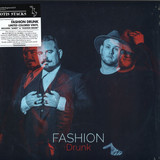
OTIS STACKS - Fashion Drunk LP

Otis Stacks, three syllables. A name and a first name that recall a mythical singer as much as the Memphis music label that got him to it's days of glory. A name that evokes him in particular and soul music in general. Behind a name that sounds familiar are Elias Wallace and Justmike, two men united to become one: Otis Stacks. In truth, the optimized version of a work started long ago, when Justmike was producing the Danish hip-hop sound of Dafuniks and decided to get in touch with Elias after hearing his voice on a friend's tune. He first wanted him to lay his voice on a
chorus, then a verse, and ended letting him take over the lyrics of 'All I Want', the song that would later bring Dafuniks on air and around Europe. After traveling miles and miles across the ocean and the seas separating California from Denmark, Elias undeniably became a member of the group. As gigs went on, stages after stages, Justmike got inspired by Elias's voice and presence. Thus, the idea of a duo collaboration between the two men geminated and grew in his mind. As the evidence of their getting along, 'Fashion Drunk' became the first tune to
infiltrate Nova and FIP radio playlists, as its music video reached 8 million views. This now obvious complicity as extended in the form of an album, also called Fashion Drunk, released by Underdogs Records. With this French stopover, the line between California and Denmark is now completed. The result is an artistic fusion in which Justmike has plugged his instruments to the machines he uses to compose, letting Elias in charge of the
lyrics and singing. Here, the soul music is printed as a guideline in an organic and digital composite matter. In an ethereal and aerial production that perches its arrangements in the air of the mix or buries them in its bases, letting electro music spread on a groove punched with black and white keys. Each element intervenes with discretion to let Elias stories be related with elegance. Frustrated, disappointed or aborted love stories.

In Stock

On Stock and ready to ship

12,82
Various - Tchic Tchic: French Bossa Nova 1963-1974  Colored Edition LP 2x12"
  • A1: Les Masques - Il Faut Tenir (1969)
  • A2: Isabelle Aubret - Casa Forte (1971)
  • A3: Christianne Legrand - Hlm Et Ciné Roman (1972)
  • A4: Jean Constantin - Pas Tant D'chichi Ponpon (1972)
  • A5: Billy Nencioli & Baden Powell - Si Rien Ne Va (1969)
  • B1-: Marpessa Dawn - Le Petit Cuica (1963)
  • B2: Jean-Pierre Sabar - Vai Vai (1974)
  • B3: Sophia Loren - De Jour En Jour (1963)
  • B4: Isabelle - Jusqu’à La Tombée Du Jour (1969)
  • B5: Sylvia Fels - Corto Maltesse (1974)
  • C1: Frank Gérard - Comme Une Samba (1972)
  • C2: Ann Sorel - La Poupée Des Favellas (1971)
  • C3: Charles Level - Un Enfant Café Au Lait (1971)
  • C4: Andrea Parisy - Les Mains Qui Font Du Bien (1970)
  • C5: Audrey Arno - Quand Jean-Paul Rentrera (1969)
  • C6: Aldo Frank - T’as Vu Ce Printemps (1970)
  • D1: Christianne Legrand - Cent Mille Poissons Dans Ton Filet (1972)
  • D2: Clarinha - Lemenja (1970)
  • D3: Hit Parade Des Enfants - Aquarela (1976)
  • D4: Jean-Pierre Lang - Tendresse (1965)
  • D5: Magalie Noël - Une Énorme Samba (1970)
  • D6: Françoise Legrand - La Lune

Ever since the late 1950s bossa-nova revolution, Brazil’s influence on French music has been undeniable. Pierre Barouh, Georges Moustaki and a vast array of lesser known artists, all made the Musica Popular Brasileira (MPB) an axis of promotion at the service of a cool and metaphysical, modern and mixed Brazilian lifestyle. Some were seduced by the poetic languors of the bossa, some were looking for fun, and others just loved the American hybridization of jazz-bossa, jazz-samba.


What is bossa nova? One of its creators, Joao Gilberto said: "Its style, cadence, everything is samba. At the very start, we didn't call it bossa nova, we sang a little samba made up of a single note - Samba de uma nota so .... The discussion around the origins of bossa nova is therefore useless”. It is nevertheless useful to remember that these magnificent Brazilian songs, which the guitarist describes as samba, were shifted and balanced around improbable chords. "I like things that lean, the in-betweens that limp with grace," said Pierre Barrouh, quoting Jean Cocteau.


With emotion, arrangements for violin and supple guitar licks, bossa nova rapidly changed. A transformation that can be heard in the Tchic, tchic, French Bossa Nova 1963-1974 compilation, the result of a cultural reappropriation, which traveled through the United States and supplemented itself in France.

A musical revolution that has remained significant, bossa nova was born in Rio. From 1956 to 1961, Brazil lived through its golden years. In five years, the country had invented its modernist style. Elected president in 1956, Juscelino Kubitschek de Oliveira, an elegant man with a broad forehead, brandished a promising slogan: "Fifty years of progress in five years". He quickly got to work. Not worried about increasing debt, he launched the project for a new federal capital, Brasilia, designed by the communist architect Oscar Niemeyer. Volkswagen opened state-of-the-art factories and created the “fusquinha”, the Beetle. In Rio, the Vespa made its first appearance. The Arpoador Surf Club crew run into the “girl” from Ipanema, Helô Pinheiro - the tanned garota ("chick"), between a flower and mermaid, who at 17 walked by the Veloso bar, where the fiery author and composer, Tom Jobim and Vinicius de Moraes, were getting drunk on whiskey. From then on, bossa symbolized cool.

In 1958, Joao Gilberto recorded Chega de Saudade, which the directors of Philips denied, calling it "music for fagots". The marketing director, who believed in it, secretly pressed 3000 78-inch vinyls and distributed them at schools around Rio, creating a tidal wave.

American jazzmen then took over. In particular, trumpeter Dizzy Gillespie and guitarist Charlie Byrd. In November 1962, the Brazilian Ministry of Foreign Affairs funded a "Bossa-Nova" concert at Carnegie Hall in New York, inviting the genre’s pioneers. Unprepared, the show soon turned to disaster. But the troupe was invited to the White House by Jackie Kennedy. The first lady loved "the new beat" and in particular Maria Ninguem, a song by Carlos Lyra, later covered by Brigitte Bardot.

In Brazil, the 1964 military coup quickly ended this euphoria. The destructive atmosphere that ensued pushed many Brazilian musicians to leave, if not to exile. Thus, Tom Jobim, Sergio Mendes and Joao Gilberto arrived to the United States. In New York, Joao Gilberto met saxophonist Stan Getz. At the time, he was married to the Bahianese Astrud Weinert Gilberto, who had a German father. She had never sung before, but she knew how to speak English. Getz therefore asked her to replace her husband on The Girl From Ipanema. The Getz/Gilberto record with Tom Jobim on piano, was released in March 1964. Phil Ramone, the "pope of pop" was in charge of sound.

Bossa nova arrived in Paris through the classic “guitar-voice” channel (Pierre Barouh, Baden Powell, Moustaki…) But France loved jazz and Paris had already welcomed its American contributors. All these good people were to pass through Saint-Germain-des-Prés. The cabaret l'Escale became the Mecca of Latin American sound where one could find Pierre Barrouh and his friends, such as the Camara Trio, samba-jazz aces, whose only record was published by the Saravah label. With a band strangely called Les Masques (a band that included Nicole Croisille and Pierre Vassiliu, among others), the Camara Trio recorded an interesting Brazilian Sound, including the track Il faut tenir which is present on this tasty compilation of rarities.

Other enlightened musicians can also be found on the compilation, such as Jean-Pierre Sabar (songwriter for Hardy, Auffray, Leforestier ...) and the French pop rock organist Balthazar. In 1975, Sabar recorded Aurinkoinen Musiikkimatka on a Finnish label, which featured the crazy Vai, Vai, included on this record. We are now following the footsteps of Brazilian electronic musicians such as Sergio Mendes, Eumir Deodato or Marcos Valle who created funk and disco sounds on their keyboards and synthesizers. A style that influenced Véronique Sanson when she wrote Jusqu’à la Tombée de la nuit in 1969 for Isabelle de Funès, the niece of Louis and a great friend of Michel Berger - Sanson did end up singing this track on her 1992 Sans Regret record.


The pinnacle of exoticism and travel, Sylvia Fels’ Corto Maltese includes bongos, sea mist and ocean sounds. The title was taken from Jacky Chalard’s concept album written in 1974, Je suis vivant, mais j’ai peur (I am alive, but I am scared), based on Gilbert Deflez’s science fiction novel.


However, bossa nova extended the scope of popularity. "In the 1970s, I was a fan of Sergio Mendes, Getz / Gilberto. I fell in love with this music that I knew because I had been an orchestral singer, " explained Isabelle Aubret, who in 1971 delivered a composite record of covers by the very funky Jorge Ben, Orfeu Negro, Tom Jobim, Vinicius de Morais and Jean Ferrat. "I recorded this album for Meys Records in Paris, far from Brazil, with wonderful musicians, François Raubert, Roland Vincent, Alain Goraguer...". The latter wrote the arrangements for Casa Forte, a very percussive title borrowed from Edu Lobo, one of the initiators of the bossa who spent time in California. "Jazz and bossa came together and produced very rhythmic music. I love singing, it allows me to dream, to have fun, to feel a high on stage, and these songs brought me joy, made me swing, my singing felt like a dance.”


The world tours of French singers and their desire for the tropics, often brought them to Rio with its hills, forests, caipirinhas and tanned bodies. There are surprises though, like this Iemenja (Iemenja is the goddess of the sea in the Afro-Brazilian candomblé religion). Not unlike the composer and musician Jean-Pierre Lang, based in Sao Paulo, Claire Chevalier taught Brazil to Brazil. In 1970, the singer and painter published a 45-inch vinyl, Mon mari et mes amants (My husband and my lovers), under the improbable pseudonym of Clarinha (little Claire). She was then living in Rio, with her husband, Joël Leibovitz, who founded a band called Azimuth, and who owned a record label specialized in "sambas enredos" songs for samba school parades.


For its B side, she asked Pierre Perret to come up with lyrics for a song composed by Carlos Imperial: "Oh goddess of the sea, o goddess Iemenja, I bring a white rose to adorn your long hair ..." . "Perret came to see us, and we had fun, remembers Joël Leibovitz. We wrote Lemenja for fun, we recorded it at the Havaí studio, behind the Central do Brasil the central station. Erlon Chaves, the arranger who worked with Elis Regina, joined us" adding his share of Afro-Brazilian percussions and funky brass to the mix.

There is a common misunderstanding in Franco-Brazilian history: that bossa, admittedly hedonistic, is perceived as funny, even though the poets who wrote the texts are often philosophizing on the human condition. Its French interpreters pull it towards a carnival inspired universe, far removed from its fundamental essence. Thus, Jean Constantin covered the famous Samba da minha terra, an ode to the art of samba written by the classic Bahian composer Dorival Caymmi, renaming it with the enticing title of Pas tant de tchi tchi pompon: "On your pier there is no tchi tchi / when you arch your back, you know everything is alright ”(lyrics by Gérard Calvi). This expedited bossa aims for the absurd, but retains a certain elegance.

Indeed, Jean Constantin was not an idiot, the rather large man had a huge mustache and liked fantasy, (Les pantoufles à papa, Le pacha, inspired by cha-cha-cha-cha, salsa and jazz) but he was also the lyricist of Mon manège à moi interpreted by Edith Piaf, the composer of Mon Truc en plume by Zizi Jeanmaire and the soundtrack of François Truffaut’s 400 Blows. Le Poulpe, published in 1970, from which this bossa is extract, was arranged by Jean-Claude Vannier, an accomplice of Serge Gainsbourg’s Melody Nelson. In short: "There is enough of samba / By looking at the parasol / Because my poor cabeza / Is going to die in the sun".

Even the American actress Marpessa Down, who was at the heart of the bossa nova revolution with her role as Euridyce in Marcel Camus’ film Orfeu Negro, winner of the 1959 Cannes Palme d'or, fed the clichée with Je voudrais parler au petit cuica - "Tell me how you manage to always make people want to dance / It's true, I must admit that I cannot resist your magic" - in consequence, once can hear the cuica, a little drum inherited from the Bantu.


But bossa nova had many angles. Societal, of course, pushing actresses who were symbols of women's liberation like Brigitte Bardot, Jeanne Moreau, or Sophia Loren to engage in the exercise of accelerated bossa. In February of 1963, Sophia Loren made a record in French in Rome, Je ne t'aime plus, featuring the song De jour en jour, a bossa written by two Italians, Armando Trovajoli and Tino Fornai, which was released a little later by Barclay. Bossa accompanied the 1960s, a decade of moral liberation. Ann Sorel, who interpreted La Poupée des favellas, caused a sensation with L’amour à plusieurs, a provocative song written by Frédéric Bottom and Jean-Claude Vannier. As for the actress Andrea Parisy, she displayed her bourgeois cheekiness in Marcel Carné's Les Tricheurs before interpreting Les mains qui font du bien. And Magalie Noël, the friend of Boris Vian, who sung Johnny fais-moi mal, was hired to sing Une énorme Samba, composed by Alain Goraguer (arranger to Gainsbourg, Bobby Lapointe and Jean Ferrat) with lyrics by Frédéric Botton.

But in the end, of what wood is bossa nova made of? The answer is given by Christianne Legrand, daughter of Raymond the conductor, and sister to Michel the composer: "With me, with jà" - jà means "immediately" in Portuguese. In 1972, the singer, an expert in vocal jazz and a member of the Double Six, published Le Brésil de Christianne Legrand. Two songs included on the Tchic Tchic compilation that demonstrate how bossa, jazz, funk, rock, etc. work like a swiss army knife: the music is used to denounce broken systems, or miracles, HLM et ciné roman, Cent mille poissons dans ton filet, two songs from the O Cafona soundtrack, a successful telenovela broadcast, at the time in black and white, on TV Globo. The first was adapted in French by the fighter and friend of the Legrand tribe, Agnès Varda. The second is content with a play on words, jostling them into a summer fun.


Véronique Mortaigne

pre-order now17.04.2026

expected to be published on 17.04.2026

27,31
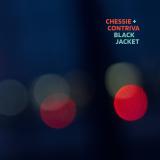
Chessie + Contriva - Black Jacket LP 2x12"

Chessie + Contriva

Black Jacket LP 2x12"

2x12inchWAT09LP
Watusi
16.04.2026

“Black Jacket” is a love letter between two bands separated by continents but united by mutual admiration. Contriva, of Berlin, and Chessie of Washington, DC, first came together in 2001 when sharing a stage, sparking a deep connection over their respective takes on textural, emotive, and mostly instrumental music that merges post-rock, ambient, and experimental elements into unique visions. Fast forward two decades and many trips to their respective studios and we now have “Black Jacket”, a double LP of musical alchemy that builds upon the expressionistic, idiosyncratic sounds of these two groups. A new classic that proves far greater than the sum of its parts.

Begun in the mid 1990's, Washington DC's Chessie is Stephen Gardner (also of noisy shoegaze pioneers, Lorelei) and Ben Bailes, whose various LP's for Slumberland's Dropbeat imprint and Plug Research pair abstract electronics and melancholy post-rock in search of the sounds and feelings of railways and train travel.

Berlin's Contriva, (Monika Enterprises, Lok Musik, and Morr Music) features Masha Qrella (known for her solo works for Morr Music), Max Punktezahl (also of Munich indie legends the Notwist and Berlin's Jersey and Saroos), Hannes Lehmann and Rike Schuberty. For over a decade beginning in the mid-1990's, Contriva crafted compelling instrumentals, grafting experimental textures onto beautiful and complex indie songs.

Together, the six of them have created “Black Jacket.”

out of Stock

Order now and we will order the item for you at our supplier.

28,53
Guilty Razors - Complete Recordings 1977 - 1978

UILTY RAZORS, BONA FIDE PUNKS.


Writings on the topic that go off in all directions, mind-numbing lectures given by academics, and testimonies, most of them heavily doctored, from those who “lived through that era”: so many people today fantasize about the early days of punk in our country… This blessed moment when no one had yet thought of flaunting a ridiculous green mohawk, taking Sid Vicious as a hero, or – even worse – making the so-called alternative scene both festive and boorish. There was no such thing in 1976 or 1977, when it wasn’t easy to get hold of the first 45s by the Pistols or the Clash. Few people were aware of what was happening on the fringes of the fringes at the time. Malcolm McLaren was virtually unknown, and having short hair made you seem strange. Who knew then that rock music, which had taken a very bad turn since the early 1970s, would once again become an essential element of liberation? That, thanks to short and fast songs, it would once again rediscover that primitive, social side that was so hated by older generations? Who knew that, besides a few loners who read the music press (it was even better if they read it in English) and frequented the right record stores? Many of these formed bands, because it was impossible to do otherwise. We quickly went from listening to the Velvet Underground to trying to play the Stooges’ intros. It’s a somewhat collective story, even though there weren’t many people to start it.
The Guilty Razors were among those who took part in this initial upheaval in Paris. They were far from being the worst. They had something special and even released a single that was well above the national average. They also had enough songs to fill an album, the one you’re holding. In everyone’s opinion, they were definitely not among the punk impostors that followed in their wake. They were, at least, genuine and credible.

Guilty Razors, Parisian punk band (1975-1978). To understand something about their somewhat linear but very energetic sound, we might need to talk about the context in which it was born and, more broadly, recall the boredom (a theme that would become capital in punk songs) coupled with the desire to blow everything off, which were the basis for the formation of bands playing a rejuvenated rock music ; about the passion for a few records by the Kinks or the early Who, by the Stooges, by the Velvet mostly, which set you apart from the crowd.
And of course, we should remember this new wave, which was promoted by a few articles in the specialized press and some cutting-edge record stores, coming from New York or London, whose small but powerful influence could be felt in Paris and in a handful of isolated places in the provinces, lulled to sleep by so many appalling things, from Tangerine Dream to President Giscard d’Estaing...
In 1975-76, French music was, as almost always, in a sorry state ; it was still dominated by Johnny Hallyday and Sylvie Vartan. Local rock music was also rather bleak, apart from Bijou and Little Bob who tried to revive this small scene with poorly sound-engineered gigs played to almost no one.
In the working class suburbs at the time, it was mainly hard rock music played to 11 that helped people forget about their gruelling shifts at the factory. Here and there, on the outskirts of major cities, you still could find a few rockers with sideburns wearing black armbands since the death of Gene Vincent, but it wasn’t a proper mass movement, just a source of real danger to anyone they came across who wasn't like them. In August 1976, a festival unlike any other took place in Mont-de-Marsan – the First European Punk Festival as the poster said – with almost as many people on stage as in the audience. Yet, on that day, a quasi historical event happened, when, under the blazing afternoon sun, a band of unknowns called The Damned made an unprecedented noise in the arena, reminiscent of the chaotic Stooges in their early adolescence. They were the first genuine punk band to perform in our country: from then on, anything was possible, almost anything seemed permissible.

It makes sense that the four+1 members of Guilty Razors, who initially amplified acoustic guitars with crappy tape recorder microphones, would adopt punk music (pronounced paink in French) naturally and instinctively, since it combines liberating noise with speed of execution and – crucially – a very healthy sense of rebellion (the protesters of May 1968 proclaimed, and it was even a slogan, that they weren’t against old people, but against what had made them grow old. In the mid-1970s, it seemed normal and obvious that old people should now ALSO be targeted!!!).
At the time, the desire to fight back, and break down authority and apathy, was either red or black, often taking the form of leafleting, tumultuous general assemblies in the schoolyard, and massive or shabby demonstrations, most of the time overflowing with an exciting vitality that sometimes turned into fights with the riot police. Indeed, soon after the end of the Vietnam War and following Pinochet’s coup in Chile, all over France, Trotskyist and anarcho-libertarian fervour was firmly entrenched among parts of the educated youth population, who were equally rebellious and troublemakers whenever they had the chance. It should also be noted that when the single "Anarchy in the UK" was first heard, even though not many of us had access to it, both the title and its explosive sound immediately resonated with some of those troublemakers crying out for ANARCHY!!! Meanwhile, the left-wing majority still equated punks with reckless young neo-Nazis. Of course, the widely circulated photos in the mainstream press of Siouxsie Sioux with her swastikas didn’t necessarily help to win over the theorists of the Great Revolution. It took Joe Strummer to introduce The Clash as an anti-racist, anti-fascist and anti-ignorance band for the rejection of old-school revolutionaries to fade a little.

The Lycée Jean-Baptiste Say at Porte d’Auteuil, despite being located in the very posh and very exclusive 16th arrondissement of Paris, didn’t escape these "committed" upheavals, which doubled as the perfect outlet for the less timid members of this generation.
“Back then, politics were fun,” says Tristam Nada, who studied there and went on to become Guilty Razors’ frontman. “Jean-Baptiste was the leftist high-school in the neighbourhood. When the far right guys from the GUD came down there, the Communist League guys from elsewhere helped us fight them off.”
Anything that could challenge authority was fair game and of course, strikes for just about any reason would lead to increasingly frequent truancy (with a definitive farewell to education that would soon follow). Tristam Nada spent his 10th and 11th unfinished grades with José Perez, who had come from Spain, where his father, a janitor, had been sentenced to death by Franco. “José steered my tastes towards solid acts such as The Who. Like most teenagers, I had previously absorbed just about everything that came my way, from Yes to Led Zeppelin to Genesis. I was exploring… And then one day, he told me that he and his brother Carlos wanted to start a rock band.” The Perez brothers already played guitar. “Of course, they were Spanish!”, jokes their singer. “Then, somewhat reluctantly, José took up the bass and we were soon joined by Jano – who called himself Jano Homicid – who took up the rhythm guitar.” Several drummers would later join this core of not easily intimidated young guys who didn’t let adversity get the better of them.

The first rehearsals of the newly named Guilty Razors took place in the bedroom of a Perez aunt. There, the three rookies tried to cover a few standards, songs that often were an integral part of their lives. During a first, short gig, in front of a bewildered audience of tough old-school rockers, they launched into a clunky version of the Velvet Underground's “Heroin”. Challenge or recklessness? A bit of both, probably… And then, step by step, their limited repertoire expanded as they decided to write their own songs, sung in a not always very accurate or academic English, but who cared about proper grammar or the right vocabulary, since what truly mattered was to make the words sound as good as possible while playing very, very fast music? And spitting out those words in a language that left no doubt as to what it conveyed mattered as well.
Trying their hand a the kind of rock music disliked by most of the neighbourhood, making noise, being fiercely provocative: they still belonged to a tiny clique who, at this very moment, had chosen to impose this difference. And there were very few places in France or elsewhere, where one could witness the first stirrings of something that wasn’t a trend yet, let alone a movement.

In the provinces, in late 1976 or early 1977, there couldn’t be more than thirty record stores that were a bit more discerning than average, where you could hear this new kind of short-haired rock music called “punk”. The old clientele, who previously had no problem coming in to buy the latest McCartney or Aerosmith LP, now felt a little less comfortable there…
In Paris, these enlightened places were quite rare and often located nex to what would become the Forum des Halles, a big shopping mall. Between three aging sex workers, a couple of second-hand clothes shops, sellers of hippie paraphernalia and small fashion designers, the good word was loudly spread in two pioneering places – propagators of what was still only a new underground movement. Historically, the first one was the Open Market, a kind of poorly, but tastefully stocked cave. Speakers blasted out the sound of sixties garage bands from the Nuggets compilation (a crucial reference for José Perez) or the badly dressed English kids of Eddie and the Hot Rods. This black-painted den was opened a few years earlier by Marc Zermati, a character who wasn’t always in a sunny disposition, but always quite radical in his (good) choices and his opinions. He founded the independent label Skydog and was one of the promoters of the Mont-de-Marsan punk festivals. Not far from there was Harry Cover, another store more in tune with the new New York scene, which was amply covered in the house fanzine, Rock News (even though it was in it that the photos of the Sex Pistols were first published in France).
It was a favorite hang-out of the Perez brothers and Tristam Nada, as the latter explained. “It’s at Harry Cover’s that we first heard the Pistols and Clash’s 45s, and after that, we decided to start writing our first songs. If they could do it, so could we!”
The sonic shocks that were “Anarchy in the UK”, “White Riot” or the Buzzcocks’s EP, “Spiral Scratch” – which Guilty Razors' sound is reminiscent of – were soon to be amplified by an unparalleled visual shock. In April 1977, right after the release of their first LP, The Clash performed at the Palais des Glaces in Paris, during a punk night organised by Marc Zermati. For many who were there, it was the gig of a lifetime…
Of course, Guilty Razors and Tristam were in the audience: “That concert was fabulous… We Parisian punks were almost all dressed in black and white, with white shirts, skinny leather ties, bikers jackets or light jackets, etc. The Clash, on the other hand, wore colourful clothes. Well, the next day, at the Gibus, you’d spot everyone who had been at this concert, but they weren’t wearing anything black, they were all wearing colours.”

It makes sense to mention the Gibus club, as Guilty Razors often played there (sometimes in front of a hostile audience). It was also the only place in Paris that regularly scheduled new Parisian or Anglo-Saxon acts, such as Generation X, Siouxsie and the Banshees, the Slits, and Johnny Thunders who would become a kind of messed-up mascot for the venue. A little later, in 1978, the Rose Bonbon – formerly the Nashville – also attracted nightly owls in search of electric thrills… In 1977, the iconic but not necessarily excellent Asphalt Jungle often played at the Gibus, sometimes sharing the bill with Metal Urbain, the only band whose aura would later transcend the French borders (“I saw them as the French Sex Pistols,” said Geoff Travis, head of their British label Rough Trade). Already established in this small scene, Metal Urbain helped the young and restless Guilty Razors who had just arrived. Guitarist for Metal Urbain Hermann Schwartz remembers it: “They were younger than us, we were a bit like their mentors even if it’s too strong a word… At least they were credible. We thought they were good, and they had good songs which reminded of the Buzzcocks that I liked a lot. But at some point, they started hanging out with the Hells Angels. That’s when we stopped following them.”

The break-up was mutual, since, Guilty Razors, for their part, were shocked when they saw a fringe element of the audience at Metal Urbain concerts who repeatedly shouted “Sieg Heil” and gave Nazi salutes. These provocations, even still minor (the bulk of the skinhead crowd would later make their presence felt during concerts), weren’t really to the liking of the Perez brothers, whose anti-fascist convictions were firmly rooted. Some things are non-negotiable.
A few months earlier (in July 1978), Guilty Razors had nevertheless opened very successfully for Metal Urbain at the Bus Palladium, a more traditonally old-school rock night-club. But, as was sometimes the case back then, the night turned into a mass brawl when suburban rockers came to “beat up punks”.

Back then, Parisian nights weren’t always sweet and serene.

So, after opening as best as they could for The Jam (their sound having been ruined by the PA system), our local heroes were – once again – met outside by a horde of greasers out to get them. “Thankfully,” says Tristam, “we were with our roadies, motorless bikers who acted as a protective barrier. We were chased in the neighbouring streets and the whole thing ended in front of a bar, with the owner coming out with a rifle…”
Although Tristam and the Perez brothers narrowly escaped various, potentially bloody, incidents, they weren’t completely innocent of wrongdoing either. They still find amusing their mugging of two strangers in the street for example (“We were broke and we simply wanted to buy tickets for the Heartbreakers concert that night,” says Tristam). It so happened that their victims were two key figures in the rock business at the time: radio presenter Alain Manneval and music publisher Philippe Constantin. They filed a complaint and sought monetary compensation, but somehow the band’s manager, the skilful but very controversial Alexis, managed to get the complaint withdrawn and Guilty Razors ended up signing with Constantin with a substantial advance.

They also signed with Polydor and the label released in 1978 their only three-track 45, featuring “I Don't Wanna be A Rich”, “Hurts and Noises” and “Provocate” (songs that exuded perpetual rebellion and an unquenchable desire for “class” confrontation). It was a very good record, but due to a lack of promotion (radio stations didn’t play French artists singing in English), it didn’t sell very well. Only 800 copies were allegedly sold and the rest of the stock was pulped… Initially, the three tracks were to be included on a LP that never came to be, since they were dropped by Polydor (“Let’s say we sometimes caused a ruckus in their offices!” laughs Tristam.) In order to perfect the long-awaited LP, the band recorded demos of other tracks. There was a cover of Pink Floyd's “Lucifer Sam” from the Syd Barrett era – proof of an enduring love for the sixties’ greats –, “Wake Up” a hangover tale and “Bad Heart” about the Baader-Meinhof gang, whose actions had a profound impact on the era and on a generation seeking extreme dissent... On the album you’re now discovering, you can also hear five previously unreleased tracks recorded a bit later during an extended and freezing stay in Madrid, in a makeshift studio with the invaluable help of a drummer also acting as sound engineer. He was both an enthusiastic old hippie and a proper whizz at sound engineering. Here too, certain influences from the fifties and sixties (Link Wray, the Troggs) are more than obvious in the band’s music.

Shortly after a final stormy and rather barbaric (on the audience’s side) “Punk night” at the Olympia in June 1978, Tristam left the band ; his bandmates continued without him for a short while.

But like most pioneering punk bands of the era, Guilty Razors eventually split up for good after three years (besides once in Spain, they’d only played in Paris). The reason for ceasing business activities were more or less the same for everyone: there were no venues outside one’s small circuit to play this kind of rock music, which was still frightening, unknown, or of little interest to most people. The chances of recording an LP were virtually null, since major labels were only signing unoriginal but reassuring sub-Téléphone clones, and the smaller ones were only interested in progressive rock or French chanson for youth clubs. And what about self-production? No one in our small safety-pinned world had thought about it yet. There wasn’t enough money to embark on that sort of venture anyway.

So yes, the early days of punk in France were truly No Future!

out of Stock

Order now and we will order the item for you at our supplier.

21,43

Last In: 7 days ago
Various - Hospitality In The Park
  • A1: Jam
  • A2: Stuxnet
  • A3: Like What
  • A4: Honour
  • B1: Fatso Vip
  • B2: Shine Like The Sun
  • B3: (Nu Logic Remix)

The 10,000 strong party drew together DJs, fans, listeners, singers, live acts and MCs together to showcase every shade and style encompassing a 174 heartbeat. As the Finsbury Park fun continues and round two promising even bigger stage takeovers and a myriad of artist weaponry, we present an equally bursting drum & bass double disc, the 'Hospitality In The Park 2017' LP. In the same vein as our all- day summer special, this huge 70 track mash- up spans across a full 360' perspective of the genre; representing the established, up and coming, soulful, obscure, liquid, innovative, dark, techy, neuro, jungle style and everything in between.

Included are over 25 brand new exclusives from reputable drum & bass titans Danny Byrd, S.P.Y, Makoto and Keeno, there are VIPs from Metrik and Nu:Logic, remixes from Hugh Hardie, Total science, Camo & Krooked and Calibre, and a 'Bullet Proof' banger from Krakota. Across two mixed CDs we've drawn for this year's surefire summer weapons with Fred V & Grafix, The Prototypes, 1991, High Contrast, The Upbeats, Breakage in the mix. With this year's Incubator stage pulling artists that are rising through the ranks, up and comers' Whiney, Unglued, GLXY and Kyrist bring exciting new offerings to the compilation.

Both fans and artists came together from all over the globe last year and we expect no less in 2017. Equally, this compilation gives an international perspective covering all corners of the globe from Japan's Mountain, the USA's Flite and Ownglow, the Netherlands Black Sun Empire and New Zealand's Shapeshifter. Drum & bass is stronger than ever and it's here to stay. See you at the park!

out of Stock

Order now and we will order the item for you at our supplier.

12,82

Last In: 7 days ago
SHITS - Diet Of Worms LP

SHITS

Diet Of Worms LP

12inchLAUNCH426
Rocket Recordings
03.04.2026

What's the point of the howl of string to speaker, the hammering of stick-on skin? Is it transcendence, elevating the human spirit by catharsis in sound? Or is it summoning chaos, a purgatory in which to bask in all that’s unclean, the better to feel alive?
Why not both? Because that’s what’s on offer on Diet Of Worms, the second Rocket release by The Shits, Leeds via Newcastle’s titans of disgust and deliverance. This is a feast for the senses in the worst way possible - primal rock boiled down to its essence and flung full in your face. Using repetition, tortured vocal invective and heads-down intensity as blunt instruments, these eight tracks are an unprecedented torrent of acidic salvation. Whilst lurking somewhere on the decadence-destruction axis between the nihilism of prime Stooges and the bloody blackout of Braimbombs, Diet Of Worms is possessed of a legitimately uncompromising hostility that both elevates and debases it to co-ordinates unknown.
There are revelations here in the riffage and the rancour, even if they are the kind that occur in the bleary miasma of the lock-in, or witnessing the streetlight blur of the subsequent stagger home. Even more single-minded and remorseless than the band’s Rocket debut ‘You’re A Mess’, this is a record that demands full immersion. Whether it’s ‘Then You’re Dead’ hammering on a pulverising garage-stinking riff until it begs for mercy, or ‘Change My Ways’, whose Creedence-In-Hell swagger and lurch is that of abjection transmuted into joy, this is psychedelia forcibly removed from its comfort zone of pastiche, and thrust into a bad-trip realm of the vivid and nightmarish.
But rarely has the process of making beauty and horror indivisible seemed like so much fun. If Werner Herzog was right, and the only harmony in the universe is that of overwhelming and collective murder, then The Shits are the true music of the spheres.

pre-order now03.04.2026

expected to be published on 03.04.2026

23,49
Liva K & OVEOUS - Blessings

Liva K & OVEOUS

Blessings

12inchCRM347
Crosstown Rebels
31.03.2026

Liva K and OVEOUS unite for transcendent new single, ‘Blessings’, on Crosstown Rebels. Out on 27th March 2026, the Greek producer and NYC-based artist deliver a hypnotic journey of spiritual rhythm and soulful energy.

A groove-driven journey arrives on Crosstown Rebels on 27th March, with Greek DJ/producer Liva K and New York DJ/producer and vocalist OVEOUS guiding the way. Their label debut, ‘Blessings’, emerges as a meeting of instinct and intention. Crafted from Liva K’s fusion of sounds and textures, the track flows with captivating suspense, while OVEOUS’ voice carries a magnetic, ritualistic weight. The result is a record that exists in both body and mind, designed to move crowds while resonating on a deeper, spiritual plane.

Liva K has quietly carved his own path since emerging onto the international scene, weaving melodic house and techno, and Afro-infused rhythms into sets and productions that pulse with movement and depth. From his debut album ‘1994’ to recent material on Defected, Black Book Records, and When Stars Align, he balances studio craftsmanship with spontaneity while creating moments across venues from Hï Ibiza to Miami’s Factory Town. Meanwhile, OVEOUS brings his HYPER SOUL and Hyper Ancestral sound to every stage and recording, merging house, afro-soul, and ritualistic energy. As a DJ, producer, and poet, his voice and presence cut through tracks with spiritual weight, turning grooves into experiences that are simultaneously sensual, reflective, and kinetic. providing moments that resonate long after the lights come up.

out of Stock

Order now and we will order the item for you at our supplier.

13,66

Last In: 7 days ago
Black Label Society - Black Label Society LP 2x12"

For more than 25 years, Black Label Society has stood as one of heavy music’s most unshakeable pillars, delivering album after album of blues-soaked grooves, hard-hitting riffs, and soul-baring ballads. “Engines of Demolition” makes no exception to the steady rule of unrelenting commitment to pure, uncompromising, hard rock.


In 2022, Wylde was invited to honor his fallen brothers, the late great Dimebag Darrell Abbott and his brother Vinnie Paul, as part of Pantera Celebration. Writing and recording with Black Label Society over these last four years is when Engines of Demolition was born. Engines of Demolition follows the release of four singles, “The Gallows” (2024), "Lord Humungus" (2025), “Broken and Blind” (2025) and “Name In Blood” (2026), and marks the first full-length album release since Doom Crew Inc. (2021).


Black Label Society is the pure expression of the paradox of Zakk Wylde’s darkest, loudest riffs and softest soul crushing ballads. BLS is a relentless heavy, bluesy, unhinged hard-rock-metal circus quartet summoning caffeine-fueled cacophony on records and the stage. BLS songs are odes to celebration and mourning from the darkest depths to the highest of highs.


A charismatic hard rock and metal marauder recognized as a living legend and guitar icon, Wylde rose to prominence when Ozzy Osbourne chose him as his loyal axe man. Multi platinum albums, countless guitar magazine covers, Worldwide sold out tours, his own guitar and coffee brands add to Wylde’s ever-growing legacy. He gets as much joy from fronting his Black Label Society as he did playing on stage with his hero, Ozzy Osbourne, to his Black Sabbath cover band, Zakk Sabbath.


Seit mehr als 25 Jahren ist Black Label Society eine der unerschütterlichsten Säulen der Heavy-Musik und liefert Album um Album bluesgetränkte Grooves, knallharte Riffs und gefühlvolle Balladen. „Engines of Demolition“ fügt sich nahtlos ein in das unerbittliche Bekenntnis der Band zu purem, kompromisslosem Hardrock.


Im Jahr 2022 wurde Wylde eingeladen, im Rahmen der Pantera Celebration seine verstorbenen Brüder, den großartigen Dimebag Darrell Abbott und seinen Bruder Vinnie Paul, zu ehren. Während er in den letzten vier Jahren mit Black Label Society Songs schrieb und aufnahm, entstand „Engines of Demolition“. Das Album folgt auf die Veröffentlichung von vier Singles, „The Gallows“ (2024), „Lord Humungus“ (2025), „Broken and Blind“ (2025) und „Name In Blood“ (2026) - und ist das erste Studio-Album seit Doom Crew Inc. (2021).


Black Label Society ist der pure Ausdruck des Paradoxons von Zakk Wyldes dunkelsten, lautesten Riffs und sanftesten, herzzerreißenden Balladen. BLS ist ein unerbittliches, bluesiges, verstörendes Hardrock-Metal-Zirkusquartett, das auf Platten und auf der Bühne eine koffeinhaltige Kakophonie hervorruft. BLS-Songs sind Oden an das Feiern und Trauern, von den dunkelsten Tiefen bis zu den höchsten Höhen.


Wylde, ein charismatischer Hardrock- und Metal-Musiker, der als lebende Legende und Gitarrenikone gilt, wurde bekannt, als Ozzy Osbourne ihn zu seinem treuen Gitarristen machte. Multi-Platin-Alben, unzählige Titelseiten von Gitarrenmagazinen, weltweit ausverkaufte Tourneen, seine eigene Gitarren- und Kaffeemarke tragen zu Wyldes ständig wachsendem Vermächtnis bei. Er hat genauso viel Freude daran, seine Black Label Society zu leiten, wie er sie hatte, als er mit seinem Helden Ozzy Osbourne auf der Bühne stand oder mit seiner Black Sabbath-Coverband Zakk Sabbath spielte.

pre-order now27.03.2026

expected to be published on 27.03.2026

30,88
Black Label Society - Black Label Society LP 2x12"
  • A1: Name In Blood
  • A2: Gatherer Of Souls
  • A3: The Hand Of Tomorrows Grave
  • B1: Better Days & Wiser Times
  • B2: Broken And Blind
  • B3: The Gallows
  • C1: Above & Below
  • C2: Back To Me
  • C3: Lord Humungus
  • C4: Pedal To The Floor
  • D1: Broken Pieces
  • D2: The Stranger
  • D3: Ozzy's Song
also available

MARBLED VINYL[30,88 €]


For more than 25 years, Black Label Society has stood as one of heavy music’s most unshakeable pillars, delivering album after album of blues-soaked grooves, hard-hitting riffs, and soul-baring ballads. “Engines of Demolition” makes no exception to the steady rule of unrelenting commitment to pure, uncompromising, hard rock.


In 2022, Wylde was invited to honor his fallen brothers, the late great Dimebag Darrell Abbott and his brother Vinnie Paul, as part of Pantera Celebration. Writing and recording with Black Label Society over these last four years is when Engines of Demolition was born. Engines of Demolition follows the release of four singles, “The Gallows” (2024), "Lord Humungus" (2025), “Broken and Blind” (2025) and “Name In Blood” (2026), and marks the first full-length album release since Doom Crew Inc. (2021).


Black Label Society is the pure expression of the paradox of Zakk Wylde’s darkest, loudest riffs and softest soul crushing ballads. BLS is a relentless heavy, bluesy, unhinged hard-rock-metal circus quartet summoning caffeine-fueled cacophony on records and the stage. BLS songs are odes to celebration and mourning from the darkest depths to the highest of highs.


A charismatic hard rock and metal marauder recognized as a living legend and guitar icon, Wylde rose to prominence when Ozzy Osbourne chose him as his loyal axe man. Multi platinum albums, countless guitar magazine covers, Worldwide sold out tours, his own guitar and coffee brands add to Wylde’s ever-growing legacy. He gets as much joy from fronting his Black Label Society as he did playing on stage with his hero, Ozzy Osbourne, to his Black Sabbath cover band, Zakk Sabbath.


Seit mehr als 25 Jahren ist Black Label Society eine der unerschütterlichsten Säulen der Heavy-Musik und liefert Album um Album bluesgetränkte Grooves, knallharte Riffs und gefühlvolle Balladen. „Engines of Demolition“ fügt sich nahtlos ein in das unerbittliche Bekenntnis der Band zu purem, kompromisslosem Hardrock.


Im Jahr 2022 wurde Wylde eingeladen, im Rahmen der Pantera Celebration seine verstorbenen Brüder, den großartigen Dimebag Darrell Abbott und seinen Bruder Vinnie Paul, zu ehren. Während er in den letzten vier Jahren mit Black Label Society Songs schrieb und aufnahm, entstand „Engines of Demolition“. Das Album folgt auf die Veröffentlichung von vier Singles, „The Gallows“ (2024), „Lord Humungus“ (2025), „Broken and Blind“ (2025) und „Name In Blood“ (2026) - und ist das erste Studio-Album seit Doom Crew Inc. (2021).


Black Label Society ist der pure Ausdruck des Paradoxons von Zakk Wyldes dunkelsten, lautesten Riffs und sanftesten, herzzerreißenden Balladen. BLS ist ein unerbittliches, bluesiges, verstörendes Hardrock-Metal-Zirkusquartett, das auf Platten und auf der Bühne eine koffeinhaltige Kakophonie hervorruft. BLS-Songs sind Oden an das Feiern und Trauern, von den dunkelsten Tiefen bis zu den höchsten Höhen.


Wylde, ein charismatischer Hardrock- und Metal-Musiker, der als lebende Legende und Gitarrenikone gilt, wurde bekannt, als Ozzy Osbourne ihn zu seinem treuen Gitarristen machte. Multi-Platin-Alben, unzählige Titelseiten von Gitarrenmagazinen, weltweit ausverkaufte Tourneen, seine eigene Gitarren- und Kaffeemarke tragen zu Wyldes ständig wachsendem Vermächtnis bei. Er hat genauso viel Freude daran, seine Black Label Society zu leiten, wie er sie hatte, als er mit seinem Helden Ozzy Osbourne auf der Bühne stand oder mit seiner Black Sabbath-Coverband Zakk Sabbath spielte.

pre-order now27.03.2026

expected to be published on 27.03.2026

30,88
ONDT BLOD - BAUTA

ONDT BLOD

BAUTA

12inchPGMNO11
PLAYGROUND MUSIC
27.03.2026

Black 180g vinyl, limited to 200 copies. A decade has passed since the debut album Finnmark left a solid northern Norwegian mark on the rock and hardcore scene, and eight years since Natur pushed both genre boundaries and the listener's limits. Now, the Kirkenes-based band Ondt Blod returns with their third full-length album, Bauta. Here, the band distills the blend of hard-hitting hardcore and strong melodies they've become known for. The opening track "AUX" kicks the door in with a desire to tear down the established order, while songs like "Kembo" and "Flamma" (featuring guest vocals from Ida Maria) reveal a more nostalgic and melodic side of the band. Throughout their career, Ondt Blod has held firmly onto their northern Norwegian identity and Sámi roots. This has taken them from Kirkenes to stages across Europe and Japan, earning them both Norwegian Grammy (Spellemann) nominations and a loyal fanbase. Bauta confirms that the band still has plenty to say.

pre-order now27.03.2026

expected to be published on 27.03.2026

23,11
DJ Tennis - fabric presents DJ Tennis + Redrago (2x12" + 10")

Manfredi Romano, founder and A&R of Life and Death Records, has been a pivotal figure in electronic music for over two decades. This year marks an important milestone as he is invited to curate the upcoming fabric presents mix for fabric Records, a release that highlights his instinctive storytelling and the distinct musical identity he has cultivated throughout his career.

Manfredi’s journey began in Italy around the turn of the millennium, tour-managing punk bands and organizing left-field music events before completing his studies in computer science at the University of Pisa. He went on to form DAZE, Italy’s first booking agency dedicated exclusively to electronic music, laying the groundwork for what would become a globally influential presence in the scene.
In 2010, he shifted focus to his own artistic project, DJ Tennis, which quickly gained international recognition for its emotive blend of house, techno, and disco. Renowned for creating intimate atmospheres in even the largest spaces, DJ Tennis has performed at leading clubs such as Circoloco Ibiza, Fabric London, and Panorama Bar Berlin, and at major festivals including Sonar, Timewarp, Primavera Sound, and Coachella. His 2022 residency at Phonox in London further showcased his ability to shape dancefloors with nuance and depth. Since 2017, he has also co-founded and curated Rakastella, the celebrated Art Basel Miami festival created in partnership with Life and Death and Innervisions.

As a producer, DJ Tennis draws from early relationships with post-rock pioneers such as Godspeed You! Black Emperor, Tortoise, and Fugazi, channelling their influence into intricately layered electronic compositions. His work has appeared on respected labels including Kompakt, Rhythm Assault, Running Back, !K7, Cercle Records, Aus Music, and Circoloco Records, alongside frequent releases on Life and Death. His remix portfolio includes collaborations with Diplo, Boys Noize, Loco Dice, WhoMadeWho, and Acid Pauli, among many others. He has also previously contributed a DJ-Kicks mix, bringing his eclectic sensibilities to one of electronic music’s most beloved series.

After extended periods living in Miami, Berlin, and Barcelona, DJ Tennis now resides in Paris. Outside the studio and club environment, Manfredi is a passionate chef who has curated menus for charity events and collaborated with Beatport at ADE, Pioneer, and Resident Advisor. He is also an avid collector of bicycles, vintage action figures, and vinyl — his record collection now surpasses eleven thousand pieces.

With the forthcoming fabric presents DJ Tennis release, he offers a deeply personal, narrative-driven statement that reflects decades of crate-digging, boundary-pushing selections, and a lifelong devotion to sound. It marks a new chapter in his artistic evolution and stands as one of the year’s most anticipated entries in the iconic series.
The first single from DJ Tennis is a collaboration with long-time studio partner Ashee, and it immediately sets the tone for the mix: warm, seductive, rhythm-driven, and emotionally charged.

“I Wanna Know” is a sleek club track built around a pulsing groove and a steady, hypnotic rhythm. The low end is rounded and warm, giving the track a driving but understated momentum. Percussion is crisp and minimal, allowing the bassline and vocal elements to take center stage. The repeating, robotic earworm of a vocal hook, “I wanna know’ is the lynchpin to the track and will remain in your head long after the track has finished.

It’s the kind of record that warms up a room early in the night, sets the tone for a sunset beach set, or adds a lush, emotional peak during a more leftfield club moment.

out of Stock

Order now and we will order the item for you at our supplier.

26,01

Last In: 7 days ago
OLIVIER DERIVIERE - DYING LIGHT: THE BEAST (ORIGINAL GAME SOUNDTRACK) LP 2x12"
  • Kyle
  • Being A Man
  • An Angry Man
  • Mood 01
  • Fight A
  • The View
  • Rage
  • Fight B
  • Fight C
  • Safe Zone
  • Mood 02
  • Chase 03
  • Chase 04
  • Mood 03
  • Fight E
  • Chimera 01
  • Mood 04
  • The Exiles
  • Mood 05
  • Timer 01
  • Chimera 03
  • Timer 02
  • The Beast
  • Mood 06
  • Revenge
  • A Changed Man

Double LP pressed on transparent red vinyl with black marbles. In Dying Light: The Beast, you step back into Kyle Crane's skin, but he's no longer the man he once was. Years of experiments have left him torn between fragile humanity and a monstrous power that he can barely control. Every light, every shadow, every choice feels dangerous. The forests and ruins of Castor Woods don't just set the stage, they breathe, they watch, and they punish the reckless. This is survival stripped to the bone, where horror is not just outside, but inside you. Olivier Deriviere's powerful and capturing score for Dying Light: The Beast doesn't just accompany Crane's journey, it is his voice. Sometimes it whispers in empty rooms, fragile and broken, sometimes it roars with distorted rhythms and pounding drums when the Beast takes over. Between silence and sound, the music pulls you deeper into Kyle's fractured soul, making every step and every heartbeat part of the story. It's not just a soundtrack, it's the echo of a man losing, and maybe finding, himself.

pre-order now20.03.2026

expected to be published on 20.03.2026

35,08
CALVIN LOVE - Throw My Shadow To The Sun LP

Calvin Love is a Canadian singer-songwriter, composer, and producer from Edmonton, Alberta, now based between Edmonton and Los Angeles. With a sound that blends noir-tinged folk‑pop, crooning rock ’n’ roll, and cinematic storytelling, Love has become a distinctive voice in the international indie landscape. His music has drawn comparisons to Roy Orbison, Leonard Cohen, and Bryan Ferry, with Aquarium Drunkard describing his work as “a crestfallen soundtrack of near‑escape… like Chris Isaak trapped in a David Lynch film.”
Since his debut New Radar (2012), Love has released a run of acclaimed records including Super Future (Arts & Crafts, 2015), Highway Dancer (2018), Night Songs (2020), and Lavender (2021). Along the way, he has collaborated with renowned producers and artists such as Gus Seyffert (Beck, Roger Waters, Black Keys) and the late Richard Swift (The Shins, Damien Jurado), while earning coverage from outlets including SPIN, The Fader, Interview Magazine, and Stereogum.
A seasoned live performer, Love has toured extensively across North America, Europe, and Asia, appearing at festivals such as SXSW, Pop Montréal, Strawberry Festival (China), Endless Daze (South Africa), and Sled Island. He has shared stages with Morrissey, Mac DeMarco, Courtney Barnett, Jonathan Wilson, The Divine Fits, and Jim James, performing in iconic venues like Carnegie Hall, The Troubadour, and Hollywood Forever Cemetery.
In early February 2026, Love releases his seventh studio album, Throw My Shadow To The Sun — a bold, visceral statement that captures him at a new creative peak. Self‑produced and recorded by Reverend Baron at The Ladder Factory in East Los Angeles, the album channels raw, unfiltered energy into a late‑night rock ’n’ roll atmosphere built on moody grooves, gritty textures, and Love’s unmistakable croon.
The sessions brought together a formidable live band: Josh Da Costa (Drugdealer) on drums, Brent Randall (Vanity Mirror) on bass, Davey Chegwidden (De La Soul, Ghostface Killah, Raekwon, Too Short) on percussion, Jeremy Brian Gill (Curtis Harding) on tenor saxophone and flutes, Daniel E. Garcia (Reverend Baron) on lead guitars, and multi‑instrumentalist Laena Myers (White Fence, Orville Peck, El Mariachi Bronx) on violin.
From the hypnotic sway of “Underneath It All,” to the reverb‑drenched sax of “Forever Feels,” to the heavy sludge‑rock crush of “Setting Sun,” Throw My Shadow To The Sun draws from the lyrical storytelling of Dire Straits, the laid‑back blues of JJ Cale, and the timeless melodic drama of Roy Orbison. The result is a cohesive, lived‑in record that transforms fleeting moments and late‑night impressions into something enduring and cinematic.

pre-order now20.03.2026

expected to be published on 20.03.2026

19,75
KILLING JOKE - EXTREMITIES, THE ALBINI DEMOS AND LIVE BEGINNINGS '88
  • Money (Demo)
  • Unreleased (Demo)
  • Scrape/North Of The Border
  • Money (Reflex Mix)
  • Extremities
  • The Fanatic
  • Intravenous
  • Beautiful Dead
also available

Clear Vinyl[32,98 €]


A journey into the raw and visceral origins: from the demo sessions mixed by Steve Albini to the night of the very first secret show on December 20th, 1988. In the heart of Chicago, Geordie and Martin Atkins turned frustration and distance into pure creative energy, recording the now-legendary "Black Cassette" demos at Albini"s house. Distorted, menacing bass lines, unruly oscillators, and Albini running endlessly up and down the stairs between the basement drum room and the pantry control room defined a sound that was brutally direct and uncompromising. The first interactions with the Yamaha drum machine foreshadowed elements that would later shape parts of the album. Those sessions sparked essential ideas, while the future studio - purchased from Steve and moved to Wabash Ave - would soon become the core of Invisible Records and Killing Joke"s operations. On the other side, a truly rare document: excerpts from Atkins"s very first show with the band, at Burberries in Birmingham on December 20th, 1988. In a small, mirror-lined club filled with tension, adrenaline, and inevitable collisions with the walls, Extremities, The Fanatic, Intravenous, and The Beautiful Dead were performed publicly for the first time. It was the night when everything ignited: the blast beat still in its embryonic stage, the controlled fury Geordie demanded - "can you go a bit more Moonie on it?" - and above all Jaz"s theatrical yet strikingly genuine laughter. Not just joy, but a declaration: a giant "fuck off" to the doubters and a prelude of what was about to come. A raw, essential, indispensable testimony: the birth of an era.

pre-order now13.03.2026

expected to be published on 13.03.2026

32,98
KILLING JOKE - EXTREMITIES, THE ALBINI DEMOS AND LIVE BEGINNINGS '88

A journey into the raw and visceral origins: from the demo sessions mixed by Steve Albini to the night of the very first secret show on December 20th, 1988. In the heart of Chicago, Geordie and Martin Atkins turned frustration and distance into pure creative energy, recording the now-legendary "Black Cassette" demos at Albini"s house. Distorted, menacing bass lines, unruly oscillators, and Albini running endlessly up and down the stairs between the basement drum room and the pantry control room defined a sound that was brutally direct and uncompromising. The first interactions with the Yamaha drum machine foreshadowed elements that would later shape parts of the album. Those sessions sparked essential ideas, while the future studio - purchased from Steve and moved to Wabash Ave - would soon become the core of Invisible Records and Killing Joke"s operations. On the other side, a truly rare document: excerpts from Atkins"s very first show with the band, at Burberries in Birmingham on December 20th, 1988. In a small, mirror-lined club filled with tension, adrenaline, and inevitable collisions with the walls, Extremities, The Fanatic, Intravenous, and The Beautiful Dead were performed publicly for the first time. It was the night when everything ignited: the blast beat still in its embryonic stage, the controlled fury Geordie demanded - "can you go a bit more Moonie on it?" - and above all Jaz"s theatrical yet strikingly genuine laughter. Not just joy, but a declaration: a giant "fuck off" to the doubters and a prelude of what was about to come. A raw, essential, indispensable testimony: the birth of an era.

pre-order now13.03.2026

expected to be published on 13.03.2026

32,98
Items per Page:
N/ABPM
Vinyl