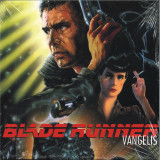
12
The crème de la crème of electronic sci-fi soundtracks receives — what else — a vinyl reissue
The crème de la crème of electronic sci-fi soundtracks receives — what else — a vinyl reissue

repress !

repress
As EarToGround Records hits its seminal tenth release we have decided to go all out sonically and visually.
As you all know Dax has been a core member of EarToGround right from the beginning. It all began with his and Chris Stanford's jointly produced track 'Programm' on ETG001.
From then on in he has worked tirelessly at his East London studio, climbing through the ranks to become the very respected and some would say inspirational producer he is now. Over the last year he has very much honed in and developed his now unique sound and recently released on much respected, high quality labels such as Deeply Rooted.
You could say his own EP on ETG has been a long time coming but we like to think ETG010 is what he has been building up to, some of his best work to date. We will let you decide
3 new solid, hook heavy, DJ and dancefloor friendly tracks from Dax as well as 2 centralized locked grooves and additional, extremely slick remix work from ARTS label boss 'Emmanuel'...
Black vinyl. Internal textured black inner sleeve. External textured white outer sleeve. 2 ETG Invader Stickers. Again the artwork is Space related. The theme this time pays homage to what can arguably be called one of the best modern SYFY films ever made.

Layout By Studio Tape-echo
Nightside Black Vinyl
One Time Pressing
Limited To 300 Copies

As I'm sure you're aware D&B doesn't pass through state51 that often but here we have a 12" that can quite rightly sit proudly amongst our more usual esoteric offerings.
With legendary label Juice, Rhythm Rollers present these 2017 remixes of Undercover Agent's 1994 classic 'Babylon'. The original is without a doubt one of the most highly rated jungle tracks and this time round DJ Future has delivered an absolute tearing remake and brought it into the 21st century. On side B, for the original heads who loved the first press Blade Runner has rebuilt the original masterpiece from scratch.
DJ support: Andy C, Randall, Uncle Dugs, Ray Keith and many more.

Chris Liebing's first full solo techno LP, 'Evolver' is released on 27th March 2026, via his own CLR imprint. The German techno don's LP features a host of collaborators across music, images, and artwork. Luke Slater, Charlotte De Witte, Speedy J, The Advent, Terence Fixmer, Pascal Gabriel, Daniel Miller contribute to the music, while long-time collaborators Studio Bergfors deliver design, and legendary photographer Anton Corbijn shot Liebing for the project.
The Evolver LP is the sum total of Chris Liebing's three decades at the beating heart of techno. It's the record only someone whose first break as a techno DJ was playing five hours at Sven Väth's infamous Omen in Frankfurt - and who has ridden out every twist and turn of life and subcultures since, while remaining rooted in the true school, dark, sweaty techno sweat pits of the world - could have made. It's the result of deep introspection, but it's about utter immediacy. It's the sound of someone previously driven along by compulsion and happenstance at last finding the confidence to be utterly intentional about their practice, allowing them to take the most classic, familiar, proven elements from the past and render them completely new.
Evolver is also Liebing's first completely solo album. There are collaborations, yes: with old friends from the OG techno generation, Luke Slater, Speedy J, and The Advent, all on uncompromising form, and with new generation figurehead Charlotte De Witte, who provides a thrilling narration of total surrender to the moment on acid clarion call "Symphonie des Seins". But unlike all Liebing's albums to date, there's no co-pilot. Every structure, every mixdown, every choice serves his singular vision of how his untold immersion in the surging currents of the world's greatest clubs should sound. The elements are all those forged in the white heat of Omen and Tresor in the mid 90s - brutal repetition, titanium kick drums, industrial atmospherics, but also dark rave euphoria, ever present surging acid lines just on the cusp of trance, and just enough human voices to remind you of bodies on the dance floor - but rendered with all the extraordinary accumulated skill and technological developments since then.
It's Chris's vision entirely, his musings on sound, technology, and life birthing tracks like "Roy Batty." Inspired by thoughts of AI becoming sentient and hungering for more life like Rutger Hauer's titular Blade Runner character, it was one of the first tracks to emerge and a foundation stone for the album. And in pursuit of that vision, it's built like a "proper album". The anticipation and menace of intro "Unfold" tip over into the glowing hot high drama psychedelia of "Symphonie…" then the breathless headlong rush of The Advent collab and on through an unfolding narrative that goes deep, goes dark, opens out into grand vistas, takes strange turns before finally landing on the alien landscape of… well… "Endtrack".
Not everything is pummelling on Evolver - the dazzling title track feels like you've been welcomed into the courtly dance of a higher dimension civilisation, and the audacious Speedy J collab "Shaping Frequencies" is a beatless flow that tests the boundaries between signal and noise. But for all its complexity, conceptualism, and stylistic branching out, every last part unmistakably powered by that dark techno-cavern energy above all else. All of it positively radiates the qualities of Liebing's greatest work and sets to date - but somehow even more so than before. Whether you're listening for aesthetic inspiration, cerebral stimulation or just that raw physical power, this album will sweep you up into its momentum and won't let go of you until it's done.
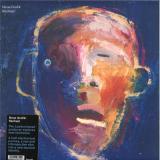
Neue Grafik has steadily built a strong reputation in recent years with releases on esteemed labels such as Rhythm Section, 22a, CoOp Presents, and Wolf Music. His sound is a distinctive fusion of jazz, house, and hip hop, infused with his African heritage, Parisian background, and a deep appreciation for London genres like broken beat and grime.
Neue Grafik first made a lasting impression on the community at Total Refreshment Centre (TRC)—the heart of London’s thriving jazz scene—during a spontaneous after-hours jam. Since then, there has been collaborations with notable artists including Nubya Garcia, Emma-Jean Thackray, Brother Portrait, Lord Apex and Allysha Joy.
The new album, ”Rachael”, is set for release on January 30th 2026. It stands as Neue Grafik's most ambitious project to date. Developed over the past year, the album explores themes inspired by the character of Rachael from the movie Blade Runner, representing the journey of love in all means, intimate, raw, tough, organic and honest offering a rich, emotional journey that balances lightness with depth—an introspective dive into the artist's evolving musical identity.

2x12"[28,36 €]
The Nightlife isn’t just a single. It’s a fever dream. Honey Dijon and Chloë have built a sonic peephole into a city that only half-existed—New York’s Meatpacking District in the late ’70s, that liminal wet haze where sweat, leather, and desire commingled under streetlights that flickered like dying stars. Imagine Blade Runner rewritten by Jean Genet, but scored for bodies pressed together at 4 a.m.—that’s the terrain.
And in the marrow of this track, the ghost of Kim English’s Nitelife thrums—an invocation of the 1990s underground, those rooms where freedom was fragile but absolute. Honey Dijon doesn’t just sample it. She resuscitates it, drags it into the now, dresses it in sequins and grief, insists we dance harder because the future is burning quicker.
This isn’t nostalgia. This isn’t homage. This is ritual. A reminder that nightlife was always resistance—radical, erotic, communal. And The Nightlife is a portal, a signal flare, maybe even an omen. Something larger is coming. Consider this the first act.

The Finnish nu school jungle label is back with an amazing Blade Runner sampling sci-fi jungle belter with three distinct remixes. Wasteman’s original version alternates between mystical storytelling and heavyweight amen salvos. Park Shadow’s dark cyborg vibed remix would make Metalheadz
proud, while Tim Reaper serves some absolutely smashing amens alongside a commanding bassline. Label curator ODJ Pirkka takes things to yet another direction with a long atmospheric jungle tune that builds on the original’s vibey Goemon loop, adding bunch of new instruments into the mix.

As The Matrix ushered in the new millennium, voices of apocalypse and optimism alike wrestled for the narrative high ground over what the future held in store. Ever more inclined toward skepticism than hope, we have since grown prone to withdrawing in exhaustion when confronted by such gargantuan expectations — “lost in the Matrix,” if you will.
Less’s new album opens by building a bridge back to his previous album “Stranger” (released on the “Freude am Tanzen” label and conceived as an imaginary Blade Runner soundtrack). In the intro, breathy references from vocalist Alice immediately set the tone for the journey ahead: Electro, High Energy, Acid, Chicago, Italo Disco.
A full-fledged club album quickly unfolds—one that invites the listener to dance and switch off, while at the same time, if you allow it, provoking reflection through its lyrics. Now a Berlin-based artist with Thuringian roots, Less draws on deacades of DJ experience and channels it deftly into ten tracks. Less (real name Stefan Leßner) isn’t afraid to go “old school.” Classic touches like vocoder effects are as integral here as Alice’s irresistibly
cool spoken-word vocals—delivered in English (“I Care”, “Mirror, Mirror”) and German (“Alles was du willst”). This retro spirit even extends to his remix of the French-language Underground Cottage track “Canada (2003 Less Remix)” which surfaced in DJ Hell’s setlists last year—bringing things full circle.
“Living in the Matrix” on Lebensfreude Records is not merely a nostalgic reference to times past, but also counters exhaustion with a sense of trust in the future. It is, in essence, a call — an appeal — not to lose oneself in any kind of ‘Matrix.’ Accordingly, the album will be released both digitally and analog. The latter will come as a 180g double vinyl with a high-quality, thematically appropriate gatefold cover.


This 59 minute piece was conceived as part of a total environment for the exhibition Deus Ex Machina.
The project as a whole seeks to define and articulate the emotional, cultural and aesthetic manifestations of man’s uneasy relationship with technology. The music takes the form of a film score complete with stylized dialogue and actions.
During the 59 minutes four basic layers repeat in various configurations.The effect is to provide a template of narrative in which the pieces exhibited may become protagonists, situated in hypothetical scenarios which illustrate the contentions of Deus Ex Machina and the transmission of information.
Review:“Paul Schütze’s debut album from 1989 sets his stall out from the start; with a cyber update on Jon Hassell’s notion of ‘Fourth World Music”. Schütze’s music always sounds like it could be an alternative soundtrack to ‘Blade Runner’ (be aware fellow purists, I did state “alternative”), and this album is probably the perfect candidate if in some other dimension the Vangelis OST was no longer deemed satisfactory (such a dimension surely cannot exist). The listener feels like they’re walking through the rain soaked, neon-lit streets of a future LA with Deckard.” – Jay Harper

CINEMATIC VOYAGE THROUGH COSMIC RITUAL AND ETERNAL SOUND - a work that exists outside time—equally at home in the temples of antiquity and the neon-lit voids of speculative futures, merging ceremonial percussion, interstellar synthwaves, and wordless incantations into a 31-minute ritual for the infinite. Born from a three-year metamorphosis between studio and stage and rooted in a Takhmira (a Zar ritual poem), Ninety Nine Eyes channels the archetypal quest—a search for the “land where light is seated.” Its soundscapes evoke the grandeur of forgotten civilizations and the hum of celestial machinery: droning mizmar lines and drowning tombak and duff rhythms dissolve into maximalist synth storms; choirs of phantom voices rise like starlight through the static of ages. - Sound: Structured like a Sufi Hadra, the LP’s undulating peaks pull at old ways of communing with the divine - Part I builds tension, a breath before the storm, while Part II erupts into unfettered synth-drenched trance, gates flung open - only the listener can close the circle through their own interpretation.- For fans of Vangelis’ Blade Runner, Jon Hassell’s Fourth World, Alice Coltrane’s spiritual jazz, Autechre’s glitch rituals, and Pauline Oliveros’ deep listening.- Production: Mixed by VII, mastered by Heba Kadry (Björk, Ryuichi Sakamoto).- Artwork: Features a portrait of Yunis by Cairo underground photographer Kafrawy and hand-sewn costume design by Alaa Eideh, with graphic design by Giovanni Murolo (Countersubject). EU Tour spring 25

Because of their mix of hellified gangster shit and progressive compositions, I once jokingly called Clipping "Deathrow Tull." Well, it's not a joke anymore. While Clipping's last few projects have been record-long concepts like classic prog rock, their cyberpunk-infused new album Dead Channel Sky is mixtape-like, a carefully curated collection in which every track is a love letter to a possible present. It sounds crisp and classic at the same time. When something strikes us as retrospective and futuristic at the same time, it's a reminder of how slipshod our present moment truly is. Juxtaposing high-tech, corporate command-and-control systems (the "cyber") with the lo-fi, D.I.Y. underground (the "punk"), cyberpunk proper starts in 1982 and ends in 1999, from Blade Runner to The Matrix. Concurrently, hip-hop matured, went through its Golden Era, then melted into further forms: it went from from Fab 5 Freddy to Public Enemy to Missy Elliott. While other genres flirted with it, hip-hop was fickle and fey. Rap and rock birthed mutant offspring maligned by most, and hip-hop's relations with electronica rarely fared any better. What if someone explicitly merged hip-hop and cyberpunk - those twin suns of the '80s and '90s - into one set and sound? After all, both movements are the result of hacking the haunted leftovers of a war-torn culture that's long since moved on. On Dead Channel Sky, Clipping texture-map the twin histories of hip-hop and cyberpunk onto an alternate present where Rammellzee and Bambaataa are the superheroes of old; where Cybotron and Mantronix are the reigning legends; where Egyptian Lover and Freestyle are debated endlessly, and Ultramag and Public Enemy are the undeniable forefathers; where the lost movements of 1980s and the 1990s are still happening: rave, trip-hop, hip-house, acid house, drum & bass, big beat-the detritus of a different timeline, the survivors of armed audio warfare. Clipping are no strangers to sci-fi: two of their records were nominated for Hugo Awards (one of science fiction's top literary prizes), and a novella spun-off from their music was nominated for a third. On Dead Channel Sky, Clipping's co-conspirators include everyone from the guitarist Nels Cline, to their labelmates Cartel Madras, rapper/actor Tia Nomore, and wordsmith Aesop Rock. Diggs is known for intricate lyrics and rapid-fire rapping, and the tracks that Snipes and Hutson build in the background are no less complex. All of the above serves to give us a glimpse of an adjacent possible present, where hip-hop and cyberpunk are one culture. Binary stars are often perceived as one object when viewed with the naked eye. Like those twin sun systems, it'll take some special equipment and some discerning attention to pull the stars apart on this record. As Diggs barks on the fire-starting "Change the Channel": Everything is very important!

Inspired by a look back to futuristic tracks from the early 90's to the 50's in the US and the impact now of artificial intelligence on life today is the theme of this ep.
tags: electronic. techno and variations
Android Blaze : Looking at a future apocalypse. Referencing George
Orwell's 1984 and Blade Runner.
pre-mastered by DJ Sotofett. Mixing by Robotron . Mastered by
Manmade Mastering.
Kids and Batteries :Virtual kids searching for their souls online.
Real Synthetic Life : Referencing the 50's science fiction movie Forbidden
Planet.

Innitial pressing soul out at once, now repress in neon green vinyl colour available! Ride bassist Steve Queralt's debut solo album Swallow is a beautifully brooding nine-track collection that combines the darkly textured soundscapes of early M83 and Sigur Rós with an electronic sheen reminiscent of Boards Of Canada. It also features guest vocals from Sonic Cathedral labelmate Emma Anderson (formerly of Lush and Sing-Sing) and Verity Susman (Electrelane, MEMORIALS).Swallow has been slowly but surely pieced together between Ride albums and tours over the past five years and, perhaps as a result, has a slightly dystopian, Blade Runner feel that reflects the liminal spaces in which it was created. Despite the fact that the majority of the album is instrumental, there is plenty of power and emotion poured into these moody, moonlit soundtracks. When words do appear, an underlying anger and political slant emerges and amplifies the album's dark intensity. This is most notable on the closing track, `Motor Boats', where he overlays words from Julie Sheldon's polemic poem The Same Boat ("We're all in the same boat they say, but I would disagree"). According to Steve, these simple words of rejection "capture the reality of our times perfectly". However, it was the collaborations with the two guest vocalists that tied the whole thing together and paved the way to the finished album. "After a few false starts, I had started to doubt the project altogether. It was going nowhere," says Steve. "Then, out of the darkness, Emma got in touch to tell me that she'd found her voice and could I send her some tracks. A few files back and forth and an afternoon in the studio later and we had `Lonely Town' and `Swiss Air'."In the meantime, Verity from Electrelane had added vocals to the song `Messengers' and transformed the track. Matthew Simms, now her bandmate in MEMORIALS, would go on to mix the finished album."Swallow has turned out so much better than I had hoped," enthuses Steve. "I'd fallen out of love with it so many times I was thinking of calling it Loveless. But then, that wouldn't be the whole story...
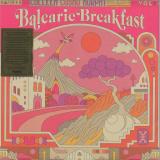
Colleen ‘Cosmo’ Murphy presents ‘Balearic Breakfast’ Volume 4
Heavenly Recordings, limited edition 9 track double 12” vinyl
Released 29th August 2025
“There are curators, and then there's Colleen 'Cosmo' Murphy.” Resident Advisor
The sun has finally come out. It’s the first time something like this has happened for months and months; the first glow of an approaching summer, whatever date the calendar is currently saying it is. The whole thing acts as a curative meditation, miraculously wiping away all the greyness of the past few months. Right now, optimism abounds, outlooks change and your daily soundtrack has shifted from spiky and uptight into a kind of cosmic space where songs ebb and flow and drift on like rivers run on forever towards the glimmering sea. Bliss, right?
If you’re reading this, we’re assuming that you’re the kind of person who views summer as a state of mind rather than a good looking day on the BBC Weather app. With that in mind, we reckon you already know all about Heavenly Recordings’ series of untouchable, utterly essential Balearic Breakfast compilations, each one lovingly compiled by visionary DJ, producer and broadcaster Colleen ‘Cosmo’ Murphy - the genius club legend whose radio show of the same name (broadcast 10am to high noon every Tuesday via Mixcloud) began as an escape route from the pandemic before rapidly building a global community of dedicated Balearican listeners.
Each Balearic Breakfast album has provided a spiritual getaway from the greyness of the everyday through a handpicked selection of glorious, psychedelically coloured, expansive music. It doesn’t matter where on the planet the music hails from, or when it was made, it just matters that it fits like a jigsaw piece into the musical whole. Be it off world jazz music or vocoder led robo-disco music; whether decades old or pressed to vinyl for the first time, everything on these flawless Balearic Breakfast collections just needs to flow together and bring the listener into the sunshine, whatever time of year they’re listening.
Due for release this August, the fourth Balearic Breakfast compilation sees Cosmo take this head trip further than ever before. From the opening track’s swoop and glide that nods to Vangelis’ Blade Runner soundtrack before gliding into it’s own expansive voyage to the stars (Kandeen Love Song) to Cosmo’s own glorious Parisienne stroll through Saint Etienne’s recent Alone Together to Ilya Santana’s Spanish space disco anthem Cosmovision - a track that rolls through like a turbo powered Supernature - and the phenomenal 2015 disco version of Gloria Ann Taylor’s early ’70s classic Love Is A Hurtin’ Thing, this Balearic Breakfast offers the perfect soundtrack to the summer, whether it’s actually happening outside or just taking place in your head. After all, they don’t call breakfast the most important meal of the day for nothing.

Reedale Rise has already made his mark with releases on Frustrated Funk and Delsin, but this latest release shows there's a whole new side to his sound. If you think you know him, think again. He's come through with three tracks of pure futuristic depth, all infused with Detroit influence. Envision Blade Runner-inspired machinery, deep house grooves and endless soul--this EP is a must for any true enthusiast. Detroit's Big Strick lays down his iconic tough-soul-house swing on the remix, completing a record that channels the lost history of underwater alien civilisations.

Neon Green Vinyl[27,94 €]
Ride bassist Steve Queralt’s debut solo album Swallow is a beautifully brooding nine-track collection that combines the darkly textured soundscapes of early M83 and Sigur Rós with an electronic sheen reminiscent of Boards Of Canada. It also features guest vocals from Sonic Cathedral labelmate Emma Anderson (formerly of Lush and Sing-Sing) and Verity Susman (Electrelane, Memorials).Swallow has been slowly but surely pieced together between Ride albums and tours over the past five years and, perhaps as a result, has a slightly dystopian, Blade Runner feel that reflects the liminal spaces in which it was created.Despite the fact that the majority of the album is instrumental, there is plenty of power and emotion poured into these moody, moonlit soundtracks. When words do appear, an underlying anger and political slant emerges and amplifies the album’s dark intensity. This is most notable on the closing track, ‘Motor Boats’, where he overlays words from Julie Sheldon’s polemic poem The Same Boat (“We’re all in the same boat they say, but I would disagree”). According to Steve, these simple words of rejection “capture the reality of our times perfectly”. However, it was the collaborations with the two guest vocalists that tied the whole thing together and paved the way to the finished album. “After a few false starts, I had started to doubt the project altogether. It was going nowhere,” says Steve. “Then, out of the darkness, Emma got in touch to tell me that she’d found her voice and could I send her some tracks. A few files back and forth and an afternoon in the studio later and we had ‘Lonely Town’ and ‘Swiss Air’.”In the meantime, Verity from Electrelane had added vocals to the song ‘Messengers’ and transformed the track. Matthew Simms, now her bandmate in Memorials, would go on to mix the finished album.“Swallow has turned out so much better than I had hoped,” enthuses Steve. “I’d fallen out of love with it so many times I was thinking of calling it Loveless. But then, that wouldn’t be the whole story.”

If this LP exists it is thanks to the vision, energies, work and perseverance of Thomas M. Lopez, aka Meatball Fulton. He is the president and one of the founding members of the ZBS Foundation (ZBS stands for Zero Bullshit), where the audio dramas written by Lopez himself were born. Dramatic programs with stories that blended noir, comedy and science-fiction genres such as Ruby The Galactic Gumshoe or Jack Flanders were produced to critic and public acclaim. It was in Ruby The Galactic Gumshoe that the Android Sisters, who would later have their own spin-off series, first appeared. The characters represent two robotic siblings that Tom Lopez created under big influence from Do Androids Dream of Electric Sheep?, the Philip K. Dick novel that was taken to cinema by Ridley Scott in Blade Runner. The Androids were performed by actresses Ruth Maleczech and Valeria Wasilewski.
The big success of these “cosmic and comic” sci-fi series, as they are described in the ZBS Foundations website, led to the releasing of cassette tapes, CDs, USBs and podcasting of the stories. Along with these, several music albums were also released in different formats. One of them is Songs Of Electric Despair, the first of two released by the Android Sisters. The songs contained are written by Tom Lopez and his long time collaborator experimental musician Tim Clark.
The Android Sisters Songs Of Electronic Despair LP was originally released as a ZBS Foundation cassette and also as a vinyl LP on Vanguard in 1984. It featured 11 compositions (two bonus tracks not on the original LP have been added to the Wah Wah reissue) on which the experimental synthesizer music of Tim Clark finds a perfect counterpoint in the deliciously surrealistic, cosmic social satire of Tom Lopez’s texts, magically performed by the robotic, yet sensual voices of the Android Sisters as performed by Maleczech and Wasilewski. Clark composed and performed the backing tracks on the Synclavier II synthesizer.
The Wah Wah reissue comes with two bonus tracks not on the original 1984 LP, respects the beautiful original album artwork and enhances it with a 4 pages full colour insert with notes and lyrics of the songs.
BARBARELLA MEETS PHILLIP K. DICK!
RIYL : SYNTH POP CYBERPUNK with DEVO’s sense of humor, LOGIC SYSTEM, FRANK CHICKENS or even some 1990s things to come such as LIKE A TIM or ARPANET.

If this LP exists it is thanks to the vision, energies, work and perseverance of Thomas M. Lopez, aka Meatball Fulton. He is the president and one of the founding members of the ZBS Foundation (ZBS stands for Zero Bullshit), where the audio dramas written by Lopez himself were born. Dramatic programs with stories that blended noir, comedy and science-fiction genres such as Ruby The Galactic Gumshoe or Jack Flanders were produced to critic and public acclaim. It was in Ruby The Galactic Gumshoe that the Android Sisters, who would later have their own spin-off series, first appeared. The characters represent two robotic siblings that Tom Lopez created under big influence from Do Androids Dream of Electric Sheep?, the Philip K. Dick novel that was taken to cinema by Ridley Scott in Blade Runner. The Androids were performed by actresses Ruth Maleczech and Valeria Wasilewski.
The big success of these “cosmic and comic” sci-fi series, as they are described in the ZBS Foundations website, led to the releasing of cassette tapes, CDs, USBs and podcasting of the stories. Along with these, several music albums were also released in different formats. One of them is Songs Of Electric Despair, the first of two released by the Android Sisters. The songs contained are written by Tom Lopez and his long time collaborator experimental musician Tim Clark.
The Android Sisters Songs Of Electronic Despair LP was originally released as a ZBS Foundation cassette and also as a vinyl LP on Vanguard in 1984. It featured 11 compositions (two bonus tracks not on the original LP have been added to the Wah Wah reissue) on which the experimental synthesizer music of Tim Clark finds a perfect counterpoint in the deliciously surrealistic, cosmic social satire of Tom Lopez’s texts, magically performed by the robotic, yet sensual voices of the Android Sisters as performed by Maleczech and Wasilewski. Clark composed and performed the backing tracks on the Synclavier II synthesizer.
The Wah Wah reissue comes with two bonus tracks not on the original 1984 LP, respects the beautiful original album artwork and enhances it with a 4 pages full colour insert with notes and lyrics of the songs.
BARBARELLA MEETS PHILLIP K. DICK!
RIYL : SYNTH POP CYBERPUNK with DEVO’s sense of humor, LOGIC SYSTEM, FRANK CHICKENS or even some 1990s things to come such as LIKE A TIM or ARPANET.

VALIS is a new ongoing project that was initiated over a year ago by Reeko and Eduardo De La Calle. The project is a tribute to Philip K. Dick, the author of the novel that inspired the iconic film Blade Runner. Given the ambitious and extensive nature of the project, the artists have focused on transposing the cinematic and dystopian sci-fi feel that characterises the author's work on a sonic level.

"Vangelis (29/3/1943 –17/5/2022) was a Greek musician, composer, and producer of electronic, progressive, ambient, and classical orchestral music. He composed the Academy Award-winning score to Chariots of Fire (1981), as well as for the films Blade Runner (1982), Missing (1982), Antarctica (1983), The Bounty (1984), 1492: Conquest of Paradise (1992), and Alexander (2004), and the 1980 PBS documentary series Cosmos: A Personal Voyage by Carl Sagan. Vangelis started writing music when he was 4 and performed his first live concert at age 6. He started his career as a member of The Forminx. In the sixties, he was a founding member of Aphrodite's Child along with Demis Roussos and Lucas Sideras. He also enjoyed succes as part of Jon & Vangelis early in the eighties. The Best Of Vangelis from 1993 is an absolute classic. It contains Vangelis classics like “Alpha”, “To The Unknown Man”, “Pulstar (Audio)”, “Spiral” and “So Long Ago, So Clear” featuring Jon Anderson from Yes. Now for the first time available on vinyl as a Limited Edition 2LP set, on white coloured vinyl.
ele

Lenske's 23rd release is a comeback by the undeniably talented Milo Spykers. With his fifth release on the label, the Belgian producer and DJ solidifies his strong presence within the Lenske family. This EP features his distinctive blend of harder techno and psy-elements, delivering an electrifying package and his most mature to date.
This four-track EP is a testament to Spykers' unique style and innovative approach, perfect for the sweaty dancefloor. It kicks off with the title track 'Thunderworld', bringing a stomping kick and a hard, rolling groove. The bouncing lead, reminiscent of a thunderstorm, paired with cinematic alien sound design, creates an intense atmosphere. A breakbeat section provides a contrasting element, heightening tension during the break. Following, 'Ghostrider' features metallic percussion resonating throughout the track, with a rolling bassline and a catchy groove that keeps listeners anchored to the dancefloor. The rising dark bassline adds an intimate
vibe, building suspense and intensity.
With a bouncy groove and a trancy bassline, 'Warp Drive' takes listeners on a mind-bending journey. The synth seems to rise from the underworld, pushed by a distorted bass evoking the sensation of racing through a neon-lit tunnel, akin to a Blade Runner-esque landscape. Closing the EP, 'Croton' showcases Spykers' producer-skills once again, delivering a rolling distorted bassline and saturated percussion that the Belgian producer is best known for. Dark leads dominate the scene, merging seamlessly with the fast-paced, aggressive cut, while delayed leads on the downbeat add color and atmospheric pads unify the composition, introducing a touch of darkness.

VALIS is a new ongoing project that was initiated over a year ago by Reeko and Eduardo De La Calle. The project is a tribute to Philip K. Dick, the author of the novel that inspired the iconic film Blade Runner. Given the ambitious and extensive nature of the project, the artists have focused on transposing the cinematic and dystopian sci-fi feel that characterises the author's work on a sonic level.

A new album is finally on Drivecom. A 2xLp full of new tracks recovered and rearrenged around 2022-23. No doubt the legacy of the past works are represented. Some arpeggios and melody lines will remember us to sonic landscapes from the “La Hora de las Máquinas” or “The Source” albums by Boris Divider but with a new and refreshed production sound, for sure this will be a must item for all the electro community and fans of the label.
The album opens with the intro track “The Way You Feel Me” a mix between electro and synthwave with a moog bass and arpegio reminiscent of some Arpanet’s “Wireless Internet” tracks. Then followed for the “Letters From A Sleeper” theme. As the track’s name reflects, it's a clear tribute to the synth era of David Harrow/Anne Clarke’s “Sleeper in Metropolis” just like a reply from a postnuclear future, with a big role carried out by the initial synthline. Then the first slow bpm track is for “Distante” where synthlines a la Tangerine Dream are crossed and mixed with vintage digital rhythm machine sounds and the pattern seems to be taken from those Dire Straits’ “Money for nothing” intro drum arrange in an infinite and repetitive way.
In the B Side “You Know What I Know” track is again showing an Arpanet-ish intro synthline followed by a sequential prophet's arpeggio which bring us back to the old “La hora de las máquinas” sound. Closing the first 12 inch is “Sin Mirar Atrás”. One of the most important tracks of the album for the author. A big dimensional and introspective track full of vintage synthlines and reverb. Time for “Your Light” track is again here. This song was already presented with its own reference on Drivecom. A future pure Electro classic which was announcing the album months before.
In the same side, we find another slow tempo theme called “Recursos Infinitos” an instrumental track which implements several synthlines that interlink themselves into an infnite Tangerine Dream’s soundtrack that serves as a little break to the power and darkness of “Cenital”. Electro rhythm patterns and dark arpeggio synthlines in the vibe of Vangelis’ Blade Runner are mixed in this cold dystopian agressive dancefloor track. Later we find the theme that gives name to the album: “ Memories From The Dust” a slower track which mixes sounds and melodies between “La Hora de las Máquinas“ and other 80's digital keyboard sounds. The last track is just an outro theme called “Out of Sync”. Its name is a clear statement of its own musical arrangement, synthlines are full out of timing and synchro, it was recorded in realtime from a modular synth to a digital device in one take.

• Transparent red LP with HQ download limited to 250 units worldwide.
• Previous collaborations with Pete Namlook for the FAX label and Alio Die for Projekt .
• Soundtrack work featured in trailers for The Hunger Games 1 & 2 and Blade Runner 2049.
Vion is the 29th full-length album to bear the name of Italian soundtrack composer, engineer, and producer Lorenzo Montanà. It is his first solo effort for Oakland-based emotive electronics outpost n5MD.
Vion began as a means for Montanà to experiment with jazz brush drum patterns. The album slowly took shape, and further experimentation gave way to stylistic shifts that, in turn, broadened the album's palette to include ought-era experimental electronica motifs and percolating ambiance. Motion is a constant with nearly all of Montanà's output; details are ever-evolving, rarely static. The brushed drums and leftfield production comple- ment each other and give Vion a sense of lightness juxtaposed with its somewhat melancholic tonality.
With Vion, Montanà has stretched beyond his recent more ambient offerings to include a cross-section of his electronic music output thus far.

The Italian trio Desert Wave was formed in 2016, when Drugo (drums) and Logan (bass) were already playing in a doom metal band and then decided to break away and form their own with a more psychedelic/stoner-style. Guitarist Burton joined them a month later, and their musical influences were quite similar: Black Sabbath, Pink Floyd, Led Zeppelin, 70's hard rock, Seattle grunge, up to the granite desert sound of Kyuss.
With "Deafening Silence" they created a more psychedelic and epic, mostly instrumental, sound than their 2017 debut “Lost In Dunes”, much more like the long jam sessions they play in the rehearsal room. The songs were born during the pandemic that deeply marked the band. Like everyone else, they spent several weeks at home, while the empty streets generated a ghostly and disturbing silence. The lyrics are a bit dark and gloomy and on "Endless Night", Logan's voice carries that ghostly presence that loomed over us all. Drugo designed the artwork, as a tribute to the Blade Runner movies. In both films, as in the songs on the album, there was the same feeling of foreboding that hovered in a dystopian future, in which not all the answers are clear and many questions are still unanswered. Burton's powerful guitar riffs echo in this unreal silence, sometimes increasing the sense of restlessness, other times instead, in the more psychedelic parts, they create a crescendo of impotence and inevitability that totally invades you and from which you cannot escape. Purple edition.

Gatefold Sleeve / 180g Vinyl
Returning to the well of Roger Doyle once again, his “Babel” project spans a decade of composition work before its’ initial release in 1999 as a 5CD set. Over 100 pieces and almost 50 collaborators it marks a journey through a virtual tower of Babel with each piece corresponding to a room within an imagined giant tower city. For the 25th Anniversary vinyl edition Doyle has revisited it- remastering it and providing its first vinyl edit - 80 minutes spread across two 180gm LP’s - rounding out the package with extended liner notes and a download code to the full 6 hours.
We’ve previously explored Roger’s Operating Theatre days and the idea for this project came in the early nineteen eighties while Doyle was heavily involved with the experimental theatre group. Working with emerging technologies and across a variety of genres he realised that he would be unlikely to achieve an overarching compositional style. Instead deciding to make a virtue out of the fact that he composed so schizophrenically, he wished to create a musical alphabet out of short abstract sounds with these sounds being analogous to phonemes in speech. With Blade Runner and sci-fi embedded in the zeitgeist of the times he came to the idea of the Tower of Babel as both a futuristic skyscraper and also an embodiment of language.
In the spring of 1990 Babel was finally begun and kept growing until it reached over 6 hours of music and was released in 1999.A large-scale musical structure making use of many technologies and music languages, with each piece of music being thought of as a 'room' or place within an enormous tower city. Each track in the main section corresponds to a virtual sonic architecture. The pieces are divided into two kinds: aural representations of actual spaces like The Dressing Room, The Stairwell and Mr. Brady's Room alongside internalised dream spaces like the Room Of Rhetoric, the Spirit Levels and the Mansard childhood memory room. Listeners can navigate their way differently through this virtual building at each hearing. As a supplement to the Babel Tower KBBL - the fictitious radio station – broadcasts a number of shows. Each has its own style and atmosphere. Collaborating with DJs, actors, writers and singers, KBBL is made to sound like a real radio station with ads, traffic reports and phone-ins.
Examples of the connections within the project can be found via the architecture were the saxophonist in the off-stage dressing room is rehearsing for her solo in the concert-hall (heard in Pagoda Charm) or the room off the stairwell, where the sounds of piano lessons and apartment life can be heard and the apartment where a muffled KBBL can be overheard At a molecular level The Iron Language Alphabet is a sound alphabet containing tiny fragments of sound representing letters or characters of an alien alphabet. This sound alphabet can be heard scattered through other pieces like The Room of Rhetoric, Pagoda Charm and in KBBL in Johnny’s Body at 002. Other molecular scatterings can be found in Cantilena where two songs sung by Operating Theatre’s Elena Lopez in KBBL are exploded and re-arranged to form new entities.
Doyle’s Babel celebrates language - a slight variation on the Biblical morality tale - and musical expression in all its variety.

Lonnie Liston Smith hat sich als Sideman mit legendären Bandleadern wie Art Blakey, Pharoah Sanders und Miles Davis einen Namen gemacht. Er erschien zum ersten Mal auf einer Flying Dutchman-LP, als er Piano auf dem Leon Thomas-Album 'Spirits Known And Unknown' spielte, das 1969 veröffentlicht wurde. 'Live!' wurde im Mai 1977 im Smuckers Cabaret Club in Brooklyn aufgenommen und beinhaltet neben einem schnellen Streifzug durch 'Expansions' über 'Visions Of A New World' aus der gleichnamigen LP von 1975. Das atmosphärische 'Prelude' klingt nach einem Vorläufer von Vangelis' Soundtrack für den bahnbrechenden Science-Fiction-Film 'Blade Runner'. Es war Smiths letztes Album für Flying Dutchman und ein perfekter Abschied. 'Live!' ist seit Jahrzehnten auf Vinyl vergriffen und erscheint nun als wertiges 180Gr. LP-Re-Release!

VOL 2[88,19 €]
As the developers at Relic Entertainment busily crafted the grand space strategy of 1999’s Homeworld, series composer Paul Ruskay was left largely to his own devices in crafting the now iconic score. He took diverse inspiration from Vangelis’ score for Blade Runner, Brian Eno, the sampling of traditional instruments from all over the globe by Algerian DJ Cheb i Sabbah, and ambient electronica duo Delirium. Homeworld’s score was born of limitations thanks to Ruskay’s “primitive setup” of synthesiser, sampler and sequencer — at the time his Studio X Labs were being built around him — and this forced him to produce instinctive, live mixes.
During the Homeworld Remastered Collection restoration process, Ruskay dug out the original music DAT tapes out of a shoe box, dusted off decade-old Pro Tool Studio sessions, and had uncompressed versions made of all tracks. Subtle, faithful musical elements were added to help widen the mixes of the first Homeworld, before it was then mindfully remixed and sequenced.

Skylax Records Is Proud to Introduce You to the Sound of Uk Artist De La Phoenix, Introducing "Dancefloor Fatale" - an Explosive 12 Inch Driven by the Revolutionary Soundscape Crafted by Klf, Kraftwerk, and the Infectious Allure of Italo Disco. This Ep Unleashes a Formidable Assault on the Dancefloor, Merging Futuristic Beats, Pulsating Rhythms, and Infectious Melodies. "Dancefloor Fatale" Showcases Five Electrifying Tracks: "1991 Ultra," a Nostalgic Homage to the Early '90s; "Dancefloor Fatale," an Irresistible Anthem Commanding Bodies to Move; "Blade Runner," a Cybernetic Voyage Through Dystopian Soundscapes; "Prometheus," an Epic Odyssey of Melodic Euphoria and Sonic Rebellion; and "The Rite," a Ritualistic Experience Defying Conventions. These Tracks Resonates With the Spirit of Resistance, Igniting Raves in Northern England During the Era of the Criminal Justice and Public Order Act. De La Phoenix's Sonic Artistry Proudly Follows in the Footsteps of Justified Ancients of Mu Mu. Embark on a Bold Auditory Journey That Challenges Norms and Leaves an Indelible Mark. "Dancefloor Fatale" Epitomizes De La Phoenix's Innovative Vision, Pushing Sound Boundaries to Invigorate the Electronic Music Scene. Brace Yourself for a Revolution That Captivates and Energizes....

If there's one specific component that grounds 'Sky Flesh', it's focus. Italian musician and sound designer Marta De Pascalis flexed her technical muscle on 2020's 'Sonus Ruinae', layering various sounds and processes in an attempt to touch the sublime. In contrast, 'Sky Flesh' is a single thought, composed using just one instrument: the Yamaha CS-60. A slimmed-down sibling to the gargantuan CS-80 - the analog synthesizer used by Vangelis to create his iconic 'Blade Runner' score - the CS-60 was released in 1977, a few years before the MIDI protocol was introduced to help standardize production methods. MIDI would change the electronic music landscape completely, offering a level of control that De Pascalis consciously relinquishes, preferring to highlight expressiveness and timbre, elements more readily associated with acoustic instruments. The album arrives as much of the wider experimental scene busies itself with algorithmic composition and AI-assisted modeling; De Pascalis chooses to work instead like an organologist, harnessing the CS-60's mercurial magic to suggest deeper truths about our evolving relationship with machines.
Currently based in Berlin, De Pascalis grew up in Rome, where she was surrounded by atrophied ruins that piqued her interest in decay and memory. Over her last three albums, she used tape loops and advanced synthesizer techniques to create a unique sound world that's guided by her musical philosophy, rather than a specific aesthetic. As she's developed her technique and confidence, her music has become even more idiosyncratic, and at this stage in her career she's stripped her sound down to its core elements, focusing on emotion, narrative and mystery. Using timbres that recall a time when electronic music still waved towards the future

Erleben Sie die düstere und mysteriöse Seite des Italo Disco Sounds mit „The Dark Side Of Italo Disco Vol. 3“. Diese Vinyl-Schallplatte präsentiert sorgfältig ausgewählte Titel aus dem Italo Disco-Genre, die sich in Richtung New Wave bewegen und sich von den typischen, fröhlichen Italo-Songs abheben.
Die Tracks auf dieser Platte sind geprägt von einer intensiven Atmosphäre und einer einzigartigen Kombination aus elektronischen Klängen und dunklen Melodien.

Oblako Maranta is the collaboration between Radial Gaze and A-Tweed. The duo has already released several tracks in different compilations by Samo Records, Electric Shapes, Playground Records, as well as their debut EP “Maranta Kicks” on Duro.
In their new EP “Trance Beckenbauer”, the St-Petersburg-based Radial Gaze and Rome-based A-Tweed produced 4 original tracks that finely blend the sound of each artist, where slow tribal techno meets acid weird disco.
Starting off with the title track “Trance Beckenbauer”, Oblako Maranta brings us through a cinematic voyage, paced by percussive wonders and catchy bass lines, hypnotizing the listener from the first kick on. The atmosphere is dark, trippy, beautifully loved in an analog synth “duvet”. With that feeling of timelessness, “Trance Beckenbauer” sounds like the perfect fit for the next Blade Runner´ s soundtrack.
Next on the tracklisting is “Putos Mosquitos”, a tune that gives a feel of crossing a jungle full of wild life, with weird acid patterns on repeat, groovy percussions, and that sense of limitless adventure as the track plays on.
“Congarella di Luna” is a bewitching tune blending a mesmerizing melody with dreamy pads, finely arranged as the drop brings the energy down before reaching its paroxysm: an irresistible melodic pattern that will leave no one still on the dancefloor.
The fourth track “Analog Garbage” ´should bring any human being on the planet to an ecstatic state as it infuses that energy that makes you move fast and forward, without looking back. Indeed, “Analog Garbage” is driven by a fat bass riff and a kick-drum that tirelessly hammers the pace, while acid melodies are raining as the track unfolds. And there is that drop…
The EP is completed with first-in-class remixes by Inigo Vontier and Zillas on Acid, who reworked “Putos Mosquitos” and “Congarella di Luna”, respectively.
Artwork by Danish artist Christoffer Budtz.

Metallic Spheres, The Orb’s 2010 collaboration with Pink Floyd’s David Gilmour has been remixed and reimagined for a reissue which will be called Metallic Spheres in Colour
‘Metallic Spheres’ by The Orb and David Gilmour, the guitar and voice of Pink Floyd, has been reimagined and remixed as ‘Metallic Spheres In Colour’. Of this rework, producer Youth says “The idea for Metallic Spheres In Colour, was that Alex Paterson (founder of The Orb) could have done more on the first version, and he didn't really have the opportunity because we had a philosophy of making the music like the ‘Blade Runner’ soundtrack meets ‘Wish You Were Here’. So, I asked him why don't we remix it and make it like an Orb classic? And in doing that, it's almost like a completely different album.”

Galcher Lustwerk has put together a collection of 10 ambient cuts here that he wrote to score a film by Josh Kline, a fine artist whose solo exhibition "Project for a New American Century" recently opened at the Whitey Museum of American Art in New York. It is a dystopic science fiction movie that details what happens after the climate crisis really takes hold. The music is an esoteric mix of free jazz, drones and bleeped-out ambient that is alive with busy, fizzing frequencies. It's a dense, textural brew that collides synth and sax sounds into a new sort of tribute to Ridley Scott's Blade Runner score.


This new album compiles several songs made in the years following Black To Comm's classic "Alphabet 1968" album. Originally released on the seminal Type label in 2009 (and to be reissued on Cellule 75 this year) "Alphabet 1968" combined the sound of vintage shellac and vinyl loops with broken electronics and field recordings, the press release mentioning disparate influences "ranging from Moondog to Basic Channel by way of Bernard Herrmann". In a beautiful one-page review in The Wire magazine (later reprinted in his book Ghosts Of My Life) Mark Fisher compared Richter's music to JF Sebastian’s miniature automata in Blade Runner ("with their bizarre mixture of the clockwork and the computerised, the antique and the ultramodern, the playful and the sinister"), ETA Hoffmann's inventor-magicians and Auguste Villiers de l'Isle-Adam's 1886 tale of Thomas Edison's (fictitious) construction of an artificial human.
Now titled "Coh Bâle" (inspired by a strange dream) these recordings were supposed to become a follow-up to said album but for reasons unknown it never materialized and the album seemed forever lost. At the time Richter started to dive deeper into several strains of (so-called) world music aka the folk music of Southeast Asia and Eastern Europe as well as liturgical and medieval music, the Kraut-Electronica of Harmonia and several certain Mediterranean experimentalists from the 1980's who started to merge their mostly electronic and field recording based compositions with traditional musics from all over the world by way of new sampling technology.
Many of the songs for the album were recorded while travelling and at various residencies around Europe: a detuned piano in a Thessaloniki basement (Richter played at a children's birthday party there), vintage synthesizers in the GRM studios in Paris, decaying acoustic instruments found in an old Black Forest mansion, childrens' voices at a workshop in Karlsruhe's ZKM Institute; then mixed on headphones in the ICE trains running between these places and his hometown Hamburg.
"Coh Bâle" is taking inspirations from old Nonesuch Explorer and Ocora LP's, Crammed Records, 80s Mediterranean Ambient (Nuno Canavarro, Roberto Musci) combined with the DIY spirit of Deux Filles and Flaming Tunes and the playfulness of Asa Chang & Junray. The songs are both mysterious and transparent, intricate and frugal, vibrant and patient. One of the album's unexpected climaxes is a gorgeous (artificial) berimbau version of the Welsh traditional "Iechyd o Gylch".
No two songs feature the same instrumentation and many acoustic sources (pianos, flutes, wood percussion, viola, tablas, autoharp) were disassembled and later coalesced into new configurations or used as virtual instruments; later combined with samples, field recordings, electronics and (on a few tracks) autotuned vocals reminding of recent works by the likes of Claire Rousay or More Eaze.
We had to wait for a worldwide pandemic for Richter to dig deep into the vaults and finally bring these recordings to light. This is the 2nd release from his archives after the "Diode, Triode" LP which presented Musique Concrète/Acousmatic recordings made at INA/GRM and ZKM. Another massive Double-CD (MM∞XX Vol. 1 & 2) was released last year featuring collaborations with 33 artists such as Andrew Pekler, Richard Youngs, Eric Chenaux, Maja Ratkje, Radwan Ghazi Moumneh of Jerusalem In my Heart, GRM boss François Bonnet (Kassel Jaeger), Felix Kubin, Timo van Luijk (In Camera, Af Ursin), Luke Fowler and many others, showing Richter's versatility and his willingness to reinvent himself for every new release.
Marc Richter is widely known under his Black To Comm moniker, having released (at least) 12 albums under this alias in the last 20 years. He is currently signed to the Thrill Jockey label. Richter composes soundtracks for film and has worked with visual artists such as Mike Kelley and Ho Tzu Nyen. He also records as Jemh Circs and Mouchoir Étanche for his own Cellule 75 label (named in tribute to the late Luc Ferrari).

Marc Richter aka Black To Comm released his debut record 20 years ago. In 2023 he is still busy releasing music under various disguises and is currently signed to the Thrill Jockey label. To celebrate this anniversary his own Cellule 75 label is re-releasing some classic out-of-print vinyl albums that originally came out on the defunct Type and De Stijl labels. The LP will feature a full-colour printed inner sleeve exclusive to this edition.
In 2009 the Type Recordings label run by John Twells had just released seminal records by Grouper, Jóhann Jóhannsson and Yellow Swans when they signed Richter and put out his breakthrough Alphabet 1968 album. The LP sold out within two weeks, receiving a glowing full-page review in The Wire Magazine by the late Mark Fisher (later reprinted in his book Ghosts Of My Life), was selected for Boomkat's Top 10 releases of the year (alongside debut albums by Leyland Kirby, Demdike Stare and Oneohtrix Point Never) and was greeted with universal praise in the underground blog network as well as established magazines such as The New Yorker and Pitchfork.
The music itself played with the notion of nostalgia without being nostalgic itself. It's the sound of half-remembered dreams, a surreal distorted vision of the past, an aural polaroid of long forgotten musics, a ghostly voice from a non-existent era.
From the original Type one-sheet:
"The mission statement for Alphabet 1968 was to write an album of "songs" for want of a better word. Short tracks which represented genre points, the milestones which stuck in Richter's mind when he thought back to his favorite records. What we arrive at is a breathtaking 10-track album which, over the course of 45 minutes, explores world music, techno, noise, avant-garde, ambient music and even exotica. Each track is linked with a loose thread of radio static or environmental sound, dragging you through the album, as if tuning in to a stray broadcast or a particularly adventurous mix. Richter has pieced the album together from hours of recordings made at his studio with home made gamelan, small instruments and loops gathered from a collection of ancient vinyl and 78 records. The scope of the album is admirable, but ignoring this, it is simply a shockingly arresting collection of experimental oddities, with references ranging from Moondog to Basic Channel by way of Bernard Herrmann. It's not hard to fall in love with Alphabet 1968, far harder would be to place exactly where the record should fit into your collection."
Mark Fisher in The Wire:
"But what if we were to take Richter's provocation seriously - what would a song without a singer be like? What would it be like, that is to say, if objects themselves could sing? It’s a question that connects fairy tales with cybernetics, and listening to Alphabet 1968, I’m reminded of a filmic space in which magic and mechanism meet: JF Sebastian’s apartment in Blade Runner. The tracks on the LP are crafted with the same minute attention to detail that the genetic designer and toymaker brought to his miniature automata, with their bizarre mixture of the clockwork and the computerised, the antique and the ultramodern, the playful and the sinister. Richter’s musical pieces have been built from similarly heterogeneous materials - record crackle, shortwave radio, glockenspiels, all manner of samples, mostly of acoustic instruments. ….. JF Sebastian's apartment was itself an update of older spaces in which science and sorcery co-existed: the workshops of ETA Hoffmann's inventor-magicians, or of Pinocchio's creator, Geppetto. I think, too, of Auguste Villiers de l'Isle-Adam's astonishing 1886 tale The Future Eve in which Edison, using the expertise he has recently acquired from inventing the phonograph, sets himself the task of constructing an artificial woman. But if there are songs here, they are sung by the gramophone and other recording and playback machines. Richter so successfully effaces himself as author that it is as if he has snuck into a room and recorded the objects as they played (to) themselves. Rather than simply automating his music, as in the case of Pierre Bastien and his mechanical machines, Richter makes us feel that he has merely recorded the unlife of objects. ….. Indeed, the impression of things winding down is persistent on Alphabet 1968. Entropy has not been excluded from Richter's enchanted soundworld. It feels as if the magic is always about to wear off, that the enchanted objects will slip back into the inanimate again at any moment."
