Verdant Recordings 3rd EP is a collaboration between the rising talent Aos and Sonitus Eco. A debut release on vinyl for Aos who has previously released digitally on Blankstairs with the enchanting 90 East minialbum. Sonitus Eco should be well know for his own Harr label and for his majestic ambient and dub techno projects with Silent Season. On this release both bring their love of deep atmospheric and melodic techno for two original works which are then reconstructed by each other. Its fascinating to hear how these tracks reshape the original signatures. An EP that reaches for the stars and yet is subtly introspective and melancholy. 180g pressing an once again the artwork features the beautiful colours of Sophie O'Leary.
Поиск:blue label
Все
Here Appear is an invocation, a salutation, and a celebration — of past and perfect lives, forgotten and remembered, exchanged and borrowed. Eve Essex's solo debut is a multi-instrumental fea(s)t combining synthesizer, drum machine, alto saxophone, piccolo, electric organ/harpsichord, harmonica, slide whistle, bells, guitar pedals, and voice— composed, arranged, and performed by Essex herself. What began as an improv set at Berlin's Harlekin bar, developed over the past two years into a complete body of work evoking multiple time periods, genres, characters, and sonic landscapes. The seven tracks that make up Here Appear harness elements of classical, drone, avant-jazz, and distorted pop, coupled with an ambitious vocal delivery that draws on the phrasing and articulations of Essex's own woodwind playing, to create a quasi-narrative me´lange retaining the vulnerability of live performance. On the opening track Grind Away,' otherworldly harmonica strains set the stage for lyrics citing Chinese sci-fi novel The Third Body Problem as source material. Saxophone and piccolo interludes Immediate Communicator' and Colorless Stone' move between medieval-tinged melodic inventions and textural noise, recalling a Pharoah Sanders-influenced fever dream, while the linguistic abstractions of Russian conceptual poet Lev Rubinstein guide the looped, layered, and textured vocals of title track Here Appear.' The album closes with a languid take on Jacqueline Humbert & David Rosenboom's 1978 composition Clear Light' from My New Music, recently reissued by Unseen Worlds. Here Appear owes its minimal production to the conditions of its genesis, evidencing the restrained process of the solo artist, instrumentation is confined to what can be played simultaneously. True to the album's avant-garde roots, each song involves an element of improvisation, often taking the form of prompts or variations on a melody rather than explicit compositions. Even its most structured pieces make use of live-sampled loops, which inject a spirited unpredictability into the songwriting process and subsequent performance. Classically trained in bassoon at New England Conservatory before receiving a BFA in sculpture from RISD, Eve Essex has performed as a solo artist at Artists Space, Commend, Safe Gallery, Signal, Trans Pecos, and U.S. Blues, in New York, Harlekin/Mathew Gallery and StudioAcht in Berlin, and the PUFFERSS Festival in Providence, RI. In addition to her solo practice, Essex regularly performs as one half of Das Audit (with Craig Kalpakjian), as well as in trios Hesper (with James K and Via App) and HEVM (with MV Carbon and Hunter Hunt-Hendrix), and has collaborated extensively with Juan Antonio Olivares as installation/performance-art duo Essex Olivares. Prior to the LP release on Sky Walking (April, 20), Here Appear arrives via New York City-based label Soap Library on March 9, 2018 in both cassette and digital format, mastered by Helmut Erler at Dubplates & Mastering, Berlin and recorded by Al Carlson at Gary's Electric, Brooklyn.
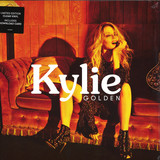
Limited Edition Clear Vinyl
Includes 12' Vinyl and Deluxe CD album, 30 page hard back book
Now that I've been to Nashville,' Kylie Minogue says with audible affection, I understand. It's like some sort of musical ley-line...'
Golden, Kylie's fourteenth studio album, is the result of an intensive working trip to the home of Country music, a city whose influence lingered on long after the pop legend and her team returned to London to finish the record: We definitely brought a bit of Nashville back with us,' she states. The album is a vibrant hybrid, blending Kylie's familiar pop-dance sound with an unmistakeable Tennessee twang. It was Jamie Nelson, Kylie's long-serving A&R man, who first came up with the concept of incorporating a Country element' into Kylie's tried-and-trusted style. That idea sat there for a little while, with Minogue and her team initially unsure about how to bring it to life. Then, when Grammy-winning songwriter Amy Wadge's publisher suggested Kylie should come over to collaborate in Nashville, a city Kylie had previously never visited, something clicked. You know when you're so excited about something,' she recalls, that you repeat it an octave higher and double the decibels I was like that. 'Nashville! Yes! Of course I would!'. I hoped it would help the album to reveal itself. I thought 'If I don't get it in Nashville, I'm not going to get it anywhere.''
Kylie's Nashville trip involved working alongside two key writers, both with homes in the city. One was British-born songwriter Steve McEwan (whose credits include huge Country hits for Keith Urban, Kenny Chesney and Carrie Underwood), and the other was the aforementioned Amy Wadge, another Brit (best known for her mega-selling work with Ed Sheeran). It was then a truly international project: Golden was mainly created with African-German producer Sky Adams and a list of contributors including Jesse Frasure, Eg White, Jon Green, Biff Stannard, Samuel Dixon, Danny Shah and Lindsay Rimes, and there's a duet with English singer Jack Savoretti.
However, the album's agenda-setting lead single Dancing was, significantly, first demoed with Nathan Chapman, the man who guided Taylor Swift's transition from Country starlet to Pop megastar. If anyone knows how to mix those two genres, Chapman does. Nathan was the only actual Nashvillean I worked with. He's got a huge studio in his house, which is probably due to his success with Taylor... there's plenty of platinum discs of her, and others on his walls.' There's something of the spirit of Peggy Lee's Is That All There Is, of Dylan Thomas' Do Not Go Gentle Into That Good Night, even of Liza Minnelli's Cabaret about Dancing, a song which not only opens the album but sets out its stall, providing a microcosm of what is to come. You've got the lyrical edge, that Country feel, mixed with some sampling of the voice and electronic elements, so it does what it says on the label. And I love that it's called 'Dancing', it's immediately accessible and seemingly so obvious, but there's depth within the song.'
The experience of simply being in Nashville was an overwhelming one, before Kylie had even arrived. Once I knew I was going to Nashville, people talked about the place with such enthusiasm. They said without doubt I would love it and, I would come back with songs. They were sending lists of restaurants, coffee shops and bars. It really was a beautiful and genuine response and it felt like I was about to have a life changing experience and in a way, I did.' The reality came as something of a surprise, when she found a far more modern metropolis than the vintage one she'd envisaged. I thought it would be like New Orleans: little houses and bars, with music spilling out onto the street. It reminded me more of Melbourne: apartment blocks going up everywhere! The main strip, Broadway, where the honky tonk bars are, that's where the street was filled with music and it was just amazing.' Mainly, Minogue remembers the heat and humidity. It was 100 degrees. It was like it was raining with no rain.' She also relished the chance to wander around unrecognised, visit a few venerable music bars and soak in the atmosphere. I didn't get to the Grand Ole Opry or the music museums but I managed to go to a couple of the institutions there like The Bluebird Cafe and The Listening Room, and just by being there, through some kind of osmosis, you get this rejuvenated respect for The Song, and the writing of The Song. There's no hoo-hah around it. There's a singer-songwriter there, talking about the song and singing the song, to an audience who are there to listen. Although, I have to confess I was guilty of starting to clap too soon during a long pause at the end of one of the songs. The guy made a bit of a joke out of it and got a laugh from it, but I thought 'Of all people in the audience, no...''
It's probably no coincidence, therefore, that every track on Golden is a Kylie co-write, making it arguably her most personal album to date. The end of 2016 was not a good time for me,' she says, referring to well-documented personal upheavals, so when I started working on the album in 2017, it was, in many ways, a great escape. Making this album was a kind of saviour. I'd been through some turmoil and was quite fragile when I started work on it, but being able to express myself in the studio made quick work of regaining my sense of self. Writing about various aspects of my life, the highs and lows, with a real sense of knowing and of truth. And irony. And joy!'
The songwriting process allowed Kylie to get a few things out of her system. Initially, she admits, it was cathartic, but it also wasn't very good. I think I was writing too literally. But I reached a point where I was writing about the bigger-picture, and that was a breakthrough. It made way for songs like Stop Me From Falling and One Last Kiss. It also meant I had enough distance to write an autobiographical song, like A Lifetime To Repair, with a certain amount of humour. The countdown in that song: 'Six-five-four-three, too many times...'. I don't know if that will be a single, but I can just imagine a girl with framed pictures of past boyfriends, and kind of going 'Oh god, when am I going to get this right'' When she listens back to Golden, Kylie can vividly hear the Nashville in it. It is, she'll agree, probably the first time that a Kylie album has sounded like the place it was made. You wouldn't normally relate my songs to the cities. Can't Get You Out Of My Head sounds more like Outer Space than London. But Shelby '68, for example, was written in London but it was done with Nashville in mind. It's about my Dad's car, and my brother recorded Dad driving it! I don't think I'd have written a number of the songs, including Shelby '68 and Radio On without having had that Nashville experience.'
The latter, she says, is about music being the one to save you.' Throwing herself into the making of the record, she says, crystallised that idea. If there's one love that will always be there for you, it's music. Well, it is for me, anyway.' That song, in particular, carries nostalgic echoes of the golden age of Country, as heard through Medium Wave transistors and tinny home stereos in the distant past. Like any child of the Seventies, Kylie had a basic grounding in Country music, mainly absorbed from older family members. My Step-Grandfather was born in Kentucky and though he lived most of his adult life in Australia, he never stopped listening to his beloved Country artists.' If there's any classic Country singer whose imprint can be heard on Golden, it's Dolly Parton.
Kylie saw Dolly live for the first time at the end of 2016, at the Hollywood Bowl. It was like seeing the light,' she beams. It was incredible. Everyone, whether they know it or not, is a Dolly Parton fan. When I was in Nashville, I did pick up a T-shirt that said 'What Would Dolly Do' Maybe that should be my mantra.' And, whether consciously or otherwise, there's a timbre and trill to Kylie's vocals on Radio On that is distinctly Parton-esque. My delivery is quite different on this album,' she says. A lot of things are 'sung' less. The first time I did that was with Where The Wild Roses Grow. On the day I met Nick Cave, when I recorded my vocals, he said 'Just sing it less. Talk it through, tell the story.' This album wasn't quite to that extreme, but a lot of the songs were done in fewer takes, to just capture the moment and keep imperfections that add to the song. I remember on my last album, a lot of producers were trying to take out literally every vibrato they heard. And that's not natural to my voice. I mean, I can make myself sound like a robot, but it's nice to sound like a human!' Working within the Country genre also gave Kylie permission to write in the Nashville vernacular. Because we were going there, I wasn't afraid to have lines like 'When he's fallen off the wagon we'd still dance to our favourite slow song', 'Ten sheets to the wind, I was all confused', 'I'll take the ride if it's your rodeo'. The challenge of bringing a Country element to the album made the process feel very fresh to me, kind of like starting over. I started to look at writing a different way, singing a different way.'
If ever Kylie lost confidence in the Country-Pop concept, and found herself pondering This is great, but back in the real world - my real world - how will this work', Jamie Nelson was there to badger her into sticking to the path. We found a way to make it a hybrid with what we'll call my 'usual' sound. It had to stay 'pop' enough to stay authentic to me, but country enough to be a new sound for this album. The closer we zoomed in, and the more we honed it, I knew Jamie was right. We sacrificed good songs that weren't right for this album, because we wanted it to be as cohesive as possible. The songs that were hitting the mark were these ones, so we decided to be strong, and that's how we wrapped up the album. What he said, that stuck with me, was that 'I'd hate to get to the end of this and really wish we'd gone for it.'' Having worked with Kylie for so long, Nelson was able to put this latest shift of direction into perspective. He said 'You've traditionally done it throughout your career. You had your PWL time, then you did a complete turn when you went to deConstruction, then another complete turn with Spinning Around, and R&B dance-pop, and then another turn with Can't Get You Out Of My Head, icy synth-pop, and this is another one.' He was right. It felt like the right time to have a change sonically. New label, new stories to tell, and a new decade almost upon me.'
Kylie Minogue will, it's scarcely believable, turn 50 this year. This looming milestone is partly behind the album's title, and title track. I had this line that I wanted to use: 'We're not young, we're not old, we're golden' because I'm asked so often about being my age in this industry. This year, I'll be 50. And I get it, I get the interest, but I don't know how to answer it. And that line, for my personal satisfaction, says it as succinctly as possible. We can't be anyone else, we can't be younger or older than we are, we can only be ourselves. We're golden. And the album title, Golden, reflects all of this. I liked the idea of everyone being golden, shining in their own way. The sun shines in daylight, the moon shines in darkness. Wherever we are in life, we are still golden.' One of the album's shiniest moments is Raining Glitter, an exuberant banger which ventures closest to Kylie's traditional dance-pop comfort zone. Eg White, who is one of the producers and writers and a great character, was talking about disco one day. I said 'I love disco, but you know the brief.' We needed to be going down the Country lane, so to speak. But we managed to bring them both together. When I wrote it, I was thinking about the Jacksons video for Can You Feel It where they're sprinkling glitter over everyone. And I think there's a Donna Summer record that's got that feel to it. I think that's my job: I basically leave a trail of glitter after every show I do anyway.'
Kylie is looking forward to the challenge of incorporating the Golden material into her live shows. Mixing these songs in with my existing catalogue is going to be fun. And it could be fun to do some of those songs with just a guitar. It'll make my acoustic set interesting...'Her incredibly loyal fans - to whom one Golden song, Sincerely Yours, is intended as a love letter' - will, she believes, have no problem with her latest stylistic shift. My audience have been with me on the journey, so I shouldn't be afraid that they won't come with me on this part. I've had fun with it, and I'm sure they will too.'
The time spent making Golden has, Kylie says, been a time of creative and personal renewal. I've met some amazing people, truly inspiring writers and musicians. My passion for music has never gone away, but it's got bigger and stronger.' And if there's an overriding theme to the record, it is one of acceptance. We're all human and it's OK to make mistakes, get it wrong, to want to run, to want to belong, to love, to dream. To be ourselves.'
I was able to both lose and find myself whilst making this album.'
The latest release on Francis Harris' Scissor & Thread label out of Brooklyn is another exercise in deep and meditative atmospheres. The label, comprised of a tight knit collective of multi-faceted composers, vocalists and instrumentalists, always strives to develop new projects based on a shared aesthetic, and this five track EP is both boundary pushing and fully synchronized with the label's approach. With Melquíades' 'Blue Caves' Melbourne based Composer and Sound Designer Alexander Albrecht presents his solo debut EP following on from the 'Tidal River' album he released as part of the Albrecht La'Brooy duo. The title track 'Blue Caves' is a skittering, weightless exploration of space, seemingly built around lush field recordings and fragments of melody developing out of the ether. 'Avlemonas' flows from a similar source, but crystallizes around an off kilter rhythm and occasional subby bass, balanced against swooping pads and piano motifs. 'Morning Breeze' seems to revel in the evocative nature of its title, with hand played percussion backing more wistful, emotive piano sketches and wandering bass notes, before the track settles into a hypnotic groove. Label head Francis Harris provides another take on the track for his Re-form version, a more dancefloor aimed excursion that draws deeply from the classic deep house of the New York and Detroit masters. Ending the relases is 'Patio', which drifts back towards the ambient territories of the opening tracks, with exquisite, understated instrumentation and a melancholic yet elated vibe.
The early 2000s were a time of upheaval for hip-hop. The underground and mainstream divide that had dened so much of the previous decade was showing the rst signs of irrelevance. Timbaland and The Neptunes made radio rappers sound futuristic while independent artists struggled in a quagmire of backpacks and misguided claims to keep it real. Away from this, in a misunderstood middle ground between hip-hop and electronic music, a new generation of artists were busy imagining a new sound for hip-hop.
One such artist was Scott Prefuse 73' Herren, whose perpendicular MPC chops on his 2001 debut for Warp Records set curious minds racing with possibilities. That same year Tadd Mullinix released his debut as Dabrye on Ghostly International, a sonic wildstyle that appealed to both hip-hop heads and IDM nerds. Sometime that same year Herren and Mullinix met after sharing a bill in Detroit. CD-Rs were exchanged and a year later Eastern Development, Herren's newly launched label, released Dabrye's Instrmntl, a short album with a big impact. On its fteenth anniversary Ghostly International is reissuing Instrmtl on vinyl and making it available digitally for the rst time.
Instrmntl is a continuation of the beat experiments Dabrye began with One/Three and a bridge to the diverse textures that would dene Two/Three four years later. About half of its nine tracks (ten if you lived in Japan) were created at the same time as One/Three while the rest were newer or made specically for the album. Once again Mullinix looked outside of hip-hop to techno, house, and drum & bass for stylistic and technical ideas while embracing the blissful minimalism of a good hip-hop instrumental and the rhythmic nuance of Detroit.
Despite the similarities between Dabrye's debut and this follow up, Mullinix didn't simply replicate what had made One/Three so arresting. He pushed and pulled further between the two cornerstones of his approach to reveal more potentials. Instrmntl takes you deeper into electronic depths — the rugged synth stutter of 'Won', the tumbling, wobbling bass in 'No Child Of God', the electro get down of 'Prospects (Marshall Law)' — while also treading more organic grounds by letting samples breathe and moods unfurl at a gentler pace ('Take Me Home', 'Evelyn', and 'You Know The Formula Right'). And then there are the moments where this push and pull nds balance and the result becomes more, as it does on the mournful march of 'D-Town Tabernacle Choir' and the twinkling daydream of 'This Is Where I Came In'.
At just over 30 minutes, Instrmntl offers a snapshot of a time when potentials seemed innite, when lines could be drawn between jazz, ragga jungle, techno, and hip-hop and the resulting shape divined an exciting future.
- Reissue of the out of print 2002 album, available for the rst time on Ghostly.
- Includes previously Japanese-only bonus track, Gimme Lowlands'
- Standard weight blue vinyl is housed in a matte jacket.
- Dabrye's beats are like Jay Dee getting crunked up with Autechre.' — Prefuse 73
Signing on the second release of the label Blue Night Jungle, the duo DudMode disturbs its machines and inspirations around a wild and mystical acid techno - sometimes minimalistic, sometimes extravagant. Two faces of a same coin which the Lyon guys are trying to explore by inviting, for the whole B face, two french artists they feel very close with : Jibis, head-speaker of a new techno beat both dense and aerial , Vardae, owner of the label Allegorythme Records and great defender of a more mental and obscure vibe. « Une Nuit Dans l'Herbe » (« One Night In The Grass ») EP marks the strong come back of lyonnese rave culture's children, already sanctified by a long and sensual experience on the stage.
* From the pumping heart of The Magnetic System comes the 'dirtiest' Da-Da-dancefloor anti-jams with this lost 1979 blueprint of Italian conceptual cosmic disco played by the cream of the Goblin studio band. Ultra-rare and unscrubbed,Finders Keepers finally snip the trip from the cash machine to the trash machine.
* Carving its own grubby niche as an early prototype of cosmic disco cum Italo space funk whilst simultaneously harbouring Dada hat stand satire with a junkshop glam aesthetic, this ecological illogical poplitical crab cabaret clearly broke the mould before way before the jelly had set.
* Fans of 'other' obtuse outernational agit-camp might find a fantasy fusion between France's JP Massiera and Sweden's enviroMENTAL marvel Kaptain Zoom while trying to unravel the Madfilth tangle - but rest assured there were method men behind this madness and a portal to Italian funk royalty still festers
at the bottom of the psych rap scrapheap.
* Originally drip-fed out of Cesare Andrea Bixio's Cinevox stable as one of a tight grip of non-soundtrack LPs, made to test the label's commercial potential, Madfilth would follow the band Goblin (and their non-cinematic Roller) as well as the hens' teeth eponymous long player by the group The Motowns in what was perhaps the last-ditch attempt at custom built popsploitation - combining the skills of overqualified composers with undercooked conceptual mind belches. Naturally, after almost 40 years in the barrel, this micro-brewed oddity finally quenches the acquired taste of a new breed of shambolic psychotropic guzzlers proving that 1979 was obviously good year for fool's gold. The Madfilth medicine has finally come to cure your psychic ills so open wide and don't bite the spoon.
* It is beneath the flamboyant rhythm rants and vari-speed osric slop of alt-comedic sarcy-satirist Alberto Macaro (a genetic beneficiary of a vaudevillian comic bloodline) that we find The Magnetic System maestros Franco Bixio and Vince Tempera as the sonic driving force behind this unmarked treasure trove of
B-musical diamanté discoids. It will also come as little surprise that
Cinevox/Dario Argento favourites Goblin were not too distant from the whiff of this curate's egg with the men who many consider to be the group's greatest assets - bass player Fabio Pignatelli alongside sports rock drummer Agostino Marangolo. It was this unison that remained consistent throughout Goblin's career, weathering the temporary departure of Claudio Simonetti and
maintaining the stylistic heartbeat of the group. Madfilth's inclusion of Goblin synth Maverick Maurizio Guarini and the band's mid-period guitarist Carlo Penessi (founder of the band Etna) pinpoints the jobbing Goblin session group during the time they recorded the soundtracks for the films 'Buio Amiga' and 'Squadra Antigagsters'. This lesser-celebrated late 70s era also witnessed the mutating Goblin rhythm section providing discoid backbeats for records such as Giorgio Farina's 'Discocross' album, Simonetti's own Capricorn alter-ego and the homoerotic nightclub spin-off Easy Going - all of which, alongside Madfilth,
provide a strong mutual stylistic support system for their claim to cosmic disco's deep red bloodline.
Big Crown Records is proud to present this tough as nails split 7' The A side is Paul Ramos version of the Mandrill classic Fence Walk'. Originally released on the Harlem label, and later licensed to Falcon only to oddly appear on their Kris Bravo LP. Ramos stays close to the original, but adds enough to the tune to make it a must have for funk collectors. The B side Funky Resurgence' comes by way of vibes player/bandleader Ulysses Crockett who was a stalwart on the Bay Area scene of the 1960's first with his Latin Jazz group Afro Blue Persuasion and later Ulysses Crockett Magic. He also played in The Skins w/ the legendary Bill Graham. "Funky Resurgence" was one of several compositions he wrote for the 1971 play "Resurgence." During this period, Ulysses was also going through law school and he remains a legal voice, writer and activist in the Bay Area.
Part of the current crop of artists spearheading the UK acid revival, Posthuman's output has evolved over the years, encompassing many genres & styles from their early electronica releases, to their later acid & slow-mo techno.
Their debut release in 2000 was a series of hand made CDs simply called "Posthuman" (though better known by the colour of the card inserts - grey, black, blue and brown). The duo then went on to host a number of parties in an abandoned underground train station in London between 2001 and 2004, and founded their own label Seed Records (2) with which they released 3 albums and several other releases of their own and other artists material. They also were the first act on Manchester based imprint Skam's SMAK sublabel.
Doherty left Seed Records to help relaunch UK techno imprint B12 Records in 2006, and started a new label Balkan Vinyl in 2010.
In 2007, Doherty founded London-based acid house retrospective clubnight "I Love Acid", where Posthuman are monthly resident DJs. In 2014 the clubnight launched a vinyl-only label of the same name. He also performs as AGT Rave Cru and as one half of Altern 8 live shows since 2015.
In the late 1990's label manager Nik Weston was working for Island Records and in particular the label imprint Island Blue set up by Ross Allen. It was here that he first heard the timeless jazz version masterpiece of Amalia from Kirk Degiorgio's As One. The track featured on a promo cd but never made it to a commercial release for Island Blue and was later featured on the full length album release for San Francisco label Ubiquity Records a few years later in 2001. 'Amalia' is a sultry jazz classic featuring gorgeous keys from Jamie Odell aka Jimpster. As relevant today as it ever was when initially made and here presented as a single in it's own right for the very first time. On the flipside another track that never made it to single in this version was the unique jazzual 'Spiritual Rotations' by Butti 49 from Norway. Nik had later worked with Butti 49 whilst working for Exceptional Records for the Habit album in 2004 but 'Spiritual Rotations' itself initially featured as an exclusively album only track for Future Sounds Of Jazz Volume 8 in 2001 for German label Compost. So there you have it... two welcome killer Jazz classics that deserve a revisit for your attention cut on limited 180 gram vinyl for your ears, your turntable and your dancefloor....
This initial release on the new Futurepast label marks Davy's first output as a producer, crystallizing his endeavours in the studio and bearing witness to his long-standing experiments in electronic music.Built between London and Berlin over the last four years, The Long Now lays down the blueprints for following ventures on the label: using old and new gear to create unique, obscure soundscapes both outside of memory and away from nostalgic projections of lost futures. In a timeless and precise collaboration, Davy has brought together two historical figures for this release: 1990s R&S Records associate David Morley mixed the tracks,
while Simon Davey of The Exchange lent his renownedmastering skills to the project.Temporality, time travel and perception are key concepts for Davy, and not only in the EP's title.The four stripped-down tracks move forwards, sidewards and backwards in a bid to get us lost - not in space but in what time might sound like should we be swimming through it.Mysterious and ageless synths mesh with the beats of an unnamed drum machine under Davy's control.We move through a non-linear story told by three distinct forward-thinking techno titles:No Memories Planned, Circular Weeks and Causal Loop.Finally, the titular ambient track pans out cinematically over the images left in our heads:an invitation to begin it all again in The Long Now...
The next collaborative release between Freeride Millenium and Pauls Musique is a terrific two-tracker from Manchester artist Joseph Louis Harland Manning under his new alias Los Angeles with the 7 vinyl release artwork designed by Daniel Rajcsanyi as part of his 'BABY' exhibition in Austria. Joseph Louis Harland Manning was the drummer of the band Wu Lyf and is involved in projects like Los Porcos, the Mancunian boyband Menage a Trois and Dream Lovers. Under his other aliases he released on Aficionado, Cracki, Ocean Records and Is It Balearic sub label Uber as well as having made music videos for Molly Nilsson. Here he is fine form across a pair of delicate and moving synth tracks. Opener 'L'amour' is a gentle cut that starts with celestial chords and wide-open expanses of synth before a buried deep groove slowly comes to the fore. Breathy vocals also add to the loved-up, dreamy feel and the whole thing carries you away in a majestic reverie that shifts from ambience to new age house. The track features the artists own field recordings from the streets of Berlin, twisting up sounds from the sidewalk into percussive notes that give an organic feel. The perfectly soothing second offering is 'I Wanna Go To Heaven' is a gorgeous synth piece that suspends you in a crystal clear blue sky on a warm summer's day. Chords are smeared and stretched whilst angelic, wordless vocals drift by. It is the sound of a blissful passage to the afterlife and will leave you feeling cleansed. This is a truly emotive package of music that marks another first rate release on this ever evolving label
For a label that wasn't around long, Strata East achieved the same sort of label recognition that Impulse! or Blue Note managed to build. In other words, you knew what you were getting when you bought a record on the label, even if you didn't know the names on the outside of the cover. This is no exception. Who is Shamek Farrah Who knows Who cares It's the music that's important. This is the standard spiritually intense new jazz one learns to expect from the label, soaked in some Eastern influences but always with its ear to the street. Musicians took their roles as leaders and spokesmen very seriously back then. This very adult statement from a group of very serious men is no exception. However, what might be an average, forgettable session is rescued by the propulsive engine of Milton Suggs' bass. He adds the fire and the drive that keeps things interesting and prevents the music from wandering into a circular spiritual morass. For fans of the sound or the label, this can be heartily recommended.
As always, a label about quality music and quality packaging without compromise. B12's sub-label FireScope Records is proud to present Darren Nye, the next producer to add a beaming pulsar to the expanding FireScope universe.
Titled 'Emotional Intelligence', FS010 is Darren Nye's first-ever vinyl release and a voyager discovery into five of his finest work. A UK producer who has been writing music since 1995, Darren's emotional and heartfelt work with influences from B12 among others fully represents our ethos of proper techno created today.
First landing — 'Things She Said', where swirling pads wrap themselves around perfectly programmed drums and percussion, complemented by wonderful basslines. 'Emulated Emotion' speaks for itself next. A highly emotive tune with gorgeous pads and percussions carrying the track through while an undulating bassline burbles underneath — a personal spin on B12 influences.
The voyage continues on the flip with 'Plasmid Soul', pure techno soul in its finest form with familiar drums and strings comprising the right ingredients to a timeless tune. Inspired by a photo from a day out in Greenwich and a bad feeling, 'Fragments' is an unexpected side excursion, with its quirky, disjointed bassline recalling the fragments of the past, of yesterday. 'Disconnected Reality' sonically encapsulates the emotions of sadness presented with a ray of hope. A track I wish I wrote!' — Steven Rutter.
No matter how strong we think we are, the words from one person can affect us in ways you'd never thought possible, making us feel disconnected from the world. Our emotional state will never be the same, and the fragments of the past will forever haunt our souls.
Finished in glorious white/blue marbled vinyl with exclusive full colour artwork by the amazing J. Mccreadie.
Boris Bunnik is no stranger in the worl d of electronic music. He released several albums and ep's under a variety of monikers since 2007 on labels like Delsin, Shipwrec, Frustrated Funk and his own Transcendent imprint. Fauxpas Musik welcomes him for a new project called Severnaya. Originally hailing from the Island of Terschelling, the most Northern and remote part of the Netherlands he now made a piece of music dedicated to this special place. Severnaya means north in Russian and refers to the bright frozen landscapes of the northern archipels. Boris often plays with the influences and elements of ambient in his music. If we have to believe the man himself, Polar Skies is his most personal sound trajectory to come from his mind. Drum programming is scarce and what remains is a lush and profound listening experience floating on scapes and melodies. We clearly hear his roots and intentions represented in the airy, tranquil sound design of this new album project. Things sound spacious, and life is at ease in these melancholic compositions. Crispy crackling percussions and icey pads place you in the midst of a resonant arctic landscape. You can hear influences drawn from producers like Biosphere, Pub, Brian Eno but we also hear more contemporary influences from modern day film composition but most of all we here Boris his own signature. The tracks were composed over a couple of years (2015-2017) in a more contemplative mindset. At some point this selection formed a consistent piece of music and as a result you hear his most personal and fragile works to date. Fauxpas Musik is proud to release this new project in 2018. written and produced by Boris Bunnik aka Conforce at the PasadenaOceanlab Studios Special thanks to family, friends and Fauxpas
The word 'Icosahedrite' refers to the geometric figure icosahedron, and arises from the idea that the EP is an amalgam of electronic music styles with many other aspects of traditional musical genres, like jazz or blues. Metaphorically, those genres act as the multiple sides of an imaginary icosahedron. Something complex yet solid that sits outside of the conventional emerges as the final result. A1 'Phason Jazz' - This is a track where conventional jazz structures converge with electronica, and the influences Eduardo gets from Miles Davis and John Coltrane shine themselves. Twisted keyboards patterns mixed with delays and deafening effects form a place to get lost, and eventually repetition becomes hypnotism and turns into an automatic trance. B1 ' Mr Dewey D' - Mr Dewey D is referring again to Miles, and his first and second surnames.This song is much more influenced by Dark Comedy (aka Kenny Larkin) and all the records that he throws out on the french label 'Poussez' titled 'FunkFaker: Music Saves My Soul' Blues breath tirelessly in this composition where there is not much time for an objective analysis and where everything finally leads to an insane ending. B2 'Rhythmic Soundscapes ' - This track is, I guess, the most conventional part of the EP, Nonetheless, it retains special qualities. Floating pianos with delays are combined with bass sounds that go back and forth, forming a musical piece with techno sensibilities that I hope will give opportunities to the most daring DJs.
(Disclaimer: release notes refer to the combined CD double-album release "Hot Flash: Best of The Voltags" on which all tracks appear together. "Electric Nightmare" and "Danger High Voltag" are released separately on vinyl format)
It does not happen that often any more that unreleased music from 40 years ago surfaces. Even more unlikely it is that the songs put on tape are such treasures. The Voltags were right at the forefront of the local Washington DC New Wave/Punk scene of the late 1970s. Influenced by Kraftwerk, Gary Numan, The Clash, and The B-52's, they have released only one 45rpm single during their existence. But during the time span of not even 18 months, they had recorded enough material for an entire album - but the songs remained in the can.
This is the story of The Voltags, a short-lived band which could have become famous and mentioned in the same breath as the aforementioned music legends of that era - if their songs had been released back in the day. Dive in and enjoy the sound of The Voltags, it is truly special. We here at Perfect Toy are thrilled to be label to finally release their work and we sincerely hope that they are finally getting the appreciation they so richly deserve.
Detailed information:
Dave Bennett and Hangnail Phillips grew up in Brookside Park, Newark, Delaware, USA, a small suburban college town nestled midway between Philadelphia and Baltimore. Their first band project evolved into Pump Productions (Pump) under which they released their only 45rpm single in 1970 (one of the two songs, "Pappy's Rug", can be heard on "Down & Wired 3", Perfect Toy Rec.). Soon after the recording of the single the two graduated from High School and disbanded Pump. Both moved on to form two new Newark bands. Dave was a founding member of "Snake Grinder & The Shredded Fieldmice" and Hangnail co-founded "Rudy Baker & The Vegetables".
In early 1979, two friends of Dave's, Nick Norris and Mike Fisher, became partners in a music production company, White Clay Productions. One of White Clay's first artists was Dave Bennett who had just written two excellent songs: "Electric Jungle" and "Son Of Sam". White Clay set up a recording session and Dave assembled a group of friends to record the songs. Before the recordings were even mixed, Dave asked Hangnail if he would join in a band to support the single and other songs he had written. When James Keesey (drums) and Rick Reid (bass) were added the line-up was complete. For a while they didn't have a name and then one day Nick Norris was looking at a photo of Dave standing next to a "Danger High Voltage" sign. Dave's head was in front of the E in Voltage and Nick laughed "Danger High Voltag" and so it was soon suggested that the band should be called "The Voltags" (pronounced Vol'-togs). After months of preparing a repertoire they were ready to play out. Their first gig was (October 20, 1979) at a gay disco in nearby Wilmington called The Backstage. On December 30, 1979, White Clay decided to put on a big show at the State Theater to celebrate the end of the Seventies ("The End Of The Decade Bash").
For the next year, with the help of White Clay, they recorded 19 songs, both studio and live recordings with White Clay's mobile unit. If not for these "off the board" recordings, many of their songs would have never been recorded. There was always talk of a second Voltags single but the strains of working so closely together were taking their toll on them and Dave decided to leave the group in December of 1980. The Voltags couldn't be The Voltags without Dave, and by the end of 1981, Hangnail, James and Rick, too, were ready to disband.
- all songs previously unreleased
- mastered from the original reel-to-reel tapes
- limited vinyl release
Fernando Pulichino is no stranger to Leng Records. The bass guitar-wielding Argentine made his first appearance on the label five years ago via the cosmic disco/psychedelic rock fusion of Blue Impala, returning two years later with the similarly inclined brilliance of Giant Desert. Pulichino then resurfaced on Leng late last year with a superb, digital-only three-tracker called Natural 77.
Now he's back on wax, buoyed by the success of the acclaimed Shining EP on Is It Balearic
Recordings. This time round he's in Search of Indigo, shaping hazy, sun-baked soundscapes around his distinctive basslines, echo-laden synthesizers, meandering Fender Rhodes solos,
gentle dub vibrations and glistening, early morning jazz guitars. This is music for the heads, hips and feet, soaked in Fernet and left in the afternoon sun to slowly ripen.
Arguably the most arresting of the four cuts is the title track, a head-in-the-clouds vocal number rich in bubbly electronic riffs, laidback electro beats, ricocheting percussion hits, swirling wind
effects and rubbery funk-rock bass.
Pulichino's penchant for intergalactic disco shufflers once again comes to the fore on killer Sundown Visions', a saucer-eyed chugger that simultaneously throbs, pulses and sparkles
thanks to sparring synthesizer motifs and eyes-closed space rock guitars. We suspect Daniele Baldelli and Andrew Weatherall would approve.
Elsewhere, Pulichino indulges his passion for sofa-surfing jazz-funk on solo-laden EP closer Frontera', a relaxed and undulating jam rich in cascading electric guitars, fluid electric piano, delay-laden flourishes and deep space synthesizers. You won't know whether to lie down, dance enthusiastically or wearily shuffle, either way, play at sunrise or sundown for maximum
enjoyment.
The EP also boasts a first vinyl outing for the title track of last year's digital-only EP, Natural '77'. Seemingly partly inspired by legendary West Coast funkateers Steely Dan, it's a lazy, low-
slung affair full of languid guitar solos, freestyle vocal improvisations, bongo-laden drums and one of his most inspired and elastic basslines to date.
This special collector's edition electronically reproduced stereo 7' single (only 200 copies), comes in two fantastic coloured vinyl options (100 x red vinyl and 100 x purple vinyl). A refreshingly new take on mono to stereo conversion. Elvis fans growing up in the 1960's and 1970's unwittingly listened to his 1950's catalogue in electronically reprocessed stereo, love it or loathe, it was pretty much all there was back then unless you could afford to track down expensive mono copies. To better understand where the electronically reprocessed stereo versions originate from, we need to go back to 1961, at which point RCA had begun the process of taking Elvis' 1950's mono masters and converting them into a stereo sounding effect. By 1960 when Elvis returned from the army, he was recording in true stereo and as far as RCA were concerned, mono was a thing of the past. You just need to listen to the sound quality of the 1960 'Living Stereo' version of the 'Elvis Is Back' album, to appreciate just how much the recording industry had moved on in just two years. Such was the demand for stereo records in the early 1960's most major labels had created their own process for converting mono into stereo or 'fake' stereo as it became known, with some labels producing better results than others. Opinions on Elvis' 1960's electronically reprocessed stereo versions are mixed, with some recordings making the transition from mono to stereo effect better than others. Some DJ's actually preferred playing the electronically reprocessed stereo versions, believing they gave a wider fuller sound on the dancefloor. By late 1970's, RCA had once again begun to re-issue original mono masters, giving many fans their first opportunity to hear how these tracks were originally issued. By the time compact discs had arrived on the scene in the 1980's, electronically reprocessed stereo was well and truly dead and buried. Very few electronically reprocessed stereo recordings ever made it onto a digital format and the few that did are now highly collectible. Recorded at RCA Studio 1, New York on the 30th of January 1956, My Baby Left Me is a driving powerhouse rockabilly masterpiece with a real Sun Records vibe to it (produced by Steve Scholes with Elvis on vocals and acoustic guitar, Scotty Moore on electric guitar, Bill Black on bass and D.J. Fontana on drums). Our flip side Blue Moon Of Kentucky is another rockabilly classic which first appeared as the opposite side to That's All Right (Sun 209) in 1955 (Elvis' first single). Blue Moon Of Kentucky was recorded on the 7th of July 1954 at Sun Records (produced by Sam Phillips with Elvis on vocals and acoustic guitar, Scotty Moore on electric guitar and Bill Black on bass). Both tracks have been painstakingly re-engineered to create a stereo effect sound. The result is a bigger, sharper sound that jumps straight outta the grooves at ya! One reviewer described the process as - it's as if a veil has been lifted off the tracks'. Both tracks are taken from the forthcoming album titled 'Elvis Presley - The 50's In Stereo' (mono to stereo re-visited). For best results play this killer double-sider very loud!!!