Buscar:blue led

Estilos
Todo
Planning For Burial - It's Closeness, It's Easy

Planning For Burial is the solo project of Thom Wasluck, emerging from Wilkes-Barre, Pennsylvania. It’s Closeness, It’s Easy is the long-awaited follow-up to 2017’s Below The House. If Below The House was about returning home, following in the footsteps of one’s father and joining a union, and leaving behind youth’s wild days, It’s Closeness, It’s Easy embraces what comes next—the weight of all years, the quiet shifts, the reckoning with what remains. This record is many things. It captures the slow drift of time, the unnoticed shifts in a loved one—the creeping changes in mental health, the quiet pull of addiction, the kind of grief that settles in the bones rather than announces itself.
At its core, It’s Closeness, It’s Easy is about stepping into middle age and taking stock. It confronts the reality of living with the hand that’s been dealt and searching for meaning in what remains. It speaks to loss—the crushing weight of saying goodbye to a beloved 17-year old cat, the slow-motion grief of watching friends self-destruct, the inescapable passage of time as it bears down on aging parents and the self. But it also reflects the warmth of reconnection, the kind of love that never burns out but instead deepens. The feeling of picking up where things left off, untouched by the years in between.

While written over the course of two years, the recording process reflects a sense of immediacy. Rather than assembling songs piece by piece over time, the album took shape in singular, immersive sessions—less an act of construction, more an unveiling of something already waiting to take shape.
Rooted in a staunch DIY ethos, Wasluck handles every aspect of Planning For Burial project himself—recording the music, designing the artwork, and performing live as a one-man band. He books his own tours, ever and independent creative. This hands-on approach has led Planning For Burial to play hundreds of shows solidifying his place in the underground music scene. A defining moment came in 2018 when he performed at the Meltdown Festival in London, curated by Robert Smith of The Cure.

Disponible

En el almacen y preparando para el envío

31,05
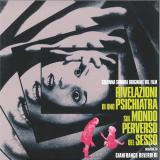
Gianfranco Reverberi - Rivelazioni Di Uno Psichiatra Sul Mondo Perverso Del Sesso LP 2x12"

Four Flies is thrilled to present the very first release of Gianfranco Reverberi's hidden masterpiece: a mind-blowing soundtrack, possibly his wildest and most daring. This Italian score is sort of a Holy Grail for fans of the spaghetti sound, especially thanks to the legendary track "Psicolimite".


In 1973, a mysterious 45 rpm single surfaced under the name 'Sharon Chatam e la sua Orchestra.' The single seemed to be a harmless cover of the theme from Last Tango in Paris, complete with a typical image from the film. But behind the innocent facade, a secret was hidden: the B-side track, "Psicolimite," was actually the main theme from Rivelazioni. When someone in the United States figured this out and realized the 'Sharon Chatam' moniker was a pseudonym for Reverberi and his team, the price of the record skyrocketed, making it a coveted collectible.


This makes the discovery of the full soundtrack even more exciting, considering that the music Reverberi composed for the infamous film by Renato Polselli - one of the most outrageous and uncompromising Italian genre cinema directors - was thought to be lost forever, perhaps vanished into the depths of some film processing lab. But thanks to the sleuths at Four Flies, this enigmatic masterpiece has been resurrected and presented in all its glory. It's available now as a luxurious gatefold double LP with original artwork by the brilliant Eric Adrian Lee.


While the film, despite some critics praising it as "psychotronic," is a bizarre mishmash of rambling pseudo-psychoanalytic theories and sexual deviance voyeurism, the music stands out as a foremost, vital element, able to exist on its own.


Reverberi's reputation as a serious, refined producer (for artists like Lucio Dalla, Gino Paoli, Luigi Tenco, and many more), however, led him to keep his distance from exploitation films like Rivelazioni. To maintain his image, he had his friend and former schoolmate Umberto Cannone take credit for the score – a tactic he also used for Polselli's next film, Mania (1974).


But this anonymity might have unexpectedly increased his creative freedom, for the score he put together and recorded is experimental, at times raw, and driven by a relentless rhythm section where bass and drums lay down the groove. The use of electronic instruments is impressive for the time, with drum machines and spacey synths creating a dark and dreamlike atmosphere. Psychedelic flutes, piano phrases, crazed percussion, filters, compressors, and jazzy improvisations on sax and vibraphone complete the mix.


The full soundtrack was recovered following the discovery of the original 1-inch, 16-track tapes, which were transferred, mixed, and mastered for optimal listening on both vinyl and digitally, with the digital version featuring 8 bonus tracks.


Available from November 22!

Disponible

En el almacen y preparando para el envío

34,03
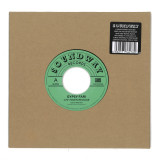
Horsemen - Southbound EP

Horsemen

Southbound EP

exclSGT013
Small Great Things
Release unknown

Horsemen make their debut on Small Great Things with Southbound, a warm and colourful EP made to ease the winter blues.

Drawing from a wide palette of house influences, the record showcases the duo’s versatility and depth beyond a single formula. The release follows Horsemen’s first year as residents at Small Great House, the label’s monthly party at OXI Berlin, including its beloved summer open airs that helped shape the sound of this EP. Southbound also introduces their first collaboration with vocalist Guya.

While the A-side sets a relaxed tone with disco and jazzy influences, perfect for those summer open-airs, the B-side shifts firmly into club territory, delivering two dancefloor-proven cuts for the night.

The A-side opens with Make Me Feel Excited, an almost disco-tinged summer anthem driven by a distinctive sample. It is followed by Napoliballa, featuring Guya on vocals, a sun-soaked jazzy track with playful rhythms. The side closes with Lighter Days, a moody piano-led track that adds a deeper, more dreamy tone.

The B-side moves into club territory, with Running offering a driving, floor-focused cut led by a bold organ hook, followed by a faster, more club-oriented version of Napoliballa.

Reservar

10,88
CRISTIAN VARELA - SUPRACONSCIENCE

Regal launches Backspin Records with a first seismic release by Cristian Varela. With the Supraconscience EP, Varela delivers a masterclass in groove-driven intensity, further defining Backspin's mission to resurrect and reimagine the pulse of early2000s techno.


The EP plays like a coded message from another dimension. With uncompromising tribal rhythms, the tracks draw from the same well as the classic vinyl cuts that shaped Backspin's sonic ethos: groovy, loop-driven, bass-heavy and packed with percussive punch. J0T4 kicks off with punchy low-end pressure and epic synth melodies, while J0T5 goes deeper, layering syncopated trippy percussion with eerie atmospheres. Next up is Exegon, a tightly wound, loop-heavy storm of shuffled rhythms and distorted stabs - hypnotic, functional and built for peak-time intensity with its melancholic hook. Closing track J0T7 brings a warped, rolling energy that ties the EP together in true Hardgroove spirit.

As Backspin gathers momentum, Supraconscience proves that this isn't just about nostalgia. It's about pushing the timeless power of groove into new realms, led by legends like Cristian Varela who helped write the blueprint in the first place.

Disponible

En el almacen y preparando para el envío

12,40
Various - Akasaka Soul Funk 1969-1977

Various

Akasaka Soul Funk 1969-1977

12inch180GWALP07
180g
11.03.2025

At the start of the 60s, a new wave of gospel-influenced jazz started to emerge, with hits such as Art Blakey & The Jazz Messengers' "Moanin'" and Cannonball Adderley's "Work Song" epitomizing this evolution in the genre. The terms "soul jazz" and "funky jazz" were coined as a way to describe this new sound that was making an impact in the US and also on the other sides of the Atlantic and Pacific oceans.

In 1964, Ray Charles made his first visit to Japan. Then, in 1968, Martha & The Vandellas and Stevie Wonder set foot in the country, followed by Sam & Dave in 1969, Ike & Tina Turner in 1970, and B.B. King in 1971. The TV show "Soul Train" also began airing in Japan in the early 1970s. A watershed moment happened in 1973 when Sammy Davis Jr. was cast in a TV commercial for Suntory whisky — and the influence of the US Black entertainment world had really landed, with soul, jazz, and funk artists becoming household names.

Nippon Columbia played a pivotal role during this turning point. The company had contracts with Buddah Records and Blue Thumb Records, releasing notable works by artists such as Gladys Knight & The Pips, Curtis Mayfield, The Crusaders, and The Pointer Sisters. At the same time, the label was also releasing several Japanese soul, jazz, and funk projects under the lead of music director Jiro Inagaki. Inagaki, a saxophonist who began his professional career in the early 1950s, honed his skills at U.S. military camps, where he shared his love of music with the Black servicemen. In the 1960s, he played with drummer Hideo Shiraki's band, which was widely considered to be Japan's representative group of the funky jazz movement. Later, Inagaki went on to pursue more cutting-edge sounds with his Soul Media project, including being a pioneering figure in the "jazz rock" genre. By working closely with Inagaki and his various musical projects, Nippon Columbia really placed the company at the center of an exciting and important period in Japanese music.

In 1965, Nippon Columbia opened a recording studio in Tokyo's Akasaka neighborhood. Akasaka was also home to the first ever discotheque in Japan, the legendary MUGEN, which ran from 1968 to 1987 and where many acts performed, including Con Funk Shun, the Bar-Kays, Ike & Tina Turner, B.B. King, Sam & Dave, Three Degrees, and Edwin Starr, as well as many local Japanese singers and musicians. This melting pot of creativity in the area led to the recording of many singles and albums by Japanese artists that were infused with the sounds of soul and funk. Most of these recordings were not available outside of Japan and remain rare and unknown musical gems. The selection you are holding in your hands is an explosive collection of 10 essential tracks released by the legendary Nippon Columbia label between 1969 and 1977, capturing the raw, unapparelled energy that was flowing through the air of the Akasaka streets at this electrifying time. Enjoy!

---

180GWALP07 - Manufactured and distributed by 180g.

Disponible

En el almacen y preparando para el envío

28,99
Various - Retro Future Chapter 4

Reflex Blue, Kosh, Christopher Ledger, and Luca Attanasio come together for the fourth chapter of our Retro Future series. Expect top-notch music from some of the scene's best forward-thinking yet deeply rooted producers in the game.

Disponible

En el almacen y preparando para el envío

11,72
Still Corners - Strange Pleasures

10th Anniversary Edition features: Transparent Green vinyl. Gatefold vinyl including lyrics. 18"x24" Strange Pleasures poster. Download code, including bonus track "We Have the Future on Tape". Digipak CD with lyric booklet. In celebration of STRANGE PLEASURES turning 10, Still Corners are releasing a very special remastered 10-year anniversary edition on transparent green vinyl. The album has been remastered by John Davis at Metropolis London, described by Jimmy Page (Led Zeppelin) as ‘a master of his craft’. The anniversary edition includes all the album’s lyrics (for the first time) on a gatefold album sleeve, Strange Pleasures poster, digital download, including a bonus download ‘We Have the Future on Tape’. Originally released on Sub Pop, STRANGE PLEASURES has developed cult status since its release in 2013. Opening song, ‘The Trip’, captured people’s hearts with one YouTube video acting as a virtual community for like-minded fans around the world. ‘Fireflies’ (Pitchfork, Best New Track), ‘Strange Pleasures’, ‘Beginning to Blue’ and ‘The Trip’ have been used across film and television since the album’s release.

Disponible

En el almacen y preparando para el envío

28,78
James Tenney - Postal Pieces

Since its founding back in 2014, Blume has carved a unique place in cultural landscape, issuing free-standing works, spanning the historical and contemporary, that represent singular gestures of creativity within the field of experimental sound. Joining their broad efforts in building networks of context and understanding that already includes the works by Werner Durand, Sarah Hennies, Bruce Nauman, John Butcher, Jocy de Oliveira, Mary Jane Leach, Valentina Magaletti, Alvin Curran, Julius Eastman, Alvin Lucier, and others, Blume return with the first ever vinyl release to attend to James Tenney’s legendary “Postal Pieces”, Marking the first ever appearance of five of the suite’s works - “Maximusic, for Max Neuhaus” (1965), “Having Never Written a Note for Percussion, for John Bergamo” (1971), “FFor Percussion Perhaps, or... Night, for Harold Budd” (1971), “Cellogram, for Joel Krosnick” (1971), and “Beast, for Buell Neidlinger” (1971) - on vinyl, drawing upon recordings made in 2003, by the Amsterdam based ensemble, The Barton Workshop, under the direction of James Fulkerson. Among the most important and highly regarded efforts in Tenney’s canon of compositions, as well as within the history of 20th Century music, these five pieces represent a crucial bridge between Fluxus-oriented conceptualism, minimalism, and the microtonal complexities that would emerge in their wakes. Issued in a highly limited vinyl edition of 300 copies, it includes exact replicas of the original postcard graphic scores, and features newly commissioned liner notes by Bradford Bailey, Blume’s brand new edition takes great steps to centring Tenney at the eye the storm during some of experimental music’s most important years.

A student of composition under Carl Ruggles, John Cage, Harry Partch, and Edgard Varèse - remaining close to all of them, and later performing in both Cage and Partch’s ensembles - as well as acoustics, information theory, and tape music composition under Lejaren Hiller, James Tenney carved a wide path within the contexts of experimental and avant-garde music during the second half of the 20th Century. Not only was he a tangible bridge between the generations of composer’s who laid much of the groundwork and the later movements of Fluxus, Minimalism, and the broader practices of experimental music, but Tenney is credited as having contributed one of the earliest applications of gestalt theory and cognitive science to music in 1961, before helping to pioneer the field of computer music at Bell Labs, during the following years.

Over the course of his career, Tenney produced music of such complexity and sophistication - paying little mind to the seductions of taste or dominant tropes of its own moment - that his work and legacy have largely remained under-recognised by the broader publics that have attended to most of his peers. Perhaps more pertinently, the body of work he produced can be perceived as too varied and complex to fit neatly within standard creative histories or critical frameworks, comprising harmonically complex works for acoustic instrumentation, musique concrète, the groundbreaking 1961 “plunderphonic” composition, “Collage No.1 (Blue Suede) (for tape)” - sampling and manipulating a recording of Elvis Presley - as well as algorithmic and computer synthesized music. Even here, within this single decade, a clear image of Tenney’s endeavours remains elusive. In addition to penning important theoretical texts, he collaborated and / or played with Max Neuhaus, La Monte Young, Steve Reich, Philip Glass, Michael Snow, Terry Riley, and numerous others; was an active member of Fluxus; starred in and composed music for Stan Brackage’s films; regularly worked with the Judson Dance Theater; co-founded and played in the ensemble, Tone Roads, with Malcolm Goldstein and Philip Corner; was a vocal advocate of the works of Conlon Nancarrow and Charles Ives, playing a significant part in the revival of both of their legacies; and regularly collaborated as a composer, musician, and actor with his then-partner, the artist Carolee Schneemann, notably co-starring in her film, “Fuses” (1965) and her legendary 1964 performance, “Meat Joy”, as well as creating sound collages for her films “Viet Flakes” (1965) and “Snows” (1970). Curiously, for a relatively absent figure in the historical and critical narratives, Tenney seems to have been the thread that bound multiple generations and disciplines of avant-garde practice in New York during this period.

Tenney was deeply invested in the quality and perception of sound. By 1970, this led him back to composing exclusively for acoustic instrumentation (though sometimes processed with tape delay) - in most cases utilising non-well tempered tuning systems to explore harmonic perception - a practice that he would remain steadfast to for the remainder of his life. This development roughly corresponded with his relocation to California, at the outset of the 1970s, following an invitation to teach at the newly founded music department at California Institute of the Arts (CalArts) in Valencia. Finding himself in regular contact with the harpist Susan Allen and the artist Allison Knowles, as well as at a great distance from many of his friends, in 1971 he completed (with the assistance of Knowles and Marie McRoy) “The Postal Pieces”, a project he had begun in 1965.

A suite of eleven compositions, “The Postal Pieces”, stands among Tenney’s well known and celebrated compositions, and illuminates the dualities embraced by the composer, notably his use of sound to develop consciousness in and of others, and his willingness to draw on elements and observations of everyday life; citing his strong dislike of writing letters as being the primary inspiration for their inception. In lieu, he conceived to send his friends - John Bergamo, Allison Knowles, Pauline Oliveros, La Monte Young, Harold Budd, Philip Corner, Joel Krosnick, Buell Neidlinger, Susan Allen, Max Neuhaus, and Malcolm Goldstein - short scores on the back of postcards. The suite is composed around three themes: Tenney’s concept of swell form (utilizing repetition and progressing through a structurally symmetrical arch), intonation, and the desire to produce “meditative perceptual states”.

A hugely important addition to Blume’s ever expanding efforts in context building and networks of creative practice, James Tenney’s “Post Pieces” is issued in a highly limited vinyl edition of 300 copies, which includes a exact replicas of the original postcard graphic scores, and features newly commissioned liner notes by Bradford Bailey.

Disponible

En el almacen y preparando para el envío

19,96
Byard Lancaster - The Complete Palm Recordings 1973-1974 (5x12") (BOXSET)

Souffle Continu records presents Byard Lancaster – The Complete Palm Recordings 1973-1974, the definitive package of Philadelphia-born jazz wizard Byard Lancaster including his 4 legendary albums released on Jef Gilson’s Palm Records in the 1970s, Us, Mother Africa, Exactement and Funny Funky Rib Crib, along with the first ever standalone edition of Love Always, a fifteen minute modal jazz beauty plus a 20 page booklet with rare photos and in-depth article about Byard Lancaster’s Parisian years by Pierre Crépon.

At the beginning of the 1960s, at the Berklee College of Music, Byard Lancaster met some feisty friends: Sonny Sharrock, Dave Burrell and Ted Daniel. It is easy to see why he rapidly became involved in free jazz. Once he was settled in New York, he appeared on Sunny Murray Quintet, recorded under the leadership of the drum crazy colleague of Albert Ayler.

In 1968, the saxophonist and flutist recorded his first album under his own name: It’s Not Up To Us. The following year he came to Paris in the wake of... Sunny Murray. He would come back to France in 1971 (again with Murray) and in 1973 (without Murray for a change). This is when he met Jef Gilson, the pianist and producer who encouraged him to record under his own name again. On Palm Records (Gilson’s label), he would release four albums: Us, Mother Africa, Exactement and Funny Funky Rib Crib.

“Us”, the first of the four records was recorded on November 24th, 1973 with Sylvin Marc on electric bass (a Fender... Lancaster?) and the evergreen Steve McCall on drums.

On the album, the trio works from the John Coltrane model; free jazz shook up by the timely contributions of the bassist, followed by a mesmerizing atmospheric music. Then, Lancaster delivers a sinuous solo path, which is a reminder of his unique tone. On the album’s companion single, the trio launches into great black music of a different genre which would lead the clairvoyant François Tusques to claim that Byard Lancaster is an “authentic representative of soul/free jazz”, to sum up this is Great Black Music! A few months after recording “Us”, Lancaster recorded “Mother Africa” along with Clint Jackson III, a trumpeter, partner of Khan Jamal or Noah Howard on other recordings.

On march 8th, 1974, Lancaster and Jackson headed up a group composed of Jean-François Catoire (electric and double bass), Keno Speller (percussion) and Jonathan Dickinson (drums). Together, they create an immediate impression. From the first seconds of “We The Blessed”, they develop a free jazz which rapidly abandons any virulence under the effect of blues and soul based interventions. When Gilson’s composition “Mother Africa” begins, listeners are transported into the studio, listening to the musicians setting up: chatting and joking... Then comes the melody: a dozen or so notes of a repeated theme which is accelerated and deformed according to their whims... The jazz played by the association Byard Lancaster / Clint Jackson III is rare: creative AND recreational. “We the blessed”, is apt listening to this again today!

The recording of “Exactement” required two sessions in the studio: February 1st and May 18th 1974 – in between the two dates, Lancaster recorded, alongside Clint Jackson, the excellent Mother Africa.

Two names appear on the cover of “Exactement”: Lancaster (Byard) and Speller (Keno). Byard Lancaster wanted to be precise, moving regularly from one instrument to another: first on piano, which was the first instrument he learned. On “Sweet Evil Miss Kisianga”, his inspiration is first and foremost Coltrane (even if leaning more towards Alice than John), this announces the storm to follow.

It is Lancaster’s horn-playing which really stands out: on alto (the sound of which is transformed by an octavoice on one track, "Dr. Oliver W. Lancaster") or soprano saxophones, as well as on flute or bass clarinet, the musician walks a tightrope making the most of all the risks he takes. Using the full register of his instruments, he has fun with the possibilities.

Then, Lancaster invokes or evokes Ornette Coleman, Eric Dolphy and even Prokofiev, before going into a danse alongside Keno Speller on percussion. Above all, he has a unique sound. Byard Lancaster, on whatever instrument he plays and by continually seeking, always ends up hitting the right note... ends up by playing exactement the note he had to play.

“Funny Funky Rib Crib” is an unforgettable recording (made up of several sessions dating from the middle of 1974) of creative jazz overwhelmed by funk and soul. If Lancaster had already made successful albums in the same genre – notably New Horizons, under the name Sounds Of Liberation which he co-led with Khan Jamal –, this one is an homage to James Brown and Sammy Davis enjoying the company of a host of guests including François Tusques (electric piano), Clint Jackson III (trumpet), François Nyombo (guitar), Joseph Traindl (trombone)...

Funny Funky Rib Crib’s cover is a three-quarter profile portrait of the saxophonist (who can also be heard on flute, piano and even vocals), however, on the record, it is the whole group, inspired and frenetic, that tests the melodies of “Just Test”, “Dogtown” or “Rib Crib” – the two versions of which display leader Lancaster’s art of nuance. On both sides of the album, the group also moves into a calmer groove, infused by blues and soul, “Work And Pray” and “Loving Kindness” are meditative tracks where listeners can lay back and relax before asking for more: Funny Funky Rib Crib!

The magnificent “Love Always” was originally released on the fourth (and last) volume of the Jef Gilson Anthology series released in 1975.
Recorded on 8th March 1974, it is a beautiful 15-minute-long modal jazz piece. Four notes from the bass (the relentless Jean-François Catoire, who makes up the rhythm section alongside drummer Jonathan Dickinson and percussionist Keno Speller), and the group is up and running!
On piano, Gilson shows the subtle tact of a sideman, leaving the lions’ share of the place to the horns. This allows us to hear the trumpet of Clint Jackson III and the alto (which sometimes sounds almost flute-like) of Byard Lancaster each staking their claim in a long hallucinatory march which moves from moments of direct exaltation to profoundly sensitive collective playing. And if further proof was required of the confidence that Byard Lancaster and Jef Gilson inspire, “Love Always” provides it on this one sided release exclusive to the box set.

Disponible

En el almacen y preparando para el envío

110,04
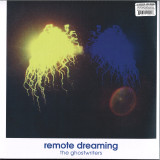
THE GHOSTWRITERS - REMOTE DREAMING LP 2x12"

"A landmark in 80s experimental ambient music - previously tape-only, here released for the first time on vinyl, spread across a double LP with five additional tracks, four of which were previously unreleased. Remote Dreaming has been freshly remastered and includes an insert with photos and liner notes.

Dark Entries summons Philadelphia synthesizer scribes The Ghostwriters to rouse their ambient masterwork Remote Dreaming. The late Buchla maestro Charles Cohen and multi-instrumentalist Jeff Cain joined up in 1971 to craft electroacoustic chaos as Anomali, later renaming themselves The Ghostwriters.

Their collaborations with choreographers and visual media artists led to their singular style, straddling improvisation and composition, the oneiric and the immediate. Following their debut album, Objects in Mirrors Are Closer Than They Appear, they were approached by ambient outlet Mu-Pysch. Remote Dreaming would take shape in various studios over nine months. Jeff Cain's instruments on this project included electric and acoustic pianos, the Juno 106 synthesizer, and a Mirage sampler, while Charles Cohen used his signature Buchla 200 Series Electronic Musical Instrument. A stark departure from the tightly wound first LP, Remote Dreaming shows the duo unfurling with soothing pianos and psychoacoustic textures, its somnambulant drones just skirting the edges of the uncanny. Although ignored in its time, Remote Dreaming is now heralded as a landmark in 80s experimental ambient music.

Proceeds will be donated to SOSA (Safe from Online Sex Abuse), a nonprofit that combats online child sex abuse and trafficking"

Disponible

En el almacen y preparando para el envío

23,32
Energize - Piece of Class / Star of The Disco

2026 Repress

Rain&Shine proudly present ENERGIZE, a band out of Marin County, California in 1979. Previously unobtainable even for top DJs due to rarity, Rain&Shine gives this double A side modern soul/disco 45 an official re-issue treatment. About ENERGIZE (words by Dan Hays - Guitarist, Songwriter):

ENERGIZE came to age in a post-hippie era, where musicians went back to playing covers in bars. However Marin was still inexpensive and it was possible to pool money together to buy studio time.

That's how ENERGIZE formed - working musicians led by the superb producer and guitar player, Archie Williams (son of Archie Williams Sr - a passionate educator, WWII air force pilot and 1936 Olympic champion) Dan Hayes - songwriter and guitarist, and John Isabeau - lyrics and our executive producer.

John is now a successful Hollywood producer, Oscar documentary award winner, and resides in James Brown's former house in Las Vegas.

The record also features a hugely successful blues vocalist who has asks to remain uncredited. Archie, John and I now have grown children and a few grandkids as well and getting a kick that 40 years later, our self-produced record has found an audience. Far Out

Disponible

En el almacen y preparando para el envío

10,04
ULTRAFUNK - ULTRAFUNK LP

Ultrafunk

ULTRAFUNK LP

12inchTDP54053
Trading Places
16.07.2024

Anonymous British funk studio outfit Ultrafunk was spearheaded by Blues & Soul magazine proprietor John Abbey, who ran a fashionable record shop and label called Contempo in London’s West End during the 1970s; he conceived of the group as the UK counterpart to US studio bands like Mfsb. Arranger Gerry Shury, who had worked with Barry White and Maurice Gibb of the Bee Gees, drafted guitarist Chris Rae and bassist Frank McDonald (who often composed library music together) and future Rubettes drummer John Richardson to form the group, in situ. A lack of band photos, suggestive song titles and a predilection for American cover tunes led many to believe the band was US-based. Their self-titled debut LP is where the myth all begins, with a number of truly atmospheric and cinematic hard funk instrumentals, given added textural depth through full orchestration, including covers of Bill Withers’ “Use Me” and Stevie Wonder’s “Living In The City.” Though not quite as compelling as the better-known follow-up set, Meat Heat, there is still plenty to savour on Ultrafunk, making this debut companion disc a must-have for all true funk aficionados.

Disponible

En el almacen y preparando para el envío

21,81
Mixer - OMNITRONIC TRM-202MK3  Rotary-Mixer

TRM-202MK3 ROTARY MIXER

Back to the roots For some time now, rotary mixers have been making a big comeback in the world of electronic dance music. The TRM-202 MK3 from Omnitronic offers the DJ all the classic features of a rotary mixer with its ALPS knobs (Blue Velvet RK27) and the built-in 3-band frequency isolator.

Smooth transitions
The high-quality components provide a good and appealing sound. The large knobs of both channels allow very smooth transitions, which are difficult to set with a conventional mixer (with faders). For both channels, you can switch between 2 x line & phono inputs or sources. A microphone input is also available. The isolator's kill characteristics completely eliminate bass, midrange, and treble for creative mixing

Classic Rotary Mixer With 2 Input Channels And Integrated 3-band Frequency Isolator For Djs
Gain Control, 2-way Equalizer (highs/lows) And Phono/line Switching Per Channel
Dedicated Boost And Kill Cut
Kill Cut Feature Allows Djs To Completely Remove Low, Mid And High Frequencies For Amazing Mixing
Vintage Alps Potentiometers (blue Velvet Rk27)
High-grade Components Ensure Long Life And Excellent Sound Quality
Dj Microphone Input With Separate Level Control
Prefader Listening To Input Channels And The Master Output Via Adjustable Headphones Output, With Cue Mix/split Function
12-digit Stereo Led Level Meter And Master Level Control
Booth Output With Separate Level Control
Inputs: 4 X Line And 2 X Phono (rca L/r), Dj Microphone (xlr) And Headphones (jack)
Outputs: Master And Booth (xlr/rca L/r), Record (stereo Rca)

Technical Specifications
Power Supply: 100-240 V Ac, 50/60 Hz
Gain:
Line: 20 Db
Phono: 60-75 Db
Mic: 44 Db
Max. Output Level: 22 Dbu
Frequency Range:
Line: 20-20000 Hz
Phono: 40-18000 Hz
Mic: 20-20000 Hz
S/r Ratio:
Line: 85 Db
Phono: 77 Db
Mic: 80 Db
Thd:
Line: <0.03 %
Phono: <0.1 %
Frequency Isolator: - To +9 Db
Lows: 20 Hz To 300 Hz
Mids: 300 Hz To 4 Khz
Highs: 4 Khz To 20 Khz
Inputs:
Line: Rca L/r
Phono: Rca L/r
Dj Microphone: Xlr
Outputs:
Master: Xlr/rca L/r
Booth: Xlr/rca L/r
Rec: Rca L/r
Headphones Output: 6.3 Mm Jack (min. 32 Ohms)
Dimensions (w X D X H): 190 X 250 X 107 Mm
Weight: 2,7 Kg
Power Consumption: 6,5 W
Height: 10,7 Cm
Depths: 25 Cm
Width: 19 Cm

Disponible

En el almacen y preparando para el envío

273,11
Idrissa Soumaoro - Diré

Idrissa Soumaoro

Diré

12inchMRB-ML01-019
Mieruba Record Label
03.06.2024

‘Diré’, Idrissa Soumaoro new album, comes as a surprise to Malian and international audiences. Composer, singer, guitarist and master of the kamalen n’goni Idrissa Soumaoro presents here a beautiful collection of songs on his third album, Diré, named in honor of the town where he met his wife and where his first daughter, who is no longer with us, was born.
In 1971, after his studies at the INA in Bamako, Idrissa was transferred to Diré to teach music at the lPEG (Pedagogical Institute of General Education). He was 22 years old when he arrived in Diré. Idrissa has always been nostalgic for this beautiful place in the 333 Saints of Timbuktu region. As Idrissa sings in ‘Diré taga’ (Going to Diré), the track that opens the album, the city evokes deep emotions for the artist, as if it were a long-lost friend or lover. Celebrating the memory of the city of Diré leads the artist to retrace stories and lived situations that marked and animated him in years gone by: ‘I really miss the people, the colleagues, the friends and that period. Despite the time that has flown by, I would ardently wish to see Diré again’. Today, at the difficult time Mali is experiencing, remembering the city of Diré in the 1970s also means for the artist not giving up hope for peace: ‘The memory of Diré, a beautiful town in northern Mali, strengthens my hope for peace, union and real independence for the happiness of my people’; as he sings in ‘Sababou’, ‘Without hope, there is no life. Together we will succeed’.
The ten highly original compositions of the album are strongly based upon traditional music of Mali, but Idrissa’s life experiences, travels, education, collaborations and personal musical career have led him to compose and perform music with other influences. As Idrissa quotes: ‘My inspiration generally comes from the donso n'goni, a Bambara instrument played by and for hunters throughout Mali. This is a pentatonic instrument, similar to the blues exported to the USA by black African slaves. I've also spent so much time playing a variety of music that my music also reflects rumba, salsa (as well as Bamanan blues and a few derivatives: jazz, country, soul, rhythm and blues) etc. I have looked for and hope to have found my own form of expression from these influences’.
Throughout the album, his strong, clear voice sings in French, Bambara and English. It rides seamlessly upon a complex rhythmic sea of distinctly West African stringed instrumentation and percussion with accents of flute and balafon. There are keyboards in a few songs, but these, happily, do not dominate the music as we hear so often in today’s music. This album presents the music of a mature artist who has ‘been there, done that’ and returned to celebrate his country, his roots and his dreams in a flawlessly produced collection of songs of love, reassurance, fatherly advice and hope.
The album already has a long history: it was initiated in 2012 by Marc-Antoine ‘Marko’ Moreau, former producer and manager of Amadou and Mariam. Moreau had plans to produce the album and invited Idrissa Soumaoro to start recording in Manjul's studio in Bamako. When Moreau suddenly passed away, work on the album was still missing. The pandemic still added time for the production to continue. With the help of Climax Orchestra, arrangements and orchestrations were finalized in France. At the artist's behest, 'Diré' will finally be presented to the public by Mieruba, the independent label based in Ségou, the home of the blues in Mali. 'Let's stand together so that Mali can flourish': from conception to production and distribution, this is the message that 'Diré' carries.

Disponible

En el almacen y preparando para el envío

21,81
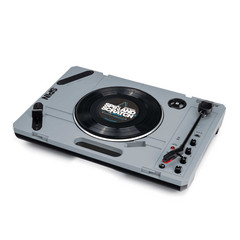
Turntable / Plattenspieler - Reloop SPIN

Features

Portable turntable for vinyl lovers & scratch artists
Mobile fun with your turntable, anywhere you go
Outstanding for mobile scratching and cutting
Out of the box: comes with 7'' scratch vinyl, pre-installed 45-mm-crossfader & cartridge, integrated speaker, Bluetooth audio receiver, USB recording function, slipmat, and dust cover
High-grade 7''-scratch-record: professionally recorded samples for scratching and beats for juggling
Bluetooth audio streaming: wireless streaming of music or beats to the device
Smart USB recording: direct recording of scratches & cuts to USB in MP3 format
Can also be used for digitizing vinyl
Integrated speaker on the turntable's left
3 selectable speeds (33 1/3, 45 & 78 rpm)
Extremely stable tone arm with transport lock
Cartridge with excellent tracking features
Precise 45-mm-crossfader with two-rail glide technology
Crossfader can be installed on preferred side (both-way)
Two headphones connections for listening and monitoring
AUX input facilitates connection of several turntables (daisy chain)
Easy battery charging via USB PSU or USB power bank (sold separately)
Installed start/stop button
Precise speed adjustment via pitch control with +/-20 %
Tone control to adjust low frequencies by +/- 10 dB
Volume control for AUX input and master/headphones
Power LED indicates the turntable's operational status
7'' record puck adaptor with holder
Anti-skip rubber feet for secure stand
Especially sturdy and portable shape factor with optional battery operation
Additional protection thanks to dust cover; can be transported via carrying handle when closed
Locking of dust cover for safe transport
Can be operated with regular USB PSU (5 V, 2 A), USB power bank or batteries (sold separately)
Batteries can be inserted into battery compartment on the device's bottom 2x Li-Ion 18650 (sold separately)
Incl. 7'' scratch vinyl, pre-installed cartridge, slipmat, dust cover, puck adapter, USB cable, instruction manual and Super Spin Duck Looper app

Technical Data

Belt drive
Inputs: AUX 3.5 mm stereo, Bluetooth audio
Outputs: master RCA, USB (USB-A), headphones 3.5/6.3 mm stereo
Recording format: MP3 with 192 kbit/s
Recording quality: 16 bit / 44.1 kHz
Battery type: 2x Li-Ion 18650 (batteries sold separately)
Power supply: 5 V, 2 A micro USB (PSU sold separately)
Dimensions: 370 x 95 x 260 mm
Weight: 2 kg

Disponible

En el almacen y preparando para el envío

178,02
Mixer - OMNITRONIC TRM-402 4-Kanal Rotary-Mixer

Classic rotary mixer with 4 input channels and integrated 3-band frequency isolator for DJs Gain control, 2-way equalizer (Highs/Lows) and phono/line switching per channel Dedicated boost and kill cut Kill cut feature allows DJs to completely remove low, mid and high frequencies for amazing mixing Vintage ALPS potentiometers (Blue Velvet RK27) High-grade components ensure long life and excellent sound quality DJ microphone input with separate level control
Prefader listening to input channels and the master output via adjustable headphones output, with cue mix/split function
12-digit stereo LED level meter and master level control
Booth output with separate level control Dual inputs for DJ microphone and headphones on the top and front panel

Inputs: 8 x line and 4 x phono (RCA L/R)
Outputs: master and booth (XLR/RCA L/R) and record (RCA L/R)

TECHNICAL SPECIFICATIONS
Power supply: 100-240 V AC, 50/60 Hz
Gain:
Line: 20 dB
Phono: 60-75 dB
Mic: 44 dB
Max. output level: 22 dBu
Frequency range:
Line: 20-20000 Hz
Phono: 40-18000 Hz
Mic: 20-20000 Hz
S/R ratio:
Line: 85 dB
Phono: 77 dB
Mic: 80 dB
THD:
Line: <0.03 %
Phono: <0.1 %
Frequency isolator: - to +9 dB
Lows: 20 Hz to 300 Hz
Mids: 300 Hz to 4 kHz
Highs: 4 kHz to 20 kHz
Inputs:
LINE: RCA L/R
PHONO: RCA L/R
DJ microphone: XLR
Outputs:
MASTER: XLR/RCA L/R
BOOTH: XLR/RCA L/R
REC: RCA L/R
Headphones output: 3.5 mm jack and 6.3 mm jack (min. 32 ohms)
Dimensions (W x D x H): 247 x 330 x 107 mm
Weight: 4.05 kg
Power consumption: 7,2 W
Height: 10,7 cm
Depth: 24,7 cm
Width: 33 cm

Disponible

En el almacen y preparando para el envío

369,71
Imarhan - Aboogi LP

Imarhan

Aboogi LP

12inchSLANG50269LP
CITY SLANG
02.02.2024

For 20 years the Tuareg culture and music has fascinated the world. Their quasi-sacred poetic songs inspire western songwriters like KURT VILE or JOSÉ GONZALEZ, while the virtuosity of their guitar playing fascinates guitar heroes like JIMMY PAGE, and finally the spirituality and meditative hypnotism impresses electronic music producers like FOUR TET.With two albums, IMARHAN has become an emblem of the new Tuareg generation, breathing new life into “Assouf”, the desert blues.

While most of current Tuareg productions are exiled to the United States, the group, led by Sadam, is part of their culture and their city, the capital of the Tuareg people, with an open door to the desert. By building their own studio in Tamanrasset Aboogi, Imarhan become the spokesmen of the young Tuareg lost generation (forgotten by Algerian, Nigerian and Malian governments).With their new album Aboogi, Imarhan manipulate the rights and ancestry of the Tuareg. By inviting the legendary Mohamed At Itlale aka Japonais (who has since, sadly, passed away) and the genius musician Abdallah Ag Alhousseyni, IMARHAN follows the heritage of TINARIWEN, the godfathers of Assouf. When they recorded with GRUFF RHYS of the SUPER FURRY ANIMALS, their brilliant and universal songwriting takes on every sense of the word. Finally, by inviting the Sudanese singer Sulafa Elyas, we understand that IMARHAN is open to all of Africa, defenders of the Tuaregs but above all spokesperson for the new African generation.

Disponible

En el almacen y preparando para el envío

18,07
GYPSY FARI - CHI-TOWN REGGAE

Reissue of the highly sought-after 7” from 1979 by Chicago
reggae outfit Gypsy Fari.
Gypsy Fari was a project born in the south side of Chicago
after a chance meeting between St Kitts expat Leroy Webster
and local music grad Kevin Coleman. The pair set out to blur
the boundaries of genre with their unique brand of music,
spearheaded by Webster’s Caribbean roots and fused with
the soul and blues the midwest is famous for.
A striking stand-out of the band’s repertoire comes via their
debut recording, laid down at Curtis Mayfield’s legendary
Curtom Studios. The EP opens with Chi-Town Reggae - a
super-charged blend of reggae and disco, led by Websters
infectious vocal, steeped in soul and powered by a relentless
rhythm section. Hail Jah follows closely, written on the hilltops
of the outskirts of Kingston, Jamaica, it’s a deadly roots reggae
missile that pays homage to Websters beginnings.
Once dubbed by a local news outlet “Gypsy Fari are to
Chicago reggae what Muddy Water is to Chicago blues” -
now remastered, repackaged and made available again for
the first time since its initial release

Disponible

En el almacen y preparando para el envío

11,72
Cloudland Canyon - Cloudland Canyon LP

Blending ambient, drone, krautrock, psychedelic, house music elements into a unique sonic universe... that's what Cloudland Canyon is known for! This American experimental music project led by Kip Uhlhorn comes with the release of their new self-titled LP on the always trustworthy Medical Records! The band continues to explore the boundaries of sound and space, taking the listener on a journey through lush soundscapes and immersive textures. Formed in 2002, Cloudland Canyon has released several critically acclaimed albums, including "Fin Eaves," "Lie In Light," and "An Arabesque."

Their recent releases have been produced by Sonic Boom from Spacemen 3/Spectrum. With each release, Uhlhorn has pushed the envelope of experimental pop music, collaborating with various musicians and producers to create intricate and otherworldly compositions. This time around Uhlhorn collaborated primarily with AI to generate and create a compositions that sound like they are meant for an alternate realm where both beauty and suffering are both present, but not at odds with one another. AI has helped Uhlhorn take one step further into the transfigurative looking glass.

The new LP, marks a new chapter in Cloudland Canyon's journey, expanding their sonic palette to include elements of techno and electronic music while still retaining their signature dreamy atmospheres. The album is a journey through a sonic landscape that is at once futuristic and nostalgic, evoking the feeling of driving down an endless highway into the sunset. Past musical collaborators have included some of the most exciting musicians working today, including Sonic Boom from Spacemen 3, Wayne Coyne & Kliph Scurlock of Flaming Lips, David Scott Stone of the Melvins, Unwound,& LCD Soundsystem, Dean & Britta from Galaxie 500 & Luna, and Jody Stephens from Big Star to name a few. "S/T" is a testament to Cloudland Canyon's ability to collaborate and create music that is both innovative and accessible. Whether you are a longtime fan or a newcomer to Cloudland Canyon's music, "S/T" is a must-listen for anyone interested in the possibilities of experimental music in the 21st century. With its combination of analog and digital textures, hypnotic rhythms, and expansive soundscapes, it is a journey you won't soon forget.

Disponible

En el almacen y preparando para el envío

17,02
BILL WITHERS - Still Bill LP

As it celebrates its 50th anniversary, Bill Withers' Still Bill remains true to its title – and stands as the greatest male-fronted soul album not made by a singer named Marvin, Al, Sam, James, or Ray. Though the saying "keeping it real" did not exist in popular parlance when Withers released his sophomore effort on Sussex Records, no words better capture the music's approach, mindset, and value. Every facet of Still Bill radiates honesty, truth, and emotion.

These characteristics – along with Withers' strong singing, hybrid arrangements, and deceptively simple songwriting – have allowed the album to endure to the point where it sounds as fresh today as in 1972.

After rising into the Top 5 of the Billboard Album charts and attaining gold status within a year of release, Still Bill has long been evaluated not by sales – but according to its merit, spirit, and agelessness. Included by The Guardian on its "1,000 Albums to Hear Before You Die" list (2007) as well as in Tom Moon's 1,000 Recordings to Hear Before You Die book (2008), its contemporary standing as one of history's most venerated soul efforts eclipses the positive reception it enjoyed in the early ‘70s.

Still Bill walks the same hallowed ground as What's Going On, Call Me, Night Beat, and Genius + Soul = Jazz. Like those landmarks, Still Bill plays with a mix of consistency, effortlessness, and complexity that rewards repeat listening and transcends categorization.

In combining four of the era's predominant styles – Philly soul, sweaty funk, Southern-reared blues, acoustic-based folk – and melding them with standout production borrowed from both minimalist affairs and sophisticated singer-songwriter albums, Still Bill occupies a distinct universe.

Its rhythmic fare is equally laidback and invigorating; relaxing and rollicking; eloquent and muscular; soft and tough. Withers' calm, self-assured voice hovers above it all, doubling as a warm blanket that adds comfort and grace to lyrics steeped in maturity, perspective, and compassion.

Withers' balanced outlook on human desires, needs, and situations stem from his own existence as a former blue-collar employee who believed his time as a musician would soon end. That grounding forever separates Withers from other contemporary soul greats – and stamps Still Bill with a conversational nature and egoless approachability.

"I mean look, I'm really a factory worker," said Withers in 1972. "That's a real job." There's that word again: real. The songs on Still Bill are tethered to modesty and actuality, wedded to a belief in simplicity, and connected to universal truths that link us all – independent of our economic or social standing. No track better exemplifies those principles than "Lean on Me," a feel-good paean to brotherhood and community that hit No. 1 on the pop and R&B charts en route to becoming a mainstream staple.

Withers approaches the plainspoken insight on "Lonely Town, Lonely Street" and heartbreaking vulnerability of "I Don't Want You on My Mind" with similar sincerity and straightforwardness. His proclivity for authenticity extends to the record's other big hit: the sexual, funk-laden "Use Me," which reached No. 2 and reflects the singer's everyman persona. It's an identity couched in keeping it real, the very inclination that ultimately led Withers to retire in the mid-'80s rather than bend to industry pressures or risk credibility.

That commitment to truthfulness and realism helps make Still Bill feel as unaffected as the air we breathe. Looking back on "Lean on Me" years later, Withers said it seemed like "something that was there before I got here" – the kind of song that could be 100 or 10 years old, or one we encounter anew 10 years into the future. The same can be said for every note on Still Bill.

Disponible

En el almacen y preparando para el envío

61,77
Artículos por página
N/ABPM
Vinyl