
- A1: Nothing Left (3:30)
- A2: Mountains To The Sea (4:48)
- A3: Make My Day (4:13)
- A4: Heavy Load (4:01)
- A5: Fast Train (2:43)
- B1: Walking Too Slow (3:50)
- B2: Haven't Got The Time (3:21)
- B3: One Way (3:53)
- B4: My New Life (3:39)
- B5: Ethereal Blue (3:16)


Pratts & Payne, the South London pub that sits around the corner from the famed home studio of producer Dan Carey, has an important place in the history of Royel Otis. When making their debut album with Carey in early 2023, the Australian duo - childhood friends Otis Pavlovic and Royel Maddell - would decamp to the pub to finish lyrics and make decisions on the direction of their first LP. "Dan would ask us to record vocals," Royel remembers, "and we'd say, 'Just give us half an hour, we're popping to Pratts & Payne', and we'd have a pint, a few shots, and get some lyrics down." Eventually, it made such a mark that they named the record PRATTS & PAIN. Across the debut album, Royel Otis swing between melodic, pop- inspired indie and woozy psych, but it never feels tied to one lane. As soon as one style or mood has outstayed its welcome, they handbrake turn into psychedelic weirdness or dissonant noise, keeping everybody on their toes. After the table was laid on the two EPs, PRATTS & PAIN brings everything from the band's history together on a record that's reverent towards their beginnings but unafraid to push forwards into new sounds. This loose, open formula for what makes a Royel Otis song is written all over PRATTS & PAIN, an album defined by its sense of fun and adventure. On the tracks 'Velvet' and 'Big Ciggie', Carey's 11-year-old nephew Archie appears on drums, and a spontaneous energy ran through the sessions, one which can be heard across the album. On first single 'Adored', they master the perfect indie-pop hit, while 'Sonic Blue' keeps this underlying energy but sets screeching guitars over the top. 'Velvet', meanwhile, has the stomping energy of Talking Heads, while 'Molly' is an unsettling and deeply atmospheric slow jam. Whatever sonic template the music might be based on though, the crux of Royel Otis comes back to a foundational DNA of mutual trust. Royel says: "We have fun together, and it's not difficult. I trust what Otis thinks and what he does, and I back it. If you back each other, something good comes from it."

ALTERNATE COVER[27,52 €]
Honour's debut album is a ligament stretching from Lagos to London and to New York, curling across the diaspora and brushing the darker hues of blues, hip-hop, free jazz, ambient, gospel with Christian mythology and Yoruba folklore. As cinematic as it is painterly, Alàáfíà is a meditation on themes of life, death and love that pulls inspiration from the unexpected poetic profundity of casual conversations, field recordings, literature, ephemera, or personal archives. The result is an impressionistic vision in Black and Blur that both exhausts and implicates language_substantiating a mythos proposed by Fred Moten that sublimates boundaries between everywhere and nowhere; history and the present; the individual and the universal. Alàáfíà delineates a gothic landscape cut by overdriven beats, swooping orchestral blasts, choral bursts and ear- splitting fuzz, where the fleshly and spiritual realms commune. Dedicated to Honour's late grandmother, the title track began to take form after their last embrace and remains steeped in her influence and spirit_a tape-saturated composition that starts in Lagos and ends in London's smoke-stained cityscape, the song's dream-like quality developed out of the artist's grief and PTSD coping with this loss. Beneath the stretched guitar drones and stuttering loops, their grandmother's shared faith bubbles to the surface. "When Angels Speak of Love," borrows its title from two works by Sun Ra and bell hooks, respectively. Sculpting echoes of praise music into disorienting spirals perforated with syrupy DJ Screw-inspired breaks and sharp splinters of melancholic guitar, "When Angels Speak of Love" engages a conceptual dialogue with the spirits of both late thinkers, folding them into Honour's pantheon of ancestral guides. The album's ninth track, "Giz Aard ($uckets)," is a dirge of regimented drums which anchor this somber melody as it whirls into a blizzard of heartache, uncertain if its consequence will be death or eternal joy. The album's sole lyrical offering, "Pistol Poem (Lead Belly)," begins with a darkly humorous bar, "He went thru hell and back/ came back/ 2 get the strap," that swells into a haunting allegory based on the life of Philip "Hot Sauce" Champion. A modern take on the Blues, Honour's lyrics reify the artist's status as a student of both literature and popular culture, crossbreeding the artist's clever wordplay with additional references to Richard Pryor, Robert Johnson, Kelly Rowland & Bryon Gysin. Setting core principles of hip-hop, R&B, jazz and gospel music to atemporal soundscapes and compositions, Honour crafts a record that marinates in its own knotty contradictions. The ghosts that sit on the artist's shoulders have never been more tangible than with this emotive debut.

Italian cinematic funk legends Calibro 35 continue their journey into the world of cinematic jazz-funk. "Exploration" marks their return to independent label Record Kicks after their last studio album "Nouvelle Aventures" released on Universal Music in 2023. The band picks up from their latest EP, "Jazzploitation," released on Record Kicks last October. "Exploration" is a deep dive into the universe of cinematic jazz-funk, showcasing both the band's reinterpretations of timeless classics such as Roy Ayers' "Coffy" or Bob James "Nautilus" and original compositions by the band such us the lead single "Reptile Strut", the jazz-funk stormer "The Twang" and the soulful cinematic number "Pied De Poule". An exploration and a new journey for the Milanese combo that a long its way pays homage to artists such as Lalo Schifrin (Mission Impossible), Italian Maestro Piero Umiliani (Discomania and Gassman Blues) and Herbie Hancock (Chamelon). Described by Rolling Stone as "the most fascinating, retro-maniac and genuine thing that has happened to Italy in the past few years," Milan-based Calibro 35 enjoy a worldwide reputation as one of the coolest independent bands around. Active since 2007, during their long career, they have been sampled by Dr. Dre on Compton ("One Shot One Kill" feat. Snoop Dogg), Jay-Z ("Picasso Baby"), The Child of Lov & Damon Albarn ("One Day"), and Demigodz ("The Summer Of Sam"). They have played major venues and festivals all over Europe, and as unique musicians, they have collaborated with, among others, PJ Harvey, Mike Patton, John Parish, Stewart Copeland, and Rokia Traoré. FOR FANS OF... Piero Umiliani, El Michels Affair, Idris Muhammad, Surprise Chef, Nu Genea, Khruangbin, Snarky Puppy, The Cinematic Orchestra, Comet is Coming, Kamasi Washington


This is Music: The Singles, ist ein Kompilationsalbum der englischen Alternative-Rock-Band The Verve:
Richard Ashcroft (Gesang), Pete Salisbury (Schlagzeug), Simon Jones (Bass) und Nick McCabe (Gitarre).
Ursprünglich wurde das Album im November 2004 veröffentlicht und enthielt zwei Nicht-Singles, die aus
den Aufnahmen zu ihrem dritten Album Urban Hymns stammten: „This Could Be My Moment“ und
„Monte Carlo“.
2024 markiert den 20. Jahrestag der Veröffentlichung eines Albums, das nie auf Vinyl gepresst wurde,
und unter der Leitung der Gruppe ersetzt diese längst überfällige Neuauflage die Bonustracks durch die
kraftvollen Singles aus dem 2008er Reunion-Album Forth - ’Love is Noise’ und ’Rather Be’ - und enthält
auch die zweite Single ’She’s A Superstar’ (1992) in ihrer ursprünglichen, achteinhalbminütigen Form (statt
der fünfminütigen Bearbeitung). Somit repräsentiert das Album nun die komplette Geschichte der Singles
von The Verve.
Benannt nach der sechsten Single der Band, der ersten aus ihrem zweiten Album A Northern Soul, dokumentiert es auf brillante Weise die Kraft der relativ kurzen, aber epochemachenden Reise von The Verve
durch den musikalischen Kosmos.

This is the monumental first album by Tsuyoshi Yamamoto, who later became one of the two major artists on the TBM label along with Isao Suzuki. A groovy and heartwarming popular disc by the Japanese piano trio
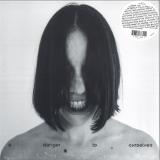
„A Danger to Ourselves“, das neue Album von Lucrecia Dalt, erscheint am 5. September 2025 bei RVNG Intl. und ist eine gewagte und doch intime Reflexion über die ungefilterten Komplexitäten menschlicher Beziehungen. Ohne die fiktiven Erzählungen der letzten Alben der Künstlerin kommt „A Danger to Ourselves“ von einem Ort der emotionalen Aufrichtigkeit. Dalts Stimme steht im Mittelpunkt und wird von einer üppigen akustischen Orchestrierung, perkussiven Instrumenten und einer Reihe hochkarätiger Mitstreiter unterstützt, die sich wie ein tiefes persönliches Gespräch entwickeln.
Die in Pereira, Kolumbien, geborene Dalt wuchs in einer musikbegeisterten Familie auf, die sie im Alter von neun Jahren dazu ermutigte, eine Gitarre in die Hand zu nehmen. Dalt folgte diesem kreativen Impuls, war fasziniert von computergestützter Produktion und verließ eine aufkeimende Karriere als Bauingenieurin, zog von Medellín nach Barcelona und schließlich nach Berlin, wo sie ihren unverwechselbaren, abenteuerlichen Sound entwickelte. Mit „Anticlines“ (2018) und „No era sólida“ (2020) und vor allem mit „¡Ay!“, Dalts bahnbrechendem Sci-Fi-Bolero-Album von 2022, hat sich ihre Arbeit auf immer anspruchsvolleres Terrain begeben. Auf dem Weg dorthin hat Dalt ihre Praxis auf die Vertonung von Filmen wie „On Becoming a Guinea Fowl“ (2024), die HBO-Serie „The Baby“ (2022) und den bevorstehenden psychologischen Horrorfilm „Rabbit Trap“ ausgeweitet, während sie Klanginstallationen und Performances kreiert, die ihre leuchtenden Modulationen und ihren unverwechselbaren, sich entwickelnden stimmlichen Ansatz zur Schau stellen. „A Danger to Ourselves“ entstand aus fragmentarischen Erklärungen, die Dalt aufschrieb, während sie das Leben auf der Tournee von „¡Ay!“ und die prägenden Momente einer neuen Beziehung meisterte. Im Januar 2024 begann sie, diese intimen Fragmente zu musikalischen Kompositionen zu kristallisieren, die allmählich zu einer zielgerichteten Konstellation von Songs wurden. Die Klangarchitektur des Albums basiert auf dynamischen Drum-Loops, die von Alex Lázaro beigesteuert werden, dessen perkussives Rückgrat wie bei „¡Ay!“ zur Leinwand für Dalts vielschichtigen Gesang wurde. Anstatt konventionellen melodischen Strukturen zu folgen, erzeugt das Album Musikalität durch das Zusammenspiel von Basslinien, Rhythmen und kompositorischem Design. „A Danger to Ourselves“ offenbart Dalts kompromissloses Streben nach klanglicher Klarheit, bei dem kühne Produktionsentscheidungen und sorgfältige Aufnahmetechniken Stimme und Instrument mit neuer Tiefe und Strahlkraft harmonieren lassen. „A Danger to Ourselves“ ist eindeutig anti-konzeptionell und ein poetischer Instinkt, mit dem Dalt den Fokus auf die Musik selbst lenkt, indem er Stimmen verwendet, die über die Parameter der Songs hinaus schwingen, und die perlenden Echos der ursprünglichen, romantischen Erregung beobachtet. Dalts klare Aufmerksamkeit für Details ist in jedem Takt spürbar, eine Hingabe, die sich in konzentrischen Kreisen dreht und ein Feld bildet, das das Persönliche und das Ätherische vereint. Das Album basiert auf intuitiven Experimenten und nutzt einfache Gesten und komplexe Kompositionen, um wandernde Linien zu weben, wie in „Divina“, das sich zwischen Spanisch und Englisch durch elastische Klanglandschaften bewegt. Der Titel des Albums geht auf David Sylvians Text „cosa rara“ zurück, der die Zerbrechlichkeit des Lebens, die Schwingungen der Liebe und die treibende Sehnsucht nach dem Wundersamen symbolisiert. „A Danger to Ourselves“ spiegelt diese transzendenten Zustände wider, indem es die Komplexität menschlicher Verstrickungen und den Wunsch nach Befreiung von Dopaminspiralen und gewöhnlichen Pfaden hin zu einer offeneren inneren Welt widerspiegelt. Sylvian selbst hat auf „A Danger to Ourselves“ eine Doppelrolle als Co-Produzent und Musiker gespielt. Es ist eine kollaborative Collage mit Beiträgen zahlreicher gefeierter Künstler. Weitere Kollaborationen ziehen sich durch das gesamte Album: Juana Molina ist Co-Autorin und Interpretin von „The Common Reader“, Camille Mandoki singt bei „Caes“, Cyrus Campbell spielt den grundlegenden Elektro- und Kontrabass, und Eliana Joy steuert bei mehreren Stücken Hintergrundgesang und Streicherarrangements bei. In den leuchtenden Tiefen von „A Danger to Ourselves“ inszeniert Dalt eine tiefgreifende Metamorphose, bei der das Persönliche durch klangliche Alchemie zum Universellen wird. Dieses Album ist sowohl Höhepunkt als auch Aufbruch - ein Portal, an dem ihre früheren experimentellen Reisen zu etwas verblüffend Intimem und doch Expansivem zusammenlaufen. Das Album ist ein Netz emotionaler Offenbarungen, jede Komposition ein präziser Indikator für Verletzlichkeit, in der Dalts Stimme eine Offenbarung in neuen harmonischen Gefilden verkörpert. Dalt hat ein lebendiges Dokument der Intuition jenseits konventioneller Grenzen geschaffen, das den Weg in Bereiche eröffnet, in denen die Musik sowohl Spiegel als auch Fenster ist.
Für Fans von PJ Harvey, Broadcast, St. Vincent, ML Buch, Stereolab, Cate LeBon, Aldous Harding, Mabe Fratti, Dry Cleaning, Juana Molina

Limited Edition of 200 copies incl. Dolphins Remix (DALO, Benedikt Frey and Menqui).
Hot seducers. Two of them. On one 7inch. A/B Side business, hard to choose a fav, as both so fab. The A-Side is called "Happen". It comes from prolific Tokyo based DJ and producer Hoshina Anniversary. A simple drum machine groove, a manic melody, witching siren sounds, psychedelic voices, some soft chords, and soulful high-pitched singing, somewhere between Dam-Funk coolness and Ian Svenonius-The-Make-Up sixties pop longing. One for warm sexy nights under neon lights. Out there in psychic realms. The flip brings a Dolphins interpretation. Yes, that feverish trio behind R.i.O., consisting of Nadia D'Alò, Benedikt Frey and Menqui. Their freshly recorded version comes with haunting nonchalant singing, displaying the tunes core melody as a more prominent actor of the play. Michael-Mann-Pop-Nostalgia with a baroque touch, that waves dark-ish. Even some Jon Hassle feeling is in there. Hoshina Anniversary disclosed, that the original song is inspired by jazz musicians like Chet Baker, Miles Davis, Sonny Rollins, Chick Corea, Herbie Hancock, Jaco Pastorius and Keith Jarrett. None of them is directly stylistically audible. But their kind of blue is all over. On the A as well as on the B. Twice soul music for the free.

Blue House Rockin’ is the result of a unique collaboration between Soul Sugar and Dub Shepherds — two projects united by a shared love for roots reggae, vintage studio gear, and warm analog sound.
The album was recorded live over two intense days at Blue House Studio by Christophe “French kiss” Adam, using ribbon and tube microphones from the ’50s and ’60s from the ’50s and ’60s, a Hammond organ, upright piano, Fender bass and Gibson guitars, classic amps and preamps, along with drums, syndrums and percussion. The sessions were transferred to a 24-track tape machine, and final mixes were crafted the old-school way by the Dub Shepherds at their own Bat Records Studio, using analog consoles and hardware vintage effects.
The tracklist brings together deep cuts, timeless classics, and original compositions. Curtis Mayfield’s Give Me Your Love and Aaron Frazer’s My God Has a Telephone (Colemine Records) — two soul gems, one vintage, one modern — are reimagined in reggae style, both featuring the great Jolly Joseph on lead vocals, working wonders with his falsetto. He also shines on Hold My Hand, a sweet and mellow original composition with lovers rock flair, written on the spot during the session.
Other standout moments include the soulful fire of UK singer Shniece McMenamin, who lights up Family Affair (Mary J. Blige / Dr. Dre) — flipped into a fiery hip-hop-meets-reggae version packed with energy and attitude.
Instrumentals like Disco Jack, Choice of Music, and Drum Song — all originally composed by Jamaican organ legend Jackie Mittoo — bring Guillaume “Booker G” Metenier’s Hammond work to the front. The playful exchange between organ, guitar, and a rock-solid rhythm section is elevated by swirling spring reverb, dub echoes, and filter sweeps.
The album’s explosive title track — Blue House Rock — was composed and recorded on the spot at the end of the session. A raw, greasy groove that sounds like The Meters jamming at Studio One or a lost instrumental from a Beastie Boys B-side.
Blue House Rockin’ is a vibrant blend of soulful roots reggae and funk, wrapped in the deep, dusty tones of analog tape. A joyful and authentic studio experience, captured live — and played loud.

Strut Records proudly presents the official reissue of Hidden Fire Volumes 1 & 2, the final album released by Sun Ra on his El Saturn label in 1988.
Captured live over three nights at the Knitting Factory in New York City, these performances mark the closing chapter of a 33-year odyssey of radical, independent music-making. Originally issued in tiny quantities with minimal packaging and cryptic artwork—often featuring hand-written labels or Ra’s own handmade designs—Hidden Fire was among the most elusive entries in Sun Ra’s vast discography.
Musically, these recordings stand apart from Ra’s other '80s compositions. Here, Hidden Fire plunges into darker, more dissonant territory. Ra performs exclusively on the Yamaha DX7 synthesiser, pushing its digital sound palette into alien dimensions. The Arkestra lineup is uniquely configured, featuring a rare and heavy string section with three violins, including the legendary Billy Bang, and the singular space vocalist Art Jenkins, whose eerie textures and vocalisations had not been heard so prominently since the early 1960s Choreographers Workshop sessions. The music is raw, unsettled, and often overwhelming.
“Retrospect / This World Is Not My Home” opens with a palindromic riff that evokes Ellington before unraveling into a stark sermon from Ra, warning of death’s dominion over Earth-bound minds. “Hidden Fire Improvisation” is a furious explosion of tone science, with Marshall Allen, Billy Bang, and John Gilmore delivering fire-breathing solos over relentless drumming and Ra’s cascading synth clusters. “Hidden Fire Blues” offers a warped, electrified version of Ra’s familiar blues feature, led by Bruce Edwards on guitar and Rollo Radford on electric bass, transformed through the haze of DX7 textures. “My Brothers The Wind And Sun #9” evokes the experimental weight of The Heliocentric Worlds with its crashing percussion, pulsing synth-vocal duets, and string- driven chaos that seems to spiral into oblivion.
Even the quieter moments—such as “Hidden Fire II,” a duet between Ra and Art Jenkins—feel thick with unease and shadowy beauty. These performances represent a Sun Ra less concerned with cosmic joy or outer-space swing, and more focused on conjuring portals to the unknown.
Remastered from original sources and presented with archival photos, new liner notes by Paul Griffiths, and restored artwork inspired by the original Saturn editions, this reissue offers a definitive window into the last creative surge of one of music’s most visionary figures across two Vinyl LP’s.

The hotly anticipated follow-up to 2007"s Horizons, Deep Blue raised the bar in every conceivable way. While maintaining the band"s uncompromising metallic-hardcore style at its core, it pushed into exciting new realms, drawing from a wider scope of influence, incorporating everything from anthemic pop-punk to bloodcurdling death metal. With improved musical abilities and a thoroughly inspired approach to songwriting, Parkway Drive has tied the music and lyrics together into one all-encompassing concept. "It"s basically about the search for truth in a world that seems to be devoid of that," says vocalist and lyricist Winston McCall, explaining the narrative running through Deep Blue. "The story is told through the eyes of a man who wakes up and realizes that his life is a lie and nothing he believes in is real. So he tries to find the truth within himself and his journey takes him to the bottom of the ocean and back again."

The Pusher Distribution / info@thepusher.fr
Hyperjazz Records presents the self-titled debut album from Tera Tera, an unexpected collaboration between two
visionaries of the Italian music scene. Drummer Jacopo Battaglia, founder of the cult Italian trio Zu and collaborator with
Mike Patton and The Bloody Beetroots, joins forces with guitarist Adriano Viterbini, founder of the rising sensation I Hate
My Village and collaborator with Rokia Traorè and Bombino. Born from two intense jam sessions of pure improvisation, this
album emerged through multiple phases of fragmentation, psychedelic experimentation, and sonic reconstruction. Hours
of raw material were distilled into structures, then subjected to further manipulation and synthesis, documenting the inherent
chemistry between two sound wanderers. Tera Tera's primary interest lies in exploring sound, creating new pathways
toward transcendence. Their music defies genre boundaries, pushing beyond conventional limitations into uncharted
psychedelic territories.
Jacopo Battaglia
Jacopo Battaglia has established himself as one of the most innovative and respected drummers in the Italian experimental
music scene. As a founding member of the cult band Zu, he pushes the boundaries of music since 1997. Blending elements
of noise rock, free jazz, and avant-garde into a distinctive style, he’s a pivotal figure in the “evolutionofavant - gardemusic”
internationally.
Adriano Viterbini
Over the years, Adriano Viterbini has built an international credibility like few other Italian musicians. He’s one of the most
inspired guitarists of contemporary Italian music, best known as founding member of I Hate My Village and Bud Spencer
Blues Explosion bands. An entire career voted to the research of the purest language of blues, Viterbini's impact extends
far beyond Italy, influencing a new generation of musicians with his dynamic approach to composition and performance.

In 2022, Meral Polat released her debut album "Ez Ki Me" as a singer under the name Meral Polat Trio. "Ez Ki Me" roughly translates to "Who am I?". The album was a search by the singer for her Alevi Kurdish roots. In her lyrics, Meral incorporated many poems from her late father, Adi Ihsan Polat. The album received positive reviews and was nominated for a Music Award by Songlines.
On her new album MEYDAN, Meral primarily showcases her own voice, that of a woman exercising her right to live on her own terms, free from the oppressive interference of patriarchy. The album celebrates female strength, inspired by the philosophy of "JIN, JIYAN, AZADI" (WOMAN, LIFE, FREEDOM), a phrase originating from Kurdish-led women's movements. JIN, JIYAN, AZADI symbolise resistance to oppression and the fight for women's rights.
Musically, MEYDAN takes it a step further than the debut album. Meral welcomes drummer Jens Bouttery to the band, along with many inspiring guest musicians. The track "Cenek" features a determined choir of 26 women of various ages and cultural backgrounds. In "Çiya Icaro", Meral shares a duet with Bolivian artist Ibbelise Guarda Ferraguti.
On MEYDAN, Meral and her band continue their exploration of Anatolian and Mesopotamian music, particularly the Turkish psychedelic rock revolution of the 1970s and the ancient Kurdish Dengbej traditions. The band travelled to Istanbul to record with Murat Ertel from Baba Zula and trumpet player Can Omer Uygan. In addition to Anatolian music styles, influences from Mali Blues and Nigerian Afrobeat are embraced. Another notable guest is Senegalese musician Mola Sylla, who lent his voice and improvisational talent to the track "Govend".
While the drums, keyboards or guitar, and Polat's voice still form the core of the album, each track also contains its own collage of synthesisers, vocal harmonies, percussion, organ, piano, distorted guitars, and guest musicians. All tracks were mixed by the exceptional Belgian mixing engineer Pieterjan Coppejans, who added depth to their sound. All of this results in a particularly rich and uplifting album with a message.

“There are some corners of the universe which have bred the most terrible things…They must be fought.” Demon Records presents, for the first time on 2LP vinyl, the complete full-cast soundtrack of this ‘lost’ classic BBC TV adventure, with linking narration by Frazer Hines. The Second Doctor (Patrick Troughton) is thrown into his first rematch with the Cybermen in the year 2070. Humans have colonized the Moon, and the Cybermen have identified their base as a strategic vantage point from which to invade Earth!
Can the Doctor and his companions Polly (Anneke Wills), Ben (Michael Craze) and Jamie (Frazer Hines) stop them? First broadcast in 1967, this exciting adventure was written by Kit Pedler and directed by Morris Barry, with a guest cast including Patrick Barr, Andrew Maranne, Michael Wolf and John Rolfe. Whilst only two of the four episodes are known to survive on film, thankfully all four are available as sound recordings, complete with the BBC Radiophonic Workshop’s familiar Doctor Who theme music. With a superb cover illustration depicting the Cybermen on the Moon, these two translucent ‘Blue Moon’ discs are housed in beautifully designed inner sleeves with vintage TV guide-style listings for each episode.

A unique sonic journey blending jazz, candombe, dub, hip-hop, and electronic music. Written, sequenced, and recorded by Ian Lampel (Uruguay), the album captures Montevideo's vibrant essence with innovative beats and deep roots. Embark on a sonic journey through the rich tapestry of Ian Lampel's multicultural heritage with his debut solo album, "The Parque Rodó Tapes." From the echoes of his grandparents' wartime exodus from Europe's tumultuous past to the rhythms of daily life in Parque Rodó, Lampel's artistic vision was shaped by a kaleidoscope of influences: Science fiction and fantasy books, graphic design annuals, comics, films, early computers and videogames as well as music; the haunting melodies of Russian and Polish classical composers hummed by his grandmother while cooking, the choir and hammond music of the synagogue, his early explorations in club music and dub or the syncopated drumming of candombe and carnaval echoing in the streets of Montevideo. The composer, producer and bass player, wrote, sequenced and recorded practically everything that is heard throughout the album. With meticulous attention to detail, he has crafted a sonic landscape that seamlessly blends elements of jazz and Uruguayan music with the innovative spirit of dub, hip-hop and electronica; from the infectious rhythms of candombe and the raw energy of murga, to breakbeats, moog's and samples. Drawing from a treasure trove of samples collected over two decades, "The Parque Rodó Tapes" weaves together a tapestry of sound that is both nostalgic and forward-thinking, from the haunting voice of Marosa Di Giorgio and the vibrant cacophony of a carnival field recording by Lauro Ayestaran, to the guest contributions from notable musicians including Lampel's wife, singer/songwriter Eco Lopez, multi-instrumentalist Luciana Giovinazzo on flute, and Ferna Nunez on repique drum. Each track is a testament to Lampel's eclectic vision. A debut album with a certain degree of melancholy that works as a soundtrack to the world in which the artist grew up, a world now gone, without cellphones or social networks, in which everything had to be proactively pursued "in the streets".
