‘Subtle Bodies’ is the new album by US-based sound artist and composer Francis Morning, released on Ltd. cassette via Lo Recordings, which contemplates the concept of the non-physical, energetic layers of a person that exist alongside the physical body. Being the next installment of Lo Recordings' ongoing SPACIOUSNESS series, the album features 15 tracks that embrace the theme through hints of electric piano melodies buried under layers of tape hiss, meandering sine wave bass notes, and expansive ambient textures.
The compositions on ‘Subtle Bodies’ are meditations on impermanence, imperfection, and the natural process of decay, approached without judgment. They arise from moments of introspection, often inspired by the contemplation of inner channels, energies, mindfulness, breath, and other Tibetan Buddhist practices. Deliberately recorded using minimal equipment, each piece explores and pushes against the thresholds in an attempt to strike a balance of texture and noise. About Francis Morning:
Francis Morning is a US-based sound artist, musician, and composer known for crafting gently textured sonic environments using a simplified palette of musical hardware, including analog tapes and cassettes, field recordings, synths, pedals, pianos, and acoustic and electric guitars. His work embraces imperfection, human quality and touch, and the transient nature of life. The music began to take shape as simple, personal daybreak rituals with no audience or expectations. Each piece was recorded live in single takes, with the original elements eventually discarded or recorded over, as a statement and exercise in impermanence and letting go.
THE SALMON is the project of a legendary trio of "soul men" brought together to celebrate a long friendship, musical freedom, and creativity : Kiddus I, the reggae legend with an enchanting voice, the "Last Crooner on Earth," hero of the 1977 film Rockers, and a member of the Inna De Yard project; Bazbaz, a French pianist singer-songwriter with nine albums to his credit; and Tchiky, an outstanding guitarist who has been accompanying De La Soul for about ten years. Their first album is a pure Franco-Jamaican gem imbued with the native land of reggae and reflects the trio's desire to return to the roots of their inspirations.
Music From Memory is thrilled to introduce Dead Sound, the collaborative project of Marco Sterk (aka Young Marco) and Berlin-based pop-auteur John Moods. Both artists are no strangers to the label; Sterk forms one third of the trio Gaussian Curve, while Moods released the 2022 album ‘Hidden Gem’ with The Zenmenn.
Their collaboration was both planned and spontaneous; Sterk initially reached out in 2022 expressing his desire to work with Moods. The pair finally got together in 2024 to produce ‘Into The Void’, an album that burst into life over the course of a few creatively charged days in each other’s company.
Moods’ dream-like, emotionally charged music wears its heart on its sleeve; its very human vulnerability makes it a perfect match for Sterk’s strong sense of melody and textural sonic visions.
‘Into The Void’ carries these psychedelic traits in its DNA, but they exist layered deep amongst the shadows. Painting on a wide canvas that effortlessly skips between genres, the pair weave anything that inspires them into a truly unique tapestry; a bold attempt to touch at the beyond.
Exploring the space between perception (level of the mind) and the nature of the universe (actual level of reality) seems traditionally like an impossible task. But there’s gotta be a time and a space for the profound and this album invites the listener to go deep, letting go of concepts such as love and opening oneself up to one’s own authentic journey. This transformative force of healing is a central theme of ‘Into The Void’, a path that is lined with light and darkness in equal measure. But, as Moods says, “do not skip the darkness, let that door open and swallow you. And maybe you’ll find, it's not as dark as you perceived at first."
A sense of destiny hangs over Sentir Que No Sabes, Mabe Fratti’s fourth solo-credited album released in a five year span. Her work has always possessed a finely tuned sense of drama capable of expressing a range of emotional states, and across this new album, she conveys the struggle to process various relationships or situations–and the actions that come next. Sentir Que No Sabes is urgent and clear, poppy, generous and approachable, while showcasing a considerable emotional hinterland. It is also, as Fratti is quick to mention, “groovy.”
Written and recorded with her partner, multi-instrumentalist, and co-composer Héctor Tosta (I.La Católica, Titanic), Sentir Que No Sabes is the result of an intense, detail-oriented process. Fueled by a new confidence gained in their collaborative project, Titanic, and its critically acclaimed 2023 LP, Vidrio, the two hunkered down in the familiarity of their studio (aka Tinho Studios) to bash out the initial sonic coordinates of her new record. “We talked and talked, and discussed ways of playing and recording, until things became inevitable,” Fratti explains. “We recorded a bunch of demos at our home studio and that meant we had a lot of time to re-edit and experiment. We really dug in. We were super focused on detail.” Tosta also took up the controls as producer and arranger-in-chief for all additional instruments. The album was later completed at Willem Twee Studios in Den Bosch in the Netherlands, and Pedro y el Lobo Studios and Soy Sauce Studios, in Mexico City.
For the final studio recordings, the pair were joined by drummer Gibran Andrade and trumpetist Jacob Wick to fill out and expand on Tosta’s percussion and brass arrangements. This small group of friends were able to work quickly and openly, and without fear: a testament to the exhaustive groundwork put in at Tinho Studios. This can be heard in three short, intermediary tracks that also manage to be the most aggressive on the record: “Kitana” (a scratch-laden instrumental that acts as a strange prelude for the last track, “Angel nuevo”) and a pair of two-minute instrumental interludes, “Elastica” I and II. None are throwaway mood pieces; rather they act as emotional cue cards, and hint at the way Fratti and Tosta created the overall atmosphere of Sentir Que No Sabes.
A strong sense of rhythm irrigates the sound from the jump, as heard on the glorious opening track, “Kravitz.” Here, the brilliant plucked cello line acts as a bassline and props up the steady thump of the kick drum. The cello’s growl serves as a conduit for a set of slightly paranoid lyrics that tell us “Quizás haya oídos en el techo” (“maybe there are ears in the ceiling”), while the song also introduces another staple of the record: the clever brass stabs, whistles, parps, and other interjections that paint a canvas of traffic in a city. It’s a postmodern, widescreen sound that for some might recall The Blue Nile’s Hats.
Sentir Que No Sabes is a record full to the brim with a modern pop sensibility, invoked by the sort of magpie spirit that ensnares anything it can find, repositioning sounds for the here and now. The keys and melody on the melancholy “Pantalla azul” (“Blue screen error”) transport us back to the glossy mid-1980s. “Oídos” (“Ears”) is a beautiful slice of contemporary, hybrid pop, in which Fratti’s vocal lines delicately spin themselves around the lean structures erected by the brass and drums, and the descending “plink” of a set of piano chords. Then we have a gloriously strong ending with the swell of “Angel nuevo” (“New angel”), another cinematic track full of gentle, instrument-rich swells and eddies that manages to be almost endless in its range–and yet intensely personal, as Fratti’s voice is close, almost whispering in your ear. A much needed lullaby for our fractious times.
The lyrics, for their part, have a stop-start quality to them, and hint at the small, incremental emotional taxes we pay through just living our lives. They circle around the music like birds waiting to swoop. There is something of the spiritual in all of Fratti’s work that expresses itself in a form of yearning: she looks to new horizons while personal dramas find themselves internalized, contextualized, and then dealt with through metaphor. Here, she was keen to mention Tosta’s constant encouragement in her finding a path to best sing or phrase her words to impart their maximum effect. “Hector was super inquisitive about my lyrics and asked me questions about what I meant, which sometimes is something you don't wonder so much about in isolation,” Fratti explains. “Besides, he is a great poet, and you can see that in what he did on the Titanic record. This made me go deeper into my lyric writing and definitely transformed it into something that I feel super happy about now.”
Take “Enfrente” (“In Front”), a track that initially comes across as a languid, glossy number, with plucked cello strings standing in for a bass line and brittle synth parts. Soon we catch on to a brilliant minor chord switch, which mirrors the fear and doubt expressed in the lyrics as someone “trembles up to the podium” in a “search for meaning.” There’s also the startling introduction of a vocoder in “Quieras o no” (“Whether you want it or not”); it comes precisely at the point Fratti sings “Quieras o no es un desastre” (“Whether you want it or not, it's a disaster”). Moments like these leave room for interpretation and, over time, create a strong bond between the listener and the record.
In fact, across Sentir Que No Sabes, each phrase–whether instrumental or vocal–becomes at some level emblematic of acts and moods that impart deep emotional significance. We see this best on “Intento fallido” (“Failed attempt”), which could be the score to feeling trapped in self-doubt, only to suddenly be sprung free by the song’s gloriously upbeat ending. On “Márgen del índice” (“Index margin”), the quicksilver switch between initial disharmony and a beautiful melody is breathtaking, all augmented by evocative arrangements, textured production, and the slightly playful, gnomic lyrics. The track’s emotional ecosystem allows another brilliant ending, which uses the simple repeated phrase, “Cómo lo va a ver?” (“How are you going to see it?”).
So what to make of Sentir Que No Sabes? High gloss Pastoralism? The sound of a city-bound, post-post modern soulscape? No matter the emotions evoked, it's the work of an artist coming into their own, and creating a benchmark record.
Markus Guentner returns to his longstanding label, A Strangely Isolated Place following the triptych of ‘Theia’, ‘Empire’, and ‘Extropy’, presenting eight inspiring collaborations on ‘Kontrapunkt’.
Collaborations are nothing new to Markus, but it’s hard to see beyond his strong singular presence as a pioneer of long-form ambient and drone. Collabs have punctuated his albums in various places over the years, and he is no stranger to working as a duo amongst other projects, with such a strong conceptual thread throughout his prior ASIP releases, Kontrapunkt represents a literal pivot and counterpoint in his production approach. Instead of music encapsulating a strong conceptual narrative, Kontrapunkt sees Markus create a dialogue between himself and a collection of inspiring production partners.
Kontrapunkt opens with ‘Vanish’, a widescreen cinematic odyssey created in collaboration with fellow German and Affin label-head Joachim Spieth, forming the perfect opener with its modest subtleties. Australian-born Karen Vogt, renowned for her voice layering and looping, brings a beautiful, and natural addition to ‘All Light Will Remain’.
Sonae, who appeared on ASIP’s early digital releases, demonstrates her evolution into experimental flourishes with ‘Farbe Der Nacht’, adding pulsating techno tendencies and a menacing, metallic approach to Markus’ foundations. Multi-instrumentalist Pepo Galán harmonizes beautifully with Markus on ‘Ancestral Images’, adding complex nuances to a slowly evolving euphoric piece.
A master of synthesis, Arovane delivers a powerful display of supercharged electronics and coils of energy on ‘Utopian Fragments’. Benoît Pioulard's renowned expertise with guitars and tape distortion become a perfect counter to the electronics of Markus, blending styles seamlessly on ‘Father Of Waters’.
‘An unstoppable force meets an immovable object’ on ‘While Hunting Nightmares And Dreaming For Peace’, as Abul Mogard adds powerful restraint in a meeting of two drone titans. The album concludes with ‘Presence’, where Hollie Kenniff’s uplifting vocals provide a shimmering finish, perfectly bookending an album of perfected counterpoints and evolutions on the Markus Guentner sound.
Kontrapunkt will be available on Gatefold Black/Grey/Blue marble 2LP, digital and streaming on August 30th 2024. Mastered by Gio at Artefacts Mastering, Berlin, and featuring artwork by Noah M / Keep Adding.
Die größten internationalen Hits der 80er, 90er und 2000er Jahre in einer exklusiven Doppel-Vinyl-Kollektion! Entdecken Sie die wichtigsten Künstler, die ihre Jahrzehnte geprägt haben!
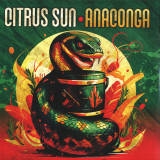
Anaconga”, the fourth Dome album by Bluey and Citrus Sun, is an homage to jazz and soul greats from back in the day, and is the band’s first to be released as a gatefold 2LP.
The album opens with the gorgeous Maynard Ferguson tune “Mister Mellow” from the Seventies, with backing vocals from Tony Momrelle and Deborah Bond. Bluey and Richard Bull share the production . “Down For The Third Time”, the album’s lead single, is a deliciously funky remake of a classic Bobby Caldwell groove from 1978, with Natalie Duncan on vocals and Dominic Glover and Charlie Allen tearing it up on trumpet and guitar respectively.
“Mystic Brew” was originally written and recorded in the Seventies by funk, soul and jazz keyboard legend Ronnie Foster and Bluey includes it “to say thank you for his massive contribution to the music we love and are inspired by”. Erykah Badu’s “Honey”, also with vocals by Natalie Duncan, features beautiful trumpet and flugelhorn from Kevin Robinson.
The stand-out new songs on the album are “Santiago”, which features the young Indonesian harmonica player Rega Dauna, who starred on the band’s “Hard Boiled” instrumental hit from their last album “Expansions & Visions”, and “In Search of the Blue Note”, with Dominic Glover on flugelhorn and Graham Harvey on keyboards, which Bluey says is “inspired by New York City’s jazz history and nightlife”.
Bluey sums up the mood of the album: “I hope that the rhythms wrap themselves around your consciousness and the music slithers into your soul, whilst you bask in the light of the Citrus Sun! Unconstricted love, Bluey”.
Citrus Sun is the mainly instrumental-oriented side project which runs alongside Incognito and features many of the same musicians. The band released their first Dome album “People Of Tomorrow” in 2014.
Ten years after his first full-length effort ‘Man Is Deaf’ landed him firmly in the runnings for DJ Mag’s album of the year, prodigal son Michael Anthony Wright AKA Brassica returns to Civil Music with a deeply accomplished, painstakingly whittled LP of hydraulic electro slickness, rich synthscapes, and hooky, peak-time tearjerkers for the most discerning front-left lifers. ‘Tribeless Gathering’ is a barnstorming testament to Brassica’s stylistic and timbral deftness, touching down in the elusive epicentre of the club/home listening venn diagram with ease.
From the elastic, neon acid pointillism of opener ‘Hop Kweng’ to the mardy, miasmic plod of closing chugger ‘Changa Hill’, Brassica seamlessly segues between avenues of influence, his notoriously omnivorous musical knowledge roadmapping each turn. Raised on a diet of everything from early rave standards to metal, and schooled in avant garde sonics as a student of sound design at LCC, Brassica does a peerless job of sublimating his countless influences into a record of refined, heterogeneous, and most crucially, catchy, club moods.
Less spartan than his more recent oeuvre on Feel My Bicep, and less baroque than his technicolour experiments in postmodern synth pop with vocalist Stuart Warwick, Tribeless Gathering represents Brassica’s triumphant return to the main room, replete with rushy hooks primed for the planet’s finest soundsystems, and passages of heads-down tension bound to draw listeners right to the edge of their seats. Overall it is a concise and refined testament to Wright’s command of spectral sonics and effortless ability to pressurise a dancefloor. It is no surprise that he has also worked as a prolific mastering engineer, tuning music from a plethora of dance disciplines for maximum club impact. This work extends to his own projects (including this one), cementing them as rare expressions of complete artistry from studio to turntable.
As we delve deeper into the record, we are ushered through a series of accomplished and varied club moods, each channelling a unique cocktail of influences, but retaining a warm, ebullient analogue sensibility unique to Brassica’s work. This playful scope of influence calls to mind James T Cotton or Machinedrum’s experiments in dance music form, but Wright manages it all under one roof, wrangling everything from sashaying wub-laden two step to snarling Dillinja-esque FM damage into something inherently his.
Choice cut ‘Change Yourself’ layers an almost Cerrone-like piano refrain over radiant surges of saturated bass, dubby, strobing chords and a jagged, driving break, building to a jaw-clenching apex of dancefloor elation, while the rude, playful half-step of ‘Elevation’ breaks down the vintage speed garage formula into linear fragments, utilising a tight palette of resonant bass slugs, infectious synth leads and Papua New Guinea-style vocal strobes. The aptly named ‘Hold Tight’ fuses heart-in-mouth UK ‘ardkore pads with glissando acid disturbance and surgical snare fills in a formula which recalls the ethereal grit of Nubian Mindz’ 00s experiments in big-smoke break science, while the questing melodic arcs and arpeggiated squarewaves of ‘Pinball Marinara’ could easily have soundtracked an 80s sci-fi epic, beset with sparkling, bare-bones drum programming and hazy beds of sub sediment.
With ‘Tribeless Gathering’, Brassica both irreverently fuses and pays homage to the many unique and weird permutations of UK dance music. The short lived gathering of junglists, ravers and house hotsteppas of a similar name may have long since dissipated, along with the tribes themselves, but across these 11 tracks, he lays a blueprint for a new sound of togetherness.
Glasgow based Seated Records return with more 1980s Scottish Post-Punk / New Wave material. In this 8-track mini compilation the label introduces the work of Stirling band 22 Beaches, offering a deep dive into music recorded between 1980-1984 - the majority of which has never seen the light of day!
22 Beaches formed in Stirling in the late 1970s as an evolution of the short lived group ‘Alone at Last’ - drummer Fred Parson’s and guitarist Stephen Hunter being the two who spanned the divide. Out of the six members of 22 Beaches, many were school friends, and the rest naturally fell together. The band toured extensively and played at a truly diverse set of venues across the UK: from a local swimming pool boiler room, to small nightclubs and university parties, to several fundraisers for the miners strike. Maybe most notably of all, drummer Fred Parsons described playing at what he calls “the Grangemouth International”, organised by local promoter Brian Guthrie and which featured an all-star lineup of 22 Beaches, The Exploited and the first incarnation of The Cocteau Twins. A coach was hired to ship the audience to Grangemouth from Stirling, the cost of which was included in the ticket. The gig then paused halfway through for a 'help yourself' buffet. Young promoters take heed. This is how it's done!
Over the course of the 80s the band released music on three different, and now sought after, various artists compilation cassettes. “What Day Is It?” and “Sadie When She Died” were released on a compilation of local Stirling artists 'The A.N.K.L.E File'. The track from which the current record takes its namesake - “Dust” - was initially released on a compilation-tape for the fanzine 'Another Spark'. And ‘‘Zoo” (also featured on this record) was first released on Glasgow label Pleasantly Surprised via compilation, 'An Hour Of Eloquent Sounds', where 22 Beaches rubbed shoulders with early music from Scottish names Primal Scream, Cocteau Twins, The Wake and Sunset Gun. Unfortunately, 22 Beaches never met the same level of commercial success as these others and decided to retire the project in 1984 - leaving their recordings and demos to gather dust (hehe)…until now!
This compilation, “Dust: recordings 1980-1984” follows the band's journey and the changes in their sound over the years. It moves from the raw, punk energy of early DIY recordings through to the A Certain Ratio style Balearica of their later pieces. The record's opener and title track “Dust” is perhaps the most shining example of the latter. Characterised by the plenitude of sonic space in the mix, “Dust” has an almost dub sensibility that is communicated through centrality of Parsons’ drums, McChord’s percussion, and Fildes’ Bass while the harmonising vocals of Sharkey and McGregor chant over the top to give the track its distinctive psychedelic edge. This is an atmosphere only exacerbated by the lofi quality of the recording which sits the vocals in the same aural realm as much 1960s psych-folk. On “Cartoon Boy”, the band strips things down further. A droning bass line persists through the tape fuzz and is accompanied by the sounds of a sole looping guitar chord sequence and McGregor and Sharkey’s vocals - respectively and carefully dancing around one another before harmonising in the most beautiful way. The result is a haunting and abstract Marine Girls style heartbreaker. ‘That Girl’ again delivers a dub adjacent rhythm section similar to that of “Dust”. However, on this instance crisp guitar chords, a distant, phased organ and blue-eyed soul vocal delivery, produce a track that could easily have been a lost Orange Juice recording from their sessions with Dennis Bovel. On “Somebody Got It Wrong” and “One Of Us” the band employ a more macro approach where a jangling guitar with an almost highlife-influenced tone, vocal ad-libs and syncopated percussion give the music a Talking Heads-esque swagger.
Taken together these tracks illustrate a clear trajectory in the band's sound, moving from from the high energy no-wave quality of early recordings towards a more dub influenced, and stripped-back sound - a sonic trajectory followed by so many bands of the time, not least those emerging from the diaspora of Manchester’s Factory Records.
On “Breathing’’ we hear the beginning of this transition, with the strong influence of the oddball NYC disco styles of Was (Not Was) and ZE records. All of this is meshed together with the residual punk rock energy of 1980s UK. This combination is employed to excellent effect with the addition of the distinctly Scottish (and what the band confirmed to me to be spontaneous) vocal delivery of: “Do you love me? Do you want me?” “Aye!” “Do you love me? Do you need me?” “Naw!”.
On the record’s closing tracks, “Zoo” and “Talent Show”, we hear early examples of the band’s work, playing with their rawest all-in-one-take live energy where Hunter’s spiralling guitar riffs and McGregor's distorted vocal exclamations lead the charge. The band recalls that these initial-forays did not always translate so well into multitrack recording and overdubbing: “the deconstruction took away some of the band's natural feel”. On “Talent Show” the record ends with Sharkey delivering an almost unintelligible spoken word section over the top of the track, making for one final, disorientating, almost manic slice of post-punk.
These tracks from 1980-1984 chart the progress of a unique contribution to the world of Scottish Post-Punk and New Wave, encapsulating not only the musical trajectory of 22 Beaches but also echoing the broader sonic landscape of 1980s UK, a testament to the adaptability and creativity of the UK’s underground music of the time.
The Samosa label gets its Re-Funk Head on once again with Part 2 of the exciting sonic laboratory project.
Opening this outrageously good EP are Samosa alumni Dirty Elements & Drunk Drivers feat E.M.E and their all-powerful and energy blasting ‘Disco Ball’ – a track that never even attempts to hide its sassiness. The brass ensemble fanfare (which is truly one of the best disco riffs in the known universe) acts as a victory parade through Samosa City – all tickertape and confetti raining down on smiling faces. A serious, serious groove which has featured in sets by Art of Tones on his Ultimate Mix Show for Glitterbox Ibiza and by Folamour in his Amsterdam gigs in March 2024.
Track 2 is respected Italian Maestro, Moplen and the wonderful ‘Ain’t No Doubt About It’. There’s an immediate dance floor lure to the disco beats and bongo rhythms here. Take a good helping of ‘pew-pew’ laser bolts, cow bells and hand claps; add a masterful bassline and you have some serious, serious disco business. You could be sipping evening cocktails in Club Coco Bongo or taking in a beach at sunrise - this track would make you want to dance regardless.
On the B-side the disco theme continues with the most aptly titled ‘Sexy Thing’ by Jazzyfunk. At 122bpm, this heads quickly into soaring, heavenly strings and punchy bassline territory, enveloping your ears like a warm duvet. The melody is a dance floor dream – it demands that you join the hands-in-the-air crowd and there really is no point in resisting. ‘Sexy Thing’ is one of those rare ‘moment in time’ tunes that could either kick a night off or act as the grandest of grand finales. Pure, unadulterated disco pleasure.
Closing the EP with Track 4 is DeGama himself and ‘Feel The Groove’. Make no mistake, this is a powerful, brooding beast of a tune that bursts out of the traps in no time at all. At a very deceptive 120bpm, ‘Feel The Groove’ starts with a warm, housey vibe that quickly breaks into a jumping, blues inspirerd guitar battle. The solid beat bounces gorgeously in tandem with the filthy rhythm guitar riffs and sultry saxophone in a knee-slapping, somersaulting, backsliding explosion. A seriously filthy tune from DeGama.
Re-Funk Head Part 2 acts as a perfect companion to its predecessor – featuring an all-star cast of some of the best talents to grace Samosa. A must for all serious record collectors.
(comes with a poster) The Klein blue horizon, gliding seagulls, a ferry purring between two languid islands, dotted with ultra-white villages and ancient ruins... These idyllic visions run through Glika, the ultimate musical project of Les Cyclades. An exciting electronic odyssey from West to East, from Belgian effervescence to Greek mysticism.
In 2020, confined to the neighborhoods of Yser and Mystère in Brussels, Alex and Ludo dream of Greek islands, of scorching sun on their skin, of salty baths, chilled ouzo and braised octopus. But everywhere, time stands still. Must one necessarily move to travel? To levitate? In the absence of Elsewhere, the Franco-Canadian duo will compose the imaginary soundtrack to their escape.
Glika (which means "sweet" in Greek) perfectly synthesizes the musical influences of Les Cyclades: a cosmic saxophone inherited from Alex’s dub and free jazz past, an architect-pastry chef-botanist from Normandy, and Ludo’s "Balearic" tracks, a musician-performer-wine lover who frequented his first raves in 1995 in Houston, Texas.
From a hedonistic encounter on a friendly terrace in the 19th arrondissement of Paris to their chosen exile in Brussels, these hypersensitive jacks-of-all-trades first danced and mixed records. Before creating their own phantasmagorical sonic territories, where cinema and poetry meet more or less human voices, brass instruments, synthesizers and analogue drum machines.
A searing fragment of Greek filmmaker Theo Angelopoulos's "Eternity and a Day" preludes Glika. Then, on Yser Mystère - the names of the two stations on tram 51 that physically linked Alex and Ludo's psyches during the lockdown - Alex's astral sax balances out the industrial mechanics of a locomotive, against a backdrop of urban soundscapes.
And then a rising bpm dominates Alocasia, with its deep and sensual light foot. So sunny. From one track to another, there are interludes influenced by Xenakis, Vangelis and Jean-Michel Jarre. Seminal heroes of the Cyclades... But soon, the duo unleash hostilities at the helm of Epigone, their meta-techno anthem. "I know", "You know", echoes Alex.
Laughs of friends, "mouth noises," and "bizarre rhythms" still dominate Parc Fou, while DRAM eyes the minimalist techno of Detroit. So dear to Ludo's heart... And what about PAME, that post-modern Greek epic.Or Glossa, a timeless track that finishes with a fascinating - because diffracted - elegance, this multi-sensory journey through Les Cyclades. Let's close our eyes. Silencio! Hay Banda!
The story of Ultrasonic Grand Prix is one of two vintage 60s guitars and their owners. I love my 1967 Vox Grand Prix guitar,” declares multi-instrumentalist/producer Shawn Lee - creator, among other feats, of the soundtrack for Rockstar video game classic Bully, and one half of Ultrasonic Grand Prix. “It is a serious beast and an important part of my arsenal. Every tone you need…’For guitar maestro Barrie Cadogan - of Nottingham Freakbeaters Little Barrie, best known for the main title theme of ‘Better Call Saul’, The The, Liam Gallagher and playing on the soundtrack for Baz Luhrmann’s ‘Elvis’ - it was the Vox Ultrasonic, also from the same period, that caught his eye. “I first became interested in Vox guitars because of people who used them like Spacemen 3 and the James Brown band of the late 60’s”, he explains, “but it was when I was part of a recording session at Anton Newcombe’s studio in Berlin that I had chance to get to know the Vox gear better. I was borrowing an Ultrasonic from a friend for a while and Shawn already had his Grand Prix. I thought it would be a good name for our project whenever we got it going.’ It was with this shared passion for these weapons of vintage, psychedelic gold that the suave, velvety, and off-kilter cool of INSTAFUZZ was born. While a project born of recent times, the flames of INSTAFUZZ were first ignited all the way back in 2010, where the two met during mixing sessions for Little Barrie’s 2011 LP King of the Waves. Snap forward a decade and we find Cadogan ripping guitar licks on Instagram, the workaholic Lee using these as inspiration to lay down rhythm tracks on analogue drum machines. And not long after that, cut to the two trading files back and forth furiously online, birthing music together in ever more completed forms. And the music that did emerge was weird, startling, and insatiably groovy. With one foot dipped in the organ-warbling garage of 60s psych, and the other vibrating in the mind-expanding fractals of the British Acid House boom, INSTAFUZZ plies the earthly quintessence’s of blues, rock, soul and jazz, against the preternatural discomforts of programmed drums and unhinged synthesisers to produce something distinctly and nostalgically futuristic
Poison Point is the trancey body music solo project operated by Paris-based producer and live artist, Timothée Gainet.
Started off in 2016, he shared the stage with bands such as Drab Majesty, Xeno & Oaklander, Adult, Rendez-Vous and Silent Servant, shared remixes with Qual, Sydney Valette, Blind Delon, all this while running his other industrial techno outfit IV Horsemen. You can tell Timothée is a busy guy and yet he managed to grow Poison Point since his debut album on Third Coming, getting releases out on Aufnahme + Wiedergabe and Young And Cold.
Over the years, his sound gradually shifted from the motorik post-punk of the early recordings to one much more dancefloor-oriented dark electronics with some sort of nice military pop Je ne sais quoi.
If one could see this coming with 2022’s album Poisoned Gloves, his new full-length is a major step-up in Poison Point game. Skilfully produced by Gainet himself and mastered once again by Mr Baggio for the best groove, Wandering Echoes drops nine new floor fillers for the romantic and the nostalgic at heart.
Just click Play on the first track Blue Idol and you will be hurled into a crystal world of imaginary memories while floating on the scales drawn by the synth arpeggios. Rude awake to the lead single Mysteries In Fire and his intoxicating body music and start wandering the room around you. Keep up the pace with further bangers loaded with electricity, romance and angularity like Flowers & Surrender, Echoes Of Dreams, Slow Kill, Fast Love. Get sweaty as you reach the end of this music journey: final track Les Meurtrières de LʼAube, properly sung in Timothée’s native tongue French, will show you the way to the rest of the just.
If your favourite vibes dwell somewhere between Phase Fatale and Lust For Youth, Wandering Echoes is the record for you.
Limited copies of this John T. Gast (Apron, Planet Mu, Blackest Ever Black etc) project from 2017 - originally released on a hyper limited CDR. Now on vinyl for the first time featuring all the original tracks
Special stuff from this shadow dwelling soul. Really killer.
Reissue of the highly sought-after 7” from 1979 by Chicago
reggae outfit Gypsy Fari.
Gypsy Fari was a project born in the south side of Chicago
after a chance meeting between St Kitts expat Leroy Webster
and local music grad Kevin Coleman. The pair set out to blur
the boundaries of genre with their unique brand of music,
spearheaded by Webster’s Caribbean roots and fused with
the soul and blues the midwest is famous for.
A striking stand-out of the band’s repertoire comes via their
debut recording, laid down at Curtis Mayfield’s legendary
Curtom Studios. The EP opens with Chi-Town Reggae - a
super-charged blend of reggae and disco, led by Websters
infectious vocal, steeped in soul and powered by a relentless
rhythm section. Hail Jah follows closely, written on the hilltops
of the outskirts of Kingston, Jamaica, it’s a deadly roots reggae
missile that pays homage to Websters beginnings.
Once dubbed by a local news outlet “Gypsy Fari are to
Chicago reggae what Muddy Water is to Chicago blues” -
now remastered, repackaged and made available again for
the first time since its initial release
Stix Records, a sub-label of Favorite Recordings, presents the 2nd release from its new Mellow Reggae Series project. Launched earlier this year by Mato & Ethel Lindsey with a stunning cover of the famous “What You Won’t Do For Love” by Bobby Caldwell, the series continues with the same duo, now taking over “Baby Come Back”, the underground AOR/Blue-Eyed-Soul classic from Player.
This time again and likewise could be told about Bobby’s most famous song, “Baby Come Back” can be considered as a “One-Hit Wonder”, reaching #1 on the US Billboard Hot 100 in 1977, while very few people might be able to name who performed it. Like he always does, Mato delivers an outstanding version, delighting us with his matchless skills for dub production. Already perfectly matching on Bobby Caldwell’s rendition, Ethel Lindsey ensure again the perfect vocals over Mato’s production. Currently preparing her 1st album to be released on Favorite Recordings, Ethel has a long music and singing experience, unless an almost blank discography. From her very young age, she’s developed a deep passion for AOR and Blue-Eyed-Soul style.
Starting his reggae production career in 2006, Thomas Blanchot (aka Mato) has released music through various projects on EDR Records, Big Singles or Makasound... In the meantime, he developed a real trademark: taking over classic French, Hip-Hop, OST, Classical or Pop songs, into roots reggae-dub new versions. His 15 years collaboration with Stix Records and label honcho Pascal Rioux gave life to many masterpieces and the story seems far from the end…
'Give Me The Strength To Be Me' is the exclusive single for Lovemonk by Soulnaturals, featuring London singer Chalibrann. This stunning track fuses all the power and beauty of gospel and soul music with exquisite arrangements that take Soulnaturals to spiritual heights, akin to contemporary artists such as Michael Kiwanuka and Sault.
Soulnaturals is the London-based project of songwriter, producer and band leader Tony Cannam, who collaborates with outstanding guest singers and musicians on high-quality soul/R&B music which has received rave reviews from Blues & Soul, Craig Charles Funk & Soul Show, Jazz FM, Andy Peebles at Smooth FM, Solar Radio, Clash Magazine and London Live TV, among others. Cannam is influenced by the rich heritage of 60s and 70s US soul/funk artists and arrangers such as Norman Whitfield, Curtis Mayfield, Stevie Wonder and Quincy Jones.
Soulnaturals released their debut album, "Love Says Yes!", in 2017 as part of Record Store Day, receiving strong critical acclaim and a nod as contender for album of the year from UK Vibe. Their second album, "Parlo Discoteca", came out in October 2023 on their own label, British Soul Standard.
Debut album from UK jazz saxophonist and composer Miles Spilsbury, featuring Carlos Niño. Produced by Slugabed.
Light Manoeuvres is about warmth, generosity and openness. The music which would become Light Manoeuvres was sketched in fragments, but began to take shape in earnest during a period of living under the Marseille haze in the South of France.
The specific character and opacity of the light in Marseille inspired the album title which imagines the movement of light passing over different subjects and spaces in intricate motion. Sand blows over from the Sahara on the Sirocco wind and is whipped up by the Mistral, the Marseille sky becomes golden and vapoured, then intermittently pastel blue. That image stuck while shaping this body of work, and became integral to the function of the compositions - which act as jumping off points for the players and myself, vehicles for improvisation and gateways to something else entirely.
Miles Spilsbury is a saxophonist, composer and multi-instrumentalist. Light Manoeuvres may be Spilsbury’s first full-length as bandleader, but the Brighton-based artist brings more than a decade of experience to bear on this record. In addition to a list of collaborators which includes Carlos Niño, Iglooghost, Nate Mercereau, Surya Botofasina and Yasei Collective, Spilsbury has been a permanent member of celebrated avant-rock experimentalists The Physics House Band since 2018. He has performed at prestigious UK venues such as the Southbank Centre and the London Jazz Festival, and has toured extensively throughout North America, Europe and Japan.
In time between other musical projects, Spilsbury spent several years sketching fragments of solo material. The music which would become Light Manoeuvres began to take shape in earnest during a period of living in Marseille. The specific character and opacity of the light there inspired the album title, which imagines the movement of light passing over different subjects and spaces in intricate motion.
Ever amazed by the external world and its natural surroundings, Belgian producer Dijf Sanders has a habit of turning himself towards the unknown for inspiration. After praised albums based on field trips to Indonesia (Java, 2017) and Nepal (Puja, 2020) he found himself challenged by the traditional chants from Georgia. Diving deep into its sounds, people and heritage with open eyes and ears, he traveled to the Eurasian land in the South Caucasus in 2022. The field recordings and impressions of this journey make the blueprint for new, meticulously crafted compositions that ripened in his studio and transcend its original source material in time and space.
SUPRA offers nine diverse explorations ranging from spaced-out folk, ethereal trance, ambient with a melodic sense of drama and lush electronica channeling 90's IDM energy fields. Bound by dynamic depth in sound design, this is electronic music with a heavy heart - for all tracks share a primal sense of nostalgia in which traditional music from the Georgian motherland baths. From a pastoral love song about a buffalo (Mingrelian Song) or a ceremonial wedding hymn (What You Give Away Is Yours, What You Don't Is Lost) to a lullaby (Bird's Milk)... Georgia is a land of contemplative singing and its music scene today is still dominated by modal vocalists and harmonic choirs with pride.
With the help and recording equipment of the Folklore State Centre (Tbilisi) and in collaboration with Europalia Georgia festival, Dijf Sanders found contemporary choirs willing to lend their voices for this project. Next to these voice samples, the Georgian countryside and nature delivered source material for more samples and textures as well. The name of the record refers to the traditional Georgian feast where a large table filled with food, drinks and singing.
Son of Detroit Waajeed is back with the three-track “Ten Toes Down” EP, the next chapter in a musical odyssey through struggle and self-awareness that finds the producer creating some of the strongest work of his career.
Joined by Wu-Tang songstress Blue Raspberry under alias Candi Lindsey on “Heavy” and the tribal soliloquy “Deeper Into Blue,” this new project is a reflection of many changes since last year’s “From the Dirt” full-length.
'Ten Toes Down' is the first in a string of releases in 2019.
Ed Sheeran’s brand-new album Autumn Variations will be available for pre-order on the 24th August at 5pm before a worldwide release on the 29th September. It will be available to stream on all platforms as well as purchase physically as a CD or various limited Vinyl editions.
Ed Sheeran is an era-defining artist who has sold over 52 million albums and 150 million singles across the world. Through his fusion of thought-provoking songwriting, universal pop and multi-genre influence, his rich tapestry is not only perfectly suited to his audience but it’s something that transcends generations.
Since surfacing on the UK circuit in 2010 with his ‘No.5 Collaborations Project’ – an eight-track EP featuring his favourite grime artists of the time – the Suffolk-raised recording artist has resonated with fans across the world through his peerless songcraft and versatility. And now, with six consecutive UK No.1 albums to his name – ‘+’ (2011), ‘x’ (2014), ‘÷’ (2017), ‘No.6 Collaborations Project’ (2019), ‘=’ (2021) and ‘-‘ (2023) – Sheeran continues to reaffirm his status as one of the most in-demand pop stars on the planet.
Prior to the release of ‘=’ (October 2021) – an album that’s now surpassed five million global sales - Sheeran secured two UK No.1 singles in the UK with ‘Bad Habits’ and ‘Shivers’, which sat atop the UK’s Official Singles Chart for a combined total of 15 weeks. Moreover, the LP saw him take home 2 x EMA’s for ‘Best Artist’ and ‘Best Song’; an American Music Award for ‘Favourite Male Pop Artist’; British GQ’s ‘Solo Artist of the Year’; 4 x Los40 Awards; a BRIT Award for ‘Songwriter of the Year’ alongside a nomination for ‘Song of the Year’ at the 2022 GRAMMY’s.
Sheeran’s most recent album, Subtract, secured Ed his sixth No.1 album. Produced by Aaron Dessner, the album was anchored in his love of singer/songwriter compositions and written against a backdrop of personal grief and hope. Ed’s most critically-acclaimed album to date, it housed the heart wrenching UK No.1 single ‘Eyes Closed’ – a song about his late friend, Jamal Edwards.
But it’s not just his recorded music that’s seen the former Glastonbury headliner become one of the sought-after artists of the 21st century. Possessing a mystical ability to turn 90,000 capacity venues into the pub back-rooms that he first started playing in, Ed made history in 2015 after becoming the first-ever artist to play Wembley Stadium solo - without a band, just with his guitar and loop pedal - over three, consecutive sold out nights. Move forward to the summer of 2019 and Ed would re-enter history books after the completion of his mammoth two-year Divide tour, officially becoming the most-attended tour of all time after it culminated with special homecoming shows in Ipswich, Suffolk. Beginning last summer, Ed is currently travelling the world on his ‘+ - = ÷ x Tour’ (pronounced ‘The Mathematics Tour’), which saw him return to Wembley Stadium for a five-night run last June.
Ed Sheeran, who was awarded an MBE for his services to music and charity in 2017, is the proud recipient of 1 x IFPI Award (best-selling global artist of 2017); 4 x Grammys; 4 x Ivor Novello’s; 7 x BRIT Awards (including two consecutive wins for ‘Global Success’ in 2018 and 2019); 7 x Billboard Awards + more. Moreover, to this day, his blockbusting third studio album ‘÷’ remains the fastest-selling album, ever, by a male artist in the UK, while the LP’s lead single, ‘Shape of You’, maintains its status as the most-streamed song in Spotify’s history.
At the end of 2019, Sheeran was presented with the Official Chart Company’s first-ever ‘No.1 Artist of the Decade’ award following a host of accomplishments in his native UK including the most No.1’s across the UK’s Official Singles and Albums chart from the years 2010-2019. Most recently, Ed scored two more feats with the OCC after becoming the first British Solo Artist to claim 52 weeks – an entire year – at No.1 on the Official UK Singles Chart, with only Elvis Presley and The Beatles achieving more overall weeks at the top, as well as becoming the first-ever artist with four albums spending an entire year or more in the UK Top 10.
Got dust? Krash Slaughta has. In fact, for him, Everything’s Turning Up Dusty right about now. Surely this can’t be his brand-new double-vinyl LP journey into sound which finally realises an ambition to create a cut n paste opus held since his pre-turntable days of pause-button mixes? It certainly can! The project comes in four parts corresponding to four sides of 12″ vinyl which weigh in at approximately fifteen minutes each and each side of which took around a month to make!
Man, that is epic! When did he ever get the time and concentration to put such a beast together? Wait – are we talking about yet another Krash Slaughta lockdown project? We are! And this bad boy stitches together vintage vocal loops, rare breaks, library records and obscure samples along with remixes of Stetsasonic, O.C., Tanya Winley, Jurassic 5, Edan, Nas, ODB, Gang Starr, Super Lover Cee & Casanova Rud (any one of which would be straight fire on 7″or 12″) along with pretty much whatever the hell else he wanted to put on there. Pressed at 45 rpm, this one features two differently-coloured slabs of wax: one mauve and one blue while even the centre labels and cover art get in on the cut n paste vibe having been created by hand by Krash homie Saleem Andrew McGroarty. As with previous such efforts from the KS camp, there will be no re-press! Sleep at your peril.
Voted DJ Mag’s Underground Hero in 2022, DJ & producer Lauren Flax has been a fixture in Brooklyn’s electronic scene for two decades. On her latest project Liz & Lauren EP, she teams up with Liz Wight of shoegaze techno duo Pale Blue, whose sultry vocals explore questions of love and isolation to the tune of Detroit house and acidic techno.
Flax and Wight became fast friends in 2021 after being introduced by Pale Blue member & 2MR co-founder Mike Simonetti, who’d enlisted Flax to remix Pale Blue’s “Breathe.” Naturally, when Flax needed a vocalist for some tracks she was working on shortly after, she knew just who to call. “I was in my last year of grad school doing an internship in community mental health helping kids cope with the trauma of the pandemic,” Wight says of the time. She channelled this experience as she wrote and recorded the lyrics to Liz & Lauren EP from her home in Los Angeles.
As a result, the lyrics on Liz & Lauren EP are open-ended musings on connection, isolation, and convention. Lead single “Fix Everything” can be read both as an indictment of the trappings of marriage or, on Flax’s view, a rousing call to action, applicable to issues ranging from the degradation of the environment to the attack on LGBTQ+ rights in America. As the EP progresses, Wight’s airy vocals consider the pitfalls of love, from the destructive power of infatuation to the pain of outgrowing a relationship.
Sonically, Liz & Lauren EP feels like a natural progression from Flax’s first release on 2MR, 2021’s Out Of Reality, which saw her exploring a more minimalist production style for the first time in her work. “I Don’t Want To Hurt You” and “Fix Everything” pulse with bright, dynamic production, while slow burner “Return To Love” takes a sparser approach, anchored by a muted drumbeat and a simple, earworm synth refrain. “I’d Risk It All To Be With You” is a masterful balance of both; it even gets the club treatment on the EP’s closing remix, courtesy of Flax’s friends Mark Archer and Simon Neale (Shadow Child) of MASC.
Liz & Lauren EP is an impassioned collection that showcases both Flax and Wight’s artistry in equal measure. For both artists, it’s a testament to stepping outside the norm (DJing for Flax, performing in Pale Blue for Wight) and collaborating with others, the fruits of which are sure to be felt on the dancefloor for years to come.
Duality Trax first opened its books in 2020 with an EP featuring Radiant Love regular Fio Fa and a remix of the year contender coming from Lisbon’s Violet. Since then the label has become known for its acute attention to detail, giving each release the shine it deserves while avoiding disposable practices and challenging the industry through its dedication to duality and balance, whether that be sonically or surrounding gender identity. It’s really no surprise that one of house music's leading label ¦gures Tywi was destined to make an appearance. Having started the Haŵs imprint in his home city of Cardiff, the label’s wide-spread popularity began to gain the attention from some of the industry’s most respected heads and became a breeding ground for new artists to emerge. A shared love of music resulted in tracks being shared over time and eventually DUALITY6 was born. In what will be his ¦rst full length EP, Tywi continues to join
the dots between 90’s house, prog, breaks and trance, with a huge remix coming from Frankfurt-based artist Maruwa. Title track ‘Reality Checkpoint’ connects various styles with a modern take on progressive trance. Sonics feel as if they’ve been projected from space in a kaleidoscopic mind-warping ride, coupled with the producer's impressive ear for world building soundscapes. A child of the ‘90s, Maruwa combines her classically trained ear with the nostalgia of her upbringing in the remix; channeling early trance records and deep, chugging rhythms into a wave of euphoria ¦t for peaktime. It’s the ¦rst time the label has also delved head ¦rst intofull trance territory, turning the intensity levels up while paying homage to both label owner and artist’s early musical in§uences. The B side opens up with ‘Spellbound’ which feels like a guided tour around the cosmos, sat beside trusted travelers and embraced by everything-will-be-alright energy . The track’s interior is built around synths that feel both effortless and light as our tour guide brings us towards our ¦nal destination. The EP comes to a close with ‘Laws Of Motion’, building slowly with shades of leafy greens and deep oceanic blues as it gently brings us back down to earth.
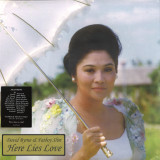
David Byrne & Fatboy Slim’s acclaimed 2010 album Here Lies Love receives its first-ever vinyl release to coincide with a new production opening on Broadway this summer. Here Lies Love is a double-disc song cycle – improbably poignant, decidedly surreal, surprisingly thought provoking – about the rise and fall of the Philippines' notorious Imelda Marcos. It was conceived by David Byrne; composed by Byrne and DJ/recording artist Fatboy Slim, AKA Norman Cook; and performed by a dream cast drawn from the worlds of indie rock, alt country, R&B and pop. Byrne's taste in collaborators is as imaginative as it is impeccable, including Cyndi Lauper (who recounts, to lighthearted disco beats, Imelda's courtship with Ferdinand Marcos), Steve Earle (as the power-hungry Ferdinand), Dap-Kings vocalist Sharon Jones (recalling Imelda's introduction into New York society) and Natalie Merchant (as spurned Imelda confidante Estrella, anticipating the onset of martial law). Along with vocals turns from such stars as Tori Amos and the B-52's Kate Pierson, Byrne works with rising indie rockers St. Vincent and My Brightest Diamond; New York chanteuses Nellie McKay and Martha Wainwright; and dance-music divas Róisín Murphy and Santigold. Byrne himself appears as the voice of imperialistic America on ‘American Troglodyte’, a send-up that wouldn't have seemed out of places in Talking Heads' True Stories.
Byrne originally envisioned this as a musical theatre piece, to be mounted in disco and nightclub settings, reflecting the globe-trotting Marcos' taste for such velvet-roped spots as Studio 54 and Regine's. In 2006, he performed work-in-progress versions to enthusiastic audiences at New York City's Carnegie Hall and the Adelaide Festival in Australia. While plans for a US theatrical production continued to evolve, he delivered this unique recording. The award-winning theatrical production eventually premiered at The Public Theater in New York in 2013, travelled to London’s National Theater for a sold-out run (2014–15), and was remounted at the Seattle Repertory Theater (2017).
Here Lies Love has an effervescent disco feel, redolent of Fatboy Slim's own dance-floor anthems, with warm undercurrents of the Latin rhythms that have percolated through Byrne's recent solo work. The sunny arrangements act in counterpoint to the reality of the Marcos' increasingly repressive regime, reflecting the imagined inner life of the glamour-obsessed Imelda. Explains Byrne, "For me, the darker side of the excesses are, for the most part, a matter of record. A lot of the audience is going to come with that knowledge already. What's more of a challenge is to get inside the head of the person who was behind all of that, and understand what made them tick." Byrne offers no judgment and avoids the obvious – there is no mention of Imelda's infamous shoe collection.
Many of Byrne's lyrics are, astonishingly enough, constructed from actual Imelda quotes, including the project's title, the words that Imelda, now returned to the Philippines from US-assisted exile in Hawaii, would like to have inscribed on her gravestone. In addition to his new liner note, Byrne illustrates the story with archival photos. In a detailed preface, he reveals what drew him to this subject and the bumpy route he took to launch the project and, ultimately, record this album. The booklet is indeed a page-turner, just as Here Lies Love is a wonderfully old-school album that rewards start-to-finish listening. Once again, Byrne – beloved as musician, thinker and bicyclist-about-town – reveals the breadth and singularity of his vision.
The new production of Here Lies Love will premiere at the Broadway Theatre in New York City. Performances begin June 17, ahead of an official opening night on July 20. Tony Award winner Alex Timbers (direction) and Olivier Award nominee Annie-B Parson (choreography) reunite with Byrne (concept, music, and lyrics) and Fatboy Slim (music) to bring Here Lies Love to Broadway, continuing a ten-plus year collaboration on the project. Tom Gandey and J Pardo contribute additional music. Here Lies Love is produced on Broadway by Hal Luftig, Patrick Catullo, Diana DiMenna for Plate Spinner Productions, Clint Ramos, and Jose Antonio Vargas. The staging at the Broadway Theatre will transform the venue’s traditional proscenium floor space into a dance club environment, where audiences will stand and move with the actors. A wide variety of standing and seating options will be available throughout the theatre’s reconstructed space. The producers of Here Lies Love said, “As a team of binational American producers – Filipinos among us – we are thrilled to bring Here Lies Love to Broadway! We welcome everyone to experience this singularly exuberant piece of theatre. The history of the Philippines is inseparable from the history of the United States, and as both evolve, we cannot think of a more appropriate time to stage this show. See you on the dance floor!”
David Byrne’s recent works include the launch of Reasons to be Cheerful, an online magazine focused on solutions-oriented stories about problems being solved all over the world (2019); Joan of Arc: Into the Fire, a theatrical exploration of the historical heroine that premiered at the Public Theater in New York (2017); The Institute Presents: NEUROSOCIETY, a series of interactive environments created in conjunction with PACE Arts + Technology that question human perception and bias (2016); Contemporary Color, an event inspired by the American folk tradition of color guard and performed at Brooklyn’s Barclays Center and Toronto’s Air Canada Centre (2015); Here Lies Love; Love This Giant, a studio album and worldwide tour created with St. Vincent (2012); and How Music Works, a book about the history, experience, and social aspects of music (2012).
Byrne curated Southbank Centre’s annual Meltdown festival in London in 2015. A co-founder of the group Talking Heads (1976–88), he has released eight studio albums as a solo artist and worked on multiple other projects, including collaborations with Brian Eno, Twyla Tharp, Robert Wilson, and Jonathan Demme, among others. He also founded the highly respected record label Luaka Bop. Recognition of Byrne’s various works include Obies, Drama Desk, Lortel, and Evening Standard awards for Here Lies Love; an Oscar, Grammy, and Golden Globe for the soundtrack to Bernardo Bertolucci’s The Last Emperor; and induction into the Rock and Roll Hall of Fame with Talking Heads. Byrne’s work as a visual artist has been published and exhibited since his college days, including photography, filmmaking, and writing. He lives in New York City. In addition to 2019’s cast album for American Utopia on Broadway, Nonesuch has released eight other David Byrne records since 2003, including 2018’s American Utopia studio album and two versions of his musical Here Lies Love.
Blending ambient, drone, krautrock, psychedelic, house music elements into a unique sonic universe... that's what Cloudland Canyon is known for! This American experimental music project led by Kip Uhlhorn comes with the release of their new self-titled LP on the always trustworthy Medical Records! The band continues to explore the boundaries of sound and space, taking the listener on a journey through lush soundscapes and immersive textures. Formed in 2002, Cloudland Canyon has released several critically acclaimed albums, including "Fin Eaves," "Lie In Light," and "An Arabesque."
Their recent releases have been produced by Sonic Boom from Spacemen 3/Spectrum. With each release, Uhlhorn has pushed the envelope of experimental pop music, collaborating with various musicians and producers to create intricate and otherworldly compositions. This time around Uhlhorn collaborated primarily with AI to generate and create a compositions that sound like they are meant for an alternate realm where both beauty and suffering are both present, but not at odds with one another. AI has helped Uhlhorn take one step further into the transfigurative looking glass.
The new LP, marks a new chapter in Cloudland Canyon's journey, expanding their sonic palette to include elements of techno and electronic music while still retaining their signature dreamy atmospheres. The album is a journey through a sonic landscape that is at once futuristic and nostalgic, evoking the feeling of driving down an endless highway into the sunset. Past musical collaborators have included some of the most exciting musicians working today, including Sonic Boom from Spacemen 3, Wayne Coyne & Kliph Scurlock of Flaming Lips, David Scott Stone of the Melvins, Unwound,& LCD Soundsystem, Dean & Britta from Galaxie 500 & Luna, and Jody Stephens from Big Star to name a few. "S/T" is a testament to Cloudland Canyon's ability to collaborate and create music that is both innovative and accessible. Whether you are a longtime fan or a newcomer to Cloudland Canyon's music, "S/T" is a must-listen for anyone interested in the possibilities of experimental music in the 21st century. With its combination of analog and digital textures, hypnotic rhythms, and expansive soundscapes, it is a journey you won't soon forget.
Two lost Disco classics appearing for the first time on a single 12” featuring soul legend Leon Ware and Jo Ann Harris, a little known backing singer for Bob Dylan throughout the 80s.
Both songs originally appeared on the ‘20 Minute Workout’ Video and LP released in 1983 by Canadian label Ronco, ‘What Does It Take’ providing an uptempo crescendo to the third part of the workout and ‘Never Gonna Give You Up’ the final warm down track. Licensed from producer Ira Newborn, Hollywood soundtrack royalty who composed the scores for an incredible run of films including The Blues Brothers, Ferris Bueller’s Day Off, The Naked Gun trilogy, Weird Science, Ace Ventura and Uncle Buck. Ira’s lawyer persuaded him to get involved in the project for Ronco and it was Ira who hand picked Leon Ware and Jo Ann Harris to add vocals to two tracks to aid the commercial potential of the album.
There are two original versions backed with extended instrumentals sourced from a rare Lazer Disc Version of the album. It feels right to shine a light on one of Leon Ware’s lesser known performances, whilst the Jo Ann Harris cut has a distinct Balearic air featuring sultry keys and sax at a tempo of 98 BPM.
Kaijupop is conceived as a record created by an international
supergroup operating under the umbrella of Soft-Bodied Humans. Over the past decade, UK producer David McNamee has curated an impressive series of releases under the Blue Tapes label that highlight various aspects of minimal music, ranging from grime to gugak, American primitivism to Japanese ambient, and released his own longform minimal music under the name Cut A Lonely Figure
McNamee now unveils on vinyl his latest project, Soft-Bodied Humans, a supergroup that transcends boundaries, drawing inspiration from grime, minimalism and industrial alike. Soft-Bodied Humans brings together an eclectic ensemble of like-minded producers, vocalists, and performers, resulting in a diverse and mesmerizing album.
Collaborators on this spellbinding album include L.A. avant-garde
artist Anna Homler, rising Ugandan MC Swordman Kitala, Brazilian
artist and musician Cadu Tenorio, Japanese grime artist PAKIN,
throat-singer and doom metal auteur Abysmal Growls of Despair, and
Chicago-based producer Fire-Toolz.
This groundbreaking album explores a dynamic range, effortlessly
transitioning from abstract moments to intense sonic experiences.
While grime-inflected beats form its core, Kaijupop fearlessly mutates
and diverts this foundation into uncharted territories. The result is
an immersive sonic journey that pushes the boundaries of the genre.
With each track, the album offers a fresh perspective and an
adventurous exploration of sound.
Soft-Bodied Humans stands as a testament to the power of collaboration and experimentation. This international supergroup definitely breaks the mould of traditional music-making, delivering a groundbreaking and boundary-pushing album that will leave listeners eager for more.
Symphony Orchestra is a new group from Maximilian Turnbull and Michael Rault. Both Rault and Turnbull are accomplished songwriters, performers and producers in their own right, with Turnbull leading The Badge Epoque Ensemble, playing with the group Darlene Shrugg, and once releasing records under the name Slim Twig and Rault having released several psychedelic rock & roll classics under his own name in the past decade. The pair have worked together in various capacities for many years, writing and recording together on U.S. Girls' In A Poem Unlimited, and contributing to each other's releases, but the debut LP from Symphony Orchestra (due out May 12th on Telephone Explosion) marks their first release as an official entity.
Needless to say, there is a potent creative chemistry between Rault and Turnbull and Radiant Music showcases the alchemy between their distinct skill sets. The album is an exercise in pure collaboration. After years spent focusing on solo projects and working as hired guns on other projects, the duo came together with no specific intentions other than to work free of boundaries and direction. Freeing themselves from the familiar pressures of deadlines and expectations, they found a sense of discovery through togetherness. Duties on this project were split between Rault acting primarily as a one-man rhythm section and lead vocalist with Turnbull bringing chord sketches and his trademark aphoristic lyrical musings to the table. Trading off roles on guitar and keys from song to song, the duo's deft approach to melody bleeds through their instrumental parts as much as it does through Rault's vocal melodies. The majority of this album was self-engineered over the course of three sessions in 2018, at Michael's Montreal studio. Dormant during the pandemic, Rault's move to Los Angeles and the birth of Turnbull's twin sons, work reignited in 2022. The latterly tracked instrumental 'Concerto' and ballad 'Unthink The Thinkable' provide a dynamic depth to the album perhaps attributable to this tumultuous pause. Mixing came courtesy of Steve Chahley & Tony Price (U.S. Girls, BÉE, Jane Inc, etc).
In all of their work, Rault and Turnbull have made a hallmark of elaborately precise production and arrangement, Radiant Music is no different, though its pared-back simplicity provides a streamlined directness. The pairing of Rault's soulful, elastic vocal with Turnbull's evocatively cerebral lyrics provides a thrilling sensation unlike anything else in their respective catalogs. With an explosive, groove-forward approach, kaleidoscopic walls of vocal harmony and technicolor displays of guitar work, these 31 minutes of music will most certainly stimulate the mind of any fan of classic pop rock and funk. The blown-out breakbeats, winsome woven vocal melodies and propulsive wah-wah guitars of the title track evoke memories of an after-school cartoon special that never really existed outside of a lysergic daydream. "Harp In The Wind" is a perfect moment of overcast melancholy complete with ribbons of weeping synthesizers and velcro-fuzz guitar that could rip a clean line through Kevlar. "Know Thyself" and the harmony-rich "Intersection" are standout tracks that find a kinship in Stereolab's space-age effervescence. "Concerto" is a slab of beaming, mischievous funk that nods to Billy Preston's extraterrestrial keyboard explorations.
Radiant Music, like the best pop music, is life-affirming, confectionary, and enticing. Symphony Orchestra have created an album that hits you right where you need it, anchoring heady, adventurous sonic ideas down to a solid foundation of masterful songcraft, virtuosic instrumental performances and undeniable groove. Not a bar, nor beat is wasted.
*MILKY CLEAR VINYL - 300 COPIES ONLY FOR WORLD!!* Technology + Teamwork’s fizzling synths, interweaving textures and punchy rhythms are beguiling on their long-awaited debut album We Used To Be Friends. However, at the heart of it all it’s the connection between the group’s two members, Anthony Silvester and Sarah Jones, the friendship the much-travelled duo have managed to maintain for nearly 15 years and a showcase of the slow-burning construction of the electronic world that they’ve surrounded themselves with. We Used To Be Friends is ultimately the tale of two storied artists in their own right, holding onto each other through personal and career twists and turns, relocations and broader movements through respective phases of their lives. Silvester and Jones first met and then collaborated as part of biting post-punk five-piece XX Teens in 2008, eventually breaking off to forge their own path together even as the latter’s demand as a drummer grew. Performing with everyone from Hot Chip, Harry Styles and Bloc Party among many others, Jones has been a constant percussive presence across the sphere of alternative UK pop music – she’s also found time for her own solo project Pillow Person and played on records by the likes of Puscifer and Kurt Vile. Silvester meanwhile has performed in art galleries across Europe including: Fridericianum in Kassel, Kölnischer Kunstverein in Cologne, and Vleeshal in Middelburg, as well as providing sound design and composing work for several art films. Technology + Teamwork is the constant throughout all of that though. “Technology + Teamwork's name perfectly describes how we work” Silvester explains. “Sometimes the teamwork is between each other and sometimes it’s between us and the technology.” Although going by the name Technology + Teamwork as far back as 2014, two events conspired that pulled the project into focus for the pair of them: firstly, Silvester spent a year constructing a soundproof studio shed on the border of London and Essex where he lives. Secondly, inevitably, the pandemic brought the globe-trotting Jones back home to just seven miles away from her long-time collaborator and friend. “We probably hung out more than we had for a few years” says Silvester. “Also, after all her Pillow Person releases Sarah had gotten really good with recording vocals and knowing what did and didn’t work and had a really good home studio set up. We still worked separately though, exchanging ideas via email and WhatsApp.” As with many artists through 2020 and early 2021, working separately was a new necessity that they were forced to adapt to. However, it became clear that there were creative benefits to it. “It really changed our sound and our sounds became a lot more focused as a result” Jones says. “I wanted to use the same ideas of improvisation that I might use while playing the drums for myself and apply that to melodies and lyrics.” The album bristles with hyperpop modernity. You can hear it in the manipulated vocals most prominently on Big Blue’s disco strut and on Moving Too’s heady mix of pitched up voice and burrowing sub bass. However, the pair also looked to San Francisco and the West Coast synthesis movement of the 60s, Silvester inspired by the likes of Suzanne Ciani and Don Buchla. The plaintive lo-fi and melancholy of Amsterdam incorporates Mutable Instrument’s Marbles by Émilie Gillet which – inspired by Buchla’s own synthesis work – outputs random voltages to give the track an air of unpredictability. It’s something that occurs throughout the album, the duo revelling in the happy accidents that disrupt the flow of their hook-laden pop. “The ‘Buchlian’ ideas of music having randomness and uncertainty, completely freed us up” Silvester explains. “It felt a bit like having more members in the band, machines that didn't do what you expected or intended.” Perhaps more subtly, is the influence of 17th and 18th century Baroque music, with Silvester drawing a line between it and the 90’s R’n’B he and Jones both love – exemplified perhaps best on K+B’s percussive claps and sultry grooves. The portentous juddering synthpop of the title track, meanwhile, alludes specifically to Handel’s Sarabande. It’s typical of an album that only needs a scratch of its seemingly glossy surface to unearth a myriad of contorted touchstones and reference points that’ve fermented beneath it. Thematically there’s an anxious sense to the record, with tracks often balancing above a quiet sense of unerring tension even at their most bombastic. Moving Too is the result of an existential doubt that hit Silvester while out cycling, with the outro refrain "it's not enough to die you also have to be forgotten" a take on something Samuel Beckett once said. These worries are echoed on the album’s closing track What A Year, which borrows a lot of lines from the late drag performer and fashion designer Dorian Corey including the grimly defiant "you're gonna leave your mark somewhere in this world just by getting through it”. Those clouds offer a counter point to We Used To Be Friends, but then isn’t that what great pop albums do? Technology + Teamwork undoubtedly love the craft of the hook and the song, but they always position themselves left of centre, prepared to scuff things up, pull something out of shape or manipulate something to leave it sounding warped. Much like their friendship, nothing here is particularly linear – and it’s all the better for it. Bio: Anthony Silvester & Sarah Jones first collaborated as part of biting post-punk five piece XX Teens in 2008, eventually breaking off to forge their own path together even as the latter's demand as a drummer grew. Performing with everyone from Hot Chip, Bat for Lashes, Harry Styles and Bloc Party (among many others), Jones has been a constant percussive presence across the sphere of alternative UK pop music - she's also found time for her own solo project Pillow Person and played on records by the likes of Puscifer and Kurt Vile. Silvester meanwhile has performed in art galleries across Europe including Fridericianum in Kassel, Kölnischer Kunstverein in Cologne, and Wleeshal in Middelburg, as well as providing sound design and composing work for several art films. Technology & Teamwork is the constant throughout all of that though. "We Used To Be Friends" proves that Technology & Teamwork undoubtedly love the craft of the hook and the song, but they always position themselves left of centre, prepared to scuff things up, pull something out of shape or manipulate something to leave it sounding warped. Much like their friendship, nothing hear is particularly linear - and it's all the better for it.
‘At the turn of the 1990s, there were few more successful New York house producers than Victor Simonelli. Under a dizzying array of aliases – Solution, NY’s Finest, Groove Committee, Critical Rhythm and Cloud 9 being amongst the better-known – the Brooklyn-born DJ/producer delivered a string of underground club hits during the city’s early ’90s house boom.’
BTG presents “Victor Simonelli: The Early Years Vol 1” a collectors edition double Vinyl release - 2 X 12’s in each Vol
Launching the first Behind The Groove collectors edition vinyl series is New York’s finest Victor Simonelli with ‘The Early Years Vol 1 & 2’ double Vinyl releases. Featuring seminal house tracks such as Cloud 9’s ‘Do You Want Me’, Solution’s ‘Feel So Right’, Instant Exposure’s ‘Wanna Be With You’ and rare mixes of Raiana Page and EZ-AL, this collection brings together classic and rare Victor Simonelli cuts that reflect the early raw energy and buzz of the New York House scene. With ‘Vol 2” scheduled to follow shortly after, this is the most comprehensive collection of rare Simonelli cuts that firmly establishes his esteemed role in 90s House Music as well as introducing new fans to his inimitable sound.
Victor Simonelli is one of the early kings of NYC sampling In house music. The real deal - Victor danced at the legendary David Mancuso’s Loft sessions and developed a serious appreciation for good music. He interned for Arthur Baker at his renown Shakedown Studios (where Arthur worked with the iconic Afrika Bambatta on the seminal dance floor ’Planet Rock’ track) and went on to release hugely influential releases on seminal NYC labels 4th Floor and Nu Groove. Victor’s music was championed by the hugely celebrated iconic House Music DJ pioneers, Larry Levan and Tony Humphries at Paradise Garage & Zanzibar/WBLS/Kiss FM respectively.
Revered as a New York house heavyweight and prolific producer since the turn of the 1990s, Victor Simonelli grew up in Brooklyn, NYC, nurtured by a music loving family, with an avid record collecting father who also worked as a local party DJ. He took music lessons in piano, drums, guitar and bass, before discovering his first love, tuning into NY’s Radio Mix Shows on WBLS, WKTU and WRKS,98.7 Kiss FM) where he discovered the art of mixing and in his own words, ’I just simply got lost in the music’.
Graduating from NYC’s Centre For Media Arts, Victor got an internship in the legendary producer, Arthur Baker’s Shakedown Studios. Soon graduating to editing, mixing and then producing he worked for artists David Bowie, Quincy Jones, Debbie Harry, Sinead O’Connor and Talking Heads. Teaming up with fellow NYC producer Lenny Dee to become the Brooklyn Funk Essentials, they released records ‘Critical Rhythm’ and ‘Subliminal Aurra’ on 4th Floor before Victor went solo as Groove Committee releasing the classic ‘I Want You To Know’ on the legendary Nu Groove Records. Paradise Garage legend, Larry Levan broke ‘I Want You To Know’ rocking 2 copies on his last tour of Japan whilst King of NY House Music,Tony Humphries broke Victor’s new ‘Feels So Right’ across New York on his WBLS/Kiss FM Mastermix show and at his legendary Zanzibar club sessions. It was only a matter of time before Victor’s name became synonymous with quality House music ensuring a worldwide platform for his productions.
In the early 90s alongside his own productions, Victor Simonelli worked on high profile projects, including James Brown’s album, “Love Overdue” BeBe and CeCe Winans single featuring Mavis Staples “I’ll Take You There” and Quincy Jones’ “I’ll Be Good To You” featuring Chaka Khan and the legendary Ray Charles. Never straying too far from his clubland roots, Victor worked with Danny Tenaglia on his classic “The Harmonica Track”.
DJ gigs across the world started flooding in and Victor found himself recording for a dizzying array of labels including Tribal America, Sub-Urban, Bassline, King Street Sounds and Vibe, under a wide range of aliases. He also produced, wrote and remixed for artists such Nile Rodgers (Chic), Afrika Baambata, Hall & Oates, Frankie Knuckles, Kerri Chandler, Madonna and Michael Jackson. Famed for his own productions “It’s So Good” by Creative Force, “I Know A Place” as Sound Of One - the first release on Roger Sanchez One Records -, “Dirty Games” as well as the “Street Players Vol 1 EP”, Victor went on to set up Suburban Records with Tommy Musto and Bassline Records with two other partners. Notable releases on this label include “Do You Feel Me”, Connie Harvey’s gospel inspired, “Thank You Lord”, Urban Blues Project’s “Deliver Me”, Colonel Abrams “Not Gonna Let”, and Mone’s “Better Way”. Never ceasing to produce, DJ, run his own label and host radio shows like Groove Lift, Victor has worked with virtually every NYC producer and has nurtured a next generation talents including Angel Moraes, Jazz ‘N’ Groove, Urban Blues Project, Harlem Hustlers, Jay Jay and Julius Papp. Victor’s releases have also been used on M&S’s “Salsoul Nuggett” hit and Eddie Amador’s underground smash ‘House Music’.
In the late 90’s Victor launched his new Westside Productions, notable for the “Latin Impressions 1 & 2” releases, opened up a studio in Italy as he found himself increasingly working in Europe and now divides his time between New York and Italy. Suffice to say his unique sound of uplifting and spiritual music has kept him at the forefront of House Music and he is credited as one of its leading exponents with his string of classic releases and remixes.
Behind the Groove, branches out from its digital platform to embark on a programme of releases from the iconic pioneer producers of House Music. Esteemed for their high quality features and mixes that continue to explore, celebrate and venerate the contributions of highly respected, scene-shaping Labels, Artists, DJs and Special Events, BTG seeks to bring these talents and tales to the attention of the wider community. Unlocking the stories surrounding the pivotal roles they played and continue to play today in shaping the underground music scene we have come to know and love.
BTG presents “Victor Simonelli: The Early Years Vol 1” a collectors edition double Vinyl release, released on May 12th 2023. ‘Vol 2” follows on May 26th 2023 . These releases are the most comprehensive collection of rare Victor Simonelli cuts that firmly establish his esteemed role in 90s House Music and introduces new fans to his carefree sound.
The roots of Leo Anibaldi's sound. “Pro Pop” (2023) is his first instrumental hip hop album, or an incredible mix of different musical genres, always among his favorite listens, as well as a constant source of inspiration during his 'early life' as an electronic producer. The 'second' starts now. Over the months of the pandemic, the historic Italian artist has literally centrifuged blues, funk, jazz, r 'n' b and, of course, hip hop sounds within eleven brand new songs. The idea behind the project entrusted to Neo Life Records is simple: create music that can be enjoyed by everyone and listened to in company in all circumstances. A choice that also coincides with an 'old school' recording technique with old 60s microphones and tape recorders in order to obtain an apparently 'dated' sound with a melancholy background. “Pro Pop” thus embodies a different style than the noisy glories of a rave past, revealing his desire to get back into the game once more and, above all, to continue experimenting. After branding the history of made in Italy techno, experimenting with acid, breakbeat and house sounds, here is a more intimate Leo Anibaldi and, as always, against the tide.
Gayance joins forces with Rhythm Section for her debut album ‘Mascarade’ - a swaying dance that moves between poetic, soulful odes to the past, accounts of the Afro-diasporic feminine experience and playfully energetic dance floor grooves.
Mascarade is a collection of dancey, broken rhythms, interwoven with heartfelt stories and bright, unapologetic outpours of joy. In her own words, “It's the story of my 20's. I wanted to pay homage to this kid everybody knew, but not deeply. It's about taking back a power that is mine and was always in my hands...It's about making peace with the past and moving forward”.
Gayance (real name Aïsha Vertus) takes her alias from the Haitian creole word for joyfulness.Based in Amsterdam, born and raised in Montreal-Nord, she started as a DJ in 2013, and has toured the world with shows in Paris, Brooklyn, Marrakech, Berlin, Sao Paulo and more, bringing electrifying and contagious energy wherever she goes.
Her own production is influenced by underground UKG and the respective house scenes of Detroit and New York, with nods to the vivid, sun-soaked colours of Latin America. Shades of blues, jazz and gospel can also be heard in her newest project, pulling together styles from each corner of the world. Following her catalog of entirely self-released projects, Gayance announces her full-length debut album on Rhythm Section, bringing some fellow Montrealers along for the ride.
Oyez ! Oh yeah ! Cheval Detroit is here! Mmmh presents his new project with his most accomplished piece of music, a triple albummmh curated in his Parisian basement aka the sm dungeon. For 2 years, Mmmh has seen no other light than his own computer screen. No need, indeed, to confront the world and its urban apocalypse when you have a vessel shaped to produce light and hope. Hidden behind a rough cover, we have no doubt the music will penetrate your heart. As in a video game experience, you can dive and evolve in his childish world, level after level, adventure after adventure. This very colorful album is not your usual techno tool - It jumps from aquatic and dancefloor beats to hopeful ambient textures, or fast paced, funky and threatening techno. We must warn you : This is highly addictive.
For this uniquely personal retrospective spread over twelve vinyl discs, Sven Väth takes us back to the early days of his DJ career. On What I Used To Play we meet great pioneers of electronic music, gifted percussionists, obscure wave bands, and innovative producers of a bygone 'new electronic' era. Rough beats and irresistible grooves from the identification stage of house, techno, and acid remind us not just how far electronic music has evolved over the past four decades, but how great it was to dance to EBM, techno, and house for the very first time.
If there is one protagonist of the electronic music scene who has remained curious, innovative and at the very cutting edge of music for over four decades, it's Sven Väth. His multi-layered artist albums and Sound of the Season mix compilations have been defining the genre for over two decades, and even today, he is constantly on the lookout for the next top tune to add to the highlights of his next set. At least, that's the case when he's not producing them himself as an artist or remixer. "Actually, it's always been part of my DNA to think ahead," and nothing had been further from his mind than looking back at his past, but when in spring of 2020 the international DJ circuit had to be scaled down to virtually zero, the 'restless traveler' suddenly had time. Time to stop and reflect on "how it actually was back then, at the very beginning of my career..."
"It was a great trip and with every track, beautiful memories came flooding back".
In the London apartment, he had just moved into, Sven has set up a "little music room", where he cocooned himself for several days, "to look way back for the first time and review my musical journey through the eighties, so to speak."
The interim result was six thematically oriented playlists with a grand total of 120 tracks from 'early 80s' to 'Balearic late 80s', together with excursions into afrobeat, European new wave, and EBM sounds and a few epochal techno/house tracks from the USA in between. From these 'Best of Sven Väth's favorites', the project What I Used To Play crystallized. Sven remembers how the Cocoon team reacted to his proposal: "They found the idea of making a compilation out of it MEGA from the beginning and everyone said 'Sven, go for it', but then, of course, the work really started, namely, to clear the rights and to get clean sounding masters of the up to 40-year-old tracks. There was also disappointment, of course. We couldn't clear certain titles because the rights holders in the USA had fallen out with each other or simply disappeared from the scene. In short, it wasn't easy, but now I can safely say we got the most important tracks."
Finally, after two years of research, curation, design, and administrative fine-tuning, the "little retrospective" from 1981 to 1990 is available. The exquisitely packaged, and three-kilo heavy box set is not only physically impressive, WIUTP is also the definitive record of Sven Väth's musical development. On each of the twenty-four sides of vinyl, you can trace track by track, what influenced him during which phase, and how he took off as a DJ from his parents' Queen's Pub straight into the spotlight at Dorian Gray. There and at Vogue (later OMEN), Sven became the style-defining player in the DJ booth that he still is today.
1981 - 1990: Future Sounds of Now
In the early eighties, the crowd in clubs like Vogue and Dorian Gray danced to what nowadays we call 'dance classics' - mainly disco, funk, soul, and chart pop. It was up to a new generation of DJs, including Sven Väth, the youngest protagonist in the Rhine-Main area at the time, to create their own club-ready music mix. Good new tracks and potential floor-fillers were rarities that had to be sought out and found, in order to prove oneself worthy.
Without MP3s, internet streaming, or other digital download possibilities, music didn't just gravitate to the DJ, instead, it had to be tracked down. In well-stocked record stores in Frankfurt and Wiesbaden or even in Amsterdam, London, or New York, Sven and friends sourced the material for countless magical nights. On WIUTP we can follow Sven's very personal journey through this wild, innovative era in which synth-pop, funk, hip-hop, and disco were successively replaced as 'club music' by house, techno, acid, and breakbeat. By the end of the decade, it was clear to see that these once exotic 'fringe' phenomena would soon become 'mass' phenomena.
Early 80s
Dirty Talk by the Italian-American duo Klein & M.B.O. represents the most innovative phase of the Italo-disco genre in the early eighties like no other track. Mario Boncaldo (I) and Tony Carrasco relied entirely on the original synthetic drum and percussion sounds of the Roland TR-808, coupled with the raunchy vocals of Rossana Casale and guitar accents of Davide Piatto. Of course, other tracks from this period were also influential in style, most notably Unit by Logic System, which worked as the perfect soundtrack to the laser lighting system at the legendary Dorian Gray club. With stomping beats and robotic rap interludes, Bostich by Yello also belongs on Sven's eternal playlist - after all, it caught the attention of Afrikaa Bambaataa, who invited the Swiss duo to perform at the Roxy in New York in 1983.
EBM Wave - Mid 80s
From today's point of view, the almost ten-minute-long, downtempo track Giant by Matt Johnson's band project The The, would probably not be considered an obvious club classic. However, a closer (re)listen reveals the rhythmic intricacies of the percussion overdubs by JG Thirlwell (aka Foetus) on Johnson's composition, and it becomes clear why this exceptional piece of music is one of Sven's absolute favorites. Other classics from this phase include Kaw-Liga by the mysterious The Residents, the hypnotic-synthetic Our Darkness by Anne Clark (and David Harrow), and last but not least, the somber, monotonous anthem Where Are You? by 16Bit, one of Sven Väth's projects together with Michael Münzing, Luca Anzilotti from 1986.
US House - Late 80s
You certainly can't talk about Chicago house without mentioning Frankie Knuckles. The resident DJ at the Warehouse not only gave the name to an entire genre, but also produced epochal floor fillers on the Trax label like the timeless Your Love, sung (and moaned) by Jamie Principle. Acid house protagonists Phuture also hail from Chicago, and on We Are Phuture (also released on Trax) we hear the chirping acid sounds of the legendary Roland TB-303 in full effect. Another featured classic is No UFO's by Detroit's Model 500 aka Juan Atkins, who is rightly considered the 'Godfather of Techno' even if the genre-defining track from 1985 still breathes with the spirit of hip-hop and electro from the first breakdance era.
Afrobeat
Le Serpent, by Algerian-born Abdelmadjid Guemguem, is a track that sounds completely different from everything else on WIUTP. Made in 1978, it's a monumental, rousing groove created without bass or synths, just with five congas! Even though Guem sadly passed away in 2021, his immortal, acoustic beats are understood all over the world and will continue to enrich many thousands of DJ sets for years to come. Another classic that not only Sven appreciates beyond measure is Hugh Masekela's Don't Go Lose it, Baby. In addition to being one of the most important jazz pioneers, the trumpeter and freedom fighter from Johannesburg was very experimental, integrating electronic sounds into his music in later years, in a similar vein to Miles Davis and Herbie Hancock. Dutch jazz pianist Jasper van't Hof's afrobeat project Pili Pili has also aged well. The trance-like, almost sixteen-minute-long track of the same name, manages to fill a whole side on the seventh of twelve vinyl discs in the WIUTP box.
UK-US-Euro - Late 80s
Time for a change of scene, in the truest sense of the word, and from a musical perspective, this section is like landing on another planet. First up is Andrew Weatherall's classic remix of Primal Scream's Loaded, featuring the iconic Peter Fonda sample (lifted from the 1966 biker film Wild Angels) that came to personify the mood triggered by the British Second Summer of Love in the late eighties: "We wanna be free to do what we wanna do, and we wanna get loaded...". This period also saw the emergence of M/A/R/R/S whose only single, 1987's Pump Up The Volume, became a club classic with support from DJ legend CJ Mackintosh. In this most eclectic of sections, we also encounter New York house and reggae producer Bobby Konders and his seminal Nervous Acid.
Balearic - Late 80s
Those who know him, know that Sven had already lost his heart to the 'magic island' of Ibiza as a teenager, so with that in mind, the WIUTP project couldn't end without a Balearic chapter. Inspired by Manuel Göttsching's E2-E4, the immortal, eponymously titled Sueño Latino belongs in there without question. Equally popular on the island was, and still is Break 4 Love by Raze, which thinking about it, would also fit perfectly into the house chapter. Last, but not least, there's an overdue reunion with Sven Väth himself, in his role as frontman of the successful Frankfurt trio OFF. Together with Michael Münzing and Luca Anzilotti (later of Snap!) this 'Organization For Fun' created the off-the-wall club hit Electric Salsa in 1986 which incidentally turned into an international chart smash, putting Sven in the enviable position of having to decide between pop stardom and a DJ career. Well, we all know how that decision turned out and the rest, as they say, is history. A not insignificant part of his story is What I Used To Play. Enjoy!
The musical project of Jake Webb, Methyl Ethel have always been a surrealist outfit - a dark and obscured expression of life set to the backdrop of dream pop hooks.
'Triage' is a more reflective album than their previous two however, featuring 'Scream Whole' and 'Real Tight' it explores the notion of coming of age, only to reference it for the snapshots and passing memories that it has become.
Enjoying phenomenal successes over the last few years, the single 'Ubu' was recently accredited Gold in Australia (helped by it landing at #4 in Triple J's Hottest 100) and their tourdates in Australia and the UK since 2016 have all been sellU outs.
In the wake of a 2020 edition of Movement in the City's second album Black Teardrops (1981), Sharp-Flat Records returns with a prequel by way of a reissue of the band's self-titled debut from 1979.
As the 1970s were drawing to a close, the epic Black Disco studio project with its signature pairing of drum machine and organ had run it course. After delivering a killer trilogy of cosmic lounge outings dating back to 1975, the group yearned for funkier grooves and the core trio of composer Pops Mohamed on organ with Basil Coetzee on tenor sax and Sipho Gumede on bass decided to hire a drummer and rebrand as Movement in the City. In contrast with the New Age detachment of Black Disco, Movement in the City was conceptually grounded in the bleak social realism depicted on its photographic album covers and leaned into the vivid sensibilities of library music from the era. Blending Cape jazz with funk and soul, the group's output evokes a soundtrack for South African city life at the outset of the 1980s while nodding allegorically to the subterranean movements that were in the course of shaking the cage for political change.
With its cast of jazz fusion all-stars, Movement in the City is the manifesto of a band in transition - a bold and slick first offering that delivers a modern South African sound capable of both the funky exuberances of "Mister Lucky" as well as the down-home pathos of "Blue Sunday." Restored from its original tape masters and released in partnership with As-Shams Archive and Pops Mohamed, this rare artefact of South African jazz history is back in print for the very first time since its original 1979 release.
BART & THE BEDAZZLED: PEOPLE PERSON + CARBOARD MAN (7")
Bart & The Bedazzled return with a sensational AA-side 45 with the highlife-vibed-plaintive pop of 'People Person' and the layered 'Cardboard Man', featuring the gorgeous guest vocals of Earth Girl Helen Brown. "World dance pop meets '80s indie" LA's northeast side is home to a dizzying number of independent artists and bands. One of the scene's most distinctive sounds emanates from Bart & The Bedazzled, a collaborative group led by talented songwriter Bart Davenport. After debuting in 2018 with the Blue Motel album Bart reconnects with the stellar musicians that make up the Bedazzled for two exclusive new songs of, what he terms, "world dance pop meets 80s indie". Consisting of Los Angeles' highly respected players, the collective are undoubtedly a "musicians' band" playing for joy, performing for and with other artists that inhabit underground haunts such as Zebulon or Permanent Records Roadhouse. This is their sound!
With these new tracks The Bedazzled usher in a new phase, adding a small dose of drum machinery to the mix, resulting in an uplifting, danceable endeavour. On top of this, hand played congas and shakers blend with ultra clean guitars to form a rich context for Bart Davenport's patented, smooth vocal. Newcomer band member and producer Nic Hessler (Catwalk, Captured Tracks) fits these pieces together in seamless mixes.
People Person celebrates the collective human experience, while subtly acknowledging that people often are "the worst". It's an upbeat ode to a beautiful world that sadly may never be saved. Meanwhile, the semi-fictional Cardboard Man critiques a society desperate for truth and a way out of dark times only to find omnipresent, puppet-like heroes offering nothing real. Featuring guest singer Heidi Alexander aka Earth Girl Helen Brown her distinctive tone and phrasing add a much needed weirdo energy to a decidedly consonant pop track.
It comes as no surprise the group have gravitated towards world-dance-ish sounds. Andrés Renteria is an accomplished crate-digger and DJ, as is bassist Jessica Espeleta. She kicks off People Person with a dubby bass line, setting the stage for Wayne Faler's African highlife inspired guitars. It's still Bart & The Bedazzled, but this time they come with a sound somewhat reminiscent of '80s bands that also incorporated international flavors, such as the post Young Marble Giants project Weekend or French electro-obscuros Antena. Like those bands, Bart & The Bedazzled have a wide range of influences and the artistic intention to make something contemporary with them.
Above all, they're a group of friends who enjoy the creative process together. For them the journey is as important as the finished work.
Son of Chi returns to Astral Industries, alongside Spanish artist Clara Brea, for the collaborative release of AI-29. A product of fate, chance experiments, but most of all, sensitive artistry - ’The Wetland Remixes’ exists as a confluence of two kindred musical spirits, a wayfaring epic that draws together a rich archive of ecological field recordings, live instrumentation and higher inspirations.
Ahead of Hanyo’s concert at Calma (Madrid) at the end of 2019, the curators organised a special dinner and arranged the meeting of Clara and Hanyo. As Hanyo recalls,“It was like stereochemistry. There was an instant match and understanding, and basically we decided in a split second to exchange recordings and to collaborate on future live and studio experiments.”
The auspicious meeting of the two ignited a remote exchange of materials and ideas, as the world descended into a series of pandemic-related lockdowns. The first of said recordings included the stems of Clara’s ‘Wetland Project’ - a site-specific audiovisual project originally produced for Eufonic Festival (Spain), using field recordings from the Ebro Delta nature reserve (one of the most threatened regions of climate change on the Iberian peninsula).
From this initial impetus, Hanyo began working on the first sketches of the album back in Rotterdam, Netherlands. Just like their meeting in Madrid, the project developed naturally and spontaneously with extraordinary ease. Later, Hanyo started adding field recordings from the Magic Cave and Wetlands of the ‘Kallikatsou’ (Patmos, Greece) as well as organic and acoustic overdubs, featuring bass, drums, percussion, guitars, oud, piano, hammond organ, wurlitzer, flutes, bells, and mouth harp.
In the distance, the sound of birds peak through the effervescent wash of the wetland soundscapes. The pass of running water flows deeper into a land full of secrets never told. On the strike of dusk, the silhouettes of shapely trunks and foliage melt slowly into the impenetrable darkness. As darkness passes, light emerges, with exquisite moments of tranquility that seemingly emerge from nothingness.
Beneath the shimmering veneer of textures, wildlife and melodies, one may hear the deeper references of ’The Wetland Remixes’. With credit to Clara’s input, for Hanyo the album process became a kind of refuge, and ultimately inspired the return to the core of Abstract Sound - what the Sufis call“Saut-i Sarmad.”Such references allude to the spiritual quality embedded in the music - the autonomous process of self-expression, the great mystery. Hanyo: “An ambience like this cannot be created by routine. There is no blueprint. The music has to find you. It’s like a blessing if it happens. You should not interfere, just observe and be impressed...”
Deep, luscious mind trips as per the classic Chi sound, ‘The Wetland Remixes’ beautifully correlates the interconnecting dots of geography, ecology, and mythology’s forgotten lore.
Baby Buddha is David Javelosa and musical partner Charles Hornaday playing instruments and providing their own whacked-out vocals. Baby Buddha really was less of a band than a project; a side project in fact, for some members of another group, Los Microwaves. Baby Buddha would eventually record and release an album, 1981's provocatively-titled Music for Teenage Sex on Robbie Fields' L.A.-based Posh Boy label.
Happily, the project's guiding creative light, David Javelosa has recently seen to a vinyl reissue of the now-40-year-old record, mystifyingly retitled Music for Teenage Sects. Definitely among the stranger releases of the new wave era, Music for Teenage Sex/Sects could perhaps only have been created when and where it was made. But on the occasion of its 40th anniversary, the music sounds as weirdly wonderful as ever. "We Are Not" sounds like Human League stuck in a car with The Residents. And their cover of "All Shook Up" sounds like a musical kin to those inscrutable eyeball guys too; it wouldn't be out of place on Meet the Residents. "Little Things" is a house-of-mirrors, scary track, with spoken-word vocals by Los Microwaves' Meg Brazill and label head Fields.
The album cover is slightly different as well: it displays a bedroom scene like the original LP, but with the young female model absent. The new release (on Javelosa's own Hyperspace Communications label) is pressed on beautiful translucent blue vinyl and comes in a gatefold sleeve with a lively collage of photos, buttons, gig posters. Limited to 500 copies.This playfully titled release features David Javelosa (on synth and vocals) along with Meg Brazill (on bass and vocals) plus drummer Todd "Rosa" Rosencrans. Side One features five studio tracks, none of which were included on the band's 1981 Posh Boy LP, Life After Breakfast. Three of these tracks were recorded in '82; there's no information regarding the provenance of the other two songs. The records' second side collects five live recordings, capturing Los Microwaves onstage in New York City (The Peppermint Lounge) and Boston as well as at San Francisco's own I-Beam, a venue that often played host to the band. Those tracks date form roughly the same ear, 1980-83. Sonically the songs variously recall Blondie, Flying Lizards, Gang of Four and a far less dour Human League. Importantly, the band rocks, even when it's employing a spare drum kit, solid but elemental bass, and monophonic analog synthesizers. The stripped down aesthetics of the group – necessitated by its minimalist instrumental approach – are nonetheless thrilling. Even if you weren't there in 1980, this'll take you back.