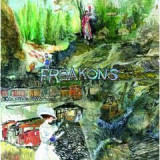
Mekons + Freakwater = FREAKONS.Freakwater and the Mekons have
joined forces to sing songs about coal mining
FREAKONS, the eponymously-titled album on Fluff & Gravy Records , is the first
fruit of this visionary musical union.The Mekons and Freakwater have been
friends for decades, forged in the punk rock/ art school crucibles of late '70s
Leeds and mid '80s Louisville respectively. Both bands mined British folk and
American classic country music for three- chord songs whose lyrics fit the
nihilism or political rage or outlandish joy of the moment. Many of these songs
were about coal mining. Traditional songs about heroic union organizers, deadly
mine disasters, wailing orphans, or mining's grim history of economic and
ecological devastation fit seamlessly alongside each band's original material.
And so it is with FREAKONS.
Deep pit mines, strip mines, mountaintop removal, collapsing slag heaps. Deadly
work, poisoned water, and fantastic songs. Always fantastic songs. This is where
the FREAKONS were born, from the very bowels of the earth.
The Mekons' Jon Langford & Sally Timms and Freakwater's Janet Bean &
Catherine Irwin are joined here by the stellar string and vocal harmonies of Jean
Cook (Ida, Tara Jane O'Neil, Skull Orchard) and Anna Krippenstapel (The Other
Years, Joan Shelley, Freakwater), along with special guest, the beloved guitar
genius Jim Elkington (Jeff Tweedy, Richard Thompson, Eleventh Dream Day,
Horse's Ha, Skull Orchard, Freakwater, The Zincs).
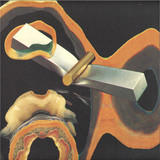
Belgian painter Jo Clauwaert created the album's intricate gatefold cover. Images
from song lyrics and related history emerge and recede again in this gorgeously
illustrated artistic fever dream.The story of coal mining is one of ongoing pillage
and ecological devastation. It is also a story of heroic workers, struggling in
blighted circumstances to feed their families. The songs and the culture that have
risen from the mines deserve our attention. A portion of the profits from the
FREAKONS record will go to Kentuckians For The Commonwealth, a grassroots
organization dedicated to creating a better future for the Appalachian region.
Kentuckians For The Commonwealth (KFTC.ORG) works to end mountaintopremoval coal mining, and to promote political candidates who care about social,
environmental and economic justice and the transition to clean, renewable
resources
quête:blue vision
On Origin , celebrated pianist, bandleader, and three-time Grammy
nominee Joey Alexander has written the next chapter of his career:
composer
His longstanding trio featuring Larry Grenadier and Kendrick Scott is the
backbone of his creative freedom, with Chris Potter (a previous collaborator) and
Gilad Hekselman joining the fray to bring to life the spectacular vision of
Alexander's first full length release of all original music and debut with Mack
Avenue Records.Over the course of his astonishing career, Steinway Artist
Alexander has performed with Wayne Shorter and Esperanza Spalding at the
Obama White House, for President Bill Clinton at the Arthur Ashe Learning Center
Gala, at the Grand Ole Opry, the Apollo Theater, Carnegie Hall and at major jazz
festivals and night clubs around the world. He has also been the subject of
profiles on 60 Minutes and The New York Times.
Joey Alexander, now 18, is stepping out as a composer and bandleader as well as
a virtuoso pianist. "These past years have been especially trying for everyone,
including those of us who didn't know when we would ever perform for live
audiences again," Alexander said. "Origin represents a turning point for me — the
time when I decided to turn frustration into an opportunity to truly express myself
and to rise above the circumstances."
"bit by bit" is the first full-length release from Toronto-based singer-songwriter Evan J Cartwright. This self produced album from the go-to drummer/collaborator (The Weather Station, U.S. Girls, Brodie West) presents a highly singular songwriting vision that combines existential lyrics with masterful musicianship. Steeped in jazz melodicism, Cartwright’s trumpet-like phrasing mixed with contemporary composition presents an eclectic art song performed by an artist that could perhaps be best described as a post-modern Chet Baker. Deep poetic observations on love and time paint an affecting picture of an artist reflecting on life’s universal truths. Visual in nature, "bit by bit" places its audience within a world of musical leitmotifs extracted from field recordings of bells and birdsong. Collected during years of touring, these sounds evoke extant spaces beyond that which the music inhabits. The use of this source material in its unaltered form evokes the feeling of a technicolour European film at one moment and then, as the extrapolated melodies are meticulously translated into electronic tone bank sequences, a modernist setting the next. One carillon melody is used as the basis for a wealth of the album’s musical material before its origin is finally revealed by the chiming of bells in the last seconds of the album. The result is a fragment of space between the constructed world of the musical compositions and the candid world of documentation, inviting the listener to ponder whether those two worlds are distinct or whether the songs and music are not simply “field recordings” themselves. Throughout "bit by bit" Cartwright drops staggering revelations hiding in plain prose that often involve the contemplation of time. In I Don’t Know he states “if I only trusted time / then I would wish it all away” and nearing the album’s end he opens impossibly blue with the phrase “the impossible truth of time”, playfully inserting a pregnant pause before the word time. A drummer’s fixation, to be certain, the album’s recurring theme of time is eclipsed only by Cartwright’s contemplation of human relationships. Here he elaborates on some of the album’s subjects: “Many of the lyrics circle, and try to give a name to the illegible space between human beings. “i DON’t know” celebrates the fact that we will never truly understand what love is. Its message is one of assurance. It says that we can never really touch love, and that is ok. “and you’ve got nobuddy” refers to life’s great tragedy: that we are unable to read each others’ experiences, and in reaction to this, we separate ourselves.” The entirety of "bit by bit" is a continuous work. There is seldom a clear demarcation of where one piece ends and another begins and when this does occur, it is done crudely, as if someone is flipping through a series of broadcasted channels. At times words are sliced right out of their lines and replaced by pure tones. This is both a comical interpretation of censorship and a reminder that there are things in life that will forever remain unseen and illegible. In fact, this statement lies at the centre of the LP and although hidden beauty does reveal itself through repeated listenings, "bit by bit’s" eccentric world remains just out of reach — an imaginary second story room viewed from a crowded city street.
Vinyl now gone back to June. RIYL: Slowdive, DIIV, Electric Youth, The Cure, My Bloody Valentine. Solo project of Los Angeles based Matthew Doty (ex-Saxon Shore). For Matthew Doty, Deserta has always been about exploring a sonic universe that allows him to express a kaleidoscope of emotions, without having to say much at all. Through a patchwork of reverb-tinged textures – drone guitars, lingering synths and driving percussion – the Los Angeles-based singer/songwriter and multi-instrumentalist weaves together stories of care, frustration and catharsis that ultimately stretch to a gentle resolve. On new album Every Moment, Everything You Need, Doty chronicles the kind of year we all fear, full of uncertainty, tension and sustained pressure, and transforms it into a celebration of perseverance. It’s an essential reminder that we have the power to shape the stories we tell. The pandemic meant that Doty had to give up his studio and downsize a lot of his gear and instead, carve out a space in his two-bedroom apartment to craft the next chapter of Deserta. Sharing the space with his wife and son, Doty and his partner are also essential healthcare workers, which meant the couple would often have to tag-team childcare, along with 13-hour shifts in PPE and people constantly calling with questions about the ever changing guidelines and protocols. Once the blueprint for Every Moment, Everything You Need was set, Doty reached out to a number of collaborators to stitch together his vision for the sonic landscape. James McAlister (Sufjan Stevens, The National, Taylor Swift) came onboard to perform and record drums, while Caroline Lufkin (Mice Parade) wrote and performed vocals on the ethereal “Where Did You Go.” Elsewhere, the LP was mixed by Dave Fridmann (Tame Impala, Mogwai, Interpol), with Beach House and Slowdive producer Chris Coady engineering and co-producing, making this the first time Fridmann and Coady had worked together on a project. While the vocals are more prominent than Deserta’s previous albums, it’s their amalgamation with the instrumental aspects that secures Every Moment, Everything You Need as Deserta’s most confident and assured release to date. An affecting emotional candor teamed with persistent riffs and tenacious rhythms sees Doty unafraid to dive deeper; an unrestrained approach that ushers in a lustrous purging of agitation and anxiety. Showcasing those dark, exhaustive thoughts through crucial swells and looped, electronic soundscapes, it’s an LP that’s infinitely layered, with something new to discover with each and every enchanting listen.
"The dazzling symphonic album he always threatened to produce" UNCUT 5/5
"A soulful symphonic masterpiece" ROLLING STONE
Originally released in Japan only on CD in 2002, Plush's Fed lives up to the cult-like adulation it has garnered ever since. A stunning symphony of Bacharach-inspired pop, Toussaint-swing andMelody Nelson-era-Gainsbourg, it's an album bound together by Liam Hayes' maverick genius, an uncompromising Brian Wilson-esque quest for sonic perfection. Positively indulgent in every way, this sumptuous record has long deserved to be treated to a deluxe vinyl edition. Lovingly overseen by Hayes and recent collaborator Pat Sansone (Wilco/The Autumn Defense), it will finally be available on the format it should've always been, this Record Store Day 2018. Remastered and presented as a double LP - cut specially at 45rpm - it comes housed in a beautiful gatefold jacket with expanded artwork throughout.
Its expansive, singular vision infamously took years to realise, involving Earth Wind & Fire's horn arranger (the legendary Tom Tom MMLXXXIV) amongst other elite personnel. Recorded with five different engineers (including Steve Albini and John McEntire), Hayes meticulously extracted every ounce of pop from each note. A long list of renowned studio ringers (including soul drummer Morris Jennings) and Chicago regulars (McEntire, Rizzo, Parker) among many others provide playing of demonstrably professional precision. As such, Hayes' complex, meandering melodies are rendered far more coherent and satisfying than they otherwise might have appeared, bringing his epic, anguished pop to a rarely seen level of perfection and depth. This unstinting dedication to the overarching vision was rewarded handsomely - artistically, at least.
However, as might have been expected, his deluxe approach resulted in a bill too steep for any American or European label to ultimately support. It has since seemed unlikely that it would see the light of day on either side of the Atlantic. Yet we were determined not to allow Hayes' lifetime achievement to go unnoticed or let music fans across the world miss out on one of the finest albums of this century.
A wide-eyed opus of stunning intensity, Fed oozes Hayes' impeccable influences without ever becoming overwhelmed by them. Incredibly, it touches upon Blaxploitation soul, Boz Scaggs-soft-rock, hints of jazz and blues, timeless baroque and skewed pop. In one long minute, the stabbing, soulful "So Blind" moves through five different melodic segments, horns shift easily from haunting backdrop to explosive forefront, smoothly giving way to strings as Hayes' voice casts its bewitching spell. The ambitious soul of "Having It All" has been described as the diffident cousin of Marvin Gaye's "Save The Children" whilst the breezy "Greyhound Bus Station" is pure 70s AM Gold, evoking the easy warmth of Jimmy Webb's beloved Land's End period. The sublime resignation of "No Education", a beautifully slow number that begins, "Never read a book in my life/ But I feel just fine" is post-rock ballad heaven. Arriving towards the end, the title track arrives as a majestic suite, moving from a horn-and-guitar-led instrumental via shifting melodies to Hayes' compelling vocal bursts.
An album of such brilliance, Fed can comfortably sit alongside such staggering statement pieces as David Bowie's Young Americans, Randy Newman's 12 Songs or Harry Nilsson's Nilsson Schmilsson. Indeed, for all the sprawling elements that went in - lengthy guitar builds, exploding horn sections, solemn strings, female backup chorus - it is a deeply personal and original record. Employing a distinct "more is more" aesthetic, he demonstrates remarkable restraint in producing an album of such intimacy. "My creation has drowned me," he memorably sings on languid opener "Whose Blues", yet he navigates the shifting styles and ideas with enviable ease.
- A1: Live At The Sahara Tahoe, 1973 (Remaster 2022)
- A2: Farben Says Love To Love You Baby (Remaster 2022)
- A3: Muskeln (Remaster 2022)
- B1: Suntouch Edit (Remaster 2022)
- B2: Farben Says As Long As There's Love Around (Remaster 2022)
- B3: 6Ff (Remaster 2022)
- C1: Beautone (Remaster 2022)
- C2: Farben Says So Much Love (Remaster 2022)
- C3: T Microsystems (Remaster 2022)
- D1: Raute (Remaster 2022)
- D2: Silikon (Remaster 2022)
- D3: Farben Says Love Oh Love (Remaster 2022)
On textstar+ Jan Jelinek brings together the material from the CMYK series, four EPs he released between 1999 and 2002 under the pseudonym farben (the German word for both colours and paints), on a vinyl double LP for the first time. The selection of tracks has been remastered from the original tapes, joined by two additional pieces that appeared on compilations during the same period.
A Polaroid. Still life with tangled leads and consumer electronics, late twentieth century. Black and various shades of dirty white are the dominant non-colours. The image’s spatial depth remains diffuse, the links between its elements speculative. A note stuck to the wall (a legend, perhaps, or an all-explaining blueprint in text form?) is impossible to decipher. You can’t see what connects the picture’s signs. You have to hear it.
farben says: Every sound is a text. A bearer of meaning in search of a reader. Hoping the ideas inscribed in its autonomous existence will be understood as intended. While its beauty lies precisely in misunderstanding, in reading the coded message a new way every time. A thousand colours of sound, a thousand different ways to hear, to see, to understand.
On textstar+ Jan Jelinek brings together the material from the CMYK series, four EPs he released between 1999 and 2002 under the pseudonym farben (the German word for both colours and paints), on a vinyl double LP for the first time. The selection of tracks has been remastered from the original tapes, joined by two additional pieces that appeared on compilations during the same period. Another new element is the Polaroid, showing the origins of a world: Jelinek’s home studio in Berlin at the time.
farben says: Move your body! The project has its roots in Jelinek’s love of house as a reductionist vision of soul. Of four to the floor as a proposition that can be accessed anywhere. Of electronic dance music as a realm of possibility that can be continually expanded. farben was written as contemporary house music. As a text about excitement and euphoria. The arrangements were made directly while recording to DAT, on a twelve-channel mixing desk. Several track titles suggest a link to live concerts, coupled with the context of machine music and bedroom recording. Others affirm pop music’s most extravagant stock phrases about various states of love.
Jelinek produced the tracks with the aim of making music for dancefloors. An idea that failed very productively. In the locations to which it was originally addressed, the project barely figured. But people did listen, and they listened all the more closely to this music that opened up new acoustic and associative scope for house. farben is the opposite of genre: a music spawning new terms (clicks & cuts, micro-house) that never manage to fully capture it.
farben says: Signifiers. The four CMYK EPs are designed as a network of references that cannot be missed but that can also never be precisely deciphered. The vectors of sound, word and image point to Isaac Hayes and Ornette Coleman, to Detroit and the first generation of the Red Army Faction, to Karl Marx and Friedrich Engels. So multifarious that they are distorted to the point of recognition. Overall we hear sonic docufictions whose appealing vagueness derives precisely from this oscillation between clarity and ambiguity, which is also the source of their poetry: the lyricism of the pure circulation of signs.
The artwork is based on photographs of former Red Army Faction members, broken down into the four colours of the CMYK model. The motifs dissolve into individual dots of a single colour, so close to the faces that their expressions are only hinted at. Taken together, the individual colours compose a new whole out of fragmentary material, defying definition and thus maintaining their vibrancy. The same occurs on the level of sound. The sampler Jelinek used for these tracks had to be fed with floppy disks, imposing a memory limit of 1.44 megabytes per audio quotation from soul or jazz records. As a necessary consequence of this, the individual references, like the dots of colour, are dissolved into details and abstractions. They appear as splinters that recombine in new ways to create new meanings. The joy of collapsing metaphors.
farben says: New departures. Even two decades after its original release, textstar+ does not come across as an epitaph to the modern era. Instead, it appears as a euphoric affirmation of the utopias of the twentieth century, translated into new sound texts via the aesthetic strategies of abstraction, collage, networking and speculation. 1.44 megabytes of history, one thousand signifiers, one album. From “Live ...” to “... Love”.
Arno Raffeiner, 2021
French vocalist, beatboxer, songwriter and producer Sly Johnson unveils 55.4, his much- anticipated fourth studio album, released on BBE Music. Hailing from Paris, Sylvère Johnson (Sly Johnson) is a major force on the French Hip-Hop, Soul and Jazz scenes, both as a solo artist and as a member of super-group SAIAN SUPA CREW for over a decade, where he was known by the moniker Sly The Mic Buddah. When the crew broke up in 2007, Johnson began to carve out an impressive career, releasing on Blue Note and Universal Jazz, as well as collaborating with Larry Gold, Roddy Rod, T3 & Elzhi from Slum Village, Georgia Ann Muldrow, Dudley Perkins, FINALE, Erik Truffaz, and legendary French rapper Oxmo Puccino among many others. Written and recorded during the first COVID lockdowns between March and May 2020, Sly Johnson’s fourth album blends Soul and Hip-Hop, twinning vocal arrangements reminiscent of Prince and D’Angelo with loose, supple, beats and jazzy chords. Most of the musical heavy lifting is done by Johnson himself, but the album features bass by Laurent Salzard, guitar by Ralph Lavital and Anthony Jambon, keys by Nicholas Vella & Laurent Coulondre and a spellbinding guest vocal by Jona Oak. Why 55.4? “It took 55 days of creation to make the songs of this 4th solo album” says Sly.
Standard Edition[26,68 €]
‘Heart Under’, Just Mustard’s second album and first for Partisan Records
(IDLES, Fontaines D.C., Laura Marling), is an album that asks you to forget
what you know. At every turn, this remarkable record reconfigures and
stretches the ideas and ambition of a rock band and turns a year of lockdown
and personal struggles into a breath-taking artistic statement.
Across its 10 tracks, the album presents a coherent style and ethos - those
scything guitars, Katie’s magical vocals - but still incorporates a wide and
untethered vision. There are brooding, atmospheric rock songs (‘Still’, ‘In
Shade’) and others that apply a lighter, dreamier touch (‘Sore’, ‘Mirrors’), all
tied together with impeccable instrumentation and a united vision.
On debut ‘Wednesday’, the band played with dreamier soundscapes and
production techniques, and ‘Heart Under’ serves as the next stage of this
development, with every instrument brilliantly pushed to its limit and every
boundary of the band stretched.
After the band had finished recording and producing the album, ‘Heart Under’
was pushed even further into singular territory when the band worked with
mixer David Wrench, whose previous collaborators include Frank Ocean,
Let’s Eat Grandma, Jamie xx, FKA twigs and beyond. “We wanted someone
who had done pop and electronic records and didn’t just work within rock
music,” Katie says.
“Ireland’s buzziest new band” - The FADER
“Their rapturous reception here at SXSW is a testament to their startling
evolution as well as the excitement that can only come from watching a band
just beginning to realise the full extent of their powers.” - NME
“They have well and truly mastered the art of atmospheric rock” - Loud And
Quiet (9/10)
Supporting Fontaines D.C. on their European and US tours this year. They
were handpicked by Robert Smith to support The Cure in Dublin in 2019.
Eire headline tour in June, UK headline tour in September, including Village
Underground, and EU headline tour in October.
Choice Music Prize nomination for Irish Album Of The Year for their debut
album, ‘Wednesday’.
CD housed in a cardboard wallet with lyric and photo insert.
LP pressed on black vinyl and housed in a single sleeve jacket with lyric and
photo insert.
Bear’s Den have today announced the release of their eagerly anticipated fourth studio album, Blue Hours.
Set for release on May 13th via Communion Records, the album sees the much-loved folk-rock duo – made up of Andrew Davie and Kevin Jones – once again team up with producer Ian Grimble on what is one of their most personal records to date.
Speaking about the new album, Davie says: “Blue Hours is a kind of imaginary space you get into at night, a place where you process difficult things or where you try to figure everything out.”
Themes on the album include both self-reflection and mental health after both struggled with the latter in recent years. “It’s the main over-arching theme with this record,” Davie explains. The group, who have worked with mental health charity CALM (Campaign Against Living Miserably) previously added: “It probably speaks to our struggles and hopefully many other people’s too. Men are not very good at talking. We’re not really taught how to – men have no idea how to talk about this stuff, certainly to each other.”
The pair describe the conceptual blue hours headspace that gives the new album its title as being “somewhere between a hotel, a mental health hospital, a bar that stays open later than anywhere else, a paradise, a dream, a nightmare and an endless sea of corridors and staircases leading you to rooms that represent memories – good, bad, happy or difficult.”
Despite the album’s challenging themes, it’s an album drenched in hope too. “We wanted this to be a celebration of music,” Jones continues. “I think that informed some of the bolder decision making on this record. At a time when music was so distant, it felt important to make an album that sounded hopeful, celebratory, ambitious and beautiful in spite of the heavy subject matter in some of the songs.” Jones adds: “It was almost like we needed to shout louder than before because we felt that there were more barriers between the audience and us. We needed something to transcend that.”
Following on from the album’s lead single, ‘All That You Are’, which was released late last year, the group have also given a further taster of what to expect from the new album with the release today of their bold, electronic-driven latest single, ‘Spiders’. Stream the new single here.
Speaking about the song, Davie says: “I started writing ‘Spiders’ around the time we left London. In my head, I thought moving would solve lots of problems, like everything will be better – almost like this Neverland vibe,” he laughs. “‘Spiders’ is a song dealing with the fact that this absolutely wasn’t the case. I had this vision in my head that I’d be at one with nature, that I’d be calmer – but all the things that were rattling around in my brain before were still there after the move. The song is about the fact you can’t run away from the things that are bothering you.”
Adding, “While making the record we wanted to get across a kind of simmering intensity with the song and the idea of someone trying to keep their shit together while wrestling with these darker thoughts and feelings. We wanted to get across a sense of bravery & triumph in saying, “sometimes I can’t pull myself out” of these difficult situations. To celebrate the difficult moments because we all have them. They are a universally shared experience even if it feels sometimes like they’re not and you’re the only one who feels them.”
Melodically, the song is a gentle Wurlitzer and guitar-driven track filled with hope thanks to the electronic elements added by long-term producer, Ian Grimble. “This song maybe sparked a lot of detail that ended up coming out on other songs on the album,” Davie says. “The sound of this felt exciting to us both,” Jones adds.
Bear’s Den have today announced the release of their eagerly anticipated fourth studio album, Blue Hours.
Set for release on May 13th via Communion Records, the album sees the much-loved folk-rock duo – made up of Andrew Davie and Kevin Jones – once again team up with producer Ian Grimble on what is one of their most personal records to date.
Speaking about the new album, Davie says: “Blue Hours is a kind of imaginary space you get into at night, a place where you process difficult things or where you try to figure everything out.”
Themes on the album include both self-reflection and mental health after both struggled with the latter in recent years. “It’s the main over-arching theme with this record,” Davie explains. The group, who have worked with mental health charity CALM (Campaign Against Living Miserably) previously added: “It probably speaks to our struggles and hopefully many other people’s too. Men are not very good at talking. We’re not really taught how to – men have no idea how to talk about this stuff, certainly to each other.”
The pair describe the conceptual blue hours headspace that gives the new album its title as being “somewhere between a hotel, a mental health hospital, a bar that stays open later than anywhere else, a paradise, a dream, a nightmare and an endless sea of corridors and staircases leading you to rooms that represent memories – good, bad, happy or difficult.”
Despite the album’s challenging themes, it’s an album drenched in hope too. “We wanted this to be a celebration of music,” Jones continues. “I think that informed some of the bolder decision making on this record. At a time when music was so distant, it felt important to make an album that sounded hopeful, celebratory, ambitious and beautiful in spite of the heavy subject matter in some of the songs.” Jones adds: “It was almost like we needed to shout louder than before because we felt that there were more barriers between the audience and us. We needed something to transcend that.”
Following on from the album’s lead single, ‘All That You Are’, which was released late last year, the group have also given a further taster of what to expect from the new album with the release today of their bold, electronic-driven latest single, ‘Spiders’. Stream the new single here.
Speaking about the song, Davie says: “I started writing ‘Spiders’ around the time we left London. In my head, I thought moving would solve lots of problems, like everything will be better – almost like this Neverland vibe,” he laughs. “‘Spiders’ is a song dealing with the fact that this absolutely wasn’t the case. I had this vision in my head that I’d be at one with nature, that I’d be calmer – but all the things that were rattling around in my brain before were still there after the move. The song is about the fact you can’t run away from the things that are bothering you.”
Adding, “While making the record we wanted to get across a kind of simmering intensity with the song and the idea of someone trying to keep their shit together while wrestling with these darker thoughts and feelings. We wanted to get across a sense of bravery & triumph in saying, “sometimes I can’t pull myself out” of these difficult situations. To celebrate the difficult moments because we all have them. They are a universally shared experience even if it feels sometimes like they’re not and you’re the only one who feels them.”
Melodically, the song is a gentle Wurlitzer and guitar-driven track filled with hope thanks to the electronic elements added by long-term producer, Ian Grimble. “This song maybe sparked a lot of detail that ended up coming out on other songs on the album,” Davie says. “The sound of this felt exciting to us both,” Jones adds.
Ltd to 100 copies
Presented in a double vinyl gatefold edition with two beautiful paintings by Tenerife painter Sema Castro.
For fans of Sun Ra, Alice Coltrane and every single mystic brother and sister carrying the free spiritual jazz torch! Dive DEEP!
Spectacular mystical jazz infused psychedelics from Canary Islands’ cult band GAF.
Using a series of different add-ons to their (already obscure) band acronym GAF (Grifa Ambient Factory) such as Love Supreme Arkestra or GAF & La Estrela de la Muerte amongst a few, the Tenerife based band illustrate clearly what mutation or influence they’re feeding through (their mind) by the judicious use of these referential add-ons. Rotating around the vision of local lynchpin, Mladen Kurajica aka Bonni, Keroxen label head, festival organizer, producer and musician with numerous projects including helming the GAF outfit. The Love Supreme Arkestra variation here being the more Coltrane leaning (Alice rather than John) and Sun Ra- esque influenced thematic of the 6 piece band. Over a series of 7 huge sounding themes, we can hear twirling saxophones, trumpets, marimbas, modulars and rhythmic sections intertwining like flying spiral snakes over a burning sea of lava.
Recorded live and freely over a completely improvised jam session on a sunny afternoon in the mountainous region of La Esperanza in Tenerife, the band lets rip free of any previous albums particular sound choosing instead to purge into a world of musical liberation by embracing the aforementioned pioneers of the genre whilst unconsciously absorbing in their surroundings - as an additional inspiration for musical freedom.
The result really shines through its 74 mins of mind blowing adventurous music. A journey to the peaks of the Teide Volcano and down the green valleys, into the blue and black volcanic coasts of liberation!
TANGERINE DREAM'S 'MALA KUNIA' IS BACK AVAILABLE ON VINYL -
'Mala Kunia', the mini-album & roughly Tangerine Dream's 140th release
was originally released in tangent with the bands' 2014 Australian
concerts - The album features seven new compositions including two of
which were co-composed by new band member Ulrich Schnauss together
with Edgar Froese
With this release, a new Tangerine Dream era began, "The Quantum Years", which
focused on a more back to basics approach to composition influenced by
quantum physics. The album itself is named after two Aboriginal tribes, which,
according to Aboriginal mythology, living a long time ago around Uluru, also
known as Ayers Rock. The Mala tribe lived on the sunny side & the Kunia on the
shady side of the rock.
Tangerine Dream have been a fundamental influence on electronic music since
Edgar Froese founded the band in West Berlin, 1967. Providing the groundwork
for multiple electronic music genres including ambient & electronica, inspiring
musicians & other art forms.
The group have also received seven Grammy nominations, written over 100
studio albums & were led by Froese, who developed an instantly recognisable
synth-based instrumental music based on a meditative musical experience that
came to prominence in the 70's & 80's.
Although Edgar Froese passed away in 2015 with a new phase in the bands
history only just beginning, he left direct orders to remaining members: "Carry on
& make my vision for the Quantum Years phase of the band happen!"
'MALA KUNIA' WILL BE ISSUED VIA KSCOPE ON GATEFOLD DOUBLE LP
- A1: Bakeina's Dream (Feat Bocar Sana Coulibaly)
- A2: Golden Cage
- A3: Quicksand Blues
- A4: Mad Girl Lament (Feat Mariam Kone & Samba Toure)
- A5: Ghost Sands
- B1: Are U Satisfied (Feat Samba Toure)
- B2: The First Sone (Feat Anansy Cisse & Bocar Sana Coulibnaly)
- B3: Minamba (Feat Mariam Kone)
- B4: Heaven Sands (Feat Hugo Race)
- B5: Bankoni (Feat Djime Sissoko)
Based in Bamako for sixteen years, Philippe Sanmiguel has been the producer of albums by the famous Malian bluesman Samba Touré since his international debut. Over the years, Philippe has expanded his work with other artists such as the legendary Tuareg band Tartit, Anansy Cissé, Mariam Koné or Djimé Sissoko among others.
While working on the albums of these artists, he often had the inspiration to add influences from his original rock culture but in small measures. That's how Black Mango was born, to gather his favorite musical collaborators around his own compositions and expand the vision. It started with an EP released on Glitterbeat Records in 2014 from which the idea for a full-length album was born.
Black Mango's Quicksand album was recorded in Bamako over a period of several years, in various recording sessions, giving each musician free range to play on a rhythmic and melodic basis prepared in advance. The alchemy was immediate in all cases, often from the first takes.
Philippe originally met producer and musician Hugo Race with Chris Eckman during their stay in Bamako for the recording sessions of Dirtmusic's Troubles & Lion City albums. Hugo loved the raw feeling of the tracks and offered to remix the album in his Melbourne studio, bringing his own unique touch.
The fruit is ripe!
Recorded at Akan Studio & Funhouse Studio in Bamako, Mali by Konan Kouassi & Philippe Sanmiguel
Produced, mixed and mastered by Hugo Race at Helixed Studio
A few words about the main " stars " :
- Samba Touré is Samba Touré.
- Anansy Cissé is a young songhoy artist for whom Sanmiguel has produced two albums, including the recent and acclaimed "Anoura".
- Mariam Koné is one of the most beautiful voices of Mali, who has a self-produced album and teaches music at the conservatory of Bamako.
- Singer Bocar Sana Coulibaly & Ali Traoré are singer and guitarist from Niafunké, nephews of the great Ali Farka Touré and have a band called Espoirs de Niafunké
This sprawling collection by Belgian loner blues savant Bram Devens aka Ignatz encapsulates the mystery, murk, and melancholy of his uncanny craft at its most windswept and wayward. Originally issued via Goaty Tapes in September of 2015, this long-anticipated vinyl edition expands the saga with an additional 17 minutes of archival material. Deven’s palette remains constant throughout: feathery fingerpicking, modal loops, and intuitive six-string navigations interspersed with candlelit passages of mournful voice, alternately whispered, mumbled, moaned. His is an aesthetic of embers and resin, cracked masks and distant lights, of what’s left behind and what lingers on.
I Live In A Utopia was recorded following a relocation from his longtime base of Brussels to Landen, with a second child due soon: “I remember the weather being nice and having just bought a hammock.” The change of scenery seeded a promise of slower days and lighter times – no utopia perhaps, but a sense of faint hope glowing on the horizon. The songs slide between loose acoustic spirituals and smoky basement ragas, late afternoon haze and midnight moons, a seesawing restlessness reflected in the titles (“I Have Found True Love,” “Time Does Not Bring Relief,” “We Used To Smoke Inside”). The fidelity is grainy but vivid, refracted by tape warp and Flemish dust.
As always, Deven’s playing is deceptively elegant, raw but precise, attuned to resonance, radiance, and negative space. Echoes of Fahey and Jandek reverberate in certain moments but ultimately the world Ignatz maps is one incomparably his own. A landscape both doomed and dawning, weary but undefeated, tracing outlines of lengthening shadows. “I walk in the sunshine,” he sings, uneasily. This is music of a rare inner wilderness, poised at cryptic crossroads, devoted to its ghosts. I Live In A Utopia stands as an apex work by one of the underground’s most veiled and visionary talents.
Double album in gatefold sleeve with artwork by Zully Adler. In co-production with House Rules & released in an edition of 500.
The Magic Mixture were a London based , psychedelic band comprising Terry Thomas (guitar/vocals), Melvyn Hacker (bass), Jack Collins (drums) and Stan Curtis (organ) .
The 60’s were productive years, though if one explores these years, you’ll find that most of the bands that rose during those heady days had some real talent, some sincere visions, and a burning desire to shape a bit of the music scene with their sonic atmospheres.
The magic found within these highly prized and rare grooves shows they did pulsate with the moment, This Is The Magic Mixture, should certainly be considered an essential part of the garage psych movement that flowered during 1968.
With Plum, the songwriting partnership rooted in the creative rapport between bandleader Molly Hamilton and guitarist Robert Earl Thomas continues to expand on shared visions, delving deeper into what was always there: dusty guitars, ear-worm melodies, warm expansive arrangements. Each entry to their catalog has marked a subtle reimagining of Widowspeak's sound, though perennial points of reference remain the same: 90's dream pop, 60's psych rock, a certain unshakeable Pacific-Northwestness. Speaking to the timeless feeling of each, the albums continue to be discovered well beyond their respective PR cycles, made beloved by new listeners through word of mouth. The band's fifth album feels comfortable and lived-in: humble in structure, heavy on mood. Perhaps that came taking time off from the touring grind, instead working full-time jobs and settling into the rhythm of daily life in a small upstate New York town. Plum was recorded over a handful of weekends last winter by Sam Evian (Cass McCombs, Kazu Makino, Hannah Cohen) at his Flying Cloud studio in the Catskills, and was mixed by Ali Chant (PJ Harvey, Aldous Harding, Perfume Genius). In addition to Hamilton (vocals, guitar) and Thomas (guitars, bass, synth), it features instrumental contributions by Andy Weaver (drums), Michael Hess (piano), and Sam himself (bass, synth). Plum nestles into the band's canon like it was always there, but with new textures coming to the fore, like the polyrhythmic pulse of "Amy" and "The Good Ones", or the watery, Terry Riley-influenced track "Jeanie" Plum navigates the spaces between the lesser emotions of modern life. Hamilton's lyrics speak to the unique turmoil of anyone who creates as their work, who must somehow survive off such "fruits of their labor." Yet, Widowspeak have always made a bitter pill much easier to swallow. The majestic "Breadwinner", the luminous "Even True Love" - these songs here were made to be listened to, enjoyed. "Money" is particularly hypnotic, built around a repeating, cyclical motif that serves as both skeleton and body. "Will you get back what you put in?" Hamilton asks over an insistent guitar riff. The line is delivered with a knowingness that transcends its surface critiques of late-stage capitalism, asking both herself and the listener whether this is, in fact, the world we want to live in. Through Plum, Widowspeak have brought something into the world that seems to know its own worth, even as it wonders aloud about what is to come. What value and meaning do we assign ourselves, our time, and how do we spend it?
- A1: Two Girls (One Bar)
- A2: Babylonian Warehouses
- A3: Blue Velvet
- A4: Caroleen
- A5: Flames Over Nebraska
- B1: Love Song
- B2: Stolen Cadillac
- B3: Mona
- B4: Synth Farm
- B5: Texas Overture
- C1: Thanks
- C2: Free White
- C3: Feuksly Ma'am, The Hearing
- C4: Mandy
- C5: Musicians Are Scum
- C6: Another One
- D1: And Then Nothing Happened
- D2: Road Trip Of Bipasha Ahmed
- D3: Lampshade Man
- D4 41: 4 Seconds
- D5: The Carpenter Sun
- E1: Golden Surf Ii
- E2: Drag The River
- E3: Irene
- E4: Road To Utah
- E5: Throb Array
- F1: Visions Of The Moon
- F2: Dr Faustus
- F3: Bus Station
- F4: Carnival
- F5: Moonstruck
- G1: Ubu Overture
- G2: Song Of The Grocery Police
- G3: Banquet Of The Butchers
- G4: Tear Your Eyes Out
- G5: March Of Greed
- G6: Big Sombrero
- G7: Bring Me The Head
- G8: Alienating The Audience
- H1: Road To Reason
- H2: Slowly I Turn
- H3: Watching The Pigeons
- H4: The Story So Far
- H5: Snowy Livonia, Pt 1
- H6: Elsinore & Beyond
ltd edition box set, 4xlp + poster & dl card. rewriting the history of music, pere ubu continue to confound convention and shift personnel. the next box set in fire records’ reissue series, ‘nuke the whales’ houses 4 lps originally released between 2006 and 2014 – ‘why i luv women’, ‘carnival of souls’, ‘lady of shanghai’ and ‘long live pere ubu!’. ‘nuke the whales,’ is a nod of respect to a couple in cleveland who would daub such messages over the big news stations’ advertising boards. “very few bands display such dedication to constant self-reinvention as pere ubu” the quietus // all four albums have been remixed and remastered by original pere ubu member david thomas. ‘why i luv women’, originally released on glitterhouse in 2006, gains its first vinyl release. "spews 11 tunes of arcane lyrics and dense music” shrieked the cleveland gazaette. it’s joined by ‘long live pere ubu’ a soundtrack to a musical adaptation of the play. “skronking, squalling rhythms and melodic snippets undulating round a pulsating soundscape." record collector // and ‘lady from shanghai’, their fire debut for fire in 2013. originally released on the 35th anniversary of the group's debut, ‘the modern dance’, a latter day re-evaluation of the unprompted dance genre. and its follow up ‘carnival of souls’, a haunting “underscore’ to a tale of alienation, it “combines metallic percussion, spare guitars and david thomas' muttered vocals into something rustic and rickety, yet threatening at a moment's notice.”
When we first heard from recent Kompakt signing Emma Kollmorgen, with 2021’s “You Are The”, she was hymning the complexity of romance: “Love is scary as fuck!”, she said. On her debut EP, “1243”, she’s built on that intensity and offered up a five-track suite of night-vision electronic pop, bristling with a stealthy sensuality. It’s a cinematic collection, building from the brooding “Escape”, through the drifting, tactile pulses of “Taciturn”, the gritty, bustling noises that run underneath the smoke-signal torch-song of “All The Wild Animals”, and the closing, tear-stained melancholy of “Home”. “You Are The” reappears here as well, settling in perfectly amongst new friends.
It’s a completely assured first EP from an artist who’s been slowly and steadily building her own sonic world. From her early days, when she busied herself by learning guitar and joining bands, Kollmorgen always had a vision of doing something “more independent”, to allow her to find her own sound and write her own songs. A brief creative alliance with the Berlin DJ duo Dole & Kom led to some recordings and live performances. All the while, Kollmorgen was carefully shaping her production and sound designing skills with Ableton Live, and exploring distinctive musical terrain in collaboration with co-producer and multi-instrumentalist Paul Seidel (The Ocean Collective, Fern, Nightmarer). She joined the Kompakt family after a recommendation by Patrice Baumel, who also remixed her debut single with typical flair.
On “1243”, though, Kollmorgen fully inhabits her songs, gifting each of them with a sweet, subtle sway, her vocal and lyrical openheartedness balancing the bluer hues of her production. Each song is confident and poised, Kollmorgen relying on cross-thatched patterns of texture as a web to support her melodies: “I like patterns,” she says, “they give me something to hold onto, something stable in an unstable world.” The songs feel as though they’re grappling with moments of revelation and experience in Kollmorgen’s world, which makes sense, given her approach to music: “I never had a diary,” she reflects, “so writing songs is my way of expressing and dealing with life.” On 1243, you’ll catch some glimpses of life lived, made sonorous through songs beautifully sung.
Als wir das erste Mal von Emma Kollmorgen hörten, nachdem sie sich KOMPAKT angeschlossen hatte, besang sie mit "You Are The" (2021) die Komplexität von Romantik: "Liebe ist verdammt beängstigend!". Auf ihrer Debüt-EP "1243" baut sie auf dieser Intensität auf und präsentiert uns eine fünf Tracks umfassende Suite von elektronischem Pop mit ausgeprägtem Nachtsicht-Faktor, die vor verborgener Sinnlichkeit nur so strotzt. Ein geradezu cineastischer Spannungsbogen, der sich vom grüblerischen "Escape" über die treibenden, taktilen Impulse von "Taciturn", die düsteren, umtriebigen Geräusche, die den Rauchzeichen sendenden torch song "All The Wild Animals" untermalen, und die abschließende, tränenreiche Melancholie von "Home" aufbaut. Auch "You Are The" taucht hier wieder auf und fügt sich perfekt in die neue Gesellschaft ein.
Eine überzeugende erste EP von einer Künstlerin, die sich langsam und stetig ihre eigene Klangwelt aufgebaut hat. Seit ihren Anfängen, als sie Gitarre lernte und in Bands spielte, hatte Kollmorgen immer die Vision, etwas "Unabhängiges" zu machen, um ihren eigenen Sound zu finden und ihre eigenen Songs zu schreiben. Eine kurze kreative Allianz mit dem Berliner DJ-Duo Dole & Kom führte zu einigen Aufnahmen und Live-Auftritten. Währenddessen feilte Kollmorgen an ihren Produktions- und Sounddesign-Skills und erkundete gemeinsam mit dem Co-Produzenten und Multi-Instrumentalisten Paul Seidel (The Ocean Collective, Fern, Nightmarer) ihr eigenes musikalisches Terrain. Zur KOMPAKT Label-Familie kam sie auf Empfehlung von Patrice Baumel, der auch ihre Debütsingle remixte.
Auf "1243" lebt Kollmorgen ihre Songs voll und ganz aus und verleiht jedem von ihnen einen süßen, subtilen Twist, der ihre stimmliche und textliche Offenheit mit den melancholischen Tönen der Musik in Balance hält. Voller Selbstbewusstsein und Ausgeglichenheit verlässt sie sich auf durcheinander laufende Texturen und Pattern, die ihre Melodik unterstützen: "Ich mag Pattern", sagt sie, "sie geben mir etwas, woran ich mich festhalten kann, etwas Stabiles in einer instabilen Welt."
Die Songs fühlen sich an, als würden sie sich mit realen Momenten der Offenbarung und mit Erfahrungen aus Kollmorgens Lebenswelt auseinandersetzen, was angesichts ihrer Herangehensweise an Musik durchaus Sinn ergibt: "Ich hatte nie ein Tagebuch", erzählt sie, "also ist das Schreiben von Songs meine Art, mich auszudrücken und mit dem Leben umzugehen." Auf "1243" gibt sie uns einige Einblicke in dieses gelebte Leben, das durch wunderschön gesungene Lieder zum Klingen gebracht wird.
Born in Birmingham, Thomas Atlas began his impressive musical journey studying the greats thanks to his Father’s record collection.
From then, his fondness for Funk and Soul has grown stronger, taking him touring the UK and USA with some of the finest outfits. But Thomas always knew his destiny was to follow his own path and he has done just that! Now collaborating with British boutique record label Hillside Global on these exclusiverecordings.
The self-titled ten-track debut album leaks zest like a freshly pressed fruit.
This multifaceted artist takes influence from Maceo Parker and George Duke, while keeping true to his vision. It gets the foot-tapping instantly with an infectious cadence. Also, vocally, Thomas boasts a charming timbre which smashes through the mix with conviction.
The slick guitar riffs, bluesy rhythms and fist-pumping beats rip through with might, leaving the thirst for feel-good fully quenched! Hillside Global’s aim is to deliver an experience not just a product. These recordings are pressed under the Hillside Global Exclusive Black Label. The limited edition, first pressing consists of a spot-varnished gatefold sleeve housing a 180g marbled coloured vinyl.
This deluxe release also includes a complimentary download card, alongside a hand numbered certificate of authenticity signed by the label director and recording artist. Designed and pressed in Great Britain
GRAMMY-nominated saxophonist and composer Melissa Aldana joins the Blue Note Records family with the release of 12 Stars, her debut album as a leader for the legendary label following her appearance on the acclaimed 2020 album by the collective ARTEMIS. The Brooklyn-based tenor player from Santiago, Chile has garnered international recognition for her visionary work as a band leader, as well as her deeply meditative interpretation of language and vocabulary. 12 Stars grapples with concepts of childrearing, familial forgiveness, acceptance, and self-love, and was inspired by her deep interest in tarot. The album was produced by guitarist Lage Lund, who also performs as part of a remarkable quintet with Sullivan Fortner on piano and Fender Rhodes, Kush Abadey on drums, and Pablo Menares on bass.
FFO: Arthur Russell, Stealing Sheep, Neu!, Agar Agar, Galaxians
Holodrum are a new disco-infused synth-pop group, who feature members of Hookworms, Yard Act, Cowtown, Virginia Wing, Drahla and more.
Maybe Holodrum were destined to start at this point. This might be the first time they’ve all officially worked together, but between Emily Garner (vocals), Matthew Benn (synth/bass/production), Jonathan Nash (drums), Jonathan Wilkinson (guitar), Sam Shjipstone (guitar/vocals), Christopher Duffin (sax/synth) and Steve Nuttall (percussion) they’ve shared bands, mixed each other’s records, promoted live shows and made music videos together in and around Leeds. As Holodrum, this is the 7 piece’s debut album, but the interlocking grooves and hot headiness of their repeato-rock-via-CBGBs dopamine hits have in one way or other been fermenting for years.
“When it comes to doing music most bands fall between two extremes of doing it for some goal or as an end to itself” says Shjipstone. “I think Holodrum is about the joy and complexity of living, and I just hope to god everyone gets to have a good time doing it.”
Ultimately the core of the group comes from Shjipstone and his former Hookworms bandmates Benn, Nash and Wilkinson. After their abrupt dissolution in late 2018, the four of them spent six months apart; Benn still had Xam Duo, his ongoing project with Virginia Wing and some-time James Holden & The Animal Spirits live member Duffin, Nash remains vocalist and guitarist of long-running DIY rockers Cowtown and helms his solo project Game_Program; and Shjipstone plays guitar with Yard Act. However, the four of them missed the sixth sense synergy they’d built-up playing together over a decade and soon enough demos were being swapped and new ideas were discussed.
The vision of a large live electronic ensemble formed quickly. Friends were added: Duffin and Nuttall – who was keen to resurrect the double percussion interplay that he and Nash had been exploring as part of motorik trio Nope joined first. Then animator and VIDE0 singer Garner crystallised the line-up by joining on vocals.
“Apart from Emily, all of us had actually played together before in a covers band at a New Year’s Eve party at the Brudenell Social Club a couple of years ago, so we knew we could have fun together” says Benn. “So we set up to be a live party band early on. We wanted lots of people on stage having fun, playing for people that also wanted to have fun. It makes sense we take inspiration from bands like Tom Tom Club and Liquid Liquid; they were trying to help people to party at a point when New York was quite a scary and dangerous place we’re doing the same, albeit in the face of a decaying world and a global pandemic.”
Covid-19 hasn’t given them much opportunity to do that yet, with two fledgling shows in late 2019 to their name before festival appearances at the likes of Bluedot, Sounds From The Other City and Gold Sounds were scuppered last year. However, the 6 tracks on Holodrum crackle with the energy of the dancefloor. Opening cut 'Lemon Chic' described by Garner as her “workout track” starts out sparsely, with tight drum claps and burbling synths holding a teetering suspense before the whole thing’s prised open, allowing beaming saxophone skronk to shine in. Garner’s vocals bob and weave around the syncopations of the track’s building cacophony.
It sets the stall for an album heavy on euphoria, built atop crisp interplaying percussion and acid-flecked grooves. At times Shjipstone provides a raw counterpoint on vocals, while elsewhere - like on the strutting, swirling disco of 'Free Advice' and 'Low Light'’s late night ping pong synths - the pair indulge in playful call and response as the instrumentation builds and contorts around them. 'Stage Echo' provides a respite of sorts halfway through, a swirling, fever dream of a track that peaks with big squelchy frequencies and cavernous reverb, before the album returns to its repetitious exercises in body-moving catharsis underpinned at all times by a relentlessly propulsive rhythm section.
- A1: Joke
- A2: Locomotive Cheer
- A3: Pink Ice Cream
- A4: I Dreamed When I Was Young
- B1: Ten Days Of Shiver
- B2: Running Scared
- B3: Bonsai Tree
- B4: Century Breaks
- C1: Badgers Of Wymeswold
- C2: Nostaw Boogie
- C3: Sports Bar
- C4: Hard Times
- D1: Silver Breasts
- D2: Caribbean Ginger Cake
- D3: I'm Going Out Tonight To Play Some Pool
- D4: Poppies
Garage rock supergroup The Surfing Magazines have announced Badgers of Wymeswold.
Consisting of one half of Slow Club and two thirds of The Wave Pictures, The Surfing Magazines’ primary influences are Bob Dylan, The Velvet Underground and all the great surf guitar music of the 1960s. They burst onto the scene with their eponymous debut album in 2017, a lauded LP described by Record Collector Mag as “a vintage-yet-modern rock’n’roll classic”.
Mixing the noir surf textures of 1960s garage rock along with west coast sun beaten harmony pop, the 17-track Badgers of Wymeswold follows the acclaimed debut and is to be released July this year. The London based foursome recorded the album at Ranscomb Studio in Rochester in February last year before the start of the first UK lockdown.
Pushing their sound forward, the band utilise their garage rock ethic and have both Drummer Dominic Brider and Rhythm guitar player Charles Watso lead on vocals across multiple tracks. The album sees a return of free form saxophone parts, eerie violins and piano all appear, notably on tracks ‘Nostaw Boogie’ and ‘I’m Going Out Tonight To Play Some Pool’. The title track is drawn from David Tattersall’s nightmare vision about his home town's population of self-governing people, the album artwork was also made by Tattersall and depicts a collage of his referenced dreams. The extensive LP showcases their characteristic sound at their brightest, from softer ballads such as ‘Poppies’ and ‘Silver Breasts’, surf guitar rock anthem ‘Locomotive Cheer’, and to the six bar blues ‘Pink Ice Cream’.
Ellise is a singer, songwriter, and producer based in Los Angeles. Born and raised in the Bay Area, Ellise grew up on her dad’s classic rock and her Iranian mom’s traditional Arabic music while her own taste skewed poppier, influenced by the sounds and sights of the Y2K era. After graduating high school early to pursue music full time, she moved to Los Angeles, where she spent several years honing her craft in the studio before beginning to work in earnest on her debut album, Chaotic, alongside regular collaborator Micah Gordon.
Written almost entirely by Ellise herself, the record has a distinctive point of view wrapped in some of pop’s sleekest and most thrilling sounds, inspired by the music she’s surrounded herself with over the past two years (think Ariana Grande, Lorde, Dominic Fike, Lana Del Ray, Amy Winehouse, and Fat Joe). Standout songs like “Bubblegum Brain,” “Princess,” and “Zipper Lips!” present Ellise’s blueprint as both expertly produced pop and highly intelligent ruminations on love, loss, and what it’s like to feel flawed in a world that often demands perfection. Chaotic is certainly a product of a confident young artist steeped in pop’s richest stock, but also a singer and songwriter whose clear-cut vision is imprinted on each of the album’s songs.
Operating on the outer rim of the drum & bass scene for over a decade, Blocks & Escher have been designing intelligent and forward-thinking electronic dance across a multitude of releases for labels such as Metalheadz, Digital Soundboy and their own Narratives Music. Their first release of 2022, ‘Shot In The Dark’ EP, pulls together four outstanding cuts of shadowy breaks and abstract electronica.
Otherwise known as Phillip Smith and Will Hansen, Blocks & Escher distilled their sound into the critically acclaimed 2018 album ‘Something Blue’. Released on Goldie’s Metalheadz imprint, the long player displayed a confident maturity of sound, and a more than capable accomplishment of pulling the visionary sounds of drum & bass into a new era.
The industrial breaks and hoover bass of ‘Shot In The Dark’ anchor a wave of cinematic synth sweeps, fashioning an arresting opening track on this accomplished EP. The ingenious beats continue to unfurl across ‘Abyss’ and ‘This One’, as brooding atmospherics wash over in waves. The finale of ‘Dance Girl’ ramps up the BPMs and beat complexity, as a breathless assault of rhythm and sound captivates and rewards in abundance.
- 1: Main Title
- 2: Speak When Spoken To
- 3: Fool Proof
- 4: Bad Girls Burn In Hell
- 5: Metro Gas Co
- 6: Dog Attack
- 7: The Basement
- 8: Gold Coin
- 9: Dead Leroy
- 10: Hunting Roach
- 11: Dog In The Walls
- 12: Spring Cleaning
- 13: Gutting Leroy
- 14: Brother And Sister
- 15: The Promise
- 16: Fool's In The House
- 17: The Roof
- 18: Go To Hell
- 19: Cellar Friends
- 20: Kiss Your Ass Goodbye
- 21: Way Out
- 22: Open The Door
- 23: You Hurt Your Mother
- 24: Main Title
- 25: Chase
First ever vinyl release of the soundtrack for this Wes Craven classic from 1991.
Limited Electric Blue and Oxblood "AsideBside" with Brown Splatter.
Composer Don Peake created an incredibly atmospheric and spooky score for this film. Peake's career is insane –as a guitarist and member of the Wrecking Crew, he’s played on albums by Marvin Gaye, Phil Spector, Everly Brothers, Mahalia Jackson, John Lennon, Jackson Five and more.
It's an incredible career and his musical diversity shines on this score. Fun fact: People Under the Stairs opened at #1 on the box office chart and stayed in the Top 10 for a month.
Survival depends on evolution. As conditions change and tides turn, we must change with them in order to stay one step ahead of the coming challenges. It’s clear that Fit For An Autopsy have embraced that mantra as they continue to perpetually evolve with each subsequent body of work. Not just blurring, but eradicating the lines between technical metal virtuosity, death metal menace, hardcore intensity, melodic insidiousness, and abstract approaches, the New Jersey band embody an uncompromising vision of their own.
The six-piece—Joseph Badolato vocals, Patrick Sheridan guitar, Timothy Howley guitar, Will Putney [guitar], Peter Blue Spinazola [bass], and Josean Orta Martinez [drums]—perfect this approach on their sixth full-length offering, Oh What The Future Holds [Nuclear Blast Records].
Fit For An Autopsy have never stopped moving forward though. Following their caustic 2011 debut The Process of Human Extermination, the group quietly carved out a place among extreme metal’s modern vanguard with their second LP Hellbound. Revolver cited 2015’s Absolute Hope Absolute Hell among “15 Essential Deathcore Albums.” And In the wake of The Great Collapse two years later, the band had truly created their own space in the realm of what could be described as “post-deathcore”. This ascent reached another level on the 2019 opus The Sea of Tragic Beasts. Widespread praise from the fans and press alike is all but too common for their refreshing approach to modern aggressive music both on record and in concert.
When the Global Pandemic changed everyone’s tour plans, Fit For An Autopsy dove into writing in spring 2020 and made the most of their time off the road.
“We had no real timeline, so we didn’t feel much pressure,” says Putney. “Once we realized touring wasn’t opening up, we decided to have fun with the process. I got to spend more time than I usually do on records. We definitely took some of the songs into new places because of that. It’s our longest album. We composed more than we ever have and it was a rewarding feeling to put real work into all these ideas.”
In early 2021, Fit For An Autopsy congregated in-person at Putney’s Graphic Nature Audio and recorded Oh What The Future Holds. Now, they introduce the album with the single “Far From Heaven.” Swirling as a perfect storm, airy guitar cuts through a pummeling percussive groove as melodic vocals slip into a guttural groan offset by neck-snapping riffs and powerful dynamics.
“The world we exist in is clearly “far from heaven”. Institutions are exploited, and people are taken advantage of. There’s a power struggle between those in control and those who aren’t. This is a fairly literal reflection on the world today.”
In the end, Fit For An Autopsy haven’t just personally evolved on Oh What The Future Holds; they’ve brought heavy music with them.
Black 12 Inch + 7 Inch[28,53 €]
Blue 12 Inch[22,31 €]
Blue 12 Inch + 7 Inch[28,53 €]
Tenor saxophonist Timo Lassy, one of Finland's leading jazz artists, is back with a new album release "Trio" on We Jazz Records. The album, to be released on 27 August, introduces Lassy's new combo with bassist Ville Herrala and drummer Jaska Lukkarinen – both We Jazz Records roster artists on their own right.
The new Lassy sound is tight, swinging and funky, led by the strong and riff-ready sax of the tenorman. That being said, the album's sound is not limited to that of the swinging trio. Lassy's new vision also brings in some subtle electronics (played by Lassy, Dalindèo frontman Valtteri Laurell Pöyhönen and Ilmiliekki Quartet pianist Tuomo Prättälä) and lush strings performed by Budapest Art Orchestra as arranged by Finnish artist Marzi Nyman. It's a new sound for Lassy, but one which keeps true to his no-nonsense cookin' on the tenor.
This combination proves to be a winning one on the album, ranging from the more solemn moments on tracks such as "Sunday 20" and "Sointu" to the all out groovers like "Pumping C" and "Subtropical". The basic three sylinders of the band tenor sax, bass and drums, are strong throughout and the strings add air beneath the wings to really lift things off. Electronics are used as a tasty condiment, not taking over the main course but adding to it just right.
"We began the process with the bare bones trio but along the way, the sound started evolving into something else" Lassy explains. "That's how I like to work, anyway, while the trio can take this music to great lengths live, on the album I like to paint a fuller, more colourful picture sonically."
Speaking of painting, the sleeve of the album features the original artwork "Subtropic" by Finnish artist Ilari Hautamäki. "Trio" by Timo Lassy will be released by We Jazz Records as blue and black vinyl editions complete with a heavy duty tip-on sleeve, on CD and digitally. The special BUNDLE version includes the LP with a 7" featuring two non-LP tracks, available with blue LP + blue 7" or as black LP + black 7", bound together in a re-sealable "Japanese styled" sleeve, plus a We Jazz sticker.
- A1: Lonely Guest (Feat Marta)
- A2: Pre War Tension (Feat Joe Talbot, Marta & Tricky)
- A3: Under (Feat Oh Land)
- A4: Pay My Taxes (Feat Murkage Dave)
- A5: Atmosphere (Feat Lee Scratch Perry, Tricky & Marta)
- B1: Move Me (Feat Marta)
- B2: Pipe Dreamz (Feat Rina Mushonga)
- B3: On A Move (Feat Kway)
- B4: Christmas Trees (Feat Paul Smith)
- B5: Big Bang Blues (Feat Breanna Barbara)
If it wasn't for the global lockdown, we might never have had the chance to hear one of this year's most intriguing and inventive albums. Lonely Guest was conceived and put together over the last 18 months by one of British music's true innovators: Tricky. Bu tas he's keen to make clear: this ain't noTricky album. Rather it's a thrilling meeting of musical mavericks, with the likes Idles' JoeTalbot pitting his unique approaches to songwriting against Tricky's otherworldly production. From an unsettling tale of isolation courtesy of Maxïmo Park's Paul Smith ('Christmas Trees') to the grunge stylings of Marta's 'Move Me', via the tense storytelling of London rapper Kway's 'On A Move', these diverse statements come together as a bold artistic statement of their own. The late artistic visionary and legend Lee "Scratch" Perry features vocals on 'Atmosphere' with Tricky and Marta. It is with great sadness that Tricky and the False Idols team acknowledge and honour Lee "Scratch"Perry's passing.
Tenor saxophonist Timo Lassy, one of Finland's leading jazz artists, is back with a new album release "Trio" on We Jazz Records. The album, to be released on 27 August, introduces Lassy's new combo with bassist Ville Herrala and drummer Jaska Lukkarinen – both We Jazz Records roster artists on their own right.
The new Lassy sound is tight, swinging and funky, led by the strong and riff-ready sax of the tenorman. That being said, the album's sound is not limited to that of the swinging trio. Lassy's new vision also brings in some subtle electronics (played by Lassy, Dalindèo frontman Valtteri Laurell Pöyhönen and Ilmiliekki Quartet pianist Tuomo Prättälä) and lush strings performed by Budapest Art Orchestra as arranged by Finnish artist Marzi Nyman. It's a new sound for Lassy, but one which keeps true to his no-nonsense cookin' on the tenor.
This combination proves to be a winning one on the album, ranging from the more solemn moments on tracks such as "Sunday 20" and "Sointu" to the all out groovers like "Pumping C" and "Subtropical". The basic three sylinders of the band tenor sax, bass and drums, are strong throughout and the strings add air beneath the wings to really lift things off. Electronics are used as a tasty condiment, not taking over the main course but adding to it just right.
"We began the process with the bare bones trio but along the way, the sound started evolving into something else" Lassy explains. "That's how I like to work, anyway, while the trio can take this music to great lengths live, on the album I like to paint a fuller, more colourful picture sonically."
Speaking of painting, the sleeve of the album features the original artwork "Subtropic" by Finnish artist Ilari Hautamäki. "Trio" by Timo Lassy will be released by We Jazz Records as blue and black vinyl editions complete with a heavy duty tip-on sleeve, on CD and digitally. The special BUNDLE version includes the LP with a 7" featuring two non-LP tracks, available with blue LP + blue 7" or as black LP + black 7", bound together in a re-sealable "Japanese styled" sleeve, plus a We Jazz sticker.
Tenor saxophonist Timo Lassy, one of Finland's leading jazz artists, is back with a new album release "Trio" on We Jazz Records. The album, to be released on 27 August, introduces Lassy's new combo with bassist Ville Herrala and drummer Jaska Lukkarinen – both We Jazz Records roster artists on their own right.
The new Lassy sound is tight, swinging and funky, led by the strong and riff-ready sax of the tenorman. That being said, the album's sound is not limited to that of the swinging trio. Lassy's new vision also brings in some subtle electronics (played by Lassy, Dalindèo frontman Valtteri Laurell Pöyhönen and Ilmiliekki Quartet pianist Tuomo Prättälä) and lush strings performed by Budapest Art Orchestra as arranged by Finnish artist Marzi Nyman. It's a new sound for Lassy, but one which keeps true to his no-nonsense cookin' on the tenor.
This combination proves to be a winning one on the album, ranging from the more solemn moments on tracks such as "Sunday 20" and "Sointu" to the all out groovers like "Pumping C" and "Subtropical". The basic three sylinders of the band tenor sax, bass and drums, are strong throughout and the strings add air beneath the wings to really lift things off. Electronics are used as a tasty condiment, not taking over the main course but adding to it just right.
"We began the process with the bare bones trio but along the way, the sound started evolving into something else" Lassy explains. "That's how I like to work, anyway, while the trio can take this music to great lengths live, on the album I like to paint a fuller, more colourful picture sonically."
Speaking of painting, the sleeve of the album features the original artwork "Subtropic" by Finnish artist Ilari Hautamäki. "Trio" by Timo Lassy will be released by We Jazz Records as blue and black vinyl editions complete with a heavy duty tip-on sleeve, on CD and digitally. The special BUNDLE version includes the LP with a 7" featuring two non-LP tracks, available with blue LP + blue 7" or as black LP + black 7", bound together in a re-sealable "Japanese styled" sleeve, plus a We Jazz sticker.
Black 12 Inch[22,31 €]
Black 12 Inch + 7 Inch[28,53 €]
Blue 12 Inch + 7 Inch[28,53 €]
Tenor saxophonist Timo Lassy, one of Finland's leading jazz artists, is back with a new album release "Trio" on We Jazz Records. The album, to be released on 27 August, introduces Lassy's new combo with bassist Ville Herrala and drummer Jaska Lukkarinen – both We Jazz Records roster artists on their own right.
The new Lassy sound is tight, swinging and funky, led by the strong and riff-ready sax of the tenorman. That being said, the album's sound is not limited to that of the swinging trio. Lassy's new vision also brings in some subtle electronics (played by Lassy, Dalindèo frontman Valtteri Laurell Pöyhönen and Ilmiliekki Quartet pianist Tuomo Prättälä) and lush strings performed by Budapest Art Orchestra as arranged by Finnish artist Marzi Nyman. It's a new sound for Lassy, but one which keeps true to his no-nonsense cookin' on the tenor.
This combination proves to be a winning one on the album, ranging from the more solemn moments on tracks such as "Sunday 20" and "Sointu" to the all out groovers like "Pumping C" and "Subtropical". The basic three sylinders of the band tenor sax, bass and drums, are strong throughout and the strings add air beneath the wings to really lift things off. Electronics are used as a tasty condiment, not taking over the main course but adding to it just right.
"We began the process with the bare bones trio but along the way, the sound started evolving into something else" Lassy explains. "That's how I like to work, anyway, while the trio can take this music to great lengths live, on the album I like to paint a fuller, more colourful picture sonically."
Speaking of painting, the sleeve of the album features the original artwork "Subtropic" by Finnish artist Ilari Hautamäki. "Trio" by Timo Lassy will be released by We Jazz Records as blue and black vinyl editions complete with a heavy duty tip-on sleeve, on CD and digitally. The special BUNDLE version includes the LP with a 7" featuring two non-LP tracks, available with blue LP + blue 7" or as black LP + black 7", bound together in a re-sealable "Japanese styled" sleeve, plus a We Jazz sticker.
Aeon Station’s ‘Observatory’ is an epic statement more
than a decade in the making, with miles of timeless
melodies and the kind of overpowering songwriting
that will reaffirm your belief in life itself.
Band leader Kevin Whelan co-founded and was a key
songwriter for New Jersey indie-rock legends The
Wrens. The Wrens’ landmark 2003 album, ‘The
Meadowlands’, received a 9.5 Pitchfork review and
made Pitchfork’s Albums Of The Year list. Since that
album, fans and press have been eagerly awaiting
new material from The Wrens members.
Whelan’s scope of musical vision on ‘Observatory’ is
wide open and free with possibilities - at once recalling
the reflective wisdom of Bruce Springsteen, Broken
Social Scene’s huge anthemic burn, and the Wrens’
own pulsing-with-life take on rock music. Above all,
this is music not only for dreamers but for those who
realize and appreciate the enormity of every moment.
“It’s about never letting go about those dreams and
your passion,” he states. “The album starts from a
place of realizing that everything is temporary, what we
love eventually changes or leaves us, and regardless
we continue to search and find our way back home.”
If you’ve ever caught air in your lungs or felt your heart
beating in your chest, there’s no doubt that you’ll find
some level of connection with ‘Observatory’’s openhearted, instantly classic-sounding rock.
LP pressed on cloudy blue vinyl.
50th Anniversary Re-Edition - Includes Original Releasesheet Inlay - Original Release: 1972 - 2021 Re-Cut carefully overseen by Manuel Göttsching
We proudly announce the authorised 50th Anniversary Edition 2021 of the 1972 Original release , one of the most important German Krautrock albums in a 2021 Re-Cut carefully overseen by Manuel Göttsching himself. As for the info we refer to Julian Cope´s review in his “Krautrocksampler” Book, Publisher : Head Heritage (1 Oct. 1995) : “Beware of Schwingungen!” That should be the large sticker on the front of all copies of this record. For it is dangerous to be casually introduced to something that is life-changing, as I found out to my cost when first listening to this record. It all starts fairly simply and without any cause for alarm - “Look at Your Sun” begins with a Doorsy lone groover guitar begins a pedestrian blues, beautiful. Then the most crushed voice, a cross between Johnny Rotten and Tiny Tim, preaches its way into the proceeds. God, it is beautiful - John L. repeats over and over, “We are all one, we are all one”, until a howling fuzztone solo guitar blows the whole onechord “Signed D.C.” ringing-cymbals torture to an end. And then the most far out track of all begins. This is called “Flower Must Die” and it is a free-rock giant that transcends everything else in its field (there are no contenders.) As I’ve written before, PIL sounds like this. John L. was John Lydon in a previous incarnation. After a slow weird build, a frantic streamlined one-chord mantra kicks in and it’s like the Stooges’ Funhouse period but in a Righteous Vision Zone that fucks them right off.
- A1: Dance Desire (Steve Conry& Takashi Nakazato Remix)
- A2: Rhythm In Your Mind (North Street West Space Funk Rework #1)
- A3: Rhythm In Your Mind (Steve Conry& Takashi Nakazato Remix)
- A4: Rhythm In Your Mind (Nuovi Fratelli Cosmic Disco Remix)
- A5: After The Rain (Dave Lee Alternative Ii Dub)
- A6: After The Rain (Dave Lee Alternative Ii Mix)
- A7: Vision 9 (Delfonic Mix)
- A8: Vision 9 (Melé Mix)
- A9: Vision 9 (Melé Dub)
- A10: Dance Desire (Dave Aju Remix)
- A11: Aspects (Demus Dub)
- A12: Aspects (Greg Wilson Mix)
- A13: Aspects (Demus Dub)
- B1: Aspects
- B2: Rhythm In Your Mind
- B3: Dance Desire
- B4: We Like It
- B5: Steppers Crusade
- B6: After The Rain
- B7: Kinshasa Fc
- B8: Vision 9
Brownswood Recordings are proud to presentan extension of the ever-evolving world ofSTR4TA, the brainchild of long time friends
and collaborators Gilles Peterson and JeanPaul “Bluey” Maunick. ‘The Invicta Mixtape’is a limited edition cassette format mixed
by Gilles Peterson & Sam Bhok (WorldwideFM/Stay Put). Available on pre-order from November 1st, released on December 3rd 2021
‘The Invicta Mixtape’ features an array of illustrious producers and polymaths unleashing their unique interpretations ofSTR4TA’s standout tracks. With a percussives tripped-back rework of ‘Dance Desire’ by Steve Conry & Takashi Nakazato; a funk-laced ‘Rhythm In Your Mind’ by Ashley Beadle plus Glasgow’s Nuovi Fratelli add a cosmic disco flare in the mix. Dave Lee’s rework of ‘After The Rain’. ‘Vision 9’ is reconceived by Melé’s rhythmic inventiveness & Delfonic’s virtuoso. Also iconic reworks by techno pioneer Dave Aju, the spellbinding Demus Dub& DJ veteran Greg Wilson.
The mixtape honours the importance of Radio Invicta, London’s very first soul station, which was running from the late-60s to ther mid-80s. The B-side contains the complete STR4TA album.
Balearic floatation tank vibes from another choice debutant to Good Morning Tapes, introducing Nueen with a romantically introspective suite of fluttering electronic productions gilded with glyding subbass, recommended if you're into the sferic label, Bola/0161-era Skam, Eno & Budd, Roméo Poirier or Perila.
Blessed with a play of warmth and dappled light recognisable to anyone who has visited or lives in the Mediterranean, ‘Nova Llum’ presents Nueen’s diaristic account of days lolling and contemplating life in the Balearic isles. Drawing inspiration from its sunbleached rocky mountains and brilliant blue waters unusually devoid of lobster-tanned holidayers during lockdown, Nueen lets his mind and arps drift unimpeded across the landscape in nine sublime parts with a sound bound to appeal to lovers of classic Eno & Budd or Roméo Poirier as much as strains of vapourwave, Perila’s ASMR textures and cult Grabaciones Accidentales.
With a light touch Nueen takes us there, beautifully evoking a slippage of time from afternoon to noche between the glitching butterfly net sweeps capturing the isle’s sleepy ambience in ‘Once You Have It,’ to the shimmering shorelights of ‘Viejo Roble del Camino’ that draw the album’s velvet curtains to a close. Where the backdrops feel still, ancient, natural, Nueen channels a gently vibrant human energy via his melodic and harmonic signature, with daubs of field recordings lending an intangible effervescence to the the tip-of-tongue strings in ‘Centro Gris,’ and with sparing use of percussion and subs giving it a sort of subliminal drive and saline buoyancy, especially in the skin-stroking bliss of ‘Hum.’
Repress
Arad, real name Dara Smith, first joined the VOITAX catalogue in June 2020. Back then, the Irish artist served us up with "Radiance Haze" - a 6-track EP, spanning from heavy-hitting breaks to the ethereal ambience, with heavy features of Smith's vocals. Known for his multidisciplinary vision on music, he has also previously made seminal moves with his work as one half of Lakker, alongside Eomac, dropping groundbreaking music on heavyweight labels such as R&S, Blueprint and Stroboscopic Artefacts. For his second EP on VOITAX, Smith now returns with five beautifully crafted tracks that he titles "Augmented Fantasy". While following a similar approach, he does not fail to expand his repertoire of celestial dream-like atmospheres, which he carefully surrounds with a whole variety of vocals, and accurately placed broken drum patterns. In addition to his own singing, Arad also presents two impressive collaboration tracks, in which one of them features the voice of Stine Omar, also widely known as one half the Berlin-based pop duo EASTER. Driving rhythmics and processed, grainy vocals turn this piece into guaranteed hit material. Another collaboration with the befriended vocalist and music producer Nina Hynes serves as a touching closing chapter for this brilliantly produced, eclectic 5-tracker. All pieces are perfectly glued together while keeping their very individual character and soundscapes. The listener is certainly left with an augmented fantasy, as well as a curiosity to hear more to come from the Irish talent.
In November 1976, Jef Gilson’s phone rang. What a surprise! It was Serge Rahoerson, one of the musicians he had met in Madagascar at the end of the 60s and who had played on his first album “Malagasy”. Rahoerson announced that he was in Paris for a few days.
Immediately, Jef wanted to organise a recording session, starting the next day. He thought of a trio including Serge, Eddy Louiss on organ and cellist Jean-Charles Capon, who had also been on one of the trips to Tananarive and so had also known Rahoerson there. Unfortunately, Eddy Louiss –who had already played with Gilson and Capon on the album “Bill Coleman Sings And Plays 12 Negro Spirituals” in 1968- had to drop out at the last minute: he was delayed by a session with Claude Nougaro. Jean-Charles Capon had also become a sought-after studio musician since his trip to Madagascar in 1969. He appeared on several key albums on the Saravah label including the now famous “Comme À La Radio” by Brigitte Fontaine, “Un Beau Matin” by Areski and “Chorus” by Michel Roques, without mentioning the album by his own Baroque Jazz Trio. He was also to be found with Jef Gilson for his album on Vogue with the ex-drummer from Miles Davis’ first great quintet, Philly Joe Jones, or also in the orchestra led by Jean-Claude Vannier for the album “Nino Ferrer & Leggs”. He also played regularly on albums by Georges Moustaki.
Jean-Charles Capon and Serge Rahoerson found themselves thus in the studio, with Jef at the controls. He had decided to record the rhythmic structure right away. He would find the soloists later, that didn’t worry him. Serge Rahoerson was on drums. Though a saxophonist by training, Jef remembered that Serge was also capable of great things behind a drum kit: he was the improvised drummer on their cover of “The Creator Has A Master Plan” on the album “Malagasy”... The great memories came flooding back (the nod on the title “Orly - Ivato”), and the old magic worked again.
Brought in momentarily from Europamerica, Gilson’s new big band, in which JC Capon also played, the saxophonists Philippe Maté, from France (another Saravah stablemate) and the American Butch Morris (soon to be a key member of David Murray’s band) were invited to record their parts later and Gilson mixed it all as if it had been one single session (as he had already done on other albums, with the tracks by Christian Vander recorded before the creation and success of Magma).
The album would not appear until 1977, on Palm, Jef’s own label, and was dedicated to the memory of Georges Rahoerson, Serge’s father, who had also played on the album “Malagasy” and who had died prematurely at the age of 51 in 1974.
“I only received my own copy of the album in 1981 when I came to live in France definitively”, a still-moved Serge Rahoerson told us in 2013. “I was playing in a club one night and Jef turned up by surprise with a copy of the album for me, I was so pleased to see him again. When I arrived in France, I told everyone that I had played with Jef Gilson a few years previously, and I was surprised to learn that so few people knew of him. For us, he was of one of the great jazz visionaries.” (Jérôme "Kalcha" Simonneau)
Art Blakey’s 1960 hard bop classic The Big Beat introduced one of the greatest line-ups of The Jazz Messengers with the legendary drummer joined by trumpeter Lee Morgan, tenor saxophonist Wayne Shorter, pianist Bobby Timmons, and bassist Jymie Merritt. Three of the six tunes here were composed by Shorter including “Lester Left Town,” but the album is best-known for an unforgettable version of Timmons’ enduring hit “Dat Dere”. This Blue Note Classic Vinyl Edition is all-analog, mastered by Kevin Gray from the original master tapes, and pressed on 180g vinyl at Optimal.
A true psychedelic masterpiece!
Black vinyl LP in black and white jacket with miniature two color booklet. Limited second pressing.
Blind Owl Wilson was a truly great guitarist and vocalist whose deep well of psychedelic blues songs were buried amongst the catalog of major label rockin’ blues band Canned Heat. Blind Owl served as Canned Heat’s guitarist and would chip in a song here and there as a front man. A couple of those songs became huge hits in the 60’s – “Going Up The Country” and “On The Road Again”.
Blind Owl’s songs for Canned Heat stood in stark contrast to the bands blustery blues rock – his was a gentle and nuanced voice and the themes of his song were all about personal heartbreak, grasp- ing for cosmic understanding, and ecological justice.
Here we have an LP of Blind Owl’s songs from Canned Heat’s records – left to sit alone and take you somewhere unexpected. Blind Owl’s personal vision quest can be heard throughout these songs. “Poor Moon’ tells the tale of Alan’s heartbreak as he watches the moon being misguidedly bombed by man, ‘My time ain’t long’ confronts death, “Parthenogen in 3 Blind Owls’ and ‘Parthenogen childs end’ take you to the psychedelic limits, and oh yes, we have the hit tunes on here too. Co-release with Sutro Park records.
Have we ever needed great storytellers so badly? Voices to snap us out of our collective grey funk, to pull us out of our narrow, hemmed-in worlds and to lighten our days and enlighten us with their perspectives, Immersing us in their worldview and history. People who can make us laugh, cry, gasp or nod sagely, to see our world anew and not feel so alone. We need stories, vignettes, new windows to look out of, and narrators to help those new visions make sense.
In short, we need Scott Lavene. Born and raised in Essex, but a man of the world who has wandered far and wide, Lavene’s a storyteller who can capture all the madness, joy and frustration of life while singing about worms writhing in the ground. Lavene’s been in bands since his teens, but only really located the voice that makes his new album Milk City Sweethearts so remarkable – that combination of wry observation, humble wisdom, unguarded vulnerability and unpredictable humour – in a music workshop for alcoholics and addicts, long after he’d bid farewell to childhood dreams of pop stardom, and the ghosts and demons that accompany those dreams.
He released an album as Big Top Heartbreak, 2016’s Deadbeat Ballads, and followed it with his first album under his own name, 2019’s droll and marvellous Broke. “I was signed to a little label in Bristol, but then they went skint,” he remembers. This time, however, the disappointment didn’t shake his confidence or his resolve. “I started writing prose, like ‘flash fiction’, and I’ve begun a novel,” he says. “And I’ve started some creative writing workshops for people who’ve come out of my situation.”
Amid all this activity, the songs that became Milk City Sweethearts began to take shape. Lavene noticed the border between his prose and his songwriting beginning to become porous, and the album feels like a clutch of excellent short stories set to music. Without a label, he recorded the album at home, and assembled it in a week in his mum’s garage during lockdown’s heavy manners. It’s a warm, witty, charismatic record with a dark heart at the centre, Lavene sounding dislocated and therefore able to write his everyday stories with a left-handed brilliance and blunt honesty that keeps them so fresh, like classic Kinks, or David Bowie if he’d never had to go to space to feel otherworldly. His songs are talking blues, set to loose and minimal and excellent art-rock with a pop sensibility, the honk of Roxy sax and the guttural weird-funk of Ian Dury’s Blockheads haunting their grooves.
Have we ever needed great storytellers so badly? Voices to snap us out of our collective grey funk, to pull us out of our narrow, hemmed-in worlds and to lighten our days and enlighten us with their perspectives, Immersing us in their worldview and history. People who can make us laugh, cry, gasp or nod sagely, to see our world anew and not feel so alone. We need stories, vignettes, new windows to look out of, and narrators to help those new visions make sense.
In short, we need Scott Lavene. Born and raised in Essex, but a man of the world who has wandered far and wide, Lavene’s a storyteller who can capture all the madness, joy and frustration of life while singing about worms writhing in the ground. Lavene’s been in bands since his teens, but only really located the voice that makes his new album Milk City Sweethearts so remarkable – that combination of wry observation, humble wisdom, unguarded vulnerability and unpredictable humour – in a music workshop for alcoholics and addicts, long after he’d bid farewell to childhood dreams of pop stardom, and the ghosts and demons that accompany those dreams.
He released an album as Big Top Heartbreak, 2016’s Deadbeat Ballads, and followed it with his first album under his own name, 2019’s droll and marvellous Broke. “I was signed to a little label in Bristol, but then they went skint,” he remembers. This time, however, the disappointment didn’t shake his confidence or his resolve. “I started writing prose, like ‘flash fiction’, and I’ve begun a novel,” he says. “And I’ve started some creative writing workshops for people who’ve come out of my situation.”
Amid all this activity, the songs that became Milk City Sweethearts began to take shape. Lavene noticed the border between his prose and his songwriting beginning to become porous, and the album feels like a clutch of excellent short stories set to music. Without a label, he recorded the album at home, and assembled it in a week in his mum’s garage during lockdown’s heavy manners. It’s a warm, witty, charismatic record with a dark heart at the centre, Lavene sounding dislocated and therefore able to write his everyday stories with a left-handed brilliance and blunt honesty that keeps them so fresh, like classic Kinks, or David Bowie if he’d never had to go to space to feel otherworldly. His songs are talking blues, set to loose and minimal and excellent art-rock with a pop sensibility, the honk of Roxy sax and the guttural weird-funk of Ian Dury’s Blockheads haunting their grooves.
"Life, Love And Faith" - Allen Toussaint (p, g, hca, arr); Alvin Thomas (ts); Francis Rousselle (tp); Clyde Kerr (tp, frh); George Plummer, Vincent Toussaint (g); Walter Payton (b); Joe Lambert, Joseph Modeliste (dr); a.o. & The Meters
Allen Toussaint had it all around him – the voices and spirits of black music, rhythm ’n’ blues, funk and soul. He was born in New Orleans and grew up there, the birthplace of jazz. As from 1960, he worked as a record producer and an A&R man at Minit Records, an independent label, which was closely associated with the transformation of the New Orleans Sound. His compositions for fellow musicians landed them in the charts, he frequently participated by performing with them on the piano, and so became a connoisseur and master of all possible sounds.
"Life, Love And Faith" marks his launch into his solo career, and quite rightly so. In the songs, Toussaint amalgamates all he had mastered with a rocking R&B, funky rhythms and expressive soul to create his highly personal sound.
Although it is a soul album through and through, one has the feeling that one is listening to an album from Reprise’s stable of singers/songwriters – including such artists as Randy Newman, Bonnie Raitt, Little Feat and Joni Mitchell – rather than what usually came out of New Orleans in the early Seventies. And also because "Life, Love And Faith" captures an eccentric genius who pursues his own idiosyncratic vision. It is a structured, multi-layered album, which does not show Toussaint in his purest form, but it is his only album that shows just how widely ranged and profound his many talents were.
This Speakers Corner LP was remastered using pure analogue components only, from the master tapes through to the cutting head.
All royalties and mechanical rights have been paid.
Recording: 1972 at Jazz City Studios, New Orleans, by Cosimo Matassa and Skip Godwin
Production: Allen Toussaint
- 01: Shadow From The Sky
- 02: Yellow
- 03: Crying Like A Lamp
- 04: These Days
- 05: Tuesday Alabama
- 06: Rags
- 07: Lightening Strikes My Crown
- 08: Sad
- 09: Water
- 10: Visions Of Clay
- 11: Like A Wave
- 12: Light As My Fire
- 13: Cant Stop Waiting
- 14: Blue Dust
- 15: Seventeen
- 16: What I Want
- 17: Daylight
- 18: Trouble
- 19: The Wrong Hour
Hannah Zhalih Mickunas is a multidisciplinary artist currently living on the Northern California coast. After a first album recorded for eilean rec. in 2018, she comes back 3 years later on LAAPS with her second LP, "They Call".
All songs, voices and instruments by Hannah Zhalih Mickunas. Recorded between 2013 and 2021.
Beats/electronic by:
Michael J Collins on "Shadows from the sky", "Water", "Blue Dust"
Jake Holmen on "Like a Wave", "Seventeen", "Trouble"
Beth Navah co-wrote "Visions of Clay" and "Crying like a Lamp"
While meditating on the concept of our next album, we listened to the soundtracks of our favorite movies and dreamed of composing our music for the films. What could the film be like, what would be the story, what would be the idea? What would we like to say this time? And one day such work appeared and suddenly for us, it was not a movie. The book “Star Corsair” by Ukrainian science fiction writer, philosopher, and dissident Oles’ Berdnyk emerged from our distant memories. We even remembered the original cover of the old edition of 1971, a copy of which was immediately found, as if sanctifying our idea and adding a touch of eternity to the process. We decided to read the book again and right after that make our soundtrack to it. We began to dive. And it immediately became clear that in the case of Berdnyk it is impossible only to read his works without reading about his life. Therefore, the reading of “Star Corsair” and its sequel “Kamerton Dazhboga” turned into an in-depth study of a unique phenomenon in the Ukrainian spiritual, art, and political space – Oles’ Berdnyk. From the first pages, the book resonated as much as possible with our ideas about true freedom and personal development. An incredible concentration of powerful ideas, subtly set on multilevel spirals of the modeled future intersected with the myth-created past, in projections of bright explosions and degradations of societies and civilizations, in the unconditional possibility of impossible revolutions and eternal deep struggle with systems, in the fire and explosions of liberation ignited by the freethinkers. “Star Corsair” naturally intersected with our feelings and understanding of the interdependence of personal development and inner freedom, with the vision of the world around us and the direct action. It naturally complemented our vision of how, through the inner realization, we can contribute to the implementation of freedom, and then live it in our own lives. And so, this album became not only music for the novel, but also our reflection of the work, observation of our own transformation in the process, and what new ideas and vectors we will formulate for ourselves and offer to those who want to listen to the album.
Written, programmed, recorded and produced throughout 2019/20 by Ed Wynne in ‘Blue Bubble Studios’ by the sea, this exploratory and diverse musical adventure comprises seven new tracks spanning 45 minutes.
Inspired by the Scottish hills, valleys and beaches surrounding his studio, Wynne feels that lockdown in a strange kind of way has provided ‘Space For The Earth’ to breathe for a while and for people to rediscover its resonant healing frequency. ‘This is space music for people from the Earth to enjoy’.
Ozrics’ synth player Silas Neptune and drummer Bal zs Szende join forces again with Wynne on the album which also features special guest appearances from former members synth player Joie Hinton, drummer Nick Van Gelder, flautist Champignon and percussionist Paul Hankin. Psychedelic voyager Gracerooms also contributes additional synth layers.
The album ebbs and flows through blissed-out soundscapes featuring incendiary guitar solos, space grooves and ambient atmospheres. Wynne plays his recently revived Ibanez Jem, a new 8-string guitar, all kinds of synths and bass. Van Gelder uses the original snare he played on the first six cassette albums and early live Ozric performances. One tune features Champignon playing kaval, a traditional wooden Balkan flute.
The album artwork was inspired directly by these seven tracks and realised by arboreal artist Kitty (Twisty-Trees) with help from Ed and cosmic artist Ivy.
One of the most influential bands to emerge from the UK’s festival scene, Ozric Tentacles formed during the solstice at Stonehenge Free Festival 1983 going on to become psychedelic staples at Glastonbury and other festivals. The creative vision of multi-instrumentalist Ed Wynne, the Ozrics’ uniquely trippy soundscapes connect fans of progressive rock, psychedelia and dance music culture.
‘Space For The Earth’ represents the next harmonic step in the unfolding Ozric
journey.
COLOURED vinyl[45,42 €]
Over nearly 20 years, Howlin Rain may have become the quintessential independent American rock ’n roll band: a steam-spitting Hydra of cranked guitars, kicking asphalt dust through a kaleidoscoping travelogue of desert motels and dives, volleying forth transmissions of sci-fi poetry from the blacktop veins of this cracked and aching country.
Now, in America 2021, capping these strangest and sorest of times, the band returns with The Dharma Wheel, a six-track, 52-minute dive into a joyous fantasy realm of exaggerated present.
“I wanted The Dharma Wheel to be a portal from our everyday world, the one from which you stand on hard ground and hold the album in your hands and peer into the artwork, and into another universe,” says songwriter, guitarist and vocalist, Ethan Miller. “You enter into that universe with your eyes and ears and mind and take a ride through free-form meditation on these ideas — from big, fundamental concepts about our existence right down to the grease that rolls down the arm of a pulp novel killer as he eats a gas station hot dog in an old Dodge in an alleyway.”
Lyrically, Miller has completed his evolution into a mushroom-plucking Whitman of the West, singing outlandish tales in a topographic blend of Humbead’s Revised Map of the World and an inverted U.S. where downtrodden bodhisattvas roam the back streets and moonless country roads.
“Down in Florida swamps, run by nature’s law, standing in the water, Eden gone. Two men loading rifles, beasts making time, they shot a boy from an orange tree and watched the colored birds take flight, watch the colors as they soar and dive.” — ‘Under the Wheels.’
The band, Jeff McElroy (bass, backing vocals), Justin Smith (drums/percussion, backing vocals) and Dan Cervantes (guitar, backing vocals), again sounds hardwired into Miller’s vision, building tracks that swagger and sway in response to his verse. Lending a hand this time around is the legendary Scarlet Rivera (Bob Dylan’s Rolling Thunder Revue) on violin, and the endlessly inventive Adam MacDougall (Chris Robinson Brotherhood, Circles Around the Sun) on keys.
Songs were shaped via the blast furnace of endless gigs, then recorded often mere hours after the band slipped the stage.
“The captured sonic fact about this record is that it’s the sound of a band that rehearsed this material a lot and put a ton of work into its construction and was on the road a lot and recorded on days off in the tour schedule,” Miller says. “In some cases we were on stage on Saturday night playing these songs at quarter-to-2 in the morning and by Noon the next day we were sipping coffee in the studio playing them for the machine.”
Rivera’s violin is the first sound heard as the album dawns on the instrumental “Prelude.” Soon, the band joins, twirling the theme into a psychedelicized awakening. “Don’t Let the Tears” brings the boogie, with MacDougall’s madcap synth work and wah-wah guitars showering 70’s glitter upon a parquet dance floor of the mind. “Under the Wheels” and “Rotoscope” center the album with taut, compositional epics populated by murdering drifters and fuzz pedal explosions. The blue hour comedown of “Annabelle” meditates upon the weariness of lost love, with Rivera again amping the heartache via her violin strings.
“In the evening the trains go by, and shake the dust from dirty walls, sometimes I feel like a spider in an old mason jar, who threatens only convex light from down the hall. I’ve been lost to the world since the photos of the black hole, landed on my desktop screaming, perhaps the all and nothing all-in-one is just too much to take, for particles and matter that never found their way.” — ‘Annabelle’
The record closes with the 16-minute title track, a multi-movement suite which cycles from Crazy Horse-meets-Traffic jams through colossal, mass-moving funk stomp, eventually cresting and washing into a sing-along gospel lament.
The Dharma Wheel is an album of great depth, and one steeped in good vibes: a rich, glistening world of the ultra-vivid. As illustrated in Arik Roper’s cover art, the grand dharmachakra has been set in motion, churning off the California coast.
“We were trying to build a world big enough that the imagination won’t go soft on you after just a few listens and where our love for this music, and music in general — along with a good dose of audacity — create a magic carpet ride through the world of The Dharma Wheel,” Miller continues. “In pursuing that I think we also managed to make a record that has a lot of joy in it: the joy of playing music, the joy of experiencing music, the joy of storytelling and poetry, the kind of singular joy and extended ecstatic moment that only a real ‘band’ can express in just that way.”
And it’s this joy, this exuberance and dedication to the lines of cosmic expression — all centered in the exalted art of the everyday — that constructs the heart of the record. At its core, The Dharma Wheel is the triumph of a working band, a transmission from a never-paused before arriving for our strange, bruised, spectacular now.”
Black vinyl[39,37 €]
Over nearly 20 years, Howlin Rain may have become the quintessential independent American rock ’n roll band: a steam-spitting Hydra of cranked guitars, kicking asphalt dust through a kaleidoscoping travelogue of desert motels and dives, volleying forth transmissions of sci-fi poetry from the blacktop veins of this cracked and aching country.
Now, in America 2021, capping these strangest and sorest of times, the band returns with The Dharma Wheel, a six-track, 52-minute dive into a joyous fantasy realm of exaggerated present.
“I wanted The Dharma Wheel to be a portal from our everyday world, the one from which you stand on hard ground and hold the album in your hands and peer into the artwork, and into another universe,” says songwriter, guitarist and vocalist, Ethan Miller. “You enter into that universe with your eyes and ears and mind and take a ride through free-form meditation on these ideas — from big, fundamental concepts about our existence right down to the grease that rolls down the arm of a pulp novel killer as he eats a gas station hot dog in an old Dodge in an alleyway.”
Lyrically, Miller has completed his evolution into a mushroom-plucking Whitman of the West, singing outlandish tales in a topographic blend of Humbead’s Revised Map of the World and an inverted U.S. where downtrodden bodhisattvas roam the back streets and moonless country roads.
“Down in Florida swamps, run by nature’s law, standing in the water, Eden gone. Two men loading rifles, beasts making time, they shot a boy from an orange tree and watched the colored birds take flight, watch the colors as they soar and dive.” — ‘Under the Wheels.’
The band, Jeff McElroy (bass, backing vocals), Justin Smith (drums/percussion, backing vocals) and Dan Cervantes (guitar, backing vocals), again sounds hardwired into Miller’s vision, building tracks that swagger and sway in response to his verse. Lending a hand this time around is the legendary Scarlet Rivera (Bob Dylan’s Rolling Thunder Revue) on violin, and the endlessly inventive Adam MacDougall (Chris Robinson Brotherhood, Circles Around the Sun) on keys.
Songs were shaped via the blast furnace of endless gigs, then recorded often mere hours after the band slipped the stage.
“The captured sonic fact about this record is that it’s the sound of a band that rehearsed this material a lot and put a ton of work into its construction and was on the road a lot and recorded on days off in the tour schedule,” Miller says. “In some cases we were on stage on Saturday night playing these songs at quarter-to-2 in the morning and by Noon the next day we were sipping coffee in the studio playing them for the machine.”
Rivera’s violin is the first sound heard as the album dawns on the instrumental “Prelude.” Soon, the band joins, twirling the theme into a psychedelicized awakening. “Don’t Let the Tears” brings the boogie, with MacDougall’s madcap synth work and wah-wah guitars showering 70’s glitter upon a parquet dance floor of the mind. “Under the Wheels” and “Rotoscope” center the album with taut, compositional epics populated by murdering drifters and fuzz pedal explosions. The blue hour comedown of “Annabelle” meditates upon the weariness of lost love, with Rivera again amping the heartache via her violin strings.
“In the evening the trains go by, and shake the dust from dirty walls, sometimes I feel like a spider in an old mason jar, who threatens only convex light from down the hall. I’ve been lost to the world since the photos of the black hole, landed on my desktop screaming, perhaps the all and nothing all-in-one is just too much to take, for particles and matter that never found their way.” — ‘Annabelle’
The record closes with the 16-minute title track, a multi-movement suite which cycles from Crazy Horse-meets-Traffic jams through colossal, mass-moving funk stomp, eventually cresting and washing into a sing-along gospel lament.
The Dharma Wheel is an album of great depth, and one steeped in good vibes: a rich, glistening world of the ultra-vivid. As illustrated in Arik Roper’s cover art, the grand dharmachakra has been set in motion, churning off the California coast.
“We were trying to build a world big enough that the imagination won’t go soft on you after just a few listens and where our love for this music, and music in general — along with a good dose of audacity — create a magic carpet ride through the world of The Dharma Wheel,” Miller continues. “In pursuing that I think we also managed to make a record that has a lot of joy in it: the joy of playing music, the joy of experiencing music, the joy of storytelling and poetry, the kind of singular joy and extended ecstatic moment that only a real ‘band’ can express in just that way.”
And it’s this joy, this exuberance and dedication to the lines of cosmic expression — all centered in the exalted art of the everyday — that constructs the heart of the record. At its core, The Dharma Wheel is the triumph of a working band, a transmission from a never-paused before arriving for our strange, bruised, spectacular now.”
- 1: Access To The Simulator
- 2: The Gatekeepers Are Being Assigned
- 3: Cult-Like Breathing
- 4: Piss Savant (Soplica Rave)
- 5: Navigating Your Meat Suit While Your Meat Navigates Reality
- 6: 5G-Od
- 7: 5G-Od (Extended Outro Mix)
- 8: Strategies Of Mortality Denial
- 9: I’m Happy
- 10: Cut Your Fucking Throat
- 11: The Death Of Carlo Giuliani
Tape
OPERANT – TRAUMKöRPER LP IOD050 500 vinyl on Purple crystal transparent w/ insert, 100 CS and CD.As an outfit that has existed on the fringes of the club scene, Operant continues their willingness to break genre taboos and expectations with their debut LP, Traumkörper, exhibiting a hybrid vision of electronic and organic elements that gives rise to a sound self-described as somewhere between extra-terrestrial black-metal, singularity-sludge, proto-psy-trance, anime noise-core techno and auto-tuned trap-folk. These disparate methodologies are bound together by the conceptual elements that operate at the core of Operant’s thematic universe: the transcendence and destruction of the body, consciousness melding with machines and the manufacturing of new realities. As a blueprint to new forms, Traumkörper sets a path both disorienting and euphoric. Over the course of 11 tracks the Berlin based duo and operators of record label, Instruments Of Discipline, Luna Vassarotti (IT) and August Skipper (AUS) birth their dream-body, an unsettling soundtrack for the strangeness of our times. credits All songs written and mixed by OPERANT All songs mastered by Alain Paul Artwork Photography by Michael Italia Artwork by OPERANT
- A1: Homesick Feat. Zacari & Skrillex
- A2: Trust Nobody (2 My Brothers) Feat. Joey Bada$$
- A3: Thor's Hammer Worthy Feat. Ski Mask The Slump God & Zillakami
- A4: E-Er Feat. Ski Mask, Danny Towers & Lil Yachty
- A5: Bussin' Out Feat. Lil Mosey & Ty Dolla $Ign
- B1: Soda Feat. Ski Mask & Cordae
- B2: Splurgin Feat. Lil Gnar & Shakewell
- B3: Baby Feat. Iann Dior
- B4: Fallin 4 U Feat. Thehxliday
- C1: It's Alright Feat. Tes X
- C2: Blue Bills Feat. $Not & Fenix Flexin
- C3: How You Feel Feat. Danny Towers, Ski Mask The Slump God & Lil Yachty
- C4: Zebra Feat. Jackboy & Danny Towers
- D1: 3 Sum Feat. Robb Bank$
- D2: Top Of The Mountain Feat. Lil Keed
- D3: Feel Feat. Cris Dinero & G.wakai
- D4: Piece Of My Heart
Recruiting some of his closest friends–who also happen to be some of rap's biggest stars–to help realize his vision, Scheme shares FAMILY, his debut album. Recent single "Soda" (over 2.5 million Spotify streams) connects unlikely kindred spirits Cordae and Ski Mask The Slump God over a stomping piano-led beat by Scheme and Take A Daytrip. Scheme also finds new angles for artists who share similar styles, creating a smoothed-out West Coast riders' anthem for Lil Mosey & Ty Dolla $ign ("Bussin' Out") and reuniting Ski Mask, Lil Yachty, and Danny Towers for "E-ER," a spirited sequel to their Gold-selling collab "How You Feel" (which also appears on the project). An ambitious debut for the multi-talented DJ/Producer/Artist, FAMILY establishes Scheme as a tastemaker with a distinct aesthetic and a wide musical range. Featuring additional appearances from Skrillex, Zacari, Lil Gnar, Shakewell, TheHxliday, Tes-X, and more.
Making her stage debut in April 2019 and selling out her first
headline show at London’s prestigious Southbank Centre less
than a year later, A.A. Williams hit the ground running. Similarly,
the acclaim for her performances and her music has been
unanimous from the start. After one self-titled EP and a
collaboration with Japanese post-rockers MONO, the Londonbased singer songwriter signed to Bella Union and released her
stunning debut album, ‘Forever Blue’, in July 2020.
That Southbank show would prove to be the last time she would
take to the stage for a long while as the world struggled to cope
with unforeseen and extreme challenges. Never a musician to sit
still, the classically trained multi-instrumentalist focused her
creativity on arranging - firstly, by stripping back to the most
delicate bones on her ‘Songs from Isolation’ covers record and
now with a complete reimagining of her own material as the four
songs from her debut EP become ‘arco’.
Not many musicians have the ability - or indeed bravery - to
rework a collection of their own full band ‘rock’ songs into a stringand-voice arrangement. A.A. Williams, however, is not like many
musicians and the minimalism of Arvo Pärt and Gorecki has long
since sat beside Vaughan Williams' folk-inspired classical work as
important influences on her music. Indeed, the intention with the
EP was for Williams to challenge herself by not retaining guitars
and drums, meaning ‘arco’ had to be truly reimagined with a full
string ensemble.
As Williams describes it: “The main focus of the arrangements is
trying to maintain the authenticity of the original songs that, whilst
embodying some of the more familiar elements of the full-band
settings, draws focus on the voice.”
Conducting the ensemble of string musicians in the studio, A.A.
Williams has evolved her own compositions with new
instrumentation and arrangements, encapsulating the singular
vision of a unique artist.
12” pressed on 140g ‘Galaxy White Purple’ vinyl with signed
12”x12” print and digital download code.
Ben Bertrand weaves transverse waves into otherworldly compositions. He embodies the singular motion of these melodic and harmonic forms in order to draft new sonic possibilities freed from the laws of the physical plane. Pulsating at the kernel of Ben Bertrand’s musical universe are vivid dreams generating the fabric of these tapestries. Dokkaebi is deeply familiar yet refreshingly unknown, like a comforting whisper from your subconscious. It gently drifts into perception, glistening like the sun sparkling off a glacier gliding along the edge of your vision.
Deep listening to these tonal sculptures is enriching. By opening oneself to their deliberate unfolding, you will discover new principles for sound organization far afield from common modes of operation. The gradual, rhythmic progression of his compositions are ever-shifting grains, which upon thoughtful contemplation, reveal astonishing worlds. Bertrand’s music is constructed from blueprints drafted with honest intentions aspiring to bring humans closer to a sense of wonder.
Ben Bertrand welcomes each listener to discover his music anew from their own perspectives. It is infinitely in time with your time. These are the ripples in the wake of successive revolutions of universal evolution. Dokkaebi is an example of musical expressions adapting to the contours of the human psyche through gentle reflection of multiplicity. They are sounds reshaping themselves to suit the contours of each individual’s subconscious—sonic entities projected simultaneously as molecular and holistic.
Dokkaebi is an oceanic expression softly set in motion by honest aims that echo and grow. Ben Bertrand beckons you to listen up and look in. There is great reward in this generous flow.
Ben Bertrand was accompanied by Christina Vantzou, Geoffrey Burton, Indré Jurgeleviciuté, Echo Collective: Margaret Hermant & Neil Leiter, Otto Lindholm.
In February 1964, Eric Dolphy assembled a formidable quintet of modern jazz visionaries with Freddie Hubbard on trumpet, Bobby Hutcherson on vibraphone, Richard Davis on bass, and Tony Williams on drums, and headed into Rudy Van Gelder's studio to record what would stand as his masterwork: 'Out to Lunch!'. A genius artist of startling originality, Dolphy managed to possess the revolutionary spirit of the avant-garde while keeping a foot firmly planted in the feeling of swing, a rare feat that the five original pieces here perfectly captured from the offbeat swagger of the opening Monk tribute 'Hat and Beard' to the careening closer 'Straight Up and Down.'
Bristol experimental jazz collective Ishmael Ensemble reveal their expansive new album Visions of Light. The follow-up to their critically acclaimed 2019 debut A State of Flow, praised by the likes of The Guardian, Mojo, The Wire and tastemakers across BBC 6Music, this sophomore record sees the group reimagine what an ‘ensemble’ can do; expanding into a shifting collective, where human relationships between artists underpin far-ranging, stunningly ambitious and emotionally heavyweight compositions.
Helmed by producer and saxophonist Pete Cunningham, Ishmael Ensemble’s richly inventive 2019 debut A State Of Flow marked them out as an explosive new force in UK jazz, imbuing lush cinematic compositions with left-field dub and electronic sensibilities
redolent of Bristol’s vital musical landscape. NamedThe Guardian’s ‘Contemporary Album Of The Month’ and Mojo’s ‘Jazz Album of The Month’, it saw the group perform Maida Valesessions for both Gilles Peterson and Tom Ravenscroft, as well as feature on compilations for Brownswood Recordings and Soul Jazz Records. Cunningham’s rise as an in-demand producer led to remixes for the likes of techno royalty Carl Craig,as well as legendary jazz label Blue Note Records alongside a plethora of the UK’s finest musical talent on Blue Note Re:Imagined.
Ishmael Ensemble has since become a platform for Cunningham to subvert the conventional notions of producer/artist relationships, unsettling genre tags, and transcending the familiar landscape of UK jazz itself. Across the album’s 10 tracks, Cunningham practices a holistic approach with a long list of collaborators. Together, they explore vast new sonic terrain with an honesty, intimacy and emotional heft impossible for a conventional band.
Visions Of Light tells the story of Ishmael Ensemble’s development across its two sides. The first draws from the energy Cunningham and his bandmates discovered whilst extensively touring A State Of Flow.
Blue Vinyl
Park Hye Jin hat gestern ihr mit Spannung erwartetes Debütalbum, „Before I Die“, angekündigt, das am 10. September 2021 bei Ninja Tune erscheint. Das Album - komplett von der in Südkorea geborenen und nun in L.A. lebenden Produzentin, Rapperin, Sängerin und DJ geschrieben, produziert und performt - folgt auf die Veröffentlichung ihrer sehr erfolgreichen EP, „How Can I“ vom letzten Jahr, sowie auf eine Reihe von Kollaborationen mit Künstler*innen wie Clams Casino & Take A Daytrip („Y DON'T U“), Blood Orange („CALL ME“ Freestyle) und Nosaj Thing („CLOUDS“), sowie auf den Remix von Galcher Lustwerk für „Can You“.
Seit gestern Abend ist die Leadsingle und der Album-Opener, „Let’s Sing Let's Dance“ zu hören, ein wehmütiger Dance-Track, der Hye Jins mantraartigen Gesang über Klavierakkorde und wummernden Bässen platziert. Auf den anderen Tracks des Albums demonstriert sie eine deutlich erweiterte Klangpalette, in die sie eine Reihe von Einflüssen aus den Bereichen Elektronik, Hiphop und Downtempo einfließen lässt, um die bisher vollständigste Vision ihres Sounds zu präsentieren.
„Before I Die“ wird am 10. September 2021 auf Ninja Tune veröffentlicht, anschließend geht Hye Jin später in diesem Jahr auf Tour in Nordamerika, darunter eine Co-Headline-Show mit Shlohmo in New York, sowie Shows in Toronto, San Francisco, Miami und New Orleans.
Ihr Debütalbum folgt auf ein paar unglaubliche Jahre für die junge Künstlerin, in dem sie ihre gefeierte „How Can I“ EP auf Ninja Tune veröffentlichte. Eine Platte, die von Rolling Stone, Pitchfork („25 Most Anticipated Albums of the Summer“), FADER, i-D, Resident Advisor und vielen anderen hoch gelobt wurde und in zahlreichen „Best Of“-Listen 2020 von Billboard, The Guardian und anderen vertreten war. Auch in Deutschland fand die EP sensationellen Anklang, mit lobenden Artikeln und Beiträgen in u.a. Süddeutscher Zeitung, Rolling Stone Deutschland, im Missy Magazin, im Deutschlandfunk Kultur, im BR2, bei Radio Fritz oder im Musikexpress, die sie ebenfalls in ihre Liste der hoffnungsvollsten Newcomer*innen für 2021 aufnahmen.
Hye Jin wurde auch in die NME 100-Liste der „Essential emerging artists for 2021“ und in die „Generation V“-Serie des V Mag aufgenommen. Auch die britische GQ und Stereogum bezeichnen sie als „one to watch“. Die Lead-Single der EP, „Like This“, wurde auch im Soundtrack von FIFA 2021 verwendet und erhielt große Unterstützung von BBC Radio 1 und 6 Music, war #1 der „Top Electronic“ in den NACC-Charts (North American College and Community Radio) und in den „Top 200“ insgesamt, mit weiterer Unterstützung von KEXP, KCRW, SiriusXMU und mehr.
Blue Vinyl with Bonus 7”
Charlotte Cornfield’s “The Shape of Your Name” was the inaugural release
from Next Door Records, originally launched in April 2019.
Next Door Records is proud to present a deluxe reissue of this monumental
album in time for the second anniversary of its release. The deluxe reissue
consists of the original LP, now pressed on Atlantic Blue vinyl, with bonus twotrack 7” In My Corner b/w Upstate.
From the original release sheet: ‘You free yourself when you take away the
script,’ says Toronto songwriter Charlotte Cornfield. ‘That’s where this record
came from, dismantling patterns and embracing the process.’
The album has a more honed studio sound than her scrappier 2016 release Future Snowbird, and for good reason: it was recorded in 5 different sessions over
the course of 3 years. The songs are her strongest and most striking to date -
contemplative and contemporary, funny and heart-wrenching - and they’ve got
that stuck-in-your-head-for-days quality that Charlotte is known for.
‘My initial intention wasn’t to make a record at all,’ Cornfield muses. ‘The
whole thing kind of happened by accident. I went to The Banff Centre to do
a residency and came out with these recordings that I knew I wanted to use
for something but wasn’t sure what.’ She brought the unfinished songs to her
former roommate Nigel Ward in Montreal.
‘He fell into the producer role seamlessly,’ says Cornfield. ‘We took it slow and
just tried things for a while until the vision settled in. There was no rush. It was
freeing, and it gave the songs a lot of breathing room to develop.’”
Comet Records presents the Tony Allen & Afrika 70 reissue series with the classic late seventies first four solo albums of Tony Allen remastered and restored: Jealousy, Progress, No Accomodation for Lagos & No Discrimination, all coming in an heavy Deluxe Tip-On Jacket.
Tony's solo album, No Discrimination, marks an important turning point in Tony Allen's musical life. Tony had recently left Fela's band, which was clearly an emotional yet necessary change as Allen sings of love and brotherhood throughout his fourth solo album. No Discrimination, both in composition and sound, is a blueprint for the future of Afrobeat, decades ahead of its time. The songs are a mixture of old and new - fusing the classic Afrobeat compositional style with modern production and ideas. Classic tunes like "No Discrimination" and "Ariya" pushed boundaries for what Afrobeat could be, which a wave of Afrobeat bands would pick up on decades later.
With No Discrimination, Tony begins to move Afrobeat into the future, which he would continue doing for the rest of his career.
Tony Allen was a musical and compositional visionary, and this album finds him beginning to explore that vision outside of Fela's immense gravitational pull. They are the start of a new era in Tony's fruitful career as a solo artist, opening the floodgates for his distinctive Afro-Funk sound and laying the foundation for the next generation of Afrobeat musicians to come.
Canadian collective The Hello Darlins, dubbed “the Broken Social Scene of
Americana”, release their first full-length LP Go By Feel on June 11, 2021.
With over 500,000 combined Spotify streams for their initial three singles, it’s
safe to say there’s a lot of anticipation for their debut album. The buzz began
building almost immediately after the Calgary, Alberta-based Americana collective debuted on the scene in early 2020, with American Songwriter calling the
group “the product of a talented pool of session musicians craving more,” while
Americana UK stated, “It’s great to see a band put together by the talented
folks who would usually be ‘behind the scenes.’”
So, who exactly are The Hello Darlins? The seeds of the band took root in 2016
when vocalist/producer Candace Lacina crossed paths again with keyboardist/
producer Mike Little after first meeting at a recording studio years earlier. Once
reconnected, they soon found themselves making music together in between
their work with other artists, an impressive list that ranges from Shania Twain
to Charlie Major, The Road Hammers to George Canyon as well as the late B.B.
King.
In short order, the couple began inviting others within their circle to participate, including Murray Pulver (Crash Test Dummies), Clay- ton Bellamy (The
Road Hammers), Matt Andersen, Dave and Joey Landreth (aka The Bros. Landreth), Russell Broom (Jann Arden), and ace fiddler Shane Guse.
On Go By Feel, this incredible collection of talent has forged a hybrid of country,
gospel and blues like no other, from the heart-wrenching ballads “Aberdeen”
and “Prayer For A Sparrow” to the classic country-rocker “Mountain Time” and
the album’s soulful title track.
Making music influenced by times of joy and sorrow is natural for Candace and
Mike, as both come from families with long musical traditions within Canada.
It all adds up to The Hello Darlins preferring to add “North” to the Americana
genre, a more than symbolic gesture that’s in line with a musical vision that will
continue to evolve as soon as the band gets a chance to play live with a lineup that could potentially consist of anywhere between five to nine players on
stage.
Until then, audiences will now be able to fully savour the tunes, musicianship
and production of Go By Feel, proof positive that teamwork ultimately leads to
exceptional results.
’Angelo lost his shit over it. Aaliyah’s 3rd favourite track of all time is on it. David Bowie rocked up with it to a TV interview, declaring it “the most exciting sound of contemporary soul music”.
In 1996, Lewis Taylor released his self-titled masterpiece. A true modern classic, it’s an album that was years ahead of its time. Forget 25 years ago, it could easily have been made in 2021. An effortless blend of neo-soul, sophisticated pop, smart grooves and laid-back white funk, it enjoyed rapturous reviews from critics and music legends alike. But the album never managed to make an impact and given what was likely a token vinyl release at the time, the original records have long since been near-impossible to find. Lewis Taylor’s Lewis Taylor remains a holy relic for some and criminally unknown to most.
Lewis Taylor’s impeccable influences created a dazzling sonic palette: the LP as a whole suggests the visionary brilliance of Prince; the vocal stylings evoke the yearning power of Marvin Gaye; the effortless guitar playing shares the virtuosity of Jimi Hendrix; the haunting tones conjure Tricky; the innovative production and engineering invite comparisons to studio mavericks like Todd Rundgren and Brian Eno; the multi-layered, complex harmonies flash on Pet Sounds-era Brian Wilson; the dark, drama is reminiscent of both Scott Walker and Stevie Wonder; the complex arrangements create textures and moods with the feel of Shuggie Otis on Inspiration Information; the bold experimentation is akin to progressive artists like Faust and Tangerine Dream; the atmosphere is in conversation with Jeff Buckley’s Grace… and we could go on. That might all sound like marketing hyperbole, but not as far as Be With is concerned. It is a genuine wonder how an album this good could’ve passed so many people by.
But despite all the reference points, the similarities are really only skin-deep because the album sounds truly original. It occupies its own distinct, strange universe that feels dark and brooding one moment, bright and joyous the next. Ultimately, Taylor sounds like Taylor.
Although you wouldn’t know it from the credits, the album wasn’t the work of Lewis alone. Sabina Smyth gets an executive producer credit on the original sleeve, but in fact she worked with Lewis on the production and arrangements, did a lot of the backing vocals and she co-wrote Track, Song, Lucky and Damn with Lewis.
Lewis clarified all this in a Soul Jones interview with Dan Dodds in 2016. He explains how not giving Sabina the credit she was due at the time was an unfortunate consequence of where his head was at and he’s now trying to set the record straight.
Together they created an exquisite and sensually-charged record, with a freshness to the writing that makes the songs catchy, melodic-yet-deep and sometimes even funky. The music is predominantly guitar-led and a mixture of organs and synths, live drum loops and electronic percussion make for a sort of modern soul backing orchestra.
On the surface the album is gorgeously laidback, but beneath the lush, sometimes slick, production there’s a murkiness in the seriously gritty funk/hip-hop instrumentation. Lewis Taylor can be a claustrophobic listen. Even its one-word, often seemingly throw-away track titles add to the sense of unease. In its most positive moments, there’s still a sense that things aren’t quite right. The magic comes from this compelling tension.
The languid, strutting “Lucky” is a sensational opening statement. Sinuous electric guitar winds around the shaking percussion with a killer bass line rattling your bones, and Lewis’s voice is sublime. Its six-and-a-half unhurried minutes manage to distill the work of Marvin, Al Green and Bobby Womack because yes, it’s *that* good. Up next is the tough, dusty drum and jazzy, unsettling psych-guitar workout of “Bittersweet”. Aaliyah described it the “perfect song”, which says it all. By turns loping and soaring, tightly coiled and blasting free, 25 years on its discordant, swaggering majesty still sounds like future R&B.
The swinging, blue-eyed funk of “Whoever” oozes sophisticated sunshine soul for hazy days before “Track” sweeps in. The music tries to lift us up, beyond the reach of the vocals trying to drag us back down as Taylor sings “my mood is black as the darkest cloud”. The spare, dubby electro-soul of “Song” closes out the first half of the album with barely contained dread as it creeps towards the lush, synth-heavy coda.
The smouldering “Betterlove” eases us into the second half, coming on like a languorous response to the call of “Brown Sugar”, before sliding into the shuffling, softly-rocking “How”. Somehow the remarkable “Right” manages to both warm things up and smooth things out even more. Taut yet luxurious, it’s definitely not wrong.
“Damn” was to have been the album’s title track and you might also be able to hear its influence on D’Angelo’s Voodoo, maybe most obviously in the chaotic closing moments of “Untitled (How Does It Feel)”. Building to a screeching wall of noise that suddenly cuts dead, “Damn” sounds like the natural end to the album, with the celestial a cappella “Spirit” serving as a heavenly reprise.
When it came to the sleeve, art director Cally Callomon heard Taylor’s music as “sideways off-camera glances at a plethora of influences he had” and wanted to interpret that visually: “I went off into night-time London to see if I could find his song titles in off-beam low-fidelity photographs. I even found a shop called Lewis Taylor”. With a slide for each of the album’s ten tracks, nine of them are on the inner sleeve and the slide for “Damn” makes the front cover. It should’ve been the album’s title, but concerns over distribution in the US scuppered this.
One of UK soul’s most fascinating artists, Andrew Lewis Taylor is an enigmatic figure and a hugely under-appreciated talent. A prodigious multi-instrumentalist who got his start touring with heavy blues/psych outfit the Edgar Broughton Band, he released two albums of psychedelic-rock as Sheriff Jack before Island signed him on the strength of a demo alone. But Taylor was destined to be one of those artists unable (or unwilling) to be pigeonholed and despite the best efforts of Island’s publicity department the music never sold in the quantities it needed to or deserved to. Island eventually let him go in the early 2000s and in June 2006, Lewis Taylor retired from music.
Typical for the mid-90s, this CD-length album was squeezed onto a single LP for its original vinyl release. Simon Francis’s fresh vinyl mastering now spreads out the ten tracks over a double LP so nothing is compromised. And as usual, the records have been cut by Pete Norman and pressed at Record Industry. The original artwork has been restored at Be With HQ and subtly re-worked to work as a double.
This sprawling psychedelic soul opus really is a forgotten should-be-classic. We know that there are those of you who know, and as for the rest of you, we’re a bit jealous that you’re getting to hear Lewis Taylor for the first time.
- 1: Life On Mars" By Miguel Atwood-Ferguson
- 2: Sound & Vision" By Healdo Negro
- 3: Lady Grinning Soul" By Kit Sebastian
- 4: Soul Love" By Jeff Parker And The New Breed Feat. Ruby Parker
- 5: Panic In Detroit" By Sessa
- 6: The Man Who Sold The World" By The Hics
- 7: Right" By Khruangbin
- 8: Silly Boy Blue" By Nia Andrews
- 9: Chant Of The Ever Circling Skeletal Family" By Foxtrott
- 10: Move On" By L'rain
- 11: Tonight" By Eddie Chacon & John Carroll Kirby
- 12: Modern Love" By Jonah Mutono
- 13: Where Are We Now" By Bullion
- 14: Fantastic Voyage" By Meshell Ndegeocello
- 15: Heroes" By Matthew Tavares
- 16: Space Oddity" By We Are King
BBE Music is thrilled to announce the release of Modern Love, a diverse compendium of specially commissioned cover versions of rarities and classics in tribute to David Bowie. Featuring an array of artists such as Jeff Parker, We Are KING, Meshell Ndegeocello, Helado Negro, Khruangbin, Matthew Tavares, Nia and more, Modern Love seeks to champion Bowie’s lesser-known connection to soul, R&B, jazz, funk, and gospel. The prominent jazz influences throughout Bowie’s final album, Blackstar, were a key inspiration for curating this collection of reimagined Bowie songs with these artists. The resulting album is an eclectic tribute featuring a group of artists who not only fit together creatively, but who, like Bowie, straddle different worlds musically, with soul and jazz at their core. Modern Love offers a fresh look at Bowie's trailblazing career, aiming to highlight the often overlooked relationship between his back catalogue and musical genres traditionally pioneered by artists of color. The project was curated by music executive and DJ Drew McFadden, alongside BBE Music founder Peter Adarkwah. "I felt that the connection between Bowie and R&B, jazz, funk, gospel and all things soulful, had never really been explored before — at least not so much in covers, which tend to lean more towards rock and pop,” says McFadden. “Certainly, there's been plenty of Bowie covers over the years, but none that have really tapped into what seems to have been a big part of his core musical style and direction
- A1: Noah Gibson – Returning
- A2: The Pelican Company – Temple Bells
- A3: Varg2Tm Vtss – Vargtss1 (Do The Roar)
- B1: Anthony Linell – Hallucinations
- B2: Exploited Body – She Blames The River
- B3: The Empire Line – Traet Av Lagen, Traet Av Systembolaget
- C1: Puce Mary Ft Varg2Tm - Violent And Delusional
- C2: Fatal – Indolent
- C3: Tusagi – Swetti
- D1: E-Saggila – Blue Amps
- D2: Js Aurelius – Crime Is The Highest Form Of Sensuality
- D3: Mischa Pavlovski – Fra Midt Til Slutning Ii
- E1: Free The Id – Red Fall Foliage
- E2: Evigt Morker – Stege
- E3: Ulwhednar – Dimman Runt Borgen
- F1: Bhmf – Morkertal
- F2: Ca+ – Taki Patch-Out
- F3: Age Coin – No Corner, No Devil
3x12" Repress
Some serious hot tracks on this fourth instalment of the Scandinavian Swords series. It breaks with its predecessors' forms. Deviating from the austere brevity that marks Northern Electronics out, Scandinavian Swords IIII: Atlas of Visions completes a survey of the label's confidants and components in the same breath as it introduces a swarm of new artists and genre-collisions. With the swell of the last 12 months behind them, Anthony Linell and Jonas Ronnberg have forged the compilation with a paradoxical formula: Atlas of Visions stakes itself as a milestone release that retains the sure-footed programming of its proprietors yet cuts a new silhouette for what the platform of a Northern Electronics release consists of. Presented across two volumes, Atlas of Visions courses through the hyper-pigmented and infectious fallout zone between club-focused works and the abstract territories of experimental modes. The release compiles egression and intensification into a pandemoniac whole, a refracting design for fractured times. Recommended!!!
Having already unearthed three collections of archival ‘70s recordings by Catherine Christer Hennix, Blank Forms continues their annual illumination of the visionary Swedish composer’s music by turning to more recent work with this first-time vinyl edition of Hennix’s “Blues Alif Lam Mim in the Mode of Rag Infinity/Rag Cosmosis,” a 2014 piece first released as a CD in 2016 (Important Records).
The double album captures the April 22, 2014 premiere of Hennix’s composition by by the Chora(s)san Time-Court Mirage, her expanded just intonation ensemble, featuring a brass section of Amir ElSaffar, Paul Schwingenschlögl, Hilary Jeffery, Elena Kakaliagou, and Robin Hayward; live electronics by Stefan Tiedje and Marcus Pal; and voice by Amirtha Kidambi, Imam Ahmet Muhsin Tüzer, and Hennix herself. Intended to reveal the blues’ origins in the eastern musical traditions of raga and makam, “Blues Alif Lam Mim in the Mode of Rag Infinity/Rag Cosmosis” has its roots in Hennix’s 2013 realization of an “Illuminatory Sound Environment,” a concept developed in 1978 by anti-artist Henry Flynt on the basis of Hennix’s own “The Electric Harpsichord.”
As Hennix explains in Other Matters, Blank Forms’ 2019 collection of her writings:
“Rag Infinity/Rag Cosmosis presents fragments of ‘raga-like’ frequency constellations following distinct cycles and permuting their order, creating a simultaneity of ‘multi-universes.’ When two such ‘universes’ come in proximity of each other and begin unfolding simultaneously along distinct cycles, there is a kaleidoscopic exfoliation of frequencies as one universe is becoming two, but not separated—the effect of cosmosis is entrained, binding two or more frequency universes into proximity where their modal properties interact and blend, creating in the process entirely new microtonal constellations in an omnidirectional simultaneous cosmic order with phenomenologically ‘transfinite’ Poincaré cycles (cyclic returns to initial conditions).”
As with Hennix’s best work, the organic unfolding of this quivering drone belies a precision that opens onto the infinitesimal. Upon its mesmerizing ebb and flow, the vocalists incant a devotional poem written in Arabic by Hennix and featuring quotations from the Quran. Also reproduced on the album’s gatefold jacket, Hennix’s reduction of the sacred text to its most elegant formulation invites the contemplator to bring their inner knowledge to the composition for use as a prompt for meditation. Yet the piece offers depth to even the most secular listener willing to immerse themselves in music brimming with such serene intensity.
Catherine Christer Hennix (b. 1948) started her creative life playing drums with her older brother Peter, growing up in Sweden where she heard jazz luminaries, such as John Coltrane, Eric Dolphy, Dexter Gordon, Archie Shepp, and Cecil Taylor perform from 1960 to 1967. Directly after high school, Hennix went to work at Stockholm’s pioneering Elektronmusikstudion (EMS), where she developed early tape music, incorporating computer generated speech done at the Royal Technological University (KTH), where she was an undergraduate student. After traveling to New York In 1968, she met artists Dick Higgins and Alison Knowles who invited her to stay at the Something Else Press Town House where she had the opportunity to meet, among others, composers John Cage, James Tenney, and Phil Corner. During the following years she developed fruitful collaborative relationships with many composers in the burgeoning American avant-garde, including, most significantly, Henry Flynt and La Monte Young. Young introduced Hennix to Hindustani raga master Pandit Pran Nath and she would later study intensively under him as his first European disciple. While Hennix continued to make music performing alongside Arthur Russell, Marc Johnson, Henry Flynt, and Arthur Rhames, she also served as a professor of Mathematics and Computer Science at SUNY New Paltz and as a visiting Professor of Logic (at Marvin Minsky’s invitation) at MIT’s Artificial Intelligence Laboratory. In recent years Hennix has led the just-intonation ensemble the Chora(s)san Time-Court Mirage, which has featured musicians Amelia Cuni, Amirtha Kidambi, Chiyoku Szlavnics, Hilary Jeffrey, Amir El-Saffar, Benjamin Duboc and Rozemarie Heggen. She currently resides in Istanbul, Turkey pursuing studies in classical Arabic and Turkish makam.
Composer, multi-instrumentalist, poet, griot, improviser and community
leader William Parker presents a pair of brand new trio albums which further expound on his limitless vision.
One of the iconic and enduring music leaders to emerge in the world over the
last half century, William Parker continues to raise the bar higher.
‘Mayan Space Station’ is his first electric guitar trio album, and features Parker
on bass, alongside Ava Mendoza (electric guitar), and Gerald Cleaver (drums).
Cosmic multi-hued blues, perfect for space and time travel. The unparalleled
rhythmic firmament created by Parker & Cleaver is matched by Mendoza in full
flight. All of the promise imagined by a trio recording of these musicians with
compositions by Parker is delivered to the fullest.
Mendoza’s prodigious talents have illuminated many projects and recordings
as both leader and collaborator over the past decade. As is certainly clear here,
she is committed to bringing expressivity, energy and a wide sonic range to the
music. Gerald Cleaver is an exceptionally gifted poet of drum sound who can
play in the deepest of pockets and manifest all manner of sound to perfectly fit
contours within the most open of forms.
Cleaver & Parker have worked closely on numerous projects, notably within the
nonpareil full-improvising trio, Farmers By Nature, together with Craig Taborn.
William Parker is in vibrant grandmaster blossom here on double bass - in both
pizzicato & bow-as-prism modes.
William Parker: bass, compositions,
Ava Mendoza: electric guitar,
Gerald Cleaver: drums
Pianist McCoy Tyner was an acknowledged force of nature. On the aptly-named Expansions, Tyner fronts a remarkable band consisting of Woody Shaw on trumpet, Wayne Shorter on tenor saxophone, Gary Bartz on alto saxophone, Ron Carter on cello, Herbie Lewis on bass, and Freddie Waits on drums. Stand-out tracks in a program of four Tyner originals and one standard include the timeless masterpiece “Peresina” and the immersive opening track “Vision.” Blue Note Records’ Tone Poet Audiophile Vinyl Reissue Series is produced by Joe Harley and features all-analog, mastered-from-the-original-master-tapes, 180g audiophile vinyl reissues in deluxe gatefold packaging. Mastering is by Kevin Gray (Cohearent Audio) and vinyl is manufactured at Record Technology Incorporated (RTI).
“TINDOUF” is Savana Funk’s visionary new album. Eight tracks of powerful and psychedelic grooves recorded live on analog tape.
Known for their explosive live sound they have managed to fully capture the gutsy experience and raw energy of their show with a vintage aesthetic and a deep interplay cultivated with over a thousand concerts and countless hours playing together. The original line-up of Aldo Betto on guitar, Blake C. S. Franchetto on bass, and Youssef Ait Bouazza on drums has now expanded to a quartet adding Nicola Peruch on keyboards.
Nicola has worked with the band since their first album and finally become an official member being involved in all the phases of this release, from composing to recording.
The world-renowned trombonist Gianluca Petrella from Bari appears on one of the tracks, an acquaintance made by Savana Funk at the ‘Jova Beach Party' where the band left its mark during their live performances which included jams with Jovanotti in front of tens of thousands of people.
Max Castlunger, a percussionist from South Tyrol, has already been a guest on the band’s first album. Here, he is present on nearly every track, contributing greatly to the album’s soundscape. Furthermore, Elena Majoni is the violinist on the title track.
A fantastic little record – and very much the kind of set that the Strata East label was created to represent! The music here would hardly have found a home on the bigger jazz labels of the period – not because it's too avant-garde or non-commercial, but just because it's so deeply personal and powerful – the boldest vision on record of trombonist John Gordon, who composed a mind blowing suite of tracks for the first side of the album, as well as some equally great tunes for the second half! Gordon leads the group on trombone – with solos that are soaring and soulful, alongside work by the great James Spaulding on alto and flute, Waymond Reed on trumpet, John Miller on piano and keyboards, Lyle Atkinson on bass, and Frank Derrick on drums! If you know some of the other players here from their own work of the time, you know you're in for a treat – as the music has this fantastic sound of strong individual voices coming together, instruments lifted high on a mission of music – with results that are as fantastic all these many years as they were in the 70s.
- A1: Love-In (December) 2:18
- A2: Freaky (January) 2:23
- A3: Flashes (February) 2:23
- A4: Kaleidoscope (March) 2:20
- A5: Hallucinations (April) 2:23
- A6: Flower Society (May) 2:27
- B1: Trippin' Out (June) 2:36
- B2: Tune In-Turn On (July) 2:14
- B3: Vibrations (August) 2:15
- B4: Soulful (September) 2:21
- B5: Inner-Space (October) 2:18
- B6: Wiggy (November) 2:12
Psychedelic Percussion definitely sticks to his title. With the help from Paul Beaver of Beaver & Krause (famous keyboard wizard and sound engineer for the likes of Stevie Wonder), vibe master Emil Richards (check is two fantastic album on Impulse! with The Microtonal Blues Band featuring Joe Porcaro, father of the famed Toto brothers) and Gary Coleman (percussionist in the famous Wrecking Crew), Blaine goes wild in the studio with drums, gong, xylophone, organ, bongos, congas and timpani. Unusual textures and tones lead the way to 12 instrumental exotic numbers similar in a way to Raymond Scott most visionary experiments. This is pure madness, a record full of breaks and still unsurpassed in many ways. Blaine was an American drummer and session musician, estimated to be among the most recorded studio drummers in the history of the music industry, claiming over 35,000 sessions and 6,000 singles. His drumming is featured on 150 US top 10 hits, 40 of which went to number one, as well as many film and television soundtracks. He became one of the regular players in Phil Spector's de facto house band, which Blaine nicknamed "the Wrecking Crew". Some of the records Blaine played on include the Ronettes' single "Be My Baby" (1963), which contained a drum beat that became widely imitated, as well as works by popular artists such as Frank Sinatra, Elvis Presley, the Beach Boys, Simon & Garfunkel, the Carpenters, Neil Diamond and the Byrds.
Purple Vinyl
Even if you're well-acquainted with composer and multi-instrumentalist Colin Fisher's richly varied output, his gentle fifth solo album, Refections of the Invisible World may come as a surprise. Psychedelic lyricism has always been a fundamental aspect of his sonic signature, but his second collaboration with producer Jeremy Greenspan (Junior Boys, Jessy Lanza, Morgan Geist) finds the Toronto native luxuriating in expansive atmospherics for its full duration.
That's not to downplay the eclecticism he finds within this ethereal landscape. Each track tills its own discrete sonic acreage, and while every one emanates from a clear focal point, the spontaneous impulse that drives Fisher's more audibly improvisational music always remains close at hand. Some pieces unfold rippling aquatic vistas or delight in prismatic guitar arpeggiation, elsewhere his plaintive, blues- infected tenor saxophone wafts like some strange jazz apparition, or becomes a chorus of cosmic murmurs. The presence of electronics is undeniable, but equally irrefutable is the organic instrumental sources of these disparate hues. In fact he's discovered a rare balance: no matter how effects-saturated, every gesture on the record feels palpably sculpted by Fisher's hands and breath. As such, Refections of the Invisible World carries a sense of intimacy at the heart of its diffuse, dream-like sonics.
Fisher has a been a major presence in Canada's music community for more than twenty years—particularly in more experimental and improvisational circles. Nothing short of a guitar virtuoso, he also wields saxophone, drums, and various other instruments with similarly refined musicality, vivid textural imagination, and sometimes feral abandon. His one-man-band tape Garden of Unknowning for Manchester's Tombed Visions, showcase all of this as he spars with different iterations of himself. The Quietus' cassette critic Tristan Bath extolled it as "miraculous," adding that "it’s a visceral experience soaking up this record, and it’s all down to Fisher’s utterly innate sense of musicality." He subsequently cited it in his 2018 contributor's year-end chart for the Wire.
In 2014 his partnership with Nick Millevoi's trio Many Arms on Suspended Defnition (Tzadik) prompted Spin's Brad Cohan to remark "Many Arms have dug even deeper into math-metal wizardry, bolstering their already imposing lineup with gale-force blowing guest saxophonist Colin Fisher, thus blasting their outré sonic blitz into a fire-breathing free jazz otherworld." Fisher later engaged the band's bassist, Johnny DeBlase, to team up with him and Kid Millions (Oneida, Man Forever) as Monas. As an ongoing collaborator to introspective dance music auteur Caribou, Fisher frst appeared in offshoot project Caribou Vibration Ensemble, and subsequently on acclaimed albums Swim and Suddenly. He's also made two duo albums with celebrated Nova Scotian jaw harp innovator chik white for Dylan and Lisa Nyoukis' Chocolate Monk label. In addition to performing alongside the likes of Jaime Branch, Joe McPhee, William Parker, Laraaji, Gerry Hemmingway, and Fred Frith, he has contributed to recordings by the Constantines (Sub Pop), Bernice (Arts & Crafts), Rhys Chatham (Table of the Elements), Born Ruffans (Warp), Anthony Braxton and AIMToronto Orchestra (Spool), and many more.
- A1: Better You
- A2: Start The Day With A Beat
- A3: Sharks Smell Blood
- B1: Pardon Me
- B2: All Of That Said (Feat Boldy James)
- B3: Won't Give Up The Danger (Feat Murkage Dave)
- B4: Moving On Up (Feat Conway The Machine)
- C1: Talking To The Audience
- C2: All Money 1983
- C3: Pray With An A (Feat Navy Blue)
- C4: Lost In Time (Park James)
- D1: Delay The Issue (Feat Fly Anakin)
- D2: Only Got One
- D3: Where We Going From Here
In March 2020, right as the whole world was entering into a transitional phase, Evidence released a single titled "Unlearning". Now, a year later, Evidence launches the campaign for his upcoming album, Unlearning Vol. 1, picking up where the single of the same name left off, and going beyond. Throughout his career, Evidence has always been adept at both staying true to his roots and evolving as he grows and learns from life experiences, including recognizing when the time comes to unlearn. During the campaign for his last album, Weather or Not (2018), he expressed a desire to close the chapter on the weather-related theme that had been a staple of his solo career to that point. Unlearning Vol. 1 not only sees that vision come to life, but shines brilliantly in the process. Unlearning Vol. 1 pairs Evidence's own production with works from The Alchemist, Nottz, Sebb Bash, Animoss, Mr. Green, V Don, Daringer and EARDRUM (QThree). This highlights perhaps an undervalued skill of Ev's - his ability to collaborate with a multitude of producers on a project, while still creating an album with a cohesion and consistency rarely found in such extensive collaboration. While the album's musical soundscape sets the scene, it's Ev's gift for relatable yet inventively clever writing that really paints the picture, continually pulling the listener in. That said, a small but powerful cast of guest appearances also decorate the landscape, courtesy of stellar performances from Boldy James, Conway The Machine, Fly Anakin, Navy Blue, and Murkage Dave. Unlearning Vol. 1 embodies the sound and feeling of pure artistic expression, capturing a moment in time where marketability, album sales & streaming potential, and the desire to please anyone other than the artist themselves, are all just an afterthought. As one could expect, such freedoms allowed Evidence to tap into something special that sounds engaging and unique, and also remains true to his foundation. In essence, Unlearning Vol. 1 finds Evidence at yet another creative peak, creating a listening experience poised to catch the attention of new listeners while strengthening his core fanbase.
Unplugged, this is the acoustic album of Noir Désir, the long awaited Unplugged from one of the greatest rock groups. This double album is composed of a recording made in Milan for the Italian radio during the tour Des visages des figures in 2002, the group revisits 7 titles acoustically (Si rien ne bouge, Le vent nous portera, L’homme pressé , Des visages des figures , Les écorchés, À l'envers à l'endroit , Song for JLP). The second disc comes from the TV show “Much Electric” recorded in Buenos Aires in 1997 during the 666 667 Club tour where the group performed 4 titles specially arranged for the occasion (Un jour en France, Fin de siècle, Back To You, Song for JLP). Acoustic brings an unprecedented vision to the songs, the melodies are highlighted, leaving behind for a moment the urgency of the electric versions, to explore the more serene and brighter sides of these compositions. Reviews in London Macadam, France in London, R2, Mojo and L’Echo Ads London Macadam, France in London, and L’Echo
- 1: Shelter Song
- 2: High & Hurt
- 3: Love Kills Slowly
- 4: Vendetta
- 5: Drink Rain
- 6: Gold City
- 7: Dear Saint Cecilia
- 8: The Wider Powder Blue
- 9: The Holding Hand
A decade on from their first record, Iceage continue to harness their lives together through music. This journey, in music and life, has never progressed in a linear fashion. Seek Shelter — Iceage’s fifth LP and first for Mexican Summer — is proof that their lives are still happening through their music, and that they remain determined to harness it. Enrolling Sonic Boom (Pete Kember of Spacemen 3) to produce, Seek Shelter sees Iceage’s propulsive momentum pushing them in new, expansive, ecstatic directions. The sound of an emotional core unwound, Seek Shelter radiates warmth and a profound desire for salvation in a world that’s spinning further and further out of control. In an extraordinary and unexpected run following the release of their debut LP, Iceage went from the fertile hyperlocal Copenhagen scene to stages all over the world. Their recordings reflect their journey: 2012’s You’re Nothing was hard, fast and raw, a bold doubling-down on the aggression of youth in the first record as well as the weight of expectation. Plowing Into the Field of Love (2014) and Beyondless (2018) saw a softening of the band’s hardest edges and the arrival of a certain world-weary vaudeville in the Iceage sound. The band’s past two records — all filtered twangy guitar riffs, sparse piano arrangements, and slinky, slow-moving rhythms — ventured into an intoxicated but knowing swirl, surveying the party at the end of the night. They’d seen it all, at least once, and their music rode the crest of that chaos. Seek Shelter, the band’s first record made with an outside producer, is the place they have been called to next. The LP was recorded at Namouche, a dilapidated wood-paneled Lisbon radio studio of 1960s vintage where the band set up for 12 days. It is the longest time they have spent recording a record. Steady rain dripped through the ceiling; they had to arrange their equipment around puddles and slowly-filling buckets covered in cloth so that the sound of droplets wouldn’t reach the mics. Sonic Boom arranged garden lamps from a nearby party store for mood lighting in the high-ceiling space. A choir, the Lisboa Gospel Collective, joined the band for two tracks on the final day in the studio providing a new scale to Rønnenfelt’s incantations. Singer and primary songwriter Elias Rønnenfelt casts their new producer as a sparring partner, another wayward mind to bounce ideas off of. “We wanted a partner that had some noise that we didn’t have, more a wizard than a producer. “When we started, I think we were just lashing out, completely blindfolded with no idea as to why and how we were doing anything. For Seek Shelter, we had a definite vision of how we wanted the album to be carved out, yet still the end result came as a surprise in terms of where we sonically were able to push our boundaries.” He’s speaking of the new record and also of their entire existence as a band, a travelogue that has catapulted these four friends far past the horizons of punk. “Some of that we wanted to remain intact. We try to keep the mystery. If there's no sense of mystery in it for us, then it's not fun.” Seek Shelter is a record that now exists at a moment of a collective unknown, when every beating heart wonders what will happens next.
Maya Dunietz is a prodigy pianist, an avant-garde sound artist, an award winning composer and mom to four.
A dubious character, a local legend and an inspiration for a generation of musicians. This is a unique kind of jazz. Glimpses of folk lullabies, African scales and rhythms, moments that border with free jazz, and homage to the old school traditions of stride, blues and to the great Thelonious Monk. Maya blends her infinite influences into a mind expanding groovy, never-dull journey.
This EP is Maya’s first solo release; with her as the leading voice and visionary.
After two UK #1 albums, 2 million album sales and an array of international acclaim, you might’ve thought you knew what to expect from Royal Blood. Those preconceptions were shattered when they released ‘Trouble’s Coming’ last summer. Hitting a melting pot of fiery rock riffs and danceable beats, they delivered something fresh, unexpected and yet entirely in tune with what they’d forged their reputation with.
The reaction was phenomenal, with highlights including 20 million streams, a premiere as Annie Mac’s Hottest Record and a run on Radio 1’s A-list and earned alternative radio support and media attention across the globe. In short, Royal Blood are primed to be bigger than ever before. That feat is set to be realised when they release their eagerly anticipated third album ‘Typhoons’ on April 30th via Warner Records.
When Mike Kerr and Ben Thatcher sat down to talk about making a new album, they knew what they wanted to achieve. It involved a conscious return to their roots, back when they had made music that was influenced by Daft Punk, Justice, and Philippe Zdar of Cassius. It also called for a similar back-to-basics approach to what had made their self-titled debut album so thrilling, visceral and original.
“We sort of stumbled on this sound, and it was immediately fun to play,” recalls Kerr. “That’s what sparked the creativity on the new album, the chasing of that feeling. It’s weird, though - if you think back to ‘Figure it Out’, it kind of contains the embryo of this album. We realised that we didn’t have to completely destroy what we’d created so far; we just had to shift it, change it. On paper, it’s a small reinvention. But when you hear it, it sounds so fresh.”
Those traits pulsate throughout the new single and title track. Kerr’s spiralling bass riff casts an hypnotic allure as it grows in intensity, while his vocals switch at will between a raw rock roar and a soulful falsetto. It’s underpinned by Thatcher’s thundering beats, his taut rhythms infused with groove-laden hi-hats.
After setting the tone with ‘Trouble’s Coming’, the album opens in breathless, take-no-prisoners style with the fierce metallic grooves of ‘Who Needs Friends’ hitting an early visceral peak. Royal Blood further reference their fresh array of influences by deploying vocodered vocals on ‘Million & One’ before dynamically switching between the biggest contrasts of their sound with ‘Limbo’. Already a fan favourite having been a regular during the duo’s 2019 shows, ‘Boilermaker’ lives up to its reputation and is more than matched by ‘Mad Visions’, which evokes a hyper-aggressive Prince. It ends with a final surprise in the shape of the stark piano ballad ‘All We Have Is Now’, a vulnerable and revealing reminder to live in the moment.
That song’s unguarded sentiments gives the album a redemptive finale. Whether directly or allusively, the album focuses on exploring the flipside of success that they’ve experienced. It comes from the realisation that success is much more complicated than it seems and that having the time to regain perspective is a precious commodity which becomes ever more elusive. The situation called for reflection and change, which Kerr addressed in Las Vegas. He downed an espresso martini and declared it to be his last drink, and soon discovered that his new-found sobriety would have a positive impact upon his creativity and life as a whole.
That new approach manifested itself in the duo’s decision to produce the majority of ‘Typhoons’ themselves. ‘Boilermaker’ was produced by Queens of the Stone Age frontman Josh Homme, the two bands having first connected when Royal Blood supported them on a huge North American tour. Meanwhile, the multiple Grammy Award winner Paul Epworth produced ‘Who Needs Friends’ and contributed additional production to ‘Trouble’s Coming’.
"Flowers Bloom, Butterflies Come" is the result of a dialog between the stunning Japanese photographer and artist Miho Kajioka and the wonderful UK musicians and composers Ian Hawgood and Craig Tattersall (The Humble Bee), initiated by IIKKI, between August 2019 and January 2021.
Born in the United Kingdom, Ian Hawgood spent most of his adult life living in Japan, Italy and Poland. Currently he calls Peacehaven (on the south coast, near Brighton) his home. Since 2009, he’s well-known with his work as the curator of the Home Normal label. He makes music using an array of reel-to-reel and tape machines in his studio by the sea, where he also master works for many labels and artists alike. You could often catch him on the coast with his faithful Nagra recorder, hydrophone and field microphones. These days his focus of music is on decayed ambient works using old synths and reels mostly, alongside his childhood piano. (site)
Craig Tattersall is a former member of The Remote Viewer and Famous Boyfriend bandmate Andrew Johnson. Tattersall's music can be found these days more often under his alias The Humble Bee; as a founder member of The Boats; and in his collaborative works with the likes of Bill Seaman in The Seaman And The Tattered Sail. He has run the wonderful label Cotton Goods from 2008 to 2015 and since 2009 he has recorded 12 albums on his moniker The Humble Bee.
Miho Kajioka (b. 1973, Japan, lives in Kyoto) is an artist and a photographer since 2011. Kajioka’s work has been exhibited in Spain, Italy, France, the Netherlands, the USA, Germany, Belgium, Portugal and the United Kingdom. Kajioka’s latest book ‘so it goes’ won Prix Nadar in October 2019. "Kajioka's artistic practice is in principal snapshot based; she carries her camera everywhere and intuitively takes photos of whatever she finds interesting. These collected images serve as the basic material for her work in the darkroom where she creates her poetic and suggestive image-objects through elaborate, alternative printing methods. Kajioka regards herself more as a painter/drawer than as a photographer. She feels that photographic techniques help her to create works that fully express her artistic vision. Her images evoke a sense of mystery in her constant search for beauty. The focused, creative and respectful way in which she uses the medium of photography to creating her works seems to fit in the tradition of Japanese art that is characterized by the specifically Japanese sense of beauty, wabi sabi. (…) According to her, photography captures moments and freezes them; printing impressions is like playing with the sense of time and getting lost in its timeline." (Ibasho Gallery)
Alan Vega’s name is synonymous with unfettered, tireless creativity. Beginning in the late 1950s, when he was a fine art student at Brooklyn College, through his years playing in Suicide, and all the way up until his death in 2016, Vega was constantly creating. That
process naturally led to a wealth of material that didn’t see the light of day immediately when it was recorded, which came to be known as the Vega Vault. Mutator is the first in a series of archival releases from the Vault that will come out on Sacred Bones Records.
Mutator was recorded alongside Vega’s longtime collaborator Liz Lamere at his NYC studio from 1995-1996, and it serves as a document of a particularly fertile time in his creative life. He had 11 full-length solo albums come out during the ’80s, ’90s and ’00s - plus numerous collaborations, and Suicide records A Way of Life and Why Be Blue. Mutator wasn’t shelved intentionally, but Vega’s back-to-thegrindstone M.O. meant that he had moved on to making his next record before this one was finished. Lamere and Vega’s friend and confidante Jared Artaud (The Vacant Lots) rediscovered the raw, unmixed recordings from the Mutator sessions in the Vault in 2019. Soon after, they mixed and produced them into the visionary album that was lurking within those tapes.
“Our primary purpose for going into the studio was to experiment with sound, not to ‘make records,’” Lamere recalls. “I was playing the machines with Alan manipulating sounds. I played riffs while Alan morphed the sounds being channeled through the machines.”
At the time of the Mutator sessions, Vega was massively inspired by what was happening in the streets of New York - not only the hip hop scenes that were exploding throughout the outer boroughs, but also the literal sounds of the streets, the traffic noise and industrial ambience of city living. That influence trickled into the sounds he and Lamere captured in those sessions. That sensibility, paired with Vega’s unmistakable voice and force of personality, is what made it the great album it is now. The final piece was the production job, completed by Lamere and Artaud 25 years after the songs were first captured.
Alan Vega’s name is synonymous with unfettered, tireless creativity. Beginning in the late 1950s, when he was a fine art student at Brooklyn College, through his years playing in Suicide, and all the way up until his death in 2016, Vega was constantly creating. That
process naturally led to a wealth of material that didn’t see the light of day immediately when it was recorded, which came to be known as the Vega Vault. Mutator is the first in a series of archival releases from the Vault that will come out on Sacred Bones Records.
Mutator was recorded alongside Vega’s longtime collaborator Liz Lamere at his NYC studio from 1995-1996, and it serves as a document of a particularly fertile time in his creative life. He had 11 full-length solo albums come out during the ’80s, ’90s and ’00s - plus numerous collaborations, and Suicide records A Way of Life and Why Be Blue. Mutator wasn’t shelved intentionally, but Vega’s back-to-thegrindstone M.O. meant that he had moved on to making his next record before this one was finished. Lamere and Vega’s friend and confidante Jared Artaud (The Vacant Lots) rediscovered the raw, unmixed recordings from the Mutator sessions in the Vault in 2019. Soon after, they mixed and produced them into the visionary album that was lurking within those tapes.
“Our primary purpose for going into the studio was to experiment with sound, not to ‘make records,’” Lamere recalls. “I was playing the machines with Alan manipulating sounds. I played riffs while Alan morphed the sounds being channeled through the machines.”
At the time of the Mutator sessions, Vega was massively inspired by what was happening in the streets of New York - not only the hip hop scenes that were exploding throughout the outer boroughs, but also the literal sounds of the streets, the traffic noise and industrial ambience of city living. That influence trickled into the sounds he and Lamere captured in those sessions. That sensibility, paired with Vega’s unmistakable voice and force of personality, is what made it the great album it is now. The final piece was the production job, completed by Lamere and Artaud 25 years after the songs were first captured.
- Rare 1987 Detroit experimental Funk/Soul album - Solo album by Tony Newton (Motown, Funk Brothers) - First ever vinyl reissue - 180g Black Vinyl Edition - Limited to 500 copies // Antonio L. Newton AKA Tony Newton (born 1948) is a multi-instrumentalist from Detroit, MI who began his professional career at the age of thirteen, playing bass guitar with blues legends like John Lee Hooker and T-Bone Walker. Discovered by Motown executive Hank Cosby while playing the Detroit blues circuit at the age of 18, he became the touring bassist with Smokey Robinson and the Miracles on the famed 1965 European 'Motown Review' tour. Within two years, Newton became the Miracles' musical director. Tony Newton also toured and recorded with other Motown artists such as The Supremes, Marvin Gaye, Stevie Wonder, The Jackson 5_and countless others. Earning the nickname "the Baby Funk Brother" he left his trademark of solid, hard-driving and deftly clever grooves on such timeless hits as "Where Did Our Love Go," "Baby Love," "Stop In The Name Of Love," "Nowhere to Run," "ABC," "Never Can Say Goodbye," "Don't Leave Me This Way," and many others. Next to his impressive body of work for Motown, Newton can be heard on several hit singles from labels like Invictus-Hotwax and Stax. Later, Newton gained recognition as a member of both the acclaimed jazz-rock fusion group: The New Tony Williams Lifetime (headed by Miles Davis' drummer Tony Williams) and the British hard rock group: G-Force (with veteran guitarist Gary Moore). Tony Newton also recorded several solo albums during his impressive career, including the two total classics: 'Mysticism & Romance' (1978) and 'Novaphonia' (1987). On the album, we are presenting you today (Novaphonia from 1987) the listener is treated to something UNIQUE (and this is not an overstatement). Newton really puts the 'multi' into multi-instrumentalist, playing the synthesizers, the electric bass and the drum machine. Experimental is the keyword here, sounds vary from psych/trance (almost like a soundtrack from a space movie), to funk, fusion, rock, R&B, soul and jazz. Novaphonia has both elements of Tony Newton's impressive musical past and his vision for the future. Spacious synths, unusual instruments and an all-around cosmic approach make this an 'out of this world' and VERY intriguing album. Resonant, sonically rich, sonorous, colorful, mind-expanding sounds are what one should expect from the 20th century Novaphonic sound developed to its greatest extent. These harmonies are innately pleasing to the human ear, mind and nervous system.
Antonio L. Newton AKA Tony Newton (born 1948) is a multi-instrumentalist from Detroit, MI who began his professional career at the age of thirteen, playing bass guitar with blues legends like John Lee Hooker and T-Bone Walker. Discovered by Motown executive Hank Cosby while playing the Detroit blues circuit at the age of 18, he became the touring bassist with Smokey Robinson and the Miracles on the famed 1965 European ‘Motown Review’ tour. Within two years, Newton became the Miracles’ musical director.
Tony Newton also toured and recorded with other Motown artists such as The Supremes, Marvin Gaye, Stevie Wonder, The Jackson 5…and countless others. Earning the nickname “the Baby Funk Brother” he left his trademark of solid, hard-driving and deftly clever grooves on such timeless hits as “Where Did Our Love Go,” “Baby Love,” “Stop In The Name Of Love,” “Nowhere to Run,” “ABC,” “Never Can Say Goodbye,” “Don’t Leave Me This Way,” and many others. Next to his impressive body of work for Motown, Newton can be heard on several hit singles from labels like Invictus-Hotwax and Stax. Later, Newton gained recognition as a member of both the acclaimed jazz-rock fusion group: The New Tony Williams Lifetime (headed by Miles Davis’ drummer Tony Williams) and the British hard rock group: G-Force (with veteran guitarist Gary Moore).
Tony Newton also recorded several solo albums during his impressive career, including the two total classics: ‘Mysticism & Romance’ (1978) and ‘Novaphonia’ (1987).
On the album, we are presenting you today (Novaphonia from 1987) the listener is treated to something UNIQUE (and this is not an overstatement). Newton really puts the ‘multi’ into multi-instrumentalist, playing the synthesizers, the electric bass and the drum machine. Experimental is the keyword here, sounds vary from psych/trance (almost like a soundtrack from a space movie), to funk, fusion, rock, R&B, soul and jazz. Novaphonia has both elements of Tony Newton’s impressive musical past and his vision for the future.
Spacious synths, unusual instruments and an all-around cosmic approach make this an ‘out of this world’ and VERY intriguing album. Resonant, sonically rich, sonorous, colorful, mind-expanding sounds are what one should expect from the 20th century Novaphonic sound developed to its greatest extent. These harmonies are innately pleasing to the human ear, mind and nervous system.
Explore new musical frontiers intended to catapult the listener towards new dimensions…this is an album that just begs for a special place in your record collection!
Tidal Waves Music now proudly presents the first-ever vinyl reissue of ‘Novaphonia’ since its release in 1987. This rare & private-pressed album (original copies tend to go for large amounts on the secondary market) is now finally back available as a limited 180g vinyl edition (500 copies) complete with the original artwork.
Master craftsman James Welburn’s new LP, Sleeper in the Void, marks the 50th Miasmah release.The six years after his monumental debut have bred six tracks Welburn brings to fruition with the help of past co-conspirators from the Norwegian underground scene - Tomas Järmyr (Motorpsycho, Zu, Barchan), Hilde Marie Holsen (Hubro Records), and vocal artist Juliana Venter (W/V, Phil Winter).
On Sleeper in the Void, Welburn expands the domain of his sound, unveiling surprises until the very end of the album’s 36 minute playtime. While the character of the record is unmistakably his own, the tracks veer into many different territories, including a banging foray to the dancefloor.
The LP begins slowly with Raze, where Järmyr’s ritualistic cymbals introduce layers of Welburn’s signature sculpted bass drones and noise, building into a heart-wrenching epic of a track. This is perhaps the closest we ever get to Hold - Welburn’s previous LP. Falling from Time immediately surprises with it’s subdued mechanical techno beat, stark and cold as a glacier. Welburn’s texture-work is the star of the show, creating curious nooks and crannies of drone adorned with eerie melodies straight out of oblivion. This sense of wonder shines through to the album’s title track as well, where Welburn and Järmyr build another patient, echoing, and deeply cinematic piece, the drum patterns slowly shifting around a metallic hum that evokes the vision of church bells, ringing out under tonnes of seawater.
Sleeper in the Void feels like a story in two parts, rising lethargically, but with gargantuan power. The second begins with the momentous In and out of Blue, where Juliana Venter’s disembodied, spectral dirge takes center stage among the furious drums and bassy riffs, reaching a full crescendo with seconds to go. Parallel marks a release - Hilde Marie Holsen’s nostalgic soundscapes, pristine as glass, meeting the distant thunder of Welburn’s strings on the horizon. And finally, Fast Moon ends the record in a most surprising way - a tribal industrialized banger, complete with vile distorted beats and every other spice in demand on a blackened dancefloor.
Welburn’s Sleeper in the Void is a generous shapeshifter. Every inch of its soundwave breathes emotion and imagery - an invitation to take a dive and linger.
I met SUGAI KEN a few years ago in Tokyo, outside the Dommune radio studios. His personality and music, a very special brand, touched me. His music is a coded vision of a dream world. A trade that is progressive yet traditional - in the most positive sense of the word.
Recently out of the blue, Sugai San sent me a collection of personal field recordings he made of folklore groups and public performances in Tokyo, Toyama, Kanagawa, Kyoto, Tottori, … The close listener already knows that Sugai San’s aesthetics speak of a great knowledge of these performing arts.
An open invitation: “the traditional local performing arts in the 21st century intrinsically conceive “fragility” as they are vulnerable to extinction. The Japanese local performing arts that appear in this recording is no exception, endangered by the declining birth rate and aging population which are typical to the country. (SUGAI KEN)”
I bring the original recordings into conversation with new elements like a ‘monomane’ - tr. imitating – sound game. But when i throw these old and new figurines together on the podium, the objects immediately disappear in the cracks of the stage wood. Thus only the understament of the suggestion remains. And relentlessly the significance of every movement now becomes a question.
Furthermore, what’s in focus? The manipulation? Or the content? Or are we zooming in on the aspect of archiving ~ preserving? Dubious.
In KAGIROI – tr. heat haze - people coexist for a moment severely carved in time like a high contrast still of dancing flames. When you bring this composition home, it will never boil yet merely evaporate. And when you gaze at the clouds of condensed droplets inside your own darkness, on a soft volume, You complete our puzzle."
The shadow that Gary Bartz casts over the last six decades of progressive Black music, and his continued dedication to same, makes him a logical and very welcome contributor to the Jazz Is Dead label. An alto saxophonist steeped in the history and tradition of his instrument who is also restlessly experimental and not prone to purism of any kind, he enjoys both the respect and admiration of his peers and the hero worship of several generations after him - including Adrian Younge and Ali Shaheed Muhammad, which inevitably led to Gary Bartz JID 006. A look at his body of work reveals dalliances with bebop, hard bop, free jazz, spiritual jazz, soul jazz, jazz-funk, fusion and acid jazz, all while resolutely remaining unmistakably Gary Bartz. There's early work with Eric Dolphy and McCoy Tyner in Charles Mingus' Jazz Workshop, work with Max Roach and Abbey Lincoln, a stint in Art Blakey's Jazz Messengers, and also one with Miles. There's his groundbreaking and highly influential Ntu Troop albums of the early '70s and his jazz-funk work including two classic albums with the Mizell Brothers, one of which supplied A Tribe Called Quest with a sample that was smooth like butter. And while on the subject of samples, the Bartz catalog has provided hip-hop and other genres with a rich source of them, and artists who have gone to his well when producing beats also include Black Sheep, Jurassic 5, Casual, RPM, Warren G, Photek, Statik Selektah, Chi-Ali, 3rd Bass, Showbiz, ZTrip, Young Disciples, and many others.
- A1: Missing Highs
- A2: Caveat Emptor
- A3: Ultra Blue (Feat Newborn Jr)
- A4: An Obstruction In The Clear Plastic
- A5: What Else Do You Want? (Feat Baltra)
- A6: Utica
- A7: Salvaged Copper (Feat Terrence Dixon)
- B1: Basic Needs (Feat Nick Murphy)
- B2: Asmr/Exhaustion
- B3: Cement Object, Vacuum Sealed
- B4: Pain Tolerance
- B5: Muscle/Maintain/Feen (Feat Danny Scales)
- B6: Faith For The Weak
- B7: Life Out Of Balance (Feat Santpoort, Shigeto & Krzysztof Wodiczko)
Since his 2012 debut as Heathered Pearls, Jakub Alexander has constructed art — music, objects, installations, performances — as a way of re-imagining fragments of his past and mapping ideas for his future. The Polish-born, Michigan-raised, New York-based artist and producer sees imagery and narrative framework as fluid components to his craft. Alexander’s first album, Loyal, mimicked the hypnotic motions of ocean waves at night, offering melodic, loop-based ambient music as a tribute to the tasteful influence of his mother and aunt. The second Heathered Pearls album, Body Complex, found inspiration from comfort, imperfection, and visions of interior architecture, transforming Loyal’s soft textures into driving 4/4 figures, glacial tone drifts, and starry synth plateaus. His 2017 EP, Detroit, MI 1997 - 2001, reflected on a formative era through ephem- eral dance music. The third Heathered Pearls full-length,
Cast, returns to moodier loop formats joined by the distinctly new presence of the spo- ken word. The move mirrors the multitudes of its namesake: collaborators comprise a cast, healing in the bind of a cast, complex emotions and the shadows they cast. Alexander started work on Cast when living in Berlin and in Queens.
“I hit a wall listening to these tracks when they were instrumental.” This is where he diverged from previous modes, deciding to integrate speech. With a healthy distaste for aspects of performance art, he invited strictly non-scripted recordings, a series of anti-performances. This new format adds a surprising human element to music that has previously operated as sea-shapes or infrastructure. These flashes of language, Alexander’s close friends speaking about things, narratively and cerebrally, casually and profoundly, turn the distinctive Heathered Pearls sound into some- thing surprisingly gritty, tangible, and in certain sweeps, cinematic. It is as if the world outside of these compositions bleeds into the music, casting their verbal being from just off the surface, like the album’s cover artwork where the light hits the plexi object but misses the wall.
Alexander sees his covers as naturally unfinished workstations; the gauzed and patinaed copper on Cast continues in this philosophy. This is all to say Cast deals with absence as much a presence. Among the guest storytellers is Alexander’s friend and tourmate Nick Murphy (formerly Chet Faker), who unwinds a series of tender observations on “Basic Needs.” The swirling synthesizer immerses a series of empathies; feeling like an egg yolk, a window’s view, his love for the color yellow, and wanting yellow to love him back.
- A:1.Expanding The Head Of Zed
- A2: The Triumph Of King Freak (A Crypt Of Preservation And Superstition)
- A3: The Ballad Of Sleazy Rider
- A4: Hovering Over The Dull Earth
- A5: Shadow Of The Cemetery Man
- A6: A Brief Static Hum And Then The Radio Blared
- A7: 18Th Century Cannibals, Excitable Morlocks And A One-Way Ticket On The Ghost Train
- A8: The Eternal Struggles Of The Howling Man
- A9: The Much Talked Of Metamorphosis
- B1: The Satanic Rites Of Blacula
- B2: Shower Of Stones
- B3: Shake Your Ass – Smoke Your Grass
- B4: Boom-Boom-Boom
- B5: What You Gonna Do With That Gun Mama
- B6: Get Loose
- B7: The Serenity Of Witches
- B8: Crow Killer Blues
As a rock icon and filmmaker with a unique vision, ROB ZOMBIE has continuously challenged audiences as he stretches the boundaries of both music and film. He has sold more than fifteen million albums worldwide, and is the only artist to experience unprecedented success in both music and film as the writer/director of eight feature films with a worldwide gross totaling more than $150 million.
ROB ZOMBIE has achieved great success in the music industry, first as a member of the multi-platinum band WHITE ZOMBIE and later as a solo artist with even greater results collecting numerous multi-platinum and gold albums along the way including Hellbilly Deluxe, The Sinister Urge and Educated Horses. In 2013, the seven-time GRAMMY® nominee released his fifth solo album, Venomous Rat Regeneration Vendor, on his Zodiac Swan label through UMe. The album debuted at No. 7 on the Billboard 200 and spawned two Top 10 Active Rock singles, “Dead City Radio and the New Gods of Super Town” and Zombie’s spin on GRAND FUNK RAILROAD’s anthemic “We’re An American Band.”
In April 2016, ZOMBIE released his 6th studio album, The Electric Warlock Acid Witch Satanic Orgy Celebration Dispenser. The album debuted at number six on the Billboard Top 200 making it the sixth consecutive release to debut Top Ten. Produced by Zeuss, it was recorded and mixed at Goathouse Studios. A full return to form by the rock icon, The Electric Warlock… features John 5 (Guitar), Piggy D (Bass) and Ginger Fish (Drums).
October 2020 sees the release of the first new ZOMBIE track and video in over four years — “King Freak: A Crypt Of Preservation And Superstition” off of the forthcoming full-length album entitled The Lunar Injection Kool Aid Eclipse Conspiracy. A classic ZOMBIE album through and through with high-energy rages like The Eternal Struggles of the Howling Man and Get Loose to heavy-groove thumpers like Shadow Of The Cemetery Man and Shake Your Ass-Smoke Your Grass. This new slab of ZOMBIE madness hits in early 2021
For the past two decades ROB ZOMBIE has also directed dozens of music videos for himself as well as other artists including Ozzy Osbourne. ZOMBIE was also the first self-directed artist to win an MTV Video Music Award. He’s also directed a special episode of CBS’s CSI: Miami, two Comedy Central specials, and uncharacteristically macabre commercials for various brands.
Legendary pedal steel player Susan Alcorn presents her music as curated and arranged by cellist and composer Janel Leppin. This recording is from a live performance from her residency at Issue Project Room in July 2012. Leppin’s arrangements and curation emotes the brilliance, transparency and resonance of the pedal steel guitar. Through this ensemble, the mastery of Susan Alcorn's compositions shine.
Susan Alcorn has taken the pedal steel guitar far beyond its traditional role in country music. Having first paid her dues in Texas country & western bands, she began to expand the vocabulary of her instrument through her study of 20th century classical music, visionary jazz, and world musics. Struck by the music of Messiaen she began transcribing classical music from recordings and scores on her instrument. Soon, she began to combine the techniques of country-western pedal steel with her own extended techniques to form a personal style influenced by free jazz, avant-garde classical music, Indian ragas, Indigenous traditions, and various folk musics of the world. By the early 1990s her music began to show an influence of the holistic and feminist “deep listening” philosophies of Pauline Oliveros. As her records gained a cult following she moved to Baltimore, MD. She performs internationally and is a key figure in the free improv scene in the US.
Janel Leppin is a core member of the Washington, D.C. experimental, jazz, punk and improvisational scenes and is a celebrated visual artist as a weaver. DownBeat Magazine describes her as “An absolute virtuoso”, NPR Music says “instrumental intimacy swept up in arrangements that cluster around her voice, as delicate and as imposing as a sheet of falling ice.”. Janel leads and writes for her free jazz sextet, Ensemble Volcanic Ash “a rarity..ahhh-vant garde at it’s finest." -Capital Bop. Leppin and Alcorn also recorded the composition “Thick Tarragon” by Eyvind Kang from the album Visible Breath on Ideologic Organ. Leppin appears as a string arranger on many recordings on labels from Dischord Records to Sacred Bones.
Long awaited vinyl reissue of NWWs classic 3rd album. This blue vinyl version. Is exclusive to Cargo. Packaged in an outer sleeve that replicates the original United Dairies issue and has a brand-new Steven Stapleton designed full colour insert. Info: ollowing disagreements amongst the founding NWW trio over To the Quiet Men from a Tiny Girl, Steven Stapleton returned to the studio without Heman Pathak or John Fothergill to create something that more closely fulfilled his vision of what Nurse With Wound should be. The results are often cited as the first great NWW album, with Rolf Semprebon at Allmusic stating that it constitutes "the first fully realized NWW record....a far more mature effort than its predecessors, much more focused and sounding less like some stoned guys goofing off in the studio". There is a more extensive use of tape editing and audio collage on Merzbild Schwet than was found on the preceding releases, a strategy that would become Stapleton's signature sound on the albums that followed. There is also the overt use of humour; the sound of a repeated loud vinyl pop being included at the beginning of "Futurismo", initially creating the impression that the record is in some way damaged, accelerates to such a speed that it becomes obvious that it is part of the composition (the impact of this device losing relevance on subsequent cassette and CD editions).
LTD. BLUE & PINK SWIRL VINYL
"Do you feel what I feel too?" Brijean Murphy floats the question at the start of Feelings, the full-length Ghostly International debut from Brijean, her collaborative project with Doug Stuart. Guided by a lush mix of charismatic keyboard chords, grooving bass lines, and radiant bongo-driven rhythms, the "Day Dreaming" lyric doubles as an invitation and a statement of intention. Brijean want you to move, physically, mentally, dimensionally; this is dance music for the mind, body, and soul. With Feelings, they've manifested a gentle collective space for respite, for self-reflection, for self-care, for uninhibited imagination and new possibilities. The album cultivates a specific vibe, a softness Murphy has come to call "romancing the psyche." Growing up in a family immersed in jazz, Latin and soul music, Murphy would become an accomplished DJ, session and live player in Oakland's diverse music scene and one of indie's most in-demand percussionists (Poolside, Toro Y Moi, U.S. Girls). In 2018, she began recording songs with multi-instrumentalist and producer Doug Stuart, who shares a background in jazz and pop in bands such as Bells Atlas, Meernaa, and Luke Temple. Following their first sessions, which resulted in the mini-album Walkie Talkie (released in 2019 on Native Cat Recordings), the duo continued freeform hangs in Oakland, inviting friends Chaz Bear, Tony Peppers, and Hamir Atwal. "We improvised on different feels for hours," says Murphy. "Nothing quite developed at first but we had seeds. We re-opened the sessions a couple months later, after returning from tours, and spent a month developing the songs in a little 400 square foot cottage." Aforementioned album opener "Day Dreaming" is a dynamic celebration of newness: the excitement in finding deeper understandings of yourself as you get to know someone, something, or somewhere new. "Wifi Beach" drops a pin in pure psych-pop exotica. With Atwal on drums, Stuart on bass, Peppers on keys, and Bear engineering, the group improvised the track's intro sequence based on the vision of a lavish 1970s pool party. Establishing the scene is a mid-frequency drum kit disco shuffle augmented by tight congas and timbale effect, as Murphy sings in spurts: "I want to be / Deep in love / I want to be / Say you love me too / I want to be / Honey." The stanzas cut between "reflective moments of wants and being overwhelmed by feelings of the present," she explains. "A lot of the `love songs' I write are to my psyche, self-reflections on how to encourage tender perspectives and make more time for the sweet stuff." Though there is a loose, dance-oriented motif throughout, the material gives way to somnolent turns. On "Ocean," Brijean's anodyne lyrics, reminiscent of Astrud Gilberto's airy croon, float atop a brushed drum pattern, sparkling rhodes lines, and pittering and softly funky woodblock bops. The opening line sets up the rest, "In this gentle space we lay" _ among the album's propensity for movement, tracks like "Ocean" stand out by leaning back for momentary sways of blissful introspection. Murphy calls the charming "Hey Boy" a "psychedelic guide _ the exploration of finding what feels good _ through sorrow, anxiety, apathy." This mentality applies to Feelings on the whole: in these nebulous and verdant worlds of hazy melodies, feathery hooks, and percussive details, the songs simply want us to feel alive. They radiate in wonderful abandon and with a sense of devotion to the self. RIYL: Stereolab, Astrud Gilberto, Air, Little Dragon, Broadcast, Khruangbin, Poolside.
‘Giants of All Sizes’ was recorded at Hamburg’s Clouds Hill Studio, The Dairy in Brixton, 604 Studios in Vancouver and Blueprint Studios in Salford with additional recording taking place at various band member’s home studios spread across Manchester. As with their previous four studio albums, ‘Giants’ was produced and mixed by Craig Potter. Guests across the album include Jesca Hoop, The Plumedores and South London newcomer Chilli Chilton.
Given such bleak, if ultimately redeemed, subject matter, it is also, perversely, the most relaxed record which elbow have made in some time. On ‘Giants of All Sizes’, each band member extended their usual process of working on demos alone and followed their vision to its conclusion rather than, as Craig Potter puts it, ‘taking the edges off things to find compromise’. In tandem with this, they returned to playing live in the studio, encouraged to experiment with the banks of analogue equipment at Clouds Hill in Northern Germany, giving songs a looser, more live feel. The result is the most starkly dynamic record from the band in recent times, “Sonically unabashed”, as Guy would have it. Whilst album closer ‘Weightless’ has the gossamer melodies and communal harmonies for which the band have latterly been known, this album echoes earlier elbow work at times whilst also breaking new ground.
‘White Noise White Heat’ is motorik, metal machine soul driven by a vocal that is rage incarnate, ‘Doldrums’ mixes John Carpenter with The Plastic Ono Band to brilliantly disturbing effect and ‘On Deronda Road’ hitches stark bass beats and glitches to an ad-hoc choir. ‘Empires’ delivers dark resignation via an insidious melody and ‘Seven Veils’ continues the subversion by inverting the perception of elbow as a band for lovers into a band for haters, a double-barrelled fuck-you song par excellence. ‘The Delayed 3:15’ marries mariarchi guitars to jazz dynamics, Morricone via Buddy Rich, and ‘My Trouble’ is a clockwork, analogue shuffle housing a delicate melody that builds over the course of the song into a fragile monolith to the power of love.
Lead track, ‘Dexter & Sinister’, released on 10” ahead of the album, encapsulates the whole. A seven-minute musical journey that blends deep bass grooves, sudden keyboard stabs, dislocated piano and guitar runs and soul stylings then abruptly shifts gear, parts the storm clouds and takes wing, flying towards the heat of the sun. It is the soundtrack for these ‘hope free, faith free, charity free days’, a denial of the divine and a reconciliation, two songs in one song, two emotions for one emotion, human, fragile and brilliant like the album which it opens.
A folk/bluegrass troubadour from Vermont who delves into shape-note traditions and Appalachian ballads and makes it all beguilingly his own. His guitar lines have the fancy fingerwork of a crack banjo player and his banjo lines have the tugging suspensions of a jazzer.’ – Guardian
‘Amidon is a rare Americana artist whose … signature banjo-strewn style … and disparate mix of influences play into a sound that is at once archaically rootsy and savvily refined.’ – Wall Street Journal
Sam Amidon considers his new self-titled album the fullest realization to date of his artistic vision. It comprises his radical reworkings of nine mostly traditional folk songs, performed with his band of longtime friends and collaborators. Amidon produced the record, applying the sonic universe of his 2017 The Following Mountain to these beloved tunes, many of which he first learned as a child. ‘Pretty Polly,’ for example, was one of the first traditional tunes he learned to play, and ‘Time Has Made A Change’ is a song that his parents – singers who were on the 1977 Nonesuch recording Rivers of Delight with the Word of Mouth Chorus – sang around the house when he was young. Amidon will perform two concerts at Kings Place in London on October 3. A limited number of tickets will be available in the venue, as well as tickets to stream the event from home. Further details are available here.
Amidon and his frequent band of multi-instrumentalist Shahzad Ismaily and drummer Chris Vatalaro were joined in the studio by Belgian guitarist Bert Cools (who played on his last EP), as well as Amidon’s wife, Beth Orton, who adds vocals on three songs. Acoustic bassist Ruth Goller and saxophonist and labelmate Sam Gendel also play on the album, which was mixed by Leo Abrahams. Sam Amidon was mostly recorded live in the studio. Amidon arranged the songs, which are traditional tunes, with the exception of Taj Mahal’s ‘Light Rain Blues’, Harkins Frye’s ‘Time Has Made A Change’, and ‘Hallelujah’, which is an 1835 William Walker shape-note tune using earlier words by Charles Wesley, found in the Sacred Harp collection of early American folk-hymns.
Sam Amidon is Amidon’s fifth recording on Nonesuch and follows the 2019 EP Fatal Flower Garden (A Tribute to Harry Smith). Additional recordings include his 2017 album The Following Mountain and Kronos Quartet’s Folk Songs the same year, on which he was a featured singer along with Rhiannon Giddens, Natalie Merchant, and Olivia Chaney; Lily-O in 2014; and his label debut, Bright Sunny South, in 2013.
This album could easily have turned top-heavy. After all, here’s a record which, in just under 40 minutes, covers anything from Arabic scales to Japanese sounds, from free jazz references to concepts by Finnish pianist Kari Ikonen’s favourite painter Vasiliy Kandinsky.
To realise his vision, Ikonen even personally developed a device allowing him to play micro-intervals on his piano. And yet, things turned out differently: If anything, the results sound dream-like and mesmerising rather than stodgy and severe.
The album’s genesis may serve to explain this paradox. In August of 2019, Ikonen suddenly found himself with a month of free time. Without thinking twice and as if in a premonition of the Covid-lock-down, he recorded ‘Impressions, Improvisations and Compositions’ at his own home. His only companion was his beloved Steinway, captured by a personal selection of high-end microphones. Just a few days after the final session, the pieces landed on the desk of ECM- and Blue-Note-engineer Johannes Lundberg who mixed the album at his Gothenburg Epideminstudios. Clearly then, the music is spontaneous. But it’s also refined and deep. The influence of Kandinsky inspired
Ikonen to write some of his most complex and monumental pieces.
- 1: The Niambi Big Band - Brass Winds
- 2: Brother Yu Sextet - Freedom
- 3: Morton And The Uptights - Montego
- 4: Organic Pulse Ensemble - Attitude
- 5: James Scales & All Stars - Ser-Vi-Tude
- 6: Donn Preston Group - Ghana-Cha!
- 7: Lonnell Dantzler - Bo-Ghana
- 8: Tommy Jones - Egg Nog
- 9: Bohannon Trio - Untitled No 1
- 10: Wayne Powell Octet - Quernemoen
Tramp Records continues their pilgrimage to the soulful fringes of spiritual jazz and progressive rock and funk with their 3rd and 4th volumes of their "Peace Chant, Raw, Deep and Spiritual Jazz" series, and the world could not be more ready.
As we turn together on this tiny blue ball hanging lonely in space, and as we together face existential threats ranging from climate catastrophe, the rise of brutal authoritarian regimes, the breaking of the industrial storm and the imminent collapse of empire, not to mention the raging covid-19 crisis and the continuing racial and social struggles across the globe, we are thrust into a society-wide grand awakening that has been in the making for a very long time. Of course, our musical teachers have trod this path before us, and have worked out solutions to these problems, the songs of the Peace Chant series ring out loud and clear as our ancestors' proof of concept. They say history repeats herself, maybe it's because we weren't listening the first time. Thanks to Tramp Records, we have been granted another opportunity.
Today, the musical and spiritual truths enshrined within the spiritual jazz diaspora seem to be more and more sought-after, and crucial at a time when we as a society seek higher and farther for those bold truths. With each generation, that truth doesn't change, and the artists featured in the series speak those truths along a continuum that ranges from the late-60s up to the present day.
Volume 4, the second LP opens with a gorgeous and lush Wurlitzer-oriented big band piece that among its many treasures also features the 17-year-old visionary-saxophonist-to-be, Steve Coleman in his alleged first recording! The contributions of Brother Yusuf Salim and Bus Brown, figures who should be very familiar to Tramp Records aficionados, are consecrated here with a live recording of Freedom from one of Brother Yu's last public performances. One of the two European contributions to the comp, Attitude, by Organic Pulse 'onesemble', reads like a double entendre, the word "attitude" meaning simultaneously one's disposition or state of mind, and also one's orientation relative to the horizon. The Peace Chant series continues to touch all the sacred meridians: more devotional music with James Scales & All Stars' Ser-Vi-Tude, trance music of non-dominant traditions with Donn Preston Group's Ghana-Cha!, a modal and blue organ trio offering from Tommy Jones, and closing with a rich and righteous ballad, Quernemoen, from the Wayne Powell Octet.
Peace Chant is the center of the mandala, representing the nucleus of the post-bop, modal jazz, avant-garde, transcendental, spiritual, ethnic, and freedom music universe without necessarily suggesting anything immediately identifiable as any of the above. This is the soundtrack to the raising of human consciousness and the salvation of society's very soul.
We give thanks to Tramp Records for leading our thirsty hearts to this rich fountain.
In the mid 90's, Julee Cruise and Eric Kupper were signed to the same music publisher, Warner Chappell. Patrick Conseil, who signed both, thought it would be a good idea for them to get together and collaborate. He was correct in that assumption, and this has lead to an enduring relationship, both creatively and as friends. These two tracks were originally intended as demos, but somehow got leaked onto YouTube, with positive response. Eric thought it would be a great idea to remaster the demos, keeping the raw edge, and give them a proper release, some 20 plus years later. Julee enthusiastically agreed.
Having been influenced by the likes of Roni Size, 4 Hero, Jacob’s Optical Stairway, LTJ Bukem and DJ Die (the latter of whom Eric did a collaboration with), Kupper was experimenting with drum and bass. He could often be spotted in London clubs 'The End' and 'The Globe' checking out and enjoying the music and the vibes.
'My Blue Yonder' is one of the few tracks Kupper has ever written lyrics to. They were inspired by his then toddler daughter, Zoe. One day, Eric found his 3 year old on the floor, wrapped up in a blue blanket, looking blissful. When he asked her what she was doing, she replied 'I'm in my blue yonder'. She had heard the phrase in a song from a children's video. Eric then sat down and wrote a moody yet childlike song about a utopia, based on his daughter's likes and dislikes, her joys and her fears. A compelling blend of orchestral arrangements, frenetic beats, and Julee's unique vocal approach. Julee has often commented that it is one of her favourite tracks she has ever recorded.
This collaboration also led to 'Satisfied', with lyrics and melody written by Julee. An ethereal somewhat existential track, with jazzy chords and pulsating arpeggios, it still has Eric's vibe, within a different music style. Julee's beautifully phrased vocals and lyrics bring the track to life, giving it a clear vision.
This is the first release on Kupper's new 'Hysteria misc.' label. A label for all kinds of music, electronic to acoustic, rock to experimental, and 'misc.'...
In Julee’s words, 'Thanks Eric, for doing this. I really love what we did'.
Hell Yeah call upon their merry crew of grown up groove makers to revisit key tracks from Quiroga's widely acclaimed Passages album, with Whodamanny, Jazz N Palms, A Vision of Panorama and My Friend Dario all stepping up.
The original album was noted as Piccadilly Records' Best Balearic Album of 2019 and a year on is still providing solace for us in these strange times. First to add his own spin to it is Periodica associate Whodamanny from Naples, whose magical take on 'Martinica Feelings' made it onto the excellent recent Buena Onda compilation, which is out now. It is a big hearted vocal reinterpretation filled with stomping kicks and twisted synths that bring the funk next to withering sci-fi effects and happy piano chords.
Then, up steps man of the moment Jazz N Palms, a resident at the cult Ibiza venue Pikes and regular at London's Ronnie Scotts. He has recently started his own self titled label and here offers a mad Latin jazz take on 'Africa Addio' that brims with energy and sunshines. The busy percussion will make you move your ass and the whole thing has a sexy 70s vibe.
Saint Petersbourg's very own balearic legend A Vision of Panorama is hailed as the king of the modern balearic sound thanks to EPs on labels like Omena. He takes care of 'The Zoist' with sentimental melodies and sunset grooves to die for. His arching pads speak to the soul and melt the heart.
Last of all, Hell Yeah's very own discovery My Friend Dario (who soon has an EP coming on NuNorthern Soul, recently remixed Calm and Gallo) tackles 'Chiaia Sunset'. The result is a laidback and cathartic track that slowly unfolds on tumbling drums and wooden hits as synths leave vapour trails high up in the clear blue sky above.
These are four more high class remixes that will keep the summer vibes alive long into Autumn.
With the indeed adventurous Aventure EP on Couldn’t Care More Harmonious Thelonious further explores the depths of his unique vision, merging African rhythms, European harmonies and American minimalism: The title track keeps the same yet ever-changing lighthearted melody effortlessly meandering back and forth over electrified beats while Some Blue Beats is more on the minimalist side, as controlled as eccentric. Ta Ta Ta keeps it darker, with hypnotic percussions, organ chords noir and a big bass. Advanced music. Play loud.
Between Christmas 2000 and New Year 2001 producers Ekkehard Ehlers and Stephan Mathieu recorded an album of warm, soft, delicately crackling electronic music in the space of that week. It was christened with the ambivalent title "Heroin" and was released on CD via the label Brombron in 2001 and later in 2003 re-issued on Kit Clayton's Orthlorng Musork on double-LP with remixes the pair had commissioned as expansions.
17 years later Heroin sees its first vinyl release to include all 13 tracks from the original CD track-list on this LP + 12“ set. The centerpiece "Herz" finally receives its long deserved vinyl treatment (side C, at 45rpm) and on the flip side Thomas Brinkmann contributes a mirror in a magnificent remix of that very piece on side D.
Ehlers and Mathieu were both highly prolific solo artists during the period 2000-2004, and in just two years after the initial release of "Heroin" each had produced over half a dozen new solo recordings: among them the serial masterpiece Ehlers' "Plays" (Cornelius Cardew, Hurbert Fichte, John Cassavetes, Albert Ayler, Robert Johnson) released as 5 stunning LPs in a series on Staubgold, while Mathieu's 'Full Swing Edits' spread over five 10" records plus his album 'FrequencyLib' on Mille Plateaux, 'Die Entdeckung des Wetters' on Lucky Kitchen and ‘The Sad Mac’ on Atsushi Sasaki’s Headz label were greeted to critical acclaim.
Both artists were expanding their conceptual sonic approaches in the glow of developing laptop technologies which would to these times in 2020 seem quite primitive, but these two in that period used the state-of-the-art to aid and abet their conceptual visions, while at times the duo used unorthodox experimentation - yet always had a distinctively melodic and musical form at its heart and soul.
Ehlers can be seen as a conceptualist, as a meta-musician who interrogates the mediums and methods of sound production - reflecting on the conditions and possibilities of improvisation (e.g. "Plays Albert Ayler") and exploits ideas of mutation and distortion of popular aesthetics played out within a ghostly form of divine pop beauty in his project März.
Mathieu, originally a drummer and co-founder of what has come to be known as the Berlin 'Echtzeitmusik' scene. His approach could be similarly described as working a critical analyst and researcher: Subtly and precisely working in the realm of processing as a method of intervening in melodious/harmonic analog sound sources.
Ehlers and Mathieu may not think too much about their singular productions and publications outcomes, but instead concentrate on the process and musical personality that characterizes their gesture- style itself stays in the background - and they usher a music from small minimal sound sources coaching a patient music of slow intervention - much like a refraction of light than a concrete painting or a blurred photograph - beatus accident.
And indeed, "Heroin" is an album that embraces the happy accident being made up of reduced, often very catchy and very direct micro hooks which seem laser-guided into a space accepting obvious melodic beauty in what feels like an observation of musics unfolding and revealing it's DNA, embed with for a kind of yearning for innocence and naiveté - as if Satie were on the jukebox in "The Crying of Lot 49". Not to say the music is "reduced", but rather: 'restricted' and born from acceptance of limitations, and the artists allowing the sounds to just "be.." with some incremental degrees of coercion.
The album not only sounds like that of 2 producers who are both dreamers and scientists, but that Ehlers and Mathieu chose to work with these means in a dialogue together to reduce pop music to its musical/tonal core, it is not Pop music anymore, rather a ghostly pointilistic itteration of song. "Heroin" is located at this transition, around that point at which tracks, that were or could have become pop compositions, irrevocably slip into a static harmonic nirvana. We are invited to follow the arch of Heroin in a slow-motion morphine musical haze.
Heroin sounded timeless when originally released and proof is that it remains so, one wishes that Ehlers and Mathieu would convene again for a week, a month or an entire year to continue this process of slow rumination, picking affectionately over the sounds they both love - and then maybe when everything is condensed, evaporated they would write more songs with those sonic refractive elements that remain.
- A1: Niels Landgren & Jan Lundgren - Blekinge
- A2: Gregoire Maret & Romain Collin & Bill Frisell - Wichita Lineman
- A3: Wolfgang Haffner - Tango Magnifique (Feat Ulf Wakenius & Christopher Dell)
- A4: Michael Wollny & Emile Parisien - White Blues
- B1: Paolo Fresu & Lars Danielsson - Darduso
- B2: Kadri Voorand & Mihkel Malgand - Ageing Child
- B3: Andreas Schaerer - Embraced By The Earth (Feat Vincent Peirani)
- B4: Joachim Kuhn & Mateusz Smoczynski - Epilog Der Hoffung
‘Hörtest-Edition IV - Visions of Jazz’ is a listening experience to be cherished. It offers a specially curated programme which can be compared across different media and in various formats. Enjoy an audiophile adventure in perfect sound quality: the 180gram LP, cut at half speed, has been subject to the most exacting demands during the pressing process, rendering the quality of a turntable audible. Compare the special features of vinyl with the strengths of a conventional audio CD, or alternatively feast your ears on the sound quality attainable in the hi-res world of 24-bit. For this listening experience, ACT has curated a selection from its current releases by renowned artists, all recorded and produced to the highest standards and with an uncompromising focus on sound quality. Test… compare… but above all, enjoy the music. Under the motto ‘Visions of Jazz’, ‘Hörtest-Edition IV’ presents a multi-faceted kaleidoscope of current jazz. This ‘Hörtest-Edition’ includes gatefold 180g LP, CD and 24Bit high resolution digital download files. Curated and compiled by Marco Ostrowski.
Turned on by a new dawn of chemical love, Sydney dance-funk combo Bellydance laid down their sampledelica blueprint in 1991, thinking in parallel with Weatherall's revelatory work with Primal Scream. A candy flip of streetsoul, festival jam band and Chip Monck's cautionary brown acid address, 3 Days Man! was primed for open fields and discotheques, in an age when the deejay was royalty.
With an elastic lineup that boasted up to 9 members, Bellydance synchronised more with the club scene than the city's straight-ahead pub rock racket, naturally recruiting hometown heroes Peewee and John Ferris to remix their multi-track concoction. A certified party closing anthem, the brother's sun-smacked breakbeats elevate a collective consciousness beyond the clouds.
Originally issued on Regular Records sub-label Boomshanka Music as a precursor to their album One Blood, the now sought-after 12" sports characteristic artwork from Mambo visionary and Mental As Anything co-founder Reg Mombassa. Instigated by Sydney selector Ben Fester, this Efficient Space reboot arrives fashionably late to Woodstock's 50th anniversary but just in time to help soothe universal division.
Presenting Shirley Scott’s deeply personal album, ‘One for Me’ - a defiant tribute to the music she always desired to create but was shrouded by the demands of her vibrant career. Thoughtful curation of the band, tracks, and completely self-funded, this project set off on an innovative trajectory supported by Harold Vick on tenor saxophone and Billy Higgins on drums. Originally released on the revolutionary artist-owned label, Strata-East Records, in January 1975, this unique project will be available to enjoy again on Arc Records from 15th May 2020.
The impetus for this record was a real desire for Shirley to express herself more freely and create something for herself, taking back the power she’d seemingly relinquished throughout her career. Maxine Gordon, Scott’s close friend, and executive producer on the original record, expresses thatthey often had intimate discussions about how Scott was being told what to play, what to wear, how to look and how to speak in public for many years. Having had enough of these restrictions, she created this record to please no one but herself.
As Scott expresses on the back of the original LP sleeve:
“All of the music recorded in this album is both personal and very purposeful to me, because it is the first step toward honesty about what and how I want to play. I’ve done a lot of other albums, a lot of different ways for a lot ofdifferent people and now, with the help of the Creator, in whom all things are possible, I have done one for me too.”
Having self-raised funds to make the record, with complete control over the masters, and with her dream band together, Scott recorded at Blue Rock Studio in November 1974. Harold Vick, often referred to as one of the “unsung tenor saxophonists” of his time, was cherry picked to bring Scott’s vision to life. Throughout his career, he released records on Blue Note, RCA as well as performing and recording with a string of legendary artists such as Ray Charles, and Aretha Franklin. Completing the dream trio was highly sought out drummer Billy Higgins, who is the most recorded drummer in the history of Blue Note Records, having played on 45 Blue Note albums. The key to their success was that Higgins tuned his drums to fit with the organ’s bass sound which, of course, Scott played with her feet.
Scott was also known as “Little Miss Half-Steps,” a name given to her by tenor saxophonist George Coleman, (who wrote a composition by that name in her honor) - she regularly played with both George & Harold. Coleman is known to have admired Scott’s half-steps (when you play two adjacent keys on the organ or piano) and their close bond and mutual respect is solidified on this record through a track titled ‘Big George’ - specifically written for Coleman.
“Queen of the Organ”, Shirley Scott was born in Philadelphia in 1934 and lived there most of her life until her early death in March 2002 at the age of 67. Having mastered the piano at an early age, Scott switched from piano to organ at the tender age of 21. Scott had a legendary recording career as a leaderwith 45 albums mainly released on Impulse and Prestige and is often remembered for her work with Eddie “Lockjaw” Davis and Stanley Turrentine.Boasting a thriving career as a musician and composer, Scott progressed to a professor at Cheyney University in her later years. She was a treasured mother and grandmother, and a cherished friend of music scholar, Maxine Gordon, who’s honour it is to collaborate with Arc Records on shining a new bright light on this monumental body of work.
Kristian Craig Robinson, aka Capitol K, is a multi-instrumentalist and record producer with a long history in London’s most interesting under-the-radar music places and spaces. With a musical story like his, you can expect side streams. New record ‘Birdtrapper’ is “the sound of an initiation rave in a utopian hidden village”, and his latest exploration of Mediterranean audio mythos following from ’Goatherder’ (2018). The six track mini-album was similarly formed from ritualistic improvisations performed in Malta (where Capitol K was born), using home-made flutes, reed pipe, bamboo percussion, drum machine, bass guitar, but this time features a wider use of synthesizers, with the alternative dance floor in mind. Where ‘Goatherder’ was an awakening of genetic primitivism, ‘Birdtrapper’ is an evocation of sonic bird callers, proto-rave abandon, ambient resonance and an ecstatic captive state, along with the previous work's visions of hunters, temples and scrub land music
‘Goatherder’ caused a quiet kind of quake and was beloved by The Quietus, BBCR3 and 6Music. Vinyl Factory described it as “like a series of manipulated field recordings that have an ancient, ritualistic quality … Goatherder shimmers with Balearic strangeness, rooted in an earthy outer-national dance music tradition”. For the last seven years K has been behind the consoles at the heavily influential Total Refreshment Centre, recording and mixing records with the likes of Trash Kit, The Comet Is Coming, Rozi Plain, Alabaster DePlume, Dry Cleaning, Flamingods Cykada, Ibibio Sound Machine, BAS JAN and John Johanna. It’s not just recording. He’s also become an influential if understated mentor to a new wave of producers and bands. His experience in studio environments is long and storied, including stints at Studio Plateaux on an island in the middle of the Thames and in the Royal Symphonia’s squatted rehearsal rooms. Capitol K has released seven albums and the 'Birdtapper EP' follows a legacy of influential releases on early 2000s electronica labels including Planet Mu and XL. Aside this he also runs the record label Faith & Industry. It’s a friends and family, love not money affair and he has released music by Champagne Dub, John Johanna, Super Best Friends Club, Blue House & Clémentine March.
Reconnected is compiled from Harold Lucious’ addictive 1990 release Connections, a visionary mix of soulful house, New Jack Swing and RnB, an American predecessor of street soul.
Deeply connected to music from an early age, Harold started his music career in the early 70s at the age of 16. He sang in his first group, The Final Seconds, who pressed a 7” single in New York City in 1973. The group would go on to record a full album called Neo Cosmic Blues, but never had the chance to press it. They would continue to perform and write together throughout the 70’s and searched in vain for a label to work with.
During that time, Harold landed a guest spot on the legendary Brother Ahh record Move Ever Onward, set up by his manager who was Brother Ahh’s sibling. Harold is listed as having played koto, but really he provided background vocals. Throughout the 80’s, Harold worked at WBI radio programming talk shows. On air, he would act out modified scripts to Richard Wright novels like “The Outsider”.
Connections was his effort to finally release a record after years of recording and playing music. Experimenting with dance music he came up with an album that was inspired by his love of house music and RnB. He sold the record out of his backpack, ending up with boxes of copies that were eventually destroyed when he had to move from his long-time apartment in Brooklyn. Few of the original LP remain, and it has become almost impossible to find.
Reconnected is a remastered redux with four songs taken from the original LP, and pressed onto a loud 45rpm 12” for maximum dance-floor potential. Mixed Signals is honoured to introduce Harold’s music to a contemporary audience around the world.
- A1: Hot Sand Shuffle (3:50)
- A2: Sky Blue Sky (2:52)
- A3: Mystic Beach (2:44)
- A4: Crystal Forest (3:18)
- A5: Distant Shore (4:38)
- A6: River Run (2:24)
- B1: Catch A Wave (2:12)
- B2: Paradise Bird Bath (2:40)
- B3: Smooth Runnings (3:31)
- B4: Spirits Have Flown (3:21)
- B5: Rolling Deep (2:26)
- B6: Island Blues (3:29)
- B7: Sun Salute (3:14)
Jon Tye and Pete Fowler have been making music as Seahawks for a decade now. Given the sounds they’ve been exploring over those ten years it was a cosmic inevitability that they would be asked to contribute to the catalogue of the legendary library label KPM.
They replied with Island Visions, an exploration of sound for vision where they construct “audio micro-worlds to explore and inhabit”. A way to transport the listener away from the everyday without the bother of getting on an aeroplane. Mind travel is space travel after all, and much better for the environment.
Mostly recorded at The Centre Of Sound in Cornwall, with additional recording at Studio 34 in London, Jon and Pete’s travelling companions on this particular trip were boogie wunderkind Sven Atterton on fretless bass and keys, Nick Mackrory on percussion and the Seahawks live team of Dan Hillman and Alik Peters-Deacon.
From the grooves of Brian Bennett to the moog vibrations of Mike Vickers, the lush textures of Les Baxter to the experimental sounds of Delia Deryshire and David Vorhaus, this new music channels sounds and moods from across the KPM universe.
The spacious “Hot Sand Shuffle” opens the record with some of Seahawks’ familiar “deck-shoegaze”. The slinky digi-dub of “Sky Blue Sky” follows, gently encouraging us to lay back and relax. “Mystic Beach” is a refreshing ocean spray of a synthetic groove that clears the head, priming a pathway to receive “Crystal Forest”, a new age house groove of birds and flutes.
Dense, deep and dreamlike, “Distant Shore” is ambient rainforest house with a 90s vibe, its dense foliage clearing to let us bask in the shimmer and shine of “River Run”. Hang drum, electric gamelan, flute and loon close side A.
Side B bounces into being with “Catch A Wave”, an upbeat beach groover of synthetic guitar, effervescent synth and snappy drums. Equatorial bubbler “Paradise Bird Bath” soon glides in with marimba, crisp beats and fat synth bass. Fender rhodes, space echo and fretless bass make “Smooth Runnings” a laid-back poolside groove.
“Spirits Have Flown” conjures a hazy vibe with marimba, sax, synth funk bass and chilled beats before “Rolling Deep” serves up a light cocktail of sultry rhythms, refreshing textures, cooling sax and fretless bass. Almost-title track “Island Blues” brings the horizontal poolside feels with melodic chimes, oboe and more fretless bass for maximum vibrations. The marina drone of modular electronics, celestial trumpet and jungle ambience pay the album’s final respects to the cosmos on “Sun Salute”.
Like many KPM suites, this is a record of two distinct sides. The sunrise of side A brings a deep meditation, a journey within to renew the jaded self. Side B refreshes with cocktails by the pool and a chance to groove away the evening at some sunset beach party before dancing under the stars in the house of dreams.
Pete’s front cover for the LP is part map, part postcard: “the record has five different sections and I wanted to reference those in the worlds they created, musically and physically. From beach campfire, to poolside hanging and nighttime dancing. A kind of portal to those places and the pictures they inspired in my mind. All places we’d like to be in this turbulent year”. The track descriptions on the back help guide the way.
2020 marks 10 years since Ocean Trippin’, the first Seahawks release, and Island Visions is the perfect distillation of the sounds, sights, textures and moods that Jon and Pete have been exploring over the last decade. Sunrise to sunset condensed to two sides of an LP. The normal rules of space and time don’t apply here.
This is the first time Be With has worked with Seahawks, but individually Jon and Pete have been members of the extended Be With family since forever (Pete did those posters for our Ned Doheny tour and we worked with Jon on the vinyl version of Hatchback’s Colors Of The Sun). Of course we were going to put this out on vinyl.
Mastered by balearic engineer of choice (and Be With’s regular audio co-pilot) Simon Francis, cut by the legendary Pete Norman and pressed in the Netherlands by Record Industry, the sonic frequencies of these Island Visions have been precision tuned and encoded for optimum travelling conditions. Take the trip.
LP SKY BLUE VINYL/LOSER-EDITION
Vinyl includes mp3 coupon. Shabazz Palaces' Black Up, the group's Sub Pop debut, was recently hailed as one of the best albums of the decade by outlets like Pitchfork, Gorilla Vs Bear, and Variety. Pitchfork summed it up thusly: "Black Up is drowned in murky instrumentals and bombastic, introspective rhymes. The sounds flirt with jazz but also root themselves in a firm understanding of silence, or the sparse magic of simplicity. The songs teem with unexpected climaxes...From great mystery exploded an album of impossible vision." That "impossible vision" has continued to confound and engage Shabazz Palaces fans over the course of four acclaimed albums and two EPs. Each release feels like an evolution, letting the music speak for itself, while slowly revealing more about its creator. With The Don of Diamond Dreams, the group's fifth album, that spirit remains, this time embracing modernism in hip-hop and rap. Featuring 10 tracks in 43 minutes, the album features the highlights "Fast Learner (ft. Purple Tape Nate)," "Chocolate Souffle," "Bad Bitch Walking (ft. Stas THEE Boss), and "Thanking The Girls." It also features contributions from singer/keyboardist Darrius Willrich, Seattle's OCnotes (who collaborated with Shabazz leader Ishmael Butler on the Knife Knights project), Los Angeles musician Carlos Overall, and bassist Evan Flory-Barnes. The Don of Diamond Dreams was recorded throughout 2019 and produced by Shabazz Palaces at Protect and Exalt: A Black Space in Seattle, mixed and engineered by Erik Blood at Studio 4 Labs in Venice, California, and mastered by Scott Sedillo at Bernie Grundman Mastering in Los Angeles.
Tripeo raises a voice for change on his new album “Green Is the New Red“ (BASLP03). “The great thing about (electronic) music is that it’s the most universal art form there is“, says the Dutch producer. “It transcends lingual and cultural barriers more than any other cultural expression and can be a catalyst for change.“
The sound of the coming revolution is manifold: Starting off with A1 “Hope in the Dark“, a soft melody unfolds. B2 “Shifting the Overtone Window“ stands out as the most bass-heavy track, with techno as its musical blueprint. Further into the album, C3 “Fridays For Future“, the artist openly states his sympathy with the global youth movement. His vision for the protest is lo-fi in sound and courageous in mood.
Never angry, this album creates urgency without uttering a word.
The Devonns dust off the golden age of 70's Chicago Soul with their self-titled debut album on Record Kicks. Straight from the streets of Chicago, Illinois, The Devonns (pronounced "De vaughns") are the brand new soul outfit and the latest addition of the Record Kicks' family, whose self-titled debut album that drops April 03, is an assortment of influences taking us back to the heyday of soul.
Drawing influences from bands such as The Dramatics, The Isley Brothers and Leroy Hutson, yet bringing in their own unique modern twist, influenced by artists such as Jamie Lidell and Raphael Saadiq; singer Mat Ajjarapu explains how unintentionally, the rich heritage of Chicago's history with soul music influenced him.
"The city was at the epicentre of a lot of good music back in the 50's all the way to the 80's, a lot of the labels specialising in soul were based in the Chicago and we even had our own sound known as "Chicago soul". Through several years of crate digging it surprised me how many songs I loved were recorded in this city, for example one of my favourites is this great little song by The Natural Four, produced by Leroy Hutson 'Can This Be Real', and released via Curtom Records."
The band started in 2016 after multi-instrumentalist and songwriter Mathew Ajjarapu dropped out of med school and found himself unemployed and drifting. Listening to music constantly at the time, he found inspired to put a band together and create his own music. Pairing up with some of the best musicians Chicago has to offer, he founded The Devonns: the rhythm duty is entrusted to Khalyle Hagood (bass), Ari Lindo (guitar) and Khori Wilson (drums).
Originally he wanted to focus on 50s style doo-wop, similar to The Flamingos; rich in reverb and vocal harmonies, but in the first initial practise they had it was evident the band clicked on their love of soul music from the 70s, so their music took a natural turn towards that sound, with tracks such as the Wilson Pickett-esque single 'Tell Me'.
The release took almost two years to complete as Mat explains "I am a perfectionist, I had a very specific vision in my head about how it should sound and I wasn't going to rest until I achieved it."
"This is a definitely a throwback soul record, as well as being drawn to lush and intricate arrangements of Motown, I was also inspired by the more lo-fi works of smaller labels such as Chess and Capsoul, and I wanted to capture the magic they had in those recordings in our record, as everything feels too precise nowadays" clarifies Mat.
It was thanks to his engineer Mike Hagler, who introduced him to Paul Von Mertons (Mavis Staples, Paul McCartney, Elton John) who arranges and conducts for Brian Wilson's live touring show and after a 45 minute phone conversation about what Mat wasn't keen on, on the album, he realised Paul totally understood where he was coming from.
After a few months wait for Paul to get back from touring they entered the studio with "Paul's players" and as soon as they hit record, Mat explains "I was getting chills up my neck, it was one of the happiest days of my life, and finally we had nailed it!"
Tracks such as 'Come Back; which Mat wrote in ten minutes on a $300 Daneelectro Singlecut guitar initially, came to life, with Paul's rich string arrangements and features guitarist and percussionist Ken Stringfellow (R.E.M.).
It still took a few months to get the recording process finished but finally after a torturous nineteen months they album was finally finished.
The result is an album filled with lavish arrangements and catchy melodies which take us on a nostalgic musical journey inspired by chic 70s soul, yet the band don't hesitate to add their own unique and elegant contemporary stamp to the record.
"Who Sent You?" by Irreversible Entanglements is an entire holistic jam of "infinite possibilities coming back around," a sprawling meditation for afro-cosmonauts, a reminder of the forms and traumas of the past, and the shape and vision of Afrotopian sounds to come. Stay on it! This is the future! This is the spectral dreaming, the reshaped soundwaves of post-Katrina, post-Osage Avenue, post-Obamacare that we borrow from to do this work, so stay on it. Who Sent You? they said from their liquid cryo-chamber, from a low-light induction field cobbled together with lithium rods, with melted down Romare Bearden and Howardena Pindell paintings, stitched with chaos fibers and placed in the center of the carrion husk of a burnt out shanty town. They took time to scrape ashen samples of what was, their souls the residue thick and caked on, that still climbs those new high-rise condominiums like moss - the only evidence that they were once there, that they were baked into the fabric of this planet - they were there fixing elevators and tossing wrenches into quantum fields until they were stopped! frisked! and turned into weird, 100-foot martyr murals on the backside, the north side, of supermarket walls-Who Sent You? is how the matrix modulation works. Dig it: Who Sent You? is the punk-rocking of jazz and the mystification of the avant-garde, a sci-fi sound from that out-soul-fire jazz quintet Irreversible Entanglements.
‘Visions’ is a new collaborative album from BADBADNOTGOOD co-founders, Matthew Tavares and Leland Whitty. The Grammy Award winning, multi-platinum producers have been performing and writing music together for 10 years. They have achieved international acclaim with BADBADNOTGOOD and Tavares’ recent solo single ’Self-Portrait’ has been championed by tastemakers such as Gilles Peterson and Benji B. ‘Visions’ is the latest upshot of their incredibly fruitful partnership.
Recorded in Toronto, it was produced by Tavares and Whitty - with Tavares also mixing the album and arranging strings. After a three-week writing period it was played in its entirety in one continuous studio session; almost all the tracks on the album are the first take. Tavares is on piano and guitar, Whitty on saxophone and flute. The rhythm section of Julian Anderson-Bowes on bass and Matthew Chalmers on drums completes the players. They make an impressive collective and are performing at the peak of their powers.
Conceptually the album is a canvas for a combination of composition and group free-form improvisation. Tavares and Whitty are the sole composers, but with some tracks collectively improvised, there is also a group dynamic running through the album. The outcome is a sublime melting pot of modern jazz, impressionist classical music and Arthur Verocai-esque arrangements. It is a sound that is hard to date; it is certainly of the now but is also reminiscent of a lost classic. Similar to the process of its creation, the optimal listening experience for ‘Visions’ is in its entirety. As a coherent body of work it draws the listener in with waves of intensity and crescendos that release back into tranquility - there is both darkness and light in the album’s narrative arc. There is also rawness and honesty to the music, which makes it feel like an intensely personal and intimate offering.
- A1: Light Spots On A Shark Body
- A2: Oxygen Injections/Seaspray Expressions
- A3: Free Swimming In Link Gel
- A4: Seaweed Covered Hi-Viz Aquanets
- A5: Stingray Motion Fx Logo
- B1: Finspray Of The Mako Shark
- B2: Z-Brushing Tidal Gold
- B3: Avatar Blue Logo Two
- B4: Blue-Green Algae Shadings
- B5: Intertidal Shadezones
- B6: Banshee Foam
Spencer Clark is back with a futuristic eco-friendly record. It’s life on earth as you never heard it.
The story goes like this: Spencer wanted to do a soundtrack for the yet to be made “Avatar 2”. And if you know Spencer’s work, you’ll know that he engaged on this mission reading material that influenced the rich and crazy imaginary world of “Avatar”. If you think about it a little bit, something like “Avatar” could have really come out from the mind of Spencer Clark.
But it didn’t. So, he dwelled around the idea of that soundtrack, working on what is now known as “Avatar Blue”. The record we now release is a selection he made from the 2CD released last year on his own Pacific City Sound Visions.*
Like many of Spencer’s other alias or incarnations, Star Searchers introduces the listener to a new world. Besides making sounds/soundtracks for alternative realities he cares about making a world for his music to live in. It’s never superficial or dedicated just to the act of imagination, Spencer creates sounds that sustain the reality he imagined. That’s why they’re so rich and consequential in the realization of music as a medium.
“Avatar Blue” is music but also literature. And cinema. Star Searchers’ sound creates an absorbent sound about what’s happening in aquatic life. It goes beyond the perception of what we’ve seen or what we’ve known, it’s a neo-future aquatic life, with a world building structure and sounds and narratives that go along with it.
All done with a sound-aesthetics that could be described as slowed-down-trance, that fits 1980s synth nostalgia and dreams of sci-fi to come.
*Note: The 2CD version is available as a digital download with a purchase of the album on selected stores.
James Ruskin & Mark Broom are back as The Fear Ratio with their third album ‘They Can’t Be Saved’.
180G 2x12"
The duo, who are long-term collaborators have created their own signature style with abstract synths, heavy basslines and experimental soundscapes that fit somewhere in between IDM, electronica and ambient.
Their acclaimed debut album ‘Lightbox’ was initially released in 2011 on Ruskin’s Blueprint Records, featuring remixes from Warp aficionados Plaid and Deadhand. Soon after they formed a long-lasting relationship with cult Manchester based label Skam, with the follow-up album in 2015 ‘Refuge of a Twisted Soul’.
2018 saw a four track ‘Live EP’ release made up of exclusive versions of their Autechre supporting slot at the Great Northern Warehouse in Manchester, Several years and various solo productions later, The Fear Ratio return with an album that solidifies their reputation as experimental producers.
From the ethereal opening bars of ‘Sender’ slowly twisting into a brooding dub breakbeat, to the staccato, bugged out atmospherics of ‘Grey Code’, ghostly electronics of ‘Small World’, tripped out, schizophrenic hip hop haunting bass of ‘Game Plan’ and sun-dappled keys of ‘The Final Vision’ Broom & Ruskin flex their techno muscles ever further beyond the floor.
- A1: Holy Grail (Ft. Justin Timberlake)
- A2: Picasso Baby*
- A3: Tom Ford*
- A4: Fuckwithmeyouknowigotit (Ft. Rick Ross)
- B1: Oceans (Ft. Frank Ocean)
- B2: F.u.t.w.*
- B3: Somewhereinamerica
- B4: Crown
- C1: Heaven*
- C2: Versus*
- C3: Part Ii (On The Run)* (Ft. Beyonc)
- C4: Beach Is Better
- D1: Bbc** (Ft. Nas)
- D2: Jay Z Blue*
- D3: La Familia*
- D4: Nickels And Dimes
**Double LP - 180 GRAM** Already Platinum. Impeccable design. Although this is one of the more talked about records of his career, there's no doubt that this is a testament to JAY Z's diligence, entrepreneurship, and artistic vision. Picking up where Watch The Throne left off, Magna Carta Holy Grail is JAY Z's twelfth studio album, and a portrait of an emcee embracing fatherhood, marriage, and striking a balance between a past spent coming up and a future shuffling around the top. The LP also includes a limited edition flexi-disc postcard of exclusive non-album track ''Open Letter'' hidden under the artwork on the back cover. Production is helmed largely by J-Roc, Timbaland, Pharrell Williams, Hit-Boy and others, while featuring performances by Beyoncé, Rick Ross, Justin Timberlake, Frank Ocean, Nas, and more. With MCHG, JAY Z understands that hip hop is starting to enjoy the same clout as fine art and, even better, hip hop is alive, a part of the world, evolving, and not cordoned off in a museum. Play it forward and grab a copy now.
London-based folk-psych-country band The Hanging Stars return with their eclectic third studio album, A New Kind Of Sky, due out on 21 February 2019. Carrying on their exploration of transatlantic psychedelic folk and cosmic country, the new album blends twelve-string, harmony-laden lullabies with soft rock anthems to create a guilded box of bucolic folk-rock. As well as the band’s signature wistful pastoral escapism, there are lyrical concerns about the recent past; the systematic division of people, values, facts and humanity in The West in general - and the UK in particular. The band weave the same thread they have always woven but this time with a more unified vision, creating a kaleidoscopic poncho for these times.
The Hanging Stars comprise songwriter, singer and guitarist Richard Olson, Sam Ferman on bass, Paulie Cobra on drums, Patrick Ralla on guitars, keys and vocals, and renowned pedal steel player Joe Harvey-Whyte. Returning guest Collin Hegna from Brian Jonestown Massacre plays an instrument called a Marxophone on “Choir of Criers”. They also welcome Sean Read of The Rockingbirds and Dexy's Midnight Runners, who adds horns to “Three Rolling Hills” and “I Was A Stone”.
The main bulk of the recording for the new album was done live in the studio at Echozoo in Eastbourne with Dave Lynch. For the first time, the band decided to dive straight in to the recording studio following their German tour in 2018. Having lived in each other’s pockets and playing their new songs every night, the band were as tight and primed as they could possibly be. There ensued a few, very long, days of recording, capturing the essence of the band in their element.
The songwriting process was even more collaborative for this album, with the usual co-writes between Richard Olson, Sam Ferman and Patrick Ralla enhanced by Joe Harvey-White’s arrangements and Paulie Cobra’s harmonies. The biggest difference is that Sam Ferman sings lead on the first single “‘(I’ve Seen) The Summer in Her Eyes”, a song about lost love and self doubt channeled through two and a half minutes of garage pastoralism.
The album’s title track “A New Kind of Sky” tells a story from the point of view of somebody who idealises a past that never existed. The band go glam-rock on the stand-out track “I Will Please You”, a tale of a cult leader/world leader and his irresistible (for some) charm from the point-of-view of his most recent victim and “Heavy Blue” is a country music tale of drunken debauchery seen through the eyes of an inexperienced young man. The triumphant trumpet-driven song “These Rolling Hills” is a minor-key tale of a journey into the hills of Marin County, California undertaken by Paulie and Richard to visit friends Asteroid No. 4, with a most interesting outcome.
The Hanging Stars released their debut album Over the Silvery Lake in 2016, which received plaudits from broadsheets such as The Times, who described it as; "An album with enough of a hazy, sun-dappled charm to make the capital's dreariest weather bearable”, as well as The Guardian, who said; “Mersey-laced harmonies and just a whiff of the Gun Club.” They picked up a good amount of support at 6 Music and “The House on the Hill” scored a much-coveted 10/10 by John Robb on Steve Lamacq’s Roundtable.
Their second album Songs For Somewhere Else in 2017 received critical acclaim from the likes of Uncut (Revelations article), Shindig (several features and 4* review) as well as The Quietus and The Line Of Best Fit, plus radio support from Gideon Coe and Bob Harris (they performed an Under the Apple Tree Session for Bob Harris in January 2019).
Whilst playing their own successful sold-out headline dates, the band were invited to share the stage with Teenage Fanclub, The Clientele, Wolf People, The Long Ryders and GospelbeacH, as well as playing festivals such as Liverpool’s International Festival of Psychedelia, Red Rooster, Ramblin' Roots, UK Americana Festival and The Long Road.
- A1: Nobody Knows
- A2: When You Died (Feat Sean Martin)
- A3: Ohm And Raga
- A4: Little Girl (Feat Rahma Hafsi)
- A5: Astratto
- B1: Art Is A Cat (Feat Beatrice Velasco Moreno)
- B2: Alli Guai
- B3: Carpet Of Green (Feat Georgeanne Kalweit)
- B4: Summer Blues
- B5: Sweet Love (Feat Beatrice Velasco Moreno)
- C1: Nella Sua Loca Realtà (Feat Lola Kola)
- C2: Ghosts
- C3: Two Thousand Parts (Feat Sean Martin)
- C4: Mare Della Tranquillità
- C5: Teach Me To Dance (Feat Beatrice Velasco Moreno & Sean Martin)
- D1: Intreccio
- D2: No Frame (Feat Georgeanne Kalweit)
- D3: I Love You
- D4: She Says I'm Bad
"Art Is A Cat" is The Dining Rooms' eighth studio album - thirteenth if we also consider five remix and rework records - in over twenty years of career. It comes out five years after the fully instrumental "Do Hipsters Love Sun (Ra)?", and shows itself as a new milestone in the artistic path of the Milanese duo formed by Stefano Ghittoni and Cesare Malfatti.
In fact, "Art Is A Cat" hosts every facet of The Dining Rooms' music, mostly nourishing the intuitions delivered in past albums such as "Experiments in Ambient Soul" (2005) and "Ink" (2007). It preserves all the characteristics of their typical signature: songs balanced between folk and soul, dub expansions, instrumental hip hop and cinematic atmospheres. Not to renounce to any of these aspects and given the high quality of the recorded material, Stefano and Cesare decided not to sacrifice anything, and wrote and produced a 19-song full-length for a total duration of about sixty minutes.
"Art Is A Cat" also hosts a large group of guest singers, both historical voices of the band and absolute novelties, who also co-wrote the lyrics; the vocal parts are interspersed with the group's instrumental classics, from funk-fueled visionary downtempos to more experimental micro-songs. Sean Martin and Georgeanne Kalweit therefore return with two songs each (one of the two sung by Georgeanne has its lyrics written by Jake Reid, a London-based singer who already collaborated with The Dining Rooms in "Lonesome Traveler" in 2011).
Among the new entries we have, first of all, the Italian-Tunisian Rahma Hafsi on the sensual ballad "Little Girl" sung both in English and Arabic, while the very young Italian-Salvadoran Beatrice Velasco Moreno sings, together with Sean on backing vocals, the spoken-word "Teach Me To Dance", the spiritual "Sweet Love" and the title-track, an orchestral folk moment among the most inspired ones in the entire band's history; Lola Kola, queen of Tropicantesimo, also brings an absolute novelty in the world of The Dining Rooms, presenting for the first time an Italian-sung piece: "Nella Sua Loca Realtà", a post-melodic song dedicated to the fragility of love.
The vocal parts series ends with two episodes in which Stefano resumes his past as a singer (in the '80s with Peter Sellers & The Hollywood Party) with the Indian-flavoured "Ohm And Raga" and the existentialist ballad "She Says I'm Bad".
"Art Is A Cat" is therefore a complete and very fascinating album, destined to excite and leave its mark.
- non-gatefold sleeve without 7"
Rush Hour announces their second artist compilation Patchwork, curated by one of the label’s most loved family members, Sassy J. The Swiss DJ is the very embodiment of passion and long-standing dedication to the craft of the DJing, but also to the community surrounding the music that she lives and breathes. For the past fourteen years Sassy J has run the Patchwork night in her native Bern and in London, with guests ranging from Theo Parrish and Little Dragon to Floating Points and MF Doom invited to share their respective musical visions. Her collaborative approach stands out in a DJ world that is too often weighted in favour of promoting the individual. This compilation grows out that unique sensitivity, foregrounding a theory of curation that centres on long-term bonds, articulated through Sassy J’s personal relationships with the contributing artists.
Patchwork speaks to the grass roots values that Sassy J espouses, showcasing music by many of the artists that have joined her throughout the years in clubs, on the radio, and at home. It is an expression of Sassy J’s individual musical path that casts its gaze firmly in the future: Patchwork is made up almost entirely of new and unreleased songs that are exclusive to this collection. Patchwork captures a sound that has continued to evolve in its restless search for new musical directions. Across thirteen tracks we find forward thinking electronic music rubbing elbows with cosmic jazz and deep percussion workouts from Brazil and beyond.
There are irresistible calls to the dancefloor: 2000 Black’s UK boogie and the syncopated rhythms of WaH-chU-kU nod to the West London sound, whilst the early rave of Nu Era and Aardvarck’s sub-rattling techno channel the grittier edges of the club experience. We find machine music imbued with humanity in Larry Heard’s deep house classic “Survivor” and in Ron Trent’s WARM project, whose gentle breeze points to a different side of the legendary producer. Patchwork also opens a more immersive listening space in which the radical indie soul of Georgia Anne Muldrow, the ambient spiritual jazz of bandleader Carlos Niño & Friends, and the lament for the Amazon rainforest by Azymuth’s drummer Ivan Conti can channel the overall spirit of group interplay and solidarity. Patchwork also includes Sassy J’s collaboration with veteran producer Alex Attias, marking her own place in a universe that is held together by her singular thread.
"This is the compilation of the year!" - DJ Spinna
Since nearly a decade now, Italian born artist Antonio Marini is going through a sonic adventure known as Healing Force Project. Discreetly building up his musical blueprint, he slowly reached a cult status
as a visionary who is blending electronic music with free-jazz in an atypical, anarchic, spontaneous and original way. On „Sideral Escape“ the artist shows himself in his different facets ranging from ambient to jazz to techno.
Oh, Juan! We love thee, we love but thee with a love that shall not die ‘till the sun grows cold and the stars grow old.
Once in a blue moon, there is a star for whom we see limitless possibilities, whose inevitably long and fruitful œuvre all but insists we do everything in our power to nurture and provide support.
We diligently examine that sky, seeking rarefied meaning from an often desperate and banal universe, and over this past decade you have surely proven one of the brightest, most wondrous and tenacious cosmic forces we’ve encountered.
Your kaleidoscopic wealth of personality, your emotionally urgent storytelling, your obsessive-compulsive weaving of voices siphoned from the pop culture æther, your ability to synthesize teachings from the Atlantic Northeast, Caribbean and Fatherland to pen an ever-evolving musical autobiography; these superhuman strengths are not lost on us.
The 'Oxford House' EP is particularly special, as 'Fahrt Im Himmel' was our fateful introduction to your work, and though that meeting in a writhing maniacal pit of half-naked sweaty bodies was nearly five years ago, it still lives romantically close to our hearts. We just know the world will fall in love and 'Let It Go', just as we did.
It’s exciting to see you merge a musical adolescence with the now evolved Juan Ramos of 'Oxford House', recognizing your significant coming-of-age and never shying away from your roots, but rather confronting and embracing them at your every turn.
We will continue to champion your creative process and output, in hopes of fueling your inherent quest to illuminate uncharted regions of your vision.
... With all our love, always and forever, the ESP Institute.
2x12"
A stunningly accomplished work, ‘Deep Rave Memory’ is an insight into Fearless’ worlds – both metaphysical and geographical. Pulsating in unison with the heartbeat of a modern metropolis, it was recorded at the Metal Box’ – his studio located on the peninsula of land where the River Lea meets the Thames.
The haunting and wistful blue ambient ‘Vision of You’ leads into the bracingly chilly ‘New Perspective’, which evokes a heavy rush where perceptions are blurred and vision is freeze framed, via elements of techno-soul, Sheffield Bleep and Mika Vainio.
A snarling beast of a track, the relentless machine funk of ‘Devil on Horseback’ perfects the pure cathartic release of dark ‘n’ hot body music, whilst ‘Acid Angels’ is a throbbing low-fi 303 requiem, which encapsulates that perfect dancefloor moment, when the first light breaks through the shutters.
A future classic and the album’s modus operandi, title track ‘Deep Rave Memory’’s discordant filter passes sweep across a hypnotic melody, communicating a deep sense of warm nostalgia and taking you on an epic journey – stretching out a single riff over 12 minutes – akin to the krautrock greats of which Fearless is so fond.
‘Atlas of Insanity’ is big room techno with pounding kicks, death-whip metallic snares and head spinning, spiralling synth lines that drill into your core. This is raw, impulsive and frantic music that sizzles with electric effervescence.
The Germanic kosmische idyll of ‘Driving with Roedelius’ is a homage to one of Richards’ heroes – Hans-Joachim Roedelius – and was inspired by his experience playing a set consisting solely of the electronic pioneer’s music, at a festival celebrating his life and career.
On the album's closer, Fearless recounts, “‘Broken Beauty’ is something I’ve always strived for in my art. It’s inspired by Robert Frank, William Eggleston and the way they could take the most inane object a turn it into something of beauty. It’s equally schooled by the aggressive simplicity of King Tubby’s dubbing and the transcendence of Joy Division’s ‘Decades’. The sparse allure of the best dub and techno is something I’m always striving for; being able to conjure emotion with the fewest possible elements; to not fix what’s broken, but to make it shine.
Limited to 500 copies.
From Far Out Recordings’ in-house producer, Daniel Maunick’s debut solo album Macumba Quebrada conjures scenes of collective hedonism from start to finish. Spanning Afro-Brazilian spiritual dance ceremonies, late-eighties Detroit techno parties and jungle and broken beat raves in nineties London, Maunick celebrates our instinctive, age-old desire to come together and lose our sense of self.
Daniel Maunick practically grew up behind the mixing desk. As the son of Brit-funk legend Jean-Paul ‘Bluey’ Maunick (of Incognito fame), he found himself immersed in music from an early age, and quickly became involved in London’s drum n’ bass, acid-jazz, house, broken beat and soul scenes, releasing his first production at the age of sixteen on Gilles Peterson and Norman Jay’s Talkin’ Loud label. Since then, he has produced albums by the likes of Azymuth, Marcos Valle, Terry Callier, Incognito, Ivan ‘Mamao’ Conti and Sabrina Malheiros.
Reflecting his dual residence between Rio de Janeiro and East London, Macumba Quebrada features deep house stompers and broken bangers littered with Brazilian rhythms - in the form of both dusty percussion and Maunick’s intricate drum programming. But the album sees Daniel draw inspiration from across the black music continuum, and the rich histories of communal celebration in Detroit techno, Chicago house, London D’n’B and New York disco. Bringing all this together in explosive peak-time club tracks, moments of eerie ambience, South American swing and tribal earthiness, Macumba Quebrada expands on Maunick’s recent vinyl-only EPs ‘A Vicious Circle’ and ‘Sombra Do Dragao’, with a 13-track double LP and 14-track CD and digital release.
Taking its title from a syncretism of South American spiritual practices, the cover art is photograph taken by acclaimed French photographer and self-taught ethnographer Pierre Verger, who travelled the world documenting civilizations that would soon be effaced by progress. Settling for good in Salvador, Brazil, Verger became initiated into the Candomblé religion, eventually officiating rituals and ceremonies within the community. Without having become an ordained priest, Daniel Maunick shares both Verger and Far Out Recordings’ love for Brazil: its people, its culture and its music.
"He's been producing Azymuth and all kinds of great musicians in Brazil, and finally his debut album is about to be released." Gilles Peterson (BBC 6 Music)
"This one is a good one. Thanks!" Derrick Carter
"Wow couple of killers on there so it sounds!! Thanks a lot" ?? San Soda
"He is always brilliant!" Voclov (Neroli)
"Energetic, summery and full of groove. "It's like Theo Parrish went to Brazil and never decided to come back." Errol (Touching Bass)
"Super dope release from Daniel! proper Venom / Viper Squad vibes!!" Pablo Valentino (MCDE/Faces Records)
"Organic and bumpy...healthy dance music!" Mad Mats (Local Talk)
"really diverse, great sound" Chris Todd (Crazy P)
"super dope" Nick Tyson (XOA)
"Keep em coming man! ... Nice one" Earl Jeffers
"Feeling this! As always with Mr Maunick." Opolopo
"Dirty Trix is real nice!" Jkriv (Razor N' Tape)
"This is great!" Danny MoodyManc
"He's right on the money with this one, isn't he? Deep, profoundly funky stuff that Larry Heard would be proud of. You can feel it!!!!" Mark Webster (BBC 5 LIVE)
"this is so dope" Alex Attias (Visions Recordings)
"Love these tracks" Serkan Cetin (SunSplash)
"Great release, I love It! I-Robots approved!" I-Robots
"This is excellent. Dirty Trix and Somra Do Dragao are the ones!" Dane (The Love Below)
- A1: Robert Arthur Moog - The Abominatron (1964)
- A2: Herbert Deutsch - Jazz Images, A Worksong And Blues (1967)
- A3: Joel Chadabe - Blues Mix (1966)
- B1: Lothar And The Hand People - Milkweed Love (1968)
- B2: Intersystems - Changing Colours (1968)
- B3: Ruth White - The Clock (1969)
- B4: Max Brand - Triptych (1969)
- B5: Paul Earls - Monday Music (1968)
In support of their forthcoming Bob Moog documentary Electronic Voyager, Waveshaper Media have produced a compilation LP of Moog recordings from the 1960s. The first compilation of its kind, Electronic Voyages: Early Moog recordings 1964-1969 contains tracks by Robert Arthur Moog, Herbert Deutsch, Joel Chadabe, Lothar and the Hand People, Intersystems, Ruth White, Max Brand, and Paul Earls. All of these tracks, released here on vinyl in an edition of 1000 copies, have been scarcely heard and difficult to track down, with all but three of them previously unreleased on vinyl.
Bypassing the Moog synthesizer’s backseat appearance on key pop recordings by the likes of the Beatles, the Doors, and the Beach Boys, Electronic Voyages aims to highlight the diverse approach of 1960s musicians and composers who adopted the Moog as their primary instrument; these recordings all feature the Moog synthesizer front and centre. Beginning with an “audio letter” (The Abominatron) from Bob Moog to his musician-muse Herbert Deutsch, demonstrating some of the first Moog synthesizer prototype’s capabilities, Electronic Voyages veers from avant-garde and electronic soundscapes, to psychedelic madness and summer-of-love pop. In the 1960s, the Moog synthesizer was a new, groundbreaking instrument, and its use was completely uncharted territory. The pioneering use of the Moog on all of these recordings sounds fresh today - you can sense the wide-eyed exploratory delight unfolding, and the disparate results range from endearingly naive (Lothar and the Hand People, Paul Earls) to downright eerie (Ruth White, Intersystems).
The musicians and composers behind these Electronic Voyages may have been among the first to adopt Moog synthesizers, but the fact that they so readily found within them expressivity, heart, and a means to translate their wondrous sense of discovery, speaks far more to Bob Moog’s visionary invention and enduring legacy.
Known as the Queen of Morna, Cesária Évora brought the traditional music of Cape Verde to international recognition and became recognised as one of world music's great female voices. Raised in an orphanage, Évora started singing as 16-year-old in the bars and sailor taverns of the West African island and sang on cruise ships before performing in Portugal at the invitation of Cape Verdean singer Bana. After being discovered by Portuguese producer Jose Da Silva she went to Paris becoming a serious global star. . Madonna asked her to perform at her wedding and again for her birthday, but Evora turned her down both times
Influenced by Brazilian rhythms, creole flamboyance and the heartworn sadness of the blues, the "barefoot diva" was compared to Billie Holiday and found great acclaim in). A heavy drinker and smoker, Évora's romantic, humble visions of Africa led to a Grammy Award for Voz d'Amor (2003), but ill-health forced her retirement in 2010 and she died - aged 70
The Barefoot Diva, and she continued to always perform without shoes on, proudly proclaiming her humble roots. She is also remembered for her stage appearance, always modestly dressed, with a bottle of Cognac on stage and a cigarette in her mouth.
Cesaria Evora is the world's foremost singer of the morna, the indigenous style of Africa's Cape Verde Islands. The morna evolved as a hybrid of Portuguese fados, British sea shanties, and African rhythm, reflecting the island's history as a Portuguese colony and spot for British coal mining. Some say it was also influenced by the modinha, a Brazilian song form. Full of mournful melodies and slow tempos, Evora's music encapsulates the essence of the morna in its sadness, longing, and nostalgia.
- A1: Rose Skies
- A2: Brilliance
- A3: Eternal Dreams
- A4: Blue Wind
- B1: Crystal Flight
- B2: Starglider
Suzanne Doucet was born in Tuebingen, Germany where as a three year old, Doucet discovered her innate artistic gifts. Instinctively, she was always drawing, playing music, singing, and writing. By the age of 18, Suzanne was an established pop star in Germany with several #1 hits. She also made her mark as a composer, actress, TV moderator, director, engineer, and producer. At age 25. she took a sabbatical from the music business to go on a spiritual odyssey. In 1970 she released a triple album of field recordings and mind-expanding psychedelia under the name Zweistein. For the next ten years, she developed her own style of New Age music while exploring many areas of metaphysics and spiritual practices, including astrology, music therapy, tarot, yoga and the Kabbalah.
In 1979, Doucet launched a record label in West Germany named Isis, after the Egyptian goddess of feminine divinity. She formed the duo New Age with her musical partner Christian Bühner, and released the 1982 cassette album ‘Transformation’ and the follow-up ‘Transmission’, released on cassette in 1983. After this release, Bühner and Doucet moved to Los Angeles, hoping to find more kindred spirits in the burgeoning New Age scene there. Doucet met Tajalli (William Wichman). William had a small home studio and they played music together almost every day. William had a Juno 60 and Suzanne had her SD-1 keyboard. Their album ‘Brilliance’ was released in 1984 on cassette with the critically acclaimed track "Crystal Flight," which was featured in several Visionary Videos. All songs have been remastered by George Horn at Fantasy Studios and each album is housed in jackets using the original cassette artwork.
History of Heat is an eroto-intellectual retelling of a love story. It is the scholarship of heat, and the sources of its production in the body: desire, exaltation, anticipation, fear, rage and mourning . It is a fable circulating through the nerves, pumped and distributed by its own mythologies. Through different chapters, we follow the heroine of our story from the initial desire to love, the sensual pull which oscillates between the grotesque and sacred longing of the flesh (‘L’Enfer en pleine lumière’ translates to ‘Hell in plain sight’)...to the sudden ghostlike appearance of the Other (Apparition) as a projection of the dream. We enter into the spiritual, the seeing visions and the blindness of love. ‘Animal’ speaks of instinct, the smell of the beloved, already the deconstruction of the divine back into the realm of the physical. The title track ‘History of heat’ sings the hesitation of love, the precipice of openness and the invitation of the contract: Dance with me... (This is where the metaphoric marriage is forged). In ‘Perfection’, the pressure which keeps the relationship on the pedestal of the absolute stunts and paralyses love. Unrealistic expectations of the self and the other person creates the push and pull of the not wanting what one wants and the fear to get what one has been asking for. ‘Tiny engine’ speaks of mechanical attachment, attachment to the lover as habit, as a second nature, and the call to the other person as a magnet. In ‘Ditectrice’, the madness and the folly of separation spawns war and confusion. It is the violent refusal to live without the other... the pleading with god. ‘Feed him’ follows with resignation and exhaustion. Love has become the beast of burden who eats away at itself insatiably. ‘War text’ brings forth the devastation, the peace treaty and finally the metaphysical Divorce. In ‘Guttermoon’, the vita contemplativa begins, the blood starts to cool, the scene is a ghost town. ‘Wrong god’ similarly winds down as an ode to remorse and mourning. Finally, ‘Cinema Verité’ closes out the album with a mistrust of ‘reality’: the heroine becomes a philosopher, she becomes an artist... did the relationship ever exist or was it a projection “In front of a movie screen” ?
History of Heat is an experimental narrative and cinematic pastiche of all original and self recorded material. A chaotic mix of sounds both analog and digitally produced recalls a warlike interpersonal breakdown. The mood established by the lyrical content of the piece is meant to be demanding, enclosing the listener within a unique and compelling cocoon of otherworldly sound. the Album is framed within a discursive love story which reflects larger relational problematics and interpersonal traumas. looped vocals act as incantations woven in and out of lyrical singing and spoken word. The instrumentals embrace chaos and intensity. Improvised violin and broken down beats compliment and balance the melancholic overtones which flutter above off the grid rhythms in this charged ficto-personal account.
Coming to the table with a fresh mutant sound, Darker Than Wax is proud to welcome Leeds-based artist Captain Over to our sonic universe with his Deep Blue EP. A solo project from one of the minds behind the band Paper Tiger, Captain Over represents a firm focus on dancefloor experimentation, blending the sounds of grime, broken beat, house, and LA beat music to create an entirely new beast. Much like the chess-playing supercomputer of the same name, ‘Deep Blue’ occupies a space between electronic weight and the human touch, fusing together icy digital synths borrowed from grime with off- kilter grooves and jazzy motifs.
Following a string of releases led by vocal tracks with grime MCs, ‘Deep Blue’ is the first fully instrumental offering from Captain Over, lending the artist a platform to make a strong statement about his creative vision and technical prowess. From the expansive arrangement of ‘4D’ to the duelling sci-fi synths on ‘Mind’s Eye’, the Deep Blue EP is a deeply creative yet functional record, signalling a bright future for the Captain Over project.
The Soulpop Continuum – by Arno Raffeiner
Six songs, one sound signature, one vision. Supreme Beats Series by Drei Farben House is an album
that firmly stands in the tradition of the big records of the disco era: a vinyl disc full of kicks and licks,
just as much as two sides in amazing sound quality can hold.
The album is the latest work of Michael Siegle, the Berlin-based producer and owner of Tenderpark
Records. 13 years after Drei Farben House's first full-length on the acclaimed Force Tracks label, it
features contributions by singer and songwriter Mavin and none other than Robert Owens who's voice
shaped house music forever. The trademark sonic elegance of Drei Farben House blends perfectly
with the timbre of the man behind Fingers Inc.'s Mysteries Of Love. Siegle's work as a producer is not
so much about turning this rich heritage upside down, but about refining it and creating a space within
that realm that's very much his own.
The title of the opening song with Owens states it: I’m Remaining Here. And Supreme Beats Series
invites you to come over and stay there, too, in a refuge of class and funkiness. The record offers
dense layers of rhythm, vintage keyboard sounds, chucking guitar, and vocal samples that indulge in a
many-voiced conversation. Not to forget the prominent, singing rather than walking bass lines
performed by the hands of Michael Siegle himself with his bass guitar.
New Release Information
You could think of Supreme Beats Series as a cross-section in time and space. It allows you to take a
closer look at the here and now of a much bigger picture, both aesthetically and socially. Siegle uses
the vocabulary of house music in a way that transcends its conception as merely a genre and speaks
of the historic evolution and the profound roots of this music as a movement. His record takes
inspiration from 60s Motown hits as well as the blue eyed soul of the 80s, you can discover influences
ranging from Philly's pre-disco craze to new jack swing and on to the heyday when house-pop divas
stormed the charts. By drawing these lines, Siegle deliberately opens up the space of a visionary
Soulpop Continuum.
In the 1950s, the American issue of Vogue magazine had their say about Coco Chanel's work and its
ever-lasting impression on fashion and design. They claimed it was all about “infinite variety within
narrow limits,“ and meant that as a compliment, of course. Michael Siegle likes to think about Drei
Farben House in a similar way. And you should, too.
Info about the artwork:
As far as the cover artwork of 'Supreme Beats Series‘ is concerned, the release of Drei Farben
House’s new album shows the second part of an image series which has been started with TDPR
release # 021 and which revolves around architectural photos taken by Achim Valbracht. Tenderpark
art director Till Sperrle and photographer Achim Valbracht like these pictures of various commercial
buildings erected in Berlin in the 1990s to be seen as a critique of investor-driven architecture which
has been dominating Berlin for several decades now.
The fascination of these pictures lies in their ambivalence of staging a normalised and globally
standardised kind of beauty, but at the same time revealing a strong sense of isolation - noticeable not
only but also in the absence of human beings. This new series of images is to some extent a
continuation of art director Till Sperrle's and label manager Michael Siegle’s interest in architectural
photography. However, at the same time the photo series also embodies a new angle on the subject
since all previous picture series on Tenderpark had been an affirmation of socially progressive
architecture which expressed a longing for socio-cultural utopia.
Warehouse find !
Sascha Rydell and Monomood drop two silky cuts on the brand new Colorcode imprint.Colorcode Records, the galvanizing new label run by former Fachwerk members Roman Lindau, Sascha Rydell and Monomood is all about extending their eclectic and intriguing, musical vision.
To do so they combine color schemes with the music and create an exciting and colorful platform for their versatile output. Every genre has a reference to a color, blue is a dub orientated sound, red is focused on proper 4 to the floor and groovy techno, green is an experimental sound and yellow a more house focused sound and it won’t stop here, There won’t be any restrictions by these four colors as Colorcode is constantly trying to explore new genre boundaries.
The two Artists on this record can already look back on over twenty releases on the likes of Fachwerk, Baum Records, Etui Records or Shtum and continue their musical journeys into the depths of colorful sound experimentation without creative restriction.
Sascha Rydell’s ‘SR 80’ kicks things off with fluctuating modulations, delicate atmospherics and euphoric, chord progression that alleviates the senses before Monomood’s ‘No Tangent’ rounds things off with dubby textures, tantalizing high hats and deep, undulating bass variations reverberating throughout the track.
After a long wait, Melbourne's Public Opinion Afro Orchestra (The POAO) is set to release their second album, 'Naming & Blaming', a pulsing, percussive journey into classic afrobeat. Recorded by a 17 piece ensemble, led by fierce vocals and a howling horn section, it's a fitting 21st-century response to the world-shaking music of 1970s Nigeria. The result is true to the afrobeat blueprint of hypnotic, extended songs, improvisation and political comment but adds to the formula a host of pan-African influences and hip-hop elements that reflect the deep ranging roots of the band. As the title suggests, and in true afrobeat tradition, Naming & Blaming pulls no punches. It is an outspokenly political record, a cauldron of strong opinions where indignation and optimism coexist. Led by the vocals of MC One Sixth and singer Lamine Sonko, the critique of colonialism is applied to both the African and Australian experience, the battles of many cultures informing the group's ethos as does the importance of community and staying true to one's convictions. Uplifting visions of a brighter possible future as laid out in 'No Passport,' the album's rambunctious opening song, are balanced with honest reflections on injustice like guest Robbie Thorpe's take on Australia's chequered history in the title track.For the Naming & Blaming cover, the band was honoured to have the opportunity to work with one of the originators of the Afrobeat movement Lemi Ghariokwu, the legendary collage artist and illustrator responsible for all of Fela's most famous album covers of the 1970s. This relationship is what the POAO is all about, paying respects to the culture and keeping it alive and relevant in the 21st century. Over the last decade, The POAO have established themselves as a firm festival favourites with their contemporary approach to Afrobeat.
- A1: Listen To The Music' - Ft The Doobie Brothers & Ellis Hall
- A2: Everlasting Arms' - Ft Dr. John, Luke Winslow-King, Vasti Jackson & Roots Gospel Voices Of Mississippi
- A3: All Along The Watchtower' - Ft John Cruz, Cyril Neville, Ivan Neville, Louis Mhlanga & Warren Haynes
- A4: Natural Mystic - Just A Little Bit' - Ft Jack Johnson, Paula Fuga, Afro Fiesta, Donald Kinsey & Lee Oskar
- A5: Skin Deep' - Ft Buddy Guy, Tom Morello & The Chicago Children's Choir
- B1: Chan Chan' - Ft Teté García Catulra & Pancho Amat 'Africa Mokili Mobimba' - Ft The Preservation Hall Jazz Band & The Tpok Jazz Band (From Congo To Congo Square Usa)
- B2: Ahoulaguine Akaline' - Ft Bombino & Lee Oskar
- B3: Rasta Children' - Ft Paulo Da Luz & Blue King Brown
- B4: Congo To The Mississippi' - Ft Afro Fiesta, Grandpa Elliott, Vasti Jackson & Leon Mobley
- B5: Bring It On Home To Me' - Ft The Late Roger Ridley (Singer From Pfc's 103M Views: Stand By Me), Alice Tan Ridley (Roger's Sister), Grandpa Elliott (Pfc Star) & Karl Denson
'Listen To The Music' is the fourth star-studded 'Songs Around The World' album and video series from the world-renowned Playing For Change organization. It features audio recordings of hit rock and world-beat songs, along with a compelling series of performance videos in which Playing For Change's unique recording process is documented to great effect. each song is multi-track recorded and videotaped in multiple picturesque locations around the world by visionary producer and hilanthropist Mark Johnson. The full 12 song project features more than 200 Artists and was recorded in 25 different countries. Featured stars include The Doobie Brothers, Ellis Hall, Jack Johnson, Dr. John, Warren Haynes, Cyril and Ivan Neville, John Cruz, Preservation Hall Jazz Band (New Orleans), TP OK Jazz Band from Congo
(Kinshasa), John Densmore, Bombino, Buddy Guy, Waddy Wachtel, Roots Gospel Voices of Mississippi, James Gadson, Reggie McBride, Karl Denson,Roberto Carcasses, Mamadou Diabate, Lee Oskar,Anders Osborne and Pancho Amat.
Now available on vinyl.
- A1: Suck - The Whip
- A2: The Invaders - Astral Iii
- A3: Otis Waygood - Straight Ahead
- A4: Abstract Truth - My Back Feels Light/What Can You Say
- A5: Dickie Loader With Freedom's Children - The Eagle Has Landed
- A6: Buzzard - Blurry Visions
- A7: The Fireflies - Cathy Come Home
- B1: Hawk - Predictions
- B2: Freedom's Children - Kafkasque
- B3: Bryan Miller's Destruction - Blue Machines And Dreams
- B4: John & Philipa Cooper - The Mad Professor
- B5: Tidal Wave - Morning Light
- B6: The Idiots - Magic Dragon
- B7: Mccully Workshop - Birds Flying High
This collection brings together rarities from well-known artists like Abstract Truth, Suck, Otis Waygood, Freedom's Children, John & Philipa Cooper, McCully Workshop and Hawk, as well as lesser known acts like Buzzard, The Fireflies, The Idiots, Tidal Wave, and The Invaders. Although the South African rock movement of the late sixties and early seventies was not a major commercial success, its participants heralded an exciting new age in South African rock and started a movement aimed at changing the musical tastes of fans in a spectacular way. Stadium concerts became the vehicle for feeding the youth with heavier rock sounds, and behind studio glass were producers like Clive Calder, Billy Forrest, Graham Beggs and Selwyn Miller who acted as change agents to transform conventional pop into heavier 4 to 5 minute songs. The movement's struggle for recognition through airplay remained unanswered and only the true fans of rock knew about their existence. Licensed by the Fresh Music label in South Africa and available on vinyl for the first time, complete with insert and liner notes.
Following a first vinyl appearance on You And Your Hippie Friends' 'A Very Nice Combinado Volume Dos' (YAYHF 03) earlier this year, Mexican producer PAULOR aka Paulo Rodriguez gets ready for his first solo outing with Hippie Dance's sister label.
Curated by Rebolledo, the imprint has established an impressive talent pool within only three releases, including both veteran and upcoming talent such as Sebastien Bouchet, El Güero, Zombies In Miami, Beyou, Roman Flügel and more. It's a testament to the label's chiselled vision that an idiosyncratic and diverse group such as this is able to sustain individual approaches to electronic music while weaving a coherent sonic tapestry from all its ingredients, the whole quite organically being more than the sum of its parts.
Now, it's up to PAULOR to flesh out his own sound cosmos on You And Your Hippie Dance's latest 12' drop, presenting a concoction of salt-caked beats, riffing guitars and flexing bass that evokes a sense for space and untouched, psychedelic landscapes not unlike Rebolledo's very own desert funk vignettes. After 'La Race' (his contribution to 'A Very Nice Combinado Volume Dos') and the 'Discótico Desértico' remix for Rebolledo's 'Mondo Re-Alterado' (HIPPIE DANCE 10 LP) started making the rounds in tastemaker DJ sets, PAULOR caught a major moment of inspiration while performing at Monterrey's TOPAZDeluxe - which lead to the husky, hypnotic cut PAULOR'S BLUES, pièce de résistance and headstone in one, as it set the scene and also birthed enough follow-up tracks to naturally grow into a cohesive, full-blown EP.
From echo-drenched, beatless opener NEBLINA to the percussion-infused intrigue of DELIRIO EN CARRETERA, the athletic pop minimalism of AMIGOS or the slow burn of brooding mystery shuffle LUCES CALLING, PAULOR creates a unique, atmospheric sound panorama that excites minds and bodies alike. Adorned with a starry night sky, the record's cover artwork couldn't be more fitting - it's a dominant musical vista in PAULOR's work, whose vantage point is not necessarily a specific place (although all tracks were recorded in Xalapa), but a feeling of exquisite duality: the feeling of being lost between the stars, lonely and connected at the same time, a speck of dust and the center of the universe.
Matthew Dear is a shapeshifter, oscillating seamlessly between DJ, dance-music producer, and experimental pop auteur. He is a founding artist on both Ghostly International and its danceoor offshoot, Spectral Sound. He writes, produces, and mixes all of his work. He straddles multiple musical worlds and belongs to none, now nearly 20 years into his kaleidoscopic career, with ve albums and two dozen EPs plus millions of miles in the rearview of his biography.
Bunny is the name of Matthew Dear's fth album. His rst since 2012, it bounces into plain sight preceded by two slyly different singles in 2017: the moody, urgent "Modanil Blues' and the buoyant, blithe, Tegan and Sara-featuring 'Bad Ones.' Bunny follows both modes, among others, parading down a rabbit hole of unhinged phrasings, dreams, and interludes. It saunters in the shadows; it stands brightly in the moonlight. Bunny is a dual vision of avant-pop; an artistic reckoning from a 21st-century polymath; persona splintered, paradox paraphrased, a riddle rendered.
From the inheritor of John Coltrane's mouthpiece a re-integration of deep South African jazz roots with the Black Atlantic spiritual jazz continuum.
Celebration's release trumpeted the emerging dawn of South Africa's epochal changes. Sainted and blessed, Bheki Mseleku appeared as the herald of a new era, a prophet of rebirth and reconnection. This is a work signalling transition and change, and a sign of a South African music that was properly reconnected with global currents - a music that could journey far beyond the stifling combination of exile and oppression in which it had been bound.
Recognising Bheki as a kindred spirit to her late husband, Alice gave him the saxophone mouthpiece that John Coltrane had used during the recording of A Love Supreme. Coltrane was a permanent touchstone for the pianist, one of the few who Bheki felt had the same esoteric and spiritual focus as himself: 'the only musicians I know of who were deeply into this were Coltrane, and Pharoah and Sun Ra', he told an interviewer in 1992.
While the idioms of post-Coltrane spirit jazz are certainly to the fore on Celebration, they are energised by a swift and original musical vision, quite specific to Bheki's music, in which whole musical systems - the marabi and mbhaqanga jazz of the townships, American jazz, European classical, and more - are seamlessly mended together by the pianist's quicksilver musical sensibility and legendary technical ability.
Celebration was originally released on compact disc and cassette in the middle of 1992 by World Circuit. It was Bheki's first statement under his own name, and the first recorded presentation of his personal musical vision. This vision had been tempered across two decades which had combined intense professional playing with profound personal trials in both the spiritual and earthly domains, all set against the greater backdrop of South African political turmoil and exile in Europe.
The band brought together musicians hailing from three signally important points within the interconnected, communicating spaces of the Black Atlantic continuum - North America, post-colonial Britain, and southern Africa. With them, Mseleku created the first major South African-led musical statement to be produced after the sufferance of exile was ended. The ultimate and most egregious remnant of the centuries-long colonial era, apartheid, was finally being dismantled as they played. At this critical point, Mseleku's musical spirit work, channelled from a higher source, spoke of a time to come where all divisions might be transcended by a greater unity.
- A1: Chuck "Big Guitar" Ernest - "Blue Oasis" (With The Satellite Band)
- A3: The Wailers - "Driftwood
- A4: Lenny & The Thundertones - "The Moon Of Manakoora
- A5: Biscaynes - "Midnight In Montevideo" (With Co-Encidentals)
- A6: Red Harrison & His Zodiacs - "Chant Of The Jungle
- A7: The Palatons - "Jungle Guitar
- A8: Chayns - "Live With The Moon
- C1: Bailey's Nervous Kats - "Cobra" (Feat James Mills)
- C2: The Blazers - "Sound Of Mecca
- C3: The Gems - "Slave Girl
- C4: Jerry & The Catalinas - "The Arabian Knight
- C5: The Jaguars - "Night Walker
- C6: The Shelltones - "Blue Castaway
- C7: The Blue Bells - "Atlantis
- C8: Bill & Jean Bradway - "Paradise Isle
- D1: The Melody Mates - "Enchantment
- D2: Don Reed - "Nature Boy" (Feat The Voice Of Love)
- D3: The Baton Of Andre Brummer - "Tumba
- D4: Darla Hood - "Silent Island
- D5: Martha Raye - "Lotus Land" (With Phil Moore Orchestra)
- D6: Baha'i Victory Chorus - "Nightingale Of Paradise
- D7: Carmen - "Isle Of Love
- D8: The Monzas - "Forever Walks A Drifter
- E1: Akim - "Voodoo Drums
- E2: Don Sargent & His Buddies - "Voodoo Kiss
- E3: Joan Joyce Trio - "Captured
- E4: Pony Sherrell - "Tobago
- E5: Jerry Warren & The Valids - "Enchantress
- E6: The Centuries - "Polynesian Paradise
- E7: The Potted Palm - "My House Of Grass
- E8: The Castiles - "Enchantment
- F1: Five Glow Tones - "Quiet Village
- F2: Modesto Duran & Orchestra - "Silent Island
- F3: Ross Anderson Chorus & Orchestra - "Tam-Bu Theme
- F4: Bobby Christian - "Caravan
- F5: Bruce Norman Quintet - "Arabian Rhythm
- F6: The Slaves - "Hari's Harem
- F7: Arnie Derksen & Chise - "Similou
- F8: The Three Bars - "Caribbean Cruise" (Feat Nicky Roberts)
- G1: Robert Drasnin - "Chant Of The Moon
- G2: The Blue Jeans - "Moon Mist
- G3: Artie Barsamian - "The Enchanting Melody
- G4: Eddie Kochak & Hakki Obidia - "Jazz In Port Said
- G5: Gene Sikora & The Irrationals - "Tanganyika
- G6: Bobby Paris - "Dark Continent
- G7: Chico Jose - "Locura (Madness)
- G8: Clyde Derby - "Lost Island
It Was A Musical Cocktail Born In A Marketing Meeting: Two Parts Easy Listening, One Part Jazz, A Healthy Dollop Of Conga Drums, A Sprinkling Of Bird Calls, And A Pinch Of Textless Choir. Serve Garnished With An Alluring Female On The Album Jacket For Best Results. Exotica! The Soundtrack For A Mythical Air Conditioned Eden, Packaged For Mid-century, Tiki Torch-wielding Armchair Safariers. Be It Mosquito-bitten Torch Singers, Landlocked Surf Quartets, Fad-chasing Jazz Combos, Mad Genius Band Leaders, D-list Actors, Or A Middle Aged Loner Programming Bird Calls Into A Hammond, Exotica Was Always More Concerned With What Geography Might Sound Like Over Who Was Conducting. Captured Across Three Albums Are 48 (54 On The Cd) Curious Examples Of The Short-lived Genre's Reach, Each Summoning Their Own Sonic Visions Of Shangri La, Bringing Their Versions Of The Pacific, Africa, And The Orient To The Hinterlands Of America. Technicolor Paradise Is Where One Makes It, After All.
Various Artists - Technicolour Paradise: Rhum Rhapsodies & Others Exotic Delights
Benjamin Vigneron, also known as Vronsky, was born in 1991 in Aix-en-Provence, France.
As a Teenager, drawn simultaneously to Visual Arts, Cinema and Musiproduction, he made his first contact with Techno by working for a local club as a graphic designer. During his 20s, while living between Montreal, Canada and Marseille, France, it was revealed to Benjamin he suffered from a heavy bipolar disorder. As a reaction, he started losing himself in free parties and increasingly dangerous habits.
Gradually learning to love himself despite his flaws, he kicked his risk-taking after he realized the love of music prevailed over anything else.
Equipped with a strong desire to share his vision despite not being able to perform as a DJ, Benjamin started a youtube channel and a collective named Listening Blue.
Producer Okzharp and vocalist-artist-dancer Manthe Ribane both hail from South Africa, where Manthe still resides, while Okzharp lives in the London where he is a DJ and producer, initially cutting his teeth in LV, who in 2007 were one of the very first acts signed to Hyperdub. Manthe has been at the forefront of South Africa's cutting edge fashion, art and dance worlds for over a decade. After leaving LV, Okzharp and Manthe started collaborating, going on to release two well-received EPs on Hyperdub, 'Dumella 113' and 'Tell Your Vision', recorded in Joburg and London respectively. The recording of 'Closer Apart' reflects the title. Okzharp says 'Most of the music came out of headphone moments in hotel rooms, planes and airports in the brief periods of time that we spent together.' Describing Manthe as a co -producer, he continues 'She selected instrumental sketches and we developed them together, sometimes just keeping the bare bones or a melody or rhythm, or trying different elements or sounds.' Even though the album was built long distance, the short periods they spent together were the ground zero for creativity. Okzharp recalls 'One particular moment in Milan last year, we had a whole free day before our flight so we visited the Salone di Mobile design show. We were so inspired by an installation there just walking around, listening to the amazing soundtrack. That evening our flight was delayed, so we sat on the floor of the airport terminal putting musical ideas down for 'Time Machine' on the laptop speakers and writing the lyrics. "Tic Toc time, we'll be fine / Airport queues, cerulean blues / Viper trails cross the skies / Lights reflect in your eyes...' ' 'Closer Apart' has a softness and openness that contrasts the tougher sound of the EPs. Manthe explains, 'The new music is a 360 turn, an expression of my 'Lady' side. I grew up listening to Jazz, Classic and Gospel, I am a very soft spoken person, and it resonates with being confident with that. It's been crazy finding balance and finding a smart way to strengthen my weaknesses, I had to trust the process.'
One man's vision of Soul music's evolving potential' ROLLING STONE
The Bamboos are one of the highest profile soul / funk acts in Australia, and have been recognised worldwide as masters of reinventing the genre with modern songwriting within classic arrangements & production over the past 10 years. They've clocked up some impressive Spotify hits numbers on along the way: " Wilhelm Scream" (3.5 M), 'On The Sly' (2.8 M), 'Helpless Blues' (1.8 M)"
Mainstay members Lance Ferguson and vocalist Kylie Auldist are also the creative forces behind one of 2016's biggest singles, 'This Girl' by Kungs Vs Cookin' On 3 Burners. Ferguson played on and co-wrote the song (incl that infectious guitar riff and lyrics) which along with Auldist's powerhouse vocals. The remix went on to hit #1 in France, Germany, #2 in the UK, top 20 in Australia and the US and top 30 in 35 countries. It's edging close to half a billion Spotify plays and 300 million Youtube hits.
Having previously collaborated with the likes of Aloe Blacc and Alice Russell, their latest offering 'Night Time People' see's the band call to mind everyone from Martha Reeves to Sharon Jones, The Bamboos deliver two catchy singles that draw together the raw drive of their earliest LPs and their more recent progressive experimentations in the studio. It's a fresh approach that finds the band wholly reenergised.
Teste returns with The Box Man, a five-track EP that marks their first release of original material in 25 years. Formed during the early nineties in Hamilton, Ontario, they put out only three official records between 1992-1993 on Probe Records, most notably 'The Wipe,' which is regarded as a genre defining classic, while the follow-up 'Regions' also served as a template for the ensuing sonics of contemporary techno. With only a handful of live actions, the final chaotic show (public disturbance) occurred for Pure in Glasgow 1994. Afterwards, the original Teste lineup of juvenile delinquents disbanded but unwittingly ended up defining the hypnotic and drugged out strains of today's afterhours techno parties. The project vanished for decades until reactivating the chaos in 2014, promoting a slew of remixes 'The Rewipes,' by artists such as Rrose and Terence Fixmer, on the Edit Select imprint.
Since then, original member David Foster, still at large as //HUREN//, has been slugging it out in the fringes with influential output on the seminal Zhark Recordings Berlin and has collaborated as O/H with Rich Oddie of Orphx. First meeting on Mayday 2017 in Berlin, a new alliance with Martin Maischein aka Goner formed. Goner is likewise a veteran with essential output under various monikers on imprints such as Force Inc., Editions Mego, and Hospital Productions. From that pairing, The Box Man came into being for the second release on BITE, the Berlin techno label run by Hayden Payne and Florian Engerling.
The Box Man picks up where Teste last left us with their revolutionary vision of techno and continues to further their interdimensional manifestation of insanity and formation. Pure techno serving as a method of psychic expulsion and self-reckoning. From the opening, the eponymous track approaches full panoramic throttle as metallic synths creep 360 degrees around the listener, setting the tone for panic and loss of cognitive control. Teste then moves into the stealthier outpatient techno rhythms of 'The Long Term Care Facility' and 'Thieves Are Operating In This Area'. The EP contrasts its propulsion with different interpretations of its blueprint. 'Foaming At The Mouth' delves into Cabaret Voltaire-alike rhythm box violence until all is closed with the comedown melodies of 'Lyubov'. Through highly adept methods of sound design and neural interpretation, Teste once again cuts apart reality with their music, expressing nightmares and visions via new rituals and mind control techno.
- A1: A Min We Vo Nou We - Les Sympathics De Porto Novo
- A2: Asaw Fofor - Ignace De Souza & The Melody Aces
- A3: Dja Dja Dja - Stanislas Tohon
- B1: L´enfance - Elias Akadiri & Sunny Black´s Band
- B2: Mé Adomina - Picoby Band D´abomey
- B3: Nounignon Ma Klon Midji - Antoine Dougbé
- B4: Moulon Devia - Orch. Poly-Rythmo De Cotonou
- C1: Paulina - Black Santiago
- C2: Glenon Ho Akue - Lokonon André Et Les Volcans
- C3: Sadé - Sebastien Pynasco And L´orchestre Black Santiago
- C4: Baba L´oke Ba´wagbe - Super Borgou De Parakou
- D1: Gangnidodo - Cornaire Salifou Michel Et L´orchestre El Rego & Ses Commandos
- D2: How Much Love Naturally Cost - Gnonnas Pedro And His Dadjes Band
- D3: Idavi - Orchestre Poly-Rythmo De Cotonou
African Scream Contest 2
A great compilation can open the gate to another world. Who knew that some of the most exciting Afro-funk records of all time were actually made in the small West African country of Benin Once Analog Africa released the first African Scream Contest in 2008, the proof was there for all to hear, gut-busting yelps, lethally well- drilled horn sections and irresistibly insistent rhythms added up to a record that took you into its own space with the same electrifying sureness as any favourite blues or soul or funk or punk sampler you might care to mention.
Ten years on, intrepid crate-digger Samy Ben Redjeb unveils a new treasure- trove of Vodoun-inspired Afrobeat heavy funk crossover greatness. Right from the laceratingly raw guitar fanfare which kicks o Les Sympathics' pile-driving opener, it's clear that African Scream Contest II is going to be every bit as joyous a voyage of discovery as its predecessor. And just as you're trying to get o the canvas after this one-punch knock out, an irresistible Afro-ska romp with a more than subliminal echo of the Batman theme puts you right back there. Ignace De Souza and the Melody Aces' Asaw Fofor" would've been a killer instrumental but once you've factored in the improbably-rich-to-the-point-of-being-Nat-King-Cole-influenced lead vocal, it's a total revelation.
The screaming does not stop there, in fact it's only just beginning. But the
strange thing about African Scream Contest II's celebration of unfettered Beninese creativity is that it would not have been possible without the assistance of a musician who had been trained by the Russian secret services to "search and destroy" enemies of the country's (then) Marxist-Leninist president Mathieu Kerekou.
Already familiar to fans of the first African Scream Contest as a mainstay of ruthlessly disciplined military band Les Volcans de la Capitale, Lokonon André vanished in a cloud of dust at Ben Redjeb's behest with a list of names and some petrol money, only to return a few days later having miraculously tracked down every single name he'd been given. The source of this Afrobeat bounty-hunter's impressive people-finding skills - his training with the KGB - highlights the tension between encroaching authoritarian politics and fearless expressions of personal creative freedom which is the back-story of so much great African music of the 60s and 70s. Happily, in this instance, Lokonon was tracking the artists down to oer them licensing deals, rather than to arrest them.
Where some purveyors of vintage African sounds seem to be strip-mining the
continent's musical heritage with no less rapacious intent than the mining companies and colonial authorities who previously extracted its mineral wealth, Samy Ben Redjeb's determination to track this amazing music to its human sources pays huge karmic dividends.
Like every other Analog Africa release, African Scream Contest II is illuminated by meticulously researched text and eortlessly fashion-forward photography supplied by the artists themselves. Looming large - alongside Lokonon André - in the cast of biopic-worthy characters to emerge from this seductive tropical miasma is visionary space-nerd Bernard Dohounso, who laid the foundations for Benin's vinyl predominance by importing and assembling the turntables that would play the products of his Bond villain-acronymed pressing plant SATEL, a factory that would revolutionise the music industry in the whole region.
The scene documented here couldn't have been born anywhere else but in the Benin Republic , and the prime reason for that is Vodoun. It's one of the world's most complex religions, involving the worship of some 250 divinities, where each divinity has its own specific set of rhythms, and the bands introduced on the African Scream Contest series and other compilations from that country were no less diverse than that army of dierent Gods. At once restless pioneers and masters of the art of modernising their own folklore, the mystic sound of Vodoun was their prime source of inspiration.
One especially irascible Vodoun-adept was Antoine Dougbe, who styled himself The devil's prime minister' while turning ancestral rhythms into satanically alluring modern beats. As Orchestre Poly-Rythmo songwriter Pynasco has observed sagely, Evil is not elsewhere, evil extends into the house'. And African Scream Contest II is a gloriously cinematic road-trip through an undiscovered realm of music lore whose familiarity is every bit as thrilling as its otherness.
Written by Ben Thomson, March 2018
Known for his pioneering and multi-instrumental blend of jazz and Afro-Eastern musical traditions, Yusef Lateef has never been content to use his music to merely entertain, but has long strived to his encourage his audiences to engage their minds as well as their ears. This approach was evident even on his groundbreaking debut album as leader, the aptly titled, Jazz For The Thinker, released in 1957. Unlike most debut efforts in jazz at the time, this album is made up entirely of Lateef's own original compositions, further proving that this was a man with a vision right from the start! Here Lateef, on tenor sax, is backed by Curtis Fuller on trombone, Hugh Lawson on piano, Ernie Farrow on bass, and Louis Hayes on drums.
more talking all that jazz, more high aiming music by fumio itabashi: mule musiq is ready to release another record by the legendary japanese jazz pianist, born in ashikaga, tochigi in the year 1949.
this time his first solo record ever: the heavy jazzing 'nature', which has never been reissued on vinyl since its birth in 1979. it has been recorded at nippon columbia 1st studio, tokyo from march 13 to 15 in the year of its release.
it features itabashi making feverish love with the piano and sharing the studio with the great bass players hideaki mochizuki and koichi yamazaki, drummers kenichi kameyama and ryojiro furusawa, soprano saxophonist yoshio otomo and vibraphone wizard hiroshi hatsuyama.
they all joined him to perform his very own songs, composed by itabashi himself and produced by ryonosuke honmura, who also produced japanese jazz heroes like saxophonist keizo inoue during his career.
but enough background information. what counts is sound. it is fresh, propulsive, twitchy and melodi-ous from the first to the last tone. sometimes the instrumentalists play a classic solo in an overall deep modal jazz atmosphere that seems to be made for cats that love the good old stars and inventors - from john coltrane to mile davis, from thelonious monk to art blakey.
'nature' also shows how deep itabashi studied the history of the genre, while keeping his very own vision of jazz alive. the man that made his professional debut as a member of the sadao watanabe quintet in 1971 and that also was a member of the elvin jones jazz machine world tour from 1985 to 1987, plays the piano in all tempos: nervous high-flying quick, deeply blue blues style slow.
besides the traditional jazz flavours, you get a feeling of mind-expanding spiritual jazz, that grand mas-ters like pharaoh sanders or gary bartz turned into a sacred music genre. a master-class record in ravishing big city jazz music, adventurous, sometimes meditative, sometimes faster than the speed of light, always grooving with a bright, pure-toned sensibility and deeply soulful melodic imaginations.
it extends the jazz history with a fine balance between tradition and innovation. and it stays infectious all the time while sounding surprisingly fresh due to a lot of thrilling musical spontaneity that touches profoundly even though all notes have been written down by fumio itabashi before he and his combat-ants entered the studio.
and maybe that's the mystery of these timeless five at times epic recordings: all notes been written on paper but each musician had the freedom to dance with them in his very own unique way. so, turn the volume loud and get ready to be steamrolled by fumio itabashi's 'nature', an inebriant album that is talking all that jazz deeply!
Fernando Pulichino is no stranger to Leng Records. The bass guitar-wielding Argentine made his first appearance on the label five years ago via the cosmic disco/psychedelic rock fusion of Blue Impala, returning two years later with the similarly inclined brilliance of Giant Desert. Pulichino then resurfaced on Leng late last year with a superb, digital-only three-tracker called Natural 77.
Now he's back on wax, buoyed by the success of the acclaimed Shining EP on Is It Balearic
Recordings. This time round he's in Search of Indigo, shaping hazy, sun-baked soundscapes around his distinctive basslines, echo-laden synthesizers, meandering Fender Rhodes solos,
gentle dub vibrations and glistening, early morning jazz guitars. This is music for the heads, hips and feet, soaked in Fernet and left in the afternoon sun to slowly ripen.
Arguably the most arresting of the four cuts is the title track, a head-in-the-clouds vocal number rich in bubbly electronic riffs, laidback electro beats, ricocheting percussion hits, swirling wind
effects and rubbery funk-rock bass.
Pulichino's penchant for intergalactic disco shufflers once again comes to the fore on killer Sundown Visions', a saucer-eyed chugger that simultaneously throbs, pulses and sparkles
thanks to sparring synthesizer motifs and eyes-closed space rock guitars. We suspect Daniele Baldelli and Andrew Weatherall would approve.
Elsewhere, Pulichino indulges his passion for sofa-surfing jazz-funk on solo-laden EP closer Frontera', a relaxed and undulating jam rich in cascading electric guitars, fluid electric piano, delay-laden flourishes and deep space synthesizers. You won't know whether to lie down, dance enthusiastically or wearily shuffle, either way, play at sunrise or sundown for maximum
enjoyment.
The EP also boasts a first vinyl outing for the title track of last year's digital-only EP, Natural '77'. Seemingly partly inspired by legendary West Coast funkateers Steely Dan, it's a lazy, low-
slung affair full of languid guitar solos, freestyle vocal improvisations, bongo-laden drums and one of his most inspired and elastic basslines to date.
Hailing from Mali, Amadou Bagayoko and Mariam Doumbia first met as children at Mali's Institute for the Young Blind—both lost their vision at an early age. It was here that they started performing in the institute's Eclipse Orchestra, eventually marrying and began recording together in the '80s.
Over the span of three decades Amadou (guitar and vocals) and Mariam (vocals) developed an international following having recorded eight full-length albums and toured around the world. Their album Welcome To Mali (2008) was nominated for the Best Contemporary World Music Album' at the 52nd Grammy Awards. Tour highlights for the duo include supporting U2 on their U2 360 Tour, performing at the 2010 World Cup for FIFA's Kick-Off Celebration and performing alongside major acts across multiple genres such including Blur, Coldplay and Pink Floyd's David Gilmour.
The album also includes the hit single Bofou Safou,' which Stereogum calls the funk, the whole funk, and nothing but the funk.' The band discussed La Confusion and performed new music on a recent stop at KCRW's Morning Becomes Eclectic' during their recent sold out North American seventeen city headline tour — watch HERE. The band played major markets including New York, Los Angeles, San Francisco, Chicago, Washington D.C., Philadelphia, Montreal.
Amadou & Mariam recently released the Bofou Safou EP via Because Music. The EP includes the first two La Confusion singles, Bofou Safou' and Filaou Bessame,' alongside remixes of the EP's title track by Fatima Yamaha, Africaine 808, Henrik Schwarz and more. The term bofou safou' is a Bambara (the Malian national language) nickname given to nonchalant young men who would rather dance than work. Of the new EP, the group notes, We really like the remixes that were made for the EP. You get to hear our music in a different form, which is great. All five remixes manage to catch the essence of our song while really pushing those enticing afro pop and electronic vibes further.'
The visionary Turkish percussionist and the great South African bassist were introduced by Don Cherry in 1969, when Dyani moved to Sweden after the break-up of The Blue Notes. They worked together regularly over the next decade, starting out with Cherry in the Eternal Ethnic Music trio.'Another world,' recalls Temiz. 'At that time I was trying to learn as a big band jazz drummer, and when I met Don Cherry, I said, forget it. We played another kind of music. Indian music, Turkish music, Bulgarian, Chinese, you know... All kinds of music.' 'Every musician,' Dyani said later, 'should realize and acknowledge that folk music is the backbone of every music.'Recorded in Istanbul in 1976; originally released in an edition of one thousand copies only, on the Turkish label Yonca. The first side features Turkish material arranged by Temiz; the second, SA-oriented music put together by Dyani, opening with a stunning interpretation of Cherry's Marimba (Goddess Of Music).In a handsome gatefold sleeve, with excellent notes and previously unpublished photos.
Alternatively titled: 'Homoswavesailors', Jack Cccoy's 1984 film about the birth of windsurfing details, through the gaze of the sport as a pre-historic ancient ritual, the exploits of a few of the sports originators. Backing up the clear 80's blue visuals of waves white washed wind blasted FX, is a variety of original pop and synth music made by the films' composer, Chris Eggleton. There are no song titles, rather each track is spiced-up with wind and wave sound fx, which were originally meant to act as sound accents for wave sail action in the film. The pop songs are beach-spiked hits, sounding like New Zealand's flying nun rock, or blasted out prince chorus funk, but with added film sound fx, the essence of the silver screen begins to creep into the medium of audio disc! The synth music on Tradewinds sounds as if Tangerine Dream made inspirational beach movie tracks during the height of their 'Firestarter' period. The mix is arranged by Pacific City, so that the summer doesn't crash and burn. For the first time in history, Pacific City Sound Visions presents: the original motion picture soundtrack to 'Tradewinds' on vinyl LP. Break down..... shake down..... ya busted......
Having made her mark on Brazil's rich musical legacy with three best-selling albums to date, Rio's original nu-bossa queen returns with a tour de force of golden-era Brazilian soul music. From the spiritual swing of the early pioneers of modern Samba, to the dizzying hedonism of Brazil's eighties disco/boogie craze, Clareia is a life-affirming journey through the rich and varied sounds Sabrina Malheiros has been immersed in since she can remember. For her most up-lifting and danceable album to date, Sabrina has (as always) enlisted her father Alex Malheiros - bassist of samba jazz-funk legends Azymuth - and visionary London based producer Daniel Maunick (aka Dokta Venom), son of Incognito's Bluey.
Sabrina Malheiros' career has often been characterised by her place in the succession of those special Brazilian women who, with unmistakable talent and effortless grace, have encapsulated the magical energy of Brazil with their voices. Elis Regina, Astrud Gilberto, and Joyce all had it, and Sabrina Malheiros has it in spades.'(MOJO) With her debut album Equilibria in 2005, Sabrina arrived on a wave of instant acclaim, carving out her place as the pioneering voice of a new brand of Brazilian soul music, rooted in the traditions of samba and bossa, but with an edge of contemporary electronic sophistication. Sabrina's innovative nu-bossa sound would continue with the 2006 remix album 'Vibrasons' followed by sophomore 'New Morning' - declared the best album of summer 2008'(Evening Standard), before 2011's best-seller Dreaming.
Six years on, Sabrina returns with Clareia. Itmeans to clear, light, brighten or illuminate, which, after seeing Brazil and the rest of the world go through some very difficult times, is exactly what the writing of this album brought to my life.' All tracks are written by either Sabrina, or in collaboration with her father Alex Malheiros and producer Daniel Maunick. Written and recorded in Niteroi, Brazil, overlooking Gunabara Bay and Rio's beaches, mountains and forests, the music basks in its surroundings and sings of ecological beauty, peace and sanctuary. Echoing Sabrina's emphasis on clarity, Alex notes that the album's title represents an appeal to the minds of our civilization today, to clear our thoughts for good and for peace.'
This pursuit of clarity continued into the studio: It took a little longer than usual' notes Sabrina, which was good in way, as all my previous albums were recorded in rush and we usually had a week for pre-production and another week in the studio, which always gave me the feeling that I could do better. With this album it was different... we took our time.'
Sabrina's unmistakable voice has never sounded better. Packed out with high-octane swinging samba-soul, like the title-track and 'Salve O Mar', the album also features some bottom-heavy Brazilian boogie cuts, like rejoicing album opener 'Celebrar' which harks back to some of Marcos Valle's cult '80s disco output, and 'Sol Ceu E Mar' is a Tania Maria-esque future classic of scorching latin-funk. Mellower moments are found in 'Em Paz', on which Sabrina's beguiling harmonies find an anchor in the rhythmic acoustic guitar of Ze Carlos', who Sabrina heralds as being the best guitarist I have ever worked with'. Azymuth's keyboardist Kiko Continentino's deft Rhodes, piano, organ and synth playing, add ever more textures of distinctly Brazilian brilliance throughout, while tropical brass and flute arrangements on cool bossa-jazz movers 'Vai Maria' and 'Sandore', come from Brazilian saxophone legend Leo Gandleman, a man who has worked with everyone from Gal Costa to Gilberto Gil. The rhythm section combines Daniel Maunick's seamless drum programming and the organic polyrhythms of Brazilian percussion legend Jakare, all punctuated by Alex Malheiros' inimitable (occasionally slapped) jazz-funk bass, giving the album its irresistibly danceable pulse.
Set for release at the height of summer this year, Clareia is an intergenerational masterclass of Brazil's soulful spectrum, led by a pioneering voice of today's scene on the very top of her game. The up-lifting compositions, which take inspiration from the stunning natural beauty amongst which the album was made, and the call for the clarity of mind needed to preserve it, are enriched by this special team of some of Brazil's most established musicians. Like the sun breaking through tropical storm-clouds, Clareia is a vessel of joy, as Sabrina puts it simply, I hope Clareia brightens the soul of whoever listens to it. That's the spirit of this album.'
The good ship Ransom Note sails on!
Continuing our commitment to releasing the finest dance music from planet Earth, our latest missive comes from fresh-faced Belgian kit freak Placid One. Squeezing out analogue techno from a studio full of synths that burble and shimmer and croak, Placid's lead track 'C Balloon' is a drum-less masterpiece, an arpeggiating ascent into a chrome-plated future. The track belongs in the lineage of the emotional best of Detroit, as mysterious as it is melancholic, it's a vision of computer blues for the 21st century.
It's followed by 'Bombay Persuasion', a jitter of broken tech-funk building to a rumbling throb of bass, and 'Life', which chops up classic breakbeats with late night acid secrets. All three tracks combine Placid One's youthful exuberance with a yearning for the hardware mentasm of early Brit pioneers, the ghosts of Aphex Twin, Orbital and Kirk Degiorgio can be heard echoing through their grooves.
On remix duties we have Deutschland's finest Cass. who provides a blissed out reimagining of 'C Balloon', unravelling its synths into an epic of found sounds and ambient drift. This is followed by a floor ready refix from Ransom Note favourite Timothy 'Heretic' Clerkin, who rolls 'C Balloon' into a warm house jam, all classic synth hits and sun-rising acid bubbles.
- A1: New Sunshine
- A2: Otims War
- A3: Like A Football
- B1: Killing Ghosts
- B2: Happy Birthday Wonder (Acholi)
- B3: Abbanna Kange (Children Of My Father)
- B4: Essembi (Money)
- C1: All This Blue
- C2: Amadinda Eyeball
- C3: Kampala Auto Chase
- D1: All This Blue
- D2: Amadinda Eyeball
- D3: Kampala Auto Chase
2x Colored Vinyl[27,19 €]
Deconstructed royal-court music from the forgotten kingdoms of the Buganda, reconstructed electronic wedding music, fluorescent pink African pop, crunched 8-bit drum machines and a 10-foot long monster xylophone are just a few of the many sounds of Ennanga Vision.
This post-modern African soundtrack follows London producer Jesse Hackett's heady musical journey into the heart of Uganda - recording with chief collaborator, multi instrumentalist and singer Albert Ssempeke and featuring assorted vocal legends from the north of the country. The music blends a fully electronic sensibility with unusual, hand-crafted, African one-string fiddles, a 200-year-old harp and an enormous, group-played xylophone. It mixes traditional Ugandan folk songs and modern pop forms into a new PLASTIC ORGANIC VISION.
Hackett is influenced as much by the music of the African continent as he is by European electronic compositions and soundtrack scores. The sounds of hauntingly-dark vocoded vocals, crushed electronics, and poly-rhythmic drum machines sit alongside chiming African fiddles, rippling harps and children's laughter. He is a member of Owiny Sigoma band having sung on and co-written a lot of their work spanning three albums. He is also touring keyboard player for the Gorillaz and has released records on Stones Throw, Honest Jon's and DEEK Recordings, to name a few.
Albert Ssempeke is the son of a prestigious royal court musician who played in the days of the old Buganda kingdom - one of more than twenty five musical siblings, Albert is simultaneously an educator, performer and preservationist of this intricate and complex traditional form of music. Here he plays over ten traditional Ugandan instruments including Amadinada (xylophone), Ngindidi (fiddle), Endongo (harp), Ennanga (flute) and many more
- A1: New Sunshine
- A2: Otims War
- A3: Like A Football
- B1: Killing Ghosts
- B2: Happy Birthday Wonder (Acholi)
- B3: Abbanna Kange (Children Of My Father)
- B4: Essembi (Money)
- C1: All This Blue
- C2: Amadinda Eyeball
- C3: Kampala Auto Chase
- D1: All This Blue
- D2: Amadinda Eyeball
- D3: Kampala Auto Chase
2x Black Vinyl[21,81 €]
Deconstructed royal-court music from the forgotten kingdoms of the Buganda, reconstructed electronic wedding music, fluorescent pink African pop, crunched 8-bit drum machines and a 10-foot long monster xylophone are just a few of the many sounds of Ennanga Vision. This post-modern African soundtrack follows London producer Jesse Hackett's heady musical journey into the heart of Uganda - recording with chief collaborator, multi instrumentalist and singer Albert Ssempeke and featuring assorted vocal legends from the north of the country. The music blends a fully electronic sensibility with unusual, hand-crafted, African one-string fiddles, a 200-year-old harp and an enormous, group-played xylophone. It mixes traditional Ugandan folk songs and modern pop forms into a new PLASTIC ORGANIC VISION.
Hackett is influenced as much by the music of the African continent as he is by European electronic compositions and soundtrack scores. The sounds of hauntingly-dark vocoded vocals, crushed electronics, and poly-rhythmic drum machines sit alongside chiming African fiddles, rippling harps and children's laughter. He is a member of Owiny Sigoma band having sung on and co-written a lot of their work spanning three albums. He is also touring keyboard player for the Gorillaz and has released records on Stones Throw, Honest Jon's and DEEK Recordings, to name a few. Albert Ssempeke is the son of a prestigious royal court musician who played in the days of the old Buganda kingdom - one of more than twenty five musical siblings, Albert is simultaneously an educator, performer and preservationist of this intricate and complex traditional form of music. Here he plays over ten traditional Ugandan instruments including Amadinada (xylophone), Ngindidi (fiddle), Endongo (harp), Ennanga (flute) and many more
- I Wanna Get Me A Gun
- Crazy Woman
- Pussy
- Mighty Fine Time
- Monkey Grip Glue
- What A Blow
- White Lightnin
- I'll Pull You Thro
- It's A Wonder
- A Quarter To Three
- Gimme Just One Chance
- Soul Satisfying
- Apache Woman
- Every Sixty Seconds
- Get It On
- Feet
- Peanut Butter Time
- Wine And Wimmen
- If You Wanna Be Happy
- What's The Point
- No More Foolin
- Ride On Baby
- A New Fashion
- Nuclear Reactions
- Visions
- Jump Up
- Come Back Suzanne
- Rio De Janeiro
- Girls
- Seventeen
- (Si, Si) Je Suis Un Rock Star
- If I Was A Doo Doo Doo
- Like A Knife
- Stuff (Can't Get Enough)
- Leave Your Hat On
- This Strange Effect
- Mama Rap
- She Danced
- Fear Of Flying
- Affected By The Towns
- Blue Murder (Lies)
This box contains all four solo albums by Bill Wyman, the first Rolling Stone to release a solo record. The first two (from 1974
and 1976, both issued on Rolling Stones Records) were made the help of a galaxy of musical friends like Lowell George, Dr John,
Joe Walsh, Van Morrison, the Pointer Sisters, Danny Kortchmar, Dallas Taylor, Leon Russell, Bob Welch and Nicky Hopkins.
- The eponymous third album was home to Bill's 1981 big hit single (Si Si) Je Suis Un Rock Star' as well as follow-up hits
Come Back Suzanne', A New Fashion' and Visions, while fourth album Stuff' appeared in 1992, originally in Japan only.
- The albums are now issued on vinyl for the first time since their original release (and 'Stuff' on vinyl for the first time ever),
gathered together in a beautiful rigid slipcase. The new inner sleeves feature all the lyrics and the musician credits.
* 'Limerence' is not only Misantrop's debut outing, it is also the inaugurating release of his own label Foul-Up.
* The sound pops out of an industrial mindset, but the title piece reverses out of garage/classic house that nods to 90s r'n'b. On 'Nocturnal Emission' friend Jon Marius Brogaard Aeppli's guitar solo is vogueing out on the floor, psychedelic rock meets psychotic blues by way of sheer UK sound.
* Featuring a wobbling bass on the techno-leaning 'No. 3' - adorned with a reference to classical composition in the cluster strings. 'They Don't Know' puts on a bit of electro, noise and some giallo synth arpeggiation. There's shine, atmosphere and a rather fascinating depth of field.
* 'Limerence' draws its inspiration from all over contemporary music and noise grounds - not wearing its 'influences' in the most opulent manner but well declaring its material with confidence. If the finished product doesn't have the uniformity of a proper industrial product, so much the better...
* Misantrop is out to change the way you listen to music, no matter how chaotic the journey is, showing off a vision that's both deeply human and richly transcendent.
For fans of: Kyle Hall, Actress, Shed, Drexciya, Levon Vincent, Helm, Anthony Shakir, Drexciya, Actress, Mica Levi, John Carpenter, Burial, Aphex Twin
- 1: Roland Alphonso & His Alley Cats - Jerk Pork
- 2: Neville Esson - Lover's Jive
- 3: Monty & The Cyclones - Lazy Lou
- 4: Owen Gray - Get Drunk
- 5: Monty & The Cyclones - Dog It
- 6: Clancy Eccles - More Proof
- 7: Tommy Mccook & The Skatalites- Exodus
- 8: Clue J And His Blues Blasters - Swanee River Rock
- 9: Delroy Wilson - Spit In The Sky
- 10: Roland Alphonso - Federal Special
- 11: Owen Gray - Grandma Grandpa
- 12: Don Drummond - Cuban Blockade
- 13: Theophilus Beckford With Clue J & His City Slickers - Little Lady
- 14: Tommy Mccook - Away From You
- 15: Clancy Eccles With Hersan & His City Slickers - I Live And I Love
- 16: Roland Alphonso & His Alley Cats - Hully Gully Rock
- 17: Delroy Wilson - Lion Of Judah
- 18: Tommy Mccook - Two For One
- 19: Toots & The Maytals - Sweet Sweet Jenny
- 20: Roland Alphonso - Grand National
- 37: Don Drummond - Mr. Propman
- 21: Owen Gray With Hersan & His City Slickers - Sinners Weep & Mourn
- 22: Tommy Mccook - Peanut Vendor
- 23: Toots & The Maytals - Shining Light
- 24: Lascelles Perkins With Clue J & His Blues Blasters - Lonely Moments
- 25: Toots & The Maytals - Six And Seven Books Of Moses
- 26: Cecil Lloyd - It Happens
- 27: Bunny & Scully - Don't Do It
- 28: Don Drummond - Scrap Iron
- 29: Lascelles Perkins And Clue J & His Blues Blasters - Creation
- 30: Tommy Mccook - Don't Slam The Door
- 31: The Rhythm Aces - Joybells Of Independence
- 32: Roland Alphonso - Jack Ruby
- 33: Toots & The Maytals - Hallelujah
- 34: Bob Marley & The Wailers - Habits
- 35: Frank Anderson & Tommy Mccook - Wheel And Turn
- 36: Busty & Cool - Kingston To Mo'bay
- 38: Higgs & Wilson - Mighty Man
- 39: Tommy Mccook & Roland Alphonso - Trotting In
- 40: Bunny & Skitter With Count Ossie And His Wareikas - Cool Breeze
- 41: The Mellow Larks - Light Of My Life
The Sound Of Young Jamaica - More Early Cuts From The Vaults Of Studio One 1959-63
This is the second collection to bring together many of the visionary producer Clement 'Sir Coxsone' Dodd's early recordings made with Jamaica's most exciting young artists and musicians who helped define the world of reggae music over the decades following Jamaican Independence. These recordings were made when Sir Coxsone ruled the dancehalls of Kingston in the late 1950s and early 1960s with his number one Downbeat Sound System, where songs were tested out on dub plates at a dance to see a crowd's reaction - the most popular of which were then released commercially. Featuring early material by Roland Alphonso, Don Drummond, Tommy McCook (all of whom would form The Skatalites), Toots and The Maytals, young singers such as Bob Marley and The Wailers, Delroy Wilson, Owen Gray all captured in their formative days. The music here spans a wealth of styles - Jamaican rhythm and blues, jazz, gospel, proto-ska, Rastafarian - all of which were drawn upon to create the future sounds of Jamaican reggae that Sir Coxsone and the artists featured would soon create at Studio One which opened its doors in 1963. This collection is released on heavyweight triple-vinyl plus download code and double CD with slipcase. Sleevenotes and text is by the author Noel Hawks.
In meteorology, 'Haar' is a coastal fog along certain lands bordering the North Sea.
The first release features Sonitus Eco's vision for the label, shrouded in mist.
Remixes by Dar Dra and Ness. Mastered by Neel @ EnissLab Mastering Studio.
Limited to 300 white/blue marbled 180g vinyl incl. A4 insert.
Bret Winans (aka CB-R & CB Radio) produces music out of a studio in Brooklyn. Using a variety of gear that has been amassed over the past decade, he's experimented with house, italo, techno and more. 2014 saw the release of CB-R's Inside Existence, an EP of dub techno and ambient textures that launched the S//P//A imprint. He's also appeared on the 100% Silk 2015 label comp, Sunset Silk, as CB Radio with the more italo leaning Pacific Ocean Blues.' With each release we're opened up to another side of the producer's world. Available on Full Color Jacket LP by New York based visual artist and musician Jay Goitia.
Hardy and Stephan began their musical careers separately in the early 2000's. They randomly met in the clubs in Berlin and started the Survey project back in 2013. Sharing one common direction to produce DNB with a deep, refined and hypnotic edge. Their minimal sounds, paired with systematic DJ skills have seen them perform in some of the top dance venues in Germany and across Europe.
Fast forward to 2015 and we are presented with a 4 track EP on DSCI4. Manufactured on crystal clear vinyl for a crafted, futuristic look. A release that stimulates the mind, body and soul with their signature trademark vision.
//Time EP//
A.Twisting, rolling bass flows with pure techno adrenalin in 'Move in Time'
B. Deep future-sub pairs rolling warehouse vibes in 'Warp Resistant'
C.Warming party atmosphere and dance floor perfection in 'As You Want'
D.Final thoughts with the creeping, haunting electronic precision of 'Both Sides'
This is classic DSCI4....with momentum geared to the future of drum and bass. Pushing and showcasing the finest producers of the moment. Survey leads us into the ever evolving blueprint of Drum & Bass.
There are no rules.
In Musik und Text verschmelzen über alle 11 Titel hindurch Stimmungen, Eindrücke der Sub-Sahara Konzert-Tour von B.Friedmann 2013 und Fetzen von Erinnerungen an eine imaginierte Zukunft. Sie reagieren auf reale "Kpafuca" - "things falling apart" - Zustände afrikanischer Metropolen und kollabieren zu Grooves und Phrasen, die an Chris Marker´s Science-Fiction-Apokalyptik ( "La Jette"/ "Sans Soleil" ) erinnern. In dieser Polyphonie der Un-Orte schwingt auch der Geist reisender Klangabenteurer, zB. der musikethnologischen Praktiker Hartmut Geerken und Roman Bunka (Embryo), deren Visionen und Musik-Wirken sich gegen reduktionistische, essentialistische Inszenierungen sträubt. Gegen jene kulturellen Landkarten, die in die Musik immer wieder zwanghaft hineingezeichnet werden, setzt Friedman auf "Cease To Matter" im intuitiven Modus die befreiende Kraft des Rauschens, der Über-Mensch-Maschinen-Musik, der krummen Beats und des technischen Zufalls-Defekts, kurz: das "Un-gehör-sam" (Johannes Ismaiel-Wendt) gegenüber der normativen Deutungshoheit musikalischer Weltkarten.
Die Stimme des aus Texas stammenden in Berlin lebenden Performers und Vokalisten Daniel Dodd-Ellis wirkte bereits 2007 auf Burnt Friedman´s Album "First Night Forever" (non22). Die Lyrics stammen von beiden Autoren und wurden von Friedmann während der Produktionsvorgänge 2013 bis 2014 mehrfach zerlegt und neu zusammengesetzt. Die Zeile "Sky Is Blue Inside Of You" ist dem 1932 erschienenen Roman "Brave New World" von Aldous Huxley entnommen. Tracks 04 und 09 ("Cease To Matter") enthalten ein Piano Sample Edit basierend auf einer Komposition von Georges Invanovich Gurdjieff (1872-1949).
117 Presents Forbidden Codes.
This compilation project is compiled and envisioned by DJ Trace, a veteran of UK dance music.New School players Verb and Quartz take on two classics to kick things off.
Mutant and Sonar get a modern and minimal touch up on crystal clear 10" collectors vinyl. Three more 10's continue this sonic experience featuring a group of the finest underground producers in today's scene.Kid Lib, Tim Reaper, Gremlinz & Homemade Weapons, Friske, Fade and Genotype appear over 3 plates.
Artist's on the LP display their 2014 vision which compliments the direction that 117 is heading.This moves far away from the soulless noise that plagues in various electronic dance music genres today. They use in this compilation, modern studio techniques enhanced with a passion and respect for the history of drum&bass.This LP is not to be filed under throwaway music.
Breaks and vibes unite to reminisce the days agone whilst outlining a new blueprint that pushes the boundaries of music technology.The essence of the 117 sound is explored and continues into the 24 digital tracks written by a gifted selection of hand picked talent from around the world.
Now is your turn to be possessed by the sounds of the 'Forbidden Codes' Released 28th April via ST Holdings.Mastered by Beau @ Ten Eight Seven, London.
"Between Stars" is the debut album from Barcelona based Venezuelan producer and DJ Maurice Aymard. More than two years in the making, 'Between Stars' has been a labour of love for Aymard as he travelled the globe to collaborate with musicians and singers in Barcelona, Berlin, London and Venezuela who could help to bring his vision to life. Released on Aymard's own Galaktika Records (Garnica, James Teej & more), 'Between Stars' was recorded entirely live and features contributions from the likes of Brazilian star Gui Boratto, Columbian singers Andrea and Paulo Olarte, Argentian guitarist Mariano Godoy and many more, the resulting album takes the house music template and expands it to a grandiose level. In an age when anything that isn't packed full of buzzsaw bass and 'sick' drops gets labelled as Deep House, "Between Stars" is the real deal, and from the first bars of the albums opening (and title) track, 'Between Stars' quickly establishes itself as something truly special, a 'house' album that not only works as a coherent whole but sounds as good at home, by the poolside or in a club at 4am. If 'live' house albums have in the past had a tendency to verge on the polite, Aymard's skill as a producer and experience as a DJ keeps things rooted in club culture and nearly every track off 'Between Stars' deserves to find its way into DJ sets over the coming months. Rather than smooth things out the live instrumentation instead adds an energy to the tracks and the subtle touches, that the likes of guitarist David Rondon brings to 'El Final', lift the album up to another level altogether. Since moving from Venezuela to Spain and launching Galaktika Records, Aymard has become an integral part of the European house music scene. With releases on the likes of Berlin's Moodmusic, Hamburg's Einmusika and Denmark's Tic Tac Toe Records, and remix credits for artists such as Mario Basanov, Compuphonic and Combo, Aymard has built a reputation for delivering quality underground house music and with his debut album Aymard looks set to secure his position as one of the scene's most innovative artists.
Tablon is a new France based independent record label. Supporting artists with a characteristic style, tablon releases music by passion, developing its own vision of today's and tomorrow's dance music.
After a first EP by Arnaud linked in a certain way to Greece, tablon 002 will come from Istanbul. Far from us the idea to make a worldwide music label or refer to any old war between two countries. It just happened like that. Sarp makes amazing music and we are proud to present his new EP. It is called "I care because you don't", the artwork is made by Nefelie and the mastering by Mathieu Berthet in Paris. As we care a lot about the vinyl thing, our releases appear first on 12" and then in digital.
"Hi, I am Sarp Yilmaz. No, not your household name, not the next megaDj, not the chart topper, just a guy with some machines and a passion in his heart, who is supported by some other guy who runs this young, fresh label, who is mad enough to release music that is not bassline obsessed, not fitting any of the genre slots of your favorite online store, that is as much hip hop and jazz as it's house. No, this will not destroy your dancefloor, nor will it make you dance like there's tomorrow, it's moody, sometimes even depressive, but I made it with a smile on my face. It's trippy, it's glitchy and it's slow. Music, I make to cure the sicknesses of my heart. Hope it puts a smile on your face too. I care because you don't".
Sarp Yilmaz - I care because you don't EP
- A1: Rainy Day Women #12 & 35 (4:26)
- A2: Pledging My Time (3:49)
- A3: Visions Of Johanna (7:30)
- A4: One Of Us Must Know (4:54)
- B1: I Want You (3:01)
- B2: Stuck Inside Of Mobile With The Memphis Blues Again (7:06)
- B3: Leopard-Skin Pill-Box Hat (3:58)
- B4: Just Like A Woman (4:53)
- C1: Most Likely You Go Your Way And I'll Go Mine (3:21)
- C2: Temporary Like Achilles (4:59)
- C3: Absolutely Sweet Marie (4:55)
- C4: 4Th Time Around (4:34)
- C5: Obviously 5 Believers (3:31)
- D1: Sad Eyed Lady Of The Lowlands (11:21)
Quickly making a name for himself both as a producer & a DJ, 'F D' aka Freddie Dixon is establishing himself as a force to be reckoned with! Having already released on labels such as Metalheadz, Critical, CIA & Vision, the future looks bright for the man and we're very excited to have him on board! A. BLUE SKY RESEARCH - A great mix of rough & smooth on this one here! Soft, warm pads build the tune up for the drop. Solid drums and pummeling bass keep the momentum going! Serious stabby dancefloor pressure! AA. STRIPPED - Very stripped down 'back to basics' drum & bass on this one, as the title suggests. A solid 2 step pattern keeps things going while razor sharp stabs keep the nervous vibe in line. Definitely one for the minimal heads who like it dirty!
One can hardly imagine the genre-busting, culture-crossing musical magic of Outkast, Prince, Erykah Badu, Rick James, The Roots, or even the early Red Hot Chili Peppers without the influence of R&B pioneer Betty Davis. Her style of raw and revelatory punk-funk defies any notions that women can’t be visionaries in the worlds of rock and pop. In recent years, rappers from Ice Cube to Talib Kweli to Ludacris have rhymed over her intensely strong but sensual music.
There is one testimonial about Betty Davis that is universal: she was a woman ahead of her time. In our contemporary moment, this may not be as self-evident as it was thirty years ago – we live in an age that’s been profoundly changed by flamboyant flaunting of female sexuality: from Parlet to Madonna, Lil Kim to Kelis. Yet, back in 1973 when Betty Davis first showed up in her silver go-go boots, dazzling smile and towering Afro, who could you possibly have compared her to? Marva Whitney had the voice but not the independence. Labelle wouldn’t get sexy with their “Lady Marmalade” for another year while Millie Jackson wasn’t Feelin’ Bitchy until 1977. Even Tina Turner, the most obvious predecessor to Betty’s fierce style wasn’t completely out of Ike’s shadow until later in the decade.
Ms. Davis’s unique story, still sadly mostly unknown, is unlike any other in popular music. Betty wrote the song “Uptown” for the Chambers Brothers before marrying Miles Davis in the late ’60s, influencing him with psychedelic rock, and introducing him to Jimi Hendrix — personally inspiring the classic album Bitches Brew.
But her songwriting ability was way ahead of its time as well. Betty not only wrote every song she ever recorded and produced every album after her first, but the young woman penned the tunes that got The Commodores signed to Motown. The Detroit label soon came calling, pitching a Motown songwriting deal, which Betty turned down. Motown wanted to own everything. Heading to the UK, Marc Bolan of T. Rex urged the creative dynamo to start writing for herself. A common thread throughout Betty’s career would be her unbending Do-It-Yourself ethic, which made her quickly turn down anyone who didn’t fit with the vision. She would eventually say no to Eric Clapton as her album producer, seeing him as too banal.
Her 1974 sophomore album They Say I’m Different features a worthy-of-framing futuristic cover challenging David Bowie’s science fiction funk with real rocking soul-fire, kicked off with the savagely sexual “Shoo-B-Doop and Cop Him” (later sampled by Ice Cube). Her follow up is full of classic cuts like “Don’t Call Her No Tramp” and the hilarious, hard, deep funk of “He Was A Big Freak.”