
vorbestellen30.03.2023
erscheint voraussichtlich am 30.03.2023
12,56 €
erscheint voraussichtlich am 30.03.2023

Over the years, Washington has recorded sporadically as a solo singer and extensively as a studio drummer and, has laid tracks for various artists. Simultaneously, Washington was a full-time drummer (sometimes singer) in several different bands, such as: The Avengers, The Titans, and Happiness Unlimited. With Happiness Unlimited he migrated to the USA to work with Stevie Wonder. The other Bands he played with are Calabash and Bands that backed Artists such as Leroy Sibbles, Shinehead, Junior Reid, Gregory Isaacs, Sister Carol and the Meditations.
erscheint voraussichtlich am 10.02.2023

Bestelle jetzt und wir bestellen den Artikel für dich beim Lieferanten.

For the hardcore Bob Marley collectors out there this is another essential 7" to add to your shelves. The limited edition yellow wax features an a-side that was produced by the late great Lee "Scratch" Perry. The track's lyrical refrain of "soul adventurer" became something of a lifelong motto for the former welder as he underwent his spiritual revolution. It's also one of the tunes that made him a firm favourite amongst musical mystics everywhere. The flipside 'Lively Up Yourself' is another personal ode to empowerment and enlightenment that rides a nice lazy rhythm.
erscheint voraussichtlich am 25.04.2022

FLAPAAaaam!!! the first snare roll leaves no doubt: this is a dub album, reminiscing the pioneers of the genre like King Tubby, Lee "Scratch" Perry and Scientist and of course, it's a tribute to the revolutionary music of Bob Marley and the Wailers. The original record from which these dubs derive - "Bob" by Kapelle So&So feat. Cpt. Yossarian - was recorded in 2020, the year of Bob Marley's 75th birthday. Due to the strict lockdown all the tracks were recorded separately - which perfectly qualifies them for a dub rework. The musicians involved took great care to dig deeply into the original music, absorbing every note of the Wailers' recordings and translating it to their own instrument. But at this point we leave common paths, because what would be Aston Barrett's electric bass turns out to be a tuba and his brother Carly's distinguished bassdrum sound resurges on an old leather suitcase. We are talking of a traditional bavarian folk band (trumpet, cornet, tuba, accordion, guitar, drums) playing Bob Marley's sacred music. Simultaneously seriously sticking to the original score and adding color to the music by the masterful use of their rather uncommon instruments. What sounds like an impossible -almost blasphemous- endeavour actually sounds pretty neat and leads to the next big venture: A dub album paying tribute to the music of Bob Marley and the Wailers. The dub versions naturally lead on the abstract that was introduced by the uncommon orchestration by muting or emphasizing single instruments and sending them into the sonic orbit. The melody itself is almost completely left out. Nevertheless one never loses one's orientation since the defining elements of the songs alternate skillfully, vanishing in clouds of reverb, losing themselves in echo feedbacks and then popping up again, guiding us through the song. Despite being focused mainly on bass and drums you will catch yourself singing along Marley's part more than once thereby proving the profound impact of this divine music on our souls and our common musical knowledge. Bob Marley in Dub is the abstract of an abstract and still manages to transport the heart and soul inherent of the music. With all due respect to the original, Cpt. Yossarian manages to illuminate nuances of the material yet unheard and takes us on a trip through his conception of this otherwise well known material. Following the tradition of the before mentioned mentors of dub music he uses his mixing desk, a couple of studio effects and whatever odd sounding kids toys to present us with his approach to a musical genre that defined so many styles of music that followed.
Bestelle jetzt und wir bestellen den Artikel für dich beim Lieferanten.

Before Bob Marley came on the scene, many in Britain
dismissed reggae as either the stuff of one-hit wonders or
skinhead dance music. Now it is recognised as a highly
influential style, which has not only sold millions of records
worldwide but had a major effect on the mainstream. We all
knew his music was timeless. Enjoy a trip back in time with
reggae’s greatest name.
Bestelle jetzt und wir bestellen den Artikel für dich beim Lieferanten.

Bestelle jetzt und wir bestellen den Artikel für dich beim Lieferanten.

Eine neu überarbeitete ”Island Years”-Auflage des klassischen Bob-Marley-Boxsets, zum ersten Mal auch auf Vinyl. Mit Marleys vielen Klassikern von ”Concrete Jungle” über ”Redemption Song” bis hin zu seltenen 12”-Mixen, B-Seiten, jamaikanischen Singles und Alternates. ”Songs Of Freedom: The Island Years” erscheint als 6LP-Set.
Das 6LP-Set auf schwarzem Standard-Vinyl (180 g) enthält ein 20-seitiges Booklet mit seltenen Fotos,
mehreren Essays und Titelinformationen.
Bestelle jetzt und wir bestellen den Artikel für dich beim Lieferanten.

“ABBEY ROAD’S world-renowned engineers have been cutting grooves into discs since the studios first opened their doors in 1931. This record was pressed from a master cut using a precision technique known as half-speed mastering. The procedure requires the source master and the cutting lathe to run at half speed on a specially adapted Neumann VMS-80 lathe.
This rare and specialised technique transforms difficult to cut highend frequencies into relatively easy to cut mid-range frequencies. The result is a cut with excellent high frequency response and very solid and stable stereo images. In short, half-speed mastering produces a master of the highest quality that enables the pressing plant to produce a superlative record.”
Bestelle jetzt und wir bestellen den Artikel für dich beim Lieferanten.

The Uprising Tour ran in Europe from May to July 1980 with five further dates in the USA in September. It was Bob Marley’s last tour before his tragically early death in May 1981 at the age of just 36. A few days after the release of the “Uprising” album Marley played this now legendary live show from Dortmund’s Westfalenhalle on June 13th. Bob Marley is on superb form and delivers a set of hit singles and classic album tracks. His energetic, charismatic performance gives no indication that he was already ill with the cancer that would take his life less than a year later and this release is testament to his spirit and his musicianship.
This special 3LP edition is released to celebrate what would have been his 75th year.
Bestelle jetzt und wir bestellen den Artikel für dich beim Lieferanten.

VOL. 2[27,69 €]
Bestelle jetzt und wir bestellen den Artikel für dich beim Lieferanten.

VOL. 1[27,69 €]
Bestelle jetzt und wir bestellen den Artikel für dich beim Lieferanten.

Bestelle jetzt und wir bestellen den Artikel für dich beim Lieferanten.

Bob Marley & the Wailers’ LEGEND stands tall as one of the best-selling and best-loved albums in history, touching millions with a beautiful flow of Bob’s most memorable songs, from “One Love/People Get Ready” to “Get Up, Stand Up,” “Is This Love” to “Jammin’,” “Could You Be Loved” to “Three Little Birds,” and eight more classics . And now, in celebration of #BobMarley75, the album is available in a limited edition picture disc presenting the iconic cover shot backed with a previously unseen image of Bob.
Bestelle jetzt und wir bestellen den Artikel für dich beim Lieferanten.

Bestelle jetzt und wir bestellen den Artikel für dich beim Lieferanten.

Bestelle jetzt und wir bestellen den Artikel für dich beim Lieferanten.

Bestelle jetzt und wir bestellen den Artikel für dich beim Lieferanten.

Easily one of the greatest roots reggae albums of all time, Soul Rebels resulted from the intensive partnership brokered by the group and maverick producer, Lee 'Scratch' Perry. It was the first Wailers 'concept' album, conceived as a long-player based on a rebellious theme, rather than a collection of isolated singles, and the presence of the Barrett Brothers in the rhythm section pointed the way for greater glories to come. The Wailers first formed as an unruly 5-piece in 1963, with Junior Braithwaite as lead singer and Beverley Kelso an early member, sometimes replaced by Cherry Green. During their long tenure at Studio One, Bob Marley gradually shifted to the lead vocal role and the robust core of Marley, Peter Tosh and Neville Livingston, aka Bunny Wailer, soon emerged as the mainstays of the group. Perry was involved with the Wailers at Studio One, using their talents for backing vocals on some of his solo work, but the partnership that yielded Soul Rebels was in an entirely different league. The title track, Tosh's anguished '400 Years and 'Corner Stone' are legendary for their intense power; 'It's Alright' set the template for the later 'Night Shift,' 'My Cup' was an individual barebones reading of James Brown's 'I Guess I'll Have To Cry Cry Cry,' while the playful 'Try Me' and 'No Water' are suggestive odes. Tosh's dejected 'No Sympathy' and the spirited 'Soul Almighty' are other winners and the 'Cloud 9' revamp 'Rebel's Hop' is another joy. All killer, no filler!
Bestelle jetzt und wir bestellen den Artikel für dich beim Lieferanten.

Bestelle jetzt und wir bestellen den Artikel für dich beim Lieferanten.

Before Bob Marley came on the scene, many in Britain dismissed reggae as either the stuff of one-hit wonders or skinhead
dance music. Now it is recognised as influential style, which has not only sold millions of records worldwide but had a major effect on the mainstream. But only a few of his fans realise the man's recording career was as lengthy as it was: though he died aged just 36 in 1981, he'd been active in the studio since 1962 onwards.Despite some of the tracks featured here would be re-recorded on later albums, these 'prototypes' exhibit a rough-hewn, soulful feeling. We all knew his music was timeless, this was but further proof.
Bestelle jetzt und wir bestellen den Artikel für dich beim Lieferanten.

Originally released on Trojan in 1974, it was essentially a re-release of the Soul Rebels LP from 1970, with a few extra tracks. This historic release marked Bob Marley & the Wailers first collaboration with Lee Perry and the true beginning of their musical and spiritual commitment to Rastafari. This is Bob Marley and the original Wailers (Peter Tosh & Bunny Wailer) long before they became international reggae superstars with Island. The tracks found here redefined reggae music, tracks like "Soul Rebel," "Duppy Conqueror," "Small Axe" never sounded better.
Bestelle jetzt und wir bestellen den Artikel für dich beim Lieferanten.

Bestelle jetzt und wir bestellen den Artikel für dich beim Lieferanten.

Bestelle jetzt und wir bestellen den Artikel für dich beim Lieferanten.
Bei uns am Lager und sofort versandfertig

Studio One Freedom Sounds Is The New Collection From Soul Jazz/studio One Focussing On The Intense Period In The Second Half Of The 1960s When Studio One's Vast And Unbeatable Output Of Ska, Soul, Rock Steady And Reggae Made It Literally One Of The Hottest Musical Empires In The World.
During This Highly Successful Period, Clement 'sir Coxsone' Dodd Released Hundreds And Hundreds Of Superlative Singles Seemingly On An Almost Daily Basis, In The Process Making Huge Stars Out Of Jamaican Singers Such As Alton Ellis, Delroy Wilson, The Wailers, Slim Smith, Jackie Opel And Many More.
Powered By The Finest In-house Musicians Working In Jamaica, Whether It Was The Skatalites, Jackie Mittoo's Soul Brothers, The Sounds Dimension Or The Soul Vendors, Studio One Functioned As Hit Factory On The Scale Of Motown In The Usa, Shaping And Defining Reggae Music For Decades To Come.
Singlehandedly Studio One's Founder Clement Dodd Was Able To Create The Most Successful Vertically-integrated Record Company That Jamaica Had Ever Known With Pressing Plant, Printers, Studio, Shops, And Sound Systems All Running At Once, With Over 50 Employees And Hundreds Of Artists Working With Studio One During This Time.
Studio One Freedom Sounds Tells The Story Of Studio One In The 1960s With A Stunning Set Of Ska, Soul, Rock Steady And Reggae Killer Tunes As Well As Informative Sleevenotes And Track-by-track Info By Noel Hawks. The Album Is Released As Heavyweight Double Vinyl (+ Free Download Code), Deluxe Cd And Digital Album.
Bestelle jetzt und wir bestellen den Artikel für dich beim Lieferanten.

The Sound Of Young Jamaica - More Early Cuts From The Vaults Of Studio One 1959-63
This is the second collection to bring together many of the visionary producer Clement 'Sir Coxsone' Dodd's early recordings made with Jamaica's most exciting young artists and musicians who helped define the world of reggae music over the decades following Jamaican Independence. These recordings were made when Sir Coxsone ruled the dancehalls of Kingston in the late 1950s and early 1960s with his number one Downbeat Sound System, where songs were tested out on dub plates at a dance to see a crowd's reaction - the most popular of which were then released commercially. Featuring early material by Roland Alphonso, Don Drummond, Tommy McCook (all of whom would form The Skatalites), Toots and The Maytals, young singers such as Bob Marley and The Wailers, Delroy Wilson, Owen Gray all captured in their formative days. The music here spans a wealth of styles - Jamaican rhythm and blues, jazz, gospel, proto-ska, Rastafarian - all of which were drawn upon to create the future sounds of Jamaican reggae that Sir Coxsone and the artists featured would soon create at Studio One which opened its doors in 1963. This collection is released on heavyweight triple-vinyl plus download code and double CD with slipcase. Sleevenotes and text is by the author Noel Hawks.
erscheint voraussichtlich am 24.06.2016

180g Heavy double vinyl LP with liner notes by Tyran Grillo. Limited Japanese Obi for the first pressing. Original artwork by Russell Mills and photography by Jean-Baptiste Mondino.
The third Time Capsule is a body of dub reinterpretations by celebrated producer Bill Laswell of Ethiopian singer Gigi. Curated by Tokyo record collector, music researcher and seasoned reissue supervisor Ken Hidaka, it is the first time Illuminated Audio is pressed to vinyl after its CD release in 2003.
Ejigayehu Shibabaw was born in 1974 in Chagni, northwestern Ethiopia and by pursuing a career as a singer, went against her father’s strict, traditional gender roles. As Gigi, she embraced the same musical freedom she had strived for in her personal life, incorporating the Ethiopian church, funk, hip-hop, West and South African music into her work. She first settled in Nairobi, then Addis Ababa, where she quickly established herself as one of the city’s leading singers. A move to San Francisco in 1998 led to a long and fruitful creative partnership with bassist and producer Bill Laswell.
Around the same time, Chris Blackwell had stepped away from Island Records to start the art house film company and label Palm Pictures. He took an interest in Gigi and together with Laswell, pulled together an all-star cast of musicians for her self-titled US debut album, including Herbie Hancock, Pharoah Sanders and Wayne Shorter. It won international critical acclaim, not just for its musicianship but for making Gigi a “defining voice for the Ethiopian expatriate community”, as journalist Tyran Grillo praises in his Time Capsule liner notes. From the nation-defining 1896 victory over Italian invaders to the quiet revolutionaries who wear simple shemma garments, Grillo believes the themes in Gigi make it “a shower of sunlight on her homeland for those ignorant of its struggles.”
After its success, Blackwell encouraged them to go back into the studio to rethink the album and Illuminated Audio was born. “Anyone can make a voice sound worldly”, Grillo remarks, “but rare are those who can make one sound inner-worldly.” Gigi was clear with Laswell to give her vocals a minor role “because it’s already been done.” Instead her Amharic verse is fleeting, exhaling through the textures like ghostly fragments; soaring yet muted. Yet the album is still titled under her name, an assertion by Laswell of her central role in the album’s creation. Not only was it a fully endorsed project by Gigi, but she would be present throughout its development, giving feedback on half-finished ideas as Laswell played them back in the studio. “It works perfectly”, she reflected after the album’s release. “We wanted to capture the whole spirit of each track, and Bill’s remixes create a different music language that really puts you in a pleasant place”.
This new vocabulary takes its lead from a technical approach that Laswell had been perfecting during a furtive creative period at the turn of the millennium. Much like his ambient interpretations of Miles Davis (Panthalassa, 1998), Bob Marley (Dreams of Freedom, 1997), and Carlos Santana (Divine Light, 2001), Laswell approached Illuminated Audio by returning to the original multitrack masters. Gigi wasn’t just reworked, but recomposed into an expansive lattice of instruments, submerged in a watery ambience of dub and trance undercurrents.
Sonically, this new language that Gigi refers to, is manifested by the original album’s more understated parts being pushed to the fore. Explaining his contrasting methods, Laswell saw Gigi as being “put together in a way that fits”. Contrastingly, in Illuminated Audio, “a lot of things that I featured in the remix weren’t as audible in the original.” Instrumentation laying near-dormant, deep in the mix, are brought to the fore: the acid rock guitar and Wayne Shorter’s saxophone on ‘Tew Ante Sew’, Graham Haynes’ flugelhorn on ‘Nafekeñ’, Laswell’s bass on ‘Kahn’, the melodica in Mengedegna or the floating synths and talking drums in ‘Gud Fella’.
Brought to his attention by mentor DJ Nori, Hidaka describes Illuminated Audio as a “masterful sonic exploration into ethereal ambience and dub” and made sure this reissue also contained a full remaster to give its “deep musicality” much better dynamics and density in the overall sound. Hidaka admits that Laswell's music “is sometimes so out-there, it is often misunderstood” and, indeed, to dub album non-believers this might seem like a prolific producer imposing himself on another artist’s work; eternally developing rearrangements that never quite get to its destination. But that’s missing its true power and triumph. This is more than the reissue of a remix, but “a wholly unique musical entity”, as Hidaka describes. Illuminated Audio refers to the illuminated manuscripts that comprise the major part of Ethiopian art and its new compositions stand in proud solitude as a rare body of reworks that both informs and enhances their originals.
erscheint voraussichtlich am 05.10.2026

Beginnend mit dem fröhlichen Ska von Lord Creators Unabhängigkeitshymne 'Independent Jamaica' zeigt das Chapter One Album den wahren Verlauf der jamaikanischen Musik in den 1960er Jahren mit einer virtuellen Who's Who der Reggae-Musik, darunter Bob Marley, Peter Tosh, Toots & The Maytals, Rico, Skatalites, John Holt & Alton Ellis. Wunderschön verpackt mit Innenhüllen mit seltenen Fotos und Liner Notes von Steve Barrow von Blood & Fire.
Bei uns am Lager und sofort versandfertig

2025 Repress
When people think of Tough Gong they usually think of Bob Marley and rightly so, as he was nicknamed and often called Tough Gong and from this his early releases which came out on the Tough Gong label. But Tough Gong was also the name of a recording complex named after Bob Marley hat included a top level recording studio, pressing plant and distribution centre that would allow reggae music to carry on many years after his sad and too early demise.
Bob Marley had take over the former residence of Island Records boss Chris Blackwell the Island House, 56 Hope Road around 1974. Just before the 'Smile Jamaica' concert on 03rd December the same year the house was ambushed by gunmen. Bob's manager Don Taylor was hit 5 times AND Bob was shot in the arm and his wife Rita Marley was hit in the head by a stray bullet. How no one was fatally injured is staggering. Immediately after the concert Bob Marley started his self imposed exile from Jamaica, settling in London, England. This would lead to the aptly named exodus album being recorded there in the summer of 1977. It would not be until the 'One Love' peace concert in Kingston's national arena on the 22nd April 1978 that would see Bob's return to the island. Marley felt is was important to show his commitment to the people of Jamaica and on his return to 56 Hope Road he began construction of his own recording studio with the help of music mogul Tommy Cowen. Unfortunately Bob Marley's short life would end on the 11th May 1981 from cancer which originated form a football injury. His passing would lead to 56 Hope Road being turned into a museum to the legend of reggae music.
A new location would have to be found to carry on Bob's work which was 220 Marcus Garvey Drive, Kingston 11. The buyer would be Rita Marley and the Tough Gong International Organisation.
Engineers working at the new facility included Errol Browne who had worked at Treasure Isle studios and Hopeton Overton Browne known as 'Scientist', named by the great producer Bunny 'Striker' Lee who worked with him previously at King Tubbie's and Channel One's studios described his ground breaking style as being like that of a scientist.
We focus for this release on the work carried out by the great Scientist on the songs of the Black Solidarity Label run by Ossie Thomas (aka Joe The Boss) recorded at Tough Gong studios. One of the foremost recording, pressing and distribution facilities on the Jamaican island set up from the work of Bob Marley to carry forward reggae music. Hope you enjoy this set......
Bei uns am Lager und sofort versandfertig

A pioneering force in African music, Jo Tongo has always been on top of the game. Since the late 60s he has been recording music under his early Jojo L'Explosif moniker. His debut album "Jo Tongo" was released 1976 on Fiesta/Decca and features classic tracks like Jangolo and Piani. Now, after decades of underground influence and global recognition, his second album Sa Discossa (1980) is re-released for the first time. Being an electrifying fusion of African rhythms, disco, makossa, reggae and funk it is reflecting his lifelong journey of musical exploration and cultural storytelling and claims its place as an essential recording in the Afro-disco movement.
Jo Tongo's music is inseparable from his life's story-a journey that spans continents, struggles, and victories. From his early years as a leading African musician before the global rise of Afrobeat, to his deep roots in classical training, and his time performing in France and Germany, his sound is shaped by a rich blend of influences. Having played in bands across Europe, from American military bases in Germany to the jazz and soul circuits of Paris, he absorbed the pulse of multiple musical worlds, creating a sound uniquely his own.
"My music is my life. I never saw it as a way to become a star-I am a simple man," Tongo explains. "I came into music to say something, to tell about life, to share my experiences with the world." His perspective on fame and artistry is deeply rooted in his Cameroonian background. "I wasn't interested in business. I wanted to build something with music, to create a sound that was mine."
But Jo Tongo's music has always carried a deeper message. His work reflects his strong political stance against colonialism, social injustice, and oppression. "I cannot stay silent while my people suffer," he says. "Music is a way to resist, to stand strong, and to remind people of their dignity and their power." Throughout his career, Tongo has used his platform to advocate for African identity and independence. His songs, layered with messages of social consciousness, have continued to resonate with younger generations who recognize the relevance of his words even today.
Sa Discossa is more than just a disco record. It embodies Jo Tongo's philosophy of resistance, identity, and celebration. The title itself is a blend of "disco" and "makossa," reflecting the seamless fusion of African groove and the dancefloor energy that defined the era. Tracks like Bunya, sung in his native language, carry messages of love, gratitude, and resilience-sentiments that remain as relevant today as they were nearly 50 years ago. As Tongo describes it, "Every day, give thanks and praise to your Lord. Every day, show me your love. Every day, let me show you my tender love."
Tongo's musical journey also took him through the world of reggae, inspired by his exposure to American and Caribbean artists. "At first, I didn't like reggae-it was too slow for me," he admits. "But then I heard Bob Marley, and I realized the power in its simplicity. The rhythm, the
message-it was all connected to something bigger." He later found himself embracing reggae as an essential part of his musical DNA. "I realized that my music and reggae shared the same roots. We are all connected, all telling the same story in different ways."
Having spent much of his career performing across Europe, Jo Tongo reflects on his connection with international audiences. "I've played everywhere-from Africa to Germany, from Paris to other cities in France and what I've learned is that music speaks a universal language. You don't need to know the words to feel the message."
Despite taking a step back from the stage in recent years, he remains open to new possibilities. "Music is like a fire-it never truly dies. I have a lot to say, and music is the best way to say it."
For Jo Tongo, music is more than entertainment-it's a language of truth, a testament to history, and a bridge between cultures. The rhythm of Sa Discossa lives on, stronger than ever. With Sa Discossa returning under the African Edge series on The Outer Edge label, Jo Tongo's legacy continues to resonate, proving that real music never fades.
Bei uns am Lager und sofort versandfertig

There's a saying amongst the elders: "Weeping may endure for a night, but joy comes in the morning!" When you first hear the pulsating rhythms of "Joy (Hallelujah)," you realize that the darkness of the night has ended, and the glory of morning has arrived. Produced by the legendary DJ Marley Marl and lifted by the soulful lead vocals of House music empress Lady Alma and the powerful refrains of the iconic Kenny Bobien, "Joy (Hallelujah)" delivers nothing less than a pure soul-stirring, hand-clapping celebration. As gospel means glorious good news, and House denotes body jacking, heart pumping and high-energy rhythms, this union gives birth to a spectacular anthem that will serve as a reminder that all music can heal, inspire, convey thanks and give praise all at once. "Joy (Hallelujah)" is an expression of nothing but love!
Bei uns am Lager und sofort versandfertig

Earl Lindo production from 1984... TIP!
Teenage twins Ruffy & Tuffy deliver an apocalyptic slab of synth drenched Rub a Dub with what could be the first use of Vocoder in Reggae for 1982’s If The 3rd World War Is A Must. This release draws from both the original 12” and the master tapes combining the best vocal cut and dub versions.
Though not prolific musicians, many may recognize the twins sparring in matching red Pony track suits in Ted Bafaloukos’ iconic 1978 film Rockers. Ahead of its time in almost every way, the lyrics dealing with global war and the nefarious use of technology, sadly seem as relevant now as they did in 1982 though some of the actors may have changed. Surrounded by elite reggae musicians from childhood it was nothing unusual for the brothers to be in the presence of elders like Gregory Isaacs, Burning Spear, Augustus Pablo, Jacob Miller and especially Bob Marley at recording sessions and in daily life.
If The 3rd World War was their first venture into the studio as solo artists in 1982 first at Channel One and then Tuff Gong where Wailers alumni Earl Wire Lindo and Tyrone Downie (keys and Vocoder) laid down their space age additions to the track creating a genre bending Reggae /Electro/ Dub concoction that still sounds fresh 41 years later. Wire Lindo & the twins took the mastertapes to Texas based mechanical engineer and producer Stephen “Iya” James who ran Marcus Garvey Records and the label African Unity Productions in the unlikely Reggae hub of Austin Texas. The track was not released until two years later in 1984 as a 12” which had a run of only 500 copies and is no easy find these days.
Bei uns am Lager und sofort versandfertig

Bei uns am Lager und sofort versandfertig

A classic dub set from Nick Manasseh & Jeremy The Equalzer, originally released on the Acid Jazz label in 1996, back on the streets courtesy of Partial Records.
A balanced mixture of traditional roots dub - including a tasteful reworking on Bob Marley’s `Sun is Shining; rhythm - intwined with digital sounds and experimental leanings
Bei uns am Lager und sofort versandfertig
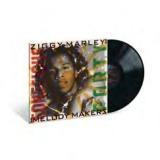
Ziggy Marley & the Melody Makers, bestehend aus zwei Söhnen und zwei Töchtern der Legende Bob Marley,
veröffentlichten 1988 ihr drittes Album „Conscious Party“. Produziert von Chris Frantz und Tina Weymouth
(Talking Heads, Tom Tom Club) und mit dem Nummer-1-Hit „Tumblin’ Down“ wurde „Conscious Party“
zum beliebtesten Album der Gruppe. Dies ist die erste Vinyl-Ausgabe des Albums seit seiner ursprünglichen
Veröffentlichung und wird in den Varianten Standard-Schwarz und CD erhältlich sein.
erscheint voraussichtlich am 25.09.2026
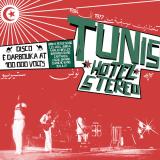
In the years after independence, Tunisia made an unlikely bet: tourism. Beach resorts rose along the coast, each one trying to outshine the next, and each one needing a band to entertain their guests. A whole generation of musicians grew up on those hotel stages - sharing bills with James Brown, Claude François and the Mingus Dynasty - and what came out of it was a small revolution. Funk played on Tunisian instruments. Disco with an oud in it. Reggae carried back from the island of Kerkennah. A "Third Language" the press didn't quite know what to do with.
Tunis Hotel Stereo gathers nine of those records. Most of them were pressed in tiny quantities, sold to tourists as souvenirs, censored before reaching the radio, or quietly slipped onto a 45 between two hotel sets. Some of these artists filled the Carthage amphitheatre. Some topped the Maghreb hit-parades. Most have been waiting, for forty years, for someone to play their music again.
This compilation is the result of years of work - collating memories, hunting down records, sitting with the artists who made them, and with the people who once danced to them. It is the third release on Shakshouka Records, and the first compilation of Tunisian music ever curated by Tunisians, in Tunisia.
SIDE A
The mysterious Les 4 Dés, who turned the national anthem into psychedelic pop on Ya Tounes - and then nearly vanished. Peace Band, hard rockers turned hotel professionals, recording as Omnya at Hammamet's legendary Topkapi club. Ridha Zalila, the eternal shape-shifter, in a rare instrumental of Tiou Tiou Tiou. And Sadok Gharbi's Noujoum - pulled from his sabotaged, near-lost masterpiece Souar.
SIDE B
Carthago, the impossible big band that married the elite of Tunisian jazz-rock with the stars of tourist entertainment, with the original Dhikrayet. Khaled Mellef, one of the great UFOs of his generation, with Wait Till the Morning Dew, recorded in the Netherlands. Marhaba Band's Baba Bahri, originally pressed only for hotel guests and now a cult artefact. Corniche Band's Dance, cut in Milan during a technical stop on a cruise ship. And Jomaa Bouzrara, the "Bob Marley of the Maghreb," with Now That, drawn from his landmark 1983 debut Sunset.
These weren't rebels without a cause. They were musicians who understood that modernity and heritage are not opposites - that a Tunisian could play funk and still be deeply, irreducibly Tunisian. They drew from every direction at once, and built something that belonged to none of those worlds entirely, and to all of them at the same time.
This compilation is one small act of remembering. The music does the rest.
erscheint voraussichtlich am 14.08.2026

No Use For A Name were one of the first bands on Fat Wreck Chords and remain a cornerstone of the label roster. Their unique take on California punk/skate punk emphasized equally innovative and catchy melody, paired with top-flight musicianship. Of course, a lot of what made this possible was the vocal range and imaginative song writing of Tony Sly. Despite his tragic passing in 2012, Tony's presence can still be felt today, as his influence is evident in the work of many other artists. Leche Con Carne is a blistering punk rock record, the band's third studio album, and a blend of Bad Religion-esque riffage and edgy vocals that hit between singing and yelling. The record features some of the bands' biggest hits, the love song "Soulmate", the story-telling cautionary tale "Justified Black Eye", and the popular Bob Marley cover of "Redemption Song." 30 years since its first release, Leche Con Carne feels as omnipotent as ever. An essential Fat Wreck Chords release, and a classic album in the No Use For A Name discography. Produced by Ryan Greene (NOFX) and Fat Mike, Features hit singles "Soulmate," "Justified Black Eye," and "Redemption Song", for fans of Bad Religion, The Offspring, Green Day, Grape coloured 2026 vinyl.
erscheint voraussichtlich am 07.08.2026
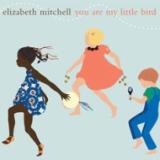
Themes of birds and flying are woven throughout the album, which includes traditional songs such as "Peace Like a River" and "Little Bird, Little Bird," as well as favorites by Bob Marley, Lou Reed, Vashti Bunyan, and Woody Guthrie. Joined by her family, including her daughter Storey and husband and Ida bandmate Daniel Littleton, Mitchell crafts an inviting, homespun sound that draws young listeners in with its warmth and tenderness. To celebrate the landmark album's 20th anniversary in 2026, it has been reissued by Smithsonian Folkways on LP for the first time.
erscheint voraussichtlich am 17.07.2026

Soul Jazz Records celebrate 25 years of working in partnership with Studio One with brand new editions of FIVE of their best-selling CLASSIC Studio One collections all released on limited-edition one-off pressing coloured double vinyl. Also available in new limited-edition card wallet CD editions. The new edition featured albums are Studio One Funk, Studio One Dub, Studio One Ska, Studio One Roots and Studio One Classics.
A blistering collection of non-stop Ska classic tunes featuring classic cuts from the originators of Ska alongside a heavy dose of superb rarities from the might vaults of 13 Brentford Road - pure fire! This compilation features classic tracks from The Skatalites, Bob Marley & The Wailers, Delroy Wilson alongside super-rare tracks from the likes of Ken Boothe, The Maytals, Jackie Mittoo, Tommy McCook and many more. Clement ‘Sir Coxsone’ Dodd’s musical empire was founded on Ska, the first explosive and most exciting music to come out of newly independent Jamaica. This album is a celebration of the music of Studio One Records’ seminal Ska releases and features a who’s who of some of the most important artists in the history of reggae music.
Bestelle jetzt und wir bestellen den Artikel für dich beim Lieferanten.

2023 Repress
Dennis Brown has always been cited as Jamaica's favourite singer.
While Bob Marley set out to conquer the world, Dennis's popularity on the island grew with every year.
His most prolific period is said to be with producer Niney the Observer,who led the singer down a more Roots avenue.He put Dennis on some of his heaviest rhythms.
Throwing also into the pot the fact that these rhythms were also to be mixed by the Dubmaster himself King Tubby we are bound to get one of the best Dub albums around.
Here is where the Crown Prince of Reggae Meets Niney the Observer at King Tubbys.
It's from this period that we have focused on and it's these tracks that were taken to King Tubby's studio to produce this stunning album.
Hope you enjoy the set.......
G a7 | COME AGAIN DUB
J b2 | WOLF AND LEOPARDS DUB
Bestelle jetzt und wir bestellen den Artikel für dich beim Lieferanten.
