If there is a year zero for the introduction of reggae music to Japan, you’d be forgiven for thinking it was 1979 when Bob Marley and the Wailers toured the country, trailed by an entourage of journalists, photographers and fans ready to spread the message of the music into all corners of Japanese society.
But the story of Japanese reggae is not a linear one, and the music that is collected on Tokyo Riddim 1976-1985 captures the moment J-reggae entered the broader public consciousness, merging commercial city pop style with an infectious backbeat, that has drawn comparisons with the emergence of Lovers Rock in the UK.
Rather than look directly to Jamaica, many producers and artists in Japan were inspired instead by the more approachable sounds of The Police and UB40, their reggae fix arriving pre-filtered through the lens of new wave pop from the UK. Playful and groovy, these album deep cuts have been overlooked for too long.
Among them are Miki Hirayama, the idol singer who borrowed the bassline from Bob Marley’s Natural Mystic on ‘Denshi Lenzi’, Chu Kosaka, who headed to Hawaii to cut the Jimmy Cliff-inspired ‘Music’ and Marlene, the Philippine songstress whose cover of Roberta Flack’s ‘Hittin’ Me Wear It Hurts’ owed much to her producer’s obsession with Sly & Robbie’s Compass Point sound.
Then there was Izumi “Mimi” Kobayashi, who enlisted the Babylon Warriors to perform on a dubbed-out version of her own track ‘Lazy Love’, the city pop-meets-new wave reggae sound of Miharu Koshi’s ‘Coffee Break’, Junko Yagami’s anti-apartheid deep cut ‘Johannesburg’ and Lily, whose ‘Tenkini Naare’ was produced by Ryuichi Sakamoto and closes out the compilation with a flourish.
While these stories may not always conform to neat narratives, they do provide a more accurate reflection of the indirect ways in which styles infiltrate one another and, in their naivety, have the potential to create something beautifully strange and entirely new. Previously only available in Japan, the tracks on this compilation are a testament to that curious alchemy.
Tokyo Riddim 1976-1985 is released on vinyl and as a full album download (no streaming), featuring original artwork by Japanese Fukuoka-based artist Noncheleee, whose cover pays homage to the iconic dancehall album art of Wilfred Limonious.
Released on 1st September, Tokyo Riddim 1976-1985 is part of Time Capsule's Nippon Series, a loose series of compilations exploring different musical scenes from Japan between the 1960s and 2010s.
Buscar:bob marley
- Mama Ku Dile - Mama Nao Chores
- As Cinco Sociedades - O Isangela Itanu
- Tambi Mua Ngola - Obito Em Angola
- Ngongo Mua Ngola - Sofrimento Em Angola
- Tribalismo - Katungu
- Ufolo - Liberdade
- Katete Ngila - Catete É Um Passaro
- A Luta Continua - O Nvunda Ki Ia Bue Lua
- Mona Ku Jimbe Manhenu - Filho Nao Esqueca A Sua Mae
- Undenge Uami - A Minha Infância
- Nguma - Inimigo
- Kamba Diami - O Meu Amigo
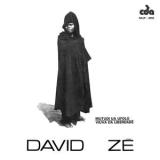
David Zé - Mutudi Ua Ufolo / Viúva da Liberdade is a major milestone in Angolan music, intensely blendingsemba, rumba, and bolero, recordedat the height of the country"s liberation struggle. Both soulful and political, the album resonates far beyond Luanda, carrying a universal spirit akin to that of Bob Marley. Originally released on CDA with Conjunto Merengue, it captures David Zé at his creative peak. Sung in Portuguese and local dialects, it combines rhythmic elegance with deep commitment, weaving links between Afro-Brazilian and Latin American traditions. After his assassination in 1977, the album was banned for several years, before being reborn as an essential work of resistance and beauty. In 2008, his legacy found a new echo when Damian Marley and Nas sampled "Undenge Uami" on Distant Relatives.
- 1: Sunshine Kisses
- 2: Louisiana Hound Dog
- 3: Two Of Hearts
- 4: Anything Without You
- 5: Baby, Please Don't Go
- 6: I Went To The Levee
- 7: Deep River
- 8: Tall Lonesome Cowboy
- 9: Lovely Lonely
Sabine McCalla creates her own version of multi-cultural American roots music. It's a sound that crosses borderlines, pulling everything from Brazilian samba to southern soul to British rock & roll into its orbit. On Don't Call Me Baby, Sabine filters those influences through the lens of her Haitian heritage and her music community of New Orleans, creating a debut album that's every bit as multi-faceted as the woman who wrote its songs.
The daughter of first-generation Haitian immigrants, Sabine was raised in the suburbs of New York City, where she grew up alongside her sister Leyla McCalla (Sons of Our Native Daughters, Carolina Chocolate Drops). Introduced to chamber music at an early age, Sabine began playing classical violin in orchestras, music camps, and conservatory classes as an 8 year old. Back at home, she filled her head with Motown classics, girl group hits, Bob Marley albums, Beatles standards, and Haitian folk music. It was a wide constellation of sound that spanned more than a half century, and Sabine made it all her own, drawn to the connections binding everything together.
Don't Call Me Baby shines a light on those connections. The follow-up to her critically-acclaimed Folk EP, whose pre-war sound earned her a slot at the Newport Folk Festival in 2019, the album transcends genre and generation, creating a raw, rich mix of country, R&B, folk, and soul that exists on its own timeline. Co-produced by Sam Doores of the Deslondes and featuring a cast of New Orleans’ most spirited and gifted (including guest vocals from Riley Downing, Leyla McCalla, and The Lostines), Sabine McCalla reaches beyond her beloved New Orleans Americana scene with Don't Call Me Baby, building a bridge between the world-spanning sounds that have captured her attention.
180 GRAM AUDIOPHILE VINYL
- LIMITED EDITION OF 750 INDIVIDUALLY NUMBERED COPIES ON ORANGE COLOURED VINYL
Desmond Dekker recorded some of his best known songs together with his backing group the Aces (consisting of Wilson James and Easton Barrington Howard). Their debut album 007 (Shanty Town) includes their single of the same name, which made him Jamaican music's first outernational superstar, reaching the 14th place in the UK charts. You'll hear how the Ska music from the mid-60s is developing to the Rocksteady sound. This was 'Ska' or 'Blue Beat'—(or its new name for the slower tempo 'Rock Steady'), and the lyrics come from the Calypso-Mento method of telling about current events in music. So in a groovy way, Desmond, James and Barry (the Aces) have given a report of love, politics, nagging women, the celebration of the Fifth anniversary of Independence, and gang warfare. This is were it all started before Desmond became the international star.
Even before Bob Marley and Jimmy Cliff Jamaica already had their own international superstar, Desmond Dekker was his name. Famous because of his international hits, such as 'Israelites' (1968) and 'It Miek' (1969).
007 (Shanty Town) is available as a limited edition of 750 individually numbered copies on orange coloured vinyl.
- A1: Soon Forward
- A2: You'll Never Know
- A3: Motherless Children
- B1: Slave Driver
- B2: Mistake
- B3: Going Downtown
- B4: I'm Coming Home
Reissue of the very first album ever released by Sly & Robbie’s iconic TAXI label back in 1979.
"Having saved enough money during a tour with Peter Tosh to buy 4 multitrack recording tapes, Sly & Robbie asked Gregory to voice a few songs for them. Because they had played on so many of his hits, Gregory generously agreed to do it for free to help bootstrap the new TAXI label.
In 1979, Gregory Isaacs was by far Jamaica’s most popular artist, earning his "Cool Ruler" nickname many times over releasing hit after hit, most of which were produced with Sly & Robbie, who at 25 years of age were already the hottest backing band. Out of these sessions came hits like "Soon Forward", a fabulous cover of Bob Marley’s "Slave Driver" and 4 other potent tracks. There were no flimsy soul or pop covers: Gregory Isaacs, whose voice and range were at their peak, sang with clarity, depth, verve and confidence, with no unnecessary mannerisms.
A must have for any serious music fan, this crucial album features extended so-called "Discomix" versions of all the songs, providing listeners with a generous serving of the Riddim Twins drum and bass extravaganza. In addition to the original album, we have added 3 dub versions that were only released in Jamaica, as B Sides of singles, in 1979. These have never been reissued until now and provide a fascinating glimpse into Sly & Robbie's drum and bass sound, which revolutionized Reggae music at the time."
- A1: Calling Selassie
- A2: No Tan Distintos
- A3: Come My Way
- A4: Cool Down
- A5: Digital Love
- B1: Ganas De Verte
- B2: Ipanema
- B3: Loco Loco
- B4: Club Paradise
- B5: Nine Mile
Die Nine Mile Section in der Gemeinde Saint Ann ist die Geburts- und Ruhestätte der Reggae-Legende Bob Marley. Das Mausoleum, das seine sterblichen Überreste beherbergt, ist eine wichtige Pilgerstätte für Fans aus der ganzen Welt. Nine Mile wird oft mit der Rastafari-Kultur in Verbindung gebracht, die die Reggae-Musik stark beeinflusst. Die Gemeinde spiegelt das langsamere Lebenstempo, die tiefe Verbundenheit mit der Natur und das afrozentrische spirituelle Ethos wider, das dem Roots-Reggae zugrunde liegt. Dies inspirierte Alborosie zu seinem neuesten Album, das seine persönliche Hommage „Trench Town Legend“ enthält.
„Come My Way“, die erste Single aus dem Album, ist eine Neubearbeitung von „King Tubby Meets Rockers Uptown“, einem weiteren Markenzeichen von Roots Reggae und Dub.
Die kommende Single „Calling Selassie“ liefert einen einheitlichen Roots-Sound und eine inspirierende Botschaft.
Alborosie ist im Frühjahr und Sommer 2025 auf Tournee und wird diese Songs bei seinen Live-Auftritten präsentieren.
- Vinheta Quebrante
- Lenda
- Malemolência
- Roda
- Rainha
- 10: Contados
- Mais Um Lamento
- Concrete Jungle
- Valsa Pra Biu Roque
- O Ronco Da Cuíca
- Bobagem
- Ave Cruz
20th Anniversary Reissue. Remastered. Groundbreaking MPB/Downtempo Classic. Originally released in 2005, CéU introduced the world to a bold new voice in Brazilian music. Seamlessly blending samba, MPB, soul, and downtempo grooves, Céu delivered a debut that felt both deeply rooted and strikingly contemporary. With her smoky, understated vocal tone, she evoked echoes of classic bossa nova while pushing into new sonic territory - covering Bob Marley"s "Concrete Jungle" with Afro-Brazilian swing and layering in dub and electronica accents. Hailed for its elegance and quiet innovation, the album hit No. 1 on Billboard"s World and Heatseekers charts, earned a Grammy nomination, and became the highest U.S. chart debut for a Brazilian female artist since Astrud Gilberto. Now celebrating its 20th anniversary, CéU returns remastered for vinyl - a modern Brazilian classic reissued for a new generation of listeners. Includes Classics : "Lenda", "Malemolencia", "Concrete Jungle"... Mastering by Colorsounds Paris.
- A1: Ambition Of Men- Reuben Anderson
- A2: Come Down- Lord Tanomo
- A3: Yard Broom- Roland Alphonso & Don Drummond
- A4: Good News- The Skatalites
- A5: Birds And Bees- Ferdie Nelson
- A6: Please Beverly- Bibby And The Astronauts
- B1: Eastern Standard Time- Lord Tanamo
- B2: Lonely And Blue Boy- Ferdie Nelson
- B3: Let George Do It- Rico Rodriguez
- B4: Ska Down Jamaica Way- Ferdie Nelson & Ivan Jap
- B5: Sweet Dreams- Bibby & The Astronauts
- B6: Valley Of Green- Jackie Opel
SKA was the name given to the music that came out of Jamaica between 1961-1966. Based on the American R&B and Doo-wop records that the Sound Systems in Kingston Town used to play. However, the American records style started to mellow out, while the Jamaicans preferred a more upbeat sound. So the Sound System bosses became record producers to cater for this demand. Sir “Coxonne” Dodd and Duke Reid led the way putting the top musicians on the Island in the studio to make music unmistakably Jamaican. A lot of their early recordings were cut at Federal Records before they built their own studios.
Federal Records was the first domestic Jamaican studio, based at 220 Foreshore Road, Hagley Park, Kingston. It opened it’s doors in 1961 owned by Ken Khouri who first licensed American records to the island of Jamaica, before cutting his own tunes, which were some of the first Jamaican RnB and Ska singles. Ken Khouri initial studio was Records Limited but very basic so with the help of engineer Graeme Goodall built the new studio complex at 220 Foreshore Road which also contained a pressing plant and disc cutting room. The studio was not only the forerunner for Ska music but the music that followed and in 1981 Ken Khouri sold the complex now on the renamed road Marcus Garvey Drive to Bob Marley who renamed the premises Tuff Gong Studios whose legacy carries on today.
We have compiled some of the best SKA SOUNDS that came out of the Federal Vaults, with some of the best artists, musicians from the time. The great Lord Tanomo, Don Drummond, Rico Rodriguez, Roland Alphonso, alongside some lesser known artist. However, one thing is for sure, the quality never drops on this fine collection of Ska Hot Tunes……
“Electronic / Funk Yacht Rock testament to the carefree teen spirit of the 80s”
In 1985, a young and ambitious Britt Cobble, fresh out of school, ventured to Florida to have his debut solo album Maiden Voyage mastered by none other than reggae legend Touter Harvey, known for his work with Bob Marley. The result is Spinnaker – Maiden Voyage, an Electronic / Funk Yacht Rock album infused with the carefree teen spirit of the 80s.
Anchored by its central motto, “Love the coast, it’s there for you,” the album captures the essence of youthful exploration and the allure of the open sea. With slick production and an undeniable air of nostalgia, Spinnaker invites listeners to escape into a world of sun-soaked coastlines and endless horizons. Britt elevates yacht rock to new heights, serving as both a testament to youthful ambition and a celebration of the era’s smooth, coastal vibes.
Jackie Mittoo’s ‘Reggae Magic’ is a new collection from the great Jackie Mittoo. The album features a mixture of classic tunes and rarities from the period 1967-74, when Mittoo was at the height of his musical powers. Mittoo’s solo career began after the end of The Skatalites in 1965. He began pushing new musical boundaries, creating a uniquely identifiable organ-led funky reggae sound that owed as much to Booker T and The MGs, Jimmy Smith, Stax and Motown as to the post-ska and emergent rocksteady island rhythms of Kingston, Jamaica. His solo work at the legendary Studio One spanned seven albums and hundreds of singles.
Aside from producer and founder Clement ‘Sir Coxsone’ Dodd, it’s hard to think of anyone more central to the sound and success of Studio One than Mittoo; keyboard player extraordinaire, songwriter, arranger, musician, truly the Keyboard King at Studio One. Jackie Mittoo had been the youngest founding member of The Skatalites (at age 16), probably the most important group in Jamaican music. After they split, he became leader of the three pivotal groups at Studio One – The Soul Brothers, The Soul Vendors and Sound Dimension. He also became musical director for Studio One, helping create countless hits for singers Ken Boothe, Bob Andy, The Wailers, John Holt, Delroy Wilson and more – unforgettable tunes like Alton Ellis’ ‘I’m Still in Love with You’, Marcia Griffiths’ ‘Feel Like Jumping’, The Heptones’ ‘Baby Why’ and others. Between 1965 and 1968, many of the tunes created at Studio One can be attributed to Mittoo – timeless instrumental tracks, recorded either under his own name or those of The Soul Brothers, Soul Vendors and Sound Dimension, that have become the basis for literally 1000s and 1000s of Jamaican songs over many decades, giving the music an unsurpassed longevity.
The endurance of his music was as a direct result of significant developments in Jamaican music in the 1970s, namely the creation of three important new styles: Dub, Deejay and Dancehall. In the early 1970s Mittoo’s instrumental tracks were used as the musical source for a series of classic Studio One dub albums. At the same time Deejays at Studio One, including Dillinger, Prince Jazzbo and Dennis Alcapone, began toasting over these same popular rhythms to create their own new songs. In the mid-70s, a new generation of Studio One singers and deejays, including Sugar Minott, Freddie McGregor, Johnny Osbourne, Michigan & Smiley and others, began once again creating new melodies over these original instrumentals, signalling the birth of a new Jamaican style that became known as ‘dancehall’.
As dancehall swept across the island, rival producers copied these now classic rhythms. These original Jackie Mittoo-driven tunes spread like a virus throughout Jamaican music; be they the instrumental cuts to tunes such as Alton Ellis’ ‘Mad Mad’ , ‘I’m Just A Guy’, Larry Marshall’s ‘Mean Girl’, Slim Smith’s ‘Rougher Yet’, and instrumentals such as Mittoo’s classic ‘Hot Milk’ or ‘One Step Beyond’, The Sound Dimension’s ‘Real Rock’, ‘Heavy Rock’, ‘Full Up’, ‘Drum Song’, ‘Rockfort Rock’ … and the list goes on. These tracks became a constant soundtrack to the island, emitting from the ever-present sound of speaker boxes strung up around dancehalls. This recycling travelled even farther afield; The Sound Dimension’s instrumental ‘Real Rock’, updated by Willie Williams on his classic ‘Armageddon Time’ was in turn covered by The Clash. Lily Allen sampled Mittoo’s debut solo single ‘Free Soul’ for number one hit ‘Smile’; Dawn Penn’s ‘You Don’t Love Me (No, No, No)’, accompanied by The Soul Vendors, was revived by Penn and producers Steely & Cleevie in 1994, since covered by Rihanna, Ghostface Killah, Stephen Marley, Damian Marley and Beyonce. And so it goes; an endless time-leaping, continent-hopping diasporic musical map of the world with all roads essentially leading back to one man – Jackie Mittoo.
Black Vinyl LP with insert (including the story behind the album and lyrics with English translation)
After their first LP, in 1987, Pedro gathered his usual band, Carlos Sousa on keyboard, Bulimundo on drums, Nuno Santos and Zézé on lead and rhythm guitars, Augusto Rasta on bass, Daló on sax and finally Dalú on percussions, for yet another project, one that carried both their names: Jacinta Sanches - Pedro Ramos. Eight days, no more, that’s all Pedro Ramos and Jacinta Sanches needed inside the Estúdios Musicorde. The process was natural, as with all their music, memories recollected and arranged by Pedro on café napkins, rehearsed and perfected at home with Jacinta. Together they imagined music where Cape Verdean saudade could dance together with Kingston’s skank, two island hearts beating inside European concrete.
His name is Pedro Correia Ramos Varela, born in Praia, Santiago, Cabo Verde on April 6th 1954; her name is Jacinta Lopes Veiga Varela, born in Cidade Velha, Santiago, Cabo Verde on January 22nd 1959. The two met in Praia, where a few exchanged words turned into long evening conversations; conversations into friendship; friendship into love; and love into six wonderful children. After the independence of Cabo Verde, they got married in 1978 and moved to Portugal, where Pedro started working as a welder for Lisnave and playing the guitar in a band in Ramada. Trading shipyard sparks by day for the after-hours pulse of Cova da Moura, his love for music proved harder than steel. And in 1982, after seeing Bob Marley and Peter Tosh in Rotterdam, he opened his own Dancing Bar just below their house, a pioneering space for the promotion of reggae music in Portugal.
Their Dancing Bar kept its doors open from 1982 to 1994, seeing the release of two albums and more singles. To this day, Pedro and Jacinta are still making music, one the inspiration of the other. They define themselves as simple people, living happy without prejudice, friends with the world.
- 1: Return Of Django
- 2: Touch Of Fire
- 3: Cold Sweat
- 4: Drugs And Poison
- 5: Soulful I
- 6: Night Doctor
- 1: One Punch
- 2: Eight For Eight
- 3: A Live Injection
- 4: Man From M.i.5
- 5: Ten To Twelve
- 6: Medical Operation
Lee ‘Scratch’ Perry & The Upsetters’ classic Return of Django. Lee Perry had already been making name in the Jamaican music scene for about a decade before Return of Django hit the UK charts in 1969. It was released after Trojan released
a hugely popular collection of Perry’s biggest instrumentals. This album is a must for everyone that enjoys that good old vintage reggae sounds.
Lee ‘Scratch’ Perry was a pioneer of dub music and worked together with artists such as Bob Marley and the Wailers, The Clash and The Beastie Boys.
Return of Django is available as a limited edition of 1000 individually numbered copies on white coloured vinyl.
- 1: Drum Song
- 2: Darker Shade Of Black
- 3: Midnight Train To Georgia
- 4: Samba Pa Ti
- 5: Chopper
- 6: Here I Am Baby
- 7: Charmers Mood
- 8: Mystic Mood
- 9: Breezing
- 10: Holly Holy
Celebrated session guitarist, Willie Lindo, steps from behind the scenes and into the spotlight to deliver some top class original compositions and sublime cover versions.
A sumptuous piece of gourmet music. Timeless dub, executed to perfection. The B-Side sees Lindo cover Al Green and Bobby Womack, converting their slow jams into stoney instrumental masterpieces, a sort of precursor to the hip-hop way of sampling and reinterpreting our collective heritage.
Far & Distant was recorded at 220 Marcus Garvey Drive, eight years prior to Rita Marley relocating Tuff Gong International to that address.
A relic from an era where being “in the studio” actually meant something.
- A1: Banana Leaf
- A2: Parrot Polynesia
- A3: Cannibal Papaya
- A4: Saboten
- A5: Burning Farm
- B1: Parallel Woman
- B2: An Angel Has Come (Live)
- B3: Spider (Live)
- B4: I Am A Realist
- B5: Voice Of Crane
- B6: Tortoise Brand Pot Cleaner's Theme
- B7: Planet X
- B8: Summertime Boogie
- B9: Miracles
After the release of their world debut Catch A Fire, Bob Marley & The Wailers would embark on a U.S. tour supporting the legendary Sly And The Family Stone.
Yet after five dates, they were fired from the tour, supposedly for upstaging the main acts! Left with no money and nowhere to go, they performed one legendary
show at San Francisco's The Matrix!
These recordings, taken from a studio session before their legendary performance, find Bob Marley and The Wailers at their best.
Featuring the classic lineup of Bob Marley (vo/gt.), Peter Tosh (vo/gt), Joe Higgs (per.), Earl Lindo (pf.), Family Man Barrett (b.), and Carlton Barrett (ds.),
the Wailers are imbued with the kind of Rock and Roll energy that could only come from outshining Sly Stone! Even sweet rocksteady ballads such as
“Stir It Up” take on the form of a rock and roll anthem in this session.
Discovered and released on CD by P-VINE in 2005, these mythical studio recordings are finally getting a long deserved analog release!
The double LP on black vinyl comes complete with an obi-strip! Don’t miss this reggae gem from Bob Marley and The Wailers!
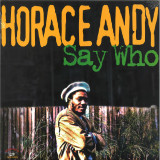
Horace Andy has always commanded a place high on the list of Reggae singers from Jamaica. His distinctive haunting vocal style stands strong on any rhythm,song or style he chooses to cover. Of the singers on that long list, he has managed more so than any other, to crossover to a new generation of listeners due to his individual style, helped also by his collaborations with the likes of Massive Attack. Horace Andy (b. Horace Hinds,1951,Kingston Jamaica) like many otherJamaican singers began his musical career at Coxsonne Dodd's Studio One. So impressed with the youth, Coxsonne decided on a name change for theyoung artist and called him after his top songwriter of the time Bob Andy. So Horace Hinds became Horace Andy. His first tune for Coxsonne 'Something On My Mind' was a slow burner in Jamaica, but his belief in his young protégé paid off when followed later by 'Skylarking' a tune that burst the singer all overthe radio and sound systems of Jamaica. After numerous singles and two albums worth of material, Horace moved on to work with many of the topflight Jamaican producers, among them Keith Hudson, Augustus Pablo and Niney the Observer, but it was his work with producer Bunny Lee in the 70's that he cut most of his hits for and from this stable of work, that we have compiled this set. Some of his late 60's classics were recut in the popular1970's style, working with the rhythm kings themselves, Sly Dunbar andRobbie Shakespeare. They have added some shine to the tracks, 'SomethingOn My Mind' and 'Skylarking' and made them hits all over again. Such wasHorace's delivery to the covers he sang like Delroy Wilson's version of theTams 'Riding For A Fall', the Heptones 'My Guiding Star', John Holts'Man Next Door' and Bill Wither's 'Ain't No Sunshine', that these finetunes were made his own. The roots end of his musical style was covered by
Andy originals such as 'You Are My Angel', 'Zion Gate','Money Money'and the cut which we have taken our edited title, the timeless 'Just SayWho'.A bass heavy cut to Bob Marley's 'Natural Mystic' works so well inthis style also. Another nickname Horace acquired was the affectionate title of Sleepy, as he was always hanging around the yards and studios of Jamaica waiting his turn, sometimes so long he would fall asleep. His enthusiasm to get back in the studio to work some more of his magic, to a catalogue of material that has developed into one of the finest in Jamaica. I hope you will agree, this fine set of 1970's classics will sit alongside.
O B8 | AIN'T NO SUNSHINE
2025 Record Store Day title - now available for general sale. A very special album to mark Room In The Sky’s 200th physical release. A selection of beautiful instrumental tracks, and featuring some of the best reggae musicians: Vin Gordon who basically played 90% of all the reggae hit horn lines , from Studio One to Bob Marley & the Wailers; Ernest Ranglin top jazz/reggae guitarist, now 93 yrs old and still playing, he produced the first Jamaican number 1 record “My Boy Lollipop” for Island Records; Dean Fraser, the number 1 Jamaican sax player; The Megahband - Michael Fletcher and Alborosies’ riddim section; Sly Dunbar the greatest reggae drummer; Alan Weekes - UK jazz reggae guitarist who played on most of UK reggae created in the late 70s, and 80s, and produced Carrol Thompson’s Hopelessly in Love LP; Jackie Mittoo responsible for 80% of all the biggest reggae riddims.
José James just can’t leave the ’70s alone. Or maybe it’s the other way around. The singer, songwriter, bandleader, and producer was born in 1978, after all, but over his past 17 years of fundamentally forward-looking, blessedly mercurial music, he keeps getting pulled back in. His 2013 Blue Note breakthrough No Beginning No End revisited the hooky, funky, jazz-streaked songcraft of the time through a modern crate-digger’s ears. On 2020’s No Beginning No End 2 — James’ debut on his own Rainbow Blonde Records — he went back through the portal with a small army of fellow celebrated eclecticists. Just last year, there was the album 1978, a richly layered love letter to said year that felt deep, luxe, and cool. It’s as if — vested with the restless fluidity of jazz, the tuned-in sensitivity of soul, and the revisionist grit of hip-hop — he is trying to play his way into the exact moment when, culturally speaking, everything was about to change.
“I'm still so fascinated by the tension in that era of all these seemingly clashing things happening at once,” says James. “The loft scene, the jazz scene, Elton and Billy, Bob Marley, the Isleys, Funkadelic, disco being this behemoth in a way I don't think we even understand today… And then there’s where everybody went from there — into hip-hop, into punk rock, exploding jazz. It's like a summation of the ’70s, and it's about to transform. It's the peak of the rollercoaster.”
Literally breaking into history is impossible, of course, but James’ new LP, 1978: Revenge of the Dragon, does feel like breaking through or bursting out. In loving contrast to its predecessor, the fresh set plays hot, like a Friday night out at the Mudd Club in its prime. Though he’s dreamt up albums with collaborator counts approaching the dozens, James gathered a tight crew for this one. Himself and Taali on vocals. BIGYUKI on keys and analog synth. Jharis Yokley on drums. Bass split between David Ginyard (Blood Orange, Terence Blanchard) and Kyle Miles (Michelle Ndgeocello, Nick Hakim). And an all-star brass lineup: Takuya Kuroda on trumpet, young lion Ebban Dorsey on alto sax, and genre-spanning ronin Ben Wendel on tenor sax. They set up in Dreamland Studios near Woodstock, a restored 19th century church, and recorded live to tape, two tracks, drums pushed to the max — “a small homage to the rise of punk,” says James.
In that place out of time, the band laid down a handful of choice covers and some wild originals, like the single “They Sleep, We Grind (for Badu),” a decades-collapsing cut powered by an ugly groove. Steeped in dub, funk, and sampledelia, James chants an artists’ mantra (“They sleep, we grind / Man, f--- your nine to five”), makes lyrical callouts to Marley and Nas, and channels everything from George Clinton to J Dilla, not to mention the earthy mysticism of Erykah Badu. In 2023, James released and toured his Badu covers LP, On & On. “Living in her musical house for a year was transformative,” he says. “This is my summary of everything I learned through her, tying it to this idea that artists move differently. We are in society but we are outside, too, looking out and in at the same time. Our hours are different, our schedules are different.”
To that point, James and co. actually began each day in the woods, filming the album’s visual companion piece, Revenge of the Dragon, an honest-to-God kung-fu short complete with bad overdubs, training montages, camera tricks, and plot twists. The film pays tribute not only to the genre’s greatest year (1978, of course), but also its cinematic exchange with Blaxploitation, plus James’ own recent Shaolin training and admiration for Bruce Lee as a culture-bridging force (the LP’s cover recreates an iconic shot of Lee). On top of that, says James, “We had this immediacy in the studio. Live, one take, no overdubbing. I feel like that's where the martial arts piece comes in, where it's about being relaxed but also aware, and there's immediacy in your movements.”
Across the project, tribute takes that refracted, multifaceted form. From his personal late-’70s playlist, James chose four covers reflecting the era’s disco-fied churn: the MJ-meets-Quincy dancefloor masterpiece “Rock With You”; Herbie Hancock’s prescient vocoder fever dream, “I Thought It Was You”; and a pair of Black-radio hits from two bands whose fans typically wouldn’t have been caught dead in the same stadium: “Miss You” by the Rolling Stones and the Bee Gees’ “Inside and Out.” All of it gets filtered through a contemporary Black (and beyond) lens, coming out loud, free, funky, and buzzing — dynamic, yes, but also of a joyous piece.
1978: Revenge of the Dragon transports you to a crowded room where all this is playing out in real time. That feeling is helped out by opener “Tokyo Daydream,” a bass-driven swan dive into a neverending night of boutique bar-hopping and neon revelry. Later, “Rise of the Tiger” finds James bringing rare braggadocio to a propulsive track with growling synth lines and a hunger for whatever comes next. And then there’s the closer, “Last Call at the Mudd Club,” which with its upbeat energy and string of Stevie-inspired pickup lines, evokes the sort of unabashedly elated track the DJ throws on at 3:56 a.m. before everyone is kicked out. “I wanted to leave the album on that note,” says James. “If this was a night out in New York, this would be the last thing you hear before you get in that taxi and go back to your apartment.” Or, perhaps, back to 2025.
- A1: Pluto
- A2: Lucky
- A3: Rise
- A4: Every Color
- B1: Baby Mama
- B2: Junebug (Feat. Jpegmafia)
- B3: Lose My Focus
- B4: We Should Move Somewhere Beautiful (Feat. Arima Ederra)
- B5: Kid
- C1: 16 Candles (Feat. Ganavya)
- C2: Smile For Me
- C3: Afternoon Tea With The Auroras (Interlude)
- C4: Little Bird
- C5: Water
- D1: Sun Don't Leave Me
- D2: Lose My Focus (Feat. Umi)
- D3: You're So Good To Me
Where the Butterflies Go in the Rain is the third studio album from the enchanting songstress, Raveena. Blending powerful storytelling with early 2000s pop, Where the Butterflies Go in the Rain sees music continuing to play the central role as both a catalyst and medium in her personal and creative growth. With newfound clarity, Raveena delves into themes of new love, maturity, comfort, and domesticity that reflect the peace of mind she currently inhabits. Speaking on this evolution and how it informed the album’s creative, she shares, “Butterflies are so delicate that they have to hide in leaves and flowers until the rain passes so that their wings don’t get crushed in the rain. I felt like that was kind of a metaphor for where I was in my life. I needed to go back to comfort—to deep rest—and stop weathering storms.” On the most instinctual level it’s an album that should conjure simple pleasures like the joy of a summer road trip with loved ones.
Embracing the sounds of classic artists like Fleetwood Mac, Brandy, Bob Marley, Joni Mitchell, and Marvin Gaye, to name a few, Where the Butterflies Go in the Rain draws inspiration from people who, “are really good at capturing the beauty and loss of life in the same breath,” she describes. In her signature style, Raveena seamlessly unites that expansive songwriting with traditional Indian instruments and feel-good early 2000s pop hits —putting forth a work that’s more unabashedly herself than any that’s come before.
Raveena reflects on her forthcoming album, “I don't think I've ever understood a record so well before—It wasn’t like the process I used to have with past albums where I was more anxious about being at my best. This time, it was all intuition, and I knew the album was right when I finally had the feeling of rest.”
The deluxe release sees the addition of 3 tracks. Sun Don't Leave Me - contemplating the feeling of wanting to hold onto one more beautiful sunset, one more passionate embrace, before things change again and hard times strike again - and a reimagined version of Lose My Focus with UMI, bringing fresh energy to an album that’s more unapologetically Raveena than ever.
- Dr Dr Themefart Frustrating Himself Posed As Gay Old Nazi Ss
- Angry Hop Hop
- All The Morning Drivers, O-E-O!
- Sex Duo
- Red Roses
- Aha But No
- To Be Elvis
- Sicctech
- Utc
- Citrus
- Nanny Got High Times
- Anti-Love Lab A
Sie maschen's noch einmal. THE SOUND OF MONEY mit "Two: Rhyme On". Die Band aus dem Münchner Pop-Underground - genauer: mit Albert Pöschl, direkt aus dem Kern des faszinierenden Echokammer Labels, Claudia Kaiser, ex-Moulinettes, mit der aparten Stimme, die an eine Münchener Nico ohne den Drogen BS erinnert und Martin Lickleder, der für Wortakrobatik, Referenzspielereien und flotte Discostreicher berüchtigt ist - mit der Weiterführung ihres spielerischen, nicht minder faszinierenden Konzeptes: An Anagrammatical Exorcism of the 70s. Sie nahmen die Titel ihrer 12 Lieblingsalben aus den 70ern als DNA - und schüttelten die Buchstaben kräftig durch! Heraus kamen 12 neue Titel, für neue Songs. Im Jahr 2017, auf ihrem Album MORE? WHY NOT! haben sie das Gleiche mit den 60ern gemacht. Jetzt toppen sie den Spaß sogar noch. Kurz zurückgespult, 2017: Pu?nktlich zum 50-ja?hrigen Jubila?um des Summer of Love 1967 pra?sentieren The Sound of Money 2017 ihre Konzeptplatte "More? WHY NOT! - AN ANAGRAMMATIC EXORCISM OF THE 60S". Dazu stellen sie die Titel von 12 ihrer Lieblingsplatten aus diesem Pop-Ur-Jahrzehnt zu Anagrammen um - und schwuppdiwupp hatten sie 12 Titel fu?r ganz neue Songs: Aus "Pet Sounds" wurde "Nude Spots", aus "Piper At the Gates of Dawn" wurde "Tiger T - Death Happens to a Few", aus Bobbie Gentry's "The Delta Sweete" wurde "Let's Eat The Weed",... 2025: Geradezu u?berpu?nktlich vor dem 50-ja?hrigen Punk-Jubila?um sind sie wieder zur Stelle: Am 23.5. wird, wieder über das Hamburger BB*ISLAND Label "TWO: RHYME ON - AN ANAGRAMMATIC EXORCISM OF THE 70s" erscheinen - mit Anagrammen von David Bowie bis Chic, von Nico bis Slits, von Bob Marley bis Kraftwerk. Beispiel? Aus "The Rise and Fall of Ziggy Stardust and the Spiders from Mars" wird "Dr. Dr. Themefart, Frustrating Himself, Posed as Gay Old Nazi SS".Exodus von Bob Marley wird zu Sex Duo. (Die beiden songs sind schon mal als Singles / videos veröffentlicht ) Und wie die Titel-Buchstaben haben sich auch Musik und Text zu einem schillernden, grotesken Kaleidoskop klassischer 70s-Popstile zurechtgeschu?ttelt: Landwirtschafts-P-Funk, Finanzcasino-Gospel- Disco, Anti-Pogo-Postpunk, zweifelnder Heimcomputer-Dub-Jazz, der gesamte Bowie in dreinhalb Minuten ru?ckwa?rts ... Nicht nur Live eine Wilde-Maus-Fahrt des Pop-Glam in Mu?nchner Underground-Allstar-Besetzung: CLAUDIA KAISER: Gitarre, Bass, Gesang ALBERT PO?SCHL: Bass, Gitarre, Gesang MARTIN LICKLEDER: Geige, Mundharmonika, Gesang TOM WU: Schlagzeug FRANZISKA ERDLE: Percussion SVENJA PFEIFER: Keyboards, Gesang
- A1: Six Million Dollar Man Theme – Richard "Groove" Holmes
- A2: Super Strut - Cookin' Bag
- A3: Work Song - The Pazant Brothers
- A4: Peace & Love - Lonnie Liston Smith & The Cosmic Echoes
- A5: Skull Session - Oliver Nelson
- B1: Mama Soul - Harold Alexander
- B2: Head Start - Bob Thiele Emergency
- B3: Theme From The Men - Joe Bataan
- B4: Put It Where You Want It - Pretty Purdie
- B5: Drifting - Chucky Thurmon & Pharris Wheel
What it is, is funky! When the acid jazz scene ruled the world it looked for its inspiration in places that other jazz fans tended to overlook. The soul jazz of the late 60s and early 70s. The music of lounge bars and small clubs that fuelled the night life of black America. This compilation brings together ten examples of the sound and is a high quality listen from start to finish.
In the post-bebop world jazz was often condemned as an intellectual music aimed at the head not the feet, but a strain of the music was always for dancing, coming straight from the legacy of the big bands, and always tipping its head to what was going on in the R&B charts. The tracks included here all stay true to that legacy.
So whether we have Lonnie Liston Smith’s plea for 'Peace & Love' with its Bob Marley echoing horn lines, or Joe Bataan as band leader covering Isaac Hayes’ ‘Theme From the Men’, this is music allied with the contemporary sounds of the day. Oliver Nelson's synth heavy 'Skull Session' or his TV hit 'Theme From The Six Million Dollar Man' covered by Richard ‘Groove’ Holmes show this. At the heart of these recordings are the rhythms − and as such Bernard Purdie is the star either as a solo artist or simply as the man behind the kit with Harold Alexander.
This is Funky Jazz is an entry ticket to a party that everyone should want to be invited to.
Dennis Brown has always been cited as Jamaica’s favourite singer. While Bob Marley set out to conquer the world, Dennis’s popularity on the island grew with every year. Overseas success also came Browns way with crossover hits like the massive ‘Money In My Pocket’. He will always be fondly remembered on the sound systems across the caribbean as the Crown Prince of Reggae.
Dennis Brown (b Dennis Emanuel Brown,1957, Kingston, Jamaica) began his illustrious career at the grand age of eleven like many of the other child singers at Coxsonne Dodds Studio One stable. His first hit in 1969 a cover of Van Dykes ‘No Man Is An Island’ still stands the tests of time and also its follow up cut ‘If I Follow My Heart’ as Reggae classics. The 1970’s saw Dennis build on his reputation by working with all the top Jamaican producers and
studio’s perfecting his sound. Lloyd Daley, Impact, Joe Gibbs, Aquarius and Derrick Harriott to name but a few. But it was his work with producer Winston ‘Niney’ Holness that he enjoyed the most success and many say recorded his best work for. Where many of the other producers stayed with the tried and tested Lovers Rock formula that did prove so popular with Dennis’s voice, producer Niney the Observer as he is fondly called, pushed him into a more roots led direction, over stark rhythms created by Niney’s studio band Soul Syndicate.
Two outstanding albums were put together ‘Just Dennis’ (1975) built on a collection of singles they had recorded together, ’Cassandra’, ’Westbound Train’, ’No More Will I Roam’ and ‘Conqueror’. The second 1977 set ‘Wolf and Leopards’ made up again of singles the prolific two had cut including, ‘Here I Come’ (a live favourite that Dennis always liked to start his set with) and ‘Children of Israel’ made these both strong roots era albums.
We have stayed with this period for our Dennis Brown album. Some of the above-mentioned cuts are present alongside the timeless crossover hit ‘Money In My Pocket’ (1979) produced by Niney but often credited as a Joe Gibbs production as it was released (and sweetened by adding Orchestration for the foreign market place) on his label. By the way this is the original Jamaican version (unsweetened) that you will find on this album a more truthful version in our humble opinion. His voice reigns supreme across these Niney produced cuts ‘Smile like An Angel’ ‘Silver Words’, ‘Play Girl’ and the fantastic ‘Poor Side Of Town’ (helped along by the great harmonies of the Heptones group), ‘Tribulation’ and ‘We Will Be Free’. Dennis Brown’s prolific catalogue of tunes that also found an outlet on his own DEB inprint (named after his initials) stands to show what a great artist he was and what a fine team he and Niney made when in the studio creating these magical moments. So sit back and enjoy a killer set of tunes compiled by Niney himself...Tribulation Times indeed and long may the records of the Crown Prince of Reggae Dennis Brown rule the world.....
- 1: Whale:fisherman
- 2: This Is Hell
- 3: Tiny Victory
- 4: Promised Land
- 5: Big Fish
- 6: Devilish
- 7: Clutch
- 8: Reggae Poison
“One of the most compelling and complex releases of Lee ‘Scratch’ Perry’s post-Black Ark canon, Mercy is the fruit of a long and complex working process that has yielded exceptional results. Spearheaded by the maverick artist and musical outlier Peter Harris with Fritz Catlin, the drumming co-founder of industrial funk dub act, 23 Skidoo, Mercy’s experimental sonic occupies its own space.” David Katz (People Funny Boy: The Genius of Lee “Scratch” Perry).
Dash the Henge are excited to announce the vinyl release of Mercy an innovative record featuring the legendary Lee ‘Scratch’ Perry and the work of Peter Harris and Fritz Catlin. It will be preceded by vibrant visual representations of key tracks ‘Reggae Poison’, ’Row Fisherman/Whale Song’ and ‘This is Hell’ created by Peter Harris and Llyr Williams. “I always saw Lee as a performance artist rather than a musician in the traditional sense, so this conceptual backing feels like a more accurate setting for his stream of conscious performance art,” Peter Harris explained. “There is an attention to Lee’s history here too, something that elevates the musical collage with the echoes informed by albums like Super Ape where earlier tracks were recorded over again. In ‘Big Fish,’ the lyrics pay homage to Bob Marley’s ‘Small Axe’ and the tune references Perry’s version of ‘Sugar Sugar,’ which he recorded with the Silvertones. Although the structure might seem chaotic, the songs were crafted over a long period of time and the approach was the same as making a painting, where foundations are worked on then painted over and over until it is full wrested.” Nathan Saoudi (founder Dash The Henge/Fat White Family) boils it down. “It’s kind of quintessential outsider music - I can’t explain what they are doing, but they have a why, and that’s enough. That’s why I needed to get involved.”
- A1: Wake Up Jah-Man-Can (On The Rock) (3 59)
- A2: Hear Talk Of Inflation (4 53)
- A3: Rooting For A Cause (5 13)
- A4: Take Heed (He Who Hides) (3 42)
- A5: Jah No Dead (3 45)
- B1: Rock Rock Reggae Rhapsody (4 15)
- B2: Dim The Light (4 48)
- B3: Free As Life (3 12)
- B4: Paul Bogle (4 05)
- B5: Fight To The End (3 17)
- B6: Tradition (Bonus Track) (3 29)
Reissued for the first time, the third album by the UK reggae band originally released on Vulcan in 1976, considered by many as their masterpiece. Including one bonus track.
Known as the first British reggae unit – often working as a backing band for several Jamaican musicians heading to the UK at the time such as Jimmy Cliff and Bob Marley - The Cimarons also worked as a session band for Trojan records. Propelled by a fantastic documentary on their career - “Harder Than The Rock” officially screened in UK cinemas in late 2024.
The very first Grammy winning artist in Reggae history, MYKAL ROSE is the voice of the greatest days of Black Uhuru. He’s responsible for hit songs such as ’Guess Who’s Coming To Dinner’, ‘Sinsemilla’ or ‘Sponji Reggae’. Thanks to Sly & Robbie, Mykal Rose and Black Uhuru have been a turning point into Reggae history, giving to the four corners of world the raw and brutal sound of Jamaica early 80’s violent political crisis, far from Bob Marley refined and sophisticated music.
40 years after he left the group, Mykal Rose returns with ‘Rain And Blood’, a new single that could have been taken from another Sly & Robbie-produced Black Uhuru album. In a 1986 proto- digital reggae style, Swiss reggae powerhouse THE 18TH PARALLEL recorded an early dancehall-roots-reggae riddim with none other than the legendary Robbie Shakespeare himself on bass. Mixed by today’s finest sound engineer from Jamaica, Gregory Morris (Protoje, Lila Ike, Mortimer,...), ‘Rain And Blood’ combines the best of modern reggae sound with an impeccable groovy riddim inspired from back in the days. On top of this, the finest horns section of the new Jamaican music scene, TOPP BRASS, graces us with a timeless instrumental cut called ‘Red Sky’. This is heavyweight reggae at its best!
- Freddie Mcgregor - Beat Down Babylon (2.44)
- Cornel Campbell - No Man's Land (2.54)
- Judah Eskender Tafari - Danger In Your Eyes (2.54)
- Tony & Howie - Fun It Up (2.45)
- Liberation Group - Namibia (3.44)
- Winston Francis - Love Me Today, Not Tomorrow (2.44)
- Roland Alphonso - Jah Shakey (2.07)
- Joe Higgs - Dinah (3.15)
- Brown Eagle - Natural Living (3.29)
- Freddie Mckay - So Long, Farewell (2.40)
- Jackie Mittoo - Mixing (2.07)
- The Heptones - How Can I Leave You (3.11)
- The Skatalites - Sudden Destruction (2.39)
- Lone Ranger - Dance A Fe Cork (3.19)
- Horace Andy - Mamie Blue (3.13)
- Johnny Osbourne - Run Up Your Mouth (3.10)
- Bob Marley And The Wailers - One Love (3.00)
- The Cables - What Am I To Do (4.49)
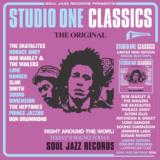
Soul Jazz Records' Studio One Showcase 45 features a roll call of classic Studio One
reggae legends including Horace Andy, Cornell Campbell, Bob Marley and The
Wailers, Jackie Mittoo, The Heptones, The Skatalites and more – seminal reggae
artists who all launched their careers at the legendary Studio One label.
The album was previously only ever released as a long-deleted limited-edition
seven-inch box set for Record Store Day. This album has now been expanded into a
super double-vinyl album edition as well as first time on CD, with both featuring a
massive eight bonus tracks of wicked Studio One classics and rarities. The album
also comes with newly commissioned sleeve and track notes by Noel Hawks.
Featuring seminal cuts like Bob Marley and The Wailer's original version of 'One
Love', Freddie McGregor's take on the classic 'Beat Down Babylon', Judah Eskender
Tafari's re-version of 'Danger In Your Eyes' plus more from The Skatalites, Lone
Ranger, Johnny Osbourne and more!
Released in 1982 by Rita Marley Music, the label owned by Bob Marley's wife, Rita Marley, CASUAL-T's "Prescriptions For Love" is a record shrouded in mystery. Its mellow feeling, charming visuals, and extreme rarity due to limited pressing make it a coveted item among diggers, representing modern soul and rare groove.
The album is packed with the essence of early '80s US modern soul and disco, starting with the invigorating opening number "Don't Play With Sparks" (M1), reminiscent of EW&F with its horn and chorus work. Other highlights include the disco-infused groove of "Hands Off" (M2), the breezy "All Out Of Breath" (M3), and the urban soul track "Thank You For Your Love" (M7) with its quintessential '80s synthesizer work. The only reggae-style track from Rita Marley Music, "I Want You Here With Me" (M8), features sophisticated chorus work, leading into the sweet soul tracks "Let's Hold On" (M9) and "You Never Walk Alone" (M10) that conclude the album.
- A1: Destroy All Neighbors
- A2: Always Hallways
- A3: Rocking In The 5Th Dimension
- A4: Bob Marley & Me
- A5: Vlad's Hallway Now / Bitch / Sex Maniac / Kevin Bacon Haircut / Hemifacial Spasm
- A6: My Epic Nightmare Life In Montage / My Girlfriend Has Sleep Apnea & There's A Vlad In My Bed
- A7: Get Out Of My Kitchen
- A8: Gloss Bounce / Euro Trip '69 / Pumping Jeremy Irons / Consensual Hand Puppet In Thump Country / Penetrate / The Gored Torso (Decapitation Blues)
- A9: Swig's Advice On Corpse Disposal
- A10: Make The Body Disappear
- A11: Dirty Boys
- A12: I Am God, Destroyer Of Vlad
- A13: I Live!
- A14: One Hot Lick Iii: Let's Go Incinerate A Body
- A15: Meating Your Heroes
- A16: Stupid Willie Brown
- A17: Dragging Plastic Wrapped Bodies From A Van Music
- A18: Mona Lisa Grimace
- A19: Cool Dawn Dimension Shirt Theme / Fuck All Night Music / Sticky Pleather Jonah Jams
- B1: Progressive Rock Is Life
- B2: Epitaph For The Fallen Circus: Demo
- B3: Requiem For Pig Guy
- B4: My Girlfriend Has Just Realized That I'm A Very Violent Murderer Person / A Not So Beautiful Mind / Ode To Generic Investigative Tv Journalism Music
- B5: Eleanor
- B6: The Neon Rainbow
- B7: The Mythology Of Madness, Call To Arms
- B8: Caleb Bang Jansen Has A Gun / Cops Ruin Everything / The Ex Girlfriend Suddenly Appears To Witness Your Potential Suicide By Cop
- B9: A Big Bear Story
- B10: Epitaph For The Fallen Circus
- B11: You Mean Everything To Me Even If I've Scarred You For Life Since You Witnessed A Horrible Crime (A Love Song)
- B12: Free - Performed By Man Man
Destroy All Neighbors is a twisted splatter-comedy about a deranged journey of self-discovery full of goopy practical FX, a well-known ensemble cast, and LOTS of blood. William Brown (Jonah Ray Rodrigues), is a neurotic, self-absorbed musician determined to finish his prog-rock magnum opus, facing a creative roadblock in the form of a noisy and grotesque neighbor named Vlad (Alex Winter).
He finally works up the nerve to demand that Vlad keep it down, and William inadvertently decapitates him. But, while attempting to cover up one murder, William's accidental reign of terror causes victims to pile up and become undead corpses who torment and create more bloody detours on his road to prog-rock Valhalla. The soundtrack is an infectious slice of progressive rock cues, EDM freakouts, 80’s synth pop and so much more by the brilliant Ryan Kattner & Brett Morris. Released in conjunction with SUB POP Records, and features an original song by MAN MAN, artwork by Johnny Dombrowski, and pressed on coloured vinyl.
- Isn't She Lovely (Stevie Wonder)
- Wonderwall (Noel Gallagher)
- Ben (Donald Black And Walter Scharf)
- Message In A Bottle (Gordon Summer)
- Smells Like Teen Spirit (Kurt Cobain, Dave Grohl, Krist
- Here, There And Everywhere (John Lennon And Paul Mccart
- Another One Bites The Dust (John Deacon)
- Redemption Song (Bob Marley)
When a musician with the extreme technique, versatility, and immense sensitivity of Gabriel Grossi sets out to rediscover new paths for songs deeply ingrained in the emotional memory of diverse generations, one thing is certain: beyond surprising the audience, he can easily enchant the original artists themselves by revealing musical possibilities they never imagined. That"s exactly what happens when we listen to the Gabriel Grossi Quartet"s album "Re-Disc-Cover" - each track brings a fresh surprise. Internationally recognised as one of the greatest harmonica players in the world, Gabriel and his quartet take us on a completely original journey through absolute classics of pop rock from the "60s, "70s, "80s, and "90s, reinventing true gems of universal music. "Re-Disc-Cover" unfolds across various "R"s": reinterpretation, reinvention, rediscovery, remembering, resignification, reharmonization, rearrangement.
J. Written has been preparing for this moment almost his entire life. From early on he has been writing. You might even say he was obsessed with writing. It did not matter what he was writing, he just felt compelled to write. Hence the name Written.
Born on January 18, 1994 (yes, he will gladly accept birthday greetings!) in the Payne Land neighborhood of Kingston, Jamaica, J. Written entered this world as Jason Rasheed Wright. Due to certain financial instability in his family they had moved around a bit to various locations within the Kingston area. His parents, wanting him to be safe, encouraged him to be at home with his two sisters and to occupy his time at home he began to write. And write and write. And write some more.
He would write daily journals and even create newspaper articles written on the walls of their home. This creative outlet gave way to writing poems, speeches and essays while a student in high school. At 16 he started a dance trope known as the ACEZ dancers who were quite popular around Kingston.
He was then drawn to music around age 18 and began to create beats at a studio in Trench Town. He became part of the Trench Town community and is still very connected with the people there. His drive to write songs became his new medium for expressing himself. And this has led to him being recorded for various producers and included in the song “Fear To Understand” with Albarosie. Other songs and music videos followed and J. Written was brought to the attention of reggae producer Doctor Dread.
“When I first saw a video with J. Written and began to listen to more of his songs I knew this was a unique artist with a special vibe and a knack for writing interesting songs” says Doctor Dread. So he came to Jamaica and produced a first album “Kaleidoscope” for J. Written which is due for release in late 2024.
“My mission is to be active and positive. Not to confirm with the norm. To sometimes make people feel uncomfortable with issues impacting our community and society at large. To give thought to what is happening in the world and presently around us”. J. Written has made his intentions clear and it is revealed through his music.
And of special note is that J. Written has a role in the Bob Marley movie “One Love” as Junior Braithwaite, a member of the early Wailers in the scene when the young Wailers first come to audition for Coxsone Dodd of Studio One.
The future is bright for J. Written. He is creating music and lyrics as a constant in his life. And now the world will be able to share in his vision of creative expression.
Featuring 16 new songs, "HOLD YOUR JOY", marks his first album of new music since "SOULSUN" in 2017. Damien’s song writing career spans more than twenty-five years and has seen him perform with luminaries such as Sinead O’Connor, John Grant, Imelda May, The Dubliners, Lisa O’Neil, Maverick Sabre as well as supporting the likes of Bob Dylan, Bruce Springsteen, Morrissey and Willie Nelson on tour. Over the course of his remarkable career, Damien has established himself as one of Ireland’s most beloved artists. His work is known for his truthful and emotive lyrics, celebrating how music can move us all. Drawing influence from the likes of Bob Marley, Christy Moore, Luke Kelly and Shane MacGowan, the chart-topping singer songwriter has crafted a unique, soulful sound, centred around his powerful voice. In 2023, Damien performed 20 critically acclaimed sold out shows at the Abbey Theatre with “Tales from the Holywell’, where we saw one of Ireland’s great musical storytellers perform onstage like never before. Also in 2023, Damien’s second album ‘Seize The Day’, went on to top the Irish album charts, twenty years after release, following it’s reissue on vinyl. This marked Damien’s third Irish number one album to-date. As with his legendary Vicar Street Christmas shows, Damien’s summer evening shows in Dublin’s Iveagh Gardens and St Patrick’s day show in London have become unmissable events on the live calendar. Specialist promo & marketing activity.
The Best of The Wailers’ was the debut album proper by Bob Marley & The Wailers, recorded for Leslie Kong - Jamaica’s most successful record producer of all time. These tapes were restored by Nick Robbins in London and assessed against all previous ‘The Best of The Wailers’ releases on vinyl.
« A Fantastic mixture of Brakka, Reggae & Afrobeat Recorded between 1980 and 1984 from the underground Afropean boxer Mushapata »
“Saba-Saba Fighting” or fighting for peace, is the message that Mushapata, a legend of the African reggae underground scene in Paris with an extraordinary destiny, has fought for all his life.
Born in Bukavu, a city nowadays located in the Democratic Republic of Congo at the border with Burundi, Mushapata arrived in France at the end of the 1970s to pursue his career as a boxer. A few years later, revolted by the professional sports industry, he became a personal protection agent on the advice of his manager. He escorted many celebrities among whom Bob Marley during his legendary French tour of 1980. This encounter awakened the musician hidden behind the boxing champion. Mushapata had stepped out of the ring but he kept fighting with music, lyrics and his band Saba-Saba Fighting.
Ignored by the record labels of the time, his first self-produced recordings reveal a rough mix of lo-fi reggae, afrobeat rhythms accompanied by a brass section close to Free jazz. The nonchalant sounding voices of Mushapata and Tshayi complete this explosive cocktail and carry, in Swahili language, the Pan-African ideas of Lumumba and other great figures of African-American struggles.
This maxi single, conceived as a mini-compilation tribute, includes 4 titles from the first two albums recorded between 1980 and 1984. Limited edition!
- Otis Gayle - What You Won’t Do For Love (2.28)
- Earl Sixteen - Love Is A Feeling (2.40)
- Alton Ellis - Back To Africa (5.13)
- Prince Jazzbo - Apollo 16 (3.32)
- Johnny Osbourne - Eternal Peace (2.52)
- Errol Dunkley - Don’t Do It (2.11)
- Omega - Bounty Hunter (2.42)
- Noel Bailey And Sound Dimension - Wiggles Diggles (3.12)
- Freddie Mcgregor - I Am Ready (2.42)
- Prince Jazzbo - Imperial I (3.17)
- Jackie Mittoo - Lovers Rock (7.33)
- Devon Russell - Swing And Dine (3.25)
- Sugar Minott - Guidance (6.21)
- Dolly Man - Trigger Happy (3.15)
- Nana Mclean - A Little Love (2.51)
- Tyrone Taylor - Rightful Rebel (4.42)
- Wailing Souls - All Alone (2.28)
- Sugar Minott - Revelation (2.51)
Brand new collection of Studio One killer tunes, focussing on the late 70s, 80s and beyond.
Since the early 1960s Clement ‘Sir Coxsone’ Dodd had established Studio One as the unparalleled leader in reggae music in the world. In the years that followed he established the careers of countless reggae legends – Bob Marley & The Wailers, Marcia Griffiths, The Skatalites, Horace Andy, Dennis Brown, Burning Spear and many more.
From its inception Studio One had been at the forefront of every major development in reggae music – ska, rocksteady, roots, DJ, dub and, starting in the second half of the 1970s, dancehall.
Having attained such great success, by the late 1970s Clement Dodd was free to enjoy Studio One’s now firmly established supremacy in reggae music. He released a series of stunning new albums at the end of the decade by Sugar Minott, Johnny Osbourne, Freddie McGregor and others that rode the wave of dancehall and set the path of Studio One’s output for the following 25 years.
During this period, long-established artists such as Alton Ellis, Jackie Mittoo and others returned to the label, recording some of their most creatively satisfying albums with new music that both celebrated the classic sound of Studio One while continuing to experiment, push boundaries and look forward to the future.
This release celebrates this sometimes overlooked golden era at Studio One in the 1970s,1980s and beyond.
About this book
The growth of the Jamaican recording industry…
Records have played an integral part in the history of Jamaican music and the importance of making records, as opposed to making music, can never be overstated. These are the stories, told through first-hand accounts wherever possible, of the men and women… manufacturers, musicians, singers, deejays, arrangers and record producers… who made the records and who made the sound of reggae available worldwide.
“Clearly this series is set to become the standard reference work on Jamaican music, such is its dizzying depths of research and the vast amount of oral evidence it has compiled from many years of interviews alongside critical quotes from recognised existing literature.”
Steve Barker
The Wire
"In this third volume the authors skillfully weave interview material into its narrative. Among other histories, it examines the work of Lee ‘Scratch’ Perry, who transcended genre and became author of his own productions and, in the process, influenced the development of the major global artist Bob Marley. It examines the development of dub, the studio process that transformed the music, and in doing so exerted yet another influence on popular music on the world scale. It also examines the work of Lloyd 'King Jammy' James who utilised digital technological innovation to become a champion of sound system and record production and, thus, became the Eighties equivalent of the earlier innovator Clement ‘Coxsone’ Dodd.
All this, and much more, is told by many of the protagonists who created the phenomenon of reggae as a cultural force that has travelled far beyond the confines of Jamaica.”
Steve Barrow
Co-Author of “Reggae The Rough Guide”
“Noel Hawks’ & Jah Floyd’s third book on the history of the Jamaican recording business is another triumph. As with the first two volumes, they seamlessly weave quotes and recollections from the key players into the narrative, giving the reader a unique, and genuine, insight into the development of Jamaican music and the business of selling it. An essential read for anyone interested in ska or reggae and for all music lovers.”
Chris Lane
Fashion Records
“I can confidently say, without fear of contradiction, that the final part of Noel Hawks’ & Jah Floyd’s trilogy is every bit as meticulously researched and mentally stimulating as the first two volumes. It may be that no history of Jamaican music can ever be totally definitive given how many of reggae’s key singers, players and producers had already left Earth before anyone had the opportunity to get their takes on how it evolved. But, as of now, you will not find a more accomplished telling of the tale than that which is presented across the three volumes of ‘Jamaican Recordings’… an Order of Distinction-worthy accomplishment that should henceforth become an essential component of everyone’s reggae library.”
Tony Rounce
Ace Records Ltd
Erste Vinylreissue eines Klassikers aus der On-U Sound-Frühphase: Das 1982er Solodebütalbum der jamaikanischen Saxofonlegende "Deadly" Headley Bennett, der seit den 1960ern Stars wie Bob Marley und Alton Ellis begleitete, mit Produzenten wie Coxsone Dodd und Bunny Lee arbeitete und eine Schlüsselrolle in Bands wie Sound Dimension, Aggrovators, Revolutionaries und Soul Syndicate spielte. Aufgenommen mit Musikern von Creation Rebel und Roots Radics, Adrian Sherwood am Mischpult und Bim Sherman on vocals auf 3 Tracks. Die CD erschien erstmals 1999 und enthält hier zwei unveröffentlichte Bonustracks. Das Vinyl wurde komplett neu geschnitten. Beide Formate kommen mit ausführlichen Linernotes und rarem Fotomaterial.
This is the very first reissue of the much in demand double sided killer single released in 1970 on the Upsetter label. Both tracks were produced by Lee Perry.
The A side is a beautiful yet wicked cover of LET IT BE by the Beatles, produced by Lee Perry and performed by the Soulettes.
The B side is BIG DOG BLOXIE, an even whackier version of the A side by Lee Perry.
ABOUT THE SOULETTES:
The Soulettes initially comprised Alpharita Anderson, born in Cuba, her male cousin Constantine Walker and her school friend Marlene Gifford and started recording as backing vocalists at Studio One from 1964 including the first Wailing Wailers’ hit “Simmer Down”. They also backed Lee Perry on a series of dirty songs such as ‘Rub & Squeeze’ and ‘Doctor Dick’. Under their own name The Soulettes were moderately successful have a string of minor hits such as ‘Opportunity Knocks’ and the lovely ‘Friends And Lovers’. Alpharita married Marley in in 1966 and the Soulettes disbanded. In 1969, Rita Marley re-formed the Soulettes with Nora Dean (later replaced by Hortense Lewis) and Cecile Campbell, Cornel’s sister.
The new line-up with Nora Dean and Cecile Cornell started working Lee Scratch Perry for a couple of songs including the outstanding cover of the Beatles’ ‘Let It Be’ which became their main hit in 1970. Following the group’s demise around 1973, Rita joined Marcia Griffiths and Judy Mowatt to form the I-Threes whom became the de facto female backing trio for Bob Marley…
Ken Boothe released his album Blood Brothers in 1976 but was picked up by Trojan Records two years later to be distributed internationally. The album features some of his more laid-back and mellow style, as can be heard on “Walk Away From Love”, “Mamy Blue” and “Love Don’t Love Nobody”. Blood Brothers also features several cover versions of Bob Marley Classics, including “No Woman No Cry” and “I Shot The Sheriff”.
Blood Brothers is being reissued for the first time since 1978 and is available as a limited edition of 500 individually numbered copies on orange coloured vinyl
The Congos were formed by Cedric Myton (born 1947 St Catherine, Jamaica) and Roydel ‘Roy’ Johnson (born 1943 Hanover, Jamaica), around the mid-seventies, a time when the Rasta message coming out of Kingston and other pockets of the Jamaican Island was at its most prominent. Cedric Myton’s singing career began back in the rocksteady era in Reggae’s musical story.
He formed the ‘Tartans’ group taking lead vocal duties alongside Devon Russell, Prince Lincoln Thompson and Lindbergh Lewis. They cut ‘Dance All Night’ (1967) and ‘Coming On Strong’ (1968). The line-up reduced to a two piece, Cedric and Devon Russell, when tracks like ‘What a Sin Thing’ and ‘Short Up Dress’ were cut. This line-up became the Royal Rasses, Cedric formed The Congos, on meeting Roydel Johnson. Roydel previously sang as a member of Ras Michael and the Sons of Negas, cutting such tracks as ’Go To Zion’ (1973). As we can see Cedric’s and Roydel’s Rasta roots were firmly in place by the time they had formed The Congos sometimes called ‘The Congoes’.
The Congos possess what all bands look for,that unique sound that draws the listener to them.Lead singer Cedric Myton’s style and phasing, with his distinctive Falsetto voice makes this just the case.Built on a foundation of classic rhythms and with the aid of then Producer, Lee Perry, the groups statement of intent was laid down with one succinct message. The Congos mighty 1977 ‘Heart of the Congos’ album, is quite simply one of the best reggae albums ever recorded.
Producer Lee Perry had wanted to record a classic Jamaican vocal group in his newly built Black Ark Studio. The voice of Watty Burnett was added at the time to cover baritone vocal duties. The studio after various changes in equipment etc. was finally finding its way. A sound built in Lee Perry’s back yard in Cardiff Crescent, Washington Gardens, Kingston, but existing until then in Mr Lee Perry’s mind. The album they cut would be the defining group release to come out of The Black Ark studios, when the vital elements, vibes, musicians, songs and singing would gel to form ‘Heart Of The Congos’. Come the time of it’s release 1977, Lee Perry was in dispute with Island Records and opted to release the record on his own ‘Black Art’ label. Without the high-profile push of a major label, the record undersold and caused a split between producer and band. Under different circumstances maybe this album would be sitting in thousands of homes alongside the Bob Marley, Culture, Burning Spear releases. Cedric Myton went on to release albums with the French arm of the CBS label and Roy Johnson records and tours as Congo Ashanti Roy.
Cedric Myton the central force carries on the mantle of the Congos and we at Kingston Sounds are proud to pick up the story with another set of vocal statements, which sees Cedric cut some of his finest tunes. Helped along by another reggae legend Brent Dowe, lead singer of the Melodians (Rivers of Babylon), over some classic 1970’s rhythms. Yet again we find that magic formula of strong statements working alongside classic rhythms making the balance work. The Rasta message is still strong on modern classics like ‘King Rastafari Is His Name’, ‘Rasta Congo Man’ and the injustices of the world dissected in tunes ‘Some A Thief’, ‘Watch & Pray’ and the prophetical, ‘Citizen Of The World’.
Once touched by magic it does not fade away, but resurfaces as it has with what we believe to be some of the Congos most heartfelt and meaningful set of songs ...... Let the feast begin.
As many artists before them (Gainsbourg, Snoop Dogg, Lavilliers, Sinead O'Connor…), DA BREAK embarques us to revisit their best tracks “Inna Reggae Vibe”, and invites us listeners to rediscover their repertoire with a more than ever “Roots” sound. An enchanted break that will seduce the early fans as well as reggae connoisseurs; A suspended moment with a band on their new musical quest, assuming a different side of their DNA.
The idea of an “old school reggae auto remix” had bloomed for quite a long time, with the will to dive into the 60s & 70s sound esthetics and to pay tribute to this reggae culture - this unique cultural temple they love and respect so much.
DA BREAK concerts are always rich and intense musical moments, thanks to a crew of solid musicians, so the choice to record LIVE, all in the same room, was quite obvious; with “vintage” instruments and microphones, to enjoy this warm and authentic sonic texture. The result is a “Roots & Rock Steady” album without electronics, leaning towards sweaty and rough Jazz, tropical Soul or even Gospel with sand between the toes… definitely Reggae!
DA BREAK remains DA BREAK, with its inner light, this time looking towards the Caribbean musical culture.
Given the historical influence of Jamaican Sound Systems on the American Block Parties, it seemed logical for DA BREAK to pay tribute to the artists that influenced them since day one, and still do today: Bob Marley & the Wailers, Jimmy Cliff. Culture, Toots & the Maytals, Burning Spears, The Gladiators, YellowMan, Israel Vibrations, LKJ & Mad Professor, UB40, Shaka Demus, Peter Tosh... Just to name a few.