- A1: Christopher Cross Ride Like The Wind
- A2: Average White Band Whatcha Gonna Do For Me
- A3: The Pointer Sisters He’s So Shy
- A4: Bobby Caldwell What You Won’t Do For Love
- A5: Maxus Nobody’s Business
- A6: Lauren Wood Save The Man
- B1: Toto Africa
- B2: Robbie Dupree Steal Away
- B3: George Benson Turn Your Love Around
- B4: Stephen Bishop Save It For A Rainy Day
- B5: Carly Simon It Keeps You Runnin’
- B6: Bill Champlin Keys To The Kingdom
- C1: Michael Sembello Lay Back (Menage À Trois)
- C2: Maria Muldaur Open Your Eyes
- C3: Paul Anka Walk A Fine Line
- C4: Little Feat Red Streamliner
- C5: Robert Palmer Give Me An Inch
- C6: Lonette Mckee Maybe There Are Reasons
- D1: Michael Mcdonald I Keep Forgettin’ (Every Time You're Near)
- D2: Olivia Newton-John Magic
- D3: Diane Tell Tes Yeux
- D4: Kenny Rankin Creepin’
- D5: Pages The Sailor’s Song
- D6: Christopher Cross Sailing
Cerca:bobby b
Plush, the 1982 studio album by the Eighties synth-boogie band Plush, is a standout in the genre. The band, consisting of Siedah Garrett, Tony Phillips, and Ambrose Price, was known for their smooth blend of R&B, funk, and synth-driven melodies. Garrett, who later gained fame as a solo artist and songwriter, brought a distinctive vocal presence to the band. Not long after the band broke up, she was discovered by Michael Jackson, for who she later provided backing vocals and co-wrote ""Man In The Mirror"" with. The album was produced by Bobby Watson, René Moore and Angela Winbush. It features catchy tracks like ""Free and Easy"" and ""We’ve Got the Love,"" showcasing their polished production and soulful harmonies. Despite not achieving major commercial success, Plush has garnered a cult following for its authentic early Eighties sound. It's a significant work within the disco boogie genre, reflecting the transitional period of early Eighties music and is one of the rare and sought-after albums from that era. Plush is available on coloured vinyl for the first time as a limited edition of 500 copies on red coloured vinyl and includes an insert.
One look at the axe-wielding marauder (drawn by famed heavy metal illustrator Edward Repka) on the front of this album and you know it’s not for the faint of heart. Canadian metal band 3 Inches of Blood’s musical attack (an appropriate term indeed) featured a unique, dual lead vocal line-up of Cam Pipes on “clean” vocals and Jamie Hooper on “screaming” vocals, with bludgeoning guitars (okay, axes) provided by Sunny Dhak and Bobby Froese (Dhak, Froese, and drummer Matt Wood left after this album to form Pride Tiger). Though this record came out in 2004 on the Roadrunner label, it wears its ‘80s metal allegiances on its sleeve, harkening back to the vein-popping intensity of vintage Judas Priest and Accept. Remastered on its 20th anniversary for an orange and black “ashen dawn” vinyl pressing, with a full-color inner sleeve sporting lyrics. Storm the castle!
Paul Weller – der „Godfather of Brit-Pop“ ist zurück!
„66“ heißt sein neues und mittlerweile 17. Studioalbum, welches zu seinem 66. Geburtstag erscheint. Das
Cover wurde von Sir Peter Blake gestaltet. Der ehemalige Sänger und Gitarrist von „The Jam“ zeigt auf
dem Album seine reflektierte Seite, mit viel Melancholie und dennoch auch einem positiven Kern. Die
12 Songs auf ”66” wurden im Laufe von drei Jahren in Wellers Black Barn Studio mit einer Reihe von
Gastmusikern (Suggs, Noel Gallagher, Bobby Gillespie, Erland Cooper, Duo White Label, Hannah Peel,
Christophe Vaillant, Say She She, Dr Robert, Richard Hawley, Steve Brooks, Max Beesley) aufgenommen.
Paul Weller wurde bisher mit 4 BRIT – Awards ausgezeichnet, einen für „Outstanding Contribution to
British Music“
- A1: Mercy (Smoove Remix) - The Third Degree
- A2: In The Morning (Excl ) - Say She She
- A3: Somebody Help Me Out (Boogie Back Radio Mix) - Beggar & Co #
- A4: Rendezvous - Sai Galaxy Feat Vanessa Baker
- B1: Starlight (Radio) - Dave Lee & Omar
- B2: Lyb (Love You Better) (Remix) - Kylie Auldist
- B3: I Don't Mind (Mr Lex Trunk Of Funk Remix) - Lexsoul Dancemachine
- B4: I Thought It Was You (Live) - Sunlightsquare
- B5: Watchu Want (Trunk Of Funk Vocal Version) - The New Mastersounds
- C1: God's In Control - The Harlem Gospel Travelers
- C2: Ain't No Good (But It's Good Enough For Me) - Sister Cookie Feat Spencer Evoy
- C3: Gonna Lift You Up - Sugaray Rayford
- C4: Shake (2022) - Kaz Hawkins
- C5: Big Time - The Nextmen Feat Kiko
- C6: Prophet - La Rochelle Band
- D1: Power (A Skillz Remix) - The Niceguys Feat. Bobby Saint
- D2: Trust Me - Sly Johnson
- D3: Day In Day Out - Cotonete Feat Leron Thomas
- D4: Tarzan - Roy Ayers
In Craig Charles' eigenen Worten enthält "The Craig Charles Trunk Of Funk Volume 3" "19 der feinsten Stücke von super-slinky Soul, boot shaking Blues und Boogie, schillernde Discosongs und feine funky rump shakers!"
Als Dichter, Schauspieler, Radio- und Fernsehstar (u. a. in der Science-Fiction-Comedy "Red Dwarf" und der Seifenoper "Coronation Street") ist er seit seiner Jugend berühmt, und seit über 22 Jahren predigt er in seinen weltberühmten BBC 6 Music-Wochenend- und Tagesshows für den guten Groove, legt in Clubs und auf Festivals rund um den Globus auf - sein Ruf als einer der profiliertesten Botschafter für alles, was Soul und Funky ist, ist unbestritten.
Craigs neueste Kollektion mischt Up-Tempo-Club-Klassiker mit frischer Musik von der Creme de la Creme der zeitgenössischen Soul- und Funk-Szene mit einer Prise Oldschool-Klassikern. Das Ergebnis ist so, als ob Craig persönlich als DJ auflegen würde - eine Mischung aus modernem und klassischem Soul, Disco, Deep Funk und beatlastigem Rhythm and Blues.
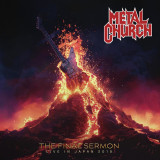
Alles endet. Selbst in den legendären Gefilden des Heavy Metal, wo Mythen und Legenden tagtäglich in die
alltägliche Realität eindringen. Mitglieder und Fans der amerikanischen Metal-Giganten Metal Church wurden
sich dessen schmerzlich bewusst, als sie im Juli 2021 ihren legendären Sänger und Frontmann Mike Howe
verloren. Von 1988 bis 1994 und noch einmal ab 2015 war Howe der Frontmann einer der meistgeliebten und
geschätzten Metal-Institutionen Amerikas und nahm bahnbrechende und essentielle Werke wie "Blessing in
Disguise" und "The Human Factor" auf.
Mike Howe war ein herausragender Sänger, ein charismatischer Frontmann und für viele die Stimme des
amerikanischen Heavy Metal. Am 26. Juli 2021 starb Howe im Alter von 55 Jahren in seinem Haus in Eureka,
Kalifornien. Die Welt hat an diesem Tag eine einzigartige Stimme und ein einzigartiges Talent verloren. Sein
Vermächtnis wird natürlich weiterleben, in seinen vielen Freunden, Anhängern und Fans, in seinen klassischen
Alben und in den Erinnerungen seiner Bandkollegen. Zum dritten Jahrestag seines tragischen Todes wird
Reaper Entertainment seinen eigenen Beitrag zum Gedenkaltar einer wahren Ikone leisten: ein Live-Album mit
dem Titel "The Final Sermon", aufgenommen bei seinen letzten Auftritten - am 24. und 25. August 2019 im Club
Citta in Kawasaki, Japan. "The Final Sermon" zeigt nicht nur Howe auf seinem stimmlichen Höhepunkt, der
singt, schreit und schmettert, als gäbe es buchstäblich kein Morgen, sondern auch eine Band in bestechender
Form. Thrash-Gitarren-Pionier und -Gründer Kurdt Vanderhoof, Gitarrist Rick Van Zandt, Bassist Steve Unger,
Schlagzeuger Stet Howland und Live-Bassist Bobby Ferkovich waren in diesen zwei langen Nächten in Japan in
Hochform, eine eingespielte Metal-Maschine, die zu allem bereit war. 14 Songs unterstreichen ihren Status als
Quintessenz amerikanischer Metal-Overlords, eine Band, die musikalisch alle Register zieht und gleichzeitig eine
politische, sozial bewusste, philosophische Denkweise verkörpert. Aktuelle Knaller wie das furiose
"Damned if you do", Klassiker wie die bedrohliche Riffwand von "Fake Healer" und frühe Klassiker wie "Beyond
the Black" zeigen eine Band, die sich ihrer Vergangenheit bewusst und stolz darauf ist, sich aber in der
Gegenwart wohl fühlt. Dies ist keine Veteranengruppe, die mit vergangenem Ruhm prahlt, sondern eine Band,
die auch vier Jahrzehnte nach ihrer Karriere noch ein hungriges und gefährliches Wolfsrudel ist.
Das ist das Schöne an Metal Church. Die Band wurde 1980 in der aufkeimenden Metalszene der Bay Area
gegründet und ließ sogar Lars Ulrich für den Posten des Schlagzeugers vorspielen, bevor er die Band verließ, um
eine andere Bay Area-Band zu gründen. Ihr Debütalbum "Metal Church" (1984) ist einer der großen Klassiker
des amerikanischen Heavy Metal und begründete eine internationale Karriere. Die Band spielte mit allen
großen Vier des Thrash (Metallica, Slayer, Megadeth, Anthrax), trat bei MTVs "Headbanger's Ball" auf und
prägte die amerikanische Metal-Landschaft wie keine andere. Die Band ist auch heute noch quicklebendig, aber
die legendäre Ära der achtziger und frühen neunziger Jahre wird durch die Spuren, die Sänger Mike Howe in
der Band hinterlassen hat, nie übertroffen werden: "The Final Sermon" ist der lebende Beweis dafür, dass, auch
wenn alle Idole irgendwann fallen, ihr Vermächtnis weiterlebt. Durch uns alle.
Alles endet. Selbst in den legendären Gefilden des Heavy Metal, wo Mythen und Legenden tagtäglich in die
alltägliche Realität eindringen. Mitglieder und Fans der amerikanischen Metal-Giganten Metal Church wurden
sich dessen schmerzlich bewusst, als sie im Juli 2021 ihren legendären Sänger und Frontmann Mike Howe
verloren. Von 1988 bis 1994 und noch einmal ab 2015 war Howe der Frontmann einer der meistgeliebten und
geschätzten Metal-Institutionen Amerikas und nahm bahnbrechende und essentielle Werke wie "Blessing in
Disguise" und "The Human Factor" auf.
Mike Howe war ein herausragender Sänger, ein charismatischer Frontmann und für viele die Stimme des
amerikanischen Heavy Metal. Am 26. Juli 2021 starb Howe im Alter von 55 Jahren in seinem Haus in Eureka,
Kalifornien. Die Welt hat an diesem Tag eine einzigartige Stimme und ein einzigartiges Talent verloren. Sein
Vermächtnis wird natürlich weiterleben, in seinen vielen Freunden, Anhängern und Fans, in seinen klassischen
Alben und in den Erinnerungen seiner Bandkollegen. Zum dritten Jahrestag seines tragischen Todes wird
Reaper Entertainment seinen eigenen Beitrag zum Gedenkaltar einer wahren Ikone leisten: ein Live-Album mit
dem Titel "The Final Sermon", aufgenommen bei seinen letzten Auftritten - am 24. und 25. August 2019 im Club
Citta in Kawasaki, Japan. "The Final Sermon" zeigt nicht nur Howe auf seinem stimmlichen Höhepunkt, der
singt, schreit und schmettert, als gäbe es buchstäblich kein Morgen, sondern auch eine Band in bestechender
Form. Thrash-Gitarren-Pionier und -Gründer Kurdt Vanderhoof, Gitarrist Rick Van Zandt, Bassist Steve Unger,
Schlagzeuger Stet Howland und Live-Bassist Bobby Ferkovich waren in diesen zwei langen Nächten in Japan in
Hochform, eine eingespielte Metal-Maschine, die zu allem bereit war. 14 Songs unterstreichen ihren Status als
Quintessenz amerikanischer Metal-Overlords, eine Band, die musikalisch alle Register zieht und gleichzeitig eine
politische, sozial bewusste, philosophische Denkweise verkörpert. Aktuelle Knaller wie das furiose
"Damned if you do", Klassiker wie die bedrohliche Riffwand von "Fake Healer" und frühe Klassiker wie "Beyond
the Black" zeigen eine Band, die sich ihrer Vergangenheit bewusst und stolz darauf ist, sich aber in der
Gegenwart wohl fühlt. Dies ist keine Veteranengruppe, die mit vergangenem Ruhm prahlt, sondern eine Band,
die auch vier Jahrzehnte nach ihrer Karriere noch ein hungriges und gefährliches Wolfsrudel ist.
Das ist das Schöne an Metal Church. Die Band wurde 1980 in der aufkeimenden Metalszene der Bay Area
gegründet und ließ sogar Lars Ulrich für den Posten des Schlagzeugers vorspielen, bevor er die Band verließ, um
eine andere Bay Area-Band zu gründen. Ihr Debütalbum "Metal Church" (1984) ist einer der großen Klassiker
des amerikanischen Heavy Metal und begründete eine internationale Karriere. Die Band spielte mit allen
großen Vier des Thrash (Metallica, Slayer, Megadeth, Anthrax), trat bei MTVs "Headbanger's Ball" auf und
prägte die amerikanische Metal-Landschaft wie keine andere. Die Band ist auch heute noch quicklebendig, aber
die legendäre Ära der achtziger und frühen neunziger Jahre wird durch die Spuren, die Sänger Mike Howe in
der Band hinterlassen hat, nie übertroffen werden: "The Final Sermon" ist der lebende Beweis dafür, dass, auch
wenn alle Idole irgendwann fallen, ihr Vermächtnis weiterlebt. Durch uns alle.
The Entertainers, a South Carolina soul band led by singer Earl Dukins, released their first single 'Livin' For The Summer' in 1980, which became a smash hit, and their first album in 1983. The band's first album, released in 1983, was reissued for the first time with an obi. The album features a selection of well-chosen covers, including Chai Lights' 'Hot On A Thang', Bobby Patterson's 'I'm in love with you', Turley Richards' 'I won't cry anymore' and 'What are we gonna do', as well as the aforementioned 'Livin' For The Summer', the gorgeous string-tinged middle tune 'I'm Leavin' and original songs, all of which are full of modern soul with an exhilarating blue-eyed soul - AOR feel!
A song is a song until it isn't, until it's pushed to its limits and beyond to become harder, faster and more dissonant. The music on Oneida's 17th full-length album, Expensive Air, all started as tightly structured, melodic rock songs _ very much in line with the non-stop bangers of Success from 2022 _ but along the way, they changed. Bobby Matador sketched the structures of these songs from his home base in Boston, then sent the demos to Oneida's New York contingent: Kid Millions, Hanoi Jane, Shahin Motia and Barry London. "We were working out the songs in New York without Bobby. We would start out riding the riffs, and then Shahin and Jane would add wild, out-of-tune licks," said Kid Millions. "It seemed so perfect." Oneida has long straddled gray-area boundaries between the NYC punk/psych/rock world and the art/experimental world, playing at gritty rock clubs and elevated cultural institutions, including the Guggenheim, MoMA PS1, ICA London, MassMOCA and the Knoxville Museum of Art. The band has been known for extended live improvisational performances, collaborating onstage with Mike Watt, members of Flaming Lips, Portishead, Boredoms, Yo La Tengo, Dead C, Godspeed You! Black Emperor, and many others. Oneida's members juggle a wide variety of other music projects. Drummer Kid Millions has played with Spiritualized, Royal Trux and Boredoms and releases solo compositions under his own name and as Man Forever. Shahin Motia founded noise - punk's Ex-Models and currently plays in Knyfe Hits. Kid and Fat Bobby perform and release music as People of the North, and Bobby's outside projects New Pope and Nurse & Soldier each released new albums in 2023. Oneida's previous album, Success, came after a four-year hiatus, unleashing the band's pent up creative energy in a set of catchy, accessible, nearly poppy songs. Song structure remained important in the run up towards Expensive Air, but so was the instinctual, improvisatory interplay that has always been a part of Oneida's process. The band had been playing live together for two years, sharpening its attack and pushing its songs to go harder, faster and wilder. Oneida recorded Expensive Air in three sessions scattered across 2023, convening at Colin Marston's Menegroth The Thousand Caves studio in Woodhaven, Queens, whenever they had a few songs ready. Marston and the band mixed the album in February 2024 at Menegroth. The new album expands on what Oneida achieved with Success, but also pushes past it, laying down irresistible song structures then blowing them to psychedelic bits. "I found myself thinking about this record as a darker, looser, louder, counterpart to Success," Bobby explains. "Both records charge forward from the jump and mix the elliptical with the blunt, and longing with self-mockery. But Success is like laughing in a car gunning carelessly through an ice storm, and Expensive Air is how you laugh at yourself as the car spins into the ditch, or a tree. Same trip, but a little closer to the bone."
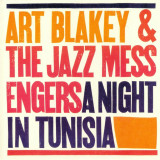
On the jazz standard "A Night in Tunisia" composed by Dizzy Gillespie in 1942, Art Blakey and the Jazz Messengers, realised this album with a legendary ensemble the lineup includes Lee Morgan on trumpet, Wayne Shorter on tenor saxophone, Bobby Timmons on piano, and Jymie Merritt on bass. Recorded on August 7 and 14, 1960 this album is one of the most celebrated for the powerful solos and intricate arrangements, epitomizing the hard bop style. Blakey's versions of "A Night in Tunisia" are renowned for their intense energy and complexity, the piece itself features a distinctive Afro-Cuban rhythm in the introduction and the main theme, transitioning into straight-ahead swing for the improvisational sections. In summary, Art Blakey and the Jazz Messengers' renditions of "A Night in Tunisia" are celebrated for their dynamic interpretation, technical proficiency, and influential impact on the jazz genre.
- Politely
- Whisper Not
- Now's The Time
- The First Theme
- Moanin' With Hazel
- We Named It Justice
- Blue March For Europe, N* 1
- Like Someone In Love
- Along Came Manon
- Out Of The Past
- A Night In Tunisia
- Ending With The Theme
Art Blakey and the Jazz Messengers' tremendous concert at Club Saint Germain in Paris on December 21, 1958. This record presents the complete set and is produced as a three LP gatefold album with each vinyl one of three different colours: blue, white and red, representing the French flag. Au Club Saint Germain it's a memorable record and winner of numerous awards including the prestigious Grand Prix du Disque in 1959 from the Academie Charles Cros. Art Blakey and his Jazz Messengers are here with Lee Morgan on trumpet, Benny Golson on saxophone, Bobby Timmons on piano and Jymie Merrit on double bass. Drummer Kenny Clarke was living in Paris at the time and joined the group for the songs "A Night in Tunisia" and "Ending with the Theme" resulting in a session that will go down in jazz history!
Monk’s Blues is an album by Thelonious Monk, accompanied by a big band arranged and conducted by Oliver Nelson. Produced by Teo Macero, the album was recorded in Los Angeles by Monk‘s working quartet augmented by a group of top Hollywood studio musicians. The Monk Quartet included Monk on the piano, Charlie Rouse on Tenor Saxophone, Larry Gales on Bass and Ben Riley on the Drums. Additional musicians a.o. Tom Scott, Buddy Collette, Bobby Bryant and Conte Candoli. Monk’s Blues is available as a limited edition of # copies on translucent blue coloured vinyl.
The self-titled “Orquesta Olivieri” was originally released in 1972, just when the Fania Records revolution and the explosion of salsa music, was reaching its peak. Very few copies were distributed at the time. Produced by boogaloo-don Bobby Marin, the album comprises a variety of Latin rhythms, including the much in-demand vocal harmonies-led ‘There is No Other Girl,’ a lowrider soul gem. Side A opens with the slow-paced Latin soul song ‘There is No Other Girl’, that style-wise connects to their previous LP, released when the boogaloo trend was still around. In fact, this song had been previously released two years earlier on a 45 and was then overdubbed (adding an organ on top) for this LP version. The song is very much in demand these days in the lowrider soul scene due to the breath-taking vocal harmonies and appealing production. The album also comprises spicy guaguancós on ‘Cuando llegué a Borinquen’, the classic ‘Los Muchachos de Belén’ and ‘Tabaritiando’. There is also room for a cha-cha-chá, ‘María Isabel, and a guaracha ‘Perrito sabueso’, and the album closes with the Latin soul ballad ‘Preferí perderte,’ interpreted in Spanish. First time official reissue.
This vinyl reissue celebrates Roberto Roena y Su Apollo Sound’s first release for Fania Records in 1970. Founded in 1969, “Apollo Sound” was considered one of the best salsa bands in Puerto Rico. Standout tracks include “Tu Loco Loco, y Yo Tranquilo,” “El Escapulario” and the Bobby Capó classic “Soñando con Puerto Rico.” Featuring (AAA) lacquers cut from the original master tapes by Kevin Gray at Cohearent Audio, this 180-gram vinyl pressing is housed in a vintage-style tip-on jacket. US import.
Mario Rusca is most probably the biggest living Italian jazzman. His major influences are Duke Ellingtons composing abilities and Hampton Hawes' brilliant sound. He immersed himself in the harmonic inventions of the incredible pianists of the 60s and 70s: from Bud Powell to Bobby Timmons, Wynton Kelly and Bill Evans. Mario Rusca has been the house pianist of Capolinea, the most important Italian jazz club of the 70s and 80s. He went on to perform in important national and international settings-representing Italy in the "Piano Solo'' category of the "International Festival of Varsavia" and participating with his quintet at the "International Festival of Montreal". He has collaborated with a multitude of prestigious names: Chet Baker, Tony Scott, Curtis Fuller, Gerry Mulligan, Lou Donaldson, Art Farmer, Bob Berg, Lee Konitz, Dusko Gojkovic, Al Gray, Kay Winding, as well as Stefano Bagnoli, Enrico Rava, Tullio De Piscopo, Kenny Clarke, Stan Getz, Jimmy Owens, Toots Thielemans, Gianni Basso, Pepper Adams, Steve Lacy, Steve Grossman, Franco Ambrosetti, Woody Shaw, and Eddie "Lockjaw" Davis. With Gerry Mulligan, in particular, he toured in 1976 and with Lee Konitz, he recorded Wheres The Blues? at the end of the 90s. In this regard, Suspension in 1975 with Tullio De Piscopo and Recreations in 1976 with the phenomenal Larry Nocella playing saxophone are still very beautiful and modern recordings. As Mario says, "In jazz, you choose the companions that you can dialogue the most with.there needs to be an interplay, there needs a...a way of feeling, which is why you choose musicians because they feel like you, or, if nothing else, they follow you". The chemistry between the three of them is perfectly aligned, synergistic. Tonys drums and Riccardos bass create a soft and essential rhythmic tapestry that never hinder the creative prowess of the band leader. Here Mario Rusca is interpreting the most dynamic jazz standards. Blues for Gwen by McCoy Tyner, Blues Walk by Lou Donaldson, Blue Minor by Sonny Clark, Turnaround by Ornette Coleman, Bass Blues by John Coltrane or even Super Jet by Tadd Dameron. You cant help but imagine yourself on top of a convertible, smiling and carefree, while they travel through the soloist progressions of Turnaround and Super Jet. We need to underline the four originals included in this recording: Blue Dream (for Allerim), Tempo Blues, Double Horn e Monochrome Blues, extremely suggestive compositions, rich of intuitions and which well exhibit Mario Rusca composition skills and his ability to play the blues. MONOCHROME BLUES is a winning trio album which will deeply please the most demanding jazz hears. The musicians Mario Rusca (piano) Riccardo Fioravanti (bass) Tony Arco (drums)
- A1: Marie's A Woman
- A2: Sea Song (Lifeline)
- A3: Fallout
- A3: Rough Cut Marmalade (Full Version)
- A4: Dartboard
- B1: Miss Elizabeth
- B2: Sunny
- B3: Spare The Children
- B4: Floating
- B5: Lay Me Down (First Version)
Mythical Sussex psychedelic protoprog band Five Day Rain cut an album that never was in 1970, since a dispute nixed its official release. This must-have collection of rarities includes outtakes such as the fuzz box-filled 'Dartboard' and the raunchy 'Floating', as well as a tasteful cover of Bobby Hebb's 'Sunny,' plus full version of 'Rough Cut Marmalade.' 'Spare The Children,' released as a 45 by side project Studd Pump is included here too. Required listening for all who wish to understand the Five Day Rain story in full.
Blue[26,85 €]
First in a series of reissues from Pierre Jaubert’s Parisound studio archive on Strut Record IS Lafayette Afro Rock Band's elusive funk/Afro original album, 'Malik,' originally released in 1974. Transparent blue colored LP
In 1971, an undocumented seven-member Afro-American ensemble known as the Bobby Boyd Congress made a transformative journey from the United States to France. Bandleader Frank Abel recollects, "We sensed that the soul and funk market was saturated back home, and our original plan was a brief 6-month stint in Paris. Surprisingly, we ended up staying for a decade." Upon lead singer Bobby Boyd's return to the U.S., the group rebranded as Ice and crossed paths with independent producer Pierre Jaubert, a seasoned studio professional with credits on groundbreaking recordings alongside Charles Mingus, John Lee Hooker, and Archie Shepp, among others.
Drawing inspiration from Motown's work ethic, Jaubert initiated regular rehearsals with Ice. He recalled, "I didn't want to mimic Berry, but with seven talented musicians collaborating daily, something unique emerged." The band, residing in Paris and immersed in the African-dominated Barbesse district, began infusing African elements into their music frequently performing with Paris-dwelling Camaroonian and legendary composer Manu Dibango.
Under the new moniker Lafayette Afro Rock Band, the group's music transitioned to predominantly instrumental compositions, featuring a denser Afro-funk sound. Their inaugural recording with the new name, 'Soul Makossa,' included a compelling rendition of Dibango's classic and the impactful break in 'Hihache.' The subsequent release a year later, 'Malik,' refined their sound with the percussive Afro party jam 'Conga,' the atmospheric vocoder and piano-led piece 'Djungi,' and the robust funk of 'Darkest Light.' Despite a limited impact upon its initial release, 'Malik' found appreciation as hip-hop culture flourished in the '80s, establishing itself as a rich source of samples and riffs. 'Conga' was featured in the 'Ultimate Breaks And Beats' series, while the opening horn line from 'Darkest Light' became a pivotal hip-hop motif, employed by Jay-Z, Public Enemy, Wreckx 'N' Effect, and many others
Blue[26,47 €]
Second in a series of reissues from Pierre Jaubert’s Parisound studio archive on Strut Record IS Lafayette Afro Rock Band's elusive funk/Afro original album, 'Soul Makossa' originally released in 1973. Transparent blue colored LP
In 1971, an undocumented seven-member Afro-American ensemble known as the Bobby Boyd Congress made a transformative journey from the United States to France. Bandleader Frank Abel recollects, "We sensed that the soul and funk market was saturated back home, and our original plan was a brief 6-month stint in Paris. Surprisingly, we ended up staying for a decade." Upon lead singer Bobby Boyd's return to the U.S., the group rebranded as Ice and crossed paths with independent producer Pierre Jaubert, a seasoned studio professional with credits on groundbreaking recordings alongside Charles Mingus, John Lee Hooker, and Archie Shepp, among others.
Drawing inspiration from Motown's work ethic, Jaubert initiated regular rehearsals with Ice. He recalled, "I didn't want to mimic Berry, but with seven talented musicians collaborating daily, something unique emerged." The band, residing in Paris and immersed in the African-dominated Barbesse district, began infusing African elements into their music frequently performing with Paris-dwelling Camaroonian and legendary composer Manu Dibango.
Rechristening themselves Lafayette Afro Rock Band, the group's musical direction shifted towards predominantly instrumental compositions, characterized by a weightier, more intricate Afro-funk sound. Their debut recording under this new moniker, 'Soul Makossa,' made a powerful impact with a dynamic rendition of Dibango's classic, coupled with the intense break of 'Hihache' and the contagious 'Nicky.' Initially released by Musidisc in France and later in the U.S. via Editions Makossa, the album omitted the title track due to publishing clearance issues.
Despite modest sales upon its initial release, the album's enduring influence became evident as hip-hop culture surged in the '80s, establishing it as a primary source for samples and riffs. The iconic 'Hihache' break found fame in Biz Markie's 'Nobody Beats The Biz,' and tracks from the album were lifted by LL Cool J, The Beatnuts, Kruder & Dorfmeister, and numerous others.
This single comprises two stand out tracks from “Power-Fuerza” (1972), one of the best Latin funk albums ever recorded, with all the right ingredients to shake dance floors worldwide. Produced by boogaloo-don Bobby Marin, these tracks are a vibrant tapestry, weaving together the raw energy of the South Bronx streets and the soulful melodies born from the band's Puerto Rican heritage. The Bronx in the 1970s, marked by the presence of notorious gangs, presented a complex and challenging urban landscape reflected in abandoned buildings and neglected public spaces. The prevalence of street gangs, such as the Ghetto Brothers, contributed to an atmosphere of heightened tension and occasional violence. The Ghetto Brothers, originating from the Melendez family who moved from Puerto Rico to the South Bronx in the 1950s, faced challenges involving violence and crime. Despite this, Benjy Melendez, a key figure, directed the group towards community improvement. The Ghetto Brothers embraced music, crafting a potent, NYC-flavored musical fusion that caught the attention of record mogul Ismael Maisonave (Salsa Records). Their collaboration resulted in the recording of eight tracks in a single electrifying day at Manhattan's Fine Tone Studios, skillfully produced by Latin studio maestro Bobby Marin (Harvey Averne, La Lupe, Brooklyn Sounds…) This musical odyssey showcases the band's ability to seamlessly blend genres, creating a NYC-flavored stew that captivates listeners with its authenticity.