
pre-order now28 Mar 2025
expected to be published on 28 Mar 2025
20,80 €
expected to be published on 28 Mar 2025

Bobby Mahoney is a new signing to the robust roster of New Jersey icon Stevie Van Zandt’s Wicked Cool Records. Another Deadbeat Summer, is his first album with the label.
expected to be published on 14 Jun 2024

For over 20 years, your irrepressible host Rex and his legendary Fool's Paradise radio show on WFMU has held a grudge against the whole square world. Broadcasting from an undisclosed location in rural New Jersey in a fur-lined fall-out shelter located miles below the earth's crust, this weekly "excursion to nowhere" continues to proudly play nothing but greasy grooves from inane 45s, non-hit misfires, curveballs and oddballs from the Rock & Roll era. Yes sirree, those weird and warped ones about monsters, beatniks, chickens, apes, stewed moonbeams and mosquito knees...
And now, in the tradition of free love and nickel beer, Jazzman Records has teamed up with Rex to bring together a fabulous collection of his top spins! These are the songs that, by virtue of Rex's dogged persistence, have now achieved a kind of classic status that was surely never previously thought imaginable - The Fool's Paradise Favourites.
Gatefold LP includes 18 tracks with extra special chicken-themed twin spin bonus 45 single!
Available to reorder, subject to availability

"...don't ask if there will ever be a Volume 2. We don't know yet. What we do know is that if we ever come across a similar tour de force as Don McCaslin's composition, Praise Poems, then there will certainly be one..." These were the final words of the sales notes for Praise Poems Volume 1 - which we proudly released earlier this year. And indeed, since then, we have discovered a tune which led us to continue to curate this series of obscure, soulful, jazzy and spiritual sounds from back in the day. The song to which we refer to is Abraham Battat's jazz-samba masterpiece, Fly Away. Fly Away is a righteous combination of sonorous jazz guitar, crackling drums and warm acoustic piano. Floating through the tones as if in a private concert for you in your very living room, it is an earnest, honest vocal performance bringing a rainbow message of freedom and liberty to the world. This is the standard by which we judged the entirety of this compilation. Though they may be known in some circles, selections by Richard Martian, Larry Covin, and The Gingerbread Express are in the same category of pure beauty. Of course, good luck finding a copy of Larry Covin's Masquerade or the Portis Brothers' Summer Love. The single hit you receive while doing an online search is the exact same copy from which we took the master. To find a needle in a haystack is a cakewalk compared to turning up a copy of some of these gems to be found here.
Available to reorder, subject to availability

Last summer, Psychederek released his four-part cosmic journey Thinkin' 'Bout U as the debut release on his label, Via Jupiter.
This summer, he's brought together a gang of local mates to deliver a fresh and unexpected set of remixes of the underground psychedelic hit.
Synkro, Moodymanc, ATM Musick and Bobby Thorpe serve up a diverse selection of remixes, bringing Psychederek's galactic world into the realms of drum and bass, deep disco, baggy krautrock swagness and pure-up voodoo energy.
Ready to ship

Following the success of their debut label release, Antwerp’s finest duo, Bobby & Djenko, return to Flipsight with their highly anticipated 'Burning Up' EP. It marks the beginning of an exciting new chapter for the duo, whose fast-paced momentum and global DJ support show absolutely no signs of slowing down. This is summer house to the fullest extent: Guitars, piano, trumpets, conga’s and catchy vocals. The 4-track vinyl package has it all! It is an absolute showcase of their mix of high-energy festival/club sound and pure beach material. Catch them live while they are burning hot!
Ready to ship

Vol. 2[18,28 €]
Hip-HopR & BPopRockDiscoClassics
The greatest hits of the 1960s and 1970s are now available on the „Golden Chart Hits of 60er & 70er Jahre“ vinyl compilation.
Enjoy 14 hits being still unforgettable up to the present day and played daily on numerous radio stations around the globe, including Top 10 hits such as Secret Service „Ten O‘Clock Postman“, Patrick Hernandez „Born To Be Alive“ or Kool & The Gang „Ladies Night“. An absolute must for all fans of 60s and 70s music!
Ready to ship
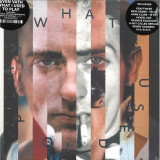
HouseClassicsMinimalDiscoClubTechnoTechno
For this uniquely personal retrospective spread over twelve vinyl discs, Sven Väth takes us back to the early days of his DJ career. On What I Used To Play we meet great pioneers of electronic music, gifted percussionists, obscure wave bands, and innovative producers of a bygone 'new electronic' era. Rough beats and irresistible grooves from the identification stage of house, techno, and acid remind us not just how far electronic music has evolved over the past four decades, but how great it was to dance to EBM, techno, and house for the very first time.
If there is one protagonist of the electronic music scene who has remained curious, innovative and at the very cutting edge of music for over four decades, it's Sven Väth. His multi-layered artist albums and Sound of the Season mix compilations have been defining the genre for over two decades, and even today, he is constantly on the lookout for the next top tune to add to the highlights of his next set. At least, that's the case when he's not producing them himself as an artist or remixer. "Actually, it's always been part of my DNA to think ahead," and nothing had been further from his mind than looking back at his past, but when in spring of 2020 the international DJ circuit had to be scaled down to virtually zero, the 'restless traveler' suddenly had time. Time to stop and reflect on "how it actually was back then, at the very beginning of my career..."
"It was a great trip and with every track, beautiful memories came flooding back".
In the London apartment, he had just moved into, Sven has set up a "little music room", where he cocooned himself for several days, "to look way back for the first time and review my musical journey through the eighties, so to speak."
The interim result was six thematically oriented playlists with a grand total of 120 tracks from 'early 80s' to 'Balearic late 80s', together with excursions into afrobeat, European new wave, and EBM sounds and a few epochal techno/house tracks from the USA in between. From these 'Best of Sven Väth's favorites', the project What I Used To Play crystallized. Sven remembers how the Cocoon team reacted to his proposal: "They found the idea of making a compilation out of it MEGA from the beginning and everyone said 'Sven, go for it', but then, of course, the work really started, namely, to clear the rights and to get clean sounding masters of the up to 40-year-old tracks. There was also disappointment, of course. We couldn't clear certain titles because the rights holders in the USA had fallen out with each other or simply disappeared from the scene. In short, it wasn't easy, but now I can safely say we got the most important tracks."
Finally, after two years of research, curation, design, and administrative fine-tuning, the "little retrospective" from 1981 to 1990 is available. The exquisitely packaged, and three-kilo heavy box set is not only physically impressive, WIUTP is also the definitive record of Sven Väth's musical development. On each of the twenty-four sides of vinyl, you can trace track by track, what influenced him during which phase, and how he took off as a DJ from his parents' Queen's Pub straight into the spotlight at Dorian Gray. There and at Vogue (later OMEN), Sven became the style-defining player in the DJ booth that he still is today.
1981 - 1990: Future Sounds of Now
In the early eighties, the crowd in clubs like Vogue and Dorian Gray danced to what nowadays we call 'dance classics' - mainly disco, funk, soul, and chart pop. It was up to a new generation of DJs, including Sven Väth, the youngest protagonist in the Rhine-Main area at the time, to create their own club-ready music mix. Good new tracks and potential floor-fillers were rarities that had to be sought out and found, in order to prove oneself worthy.
Without MP3s, internet streaming, or other digital download possibilities, music didn't just gravitate to the DJ, instead, it had to be tracked down. In well-stocked record stores in Frankfurt and Wiesbaden or even in Amsterdam, London, or New York, Sven and friends sourced the material for countless magical nights. On WIUTP we can follow Sven's very personal journey through this wild, innovative era in which synth-pop, funk, hip-hop, and disco were successively replaced as 'club music' by house, techno, acid, and breakbeat. By the end of the decade, it was clear to see that these once exotic 'fringe' phenomena would soon become 'mass' phenomena.
Early 80s
Dirty Talk by the Italian-American duo Klein & M.B.O. represents the most innovative phase of the Italo-disco genre in the early eighties like no other track. Mario Boncaldo (I) and Tony Carrasco relied entirely on the original synthetic drum and percussion sounds of the Roland TR-808, coupled with the raunchy vocals of Rossana Casale and guitar accents of Davide Piatto. Of course, other tracks from this period were also influential in style, most notably Unit by Logic System, which worked as the perfect soundtrack to the laser lighting system at the legendary Dorian Gray club. With stomping beats and robotic rap interludes, Bostich by Yello also belongs on Sven's eternal playlist - after all, it caught the attention of Afrikaa Bambaataa, who invited the Swiss duo to perform at the Roxy in New York in 1983.
EBM Wave - Mid 80s
From today's point of view, the almost ten-minute-long, downtempo track Giant by Matt Johnson's band project The The, would probably not be considered an obvious club classic. However, a closer (re)listen reveals the rhythmic intricacies of the percussion overdubs by JG Thirlwell (aka Foetus) on Johnson's composition, and it becomes clear why this exceptional piece of music is one of Sven's absolute favorites. Other classics from this phase include Kaw-Liga by the mysterious The Residents, the hypnotic-synthetic Our Darkness by Anne Clark (and David Harrow), and last but not least, the somber, monotonous anthem Where Are You? by 16Bit, one of Sven Väth's projects together with Michael Münzing, Luca Anzilotti from 1986.
US House - Late 80s
You certainly can't talk about Chicago house without mentioning Frankie Knuckles. The resident DJ at the Warehouse not only gave the name to an entire genre, but also produced epochal floor fillers on the Trax label like the timeless Your Love, sung (and moaned) by Jamie Principle. Acid house protagonists Phuture also hail from Chicago, and on We Are Phuture (also released on Trax) we hear the chirping acid sounds of the legendary Roland TB-303 in full effect. Another featured classic is No UFO's by Detroit's Model 500 aka Juan Atkins, who is rightly considered the 'Godfather of Techno' even if the genre-defining track from 1985 still breathes with the spirit of hip-hop and electro from the first breakdance era.
Afrobeat
Le Serpent, by Algerian-born Abdelmadjid Guemguem, is a track that sounds completely different from everything else on WIUTP. Made in 1978, it's a monumental, rousing groove created without bass or synths, just with five congas! Even though Guem sadly passed away in 2021, his immortal, acoustic beats are understood all over the world and will continue to enrich many thousands of DJ sets for years to come. Another classic that not only Sven appreciates beyond measure is Hugh Masekela's Don't Go Lose it, Baby. In addition to being one of the most important jazz pioneers, the trumpeter and freedom fighter from Johannesburg was very experimental, integrating electronic sounds into his music in later years, in a similar vein to Miles Davis and Herbie Hancock. Dutch jazz pianist Jasper van't Hof's afrobeat project Pili Pili has also aged well. The trance-like, almost sixteen-minute-long track of the same name, manages to fill a whole side on the seventh of twelve vinyl discs in the WIUTP box.
UK-US-Euro - Late 80s
Time for a change of scene, in the truest sense of the word, and from a musical perspective, this section is like landing on another planet. First up is Andrew Weatherall's classic remix of Primal Scream's Loaded, featuring the iconic Peter Fonda sample (lifted from the 1966 biker film Wild Angels) that came to personify the mood triggered by the British Second Summer of Love in the late eighties: "We wanna be free to do what we wanna do, and we wanna get loaded...". This period also saw the emergence of M/A/R/R/S whose only single, 1987's Pump Up The Volume, became a club classic with support from DJ legend CJ Mackintosh. In this most eclectic of sections, we also encounter New York house and reggae producer Bobby Konders and his seminal Nervous Acid.
Balearic - Late 80s
Those who know him, know that Sven had already lost his heart to the 'magic island' of Ibiza as a teenager, so with that in mind, the WIUTP project couldn't end without a Balearic chapter. Inspired by Manuel Göttsching's E2-E4, the immortal, eponymously titled Sueño Latino belongs in there without question. Equally popular on the island was, and still is Break 4 Love by Raze, which thinking about it, would also fit perfectly into the house chapter. Last, but not least, there's an overdue reunion with Sven Väth himself, in his role as frontman of the successful Frankfurt trio OFF. Together with Michael Münzing and Luca Anzilotti (later of Snap!) this 'Organization For Fun' created the off-the-wall club hit Electric Salsa in 1986 which incidentally turned into an international chart smash, putting Sven in the enviable position of having to decide between pop stardom and a DJ career. Well, we all know how that decision turned out and the rest, as they say, is history. A not insignificant part of his story is What I Used To Play. Enjoy!
Ready to ship

Ever since the late 1950s bossa-nova revolution, Brazil’s influence on French music has been undeniable. Pierre Barouh, Georges Moustaki and a vast array of lesser known artists, all made the Musica Popular Brasileira (MPB) an axis of promotion at the service of a cool and metaphysical, modern and mixed Brazilian lifestyle. Some were seduced by the poetic languors of the bossa, some were looking for fun, and others just loved the American hybridization of jazz-bossa, jazz-samba.
What is bossa nova? One of its creators, Joao Gilberto said: "Its style, cadence, everything is samba. At the very start, we didn't call it bossa nova, we sang a little samba made up of a single note - Samba de uma nota so .... The discussion around the origins of bossa nova is therefore useless”. It is nevertheless useful to remember that these magnificent Brazilian songs, which the guitarist describes as samba, were shifted and balanced around improbable chords. "I like things that lean, the in-betweens that limp with grace," said Pierre Barrouh, quoting Jean Cocteau.
With emotion, arrangements for violin and supple guitar licks, bossa nova rapidly changed. A transformation that can be heard in the Tchic, tchic, French Bossa Nova 1963-1974 compilation, the result of a cultural reappropriation, which traveled through the United States and supplemented itself in France.
A musical revolution that has remained significant, bossa nova was born in Rio. From 1956 to 1961, Brazil lived through its golden years. In five years, the country had invented its modernist style. Elected president in 1956, Juscelino Kubitschek de Oliveira, an elegant man with a broad forehead, brandished a promising slogan: "Fifty years of progress in five years". He quickly got to work. Not worried about increasing debt, he launched the project for a new federal capital, Brasilia, designed by the communist architect Oscar Niemeyer. Volkswagen opened state-of-the-art factories and created the “fusquinha”, the Beetle. In Rio, the Vespa made its first appearance. The Arpoador Surf Club crew run into the “girl” from Ipanema, Helô Pinheiro - the tanned garota ("chick"), between a flower and mermaid, who at 17 walked by the Veloso bar, where the fiery author and composer, Tom Jobim and Vinicius de Moraes, were getting drunk on whiskey. From then on, bossa symbolized cool.
In 1958, Joao Gilberto recorded Chega de Saudade, which the directors of Philips denied, calling it "music for fagots". The marketing director, who believed in it, secretly pressed 3000 78-inch vinyls and distributed them at schools around Rio, creating a tidal wave.
American jazzmen then took over. In particular, trumpeter Dizzy Gillespie and guitarist Charlie Byrd. In November 1962, the Brazilian Ministry of Foreign Affairs funded a "Bossa-Nova" concert at Carnegie Hall in New York, inviting the genre’s pioneers. Unprepared, the show soon turned to disaster. But the troupe was invited to the White House by Jackie Kennedy. The first lady loved "the new beat" and in particular Maria Ninguem, a song by Carlos Lyra, later covered by Brigitte Bardot.
In Brazil, the 1964 military coup quickly ended this euphoria. The destructive atmosphere that ensued pushed many Brazilian musicians to leave, if not to exile. Thus, Tom Jobim, Sergio Mendes and Joao Gilberto arrived to the United States. In New York, Joao Gilberto met saxophonist Stan Getz. At the time, he was married to the Bahianese Astrud Weinert Gilberto, who had a German father. She had never sung before, but she knew how to speak English. Getz therefore asked her to replace her husband on The Girl From Ipanema. The Getz/Gilberto record with Tom Jobim on piano, was released in March 1964. Phil Ramone, the "pope of pop" was in charge of sound.
Bossa nova arrived in Paris through the classic “guitar-voice” channel (Pierre Barouh, Baden Powell, Moustaki…) But France loved jazz and Paris had already welcomed its American contributors. All these good people were to pass through Saint-Germain-des-Prés. The cabaret l'Escale became the Mecca of Latin American sound where one could find Pierre Barrouh and his friends, such as the Camara Trio, samba-jazz aces, whose only record was published by the Saravah label. With a band strangely called Les Masques (a band that included Nicole Croisille and Pierre Vassiliu, among others), the Camara Trio recorded an interesting Brazilian Sound, including the track Il faut tenir which is present on this tasty compilation of rarities.
Other enlightened musicians can also be found on the compilation, such as Jean-Pierre Sabar (songwriter for Hardy, Auffray, Leforestier ...) and the French pop rock organist Balthazar. In 1975, Sabar recorded Aurinkoinen Musiikkimatka on a Finnish label, which featured the crazy Vai, Vai, included on this record. We are now following the footsteps of Brazilian electronic musicians such as Sergio Mendes, Eumir Deodato or Marcos Valle who created funk and disco sounds on their keyboards and synthesizers. A style that influenced Véronique Sanson when she wrote Jusqu’à la Tombée de la nuit in 1969 for Isabelle de Funès, the niece of Louis and a great friend of Michel Berger - Sanson did end up singing this track on her 1992 Sans Regret record.
The pinnacle of exoticism and travel, Sylvia Fels’ Corto Maltese includes bongos, sea mist and ocean sounds. The title was taken from Jacky Chalard’s concept album written in 1974, Je suis vivant, mais j’ai peur (I am alive, but I am scared), based on Gilbert Deflez’s science fiction novel.
However, bossa nova extended the scope of popularity. "In the 1970s, I was a fan of Sergio Mendes, Getz / Gilberto. I fell in love with this music that I knew because I had been an orchestral singer, " explained Isabelle Aubret, who in 1971 delivered a composite record of covers by the very funky Jorge Ben, Orfeu Negro, Tom Jobim, Vinicius de Morais and Jean Ferrat. "I recorded this album for Meys Records in Paris, far from Brazil, with wonderful musicians, François Raubert, Roland Vincent, Alain Goraguer...". The latter wrote the arrangements for Casa Forte, a very percussive title borrowed from Edu Lobo, one of the initiators of the bossa who spent time in California. "Jazz and bossa came together and produced very rhythmic music. I love singing, it allows me to dream, to have fun, to feel a high on stage, and these songs brought me joy, made me swing, my singing felt like a dance.”
The world tours of French singers and their desire for the tropics, often brought them to Rio with its hills, forests, caipirinhas and tanned bodies. There are surprises though, like this Iemenja (Iemenja is the goddess of the sea in the Afro-Brazilian candomblé religion). Not unlike the composer and musician Jean-Pierre Lang, based in Sao Paulo, Claire Chevalier taught Brazil to Brazil. In 1970, the singer and painter published a 45-inch vinyl, Mon mari et mes amants (My husband and my lovers), under the improbable pseudonym of Clarinha (little Claire). She was then living in Rio, with her husband, Joël Leibovitz, who founded a band called Azimuth, and who owned a record label specialized in "sambas enredos" songs for samba school parades.
For its B side, she asked Pierre Perret to come up with lyrics for a song composed by Carlos Imperial: "Oh goddess of the sea, o goddess Iemenja, I bring a white rose to adorn your long hair ..." . "Perret came to see us, and we had fun, remembers Joël Leibovitz. We wrote Lemenja for fun, we recorded it at the Havaí studio, behind the Central do Brasil the central station. Erlon Chaves, the arranger who worked with Elis Regina, joined us" adding his share of Afro-Brazilian percussions and funky brass to the mix.
There is a common misunderstanding in Franco-Brazilian history: that bossa, admittedly hedonistic, is perceived as funny, even though the poets who wrote the texts are often philosophizing on the human condition. Its French interpreters pull it towards a carnival inspired universe, far removed from its fundamental essence. Thus, Jean Constantin covered the famous Samba da minha terra, an ode to the art of samba written by the classic Bahian composer Dorival Caymmi, renaming it with the enticing title of Pas tant de tchi tchi pompon: "On your pier there is no tchi tchi / when you arch your back, you know everything is alright ”(lyrics by Gérard Calvi). This expedited bossa aims for the absurd, but retains a certain elegance.
Indeed, Jean Constantin was not an idiot, the rather large man had a huge mustache and liked fantasy, (Les pantoufles à papa, Le pacha, inspired by cha-cha-cha-cha, salsa and jazz) but he was also the lyricist of Mon manège à moi interpreted by Edith Piaf, the composer of Mon Truc en plume by Zizi Jeanmaire and the soundtrack of François Truffaut’s 400 Blows. Le Poulpe, published in 1970, from which this bossa is extract, was arranged by Jean-Claude Vannier, an accomplice of Serge Gainsbourg’s Melody Nelson. In short: "There is enough of samba / By looking at the parasol / Because my poor cabeza / Is going to die in the sun".
Even the American actress Marpessa Down, who was at the heart of the bossa nova revolution with her role as Euridyce in Marcel Camus’ film Orfeu Negro, winner of the 1959 Cannes Palme d'or, fed the clichée with Je voudrais parler au petit cuica - "Tell me how you manage to always make people want to dance / It's true, I must admit that I cannot resist your magic" - in consequence, once can hear the cuica, a little drum inherited from the Bantu.
But bossa nova had many angles. Societal, of course, pushing actresses who were symbols of women's liberation like Brigitte Bardot, Jeanne Moreau, or Sophia Loren to engage in the exercise of accelerated bossa. In February of 1963, Sophia Loren made a record in French in Rome, Je ne t'aime plus, featuring the song De jour en jour, a bossa written by two Italians, Armando Trovajoli and Tino Fornai, which was released a little later by Barclay. Bossa accompanied the 1960s, a decade of moral liberation. Ann Sorel, who interpreted La Poupée des favellas, caused a sensation with L’amour à plusieurs, a provocative song written by Frédéric Bottom and Jean-Claude Vannier. As for the actress Andrea Parisy, she displayed her bourgeois cheekiness in Marcel Carné's Les Tricheurs before interpreting Les mains qui font du bien. And Magalie Noël, the friend of Boris Vian, who sung Johnny fais-moi mal, was hired to sing Une énorme Samba, composed by Alain Goraguer (arranger to Gainsbourg, Bobby Lapointe and Jean Ferrat) with lyrics by Frédéric Botton.
But in the end, of what wood is bossa nova made of? The answer is given by Christianne Legrand, daughter of Raymond the conductor, and sister to Michel the composer: "With me, with jà" - jà means "immediately" in Portuguese. In 1972, the singer, an expert in vocal jazz and a member of the Double Six, published Le Brésil de Christianne Legrand. Two songs included on the Tchic Tchic compilation that demonstrate how bossa, jazz, funk, rock, etc. work like a swiss army knife: the music is used to denounce broken systems, or miracles, HLM et ciné roman, Cent mille poissons dans ton filet, two songs from the O Cafona soundtrack, a successful telenovela broadcast, at the time in black and white, on TV Globo. The first was adapted in French by the fighter and friend of the Legrand tribe, Agnès Varda. The second is content with a play on words, jostling them into a summer fun.
Véronique Mortaigne
Last delivered 3 months ago
available to reorder, subject to availability

Blue Vinyl[35,50 €]
Campbell Owens, Douglas MacIntyre and Mick Slaven worked on the album alongside founding members Robert 'Bobby Bluebell' Hodgens, David McCluskey and Ken McCluskey to create the new collection of tracks. The result is a stunning body of work; rich, melodic, thoughtful and infectious. First single No Pasaran! premiered on BBC Radio Scotland and in The Herald in September 2025. The Bluebells rose to fame in the 1980s as jangle-pop pioneers of the Sound of Young Scotland era with their three hits Young at Heart, Cath and I'm Falling.
Despite only releasing one readily-available album during their initial run (Sisters, 1984) the band have remained as one of Scotland's most beloved bands, currently boasting over 144,000 monthly Spotify listeners. The band enjoyed a post-breakup revival in 1993 after a Volkswagen advert featured Young at Heart, pushing the single to No.1 for 4 weeks. They have since reunited over the years, to play various festival slots and develop new material. In 2023, the band released The Bluebells In The 21st Century, their first LP in decades. In 2025, The Bluebells played Glastonbury.
expected to be published on 15 May
Campbell Owens, Douglas MacIntyre and Mick Slaven worked on the album alongside founding members Robert 'Bobby Bluebell' Hodgens, David McCluskey and Ken McCluskey to create the new collection of tracks. The result is a stunning body of work; rich, melodic, thoughtful and infectious. First single No Pasaran! premiered on BBC Radio Scotland and in The Herald in September 2025. The Bluebells rose to fame in the 1980s as jangle-pop pioneers of the Sound of Young Scotland era with their three hits Young at Heart, Cath and I'm Falling.
Despite only releasing one readily-available album during their initial run (Sisters, 1984) the band have remained as one of Scotland's most beloved bands, currently boasting over 144,000 monthly Spotify listeners. The band enjoyed a post-breakup revival in 1993 after a Volkswagen advert featured Young at Heart, pushing the single to No.1 for 4 weeks. They have since reunited over the years, to play various festival slots and develop new material. In 2023, the band released The Bluebells In The 21st Century, their first LP in decades. In 2025, The Bluebells played Glastonbury.
expected to be published on 15 May

Clear & Hot Pink Splattered Vinyl[48,11 €]
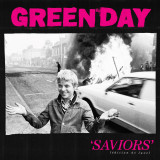
Etwas mehr als ein Jahr nach der erfolgreichen Erstveröffentlichung wird am 23. Mai die "Saviors (édition de luxe)" über Reprise Records erscheinen. Diese erweiterte Ausgabe des Grammy-nominierten 14. Studioalbums enthält neben den bekannten Hits sieben zusätzliche, bisher unveröffentlichte Tracks, darunter exklusive Akustikversionen von "Suzie Chapstick" und "Father to a Son". Die Resonanz auf "Saviors" war bereits herausragend – mit einer Top #2 Platzierung in den deutschen Charts und drei Grammy-Nominierungen unterstreicht das Album die anhaltende Relevanz und Kreativität von Green Day.
Die Band festigt ihre globale Präsenz weiterhin durch Headliner-Auftritte bei renommierten Festivals wie Coachella und einem anstehenden Headliner-Slot beim Hurricane und Southside Festival.
expected to be published on 23 May 2025
Black Vinyl[48,11 €]
Etwas mehr als ein Jahr nach der erfolgreichen Erstveröffentlichung wird am 23. Mai die "Saviors (édition de luxe)" über Reprise Records erscheinen. Diese erweiterte Ausgabe des Grammy-nominierten 14. Studioalbums enthält neben den bekannten Hits sieben zusätzliche, bisher unveröffentlichte Tracks, darunter exklusive Akustikversionen von "Suzie Chapstick" und "Father to a Son". Die Resonanz auf "Saviors" war bereits herausragend – mit einer Top #2 Platzierung in den deutschen Charts und drei Grammy-Nominierungen unterstreicht das Album die anhaltende Relevanz und Kreativität von Green Day.
Die Band festigt ihre globale Präsenz weiterhin durch Headliner-Auftritte bei renommierten Festivals wie Coachella und einem anstehenden Headliner-Slot beim Hurricane und Southside Festival.
expected to be published on 23 May 2025

Hip-HopR & BFunkSoulPopRockDancefloor
"1980 was a huge year in pop music with every genre competing for hits. We have already included many tracks on the records of the 1980 Yearbook, the 80-84 Final Chapter, and their extras so far in our appreciation of the year…
Those tracks were generally the bigger hits of the year, with their chart achievement a factor in their inclusion – however – that’s not the whole singles story of the year, and our celebration of 1980 wouldn’t be complete without shining a light on some of the years’ singles that have been compiled much less frequently over the years.
Welcome to THE VAULT for 1980… Some of the tracks included were Top 40 hits, some missed the chart completely. Some were representative of massive selling albums, and some were big hits in the U.S. and not in the U.K… but all are part of the wonderful pop story of 1980. "
Last delivered 11 months ago
available to reorder, subject to availability

When considering the jazz vibraphone giants of the 20th century, seven stand out: Lionel Hampton, Red Norvo, Milt Jackson, Terry Gibbs, Cal Tjader, Gary Burton, and Bobby Hutcherson. Bobby Hutcherson (1941-2016), originally inspired by Milt Jackson, emerged from Los Angeles in the late 1950s. After a stint with the Billy Mitchell-Al Grey sextet in 1962, Hutcherson moved to New York, becoming the house vibraphonist for the Blue Note label. His foundation in hard bop did not limit him, as he also played in avant-garde sessions with artists like Eric Dolphy and Jackie McLean. On December 11, 1983, the 42-year-old Hutcherson performed seven standards with a stellar group. Pianist George Cables, consistently excellent throughout his career, had been working with Hutcherson since 1977. Bassist Herbie Lewis, a versatile musician, had collaborated with Hutcherson since 1966. Drummer Philly Joe Jones, known for his work with Miles Davis, also contributed to the session. The recording of the Four Seasons album features seven standards, starting with Thelonious Monk’s “I Mean You,” which showcases each musician. Hutcherson’s solo on Cole Porter’s “All Of You” is particularly adventurous. “Spring Is Here” receives a beautiful interpretation, and “Star Eyes” is taken uptempo. Hutcherson’s introduction on “If I Were A Bell” is notable, as is Jones’s solo. The session spotlights Cables on “Summertime” and concludes with a vibrant version of “Autumn Leaves.” Decades later, the music remains a timeless classic. Four Seasons is available on black vinyl, celebrates its 40th Anniversary, and includes an insert with newly written liner-notes by Scott Yanow
expected to be published on 04 Apr 2025

Los Angeles-based experimental jazz collective High Pulp will release
their new album Days in the Desert in peak sweltering summer heat on
July 28
The titular desert is both literal and metaphorical: it's the Mojave Desert that the
band powers through on their many DIY tours around the country, and the band's
founder / drummer Bobby Granfelt perceives the desert as "a spiritual quest" as
well. Amid the trials of our present moment, you must look within, relying solely
on your own instincts to keep moving forward. "You're in the desert and it's a long,
lonesome process and a lot of times you have to check yourself to ask 'Is this
right? Is this good? Is it too out?'" he says.
High Pulp's Days in the Desert makes this vision come true, finding the West
Coast band fully emerging into their own sound. Rooted in the jazz tradition while
also smitten by indie- rock and electronic music, High Pulp was willing to grab
from all these sounds at once to pursue something truly their own. Their third fulllength album (following 2022's promising Anti- debut Pursuit of Ends), Days in the
Desert reveals the band realizing their strengths, deepening their own bonds, and
pushing all these skills into a thrilling new sonic vista all but unimaginable just a
few years before
Last delivered 20 months ago
available to reorder, subject to availability

Those in the know are well aware of Bobby Marin's work, and the fact that he was behind the scenes for some of the best boogaloo and salsa of the '60s and '70s. Yet, until now, no one has explicitly put Bobby's name in the headline and given him his due on the cover of a properly credited Latin soul compilation. This compilation comprises twenty four essential boogaloo, Latin funk, rock and afro disco gems, each one bearing the mark of quality: "A Bobby Marin Production", including songs by Ricardo Marrero, the Ghetto Brothers, Ocho, Louie Ramírez_ A freshly curated overview of his fascinatingly complex back catalog in these genres. Since the late 1980s there have been numerous Latin soul and boogaloo compilations, and certainly much has been written about the history of the music too and an an excellent documentary (We Like It Like That, by Mathew Ramírez Warren) have brought the music to a broader audience. Generally, when discussing the "first wave" of Latin soul and boogaloo, it's the bands and their leaders, the singers and the songs that get all the recognition. But what of the producers, composers, and arrangers behind the music? Over the years, one of the best old-school New York Latin music producers, Bobby Marin, has occasionally been given some well-deserved credit and popped up sporadically in articles or liner notes (Wax Poetics, Fania, Gladys Palmera). However, to the casual public, he is not a household name, even among some fans of boogaloo. There are even some contemporary Latin soul compilations that contain mostly material licensed, produced and / or written by Bobby (or his brother, Richard), and a tip of the hat must go to Bobby's friend Dean Rudland for all his work in this area, as well as to Rocafort Records for digging up the long-lost Nitty Gritty Sextet album. Yet, until now, no one has explicitly put Bobby's name in the headline and given him his due on the cover of a properly credited Latin soul compilation. This collection aims to change that and give the man his Latin soul "props" for the first time on a freshly curated overview of his fascinatingly complex back catalog in this genre.
expected to be published on 04 Oct 2024

The brand new album "Pacific Voyage" by Nautilus from Tokyo is a breezy summertime soundtrack which combines sunny Yacht Rock with a touch of cool 80s City Pop.
The Japanese Jazzfusion trio reinterpretates stone cold classics from this era in their typical signature way of playing.
Songs like the heavy sampled "What You Won't Do For Love" by Bobby Caldwell and Toto's "Georgy Porgy" get a completely new coat of paint and fresh interpretation translated into now and tomorrow.
Followed by a who's who of tracks from Donald Fagen, Michael McDonald, Shuggie Otis, Nohelani Cypriano and Toshiki Kadomatsu to name a few.
Guest appearances on this album are from UK soul singer John Turrell (Smoove & Turrell), German rap legend Toni-L (Advanced Chemistry with Torch) and Japanese soul singer Ryuto Kasahara who worked with Grooveman Spot and DJ Mitsu The Beats so far.
Enjoy this pacific voyage.
Last delivered 2 years ago
available to reorder, subject to availability

"In the summer of 2021 I was introduced to the French filmaker Émilie Deleuze in Paris. She asked me if I would create a soundtrack for a film she intended to make titled Cinq Hectares. When I asked Emilie what the story of the film was about she replied "It's a comedy and road movie , about a guy driving a tractor across France". I love road movies and I had never composed a movie soundtrack before so I immediately said "yes". I recorded the soundtrack in the summer of 2022 in east London with the help of producers James Rand & Thomas Gorton of @godcolony and a bunch of great young musicians they introduced me to, one of which @alwhite who now plays saxophone with Primal Scream. Émilie's film is an absolute cracker and I'm very proud of the soundtrack. Hope you enjoy listening to it as much as we did making it”
Bobby Gillespie, June 2024
expected to be published on 16 Aug 2024

The Entertainers, a South Carolina soul band led by singer Earl Dukins, released their first single 'Livin' For The Summer' in 1980, which became a smash hit, and their first album in 1983. The band's first album, released in 1983, was reissued for the first time with an obi. The album features a selection of well-chosen covers, including Chai Lights' 'Hot On A Thang', Bobby Patterson's 'I'm in love with you', Turley Richards' 'I won't cry anymore' and 'What are we gonna do', as well as the aforementioned 'Livin' For The Summer', the gorgeous string-tinged middle tune 'I'm Leavin' and original songs, all of which are full of modern soul with an exhilarating blue-eyed soul - AOR feel!
expected to be published on 22 Jul 2024

Following the success of the 'Tokyo Glow' compilation, Wewantsounds once again teams up with Japanese Tokyo-based DJ Notoya to dig the rich Electric Bird catalogue and come with a versatile selection of sunny Jazz-Funk gems recorded between 1978 and 1987 for the label. A tasty selection featuring Yasuaki Shimizu, Toshiyuki Honda and Mikio Masuda, together with a few American musicians such as Ronnie Foster and Bobby Lyle. Most tracks make their vinyl debut outside of Japan and the album has been designed by Optigram/Manuel Sepulveda and is annotated by DJ Notoya. Audio newly remastered in Tokyo by King Records....
Last delivered 2 years ago
available to reorder, subject to availability

For Fans Of... Magic Sam, Otis Rush, GA-20, Albert King, Elmore James. Never before heard blues from 1969! The 2023 RSD release is now also available on black vinyl and CD! Pressed right in Cleveland, Ohio at Gotta Groove Records. On Remined Records, Colemine's re-issue imprint. Produced by Eli 'Paperboy' Reed. Recorded by Eli's father in 1969. Tapes have been hidden for over 50 years, now being released for the first time ever. "Fred Davis was a legend, but only in my living room. As a teenager, I started digging deeper and deeper into the blues records in my Dad’s collection. That was when I started to get the Fred Davis story in fits and starts. Fred could play like T-Bone Walker and had a keen voice like J.B. Lenoir, he said. He used to front a jump band in Kansas City, before something went down that sent him to prison at Leavenworth. In the summer of 1967, he ended up working alongside my Dad at Harco, the Cleveland factory where my grandfather was an executive. They became friends, bonding over the B.B. King and Bobby Bland records blaring from the AM radio on the factory floor. Fred taught my Dad the rudiments of blues guitar, but his style. Instead of barring with his first finger, he wrapped his thumb around the back of the neck. That left his other fingers free to create big, ringing voicings that imitated the Kansas City horn sections he heard in his youth. Fred could play up and down the neck and, even when he played and sang just by himself, he sounded like a full band. Or, at least, so the legend went. These were only foggy memories from thirty years previous, passed down from a father to a son. But then we found the tape. A quarter inch reel in a plain white cardboard box, hiding on a shelf in the attic. My Dad explained how it came to exist: He found some friends (acquaintances really) who had a band and some equipment. They setup in my grandparents living room where the upright piano was, and he invited Fred over to record some of his songs with the band backing him up. We found a place nearby that could dub the tape and put it on a CD for us. When we finally got the transfer back, the legend became real. With this music now professionally transferred and remastered, I can only hope that Fred Davis can finally receive the acclaim that he deserves; that he never received in his lifetime. The legend can finally go behind the confines of my living room and, with any luck, to the whole world." Eli 'Paperboy'
expected to be published on 30 Nov 2023

‘Demos/sketches/interludes from the hinterland between records. Drum machines and single take vocal sketches tied together with downtime synth experiments and recordings of local disappearing areas.’ True as it is, Jabu’s strap-line is a somewhat understated take on what also proved to be a transformative experience for them. The follow-up record to their 2020 sophomore LP ‘Sweet Company’ (and the ensuing ‘Versions’), ‘Boiling Wells’ weaves a smudged, group -mind spell. Originally released earlier this year without fanfare as a digital-only release, it now receives the proper release attention it deserves, issued in a neatly packaged vinyl edition of 300 copies. Dreamlike, woozy, raw and in dub, the album documents a blossoming process, and encapsulates a fragment in time - holed up in the country, soaking up the atmosphere in collective isolation, creatively embracing the limitations of a small recording set-up, and finding a new way to work as a band. “My mum had gone away so we’d decided to take the mixing desk and a couple of drum machines out to her house and set it up in the front room. We did it a couple of times to get the bulk of the tunes on 'Boiling Wells' done, one in summer and one boozy one around Christmas. I think we all immediately enjoyed working that way, sat around all together, more of an immediate thing. Jas started to play a lot more guitar, her and Al would write lyrics on the fly or be programming a drum beat in or something. We were all switching around and getting ideas down really quickly, not worrying too much if they were good or not. The music was limited by the stuff we had there, I didn’t bring a big desk so we only had six channels or so, and everything was basically just recorded in as a stereo take so we were more or less stuck with it after we’d laid it down - which was nice too. I don’t think we would’ve changed them anyway; it was the sound of the room and of us doing it together in the moment that was really important.” There has always been a collaborative heart to Jabu, though its nature has shifted and morphed over time. In their earliest incarnation, in after-school jams, Alex Rendall would rap over Amos Childs’ beats, but by the time they began releasing music in 2012, Al had found his singing voice – a sweet, soulful counterpoint to Amos’ increasingly dub-wise, experimental backing. Both are founder members of Bristol’s Young Echo, a collective of friends and musicians first operating loosely together on radio shows, artistic collaborations and events, and later on, running a record label. As expansive as their original remit was, Young Echo has steadily evolved since featuring in The Wire’s 2013 cover feature on Bristol’s new school of post-dubstep bass music. Of late, Seb (aka Vessel) has been working with violinist Rakhi Singh on string arrangements for Jabu, and the upcoming residency at Bermondsey’s MOT will showcase relative newcomers Birthmark and Intel Mercenary alongside the regular crew. Jabu’s debut album proper, ‘Sleep Heavy’, arrived in 2017 courtesy of Blackest Ever Black. A sublime, focused meditation on grief and loss written largely by Amos and Al, it marked the debut of Jasmine Butt (aka Guest), adding a further layer of vocal texture to their palette. ‘Sweet Company’, their first album written as a trio (released via their own do you have peace? label), drifted into lighter, more ethereal introspection. Featuring guest appearances by Sunun and Daniela Dyson, remixes by Equiknoxx’s Time Cow and Young Echo ‘s Ossia teased out the inherent pop and dub sensibilities respectively. Recent times have also seen remixes by kindred spirits Seekers International and Jay Glass Dubs, and a collaboration with the renowned T.S. Eliot Prize-winning dub Poet and musician Roger Robinson on a pair of plaintive, aching 7” singles. Jabu’s broad raft of inspirations can be experienced first -hand on their monthly NTS Radio show ‘Music 4 Lovers’, co -hosted by long-time friend and soul afficionado Andy Payback. A celebration of the endless tapestry of interrelated musical connections, it runs parallel to Jabu’s own reinterpretation of their influences. For ‘Boiling Wells’, Amos remembers a diet of “A.R. Kane, Cocteau Twins, DJ Screw, Southern/Memphis rap mixtapes, early 90’s jungle, Karen Dalton, Sybille Baier, Vashti Bunyan, Svitlana Nianio, a lot of soul, Armand Hammer & Alchemist, Grouper, Bobby Caldwell. Jazz was a constant, Japanese, Polish, Latin, American…”. And from those diverse strands, something new and singular has formed, to line up alongside them. ‘Boiling Wells (Demos ‘19-’22)’ is released by UK newcomer Six of Swords in a limited vinyl edition of 300 copies, pressed on black vinyl housed in full colour 270 gsm matt varnish sleeve and black paper inner, with full download coupon
expected to be published on 27 Nov 2023

This recorded autobiography of Catherine Howe, age 20, briefly appeared in 1971. Too young for memoirs, most artists have barely established any sort of musical competence by the age of legal adulthood, let alone compositions matching the maturity and complexity of Howe's. What A Beautiful Place, however, is a prodigious effort wrought from the melancholy ruminations of post-adolescence. The album's twelve songs unfold like a classic bildungsroman, beginning in the smoke-stained industrial county of Yorkshire, transformed by the electrified creative landscape of mid-century London, and retiring to the warm pastoral bliss of the county of Dorset on England's southern coast. Produced by noted jazz pianist Bobby Scott, the LP_oft-mistaken for a concept album_was available for only a month in the summer of 1971, disappearing after Reflection Records' shuttering in 1971.
expected to be published on 17 Nov 2023

This recorded autobiography of Catherine Howe, age 20, briefly appeared in 1971. Too young for memoirs, most artists have barely established any sort of musical competence by the age of legal adulthood, let alone compositions matching the maturity and complexity of Howe's. What A Beautiful Place, however, is a prodigious effort wrought from the melancholy ruminations of post-adolescence. The album's twelve songs unfold like a classic bildungsroman, beginning in the smoke-stained industrial county of Yorkshire, transformed by the electrified creative landscape of mid-century London, and retiring to the warm pastoral bliss of the county of Dorset on England's southern coast. Produced by noted jazz pianist Bobby Scott, the LP_oft-mistaken for a concept album_was available for only a month in the summer of 1971, disappearing after Reflection Records' shuttering in 1971.
expected to be published on 17 Nov 2023

Janis is an album by Janis Joplin, released in 2023. Janis includes a.o. the following tracks: “Mercedes Benz”, “Rap On "try"”, “Dick Cavett T.V. Interview (1970)”, “Piece Of My Heart” and more. The album is a Coloured Vinyl, High Quality, Insert rock 2-LP.
expected to be published on 17 Nov 2023

You are about to embark on a new intergalactic journey into black space, fuelled by funk, powered by computers. Soul Jazz Records" new second collection of twisted hyperspace electro/funk "Space Funk 2: Afro Futurist Electro Funk in Space 1976-84", continues its intergalactic journey.
Featuring rare and off-the-wall space funk and electro rarities and obscurities, all released on small independent USA record labels in the late 1970s and 1980s. Artists on this release include Alien Starr, Bobby Demo, Maggatron, Mid-City Crew, Tribe, Junie, Rich Cason and the Galactic Orchestra and many more intergalactic space warriors! This is space age bionic funk, programmed to make you dance!!!
Last delivered 23 months ago
available to reorder, subject to availability

Hip-HopFunkSoulReggae-DubPopDisco
Stix Records, a sub-label of Favorite Recordings, proudly presents Disco Reggae Vol. 5, pursuing the highly acclaimed series started 10 years ago.
Birth land of the Reggae music, Jamaica has also always been fed by Soul, Funk, R&B and Pop music from the US scene, delivering some of the best covers anyone could think of. With it’s Disco Reggae series, Stix Records therefore simply carried on this tradition, offering new versions of classic songs from a wide spectrum of musical styles.
On this 5th edition, the list extend to famous name such as The Undertones, Bobby Caldwell, Cerrone, Patti LaBelle, or Ray Parker Jr. to name a few. At the control to tailor these hits with new and exclusive Reggae suits, you’ll find the best producers from the Stix’ roster like Soul Sugar aka Booker Gee, Taggy Matcher, Simon Nyabinghi, or Mato.
Together they signed again a perfect soundtrack to extend your summer and fill your playlists, whether to light the dancefloors or just sip a nice cocktail facing the Negril’s sunset!
Last delivered 20 months ago
available to reorder, subject to availability

Hip-HopFunkAfrobeatBeatsElectro
You are about to embark on a new intergalactic journey into black space, fuelled by funk, powered by computers. Soul Jazz Records" new second collection of twisted hyperspace electro/funk "Space Funk 2: Afro Futurist Electro Funk in Space 1976-84", continues its intergalactic journey. Featuring rare and off-the-wall space funk and electro rarities and obscurities, all released on small independent USA record labels in the late 1970s and 1980s. Artists on this release include Alien Starr, Bobby Demo, Maggatron, Mid-City Crew, Tribe, Junie, Rich Cason and the Galactic Orchestra and many more intergalactic space warriors! This is space age bionic funk, programmed to make you dance!!!
Last delivered 3 years ago
available to reorder, subject to availability

Known principally as a smooth titan of blue-eyed soul, Bobby Caldwell transcended genre tags with consummate ease; he was a musical icon of real class and versatility, cherished the world over. Tragically passing away in March 2023 at the too young age of 71, it still feels as if Bobby's true artistry is profoundly under-appreciated. His double platinum self-titled album from 1978 is a timeless masterpiece of sophisticated jazzy soul brilliance and is strictly canonical. Yes, it's perfect, yet it's been out of press on vinyl for years. We're deeply honoured to present the long-awaited reissue this summer.
Whilst Ned Doheny is known in Japan as "Mr California", native New Yorker Bobby Caldwell has always been "Mr AOR" to his Far-Eastern friends. His distinct charm is an irresistible blend of soul, jazz, and pop influences. He possessed phenomenal songwriting prowess, smooth vocal performances, was both a great soul guitarist and dextrous keyboard player and known for genius chord progressions. It all added up to a multi-layered brilliance entering the studio, and the singular sound he landed on was laced with soulful, sweeping strings and funky horns, touching lightly on disco, while allowing his supple voice to carry the stunning tracks he'd crafted.
String-swept opener "Special To Me" immediately sets the tone with its lush instrumentation, rich harmonies, and Caldwell's velvety-smooth vocals. Next up, a huge one. The infectious, mid-tempo bounce of "My Flame" showcases Caldwell's ability to effortlessly blend catchy pop hooks with soulful arrangements. It's an exquisite, emotive ballad that, at the same time, absolutely SLAPS. Game recognise game, and all that, so, accordingly, Notorious B.I.G. memorably ran with “My Flame” for his 1997 single “Sky’s The Limit”. The rolling, disco-very "Love Won't Wait" is a slick, uptempo track containing heartfelt lyrics intertwined with elegant strings and a horn section to die for. Aching - and achingly cool - single "Can't Say Goodbye" is a real fan favourite, and it's no surprise. It's a laconic, slow-mo jazz-funk stepper, with fantastic, very deliberate playing that closes out the A Side quite exceptionally. "Come To Me" slows proceedings down elegantly to open Side B before the universally agreed-upon masterpiece enters proceedings.
"What You Won't Do for Love," the standout hit that became a classic in its own right, perfectly captured Bobby's ability to infuse a contagious groove with introspective and relatable lyrics. With its instantly recognisable horn riff and Caldwell's soulful delivery, this timeless, chiller anthem continues to captivate audiences and define his musical legacy. He scored huge with the track, taking over the pop and R&B airways with this mellow soul stepper. It has remained a perennial favourite and has been heavily sampled, such is its unique allure; Aaliyah sang over snatches of it on "Age Ain’t Nothing But A Number" and you can hear Caldwell’s vocal sample used for the hook on Tupac’s posthumously released “Do For Love”.
Upon submitting the finished album to his label, they requested more material in hope of a big single. As Bobby remembered to Wax Poetics a few years ago: “Now at this point, I’m mentally exhausted...and bear in mind that I got so close to all the songs I’d written. I gave each song a profound amount of thought, and maybe too much. So, in haste, I went in and cut this song, "What You Won’t Do For Love". Wrote it in a day, cut the rhythm track, overdubbed the horns, I sang the song, and literally turned it in three days after. And lo and behold, the one song I gave the least thought to,” Bobby laughed, “ended up being a national anthem.”
The mysterious, magical "Kalimba Song" is a cosmic, kalimba-driven melodic-funk instrumental - short but oh, so sweet. It's followed by the supreme tear-jerker "Take Me Back To Then", Bobby's otherworldly voice deeply longing for a simpler time, "when life was mellow". I think we can all get behind this sentiment. The final cut is arguably its deepest, its low-key finest moment. For us, it is, anyway. The glorious, driving, effortlessly funky guitar-soul jam "Down For The Third Time" is a huge melancholic Be With favourite and has been played by discerning genre-hopping DJs with significant glee for years. Hypnotic, melodic, beautiful. Like the album it elegantly rounds out.
Bobby sadly passed away on 23rd March 2023, after a long struggle with mitochondrial damage and oxidative stress, due to an adverse effect from a fluoroquinolone antibiotic. The reissue of his wonderful eponymous album will be available on vinyl across the globe, ensuring that fans of his incomparable talent - and soul music enthusiasts worldwide - can radiate in the deep beauty of this seminal album. Meticulously remastered and cut by both Simon Francis and Cicely Balston respectively, it has been pressed to the highest possibly quality at Record Industry in Holland.
Last delivered 3 months ago
available to reorder, subject to availability

Seminal progressive rock icons, FATES WARNING, back from a four-year recording hiatus, return to form with 2004's highly anticipated studio release "FWX". In 2003 fans of progressive rock & metal were treated to a U.S. TOUR that took almost fifteen years to come together. When DREAM THEATER, QUEENSRYCHE and FATES WARNING hit the road in the summer of 2003, both the members of Fates and the fans in attendance were in for the surprise of a lifetime. As far as Jim Matheos, Ray Alder and journeyman bassist Joey Vera were concerned, FATES WARNING would be the opening act on a national tour that would shine the spotlight squarely on co-headliners Dream Theater and Queensryche. Much to the band's delight, they were able to reach a whole new and very appreciative audience. Accolades for the band reached fever pitch during the tour with new fans embracing the band on every tour stop. This excitement has rejuvenated FATES WARNING and you can clearly hear it on "FWX", as the return of the more aggressive side of Fates has breathed new life into the recording of "FWX". Produced by guitarist Jim Matheos and vocalist Ray Alder, "FWX" is the best of FATES WARNING flexing their creativity combined with a new sense of purpose and drive.
expected to be published on 07 Jul 2023

Glasgow's First Lady of Jazz Carol Kidd, whose string of successful Linn recordings in the 1980's have made her a staple of international audiophile artists, returns with an all-new collection of delectable jazz and pop standards delivered in her inimitably smooth and heartfelt style.
Kidd has always been an artist celebrated for her cool, controlled phrasing and easy-going balladry, and her lovely new recording, BOTH SIDES NOW, is replete with her trademark inflection and warmth spread over classic songs by everyone from Rodgers & Hammerstein, Billy Joel, Joni Mitchell, and Richard Thompson. A songwriter of note, Kidd herself contributes two new tracks co-authored with Chris Anthony.
Impex's exclusive 180-gram 33 rpm LP, mastered by the superlative Kevin Gray at Cohearent Audio, features brilliantly detailed mid-tones, effortlessly stable bottom end, and crisp overtones. RTI's peerless pressing brings it all together for your listening pleasure.
Carol Kidd is an international award winning singer. She has been named 'Best Vocalist' at the British Jazz Awards on four occasions and was appointed MBE for Services to Jazz. In 2006, Carol was a winner of the prestigious Nordoff-Robbins Tartan Clef Music Award and in 2017 she received a Lifetime Achievement Award at the Scottish Jazz Awards. Renowned for her impeccable phrasing and delivery along with an unforgettable ability to breathe fresh life into any jazz standard, Carol has cut a distinctive path through the Great American Songbook throughout her career with orchestral and trio backing, as well as performing as a unique and intimate duo with guitarist Nigel Clark.
A long line of admirers has included Tony Bennett, Vic Damone and Frank Sinatra, who invited her to open for him at a stadium concert where he remarked that, "Carol Kidd is the best kept secret of British jazz." After a sensational performance at the Tribute to Johnny Mercer show at the Royal Concert Hall in Glasgow, Sir Michael Parkinson observed from the stage that "If there is a better jazz singer out there I have yet to hear them!" Luminaries who have performed alongside Carol as her guests include George Shearing, Georgie Fame, Annie Ross, Benny Carter, Joe Temperley, Bobby Watson and Martin Taylor.
Following a battle with cancer, Carol returned to the stage triumphant in the summer of 2013 to give a powerful, emotional performance at the Glasgow Jazz Festival. In the wake of this homecoming, it is impossible to deny that Kidd is one of the most remarkable artists and performers of our time.
Pre-order now

In July 1973, Blue Note Records headed to Montreux, Switzerland to showcase several of the label’s stars at the Montreux Jazz Festival. Live albums all titled Live: Cookin’ with Blue Note at Montreux followed from Bobby Hutcherson, Ronnie Foster, Bobbi Humphrey, and Marlena Shaw, but one of the performances by Donald Byrd remained unreleased in the Blue Note vaults. Now, nearly 50 years later, that recording of the great trumpeter’s dynamic set will be officially released for the first time ever on what would have been Byrd’s 90th birthday: December 9, 2022.
That summer, Byrd was fresh off the release of his hit crossover fusion album Black Byrd, the first of his innovative and incredibly successful studio collaborations with producer Larry Mizell. But in a live setting the band had a rawer, harder edge, as this searing set attests. Byrd led a 10-piece band that included Larry Mizell on synthesizers, Fonce Mizell on trumpet and vocals, Allan Barnes on tenor saxophone and flute, Nathan Davis on soprano and tenor saxophone, Kevin Toney on electric piano, Barney Perry on electric guitar, Henry Franklin on electric bass, Keith Killgo on drums, and Ray Armando on congas and percussion. The set list includes Larry Mizell’s tune “Black Byrd” along with otherwise unrecorded Byrd originals like “The East,” “Kwame,” and “Poco-Mania,” as well as an excellent cover of Stevie Wonder’s “You’ve Got It Bad Girl.”
expected to be published on 09 Dec 2022

Limited Clear Green Vinyl! Bobby Oroza and Cold Diamond & Mink treat us to the instrumental version of their latest album Get On The Otherside. Bobby Oroza put his desire for the profound on wax with his sophomore album Get On The Otherside. Musically, he updated the formula we were introduced to on the first record. But lyrically, songs are bravely rooted in the more complicated, ubiquitous inner tangles of life like self-examination and coming to terms with the vastness of the human experience. This limited edition pressing is a chance to enjoy the musicianship and production prowess of the crew without the lyrics giving it a whole other level if vibe to take in.
Last delivered 3 years ago
available to reorder, subject to availability

expected to be published on 04 Nov 2022

THE BOBBY LEES, fresh off an extensive European tour that
included the Woodstock, NY-based band’s first stint in the UK,
wowing audiences and critics alike (“screaming feedback,
howling vocals, and a thumping beat suggest that rock’n’roll is
still very much alive” - The Arts Desk), the Sam Quartin-led
quartet announce the release of their Ipecac Recordings’ debut
album, ‘Bellevue’.
The 13-song album, which was recorded live in-studio, was
produced by Vance Powell (Jack White, Chris Stapleton, The
Raconteurs).
Iggy Pop, Debbie Harry, Henry Rollins… these are just a few of
the punk icons who have shown support for the band. Sam
Quartin (vocals, guitar), Macky Bowman (drums), Nick Casa
(guitar) and Kendall Wind (bass) make music that is punk in
spirit and soul; unfettered and resolutely honest. To say their
sound is wild and untethered is an understatement. It’s the kind
of aural exorcism any listener can tap into, something that
struck a chord with Henry Rollins who brought them to Ipecac
Recordings where Mike Patton and Greg Werckman signed
them.
Two European tours in the past year plus their first ever UK tour
in Summer 2022.
“THE BOBBY LEES’ music, with its Sonic Youth-ian freakouts
and barebones grit, is kind of like the best bad trip ever.” -
Consequence
“... deliciously sleazy garage rock ‘n’ roll. It’s an old-school
adrenaline rush, overrun with jagged guitar work and vocals that
recall the spit and vigor of CBGB’s in the ’70s.” - Guitar World
expected to be published on 07 Oct 2022

Singer-songwriter Bob Lind will forever be immortalized by his 1965 hit, »Elusive Butterfly«, but his career is so much more interesting than the fading wonder of that one hit. Once a hard-partying buddy of Charles Bukowski, Lind was the inspiration for the character »Dinky Summers«, a down-on-his-luck folk singer in Bukowski's 1978 novel Women. Lind also doubled as a writer, penning a number of novels and plays as well as serving as a long-time staff writer at the lowbrow tabloid Weekly World News.
If that wasn't enough, Lind is also responsible for one of the greatest major-label 'loner' albums of all time, 1971's Since There Were Circles. After several years languishing without a second hit for the World Pacific label, Lind signed to Capitol and went into the studio with some of the biggest names in the LA country-rock scene including Doug Dillard, Gene Clark, Bernie Leadon and legendary session bassist Carol Kaye. While the record was well-received critically, it sold poorly and marked Lind's bitter departure from the music business for several decades.
The intervening half-century has been incredibly kind to »Since There Were Circles«, and it is now regarded as a cult masterpiece that pairs perfectly with Gene Clark's No Other, Bobby Charles' self-titled Bearsville album and Lee Hazlewood's Cowboy in Sweden. Lind's songwriting here is vastly darker and more self-reflective than anything from his folk-pop period, and the production is simultaneously loose and rootsy, yet lushly orchestrated and occasionally bombastic. Lind somehow manages to bring it all together with wry delivery and literate detail.
expected to be published on 15 Jul 2022

It seems Summer is here in May this year and so does the next DOGHOUSE Summer compilation! A lot of platers to "Gogo" your booty by the pool...Soon available! Sixties rockin' Pop at his best...
expected to be published on 30 Jun 2022

BIOHAZARD formed in Brooklyn in 1988 and soon after released their first demo. The band consisted of founding members Billy Graziadei (vocals, guitar), Bobby Hambel (lead guitar) and Evan Seinfeld (vocals, bass). After the release of their second demo in 1989, drummer Anthony Meo left the band and drummer Danny Schuler replaced him. BIOHAZARD released their combined the urban sounds of hard-core, metal and rap with scorching lyrics describing the forces at work in our modern urban lives. With an impressive career spanning over 20 years with 10 albums (on both indie and major labels), the band sold over 5 million records. In 1990, Biohazard signed a recording contract with Maze Records. The band's self-titled debut album was poorly promoted by the label and sold approximately 40,000 copies. The album's subject matter revolved around Brooklyn, gang-wars, drugs, and violence.
In 1992, Biohazard signed with Roadrunner Records and released Urban Discipline, which gave the band national and worldwide attention in both the heavy metal and hardcore communities. The video for the song "Punishment" became the most played video in the history of MTV's Headbanger's Ball, and the album sold over one million copies. The band also began opening for larger acts such as Pantera, Suicidal Tendencies, House of Pain, Fishbone, and The Cro-Mags. In 1993, the hardcore rap group Onyx brought on Billy Graziadei for an alternate "Bionyx" version of their hit single "Slam" with Biohazard as their backup band. This led to a collaboration on the title track of the Judgment Night soundtrack. The soundtrack would go on to sell over two million copies in the United States. Months later, the band left Roadrunner Records and signed with Warner Bros. Records Inc. who released their third studio LP, State of the World Address. The album was produced by Ed Stasium in Los Angeles and contained the single "How It Is" featuring Sen Dog of Cypress Hill, for which a video was also shot. During their 1994 tour, the band made an appearance on the second stage at the Monsters of Rock festival held at Castle Donington. State of the World Address went on to sell over one million copies, and Rolling Stone magazine selected the Biohazard logo as the best logo of the year.
This was the last Biohazard album with Bobby Hambel, who left due to differences with the rest of the band. The band recorded their fourth studio album, Mata Leao, as a three piece in 1996. It was produced with the help of Dave Jerden. For the 1996-97 Mata Leao Tour, former Helmet guitarist Rob Echeverria joined the band. The band also played on the Ozzfest mainstage alongside Ozzy Osbourne, Slayer, Danzig, Fear Factory, and Sepultura. While touring Europe in support of the Mata Leao album, the band recorded their Hamburg, Germany, show for their first live album, No Holds Barred (Live in Europe), which was released in 1997 through their former label, Roadrunner Records. The band signed to Mercury Records and released their fifth studio album, New World Disorder, in 1999, once again with Ed Stasium as a producer.
The relationship with Mercury Records soured quickly as the band felt betrayed and misunderstood by the label. They severed their ties with the label amidst the merger of Mercury Records, Island Records, Def Jam Records, and Polygram into the Universal Music Group. The following year, Biohazard signed two new record deals with SPV/Steamhammer in Europe and Sanctuary Records for the remainder of the world. Despite the new record deals, the band took some personal time in order to work on other projects. Graziadei and Schuler also collaborated in transforming the band's rehearsal Brooklyn studio into a digital recording studio, known as Rat Piss Studios and soon after changed the name to Underground Sound Studios. Re-investing into the band, Graziadei and Schuler honed their engineering and productions skills while recording and producing local acts and new Biohazard demos. The band then undertook the process of writing, recording, and producing their own music. Their studio work led to the band's sixth studio album, Uncivilization, released in September 2001.
The album featured several guest appearances by members of bands such as Agnostic Front, Hatebreed, Pantera, Slipknot, Sepultura, Cypress Hill, Skarhead, and Type O Negative. Shortly after the release of Uncivilization, guitarist Leo Curley left the band and was replaced by former Nucleus member Carmine Vincent, who had previously toured with Biohazard as part of their road crew. The band had to cancel scheduled European festival dates when Carmine Vincent underwent major surgery. The band did manage to find a temporary guitarist, Scott Roberts, formerly of the Cro-Mags and the Spudmonsters, in time to join the Eastpak Resistance Tour with Agnostic Front, Hatebreed, Discipline, Death Threat, Born From Pain and All Boro Kings. Biohazard completed their seventh studio album in seventeen days; Kill Or Be Killed was released in 2003. While touring North America with Kittie, Brand New Sin and Eighteen Visions, Biohazard announced that Roberts would remain as their permanent lead guitarist. The tour was curtailed when it was announced that Seinfeld had fallen ill. With more downtime due to Seinfeld's illness, Graziadei and Schuler collaborated to mix Life of Agony's live comeback album, River Runs Again: Live 2003. Once Seinfeld was healthy again, the band toured Japan and North America, headlining over bands such as Hatebreed, Agnostic Front, Throwdown, and Full Blown Chaos.
By the end of 2003, the band had begun recording its eighth studio album, Means To An End. The completed album was lost in a studio disaster, forcing the band to completely re-record the album, which was finally released in August 2005. In October 2004, Graziadei announced that Means To An End had been the final Biohazard album and that he would continue playing with his new band Suicide City as his main focus. One month later, on the Biohazard website, it was announced that there would in fact be a 2005 Biohazard tour. On December 15, 2005, Seinfeld and Graziadei participated in the Roadrunner United conglomerate event at the Nokia Theater in New York for an all-star event. The show opened with Biohazard's "Punishment," performed by Seinfeld, Graziadei, Sepultura's Andreas Kisser, former Fear Factory member Dino Cazares, and Slipknot's Joey Jordison. Graziadei and Schuler relocated their recording studio to South Amboy, New Jersey and renamed it Underground Sound Studios. The studio was renovated to include a live room with 20-foot (6.1 m) ceilings and 4,000 square feet (370 m2) of studio space. After Schuler's departure from the studio business, Graziadei relocated the studio to Los Angeles and changed the name to Firewater Studios. In January 2008, the classic lineup of Evan Seinfeld, Billy Graziadei, Danny Schuler and Bobby Hambel made the announcement that rehearsals had begun for a 2008 summer tour to commemorate the band's 20th anniversary. They toured Australia and New Zealand in April with Chimaira, Throwdown, Bloodsimple and headliners Korn to celebrate their newly declared reunion. The band also took part in Persistence Tour 2009, and announced at one of their shows that they were working on a new record. Biohazard brought in producer Toby Wright to work on the album and after several months at Graziadei's Firewater Studios in Los Angeles, the band completed their recording sessions. In June 2011, Biohazard announced that Evan Seinfeld had quit the band and Scott Roberts returned to replace Seinfeld for two UK dates but no decision regarding a permanent replacement was made. In January 2012, the band decided that Scott Roberts would remain with the band as a permanent member. The new album, Reborn In Defiance, was released worldwide, with the exception of North America, on January 20, 2012 through the Nuclear Blast label. In support of the album, Biohazard embarked on a short co-headlining tour of Europe with Suicidal Tendencies in the latter half of January 2012. After touring the world in support of Reborn in Defiance, the band entered the studio to work on a new release and after a falling out, Roberts departed the band.
Biohazard remains as it’s core founding members of Graziadei, Shuler and Hambel. Graziadei has since ventured off onto a solo career as BillyBio and teamed up with Cypress Hill frontman Sendog to start Powerflo. Both groups are working on their second releases due out late 2021 and early 2022.
expected to be published on 18 Feb 2022

Recorded in London in the summer of 1971 by Austrian singer/songwriter Bobby Haumer and an English pick-up band, Zakarrias was issued on the highly collectable Deram label. However, Deram withdrew the album almost immediately when they discovered that Haumer didn't have a work permit. Mysteriously sounding heavy progressive with sensitive folk-psych moments. Great dynamics with contrasting guitar leads. The results have been compared to outtakes from the third Led Zeppelin album, but while the lead vocals are certainly reminiscent at times of Robert Plant, the overall sound and general air of quiet pretension is probably closer to Van der Graaf Generator leader Peter Hammill's early solo work.
expected to be published on 06 Dec 2021