Introducing Hussain Bokhari and his debut album “Possessions” on Mood Hut Records. Hussain has been a close friend of the label for years and we’ve been quietly obsessing over his bedroom transmissions forever. With “Possessions”, we get a glimpse into the endless archives of a Vancouver underground legend.
Born in Bangkok but calling Vancouver home, Bokhari creates intuitively and freely, and you can hear it in the way "Pull Me Up" rolls out its plush carpet bedroom boogie, or how "Bangkok Boy"'s Thai vocals carry childhood memories across oceans and decades, while "Whatever Counts" sounds like Durutti Column moved from Whitworth Street to Cordova.
This is music for the spaces between - between cities, between eras, between yourself and the person you were, all held together by a minimalist studio setup and maximum heart approach that makes "Possessions" feel like an invitation into Bokhari'sparticular way of seeing.
Suche:bok bok
**Self-released by Reducer on their RUSS imprint in a continued spiritual association with Bokeh Versions**
REDUCER'S LAST AUTONOMOUS RELEASE • LTD ED 250 WHITE VINYL • RECORDED 1986 & 1987 • PREVIOUSLY UNRELEASED, UNHEARD & UNREMASTERED • ORIGINAL 12" 45 REGGAE DISCOMIX • THESE ARE THE LAST ARCHIVE QUALITY RECORDINGS WE HAVE- BOTH WERE RECORDED AS "LIVE" AS POSSIBLE SO TO RETAIN THE POWER, ENERGY & SPONTANEITY WHICH IS THE ESSENCE OF REDUCER.
SLENG TING: This discomix version of Sleng Teng was recorded before Rich joined the band & thus has a Snake only vocal, and features a keyboard bass & vocal over dubs - which is the only time overdubs were ever used on a Reducer track.
SENSAROUND: Was recorded during a "break" in recording of other material & was written spontaneously & played just once, as it features only Rich on vocal, it makes a good balance to the Snake only track. It was never performed live.
credits
- Cloudy, Rainy Night
- The Great Destroyer
- Johnny And The Demon
- Make Me
- Bokononist Inspiration
- Surf Oshkosh
- Transcendental Musication
- The Dragon And The Dog
- Nce Around The Sun
- Over My Shoulder
- No Matter
First vinyl release of the 1992 recordings by these Wisconsin Underground Rock trailblazers, includes a fold out insert with the story of the band. Limited edition of 300 copies. Remastered recordings of these Northeast Wisconsin Underground Rock trailblazers, originally released on cassette in 1992. An obscure gem of powerful 90's music with one foot firmly planted in the American Midwest tradition of Twin/Tone Records bands like The Replacements and the other in loud, fiery, High Energy Rock'n'Roll.
A long-lost Japanese acid folk gem, Niningashi’s 1974 private press debut Heavy Way shimmers with originality, deft song writing and a dream-like groove.
Although he was training as a pharmacist, Kazuhisa Okubo was much more interested in prescribing musical medicine.
A coming-of-age album, Heavy Way captured a turning point in Okubo’s life, and Japanese society more widely as a nostalgia for the pastoral calm of the traditional life, met the cosmopolitan thrill of coffee, sex and cigarettes in the big city.
Intoxicated by Tokyo, driven by a passion for music and surrounded by a thriving acid folk scene, the young student filtered his experiences through a psychedelic cocktail of soulful influences from the US and Japan.
Niningashi was his first band, and Heavy Way was their only album. It was honest and raw, deep and strangely funky, in an off-beat kind of way. Across nine tracks, Okubo and the 6-piece band put their own spin on the new folk sound of Japan, combining witty lyrics with electric guitar-driven solos and crisp, understated grooves.
Melancholy and profound, opening track ‘Ameagari’ feels like a synthesis of Harvest-era Neil Young and Haruomi Hosono’s Happy End. Then there’s the whimsical washboard country sound of ‘Semai Boku No Heyade’; the moody, low-lit charm of ‘Restaurant’; and ‘Hitoribotchi’, a sensitive portrayal of childhood, steeped in memories of rainfall that will resonate with fans of Woo and Mac Demarco.
While Okubo would go on to taste success with psychedelic folk bands Neko and Kaze, the latter of which scored three #1 albums, little is known about his mysterious debut with Niningashi.
Self-released by Okubo in 1974, and featuring album artwork by his brother, it has slowly generated a cult following online, intrigued by its soft and enchanting sound. So few records were ultimately pressed that those remaining have fetched up to £1,500 online.
Featured on Time Capsule’s era-spanning collection Nippon Acid Folk, Niningashi’s Heavy Way is a deep-cut grail of a vibrant time in Japan’s musical history, where even the pharmacists were making jams.
- 1: This Music
- 2: Endless Summer
- 3: Abe’s Flamenco (Ft. Franco Franco)
- 4: The Urban Solitude
- 5: E-System (Ft. Manonmars)
- 6: A Feeling
- 7: Close Ur Eyes (Ft. Birthmark)
- 8: Overdrive
- 9: Walking Home (Ft. D. Ham)
- 10: Sunday Morning
Love in the time of collectively assured techno-capitalist-nuclear holocaust! It’s the endless summer the Brits have been harping on about since they think they won the World Cup. The soundtrack is the debut album of the Content Provider; where Octatrack illbient and industrial chanson mesh in a singed postcard addressed to the UK Border Force and co-signed by aliens plucked from the petri dishes of Young Echo, Cold Light and Avon Terror Corps.
It’s a name she tried to keep anonymous, but Drowned By Locals and Bokeh Versions are breaking contract to reveal that the Content Provider is in fact the shock production alias of DALI DE SAINT PAUL. Patron saint of Bristol’s self-destructive improv idols EP/64 as well as post-feminist chamber collective Viridian Ensemble, avant-terror duo Harrga and constant collaborator with the likes of *breathe* Moor Mother, Valentina Magaletti, Mariam Rezaei, Vincent Moon, Maxwell Sterling, Ossia, Ben Vince.
And isn’t it such a strange release? And won’t people be surprised? Endless Summer is grubby and heartfelt, defiant and hopeful, with flecks of warped reggae on E-System nudging the freeform dream balladry of A Feeling and Sunday Morning, Kode9 & Spaceape-worthy dread poetry of Close Ur Eyes next to anthemic electro-crush of Overdrive. Even to those that know her well, and EVERYONE with their belly in the Bristol underground knows her, Endless Summer is a revelation. Perhaps the apex of the known Dali-verse……where her live gigs have boiled with an experimental volcanic vocal force, Endless Summer is twisted, syrupy, sultry, POP.
Upit Sarimanah's self-titled album is here, a captivating collection of songs that reimagined what Sundanese music really means. Originally released by Mesra Records, it finally got repressed by LaMunai Records after out of circulation for decades. Born Suryamah on April 16, 1928, in Sadang, Purwakarta, Upit Sarimanah was a famous Indonesian singer, particularly known for her traditional Sundanese songs in the 1950s. She was a prominent figure at RRI Jakarta from 1950 to 1984 and also led the Gamelan Siliwangi.
Scruscru has launched a new label called Tunes Delivery and it is back with another banger here in the former of LTF's Fine Tuning album. It comes hot on the heels of some sublime Soviet jazz-funk sample madness on previous works and is another production masterclass. These are deep-cut funk sounds with cooling organ chords, hints of Money Mark vibes and psyched-out synths, wah-wah guitars and plenty of rawness to keep things authentic and timeless. The jazzy flutes of 'Bokeh' make it one of our favourites here but there isn't a single bad jam, truth be told.
7FO: pronounced "nana f o" in English, "nana" being seven.Ryuno Nukegara: "dragon's husk". These are the only difficulties you'llencounter here. This is warm, friendly, very relaxed music, very"understandable" and yet intriguing, sure to appeal to fans ofelectronic ambient, dub and chill-out music, as well as artists likeHaruomi Hosono, Captain Ganja, La Monte Young, Equiknoxx andTapes.The Osaka-based 7FO combines groovily sparseelectronic percussion with similarly sparse dub-feel synth bass, aswell as pentatonic synth and steel pan melodies, the latter with anintriguing Okinawa/Sunda/Malay feel. Sparkling dub-influencedprocessing and thoughtful mixing gives us a music which istrans-oceanic, warm, and enveloping. Following releases onRVNG, Bokeh Versions and Metron,Ryu no Nukegarais availableon digital, CD and 12" LP, featuring a suite of four tracks and the20-minute title track, whose titular dragon is Asian: a potentsymbol of water, strength and good luck.
- A1: Buzz - Garasumado
- A2: Mami Ayukawa - Sabita Gambler
- A3: Johnny Yoshinaga - The Rain
- A4: Keiko Toda - Fade In
- A5: Koji Kobayashi - Bokura No Date
- B1: Yuko Imai - Hotel Twilight 4 49
- B2: Kumiko Sawada - Your Love&Apos;S Away
- B3: Masatoshi Kanno - Day By Day
- B4: Yuji Mitsuya - After Five At Café-Bar
- B5: Fujimaru Band - Paper Machine
Mirae Arts proudly presents The Way I Am and The Way You Yawn, the debut album from Katsunori Sawa under his KWARP alias. This six-track release explores the fleeting nature of youth and the weariness of aging, blending Sawa’s experimental roots with fresh, modular synthesizer-driven soundscapes.
From the forward-driving hi-hats and alien voices of "Frog FM" to the mechanical aggression of "Ultra," the album offers an imaginative auditory journey. Highlights include the playful chaos of "PlayStation" and the metallic rhythms of "Metal Gear."
About Katsunori Sawa: First emerging on the scene in 2008 as EOC with his debut on the UK-based Ai Records, Sawa has steadily built a reputation for innovation and collaboration within the underground music community. He co-founded the influential 10 Label and has paired his talents with an array of respected artists, including Yuji Kondo (as Steven Porter), Martsman (under the moniker Bokeh), and DJ Nobu (Nobusawa). These alliances have birthed releases on prestigious labels like Kynant Records, SNTS, and Token.
Creating his sound in a hidden studio set within a striking Tadao Ando-designed building, Sawa crafts a sonic landscape that fuses rhythmic noise with pulsating bottom-end rave abstractions. His work reached new heights with an album on Opal Tapes, making him the label’s first Japanese artist and firmly establishing his place in the global music conversation. His tracks have even been woven into the sets of electronic stalwarts such as Aphex Twin.
* Artwork by Jesse Osborne-Lanthier
These tracks span a whole decade. bOkOr and Cannibal 2012 were made around the time feroX released the infamous Gargoyles EP on Black Acre, which was hammered by everyone from Skream to Gilles Peterson at the time.
Pulled off a defunct hard drive, resurrected and remastered. Complete with two new tracks the mighty Mondo! Mondo! and Aum, we have another ground-breaking, genre defying EP for 2024. We are proud to have had support on promo from Richie Hawtin and Marcel Dettmann on this release, which speaks volumes for its quality.
Especial welcomes new artist DJ 1985 to the label. As so often, the idea of pushing new music has been the raison d'etre of the past decade. An EP of a love for Acid, from the breaks anthem of the title We Trippin’ to exploring the ethereal and even mind-melting Ambient House and Balearic of how the Roland TB-303 has become a fundamental element in the history of electronic music.
Soviet born; Belgrade exile Stanislav Grishchuk is DJ 1985. A man of many monikers, came to House later, originally progressing from Breaks, Hardcore and onto Drum and Bass as DJ Saint Man, a Mixmaster in the truest sense, switching it up to include Ghetto House and Booty, DJing led to producing, finally seeing DJ 1985 emerged to encompass Acid, Bleep, Breakbeat, Chicago and beyond.
A DJ supreme from the old school – check his Boiler Room mix for live vinyl dexterity – his productions nod to Aphex Twin and the Rephlex / UK lineage, the Techno. Electro of masters Underground Resistance and Drexciya and on to Italo, Italian House and early 90s New Jersey and New York’s golden period and of course the masters Kraftwerk, all influence the sounds of this debut EP.
Starting as 808 and 909 Electro and Techno jams, all the tracks are recorded live, MPC, synth and drum machines, no computers involved. We Trippin’ is built around the “Think” break, with trippy 303 line, some 808, synths and off we go “we trippin”.
Dolphin and Sirens was inspired by the Boka Bay dolphins of Montenegro, near where the recording was made. A flotation bath of warm dreamy acid beats and aquatic found sound, fast, shifting breaks, the Adriatic Sea of Croatia and beyond beckoning.
Catland’s title is a nod to Stanislav’s love of all the feline, but the breaks’n’303 cut is an endlessly uplifting spark, celestial, a cosmic evolutionary odyssey.
DJ 1985 completes his debut EP with the aptly titled The Last One. Spherular, mysterious, this rise of spatial breaks is a reawakening of symbolic music that is touched by both East and West. Stanislav’s music intersects, trans-national, almost spiritual and psychedelic. Live jamming, more hearted, the snap electro percussion, dream-laden pads are twinned with an ethereal otherness via the endless possibilities of the TB-303.
- A1: Kito Jempere Feat. Adam Evald - Killer Line (Opening Titles)
- A2: Kito Jempere Feat. Adam Evald & Jimi Tenor - Put Love Into Your Heart
- A3: Kito Jempere Feat. Hard Ton - The Sound Of Love
- A4: Kito Jempere - Love Myself But I Can’t Make It Love
- B1: Kito Jempere Feat. Alina Royz - Footsteps
- B2: Kito Jempere Feat. Lena Tronina - In The Countryside
- B3: Kito Jempere Feat. Celebrine & Mutafrukt - I Can Make My Happiest Life
- B4: Kito Jempere - Vacation Song
- B5: Kito Jempere Feat. Moral Kiosk - Reka
- C1: Kito Jempere Feat. Mutafrukt - Blue Plastic Bag In The Sea Of Green
- C2: Kito Jempere Feat. Mutafrukt - Wasted
- C3: Kito Jempere Feat. Hard Ton & Mutafrukt - Before Music Dies
- C4: Kito Jempere Feat. Lovvlovver - Absent Ascent
- D1: Kito Jempere - Sleeping With Tv On
- D2: Kito Jempere Feat. Celebrine - Over The Rainbow
- D3: Kito Jempere Feat. Adam Evald - Shorespotting
- D4: Kito Jempere Feat. Kito Jempere Band - Lovers (End Credits)
180g Black Vinyl[23,95 €]
From a club-friendly chrysalid onto deploying his wings as a full fledged pop artist in recent years, Saint Petersburgs Kito Jempere has enjoyed a journey unlike any other and his newest album, Part Time Chaos Part Time Calmness live-documents the chameleonic changes / game-changing paradox experienced this year between his life both as a musician and as a family man.
Better known for his work as a house producer which has earned him accolades from prominent dance music outlets throughout well over a decade of intense work both into and outwith the limelights, Kito has for all that never been focussed on writing solely discoid material, throwing as much effort over the years into multi-faceted parallel ventures, far and apart from strictly dance floor-oriented functionality. Yet, from this partition between various projects and mindsets, this is through a radical shift towards downtempo pop and out of the 4x4 loop that Kito got to fully assert himself as a musician, embracing the rejoicing variety of tone and mood of his tender loves, secret and not. The movie Ive never made but have the soundtrack for, Part Time Chaos Part Time Calmness is the fruit of change as much as change itself. A return to the simple means of his young self, his old trusty guitar from his late teens serving as the backbone to Killer Line and Love Myself But I Cant Make It Love, and the natural development to last years Green Monster, which
initiated these deep tectonic movements in Kitos approach to his art, PTCPTC is an intimate trip down the kaleidoscope of his present life. Joined up by an impressive cast of artists, including Jimi Tenor, Adam Evald and Hard Ton, Kito didnt just bin his old persona, he took it back to where it belongs. From the low-slung emotional folk of the opener, Killer Line, to the eerie flamenco-jazz hybrid Before Music Dies. via the broken soulfulness of Put Love Into Your Heart and anthemic 80s balearic breaks meets coastal synthwave vibe of Sounds of Love, the album pulsates with a refreshingly genre-unbound vision. To the naive, laid-back sonic bokeh of Footsteps,
succeeds the left-of-centre cinematic narrative of In The Countryside, which includes some fun nods to fictional brands taken from Tarantinos imaginarium (Red Apple cigarettes) or other movies like High Fidelity, after Nick Hornbys eponymous novel.
Freed from gridlocked programming and impersonal tropes, PTCPTC showcases a wide array of songs, beats, grooves old and new, some dating back to 2018 and improvised sessions with his 9-people Kito Jempere Band, all of which were finished within the same timeframe and with this all-inclusive momentum in mind. Through the epic synths of Absent Ascent. in revamping the universal classic Over The Rainbow with Celebrine, on the appeasing ballad Shorespotting feat. Evald or in the waves-ready closing cut Lovers, Jempere tells a tale of hard-earned emancipation and life-affirming freedom.
Mischievous festa punk meets astral steppas, kalaedoscopic free ambient meets harsh noise, scattered amen breaks with IDM and free jazz trumpets meets the earthly plod of digidub. It can only be Felinto from Sao Paulo.
UTOPIA MILHÃO honors the life forces that allow us to transform the darkness where dreams reside. The album brings a new moment of intimacy for Felinto's musical expression flowing through dirty, raw, dense and brilliant dub fractals, ready to transform unexpectedly into a new shape then another, and another, and another... featuring collaborations with magical people: Sarine (Deafkids), Douglas Leal (Deafkids), Guizado (Afrobombas), Sandra X, Paula Rebellato (Rakta), Lorena Hollander, Yao Bobby, Kiko Dinucci, Paulo Papaleo, Cint Murphy, Rodrigo Lima.
Felinto is a political agitator and musician at the heart of the São Paulo underground - a movement that confronts the various effects of the capitalist system of racial, sexual, ,,,,, and 22222 lawand material oppression.
His provocations range from yoga for children and parenting studies (SACYOGA), theatre (PROJETO CRIOULOS and PROJETO JAMES BALDWIN), web series highlighting the black presence in electronic music in São Paulo (MODULAÇÃO PRETA), reflective groups on gender violence and masculinities, occupation of public spaces for political art q(Coletivo Sistema Negro), artistic curatorship (Residência SOMSOCOSMOS) and studies with sound as a tool in conflict mediation practices. Felinto composes for film, theatre and immersive installations such as MEGACITIES presented at the National Gallery of Victoria, Canada in 2023.
He is currently researching - as part of a masters project in clinical psychology - the collectivised dream realities of black people. A field of action that contemporary anthropology, psychoanalysis and psychology call ONIROPOLITICA.
His interest in affinity groups, autonomous networks of micro-political articulation and penal abolitionism led him to the questions: what do black people dream about within the permanent context of civil war and state violence (like the one in Brazil)? How does this experience create dreams and how does the dream affect the construction of identities beyond the boundaries established by the capitalist unconscious?
- A1: Pearl & The Oysters - Koi Wa Momoiro
- A2: Mei Ehara - Jusho Futei Mushoku Tei Shunyu
- A3: Rei Harakami - Owari No Kisetsu
- B1: John Carroll Kirby Ft. The Mizuhara Sisters - Fuku Wa Uchi Oni Wa Soto
- B2: Jerry Paper - Bara To Yaju
- B3: Se So Neon - Party
- C1: Yuma Abe - Fuyu Goe
- C2: Mac Demarco - Boku Wa Chotto
- C3: Kukuku - Choo Choo Gatagoto
- C4: Akiko Yano - Rock-A-Bye My Baby
- D1: Sam Gendel - Koi Wa Momoiro
- D2: Cornelius - Bara To Yaju
- D3: Towa Tei - Ai Ai Gasa
Zum 50sten Jubiläum (genau genommen 51sten) des 1973 erschienenen Solo-Debüts von Haruomi Hosono - dem Kultalbum 'Hosono House' - haben sich auf dieser Compilation verschiedenste Künstler versammelt, um mit ihren eigenen Neuinterpretationen einem Werk Tribut zu zollen, dessen Wirkung und Einfluss weit über Japan hinausreicht und auch heute noch spürbar ist. So nannte u.a. Harry Styles es als eine der Hauptinspirationsquellen für sein Grammy-gekröntes Album 'Harry's House'.
Bekanntheit erreichte Haruomi Hosono auch mit dem Elektropop-Trio Yellow Magic Orchestra, dem auch Yukihiro Takahashi und Ryuichi Sakamoto angehörten.
Die Compilation wurde von Josh Bonati gemastert, das Vinyl für ein besseres Hörerlebnis mit 45rpm geschnitten.
Auch für das Artwork ließ man sich durch das Original inspirieren von Tomoo Gokita.
- 2LP: ( inkl. OBI & Einleger mit Archivfoto sowie bedruckter Innenhülle)
This third volume of Universal Synthesizer Interface delves further into early MIDI sequencing software for personal computers, focusing on Intelligent Music Software founded by Joel Chadabe in 1984. In a short period of time (1986-1990) Intelligent Music published a series of MIDI sequencing software titles that would have rippling effects throughout the music world: M, Jam Factory, UpBeat, MidiDraw, Ovaltune, Realtime, as well as an unreleased first version of Miller Puckette’s Max. These programs were a reflection of Chadabe’s desire to create interactive and intelligent algorithmic tools for home computers. Intelligent compositional tools had been floating around for decades in mainframe computer labs, but they had largely only been accessible to people working in academic or corporate laboratories. With the birth of Intelligent Music, these tools became available to anyone with a home studio. As the personal computers of this era had become less expensive and more accessible, they had also grown exponentially in processing power and seeming intelligence. In the music press from this time, we find the same two words used again and again to describe algorithmic computer systems: smart and intelligent. The tone of such articles may seem quaint by today’s standards, when AI and algorithmic control underpin so much of our technology, but the question of machine intelligence remains. Universal Synthesizer Interface VOL III Focuses exclusively on one of the more obscure of Intelligent Music’s software creations - UpBeat: The Intelligent Rhythm Sequencer, released in 1987, and hailed by reviewers of the time as “the world’s best drum machine.”
- A1: Wise Man
- A2: Skylarka
- A3: Wild Man Street
- A4: Cow Town Skank
- A5: Northern Sound
- A6: Convention
- A7: The Joker From La Boka
- B1: Legs Man
- B2: Greenwich Farm
- B3: Girls Town
- B4: Tip Toe
- B5: Gold Coast
- B6: Boys Town
repress !
If one band could be cited for the emergence of Ska music, that band would be the Skatalites.
Formed around June 1965 and built around the many musicians that had honed their craft at the Alpha Boys School in Kingston, Jamaica. The early line up consisted of Don Drummond (Trombone), Roland Alphonso (Tenor Saxophone), Tommy McCook (Tenor Saxophone), Johnny ’Dizzy’ Moore (Trumpet), Lester Sterling (Alto Saxophone), Jerome ’Jah Jerry’ Hines (Guitar), Jackie Mittoo (Piano), Llyod Brevett (Bass) and Llyod Knibbs (Drums).
Named originally The Satellites after the big news of the day, the Soviet space satellite. They became The Skatalites when band member Tommy McCook introduced a play on the characteristic ‘Ska’ sound, made by the guitar when following the’ after beat’ of the music.The group had already cut its musical teeth by playing under various guises around the Jamaican island in numerous ‘hotel bands’. When the big Sound System operators Sir Coxsane Dodd, Duke Reid and King Edwards needed new material to play out with and their usual source of the material, American R & B records were drying up. They turned to this pool of musicians to back up their main singers of the day. Delroy Wilson, Alton Ellis and Lord Creator to name but a few. Also to cut the many instrumental tracks they needed usually under the tutor ledge of Don Drummond, official band leader and main musical director. Their knowledge of the old mento tunes and an understanding of Jazz and R&B music somehow blended to make this musical sound that was to dominate the island from the early 60’s up until around 1966 when the sound would slow down to what we now know as Rocksteady.
The time span of the Skatalites career considering their output of litually 100’s of sides of music, was a relatively short one of just over two years. We have delved into the vaults of Wirl Records and have selected some tunes that show the dexterity of the band and what great sounds this group of musicians were capable of producing and the high quality they maintained. They recorded before they were named as a collective The Skatalites, when personal and financial problems became an issue the band split into two halves. Jackie Mittoo and Roland Alfonso going on to form The Soul Brothers band for Coxsone Dodd. Tommy McCook moving over to work with Duke Reid as musical director. Sadly, Don Drummond suffering for years from depression would see his career cut short ending in Belle Vue hospital in 1969.
But while together they cut some of the finest Ska Sounds to be found on record. We hope you enjoy this set as much as we have in putting it together.
So, stand Up, Listen Hard and do the Ska……
The Circus is a place of lights and colors, but also of shadows, even darkness. Admittedly, it delights children and makes adults laugh. But you only need one rainy autumn evening near a circus tent and the smell of fodder to think of the sadness of the clowns, the endless training of the animals and the freaks who are hidden in some caravan... cinema, the essence of the circus – movement, light, danger and burlesque – will have been admirably rendered in Notes on the circus by Jonas Mekas (1966), one of the inventors of the filmed diary. With Cirque, Michèle Bokanowski does similar work, entirely dedicated to spinning, in the musical field.
She distinguished herself in particular in the composition of musique concrète, among others Tabou and Trois chambres d'inquiétudes, after having studied with Pierre Schaeffer and Éliane Radigue. The latter, great lady of drone and minimalism, fell under the spell of Cirque and wrote the booklet for the piece as a poem.
The piece, divided into five movements, is based on the handling and editing of recordings captured within one or more circuses (this is not specified and is of no importance) between 1988 and 1993. The initial allegro reveals the gallop of a horse joined gradually by other images. The idea of the circular space of the circus tent is immediatly and magnificently rendered and will be constantly recalled by an insistent use of the loop technique. Children's laughter, applause and drum rolls are thus sheared, repeated before being brutally interrupted. Accordion interludes and the distortion of sounds create a dreamlike atmosphere. This beautiful nightmare reminds us, to quote Éliane Radigue, the "Magic of childhood still living in the heart of man even beyond its abrupt end."
Words by Alexandre Galand, from the book “Field Recording – L’usage sonore du monde en 100 albums” (ed. Le mot et le reste, 2012)
Major member of the french musique concrète scene, Michèle Bokanowski was born on August 9, 1943 in Cannes, FR, to a musician mother and a writer father. She now lives and works in Paris.
Music lover since adolescence, it was relatively late, at the age of 22, that Michèle Bokanowski decided to study composition. Reading In Search of a Concrete Music by Pierre Schaeffer was decisive. After classical training on harmony, she met Michel Puig, a student of René Leibowitz, who taught her writing and analysis based on the Treatise of Schönberg. In September 1970 she began a two-year internship in the ORTF Research Department under the direction of Pierre Schaeffer. She takes part in the same time in a research group on sound synthesis, studies musical computing at the Faculty of Vincennes and electronic music with Éliane Radigue.
Her main works are intended for concert: Pour un pianiste, Trois chambres d’inquiétude, Tabou, Phone Variations, Cirque, L’étoile Absinthe, Chant d’Ombre, Enfance, Rhapsodia, Cadence, Elsewhere. She has also composed for theater (with Catherine Dasté), dance (with choreographers Hideyuki Yano, Marceline Lartigue, Bernardo Montet) and cinema: music for the short films of Patrick Bokanowski and his two feature films L'Ange ( 1982) and A Solar Dream (2016).
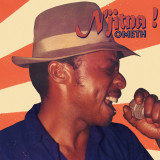
Nanga Boko Records is very proud to present you "Njitna !" ("I'm Coming" in Bamoun
vernacular langage of Cameroun), the official compilation of the finest early recordings (1979/1980) of the Cameroonian composer & musician Théodore Mounta, known on scene as "Ometh".
Deluxe hand-numbered edition, limited to 500, includes a bonus track never released on vinyl before!
Each record comes with an insert that includes exclusive pictures and very detailed biographies in both English and French languages and an HQ Digital Download Card.
Approved by the artist himself, 100 % legit, all 8 tracks are under exclusive license of Nanga Boko Records