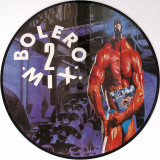
Mix vinyl. Tracklist:
A1 Bassline Boys– War Beat
A2 Bizz Nizz– We'Re Gonna Catch You
A3 Wood Allen– Airport 89
A4 The Menz Club– Burn The House Down
A5 WestBam– Monkey Say Monkey Do
A6 Mickey Oliver– In-Ten-Si-T
A7 Fax Yourself– Sunshine 89
A8 Cappella– Helyom Halib
A9 Technodelia– Technodelia
B1 Jovanotti– Gimme Five
B2 Tatjana– Awaka-Boy Boy
B3 Sabrina– All Of Me
B4 Justian– Shake
B5 Tina– Boom Boom
B6 Fancy– Fools Cry
B7 Various– Short & Radio Version
quête:bolero mix
- A1: Cirkus (Including Entry Of The Chameleons)
- A2: Indoor Games
- A3: Happy Family
- A4: Lady Of The Dancing Water
- B1: Prince Rupert Awakes
- B2: Bolero - The Peacocks Tale
- B3: The Battle Of Glass Tears (Including Dawn Song / Last Skirmish / Prince Rupert's Lament)
- B4: Big Top
DGM & Panegyric proudly present…
One of the highlights of the King Crimson 50th anniversary CD/Blu-ray editions to date has been King Crimson producer David Singleton’s series of Elemental Mixes as he utilises the full spectrum of available studio sessions for each album to produce very different takes on the familiar songs and pieces.
This is especially true of Lizard where the ambition of the material, the much-expanded line-up of musicians - the background of many of them in the jazz rather than the rock world - and the number of takes recorded, resulted in a large amount of material to be considered for this album.
There was enough material for David to be able to mix and produce alternate takes for every piece from the original album.
As well as giving great insight into the recordings, the nature of Elemental Mixes allows for different takes from individual musicians to be included – sometimes alongside one another - in a way that would never be considered in the formulation of the original album.
David comments that “When I was working on the Elemental mixes, I jokingly described them as ‘Lizard for those who don’t like Lizard’. They were a complete revelation. Lizard is the one album which, in its initial incarnation, never quite convinced me. And yet these Elemental mixes, with their opportunity to look ‘under the hood’ of the album, revealed something fresh, wonderful and astonishing. So, if you are a King Crimson fan, who like me, has never quite taken Lizard to your heart, then these are essential listening. And hopefully equally fascinating to those who already love the album”.
Presented as a single 200gram LP and including the complete album in Elemental Mixes form, running in the same sequence as the original album, this release showcases Lizard in a very different manner to how it’s previously been heard.
Lizard’s reputation has grown, deservedly so, in recent years as old and new audiences alike rediscovered the album, initially when it was first remixed for new Stereo and 5.1 Surround Sound editions in 2009 by Steven Wilson and then as much of it was performed live for the first time in concerts by the most recent King Crimson line-up between 2016 and 2018.
Hailing from Spain, prolific producer Orion Agassi is known in certain circles as a house music authority. As he has been on our radar for many years we finally connected for a six track lp of straight up beat tracks for the club. Leaning heavily on the heyday of WBMX mixshows Agassi takes the razor to classic house breaks and acapellas with a specifically Latin feel turning them upside down. Total club gear for classic house enthusiasts and working djs. Not to be missed!
a1. 121 bpm
a2. 125 bpm
a3. 123 bpm
b1. 124 bpm
b2. 126 bpm
b3. 122 bpm
Sampled by Jay-Z and Dr Dre, Italian band Calibro 35 announces the release of the new album NOUVELLES AVENTURES. The album will be available abroad on limited edition Crystal Clear vinyl next June 30th via Record Kicks.
Italian cult cinematic combo Calibro 35 are back with their new studio album NOUVELLES AVENTURES. The new album will be available abroad on a limited edition Crystal Clear Gatefold LP on June 30th, distributed worldwide via Record Kicks. The crystal clear vinyl edition is a Record Kicks exclusive and is limited to 1000 copies, which makes it an instant collector's item.
After last year's Scacco Al Maestro, the 2 tribute-albums dedicated to "il maestro" Ennio Morricone, followed by the "Calibro 35 plays Morricone" tour and the releasing of the ost of TV drama series Blanca, Calibro 35 are back with NOUVELLES AVENTURES, a new studio album of original material. NOUVELLES AVENTURES was recorded in Naples at Auditorium Novecento, the former Phonotype Records, one of the most legendary and fascinating Italian recording studios. The new LP sees the group making full use of their knowledge and resources, refined and enriched over the years, back to making "Calibro's music": a unique mix of funk, progressive rock, alternative jazz and wide-spectrum cinematic music the public has known them for in fifteen years of career.
"After a couple of intense and stimulating years playing Morricone and writing music for the TV drama Blanca", Calibro 35 said, "we had a great desire to make new inspired music. To do so, we left home and we shut ourselves up in the splendid space-time capsule that is the Auditorium Novecento studio. The result is a series of musical voyages in which we concentrated all our artistic and human experiences. As in Verne's imaginary and extraordinary journeys, we explored distant places where we had never been before. We then happened to return to more familiar shores and discover them with new eyes without realizing it. We borrowed the title NOUVELLES AVENTURES from György Ligeti, precisely because after fifteen years of building ourselves, we are ready for new adventures".
NOUVELLES AVENTURES was anticipated by the first extract "EXTRAORDINAIRE", an almost 6-minute song that once again confirms the band's aptitude for the exploration of unpredictable sound territories: a music that, on one hand sounds liquid and abstract, while on the other, it cuts through the psychedelic mists, with a complex architecture.
Described by Rolling Stone as "the most fascinating, retro-maniac and genuine thing that has happened to Italy in the past few years", Milan-based Calibro 35 enjoy a worldwide reputation as one of the coolest independent bands around. Active since 2007, during their long career they were sampled by Dr. Dre on Compton ("One Shot One Kill" feat. Snoop Dogg), Jay Z ("Picasso Baby"), The Child of Lov & Damon Albarn ("One Day") and Demigodz ("The Summer Of Sam"). They played major venues and festivals all over Europe and as unique musicians they collaborated with, amongst others: PJ Harvey, Mike Patton, John Parish, Stewart Copeland and Rokia Traoré.
- A1: El Nuevo Montuno Llego
- A2: Llamé A Chango
- A3: Monina Y Ramon 4:00
- A4: Balanceate 6:50
- B1: Triste Arrabal
- B2: Me Queda Un Guaguanco
- B3: Dichoso 3:30
- B4: Oye Tu Son Borinquen
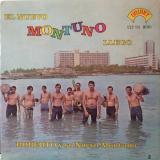
Roberto y su Nuevo Montuno recorded their first album, “El Nuevo Montuno Llegó” (1970), when Roberto Berríos was just 22 years old. This was also the debut release on Haddock’s own Uniart label. Berríos remembers that they did the recording in two sessions, splitting it up into four tracks per visit. The engineer was the famed Pedro “Pedrito” Henríquez, who recorded El Gran Combo, Roberto Roena and many others. The band had a mix of tasty, powerful originals, from Tony Cintrón’s title track that announced the band had arrived, ‘El Nuevo Montuno Llegó,’ to Quique Dávila’s mournful ‘Triste Arrabal.’ Then there was the hit Santería themed tune, ‘Llamé a Changó,’ which was a song that Quique Dávila brought to the band, but had been originally composed by Carlos Pinto, though Quique was given the credit. Dávila also composed ‘Me Queda Un Guaguancó,’ which is Roberto’s favorite song on the record (as well as a fan favorite), with Papo sounding like his friend Héctor Lavoe, and Quique Dávila’s proud manifesto declaring that Puerto Rico now had its own son montuno, ‘Oye Tu Son, Borinquen,’ featuring the pianist’s tasty but brief solo. The cover versions came from the group’s earliest period when most of their repertoire consisted of renditions of beloved but lesser known tunes, and include Louie Ramírez’s ‘Balancéate’ (a favorite of Roberto’s from Ray Barretto’s songbook), Bobby Valentín’s ‘Monina y Ramón’ (recorded during his stint with Willie Rosario), and a bolero indelibly sung by Cheo Feliciano when he was with the Joe Cuba Sextet, ‘Dichoso,’ written by Joe Cuba’s talented pianist, Nick Jiménez. Some of the arranging was done by Cintrón and some by Dávila, though Quique had some help from his old friend from El Combo Moderno, Freddie Miranda, who at that time was with Roberto Roena’s Apollo Sound. Roberto says that the arrangements of the cover tunes were made specifically to be different and more contemporary sounding than the originals. “El Nuevo Montuno Llegó” has become a legendary salsa dura classic from Puerto Rico and we are thrilled to present this first legitimately licensed and remastered vinyl reissue. It includes detailed liner notes that reveal the untold story of the band and their debut album, and rare photos.
The wild lunar landscape of Lanzarote is the dreamy frame in which Populous paints his new album, “Isla diferente”.
An instrumental trip between cumbia and latin ambient music through the mysterious and magical landscape of Lanzarote, with some gloomy vocal interventions from Fuera (Italy), Javier Arce (Costa Rica), Eva de Marce (Mexico) and Esotérica Tropical (Puerto Rico).
An organic mixture of sweet ethereal melodies and experimental electronic sounds which the artist himself labeled as “latin ambient”.
- Que Pasa
- Oye
- Groovy Samba
- Descarga China
- Bomba Chévere
- Para Pello
- The Jody Grind
- Como Fue
- Descarga China (Groove Version)
Manteca’s 2014 album, first time on vinyl. Manteca, the London Latin jazz/salsa funk combo, are back with a first-time vinyl release of their brilliant digital album “Oye” from 2014. “Oye” is a collection of heavy-duty Latin music that reaches well beyond the standard salsa or Cuban dance-band style, appealing to anyone and everyone, from mambo dancers to B-boys, jazz brothers to soul sisters! Led by Colombian singer Martha Acosta and bassist Javier Fioramonti, who have played with everyone from Roberto Pla and Candela, to Alex Wilson’s groups and Salsa Celtica, as well as backing Latin legends such as Joe Bataan, Jack Costanzo, Henry Fiol and Azuquita, this band really cooks! “Que Pasa” is smoking Latin funk, this will get your head nodding and foot tapping for sure.“Oye”, a lovely mid-tempo Afrobeat/Latin jazz fusion number with punching brass and super-funky kit playing. There are three cover versions on the album: Horace Silver’s “The Jody Grind”, a 1960s Blue Note Records soul jazz classic. Manteca does it justice, taking the original and turning it into a heavy Mongo Santamaria style funky Latin soul belter. Sergio Mendes’s “Groovy Samba” is also given the 1960s Mongo “Watermelon Man” style Latin soul jazz treatment. Very hip arrangement, and some fantastic brass soloing in there too. The last one is a brave choice. It’s the timeless bolero standard “Como Fue”, which the band plays beautifully. “Para Pello” (“For Pello”), a conga-style big percussive beat that evolved from Afro-Cuban street carnivals. Secondly, “Bomba Chevere”, a blend of Puerto Rican bomba and Colombian cumbia. The big Afro-Cuban track of the album is “Descarga China”, which has two different mixes. One is a descarga funk mix with some heavyweight kit playing and smoking trumpet soloing, while the other is a more straight-ahead Latin jam with Javier’s upright bass playing underpinning the whole number in a very Cachao way. Big shouts to the whole band, which features some of the best musicians from the London Latin music scene of the last three decades. These cats are as good as you’ll get in Latin music from anywhere across the world.This London Latin music gem has been crying out for a vinyl release for over a decade. At last, it's here. Slap it on the turntable, drop the needle on track one, turn the volume up, press play and be ready to dance. Standing still is NOT an option! DJ Lubi (One Jazz / Totally Wired Radio)
Mitreißende kubanische Rhythmen treffen auf zeitlose Weihnachtsklassiker
„Cuban Christmas ist ein Fest der Kulturen, des Miteinanders und der Musik, die die Weihnachtszeit so
magisch machen“, sagt Sarah Willis, Hornistin der Berliner Philharmoniker. Gemeinsam mit ihrem kubanischen Ensemble, der Sarahbanda, lädt sie mit diesem Album zu einem ganz besonderen Weihnachtsfest ein!
Die farbenfrohe, mitreißende Energie der kubanischen Musik trifft dabei auf zeitlose Weihnachtsklassiker
wie We wish you a Merry Christmas, Feliz Navidad u.a. - einige davon mit Gesang von Carlos Calunga,
bekannt durch den legendären Buena Vista Social Club. Zu hören ist ein fröhlicher Mix aus Klassikern
wie Jingle Bells und Stille Nacht, alle durchdrungen vom unwiderstehlichen Groove von Salsa, Mambo,
Bolero und Son. Auch Tchaikowskys Nussknacker-Suite und Bachs Brandenburgisches Konzert Nr. 3
erklingen voller kubanischem Flair. Ein beschwingtes Weihnachtsfest mit Tanz um den Weihnachtsbaum
ist garantiert!
- A1: Malavoi - Te Traigo Guajira
- A2: Los Caraibes - Donde
- A3: Tropicana - Amor En Chachacha
- A4: Ryco Jazz - Wachi Wara
- A5: Eugene Balthazar - Dap Pignan
- A6: Roger Jaffort - Oye Mi Consejo
- A7: Les Kings - Oriza
- B1: Les Supers Jaguars - Tatalibaba
- B2: Super Combo De Pointe A Pitre - Serrana
- B3: L'ensemble Abricot - Se Quedo Boogaloo
- B4: Henri Guedon - Bilonga
- B5: Les Aiglons - Pensando En Ti
- B6: Los Martiniquenos - Caterate
In Guadeloupe, many people think that jazz and ka music are like a ring and a finger. To some extent, the same could be said about so called Latin music and the music played in the French West Indies.
Both aesthetics were born in the Caribbean and bear so many connections that they can easily be considered cousins. In constant dialogue, there are lots of examples of their fruitful alliance and have been for a while. The English country dance that used to be practiced in European lounges came to be called kadrille in Martinique and contradanza in Cuba. They both featured additional percussion instruments inherited from the transatlantic deportation. Drawing from shared feelings about the same traumatized identity – later to be creolized – it would be hard not to assume that they were meant to inspire each other. The golden age of the orchestras that graced the Pigalle nights during the interwar period further proves the point. As soon as the 1930s, Havana-born Don Barreto naturally mixed danzón and biguine music in a combo based at Melody's Bar. In the following decade, Félix Valvert, a conductor who was born and raised in Basse-Terre in Guadelupe, also worked wonders in Montparnasse with La Coupole, which was an orchestra made up of eclectic musicians. Afro- Caribbean performers of various origins were often hired on rhythm and brass sections in jazz bands, which used to enliven the typical French balls of the capital. In the 1930s and onwards, Rico’s Creole Band was one of them.
Martinican violinist-clarinettist Ernest Léardée, who would become the king of biguine music as well as the main figure of French Uncle Ben's TV commercials (a dark stigma of post-colonial stereotypes), had musicians from the whole Caribbean sphere play at his Bal Blomet – and they all enchanted "ces Zazous-là" (according the words of Léardée's biguine-calypso piece). In les Antilles (French for French West Indies), music history started to speed up in the 1950s, when trade expanded and radio stations grew bigger. The Guadelupean and Martiniquais youth tuned in their old galena radio sets to South American and Caribbean music. As for the women traders, les pacotilleuses, they bought and sold goods across different islands (the "passing of items through various hands" was thought to be most pleasurable) and brought back countless sounds in their luggage. Such was the case of Madame Balthazar, who once returned from Puerto Rico with the first 45rpm and 33rpm to ever enter Martinique.
Out of this adventure was created the famous Martinican label La Maison des Merengues, a music business she opened and undertook with her husband and which proved to be a major landmark. At the end of the 1950s, in Puerto Rico, Marius Cultier competed in the Piano International Contest playing a version of Monk's Round 'Midnight. He won the first prize and this distinction foreshadowed everything that was to come. Cultier, the heretic Monk of jazz, was quickly praised for writing superb melodies, always tinged with a twist that conferred a unique sound to his music. It didn't take long for the gifted self-taught musician to get to play with Los Cubanos, making a name for himself thanks to his impressive maestria on merengues.
The rest is history. Besides, in the late 1950s, Frantz Charles-Denis, born into the upper middle class in Saint-Pierre and better known by his first name Francisco, went back home after working at La Cabane Cubaine – a club located rue Fontaine where he had caught the Latin fever. Francisco's music was therefore heavily marked by his Cuban cousins' influence, which gave the combos he led a specific style and also led to renewal. Things were swinging hard in La Savane, located in the main square in Fort-de-France. He set up the Shango club close by and tested out the biguine lélé there, a new music formula spiced up with Latin rhythms. Soon afterwards, fate had him fly to Puerto Rico and Venezuela.
As for percussionist Henri Guédon (percussions were only a part of his many talents), he was born in Fort-de-France in May 22nd 1944, the day marking the celebration of the abolition of slavery. As an old man, he could remember that in " his father's Teppaz, a lot of hectic 6/8 music was constantly playing...". In the opening lines of his Lettre à Dizzy, a small illustrated collection of writings published by Del Arco, he highlighted the huge impact that cubop had on him as a teenage boy, around 1960. He eventually turned out to be the lider maximo in La Contesta, a big band steeped in Latin jazz. He was also the one who originated the word zouk to describe music which brought the sound of the New York barrio to Paris. It was the culmination of a journey that started in Sainte-Marie: "a mythical place for bélé, the equivalent of Cuban guaguancó". In the early 1960s, the tertiary economy developed to the detriment of agriculture. Yet rural life was where roots music emerged in Martinique and in Guadeloupe.
Record companies played a major part in the process of Latin versions sweeping across the islands – before reaching everywhere else. Producer Célini, boss of the great Aux Ondes label, and Marcel Mavounzy, both the head of Émeraude records - a firm which was founded in 1953 - as well as the brother of famous saxophonist Robert Mavounzy, were big names to bear in mind. Although there were many of them - all of whom are featured on this record - Henri Debs was definitely the major figure in the recording adventure. He proved to be so influential that he even got compared to Berry Gordy. In the mid 1950s, when he acquired his first Teppaz, he worked on his first compositions: a bolero and a chachacha. Then, he became the one man who made people discover Caribbean music, from calypso to merengue. He was among the first ones to rush out to San Juan, Puerto Rico, to buy records and distribute them through a store run by one of his brothers in Fort-de-France. He had members of the Fania All Star come and perform there, which he was madly proud about. He was also the first one to pay attention to Haitian music, such as compas direct and various other rhythms which would soon flood the market. As a result, many of the combos hitting his legendary studio would end up boosted by widespread "Afro-Latin" rhythms. However, he never denied his identity: gwo ka drums were given a major role, although they were instruments which had long been banned from the "official" music spheres. The present selection bears witness to such a creative swarming. Here are fourteen tracks of untimely yet unprecedented cross-fertilization: all types of music rooted in the Creole archipelago have found their way, whatsoever, to the tracklisting. Whether originating from the city or being more rural, they all go back to what Edouard Glissant, in an interview about the place of West Indian music in the Afro-American scope, called "the trace of singing, the one which got erased by slavery." "It is so in jazz, but also in reggae, calypso, biguine, salsa... This trace also manifests through the drums, whether Guadelupean, Dominican, Jamaican or Cuban... None of them being quite the same. They all point to the idea of a trace, seeking it out and connecting to each other through it. This is the hallmark of the African diaspora: its ability to create something new, in relation to itself, out of a trace. It may be the memory of a rhythm, the crafting of a drum, a means of expression which doesn't resort to an old language but to the modalities of it." The opening track features one of the emblematic orchestras of this aesthetic identity, criscrossing many music types from the archipelago. The 1974 Ray Barretto guajira – Ray Barretto was a major New York drummer influenced by Charlie Parker and Chano Pozzo – is magnificently performed by Malavoi, a legendary Fayolais group (i.e from Fort-de-France). Additionally, the compilation ends on a piece by Los Martiniqueños de Francisco. It symbolically closes the circle as it is a genuine potomitan of Martinique culture which also functions as a tireless campaigner for Afro-Caribbean music. Practicing the danmyé rounds (a kind of capoeiria) to the rhythm of the bèlè drum, it delivers a terrific Caterete, a kind of champeta of Afro- Colombian obedience which was originally composed by Colombian Fabián Ramón Veloz Fernández for the group Wgenda Kenya. The icing on the cake is Brazilian Marku Ribas, who found refuge in Martinique in the early 1970s, bringing his singing to the last trance-inducing track. These two "versions" convey the whole tone of a selection composed of rarities and classics of the tropicalized genre, swarming with tonic accents and convoluted rhythms. It is the sort of cocktail that the West Indians never failed to spice up with their own ingredients. For instance, the Los Caraïbes cover of Dónde, a famous Cuban theme composed by producer Ernesto Duarte Brito, has a typical violin and features renowned Martinique singer Joby Valente and his piquant voice.
The track used to be – or so we think – their only existing 45rpm. The meaningful Amor en chachachá by L'Ensemble Tropicana, a band which included Haitian musicians among whom was composer and leader Michel Desgrotte, also recalls how Latin music was pervasive in the tropics in the mid-1960s. They were the ones keeping people dancing at Le Cocoteraie in Guadelupe and La Bananeraie in Martinique. Around the same time, another "foreign" band, Congolese Freddy Mars N'Kounkou's Ryco Jazz, achieved some success on both islands by covering Latin jazz classics – such as their adaptation of Wachi Wara, a "soul sauce" by Dizzy Gillespie and Chano Pozo whose interweaving of strings and percussions can have anyone hit the dancefloor. How can you resist Dap Pinian indeed, a powerful guaguancó by Eugene Balthazar, performed by the Tropicana Orchestra and published by the Martinique-founded La Maison des Merengues? It also acts as a symbol of the maelstrom at work. Going by the name Paco et L'orchestre Cachunga, Roger Jaffory used to play guaguancó too: his Fania-inspired Oye mi consejo is one example of his style. Baila!!!!! Dancing was also one of the Kings' focus points. Oriza is a Puerto Rican bomba and a "classic" originally composed by Nuevayorquino trumpeter Ernie Agosto, which reserves major space for brasses, giving it a special sheen.
Emerging from the New York barrios crucible was also La Perfecta, a Martinique group originating from Trinidad, whose name directly references the totemic Eddie Palmieri figure as well as his own band, also called La Perfecta. Here they borrow Toumbadora from Colombian producer and composer Efraín Lancheros and interpret it by emphasizing percussions, which set fire to the track even more than the wind instruments. The same goes for Martinique's Super Jaguars, who use Tatalibaba – a composition by Cuban guitarist Florencio "Picolo" Santana which was made famous by Celia Cruz & La Sonora Matencera – as a pretext for sending their cadences into a frenzy. In a more typically salsa vein, the Super Combo, a famous Guadelupean orchestra from Pointe-Noire that was formed around the Desplan family and had Roger Plonquitte and Elie Bianay on board, adapt Serana, a theme by Roberto Angleró Pepín, a Puerto Rican composer, singer and musician also known for his song Soy Boricua. Here again, their vision comes close to surpassing the original. In the 1970s, L'Ensemble Abricot provided a handful of tracks of different syles, hence reaching the pinnacle of the art of achieving variety and giving pleasure. They played boleros, biguines, compas direct, guaguancó and even a good old boogaloo - the type they wanted to keep close to their hearts for ever, "pour toujours", as they sang along together in one of their songs. Léon Bertide's Martinican ensemble excelled at the boogaloo which had been composed by Puerto Rican saxophonist Hector Santos for the legendary El Gran Combo.
Three years later, in 1972, Henri Guédon, with the help of Paul Rosine on the vibraphone, tackled the Bilongo made famous by Eddie Palmieri. Such a classic!!!!! And so were the Aiglons, the band from Guadelupe: choosing to execute Pensando en tí, a composition by Dominican Aniceto Batista, on a cooler tempo than the original, they noticeably used a wonderfully (un)tuned keyboard in place of the accordion. On the high-value collectible single – the first one released by Les Aiglons under the Duli Disc label – there is a sticker classifying the track under the generic name "Afro". Now that is what we call a symbol. Jacques Denis
Fun Fun was an Italian Euro disco band produced by Dario Raimondi Cominesi and Alvaro Ugolini. The group was fronted by models, while the vocals were recorded by
original singers Antonella Pepe, Angela Parisi, and Ivana Spagna. Spagna left after the release of their first album in 1983.
Their breakthrough came with the hit “Happy Station (Scratch Remix),” by Ben Liebrand which climbed the charts in several European countries, including the Netherlands, Germany, and Belgium.
The track became a staple in the hottest discos of the era. The Greatest Fun compilation album brings together their biggest hits, including “Happy Station (Scratch Remix),”
“Give Me Your Love,” “Baila Bolero,” and “Living in Japan.” Additionally, the album features the Fun Fun “Mega Hit Mix,” a special mix by
Dutch producer and DJ Martin Boer of 2 Brothers on the 4th Floor fame, along with many more Euro disco tracks.
- Little Drummer Bolero
- Sleepwalking Through Christmas
- Me And Maurice
- Christmas Time Rhyme
- Waiting For Snow
- We Could Have This (Feat Lindsey Kraft)
- The Christmas Song
- The Bell That Couldn T Jingle
- Xmas Aye Eye
- You Don T Have To Be A Santa Claus
“Christmas is constant,” says Ben Folds. “Allowing you to take stock of what’s different, to understand who you are and all the ways you’ve grown and changed.” That notion lies at the heart of Folds’ brilliantly titled new holiday collection, Sleigher. Built on an eclectic mix of originals and reimagined classics, the album examines thepassage of time through the lens of Christmas, reflecting on memory, loss, and longing as it explores the variety of ways the yuletide season marks the chapters of our lives. The songs are playful here, full of humor and cheer, but they’re also laced with an inescapable sense of melancholy, a looming darkness that always seems to hover around the periphery of those late December nights. Folds’ performances, meanwhile, flirt with the standards while stretching the boundaries of tradition, at times offering up flashes of Vince Guaraldi and Burt Bacharach while still remaining true to Folds’ singularly virtuosic brand of off-kilter indie pop. The result is not so much a Ben Folds Christmas record as it is a Ben Folds record set at Christmas, a meditation on the inexorable turning of the calendar and our ever changing selves as observed at the most wonderful—and challenging—time of the year.
2024 Restock
A mix of post-Tropicalia Brazilian rock and some of the more soulful elements filtering through the country's music in the early 70s and one of the most enigmatic albums by this unique singer! Sergio's got a sound that's incredibly hard to describe at once sweet and melodic, but also kind of twisted, in an intimate singer/songwriter mode. The production of the album is compressed with a number of post-Beatles touches that make it sparkle like work by Caetano Veloso in the mid 70s, or some of the Peruvian rock by groups like We All Together and hearing the record gives us the same sort of excitement of new discovery as when we heard their best work. Titles include "Rulzito Seixas", Viajei De Trem, "Pobre Meu Pai", "Labirintos Negros", "Filme De Terror", and Lero E Leros E Boleros
Sweet soul and sentimental music has never really gone out of style, and in the particular cases of the innovative wave of 1950's filin era Cuban boleros, or 1960's Nuyorican street soul, they both remain a thriving beacon of timelessness and universality, capturing a particular style of breezy Caribbean romantic music that has stubbornly thrived in the tough concrete landscape of New York City.
Perhaps there is some love in the heart of the city, as the new ensemble La Triunfadora has managed to tap into something of significant substance on their debut recording, Clasicos Sentimentales Para Una Nueva Generación. Co-produced by band leader Benjamin R. Juliá and renowned talent William Holland aka Quantic (recorded and mixed at the latter's Selva Recording studio in Brooklyn), the group has managed to capture the essence of this reemerging style of classic music, while further injecting their own inspired vision of experimental and psychedelic arrangements.
On A-side display for this debut 7-inch release on Names You Can Trust are two canonized Cuban boleros from maestro composer and guitarist Cesar Portillo De La Luz, stacked together in an old school continuous medley, and transformed with lush orchestration that has the talented musicians sparkling behind the duet of lead vocalists Candace Camacho and bandleader Juliá.
The B-side jumps from 1950's filin into Ralfi Pagan's iconic 1969 latin soul masterpiece "Hijo De Mama." Once again La Triunfadora peppers in just enough exquisite arrangements and musicianship to transform the original into something fresh, yet still guided from an analog sensibility, and ultimately performed with a familiar romanticism that these classic lovers' songs have managed to express over the decades to different generations.
In 2019 we released the Discodrums 12'' on our own newfound The Night Land Records. With its screen-printed cover and limited edition it was a tribute to a format and culture dear to our hearts: Vinyl. Our intention was to keep releasing records in this style, with songs already mixed, mastered and ready to fly.
Had we known it would take three years to get the next EPs out we would probably have reconsidered everything. Series of strange incidents, accidents and negligence made us think this project was cursed but the music felt too important to us to let it go. We kept working to get it out and now we finally arrive with two "new" EPs: Melbourne Bolero and Bosco/Bosca. This is classic Talaboman; Chuggy, hypnotic, dub flavoured Latin-Scando house music, released on vinyl with beautiful screen-printed covers designed by DR.ME in Manchester. Three years too late but a hundred years too soon? Dance is timeless, thanks for listening.
First solo LP by the talented Peruvian artist Betico Salas, lead trumpet player of the great Sonora de Lucho Macedo, one of the best ensembles playing Cuban repertoires in the early '60s. This 1966 album features Alfredo Linares on piano and sonero vocals by Benny del Solar, and combines a mix of guarachas, guanguancó and even cumbias. Betico Salas would later release two more albums and become a legendary trumpet player in Peruvian musical history. First time reissue.- DETAILS: Alfredo Linares on piano and sonero vocals by Benny del Solar stand out on this album. Benny del Solar sings lead vocals on the cumbia of Argentine origin 'Nos vamos a casar'; the Colombian 'Lo que pasa es que la banda está borracha', a continental hit since the early sixties; the guaracha 'A los muchachos de Belén', by Puerto Rican musician Tito Rodríguez; the guaracha 'Ritmo del amor'; the elegant Cuban guaguancó 'Así namá', also well known for Tito Rodríguez's rendition; and the cumbia 'Qué le digo a mi mujer'. Singer, César Gonzales, who would have an extensive career in Peruvian tropical music, sang lead vocals in the guaguancó by the Sonora Matancera 'Lindo Omelenko' and the bolero 'El árbol', a hit for the singer Roberto Ledesma, also recorded that same year by Peruvians Carmita Jiménez, Anamelba, Raul del Mar and Lucho Macedo himself, who decided to sing for his new record label. The mythical singer Johnny Arce, years later known as Mr. Macondo, also appears on the album on the two guarachas: 'La renga', a composition by Esther Forero, known as La novia de Barranquilla; and 'Yo soy candela', a composition by the Colombian Ray Rodríguez. Finally, 'La chola' is a cumbia by Peruvian composer Tomás Benítez; and 'Mambo Jazz' is a version of the descarga 'Yayi's instant mambo', an innovative instrumental track performed by Puerto Rican Willie Rosario, who recorded it in the United States at the start of 1966 with his own orchestra. Betico Salas would later release two more albums and become a legendary trumpet player in Peruvian musical history.