Remix package deluxe! Ede & Deckert feat Sargland’s catchy new wave post punk hit Immer gets the special treatment. Their tale of lover’s grief or delight is being put through the mangle by a varied bunch of remixers. Literally taking the advance party its Berlin’s Narciss with two different takes. Known to be without fear of emotional peaks and blessed with the usual sense of delight, they manage to hit the nail on its head. The Venice Remix is a master class in vintage sounds coming through new speakers: primed for the prime time, while the Salford version does exactly what the name implies: for lads and lovers.
Followed up by the simplicity of grass roots house music. Cinthie channels her inner DJ Duke and choreographs the indie dance steps back to basics. The Curses Vocal keeps the instrumental, stays in the original vibe, but switches the vocals – and the language. Finally, Kid Simius takes us on a bumper car ride somewhere between Miami Sound Machine and Yazoo.
Immer works its magic in every way for everyone and now on almost any dance floor.
Suche:bolero
Heute meldet sich der legendäre südafrikanische Pianist und Komponist Abdullah Ibrahim mit der ersten Single aus seinem neuen Album zurück, das am 12. Januar über Gearbox Records erscheinen wird.
Das neue Album "3" stammt von seinem ausverkauften Auftritt im Londoner Barbican Centre im Sommer 2023 und verteilt sich auf zwei Auftritte - der erste wurde vor dem Konzert ohne Publikum direkt auf einer 1"-Scully-Tonbandmaschine aufgenommen, die früher von Elvis in den berühmten Sun Studios in Memphis verwendet wurde. Die zweite Aufnahme stammt von der Aufführung des Abends selbst, bei der Ibrahim in einem einzigartigen Trio auftritt, zu dem Cleave Guyton (Flöte, Piccolo, Saxophon) gehört, der bereits mit Größen wie Aretha Franklin, Dizzy Gillespie und Joe Henderson aufgetreten ist, sowie der gefeierte Bassist und Cellist Noah Jackson, die beide Mitglieder von Ekaya sind und auf Ibrahims Top-3-Billboard-Jazz-Album "The Balance" zu hören sind.
- A1: Vladimir Cosma - Courage, Fuyons
- A2: Salix Alba - Vol De La Voiture
- A3: Louis Marischal - Tu M'tapes Sur Les Nerfs
- A4: Martial Solal - Dancing
- A5: Roger Morès - Dancing
- A6: Bert Paige - De Discotheek
- A7: Pieter Verlinden - Theme 19 (Générique + Générique Variation I)
- A8: Henri Seroka - Theme Axel
- B1: Rocco Granata - Jonny's Theme
- B2: Krzysztof Komeda - Les Trucs Du Miroir
- B3: Quincy Jones - Love Theme From 'The Getaway' (Faraway Forever)
- B4: Roger Morès - Ballade
- B5: Alessandro Alessandroni - La Terrificante Notte Del Demonio (Demon Arise)
- B6: François De Roubaix - Poursuite Sur Les Dunes D'ostende
- B7: Jean Marie Bigman - Bolero Pour Denise (Bolero Voor Denise)
- B8: Alain Pierre - Nacht Shift
Sdban Records, the renowned independent groove & jazz label behind Funky Chicken, Hip Holland Hip, and Discophilia Belgica, is thrilled to announce the upcoming release of its latest compilation album, "The Belgian Soundtrack: A Musical Connection of Belgium with Cinema." Packed with the finest soundtracks boasting an unmistakable Belgian connection, this compilation takes listeners on a captivating journey through a collection of cinematic hidden gems from the early sixties to the late seventies.
Curated by the passionate duo Robin Broos and Tom 'Pélé' Peeters, known for their profound appreciation of obscure soundtracks, "The Belgian Soundtrack" showcases the exceptional talents of both local and internationally acclaimed composers and musicians. From obscure finds composed by lesser-known artists to Hollywood scores performed by world-renowned musicians, this compilation offers a vibrant blend of tracks, including the occasional contribution from renowned international artists who have lent their musical prowess to Belgian films.
"The Belgian Soundtrack" came into being as a serendipitous adventure. Former film journalist Jan Temmerman reached out to us one day, offering a treasure trove of vintage soundtrack albums discovered in his attic," recounts Robin Broos. "With 650 long players, mostly unheard of titles, we embarked on an extraordinary quest-to listen to every single one of them, totaling a staggering 29,250 minutes. It was like watching the original Star Wars trilogy 78 times!"
What started as a quest soon evolved into an intriguing investigation fueled by curiosity. Along the way, Broos and Peeters unearthed dozens of treasures, delved into the backgrounds of obscure composers and musicians, and witnessed an array of enigmatic films. "We encountered an abundance of (un)necessary nudity that we never could have imagined existed," Tom Peeters laughs. The outcome of their explorations is "The Belgian Soundtrack," a meticulously curated collection of funky, melodic, and uplifting tracks, each crafted exclusively for the silver screen and boasting an unexpected Belgian connection.
- A1: Cómo Así?
- A2: Me Pongo Loca
- A3: Igual Que Un Ángel Feat Peso Pluma
- A4: Pensamientos Intrusivos
- A5: Diosa
- A6: Te Mata
- A7: Perdiste
- B1: Young Rich & In Love
- B2: Tu Corazón Es Mío…
- B3: Muñekita (With El Alfa & Jt)
- B4: Labios Mordidos Feat Karol G
- B5: No Hay Ley, Parte 2 Feat Rauw Alejandro
- B6: Heladito
- B7: Dame Besó/Muévete
Das Release für das vierte Studioalbum der Grammy Gewinnerin Kali Uchis „ORQUÍDEAS“ ist angekündigt. Das Album ist eine Hommage an ihre kolumbianischen Wurzeln – rein spanische Songs und eine Reise durch die lateinamerikanische Musikkultur.
Inspiriert von der sinnlichen Anziehungskraft der kolumbianischen Nationalblume, der Orchidee, durchquert ORQUÍDEAS mehrere lateinamerikanische Genres, darunter Reggaeton, Dembow, Bolero und Salsa. Nun bringt sie ihr neues Werk auch auf LP raus
International ensemble Classico Latino are proud to present their new album 'Salsa Classics' featuring salsa legend Julio Ernesto Estrada aka 'Fruko and virtuoso violinist Omar Puente. Drawing on the familiar Bolero and Tango, as well as lesser-known rhythms such as the Pasillo and Joropo, Classico Latino's new album displays the amazingly varied stories and emotions of Latin America.
'Salsa Classics' features collaborations with Colombian multi-instrumentalist and salsa legend Julio Ernesto Estrada aka 'Fruko,' a behemoth of the international salsa scene and an awe inspiring musician, who adds much creativity and authenticity to the project. The recording also features Cuban born violinist Omar Puente, a highly skilled virtuoso with a plethora of achievements, including being first violin with the Cuban National Symphony Orchestra, touring with Buena Vista's Ruben Gonzales and performing with high profile figures across a truly diverse range of genres, including John Williams, Jools Holland, and Wynton Marsalis, to name just a few.
Repress!
First ever reissue of "A la memoria del muerto" (1972), Fruko y sus Tesos' second album, featuring the soaring and soulful vocals of Cali native Edulfamid Molina Díaz, aka "Píper Pimienta". Produced by Fruko's uncle Mario "Pachanga" Rincón, the LP has an uncompromisingly stark, hard sound that is appealing to today's collectors of 'salsa brava' just as it was impactful on the Colombian scene when it was made. Unlike the first Tesos album, with a two-trumpet line-up and fairly simple arrangements, this more mature recording added another trumpet and two trombones for a more robust brass attack. Additionally, instead of basic salsa, there are many different rhythms - guaguancó, bomba, plena, oriza, bolero, cha-cha-chá, descarga and Latin soul. Includes the bonus track 'Tihuanaco' (a cover of Peruvian pianist Alfredito Linares), which appeared on the US edition of the LP. Presented in facsimile artwork and pressed on 180g vinyl.
Die Sonne braucht die Dunkelheit, um noch heller zu erstrahlen. Aber die Dunkelheit braucht die Sonne ebenfalls, um in vollem Kontrast zu ihrer Helligkeit zu stehen. Doch die Tragik liegt in der Beziehung zwischen den beiden: Die eine kann ohne die andere nicht existieren, aber beide werden sich nie begegnen können. Es ist eine Wechselwirkung und eine Abhängigkeit: eine Symbiose - auf die auch der Bandname SYMBIONTIC verweist.
“The Sun And The Darkness” scheint erstmal nur der zweite Release in der Geschichte von SYMBIONTIC zu sein, aber für die Melodic Death Metaller aus Dortmund ist es gleichwohl das Ende einer langen Reise. Nach der Veröffentlichung ihres Underground-Juwels “Vaya” löste sich die Band bereits 2011 auf… Zehn Jahre später kehrte sie jedoch zurück, inmitten der Pandemie, mit dem Gefühl, dass da noch etwas ist, was es zu sagen gilt.
- A1: Dejen Bailar Al Loco (2 42)
- A2: Ahorita Va Llove (2 34)
- A3: El Limoncito (2 48)
- A4: Libre De Pacado (2 54)
- A5: Pa' Goza Candela (2 20)
- A6: Dos Almas (2 39)
- B1: No Es Un Gato (3 28)
- B2: Carta De Mamita (3 21)
- B3: Quiero Casarme Contigo (2 19)
- B4: Los Goles De Pele (2 05)
- B5: Cobardia (2 36)
- B6: Trisagio Del Soltero (3 01)
Despite his popularity in Peru as a famous comedian, Melcochita devoted himself to music for many years and worked as in-house studio musician for the label Discos MAG, taking part in countless sessions. This album was recorded between 1967 and 1968, accompanied by the orchestras of Betico Salas, Joe di Roma, Nilo Espinoza, Carlos Muñoz and Tito Chicoma. The album comprises amazing guarachas, mainly international hits, and the hilarious bolero 'Cobardía' where Melcochita brings in his comedian talent. First time reissue! - Back in 1968, the year "Dejen bailar al loco" was released, Pablo was still known as Pacocha (the name of a popular brand of soap) and worked during the day as a session musician for the MAG label. At night, from eight to six in the morning, he used to play percussion in clubs. Then, at the weekends, he performed on the popular variety show La Peña Ferrando, which featured "Quality acting; very funny, simple sketches", impersonations and musical performancs. Most of the guarachas on the album are international hits, such as 'El limoncito' and 'Pa' gozá candela'. The track, 'Quiero casarme contigo' has Mexican origins, and it has been adapted to guaracha style by Betico Salas' orchestra. The humorous 'No es un gato' hails from Colombia, while 'Ahorita va a llové' and 'Carta de mamita' come from Cuba. 'Dejen bailar al loco' and 'Libre de pecado' are also from the Caribbean Island. 'Cobardía' and 'Dos almas' are classic boleros, which were already part of the repertoire of most singers back then and were also included on this album. The only way to perform them to the demanding audience at La Peña without being booed was to put a new spin on the songs, deconstruct them and reinvent the structure, as the Tito Chicoma and Joe di Roma orchestras did, and above all Melcochita, who sang them in a supernatural voice and a created Creole scat that must have wowed the audience, who would then burst into applause and laughter, going home happy after a great night out.
Limited to 1000 copies on Sea Blue vinyl! There's freedom to be found in consistency. Until recently, Juan Wauters may not have agreed with this statement. As a touring musician and multinational citizen, transience had always come naturally to him. Circumstance, however, recently prompted him to reconsider the benefits of staying in one place. His most introspective work to date, Wauters' sixth solo album Wandering Rebel finds the artist taking stock of how he's changed, how the world sees him, and what he wants out of life. Written mostly during an extended break from touring, the songs on Wandering Rebel are candid reflections on subjects like career ("Wandering Rebel"), romantic commitment ("Amor Amor"), mental health ("Nube Negra") and the personal toll of touring ("Let Loose"). On "Modus Operandi," he voices his frustration with New York's fairweather residents, who fled the city at the onset of the COVID-19 lockdown. Vocal contributions from fellow New Yorker Greta Kline (Frankie Cosmos) add to the chorus of playful disapproval. On the singalong-worthy "Millionaire," he turns his eye to the west coast: "It's hard to get around Los Angeles / If you don't have a car / I'm staying in a privileged part of town / It's suspicious for me to be walking." The clarity with which Wauters approaches these subjects lyrically is reflected in the music as well. His trademark eclecticism is still present (fans of Real Life Situations' spirited hip-hop should look to track 6, "Bolero"), but it's more refined this time, anchored in his signature Latin-influenced indie folk. Wandering Rebel is peppered with delicate additions that add depth throughout: rain sounds and hand drums on "Nube Negra," a strings section on "Modus Operandi," a gentle vibraphone on "Amor, Amor." Some of these are classic Wauters touches, but others are owed to outside influences, like production from Brooklyn-based Carlos Hernandez (Ava Luna, Carlos Truly) and Brazilian indie artist Sessa, as well as vocal contributions from Kline, Luz Elena Mendoza (Y La Bamba), Zoe Gotusso, and Super Willy K. Throughout Wandering Rebel, Wauters attempts to reconcile the stability he's come to enjoy with the nomadic restlessness that's characterized his life thus far. In the end, though, it's the interplay of both of these elements that makes the album so strong.
Reissue of this legendary album from Orchestra Baobab. Remastered from tapes.
Released in 1981, the legendary album "Mouhamadou Bamba" is the masterpiece of the Orchestra Baobab, which has dedicated more than ten years of existence. Under the direction of the percussionist saxophonist Issa Sissokho, of the irremovable guitarist Barthélémy Attiso the band records this album at the Golden Baobab studio in Dakar directed and produced by the young producer Ibrahima Sylla.
The Baobab symbolizes both the rooting in Senegalese traditional values and the ability of the tree to reach heights, the sound of the group is a perfect syncretism of Senegalese and Afro-Cuban imaginaries in which the montunos of electric guitars and vocal improvisations in wolof language marry subtly to the rhythms of cuban son and other boleros.
- A1: Looking For Atlantis
- A2: Wild Horses
- A3: Machine Gun Ibiza
- A4: We Let The Stars Go
- A5: Carnival 2000
- B1: Jordan: The Comeback
- B2: Jesse James Symphony
- B3: Jesse James Bolero
- B4: Moon Dog
- C1: All The World Loves Lovers
- C2: All Boys Believe Anything
- C3: The Ice Maiden
- C4: Paris Smith
- C5: The Wedding March
- D1: One Of The Broken
- D2: Michael
- D3: Mercy
- D4: Scarlet Nights
- D5: Doo Wop In Harlem
In 2019 we released the Discodrums 12'' on our own newfound The Night Land Records. With its screen-printed cover and limited edition it was a tribute to a format and culture dear to our hearts: Vinyl. Our intention was to keep releasing records in this style, with songs already mixed, mastered and ready to fly.
Had we known it would take three years to get the next EPs out we would probably have reconsidered everything. Series of strange incidents, accidents and negligence made us think this project was cursed but the music felt too important to us to let it go. We kept working to get it out and now we finally arrive with two "new" EPs: Melbourne Bolero and Bosco/Bosca. This is classic Talaboman; Chuggy, hypnotic, dub flavoured Latin-Scando house music, released on vinyl with beautiful screen-printed covers designed by DR.ME in Manchester. Three years too late but a hundred years too soon? Dance is timeless, thanks for listening.
First solo LP by the talented Peruvian artist Betico Salas, lead trumpet player of the great Sonora de Lucho Macedo, one of the best ensembles playing Cuban repertoires in the early '60s. This 1966 album features Alfredo Linares on piano and sonero vocals by Benny del Solar, and combines a mix of guarachas, guanguancó and even cumbias. Betico Salas would later release two more albums and become a legendary trumpet player in Peruvian musical history. First time reissue.- DETAILS: Alfredo Linares on piano and sonero vocals by Benny del Solar stand out on this album. Benny del Solar sings lead vocals on the cumbia of Argentine origin 'Nos vamos a casar'; the Colombian 'Lo que pasa es que la banda está borracha', a continental hit since the early sixties; the guaracha 'A los muchachos de Belén', by Puerto Rican musician Tito Rodríguez; the guaracha 'Ritmo del amor'; the elegant Cuban guaguancó 'Así namá', also well known for Tito Rodríguez's rendition; and the cumbia 'Qué le digo a mi mujer'. Singer, César Gonzales, who would have an extensive career in Peruvian tropical music, sang lead vocals in the guaguancó by the Sonora Matancera 'Lindo Omelenko' and the bolero 'El árbol', a hit for the singer Roberto Ledesma, also recorded that same year by Peruvians Carmita Jiménez, Anamelba, Raul del Mar and Lucho Macedo himself, who decided to sing for his new record label. The mythical singer Johnny Arce, years later known as Mr. Macondo, also appears on the album on the two guarachas: 'La renga', a composition by Esther Forero, known as La novia de Barranquilla; and 'Yo soy candela', a composition by the Colombian Ray Rodríguez. Finally, 'La chola' is a cumbia by Peruvian composer Tomás Benítez; and 'Mambo Jazz' is a version of the descarga 'Yayi's instant mambo', an innovative instrumental track performed by Puerto Rican Willie Rosario, who recorded it in the United States at the start of 1966 with his own orchestra. Betico Salas would later release two more albums and become a legendary trumpet player in Peruvian musical history.
For his debut album Dip Shim digs deep into his past for his most personal release yet, drawing on his childhood in Spain for a genre-bending album of electronics, combining influences from house, techno, electro, downtempo, and ambient to create one of the year’s most essential releases.
Dip Shim, who also runs the Bolero record store in Malmo, Sweden, pushes and tweaks those silver boxes to create music with one foot in the past but looking to the future, from the fluid acid house of Dalaplan Jam and Bubble Gate, uptempo electro jams like BDP Fast Life and Tusso Arcade Force, to meditative joints such as One For Regen and Impossible Connection.
But although the album is eclectic, these 12 tracks are underpinned by Dip Shim’s unique hardware-led sound, proving he’s an artist with depth and longevity.
One of pianist Ray Pérez's rarest releases and his first on his own label Pyraphon, "They Do It" (1971) was also his final collaboration with Perucho Torcat, a talented sonero who died tragically young in NYC the following year. The record sports an impressively diverse array of rhythms and genres, including the popular Cuban, Puerto Rican and New York sounds that the young Venezuelan salsa groups excelled in at the time (guaguancó, bolero son, son montuno and Latin soul / boogaloo). Other Caribbean modes like calypso (the coast of Venezuela is very near Trinidad and Tobago), pambiche (a slow form of Dominican merengue developed for tourists), and even traditional Venezuelan merengue (a completely different rhythm from the Dominican genre of the same name) appear on the album. Full of classic dance floor burners, the album has been lovingly restored, mastered from the original tapes, fully licensed, with its original artwork intact, preserving the legacy of this great Venezuelan music for today's generation of salsa dura lovers everywhere. The LP is highly collectible and is now being reissued by Vampisoul for the first time.
- A1: Vamos A Bailar Un Son
- A2: No Quiero Celos
- A3: Maria Cristina
- A4: Como La Nube Se Impone Al Sol (Feat Pablo Milanes)
- B1: Que Lio Compay Andres
- B2: Un Bolero Para Ti (Feat Argentina)
- B3: Para Ti Nengon
- C1: Pregon Santiaguero
- C2: Descripcion De Un Sueno
- C3: En Casa De Pedro El Cojo
- C4: Baila Con Mi Corazon
- D1: Ay Mama Que Bueno (Bonus Track)
- D2: La Curiosidad Me Mata (Bonus Track)
- D3: Si En Un Final (Bonus Track)
Eliades Ochoa has been renowned for over 40 years as a Cuban singer, guitarist and performer, including as a key contributing artist to the multi-million selling 1997 ‘Buena Vista Social Club’ album. World Circuit now releases a Special Edition of Ochoa’s latest album ‘Vamos A Bailar Un Son’. Originally released in 2020, the album features Eliades’ interpretations of songs by important Latin American composers like Ñico Saquito and Agustín Lara, as well as compositions by Eliades himself. The new Special Edition is available on CD, LP and digital formats and features 3 previously unheard bonus tracks. Ochoa continues to explore new collaborations, having recently teamed up with Spanish rapper C. Tangana on his track ‘Muriendo De Envidia’. Eliades comments: “This album has made me feel more alive. I am thrilled that more and more young people are connecting with my music.”
Buenos Aires-based producer, luthier and musician Barrio Lindo presents
his fourth LP - Espuma de Mar - and his first recorded in a band format
The eight-track album represents a departure for the producer, embracing a much
more acoustic sound, inspired by a period of deep listening. The result is an
unforgettable journey that skillfully navigates between Spiritual Jazz and LatinAmerican popular music like Tango or Bolero, all embellished by subtle touches
of electronica. Unlike anything else, it is a glimpse into the future of the everevolving and bubbling South American music scene. Pressed on 180-gram White
color vinyl.
Lucrecia Dalt is a Colombian recording artist, songwriter, and producer currently based in Berlin, Germany. Dalt channels sensory echoes of growing up in Colombia on her eighth studio album ¡Ay!, where the sound and syncopation of Tropical Music encounter adventurous impulse, lush instrumentation, and metaphysical sci-fi meditations in an exclamation of liminal delight. Dalt's introspective approach to composition, last surfaced on her entrancing 2020 album No era sólida, refracts across ¡Ay! in a subconscious spectrum of the music genres she absorbed as a child. Treasured sounds and syncopations of bolero, mambo, salsa, and merengue rooted in Dalt's early surroundings awaken on ¡Ay! and give glow to the album's contours. The intuitive melodic structures of this music, processed by memory and modular synths, led Dalt to a mirage of her creative origins and the album she has always wanted to make. ¡Ay! is a tincture of rich acoustic textures filtered through the warmth of Dalt's signature machinic distortion, diffused of easily-defined edges as previously explored on No era sólida and her 2018 album Anticlines. Here, vivid incantations of upright bass, wind ensembles and brass form shimmers of harmonic motif, distilled across radiant rhythms. Dalt worked closely with friend and collaborator Alex Lázaro to cultivate new shapes and colors for slowed down tumbaos and bolero percussion patterns. Together they deconstructed the traditional drum kit into serpentine expansions of congas, bongos, temple blocks and timbales, all of which they tuned to dance among Lucrecia's lucid vocal processions. For Fans of David Sylvian, Rosalía, Robert Wyatt, Rita Indiana, Matías Aguayo, Tom Waits, Meridian Brothers.
Two leading Norwegian jazz artists have put together an excellent album
with just a microphone and a grand piano
On 'Movies & Stories Like This' they present nine self- composed songs about
intangible love. Hilde Louise's voice is elegantly accompanied by Anders Arums,
they cover everything from bolero and tango to French waltz and jazz ballads.
Piaf, Brell and Weill are evident sources of inspiration. Hilde Louise's lyrics span
both the minor and the major kinds of love, from everyday relationships, the ones
about which no films are made, but nevertheless carry with great drama, to the
big love stories.
Hilde Louise Asbjørnsen has released 11 albums since 2004 and continues to be
an important part of the Norwegian jazz scene. Her previous album 'Red Lips,
Knuckles and Bones' was released on Ozella Music to great reviews. She has
been described as "three parts Monroe and one part Holiday", and has nurtured
an extensive career as a cabaret- artist and a musical actress. Her latest solo
performance and book by the name of 'Stardust' is a tribute to 8 female legends
from last century. The show is a great success in Norway, and is to visit
Edinburgh Fringe Festival in 2023.
Dans cet opus enregistré entre Colombie et Cuba et édité pour la première fois en 2011 en CD, Sergent Garcia évoque tour à tour la tolérance, le combat de la vie des musiciens et les nombreux mensonges.
Très rapidement c’est un succès international qui lui apporte une nomination aux fameux Latin grammy
Awards dans la catégorie meilleur album de fusion tropicale ! Plus de 10 ans après sa sortie, l’artiste offre à son public une version limitée rééditée en format vinyle orange pour le Disquaire Day.
Album de joie et de fête mais toujours engagé poétiquement sur le monde, le disque comporte une dizaine de chansons dont la plus célèbre est Una Y Otra Vez. Hymne au courage et à la résistance, voilà tel est le message que l’artiste veut transmettre pour lutter contre l’oppression mentale et économique.
Il puise sa force dans les expériences propres de Sergent Garcia durant ces années où il a dû lutter pour son indépendance artistique et retrouver son inspiration.
- A1: Linda Guajira
- A2: Que Bueno Baila Usted
- A3: Relax & Mambo
- A4: Al Son Del Pilon
- A5: Tabu
- A6: Yo No Quiero Piedra En Mi Camino
- A7: La Mulata Rumbera
- A8: Lagrimas Negras
- A9: Dejame Recordar
- B1: Guantanamera
- B10: Saradonga
- B2: Cogele El Golpe
- B3: Dundumbanza
- B4: Magia Negra
- B5: Gandinga, Mondongo Y Sandunga
- B6: Te Di Un Beso Sin Importancia
- B7: Mambo Riff
- B8: La Rumba Me Llama
- B9: Mambo No 5
- A10: El Manisero
26 original recordings with comprehensive 12-page booklet
The music of Cuba, including its instruments, performance, and dance, comprises
a large set of unique traditions influenced mostly by West African and European
(especially Spanish) music. Cuban music is among the richest and most
influential regional music in the world.
Cuban music has contributed to the development of a wide variety of genres and
styles around the globe. Examples include the son Cubano, guarachá, danzón,
bolero, rhumba, Afro- Cuban jazz, salsa, and a wide variety of genres in Latin
America. Many of these styles are represented on this outstanding collection,
which presents 26 of Cuban music's greatest hits performed by the most
celebrated Cuban stars.
First ever reissue of one of the most sought after titles in the catalogue of Peruvian's label MAG, in high demand not only among Latin music collectors but also among those interested in the most exotic and experimental psychedelic sounds around. - It includes 'Astronautas a Mercurio', a cosmic descarga full of electronic effects, filtered voices and fierce guitars with wah wah and raw distortion, as well as guarachas, cumbias and descargas. - Details: Hugo Macedo was a member of the first sonora in Peru, directed by his brother: the Sonora de Lucho Macedo. His brothers were the singers of the band while he performed as a timbalero. After nine years he founded the Sonora Casino of Hugo Macedo in 1964, later incorporating his wife, Lucía "Pochita" Rivera as a vocalist. "Trompeteros" was released on the Peruvian record label MAG in 1972. Previously, the Sonora Casino had already recorded several albums for Philips since the mid-60s. At the time their repertoire was fed by rhythms such as cha cha cha, bolero, guaracha... Their MAG period would start in 1970 with the album "Pochita y la Sonora Casino de Hugo Macedo" in which Hugo Macedo's wife was granted with an important visual presence on the front cover, with a similar follow-up on "Trompeteros", creating some confusion since vocalist Pachito Nalmy was the actual main singer on the record. The vocalist, who hails from Callao, demonstrates here a great vocal versatility as captured on songs like 'Guajira del amor', with a heavy rhythm that will surely delight boogaloo lovers, or the bolero number 'Pasa, pasa', being both songs own compositions of the multitalented Nalmy. Guarachas, descargas and cumbias complete the offering of this fantastic album, one of the strongest tropical LPs in the MAG catalogue. But the real banger here is the almost magical 'Astronauts to Mercury', a cosmic descarga full of electronic effects, filtered voices and fierce guitars with wah wah and raw distortion, closer to the sound of any psychedelic recording than the classic tropical sound of La Sonora Casino, and right next to those elements, an impressive brass section that boosts the intensity of the song to the highest levels. It is not surprising that "Trompeteros" has become in recent years a highly sought-after album not only by Latin music collectors but also by those after the most exotic and experimental psychedelic sounds around... Pablo Iglesias aka DJ Bongohead
- A1: Mentiras Con Carino (Feat Ile)
- A2: El Paraguas (Feat Gabriel Garzon-Montano)
- A3: Idolo (Feat Angelica Garcia)
- A4: Hielo Seco (Feat Marc Ribot & Money Mark)
- A5: El Payaso (Feat Girl Ultra)
- A6: Tus Tormentas (Feat Mireya Ramos)
- B1: Puedes Decir De Mi (Feat Gaby Moreno)
- B2: Eso No Lo He Dicho Yo (Feat College Of Knowledge)
- B3: Esclavo Y Amo (Feat Natalia Clavier)
- B4: Ya No Me Quieres (Feat Jaron Marshall)
- B5: El Leon (Feat Rudy De Anda)
- B6: El Muchacho De Los Ojos Tristes (Feat Tita)
Adrian Quesada announces the release of ‘Boleros Psicodélicos’,
a sprawling and singular tribute to the golden era of balada music.
The brand-new album from the GRAMMY-nominated guitarist,
producer and Black Pumas co-founder serves as a celebration of
the super funky, slightly delirious and deeply soulful sounds that
transcended the cultural boundaries of Latin America throughout
the late 1960s and early 1970s.
Featuring vocals from Puerto Rican icon, GRAMMY-winner and
former Calle 13 member iLe, Colombian-American visionary
Gabriel Garzón-Montano, Mexican R&B star Girl Ultra, as well as
Angelica Garcia, Gaby Moreno, contributions from living legends
such as Marc Ribot and Beastie Boys musician Money Mark, and
many more, ‘Boleros Psicodélicos’ consists primarily of original
Adrian Quesada compositions, as well as covers of La Lupe’s
‘Puedes Decir De Mí’, Jeanette’s ‘El Muchacho De Los Ojos
Tristes’ and other balada classics.
All twelve tracks were produced, engineered, mixed and largely
performed by Adrian Quesada, honouring and extending the
influence of a personal obsession that he has cultivated over the
past 20 years.
Similar to his acclaimed 2018 album ‘Look At My Soul’, which
traced the deep roots and relationship between Latin and Texas
music, Adrian Quesada sees every song on ‘Boleros Psicodelicos’
as both a history lesson and a step towards a newly imagined,
more united future: “I always wanted to pay tribute to that sound
that I was already hearing in my head without realizing that people
had already done it. Balada changed the face of Latin music
forever. If something like that happened today, it would be normal
because everyone’s connected on Instagram. Think how powerful
this sound had to be for everyone to be connected through the
songs. As someone who grew up speaking two languages and
living on both sides of the border, I love how much music can
transcend barriers and boundaries. It really is a universal
language, especially back then.”
This album comprises hits from the repertoire of the most famous Cuban and Boriquen orchestras in the late '50s, performed by young Peruvian percussionist Ñiko Estrada and his sonora. However, due to contractual restrictions, the album was released under the fictitious Sonora MAG name.
Fascinated by the music of the Cuban orchestras broadcast on the radio and the colourful and flamboyant outfits they sported when played Lima, Ñiko Estrada named his first band Los chicos de Cuba (The Cuban Boys). In 1958 he put together his own group, sonora, signing to the local label Smith and recording a number of hits. At the same time, he also agreed to anonymously record more music for MAG, the Peruvian company owned by Manuel Guerrero. An imaginary Sonora MAG was born…
"El Negro Bembón con la Sonora MAG" includes, with the only exception of the instrumental track 'Té Para Dos', mostly vocal songs -guarachas and boleros- by the likes of Manolo Castro, Rafael "Chivirico" Dávila, and Vicky Zamora, being her take on 'Pepito' the biggest hit of the album.
This album is currently almost impossible to find in its original edition, so we are now happy to present the first ever reissue of "El Negro Bembón con la Sonora MAG" in its original artwork and 180g vinyl pressing.
- A1: Semi-Fraudulent / Direct-From-Hollywood Overture
- A2: Mystery Roach
- A3: Dance Of The Rock & Roll Interviewers
- A4: This Town Is A Sealed Tuna Sandwich (Prologue)
- A5: Tuna Fish Promenade
- A6: Dance Of The Just Plain Folks
- A7: This Town Is A Sealed Tuna Sandwich (Reprise)
- A8: The Sealed Tuna Bolero
- A9: Lonesome Cowboy Burt
- B1: Touring Can Make You Crazy
- B2: Would You Like A Snack?
- B3: Redneck Eats
- B4: Centerville
- B5: She Painted Up Her Face
- B6: Janet's Big Dance Number
- B7: Half A Dozen Provocative Squats
- B8: Mysterioso
- B9: Shove It Right In
- B10: Lucy's Seduction Of A Bored Violinist & Postlude
- C1: I'm Stealing The Towels
- C2: Dental Hygiene Dilemma
- C3: Does This Kind Of Life Look Interesting To You?
- C4: Daddy, Daddy, Daddy
- C5: Penis Dimension
- C6: What Will This Evening Bring Me This Morning
- D1: A Nun Suit Painted On Some Old Boxes
- D2: Magic Fingers
- D3: Motorhead's Midnight Ranch
- D4: Dew On The Newts We Got
- D5: The Lad Searches The Night For His Newts
- D6: The Girl Wants To Fix Him Some Broth
- D7: The Girl's Dream
- D8: Little Green Scratchy Sweaters & Courduroy Ponce
- D9: Strictly Genteel (The Finale)
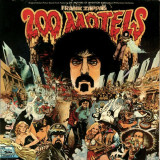
Frank Zappa’s “200 Motels” was a miraculous feat, a cinematic collision of the venerated musician and composer’s kaleidoscopic musical and visual worlds that brought together Zappa and his band, The Mothers, Ringo Starr as Zappa – as “a large dwarf” – Keith Moon as a perverted nun, Pamela Des Barres in her acting debut, noted thespian Theodore Bikel, the Royal Philharmonic Orchestra, and an incredible assortment of characters (both on screen and off) for a “surrealistic documentary” about the bizarre life of a touring musician. In celebration of “200 Motels” golden anniversary, Zappa Records, UMC and MGM have assembled a definitive Super Deluxe six-disc box set of the beloved, yet hard to find, soundtrack for release on November 19. Fully authorized by the Zappa Trust and produced by Ahmet Zappa and Zappa Vaultmeister Joe Travers, the monstrous 200 Motels 50th Anniversary Edition brings together the original soundtrack, newly remastered by Bernie Grundman at Bernie Grundman Mastering, along with a staggering amount of unreleased and rare material unearthed from FZ’s Vault, including original demos, studio outtakes, work mixes, interviews and movie ads, along with newly discovered dialog reels, revealing an early audio edit of the film. Also included is a wealth of never-before-heard audio documentary material surrounding the project. The six-disc set will be housed in a 64-page hardcover book in a handsome 12” x 12” slipcase. The packaging replicates the original booklet updated with revealing new liner notes from Pamela Des Barres, Ruth Underwood and Joe Travers, as well as Patrick Pending’s essay from the 1997 reissue, and is chock full of motion picture artwork, stills and images, from the film and its making, many which have never been seen before. This must-have collector’s release will also include a custom “200 Motels” keychain and Do-No-Disturb motel door hanger and a full-size replica of the original movie poster. Years in the making, all the audio was meticulously identified and transferred over several years as Travers dug through the Vault to create a new high resolution 96K/24B digital patchwork stereo master from the original analog tapes. The Vault material was mastered by John Polito in 2021. The remastered 200 Motels soundtrack will also be reissued on vinyl as a 2LP pressed on 180-gram black vinyl and on a 2CD format - both will include a smaller version of the movie poster.
- N1: Paper Blood (Live At The Albert Hall)
- N2: Romeo And Juliet (Live At The Albert Hall)
- N3: Creole Dance (Live At The Albert Hall)
- N4: Still... You Turn Me On (Live At The Albert Hall)
- N5: Lucky Man (Live At The Albert Hall)
- O1: Black Moon (Live At The Albert Hall)
- O2: Pirates (Live At The Albert Hall)
- P1: Finale (Medley)
- Q1: Karn Evil 9 1St Impression (Pt. 2) (Union Hall, Phoenix, Arizona, Usa, 23Rd September, 1997)
- Q2: Hoedown (Union Hall, Phoenix, Arizona, Usa, 23Rd September, 1997)
- A1: The Barbarian (Live At The Isle Of Wight Festival, Newport, Uk, 29Th August 1970)
- A2: Take A Pebble (Live At The Isle Of Wight Festival, Newport, Uk, 29Th August 1970)
- B1: Pictures At An Exhibition: Promenade Pt.1 / The Gnome / Promenade Pt.2 / The Sage / The Old Castle
- C1: Pictures At An Exhibition (Continued): Promenade Pt.3 / The Hut Of Baba Yaga / The Curse Of Baba Ya
- D1: Rondo (Live At The Isle Of Wight Festival, Newport, Uk, 29Th August 1970)
- D2: Nutrocker (Live At The Isle Of Wight Festival, Newport, Uk, 29Th August 1970)
- D3: Interview (Live At The Isle Of Wight Festival, Newport, Uk, 29Th August 1970)
- E1: Toccata (Live At California Jam, Ontario Motor Speedway, California, Usa 6Th April 1974)
- E2: Still... You Turn Me On (Live At California Jam, Ontario Motor Speedway, California, Usa 6Th April
- E3: Lucky Man (Live At California Jam, Ontario Motor Speedway, California, Usa 6Th April 1974)
- F1: Piano Improvisations (Including 'Fugue' And 'Little Rock Getaway) (Live At California Jam, Ontario M
- F2: Take A Pebble (Live At California Jam, Ontario Motor Speedway, California, Usa 6Th April 1974)
- G1: Karn Evil 9 1St Impression (Pt.2) (Live At California Jam, Ontario Motor Speedway, California, Usa 6
- H1: Karn Evil 9 3Rd Impression (Live At California Jam, Ontario Motor Speedway, California, Usa 6Th Apri
- H2: Pictures At An Exhibition: The Great Gates Of Kiev (Live At California Jam, Ontario Motor Speedway
- I1: Introductory Fanfare (Live 1977/78)
- I2: Peter Gunn (Live 1977) - By Keith Emerson
- I3: Tiger In A Spotlight (Live 1977/78)
- I4: C'est La Vie (Live At Olympic Stadium, Montreal, 1977) - By Keith Emerson
- I5: Watching Over You (Live At Olympic Stadium, Montreal, 1977) - By Keith Emerson
- I6: Maple Leaf Rag (Live At Olympic Stadium, Montreal, 1977)
- I7: The Enemy God Dances With The Black Spirits (Live At Olympic Stadium, Montreal, 1977)
- J1: Fanfare For The Common Man (Live At Olympic Stadium, Montreal, 1977)
- J2: Knife-Edge (Live At Olympic Stadium, Montreal, 1977)
- K2: Pictures At An Exhibition (Live At Olympic Stadium, Montreal, 1977)
- L1: Closer To Believing (Live At Olympic Stadium, Montreal, 1977)
- L2: Piano Concerto Third Movement: Toccata Con Fuoco (Live At Olympic Stadium, Montreal, 1977)
- L3: Tank (Live At Olympic Stadium, Montreal, 1977)
- M1: Karn Evil 9 1St Impression, Pt. 2 (Live At The Albert Hall)
- M2: Tarkus (I. Eruption Ii. Stones Of Years Iii. Iconoclast)
- M3: Knife Edge (Live At The Albert Hall)
- Q3: Touch And Go (Union Hall, Phoenix, Arizona, Usa, 23Rd September, 1997)
- Q4: From The Beginning (Union Hall, Phoenix, Arizona, Usa, 23Rd September, 1997)
- Q5: Knife-Edge (Union Hall, Phoenix, Arizona, Usa, 23Rd September, 1997)
- R1: Bitches Crystal (Union Hall, Phoenix, Arizona, Usa, 23Rd September, 1997)
- R2: Creole Dance (Union Hall, Phoenix, Arizona, Usa, 23Rd September, 1997)
- R3: Honky Tonk Train Blues (Union Hall, Phoenix, Arizona, Usa, 23Rd September, 1997)
- R4: Take A Pebble (Union Hall, Phoenix, Arizona, Usa, 23Rd September, 1997)
- R5: Lucky Man (Union Hall, Phoenix, Arizona, Usa, 23Rd September, 1997)
- S1: Tarkus: Eruption / Stone Of Years / Iconoclast / Mass (Union Hall, Phoenix, Arizona, Usa, 23Rd Septe
- J3: Show Me The Way To Go Home (Live At Olympic Stadium, Montreal, 1977)
- S2: Pictures At An Exhibition: The Great Gates Of Kiev (Union Hall, Phoenix, Arizona, Usa, 23Rd Septembe
- T1: Fanfare For The Common Man (Including Drum Solo) / Blue Rondo A La Turk (Union Hall, Phoenix, Arizon
- T2 21: St Century Schizoid Man / America (Union Hall, Phoenix, Arizona, Usa, 23Rd September, 1997)
- K1: Abaddon's Bolero (Live At Olympic Stadium, Montreal, 1977)
xe m1 Karn Evil 9 1st Impression, Pt. 2 (Live at the Albert Hall) [2017 - Remaster]
[xf] m2 Tarkus (I. Eruption II. Stones of Years III. Iconoclast) [Live at the Albert Hall] [2017 - Remaster]
[xg] m3 Knife Edge (Live at the Albert Hall) [2017 - Remaster]
[xh] n1 Paper Blood (Live at the Albert Hall) [2017 - Remaster]
[xi] n2 Romeo and Juliet (Live at the Albert Hall) [2017 - Remaster]
[xj] n3 Creole Dance (Live at the Albert Hall) [2017 - Remaster]
[xk] n4 Still... You Turn Me on (Live at the Albert Hall) [2017 - Remaster]
[xl] n5 Lucky Man (Live at the Albert Hall) [2017 - Remaster]
[xm] o1 Black Moon (Live at the Albert Hall) [2017 - Remaster]
[xn] o2 Pirates (Live at the Albert Hall) [2017 - Remaster]
[xo] p1 Finale (Medley) [I. Fanfare for the Common Man II. America III. Rondo] [Live at the Albert Hall] [20
Los Angeles based band Los Lobos have always
been inspired by their surroundings and the place
they call home. Their music is influenced by rock
and roll, Tex-Mex, country, zydeco, folk, R&B,
blues, brown-eyed soul, and traditional music such
as cumbia, boleros and norteños.
With ‘Native Sons’ the band set out to showcase
all of these influences with their own take on the
songs of Los Angeles from some of the cities
greatest songwriters.
‘Native Sons’ features 13-songs from well known
LA artists such as Buffalo Springfield, WAR,
Jackson Browne and The Beach Boys as well as
deep cuts from The Jaguars, The Basters and The
Premiers.
The album title track is the sole original
composition written by the band.
2LP in gatefold sleeve (etching on Side 4).
Rough & tough from beat one, Cosa Records is extremely proud to present to you The Revues! Exploring the Texas ballroom revue scene of the 1960's, The Revues' first offering is this updated take on the classic Royal Jesters cut. On the flip side,The Revues take on the classic song "Carino Nuevo", features a fresh arrangement of the quintessential version played by Sunny Ozuna. By blending elements of Texas and California soul, the Revues breath new life into this classic bolero. Led by vocalist La Marisoul, her soulful voice adds a depth and tenderness to Sunny's version. This take is an ode to the Tejano ballrooms that pervaded across much of the Southwest during the mid-20th century. Late nights, bar fights, broken hearts, and soulful music that provided a soundtrack to the lives of hard working Mexican-American families.
Maurice Ravel is a French composer born March 7, 1875 in Ciboure and died December 28, 1937 in Paris. The greatest French composer during his lifetime after the death of Claude Debussy, he was one of the main representatives of Impressionist music at the start of the 20th century. Known worldwide for his Bolero, his most famous works also include the ballet Daphnis and Chloé, the Concerto pour la main gauche or even the orchestration of Pictures at an exhibition by Modeste Moussorgsky.
One off album by an all-star ensemble of musicians and singers, many of whom had played with Fruko y sus Tesos and other Colombian orchestras previously. There is cumbia, salsa, bolero, son montuno, descarga and even calypso, including 'Cumbia y tambó (En la lluvia)' which has been an international dance floor staple for many years. One of the best tropical records released by Codiscos that receives its first-time reissue here in glorious remastered sound.
- A1: Harry Wolfman - Upstream (2021 Version)
- A2: Kiwi - We Are Here
- A3: Jad & The - 232 (Raw Tool)
- B1: Karl Hector & Nicolas Tounga - Ngunga Yeti Fofa (The Joaquin Joe Claussell's Electric Afrika Version (2021 Version)
- B2: Vito & Druzzi - Night Masquerade
- C1: The Barking Dogs - Mamarracho Feat Marcelo Burlon (2021 Version)
- C2: Capablanca & T Keeler - No Hay Ritmo
- C3: Kapote - Besamo Fly
- D1: Hard Ton - Food Of Love (Dj Sprinkles Grub Dub (2021 Version)
- D2: Munk - The Bolero Bunuel (Red Axes Remix)
- D3: Art Alfie - Dance To The Conga (Edit)
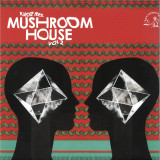
The MUSHROOM HOUSE compilation is a collection of balearic, afro and cosmic disco tracks that have been released on several Toy Tonics EPs over the last 5 years. Toy Tonics now releases some of these EPs on a double vinyl together. This is the second part. Featuring eleven tracks. (Vol 1 was released in 2020.)
Original tracks and remixes by friends of the label: Kiwi, Red Axes, Karl Hector, Hugo Capablanca, Harry Wolfman. Very special contributions by New York's legendary Joe Claussell and fashion designer Marcelo Burlon, who contributed the vocals to a song by Milan’s Barking Dogs. Art Alfie from Studio Barnhus is featured also with an exclusive track and legendary DJ Sprinkles with a magic rework of a Hard Ton song.
A few of the tracks had been already released on Gomma records. The now sleeping indie-electronica label that was the „mother“ of Toy Tonics records. Some were made exclusively for Toy Tonics.
This highly collectible LP from 1974 is a nonstop salsa dura party album from start to finish, comparable with any of New York's finest like Ray Barretto and Willie Colón from the same era, but with its own unique sound and joyful vibe. Includes the anthems 'Mi Nuevo Ritmo' and 'Alma y Sentimiento/ Soul and Feeling' recorded at different sessions in Colombia and Peru. Presented in its original artwork and pressed on 180g vinyl. The highly collectible LP Alfredo Linares Y Su Salsa Star "Mi Nuevo Ritmo" (1974) is a nonstop salsa dura party album from start to finish, comparable with any of New York's finest like Ray Barretto and Willie Colón from the same era, but with its own unique swinging sound and bright, crisp, joyful vibe. There are plenty of straight up Cuban-roots based salsa tunes, plus some Latin jazz and Latin soul and a bolero. Trumpets, hand claps, loud cowbell, and vigorous vocals all make for a great listen and an even better dance experience. As the track 'La Música Brava' proclaims, "Yo no quiero que pare la música brava!" (I don't want the badass music to stop!). The record is actually a patchwork of different recording sessions made in Peru and Colombia, featuring differing studio sound and musician lineups. Linares had just returned to his adopted home of Medellín from a period spent in Peru and was looking for a record deal. He had brought master tapes with four songs recorded in Lima and was shopping them around in the hopes of securing an album contract. Linares also cut some Colombian sessions which feature Roy "Tayrona" Betancourt as well as Henry Castro and Enrique Fabián. Unfortunately, neither Discos Fuentes nor Sonolux or Codiscos were interested. At that time, vinyl for making records was scarce and over-priced due to the petroleum crisis and hence the labels were reluctant to try out a new artist. "There was nothing to be done. The only company that had vinyl stock was INS. So I did the business with them even though they didn't have a known name in Colombia. The strength of that album made them rather famous." The song 'Mambo Rock' (with 'Estricto Guaguancó' on the B side) came out on a 45rpm record in 1974, and, as Linares recounts it, "two months later the sale was at a very high level. So, partly out of gratitude, I started producing for them. It is from there that my other records and the AfroINS albums came." Unfortunately the master tapes to the LP were lost or destroyed, as with all INS releases, so the best possible vinyl sources and audio restoration has been used for this deluxe reissue.
- A1: Aussen (Feat Tre B Mal)
- A2: Opus 23 (Feat Hexia)
- A3: Brack St Twen (Feat Cole Collective)
- A4: 27 Secrets (Feat Bob Drew)
- A5: Mind No Ever No Xxx (Feat Hrafnhildur Melsted)
- A6: Flow (Marked Red) (Marked Red)
- B1: To The Bone (Feat Grand Ox)
- B2: San Remo (Feat Giovanni Dimachelli)
- B3: Juice Tonight (Feat Pernille Solberg)
- B4: Dorian (Feat Martin Stollmayr)
- B5: Thema Zwei (Feat Maral Moradi)
- B6: Spheres (Feat Room Trail)
- B7: Bolero Azul (Feat Las Abuelas)
- B8: I Thought Of Ian (Feat Ging Gang Gong)
„Lamberts Musik bricht gängige Hörgewohnheiten“ – Die Welt Lambert ist ein Unikat, und das nicht etwa nur etwa deshalb, weil er seine Musik versteckt hinter einer in
Sardinien handgefertigten Ledermaske zum Besten gibt und kein Zuhörer sein Antlitz bislang zu Gesicht bekam. Bereits mit seinem letzten Album “True” ist der Berliner Pianist und Komponist Lambert ganz anonym in die unterschiedlichsten musikalische Identitäten geschlüpft. „Die Miniaturen von Lambert, der ausschließlich mit Maske auftritt, zeugen von einem enormen Gespür für Melodien.“ – Rolling Stone Nun erscheint mit “False” bereits das fünfte Album des inspirierenden Künstlers für welches er für jedes einzelne Stück ein besonderes Alter Ego kreierte, um das Verwirrspiel um seine Identität perfekt zu machen.
Bei Lambert hat diese Verhüllung etwas poetisches, das sein meditativ impressionistisches Klavierspiel im
Niemandsland zwischen Klassik, Jazz und Pop noch etwas entrückter und verzauberter klingen lässt. Lamberts Welt ist nicht nur geheimnisvoll, sondern auch randvoll mit genialer Musik, die sich mit jedem
Titel neu erfindet. 14 neue Kompositionen mit 14 verschiedenen Gesichtern — so erweitert Lambert sein
musikalisches Schaffen um eine breite Fülle stilistischer Einflüsse.
- A1: Samba Negra - Eberebijara
- A2: King Somalie - Monkey 'S Dance
- A3: El Grupo Folclórico - Tamba
- A4: Los Viajeros Siderales - El Campanero
- A5: Rio Latino - Ayu
- B1: Aníbal Velásquez - La Mazamorra Del Diablo
- B2: La Francachela - Mosquita Muerta
- B3: El Grupo Folclórico - Juipiti
- B4: King Somalie - Le Mongui
- C1: El Grupo Folclórico - El Tornillito
- C2: Samba Negra - Long Life Africa
- C3: La Banda Africana - Te Clavo La... Mano
- C4: Myrian Makenwa - El Platano
- D1: El Grupo Folclórico - Tucutru
- D2: Grupo Bola Roja - Caracol
- D3: El Grupo D'abelard - Otro Perro Con Ese Hueso
- D4: Conjunto Barbacoa - Wabali
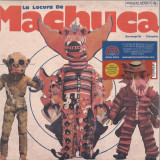
La Locura de Machuca is the story of one man’s bizarre odyssey into Colombia’s coastal music underground, and the wild, hypnotic sounds he helped bring up to the surface.
One night in 1975, a successful tax lawyer named Rafael Machuca had his mind blown in Barranquilla’s ‘Plaza de los Musicos’. Overnight he went from a high ranking position in the Columbian revenue authority to visionary production guru of the newly formed record label that bore his name, Discos Machuca, and for the next six years he devoted his life to releasing some of the strangest, most experimental Afro Psychedelia Cumbias ever produced. La Locura de Machuca is the story of one man’s bizarre odyssey into Colombia’s coastal music underground, and the wild, hypnotic sounds he helped bring up to the surface.
The Colombian music industry was thriving in the mid-seventies, but while homegrown bolero and vallenato tunes were doing well on the charts, it was imported African records that were setting crowds on fire at the picos – the sound-systems that fuelled neighbourhood parties – and wherever those records were played there were always a handful of groups who were inspired to plug traditional Cumbia directly into the electric currents coming from across the Atlantic.
It was these obscure bands, who fused Colombian and African rhythms with the swirling organs and psychedelic guitars of underground rock, that fired Machuca’s imagination. While the label made its money releasing popular hits by legends such as Alejandro Durán and Aníbal Velásquez, that money was poured back into a unique run of experimental releases by fringe artists such as La Banda Africana, King Somalie, Conjunto Barbacoa, and Abelardo Carbono, one of the godfathers of Champeta Criolla.
When Machuca couldn’t find groups to realise his particular vision, he simply created them himself. Drawing on a fearsome roster of musicians associated with the label, he assembled bands that lasted only as long as it took to record an album ,and unleashed the results – complete with arrestingly unusual album covers – under a series of different names such as Samba Negra or El Grupo Folclórico. This unorthodox approach led his longtime recording engineer, Eduardo Dávila, to describes Machuca’s productions as the “B-Movies of Colombian music.”
The story of Doctor Machuca and his eccentric exploits tells of one of Colombia’s most atypical and peculiar record companies; a defining pillar of Afro-Caribbean psychedelia. His productions have come to represent the roots of Champeta and set the pedigree standards for Afro and Costeño avant-garde. The seventeen tracks on La Locura de Machuca, harvested from the darkest, strangest corners of the Discos Machuca catalogue, sound like little else recorded before or since.
Alfredo "El Inca" Linares is one of the best and most beloved musicians in the history of salsa. Fans love his piano playing because of his authentic Cuban feel and 'swing' combined with progressive arrangements and uncompromising phrasing. "Lo Que Tengo" is full of rock solid dance floor killers and no filler, recorded in 1980 with some of the cream of the crop of contemporary Venezuelan salsa musicians (members of Mango, Madera, El Trabuco Venezolano, Los Dementes, Los Melódicos, Dimensión Latina, Guaco, and La Salsa Mayor) and launched there on the indie label A.L.G. Records as ¡Con Todo!, and then a year later on the much larger Velvet Records with a different cover. This a classic Alfredo Linares album, but with the updated studio sound of 1980s Caracas. With five perfectly paced salsas, one funky cha cha chá, a steamy bolero and a dance-friendly Latin jazz number to top it off, there is something for everybody on this record. Thankfully today's generation can now enjoy this rarity at a fraction of the cost of an original copy. Presented in its original artwork and pressed on 180g vinyl. Good to know: Alfredo "El Inca" Linares is one of the best and most beloved musicians in the history of salsa. Fans love his piano playing because of his authentic Cuban feel and 'swing' combined with progressive arrangements and uncompromising phrasing that puts one in mind of Eddie Palmieri. As a composer, arranger and band-leader Linares is highly respected as well. Ever since the 1960s in Lima Peru when his career began, his records have always been on point, being super tight, sharp, and hard as hell, what salseros call salsa brava con afinque. It's no surprise that Lo Que Tengo is exactly that: full of rock solid dance floor killers and no filler, played with verve and flair. Unlike some of his other records that were patched together from various sessions made in different studios (sometimes even in several countries!), this album has the advantage of being produced, recorded and mixed by Alfredo Linares all in one studio and block of time, and backed by hand-picked seasoned professionals who Linares had already played with, both in the studio and on stage, lending it a consistency and sonic integrity that is excitingly manifest in every groove. The album was recorded in 1980 in Caracas with some of the cream of the crop of contemporary Venezuelan salsa musicians (members of Mango, Madera, El Trabuco Venezolano, Los Dementes, Los Melódicos, Dimensión Latina, Guaco, and La Salsa Mayor) and launched there on the indie label A.L.G. Records as ¡Con Todo!, and then a year later on the much larger Velvet Records with a different cover. The LP was also released in Colombia (INS, 1982) and the US (Gallo, 1984), both editions utilizing the Velvet Records cover. During this time Linares had been in Venezuela for some five years and was under contract with a nightclub in Caracas. Through being on the salsa scene there he became friends with the band Mango and even guested on an album with them in 1976. After the contract was up Linares was a free agent again and he was able to draw on his friendship with Mango and assemble a band to back him, first for the Colombian/Venezuelan production Salsa de Verdad (Fonodisco, 1976) and then again with ¡Con Todo! / Lo Que Tengo. One of the distinctive aspects of Alfredo Linares tunes is the 'break' (la cierre)-there are always plenty of dramatic hand-clapping breakdowns followed by an infectious tumbao (sustained vamp) section that sends shivers up the spine and makes the dancers go crazy. In addition, Linares always lets his musicians stretch out, especially in the percussion section. Again, Lo Que Tengo is no exception: there are so many examples of typical arrangements here that one could call this a classic Alfredo Linares album, but with the updated studio sound of 1980s Caracas, which was awash in petro-dollars at the time and so had the latest equipment and a strong consumer base for the salsa market. The album's title tune (originally credited on the Venezuelan edition as 'Lo que tengo que crear'-'What I Have To Create') is by Mango's timbalero José "Cheo" Navarro and sums up Linares' central career philosophy: the musician lives every day to create music, to spread joy and create a party, without complications, wherever he goes. With five perfectly paced salsas, one funky cha cha chá, a steamy bolero and a dance-friendly Latin jazz number to top it off (note the bluesy piano solo from Linares and the sublime vibes of Mango's Freddy Roldán), there is something for everybody on this record. Thankfully today's generation can now enjoy this rarity at a fraction of the cost of an original copy.
Libreville Records is proud to present a focus on legendary electronic swiss project Mega Wave Orchestra in the form of a compilation LP including unreleased material.Originally released privately in Geneva in 1988 as a box set containing five LPs by The Mega Wave Orchestra and five prints by the artist H. Richard Reimann. The Mega Wave Orchestra, the brain-child of musician, mathematician and composer Christian Oestreicher, was conceived as an multi-media electronic music big-band. It was comprised of seven multi-instrumentalists Christine Schaller, Vincent Barras, Jacques Demierre, Olivier Rogg, Rainer Boesch, Roger Baudet, and Benoit Corboz, with Oestreicher as arranger and producer.The Mega Wave Orchestra created a new hybrid music. It was a music with roots in the jazz and classical traditions, but one which also drew on the sonic freedom of musique concrete and the kind of total experience offered by psychedelia. The diverse backgrounds and specialisms of each of the band leaders/writers resulted in a wide variety of music across the five discs: from austere drones and granular aural detail to warm oddball fusion and gorgeous but cracked vocal jazz. There are useful contemporary comparisons to be made: zoned synth jazz like the Azimuth LP on ECM or Karin Krog’s Freestyle; Larry Heard’s sequencer dreamtime; the Valium minimalism of Pep Llopis or Jun Fukamaki; Dexter Wansel’s shimmering arrangements for Loose Ends, or even the FM sheen meets cold war threat of Donald Fagen’s Night Fly. Here, too, is the sound of music technology about to snowball and define its own aesthetic, unknowingly prefiguring auteurish bedroom producers like Black Dog or The Detroit Escalator Company.Lovely crafted tip-on sleeve. Remastered from Master tapes. 600 copies.