Holic Trax presents its 36th release, featuring Tuccillo.
On the A-side, “Eves Sky” returns, a track that was played on the terrace at DC10 Ibiza in the early 2010s. Now reissued on a full 12” cut,
the one-sided pressing allows the low-end bassline to be pushed to its maximum.
On the B-side, “Percussholic” and “Musicly” are included.
The former was previously vinyl-only, while the latter was released digitally.
Both tracks are now brought together on the same format for the first time.
A three-track house EP
Often credited as the father of multi-media theatre, Alwin Nikolais (1910-1993) took complete creative control over his productions - including cutting-edge approaches to lighting and costume that transformed human bodies into shifting sculptural shapes, while also composing wildly innovative electro-acoustic and synth-based audio as accompaniment.
After initially experimenting with musique concrète and tape manipulation (as demonstrated on the 1959 LP Choreosonic Music of the New Dance Theatre of Alwin Nikolais) Nikolais became the first owner of Robert Moog's synthesizer at the Audio Engineering Society convention in New York in late 1964. Relying heavily on the Moog and later the Synclavier synth/sampler, these 21 tracks document Nikolais' highly-prescient compositions across the mid 1960s through to the late 1980s - existing not only as extensions of his other-worldly choreographic productions, but standalone pieces of foundational mid-century American electronic and experimental music.
"Born in Southington, Connecticut in 1910, Nikolais’s early years and early career were in acting, music and puppetry. It was not until the late 1930s that he began his work as dancer/choreographer in Hartford, Connecticut, where he was commissioned by the Avery Memorial Theatre, a part of the Wadsworth Atheneum, to create an evening-length work to the music of Ernst Krenek. Previously his work and study as a pianist-organist found him accompanying silent films. This sort of accompaniment required from the musician not only a playing skill but also a versatility in improvisation, matching movement to sound, and evoking mood to situation.
Nik was drawn initially to dance by his involvement with the percussion scores used by the illustrious early twentieth century German dancer Mary Wigman. In trying to learn more about percussion, he was lured into dance class and thus his career began. His development of music and dance occurred simultaneously. His introduction to the twelve-tone technique opened his mind to the expanding areas of atonal music, and his dealing with music as sound per se. In 1948, after being appointed director of the Henry Street Playhouse in New York, Nikolais formed the Playhouse Dance Company, later known as the Nikolais Dance Theater, and began his aesthetic orientation toward dance as a study of motion. By the 1950s, he had ceased creating literal dances and began his explorations and eventual milieu as an abstractionist.
Sound became an important part of his abstract theatre. For his first dances, which involved his new thinking of dance as both a visual and kinetic art, he used live percussion scores in which he directed his dancers to play instruments of all nature. There was a combination of children’s toy instruments as well as harsh and resonant automobile brake drums, and other pitched auto parts which he also used to accompany classes. Once he installed his own tape recording machines, he quickly used the limited range these instruments provided in a new way, slowing and increasing speed and reversing sound. He also made the sounds adhere to the choreographic structure (not the other way around), thereby giving the dance its independence from the musical phrasing. But the real need remained: the search for new sound. Nik made a sound library, recording noises and percussion and vocal sounds, which the French aptly called musique concrète. Needless to say, he became a master at splicing bits and pieces.
From 1956 to 1962 Nikolais composed eleven major scores for his theatre pieces using such techniques. In 1963, James Seawright, who at the time was assisting Nik in his productions and also working at the Columbia-Princeton Center for Electronic Music, recorded a sound bank for the production Imago (1963). With this material, Nikolais created his first synthesizer score. Imago won the Paris Grand Prix in 1968 and launched the Nikolais Dance Theatre towards its national and primarily international acclaim.
During the same period, Seawright came to Nik and told him of a young man who had invented and constructed a simplified synthesizer and insisted that Nik visit the electronic fair currently being held in New York. Nik did so and met Robert Moog. He was completely taken by the new machine and after making some suggestions to Moog, (which Moog made), Nik bought the inventor’s first machine with the aid of a Guggenheim Fellowship. Moog himself was astonished by what his machine could produce for Nik. This machine was later acquired by the Museum of Musical Instruments at the University of Michigan at Ann Arbor as the first Moog synthesizer. The Synclavier was Nik’s next source of sound and since the mid-1970s remained the major instrument in the Nikolais soundroom.
Alwin Nikolais has been honored and awarded throughout the world. He has received the French Legion of Honor, the Kennedy Center Honors, National Medal of the Arts, two Guggenheim Fellowships, as well as Mellon, Ford, and Rockefeller grants. He has been a recipient of NEA grants since 1966, been awarded five honorary doctorates, all for his remarkable achievements in Dance Theater. His genius has influenced several generations of artists."
—Murray Louis
Breakbeat Paradise Recordings returns with another heavy dose of raw funk and breakbeat pressure in the ever-growing Toxic Funk series – this time bringing together two seasoned groove specialists: The Fritz & Funkanizer. On Toxic Funk Vol. 21 the duo delivers two party-starting cuts packed with vintage breaks, heavyweight basslines and undeniable dancefloor energy.
Opening the A-side, Big Crush rolls in with chunky drums, infectious funk guitars and a soulful groove that feels tailor-made for packed club floors and sweaty late-night sessions. Flipping over to the B-side, Respect 900 turns up the heat with crisp breaks, old-school attitude and a driving funk workout loaded with signature Toxic Funk flavor. Both tracks blend classic funk roots with modern breakbeat production, perfectly capturing the spirit of the series.
With Toxic Funk Vol. 21, The Fritz & Funkanizer continue the tradition of delivering timeless DJ weapons for funk heads, breakbeat lovers and vinyl collectors alike. Another essential 7-inch release from Breakbeat Paradise Recordings, guaranteed to keep the grooves spinning and the dancefloor moving.
Recently hailed by The Guardian as "British techno's great survivor," Nigeria-born, UK-based Ibrahim Alfa Jnr continues with the fine form shown on his recent Infinite Black Inside LP with this first EP on his newly minted label Infinite Black Audio. The music was made after the end of a time of bad health, which means there is a feeling of both relief and reflection here. The nameless tracks are all overtly technological in their DNA - spanned synths warp around mechanical kicks on the opener as detuned jazz keys tumble through the mix. ''Track 2' floats on skittish breakbeats, there's moody downtempo on 'Track 4' melodically-inspired hope on 'Track 6.' An adventurous and rewarding EP.
The high-energy momentum continues with Whodamanny’s new double single on his own Biloba Catalogue. Capturing the post-summer ache of an obsessive love, "Obsesiòn" channels that deep-rooted Southern intensity, where obsession isn't a flaw, but a vital, positive drive to love endlessly. Turning up the heat, "Corazón Caliente" hits with a raw, sweat-soaked proto-house rhythm and heavy workstation brass stacks built to set hearts on fire. On the flip side, both tracks receive DJ-ready treatments with the specially named dub version "Dub Pasión" and the instrumental take "Sueño De Verano."
Dan Kye is the mysteriously evoked moniker from multi-instrumentalist, producer, and vocal sensation Jordan Rakei. The New Zealand-born artist - who now resides in London - presents his first long-player from Dan Kye, ‘Small Moments’, on Bradley Zero’s Rhythm Section INTL. An ode to the dancefloor, the musical project was born out of Jordan’s lockdown experience, created from the comfort of his own home. Recorded with just a laptop, extra live instruments and guest musicians, ‘Small Moments’ seamlessly transcends across electronica, jazz and funk, with each genre being effortlessly fused with Jordan’s melancholy vocals. Allowing himself to push the boundaries, Jordan’s Dan Kye moniker draws on the energetic and uplifting elements of house and techno and perfectly mixes it with the sultry vocals and emotion that come with the live elements we know and love from Jordan Rakei. The record offers listeners a journey through more floor-heavy tracks such as ‘Mogeri’ and ‘Raro’ to more groove infused offerings such as ‘Rainbow Road’ (which is named after one of the maps in Mario Kart and inspired by the energy of Prince’s iconic live concert at The Aladdin in Las Vegas), whilst tracks, like ‘Sober’, take on a more lyrical and anthemic feel.
Jordan Rakei: “Rhythm Section INTL was my entry point into dancefloor orientated music, and it was Bradley who asked me whether I could head in that direction so he could play my music out in the clubs. Dan Kye has still got melodies, but the main focus is to keep it high energy.”
After meeting Bradley Zero online whilst living in Australia, Jordan eventually moved to London in 2014. The same day he landed, he went straight to a Rhythm Section party to meet Bradley, and it was here that he first got a taste for house music. He enjoyed Rhythm Section INTL’s ability to draw on both live and electronic talent; and thus, after Bradley asked him for some productions for the parties, the idea for Dan Kye was born. ‘Small Moments’ is a musical masterpiece that can be enjoyed as much on the dancefloor as it can in the comfort of your own home and is a perfect step into Jordan’s landscape and idealism of dance orientated music.
Bradley Zero - “In around 2014 the proprietor of the famous Northside Records in Melbourne handed me a self released 12” from a new, unknown artist based in Brisbane. It was Jordan Rakei - Franklin’s Room. I’d been home almost a year before I actually got round to listening to it and I remember that moment like it was yesterday. I lay down on the sofa, put the record on and was transported! The Dan Kye project is a testament to the experimental and independent ethos Jordan lives by and is a product of an artist reaching full stride but not afraid to still try something new. This ‘Small Moments’ LP was conceived in a record store, born in a club on Rye Lane and is now flying the nest, throwing caution to the wind and making a bold statement.”
Ismael Pinkler lives in Buenos Aires. Belly Dance Services head Nick Hanzo in Vienna. Turns out the exact midpoint between the two is somewhere in open ocean. So they abandoned the plan to meet on Earth at all, and met on planet 126 in outer space.
It turned out to be a strange, hospitable little world — spinning at its own pulse, 126 beats per minute, changing landscape every few kilometers, as if it couldn't decide what kind of planet it wanted to be either. Ismael and Nick wandered it together, letting each new terrain talk them into a different song, until ten tracks had quietly assembled themselves. What they brought back drifts somewhere between shoegaze, techno, ambient, trippy tribal house and pop — grounded and gravitational, emotional and mental, to put it in terms Earthlings might understand.
Now, speaking seriously: Ismael and Nick built Planet 126 by passing sounds and ideas back and forth across the ocean, night after night, for eight months. The entire process — composition, vocal recording, production and mixing — took just eight months, a dream scenario for any electronic musician. The collaboration stayed positive, proactive and fresh throughout, letting the project move forward effortlessly. All tracks were written and produced by both musicians together; Nick wrote the lyrics and recorded the vocals, Ismael handled the mix. No samples, no references — just two people building a world from scratch.
Planet 126 also marks a milestone for Belly Dance Services: the label's 30th release, and likely its last. BDS began with BDS001, a vinyl EP by label founders Hanzo & Yaman, and has been solely helmed by Nick Hanzo for the past five years. Now it comes full circle — laid to rest with a big bang: a double vinyl gatefold album co-produced by Ismael Pinkler and label head Nick Hanzo.
SOULMEEX record label reaches its tenth release in less than two years with Bleib Yummy, the new EP by Nürnberg-based artist Schmidt in Rio.
Martin Schmidt develops a distinctive sound rooted in the spirit of electronic music’s golden era, blending italo, disco and house with a playful and unmistakably personal touch. His productions combine analogue textures, infectious grooves and a healthy dose of eccentricity, creating music that feels both familiar and unexpected.
With Bleib Yummy, Martin delivers a four-track EP that fits naturally into the SOULMEEX universe: raw but refined, playful but never superficial, and driven by the timeless energy of the dance floor.
Oráculo Records has always had a special interest in pushing electronic music towards unexplored territories, and it is precisely within this microcosm that IP307 emerges. Blending the most dub- infused and mechanical forms of electro with industrial, EBM and even post-punk, the project delivers a hypnotic, forceful and deeply cathartic sound.
Behind IP307 is Israel Padilla, founder of Banshees Records and one of the leading figures of the industrial scene in the Iberian Peninsula. With “IP307.1”, he presents six interconnected compositions, each with its own distinct identity while contributing to a coherent vision of seemingly opposing styles, reimagined into a singular language.
The result is neither a nostalgic exercise nor a stylistic collage. Instead, it reflects the experience, technical mastery and artistic vision of someone fully capable of expanding the path opened by pioneers such as Clock DVA in their later works, or Atom™, both through his solo output and as part of ASA alongside Esplendor Geométrico.
New sonic artillery for the most forward-thinking listeners already embracing this emerging strand of dark electro through our recent releases such as Occulimus by Mystic Letter K or the work of Maman Küsters, “IP307.1” offers another essential chapter in the evolution of this new form of sound. Welcome to the future. Welcome to IP307.
British electronic music pioneer Dave Angel returns to R&S Records with “A Time And Place”, his first full-length album release for the seminal Belgian label. Arriving thirty-five years after Dave first joined the R&S family, the album reunites one of UK techno's defining voices with the imprint that helped launch his career, renewing one of electronic music's most enduring creative partnerships.
That relationship began in 1991, when R&S founder Renaat Vandepapeliere discovered Angel's ‘Rolling Thunder’ project and invited the young London producer to Belgium. Personally welcoming him into the R&S family alongside a new generation of forward-thinking electronic artists, Vandepapeliere released the landmark “1st Voyage” EP, helping establish Dave Angel as one of British techno's most distinctive new voices. A succession of acclaimed releases followed, including “Stairway To Heaven”, “3rd Voyage”, appearances on the influential “In Order To Dance’” compilation series, and releases on sister imprint Apollo, charting an artistic partnership that helped shape both Angel's career and the wider evolution of UK techno.
Three and a half decades later, “A Time And Place” feels less like a return than the continuation of a conversation left unfinished. Rather than revisiting former achievements, the album reflects the perspective of an artist whose creative journey has continued to evolve. Reconnecting with the label that first championed his work, Angel delivers his most personal and musically expansive statement to date.
Across fifteen compositions, “A Time And Place” reaches beyond the conventions of techno to reveal the full breadth of Angel's musical identity. Drawing on jazz, soul, improvisation and richly textured electronic production, the album balances rhythmic precision with warmth, melody and emotional depth. Reflections on family, heritage, nature and the communities that have shaped his life sit alongside broader observations of the world around him, creating a body of work that feels both intimate and expansive.
That openness is reflected in a carefully chosen cast of collaborators. Celebrated trumpeter Steve Waterman features on both “Réflexion” and “The Yellow Butterfly”, bringing a lyrical, Miles Davis-inspired voice to the album after first catching Angel's attention through his work on Paul Hazel's “Out Of This World”. Elsewhere, legendary Chicago vocalist Robert Owens appears on “Harmony Serenade”, while guitarist Merv Carswell and vocalist Aurii Sky (Dave’s daughter, adding a poignant family connection) add further colour and texture to a record rooted in musicianship and shared expression.
While Dave Angel's influence on British electronic music has long been established, “A Time And Place” reveals another dimension of an artist whose foundations were laid long before techno. Raised in a household immersed in live music and jazz culture, Angel has spent a lifetime absorbing sounds beyond the club, allowing those influences to surface naturally throughout a career defined by curiosity rather than convention.
For R&S Records, the album renews a relationship that stretches back to the label's formative years. For Dave Angel, it reflects both the path travelled and the road ahead. Thirty-five years after “1st Voyage” first announced his arrival, “A Time And Place” reunites artist and label with the same forward-looking spirit that brought them together in 1991, proof that the strongest creative partnerships continue to evolve.
(remastered classic incl DL card) Environ is proud to present the Metro Area 15th Anniversary Edition, Metro Area's eponymous debut album, meticulously remastered using the original source tapes and generously spread across three slabs of vinyl. The12-track triple LP and digital package combines all the songs from both the original US and licensed European releases, and features new commemorative artwork unique to this edition. In the late nineties, the budding producers Morgan Geist and Darshan Jesrani bonded over their shared love of slower tempos and '70s and '80s NYC club culture. Obsessed with record digging and the sounds they heard on late-night "club classics" radio shows—and turned off by current releases they saw as artlessly "updating" sublime disco by sampling, filtering and subjugating them with huge kick drums —the duo set out to discover how their favorite old 12" records were made. They naturally gravitated towards extended dubs of songs—full of strange mistakes and echoing backing tracks—instead of the better-known vocal versions. Lacking the big budgets and gear that made so many of their favorite classic records come together, they were forced to take a guerrilla approach. They reprogrammed their techno-oriented arsenal of secondhand synths and samplers, using novel digital recording technology to capture live instrumentation and prioritizing mood over hooks, and the resulting music was just wrong enough to sound unlike anything else being released at the time.After just four underground 12" releases, the duo—now well-known as Metro Area—released their first and only album, Metro Area, in the fall of 2002. Fifteen years later, it's time to celebrate the culmination of their shared history and inspiration once again. Environ is proud to present the Metro Area 15th Anniversary Edition, Metro Area's eponymous debut album, meticulously remastered using the original source tapes and generously spread across three slabs of vinyl. The 12-track triple LP and digital package combines all the songs from both the original US and licensed European releases, and features new commemorative artwork unique to this edition.
There’s this feeling that House Music is sometimes diluted into a pleasant, non-offensive and conformist formula. Well, Jackie Gritness - you may have heard of her big bro Gary - is bringin’ all the sweat, the attitude and the filth down - take it or leave it.
Jackie introduces herself from both sides on this well-strapped debut 12” - the slick swingin’ & sangin’
on the bass-heavy A side, and the raw clave trax and cunty snarls of the acid-laced B side.
No trace of over-production or tired sampling here: this is just Jackie, her mic and her lil’ groovebox -
gettin’ raw in the studio just like she does onstage. Only thing added is some wall-shaking mastering by New York OG Dietrich Schoenemann.
This is the kinda House that’s supposed to make regular folks wanna turn it off. This ain’t rated E for Everyone, it’s rated F for Freaks.
It’s music from the underground, for the underground - as it was first revealed on the runway of Glastonbury’s infamous NYC Downlow last summer.
And if that’s more than you can take - it’s alright. It’s not like Jackie will hold it against you.
Jackie Gritness
“Gary’s little sister.” His studio session resume reads like a House music who’s who - from David Morales to Fred P. He’s also been rockin’ clubs with the Playin’ 4 The City and MLIU crews - but she’s also been seen on Gideon’s fierce Homo-Centric Records. See, this bitch’s true feelings about House are stripped-down, bare-bones, and unapologetically sexual. With a radical ‘live’ attitude, she’s serving the realness with an irresistibly acidic zing.
A mysterious artist pays tribute to Scandinavian dark synth pop pioneers, featuring reimagined versions of two cult classics.
Blending contemporary production techniques with the timeless atmosphere of the original recordings, the record offers a fresh perspective on these beloved tracks while preserving their distinctive vintage character.
Bridging past and present, celebrating the legacy of the genre's pioneers for both longtime fans and new listeners..
Keen listeners who have dug below the surface of Oren Ambarchi"s triple-digit discography know that alongside hypnotic minimalism, veins of irreverent and joyously wayward exploration run deep. Cooked is something of a landmark in Oren"s work, bringing this gloriously cuckoo sensibility right into the heart of his most high-profile solo work. Carrying on the grand Ambarchi tradition of meticulously constructed all-star studio jams (which reached new heights with Shebang), Cooked brings together collaborators from Australia, Germany, Japan and Sweden for two side-long epics where the foot keeps tapping even as the mind boggles. Cooked is a long way from the spacious, light-dappled grooves of Ghosted, but Oren"s Swedish bandmates play starring roles here, with Johan Berthling"s double bass anchoring both sides, and drummer Andreas Werliin lending his delicate touch to the second piece, "Sleight of Hand". Beginning with glistening layers of electric 12-string guitar, "Sleight of Hand" takes some key cues from electric Miles touchstones like "Feio" or his epic take on David Crosby"s "Guinnevere", with Berthling"s sparse basslines punctuating an almost weightless cornucopia of shifting detail, glimmering with subtle contributions from Michiko Ogawa on sho and James Rushford on a panoply of acoustic keyboards. Suddenly, everything is overwhelmed by a knotty, hyper-complex "solo" from Marcus Pal on digital synthesis, teleporting us to an alternate history where Allan Holdsworth traded the SynthAxe for Xenakis" UPIC. Building with additional drums and percussion from Will Guthrie to a peak of sizzling intensity, the music then goes sideways into a gently surreal coda, where some distinctly Zawinul-esque chords and Fredrik Rasten"s guitar float over a sprightly rhythm box, the avian inventions of Swedish virtuoso whistler Isak Hedtjärn wafting atop the sunlit stew.
With great joy, we are happy to present to you our next release, celebrating the milestone of reaching 40 vinyl releases.
"From Vision To Reality" will not be a simple release, but a collection of 13 tracks produced by 13 different artists, divided across 3 discs. The selection of tracks will be a mix of up-and-coming artists, established ones, and dear friends, many of whom are making their first appearance on the label.
Opening and closing the compilation are the first two hip-hop instrumental tracks ever released on the label, by Chester Watson and Dean Denali.
In between is a selection of different styles, ranging from melodic Broken Beat and Ambient to Electro, passing through Acid Techno and Goa Trance, featuring artists such as Josh Abrahams (from FSOM), Wedding Acid Group, Sohrab, ADSR, Enrica Falqui, and Parand, to name a few.
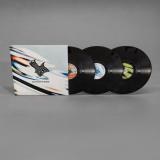
A special triple gatefold sleeve has been carefully designed, including printed pictures on the inside that show memories from our journey. Starting from the very early days in London in 2012, they bring back special moments shared with people and friends, or simply, for those who were not there, offer a chance to learn more about our history.
A 30 × 60 cm poster will be included, printed on both sides. The full artwork of the release will appear on one side, while the other will feature pictures of the 13 artists along with their biographies.
Season Two continues with its fifth edition - a shift south this time, from KiF's English hedgerows to the island of Lutruwita, Tasmania, and the work of Soda Lite.
A gooseberry plant took root in the sand between the bricks of Alex's back patio - nutrient-deficient leaves and all - and fruited regardless. That's most of the appeal: "I'm drawn to species that survive in the interstices of human industrialisation." The husk itself carries the same idea, shielding the berry until it's ready to be let go.
Past Soda Lite records - Earthbound, Aqua Solar Cura, Vale & Stone - built outward from field recordings first. Here that flipped: you can't field-record a plant, only the noise around it, so only two tracks (Vibrant Matter and An Sí Gaoithe) carry field sound at all. The rest came from narrowing to a single species instead of the wider non-human world, and "trying to create and replicate sound and energy on the level of the plant and its perceptive world."
Two more things worth knowing. ‘Bryn Celli Ddu’ takes its name from a Neolithic burial chamber in Wales, aligned so the summer solstice sunlight reaches its back wall - the sun turning up again as its own recurring character. And ‘An Sí Gaoithe (Return)’ is a reworking of a Vale & Stone title, old fragments reprocessed into something new - "a bit like composting."
Soda Lite is the recording project of Alex Last, a gardener and composer working from Lutruwita on unceded Palawa land. Their music moves through field recordings gathered directly from the island's own biomes - coastline, forest, alkaline lake bed - alongside slow, warbling synth work, built less as backdrop than as document: proof of a specific place, at a specific time, being listened to closely. Past records have taken their titles and themes from geology and land relationships as often as botany - Aqua Solar Cura, Earthbound, Vale & Stone - so a plant with its own mineral-adjacent etymology (soda, found in dried alkaline lakebeds; lite, from the Greek for stone) suits the pairing.
'The Shadow BoxerÔ - a tale of oppression, discipline, and inevitable revenge - is re-interpreted by British producer Heritage, whose musical style perfectly aligns with the Shaw Cuts squad.
Ku Ding trained in Tai Chi under Master Yeung for over a decade. This discipline prioritizes health, self-defense and above all, the virtue of tolerance. 'Looking Back, Moving ForwardÔ mirrors this holistic training for body and mind through its broken rhythms, dreamy pads, and warm bass.
Despite facing relentless harassment at work from his tyrannical boss Jin Dasheng, Ku Ding remains calm and endures the humiliation. The playful percussions, vocal snippets, and powerful low-end grooves of 'DancehallÔ underscore the protagonist's deep-rooted discipline and resilience.
However, after his lover A Bao is killed and both his master and his friend Hu Binglian are successively murdered, he is forced to rise up and fight back using his martial arts prowess.
'2003Ô comes in swinging, fueling Ku Ding with the perfect mindset for the battle ahead via punchy drums and an energetic bassline.
Driven to mete out justice, Ku Ding prepares for his revenge without betraying his sacred tolerance. The complex breakbeat patterns of 'HaywireÔ carried by recurring, subtle chords, give him a final boost. But can this rational approach succeed? You better find outÉ
Amsterdam producer Baril returns to Intercept with his most personal work to date. In Between Highs was written in a short, turbulent stretch of 2024, a year marked by family illness and personal loss. Rather than dwell in despair, Baril channels the in-between state into something hopeful: music that acknowledges pain while reaching for escape, relief, and euphoria.
In Between Highs marks a valley, framed optimistically, kind of like the calm before the next ascent. Through warm, melodic textures and rhythmic flow, Baril offers both personal relief and a shared refuge for listeners navigating their own dips.
It follows a steady arc of releases on Intercept. His debut EP One More Rush (2020) introduced his dreamy, emotive production style. For You, Forever (2023), his first full-length, expanded that vision into a deeply atmospheric blend of ambient, breakbeat, and house. With In Between Highs, Baril sharpens the focus: the sound is organic, euphoric and unfiltered.
Crash landing onto the scene in 2017 with his now legendary NTS broadcast of 2 hours of unheard music, the ultra-mysterious and enigmatic Michael J. Blood has gone on to release a series of sought after, lush and rugged future classics on his own imprints Blood Inc. and BodyTronixxx. Allegedly hailing from Manchester in the North of England, Blood’s sound is hard to pin down but instantly recognisable. Rooted in the twin foundations of modern dance music—Detroit and Chicago—while schooled in the sweaty basements of Manchester’s fêted club scene, his music feels both original and familiar, timeless yet unplaceable.
Weaving together a hypnotic narrative that feels both archival and futuristic, Cause & Effect Vol. 1 brings together some of Blood's rare and hard to find bangers from a variety of his early sold out projects. The collection mixes the pulse of Chicago with the grit and cosmic dreams of Detroit, while never losing sight of the North of England’s sophisticated late-night sleaze. Blood’s dance-floor eclecticism and raw, infectious mutant beats drive a soulful, jazz-louche energy into every track. The result is a collection of atmospheric grooves that weave together hypnotic rhythm and smoky texture, blurring house, techno, broken beat, and jazz-soaked electronics into a heady trip. Cause & Effect Vol. 1 maps out the restless evolution of Blood’s sound, a testament to his instinct for rhythm, atmosphere and dance-floor alchemy. House for the heart, techno for the mind, both built for the body. It’s in the Blood.
Argentinian artist Juan Hansen presents his debut album 'Ultrasonido'; twelve tracks spanning indie dance, tech house, and soft melodic house, released on his own newly founded label Ultrasonido, with the second single 'Inside My Mind' coming out via belonging by Innellea.
After his breakthrough Boiler Room appearance in 2019, Juan has been on a relentless quest to push the boundaries, playing major stages around the globe, becoming one of the figureheads of the Argentinian electronic music world. As an exceptional live artist, multi-instrumentalist and vocalist, Juan brings a real sense of groove to the stage, merging two worlds effortlessly: deeply emotional songwriting and direct, dancefloor-focused club tracks. 'Ultrasonido' brings both sides together. The album is a clear evolution of Juan Hansen, presenting a wider range of his sound, which he also presents in his live performances. A journey through the musical world of Juan Hansen.
Across twelve tracks, with contributions from Clér Letiv, Santi Portillo, Franco BA, Rocio Giorgi, Miko Franconi, Brigado Crew and Marley Waters, Juan shifts between club-focused tracks and more intimate, song-driven moments, moving naturally between Spanish and English. It’s a debut album that captures both his roots and the direction he’s evolving toward.
Juan Hansen's story doesn't start on the dancefloor, it starts with acoustic instruments. He built his foundation in the indie and rock scenes of Argentina before crossing into electronic music, a journey that's still audible in every track he makes. After years of building his profile with live performances, mesmerizing audiences from Cosquín Rock and Ultra in Argentina to Watergate in Berlin, Burning Man in the Nevada desert, and Grand Factory in Beirut.
His search is real and visceral; a search for the different, mixing genres without prejudice, with a seriously playful attitude. Positioned within a new generation of artists dedicated to improvising on stage, Juan fuses electronic sounds with analog instruments and organic soundscapes. There's no genre cage. 'Ultrasonido' is his debut album and the launch of his own label, also named Ultrasonido. A long-form statement after years of singles, EPs, and shows around the globe.
For South Central’s premier singer, songwriter, and producer, success was never an overnight accident; it was a blueprint executed with meticulous precision. With his highly anticipated project, Labor of Love, Blxst delivers a masterclass in modern West Coast R&B and Hip-Hop, proving that true artistry requires both sweat and soul. The album serves as a sonic manifesto on the price of ambition, the weight of loyalty, and the delicate balance of maintaining romance while building an empire. It stands as a definitive evolution of the distinct sound Blxst pioneered, blending crisp, trunk-thumping 808s with soulful, nostalgic chords and his signature, effortlessly smooth vocal runs.
Entirely self-produced and co-written, Labor of Love bridges the gap between the sun-drenched grit of Los Angeles street culture and the vulnerability of late-night bedroom playlists. From the bounce of celebratory anthems to introspective, late-night drive confessionals, Blxst curates a tracklist that feels both deeply personal and universally resonant. It explores the sacrifices made in the pursuit of greatness, paying homage to the sonic pioneers of LA while firmly cementing his own place as the vanguard of the city's modern sound. It is a celebration of independence and the self-made mentality, reminding listeners that he remains the chief architect of his own destiny.
Ultimately, Labor of Love is a testament to the grind, capturing the sleepless nights and tested relationships that pave the road to success. Blxst puts his heart on the line to show that the work itself is where the true passion lives, creating an album for the city, for his family, and for everyone who stays dedicated to their craft. More than just a collection of radio-ready hits, this project is a cohesive, cinematic experience from one of music's most reliable hitmakers. It is a definitive reminder that Blxst isn't just riding the wave—he is directing the current.
Nine-time GRAMMY® winner Anderson .Paak and GRAMMY®-nominated rapper Cordae have been operating on the same wavelength for years. What started as pure chemical reaction on 2019’s “RNP” slowly turned into one of hip-hop’s most natural, low-ego partnerships, fueled by back-and-forth gems like “Two Tens” and “Summer Drop” and a series of dynamic TV performances that felt more like two best friends hanging out than a polished routine. On their debut collaborative album, Heavy Is The Crown, that organic bond gets the full-length treatment it’s always deserved.
At its core, the project is a tightrope walk between serious real-life stakes and uncompromising fun. The title isn't just bravado—it speaks directly to the shared weight both artists carry as the primary providers and anchors for their families. But instead of letting that pressure crush the vibe, .Paak and Cordae lean into each other. Meeting as total equals, .Paak’s elastic, soul-drenched musicality anchors Cordae’s razor-sharp lyricism, allowing both to unpack the heavy reality of success and family responsibility without ever losing their spark.
That balance is what makes the album tick. To drive the point home, the album art pays homage to the cult comedy Step Brothers—a nod to the silly, irreverent friendship that birthed the music in the first place. Heavy Is The Crown doesn't feel like a forced corporate crossover or a calculated career move. It’s a record about brotherhood, family, and what happens when two masters of their craft step into the studio simply because nobody makes them laugh, rap, or create quite like the other.
Nine-time GRAMMY® winner Anderson .Paak and GRAMMY®-nominated rapper Cordae have been operating on the same wavelength for years. What started as pure chemical reaction on 2019’s “RNP” slowly turned into one of hip-hop’s most natural, low-ego partnerships, fueled by back-and-forth gems like “Two Tens” and “Summer Drop” and a series of dynamic TV performances that felt more like two best friends hanging out than a polished routine. On their debut collaborative album, Heavy Is The Crown, that organic bond gets the full-length treatment it’s always deserved.
At its core, the project is a tightrope walk between serious real-life stakes and uncompromising fun. The title isn't just bravado—it speaks directly to the shared weight both artists carry as the primary providers and anchors for their families. But instead of letting that pressure crush the vibe, .Paak and Cordae lean into each other. Meeting as total equals, .Paak’s elastic, soul-drenched musicality anchors Cordae’s razor-sharp lyricism, allowing both to unpack the heavy reality of success and family responsibility without ever losing their spark.
That balance is what makes the album tick. To drive the point home, the album art pays homage to the cult comedy Step Brothers—a nod to the silly, irreverent friendship that birthed the music in the first place. Heavy Is The Crown doesn't feel like a forced corporate crossover or a calculated career move. It’s a record about brotherhood, family, and what happens when two masters of their craft step into the studio simply because nobody makes them laugh, rap, or create quite like the other.
“Negative Music / The Poorest! If they still know silence at all, then only as holes in the continuum of noise…” — Günther Anders, 1965
Editions Mego presents GETGETGET, a new release by Thomas Brinkmann which serves as an inquiry into silence, code, and the limits of perception.
The title GETGETGET references the trilogy of ‘Get’ lp’s made by Rehberg under his PITA moniker; Get Out, Get In and Get On. The music is based on material by Rehberg and Brinkmann morphing these two identities into a third colour, a disappearing color.
Emerging from a live performance at the label’s 30th anniversary in Berlin, the work unfolds as both sonic artifact and conceptual system: a study in what remains when sound is reduced, extracted, and reconstituted.
Taking inspiration from Günther Anders’ notion of “negative music”—composition through absence—Brinkmann’s approach aligns with Heinrich Böll’s idea of “collected silence”: silence not as void, but as a material framed against the constant pressure of noise. In GETGETGET, pauses are not gaps but structural elements, cut from a continuum and reinserted as signals.
The two side long tracks weave a dark abstract and ‘twisted’ presence where the ghosts of the machines and their operators fuse into a fantastical whole. One can hear traces of both Brinkmann and Rehberg logic which seems to fuse in a hallucinatory manner.
Brinkmann’s work reflects a broader condition: the translation of material processes into informational ones. As images detach from bodies and code separates from matter, sound too loses its fixed resonance. What remains is circulation—of signals, of data, of meaning—within systems that increasingly define perception itself.
GETGETGET is an album where absence is equal to presence, a metaphor with suggestive tones of the influence Rehberg had and continues to have in the world of the radical experimental electronic avant garde. The “zero” is not empty; it is what makes everything else work.
On Oath's latest, the imprint keeps the jazz-fuelled atmospheres going with 'Seven Dogs', an EP that serves up an astonishing excursion through deeply hypnotic melodies and idiosyncratic grooves, courtesy of an iconic link-up between Rteph88 aka Robin Taylor-Firth and Steve Cobby.
Taylor-Firth and Cobby are musicians whose careers are so richly storied, broad-ranging, and impactful that it's difficult to summarise their output and impact in so few words. Both Taylor-Firth and Cobby firmly established themselves in the 90s, being involved in some of the era's most prominent and celebrated groups and for releasing some truly era-defining records. As such, their discographies reach far and wide, from house and techno cuts through to downtempo, drum'n'bass and leftfield, there is little that is left uncovered, and this spirit remains with them both as they continue to explore the outer parameters of their sounds.
Taylor-Firth, a songwriter, arranger, and producer, is perhaps best known for his long association with Warp Records and its sublabel Nucleus, and for his work as a member of Nightmares on Wax, where his signature keyboard playing style became a staple of the group's legendary sound. Alongside this, he has hundreds of songwriting and arranging credits on a dizzying array of records, and was a member of house music group Anon and Pio Bo alongside Richard Barratt - to name but a few selected highlights of his extraordinary career. Cobby's career is distinguished by his multitude of releases under a variety of aliases, along with his helming of a number of imprints, including Pork Recordings and his most recent label Déclassé. Experimenting with a wide variety of genres and sounds, perhaps his best-known work was with the duo Fila Brazillia alongside Dave McSherry, who released a plethora of immersive and innovative records in the 90s and beyond.
'Seven Dogs' represents a shared passion, vision, and musicality, two languages borne of similar spaces but reaching through time, space, and existence in creating a richly veiled musical experience that draws from lifetimes spent within the nucleus of music's soul. The EP speaks of the present as such as the past and indeed future, hinting with motifs that feel right at home within sun-kissed skies and within the walls of the chill out rooms. 'Early Doors', the EP's opener, displays the core fundamentals of the unfolding experience, namely the intrinsic relationship between keys and drums and how they express tone and mood. The piano gently caresses, ethereally floating with space to grow, as the drums lightly swing into life, providing an engrossing and rhythmically diverse groove that nods as much as it dives. The title track lands next and leads with a more driving feel. Sonically, the track leads with an oozing bass sequence that worms through the mid range before retreating under an array of compelling piano chords. The drums once again provide a strong backbone, allowing the melodic elements up top to fully express themselves - in a myriad of ways, murmuring and clamouring all at once.
'Visiting Hobo' brings the groove down a few notches. Slightly sombre in its delivery, the piano and bass interchange above a sparse yet hard-hitting groove, with as much emphasis placed on the emptiness as on the melodically full sections. The piano has a certain tonality here, with the notes containing a large amount of textural reverb that helps the track feel alive, almost growing out of the speakers. Wrapping things up is 'Titled', which begins with the keys and an array of whimsical features. The drums allow themselves time to grow into being, but when they do, they simmer within an enriching melange. It's a fitting end to a record that abounds with sonic consideration, environmental and emotive feeling, where two technicians bring their best and serve up four tracks of such sublimeness and thoughtfulness. One to drift deep within, on those hot summer days….
With his last three records all landing within a calendar year (2024-25), enigmatic Swedish producer Civilistjävel! (aka Tomas Bodén) is on a hot streak of releases, his singular vision increasingly ambitious and expansive. There are few artists working at this level so consistently right now, reinventing, revising and continually developing their language. Following on from 2025’s radically re-worked ‘Versions’ (of Mayssa Jallad’s ‘Marjaa…’), Bodén returns to break further fresh ground with his new album, ‘Älvgång’. Featuring contributions from Soccer Committee, Carrier and guest (aka Jabu’s Jasmine Butt), ‘Älvgång’ foregrounds a more brittle and insistent rhythm-based sound, whilst comprising his most broad-ranging collection of material to date.
‘Älvgång’ grew out of a series of sketches made from late ‘24 and throughout the whole of ‘25 at Stockholm’s renowned EMS Studios, which gave Boden free rein to its extensive collection of vintage analogue equipment and rare modular synthesizers such as the Serge and Buchla systems. As a loose framework of tracks began to take shape, so did a reflection of sorts, on family and foundations, underpinned or influenced by sounds that drifted into Tomas consciousness around this time - ancient Swedish pastoral music, Georgian lithurgical chants, gongs, chimes. An idea settled into place, a dedication to his Grandfather, as the earlier release Fyra Platser (tr. ‘Four Places’) was to his Grandmother. Älvgång is grounded with the sense of time and place of an old family photograph, with the tracks over each side bearing one of two names that are more or less the same location - Strinne was the old name for a this loose collection of villages. These days it is more commonly known as Bjärtrå. Metaphorically speaking, the river runs through both.
Civilistjävel! conjures so many adjectives and descriptors, ‘glacial’ and ‘ambient’ frequently among them - but while not altogether untrue, such terms belie the tension and drama so often present in Tomas’ music. Listening to ‘Älvgång’ is not a passive experience. The eight tracks here feel like a patchwork of memories that bathe in the same ethereal, otherworldly glow of Tarkovsky’s polaroids’.
The machine pulses that dominate this landscape are reigned in and tempered by a human hand; lithe, untethered coils, breathing in and out. ‘Strinne Ett’ sets out with purpose, sensing awe and wonder through the murk, but as the final tone unfurls like a question mark, another chapter begins, unfolding/building like a Tarjei Vesaas novel. These lyrical, abstract miniatures combine to reveal a wider context, fragile humanity standing alone against nature.
Guest appearances on Civilistjävel! records have become a regular occurrence (including recent collaborations with Mayssa Jallad, Laila Sakini, Cucina Povera, Thomas Bush, Eldon + Withdrawn), but are used sparingly and with increasing precision. On ‘Strinne Tre’ Mariska Baars’ (Soccer Committee) voice feels like a balm, a clearing. But as her simple, three-word incantation drifts further into fog, the meaning changes, and her words seem to curdle. Carrier’s beats widen the parameters on ‘Strinne Fyra’, a skittering promise that builds tension then refuses to release it; all false starts, Photek gongs, and trinkling modulars. Jabu’s Jasmine Butt pulls all the threads together for the final track, Thomas Tallis’ ghost walking over offset machine impulses, that work against their own symmetry.
Side two begins inquisitively, scanning bleached, alien surroundings, its sparse pads recalling Aphex Twin’s ‘Selected Ambient works Vol 2’. 'Bjärtrå Två’ picks up the baton from ' Strinne Fyra’ with a ruptured Simmons SDS200 analogue drum synth set free from its shackles, the rhythm eventually slotting into the spaces that were hiding in plain sight. What follows seems like an epiphany; ‘Bjärtrå Tre’ is achingly beautiful, a euphoric, winding ascent that leads to devotional plainsong. ‘Bjärtrå Fyra‘s final unheralded shift feels both tragic and haunting.
For more than two decades, Vidmantas ?epkauskas has occupied a singular position within European underground culture. As the driving force behind Opium Club and gallery 1986 in Vilnius, founder of Ant Bangos, Alfavilnius and OLE festivals, curator, label owner, promoter, DJ and artist, he has spent much of his life creating the conditions for other people's music to be heard.
It makes sense then that he has no shortage of friends and collaborators in play. Across ten tracks, V presents shades of Italo, krautrock, post-punk, minimal synth, industrial pop and neon-noir romanticism, arriving somewhere between the dancefloor and a dream-state. The cast of collaborators both contextualize and help sharpen the vision.
First and foremost, much of the album was crafted alongside Frankfurt's Philipp Lauer, whose friendship with V grew through marathon studio sessions. Curses lends his unmistakable blend of dark romance and theatrical energy to "Is This What You Want?", Australian cosmic journeyman Dreems joins for the kaleidoscopic "Blitz Disc," Domenique Dumont brings their unmistakable emotive touch to "Avventura," while Lithuanian artists Noyus and Ruta MUR, both distinctive voices from the country's queer scene, whose vocals add another dimension to the record's emotional palette. As V puts it, "These are the people I've been vibing with."
That he finally delivers a full-length LP with such elusive qualities is more than a clue to his character. The title itself, a nod to Magritte's famous paradox and his years living in Brussels, suggests that any attempt to define V through a single image is destined to fail. At once playful and philosophical, 12:55 (Ceci n'est pas une V) questions ideas of identity and artistic value while marking the closing chapter of the musical persona that followed ?epkauskas' earlier success as Vidis. Neither retrospective nor statement of intent, it feels like a connected set of reflections spanning a lifetime of influences.
Hector Gannet have always known that place and music are inseparable. For songwriter and guitarist Aaron Duff, North Shields high on England’s north east coast, shaped by fishing, shipbuilding, and the sea, is not just a backdrop but a source. Everything flows from it: the imagery, the politics, the particular stoicism of people who absorb more than their share and keep moving anyway.
‘The Great Shakedown’, their third album, is where that source runs deepest. Featuring bold brass arrangements alongside choir and church bells recorded live at the 17th-century Christ Church in North Shields, the album is Hector Gannet’s most ambitious and most searching work. The brass is a constant throughout: driving the Dexys-style urgency of the title track, lounging through the jazz-tinged Big White Telephone, surging euphorically through singles The Mother Tongue and Seven Signs.
The singles capture something essential about the album, euphoric on the surface, quietly devastating underneath. Beneath its propulsive brass lies an examination of stoicism as both armour and wound, of shared language used to avoid saying the very things that need to be said. It’s a quality that runs through the whole record, which looks at human history and art, the ordinary and the extraordinary, the actions of those in power and the communities who live with the consequences. It is both communal and euphoric - a powerful rallying cry for people at a time when we need it most.
Italian percussionist Umberto Vitiello takes us on a journey into a vanished world. Mixed by Italian techno master Donato Dozzy, the album draws on memories spanning decades, including Vitiello's years living on Yarakh Beach on the outskirts of Dakar, Senegal. There, the rhythms of daily life flowed with the tides: fishermen launching their pirogues at dawn, griots and vendors gathering beneath three towering palm trees, and the Atlantic Ocean providing a serene soundtrack.
Named after the Lébou people whose fishing culture has shaped the coastline around Dakar for centuries, the record is both a tribute to a community that welcomed Vitiello as one of their own and a reflection on what has been lost.
Those years left a profound mark on both his life and his music. Yet this is not simply a work of remembrance. It is also a meditation on change.
Today, the beach that inspired these recordings has been transformed by pollution and environmental decline. Where fishing boats and palm trees once stood, a sculpture by Senegalese artist Serigne Gorgui Mbaye now depicts two giant ears facing the sea-a reminder of the need to listen: to one another, to nature, and to our own conscience.
Blending percussion, atmosphere and storytelling, the album revisits formative experiences from the 1980s through the perspective of the present day. Featuring vocal contributions from Olympia Ndiaye, Anna Caragnano and Mariangela Morais, and guided by Dozzy's spacious, immersive mix, it unfolds as a deeply personal journey through memory, place and transformation.
As part of the 20 Years of BM anniversary celebrations, Bondage-Music proudly presents Bondage Games Pt. 11 — a special five-part vinyl series. Each release is named after a constellation, together forming a unique tribute to two decades of Bondage-Music.
With Bondage Games Pt. 11, the label's iconic vinyl series returns in its most ambitious edition to date. Created to celebrate 20 years of Bondage-Music, the series unfolds across five constellation-themed releases, each featuring four exclusive productions from artists closely connected to the label.
The first chapter, Ursus, brings together four exclusive tracks from Roger Gerressen, Sascha Dive, Rhadow and Lola Palmer. From Roger Gerressen's hypnotic groove-driven Patterned Shards and Sascha Dive's unmistakable deep house craftsmanship on Dub Chronicles #10 to Rhadow's atmospheric Ripples and Lola Palmer's warm and emotional Slow Down, the record perfectly reflects the timeless musical identity that has defined Bondage-Music since day one — deep, soulful, groove-focused and made for both intimate listening and late-night dancefloors.
Pressed on heavyweight 180g vinyl and housed in an individually printed sleeve, Ursus continues Bondage-Music's longstanding commitment to exceptional quality in both music and design. The artwork was created by BM's longtime Head of Artwork, Pete Bombart — a close friend and an integral part of the label since its earliest days. His unmistakable visual language has become inseparable from the Bondage-Music identity, earning a loyal following far beyond the music itself.
Whether collected as part of the complete anniversary series or enjoyed on its own, Bondage Games Pt. 11: Ursus is a celebration of the artists, the friendships and the unmistakable sound that have shaped Bondage-Music over the past twenty years.
As part of the 20 Years of BM anniversary celebrations, Bondage-Music proudly presents Bondage Games Pt. 11 — a special five-part vinyl series. Each release is named after a constellation, together forming a unique tribute to two decades of Bondage-Music.
With Bondage Games Pt. 11, the label's iconic vinyl series returns in its most ambitious edition to date. Created to celebrate 20 years of Bondage-Music, the series unfolds across five constellation-themed releases, each featuring four exclusive productions from artists closely connected to the label.
The first chapter, Ursus, brings together four exclusive tracks from Roger Gerressen, Sascha Dive, Rhadow and Lola Palmer. From Roger Gerressen's hypnotic groove-driven Patterned Shards and Sascha Dive's unmistakable deep house craftsmanship on Dub Chronicles #10 to Rhadow's atmospheric Ripples and Lola Palmer's warm and emotional Slow Down, the record perfectly reflects the timeless musical identity that has defined Bondage-Music since day one — deep, soulful, groove-focused and made for both intimate listening and late-night dancefloors.
Pressed on heavyweight 180g vinyl and housed in an individually printed sleeve, Ursus continues Bondage-Music's longstanding commitment to exceptional quality in both music and design. The artwork was created by BM's longtime Head of Artwork, Pete Bombart — a close friend and an integral part of the label since its earliest days. His unmistakable visual language has become inseparable from the Bondage-Music identity, earning a loyal following far beyond the music itself.
Whether collected as part of the complete anniversary series or enjoyed on its own, Bondage Games Pt. 11: Ursus is a celebration of the artists, the friendships and the unmistakable sound that have shaped Bondage-Music over the past twenty years.
Revisiting the sound and spirit of Jazzy Sport, rooted in Japan and carried forward by a new generation. Compiled by Nina Yamada, featuring Cro-Magnon and Grooveman Spot, with remixes by DJ Mitsu the Beats and Idjut Boys.
Founded in 2002, Jazzy Sport emerged at a particularly fertile moment in Japanese music. Beginning as an independent label and record shop, with its first store in Morioka and Jazzy Sport Music Shop Tokyo opening in Shibuya the following year, it became a home for artists including GAGLE, DJ Mitsu the Beats, Cro-Magnon and Grooveman Spot. Its releases moved freely between hip-hop, house, jazz, broken beat and live musicianship, helping define a distinctly Japanese strain of open-minded club culture.
But the music was only the beginning. Jazzy Sport developed into a network of record shops across Japan, alongside its label and distribution work, apparel and design, dance studios, and a Morioka record shop joined to a bouldering gym. These were not unrelated side projects. They expressed the same founding idea: that music, sport and everyday life could come together to create community.
PAST FORWARD: SILVER marks the first release on the Jazzy Sport London label, distributed by Time Capsule. Established in 2022, the London project first took shape through parties, radio shows and community collaborations connecting Japan and the UK. This compilation carries the Jazzy Sport archive and its values forward through a new generation.
At the centre is Nina Yamada, the daughter of one of Jazzy Sport’s core members. She grew up within the community that shaped the collective, and her selection is not a conventional greatest-hits survey, but an inside view of the catalogue and an intergenerational handover made audible.
The music moves naturally between hip-hop and house, electronic production and live performance. That openness has always been central to Jazzy Sport, where club music, musicianship and community are part of the same conversation rather than separate scenes.
DJ Mitsu the Beats’ remix of Cro-Magnon’s “Eclipse” brings the refined, soulful depth that makes him such an important figure in Japanese beat music. Idjut Boys’ deep, dubwise Cro-Magnon rework reflects the long exchange between Japan and the UK, while Grooveman Spot’s “Do The Dance” finds a sweet spot between acid-tinged 808 groove and warm soulfulness.
Elsewhere, Nubian Lady’s “In☆Flu☆Enza” draws on Detroit techno and Chicago house but sharpens those influences into something lean and distinctive. Physical Sound Sport’s “Magical Kalimba” captures the communal energy and openness of a live session. Bottom Fly’s “Rhyme Or Reason,” rooted in Morioka, pairs rough-edged beats with mellow samples and a quiet sense of nostalgia.
What comes through is not only the strength of the individual tracks, but the sensibility that connects them. That keeps PAST FORWARD: SILVER from feeling like a nostalgic best-of. For longtime followers, it offers rediscovery; for new listeners, a way into the breadth of Jazzy Sport; and for DJs, a selection made for the record bag, not just the archive.
LUCIANO LAMANNA — A CARLO Blackwater Label — 2026 Distributed by Triple Vision More than ten years in the making, A CARLO is a single-sided EP by Luciano Lamanna for Blackwater Label, dedicated to Carlo Giuliani and to the memory of the events that unfolded during the G8 protests in Genoa in 2001. This record is the result of a long process, one that began more than a decade ago and has remained unfinished until now. Two tracks, both carrying the name and memory of Carlo, finally complete a circle that has been open for years. The first track, “Il Giorno del Sole”, was previously released on physical CD through Blackwater Label. The second, “Amore Infinito”, arrives more than ten years later, completing the dialogue between the two pieces and giving the project its long-awaited counterpart. Together, the tracks form a deeply emotional and personal statement: melancholic, haunting and at the same time driving and hopeful. Lamanna moves through the industrial language that has always characterised his work, while “Amore Infinito” explores a darker, more intimate territory, evoking the emotional intensity of Coil. A CARLO is not intended as a historical reconstruction or a conventional political statement. It is an act of memory.
This compilation containing both super limited and sold out EPs "Naehe & Flackern" and "Es laesst nicht los, mich jedoch laengst" on one 12" Vinyl. The band Nidare presents their EP "Naehe und Flackern", a collection of three powerful songs that thematically deal with the feeling of hate. The singer's lyrics paint a vivid picture of hate in different facets: the hate towards society, the hate the singer faces in his life and the hate the singer himself carries outward. "Naehe und Flackern" is an EP that takes listeners on an emotional journey while also being a profound emotional exploration. Nidare manages to channel the darkness in her lyrics and music. The EP is an expression of pain, anger and despair, but also a call for self-reflection and understanding of the complex nature of human emotions. "Es laesst nicht los, ich jedoch laengst" is a visceral, unapologetic journey through the emotional landscape of a fractured world. Built around themes of political disillusionment, mental health struggles, and the crushing weight of existential dread, this EP serves as both a cry for help and a reflection of the suffocating atmosphere of modern life.
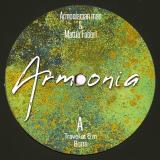
Armoonia is the work of Armooniaman, also known as Lele DJ, together with Mattia Fabbri. It sits between tech house and acid house, and it keeps everything smooth. The grooves are easy and fine, nothing pushes hard, everything rolls. Travel at 6 am and Botta open the first side, Bass again and Temperament follow on the second. The record moves from tech house toward acid house without breaking its flow. On a floor that means a steady, groovin line that lets the room settle in rather than forcing it. Four tracks, one mood, and a smooth way to keep a night moving.
Blume presents two pieces composed in 1970 by the American pianist and composer David Tudor (1926-1996), one of electronic music's most important pioneers, for the Pepsi-Cola Pavilion, a unique artist-designed and programmed space for Expo '70 in Osaka, Japan, created by Experiments in Art and Technology (E.A.T.). Pepsibird and Anima Pepsi deploy electronic technology as a means to experience sound in ways that are anything but matter of fact, rendering liberated environments within and through which one might democratically express and commune. Viewed through the lens of what was, is, and might have been, they offer the tools for time travel: an unmediated encounter with radical, optimistic ideas that gave way to the complex cultural landscape of our time.
Initially trained on organ and then piano, Tudor emerged as a leading figure within New York's musical vanguard after his groundbreaking 1950 performance of Stefan Wolpe's Battle Piece and the American premiere of Pierre Boulez's Second Sonata. Within less than a year he had joined the Merce Cunningham Dance Company as its accompanist, a role he kept until his death, and began one of his most lasting creative relationships with John Cage, who would state that his entire output between 1951 and the end of the 1960s was written with Tudor in mind. Christian Wolff, Earle Brown, Morton Feldman, Sylvano Bussotti, Mauricio Kagel, and Karlheinz Stockhausen all wrote works for him during the 1950s and '60s. Through indeterminacy and chance-based methods, Tudor was noted for radically intervening with the works he played, often making them entirely his own, and it was this same singularity of vision that led him to gradually abandon the piano in favor of electronic process, through which he began working as a composer in his own right.
His engagement with electronics dates to the early 1950s and Cage's Project for Music for Magnetic Tape. By the following decade the pair had moved to live electronics, with Tudor rendering works like Cartridge Music and Variations II through contact microphones and complex systems of feedback and amplification. Before modular synthesizers existed, he designed and built his own electronics, often with engineers from Bell Laboratories, producing dozens of unique instruments and processing tools that helped lay the groundwork for the technological needs embraced by most electronic musicians ever since. A clear marker of his emergence as a composer came in 1966 with 9 Evenings: Theatre and Engineering, where he premiered Bandoneon! (a combine), turning the cavernous performance space into a feedback instrument and a total environment. The event led directly to the founding of E.A.T. the following year by the engineers Billy Klüver and Fred Waldhauer, alongside Robert Rauschenberg and Robert Whitman.
Among the most ambitious of E.A.T.'s projects was the Pepsi-Cola Pavilion, for which Tudor composed four pieces between March and April 1970: Pepsibird, Anima Pepsi, Pepscillator, and Microphone. Together with Forrest "Frosty" Myers, Robert Whitman, the sculptor and filmmaker Robert Breer, and the architect John Pearce, he was tasked with the design and function of the building: a 120-foot diameter steel and polyvinyl dome, shrouded in mist and fog and lit in the evenings by a square of intense blue-white xenon light. Tudor worked with Gordon Mumma and Fred Waldhauer on a unique sound system capable of processing and variable distribution through 37 speakers, controlled both by automated means and by the performer, and with Lowell Cross on a sound-activated laser deflection system inside the pavilion's mirrored performance hall.
Both pieces are an advanced form of musique concrète: libraries of tape recordings, live mixed and processed through the pavilion's sound console and distributed through 8 channels of stationary and rotating patterns designated by Tudor's instructions (small circle, great circle, large rhomboid, spiral, small triangles, small ovals). Pepsibird is focused upon a physical interiority, its source tapes being recordings of the brain wave activity of humans and animals: cat's eye, nerve firing, bats, EKG, alpha waves, a modified nightjar. Recorded in situ in 1970 and mixed down to stereo, it retains a striking sense of the space and ambience that Tudor achieved in performance. For more than eighteen minutes he merges subtle textures and pulses, at times resembling birdsong, within a blanket of vast, resonant ambience of subaquatic density, foreshadowing the relationship to the natural world of later works like Rainforest IV (1973).
Anima Pepsi is centered on the exterior: field recordings that Tudor made of animal and insect sounds (mosquitoes in a jar, a fly on flypaper, a wasp chewing, a beetle walking) and a mix of human and animal sounds that he called the "funny tape". Where Pepsibird deploys interior sounds in ways that allude to the natural world, Anima Pepsi pushes the sounds of nature and humanity toward the otherworldly through the clear presence of electronic sounds and processing, moulding detailed, pointillistic patterns of abstract sonority into gauzy blankets of ambience and space.
The collaboration did not last: less than a month after the opening, Pepsi withdrew its support, fired E.A.T., and disregarded Tudor's tapes, which according to accounts had to be smuggled out by staff, playing its own soundtrack in the pavilion for the rest of the Expo. Heard today, Pepsibird and Anima Pepsi anticipate many territories of later electroacoustic practice, from field recording to live processing, while the terms on which they were made, radically unpredictable, indeterminate, and experimental to the core, reconfigure what we've come to expect from electronic process, making one wonder if the past was ahead. Issued by Blume in a highly limited vinyl edition of 300 copies on red vinyl, with a 20-page LP-size booklet containing You Nakai's essay and newly commissioned liner notes by Bradford Bailey.
Recorded spontaneously in Brooklyn and created entirely without written compositions, this album is an essential release for fans of ambient music, spiritual jazz, meditation, and deep listening. Features Isaiah Collier on drums and tenor sax and produced by Sonny Daze.
=============================
A spontaneous musical transmission exploring healing, unity, laughter, and limitless possibility.
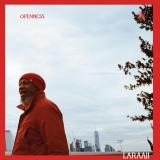
Recorded in Brooklyn, New York in 2025, Openness is a fully improvised full-length album from legendary ambient pioneer and sonic mystic Laraaji. Created without pre-written compositions or arrangements, the recording captures a rare moment of collective presence, where every sound emerges from intuition, listening, and trust in the unknown.
Guided by what Laraaji describes as a state of openness, the album unfolds as a meditation on timelessness, inexhaustible supply, right guidance, seamless unity, prosperity, healing, gratitude, understanding, relationship, and transformation. Moving fluidly between meditative vocals, Fender Rhodes, Moog synthesizer, zither, gong, and piano, Laraaji channels a deeply personal yet universal musical language intended for a global audience seeking connection, renewal, and inspiration.
A defining element of the recording is Laraaji's celebrated Laughter Meditation, woven throughout the performance as both a musical and spiritual practice. His joyful vocal expressions become an instrument unto themselves, creating moments of release, playfulness, healing, and communal connection. The laughter serves as a reminder that openness is not only a path toward deeper awareness, but also toward celebration, recreation, gratitude, and collective well-being.
The session features acclaimed saxophonist and composer Isaiah Collier on drums and tenor saxophone, bringing a responsive, exploratory energy to the recording. Producer Sonny Daze opens the album with a spoken invocation and shapes its expansive atmosphere throughout with the legendary Roland Space Echo RE-201, adding warmth, depth, and cosmic texture to the music's unfolding journey.
Described by Laraaji as a "vital music transmission," Openness was revealed spontaneously in the studio while remaining fully present to each new moment. The result is an immersive listening experience that feels both ancient and immediate—a celebration of right community, right recreation, right medicine, and the transformative power of creative freedom.
"This music is revealed and recorded spontaneously in Brooklyn, NY, with the attending presence of dear Sonny Daze and dear Isaiah Collier. Being totally in the new moment and allowing fresh communication to arrive, I remained open while touching various studio instruments. Being in channeling mode throughout the recording session, I sensed the world audience for whom this vital music transmission is intended."
Seven years after the haunting resonance of Voids, electronic pioneer Martyn returns to the album format with Music For Existing. Arriving on 15 May 2026, the record is more than a collection of tracks; it is a profound exploration of what it means to remain devoted to a craft in an era of relentless noise.
The album’s announcement is heralded by the lead single "Heavy Sound." The track serves as the perfect bridge between Martyn’s past and present - a masterclass in tension and release that previews the album’s dialogue between the producer, the musicians, and the audience. We live inside a culture that has prioritised and monetised restlessness. The modern apparatus runs on the continuous production of "next," driven by algorithms that value novelty over depth.
Music For Existing serves as a love letter to the communal act of making music - something that is both healing and inherently defiant. For Martyn, a musician often finds solace in musical conversation with others; in the moment we press record, we simply exist together. This record is an invitation to build human infrastructure around what we love, leaning into the fluid nature of community and seeing exactly where the music takes us when we choose to listen.
The album is a sprawling, "off-the-grid" tapestry that echoes Martyn’s profound appreciation for jazz - free, instinctive, and bursting in every sonic direction. This collection features an expansive cast of collaborators, including Duval Timothy, Dan Only, Lucinda Chua, and Mark Cisneros. The record is further elevated by the contributions of jazz talents Mischa Porte and Cees Bruinsma, alongside the evocative words of writer and poet Musa Okwonga.
While the acoustic textures and improvisational spirit of this record may feel like a departure, they represent a homecoming. Jazz has always been ingrained in Martyn’s work; even in his most stripped-back club tracks, the DNA of swing, syncopation, and free-form structure was always present, if not always visible.
Music For Existing marks the beginning of an exciting journey that will continue from the studio to the stage, celebrating the radical act of existing in the moment.