One of the most outstanding Bossa Disco Jazz productions from West Germany at the beginning of the 80s! This masterpiece captivate with their stylistic perfection and journey from brazilian Bossa Nova to Jazz with a boogieesque Disco influence. Its still on of the most DJ spinned Bossa Jazz dancefloor tunes from W.-Germany in the last 30 years!
The two highly talented, creative and sensitive artists Judy (Jude Enxuto) and Ximo (Ximo Gregorio) had lived in Germany since 1980 and performing in several clubs, small art stages and festivals.
In 1982 they recorded their Debut album "Via Brasil" in Frankfurt am Main. It was released in the same year by the small private record label called Rillenschlange. In the meantime coveted by music lovers, collected by vinyl connoisseurs and and happy to play in DJ sets, the great composition of the Brazilian Izio Gross will be an absolute Evergreen and catchy tune remain. This music production is one of the most essential productions of this genres from West Germany and has more than earned its place on the Sound Essence label. An absolute groovy Bossa Jazz Trip and Tip!
Cerca:brazilian
- Drumsong (One)
- Drumsong (Two)
- Drumsong (Three)
- Strumelody
- Drumelody (One)
- Drumelody (Two)
- Ydolemurd
- Hum Drum Dring (One)
- Hum Drum Dring (Two) The Freedrum Song
Strut present a new single vinyl reissue of Vambe"s sought-after privately pressed album from 1982, Drumland Dreamland. A self-taught drummer, inventor, and sonic experimentalist, Vambe holds a unique place in British music. The creator of his own instrument, the drumgita (pronounced "drumguitar") or string-drum, he aimed to create music that had never been previously made to pursue access to the fourth dimension and forge a radical new musical language - intuitive, polyrhythmic and metaphysical. Drumland Dreamland is deep and haunting; a dense tapestry of layered percussion, time-warped tape loops, and spiralling drumgita figures, all underpinned by hypnotic improvisations from Brazilian pianist Rafael Dos Santos. It is both ecstatic and unsettling, a landmark recording in black British experimental music.
- 01: Depois Do Amor
- 02: Nossa Cor
- 03: Quando Sol Chegar
- 04: Samba Canção
- 05: Revoada
- 06: More Than Love
- 07: Bem Me Quer, Mal Me Quer
- 08: Feitiço
- 09: Nosso Reflexo
Sometimes when artists from different musical worlds come together, they create something that feels revolutionary. SAMANTHA E ADRIAN, the collaborative album by Brazilian actress and singer Samantha Schmütz and American composer ADRIAN YOUNGE, captures that magic by blending musical influences from Brazil and the United States with a deep, soulful take on the '70s. Produced and recorded at Younge's Linear Labs, one of the last analogue studios in Los Angeles, the album represents a new chapter in the musical dialogue between Brazil and the United States-an exchange that is celebrated by record DIE-C collectors around the world.
Dom Salvador, the unassuming godfather of Brazilian soul music, has left an indelible mark through his unique fusion of jazz, soul, funk, samba, and Brazilian rhythms. His legacy continues with Dom Salvador JID024, produced by Adrian Younge and Ali Shaheed Muhammad. The album honors Salvador’s pioneering sound, continuing the vibrant dialogue between Brazilian and American music and inviting listeners to experience his rich, groundbreaking style.
Originally released in 2003, Marcos Valle’s Contrasts combined early noughties production techniques with his trademark Brazilian songwriting brilliance. The album quickly became one of Valle’s most in-demand, with tracks like the triumphant “Parabéns” (which was sampled by Childish Gambino, covered by Tom Misch and remixed by Misa Negra) and bossa beach classic “Agua de Coco”, both becoming firm fan favourites.
Produced by Roc Hunter, and executive produced by Joe Davis, with musicians including Robertinho Silva (percussion), Alex Malheiros (bass), and Marcos’ wife Patricia Alvi (vocals), Contrasts encapsulated Valle’s ever evolving musical vision, bringing together samba, baião, bossa pop, broken beat, house, trip-hop and more, on one era-defining record.
After 22 years, Contrasts is finally set for a double LP vinyl and CD reissue, with the original mix of “Valeu” and “My Nightingale” making it onto the vinyl edition for the first time.
Following the resounding success of the first volume, which sold 600 copies during its confinement, Aktshun returns with a second E.P. featuring 6 vibrant, eclectic tracks. This new opus is rooted in smooth Detroit house, high-energy disco-funk, the wild nights of Paradise Garage and the unique ambience of Bronx block parties.
The Aktshun duo, formed by Marotti - producer and creator of electronic instruments - and Marrrtin - DJ, graffiti artist, producer and member of Funky Bijou -, unite their passions for house, disco, hip-hop, funk and musical illustration to offer a rich and captivating sonic experience.
The first track, “Light Headed”, featuring the American singer Saucy Lady, priestess of modern funk, who has collaborated with E Live and J-Zone, among others, blends frenzied percussion, warm Fender Rhodes chords and a heady melodic chorus, ideal for rocking dancefloors this summer.
“Respect” offers a hybrid fusion of house and disco, where we imagine Moodymann crossing paths with Chromeo, buoyed by a hypnotic Moog solo.
“Vibration” pays homage to Loleatta Holloway and her iconic ‘Love Sensation’, evoking David Mancuso's legendary evenings at the Loft, between gospel and dance.
“Brokjazz” has a deep house vibe, blending tropical vocals with bewitching sensuality.
“Chaussette” offers an irresistible jazz-funk groove, while ‘Gonalate’ is inspired by classic disco-funk sounds, with a piano reminiscent of the legendary compositions of bands such as Change, D-Train and West End Records legends.
Finally, the cover of this new E.P. is signed by Brazilian artist NIHAO, bringing a unique and colorful visual touch to this musical creation.
Following their acclaimed debut Spirits, New Zealand"s boundary-pushing jazz collective The Circling Sun return with their sophomore LP Orbits - a deeply layered fusion of spiritual jazz, analog electronics, and percussive groove. Where Spirits explored 1960s influences, Orbits shifts into the mid-"70s, drawing inspiration from Rahsaan Roland Kirk, Yusef Lateef"s Atlantic era, and the Brazilian jazz of Azymuth and Airto Moreira. The ensemble blends arpeggiating Prophet synths and modular electronics with acoustic instrumentation: saxophone, upright piano, vintage drums, and hand-played percussion. Tracks move seamlessly between danceable Afro-Cubanrhythms and expansive, ambient jazz meditations - with layered vocals and choral textures guiding the listener through an interstellar sonic journey. Lush yet accessible, Orbits appeals to both deep jazz heads and fans of ambient, soulful instrumental music.
- A1: Os Ancestrais
- A2: Nao Podemos O Amor Parar
- A3: Debaixo Da Ponte
- A4: As Estacoes
- B1: Musica Faz Parte De Mim
- B2: Minha Melanina
- B3: Safira
Red Vinyl[31,05 €]
Dom Salvador, the unassuming godfather of Brazilian soul music, has left an indelible mark through his unique fusion of jazz, soul, funk, samba, and Brazilian rhythms. His legacy continues with Dom Salvador JID024, produced by Adrian Younge and Ali Shaheed Muhammad. The album honors Salvador’s pioneering sound, continuing the vibrant dialogue between Brazilian and American music and inviting listeners to experience his rich, groundbreaking style.
Recorded live in one session at age 18, this album helped launch Tania Maria's career as an acclaimed Brazilian jazz artist, celebrated for her virtuoso combination of piano and vocals. Produced by Romeo Nunes (Meirelles e Os Copa 5, Rio 65 Trio, Elis Regina, Elza Soares), the album features the pioneering Edison Machado, who transformed samba and was instrumental in the development of Bossa Nova through his groundbreaking "samba no prato" (samba on the cymbals) technique. His work helped shape the sounds of Jobim, Getz, and Milton Nascimento. On guitar is the legendary Neco, who played on over 500 albums. Initially self-taught, he later studied under maestros Guerra Peixe and Moacir Santos. He collaborated with icons like Elis Regina and Chico Buarque, and was a member of Os Ipanemas, Os Catedráticos, and Os Gatos. His solo work includes Velvet Bossa Nova (1966), which became an acid jazz favorite. The album features compositions by Caetano Veloso and Marcos Valle,alongside early samba classics.
Blending Brazilian rhythms with elements of samba, bossanova, and jazz fusion,it captures the early development of Tania Maria's signature style. Born in São Luís, Brazil in 1948,Tania Maria began playing piano at age seven. She learned samba, jazz, and chorinho through her father's weekend jam sessions. Leading her own band by age13, she performed across the region while collecting records from influential artists. Though she earned a law degree and started a family,her passion for musicu ltimately won out—she left law to pursue music full-time.
2025 Repress
Yes! Tommy Guerrero’s much-loved 4th LP – the smooth West Coast classic From The Soil To The Soul - gets its first ever vinyl release. As the follow up to his revered Soul Food Taqueria, this album was originally released by Quannum Records 2006 but only on CD. Working with Tommy directly, the LP has been fully remastered, cut on to heavyweight wax, and comes with artwork freshly reworked by the man himself.
From The Soil To The Soul represents a continuation of Tommy’s blissful guitar-soul whilst demonstrating increasingly complex chops and a slightly darker side to his distinctive sound. His spare, effortless funk is blended here with elements of Americana, heavy psych, lo-fi fuzz and intoxicating Latin rhythms. Combined with his typically breezy, laid-back San Franciscan style, it’s a vibe from start to finish.
Recorded primarily in his home studio, Tommy wrote, arranged and played nearly all the instruments, including bass, guitar, keyboards, percussion and kalimba. Renowned street artist Barry McGee, aka Twist, designed the cover art which Tommy has now recast in a deep, deep red for the vinyl version.
As ever with Tommy, the highlights are many and memorable. From twinkling, sun-drenched opener “Hello Again” to the penultimate, punk-rocking track “Let Me In Let Me Out” (featuring the melodic yet fearsome rapping of Lyrics Born), the variety across the LP is relentless, but satisfying, and without once losing focus.
We’re treated to the gorgeous hip-hop blues of “The Under Dog”, Meters-style Hammond B-3 jams like “War No More” and “No Guns More Glory” and Balearic bangers like Bing Ji Ling’s star-turn on the sleazy “Don’t Fake It.”
Curumin’s soulful guest vocal elevates the already-great Brazilian lounge feels of “Salve” to hitherto unscaled heights and the heavy, driving basslines - funky and warm on “Badder Than Bullets”, sombre and intense in “Tomorrow’s Goodbye” and “Molotov Telegram” – never fail to move both body and soul.
But our favourite track is the beautiful breezy pop of “Just Ain’t Me”. A bittersweet, skipping ballad which boasts an incredibly rare instance of Tommy singing. “What you want from me, I can never give” he repeats throughout, lending the already-melancholic atmosphere greater poignancy. It would’ve been number 1 across the planet in a parallel universe.
The legendary jazz bassist Isao Suzuki, revered worldwide for his extraordinary talent, recorded this vibrant session in 1981 alongside his longtime collaborator Tsuyoshi Yamamoto. Now, this rare gem returns on analog vinyl!
Infused throughout with the infectious rhythms of Brazilian music, the album captures a festive spirit brought to life by an all-star lineup including Takayuki Kato, Ichiro Doi, and Donald Bailey.
Proudly presenting Maravilhosamente Bem the powerful, female-centred third album by Brazilian singer, songwriter, actress, and creative director, Julia Mestre.
Alongside being a member of the Latin Grammy-winning Brazilian supergroup, Bala Desejo, Julia has been steadily building a solo career where her unique vision and alluring soft, sultry voice take centre stage. Drawing inspiration from ‘80s ballads, MPB, pop and disco productions, each song on this third album finds Julia creatively exploring different characters and tones.
A love-song-driven LP at its core, Maravilhosamente Bem holds a playful mirror up to blissful days gone by, artfully reimagined with Julia’s own modern twist. An album filled with love and nostalgia, it pays homage to her love of classic female disco divas such as Donna Summer, Sade, Alcione, Lady Zu, and the Brazilian rock queens Rita Lee and Marina Lima. Of that latter pairing, the late iconic Brazilian vocalist and musician Rita Lee (Os Mutantes) is referenced in the music video for the first single, ‘Sou Fera’, blessing Julia with a magical guitar. Marina Lima then provides guest vocals on the album’s closing track, ‘Marinou, Limou’, with her name transformed into a mantra by Julia.
Channelling a lo-fi ‘80s ballad aesthetic, Julia navigates a multitude of themes across the nine sublime tracks. From the sexy, whispered performances on vintage horror movie-inspired tunes ‘Vampira’ and ‘Pra Lua’ to the delicate, fragile love lullabies of ‘Sentimento Blues’ and ‘Cariñito’, and the seductive disco diva embodiment on dance tracks ‘Veneno de Serente’ and title track ‘Maravilhosamente Bem’. Another hidden highlight is the palette-cleansing mini-suite, ‘Interlúdio dos Amantes’. A luscious strings instrumental piece that lends to the beautiful Sade-esque ‘Seu Romance’.
Produced by Julia and longtime collaborators Gabriel Quirino, Gabriel Quinto, and João Moreira, Maravilhosamente Bem sees Julia embarking on a new era of her musical career. This sensational third album is a captivating showcase of the creative vision and versatility of one of Brazil’s finest stars.
Released on Mr. Bongo (ROW) and Altafonte (Brazil).
‘Mormaço Queima’ is where it all began for Ana Frango Eléctrico. Raw, quirky and lo-fi, it’s a debut album brimming with attitude and youthful energy, characteristics that would go on to define their sound. Previously released digitally in Brazil in 2018, with a private press CD version in 2020 and later a Brazilian vinyl version in 2022, here at Mr Bongo we felt it deserved a much-needed worldwide edition for all of us to savour.
A charming, idiosyncratic blend of MPB, Tropicália, and indie from a talented singer-songwriter, multi-instrumentalist and producer who would later become one of Brazil’s brightest international stars. ‘Mormaço Queima’ has a cool, laidback, swagger channelling ‘90s bands such as Pavement. The arrangements feel loose and easy, the opener, 'Farelos' (Crumbs), seems to ebb and flow on a razor's edge before the percussion and Antonio Neves' trombone draws the song into a structure. Another highlight is 'No Bico Do Mamilo', which has a free-flowing vibe, Ana pushing, pulling, and playing with the song's energy, keeping listeners constantly on their toes. Tracks such as 'Roxo' lean more into a punk attitude, with the pendulum swinging from easy-going to frenetic. The longest song on the album 'Picles', continues to sway the pendulum this time moving from DIY punk-funk into a psychedelic workout
Co-produced by friends and fellow future collaborators Guilherme Lirio, Gustavo Benjão, Marcelo Callado, and Thiago Nassif, ‘Mormaço Queima’ is a playful showcase of Ana Frango Eléctrico’s distinctive style. Plotting Ana's musical career, it's clear they are not one to be pigeon-holed, nor to be confined to a single genre. Instead, they are ever evolving and this captivating debut album was the building block for a career that has already seen them gain multiple Latin-Grammy awards and tour the world with their music.
Far Out Recordings continues its reissue campaign of the late Argentinian guitarist Agustin Pereyra Lucena's work with the first-ever vinyl reissue of his singular 1988 private press album, Puertos De Alternativa, now his most sought-after LP. The album features some of Agustin’s most uniquely beautiful compositions, including “Luces de Valeria” and “Preparativos Maritimos,” alongside Baden Powell's “Pequeño Vals” and “O Cego Aderaldo (Nordeste...),” and “Tema Barroco” by his longtime collaborator, Guilhermo Reuter.
By 1988, Agustín had established himself as one of Argentina’s foremost interpreters of Brazilian music. The seventies saw success with his group Candeias, and he gained recognition in Brazil, forming friendships and collaborations with luminaries such as Vinicius de Moraes, Baden Powell, Dorival Caymmi, Toquinho, and Maria Bethania. Following the era of dictatorship in South America, Agustín spent the late seventies and early eighties, living and touring in Norway as part of his European travels with his group Agustín Pereyra Lucena quartet.
Recorded after returning to his native Buenos Aires, Agustin Peyera Lucena’s Puertos de Alternativa emerged from this confluence of diverse experiences and influences, revealing an artist deeply connected to his environment. The album's title, meaning "Alternative Harbours," reflects Agustín's particular affinity for water. He observed that much of his favourite music originated from places with rivers and seas nearby, noting, "There is a flow near water that influences guitar playing for sure."
With a profound connection to both instrument and environment, Agustín’s music is often difficult to place. The album begins rooted deeply in South American soil, drawing clear inspiration from Brazilian guitar masters like Heitor Villa Lobos, Garoto and Baden Powell. But, as it progresses, a sense of journey unfolds, evoking new landscapes and horizons – from the crystalline beauty of glacial Norway to the gentle currents of the Rio de la Plata.
The ensemble on Puertos de Alternativa features notable Argentinian musicians, including drummer Osvaldo Avena, flautist Rubén Izarrualde, and saxophonist Bernardo Baraj.
Mastered by Stuart Hawkes at Metropolis Studios from the original master tapes which had been lovingly kept by Agustin’s nephew José Lucena Perreyra
Tracklist & Credits:
A1. Luces De Valeria (Agustin Pereyra Lucena)
Guitar, Vocals – Agustin Pereyra Lucena
Piano, Bass, Drums, Vocals – Guillermo Reuter
Tamboril – Julio Said
A2. Pequeña Valsa (Baden Powell)
Arranged By Flute – Lucho González
Drums – Osvaldo Avena
Flute – Alejandro Santos
Guitar – Agustin Pereyra Lucena
Tambora – Eduardo Avena
A3. Planicie (El Llano) (Agustin Pereyra Lucena)
Arranged By Flute – Lucho González
Flute – Rubén Izarrualde
Keyboards, Acoustic Bass, Percussion, Arranged By Keyboards – Guillermo Reuter
Guitar – Agustin Pereyra Lucena
A4. Tema Barroco (Guillermo Reuter)
Guitar – Agustin Pereyra Lucena
Percussion – Guillermo Reuter
A5. O Cego Aderaldo (Nordeste...) (Baden Powell)
Guitar – Agustin Pereyra Lucena
B1. Tres Que Quedaron (Agustin Pereyra Lucena, Andrés Laprida)
Drums – Osvaldo López
Flute – Rubén Izarrualde
Piano, Keyboards, Bass, Directed By – Guillermo Reuter
Soprano Saxophone – Bernardo Baraj
Electric Piano, Arranged By – Andrés Laprida
Guitar, Electric Guitar, Vocals – Agustin Pereyra Lucena
B2. Preparativos Maritimos (Andrés Laprida, Agustin Pereyra Lucena, Guillermo Reuter)
Guitar, Vocals – Agustin Pereyra Lucena
Keyboards, Acoustic Bass, Percussion, Arranged By – Guillermo Reuter
B3. Puertos De Alternativa (Agustin Pereyra Lucena)
Guitar, Effects – Agustin Pereyra Lucena
B4. Casi-Numbe (Luis González Cárpena, Agustin Pereyra Lucena)
Bass – Lucho González
Bass Flute – Rubén Izarrrualde
Berimbau – Horacio Veros
Keyboards, Piano, Vocals, Drums, Arranged By – Guillermo Reuter
Guitar, Vocals, Arranged By – Agustin Pereyra Lucena
Give bread and circuses to Brazilians in 1968, and they'll turn it into an anthem. Under the yoke of a monstrous dictatorship, this foundational album of the tropicalist movement forever changed the way music was thought of and made. Looking for bossa nova and bolero? Fine, but they added Batman, macumba, yé-yé, and psychedelic rock. With an album cover inspired by Sgt. Pepper's, Caetano Veloso, Gilberto Gil, Gal Costa, Tom Zé, Nara Leão, Torquato Neto, Capinam, Os Mutantes, and their brilliant arranger Rogério Duprat etched their names into history.
A true embodiment of Brazilian Boogie, this is the first official reissue of Brylho's album, founded in Rio de Janeiro in 1978 as Brylho da Cidade. The group was influenced by the Black Rio movement of Tim Maia, Cassiano, and others. Members included Arnaldo Brandão (vocals/bass), Paulo Roquette (guitar), Cláudio Zoli (guitar/vocals), Robério Rafael (drums), Bolão (percussion), and Ricardo Cristaldi (keyboard). Claudio Zoli stands out as an important funk artist of the 1980s, during a time when Pop Rock bands dominated the Brazilian music scene. This album features one of the biggest hits of 1983: the soulful reggae groove "Noite do Prazer." Often described as Rio de Janeiro's answer to George Benson's "Give Me the Night," it's a timeless classic that bridges funk, soul, and Brazilian grooves. On "Se Você For a Salvador," a sun-soaked, feel-good boogie track, younger generations have embraced a new term to describe the sound: Brazilian City Pop. The record also delivers dancefloor heat like the stomping "Jóia Rara," the vibrant soul-reggae fusion "Destrava Maria," the ahead-of-its- time rap-funk hybrid "Cheque Sem Fundo," and the electrifying samba-reggae "Pé de Guerra," rich with Bahian rhythms and energy. Closing out the album are two under-the-radar jazz-funk gems: "Meditando" and "171." Though often lumped into the boogie category, these tracks lean more toward the sleek 1980s jazz-funk sound, reminiscent of UK acts like Level 42.
Music is a language. This new label is a hypothetical sound trip between skyscrapers, wild places, deep imaginary oceans in our mistreated, but fascinating globe. No specific musical genre, but a sort of global beat, winking especially at the Balearic sounds. You can call them edits or re-publications, but our belief is that you can make tracks that are extremely expensive, in their original version or that have never been printed on vinyl. Imaginária wants to respect the publishers, authors, producers and musicians of the published songs, but fundamentally you who promote our idea.
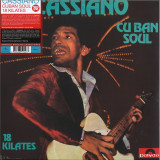
"Cuban Soul-18 Kilates" is Cassiano's third studio album, released in 1976, and stands as a milestone in Brazilian soul music. It combines Brazilian rhythms with classic American soul elements, creating a unique fusion. Cassiano's smooth, soulful vocal style and the album’s larger-than-life arrangements, reminiscent of Tim Maia's sound, give it a rich, deep feel.
The standout track, ‘Onda,’ is a relaxing anthem evoking beach vibes that has become a DJ’s favorite in recent years and also made it into several compilations. "Cuban Soul-18 Kilates" has earned cult status over the years, securing its place as one of the most coveted Brazilian records of all time. Remastered from the original tapes and pressed on 180g vinyl. This release is part of a new reissue series that will include many other outstanding Brazilian classics like Evinha “Cartão Postal” or Gerson King Combo.
"Cuban Soul-18 Kilates" is Cassiano's third studio album, released in 1976, and stands as a milestone in Brazilian soul music. Influenced by artists like Otis Redding, Eddie Kendricks, Stevie Wonder, and others, it combines Brazilian rhythms with classic American soul elements, creating a unique fusion. The album features 9 tracks, with ‘A Lua e Eu’ becoming a major commercial hit and the theme song for the soap opera “O Grito”. Cassiano's smooth, soulful vocal style and the album’s larger-than-life arrangements, reminiscent of Tim Maia's sound, give it a rich, deep feel. The standout track, ‘Onda,’ is a relaxing anthem evoking beach vibes, with its captivating bassline, subtle percussion, and natural sounds of the sea, making it perfect for moments of relaxation. This song, along with the album’s other tracks, showcases Cassiano's mastery of Brazilian soul, making “Cuban Soul-18 Kilates” a definitive and cherished record in the genre. This album has earned cult status over the years, securing its place as one of the most coveted Brazilian records of all time. Once incredibly rare and expensive, it's now at the top of every serious collector's wishlist. After not being available outside of Brazil for years, it’s finally been reissued – don’t miss your chance to own this legendary piece of music history.
'Ye Mele' is a very firm Mr Bongo favourite, and always a contender for end/start of the night track. A true classic.
Opens with a distinctive vocal harmony/chant and claps before dropping into bossa piano, organ and drums, which calms for a moment before reaching the chorus... and then building more into a horn section, that plays until the end. Immense.
Taken from Vinhas' now relatively expensive and very excellent 'O Som Psicodelico' LP from 1968.
'Berimbau'. And again - another favourite. Awe inspiring arrangement, of the highest order.
Opens with what is very reminiscent of a Brazilian Western soundtrack, before soaring into vocals, strings and horns. And then THAT end section...!
Golden Boys were a male vocal group, of brothers. 'Berimbau' is taken from their self-titled 1969 LP.
Guilherme Granado & Bruno Abdala Unite in FILHOS, a long-awaited collaboration between the two Brazilian musicians.
After years of friendship and sporadic live collaborations, Granado (São Paulo) and Abdala (Goiânia) have finally brought their creative synergy into a full-fledged project. Despite the geographical distance, a collaboration was inevitable — and now, it has become a reality.
The creative process moved swiftly once the exchange of ideas and files began. While the exact timeline is a blur, the inspiration remains clear: life itself. Musical influences are ever-evolving, shaped by experiences and time, but the essence of this project remains rooted in a deep connection to existence.
The sonic landscape is built from an eclectic palette: samplers, bells, synthesizers, drums, marimba, vibraphone, bass, violas, and more to create an elegant tapestry of sound that pays homage to the past while forging new paths forward.
At its core, this project is a tribute to tradition and lineage, hence Filhos (Sons). We are all products of what came before us, and through music, we strive to honor that legacy—carrying it forward into the future.