Neva Dinova, Indieband aus Ohama, veröffentlichte in den 2000ern drei Alben und eine Split-EP mit Bright Eyes. Nun beginnt mit dem neuen Album "Canary" ein neues Kapitel in neuer Besetzung mit frischer Perspektive. Von verzerrter Erhabenheit bis zu Akzenten von Electronica & Hip-Hop tritt die Band klanglich aus ihrem Schatten heraus, während sich die Songs in kraftvollen Explosionen konzentrierter Energie verdichten, eindringlicher als je zuvor. Das verbindende Element bleibt die unverwechselbare Baritonstimme von Frontmann Jake Bellow, mit der er von Existenzangst, Entfremdung und Heuchelei singt. Neva Dinova gelingt mit dem Comebackalbum "Canary" eine Schönheit in Unvollkommenheit.
Cerca:brigh
- A1: Diva Dj & An)Qua Cosmic Boys - Bright White Light
- A2: Next Generation - Mystic Force (Psychic Harmony Mix)
- A3: Synchro - Illogical Simmetry (Revisited Mix)
- A4: Diva Dj & Antiqua Cosmic Boys - Rain Forest
- B1: Diva Dj & An)Qua Cosmic Boys – Céline
- B2: Voyager - City Of Night
- B3: Pano Dj - Spiritual (Original Vrs )
- B4: Overture - Poem Without Words (Spanish Dream)
- C1: Diva Dj & An)Qua Cosmic Boys - La Sirena
- C2: Marco Carola - Apollo 13
- C3: Tin Drums - Tin Drums (Noisemaker Snare)
- C4: Diva Dj & An)Qua Cosmic Boys - Benededa Campana
- D1: Dj Lux & Diolac - Project 106 (Club Version)
- D2: Smorphya Dj - Symmetry (Synchro Remix)
- D3: Ramses - Supers))Ous (Rmx By Smorphya Dj)
- D4: Diva Dj & An)Qua Cosmic Boys - Peace On Earth
Shock Room it’s a double vinyl release who takes the name from the main room of the discoteque.
ULTIMO IMPERO DI Torino; an historic temple of the techno music from the ‘90s. in this compila)on are all included the most iconic and an)cipated “techno, trance & progressive” grooves that have made dance en)re genera)ons of people, nowadays again on track and well
spinned up by djs all arounf the world.
- A1: The Springfields - Are We Gonna Be Alright
- A2: Talulah Gosh - Talulah Gosh
- A3: Blueboy - Meet Johnny Rave
- A4: The Flatmates - I Could Be In Heaven
- A5: Primal Scream - Velocity Girl
- A6: The Primitives - Way Behind Me
- A7: The Orchids – I’ve Got A Habit
- A8: Popguns - Waiting For The Winter
- A9: Mccarthy - Should The Bible Be Banned
- B1: The Soup Dragons - Soft As Your Face
- B2: The Darling Buds – Burst
- B3: The Wedding Present – A Million Miles
- B4: 14 Iced Bears – Sure To See
- B5: The Wake - Crush The Flowers
- B6: Even As We Speak - Falling Down The Stairs
- B7: The Pooh Sticks - Indie Pop Ain't Noise Pollution
- B8: Brighter - Does Love Last Forever?
- C1: Heavenly - Over And Over
- C2: Bmx Bandits - I Wanna Fall In Love
- C3: Blake Babies – Look Away
- C4: The Vaselines - Jesus Wants Me For A Sunbeam
- C5: Velocity Girl – Sorry Again
- C6: Milky Wimpshake – Scrabble
- C7: Helen Love - We Love You
- D2: Veronica Falls - Waiting For Something To Happen
- D3: Joanna Gruesome - Do You Really Wanna Know Why Yr Still In Love With Me?
- D4: The Hit Parade - You Didn't Love Me Then
- D5: Allo Darlin' - My Heart Is A Drummer
- D6: The Spook School - Speak When You're Spoken To
- D7: Ribbon Stage – Playing Possum
- D8: The Lost Days - Mess You Made
- D9: The Goon Sax - Boyfriend
- C8: The Pains Of Being Pure At Heart - Young Adult Friction
- D1: Dum Dum Girls - Blank Girl
Two-Piers bringt mit "Come To My World" eine kurze Geschichte und Tauchgang in die Welt des Indie-Pop, von seinen bescheidenen Anfängen in den 1980ern bis zu den vielen grossartigen Bands, die heute die Flagge hochhalten.
"Come To My World" beginnt mit coolen Bands wie Talulah Gosh, The Flatmates, Blueboy, Primal Scream, McCarthy, 14 Iced Bears und The Springfields auf bahnbrechenden DIY-Labels wie Sarah Records, The Subway Organization und Creation. Über die einflussreichen C86-Kassettenjahre gelangen wir zu den kommerzielleren Spät-1980er-Sounds von The Primitives, The Soup Dragons und The Darling Buds. Wir navigieren durch die 1990er mit der unterschätzten Brillianz von Heavenly, der florierenden schottischen Szene mit Acts wie BMX Bandits und The Vaselines, bis zum Durchbruch der Indie-Pop-Sounds von Velocity Girl und Blake Babies in den USA. In den 2000ern brachte die US-Szene exzellente Bands wie Dum Dum Girls und The Pains Of Being Pure At Heart hervor, neben Underground-Acts wie Joanna Gruesome, The Spook School und Veronica Falls. Die Zusammenstellung endet mit einem Blick in die glänzende Zukunft des Indie-Pop mit Künstlern wie The Goon Sax, The Lost Days und Ribbon Stage.
Für Indie-Pop-Liebhaber ist diese Underground-Musik seit fast 40 Jahren eine ständige Quelle der Freude. 2LP mit 34 Tracks. 2CD mit 40 Tracks.
- A5: Where Have I Been All My Life
- A3: Maniac
- A1: Oo Cute
- A2: Heart Of Lead (Take It Off!!!)
- A4: Leo’s Song (The Social Media Guy)
- A6: Stay Wid De Money (Go Home!!!)
- B1: Footyliciou$
- B2: The Bomb (Is It The Tear Gas Or Babe Are You)
- B3: Sukc My Dikc
- B4: Vip Parties
- B5: An Old Country Ballad
- B6: Best Dj Ever (I’m The!!!)
In a world of division, BEÃTFÓØT’s delayed second album is as an invitation to unite at a utopian celebration of life. Originally scheduled for release in October 2023 but postponed due to the ongoing Israel/Palestine war, the intrinsically-political ‘TOO CUTE’ has taken on more prominence than the Tel Aviv duo of Udi Naor and Adi Bronicki could have imagined.
“It's more urgent than ever for us to share this now, even though the album has been ready for a while,” says producer Naor. “BEÃTFÓØT are against any war, and believe that people should talk and not use violence - never,” he adds vehemently. “We feel the pain of Palestinians and Israeli loss of life, and are devastated by it. We hope the war will be finished soon and that peace and prosperity will come soon for both sides.”
While both Naor and vocalist Bronicki have been active in protests, charity work and community efforts over the past year - explicitly against the current government in Israel - such values of peace, acceptance, coexistence, inclusiveness and anti-hate from all sides are further instilled in the songs that form ‘TOO CUTE’.
“We're really trying to highlight that there are people here working tirelessly for a brighter future for our ill kids and our neighbour’s kids,” adds Naor, who is also co-founder of techno duo Red Axes. Having had to flee the country with his family, it’s through music that Naor and Bronicki have found hope.
In light of such conflict, the multi-layered yet sonically-bonkers record also enables escapism, which is needed more now than ever. Following their self-titled 2021 debut (released on DJ Tennis’ label Life and Death), ‘TOO CUTE’ is a refreshingly-ridiculous dark-rave rollercoaster which careers between hard-dance, big-beat, post-punk, techno, hyperpop, country and everything in between.
Things blast off at breakneck speed with the chaotic title track’s hyperpop snares, instantly-catchy lyrics (which feel ominously striking considering the war) and a stadium-ready chorus that erupts into rolling breakbeats, punishing EDM and even a nod to The Bloodhound Gang’s ‘The Magic Touch’. Somehow, we’re just three minutes into the record.
The tongue-in-cheek ‘HEART OF LEAD (TAKE IT OFF)’ still bangs despite its silliness, like if Kero Kero Bonito got in the studio with will.i.am. Later, ‘LEO’S SONG (THE SOCIAL MEDIA GUY)’s wittily satirical one-liners - “I just wanna get high with AI” - come thick and fast amid a barrage of glitches and guitars. ‘SUKC MY DIKC !!!’, meanwhile, pairs flute with pulsing hardstyle beats.
While their first record’s experimental explosion captured the pure carnage and energy of the BEÃTFÓØT universe in a conceptual fashion (though remaining polished in its own way), album two is primed to connect with a bigger audience thanks to its pop melodies, structures and songwriting.
Much of ‘TOO CUTE’ was written while the duo toured Europe for the first time, with rough sketches of tracks created in the moment during their incendiary live shows, and then recorded in planes and cars.
If their first record was a case of testing the vibes, album two is more assured and confident within their sonic world. “In the first album, we stepped into the club, metaphorically, and started making eye contact with everyone to figure out the energy,” Bronicki says. “But, this time round, I already had an idea of the story that I wanted to tell to these random people.”
And what is that story? “Radical silliness, or radical fun – that’s the essence of BEÃTFÓØT,” Naor confirms. “What we really want to do is goof around and have fun, and that brings out something very profound and honest,” he explains. A sense of nostalgic freedom is also at the album’s core, thanks to the removal of adult predetermined social constructs that decide how people should behave or look. “There’s a very honest and positive energy in holding onto your childlike wonder and trying to explore that with others,” Bronicki suggests, adding that “the adult world can be so wrong and angering”.
She feels this relates to both the album’s lyrics and the artistic state of mind that the duo always work to: “the goal is to feed a really thought-out and profound idea, but through a playful spoon,” she says. With this in mind, the recurring theme of ‘TOO CUTE’ stems from the duo’s “radical and lived experience of existing in a place that holds a lot of guilt and fear – because death is so imminent and prevalent in a very confronting way”. This is clearly represented on ‘FOOTYLICIOU$’, on which Bronicki screams “someone’s gonna die tonight!” before emphatically shouting “NOT ME!”
The album title is BEÃTFÓØT’s response to that: “We want to be a celebration of life, and that applies to all lives, of all backgrounds, including animals… that’s our guiding light,” Bronicki says.
“We create in the context of living in a country where the current government’s anti-democratic measures are limiting who is included in the celebration of life. Because different people are always being pushed out and excluded: whether it’s queers, Palestinians or people from different religions.”
BEÃTFÓØT - who have found a home among the LGBTQIA+ community - are fighting back against oppression. “We want everybody to come to the party and celebrate life together,” says Naor, setting out his and Bronicki’s mission… “and our goal is to widen that party as wide as it can go.”
c MANIAC ft. Princess Rani
e WHERE HAVE I BEEN ALL MY LIFE ft. Bugle Boy
c MANIAC ft. Princess Rani
[e] WHERE HAVE I BEEN ALL MY LIFE [ft. Bugle Boy]
[c] MANIAC [ft. Princess Rani]
[e] WHERE HAVE I BEEN ALL MY LIFE [ft. Bugle Boy]
Amandra, half head honcho behind Ahrpe Records, goes for subtly evolving and droning atmospheres. With releases spanning electronic genres and record labels: Nous klaer Audio, AD 93, Tikita or Semantica, just to name a few; the French producer ba with coherence his own vision of acid and tribal rhythms that can be presented with either bright and soft feelings or through a
Brera Som Som EP
As always with Amandra, there is a blend of poetic and soft hidden touch given to the music through carefully crafted personal Som is a 4 tracker EP, recorded back when he lived in Warsaw Poland, showcasing the artists ability to navigate through nich double 12 package cherry topped with four intelligent and eclectic remixes from artists with their own unique identity: Shieldin Brainwaltzera.
Amandra on disc 1
Brera Som Som
I want my music to breathe dirty so its alive to my ears, trying to stay away from surgical, clean, electronic music. The Prophet recorded by hand, with assumed offbeat imperfections, as always. I wanted to get a naive Asian mood out of it, just to try and c track. I tend to think a lot about my tracks and their meaning more in terms of feelings, art and techniques than in terms of dee
dance floors or whatever. Brera Som Som is a try at using the chiaroscuro technique depicted in classical paintings for instance interesting focus on some very specific elements.
Cyborg Pelikana
Recorded out of a jam on a Soma Pulsar 23 and some heavy distorted synths, it ended up sounding like no other recordings bit different as I wanted to have a more composed like approach here.
Fanfaron
Here is a try at going jungle... with a Moog DFAM and a 303 processed through a Sherman Filterbank.
Prorokini
This one belongs to a phase where I was exploring the sampling side of electronic music. Until that moment I was building 100 based on raw drum machines and some processing, then started feeling how it would feel to sample some raw external beats and process them my way. I didnt pursue that sampling lead much afterward because it felt like a boring approach to me that
stood out anyway, like this one, which Im very proud of. The synths are clearly programmed on the Prophet 08, it cant go any Instruments than that, if you like them, go grab that synth
Remixers on disc 2
Cyborg Pelikana Shielding Remix
I liked the dry and direct qualities of the original track and wanted to maintain that feeling while collaging it using my own proc Recorded in my old home studio in Stockholm.
Brera Som Som Brainwaltzera Remix
no comment.
Fanfaron Whylie Remix
The remix was made using resampling techniques, the rhythmic noises were transformed into driving percussive layers pushi character. A more emotional overlay was added to the track based on the sentimental and personal approach I built through.
Brera Som Som Martinou Remix
Interpreting Amandras work has been on my bucket list for a while. Theres something in it that is innately humanizing and raw capture in my remix. The melody line from the remix is just a snapshot of a small part of the full original track, but it stuck with my improvisation to what you see before you today. With this remix I wanted to make something that would swell slowly and ring o
All original tracks written and produced by Amandra.
Remixes written and produced by Brainwaltzera, Whylie, Martinou and Shielding.
Mastered by Amandra.
Artwork by Neurotypique.
- The House Is Rockin
- Hoodoo Voodoo Doll
- Town Without Pity
- Rumble In Brighton
- The Man With The Magic Touch
- (The Legend Of) Johnny Kool
- Ghost Radio
- (Everytime I Hear) That Mellow Saxophone
- Buzz Buzz
- My Baby Only Cares For Me
- Hey, Louis Prima
- Sammy Davis City
For fans of The Stray Cats, Brian Setzer, Swing and Big Band! The Brian Setzer Orchestra (sometimes known by its initials BSO) is a swing and jump blues band formed in 1992 by Stray Cats frontman Brian Setzer. In 1994 they released their debut album which was followed up in 1996 with Guitar Slinger. In 1998, for their breakout album The Dirty Boogie, the group covered Louis Prima's "Jump, Jive an' Wail", which originally appeared on Prima's 1957 album The Wildest!. The BSO's follow up single, appearing on the album Vavoom!, was "Gettin' in the Mood." Now get Guitar Slinger from the Brian Setzer Orchestra for the first time on vinyl since 1996. Remastered on 180g vinyl in an amazing limited- edition color. There are only 700 of the Silver Melt. Guitar Slinger is the second release from the Brian Setzer Orchestra and where the band really started to come together. The album leads off with "The House Is Rockin'" and features the Brian Setzer/Joe Strummer (The Clash) penned tracks "Ghost Radio" and "Sammy Davis City". There are 12 tracks in all, and it clocks in at just over 43 minutes. This is the first in a series of three reissues coming from Deko Entertainment with The Dirty Boogie scheduled to also hit by the end of 2024, with Vavoom! to follow in early 2025.
Matter-of-factly, Lycox exclaims "Yaaahh" right at the beginning. That's an affirmation but in times of distress it can also mean resignation, something like "Yeah, whatever". Lycox says he was only freestyling though. Then the bassline appears. Elastic, expressive, full-bodied. And it's not even present the whole time. He was "trying to develop a new formula for the Kuduro beat."
Songs for the club? Most certainly. Different sensibilities, one same focused mind. Lycox evolves within tradition, he has mastered the groove, the ambience, the right tones. Simply called "Energia", the last track circles above wistfully, menacing but maybe just promising some sort of action. With a few drops one could almost switch over to a parallel universe of old school Trance, a reference that feels as alien here as maybe this track feels to someone for whom the standard Afro House sound represents modern African music.
These songs pile up in a threshold balanced between styles, sensations, maybe in the middle of life itself. Such a concentration of energy is bound to need release and that comes figuratively through details in the music reaching out to receptive ears. "To Bem Loko" explicitly tries to "literally drive everyone crazy on the dancefloor." Once again Lycox provides vocals, as in "Edson no Uige", about a friend who embarked on a trip to the Angolan province of Uige and came back speaking only the local dialect known as lingala. A nod to tradition, very emotional, without compromising complex arrangements. Consequently, we the listeners are kept believing there is still enough space for a bright future. To ears accustomed to Lycox productions the title "Contemporaneo" (opening of side B) reads like a redundancy, then.
Maybe this music can never be quite as massive as other Afro styles. Without sounding pretentious, it avoids simplistic patterns, it demands a bit more mental processing while it certainly aims to loosen the limbs. Universal in vocation, underground at the core, Lycox definitely calls it Batida but for some it is still Ghetto Music. Like DJ Veiga said when describing a previous release for Príncipe, Ghetto is home, though. Lycox adds it is a foundation of personality. "Few in our community will recognize your work when you come from the same environment, but once you establish your reputation outside of the neighbourhood and even outside of the country, people will look at you differently, as if you were a star."
- A1: The Springfields - Are We Gonna Be Alright
- A2: Talulah Gosh - Talulah Gosh
- A3: Blueboy - Meet Johnny Rave
- A4: The Flatmates - I Could Be In Heaven
- A5: Primal Scream - Velocity Girl
- A6: The Primitives - Way Behind Me
- A7: The Orchids – I’ve Got A Habit
- A8: Popguns - Waiting For The Winter
- A9: Mccarthy - Should The Bible Be Banned
- B1: The Soup Dragons - Soft As Your Face
- B2: The Darling Buds – Burst
- B3: The Wedding Present – A Million Miles
- B4: 14 Iced Bears – Sure To See
- B5: The Wake - Crush The Flowers
- B6: Even As We Speak - Falling Down The Stairs
- B7: The Pooh Sticks - Indie Pop Ain't Noise Pollution
- B8: Brighter - Does Love Last Forever?
- C1: Heavenly - Over And Over
- C2: Bmx Bandits - I Wanna Fall In Love
- C3: Blake Babies – Look Away
- C4: The Vaselines - Jesus Wants Me For A Sunbeam
- C5: Velocity Girl – Sorry Again
- C6: Milky Wimpshake – Scrabble
- C7: Helen Love - We Love You
- D2: Veronica Falls - Waiting For Something To Happen
- D3: Joanna Gruesome - Do You Really Wanna Know Why Yr Still In Love With Me?
- D4: The Hit Parade - You Didn't Love Me Then
- D5: Allo Darlin' - My Heart Is A Drummer
- D6: The Spook School - Speak When You're Spoken To
- D7: Ribbon Stage – Playing Possum
- D8: The Lost Days - Mess You Made
- D9: The Goon Sax - Boyfriend
- C8: The Pains Of Being Pure At Heart - Young Adult Friction
- D1: Dum Dum Girls - Blank Girl
Black Vinyl[34,41 €]
Two-Piers bringt mit "Come To My World" eine kurze Geschichte und Tauchgang in die Welt des Indie-Pop, von seinen bescheidenen Anfängen in den 1980ern bis zu den vielen grossartigen Bands, die heute die Flagge hochhalten.
"Come To My World" beginnt mit coolen Bands wie Talulah Gosh, The Flatmates, Blueboy, Primal Scream, McCarthy, 14 Iced Bears und The Springfields auf bahnbrechenden DIY-Labels wie Sarah Records, The Subway Organization und Creation. Über die einflussreichen C86-Kassettenjahre gelangen wir zu den kommerzielleren Spät-1980er-Sounds von The Primitives, The Soup Dragons und The Darling Buds. Wir navigieren durch die 1990er mit der unterschätzten Brillianz von Heavenly, der florierenden schottischen Szene mit Acts wie BMX Bandits und The Vaselines, bis zum Durchbruch der Indie-Pop-Sounds von Velocity Girl und Blake Babies in den USA. In den 2000ern brachte die US-Szene exzellente Bands wie Dum Dum Girls und The Pains Of Being Pure At Heart hervor, neben Underground-Acts wie Joanna Gruesome, The Spook School und Veronica Falls. Die Zusammenstellung endet mit einem Blick in die glänzende Zukunft des Indie-Pop mit Künstlern wie The Goon Sax, The Lost Days und Ribbon Stage.
Für Indie-Pop-Liebhaber ist diese Underground-Musik seit fast 40 Jahren eine ständige Quelle der Freude. 2LP mit 34 Tracks. 2CD mit 40 Tracks.
Warehouse find!
96 Back's third outing on CPU 'Issue In Surreal' E.P. is paired with a heavyweight remix E.P. featuring remixes from Jensen Interceptor, Happa & Jabes, Sync 24 and Volruptus.
Four tracks of Majumdar-Swift's signature complex electro each with its respective remix rounds up another fine release for electro's brightest young star.
Mastered by studio genius Rob Gordon ensures the E.P.'s sonic credentials.
Leng’s San Francisco connection has long been strong, with the 40 Thieves collective – and their friend Cole Odin – providing some of the label’s most memorable releases of the last decade. That Bay Area connection comes to the fore once more on the imprint’s latest release, which sees Odin join forces with fellow San Francisco resident Marshall Watson, a long-serving producer, engineer and live performer known globally for his Balearic-minded productions.
‘Voyager’, the pair’s first collaborative single, is a genuine meeting of minds. It combines Odin’s love of low-slung dub disco, dancefloor psychedelia and low-tempo cosmic house with Watson’s
picturesque Balearic synths, sparkling piano riffs and immersive sound design. It’s this blend that dominates on the EP-opening Original Mix, an infectious workout that gets progressively more blissed-out and saucer-eyed as it progresses. Listen carefully and you’ll hear some suitably psychedelic guitar solos nestling amongst the heady washes of sound, sun-bright piano riffs and weighty bass.
Those languid, stretched-out guitar parts naturally take a more prominent role on the Extended
Guitar Mix. On this alternative take, the pair deliver a lightly tweaked take on the original groove, stretching it out while overlaying eyes-closed guitar solos, pots-and-pans percussion and a more DJ-friendly outro. It’s effectively an extended club mix – the club in question being a Bay Area basement at 5am. To round off the EP, Odin and Watson dust off their dancing shoes and pay tribute to San Francisco great Patrick Cowley. On the appropriately titled Cosmic Rave Mix, the pair swap their bass guitar for a pulsating sequenced bassline, trance-inducing synth sounds, and locked-in electronic loops designed to take you to a higher state of consciousness. By the time the track’s familiar piano refrain drops midway through, you’ll be reaching for the lasers in no time at all.
- A1: Queen - Don't Stop Me Now (Remastered 2011)
- A2: The Police – Walking On The Moon
- A3: Blondie - Heart Of Glass (Original Single Version)
- A4: Abba - Gimme! Gimme! Gimme! (A Man After Midnight)
- A5: Olivia Newton-John – A Little More Love
- A6: Kate Bush – Wow
- A7: Elton John - Song For Guy (Single Edit / Remastered 2017)
- B1: Donna Summer - Hot Stuff (Single Version)
- B2: Chic - Good Times (7" Edit)
- B3: Sister Sledge – He’s The Greatest Dancer
- B4: Amii Stewart - Knock On Wood (7” Edit)
- B5: Gloria Gaynor - I Will Survive (Single Version)
- B6: Village People – Ymca
- B7: Mcfadden & Whitehead - Ain't No Stoppin' Us Now (Single Version)
- B8: Commodores - Still (Single Version)
- C1: Ian Dury & The Blockheads - Hit Me With Your Rhythm Stick
- C2: The Boomtown Rats - I Don't Like Mondays (Album Version)
- C3: Elvis Costello & The Attractions - Accidents Will Happen (Remastered 2020)
- C4: Sex Pistols – Something Else (Remastered 2012)
- C5: The Clash – I Fought The Law
- C6: Siouxsie And The Banshees - The Staircase (Mystery)
- C7: Squeeze - Cool For Cats (Single Edit)
- C8: The Specials - Gangsters
- C9: The Selecter - On My Radio
- D2: Electric Light Orchestra - Shine A Little Love
- D3: Blondie – Dreaming
- D4: Pretenders – Stop Your Sobbing
- D5: Dave Edmunds – Girls Talk
- D6: Gerry Rafferty - Night Owl (Edit)
- D7: Billy Joel - My Life
- D8: Gary Moore & Phil Lynott - Parisienne Walkways
- E1: Abba – Chiquitita
- E2: Art Garfunkel – Bright Eyes
- E3: Roxy Music - Dance Away (Single Version / Remastered 2012)
- E4: Neil Diamond - Forever In Blue Jeans (Single Version)
- E5: Cliff Richard - We Don't Talk Anymore
- E6: Milk & Honey – Hallelujah
- E7: Sad Café – Every Day Hurts
- F1: The Crusaders - Street Life (Edit)
- F2: Earth, Wind & Fire – September
- F3: Wings - Goodnight Tonight (Remastered 2016)
- F4: The B-52'S - Rock Lobster
- F5: The Flying Lizards - Money (Edit)
- F6: M - Pop Muzik
- F7: Gary Numan – Cars
- F8: The Buggles - Video Killed The Radio Star (Single Version)
- C10: Madness - One Step Beyond (7” Single Version)
- D1: Meat Loaf - Bat Out Of Hell
48 tracks on a 3-LP collection – including: Queen, The Police, Blondie, Abba, Elton John, Donna Summer, Chic, The Boomtown Rats, The Clash, Meat Loaf, Pretenders, Billy Joel,
Electric Light Orchestra, The Specials, The Selecter, Gary Numan, The Buggles…
Having spent their formative years in São Paulo Brazil, as a teenager, Lau Ro found themself uprooted from their home. Moving with their family to Europe in search of a better quality of life, their story was like that of many immigrants in the same position. Lau Ro's parents found work in factories and cleaning jobs, for the first few years in the North of Italy and then in Brighton on England's Southern coast. "We never managed to visit back home, so my connection to Brazil became largely made up of childhood memories and my fascination with all the 60s and 70s music I could find from there."
In Brighton, the young non-binary singer and composer would immerse themself amongst the city's vanguard of free-thinking artists and musicians. Lau Ro formed Wax Machine whose prefigurative, psychedelic community provided a glimmer of countercultural hope amid a backdrop of national political decline. From 2020-23, Wax Machine birthed three cult-favourite albums in as many years; indebted in part to their British psychedelic forebears from progressive folk, rock and jazz yore. But the kernel of Lau's Brazilian sound was already beginning to blossom across Wax Machine's releases. Now, taking root deeper still, Lau Ro steps forward with their debut album: Cabana.
Named after the small wood cabin at the bottom of their garden where the album was recorded, Cabana is a deeply personal record of memory, self-discovery and imagination. Melancholy and hope combine across ten tracks of dreamy bossa, ambient folk, fuzzy tropicalia and majestic MPB. The music is swathed in masterful string arrangements and trippy electronics in equal part, while Lau Ro's delicate, yet quietly confident voice takes acerbic aim (in both English and Portuguese) at polluted city life, while dreaming of a utopia, rich with nature and wildlife.
Like the musical equivalent of semantic drift, Lau Ro's displacement led to the creation of another Brazil. A mythic place in Lau's soul, as they put it, "where the sunshine and joy of my childhood remained untapped." Lau continues: "It's music that might sound as if it came out of a parallel universe Brazil, rather than its modern day landscape. I am nowadays rediscovering Brazil, going back as often as I can and trying to stay connected to these different parts of the world and myself."
Camelot, the legendary seat of King Arthur's court in Early Middle Ages Britain, was probably not a real place. A corruption of the name of a real Romano-Briton city, the word "Camelot" accumulated symbolic, mythic resonances over centuries, until achieving its present usage as a near-synonym of "utopia." In the mid-20th century alone, Camelot inspired an explosion of representations and appropriations, among them the violent, affectless Arthurian court of Robert Bresson's 1974 film Lancelot du Lac and the absurdist iteration of Monty Python's 1975 Holy Grail, both of which feature armored knights erupting into fountains of blood; the mystical Welsh world of novelist John Cowper Powys's profoundly weird 1951 novel Porius, with its Roman cults, wizards and witches, and wanton giants; and the nationalist nostalgia of President John F. Kennedy's White House. Unsurprisingly there are fewer Camelots in more recent memory. Camelot, Canadian songwriter Jennifer Castle's extraordinary, moving 2024 chronicle of the artist in early middle age, charts a realer, more rooted, and more metaphorical place than the fabled Camelot of the Early Middle Ages (or its myriad depictions), but it too is a space more psychic than physical. In Castle's Camelot, the fantastic interpenetrates the mundane, and the Grail, if there is one, distills everyday experience into art and art into faith, subliming terrestrial concerns into sublime celestial prayers to Mother Nature, and to the unfolding process of perfecting imperfection in one's own nature. Co-produced by Jennifer and longtime collaborator Jeff McMurrich, her seventh record is at once her most monumental and unguarded to date, demonstrating a mastery of rendering her verse and melodies alike with crisply poignant economy. For all their pointedly plainspoken lyrical detail and exhilarating full-band musical flourishes, these songs sound inevitable, eternal as morning devotions. "Back in Camelot," she sings on the lilting, vulnerable title track, "I really learned a lot / circles in the crops and / sky-high geometry." The album opens with a candid admission of sleeping "in the unfinished basement," an embarrassing joke that comes true. But the dreamer is redeemed by dreaming, setting sail in her airborne bed above "sirens and desert deities." If she questions her own agency_whether she is "wishing stones were standing" or just "pissing in the wind"_it does not diminish the ineffable existential jolt of such signs and wonders. This abiding tension between belief and doubt, magic and pragmatism, self and other, sacred and profane, and even, arguably, paganism and monotheism, suffuses these ten songs, which limn an interior landscape shot through with sunstriped shadows of "multi-felt dimensions" both mystical and quotidian. The epic scale and transport of "Camelot," with its swooning strings, gives way dramatically to "Some Friends," an acoustic-guitar-and-vocals meditation in miniature on Janus-faced friends and the lunar and solar temperatures of their promises_"bright and beaming verses" versus hot curses_which recalls her minimalist last album, 2020's achingly intimate Monarch Season. (In a symmetrical sequencing gesture, the penultimate track, the incantatory "Earthsong," bookends the central six with a similarly spare solo performance and coiled chord progression, this time an ambiguous appeal to _ a wounded lover? a wounded saint? our wounded planet?) Those whom "Trust" accuses of treacherous oaths spit through "gilded and golden tooth"_cynics, critics, hypocrites, gurus, scientists, doctors, lovers, government, the so-called entertainment industry_sow uncertainty that can infect the artist, as in "Louis": "What's that dance / and can it be done? What's that song / and can it be sung?" Answering affirmatively are "Lucky #8," an irrepressible ode to dancing as a bulwark against the "tidal pools of pain" and the "theory of collapse," and "Full Moon in Leo," which finds the narrator dancing around the house with a broom, wearing nothing but her underwear and "big hair." But the central question remains: who can we trust, and at what cost faith, in art or angels or otherwise? Castle's confidence in her collaborators is the cornerstone of Camelot. Carl Didur (piano and keys), Evan Cartwright (drums and percussion), and steadfast sideman Mike Smith (bass) comprise a rhythm section of exquisite delicacy and depth. This fundamental trio anchors the airiness of regular backing vocalists Victoria Cheong and Isla Craig and frames the guitars of Castle, McMurrich, and Paul Mortimer (and on "Lucky #8," special guest Cass McCombs). Reprising his decennial role on Castle's beloved 2014 Pink City, Owen Pallett arranged the strings for Estonia's FAMES Skopje Studio Orchestra. On the ravishing country-soul ballad "Blowing Kisses"_Pallett's crowning achievement here, which can be heard in its entirety in the penultimate episode of the third season of FX's The Bear_Jennifer contemplates time and presence, love and prayer_and how songwriting and poetry both manifest and limit all four dimensions: "No words to fumble with / I'm not a beggar to language any longer." Such rare moments of speechlessness_"I'm so fucking honoured," she bluntly proclaims_suggest a state "only a god could come up with." (If Camelot affirms Castle as one of the great song-poets of her generation, she is not immune to the despairing linguistic beggary that plagues all writers.) Camelot evinces a thoroughgoing faith not only in the natural world_including human bodies, which can, miraculously, dance and swim and bleed and embrace and birth_but also in our interpretations of and interventions in it: the "charts and diagrams" of "Lucky #8," a daydreamt billboard on Fairfax Ave. in LA in "Full Moon in Leo," the bloody invocations of the organ-stained "Mary Miracle," and all manner of water worship, rivers in particular. (Notably, Jennifer has worked as a farmer and a doula.) The album ends with "Fractal Canyon"'s repeated, exalted insistence that she's "not alone here." But where is here? The word "utopia" itself constitutes a pun, indicating in its ambiguous first syllable both the Greek "eutopia," or "good-place"_the facet most remembered today_and "outopia," or "no-place," a negative, impossible geography of the mind. Utopia, like its metonym Camelot, is imaginary. Or as fellow Canadian songwriter Neil Young once sang, "Everyone knows this is nowhere." "Can you see how I'd be tempted," Castle asks out of nowhere, held in the mystery, "to pretend I'm not alone and let the memory bend?"
With his Premise EP, Felix Fleer unites long-held ideas into a cohesive and deeply personal collection, offering a unique blend of intricate textures and fragile harmonies that reward attentive listeners with its meticulous attention to detail. The title track “Premise“ opens the A- side with an infectious garage groove and Fleer’s signature brand of detuned vintage polysynths, building up to a bright crescendo that reveals a rhythmically captivating vocal hook. “Know U” features a piercing drum groove, occasionally interrupted by abstract Buchla glitches and a reduced RnB vocal chop paired with ethereal, almost organ-like layers of pads to culminate in a stripped-down moment for the bass line to take center stage. The main theme of “Thinkage” is a classic break paired with a layered pattern of abstract, percussive vocal chops. This rhythmic pulse is accompanied by a wild harmony of constantly warping and evolving pads and drawn-out bass sounds. Opening the B-side, “Real Love” is the darkest tune on the EP. Its unstable chords and intricate, unpredictable textures induce a constant sense of unease, held together by a subtle techno groove. “Rush” contrasts this with a euphoric chord progression reminiscent of early post-dubstep anthems. The EP closes with “Drift,” a final climax that revisits previous themes, offering a powerful and uplifting resolution.
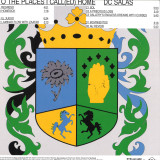
Fourth R.A.N.D. Muzik x Echocentric Records collaboration release is an album by DC Salas.
DC Salas' second album, To The Places I Call(ed) Home, is a deeply personal exploration of memories, grief, and the concept of home, blending house, progressive, new beat, acid, goa, and trance.
Crafted over two years in his Brussels studio and on the road, the album served as a healing process following personal losses and reconnects Salas with his father's Peruvian roots. It features collaborations with Curses and Moroccan artist Zaatar, and each track reflects moments that shape his life while honoring fragments of his past.
Despite its themes of loss, the album radiates positivity with bright dancefloor moments and new beginnings.
. For Fans Of: The Weather Station, Weyes Blood, Adrianne Lenker, Phoebe Bridgers, Joan Shelley, Lana Del Rey, Cass McCombs, Angel Olsen & Neil Young. Camelot, the legendary seat of King Arthur’s court in Early Middle Ages Britain, was probably not a real place. A corruption of the name of a real Romano-Briton city, the word “Camelot” accumulated symbolic, mythic resonances over centuries, until achieving its present usage as a near-synonym of “utopia.” In the mid-20th century alone, Camelot inspired an explosion of representations and appropriations, among them the violent, affectless Arthurian court of Robert Bresson’s 1974 film Lancelot du Lac and the absurdist iteration of Monty Python’s 1975 Holy Grail, both of which feature armoured knights erupting into fountains of blood; the mystical Welsh world of novelist John Cowper Powys’s profoundly weird 1951 novel Porius, with its Roman cults, wizards and witches, and wanton giants; and the nationalist nostalgia of President John F. Kennedy’s White House. Unsurprisingly there are fewer Camelots in more recent memory. Camelot, Canadian songwriter Jennifer Castle’s extraordinary, moving 2024 chronicle of the artist in early middle age, charts a realer, more rooted, and more metaphorical place than the fabled Camelot of the Early Middle Ages (or its myriad depictions), but it too is a space more psychic than physical. In Castle’s Camelot, the fantastic interpenetrates the mundane, and the Grail, if there is one, distills everyday experience into art and art into faith, subliming terrestrial concerns into sublime celestial prayers to Mother Nature, and to the unfolding process of perfecting imperfection in one’s own nature. Co-produced by Jennifer and longtime collaborator Jeff McMurrich, her seventh record is at once her most monumental and unguarded to date, demonstrating a mastery of rendering her verse and melodies alike with crisply poignant economy. For all their pointedly plainspoken lyrical detail and exhilarating full-band musical flourishes, these songs sound inevitable, eternal as morning devotions. “Back in Camelot,” she sings on the lilting, vulnerable title track, “I really learned a lot / circles in the crops and / sky-high geometry.” The album opens with a candid admission of sleeping “in the unfinished basement,” an embarrassing joke that comes true. But the dreamer is redeemed by dreaming, setting sail in her airborne bed above “sirens and desert deities.” If she questions her own agency whether she is “wishing stones were standing” or just “pissing in the wind” it does not diminish the ineffable existential jolt of such signs and wonders. This abiding tension between belief and doubt, magic and pragmatism, self and other, sacred and profane, and even, arguably, paganism and monotheism, suffuses these ten songs, which limn an interior landscape shot through with sunstriped shadows of “multi-felt dimensions” both mystical and quotidian. The epic scale and transport of “Camelot,” with its swooning strings, gives way dramatically to “Some Friends,” an acoustic-guitar-and-vocals meditation in miniature on Janus-faced friends and the lunar and solar temperatures of their promises—“bright and beaming verses” versus hot curses which recalls her minimalist last album, 2020’s achingly intimate Monarch Season. (In a symmetrical sequencing gesture, the penultimate track, the incantatory “Earthsong,” bookends the central six with a similarly spare solo performance and coiled chord progression, this time an ambiguous appeal to … a wounded lover? a wounded saint? our wounded planet?). Those whom “Trust” accuses of treacherous oaths spit through “gilded and golden tooth” cynics, critics, hypocrites, gurus, scientists, doctors, lovers, government, the so-called entertainment industry sow uncertainty that can infect the artist, as in “Louis”: “What’s that dance / and can it be done? What’s that song / and can it be sung?” Answering affirmatively are “Lucky #8,” an irrepressible ode to dancing as a bulwark against the “tidal pools of pain” and the “theory of collapse,” and “Full Moon in Leo,” which finds the narrator dancing around the house with a broom, wearing nothing but her underwear and “big hair.” But the central question remains: who can we trust, and at what cost faith, in art or angels or otherwise? Castle’s confidence in her collaborators is the cornerstone of Camelot. Carl Didur (piano and keys), Evan Cartwright (drums and percussion), and steadfast sideman Mike Smith (bass) comprise a rhythm section of exquisite delicacy and depth. This fundamental trio anchors the airiness of regular backing vocalists Victoria Cheong and Isla Craig and frames the guitars of Castle, McMurrich, and Paul Mortimer (and on “Lucky #8,” special guest Cass McCombs). Reprising his decennial role on Castle’s beloved 2014 Pink City, Owen Pallett arranged the strings for Estonia’s FAMES Skopje Studio Orchestra. On the ravishing country-soul ballad “Blowing Kisses” Pallett’s crowning achievement here, which can be heard in its entirety in the penultimate episode of the third season of FX’s The Bear Jennifer contemplates time and presence, love and prayer and how songwriting and poetry both manifest and limit all four dimensions: “No words to fumble with / I’m not a beggar to language any longer.” Such rare moments of speechlessness “I’m so fucking honoured,” she bluntly proclaims suggest a state “only a god could come up with.” (If Camelot affirms Castle as one of the great song-poets of her generation, she is not immune to the despairing linguistic beggary that plagues all writers.) Camelot evinces a thoroughgoing faith not only in the natural world including human bodies, which can, miraculously, dance and swim and bleed and embrace and birth but also in our interpretations of and interventions in it: the “charts and diagrams” of “Lucky #8,” a daydreamt billboard on Fairfax Ave. in LA in “Full Moon in Leo,” the bloody invocations of the organ-stained “Mary Miracle,” and all manner of water worship, rivers in particular. (Notably, Jennifer has worked as a farmer and a doula.) The album ends with “Fractal Canyon”s repeated, exalted insistence that she’s “not alone here.” But where is here? The word “utopia” itself constitutes a pun, indicating in its ambiguous first syllable both the Greek “eutopia,” or “good-place” the facet most remembered today and “outopia,” or “no-place,” a negative, impossible geography of the mind. Utopia, like its metonym Camelot, is imaginary
The Tunnel EP features 3 cuts of late night club techno. The A side is dancefloor tested at Pittsburgh’s Hot Mass, with a driving bassline, a twisted lead that morphs throughout, and a melodic breakdown that brings some release before the track descends deeper. The “Dark” version drapes the bassline in distortion and locks in a percussive groove with sharp chord hits and claps to work the floor. The “Light” mix ends things with a steady chord groove and lush strings for a bit of brightness.
Sure Thing continues its label excursion into unwound, blurred-edge territory with Fountain of Reason, a 12” compilation of kaleidoscopic, tempo-spanning tracks aimed squarely at the far reaches of the dance floor.
Plastic Estate is a contemporary synth-pop act from Wales, UK.
With an onus placed on atmosphere and refinement, the duo evoke a rich palette of romance and lustre with their polished marque of pop music.
They have garnered support from the likes of Simon Le Bon of Duran Duran, KEXP and BBC Radio, and played sold-out shows with the likes of LA Priest, Home Counties, and Real Lies, as well as playing at large regional festivals like Ritual Union and Sŵn Festival.
Having previously released a 7” and LP with Avant! Records, they are now releasing their second album on 11th October with new tracks gaining critical acclaim being added to BBC Radio Wales’s ‘Welsh A-List’.
Their sophomore album hails a new era for the act; moving away from darker sonic roots, their sound has progressed to a brighter, more polished aesthetic with fresh influences from the ‘Hi-Fi luxury’ of West Coast Sound, and the gloss of 2010s Chillwave.
What’s more, ‘Code d’Amour’ makes you wonder: What is Pop today?
For many years it has been synonymous with melody, harmony and emotions. These days it seems to be still about emotions but not very good ones, probably because the world is as ugly as it’s ever been, have you noticed?
But what about the fundamental role of popular music which is to represent and at the same time to celebrate and enforce the ties of social living? What about the good times?
Yes, there is a lot to be changed and to fight for but good vibes are not just for recreational use, they can literally build a sense of community among people. If you are looking for that kind of sound right now, you should look no further.
FFO: Talk Talk, Blue Nile, Spandau Ballet, Ian Broudie’s Care, Small Black, Alan Palomo of Neon Indian, Wild Nothing.