Django Reinhardt devised an astonishing new technique of playing guitar built around the two fingers on his left hand that were left with full mobility after a devastating fire and, together with Stéphane Grapelli, he was responsible for defining the gypsy jazz genre. A nomadic spirit whose life became a never-ending quest to journey to wherever his precious talent would take him, Django Reinhardt will forever be revered as one of the most unique, gifted and influential musicians of the 20th century.
GENESA001W marks the start of the label's 'White Series' which will be reserved for a more playful side of experimentation within our genre. None was more suitable for the opening of the series than the Serbia's indeliberately 'best kept club secret', MKDSL ("Mama kaze da sam lep" translating to "Mama says that I am pretty"), a true master of combining different genre's into a style of his own. Broken-space-techno-pop anynone
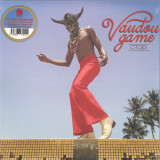
No one had been through those doors in years. Unchanged, seemingly untouched, just a Guard watching over it, one wondered whether the place would ever see the light of day again. Built in the 70s by Scotch, there were only twenty such places in the entire world. Twenty studios, all identical. Most had undergone a digital makeover in the 80s, but not this one; situated in Lomé, this studio had stayed true to its original form. Silent and uninhabited but waiting for one thing, and one thing only: for the sacred fire to be lit once again. That of the Togolese Recording Office, is studio OTODI for those in the know. Through thick layers of dust, the console was vibrating still, impatient to be turned on and spurt out the sound so unique to analog. That sound is what Peter Solo and his band Vaudou Game came to seek out.
The original vibrations of Lomé's sound, resonating within the studio space, an undercurrent pulsing within the walls, the floor, and the entire atmosphere. A presence at once electrical and mystical sourced through the amps that had never really gone cold, despite the deep sleep that they had been forced into. In taking over the studio's 3000 square feet, enough to house a full orchestra, Vaudou Game had the space necessary to conjure the spirits of voodoo, those very spirits who watch over men and nature, and with whom Peter converses every day.
For the most authentic of frequencies to fully imbibe this third album, Peter Solo entrusted the rhythmic section to a Togolese bass and drum duo, putting the groove in the expert hands of those versed in feeling and a type of musicianship that you can't learn in any school. This was also a way to put OTODI on the path of a more heavily hued funk sound, the backbone of which maintains flexibility and agility when moving over to highlife, straightens out when enhanced with frequent guest Roger Damawuzan's James Brown type screams, and softens when making the way for strings. Snaking and undulating when a chorus of Togolese women takes over, guiding it towards a slow, hypnotic trance. Up until now, Vaudou Game had maintained their connection to Togo from their base in France. This time, recording the entire album in Lomé at OTODI with local musicians, Peter Solo drew the voodoo fluid directly from the source, once again using only Togolese scales to make his guitar sing, his strings acting as channels between listeners and deities...
out of Stock
Last delivered 12 months ago available to reorder, subject to availability
The Storied Music Producer Readies His Sophomore Solo Album For Release, Ten Years After His First Album, The Gemini Principle. The Ten-year Gap Between Solo Albums Has Seen Dbridge Releasing Landmark Collaborations And Projects As Part Of The Autonomic Movement, Module Eight, Heart Drive And Exploring Other Bpms As Velvit.
Dbridge's Journey Within Electronic Music Has Seen Him At The Front And Center Of Electronic Music Culture And Then By Design, As The Seasons Change, He Has Retreated To His Own World To Work On His Next Statement.
A Love I Can't Explain Is The Sound Of Dbridge Making Music For Himself. As A Man He Finds Himself In A New Phase Of His Life- In Love, Married And A Father That Is No Longer Concerned With Previous Constraints And This Has Led To A New Freedom In Creation. An Artist Looking At The Same Sculpture But Now From A New Perspective.
Double LP on heavyweight 180 gram audiophile black vinyl in a wide spined sleeve with new artwork layout. Re-mastered by John Rivers at Woodbine Studios especially for vinyl release. Includes a bonus track not on the CD version and new artwork design. Never has a record been so aptly titled, or so perfectly descriptive of a band's particular vision of the universe. For all that, the original appearance of Taking Drugs was in fact a bootleg on the semi-legendary/semi-notorious Father Yod imprint in 1990, later supplemented with contemporary outtakes and cuts for the Bomp reissue in 1994 and one further song for the Space Age version in 2000. The original seven tracks, dated January 1986 and the first recordings to feature Pete Bain on bass, are collectively known as the Northampton Demos, understandably named for the recording location in a studio outside said English city. Both Sonic and Pierce have been on record as long preferring these takes to the eventual versions that surfaced for the most part on Sound of Confusion. Certainly it's a fine set of performances, showing a definite step toward the more familiar sound of the group and away from the rougher takes on For All the Fucked Up Children of the World. "The Sound of Confusion," aka "Walkin' With Jesus," rips along with fierce energy, Pierce's singing and the rampaging, primitive wail and rumble of the band just wonderful. "Losing Touch With My Mind" takes things to an even higher level, a huge wallop of feedback and beat (Natty Brooker's drumming in particular delivers just what the doctor ordered), Pierce delivering the lines with a flat, cutting drawl. On the slightly lighter tip, "Come Down Easy" is more or less fully in place (aside from singing about it being 1986!), possessing a more upfront but less vocally distinct feel than the Perfect Prescription take. The tracks that surfaced on the later reissues come from a variety of different sessions, including the original take on "Feel So Good" and a good live version of "Things'll Never Be the Same," one of several cuts featuring Brooker's drumming replacement Rosco.
Following on from the three highly-acclaimed CoOp Presents 'Selectors Assemble' compilation EPs from the past year, it's now time to focus on some of the individual talents from the ever-evolving movement. As the international foundation grows, we invite aboard the extremely talented Neue Grafik into the fold.
French producer, instrumentalist and DJ, Neue Grafik, has been building a strong rep for himself over the past few years, releasing records previously on labels such as Rhythm Section, 22a and Wolf Music. His sound is a hybrid of jazz, house, broken beat and hip hop, all with his unique geographical flavours of African ethnicity, Parisian roots and a love for London thrown into the mix.
So to the music - two brand new tracks, 'I Miss Something' and 'Bed Stuy's Mood', complete with remixes from EVM128, Danvers, Xtra Bruk and NameBrandSound (aka label bosses IG Culture & Alex Phountzi) respectively, making this one essential package for the bruk soldiers and beyond.
In Neue Grafik's words...
"I remember the first time I was at a CoOp party and met IG - I just said something like "unbelievable party, well done! Thank you, man". I didn't expect to be a part of this brilliant family a few months after that; it's totally insane to think about it now.
I began to hang properly with the CoOp fam during a DJ session at The Flex in East London. I was so happy to live in this moment; surrounded by these talented performers, artists and producers, excitedly talking about unreleased music on everyone's USB sticks.
This EP is a personal vision of the broken beat scene and my love for that. A meeting with artists who build my own taste, with friends keeping the same vibrancy and desire for this music. 'I Miss Something' and 'Bed Stuy's Mood' are two tracks dedicated to Porte Des Lilas (Paris), and Bedford-Stuyvesant (New York). One was made in my house, the other on holiday. These two tracks, as well as the remixes from the Selectors Assemble crew, represent a real and deep friendship."
More essential music from the CoOp Presents camp, available on limited vinyl and all digital services. Don't sleep.
The debut release from new Scottish producer North Sea Dialect, Local Guide is a dense musical world made of uneasy ambience, shimmering distortion, subdued rhythm and propulsive melody.
Buried in its soundscapes are the echoes and surrealness of alienated life - expectant youth, distant voices and broken folklore. It's industrialised music tied together with found sound, adrenaline fuelled synthesis and the depths of late night solitude. Conceived during a move from Glasgow across Scotland and composed in isolation, a blistering sense of reality creeps through the recordings.
Local Guide is accompanied by three videos for the tracks Mossy Cyphol, Subarctic Baltasound and Gloup. The short films are haunted and illuminated by the serenity of rural freedom, the power of the sea, and the collapse of industry.
out of Stock
Last delivered 7 years ago available to reorder, subject to availability
'Cohesion' is the third full album from Anchorsong - AKA Tokyo-born, London-based electronic artist Masaaki Yoshida. Taking inspiration from Classical Indian Percussion, and '70s and /80s Bollywood film soundtracks
Anchorsong creates a journey of psychedelic, danceable and free-spirited compositions that blur the boundary between rhythm and melody. It was whilst extensively touring his previous album, 'Ceremonial', that Masaaki
became deeply fascinated with percussion, and shifted his attention away from the African drums present on his last record to the music of the Middle East, South East Asia, and then more specifically to the sounds of India. 'The Indian
percussion was the one I was most fascinated with, so I began to dig into that genre deeper, I started with classics like Ravi Shankar, and the more classical Indian musicians. But then I began to explore the world of Bollywood and movie
soundtracks which is another world and the more I listened to composers like Sapan Jagmohan, Rajesh Roshan and Kalyanji Anandji, the more the concept of the new record began to form.
Choosing to work with traditional Indian instruments like the tabla and dholak, Yoshida wanted to use instruments that possessed melodic qualities, and could be tuned to work in the context of electronic music. He found that when Indian
percussions mixed with other instruments they began to sound like a melody that blurred the border between rhythm and melody. The concept of bringing together contrasting elements and cultures is evident from the album's title,
'Cohesion'. Here Anchorsong has brought together musical traditions and sounds from across borders, forging a truly unique body of work. Having reached new heights with 'Ceremonial' through accolades such as BBC 6Music's #5 Album
Of The Year, 'Cohesion' looks to build on such successes through the coupling of a comprehensive European tour kicking off around the release of the album.
In just a year of existence, Chloé's Lumière Noire has brought emerging artists and promising newcomers together - and this first compilation of 13 brand new tracks expands the roster, exposing the label's eclectic vision in full daylight. When Chloé talks about her label, she puts forward the fundamental values that informed her own musical journey, her trust in her own musical taste - and, of course, the predominance of human relationships: 'I followed
my bliss and only commissioned tracks from artists that I respect and whose music I love. That to me is Lumière Noire's musical palette.' With this 13- track, unmixed compilation, Chloé makes a case for a label aesthetic that is based in open-mindedness. Familiar, elemental Lumière Noire artists are represented, as are new faces, producing a kind of group photo presaging what's next for the fledgling label. Lyon's Markus Gibb leads the track listing with Kuru with a deep chiaroscuro matching the label's ethos, followed by other mainstays Il Est Vilaine's Farenheit 451, which evokes Ray Bradbury's retro-dystopic angst with the
band's usual electro-pop elegance. Sutja Gutierrez, who released in debut EP, The Legend of Time on Lumière Noire in April, pursues his electro Shamanism with the ceremonial Allodoxaphobia, while Iñigo Vontier (whose EP Aluxes came out on the label in late 2017) brings his C O N T R A project
online with track Taurus, a further development in voodoo house. Elsewhere, Suuns lead singer Ben Shemie, who lent his fascinating art-rock croon to Recall, a single from Chloé's Endless Revisions LP, contributes A Million Kinds, a synthy, psych-pop debut that is as brilliant as it is surprising. On to the freshman class: Dutch producer Drvg Cvltvre (who gets personal kudos
from Chloé with each new 12') brings the uncompromising dark electro of his hypnotic and claustrophobic Last Rites. Jonathan Fitoussi's airy, minimalistic Cercles Polaires brings the respite of his recent Versatile Espaces Timbrés LP (a collaboration with Clemens Hourrières): 'I met him at Xavier Veilhan's
Studio Venezia at the Venice Biennale. He's a great guy, and his universe is unique,' says Chloé. Benedikt Frey's deep techno track Iaon, is on par with his smash 2017 album, Artificial, out on ESP Institute. First-timers are also part of the recruits: Bajram Bili with the ten cerebral minutes of Restart, Théo Muller with the ultra-deep Douce Transe, and Lumi, a Basque band that fuses
electronic sounds with acoustic instruments, brings the ompilation to a close with a track commissioned by Chloé. These audacious choices are anchored down with the likes of Permanent Vacation pioneer Lauer's hooky, 80s-infused Pythor ('Just like him, I was a resident of the Robert Johnson, and he was a guest of mine at one of my Lumière Noire nights at the Rex. He is one of these people whose music I highly appreciate'); Aergeworc & Franck Agrario, half of English duo Swayzak David Brown's project, weaves an ethno* mood into Grace's techno. Bringing together different generations, genres, and styles That may not necessarily be Chloé's MO. She invokes a more arbitrary, personal logic: 'I like to mix of-the-moment tracks and more timeless one, but the rule is above all 'do I love this or not'. That was my ethos when I started Lumière Noire.' In that way, the label is definitely in keeping with its time
New York producer and pianist Eric Maltz lives in Berlin. He produces and mixes his music in a simple, subtle and elegant way and puts his music out on his own label - Flower Myth.
In 2017, Eric Maltz released his first record on Levon Vincent's Novel Sound, including the splendid 'We Have Power', an ode to freedom and celebration of life, featuring the warm vocals of Peruvian Cristina Valentina.
On the brooding rhythmic dancefloor, Cristina's voice opens up and reminds of the power of a meaningful lyric, how a loving message can touch the heart ever so strongly.
Over the past year, 'We Have Power' has become a permanent fixture in the Possible Futures record bag. The two had to learn more about Eric and Cristina. 'Naked Broken' is the first engraving of this newly formed and inspiring musical friendship. A hot groover rooted in a rich NY House tradition, featuring di erent versions for the adventurous DJ.
Eric Maltz & Cristina Valentina played live in Berlin on September 2nd, for The Hot Run! - the annual Possible Futures open-air summer dance, along with Elena Colombi, Kassem Mosse, Sassy J and Tom Trago.
If you're going to call your band audiobooks, you'd
better have some good stories to tell. Stories that
should move you and stories to make you move.
Stories about real life and surreal life and all that
weirdness that you just glimpsed out of the corner
of your eye. Luckily, audiobooks really do.
The London-based duo have developed a unique
ability to conjure up magical aural snapshots that
wallop you like bong hits.
Each of their discombobulating observations comes
stretched out over a series of discomfiting
oscillations, like messages from the spirit world or
pulp fictions found in a box at the end of your road
or a crackling pop broadcast from a far-away
galaxy.
'One to definitely get under the skin... a thing of
exotic beauty' - DJ Mag (8/10)
Continually pushing the boundaries of jazz, funk, electronic music and disco, as expressed through their signature samba swing, the Brazilian mavericks have recreated the energy of those spellbinding seventies' sessions which would launch them into international recognition and confirm their status as one of Brazil's most successful bands. Since the passing of keyboard maestro Jose Roberto Bertrami in 2012, remaining members Ivan Conti and Alex Malheiros have worked tirelessly to keep the spirit of Azymuth alive, and to continue the legacy of Bertrami's genius. But Fênix also marks a new era as the Azymuth trio is complete once again, by special guest keyboardist Kiko Continentino. A hugely talented pianist, composer and arranger, Kiko has worked with the likes of Milton Nascimento, Gilberto Gil and Djavan, and the fresh energy and inspiration he has brought to the group is undeniable. The album also features Brazilian percussion legend Robertinho Silva, one of Brazil's most important and influential players.
From the disco-carnival title track to sunny jazz-funk head-nodder Orange Clouds, through to the deep-space samba Corumbá, Azymuth have drawn upon five decades of consummate craftsmanship - which coupled with their endless desire for experimentation and improvisation - has resulted in a 10-track journey encapsulating the full spectrum of Azymuth's brilliantly coloured expressionist fusion. With all the cosmic energy and masterful musicianship you'd expect from the three-man orchestra, Azymuth rise from the ashes!
Recorded in Rio De Janeiro in May 2016 with producers Daniel Maunick and Joe Davis the official release date is set for December 2016, on super-heavyweight vinyl.
For his first appearance on Spring Theory, a twelve inch by Bryce Hackford, Brooklyn producer best known for conceptual experimental recordings incorporating field recordings and sampling in improvisation that often resides somewhere between ambient and techno. Recorded mostly during time living in London in 2015, this is Hackford's most floor-oriented release. Coming from a time of extensive all night DJing everywhere from private affairs in upstate New York's mountains to Panorama Bar, these tracks combine a rawness reminiscent of Theo Parrish and long form cosmic droning of eternal music. Fans of dub techno, ambient, psychedelic music...
- Beautiful 1 LP Edition 140g Vinyl, Heavy 350gsm Sleeve, Sticker WRWTFWW Records is extremely excited to present the official reissue of cult album Lingua Franca-1 (originally released in 1983) by groundbreaking Kyoto band EP-4, available on vinyl housed in heavy 350gsm sleeve and digipack CD. Straight from the delirious minds of unconventional geniuses Kaoru Sato (who had previously released an album as R.N.A. Organism on legendary Osaka label Vanity Records) and Yuji 'Banana' Kawashima, Lingua Franca-1 is a seamless voyage of spellbinding mutant funk grooves, joyful post-punk explorations, synth fantasies, sexy distortions, and fluid cool-no-sweat vocals. Constantly mutating in an almost biological way (similarly to Colored Music's self-titled album), always mysterious and seductive, sometimes reminiscing of a freaky cross between PiL, Liquid Liquid, Bowie and Yello, EP-4's debut is hard to label, although 'Debonair Wave' could be a legitimate way to describe this Japan's best-kept-secret of an album. Defying the rules wasn't limited to sonic experimentations for band leader Kaoru Sato. To promote Lingua Franca-1, he and his crew plastered gigantic (illegal) billboards all over Shibuya and Harajuku, announcing performances in four different cities on odd hours of the same day (May 5th 1983). Other of his notable antics included originally sub-titling the album Death to the Emperor Showa causing a controversy (which led to censorship and a title-change), trying to release two albums on the same day without the concerned labels being aware of the plan or, in the R.N.A. Organism days, fooling Vanity Records into believing the demo he sent them came from a foreign band (it worked). Unique personality, unique music!
"It's Maths classes. A red-haired boy sits in the back, rhythmically tapping his fingers on a table like a madman. Although other students' eyesight is focused on the formula being written on the black-board, the boy could not care less. Out of a corner of his eye he notices as the sequence of numbers slowly begins to melt off the blackboard, glittering with colours, and finally spills all over the floor like a fractal leakage from some other dimension. Students from the first rows, scared, put their legs up - and then you start to hear the rhythm. The sounds, once set free, feedback from the walls and find their way to all chinks and cracks, circle all around to finally reach the teacher's ear. The lady cannot stop the upcoming fury, grabs Krzysztof Ostrowski (number 28) by his ear and circumventing the leakage she leads him out of the classroom. It's not the first nor the second time such thing happens. Years later, the boy finally sits by the machine; subtle light comes through the window slightly ajar, the curtain dances with the wind. Krzysztof, bent, is programming the rhythm."
It's warm and bright Autumn of 2018 and Krzysztof emerges again, this time on vinyl released by Jacek Sienkiewicz's label Recognition. The experimental style of "Primary Fluctuation" might come as a surprise to many of Jacek's followers, but there are surely some common features for the two art-ists - from attention to detail to a kind of serious melancholy present in their music. Ostrowski's rec-ord is a journey through futuristic polyrhythm, with enough space for menacing basses or unorthodox samples, reminding the aesthetics of fusion of broken techno and bass music championed recently by the labels like Timedance or Livity Sound. Four tracks (five in digital version) make up a cohesive, intriguing and surprising record, announcing series of special releases prepared by Recognition for the forthcoming months. ,
Fifteen track completion of deep biguines and Gwo Ka from the '60s French West Indies. The vinyl edition included a 4 page booklet + download code.
Biguine is a rhythmic style of music that originated in Guadeloupe and Martinique in the 19th century, which fuses 19th-century French ballroom
dance steps with African rhythms. Gwo Ka is found among all ethnic and religious groups of Guadeloupean society.
It combines responsorial singing in Guadeloupean Creole, rhythms played on the Ka drums and dancing. Gwo Ka is the musical and cultural product of the
region's African ancestry, forcibly brought to the Caribbean through slavery. Gwo Ka exists only in Guadeloupe, which is a very different island from much of
the Caribbean, in that it remains a 'department' of its original colonial master, France. Here the currency is the Euro and the baker sells croissants and café
au lait. This constant 'European-ising' of the island means that Gwo Ka plays a fundamental and important role in the defining of Guadeloupean identity.
'Antilles' Méchant Bateau', a low-tempo number with a bolero feel, indeed a pure case of the blues, and a terrific saxophone solo. What else would you
expect to set the tone for this selection, in which beguine regains its original colours, in the darkness of the Gwo Ka drums. This 45 by André Mahy, released
under the Aux Ondes sublabel, was recorded in the 1960s at Célini's, one of Guadeloupe's two main houses. Through its drum rolls and harrowing chant, it
recalled how, long before the mid-1960s, the Antilles' history was written in an ocean of teardrops - namely the Black Atlantic.
The first LP release for connected comes from Nandu and as with his previous EP releases the LP is a unique genre crossing palette containing elements from Deep House,House,AfroHouse,Electronic Techno and beyond brought together in Nandus' original style. Truly an LP that begs to be listened to from start to finish. In Nandus' own words: 'One mans high can truly be, another mans anxiety. In some parts of life this is very clear like having a baby, do drugs, to work, not to work, be an artist, be a banker and so it continues. Yin & Yang and the whole idea of duality is another way to describe this. When you go left you say goodbye to right - at least for the moment you choose left. What you choose is up to you. It wasn't always my dream to get up at 3pm to change diapers, but it was always my dream to have a family. And here the sacrifice is not even mentionable. It's more than worth it. But when you sometimes in life make a choice that you regret but which always will follow you, or when uncontrollable powers force you into another direction, it can easily switch the poles between high and low. In these cases you just have to look forward, but not without looking back. You need to learn, take it with you, and do better next time. This album is about how my highs also can be my anxieties."
The New York Downtown Producer/Composer Returns With His First New Album In 3 Years
EIGHTEEN: the year of release, 2018. EIGHTEEN: the age at which I first used a synthesizer.
In creating EIGHTEEN I worked independently in the studio, initially building up tracks with synthesizers and found sounds recorded in my daily comings and goings. After working with the tracks over a period of months,I shared them with a few musicians, who added their own instrumental layers. Though working independently, we all shared a similar working process: working in our personal recording spaces, as opposed to larger recording studios.
The musicians are: Gabe Gurnsey (drums) of Factory Floor, with whom I collaborated on the Beachcombing EP and performed live at London's ICA. I appear on Gabe's newly released album Physical;
Larry Saltzman (guitar) has played in my Love Of Life Orchestra since the 1970's. Well-known for his work with Arthur Russell ('Kiss Me Again', Flying Hearts), he is in high demand in NYC by acts such as Simon and Garfunkel;
Paul Nowinski, (bass) has played with LOLO since the 1980's. Paul has an impressive list of credits, including Les Paul, Keith Richards, Bernard Purdie and the Boston Pops; Matt Mottel, (electric piano), is the newest addition to the Love Of Life Orchestra. He is half the duo Talibam!, a leading act in the noise jazz scene; Lewin Barringer, (guitar), is a talented guitarist and producer in Philadelphia.
After mixing the final tracks, I brought the mixes to Berlin. There I worked with the brilliant mastering engineer Mike Grinser who helped to give the album a unified sound.
I think of this album as electronic music. It was created in my home studio, using analog and digital synthesizers, found sounds recorded on my phone, and instrumental parts contributed by friends. Finely crafted melodies and harmonies are set against subway noises, street construction, and distant foghorns. Sometimes there are sustained clusters, generated by my leaning against the keyboard. Deliberateness paired with randomness: this is what guided the artistic process.
This album is atypical for me as I am not playing saxophone. (I do play one reed instrument - a harmonica.) I grew up with the sax as my primary instrument. Yet my father was a radio journalist so the reel-to-reel tape recorder was a ubiquitous presence in the family home. From an early age,
I experimented with the tape machine: recording, overdubbing and splicing tape. I learned about Varese from Frank Zappa liner notes; I read John Cage's 'Silence.' Electronic music was on my radar.
My first exposure to an actual synthesizer came when I recorded my first single at the fabled Sound City Studio in Van Nuys, CA. The studio had a custom Neve board, but it also had a firstgeneration Moog modular synthesizer sitting unused in the maintenance room. I asked and they kindly let me experiment with it. Soon, I enrolled at the University of California - San Diego after I discovered they had separate studios for their Moog and Buchla systems. These large modular synthesizers were affordable then only by institutions and rock stars. But these would be soon eclipsed by smaller, cheaper synths in the 70's and early 80's. In the same way, recording studio technology became accessible in the 90's. . And thus the personal computer and digital audio allowed studio quality production in the home studio. Electronic music had become democratized.
Handmade music by way of digital technology: this is the music of EIGHTEEN
Studio One Freedom Sounds Is The New Collection From Soul Jazz/studio One Focussing On The Intense Period In The Second Half Of The 1960s When Studio One's Vast And Unbeatable Output Of Ska, Soul, Rock Steady And Reggae Made It Literally One Of The Hottest Musical Empires In The World.
During This Highly Successful Period, Clement 'sir Coxsone' Dodd Released Hundreds And Hundreds Of Superlative Singles Seemingly On An Almost Daily Basis, In The Process Making Huge Stars Out Of Jamaican Singers Such As Alton Ellis, Delroy Wilson, The Wailers, Slim Smith, Jackie Opel And Many More.
Powered By The Finest In-house Musicians Working In Jamaica, Whether It Was The Skatalites, Jackie Mittoo's Soul Brothers, The Sounds Dimension Or The Soul Vendors, Studio One Functioned As Hit Factory On The Scale Of Motown In The Usa, Shaping And Defining Reggae Music For Decades To Come.
Singlehandedly Studio One's Founder Clement Dodd Was Able To Create The Most Successful Vertically-integrated Record Company That Jamaica Had Ever Known With Pressing Plant, Printers, Studio, Shops, And Sound Systems All Running At Once, With Over 50 Employees And Hundreds Of Artists Working With Studio One During This Time.
Studio One Freedom Sounds Tells The Story Of Studio One In The 1960s With A Stunning Set Of Ska, Soul, Rock Steady And Reggae Killer Tunes As Well As Informative Sleevenotes And Track-by-track Info By Noel Hawks. The Album Is Released As Heavyweight Double Vinyl (+ Free Download Code), Deluxe Cd And Digital Album.
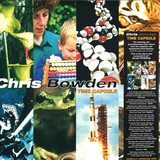
The Stunning And Ground-breaking Album From The Composer And Saxophonist Chris Bowden.
'this Is The Album That Connected It All.' Gilles Peterson 2018
Chris Bowden's Debut Album Time Capsule Was First Released On Soul Jazz Records In 1992 To Universal And Widespread Critical Acclaim. Now 20 Years On A New Wave Of Current Jazz Artists Led By The Likes Of Kamasi Washington In The Usa And A Host Of British Artists - Shabaka Hutchings /sons Of Kemet, The Ezra Collective, Moses Boyd, Nubya Garcia, Fourtet, Yussef Kamaal, Tenderlonious, Binker & Moses - Have Brought This Original Ground-breaking Album Into The Limelight Once More As A Pivotal Starting Point, Sharing Many Of The Aesthetics Of These Current Artists At Work Today.
Musically All Are Inspired By The Spiritual Jazz Of John Coltrane, Alice Coltrane, Pharoah Sanders, Archie Shepp, Don Cherry Et Al Paired With A Modern Electronic Music Sensibility. Chris Bowden's Time Capsule Has Stood The Test Of Time Like Few Other Albums (as The Title Of The Album Suggested), And Remains A Pivotal, Wholly-successful And Original Experimental Musical Collage, A Radical Inspiration And Forebearer To Many Of The Best Progressive Jazz And Electronic Artists Working Today.
The Album Has Been Fully Hi-spec Re-mastered And Is Available As A Limited-edition Heavyweight Double-vinyl Release With Gatefold Sleeve (+ Free Download Code), Slipcase Cd And Digital Album.
At 83 Years Of Age, Lee Scratch Perry Is Proud To Present To The World His Next Full Length Solo Album (with Dub Versions) , Continuing His Inimitable Roots Reggae Legacy.
Lee's Brief For The Album, Was To Blend The Vintage And The Obscure, During The Sessions Lee Referred To The Sound And 'black' And Wanted Space, Light And Darkness In The Songs And Their Respective Dub Versions.
The Result Sees Lee Having Mixed Up An Analogue Concoction Of Ultra-rare Effects, Sonic Wizardry And Deep Heavy Roots Rhythms.
Over 2017 and 2018, Lee Scratch Perry re united with Producer and Mixer Daniel Boyle, to start work on their second Solo album project for Lee.
Picking up where their last efforts ''Back on the Controls'' left off. Lee wanted to continue the raw analogue sound they had cultivated together over multiple past releases, and take it to the next level with new effects devices to create another sonic signature.
They entered the studio in 2017, to begin to put together ideas for the tracks, which were then taken to RAK studios in London with their ever changing Rolling Lion All Stars session band; to lay down the rhythm versions.
Using strictly vintage analogue equipment, they employed Neuman valve and RCA Ribbon microphones, and RAK's early model vintage API desk to record, the 'sound' for the album was sculpted in these sessions. Vintage, but punchy, which was then blended with Lee's choice of super rare and custom analogue effects. Ursa Major Space Station and Stargate delays and reverbs, old choruses, Plate and spring reverbs, and tape delays were used to create a tight vintage feel but retaining the rawness of the 'Low Fi' roots sound Lee was aiming for.
With the music coming together, the vocal sessions were held in Abbey Road studio 3, again using vintage RCA ribbon mics, over driving their EMI TG console and Fairchild compressors to create a pleasantly distorted Lo Fi vocal sound.
Lee and Daniel then returned to Daniels Rolling Lion Studio, to mix and Dub the album, live, on the mixing console.
'Rolling Lion All Stars' Musicians: Vocals: Lee 'Scratch' Perry Drums: Ed West Bass & Guitar: Hughie Izachaar Keys: Robbie Lynn Additional Keys: Calvin Bennion Percussion: Daniel Boyle Kete Drum: Mathias Liengme Hurdy Gurdy: Brian McCoy Horn Section: Rory Sadler, Robert Landen Melodica: Puraman Backing Vocals :
Blackfilm is an anonymous Hungarian artist who introduced himself with his self-titled debut in 2008, sold out in a few months and later reissued on both CD and vinyl format via Denovali in 2010. His debut has garnered widespread attention - "Evolving from downtempo electronic music to orchestral paroxysms and, insanely, passing from down-pitched nothingness to frozen urban landscapes, it becomes inevitable to resist." / "Dark and brooding, Blackfilm envelopes you like a thick fog creeping off a cooling swampland." (Headphone Commute) - and is still a classic.
Since then, he has relocated to London and released the collaboration master-piece - Along the Corridors' with Italy's heavy dub producer Eraldo Bernocchi in 2010. After eight years of silence Denovali now proudly presents his second solo album - Zero One Seven', in line with a re-issue of - Along the Corridors' on vinyl for the first time.
On - Zero One Seven', Blackfilm merges tracks spanning across drum and bass, dub and electronic. The sounds on the album are built from the ideas on the original Blackfilm - S/T' and - Along the Corridors' and progress to a sound built on new ground mixing modern production techniques and influences while at times referencing the Blackfilm sound we know from his previous releases.
The album maintains a consistent focus on atmospherics, beats and heavy bass ranging from darker dub and drum and bass influences to vocal tracks and complex ambient soundscapes. Production wise, the familiar Blackfilm style incorporating the use of synthetic sounds mixed with samples enables the album to create an intriguing, shifting atmosphere as the album progresses. A dystopian journey through haunting vocals, hypnotic drum patterns and complex sound design.
In line with the release of Blackfilm's new album "Zero One Seven", Denovali release the 2010 collaboration masterpiece "Along the Corridor" with Eraldo Bernocchi for the first time on vinyl.
"(...) From its heavy stone dropping bass to cinematic orchestration, beautiful piano melodies, and progressive dowtempo electronic beats, this collaboration between Eraldo Bernocchi and Blackfilm is an amazing find. Designed as a soundtrack for those lonely nights, walking through abandoned streets and skeleton buildings, Along The Corridors will keep you on the edge of your seat, with your imagination as the only projector for the cinema of your mind.
Italy's heavy dub producer Eraldo Bernocchi is not a new face to the scene. Starting out his career in the 90s, Bernocchi produced under many aliases. ... But it is the works under his real name that deserve the most attention. In 1999 he released Charged recording with Tashinori Kondo and Bill Laswell. In 2005 he appeared alongside Harold Budd in Music For 'Fragments From The Inside' on Sub Rosa. And in 2007 he recorded Manual together with Thomas Fehlmann for 21st Records. There are also numerous EPs with Bill Laswell under Apollo's Re-charged series....
Blackfilm, who continues to remain anonymous, is a Hungarian artist that was first introduced to us through his self-titled debut on the now defunct Spectraliquid Records. Since then, the album has been picked up by Denovali Records and repressed in 2010 on compact disc and vinyl. His dark atmospheric soundscapes and a bricolage of modern classical samples and instrumental hip-hop beats reminded me of my favorite works by Amon Tobin and Future Sound of London, for a brooding soundtrack enveloping your mind with heavy fog of penetrating sound. Since the release, Blackfilm has relocated to London where he has embedded himself with the heavyweights of dub and even darker journeys in the underground ..." Headphone Commute
Phonogramme, the house subdivision of parent label and integral Parisian record shop Syncrophone dedicates itself directly to the French music scene, with previous releases from the likes of Professor Inc, John Jastszebski, Aleqs Notal and a handful of other local heads. Phonogramme continues to keep things close-to-home through the labels next edition presented by Gibs, who's most notably known for works on his own imprint, 'An.Art Records' - a family run label with music shared by himself and his two brothers.
'Find an Oasis' kicks off the release with rolling organic percussion before progressing elegantly into layered emotive lead synths and mellow bass stabs. 'Jarkarta' is a subdued deeper house cut, filled with an uplifting, undulating melody and raw lo-fi elements collectively creating a luscious calming effect. Last up, 'Der Germain' offers up a fluid, groove filled number balanced with charming, jazzy flutters and tender keys providing a warm, breezy atmosphere to the end the release.
"Perlman's got beats and it ain't no secret." - The Beastie Boys
This lyric might have slid right by you while you were listening to Ill Communication, but the Beastie Boys were not playing when they said that. Robert Perlman, a native New Yorker, was way ahead of the curve and would stockpile an arsenal of heavy duty vinyl way before the 45 record craze took over. This compilation of over a dozen tracks represents a taste of the fruits of his hard work uncovering these often overlooked gems.
Including some personal notes from the artists you can find on this compilation.
South African gqom pioneer and producer DJ Lag is set to release his new 'Stampit' EP via London label and collective Goon Club Allstars. The new release follows the 22 year old producer's acclaimed 2016 self-titled debut EP for the same independent imprint. The EP follows the release of his first single, the thrilling dance floor heater '3 Step Culo', which draws from the hard-hitting percussive sound of gqom made up of searing synthesisers, broken beat and hypnotic vocal samples to create a darker, bass-driven strain of house music. The EP follows his self-titled debut to showcase his keen talent for crafting charged, minimalist genresplicing sound. 'Let's Do This' exhibits an intense and euphoric big room feel, whilst 'Drumming' and 'Switz' display tense, potent drumwork and sparse & spectral club patterns. Also known as the 'Gqom King', DJ Lag was at the forefront of shaping the futuristic, explosive sound of gqom, the raw and distinctive style of drum-heavy dance music originating from the underground scene of Durban, South Africa in recent years and swiftly proliferating across the internet through the spread of social media and gaining international recognition. DJ Lag's latest outing delves into the infectiously rhythmic and high-energy sound palette of his previous works, recorded fully in his home studio in Clermont, South Africa.
The second in a series of all-time CLASSIC hip-hop anthems from the Nervous vaults, pressed onto high quality dinked 45's.
Remastered from the original source material and featuring the unedited 'dirty' version on the A-side, and the full instrumental on the B-side, these 45's are for the heads who know what time it really is! 'How Many Emcee's Must Get Dissed' is that raw, NYC, Beatminerz flavour, even the video that dropped on MTV in 1993 is legendary featuring the whole Black Moon mob in their native Brooklyn posting up with their crew. Everyone remembers that Timberlands & Philly Blunts rap from the mid 90's onwards, raw SP1200 beats, dusty loops and samples pulled out of crates in the darkest corners of the five boroughs, a truly creative period in rap music and popular culture with many artists who came up in the era shaping the future of music from the streets upwards. Black Moon are one such group, their indelible mark on music is still felt today, the blend of streetwise raps and sturdy, murked out, jazzy beats supplied by the Dewgarde brothers is timeless. They sure don't make em like this anymore and if they did we're sure Black Moon would continually crush the competitors as they always did. Essential New York rap classics right here! Don't front. Fully legit, licensed and reissued by Above Board distribution in conjunction with Nervous Records, NYC. 2018.
Limited Edition 400 Only Translucent Violet Coloured Vinyl Lp. Housed In A Full Colour Outer Sleeve With Mind Bending Artwork And Download Code.
Third Earthling Society Album For Riot Season Following The Previous And Now Sold Out 'england Have My Bones' (2014) & 'ascent To Godhead' (2017)
'mo - The Demon' Was Recorded At Leeds College Of Music Between November 2017 - February 2018. The Basis Of The Album Was To Record An Imaginary Soundtrack To The Shaw Brothers Bat Shit Psychedicrazy Kung Fu Horror 'the Boxer's Omen' Aka Mo Or Demon.
The Story Is An Everyday One.
After A Hong Kong Kick Boxer Is Paralysed By A Cheating Thai Competitor, His Mobster Brother Vows Revenge And Journeys To Thailand For A Duel. Along The Way, Our Hero Is Met By Bizarre Visions, Entered Into A Buddhist Monastery, And Begins A Quest To Save The Soul Of A Deceased Monk (his Twin Brother In A Past Life) Who Died At The Hands Of A Powerful Black Magician.
We've All Been There. However The Movie Descends Into A Kind Of Spiritual Jodorowsky Mushroom Fest That Is Completely Deranged And Is Therefore One Of Those Perfect Midnight Movies.
So We Got Free Studio Time At Lcm In November And Just Went 'fuck It' Lets Make An Imaginary Soundtrack In Homage To Such A Great Movie.
Taking Inspiration From All The Things Musical That Have Inspired Us Over The Years. Berlin Era Bowie, Prime Magazine Circa 'correct Use Of Soap', Electric Funk Miles, 'caravanserai' Santana, Embryo And God Knows What Else (it Doesn't Really Matter As It All Ends Up Earthling Society), We Think We've Made A Groovy As Fuck Concept.
Then, Invited Back In February We Decided To Record 2 Stand Alone Pieces 'spring Snow' And 'jetavina Grove' And Bring All Our Space Rock Elements And Psych Raga Back Into The Fray. Throw In Some Super Cool Korean Vocals Courtesy Of Bomi Seo Of Tirikiliatops And Run The Guitars Through A Harmonizer H910 (as Used By Visconti On Low An Heroes) And Its The Perfect Swansong To The Last 14 Years Of Playing Live And Recording Together.
Terence Fixmer's path through the changing techno landscape of the past 20 years has been anything but direct. Indeed, the French born producer, musician and Planete Rouge label founder has long been influenced by the periphery of continental European dance music subgenres from electronic body music, new beat and acid, before combining them into his own pioneering hybrid of futuristic, EBM-inflected techno with classic releases such as 2001's Muscle Machine or the collaborative Between The Devil LP with Nitzer Ebb's Douglas McCarthy as Fixmer/McCarthy. While the sound in recent years has been rediscovered and recast in diverse contexts by a new generation of producers, Through The Cortex sees Fixmer gravitating toward a different kind of industrial-tinged electronics, led as much (or more) by analogue sequencers, melodies and ultra-saturated sounds of synthesizers than drums and percussion. Across eight tracks at a compact but varied 40 minutes, the LP touches on an aesthetic hinted at in recent Ostgut Ton releases (2016's Beneath The Skin EP and 2017's Force EP), revealing a sonic narrative through noisy, screaming synth/vocal riffs with a jagged, guitar- like post-punk sensibility. Through The Cortex is techno with a voice - or rather multiple voices - guiding listeners through hypnotic, space- and social-themed terrain as a kind of dark soundtrack to darker days. The result ranges from the slow John Carpenter-inspired Escape From Precinct 13 funk of 'Expedition' and the patient yet muscular stomp of 'Fury' to the mesmerizing Suicide-like pop of single 'Accelerate', where Fixmer, using his voice as an instrument, chants the track's ambiguous title in an invocation of systemic change/collapse. Elsewhere, the story is told with more abstract and wailing vocals like on 'Shout in A Black Hole', or in the warm, entrancing chords floating across the stereo image in ostensibly changing time-signatures on 'A Halo Somewhere' - the LP's uncharacteristically kosmische musik come-down. The track, and Through The Cortex as a whole, reflect what can be described as Fixmer's idiosyncratic take on both techno subgenres as well as the larger pool of electronic music in general. This broad approach translates into a sound that is not only difficult to pin down, but also one that lends itself to multiple listens.
16 early vocal & jazzy tunes from the Golden Age of Jive & Kwela in South Africa. Released originally on fragile shellac discs only. Shellac is a very delicate material but the music survived thanks to the archives of ILAM. A truly great source of South African music is being preserved here for new generations, to inspire young and hopeful musicians and singers from all over the world. 180gram vinyl.These pearls of musical genius were recorded in the glory years of jive and kwela, the years 1940-1965 . On side A it is not difficult to recognise the similarities to American popular music like R&B and small combo close harmony singing.
But most of all notice that typical South African swing, that jive, that incredible smooth form of African jazz on side B; Kwela!
The rarest and most treasured finds are collected here, some with the original spoken intro's, 'sketches' as these were called. Characteristic conversations between the musicians, often in a humoristic slang, always extremely funny.
Now available as the fourth issue in the series 'Township Jive & Kwela Jazz'.
From the inheritor of John Coltrane's mouthpiece a re-integration of deep South African jazz roots with the Black Atlantic spiritual jazz continuum.
Celebration's release trumpeted the emerging dawn of South Africa's epochal changes. Sainted and blessed, Bheki Mseleku appeared as the herald of a new era, a prophet of rebirth and reconnection. This is a work signalling transition and change, and a sign of a South African music that was properly reconnected with global currents - a music that could journey far beyond the stifling combination of exile and oppression in which it had been bound.
Recognising Bheki as a kindred spirit to her late husband, Alice gave him the saxophone mouthpiece that John Coltrane had used during the recording of A Love Supreme. Coltrane was a permanent touchstone for the pianist, one of the few who Bheki felt had the same esoteric and spiritual focus as himself: 'the only musicians I know of who were deeply into this were Coltrane, and Pharoah and Sun Ra', he told an interviewer in 1992.
While the idioms of post-Coltrane spirit jazz are certainly to the fore on Celebration, they are energised by a swift and original musical vision, quite specific to Bheki's music, in which whole musical systems - the marabi and mbhaqanga jazz of the townships, American jazz, European classical, and more - are seamlessly mended together by the pianist's quicksilver musical sensibility and legendary technical ability.
Celebration was originally released on compact disc and cassette in the middle of 1992 by World Circuit. It was Bheki's first statement under his own name, and the first recorded presentation of his personal musical vision. This vision had been tempered across two decades which had combined intense professional playing with profound personal trials in both the spiritual and earthly domains, all set against the greater backdrop of South African political turmoil and exile in Europe.
The band brought together musicians hailing from three signally important points within the interconnected, communicating spaces of the Black Atlantic continuum - North America, post-colonial Britain, and southern Africa. With them, Mseleku created the first major South African-led musical statement to be produced after the sufferance of exile was ended. The ultimate and most egregious remnant of the centuries-long colonial era, apartheid, was finally being dismantled as they played. At this critical point, Mseleku's musical spirit work, channelled from a higher source, spoke of a time to come where all divisions might be transcended by a greater unity.
Bill Brown and Al Hall jr met around 1971, they were both in south central L.A and shared the same apartment building, also in the same building was Doug Carn and brownstone singer billy Wilson.
These studio sessions were don't at Paramount studios Hollywood where Al Hall jr was working for producer Art Smith a&c music.
The main distributor for A&C was Accent records. So the Soul Injections very first single "Stay off the moon" was released via Accent, as was Bill Browns "Bip Bam" The group wasn't that pleased with how Accent handle the releases so Bill took it upon himself to set up his own label called Brownstone records. Many musicians were called in for studio sessions these included
Doug Carn, organ; Kirk Lightsey, keyboards; Mel Bolton,
guitars; Mel Lee, drums; Al Hall jr (trombones), Willaim 'Bill'Henderson strings.
The label was met with some confrontation from other Hollywood labels and many of the Brownstone releases were told not to hit the shops by Mafia run labels. Later around 1975 Brownstone released a track by Everyday people feat Alexis "world full of people"....A now cult soul 45 ....But wait, we at Super disco edits have unearthed the original tapes with the very first incarnation of that song and music, different lyric content and sung by Bill Brown. Not just this you get the instrumental on the b side!!
Finally a new sampler on Siena.! This time on 3.0 a broad range of sounds from Funk to Techno. The A-side starts with a smooth summer jam by Griffy Hildalgo. Perfect to start a roadtrip! Tetelepta & Gerressen teamed up to fill out the A2 with their raw sampling house joint.
For the techno heads among us, yes, the B sides delivered it. B1 start with Bas Amro with his emotional melodies and deep grooves. The closing track for this EP is by Ben Buitendijk, who delivered a true masterpiece 'Detroit Techno Lovers' don't miss it!
Those of you who have followed Lucky Brown's tireless efforts since joining the Tramp family in 2007 can hear without a doubt the progress he and his various ensembles have made in almost every musical aspect. His songwriting skills amazed us right from the start of our relationship. What deserves much more respect is that during the past years he has proved to be probably one of the most authentic and steady but at the same time most innovative creative minds on the contemporary funk scene. Sure, many of today's funk bands are able to deliver a two-and-a-half minute funk killer, what distinguishes Lucky Brown, however, is his ability to create compositions which also employ the idiom as a means to deliver an artistic message, a hard-to describe feeling, or a conscious concept, just like James Brown and Fela Kuti mastered in the 1970s. Furthermore, Lucky has developed his own trademark production and sound whose depth and honesty form a basis from which his work will ever remain timeless.
But that's nothing new as you can hear on both of his first two albums for Tamp ("Lucky Brown's Space Dream, 2011 and "Mystery Road", 2015) On "Mesquite Suite" he is forging new paths by soaking up musical styles from all over the world to infuse with his own totally unique way of producing. Perfect examples are the Mulatu Astatke-ish tracks "Pauraque" and "Mother Corn Stalk" with its distinctive New Orleans Swamp-Jazz flavor. Fans of the Menahan Street Band or El Michels Affair may see in "Taterbug" and "Estrellas De La Tierra" their favourite tracks. But it's the entirety which makes this album standout.
It has been Lucky Brown's aim to paint for the world a picture of the vernacular jazz that America's neighborhoods once crafted as their own homegrown cultural heritage. Lucky Brown's music is a rejection of the elitism, classism, and status of the music industrial complex and is an antitoxin to it's resultant homogeneity. He wants with his heart and his art to transmit an everyday people's sound, made by everyday people, dedicated to the upliftment of all people.
Tobias Kirmayer, August 2018
key-selling points:
- limited to 500 hand-numbered copies
- incl. full album download code
- double vinyl LP with deluxe gatefold cover
After a barnstorming live reunion which saw them play to ecstatic audiences across Europe throughout 2017, Britain's giants of electronic music Orbital are back, with new music and an upgrade of the legendary live show that transformed festivals across the world.
First single Tiny Foldable Cities opened the account, an intricate piece of electro-hypnotica, takes their signature sound forward into a new and fascinating phase, heralding their first new album in five years, Monsters Exist.
Throughout 2018 they play a string of high-profile festival dates and headline shows across Europe, featuring new material alongside classics like 'Chime', 'Belfast' and 'Impact'.
This surge of creativity shows how reunited brothers Paul and Phil Hartnoll have rebuilt one of electronic music's best-loved partnerships after Orbital's surprisingly bitter break-up in 2012. They'd been onstage with Stephen Hawking at the Paralympics, in front of the whole world. They'd remixed Madonna. They'd played Glastonbury many times and travelled the world yet were driven apart by music's strange and infamous brother-vs-brother dynamic. But now the brothers have a pact: whatever happens, Orbital does not stop. They've learned to talk and accept each other. As Paul says, "If we were both the same, then it wouldn't be Orbital."
In 1996, Gavin and Scott Hardkiss entered the San Francisco Tenderloin studio frequented by the Grateful Dead and Fleetwood Mac and made Acid Funk and various remixes. It's a funny song that references Frankie Bones' This Is Techno and Maurices' This Is Acid and says a lot about a couple of guys drunk on funk who wanted to flip their own sounds. Raw house featuring 808s, 303s and Space Echo churned easy in a whimsical psychedelic cauldron.
Unavailable for 20 years, these remaining copies of the original pressing feature various versions by bothe Hardkiss brothers and an acapella.
After a string of acclaimed EPs on Heist, Dirt Crew and Quartet Series, Amsterdam's Nachtbraker presents 'When You Find a Stranger in the Alps', his first longplayer on his own Quartet Series imprint. The good-humoured Dutchman - tongue always firmly in cheek - has always refused to stick to the 'sound du jour' and the industry's conventions, following his own path instead, continually willing to step out of his comfort zone. 'When You Find a Stranger in the Alps', a nod to his favourite Coen Brothers' movie, is testament to Nachtbraker's studio prowess and drive to explore new sonic pastures and styles. The album consists of thirteen tracks, made over the course of 2,5 years in his studio at Volkshotel Amsterdam. Constantly shifting through different settings and moods, the album feels like a deep dream, with vivid details, blurry edges and a warped sense of time. The word 'stranger' in the title references to this dream state in which you sometimes can be a stranger to yourself. Album opener 'The Dream Sequence' sets the mood with a lo-slung hip-house groove that relies heavily on field recordings, like the sound of one of the capital's trams. 'Flambo', a delectable slice of up-tempo French filtered house, is aimed straight at the dance floor. Nachtbraker dims the lights on 'NSFW', cleverly manipulating samples from adult oriented flicks, and turns in a hilarious skit with 'LOL'. Flip over for 'Randy', a quintessential Nac
out of Stock
Last delivered 6 years ago available to reorder, subject to availability
Black Truffle is honoured to present the first reissue of a true underground masterpiece, Massimo Toniutti's Il Museo Selvatico (The Wild Museum), originally self-released on LP in 1991. Like his better-known brother Giancarlo (whose classic 1985 Broken Flag LP La Mutazione was reissued by Black Truffle in 2015), Massimo Toniutti was active in the vibrant underground industrial/noise scene of the 1980s, contributing to releases on legendary labels such as Broken Flag and RRR and self-releasing a series of cassettes between 1984 and 1988. Existing in a private world apart from the noise and dark industrial tropes of many of his contemporaries, Toniutti's Il Museo Selvatico is an entirely singular work of domestic electro-acoustic exploration. Made up primarily of what Toniutti calls 'small and rare noises' or sonic 'knick-knacks' recorded between 1987 and 1990, the five pieces that make up the original LP usher us into a crepuscular space populated by mysterious traces of everyday life. Toniutti weaves a loose net of distant clanks, dull thuds, metallic resonance and skittering percussive sounds, allowing the sounds to breathe against a backdrop of near-silent atmosphere. Although the haunted ambience recalls the work of contemporaries like Organum, Toniutti generally steers clear of long tones and drones, preferring to arrange brief, sometimes staccato sonic objects into patters of repeating figures and isolated events whose overall compositional shape remains somehow ungraspable. Although glimpses of recognisable location recordings and instrumental sounds can occasionally be made out, for most of the record the sources of the sounds we hear remain teasingly mysterious, an abstracted memory of everyday actions and atmospheres. l Museo Selvatico is accompanied here by an additional LP of material recorded at the same time, composed especially for this reissue into two side-long suites that inhabit the same haunted space as the original LP while occasionally making use of more maximal compositional strategies. Black Truffle is pleased to return this overlooked masterwork to the world. Essential listening for fans of Organum, Nurse With Wound, Christoph Heemann, and the tradition of outsider musique concrète. Lovingly presented as a double LP in a lavish gatefold with printed inner sleeves featuring archival images and notes. Remastered and cut at D&M, Berlin
Mit brachialen Tempowechseln und sägenden Gitarrenriffs sowie klebrig-süßen Arrangements und ungestümen Ausbrüchen zwischen Hardcore, Punk und Alternative stiegen die Pixies gegen Ende der Achtziger zu Independent-Superstars auf. 1987 nahmen Frank Black & Co. bei einer dreitägigen Session 17 Songs für das Demo "The Purple Tape" auf. Eines dieser lila Bänder fiel Ivo Watts-Russel in die Hände, der die Pixies schließlich bei 4AD unter Vertrag nahm. Acht der Demo-Stücke landeten auf der EP "Come On Pilgrim", der ersten Veröffentlichung der Band. Im Jahr 1988 entstand das Debütalbum der Pixies, "Surfer Rosa", produziert von Steve Albini. Wieder hielt sich das Quartett nicht lange im Studio auf, in vierzehn Tagen war alles im Kasten. "Surfer Rosa" enthält "Where Is My Mind?" und damit den sicherlich berühmtesten Song der Band. Das Debüt begeisterte die Kritiker, "Melody Maker" und "Sounds" zeichneten es als "Album des Jahres" aus. Auch rückblickend gilt die Platte als eines der wichtigsten Rockalben jener Zeit. Zum 30-jährigen Veröffentlichungsjubiläum bringt 4AD die beiden Meilensteine zusammen mit dem 1986 mitgeschnittenen Radiokonzert "Live From The Fallout Shelter" noch einmal als Triple-Album heraus.
An Invitation To Disappear is the debut LP by British electronic musician Inland aka Ed Davenport - and his first release for A-TON. Based on his soundtrack for a video installation by conceptual artist Julian Charrière, Davenport has recast the material and field recordings into eight tracks of rhythmically intricate electronics and spectral, ambient techno, inspired by Charrière's visually striking, 76-minute tracking shot through a palm plantation toward a totemic soundsystem on full blast.
Both the album and original soundtrack were created in response to the 200th anniversary of the eruption of Indonesia's Tambora volcano in 1815, which plunged the world into darkness and caused a series of extreme weather conditions. At the time, the natural climate change crisis resulted in numerous global famines and is known throughout the northern hemisphere as 'The Year Without Summer', with global communities forced to adapt to sudden radical changes in temperature and weather.
An Invitation To Disappear offers a contemporary parallel, leading viewers - and listeners - down a seemingly endless direct path of gridded palms from dawn to dusk; a bio-commercial monoculture where ancient jungle once flourished. Light flickers between rows of fruit-laden trees and a distant fire burns in the undergrowth where the border between natural image and computer simulation breaks down. At the same time, formerly incoherent rumblings of sub-frequencies begin to transform into the contours of rhythm. This is reflected sonically in eight perspectives on the lush, synthetic jungle, made of myriad buzzing fauna, morphing melody and colossal bassweight. All paths lead toward an apocalyptic dancefloor, though speeds vary widely; rhythms dissolve from straight to broken, synth tempos operate by their own internal clocks (and logic). Juxtaposing industrial agriculture with rave culture, the album explores the industrialization and refinement of nature, and the new strange forms emerging from the synthetic grids of both.
As Inland, Davenport has previously contributed soundtracks to other installations by the Swiss-born Charrière, whose artistic practice focuses on bridging environmental science and cultural history, often taking place in remote geophysical locations, including ice fields, volcanos and radioactive sites.
Julian Charrière is a French-Swiss artist based in Berlin. A former student of Olafur Eliasson at the Institut für Raumexperimente, Charrière's art explores post-romantic constructions of nature, staging tensions between deep or geological timescales and those relating to mankind. His work has previously been shown across the globe, including at the main exhibition of the Venice Biennale in 2017, a solo show at Kunsthalle Mainz this past Spring and an upcoming solo show at the Berlinische Galerie opening September 26.
Inland (real name Ed Davenport) is a British producer, DJ and founder of Counterchange Records based in Berlin. Known for his detailed and explorative house and techno releases on his own label, Infrastructure, Naïf and more, Davenport has recently gravitated toward the contemporary art world, finding inspiration in the cross-pollination between Berlin's art and music scenes. Previous sound design collaborations with Charrière have been exhibited in institutions such as the Musée des Beaux-Arts de Lausanne in 2014 and Thyssen- Bornemisza Contemporary in Vienna in 2017.
The gallery version of An Invitation To Disappear premiered this past April at the Kunsthalle Mainz and will be on display at the Berlinische Galerie as part of Charrière's solo exhibition As We Used to Float, opening September 26, 2018. The LP will premier live together with the video installation during a special presentation in Berghain the same day for Berlin Art Week.