Ben Pest and ARA-U unite for the next release on No Static / Automatic. Kaos Sympatic EP started life with the pair recording jams of various vintage studio kit, including an EMS VCS3, Roland VP330 and an Orgon Systems prototype known only as the “Silver Box”, which developed into full tracks over subsequent sessions. Ben Pest has been busy releasing high grade club tracks including collabs with Radioactive Man and Kursa for Asking For Trouble and Love Love Records last year, and with solo EPs dropping on Cultivated Electronics and Posh End music. Here he links with NS/A boss ARA-U, turning out some of their headiest material to date.
The EP kicks off with ‘Err Hello’, it’s wholly discordant, lairy, and unapologetically weird. ‘‘Get A Grip’ drifts in with hallucinatory wafts of sound over a warped riff, building into a granular, distorted headfuck of a hoover-bass moment. This one will make the subs rattle on the right side of distortion. On the B Side title track ‘Kaos Sympatic’ gets stuck in with a big broken beat and guttural sub that transforms into a techno drop to drive this track home. Finishing up, ‘Slapback’ serves up a cut of high energy electro funk, coming off like classic ERP on heat. Limited edition purple vinyl.
out of Stock
Last delivered 6 months ago available to reorder, subject to availability
pictured cover sealed in shrink wrap (first time ever on Samosa)
Samosa Records comes back with a real summer bang in the form of the ‘Afro-Ritmo EP’ – a four-track journey into afro soaked vibes courtesy of Anura & Sr. Lobezno and featuring label boss De Gama!
First up on side A is the EP’s title track, the mesmerising ‘Afro Ritmo’. Anura & Sr. Lobezno announce their arrival on Samosa Records with this spicy West African rhythm bomb. Kakaki trumpet fanfares meld with intricate synth stabs and ethereal Oja flute, whilst the solid tribal beats and rolling bass dictate the dance moves. And dance you must…
Track 2 is the deliciously glitchy, conga bonanza ‘Sungu Sa’. Make no mistake, ‘Sunga Sa’ is out to get you from the very first beat – tempting you to go behind the curtain as the haunting guitar lures you ever closer to its secret door. Dark, uplifting and ritualistic, the chant of ‘Sunga Sa’ will live in your head rent free well after the sun has gone down. Don’t say you weren’t warned.
Over on Side B De Gama takes the title track ‘Afro-Ritmo’ and applies his unique sonic rubs, balms and enhancers to create a pulsating after hours jam full to the brim with Afrotropic sparkle and magic dust. Like an unstoppable chugging train steaming through a savanna, De Gama is the conductor supreme as the raspy synth, bluesy guitar riff and uplifting brass fanfares entwine around that pounding beat.
Finally, Track 4 gives us the seriously powerful Javier Morrilas remix of ‘Afro-Ritmo’. The original is stripped right down and given the Big Beat treatment for this insanely good take – a peak time switcheroo of a track that keeps you guessing as to where it’s taking you. As the flutey breakdowns and broken beat madness get you, you will fall in love with this one instantly.
The ‘Afro Ritmo’ EP is a powerful, masterful four tracker from Anura & Sr. Lobezno which is well at home in the Samosa Records cooking pot. Spread the word, buy the vinyl. You won’t be disappointed.
• Reviewed with love by The Black Light Disco
Written, Produced, Arranged and Mixed by Anura & Sr. Lobezno.
Keyboards & Percussions: Anura.
Trumpet: Jimmy Garcia
Sax & Flute: Carlos Ligero
Trombone: Prudencio Valdivieso
*Remix and Additional Productions by Stefano Gamma aka De Gama for De Gama Rec - Rome.
Jazz Guitar & Acoustic Bass by Pietro Nicosia.
** Remix and Additional Productions by Javier Morillas.
All tracks mastered by Francesco Pierguidi at L’n’P Studio – Rome.
Artwork and computer graphics by Nerina Fernandez.
SMS038
out of Stock
Last delivered 5 months ago available to reorder, subject to availability
“New York’s Harlem River Drive is a dividing line, a highway where the rich zip past the poor,” says singer Jimmy Norman. Eddie Palmieri’s Latin-funk band of the same name tackled these hard truths, playing prisons and speaking to the common man. Ultimately, Norman and Palmieri made a powerful socio-political statement that continues to resonate to this day." Pablo Yglesias/Wax Poetics. When initially released in 1971, many critics panned Eddie Palmieri’s album Harlem River Drive. Those critics were wrong. Regardless of critical opinion, the release was not the crossover success Palmieri and Roulette Records had hoped for, at least in the immediate. Over the years the release has developed a following among listeners, DJs, and aficionados of rare-grooves. The record may have been recorded towards the end of the Latin soul era, yet it features that genre's wonderful mix of Puerto Rican soul, Spanish Harlem Latin, and New York funk. Palmieri worked with an incredibly talented crew of Latin and R&B session musicians to create this quintessential New York vibe, a synthesis of funk and Afro-Cuban sounds. Contributors include Victor Venegas from Mongo Santamaria’s band, Palmieri’s brother Charlie, an accomplished musician in his own right, Bruce Fowler who went on to join Frank Zappa’s band, Dick Meza who went on to great things with Tito Puente, Ray Barretto and Celia Cruz, as well as Andy Gonzalez who’s pedigree includes recordings with Barretto, Johnny Pacheco, Willie Colon and even Chico O’Farrill. Also appearing Randy Brecker and one of the all-time greatest of the greats Bernard Purdy. An over-arching theme of Harlem River Drive is the thought that, as Palmieri puts it “The U.S. is richest country, all this immense wealth, side by side with the most intense poverty, racial prejudice; how is that possible?” A question that’s perhaps more even more relevant today than it was in 1971. A question that can be further explored with Get On Down’s reissue of this seminal recording.
out of Stock
Last delivered 7 years ago available to reorder, subject to availability
Broken Homes and Gardens, das letzte Studioalbum von Michael Hurley, wurde im März 2025 fertiggestellt, kurz bevor Hurley zu seinen letzten Konzerten in Asheville und Knoxville aufbrach. Er hatte in den letzten drei Jahren im The Rope Room Studio in Astoria, Oregon, mit derselben Crew wie bei seinem 2021 erschienenen Album ,The Time of the Foxgloves" (Kati Claborn und Luke Ydstei von The Hackles sowie Toningenieur Brian Bovenizer) an diesen elf Titeln gearbeitet. Wie bei Hurleys LPs üblich, gibt es neben neuen Songs (,Fava", ,The Monkey") auch Überarbeitungen älterer Kompositionen (,Indian Chiefs and Hula Girls", ,Abomidable Snowman"), die eine brillante letzte Sammlung ergeben und eines der bedeutendsten Werke eines amerikanischen Songwriters krönen.
Ben Pest and ARA-U unite for the next release on No Static / Automatic. Kaos Sympatic EP started life with the pair recording jams of various vintage studio kit, including an EMS VCS3, Roland VP330 and an Orgon Systems prototype known only as the “Silver Box”, which developed into full tracks over subsequent sessions. Ben Pest has been busy releasing high grade club tracks including collabs with Radioactive Man and Kursa for Asking For Trouble and Love Love Records last year, and with solo EPs dropping on Cultivated Electronics and Posh End music. Here he links with NS/A boss ARA-U, turning out some of their headiest material to date.
The EP kicks off with ‘Err Hello’, it’s wholly discordant, lairy, and unapologetically weird. ‘‘Get A Grip’ drifts in with hallucinatory wafts of sound over a warped riff, building into a granular, distorted headfuck of a hoover-bass moment. This one will make the subs rattle on the right side of distortion. On the B Side title track ‘Kaos Sympatic’ gets stuck in with a big broken beat and guttural sub that transforms into a techno drop to drive this track home. Finishing up, ‘Slapback’ serves up a cut of high energy electro funk, coming off like classic ERP on heat. Limited edition purple vinyl.
out of Stock
Last delivered 12 months ago available to reorder, subject to availability
Pickle Darling has always existed just outside of the periphery. In a heightened time of fast music, algorithmic consumption and rapid virality, Lukas Mayo (they/them) has remained focused on the album. Their discography is a reflection of their creative evolution, and they deliberately look for ways to push sonic boundaries from release to release. Since debuting with Bigness in 2019 followed by Cosmonaut in 2021, Mayo has curated a catalog that is deeply personal and strangely tactile, where tiny, unexpected details_an off-kilter loop, a whispered aside, the warmth of an old Casio_become as crucial as melody itself. Their 2023 LP Laundromat was a precise and polished expansion of that world, a record that felt like it had been carefully placed behind glass. Their forthcoming fourth album, Battlebots, by contrast, is unruly and full of static: a collection of songs that feel like they could only ever exist on scratched CD-Rs passed between friends. Self-recorded in their home studio in Christchurch, New Zealand, it finds Mayo taking a scalpel to their own songwriting. Songs were stretched, chopped, reversed. Some ideas started as "unlistenable garbage" before morphing into something unexpectedly beautiful. If a song felt too straightforward, Mayo had to mess it up. That friction of old and new, organic and digital, melody and noise is what drives Battlebots. Drawing inspiration from a strange, scattered lineage: Four Tet's Rounds, The Books, Neneh Cherry's Broken Politics, The Wrens' Three types of reading ambiguity, but also the emotional directness of 2000s pop like Madonna's Ray of Light and Robyn's Body Talk, the result is an album that feels like a glitch in the system, pushing against past constraints while embracing the weird, beautiful mess of making something new.
Musique de Niche Vol.1 barked for a Vol.2. The second opus of any relevant trilogy (did I just spoil a Vol.3?) undergoes always the hardest trial by fire: but the bois, Pierre Marty and Admo, once again delivered these flavors you didnt know your collection was missing.
Same city, different district and new inspirations: following the world premiere in Berlin of their Liveset, they hit the home studio, refining the last bits of this new EP and giving it a new twist while still echoing the first volume.
Tech-house yes, but is it really ?
Indecisiveness feels like we could've said maybe yes but no but...
Well: Alpyren did the quite impressive feat of pressing this feeling on a record - that's A1. The haunting voice sample is this sassy inner self trying to tell you whats up. At least, you're not alone: the quirky bleeps and the punchy bassline are there lending you a hand to make that surely bad decision.
By flipping the record or the usb, you get to the two tracks where they let their new inspirations hit the speakers.
B1 is out before GTA VI, but it could've been in the soundtrack if the game was actually happening between Los Santos and Marseille.G-funk with the Alpyren touch: for the floor, a tune that will make you sway. Broken beats, almost broken legs.
B2 is the freaky one of the bunch: starts with the gloomy sound signature of the duo, but we're back with more 80's inspirations.Darker synth pop with a twist: you end up following the kick with the head bobbing in sync, while all the FX sounds bring to the track this extra spice.
It's 5pm here at the Ordinateuf HQ and we've just finished listening to the latest masters of the new E.P by Alpyren 'Musique de Niche vol2'. Before we're back to more phone calls, we'd like to thank all the friends that bought the first volume: the support has been quite amazing so far.
Enjoy this new one - its got our paw of approval.
out of Stock
Last delivered 7 months ago available to reorder, subject to availability
Maggot Mass, the fifth full-length album by Pharmakon on Sacred Bones Records, marks the project's return after a five-year hiatus. This album signifies a departure from the original rules and structures established by Margaret Chardiet for Pharmakon, evolving into a new form. It retains the project's experimental roots in power electronics and noise while incorporating industrial and punk influences. The album stems from a profound disgust with humanity's dysfunctional relationship with the environment and other life forms. It explores the loneliness resulting from this broken bond and challenges us to acknowledge our personal and systemic responsibility. What peace can we make with privilege when the true cost of our comfort is not measured in dollars but in death? How can we reconcile with death when we impose the same hierarchical structures on it that we do in life? Is life worth living in the isolation of this self-imposed species loneliness? Humans often measure worth by accumulation _ money, assets, objects _ mistaking this for power and influence. Western heritage dictates a hierarchy, placing humans at the top, separate from the natural world. This delusion turns bodies into objects, land into property, and people into expendable tools. If our value were instead determined by our contribution to the ecosystem, who could claim that a human is more valuable than a maggot? Maggots recycle death into life, breaking down matter and nourishing new growth. They transform into flies, pollinating plants and sustaining the Earth's flora. In contrast, humans pollute rather than pollinate, with a select few profiting from exploitation at the expense of biodiversity and the well-being of many. In grappling with grief and loss on both personal and global scales, Margaret sought solace in the idea of rebirth through death, celebrating the beauty of regeneration through decay. However, she had to confront the stark reality of the disconnection from the earth under oppressive systems. Pharmakon is here imagining a path where the final act is to give back what was received from creation, offering our lives and deaths to sustain existence. once I slough off this human skin I will find my home and ancestral kin_ in the coffin-birth of my cadaver's ecosystem
out of Stock
Last delivered 14 months ago available to reorder, subject to availability
‘Best tunes for your answering machine’ is the debut album of oblique, introspective electronic music by the mysterious solo artist Tekamolo.
Fusing melancholic synth pop and absurdist trip hop, ‘best tunes for your answering machine’ is a special assemblage of pitch-modified vocals, retrofuturist samples and freeform electronics that coalesces into music both outlandish and bittersweet, playful and profound.
Produced by a renowned artist, opting to conceal their identity under the guise of a new pseudonym, Tekamolo presents a series of curious, incognito confessionals with ‘best tunes for your answering machine’. An album led by a voice like a sentient, heavy-hearted android, the nine tracks collected here contend with themes of inertia, solitude and longing, revealing an inspired, affecting stream of messages from an unknown caller.
Without preconceptions tied to provenance, this is music liberated from the burdens of biographical detail. Music that eschews ego and the cult of the self. An album that can be heard purely for the strange, poignant sounds unfurled throughout.
For Tekamolo, the album signifies an attempt to navigate aesthetic reductionism, as well as an absolute sense of seclusion:
“An audio diary of a lonely soul. Broken, wounded mantra-songs. Memories of things that never happened. Dreams that never had the chance to be dreamed. Disassembled songs. As if testing the limits of emptiness — how much void can a song endure while still remaining a song? How much can be stripped away, how bare can it be, and still, the groove lingers, the melody pierces the memory, sinking into the listener's mind.
These are the skeletons of songs, an attempt to assemble music from the bare minimum — words, sounds, fragments of memory.
The songs are filled with desperate calm. They are not sung to the world, nor to anyone tangible, but solely to oneself and to the unseen. In a way, they could be considered songs of the end of the world: you wake up, and there is not a single person left in the world. At least, no one you can see. You wander through empty streets and deserted shopping malls, humming softly to yourself, hoping that someone — anyone — might hear you.”
‘best tunes for your answering machine’ is a sui generis conception of warped 21st century blues from an enigmatic figure, a work filled with surreal, indelible songs of modern isolation. Lost contemporary hymns, now recovered. Voicemails worth hearing.
Motown’s L.A.-based Mowest label lasted less than two years, but managed in that short time to release some of the most adventurous music the company ever put out. And probably the most intrepid—and nowadays, adored—Mowest release of them all was the 1992 self-titled release from Odyssey. This one-off brought elite West Coast sessionmen like Wrecking Crew mainstay Don Peake, one-time Chicago member Donnie Dacus, and arranger/orchestrator extraordinaire Gene Page together with a bunch of West Coast hippie rockers (as Peake says, “We were invited to lunch, introduced to some nice people and told we were going to form a band”).
The happy result was a record that has appeared on more deejay turntables than you can count, a one-of-a-kind blend of funky Motown bottom with a spacy sensibility and sound that fits right in next to, say, the latest Khruangbin album on your psychedelic chill playlist even as it activates your 5th Dimension sunshine pop endorphins. The single “Our Lives Are Shaped by What We Love” is probably the pick to click, but the whole album is a total vibe. We’re reissuing Odyssey for the first time ever in the U.S. (the Japanese have long been all over this album) in blue-green “ocean spray” vinyl, complete with original album art including the lyric insert. Remastered for the format by Mike Milchner at Sonic Vision, and pressed at Gotta Groove Records for superior sound. A must!
Following releases on labels like Inner Islands, Home Normal and Muzan Editions, Japanese composer and sound artist Kenji Kihara is back with a new album that expertly channels the tranquil surroundings of his coastal hometown, Hayama, which is nestled between sea and mountains. What comes out is an immersive ambient work that is indebted to nature, marbled with field recordings of rustling leaves, waves and birdsong, and serene compositions that exude warmth through meticulous tonal layers. His music reflects the patient rhythm of daily life and the quiet shift of seasons, and is a great invitation to calm the mind and reflect. This is ambient that is in direct dialogue with the natural world.
out of Stock
Last delivered 10 months ago available to reorder, subject to availability
Car Button Cloth' is an extraordinary affair of musical and emotional extremes, a soundscape spanning “the most beautiful piano-led mourning in the history of the broken heart” that switches into perky jangle-pop for fleeting moments and contains the ultimate self-deprecating classic ‘The Outdoor Type’, penned by Smudge cohort Tom Morgan, as well as a cover of the bluegrass standard ‘Knoxville Girl’ and ‘If I Could Talk I’d Tell You’ co-written with The Vaselines’ Eugene Kelly. All bases are covered. “One of the most distinctive voices of the ‘90s” The New York Times. To further unravel where Evan’s head was at during the period of its creation, this deluxe double album comes with a record of exquisite and typically eclectic scene setting covers that occupied B-sides and alternative format versions, plus other super rare offcuts, live takes and remixes. A diet of Volcano Suns, Glen Campbell, The Jacobites, The Sir Douglas Quintet and Whitney Houston influenced Evan’s thinking and added further colour to an album that remains something of a Dorian Gray-style masterpiece. The first side of extras is rounded off with the never before released ‘Arise’, originally set for the remake of Great Expectations and later realised as Rancho Santa Fe on solo album ‘Baby I’m Bored’.
"Unsent Letters" - ungeschriebene Briefe: liegengeblieben im Schreibtischwirrwarr oder der "Wenn, dann da-"Schublade bezeugen sie vergangene Lebensphasen, regnerische Nachmittage, Zweifel, Experiment und unfertige Gedankengänge. An den Rändern gekräuselt und angeraut, lange vergessen, kommt irgendwann der Zeitpunkt, an dem wir sie doch wieder wie einen Schatz heben und entdecken: hier gibt es Geschichten zu erzählen. So oder so ähnlich erging es Pete Astor. Der ist Musiker, Autor und Dozent. Er war Frontmann der Bands The Loft und The Weather Prophets auf dem Label Creation Records und schrieb Songs, die den Sound des Labels und das aufkommende Indie-Genre maßgeblich prägten. Seitdem hat er eine langjährige Solokarriere verfolgt und Musik auf verschiedenen Labels wie Matador, Heavenly, Warp, EMI und Fortuna Pop veröffentlicht. Er ist Senior Lecturer in Music an der University of Westminster. Neben umfangreichen Tourneen produziert er auch gemeinsam mit David Sheppard als Ellis Island Sound Platten und veröffentlicht sein Spoken-Word-Elektro-Pop-Projekt The Attendant zusammen mit Ian Button (Go Kart Mozart, Death in Vegas) auf dessen Label Faux Lux. Seit 2017 ist Astor beim angesehenen Label Tapete Records unter Vertrag, das auch Künstler wie Robert Forster, Lloyd Cole und Comet Gain beherbergt - neben vielen anderen großartigen Acts. 2025 ist ein Jahr, in dem Pete Astor seine erste Band The Loft wieder aufleben ließ. Die Band hatte sich 1985 getrennt und nun gerade ihr Debütalbum "Everything Changes Everything Stays the Same" fertiggestellt. Wie der Titel andeutet, ist die Band einerseits in der Vergangenheit verwurzelt, blickt aber unbestreitbar nach vorn in die Zukunft. "Unsent Letters" stammt aus einem ähnlichen Kontext: Es enthält Songs, die Astor bereits während seiner Zeit bei The Loft schrieb, die die Band aber nie spielte - zusammen mit Liedern aus seiner vierzigjährigen Karriere, die nun endlich das Licht der Welt erblicken.
Mancunian-based record shop Haunted Dancehall is happy to reveal the first addition to its new label: Would You Kindly, a four tracks EP by rising talent Jibz, crafted in his Parisian home studio and designed for (haunted) dancefloors.
Digging into techno, electro and progressive territories, Would You Kindly kicks off with Flat Pillow, a dancefloor-tailored track with evolving drum patterns, thick basslines and a definitive haunting feel. Then, Inari offers relentless rythms along with energy-loaded synths, reminding us that the whole EP was first thought as a live jam.
On the flip side, Lane Gank gifts us with broken beats rythms and spatial soundscapes to take us in a videogame-like trip. Finally, the EP closes on Anaphylaxis, blending numerous influences to wreck clubs and festivals, and acting as a keepsake of the contagious energy of the whole release.
out of Stock
Last delivered 10 months ago available to reorder, subject to availability
This is an album made during a crucial period in South Africa’s history during which there was a palpable feeling of a slow turning towards the collapse of the apartheid state side by side with an increasingly well-organised culture of resistance through the formation of the United Democratic Front (UDF) and various affiliated bodies. However, as a result, there was increased pushback from the state security establishment, a turning to dirty tricks and the formation of hit squads whose members murdered and tortured many of our friends and created chaos throughout South Africa as well as neighbouring countries.
This album is situated in this political environment however it took advantage of the new do-it-yourself music technologies available at that time. Technologies that made it possible to make and release records without interference from traditional record company executives. Two musician friends of mine pooled their resources after their respective bands had broken up. Ivan Kadey (National Wake) and Lloyd Ross (Radio Rats) built an 8-track recording studio control room and fitted it out in a second hand caravan and called it Shifty. They parked it in a garage attached to the only house left in a demolished and derelict mining village near Soweto on the outskirts of Johannesburg.
All the work on this album was completed there, mainly after hours and mostly alone where I enjoyed an exhilarating freedom to develop a whole new set of musical skills and ideas, incorporating my love of a wide range of music I’d grown up with. Influences of 1970s progressive/kraut/and psychedelic rock combined with mbaqanga bass styles, early reggae/dub and Indian tabla rhythms. Stockhausen, early Zappa and Holgar Czukay were radio text and shredding influences, and Chris Cutler’s band Henry Cow & Art Bears helped me see a way to political expression. Mostly though was the exciting post-punk and no-wave music coming through to us from Europe and America: bands like This Heat, the Mekons, Raincoats, Sonic Youth and Pere Ubu were immensely important to me as was my reading from the period: J.M.Coetzee’s first 3 novels are strong influences on Free State Fence; the stark landscape, superstition, ritual, and sexual repression are in many of his settings. JG Ballard was a constant presence throughout that period, especially whilst living in such a surreal environment, surrounded by mine dumps, but mostly I think the whole French post-modern philosophical movement—Derrida, Foucault and of course, Baudrillard’s Simulacra and Simulation—set out a new sense of possibilities, possible ways to express oneself, ways to think, and ways to try and analyse the political intersection of public and private life. Most important at that time was the influence of sound recordings I had made and experiences garnered from working as a sound recordist on documentary films. These financed my work and later the studio and were consistent employment throughout the 1980s. Film work also enabled me to experience much of South Africa that was hidden from most. The track Independence Day is a good example; drawn from some time spent in the rural homeland of Venda. This then was the first full length Kalahari Surfers album, completed in summer of 1984 it was taken to EMI pressing plant but rejected by the cutting engineer as being ""political, pornographic and anti religious"". Chris Cutler at Recommended Records took up the challenge and released the album through his label. He wrote the original liner note
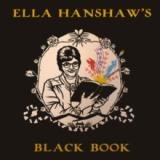
When Ella Hanshaw (1934-2020) first picked up the guitar as a 12-year-old girl in Procious, West Virginia, she dreamed of being a country star. But over the next 74 years, as she wrote hundreds of songs, her artistic goals slowly ascended to a higher realm. Ella Hanshaw's Black Book, lovingly compiled by her granddaughter from home and church recordings, features a selection of Ella's original gospel songs (Side A: Big Black Book), performed solo and with her Hallelujah Hill Quartet, and her broken-hearted country songs (Side B: Little Black Book) recorded in a back bedroom during quiet moments at home. Despite differences in style and intent, common themes remain the same across the sacred and secular sides of the record: love and longing for what we cannot quite touch—not yet, anyway—and the physical pages of possibility that we can hold in the meantime.
Howdy punkè rocke fans, welcome to FORCED COMMUNAL EXISTENCE - the wonderful and frightening world of ALIEN NOSEJOB’s EP’s & singles. Anti Fade and Agitated Records are teaming together to bring you a paint stripping, mind altering, rare collection of EP and compilation tracks recorded in various Australian bedrooms and garages between 2017 and 2022. The sound of goofy obnoxiousness will soon be permeating your bedroom airwaves and perforating your eardrums. Kicking off this long player is an EP that was recorded by Billy from Anti Fade in his childhood bedroom in July 2017. The songs came to fruition while AUSMUTEANTS were on tour in Japan 2016.
There was a lot of ‘WALLABY BEAT’ / ‘MURDER PUNK’ being played in the background while seeing the sites of Mount Fuji and ‘Bar Fuck Yeah’. In between shows Jake was organising the release of DANNY GRAHAM and PLASTIC AND THE EP’S records on the label he co-ran XEROX MUSIC. Both artists played parts in the sound and ethos of the PANEL BEAT EP. The goal was to make the songs sound unapologetically Australian without pretending to be something they’re not. There’s no fake accents or songs about VB and mullets. Instead, there’s songs about every day struggles, like dealing with fickle fashion followers, having too many fucking records, playing PlayStation, resentment and manipulation.
500 copies were pressed and self released, with a photo slipped inside each copy at random. Next is THE DEATH OF THE VINYL BOOM which was self recorded in a shed in November 2017. This is the only Alien Nosejob release (besides this comp, smartarse) to feature a cover - Flyblown by Adelaidean arty weirdo band JACKSON ZUMDISH. The idea behind this EP was to incorporate the simplicity and scrappiness of the late 70’s DIY Australian sound, but give them the complicated structures of prog songs. Scum stats - 500 copies, self released. Several copies were smeared with Jake’s blood and had smashed pieces of vinyl glued to the front cover.
Now we have a cover of the DEAD KENNEDYS. The conspiracy theorist wet dream Government Flu. Recorded September 2020 during lockdown in one-man-band with a tape recorder fashion for a 20 minute unedited ‘live set’ video where all instruments were played one by one, sung and mixed in the space of a couple of hours. The HC45 7” was recorded at the same time as a disco 12” maxi, which I hear were originally meant to come out on the same day. Shit happens I guess? This EP came out in Feb 2020 and sounds somewhere between early GANG GREEN, DIE KREUZEN and the BEASTIE BOYS old bullshit. Self recorded on a 4 track with a broken pinch roller. Lyrically this thing is cynical and choc-a-bloc full of satire and hate. A year later a sequel was recorded the same way, on the same machine.
No fucking disco this time though. Cold Bare Facts is the most recent recording on this comp. Self recorded in Jake‘s bedroom 2022 It has the same mid paced tempo as DYS or SSD when they’re at their slowest (pre-Boston Curse, of course!). Both songs take a stinky shit on the Australian state police. 300 copies. Finishing the record is a cover by THE AINTS. Originally written by ED KUEPPER for THE SAINTS Eternally Yours album, but it sounded too similar to Lost and Found. Originally released on ‘ALTA’ cassette compilation during the lockdown. FORCED COMMUNAL EXISTENCE binds this mouthful of releases into one neat package from June 6th, 2025. Catch the ALIEN NOSEJOB band on tour in Europe & UK from June 13 - July 2nd, 2025.
Howdy punkè rocke fans, welcome to FORCED COMMUNAL EXISTENCE - the wonderful and frightening world of ALIEN NOSEJOB’s EP’s & singles. Anti Fade and Agitated Records are teaming together to bring you a paint stripping, mind altering, rare collection of EP and compilation tracks recorded in various Australian bedrooms and garages between 2017 and 2022. The sound of goofy obnoxiousness will soon be permeating your bedroom airwaves and perforating your eardrums. Kicking off this long player is an EP that was recorded by Billy from Anti Fade in his childhood bedroom in July 2017. The songs came to fruition while AUSMUTEANTS were on tour in Japan 2016.
There was a lot of ‘WALLABY BEAT’ / ‘MURDER PUNK’ being played in the background while seeing the sites of Mount Fuji and ‘Bar Fuck Yeah’. In between shows Jake was organising the release of DANNY GRAHAM and PLASTIC AND THE EP’S records on the label he co-ran XEROX MUSIC. Both artists played parts in the sound and ethos of the PANEL BEAT EP. The goal was to make the songs sound unapologetically Australian without pretending to be something they’re not. There’s no fake accents or songs about VB and mullets. Instead, there’s songs about every day struggles, like dealing with fickle fashion followers, having too many fucking records, playing PlayStation, resentment and manipulation.
500 copies were pressed and self released, with a photo slipped inside each copy at random. Next is THE DEATH OF THE VINYL BOOM which was self recorded in a shed in November 2017. This is the only Alien Nosejob release (besides this comp, smartarse) to feature a cover - Flyblown by Adelaidean arty weirdo band JACKSON ZUMDISH. The idea behind this EP was to incorporate the simplicity and scrappiness of the late 70’s DIY Australian sound, but give them the complicated structures of prog songs. Scum stats - 500 copies, self released. Several copies were smeared with Jake’s blood and had smashed pieces of vinyl glued to the front cover.
Now we have a cover of the DEAD KENNEDYS. The conspiracy theorist wet dream Government Flu. Recorded September 2020 during lockdown in one-man-band with a tape recorder fashion for a 20 minute unedited ‘live set’ video where all instruments were played one by one, sung and mixed in the space of a couple of hours. The HC45 7” was recorded at the same time as a disco 12” maxi, which I hear were originally meant to come out on the same day. Shit happens I guess? This EP came out in Feb 2020 and sounds somewhere between early GANG GREEN, DIE KREUZEN and the BEASTIE BOYS old bullshit. Self recorded on a 4 track with a broken pinch roller. Lyrically this thing is cynical and choc-a-bloc full of satire and hate. A year later a sequel was recorded the same way, on the same machine.
No fucking disco this time though. Cold Bare Facts is the most recent recording on this comp. Self recorded in Jake‘s bedroom 2022 It has the same mid paced tempo as DYS or SSD when they’re at their slowest (pre-Boston Curse, of course!). Both songs take a stinky shit on the Australian state police. 300 copies. Finishing the record is a cover by THE AINTS. Originally written by ED KUEPPER for THE SAINTS Eternally Yours album, but it sounded too similar to Lost and Found. Originally released on ‘ALTA’ cassette compilation during the lockdown. FORCED COMMUNAL EXISTENCE binds this mouthful of releases into one neat package from June 6th, 2025. Catch the ALIEN NOSEJOB band on tour in Europe & UK from June 13 - July 2nd, 2025.
What We Have Now is a love-letter to New York City, written by a breaking heart weathering the deep indigo night of a soul realizing dawn will release it from the dried tears of youth. There is no brighter or harsher wasteland of self-discovery than the one in which we see that childhood is a dream and the now is something we will have to fabricate alone, from those broken mirror shards of memories in service to a world that does not seem to know how to care for us any longer. Full of feeling and shepherded by Clara's intensely honest vocals, these songs transcend place and time to share a universe of wonders beneath the hard-wrought questioning of the deeply human condition we are all living within. Clara Joy is a songwriter full of melody and vision. These home recordings were made by Clara in NYC between 2020 and 2024. The songs were then arranged, mixed & mastered by Kramer in December 2024 in his studio in the mountains of North Carolina. Clara is at the dawn of her career and Shimmy-Disc is proud to bring this amazing work to the world. This creation is a beacon on the murky horizon of this Pyrocene age landscape we find ourselves traversing.
What We Have Now is a love-letter to New York City, written by a breaking heart weathering the deep indigo night of a soul realizing dawn will release it
from the dried tears of youth. There is no brighter or harsher wasteland of self-discovery than the one in which we see that childhood is a dream and
the now is something we will have to fabricate alone, from those broken mirror shards of memories in service to a world that does not seem to know
how to care for us any longer.
Full of feeling and shepherded by Clara’s intensely honest vocals, these songs transcend place and time to share a universe of wonders beneath the
hard-wrought questioning of the deeply human condition we are all living within.
Clara Joy is a songwriter full of melody and vision. These home recordings were made by Clara in NYC between 2020 and 2024. The songs were then
arranged, mixed & mastered by Kramer in December 2024 in his studio in the mountains of North Carolina.
Clara is at the dawn of her career and Shimmy-Disc is proud to bring this amazing work to the world. This creation is a beacon on the murky horizon of
this Pyrocene age landscape we find ourselves traversing.
For Fans of, KISS, Starz, Angel, and 70’s classic rock! Employing a dazzling mix of glam rock, hard rock, and progressive rock, Angel's outrageous, white-satin-heavy image and equally over-the-top stage shows, making them one of the more colourful arena rock bands of the mid-'70s and early '80s. Discovered by KISS bass player, Gene Simmons, the group issued their eponymous debut album in 1975, which hewed closer to prog rock than the glam pop that would inform future endeavours like On Earth as It Is in Heaven(1977) and Sinful(1979). The group released a total of 5 studio albums and 1 live album before going their separate ways in 1981.Formed in Washington, D.C., the group's self-titled 1975debut was recorded for the flamboyant Casablanca Records label--home to KISS--with a line-up comprising Frank DiMino (vocals), Punky Meadows (guitar), Gregg Giuffria (keyboards), Mickie Jones(bass), and Barry Brandt(drums). A heavy slab of heavy pomp rock with lengthy songs swathed in Giuffria's atmospheric keyboards and featuring the longtime stage favourite "Tower". Now to celebrate the50thAnniversarythis classic has been remastered and is being released on both a 6-pane l CD digipak and on 180G vinyl with liner notes by Rock Candy journalist Dave Reynolds. There are only 700 of the Black-Blue swirl worldwide. A must have for any Angel fan with classics like “Tower” and “Rock & Rollers”
Now and again, an album project with no home comes along out of the blue, demanding to be licensed and shared with the world.
It was unearthed on one of Paper's digging trips. BOM's album sounded like nothing else out there, only the future. Shrouded in mystery and country-of-origin unknown, Africa runs through its DNA, but sometimes mysteries are best left...
Ase - a Yoruba philosophy signifying the power that makes things happen and produces change; given to Gods, ancestors, spirits, humans, animals, plants, rocks, rivers, songs and prayers.
BOM takes influence from all corners of Africa and its diaspora, blending them with 25 years of Western electronic music into a melange of forward facing, leftfield afro futurism.
The album features one of Africa's brightest rising stars, Luka Productions (from Mali), cosmic poet Sirius Rush (UK) and master drummer & vocalist Felix Ngindu (DRC/Liverpool) for a journey into kaleidoscopic Afro-tech funk. Gqom, Shangaan electro and township funk rub shoulders with hip-hop, bass, deep house and dub for a psychedelic celebration of collaboration and possibility.
As geographical and musical barriers are broken down, BOM's 'Ase' album is leading the charge; London to Lagos, Lisbon to Sao Paulo, Bamako to Berlin, BOM captures the sound of the underground.
out of Stock
Last delivered 18 months ago available to reorder, subject to availability
Googling “paradise house”, the first results to pop up are an endless list of European b&b’s with whitewashed lime façades, all of them promising “…an unmatched travel experience a few steps from the sea”. Next, a little further down, are the institutional websites of a few select semi-luxury retirement homes (no photos shown, but lots of stock images of smiling nurses with reassuring looks). To find the “paradise house” we’re after, we have to scroll even further down. Much further down.
It feels like yesterday, and at the same time it seems like a million years ago. The Eighties had just ended, and it was still unclear what to expect from the Nineties. Mobile phones that were not the size of a briefcase and did not cost as much as a car? A frightening economic crisis? The guitar-rock revival?! Certainly, the best place to observe that moment of transition was the dancefloor. Truly epochal transformations were happening there. From America, within a short distance one from the other, two revolutionary new musical styles had arrived: the first one sounded a bit like an “on a budget” version of the best Seventies disco-music – Philly sound made with a set of piano-bar keyboards! – the other was even more sparse, futuristic and extraterrestrial. It was a music with a quite distinct “physical” component, which at the same time, to be fully grasped, seemed to call for the knotty theories of certain French post-modern philosophers: Gilles Deleuze, Félix Guattari, Paul Virilio... Both those genres – we would learn shortly after – were born in the black communities of Chicago and Detroit, although listening to those vinyl 12” (often wrapped in generic white covers, and with little indication in the label) you could not easily guess whether behind them there was a black boy from somewhere in the Usa, or a girl from Berlin, or a pale kid from a Cornish coastal town.
Quickly, similar sounds began to show up from all corners of Europe. A thousand variations of the same intuition: leaner, less lean, happier, slightly less intoxicated, more broken, slower, faster, much faster... Boom! From the dancefloors – the London ones at least, whose chronicles we eagerly read every month in the pages of The Face and i-D – came tales of a new generation of clubbers who had completely stopped “dressing up” to go dancing; of hot tempered hooligans bursting into tears and hugging everyone under the strobe lights as the notes of Strings of Life rose up through the fumes of dry ice (certain “smiling” pills were also involved, sure). At this point, however, we must move on to Switzerland.
In Switzerland, in the quiet and diligent town of Lugano, between the 1980s and 1990s there was a club called “Morandi”. Its hot night was on Wednesdays, when the audience also came from Milan, Como, Varese and Zurich. Legend goes that, one night, none less than Prince and Sheila E were spotted hiding among the sofas, on a day-off of the Italian dates of the Nude Tour… The Wednesday resident and superstar was an Italian dj with an exotic name: Don Carlos. The soundtrack he devised was a mixture of Chicago, Detroit, the most progressive R&B and certain forgotten classics of old disco music: practically, what the Paradise Garage in New York might have sounded like had it not closed in 1987. In between, Don Carlos also managed to squeeze in some tracks he had worked on in his studio on Lago Maggiore. One in particular: a track that was rather slow compared to the BPM in fashion at the time, but which was a perfect bridge between house and R&B. The title was Alone: Don Carlos would explain years later that it had to be intended both in the English meaning of “by itself” and like the Italian word meaning “halo”. That wasn’t the only double entendre about the song, anyway. Its own very deep nature was, indeed, double. On the one hand, Alone was built around an angelic keyboard pattern and a romantic piano riff that took you straight to heaven; on the other, it showcased enough electronic squelches (plus a sax part that sounded like it had been dissolved by acid rain) to pigeonhole the tune into the “junk modernity” section, aka the hallmark of all the most innovative sounds of the time: music that sounded like it was hand-crafted from the scraps of glittering overground pop.
No one knows who was the first to call it “paradise house”, nor when it happened. Alternative definitions on the same topic one happened to hear included “ambient house”, “dream house”, “Mediterranean progressive”… but of course none were as good (and alluring) as “paradise house”. What is certain is that such inclination for sounds that were in equal measure angelic and neurotic, romantic and unaffective, quickly became the trademark of the second generation of Italian house. Music that seemed shyly equidistant from all the rhythmic and electronic revolutions that had happened up to that moment (“Music perfectly adept at going nowhere slowly” as noted by English journalist Craig McLean in a legendary field report for Blah Blah Blah magazine). Music that to a inattentive ear might have sounded as anonymous as a snapshot of a random group of passers-by at 10AM in the centre of any major city, but perfectly described the (slow) awakening in the real world after the universal love binge of the so-called Second Summer of Love.
For a brief but unforgettable season, in Italy “paradise house” was the official soundtrack of interminable weekends spent inside the car, darting from one club to another, cutting the peninsula from North to centre, from East to West coast in pursuit of the latest after-hours disco, trading kilometres per hour with beats per minute: practically, a new New Year’s Eve every Friday and Saturday night. This too was no small transformation, as well as a shock for an adult Italy that was encountering for the first time – thanks to its sons and daughters – the wild side of industrial modernity. The clubbers of the so-called “fuoriorario” scene were the balls gone mad in the pinball machine most feared by newspapers, magazines and TV pundits. What they did each and every weekend, apart from going crazy to the sound of the current white labels, was linking distant geographical points and non-places (thank you Marc Augé!) – old dance halls, farmhouses and business centres – transformed for one night into house music heaven. As Marco D’Eramo wrote in his 1995 essay on Chicago, Il maiale e il grattacielo: “Four-wheeled capitalism distorts our age-old image of the city, it allows the suburbs to be connected to each other, whereas before they were connected only by the centre (…) It makes possible a metropolitan area without a metropolis, without a city centre, without downtown. The periphery is no longer a periphery of any centre, but is self-centred”.
“Paradise house” perfectly understood all of this and turned it into a sort of cyber-blues that didn’t even need words, and unexpectedly brought back a drop of melancholic (post?)-humanity within a world that by then – as we would wholly realise in the decades to come – was fully inhuman and heartless. A world where we were all alone, and surrounded by a sinister yellowish halo, like a neon at the end of its life cycle. But, for one night at least, happy."
out of Stock
Last delivered 3 months ago available to reorder, subject to availability
Bag People were Chicagoans who outgrew their home in the maelstrom of the early 80s NYC post-punk/ no-wave scene. They weren"t around long, but their compulsive noise-rock sound, unearthed from tapes lost for 40 years, looms large and stands tall next to the efforts of better-known contemporaries like Sonic Youth and Swans. A righteous puke of art-punk from a time of incredible brokenness in the world - in other words, savage sounds for today!
Produced by Grammy Nominated producer Leon Michels (El Michels Affair, Clairo). Big Crown Records is proud to present Derya Yıldırım & Grup Şimşek’s latest album Yarın Yoksa. The show stopping intensity of Derya backed by the psychedelic soul of Grup Şimşek with production by Leon Michels has yielded a stand out record that challenges genre with a broad appeal and a powerful message. They refer to themselves as “outernational” over international as they say it suggests a sound that’s more inclusive or “beyond borders.” Derya, who sings and plays the bağlama, is German born to Turkish parents. Drummer Helen Wells is Berlin-based by way of South Africa while keyboard player Graham Mushnik and guitar/bass player Antonin Voyant are both French. The collective influences they bring to Anatolian music make for a completely unique and fresh sound that both pushes the genre forward and champions its rich heritage. Yarın Yoksa which translates to If There Is No Tomorrow delves into deeply personal pain and collective resistance with a central thread of loss, longing, and hope for change running throughout. The lyrics are poetic and rely heavily on symbolic language, metaphors, and storytelling while the music shifts track to track making each tune stand out on its own but work together perfectly as an album. “Cool Hand”, the first single released on Big Crown in September of 2024, is a beautiful juxtaposition of intensity and light-heartedness over a thoroughly infectious groove. The message is poetic and complicated, repeatedly declaring “I love you, I’m crazy about you” but ultimately finding a sense of peace through accepting a broken heart. “Direne Direne” is a protest song that embodies the struggle and tireless pursuit of justice encouraging people to resist oppression. Derya’s lyrics soar over the psych-soul musical backdrop as her story of personal struggle transforms to a universal call for resilience and strength. The slow and weighty vibe of “Yakamoz” lets onto the meaning of the lyrics even to those who don’t understand Turkish. It is a deeply moving song that captures the profound emotions connected to displacement and loss without knowing if you will ever return. The steady groove of the band, along with the anguished vocals paint a vivid picture of the devastation experienced by the protagonist who ultimately realizes that her roots are within her and anywhere she goes is her home. Nine of the tunes on the album are original compositions but they also take on three Anatollian folk songs with their own inimitable approach. The acapella introduction of “Misket”, a folk song from Ankara/Türkiye, will stop you in your tracks. The tune deals with death and how the living cope and continue a relationship with those who have passed away. Another traditional tune from Sivas that they put their signature sound to is “Hop Bico”, a tune about a playful character named Bico who is a symbol of vitality and spirit. The synth intro grabs your ear from the first note and the earworm chorus encouraging Bico to lead the group in celebration and embrace life through dance has the same effect on everyone who hears it. The band has taken a big step forward that you can hear on this record. Derya’s passion and authenticity is front and centre and the music is too moving to deny. Yarın Yoksa is sure to captivate the hearts and minds of all those who hear it, and just wait till you hear them play it live… Upcoming Tour Dates (+More To Be Added): 18th March The Deaf Institute, Manchester / 19th The Jam Jar, Bristol / 20th Scala, London / 21st Norwich Arts Centre.
out of Stock
Last delivered 14 months ago available to reorder, subject to availability
Produced by Grammy Nominated producer Leon Michels (El Michels Affair, Clairo). Big Crown Records is proud to present Derya Yıldırım & Grup Şimşek’s latest album Yarın Yoksa. The show stopping intensity of Derya backed by the psychedelic soul of Grup Şimşek with production by Leon Michels has yielded a stand out record that challenges genre with a broad appeal and a powerful message. They refer to themselves as “outernational” over international as they say it suggests a sound that’s more inclusive or “beyond borders.” Derya, who sings and plays the bağlama, is German born to Turkish parents. Drummer Helen Wells is Berlin-based by way of South Africa while keyboard player Graham Mushnik and guitar/bass player Antonin Voyant are both French. The collective influences they bring to Anatolian music make for a completely unique and fresh sound that both pushes the genre forward and champions its rich heritage. Yarın Yoksa which translates to If There Is No Tomorrow delves into deeply personal pain and collective resistance with a central thread of loss, longing, and hope for change running throughout. The lyrics are poetic and rely heavily on symbolic language, metaphors, and storytelling while the music shifts track to track making each tune stand out on its own but work together perfectly as an album. “Cool Hand”, the first single released on Big Crown in September of 2024, is a beautiful juxtaposition of intensity and light-heartedness over a thoroughly infectious groove. The message is poetic and complicated, repeatedly declaring “I love you, I’m crazy about you” but ultimately finding a sense of peace through accepting a broken heart. “Direne Direne” is a protest song that embodies the struggle and tireless pursuit of justice encouraging people to resist oppression. Derya’s lyrics soar over the psych-soul musical backdrop as her story of personal struggle transforms to a universal call for resilience and strength. The slow and weighty vibe of “Yakamoz” lets onto the meaning of the lyrics even to those who don’t understand Turkish. It is a deeply moving song that captures the profound emotions connected to displacement and loss without knowing if you will ever return. The steady groove of the band, along with the anguished vocals paint a vivid picture of the devastation experienced by the protagonist who ultimately realizes that her roots are within her and anywhere she goes is her home. Nine of the tunes on the album are original compositions but they also take on three Anatollian folk songs with their own inimitable approach. The acapella introduction of “Misket”, a folk song from Ankara/Türkiye, will stop you in your tracks. The tune deals with death and how the living cope and continue a relationship with those who have passed away. Another traditional tune from Sivas that they put their signature sound to is “Hop Bico”, a tune about a playful character named Bico who is a symbol of vitality and spirit. The synth intro grabs your ear from the first note and the earworm chorus encouraging Bico to lead the group in celebration and embrace life through dance has the same effect on everyone who hears it. The band has taken a big step forward that you can hear on this record. Derya’s passion and authenticity is front and centre and the music is too moving to deny. Yarın Yoksa is sure to captivate the hearts and minds of all those who hear it, and just wait till you hear them play it live… Upcoming Tour Dates (+More To Be Added): 18th March The Deaf Institute, Manchester / 19th The Jam Jar, Bristol / 20th Scala, London / 21st Norwich Arts Centre.
out of Stock
Last delivered 15 months ago available to reorder, subject to availability
Produced by Grammy Nominated producer Leon Michels (El Michels Affair, Clairo). Big Crown Records is proud to present Derya Yıldırım & Grup Şimşek’s latest album Yarın Yoksa. The show stopping intensity of Derya backed by the psychedelic soul of Grup Şimşek with production by Leon Michels has yielded a stand out record that challenges genre with a broad appeal and a powerful message. They refer to themselves as “outernational” over international as they say it suggests a sound that’s more inclusive or “beyond borders.” Derya, who sings and plays the bağlama, is German born to Turkish parents. Drummer Helen Wells is Berlin-based by way of South Africa while keyboard player Graham Mushnik and guitar/bass player Antonin Voyant are both French. The collective influences they bring to Anatolian music make for a completely unique and fresh sound that both pushes the genre forward and champions its rich heritage. Yarın Yoksa which translates to If There Is No Tomorrow delves into deeply personal pain and collective resistance with a central thread of loss, longing, and hope for change running throughout. The lyrics are poetic and rely heavily on symbolic language, metaphors, and storytelling while the music shifts track to track making each tune stand out on its own but work together perfectly as an album. “Cool Hand”, the first single released on Big Crown in September of 2024, is a beautiful juxtaposition of intensity and light-heartedness over a thoroughly infectious groove. The message is poetic and complicated, repeatedly declaring “I love you, I’m crazy about you” but ultimately finding a sense of peace through accepting a broken heart. “Direne Direne” is a protest song that embodies the struggle and tireless pursuit of justice encouraging people to resist oppression. Derya’s lyrics soar over the psych-soul musical backdrop as her story of personal struggle transforms to a universal call for resilience and strength. The slow and weighty vibe of “Yakamoz” lets onto the meaning of the lyrics even to those who don’t understand Turkish. It is a deeply moving song that captures the profound emotions connected to displacement and loss without knowing if you will ever return. The steady groove of the band, along with the anguished vocals paint a vivid picture of the devastation experienced by the protagonist who ultimately realizes that her roots are within her and anywhere she goes is her home. Nine of the tunes on the album are original compositions but they also take on three Anatollian folk songs with their own inimitable approach. The acapella introduction of “Misket”, a folk song from Ankara/Türkiye, will stop you in your tracks. The tune deals with death and how the living cope and continue a relationship with those who have passed away. Another traditional tune from Sivas that they put their signature sound to is “Hop Bico”, a tune about a playful character named Bico who is a symbol of vitality and spirit. The synth intro grabs your ear from the first note and the earworm chorus encouraging Bico to lead the group in celebration and embrace life through dance has the same effect on everyone who hears it. The band has taken a big step forward that you can hear on this record. Derya’s passion and authenticity is front and centre and the music is too moving to deny. Yarın Yoksa is sure to captivate the hearts and minds of all those who hear it, and just wait till you hear them play it live… Upcoming Tour Dates (+More To Be Added): 18th March The Deaf Institute, Manchester / 19th The Jam Jar, Bristol / 20th Scala, London / 21st Norwich Arts Centre.
out of Stock
Last delivered 17 months ago available to reorder, subject to availability
Pharoahe Monch is one of the most revered and influential emcees in the history of hip-hop, and 2024 marks the 10th anniversary of his fourth studio album "PTSD: Post Traumatic Stress Disorder".
In PTSD, Pharoahe Monch continues the story he began telling in his previous LP, "W.A.R. (We Are Renegades)" from 2011. The Queens emcee narrates, in both literal and metaphoric ways, about the trials and tribulations of an independent artist who is at war with the music industry and the struggle of the black male experience in America.
In 2012, during an interview with Shawn Setaro, host of the podcast The Cipher, the rapper explained the connections between the two projects, beyond their titles. “The W.A.R. album was like, I’m going to battle against the machine, I’m doing this independently. I’m putting some things out that I learned and I’m going to expose about the music industry. PTSD is the result of me doing that, where I am emotionally now. It’s similar to how someone comes back from war and is stricken by re-adjusting to a regular situation.”
Monch told MTV Hive that PTSD is “more mental, emotional and personal” because it came out of the depths of a period of depression. He also gave the internal and external factors that helped him create the album. “I was working on the title track, which took me to a point in between Internal Affairs and Desire, where I was heavily depressed. Through the waiting period, the industry period, and going through a lot emotionally. Then there was the physical problem with asthma. It was the worst. So I started off with that title track and my manager was like, ‘Yo, let’s really dive into that state and how you got to where you are now, and how this follows what people go through to get back to a so-called ‘normal’ situation’.”
The concept album follows a veteran through combat experience, his return home, relationship dissolution, drug addiction, painful depression, and, finally, a triumphant but realistically rendered decision to keep living and struggling.
Joni Void, the artistic persona of Montréal-based French-British producer Jean Néant (he/them) returns to songcraft on their warmest and most welcoming record yet, where the acclaimed sampledelic sound collagist chills out with an emotionally resonant song cycle tinged by downtempo, lo-fi, avant-pop, and trip-hop. Guests include Haco, Ytamo, Sook-Yin Lee, Pink Navel and N NAO. Every Life Is A Light expands on Void's recent stylistic turn towards more languorous and mellow lo-fi production, foreshadowed by the drifting looseness and ambient bricolage of their preceding experimental sound-art record. This transitional sensibility now shapes more defined song structures and styles, with loops are given time and space to unspool, and rhythms shot through the softer-focus lens of trip-hop and dub. Every Life Is A Light swaps the twitchy insistence of Void's acclaimed early albums for a newfound lightness and suppleness, still imbued with all the restlessness, sonic detailing, and emotional resonance that made their name. The neurotic brokenmachine kinetics of earlier Void, summarized by Sasha Geffen as "drawing despair and wonder from within the vast unfeeling of digital communication" in an 8.0 Pitchfork review, may be chilling out, but Void is becoming an ever better conjurer of hauntological feeling. Every Life Is A Light summons this in a comparatively buoyant, benevolent, head-nodding journey more open to tenderness and modest joys. Perhaps it's the sound of Void at greater peace with themselves and the world, despite the bittersweet cost: even as it channels grief, memorializing comrades and companions recently deceased, this album wants light. Void's raw materials continue to draw heavily from samples (their own Walkman cassette fieldrecordings and songs by others) and from a wide community of musical guests. Vocalists Haco on "Time Zone" and Ytamo on "Cloud Level" help levitate what could be lost tracks from a mid-90s Too Pure Records compilation of skewed-lounge electronica. Canadian musician Sook-Yin Lee sings on lead single "Vertigo," a sinewy 80bpm tape-loop and bassline groove propelled by psychedelically-layered lyrics that eventually turn the song in on itself entirely, like Grace Jones' "Nightclubbing" covered by Animal Collective. One of Void's greatest hip-hop loves is the Ruby Yacht collective; charter member Pink Navel drops some brilliant verses on "Story Board." The album's two minimal tracks, an extended piano loop set to a slow beat and shimmering electronics on "Muffin-A Song For My Cat" and the languid sampled bass riff and breakbeat of "Event Flow," are perhaps most overtly `lofi chill.' Indeed the whole album could be said to sit adjacent to those viral (if not already AI-generated) genre trends, which maybe begs the question on a lot of our minds: can specificity and authenticity of musical materials still be heard, still meaningfully signify substance and difference, still matter? Perhaps a question that fades in comparison to the career break Void could catch by landing on generic streaming playlists. More likely, these tracks remain too off-kilter, too genuinely lo-fi and ineffable, and too disqualified by the status of its peasant rights-holders, to catch the algos. Context remains the poor cousin of content. Meanwhile Void marches on, as a tireless organizer of local music events, bouncing around and often living in DIY venue, depending on the latest apartment eviction. With an ubiquitous polaroid camera in tow, they also document each communal happening with a single shot (and often a blinding flash bulb): a memory and metaphor for lives illuminated preciously, singularly, `imperfectly' in the moment. Dozens of these polaroids adorn the album's back cover and inner sleeve art in grid-like montages, as a fitting analog for the careful construction, grainy intimate materiality, and ephemeral feeling of these songs. Every Life Is A Light is Joni Void's most coherent and congenial record while relinquishing none of their experimentalist acumen as a producer or emotional attunement as a composer. Instead these qualities flourish, on an album that lights a humble flame for the fragile promise of homespun creative collaboration as unalienated labour and therapeutic communion, making an enchantingly idiosyncratic contribution to downtempo sample music along the way. Thanks for listening.
The Haunting ist ein übernatürlicher Horrorfilm aus dem Jahr 1999 mit Liam Neeson, Catherine Zeta-Jones,
Owen Wilson und Lili Taylor in den Hauptrollen. Der Film folgt einer Gruppe von Menschen, die sich auf
einem weitläufigen Anwesen zu einer scheinbar freiwilligen Studie über Schlaflosigkeit versammeln, nur um
festzustellen, dass sie von paranormalen Ereignissen geplagt werden, die mit der düsteren Geschichte des
Hauses zusammenhängen. Diese Deluxe Edition des 2-LP-Sets ist die allererste Vinyl-Pressung von Jerry
Goldsmiths gruseliger Filmmusik und enthält brandneue Artworks.
out of Stock
Last delivered 19 months ago available to reorder, subject to availability
Emanuela Hutter and Oliver Baroni front this Anglo-Italian masterly, modern rockabilly band, making worldwide waves from their home base of Zurich. Highlights of this 2011 relaunch album Buy Beg or Steal include a rockabilly cover of Enola Gay and their classic hit duet between Demented Are Go"s Sparky and Emanuela: My Love For Evermore. The song"s murder ballad viral video now has over 25,000,000 views. An international cult hit, it has also inspired myriad tattoos, multiple 7" pressings and well over fifty cover versions. The LP version features an exclusive extra track.
The Local Moon (East Berlin 1987/88) The name The Local Moon originated from an intimation by the oriental jester Nasreddin that every city had its own moon. This idea did not go without a certain local colour in the bipolar frontline city of Berlin; from an astropolitical view, its divided sky never saw a full moon, the light conditions were ideologically broken. From the black light of those years emerged The Local Moon. René Le Doil and Ronald Lippok took wings like two crows from a pigeon’s nest when quite suddenly in 1987 light entertainment permeated East Berlin’s Offground and the two musicians were hired for the New Romantic revue New Affair. Before that, Le Doil had been involved in the Stattgespräch fashion spectacle and in Allerleirauh, the “thing of light, space, sound and leather”. Lippok had been the drummer for Rosa Extra, one of the earliest punk rock bands in East Berlin. Together with his brother Robert, who had already come into the picture with an avant-punk project named after the Jules Verne novel Fünf Wochen im Ballon (Five Weeks in a Balloon), Ronald Lippok then founded the post-punk commune Ornament & Verbre- chen, for whom Le Doil would occasionally guest as an... more credits released July 20, 2022 Tape (Side A, B, C – Track #1 - #16) Music by The Local Moon, recorded in April 1987 René Le Doil: accordion, bass, guitar, keyboards, piano, voice Ronald Lippok: acoustic guitar, keyboards, percussion, voice Produced by The Local Moon Single (Side D – Track #17 - #19) Music by The Local Moon, recorded in May 1988 René Le Doil: keyboard Ronald Lippok: keyboard, voice Charlotte Jansen: oboe, voice Alex Wolf: percussion Bo Kondren: emax, traktor Detelf Pegelow: guitar Robert Lippok: clarinet, ethno brass Produced by Bo Kondren Recorded at Gunther Krex Studio
out of Stock
Last delivered 19 months ago available to reorder, subject to availability
Volume 1 of this expertly curated project of 90s Italian House - put together by Don Carlos.
If Paradise was half as nice… by Fabio De Luca.
Googling “paradise house”, the first results to pop up are an endless list of European b&b’s with whitewashed lime façades, all of them promising “…an unmatched travel experience a few steps from the sea”. Next, a little further down, are the institutional websites of a few select semi-luxury retirement homes (no photos shown, but lots of stock images of smiling nurses with reassuring looks). To find the “paradise house” we’re after, we have to scroll even further down. Much further down.
It feels like yesterday, and at the same time it seems like a million years ago. The Eighties had just ended, and it was still unclear what to expect from the Nineties. Mobile phones that were not the size of a briefcase and did not cost as much as a car? A frightening economic crisis? The guitar-rock revival?! Certainly, the best place to observe that moment of transition was the dancefloor. Truly epochal transformations were happening there. From America, within a short distance one from the other, two revolutionary new musical styles had arrived: the first one sounded a bit like an “on a budget” version of the best Seventies disco-music – Philly sound made with a set of piano-bar keyboards! – the other was even more sparse, futuristic and extraterrestrial. It was a music with a quite distinct “physical” component, which at the same time, to be fully grasped, seemed to call for the knotty theories of certain French post-modern philosophers: Gilles Deleuze, Félix Guattari, Paul Virilio... Both those genres – we would learn shortly after – were born in the black communities of Chicago and Detroit, although listening to those vinyl 12” (often wrapped in generic white covers, and with little indication in the label) you could not easily guess whether behind them there was a black boy from somewhere in the Usa, or a girl from Berlin, or a pale kid from a Cornish coastal town.
Quickly, similar sounds began to show up from all corners of Europe. A thousand variations of the same intuition: leaner, less lean, happier, slightly less intoxicated, more broken, slower, faster, much faster... Boom! From the dancefloors – the London ones at least, whose chronicles we eagerly read every month in the pages of The Face and i-D – came tales of a new generation of clubbers who had completely stopped “dressing up” to go dancing; of hot tempered hooligans bursting into tears and hugging everyone under the strobe lights as the notes of Strings of Life rose up through the fumes of dry ice (certain “smiling” pills were also involved, sure). At this point, however, we must move on to Switzerland.
In Switzerland, in the quiet and diligent town of Lugano, between the 1980s and 1990s there was a club called “Morandi”. Its hot night was on Wednesdays, when the audience also came from Milan, Como, Varese and Zurich. Legend goes that, one night, none less than Prince and Sheila E were spotted hiding among the sofas, on a day-off of the Italian dates of the Nude Tour… The Wednesday resident and superstar was an Italian dj with an exotic name: Don Carlos. The soundtrack he devised was a mixture of Chicago, Detroit, the most progressive R&B and certain forgotten classics of old disco music: practically, what the Paradise Garage in New York might have sounded like had it not closed in 1987. In between, Don Carlos also managed to squeeze in some tracks he had worked on in his studio on Lago Maggiore. One in particular: a track that was rather slow compared to the BPM in fashion at the time, but which was a perfect bridge between house and R&B. The title was Alone: Don Carlos would explain years later that it had to be intended both in the English meaning of “by itself” and like the Italian word meaning “halo”. That wasn’t the only double entendre about the song, anyway. Its own very deep nature was, indeed, double. On the one hand, Alone was built around an angelic keyboard pattern and a romantic piano riff that took you straight to heaven; on the other, it showcased enough electronic squelches (plus a sax part that sounded like it had been dissolved by acid rain) to pigeonhole the tune into the “junk modernity” section, aka the hallmark of all the most innovative sounds of the time: music that sounded like it was hand-crafted from the scraps of glittering overground pop.
No one knows who was the first to call it “paradise house”, nor when it happened. Alternative definitions on the same topic one happened to hear included “ambient house”, “dream house”, “Mediterranean progressive”… but of course none were as good (and alluring) as “paradise house”. What is certain is that such inclination for sounds that were in equal measure angelic and neurotic, romantic and unaffective, quickly became the trademark of the second generation of Italian house. Music that seemed shyly equidistant from all the rhythmic and electronic revolutions that had happened up to that moment (“Music perfectly adept at going nowhere slowly” as noted by English journalist Craig McLean in a legendary field report for Blah Blah Blah magazine). Music that to a inattentive ear might have sounded as anonymous as a snapshot of a random group of passers-by at 10AM in the centre of any major city, but perfectly described the (slow) awakening in the real world after the universal love binge of the so-called Second Summer of Love.
For a brief but unforgettable season, in Italy “paradise house” was the official soundtrack of interminable weekends spent inside the car, darting from one club to another, cutting the peninsula from North to centre, from East to West coast in pursuit of the latest after-hours disco, trading kilometres per hour with beats per minute: practically, a new New Year’s Eve every Friday and Saturday night. This too was no small transformation, as well as a shock for an adult Italy that was encountering for the first time – thanks to its sons and daughters – the wild side of industrial modernity. The clubbers of the so-called “fuoriorario” scene were the balls gone mad in the pinball machine most feared by newspapers, magazines and TV pundits. What they did each and every weekend, apart from going crazy to the sound of the current white labels, was linking distant geographical points and non-places (thank you Marc Augé!) – old dance halls, farmhouses and business centres – transformed for one night into house music heaven. As Marco D’Eramo wrote in his 1995 essay on Chicago, Il maiale e il grattacielo: “Four-wheeled capitalism distorts our age-old image of the city, it allows the suburbs to be connected to each other, whereas before they were connected only by the centre (…) It makes possible a metropolitan area without a metropolis, without a city centre, without downtown. The periphery is no longer a periphery of any centre, but is self-centred”.
“Paradise house” perfectly understood all of this and turned it into a sort of cyber-blues that didn’t even need words, and unexpectedly brought back a drop of melancholic (post?)-humanity within a world that by then – as we would wholly realise in the decades to come – was fully inhuman and heartless. A world where we were all alone, and surrounded by a sinister yellowish halo, like a neon at the end of its life cycle. But, for one night at least, happy.
out of Stock
Last delivered 84 days ago available to reorder, subject to availability
Gatefold Sleeve and on sea blue 180 GSM vinyl. Recorded as an instrumental by Tractor in Rochdale in 1971 and originally released on LP in 1972 “Shubunkin” has now been sampled by LA band Broken Bells (Danger Mouse/ Brian Burton and James Mercer, the lead vocalist and guitarist for the indie rock band The Shins) as the basis of their track “To Anyone a Ghost”. Julian Cope writes about the Tractor track “Shubunkin” : ...“Then, one night in mid 1972, John Peel played a track that was more mysterious than almost anything I had ever heard. It was the music I thereafter wanted played at my funeral and was most certainly the sound of a soul approaching the canopy of heaven as it left the earth for the last time.” ..“without the proper printed Dandelion label there to guide me, I left a blob of marker pen on the side that began with ‘Shubunkin’ and that became the ultimate beginning to any LP in my collection.” Originally Issued in late 2019 as a vinyl LP as a protest against Rochdale Boroughwide Housing’s plans to knock down four of the Seven Sisters/College Bank Flats- these blocks of flats were home to Tractor’s drummer in the 1970s as well as their manager Chris Hewitt and Andy and Liz Kershaws’ dad and a whole host of poets, musicians, tv producers etc. Many Tractor numbers were worked out in these flats prior to recording at various studios around Rochdale and Heywood. All songs written by Jim Milne and Steve Clayton. Jim Milne -vocals guitar (and bass most tracks), Steve Clayton -Drums and Percussion, Dave Addison- bass on Northern City. The album now starts the way Julian Cope always wanted to run.
VERY VERY LTD DELUXE CLOTH BOUND GATEFOLD SLEEVE RED VINYL EDTION, 2LP W/ DLC! "The first three songs alone are like love at first hearing." - Deluxe 2xLP clothbound sleeve edition of 'Car Button Cloth', featuring Lemonheads classics 'If I Could Talk I'd Tell You' and 'The Outdoor Type'. This reissue includes the original record alongside a whole extra LP of rarities and unreleased cuts, continuing Fire Records in-depth series of reissues from the legendary band. 'Car Button Cloth' is an extraordinary affair of musical and emotional extremes, a soundscape spanning "the most beautiful piano-led mourning in the history of the broken heart" that switches into perky jangle-pop for fleeting moments and contains the ultimate self-deprecating classic 'The Outdoor Type', penned by Smudge cohort Tom Morgan, as well as a cover of the bluegrass standard 'Knoxville Girl' and 'If I Could Talk I'd Tell You' co-written with The Vaselines' Eugene Kelly. All bases are covered. To further unravel where Evan's head was at during the period of its creation, this deluxe double album comes with a record of exquisite and typically eclectic scene setting covers that occupied B-sides and alternative format versions, plus other super rare offcuts, live takes and remixes. A diet of Volcano Suns, Glen Campbell, The Jacobites, The Sir Douglas Quintet and Whitney Houston influenced Evan's thinking and added further colour to an album that remains something of a Dorian Gray-style masterpiece. The first side of extras is rounded off with the never before released 'Arise', originally set for the remake of Great Expectations and later realised as Rancho Santa Fe on solo album 'Baby I'm Bored'. "One of the most distinctive voices of the '90s" The New York Times