Black Tusk kennen sich schon lange. Gitarrist Andrew Fidler und Schlagzeuger James May sind beide in den Sümpfen von Savannah, Georgia, aufgewachsen, wo sie seit 19 Jahren gemeinsam auf die Pauke hauen.
Obwohl sie oft in einem Atemzug mit Baroness und Kylesa genannt werden, sind Black Tusk ein ganz anderes Kaliber. Diese Sumpfmonster haben sich nie weit von ihren Wurzeln im Metal, Sludge und Punk entfernt, obwohl sie auf ihrem letzten Album nach dem Tod von Bassist Jonathan Athon darum kämpfen mussten, weiter zu bestehen.
The Way Forward ist das Ergebnis des gewonnenen Kampfes. Das Album stürmt mit neuer Besetzung (zu der auch die ehemaligen Mitstreiter Chris "Scary" Adams und Bassist Derek Lynch gehören) direkt nach vorne. Gemeinsam bahnt sich die Band einen Weg in die Zukunft, indem sie sich auf das verlassen, was Black Tusk am besten kann. Die Leadsingle "Brushfire" kommt mit einem fiesen, hässlichen, mit den Füßen stampfenden Riff daher. Der raue und ruppige Gesang lässt die Boxen durch "Dance on Your Grave" trampeln, während "Breath of Life" mit erhobener Faust lostrommelt, als ob ein Gewitter rollt und kracht.
Cerca:brush
Black Tusk kennen sich schon lange. Gitarrist Andrew Fidler und Schlagzeuger James May sind beide in den Sümpfen von Savannah, Georgia, aufgewachsen, wo sie seit 19 Jahren gemeinsam auf die Pauke hauen.
Obwohl sie oft in einem Atemzug mit Baroness und Kylesa genannt werden, sind Black Tusk ein ganz anderes Kaliber. Diese Sumpfmonster haben sich nie weit von ihren Wurzeln im Metal, Sludge und Punk entfernt, obwohl sie auf ihrem letzten Album nach dem Tod von Bassist Jonathan Athon darum kämpfen mussten, weiter zu bestehen.
The Way Forward ist das Ergebnis des gewonnenen Kampfes. Das Album stürmt mit neuer Besetzung (zu der auch die ehemaligen Mitstreiter Chris "Scary" Adams und Bassist Derek Lynch gehören) direkt nach vorne. Gemeinsam bahnt sich die Band einen Weg in die Zukunft, indem sie sich auf das verlassen, was Black Tusk am besten kann. Die Leadsingle "Brushfire" kommt mit einem fiesen, hässlichen, mit den Füßen stampfenden Riff daher. Der raue und ruppige Gesang lässt die Boxen durch "Dance on Your Grave" trampeln, während "Breath of Life" mit erhobener Faust lostrommelt, als ob ein Gewitter rollt und kracht.
Schema Records presents “Riviera”, the new album by Toco, one of the Milan-based label’s top artists with over 100 million digital streams, is finally released on 19 April 2024. “Riviera” pays tribute to the places where Toco grew up, and is the aesthetic synthesis of Toco’s varied songwriting, able to create true musical mosaics that mix pop lightness, poetic lyricism, desire, joy and pain. Mainly inspired by the tradition of samba and bossa nova, and contaminated with jazz, funk, pop and rock, the album alternates light and shadow in a balanced chiaroscuro enriched by friend and musical partner Stefano “S-Tone Inc.”
Tirone’s production. Anticipated by a series of singles that outlined its various facets and musical influences, Toco’s new album “Riviera” is finally released on 19 April 2024; ten years have passed since “Memoria”, filled with various collaborations and dedicated to this record itself, carefully curated in production and arrangements down to the smallest detail; this has been made possible thanks also to the presence of a large lineup of guests, including Toco’s labelmate Gianluca Petrella for the first time ever. The album’s title is a tribute to two places very dear to Toco: Riviera is the neighborhood in São Paulo where he spent his childhood, while Riviera Ligure is where he lived for a long time in Italy: two opposite shores and cultures that turned out to be fundamental in the artist’s formation.
“Riviera” is the aesthetic synthesis of Toco’s varied songwriting, able to create true musical mosaics that mix pop lightness, poetic lyricism, desire, joy and pain. Mainly inspired by the tradition of samba and bossa nova, and contaminated with jazz, funk, pop and rock, the al¬bum alternates light and shadow in a balanced chiaroscuro enriched by friend and musical partner Stefano “S-Tone Inc.” Tirone’s production. This collaboration further consolidates the duo’s fellowship that brush¬es magical sonorities on the different themes delivered. An excellent comeback!
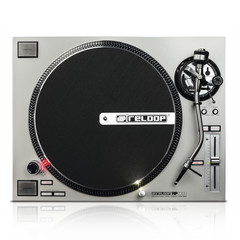
User-friendly control layout
Building on expertise accumulated over many years as the top international manufacturer of DJ equipment, Pioneer has carried out an in-depth investigation into turntable users' needs in order to produce a user-friendly control layout. This makes it possible to enjoy intuitive DJ play without ever losing your way.
High-torque*1 direct drive system*2
Thanks to its high-torque direct drive system, the 'PLX-1000' provides stable rotation that can withstand use in venues such as clubs, achieving starting torque of at least 4.5kg·cm and reaching the fixed rotation speed within just 0.3 seconds (at 33 1/3 rpm).
*1 Torque: The strength of rotational force acting around a fixed axis of revolution.
*2 A system that directly connects the motor and turntable. Directly conveying the motor's rotational force to the driver ensures that loss is minimized and enables highly efficient energy transfer.
Tempo control with variable width selectable from three levels
The variable width of tempo can be selected from ±8%, ±16% and ±50%, and these wide-ranging tempo controls expand the possibilities of DJ play. Also, simply pressing the 'RESET' button instantly reverts to the fixed rotation speed at ±0%.
MAIN SPECIFICATIONS
Turntable
Drive method Quartz lock servo type direct drive
Motor 3-phase brushless DC motor
Braking system Electronic brake
Rotation speed 33 rpm, 45 rpm
Rotation speed adjustment range ±8%, ±16%, ±50%
Wow and flutter 0.1% or less WRMS (JIS WTD)
S/N ratio 70 dB (DIN-B)
Turntable Aluminium die-casting diameter: 332 mm
Starting torque 4.5kg·cm or more
Start time 0.3 seconds (at 33 rpm)
Tone arm
Arm type Universal type S-shape tone arm,
gimbal-supported type bearing structure, static balance type
Effective length 230 mm
Overhang 15 mm
Tracking error Within 3 degrees
Arm height adjustment range. 6 mm
Stylus pressure variable range 0 g to 4.0 g (1 scale 0.1 g)
Proper cartridge weight 3.5 g to 13 g (single cartridge)
- When shell weight is used: 3.5 g to 6.5 g
- When only balance weight is used: 6.0 g to 10 g
- When sub weight is used: 9.5 g to 13 g
Main unit
Main unit weight 13.1 kg
Maximum dimensions
(W x D x H) 453 x 353 x 159 mm
Output RCA × 1
Included accessories Turntable, turntable sheet, slip mat, slip sheet, dust cover, balance weight, head shell, sub weight, head shell, shell weight, adapter for EP record, power cord, Audio cable, ground wire, operating instructions
Haupteigenschaften
Was ist in der Packung?
PLX-1000
Netzkabel
Audiokabel
Erdungsleitung
EP/Single-Puck-Adapter
Turntable-Sheet
Slip-Mat und Sheet
Staub-Cover
Headshell
Balance-, Sub- und Kopfgewichte
Bedienungsanleitung
Technische Daten
Breite
453 mm
Höhe
159 mm
Tiefe
353 mm
Gewicht
14,6 kg
Turntables
Antriebsart
Direktantrieb mit Quartz-Lock und Servo
Platte
Aluminiumguss: 332 mm Durchmesser
Motor
Bürstenloser Dreiphasen-Gleichstrommotor
Bremssystem
Elektronische Bremse
Drehgeschwindigkeit
33⅓-45 rpm
Dreh-Einstellungsbereich
±8, ±16, ±50 %
Gleichlaufschwankungen
4,5 kgf・cm
Anlaufzeit
Innerhalb 0,3 s (bei 33⅓ Upm)
Tone Arm
Tonarm
Universeller S-Tonarm
Kardanisch aufgehängte Lagerung
Statisch balanciert
Overhang
15 mm
Effective Length
230 mm
Trackingfehler
Innerhalb von 3°
Height Adjustment Range
6 mm
Variables Auflagegewicht
0-4 g (1 Teilstrich = 0,1 g)
Cartridgegewicht einzeln
2,5-12 g (montagematerial im Lieferumfang)
Anschlüsse
Ausgänge
1 ANALOG (Cinch)
- A1: Let The Trials Begin
- A2: Forget The Past
- A3: Triage
- A4: Clean Slate
- A5: Too Many Cooks
- A6: A Night At The Theatre
- A7: Meet Dr. Futterman
- A8: Grind Your Problems Away
- A9: The Weight Of Memories
- A10: I Love It Here
- A11: Permanent Record
- B1: Let Go Of The Past
- B2: Burden Of Skeletons
- B3: Every Last Bastard
- B4: My Little Piece Of Heaven
- B5: You Don’t Have To Do This
- B6: We Got Laws Around Here
- B7: The Promise Of A Dark Room
- B8: Snitch
- B9: Well Done
- C1: A Place So Wonderful
- C2: No Rules At The Fair
- C3: Come To The Fair
- C4: Killjoys Aren't Allowed Here
- C7: Brush Your Teeth
- D1: High And Dry
- D2: Punish Them, Daddy
- D3: Covent Garden Nuns
- D4: Little Angels
- D5: Can't Get It Out Of Your Head
- D6: A Cross To Bear
- D7: Motherless Children
- D8: We're All Getting Better Together
- C5: The Root Canal
- C6: Dental Hygiene Time
Tom Saltas (Deathloop, PUBG, Halo) zutiefst beunruhigender Soundtrack zum Horror-Survival-Spiel 'The Outlast Trials' (Red Barrels Games, 2023) wurde komplett (35 Tracks) für 180g Heavyweight-Doppelvinyl gemastert und erscheint samt Linernotes-Einlage. 'The Outlast Trials' bietet einen abwechslungsreichen Horror-OST mit gruseliger Audioproduktion und ungewöhnlichen Orchester- und Musique-Concrète-Techniken, ergänzt durch einen nervtötenden falschen Mid-Century-Jingle, jazzige Fahrstuhlmusik und Honky-Tonk-Klavier. Salta nutzt geschickt die Sprache der Musik, um die Menschen in eine alptraumhafte emotionale Dimension eintauchen zu lassen und die grausamen Erlebnisse zu unterstützen, denen die Spieler begegnen werden.
The One & Only Scott H. Biram showcases the singer's signature unapologetic style. Tracks like "No Man's Land" describe the hazards of growing up poor in a small Texas town, breathing the fumes from oil wells and brush fires. "Inside a Bar" captures the feel of an empty saloon on a slow Monday night. "I was going for the sound of loneliness and alcoholism colliding."
"I view my albums as collages, combining elements from punk, metal, blues, country, and bluegrass. They reflect the diverse aspects of life - it's not a concept but an expression," explained Biram.
With The One & Only Scott H. Biram the singer once again proves to be an unstoppable force and demonstrates his unique ability to live up to the traditions of rough-hewn, individualistic Texas-borne music.
This is long overdue. I mean, looooooonnnnnng overdue. A solo album by Jim. The trap kit - so straightforward, so mysterious. What"s inside those things? Air and light - from which century? Which continent? Which planet? Depending on how and when you hit them it can be a vibration sent through a prehistoric breath, particles of Saturn"s atmosphere, the dead, wet leaves you walked through on the way to the first day of school. These are the memories of the drums on this record. Infinite and personal. Editing each other as they muscle to the front or soft shoe to the shadow. Cymbals can override/cancel everything out - wipe your memory clear or make the memory clearer. Drums are the instrument where you can feel the presence of the player the most - the full body - and sense the thoughts of the player the most. The instrument with the most choices to be made sends out the most brainwaves. A bouquet of brainwaves is on this LP. Jim oversees it all, surveys from the lost place we"re in, the void - the drumless song. We trust. We trust, Jim. His big green eyes search for the right tool (mallet, brush, etc), eyes that search you like you"re a song he wants to join, wants to see if he can add to or understand. Before humans, drums were playing - these drums. Genesis was a solo drum piece. After humans, these drums, this album. Someone - the last man - is out in a spaceship at the edge of space. He plays a single chord on a synth to set time free from its bind and then lets go. This album sets time free, lets it frolic, lets it graze, lets it remember. This is a record of thoughts, memories, surgery. A deft surgical operation you may not even realize is happening as it"s happening but you"re back on your feet when it"s over. Memories refreshed. Did you really even listen to it? -Bill Callahan, November 2023
96kHz - 48-bit HD Audio with digital booklet including original photography by Christopher Kayfield and liner notes by Shaun Brady.
Pianist Kevin Hays, bassist Ben Street, and drummer Billy Hart reunite for a second, scintillating trio date, BRIDGES, featuring original compositions by Hays and Hart with classics by Wayne Shorter, Bill Frisell, The Beatles, and Milton Nascimento.
Hays Street Hart, the trio of pianist Kevin Hays, bassist Ben Street, and legendary drummer Billy Hart, recorded their acclaimed 2021 debut, ALL THINGS ARE, under less than optimal conditions. The album began life as a performance in honor of Hart’s 80th birthday in December 2020, live-streamed from an empty Smoke Jazz Club in the final weeks of that grueling pandemic year. Despite those adversities, the music they created that night was spectacular enough to convince all involved that it should be released.
Two years later, the trio has reconvened, this time fully cognizant that they were going to record an album at Sear Sound Studios in NYC. The captivating BRIDGES brilliantly spotlights the unique chemistry and shared spirit of exploration that emerged fully formed on that initial impromptu session. The title succinctly hints at some of the reasons why Hays, Street and Hart work so well together: this is a trio that bridges generations, certainly, as well as a wealth of diverse experience and inspiration. But it also sums up a mutual desire to bring people together through music.
“In this world that seems to be crumbling beneath our feet,” Hays explains, “we sense the need to make allies where there might be adversaries. On the most intimate level, interpersonally and inter-psychically we set out to overcome any number of misunderstandings and adversarial situations.”
Not that there was any antagonism to overcome within the trio itself. More than anything, Hays Street Hart is a mutual admiration society of the highest order. The esteem in which the pianist and bassist hold Billy Hart likely goes without saying. The drummer was ordained in 2022 as an NEA Jazz Master, just one of the many honors he has chalked up over a breathtaking career. He began his career with an apprenticeship under the revered vocalist Shirley Horn and went on to make notable music with such luminaries as Miles Davis, McCoy Tyner, Herbie Hancock, Wes Montgomery, Jimmy Smith, Stan Getz, and as part of the quartet Quest featuring David Liebman and Richie Beirach.
But Hart is if anything, even more laudatory toward his younger bandmates. Street has been a member of the drummer’s stellar quartet for two decades, alongside pianist Ethan Iverson and saxophonist Mark Turner, a tenure that speaks for itself. As for Hays, Hart is quick to place the pianist in the exalted company of some of his iconic former collaborators.
“I’ve been lucky enough to have the chance to perform with Herbie Hancock and McCoy Tyner,” says Hart modestly. “Each generation presents their own equivalent, and Kevin is an example of the latest innovations. There was Herbie and McCoy, then it was Chick Corea and Keith Jarrett, and then you have what's coming next. I think Kevin is definitely part of that continuum.”
Though Hays sticks strictly to the piano on BRIDGES, he is also an accomplished singer whose vocal instincts fuel his inventive and lyrical melodicism. Street points to those facets as key to the connection between the pianist and Hart, who has enjoyed several meaningful collaborations with vocalists.
“It always seems to me that Kevin has the capacity to sing in his mind and then accompany himself on the piano,” Street describes. “That makes for such a nice connection with Billy, who has played with and learned from so many singers. I don't even feel like we're playing as a piano trio most of the time; it feels more like a quartet.”
Those qualities are especially clear on Hays’ “Butterfly,” which opens the album. Though it’s performed here as an instrumental, the pianist has composed lyrics for the piece, and its gorgeous, song-like quality shines through. Hays also contributed the breathtaking ballad “Song for Peace,” highlighted by Hart’s gentle, embracing brushwork and Street’s sturdy, stentorian tone. The pianist’s third original, “Row Row Row,” is constructed on a twelve-tone row, but as the playful title suggests, it has none of the more stringent qualities of the serialist composers.
Hart’s stunning “Irah,” originally recorded on his quartet’s self-titled 2006 debut, is dedicated to the composer’s mother and was recorded at Street’s suggestion. The bassist also brought guitarist Bill Frisell’s reflective “Throughout” to the date, imagining Frisell’s Americana influences would resonate with the similarly inclined Hays, who approaches the tune with a harp-like beauty. Hays’ love of pop and rock music is also reflected by the inclusion of The Beatles classic “With a Little Help from My Friends.”
The trio pays tribute to the late, great Wayne Shorter with “Capricorn,” originally released on the composer’s 1969 Blue Note album SUPER NOVA and later included on the Miles Davis Quintet set WATER BABIES. Hart called Shorter one of a kind. I think of the many times I heard him excel – with the Maynard Ferguson Big Band, with Art Blakey's Jazz Messengers, with Weather Report. And in each case, he was innovative.”
BRIDGES closes with the title track, a dazzling piece by the great Brazilian singer and songwriter Milton Nascimento, which Hays calls “one of my favorite compositions ever, by anybody.”
BRIDGES was recorded under ideal studio conditions by a now-established trio with a weeks-long European tour under their belts. Perhaps what’s most remarkable about the album is not that Hays, Street, and Hart play so masterfully together – with three artists of their caliber, who could expect any less? – but that this second outing maintains the bold spirit of inquisitiveness and spontaneity that its predecessor naturally possessed. Credit that to a trio perpetually determined to discover new bridges worth building.
The fresh-faced folk pop band Stornoway seem promising: They play with guileless vigor, have a light-stepping chemistry as a unit, harmonize well. Their lead singer Brian Briggs has a lovely, pure high tenor, the kind of voice that effortlessly conveys simple longing. And yet, on their second album, Tales from Terra Firma, they continue to be almost crushingly dull, making well-appointed and cheerfully empty music that successfully communicates next to nothing.
Their Achilles Heel is a simple and unfortunate one, the same on Tales as it was on 2010's Beachcombers Windowsill. Stornoway are clearly in love with Celtic and British folk, and yet they can't write a memorable melody to save their lives. Try to sing along to the verse melody of "Zorbing", their most well-known tune, and pay attention to what your face muscles are doing; most likely furrowing with the effort of recall. Each of Tales' painstakingly arranged nine songs sinks underneath the weight of this insurmountable problem, which is a shame.
If you're making folk-pop, an inability to write a catchy melody is a difficult deficiency to overcome. Stornoway try valiantly with their complex arrangements, which quickly grow exhausting. “You Take Me as I Am” is cluttered with horn charts and pointlessly banging piano. “(A Belated) Invite to Eternity” builds to a full Explosions in the Sky crescendo, with glimmering tremolo guitar and a “Tonight, Tonight”-style sweeping string section, but having built zero momentum and generated zero heat until that point, their planned fireworks display fizzles.
“Farewell Appalachia” follows the same pattern, with celesta, finger-picked acoustic and electric guitar all tracing an emptily pretty circle with nothing in the center. The melody of "The Great Procrastinator" is almost cleanly written enough to be memorable-- and then the ersatz Dixieland jazz interlude crashes in. Stornoway are deft players, and the transitions are tightly managed, but this is praise on the same order as praising the brushwork in a hotel-room painting.
Briggs’ lyrics are filled with uncomplicated images of the good old British countryside, but his lyrics trample over all these dew-covered fields with wordy, awkward phrasing: "And in the gathering dew, I was lucid as a floodlight,” goes a line from “(A Belated) Invitation to Eternity”. “There's a hunger in the air/ A lemon swollen in the trees" he bleats on “Knock Me on the Head”. On “The Great Procrastinator”, he sings that he is “a scientist with far too many metaphors and far too little data to conclude in time.” They don’t read particularly well, and they don’t sound much more natural when sung.
Tales From Terra Firma is a peculiar record-- carefree music that feels leaden; tuneful-sounding songs that offer no tunes to hold onto. They seem an odd fit for 4AD, a label mostly home to singular voices. They may be a mercenary signing, an attempt to ride the coattails of Mumford and Sons' success. But Mumford and Sons, as head-smack simple and pandering as they are, have a pretty crucial ingredient in their arsenal: they write anthems. In that regard, they have Stornoway pretty thoroughly beat.
The brand new EP "Wellental" by Extrawelt on Traum is herewith reveled to the fans. Their new 3 track vinyl 12" gives a nod to the mayhem and urgency of techno all finely tuned. Straightforward in its brilliance and simplicity, yet carefully measured with a maturity that speaks the language of Extrawelt´s minimalism.
We attest: a unique techno track for the dance-floor on the a side, a trippy track on b1 and a very musical one as B2.
What happens within these 3 tracks is nothing short of alchemy, traversing all sorts of grounds without ever losing the plot. It’s due to the duo’s keen grasp of sound design—they always exchange ideas, on an expansive set of hardware, so no matter what tunnel they’re traveling down head-first, the sounds are always pristine, filled with unexpected details.
The EP opens with the title track "Wellental" which translates as "wave trough". Wave trough valley refers in particular to the points of maximum negative deflection in a traveling wave. In contrast, the points of maximum positive deflection are called wave crests. Musically this converts in a way that, although the title track "Wellental" has a lot of forceful steady forward motion and zig zag sequences cutting into it, it also has that "hanging time" feeling that adds unpredictability and tension to the track. You can defiantly sense that Detroit theme in a post Detroit interpretation here.
The flip-side starts with "Unter Wasser" which is illustrated by urgent uptempo beats that can push it on the dance floor and dreamy, surreal soundscapes on the other hand that account for that great under water feel. The track sounds a bit like the "Deep End" film soundtrack from CAN in that respect.
The B2 track is called "Samtstrand" and there is a reason for this since the track is very gentle and brushes over a surface with velvet hands but in contrast to that, the Extrawelt beats are kicking out the jams here! So this song has a twin drive going!
On June 29th 2023, Jeremiah Chiu walked into the Vintage Synthesizer Museum (VSM) in Highland Park, Los Angeles, with no plan more specific than "let"s fire this stuff up and see what happens." Exploring the VSM"s vast collection of classic, rare and staple synthesizers, he would sequence, trigger, and layer the machines together with help from VSM founder/curator Lance Hill. The resulting album - In Electric Time - was recorded in just two days, and edited to completion in the two days following. It was captured fully analog by engineer Ben Lumsdaine, who contributes performances on a few tracks himself. Cooper Crain (of Bitchin Bajas) makes an appearance as well; but ultimately the collection is an intuitive expression of organic electronic conceptualized and created in-context by Chiu alone, as he calls on a lifetime of work in sound synthesis to pain a fulgent, refreshingly undercut sequence of cinematic sketches and in-process themes. In some ways, In Electric Time reflects the directness of Raymond Scott"s electronic studio recordings - with sharp cuts and room chatter - and, in others, it conjures the in-the moment- magic of Harmonia.
With his seemingly endless capacity for creating compositions which have an alluring quality, and which are often wrapped in a mesmerising arrangement that pays homage to those towering sound constructions made by Phil Spector, Shadow Morton, Brian Wilson and the likes, veteran New York polymath Marc Jonson is also deserving of household name status. Involved in making records since the mid-sixties, Jonson's latest long-play collection is a particularly special glimpse into a secret stash of recordings made between 1979 and 2012 in his tiny flat on Cornelia St., New York's Greenwich Village, during the years we spend living (and surviving) there. These tracks are only now seeing the light of day, with many featuring Jonson at his melodic, awe-inspiring best; soul-baring, honest and vulnerable. Spanning these grooves are such delightfully told stories as 'The Man Who Walks On Air', 'November Paint Brush', the atypical jazz stylings of the instrumental title cut, plus the revealing light that is 'The Moon' and the magical, wide eyed beauty as conjured by 'Ages Of Wonder'. These tracks are only now seeing the light of day, with many featuring Jonson at his melodic, awe-inspiring best; soul-baring, honest and vulnerable. "Those who have taken the leap into Jonson's hitherto unknown musical world will be able to tell you that this is not only an experience which is immensely rewarding, but it's also one which needs to be heard to be believed. The captivating layers and mesmerising quality heard throughout lies in the way Jonson's startling array of songs seem to breathe in and exhale from many different, often eclectic elements." Lenny Helsing (Shindig!, Ugly Things Magazine).
"Along with Black Flag and the Circle Jerks, Fear helped define the sound and style of L.A. hardcore. Even though they formed during the first wave of punk in 1977, they didn’t put out an album until five years later, titled The Record. They used their music to piss off everyone around them, and they achieved that goal with flying colors on this debut album. It remains a punk classic to this day and Record Collector’s Mark Rigby called it “probably the most exciting and impressive, one-dimensional, ill-mannered, distasteful, odious ‘hate’ record ever made.” The album only spawned one single, “I Love Livin in the City”, but includes many more gems, including “We Destroy the Family”, “Let’s Have a War”, and “Beef Boloney”. The Record is available as a limited edition of 1500 individually numbered copies on translucent magenta coloured vinyl."
Pink & Green Pinwheel Vinyl. Celebrate the 10 Year Anniversary of Pity Sex' breakthrough debut full-length record Feast of Love with this commemorative anniversary edition LP. This reissue features the album in full along with three bonus tracks: 'Euclid,' 'Acid Reflux' and a cover of Pixies' classic 'Gigantic.' The anniversary edition also features a gatefold jacket previously unavailable in the United States and an updated lyric sheet.Walking the razor's edge between overdriven navel gazing bliss and perfect pop sensibility, Ann Arbor's Pity Sex have crafted a breathtaking debut LP in 'Feast of Love' that's both awesomely beautiful and deftly evocative. Massive, harmonically distorted guitars and airy dual male/female vocals are hallmarks of Feast of Love, all drenched in warm, dreamy reverb. Most impressive however, is how the band utilizes pop conventions - both vocal and instrumental melody, and a strong and pounding rhythm section - while delving deep into the ethereal power of textured soundscapes. Guitars fuzz and flange, weaving between distinct, identifiable parts and simple brushes of colored noise. The voices similarly drift between carrying delicate melodies and delivering evocative feeling. Calling on the infectious, hooky inclinations of the Pixies, dreary melodies of the Breeders and sonic mass of My Bloody Valentine, Pity Sex's Feast of Love twists and churns with these beautiful yet fleeting vignettes captured in sound.
Finnogun’s Wake is the delightful portmanteau of a band fronted by Shogun (vocalist of Royal Headache, and later Shogun and the Sheets) and newcomer Finn Berzin. Decades apart in age but united in tutelage and outlook, they have mitigated the Joycean tome of What To Do Now, and crafted the four debut songs of the Stay Young EP from the inside out, sharing the spotlight for a riveting, deafening smear of melodic pop and buzzsaw guitars.
Mourning the departure of his best mate to a life overseas, Shogun started hanging out with his friend’s younger brother, Finn. The two of them started spending their free time together, one having seen a fair chunk of the world through music, the other just starting to figure it all out. They went through the essential lessons that could be gleaned from Definitely Maybe and Hüsker Dü, Finn got himself a guitar, and the songs simply fell out of both of them, with this initial batch as the result. Shogun sings on “Blue Skies” and “Strawberry Avalanche,” and Finn takes the lead on “So Nice” and “Lovers All,” and while there’s no mistaking Shogun’s striking delivery and fatalistic lyrics, Finn proves himself as a carousing foil, holding his ground like the natural he’s become.
Taking into account the fevered, quick-burning success of Royal Headache, this group is the most likely candidate to do it all again, giving the sense that some people can write bounding guitar leads that stick to you like burrs from the brush, and sing so effortlessly you’re embarrassed and a little mad about how great it all sounds. Backed on these recordings by keyboardist Gabrielle De Giorgio (a longtime collaborator of Shogun’s from back in the Sheets era), bassist Campbell Troy (who was in Shogun’s first hardcore band Nintendo Police back in the mid ‘90s), and DMA’s drummer Liam Hoskins (on some COVID-enforced boredom with no tour-dom), Finn and Shogun stare down a changed world from two very distinct poles, and aim to fill it with glorious songs just like these.
On Natura Morta, Sven Wunder is exploring art as a bridge between nature and the human ability to judge and observe in eleven musical compositions with brightly colored textures and an emphasis on vibrant melodies.
Throughout human history, we have depicted the world we live in through art. By reworking what we see in the world, the simplest things have helped us understand the beauty of nature and to evaluate the material world that we have created around us, as a window to a constantly changing reality, through our own perception. It is that absolute reality that appears in the seam of human and nature and that can be revealed through art.
Still life painting, also referred to as Natura Morta (”dead nature”) in Italian, stretches back to ancient times. Some of the earliest works, found in Pompeii, depict commonplace objects such as fresh autumn fruits alongside man-made objects such as a small amphora and a small terracotta heap with dried fruits. These two-thousand-year-old paintings give a snapshot of Roman life, and also creates a link to time and space. A slice of life has been created by binding the earth’s pigments with extracts of oil, made from nuts and seeds, painted with brushes, made from a variety of fibers, such as trees and hair from animals. While life wanes with each brushstroke, by shifting reality into the past, art exists to make us come alive, being a living image of a dead thing, a surface and a symbol with symbolic powers of its own. Still life works celebrate material and ephemeral pleasures by returning to nature as the ultimate source for our standards in art as well as in life itself.
Natura Morta collects pieces from a continuous variety of melodies — supported by a decisive rhythm section — creating a musical kaleidoscope of ever-changing colors. Sven Wunder brings life into this rich assortment of musical implications by fusing and combining melodic instruments with each other in a setting that spans from a classical to a modern idiom. The author evokes this panoramic portrait by articulating an instrumental dialog between a chamber orchestra and a jazz ensemble. The result is a musical celebration of material pleasures that also serves as a reminder of the brevity of human life. This album was produced with financial support from the Swedish Arts Council.
This is the first stop on Sven Wunder’s musical journey. Wunder takes the listener somewhere around the easternmost part of the Mediterranean Sea, around the Levantine Sea, where he paints a colourful portrait and illustrates the regions flora through sound.
The fruitage is a vivid bouquet where Wunder fuses colours and pigments by using traditional and modern instruments merged with arrangements and melodies that stretches from popular to folk music by portraying tulips, red roses, hibiscus, hyacinths, chamomile, magnolia, daisies etcetera. With both fine and thick brushes are these flowers being pictured in a both modern and classic idiom.
The outcome is prismatic. It stands between Anatolian rock and European jazz-funk with ponderous drum patterns, groovy organs, far-out synthesizers, enchanting Saz and impetuous bass lines. Eastern Flowers sweeps through time and space and points towards the future. It could appeal both psych and prog listeners, folk or jazz aficionados and as well the gourmet hip hop connoisseurs.
Detroit producer Apollo Brown has made a name for himself as one of Hip-Hop’s most legendary new producers while maintaining a golden era sound. His production credits are a who’s who of Hip-hop greats from Danny Brown to Ghostface Killah, Ras Kass to Westside Gunn. Even Chance the Rapper used a pair of Apollo beats on his debut mixtapes. Known for bringing the best out of musicians, Apollo has a knack for making timeless classics. Brooklyn’s Joell Ortiz started on none other than Dr. Dre’s Aftermath label and built a huge buzz in the industry. He’s worked with legends like Just Blaze among others. He then signed to Shady Records as ¼ of the supergroup Slaughterhouse. He’s worked with Hip-Hop titans Eminem, Busta Rhymes, Jadakiss, Akon, and Big Daddy Kane. Now the pair of Hip-hop luminaries are celebrating the 5 year anniversary of their first collaborative album on Mello Music Group with a deluxe edition including 2 new songs. It’s nothing short of a masterpiece: Mona Lisa.
Temple, Bassey, MacLaine and now, Hurt; in a world of Shirleys, the name Sophia Ruby Katz has chosen for her music is perhaps prophetic as it captures her stunningly emotive vocal approach. And whilst Shirley Hurt might be the perfect nom de plume for the creative Toronto-based artist, it’s her self-titled debut album which positions her as protagonist of her own universe.
Traversing sonic landscapes, Shirley Hurt’s vocals ebb and flow like lyrical Ley lines tracking the contours of her own well-travelled map. By the age of 18, Hurt had travelled extensively, having lived in upwards of 20 different apartments and houses, as a result never really feeling “at home” anywhere. At this age was when Hurt found herself in New York, dipping her toes into various scenes and musical realms. The first and only place she ever felt at home, and a partial home-base for her, she travelled between Toronto and New York until the age of 26.When the project she was working on in New York reached a dead-end she returned West, moving in with musicians Harrison Forman (Hieronymus Harry, Zones) and Patrick Lefler (Roy, Possum). Being surrounded by their improvising at all hours, a new approach emerged. “Harrison is a virtuosic guitar player, and I hadn't picked up a guitar in any serious way since I was 16,” she says, “by osmosis I started playing again for fun.” Without agenda, the process grew organically from there.
Hurt and Forman decided to travel across the US and Canada in a trailer for half a year, with the entire album written in the final months of their trip. Hurt had been writing loose ideas here and there but felt blocked creatively. When the pair reached Berkley, they wound up house-sitting for a tuned-in friend who recommended she pray, in a very direct way, to remove the block. “I took her advice and to my surprise it worked. The album was conceptualized and finished within a couple of months.” Shapeshifting in tone and phrasing, Hurt’s music alchemizes the furthest corners of experimental indie folk, pop, and country into a singular sound with elegant unpredictability.
Whilst Shirley Hurt’s lyrical and structural ideas may have emerged on the road, the album was self-produced and recorded at Joseph Shabason (The War on Drugs)’s Aytche studio in Toronto’s West End. It was engineered by Nathan Vanderwielen and Chris Shannon (Bart), and Hurt enlisted collaborators Jason Bhattacharya, Nick Dourado, Patrick Lefler, and Harrison Forman to hone her vision. “I wasn’t sure what was going to happen with the songs until we returned to Toronto,” she recalls. “Joseph and I had been talking about working together after sending across some demos and Jason happened to recommend his studio at the exact same time, so everything came together naturally at that point.”
Whilst her most recent adventures may have seen Shirley Hurt bound for Texas as an official SXSW artist (hand-picked by Gorilla Vs Bear to perform at their own showcase), she currently resides in her native Canada, more specifically rural Ontario, close to friends and family, and is already working on her second album. The ties to lineage are interwoven in the fabric of the music. Hurt’s mother, artist Leala Hewak, instilled a lust for life and innate value of creativity in her from a young age as she explored the role of gallery owner, vintage jewellery show host, mid-century modern furniture expert, real estate agent, painter. Hurt’s father, a civil litigation lawyer and new-wave obsessed music lover with an extensive vinyl collection, introduced Hurt to a wide-range of artists at a young age such as Nina Hagen, Laurie Anderson, Tom Tom Club, and endless others.
In her video for ‘Problem Child’ Hurt’s grandmother walks her through a generationally revered pie-making process. One would be tempted to hear this, and other songs, as autobiographical. Yet, Hurt’s lyrics are rarely pulled from her relationships or personal history––at least not consciously. Rather, they arise from somewhere less tangible or defined. “Lyrics tend to come to me when I am doing non-musical things - washing dishes, brushing my dogs, walking to the grocery store. I have a lot of voice memos on my phone and half-filled notebooks and when I hear something, I have to stop what I'm doing to get the idea down. Usually it’s bits and pieces. It's rare a full song comes to me in one go, but it's great when they do, and those are often my favourites.”
Carving out a space of her own in an all-encompassing universe, Shirley Hurt is the introduction to a long artistic story, and if the journey so far is anything to go by, it will be stippled with evermore unpredictable chapters.
Detroit producer Apollo Brown has made a name for himself as one of Hip-Hop’s most legendary new producers while maintaining a golden era sound. His production credits are a who’s who of Hip-hop greats from Danny Brown to Ghostface Killah, Ras Kass to Westside Gunn. Even Chance the Rapper used a pair of Apollo beats on his debut mixtapes. Known for bringing the best out of musicians, Apollo has a knack for making timeless classics. Brooklyn’s Joell Ortiz started on none other than Dr. Dre’s Aftermath label and built a huge buzz in the industry. He’s worked with legends like Just Blaze among others. He then signed to Shady Records as ¼ of the supergroup Slaughterhouse. He’s worked with Hip-Hop titans Eminem, Busta Rhymes, Jadakiss, Akon, and Big Daddy Kane. Now the pair of Hip-hop luminaries are celebrating the 5 year anniversary of their first collaborative album on Mello Music Group with a deluxe edition including 2 new songs. It’s nothing short of a masterpiece: Mona Lisa.
Step into the captivating world of Melody Fields as they release their transformative albums, "1901" and "1991." With a marbled musical background, these albums are crafted with the precision of a brushstroke by the likes of Pablo Picasso or Gustav Klimt. Each track is carefully composed, drawing inspiration from manic behavior, fixated obsessions, and the pursuit of something greater. Melody Fields explores themes of spirituality, faith, trust, and conviction in various forms, often leading to addiction or madness. During the pandemic, Melody Fields accumulated hours of material, embracing the freedom to experiment with drum machines and synthesizers in one session, and exploring oriental instruments in another. The result is a sonic tapestry that defies conventions and pushes boundaries. The primary album, "1901," can be described as a rock album with psychedelic influences. It features repetitive guitar riffs, distorted soundscapes, and mesmerizing three-part harmony vocals. As they traverse these musical landscapes, Melody Fields is joined by guest musicians from esteemed bands such as Goat and Holy Wave, adding an extra layer of sonic brilliance. The album culminates with the captivating track "Mayday," a haunting composition written by the legendary Klaus Dinger from Neu! In contrast, "1991" is a concept album that evolved from late-night jam sessions, experimental sounds, and danceable music. It presents four remixes, including contributions from Goat and Al Lover, breathing new life into the original composition “Jesus” from “1901”. Notably, "1991" includes the thought-provoking composition "Diary of a Young Man," written by Daniel Treacy from Television Personalities, which invites introspection and reflection. Melody Fields' "1901-1991" presents a sonic journey through time, combining elements of rock, psychedelia, and experimentalism. These albums showcase the band's dedication to musical craftsmanship and their willingness to embrace diverse influences. Prepare to be immersed in their sonic universe, where boundaries are shattered, and creativity knows no limits.
"The Twits" wurde von der Band im Februar 2023 innerhalb von nur acht Wochen in einem provisorischen Heimstudio auf Mallorca aufgenommen und von Marta Salogni abgemischt. Nach einem Kinderbuch von Roald Dahl benannt, zeigt sich das Songwriting von bar italia in rauen, mystischen, ungebürsteten und gelegentlich düsteren Arrangements. Songs wie "my little tony" mit seinen harten Riffs und dem kathartischen Sound ist ein klassischer Indie-Banger für die große Bühne. In anderen Momenten wagt sich die Band auf bisher unbekanntes Terrain, auf dem sie eine hypnotische Dissonanz ihrer Stimmen schaffen. "Jelsy" zum Beispiel spielt sich wie ein Gespräch zwischen Freunden über wehmütigen, summenden Country-Blues ab, wobei die Stimmen abwechselnd tröstlich, ironisch und hoffnungslos sehnsüchtig sind. Der geschmeidige, langsam brennende Walzer "Twist" besticht durch seine nackte Lyrik und scheint jedes Bandmitglied zu einem individuellen Bekenntnis einzuladen. Während "Tracey Denim" von seinen kompakten 2-3-minütigen Songs lebte, besticht "The Twits" durch seine eher offenen und mitunter uferlosen Kompositionen. "glory-hunter" nimmt z.b. spielerische Wendungen, bevor es an einem völlig anderen Ort endet, als es begonnen hat. Das abschließende "bibs" ist ein seltener Fall, in dem alle drei im Einklang zu hören sind. Eine Prozession geradezu geisterhafter Akkorde mit einer zerreißenden Rückkopplung bildet den Abschluss des Albums. Das im Mai veröffentlichte Matador-Debüt "Tracey Denim" von bar italia wurde schnell zum Gesprächsthema der weltweiten Indieszene. Publikationen wie The Guardian ("eines der Alben des Jahres 2023 bisher"), The Times ("excellent debut album"), The Observer ("Artist To Watch"), NME ("a lasting impression that"s all of their own making"), The Quietus ("endlessly evocative") und Pigeons And Planes ("quickly establishing themselves as one of the most enticing upcoming bands") feierten das Album. Im Juni gaben bar italia ihr Live-Debüt in den USA mit fünf ausverkauften Konzerten in New York sowie vier in Los Angeles und auch ihre Debüt-Show in Berlin war binnen kürzester Zeit ausverkauft. Über einen der New Yorker Auftritte schrieb Brooklyn Vegan: "Live spielt die Band ganz natürlich und großartig auf, mit Songs wie "Punkt", "Changer" und "Nurse!" (...), die Post-Punk der frühen 80er mit Indie-Rock der 90er und einem Hauch Trip-Hop mischen".
We know you're not supposed to because it's often said to be a cheap marketing gimmick but frankly, we love a good anonymous new producer to get wondering about.
And here we have just that in the form of Skat who we're told is "heavily influenced by East End Edits and Digwah Ltd" and opens a new series with a one-sided 12".
'Skat 01' is a worthy tech cut with minimal drums loops and brushed metal surfaces all wound up into a tight groove and overlaid with some rudely vocal raps. It's the sort of tune that brings a unique character to any set and is sure to get the crowd demanding its ID.
"The Twits" wurde von der Band im Februar 2023 innerhalb von nur acht Wochen in einem provisorischen Heimstudio auf Mallorca aufgenommen und von Marta Salogni abgemischt. Nach einem Kinderbuch von Roald Dahl benannt, zeigt sich das Songwriting von bar italia in rauen, mystischen, ungebürsteten und gelegentlich düsteren Arrangements. Songs wie "my little tony" mit seinen harten Riffs und dem kathartischen Sound ist ein klassischer Indie-Banger für die große Bühne. In anderen Momenten wagt sich die Band auf bisher unbekanntes Terrain, auf dem sie eine hypnotische Dissonanz ihrer Stimmen schaffen. "Jelsy" zum Beispiel spielt sich wie ein Gespräch zwischen Freunden über wehmütigen, summenden Country-Blues ab, wobei die Stimmen abwechselnd tröstlich, ironisch und hoffnungslos sehnsüchtig sind. Der geschmeidige, langsam brennende Walzer "Twist" besticht durch seine nackte Lyrik und scheint jedes Bandmitglied zu einem individuellen Bekenntnis einzuladen. Während "Tracey Denim" von seinen kompakten 2-3-minütigen Songs lebte, besticht "The Twits" durch seine eher offenen und mitunter uferlosen Kompositionen. "glory-hunter" nimmt z.b. spielerische Wendungen, bevor es an einem völlig anderen Ort endet, als es begonnen hat. Das abschließende "bibs" ist ein seltener Fall, in dem alle drei im Einklang zu hören sind. Eine Prozession geradezu geisterhafter Akkorde mit einer zerreißenden Rückkopplung bildet den Abschluss des Albums. Das im Mai veröffentlichte Matador-Debüt "Tracey Denim" von bar italia wurde schnell zum Gesprächsthema der weltweiten Indieszene. Publikationen wie The Guardian ("eines der Alben des Jahres 2023 bisher"), The Times ("excellent debut album"), The Observer ("Artist To Watch"), NME ("a lasting impression that"s all of their own making"), The Quietus ("endlessly evocative") und Pigeons And Planes ("quickly establishing themselves as one of the most enticing upcoming bands") feierten das Album. Im Juni gaben bar italia ihr Live-Debüt in den USA mit fünf ausverkauften Konzerten in New York sowie vier in Los Angeles und auch ihre Debüt-Show in Berlin war binnen kürzester Zeit ausverkauft. Über einen der New Yorker Auftritte schrieb Brooklyn Vegan: "Live spielt die Band ganz natürlich und großartig auf, mit Songs wie "Punkt", "Changer" und "Nurse!" (...), die Post-Punk der frühen 80er mit Indie-Rock der 90er und einem Hauch Trip-Hop mischen".
Joe Sutkowski (Dirt Buyer)'s new album is a documentation of making it to the other side. Sutkowski grew up in New Jersey, and although he lives in Brooklyn now, he remains " an emo kid at heart ," garnering inspiration from bands like My Chemical Romance and Muse, the latter of whose theatrical, dramatic performances inspired the band's own vocal-forward, soaring takes. Initially working together as a duo while Sutkowski and Ruben Radlauer (Model/Actriz) were at school in Berklee, the band's self-titled 2019 debut album was recorded on an IPhone in their practice room on just drums and guitar, and the quietly striking, nuanced stylings earned them accolades far beyond the " fake record label " the two made up to originally release their music. The band's new album, Dirt Buyer II , was recorded in February 2020, and represents a foray into heavier material that marks a deeper shift for the band. Now working as a trio, Sutkowski is flanked by Tristan Allen on bass and Mike Costa on drums, a fellow Berklee grad who cut his teeth playing in bands across Boston including past collaborations with Sutkowski. Half-recorded while the band was on tour with Surf Curse, the record finds Sutkowski reaching out for places, people and beliefs to ground him. Throughout the album he attempts to wrap his head around the idea of fate and how you can brush up against other people and then leave them behind. The songs themselves play with this concept of light and dark intertwined. Oscillating between urgency and cathartic release and more stripped-back elegies, Sutkowski faces the reality that while the people he'd rather forget can still live on through music, he is able to move on at the same time. Half-recorded in his mother and uncle's upstate house where he turned the living room into a studio, he contemplates the beauty and disaster around him - all refracted through visceral visual imagery of how the physical earth meets the unknown to converge in something greater than ourselves. " This is all a living chronicle of all I want to do, which is feel good and be happy ," he admits. " I'm a completely different person now - a better version of myself ." Processing the past, Sutkowksi has emerged with newfound belief, fully intact and with a new path forward to the future.
The eponymous debut disc from German-Swedish supergroup 4
Wheel Drive went straight to the top spot as Best-Selling Jazz Album
In Germany For 2019. And the media didn’t hold back with their
praise either: “Four first-league jazz musicians with pure joy of playing
and a love of good pop music,” said ZDF’s ‘heute-journal’ about this
spirited and enjoyable group that combines trombonist / singer Nils
Landgren, pianist Michael Wollny, bassist / cellist Lars Danielsson
and drummer Wolfgang Haffner.
For ‘4 Wheel Drive II’, it is evident that things have shifted up a gear
right from the start, with the rocky, pulsating opening track, ‘Chapter
II’, straight from Wollny’s compositional workbench. Landgren likes to
let his trombone roar like a sports car engine. In similarly dynamic
vein are pieces like Danielsson’s final track of the album, ‘The
Wheelers’, which, thanks to Haffner’s nimble brushwork, makes you
think you’re on a high speed train.
Compared to the first album, there has been another change, an
increase in the proportion of original compositions written by all of the
participants, as Lars Danielsson, who has contributed a sensitive,
poppy ballad to the new album, ‘Just Another Hour’, remarks.
“Interpretations of worldwide hit songs were a factor behind the huge
success of the debut album, but the ratio to original compositions
here is getting closer to 50:50. That said, the fuel powering 4 Wheel
Drive has remained the same: this band is all about creating music
from deep within, and with like-minded people whom you can
absolutely and implicitly trust to be in the driving seat.”
“It just flows,” enthuses drummer Haffner, “we’re a group of close
friends with nothing we need to prove, we can just go for it. I've had
so many magic moments with this band, it really is incredible!”
On the new album, listeners are treated to several new moments of
pure magic, continuing 4 Wheel drive’s illustrious story. For example,
their new instrumental version of the Simon & Garfunkel classic,
‘Sound of Silence’, has something mysteriously Nordic about it. Or
their newly-cast version of the surprisingly infrequently covered
Genesis ballad, ‘Hold On My Heart’, putting it into a jazz context. The
courage to approach pop tunes that have become so ingrained in
many people’s minds from a completely different perspective pays off
in full. Within 4 Wheel Drive are four originals at work, each of whom
can be recognised from the very first note they play or sing.
Glasser, the elevated electronic project from Cameron
Mesirow, releases her anticipated third album, ‘crux’, via
One Little Independent Records.
‘crux’ takes Glasser’s entrancing blend of dreamy
experimental pop and layered electronics to explore
themes of personal identity, emotional vulnerability, and
the human experience. The album maps journeys of selfdiscovery as she unpacks intimate experiences with a
maturity and cathartic outlook. Specifically, the tracks on
‘crux’ discuss the death of an old friend, her meditations
on the fragility of life and the delicacy of relationships in
times of uncertainty.
More than anything it’s about the importance of creativity
and writing while healing, and on an individual level,
looking inward and the examination of one’s grief, anxiety,
and insecurities. Musically it searches outward, it includes
the use of traditional folk, Celtic to communicate her
Scottish roots, and Eastern-European styles, all introduced
to her lush, atmospheric production, intricate vocal
harmonies, and complex rhythms.
“Soaring vocals with free-flowing, rhythm-obsessed
eclecticism that make for a notably welcoming collection of
atmospheric, electronics-brushed pop” - Pitchfork
“It’s Glasser’s sonic constructions which holds our interest
first and foremost; a bolder and more up-front sound” -
The Line of Best Fit
“Potent, sexually charged and teeming with life. Make no
mistake, this isn’t sex as male-gaze-pandering titillation,
packaged in clichéd, chart-friendly couplets, but sex from a
singular female perspective: intimate, all-encompassing,
ecstatic. This is pop for consenting adults: music for awake
minds” - Dazed
When South Korean balearic prodigy Mogwaa came to MM Discos with an idea for his rst full-length album, we were a bit surprised.
He said, ‘I want to do an album of bossa tracks with synths, a drum machine and my guitar’. We obviously had to take him up
on that deal.
Fresh from the recent Bandcamp feature on his own brand of danceoor-ready modern boogie, Seungyoung Lee (aka Mogwaa)
arrives back on MM Discos with his - and our - rst full length exercise. With six tracks per side of 80s inuenced synth and bossa
badness, ‘Hazy Dreams’ is an exercise in simplicity, and more proof of the ever-expanding musical horizons of one of the scene’s
most virtuosic instrumentalists.
Pairing a sensitivity to the construction of ambient, funk, bossa and cassette-tape 80s experiments with his own cinematic subtlety,
‘Hazy Dreams’ takes a gentle, minimalistic approach, crafting its own escapist world that oers a welcome diversion from the
steady ow of busy balearica and downtempo.
Opening track ‘Full Bloom’ paints a picture of midsummer at dawn, some clear-skied island where lush vegetation climbs through
hibiscus gardens. ‘Nacimiento’ is an AOR/bossa crossover evoking West Coast yachting in full afternoon, and A3, ‘Soothing’, adds
a touch of wistfulness with reverb-doused guitars over meandering bass motifs.
The easy kick-and-snare combo of ‘Levitation’ sets the scene for a drum machine love aair, unrequited love on the rocks, and
‘Flashback’ plays with short delay trails and o-kilter melodic sequences, where you feel the soft presence of the nebula approaching
at the break of day. Closing out the A-side, ‘Dispatching’ reaches out even further into the imagined cosmos of Mogwaa’s
picture-perfect world, portraying an ambience at dusk, observing, calmy, as pued-up pink clouds melt into the evening canvas.
On the other side, Mogwaa explores quiet corners with ‘Illusions’, a slow meditation on the nature of simple presence, and ‘Echoes
of You’, a stream of subdued brush strokes that crescendo into higher frequencies on gently undulating pads. B3, ‘Moondance’,
ups the tempo and recalls classic Mogwaa with its sideways shue and starry melodic refrain, pivoting through folk-dance
moods and surprising chord changes.
Nearing the end of the album, ‘Footprints’ wades through tall grass in search of altered states, innite and hypnotic, changing
course only to crouch down and study the landscape, and B5, ‘It always comes and goes’, pictures the to-and-fro of jetstreams and
comets in the blinding midday sky. Finally we have the closing credits of ‘Swingin’ that looks o into the horizon, jaunty and exalted,
a guitar-led tribute to an easy-going world, and ultimately mindful of the power of dreams.
We’re humbled to have such a special record for our rst full-length release on the label.
Different Fountains return with Time Signatures, an ep that boasts luscious leftfield house grooves, other-worldly rhythms and dubby melodies. Four tracks, ready for the dancefloor, whilst brushing against the avantgarde.
"Dirty Tree" (A1) is moody four to the floor, carried by tumbling percussion over a droning synth line, while "Drain Eye" (A2) serves some jumpy not-quite-jungle vibes over a smooth melody, on the flip "Said Its Fine" (B1) is broody house again revolving around warm chords and whimsical percussive elements, "Water Ending" (B2) is a more introspective yet funky track where counter-rhythms are the true stars.
Time Signatures sees the light a year after Different Fountains’ acclaimed album “Cue Raw City”.
Different Fountains also released records on Meakusma, Shubaka and their own imprint Different Fountains Editions.
Different Fountains consists of Michael Langeder (Austria) and Bernardo Risquez (Venezuela).
Time Signatures is the fourth record on the Brussels’ based label Someguy Records, a label that focuses on leftfield house music.
Factory Benelux presents a limited (500 copies only) 180g black vinyl edition of Part-Primitiv, the fifth studio album from post-punk trailblazers Section 25, originally released in 2007.
Recorded after a hiatus lasting almost two decades, Part-Primitiv saw founder members Larry and Vin Cassidy joined by former Tunnelvision guitarist Ian Butterworth, as well as multi-instrumentalist Roger Wikeley. Combining raw postpunk power and retro-futurist electro, the album marked a convincing return to form and drew praise from reviewers.
"Haunting, melancholic beauty - part post-rock, part trance" (Plan B)
"A vibrant, fierce collection of songs played with all the intense, live-wire energy one could want. Well worth the wait" (All Music Guide)
"The music on Part-Primitiv is informed by all phases of the band's back-catalogue, incorporating their early post-punk impulse alongside their later disposition towards electronic music. She's So Pretty is one of the band's closest brushes with pop music, while Power Base is a surprisingly straight-forward venture into techno, with its rampaging drum machine" (Boomkat)
Two tracks, Dream and Better Make Your Mind Up, were written and sung by Jenny Cassidy before she lost her battle with cancer in 2004. Best known for her beguiling vocal on 1984 club hit Looking From A Hilltop, on subsequent SXXV projects Jenny would be replaced by her daughter Beth.
Tom James Scott holds a unique position in experimental music. With a soft brush approach Scott, who currently lives on the North-West coast of England, has explored delicacy in music with a variety of sublime releases on a variety of labels. Predominantly known for gentle investigations of guitar and piano, Scott has shifted to incorporating different technology and tactics over time. All of this, either in performance or recording, is embedded with a spirit that is quintessentially his own. Nightshade is the latest in his expanding catalogue, one which ignites an alarmingly new take on his approach to music. Echo on Water initiates proceedings with the unmistakable sound of tape.
Any instrumentation is buried amongst the woozy sway of the medium itself, with its rough dynamics soon morphing into an overwhelmingly swirling mass of emotionally decayed sound. The movement of matter takes on a haunted shape with sounds looping and falling apart as the physicality of the medium holds it all together. The second track Blue Mist furthers this approach with its smeared haze of gorgeous emotion. This is deep exploration of ideas meeting matter. Wasting Stars takes up the entire flip side with the sound of tape recoiling a bit to allow the delicate glow of instruments to come more to the fore, with gentle effects that weave the musical matter. As a skewered take on Scott’s earlier piano explorations the atmosphere here is a subdued soundscape evoking the spiritual sadness found in the piano works of Gurdjieff/De Hartmann, with a modern lo fi angle.
Nightshade is a deeply effective journey and one of the most exquisite examples of Scott’s delicate approach so far. Two sides of form which inhabit contrasting yet complimentary clouds of sound communicating in an stunning emotional flow. As music with only trace elements of melody, Nightshade is a beautiful take on tools being used to explore paths both highly idiosyncratic, deeply moving and discreetly personal.
Third in a trilogy of LPs of Library Music miniatures from composer and multi-instrumentalist Daniel O’Sullivan (Æthenor, Ulver, This is Not This Heat, etc) following 2020’s Electric Māyā and 2021’s Fourth Density. For heads, the term “Library Music” in 2021 might evoke dodgy Italian gray market LPs and crate diggers hunting for “funky breaks” - but London’s venerable KPM Music is working with groundbreakers like Daniel to open up new avenues for composers to experiment. The 15 tracks on “The Physic Garden” are fully-formed and orchestrated compositions, which would be highlights on anyone’s LP, never mind as incidental music. Of the music, Dan says: “The Physic Garden is an album of diverse instrumentals inspired by a swathe of verdant vistas from manicured gardens and follies to urban common land, overgrown and forgotten. Convalescent memories in the shape of psychedelic auditory botanics.”
Key tracks include the droning acoustic folk of the title song; the Canterbury-esque rolling horn and woodwind melody of “Return the Heart” (with expert drum kit from Frank Byng); The prog-ish odd meter interlude “Buttercup Tea”; The quiet ambience and delicate melody of “Dusty Feather:”; and the Eno-like drift of “Vapourer Larvae.”
“Library music. Akasha. Here you accept that music behaves like a thing to accentuate another thing, seemingly unrelated. A beautiful, shining blankness. Not passive. An opportunity to wade. A brief encounter with an open-ended destiny. As in, you never know who or what it will be partnered with. With library music the emphasis tends to be on functionality and less on sonic self-portraiture. So it compels you to be concise, like what is the function of this work? The distance is liberating. It’s less “What Am I? and more “What Is This?”. It compels you to be brief, each little cell is a world of its own in an assemblage of miniatures all vibrating in their collective identity. Then there is the occult nature of library music which is fetishized by many for its ability to induce time travel, often to send us back to some televisual memory. However, despite its broad-brush strokes, the library can be so profoundly alien, especially when experienced independently of the televisual realm; an unruly chimera of genre mutations, compositional curiosities and the deepest wallpaper you ever laid ears on. Perhaps the observances of library music can help unshackle us from our artistic insecurities and delusions, where one is drawn to the shape of music as a whole instrument unto itself; as a vehicle carrying our intention and consisting of everything we have to give at that moment; so things that are seemingly unrelated are ultimately connected.” – Daniel O’Sullivan
A growling echo came from deep within the tunnel. There was movement, he was sure of it, but was it living? The wind brushed the darkness, stroking his ears as it passed through the entrance where he stood. Whispers of air danced along the concrete walls and he felt the presence of another. Something stirred down there, but whether it was friend or foe, he could not be sure...
As the name suggests, this EP guides the listener with voices, vocal samples, and choral pads, glueing dub techno soundscapes together. The work brings a dark and brooding, yet warm sonic structure. Distortion provides textured atmospheres, while analogue rhythms build on sturdy 4/4 foundations in meditative cycles.
Guided By Voices: The title track beats with heartthrob kicks, gently arpeggiated melodies, and flecked, illusive vocal samples. Messier808 builds curiosity in the listener, as we try to catch hold of the voices. Each time they remain out of reach. Understated and subtle, the release marks a new outlet - bringing psychedelic, dub, and meditative techno under one roof.
Road to Frederikshavn: Driving, robust and punchy. This track comes with a clarity and forward motion that energises the meditative feel of the previous song. Falling choral pads juxtapose sturdy drums to combine meditation with movement.
Redshift: Bleepy stutters chime like electronic birdsong, looping in with the cyclical soundscapes of the EP, inducing another trance-like state.
This engaging and thoughtful release from the Dutch producer, Messier808, marks the first imprint on The Messier Objects. The tone has been set with breathtaking artwork and intricate soundscapes for what is to become an absolutely intriguing record label and a talented emerging artist.
Siamese Twins Records presents Temple Rat, known offstage as Mei Yuxin, and her highly anticipated debut EP, "The Composition of Air." This album signifies her first solo release with Siamese Twins, following her contribution to the Kāthā V.A. (ST-๐๐ห้า), which Higher Intelligence Agency later reworked on ST-๐๐๘. Each track gracefully transitions, creating a harmonious blend of ethereal haze yet grounded echogenic brushstrokes. Despite the otherworldly ambiance, the EP remains deeply rooted in an ancient mystique, which Mei has skillfully crafted.
Hailing from Chengdu, Mei is a master of the traditional Chinese Erhu, a two-stringed folk instrument made of wood and snakeskin. The soulful resonance of this time-honored instrument intertwines with Mei's productions and live performances.
The opening track, "Dreaming of Electric Sheep," immerses listeners in a dystopian sci-fi atmosphere, masterfully merging rustic ambiance with hissing field recordings and IDM-inspired elements. Hypnotic rhythms envelop and wash over meditative alchemy.
"Rooted in the Soil of Your Heritage" features a captivating collaboration with Portuguese vocalist Meta_, taking on a contemporary darkwave approach. This track spirals into the horizon, offering solace through interlacing oscillations, and perfectly illustrates Mei's ability to facilitate interethnic dialogue with her distinct and enthralling Erhu sound.
The true story unfolds in the title track, "The Composition of Air," as Mei expertly employs organic synths to create absorbing arpeggios and sequences.
The final piece, "东风," feels familiar and otherworldly, as drums pirouette beneath melodies that balance delicately, culminating in an intriguing and welcoming soundscape—the ideal conclusion to a captivating EP.
Butter Side Up Records welcomes back Liquid Earth for Deputy Dog, his second EP on the label. It arrives in early May and once again explores a sublime and spaced-out club sound with original artwork by Cleymoore.
New school mainstay Liquid Earth last appeared on this label in the summer of 2020. Since then, the LA-based artist has continued to bring his sound to labels like Kalahari Oyster Cult and his own Liquid Earth Physical. He mixes up elements of the OG 90s tech house sound with fresh West Coast feels, infectious analogue grooves and a real understanding of dance floor dynamics.
This new EP continues that signature sound with opener '2 The Dance Floor' bringing tight, punchy drums and swirling cosmic pads that make for a cinematic trip. 'Deputy Dog' gets more unhinged with its wild modulated leads bleeping and squeaking over brushed metal drums and a fat bassline. 'Rim City' continues to up the ante with party-starting energy coming from quick, slick drums and jungle breaks, raved-up chord patterns and subtle trance vibes. It's a brilliantly busy arrangement to really make the floor cut loose. Last but not least, 'Feels So Good (As It Should)' locks you into a deeper, more marching groove that's coloured with muted neon pads and cosmic motifs.
Tom Trago returns to Rush Hour after 10 years with a wonderfully accomplished mini-album, tip!
During the years he spent living in Amsterdam, when his DJ career seemed to become an unstoppable juggernaut, Tom Trago was a regular visitor to Deco Sauna, a local institution that helped him “decompress” and de-toxify his body. Eventually, a more extended period of “decompression” was needed, with Trago moving to the coast to reassess his priorities and spend more time with his young family.
‘Deco’, his sixth album and first for Rush Hour in a decade, was recorded following an extended absence from club dancefloors, as Trago cut back on DJ commitments to prioritise family life. When he returned to the studio, often with his daughter by his side, Trago initially struggled to get back into the groove. The desire to make dancefloor-focused music had – temporarily, at least – deserted him; instead, he found himself drawn towards a desire to create “electronic lullabies” and music that reflected his more pastoral environment (his home backs on to a patch of woodland in which he would walk every day).
Returning to his most familiar synthesisers – and specifically the first synthesiser he bought, on credit, as a young DJ and wannabe producer – Trago set about navigating different musical routes without the straight-jacket of club-focused dancefloors. Occasionally, old friends from Amsterdam would join him in the studio – Tracey and Maxi Mill, both of whom are part of his Voyage Direct label roster, contributed to tracks on the album – but for the most part the production process was a solo endeavour: musical therapy for an artist determined to do things differently after years spent making club hits and sweat-soaked peak-time workouts.
The results are rarely less than spellbinding. Trago sets his stall out with opener ‘Dark Oak’, a gorgeous, colourful, sun-bright scene-setter co-produced by Tracey that layers tumbling lead lines, chiming melodic motifs and kaleidoscopic chords atop the gentlest of bubbly beat patterns. Maxi Mill lends a hand on ‘Central Park’, a deep and hypnotic excursion marked out by rhythmic bleeps, minimalistic beats and layered melodies, and the summer sun-down rush of ‘Never Peace a Puzzle’, where kaleidoscopic synth sounds, meandering solos and looped electronic stabs rush towards a dancefloor of the mind.
Trago’s desire to create “electronic lullabies” for his young daughter comes to the fore on ‘To Be Left Unlocked’, a hypnotising fusion of spacey electronic motifs, Steve Reich style (synth) marimba melodies and slowly building musical intensity, while the echoing Fender Rhodes riffs, squelchy synth-bass, glistening guitar notes and sparse, snappy post hip-hop beats of ‘When The Sky Is Watching Us’ doff a cap to the producer’s roots as a bedroom beat-maker.
Given the project’s genesis, it’s perhaps fitting that Trago chose to conclude proceedings with ‘It Might Be Forever’ and the digital only ‘Blue Dope’, the album’s most rejuvenating, immersive, and vibrant moments. Both feature sustained chords painted with vivid aural brush strokes and come blessed with the merest hint of a rhythmic pulse – a thread that subtly runs throughout Trago’s most mature and musically rich album to date.
Matt Anniss