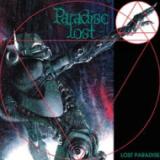
THE TIMELESS DEBUT OF BRUTAL ATMOSPHERIC DEATH METAL FROM THE UK LEGENDS - PRESENTED ON BLACK VINYL, FEATURING REMASTERED AUDIO. Paradise Lost formed in Halifax, West Yorkshire in 1988 & are known for being the founders of the Gothic Death/Doom Metal genre; a style fully brought into existence with their genre-defining second album, the highly influential 'Gothic'
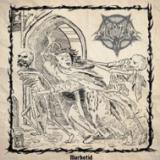
Formed by Marius Vold & Steinar Sverd Johnsen in 1989, Mortem was one of the first black metal bands to crawl out of the woodwork in Norway, releasing the highly coveted & brutal 'Slow Death' demo, with Euronymous & Dead of Mayhem acting as producer & cover artist respectively (whilst also featuring Hellhammer on session drums). After the release of 'Slow Death', the band was laid to rest, with members going on to form & feature in acclaimed titans such as Arcturus & Thorns, both of which would become mainstays in the black metal scene & beyond. It wasn't until 2019, when Mortem's studio debut 'Ravnsvart' was released, & the magic of old undoubtedly returned with that same spirit & brutality of the original incarnation, whilst injecting new elements to form an opus of ferocious yet atmospheric horror. This was followed soon after by the fully re-recorded & re-worked 'Slow Death' tracks.
Formed by Marius Vold & Steinar Sverd Johnsen in 1989, Mortem was one of the first black metal bands to crawl out of the woodwork in Norway, releasing the highly coveted & brutal 'Slow Death' demo, with Euronymous & Dead of Mayhem acting as producer & cover artist respectively (whilst also featuring Hellhammer on session drums). After the release of 'Slow Death', the band was laid to rest, with members going on to form & feature in acclaimed titans such as Arcturus & Thorns, both of which would become mainstays in the black metal scene & beyond. It wasn't until 2019, when Mortem's studio debut 'Ravnsvart' was released, & the magic of old undoubtedly returned with that same spirit & brutality of the original incarnation, whilst injecting new elements to form an opus of ferocious yet atmospheric horror. This was followed soon after by the fully re-recorded & re-worked 'Slow Death' tracks.
Originally self-released in 2023, Stella Kola, the debut album from Beverly Ketch (Jow Jow, Weeping Bong Band) and Robert Thomas (Sunburned Hand of the Man, Dalthom), now returns in a renewed edition—bringing wider attention to a record that already felt like a quietly essential artifact from the moment it first appeared.
Given the pair’s respective roots—and the presence of collaborators drawn from across the Northeast experimental underground—one might expect “a brutal blast of acid swirl.” Instead, what emerges is something far more unexpected. The album is “steeped, not in noise and dissonance, but in the fragrant, captivating folk of Linda Perhacs, Judee Sill, Karen Dalton, and Bridget St John.”
From the opening moments, especially on “Rosa,” the record reveals its core sensibility: “a ballad that digs deep into the psychedelic-folk tradition until it takes root in a freshly sporous permaculture.” What follows is a set of songs that feel both carefully assembled and organically grown—delicate structures held together by a wide circle of contributing musicians, including Wednesday Knudsen (flute), P.G. Six (harp, guitars, keys), Gary War (synth), Jen Gellineau (viola, violin), Willie Lane, L. Gray, and others.
Rather than functioning as studio additions, these collaborators form a genuine collective presence. “The family affair feeds into the album’s charms,” and the feeling is unmistakably communal. Like many of the ‘60s folk records it echoes, Stella Kola carries “the feeling of community and camaraderie” at its core, shaping a warmth that runs through the entire release.
The album’s emotional palette leans toward a quiet, persistent melancholy: “the best records from that era also carried with them an inherent sadness and Stella Kola’s songs wash over the listener with a beautiful woe.” Its sound edges into the terrain of Fairport Convention and Pentangle, with references to “Beggar’s, Kings, Dark Damsels, and Tarot,” yet never settles into revivalism. Instead, Ketch and Thomas extend the tradition outward, refracting it through their own distinctly American, underground language.
As one early description of the album notes, “the masterful restraint of ‘Rosa’ and the rest of Stella Kola’s shimmering debut evokes Anne Briggs, C.O.B., Pentangle and similar ancestors that knew the best way to honor traditions was to widen the heritage even further.”
Even among a prolific and unpredictable network of underground musicians, Stella Kola stands apart. “It’s early in the year, but it’s hard to see an album, especially a debut, capturing the heart as hard as this one.” With its return in reissue form, the album reasserts itself not just as a hidden gem, but as an essential document of contemporary folk experimentation—an intimate, collective work that continues to unfold with time.
With "Una Lama D'Argento", TENEBRO take their most extreme and visionary step yet: an entire album conceived as a tribute to Dario Argento, the undisputed master of horror, giallo, and thriller cinema. Eleven tracks that are not just songs, but episodes of a single nightmare, a journey through the dark and obsessive atmospheres of the films that shaped cinema history: Deep Red (1975), Suspiria (1977), Inferno (1980), Tenebre (1982), Phenomena (1985), and Opera (1987). TENEBRO translate Argento's universe into sound: riffs sharp as blades, guttural vocals emerging from the darkness, relentless drumming, and atmospheres shifting between pure violence and suffocating tension. Iconic scenes such as the mirror revealing the killer in Deep Red, the brutal mutilation in Tenebre, or the larva-filled bathtub finale in Phenomena are transformed into brutal, immersive sonic attacks, capturing the full horror and tension of the films. As with every album, TENEBRO continue to evolve, introducing new symphonies, styles, and melodies, while remaining distinctly separate from the wider underground scene. Their music explores new horizons without ever betraying the pulsating heart that has always defined their sound: extreme, theatrical, and viscerally horror-driven.
Kitchen Knife Conspiracy emerged in 1998, blending death metal, hardcore, nu-metal, and thrash metal into a volatile concoction labeled ‘stompcore’ early in the band’s career. Forged in the industrial, run-down steel mills of Youngstown, Ohio, the group has laid down brutal riffs and relentless grooves over the course of five full-length albums, one EP, and a live DVD set.
The band has always diversified their sound from album to album: their debut, Sin-Pathetic, leans proudly into death metal and thrash. Their sophomore effort, Handicapitated, bears influence from hardcore, nu-metal, and sludge. Worst Case in Stereo, recorded and produced by Steve Austin of Today is the Day, “stands firmly in the shadow of grind-kings like Obituary,” as reviewed by Cleveland Scene. Their fourth effort, A Friend in Need...Is a Friend to Kill, incorporates a large dose of thrash and grind. Their most recent album, Seven Deadly Sins, is an ambitious concept record dealing with the faults of man, handing
out hardcore beatdowns with hints of black metal throughout. The future is now at hand as Kitchen Knife Conspiracy signs with a new label as diversified and ambitious as their own discography and issue the 25th Anniversary of Handicapitated on a Limited Edition (250 copies) White and Blue Splatter.
Stompcore looks to expand to a wider audience—a Kitchen Knife
Conspiracy is the blunt force weapon ready to deliver the killing strike.
Nobody knew. Not the crowd packed into Circolo Kessel that Sunday evening, not even the six musicians on stage. When Giardini di Mirò played on March 19, 2023, it was supposed to be just another homecoming show in Cavriago, the kind of night where you play for the people who’ve known you longest. Some were missing from the audience, though: “Our closest friends stayed home to watch the football match tonight,” Jukka quipped from the stage. “But that’s fine, we’ll deal with them tomorrow.” In hindsight, even Juventus fans who celebrated their 1–0 victory over Inter made the wrong choice.
Seventy minutes in, all the instruments converged into a one-chord riff, driven by the drums and punctuated by screaming guitars. A repetitive rhythm that paired brutal volume with hypnotic precision. Even those at the back of the room felt it: that trance-like state where sound becomes physical. Then the wall of sound collapsed. Guitar feedback lingered in the air for a few seconds before fading into nothing.
This was the last sound Giardini di Mirò made. They haven’t played since, and there are no plans to do so again. But in that moment, nobody knew.
The closing song that night was also the opener of their debut full-length, recorded more than two decades earlier. Its title, A New Start, carries an unintended irony the band would likely appreciate. It is also oddly fitting that their final show took place in the same building where they began. Circolo Kessel, previously known as Calamita, served as the band’s rehearsal space for many years. Yet since their rise to becoming one of Europe’s defining post-rock acts, they had never performed a concert there.
In a fortunate coincidence, Markus Mathis – a longtime fan who had recorded several of their shows before – also captured this final concert using two room microphones and a feed from the mixing desk.
Quasi Casa is the complete, unfiltered document of that night: an “official bootleg” spanning over 70 minutes of purely instrumental music, drawing on material from across their entire career, from the earliest releases to Del Tutto Illusorio. It captures, with striking clarity, the intensity that defined the band’s live performances.
Rather than simply uploading the recording and calling it a day, the band chose to assemble a physical release as a parting gift to their fans. The double LP includes a 16-page booklet with extensive liner notes and visual material.
Orange Splatter vinyl. "Sermon of Mockery" by Pyrexia is not an album that tries to be accessible - it is built to be heavy, direct, and unsettling, and it delivers exactly that. Released in 1993, it sits right in the middle of a key moment when American death metal was evolving into something more technical and extreme. The sound is rooted in the New York scene: tight, compact riffing, constant stop-and-go structures, aggressive drumming, and deep guttural vocals with no room for melody. It's not about speed alone, but about control - everything feels deliberate, almost surgical in how the songs are constructed. Lyrically, the album revolves around a strongly blasphemous and anti-Christian theme. It's not just shock value; it's more like an inverted liturgy, where religious symbols are twisted into something dark and violent. This concept is consistent throughout the music, lyrics, and visuals, as you can see in the booklet. It may not be a mainstream landmark, but it played a key role in shaping the brutal death metal sound that followed. It influenced many underground bands and is still regarded today as a cult record. Listening to it now, the production may feel dated, but that's also part of its strength - it's raw, honest, and uncompromising. In short, it's a record that perfectly captures a specific era and mindset within the genre.
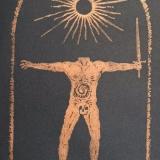
The Debut LP released by Cardinal Fuzz (UK) & Feeding Tube Records (USA). Presented in a hand stamped metallic copper ink (front and back) print on a black card sleeve with insert. Recorded during downtime but sounding anything but casual, Celestial Power emerged when Dead Sea Apes’ Brett Savage and Chris Hardman linked synaptic overload with Cardinal Fuzz’s own Dave Cambridge to form a three-headed amplifier cult. Heavy, raw, and deeply resonant, this is music that embraces volume, repetition, and the beauty of imperfection. What they’ve summoned is a sprawling liturgy of overdriven guitar mantras: brutal, blown-out, and gloriously repetitive. Imagine the Velvet Underground locked in a warehouse mainlining the kosmische pulse of some forgotten Krautrock commune while Bardo Pond’s ash-coated spirit hovers overhead, scattering embers into a storm of PSF-style amplifier abuse. Not so much songs as tectonic events. Not riffs, but rituals. This thing doesn’t purr it howls. You hear the room breathing. You hear amplifiers gasping as they’re pushed past mercy, past design, into some ecstatic mechanical breakdown. Every repetition drills deeper, pushing beyond the horizon line until time itself starts peeling back in sheets. And that’s the point. This is repetition as revelation. Volume as transcendence. Human hands wrestling raw electricity into shape, then losing control of it entirely. On “Mandate Of Heaven,” the circle widens with the arrival of Nik Rayne (The Myrrors), adding another dimension to the ritual, a desert prophet stepping into the feedback storm, pushing the album’s gravitational pull even further into the void. No compromise. No softening. No edges filed off. Just pure voltage, scorched earth repetition, and the kind of heavy psychedelic communion that feels less like listening and more like surviving. Step inside. Bring ear protection. Or don’t. 4 Tracks - 42 Minutes.
Kwartz, Hurtado, TKNS, SlugoS y Sub Terra comparten este brutal Various Artists para el sello Caedite Eos.
Caedite Eos proudly presents a new various artist EP featuring Kwartz, Hurtado, TKNS, SUB TERRA, and SlugoS. With Kwartz and SUB TERRA making their debut on the label alongside the return of familiar names, this five-track release showcases a wide spectrum of the label’s sound.
Opening with an ambient piece by Kwartz, the EP moves through Hurtado’s broken beat approach, TKNS’ straight-to-the-floor 4/4 tool, and SlugoS’ signature controlled distortion, closing with SUB TERRA’s hard industrial techno cut infused with a classic techno flavor.
out of Stock
Last delivered 34 days ago available to reorder, subject to availability
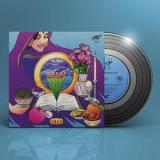
In celebration of the Persianate new year usually taking place on March 21st Afghan-German producer artist Farhot announces his follow up project "Nowroz 1401" which translates into "New Year 1401" - the number marking the year according to the solar calendar which is used in countries like Afghanistan and Iran. While Nowroz is being celebrated in several additional regions like Azerbaijan, Kazakhstan or Kirgizstan and partly also in Pakistan, Syria, Tajikistan, Georgia and Turkey - this 4-Track EP pays tribute to Afghan contemporary artists like singer-songwriter Calid, London based Elaha Saroor and rapper Khan all while referencing the golden era of Afghan psychedelic pop most prominently represented by Ahmad Zahir samples - and with that marking this special release as a contribution to preserving Afghan culture and tradition while Afghanistan"s recent brutal occupation by the Taliban continue to threaten and erase Afghan artistic tradition. Further "Nowroz 1401" was born out of the urgent feeling to uphold and celebrate an essential tradition of Persianate cultures so that the following generations of diaspora children don"t lose access to their cultural heritage while not being able to live or visit their countries of origin, where such holidays are institutionalized and therefore experienced as a community festivity.
With their fourth full-length album Signal Fire, GENGHIS TRON awaken us from the post-apocalyptic daydreams of their previous work with a violent—and most welcome—shove. This time, the distant-future reveries we first heard on Board Up The House give way to an unsettling awareness of the present we’re actually living, as our circumstances grow too pressing to try and escape. “Signal Fire envisions a Kojima-esque dystopia of endless proxy warfare,” says vocalist and lyricist Tony Wolski (The Armed), “where the deluge of available information has outmoded the human ability to parse it. A world where those amoral, shameless and cunning enough can literally reshape reality at their whim through sheer insistence." Having roared onto the scene in 2004 with a uniquely demented blend of extreme metal, synthesizer textures, and drum-machine madness, GENGHIS TRON are no strangers to making a forceful impression. But Signal Fire marks the first time bandleaders Michael Sochynsky and Hamilton Jordan –joined again by Wolski and Nick Yacyshyn (SUMAC) on drums, plus newcomer Kenny Szymanski (The Armed) on bass–has captured this level of urgency with such visceral precision. “This album is very much rooted in the now,” confirms Jordan. Album opener “I Am All” sets the table with a chest-throbbing synth pulse as Wolski declares “I’m on a tear, I’m on a tear,” over swirling industrial rhythms and creeping synthlines. “Nothing Blooms in the Hollow” grafts desert-rock swagger onto interlocking layers of dizzying riffs and chants before Wolski steers the band into full-on sonic burnout, like a spaceship careening into the sun. “Born Prey” navigates deftly through Genghis Tron’s classic sonic touchpoints: furious blastbeats, electronic breaks, haunting vocal earworms, and a towering synth-pop crescendo. Meditative interludes like “Like Fotocrom” and “Without Form” deliver shimmering, ominous beauty. And “New Gods” invokes Rabies-era Skinny Puppy to bring the album to a bludgeoning, anthemic finale, as Wolski screams on repeat: “New gods to bleed me out / No new peace / Bleed me out / I love it.” Twenty years into their career, having proven their ability to forge common ground between Ministry and Aphex Twin, between Brutal Truth and Boards Of Canada, between Cluster and Converge, ugly-beautiful new genre hybrids from GENGHIS TRON no longer come as a surprise. What’s remarkable, however, is how Sochynsky and Jordan have taken a project that started in 2004 as a dorm-room genre-pastiche experiment —”a chaotic, wild amalgamation of all our favorite stuff, literally slammed together,” says Jordan—and refined their songwriting craft to deliver a sound that is unmistakably their own.
This album was composed between October 2016 and May 2018, an urgent year and a half.
I imagine my albums as adventure stories. Here, it's a quest in reverse: the journey of a knight in a car, listening to psychedelic R'n'B on the radio. Contre-Temps is a circuit album nourished by the fantastic, where impermanence meets the sensation of passing time-a tunnel through multiple dimensions."
Flavien Berger
This is a record of noted pedigree. Nottingham is one of thee homes to god-tier hardcore punk. The scene there has evolved, revolved, mutated, and grown over the decades. It's DIY venues and recording studios are now of legend.
The catalogue number of WSR084 is no coincidence. As with Crass and their 'counting down to 1984' aesthetic, this is anarcho hardcore railing hard against the times. If you're not currently furious you're asleep and Blind Eye are spitting anger.
Taking inspiration from The Comes, Jerrys Kids, Aus-Rotten and Chaos UK, this album is a concise call to arms. Perfectly captured over a weekend towards the end of 2025 by Boulty at Stuck On A Name Studios, Mistrust Your Nation sees mid-tempo stompers mix with breakneck ragers, all pressed at 45rpm and sounding as hefty as the band playing in your front room.
Anmarie Spaziano's vocal is at once melodic and raging, giving new definition to “pissed off”. Steve Charlesworth's drums are second to none, they've never been equalled in over 40 years of doing this. Andrew Morgan's guitar on this record is wild: shredding equal parts cosmic noise and brutally-tight riffing whilst Matt Grundy's bass anchors the chaos, pushing every second onwards.
As a label we never tire of bands who have THAT THING. We struggle to describe it and to pin it down, but we know it and we feel it and we only deal with people who have it. When we put gigs on and Blind Eye share a bill with solo banjo player Jacken Elswyth (for example) the sound is clearly different, but the ethics are the same. We can see it and we can hear it and we hope you can too. We are a genre-free label. We are a label that deals only with righteous, inspiring people. Play this record loud. Let it help you through these hideous times - Wrong Speed HQ
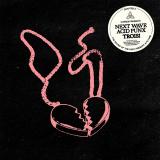
Starting in 2021 the critically acclaimed Next Wave Acid Punx series has seen Luca Venezia, aka Curses, celebrate the music that has shaped both his life and career. Across the first two compilations Luca took us from theindustrial and post-punk sounds of the late 70s, through the emergence of EBM, new beat and freestyle in the 1980s and onto the music he both makes and plays himself in clubs today. Bringing the series to a close Next Wave Acid Punx TROIS sees the Berlin-based musician and DJ return full circle, this time exploring the sounds that first initiated him into Brooklyn's rave scene and the music that, in some way, continues to embody its eclectic spirit today.
Spread across three 2LPs and 3CDs Next Wave Acid Punx TROIS captures a moment whose influence can still be heard reverberating around clubland today. With the nascent rave scene obliterating boundaries, this was a moment where the darker, harder industrial electronic sounds of the mid 1980s were crashing headfirst into the ecstatic wave that was washing over clubland creating thrilling juxtapositions. Whether in the clubs and warehouses of New York, London, Frankfurt, Valencia and beyond, electronic music would never be the same again as countless new genres we take for granted today were born from the chaos and energy that had been unleashed.
Featuring 46 hard-to-find, new and exclusive tracks, Next Wave Acid Punx TROIS both documents that fertile period and shows how, despite rumours to the contrary, that early anarchic spirit can still be found today. From the Detroit Techno of Model 500 to Nitzer Ebb's EBM and the proto-Trance of Age of Love and onto brand new tracks from some of today's best producers such as Zaatar, Italo Deviance and Leona Jacewska, this compilation closes out a series that has to date revelled in exploring the darker corners of clubland in uplifting style.
New album of one of the biggest Reggae/Dub french soundsystem starring MacGyver, Rooty Step & Pupajim (who worked with Alpha Steppa, Biga Ranx, High Tone, Mungo's Hi-Fi ...).
Since their inception at start of the 2000s, Stand High Patrol have rocked sound systems to their own riddim, assimilating and re-purposing the codes of the genre in their own unique style. From tiny bars in Brittany to huge festival stages, on independent radio or across national airwaves, the crew have quietly trod their own path, never compromising their core value of independence. Connoisseurs have long recognised Stand High’s credentials both as a dub group and a leading sound system, but they stand out from the crowd because of their ability to deliver the unexpected, whether live or on record. Their ability to draw such a diverse audience is testament to this atypical approach to making music.
In 2020, almost 20 years since their humble beginnings, the collective presents their fifth album, “Our Own Way”. As with their first two albums “Midnight Walkers” and “Matter Of Scale”, now considered as classics in their genre, this new opus asserts itself as the latest representation of the crew’s versatile approach to crafting sound. Their music, a blend of its own known as “Dubadub”, has always borrowed influences from multiple sources, and over the course of their career their roots in dub and reggae have intertwined with hip-hop, jazz, new wave, trip-hop and numerous other genres. The ‘Dubadub Musketeers’ have never ceased experimenting, forever seeking to increase the sonic territory they cover, day after day. Both live and recorded, they’ve made it a point of honour to never offer up the same thing twice. Any resemblance that “Our Own Way” might bear to those first two albums is a consequence of this obvious creative continuity, rather than of going “back to basics”.
In contrast to the last two Stand High Patrol records, the hip-hop inspired “The Shift”, or the Bristol indebted “Summer On Mars”, “Our Own Way” doesn’t have a unifying concept or theme. Rather than being limited to a single aesthetic, the LP pays respect to the entire canon of Jamaican music, all unified under Stand High’s inimitable production values. With the wealth of experience gained during the recording of their last two records, the collective decided to aim for a freer project, letting themselves be guided by their own music and their own instincts. The end result is a musical portrait of what Stand High Patrol is in the present moment.
The tracks that make up the new LP burst out of the studio, each born out of unbridled, impulsive creativity. Previously unheard compositions and specially re-tooled dub plates have been assembled into a tracklist that shifts and moves like a classic Dubadub Musketeer live set. Each step of the process has been refined by years of practice : composition, effects, and the final mix. Throughout “On Our Way”, the brutal dub stepper, though still a favourite for sound system sessions, is noticeable by its absence. Instead, it’s the full weight of the crew’s reggae heritage that’s expressed in the mix. It's not just the depth and weight of each tune that strikes the listener, but also the spaces heard between the notes that grab and hold their attention.. The sense of a trip, whether musical, internal or geographic, is omnipresent throughout the LP, linking each track to those before and after. “Our Own Way” finds Stand High Patrol exploring as usual, yet also narrating their journey as they’ve rarely done before.
out of Stock
Last delivered 4 years ago available to reorder, subject to availability
Transparentes Vinyl. Am 29. Mai 2026 erscheint das erste Album von GÖRL: "Dark Silver Moon Light". Hinter GÖRL stehen mit DAF-Legende Robert Görl und die stilprägende DJ- und Produzentin Sylvie Marks zwei Pionier:innen der elektronischen Musik. Robert Görl gründete 1978 mit Gabi Delgado die legendäre Postpunk-Gruppe Deutsch Amerikanische Freundschaft (DAF). Mit radikal reduzierten, ikonischen Sequenzen, brutalistisch anmutenden Drums und provokativer Ästhetik gelangen DAF zeitlose Hits wie "Der Mussolini". Sylvie Marks wiederum war die erste und einzige weibliche Resident-DJ des legendären Frankfurter Clubs Dorian Gray. Später veröffentlichte sie als Produzentin internationale Club-Hits und trat auf Festivals wie Roskilde auf. Seit sechs Jahren verbindet Robert Görl und Sylvie Marks eine funkensprühende Kreativpartnerschaft, die in der Veröffentlichung ihres ersten gemeinsamen Albums als GÖRL gipfelt, "Dark Silver Moon Light". Das Album denkt die ästhetische Tradition von DAF mit und transzendiert sie zugleich in Gegenwart und Zukunft.
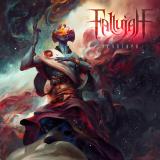
Tech-metal outfit FALLUJAH expand horizons and solidify their position as one of America’s most exciting artists on their new album, Xenotaph, through Nuclear Blast. The Bay Area-based quintet’s confidence in the lineup that made their previous album, Empyrean (2022), such a resounding success—earning high marks from Metal Injection, New Noise, and Guitar World—has been reconfigured slightly, with guitarist Sam Mooradian (INHALE EXISTENCE, SAM MOORADIAN) and drummer Kevin Alexander (DISEMBODIED TYRANT. BROUGHT BY PAIN) bringing their jaw-dropping musical proficiency to the fold, as vocalist Kyle Schaefer, guitarist Scott Carstairs, and bassist Evan Brewer enter a new chapter with FALLUJAH. Moored by singles ‘Kaleidoscopic Waves,’ ‘Labyrinth of Stone,’ and ‘Step Through the Portal and Breathe,’ Xenotaph is FALLUJAH personified, reinvigorated, and re-imagined.
As a details-oriented record Xenotaph benefits from moments of low tension, atmospheric delight, and Schaefer’s winged clean vocals. This
dynamic isn’t particularly new to Fallujah, but the group spent considerable time honing what each song needed—from blast-laden speed runs and jazz-fusion solos to vocal restraint and brutality—which resulted in a brighter, more exhilarating experience. Musically, it truly feels like the listener is embroiled in the album’s sci-fi concept and Peter Mohrbacher’s stunning cosmogonic cover art, which is aesthetically in line with his previous covers (Dreamless and Empyrean) for FALLUJAH. Close encounters with ‘Step Through the Portal and Breathe’, ‘Labyrinth of Stone,’ and ‘Kaleidoscopic Waves’ spark wonder and stimulate the soul.
Born Neville Beckford in Kingston, he first gained recognition as a sound system deejay before breaking through with the powerful single "Angela Davis." During the mid 1970s, he recorded extensively for producers including Rupie Edwards, Clive Chin, Keith Hudson, and Channel One, releasing a string of influential singles and albums. His debut LP Jah Woosh reached number one in the reggae album charts and established him as a leading voice of the era. The album Rebellion also features vocalist Sis Bee, whose spirited responses to Jah Woosh add a unique dynamic. Later, through his work with Adrian Sherwood and the Creation Rebel collective, Jah Woosh remained an important figure in roots reggae