
In Stock
On Stock and ready to ship
Last In: 5 years ago
2,48 €
On Stock and ready to ship
Justin James has been turning out ambient, electro and techno soundscapes as Dreamlogicc for a quarter of a century. There have been six albums and 23 EPs in that time and plenty of it has come on Main Drain Studios, where he returns now with four more intricate and immersive tunes. 'Unincorporated Township' is sombre IDM rewired as a dusty techno cut, while 'Land Ho Live' is a jumbled blend of warped bass and half-time rhythms, broken beats and busted bass. 'Tu Long Live' has a bright synth glow and more gritty and glitchy details in the foreground that create an unsettling tension, and 'Snip Ette' is a similar contrast of synth wonder and textural anxiety. Beguiling stuff, for sure.
expected to be published on 04.09.2026
Order now and we will order the item for you at our supplier.

In the humid static of early-’80s Tel Aviv, Chromosome emerged like a wiretap from the future. Formed in 1981 by provocateur Rami Fortis and sonic instigator Doron “Shultz” Eyal, the group fused punk abrasion, new wave architecture, avant-garde dissonance, and Middle Eastern textures. Joined by David Gervai and Rona Vered, they produced a singular 12" EP on their DIY imprint TOV Production - now a collector’s treasure.
This reissue of the Chromosome EP resurrects a raw, percussive artifact that slips between English, Arabic, and indecipherable phonetics like a busted shortwave signal. Anchored by “Makhtub” and backed with incendiary tracks such as “Show of Terrorism” and “Gazolina,” it is a vital document of Tel Aviv’s underground, mapping out a borderless, feral lineage for Israeli music.
Order now and we will order the item for you at our supplier.

Sleepytime Trio was a post-hardcore band that formed in 1995 in Harrisonburg, Virginia. Originally a side project of the band Maximillian Colby, they quickly took off as they played shows around the mid-Atlantic region; building a reputation for their volatile, emotional sound and unpredictable live energy. Their shows were notorious for exploding into controlled chaos. They were a cacophony of tangled limbs, busted gear, and a visceral sense that everything might combust in a split second. In 2024, Solid Brass Records partnered with Sleepytime Trio and their longtime label, Lovitt Records, to begin work on a discography to memorialize this important band. 'Memory Minus Plus Minus' is a 14 track collection. Numerous songs have been remixed by J. Robbins at Magpie Cage Studio for improved quality and everything has been remastered by TJ Lipple. Limited edition opaque bublegum colored vinyl comes in a gatefold jacket and includes a booklet with extensive liner notes and full “gigography” documenting their shows from 1995-2018.
expected to be published on 17.10.2025

"Ingredients In A Recipe For Soul proved that Ray Charles didn’t so much ignore genres, but, by the ’60s, had become a genre unto himself. An academic might want to separate this stack of songs into neat little buckets—country, jazz, standards, blues, pop—but those are just the ingredients. Ray Charles sings whatever he likes and whatever he sings comes out as a Ray Charles song, with a flavor all its own.
Two hit singles, “Busted” and “That Lucky Old Sun,” made Ingredients In A Recipe For Soul an instant Top Ten when it was released in 1963. Bootlegged across Europe for decades, this is the fi rst and only legitimate reissue of this essential album on vinyl (and its fi rst appearance on CD since the 1990s), now fully restored and remastered with the full cooperation of the Ray Charles Foundation."
expected to be published on 19.09.2025

The first in a new sub series from Audiotrix Records, Kolabzz 1 feats the one and only MC Scallywag, famous for his unforgettable shouts back in the heady days of Spiral Free Raves in the U.K.
Music was composed in the Audiotrix soundlabz Brandenberg Division and Vocals were recorded in RMS rehearsal studios Putney, London.
Synth by Fred’s Lab Manatee apart from in Busted by Novation Circuit.
Graffix are also a colaboration between Audiotrix resident Graphist Feenix 13 and Ixindamix.
Mastered at Finyl Tweek.
Order now and we will order the item for you at our supplier.

T. Gowdy returns with a major statement and luminous stylistic expansion on his third album for Constellation. Trill Scan is an exquisite suite of songs literally and figuratively about alchemy, where Gowdy melds his background in choral and medieval music with his trademark analogue electronics. Following the acclaimed Miracles (Bleep Album of the Week / Albums of the Year 2022), Gowdy's bar-raising new LP centers human voice for the first time. Choral set-pieces and solo lead vocals, along with his own lute playing, are novel elements in Gowdy's work, and draw on strains of Middle Ages polyphony and the Baroque "broken style" to further distinguish Trill Scan from anything in his discography to date. Gowdy sees "the modal language of medieval Europe as a less distant cousin to indigenous traditional music practice" compared to a Classical-colonial "patriarchal order of tonality that honours a system of domination." The 12th century Notre Dame School of choral music and 17th century style brisé each carry tonal materiality, heterodox technique, and cultural-historical symbolism central to Trill Scan's conceptual and compositional alchemy. Gowdy coheres these beautifully into his palette of serpentine slowburn electronics, a minimal analogue-driven techno shaped by aleatory strategies and tinged with post-punk grit. Gowdy's sound has been aptly described as "gently transportative, flickering like a busted halogen lamp" and his overriding pursuit of psychoacoustic immanence likened to "getting your brain massaged" and praised as "blissful work that bristles with effervescent energy, like brain waves coming in and out of focus." Trill Scan expands this sonic sensibility with more conspicuous harmonic complexity, stylistic variety, and humanistic narrative arc. Alternately sacramental and intimately personal vocals, sometimes wordless and sometimes lyrical, are worked into superlative instrumental tracks, yielding a warmly immersive concept album that's equally Gowdy's most musical. Gowdy sings explicitly of alchemy on the hypnotic album centerpiece "Novus Lumen" with lyrics that gesture at these medieval processes of material investigation. The tension between the scientific and esoteric is crucial; the separation and synthesis of physical substances in medieval alchemy maps onto his fixation with the interplay between the materiality of sound and psychoacoustics. Gowdy follows the Jungian interpretation of classic alchemical texts as an historical bridge to theories of the psyche, where consciousness itself is treated as materiality and similarly subjected to methodical analysis and experimentation, to deconstruction, dissolution, transformation, reintegration, metamorphosis. Song titles like "Arislei Bone" and "Materiadiscipuli" further reference these mythopoetic throughlines from medieval alchemy to modern psychology. Gowdy chooses disruptive forms from the history of Western music that symbolize and prefigure the modern psychological subject and its struggle for/against order, even as they also evoke liturgy and the Renaissance court. The sacramental adds a potent dimension to his pursuit of psychoacoustic activation, meditation, and transcendence, as choral passages intersperse with electronic drone and pointillism throughout the album. His gorgeous Fennesz-meets-lute rendition of the Baroque composition "Courante" by François Dufault offers idiomatic salon-secular counterpoint. Album closer "Strewn" is bookended by a final recurrence of choral invocation, with pulsing earworm motorik techno in between, over which Gowdy whisper-sings a dreamlike vision quest of mythic-alchemical imagery: "as I washed my eyes they turned to metal / and the memories melted to the metal / the metal of my heart." A mesmerizing final song that explicitly invokes Gowdy's search for materialized abstraction and substantive musical immanence wrought from his own psycho-therapeutic subjectivity, and encapsulates the album's turn towards more harmonic, historicized, and humanistic elements. Trill Scan commingles empyrean and earthly electronic songcraft to genuinely original and absorbing effect. Thanks for listening. RIYL: Coil, Nicolás Jaar, Alessandro Cortini, Pantha Du Prince, Fennesz, Visible Cloaks, Actress,
expected to be published on 14.03.2025

New Omar S alert! The FXHE label boss wastes no time in dropping heat this New Year as he once again hooks up with vocalist Desire for this latest house gem. Up first is 'Something Real', in the classic Omar S mould of laying down a deep, heartfelt drum line and then topping it with a mad emotive vocal hook that is filled with r&b goodness and joined by the most subtle cosmic chord motifs. 'Hard Leaf Rag' follows next, so raw it will make your ears tickle with its busted drums and serrated stabs. Then flip it over for 'Conant Leaf Rag', which pairs warbling synth sounds with dusty hi-hats and tight kicks for a nice, full mind and body workout.
Order now and we will order the item for you at our supplier.

Avidya is back with a third EP to build on the head-turning success of the first two and it is another trip to the outer edges of the dancefloor. Odopt from Born Free and 777 Recordings kicks off with a snappy cut that is deceptively simple but devastatingly effective with its gurgling and acidic bass. Remotif is a fast-rising talent who impresses with the heavy techno sludge of 'HAJKSD15' and Full Circle aka Alexis Le Tan and Joakim link with Kris Baha to offer a remix that is all twitchy electrons, busted drum loops and fizzing pads before 53X's 'Simulaatio' is another brilliantly loose jumbled of wiry electronics, sci-fi effects and techno chug for a fantastic closing beatdown.
Order now and we will order the item for you at our supplier.

You could call Wishy's story a lucky one. After prior monikers and iterations, Wishy was born as a kaleidoscope of alternative music's semi-recent history, with traces of shoegaze, grunge and power-pop swirling together. On Triple Seven, Indiana songwriters Kevin Krauter and Nina Pitchkites' musical synergy proves itself to be a rare one-the kind that sounds like someone striking gold. Part sly wink and part warm gratitude, it's only fitting their much anticipated full length debut is titled Triple Seven, where Wishy's penchant for indelible hooks is couched equally in pillowy atmospherics and scathing distortion. By day Krauter works as a music teacher, giving drum and guitar lessons to students, while Pitchkites is a seamstress by trade and often makes embroidered merch for the band. Coming up in a scene defined by hardcore and emo, Krauter and Pitchkites instead found themselves writing melodies in their heads while driving to work, pulling music from the air and arriving at a blearier, more ethereal interpretation of Midwest expanse. Initially, their music oscillated between hazy dream-pop and heavier alt-rock. The subject of their songs create a loose web of vignettes and snapshots, capturing Krauter and Pitchkites in a whirlwind couple of years _ exiting the pandemic, embarking on an embryonic project, making sense of their musical pasts while forging a musical future alongside one another, each of them on a journey of self-acceptance and self-understanding. Sometimes gorgeous, sometimes festering, and always cathartic, Triple Seven is a vibrant and exhilarating document of self-discovery with the scope and heft of the bygone big-budget rock albums that inspired it.
expected to be published on 03.12.2024

You could call Wishy's story a lucky one. After prior monikers and iterations, Wishy was born as a kaleidoscope of alternative music's semi-recent history, with traces of shoegaze, grunge and power-pop swirling together. On Triple Seven, Indiana songwriters Kevin Krauter and Nina Pitchkites' musical synergy proves itself to be a rare one-the kind that sounds like someone striking gold. Part sly wink and part warm gratitude, it's only fitting their much anticipated full length debut is titled Triple Seven, where Wishy's penchant for indelible hooks is couched equally in pillowy atmospherics and scathing distortion. By day Krauter works as a music teacher, giving drum and guitar lessons to students, while Pitchkites is a seamstress by trade and often makes embroidered merch for the band. Coming up in a scene defined by hardcore and emo, Krauter and Pitchkites instead found themselves writing melodies in their heads while driving to work, pulling music from the air and arriving at a blearier, more ethereal interpretation of Midwest expanse. Initially, their music oscillated between hazy dream-pop and heavier alt-rock. The subject of their songs create a loose web of vignettes and snapshots, capturing Krauter and Pitchkites in a whirlwind couple of years _ exiting the pandemic, embarking on an embryonic project, making sense of their musical pasts while forging a musical future alongside one another, each of them on a journey of self-acceptance and self-understanding. Sometimes gorgeous, sometimes festering, and always cathartic, Triple Seven is a vibrant and exhilarating document of self-discovery with the scope and heft of the bygone big-budget rock albums that inspired it.
expected to be published on 19.08.2024

You could call Wishy's story a lucky one. After prior monikers and iterations, Wishy was born as a kaleidoscope of alternative music's semi-recent history, with traces of shoegaze, grunge and power-pop swirling together. On Triple Seven, Indiana songwriters Kevin Krauter and Nina Pitchkites' musical synergy proves itself to be a rare one-the kind that sounds like someone striking gold. Part sly wink and part warm gratitude, it's only fitting their much anticipated full length debut is titled Triple Seven, where Wishy's penchant for indelible hooks is couched equally in pillowy atmospherics and scathing distortion. By day Krauter works as a music teacher, giving drum and guitar lessons to students, while Pitchkites is a seamstress by trade and often makes embroidered merch for the band. Coming up in a scene defined by hardcore and emo, Krauter and Pitchkites instead found themselves writing melodies in their heads while driving to work, pulling music from the air and arriving at a blearier, more ethereal interpretation of Midwest expanse. Initially, their music oscillated between hazy dream-pop and heavier alt-rock. The subject of their songs create a loose web of vignettes and snapshots, capturing Krauter and Pitchkites in a whirlwind couple of years _ exiting the pandemic, embarking on an embryonic project, making sense of their musical pasts while forging a musical future alongside one another, each of them on a journey of self-acceptance and self-understanding. Sometimes gorgeous, sometimes festering, and always cathartic, Triple Seven is a vibrant and exhilarating document of self-discovery with the scope and heft of the bygone big-budget rock albums that inspired it.
expected to be published on 16.08.2024

You could call Wishy's story a lucky one. After prior monikers and iterations, Wishy was born as a kaleidoscope of alternative music's semi-recent history, with traces of shoegaze, grunge and power-pop swirling together. On Triple Seven, Indiana songwriters Kevin Krauter and Nina Pitchkites' musical synergy proves itself to be a rare one-the kind that sounds like someone striking gold. Part sly wink and part warm gratitude, it's only fitting their much anticipated full length debut is titled Triple Seven, where Wishy's penchant for indelible hooks is couched equally in pillowy atmospherics and scathing distortion. By day Krauter works as a music teacher, giving drum and guitar lessons to students, while Pitchkites is a seamstress by trade and often makes embroidered merch for the band. Coming up in a scene defined by hardcore and emo, Krauter and Pitchkites instead found themselves writing melodies in their heads while driving to work, pulling music from the air and arriving at a blearier, more ethereal interpretation of Midwest expanse. Initially, their music oscillated between hazy dream-pop and heavier alt-rock. The subject of their songs create a loose web of vignettes and snapshots, capturing Krauter and Pitchkites in a whirlwind couple of years _ exiting the pandemic, embarking on an embryonic project, making sense of their musical pasts while forging a musical future alongside one another, each of them on a journey of self-acceptance and self-understanding. Sometimes gorgeous, sometimes festering, and always cathartic, Triple Seven is a vibrant and exhilarating document of self-discovery with the scope and heft of the bygone big-budget rock albums that inspired it.
expected to be published on 16.08.2024

Baxter Dury’s neues und siebtes Studioalbum heißt 'I Thought I Was Better Than You' (über Heavenly Recordings).
Mit ordentlich Selbstironie und Sprachakrobatik malt der Musiker und Schriftsteller eine wilde Collage aus schrägen Träumen und Szenen, in der Baxter mit seinem Erwachsenwerden abrechnet. Doch anstatt nur mit einem Baseballschläger blindlings auf seine Vergangenheit einzuschlagen, spricht er offen über den giftigen Cocktail, in unglückliche Umstände hineingeboren zu werden, ohne richtige Strukturen oder Verantwortungsgefühl, und schwankt dabei zwischen “Fuck you Leon…/ You stole the sunglasses and I got busted” und dem Wunsch nach “Porridge in the morning and be normal”.
Mit kaum funktionierenden Maschinen arbeitete Baxter alleine in seinem Wohnzimmer an groben Demos, die er Produzent Paul White (Danny Brown, Obonjayer, Charli XCX) übergab, der sie in wiederum in seinem Wohnzimmer mit etwas besserem Equipment zum Leben erweckte.
Auf der ersten Single 'Aylesbury Boy' erzählt Dury von “Day Ghosts” und Personen, die lieber durch die Straßen streifen und die Schule meiden, aber auch enttäuschten Erwachsenen, die genau diese Entscheidungen bereuen. In Kombination mit dem swingenden Westcoast-angehauchten Hip-Hop-Beat und Spoken-Word-Elementen ergibt sich dabei eine besondere Kombination aus Humor und Mitgefühl, die Baxters gezeichnete Bilder begleitet. “This song is about coming from one place and arriving at another without fitting in to either, and I think of these people like characters from Studio Ghibli’s Spirited Away.”
Order now and we will order the item for you at our supplier.
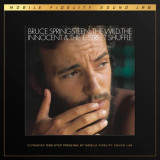
Released only eight months after his exhilarating debut, Bruce Springsteen's The Wild, the Innocent & the E Street Shuffle contains rousing dispatches from the boardwalk, the street, the beach, and the bedroom. It explodes with energy, dares to dream, teases with humour, crackles with tragedy, clings to hope, and overflows with discovery, youthfulness, and personality. It features an unforgettable cast of characters — corner boys, teenage hustlers, doomed lovers, jazz men, junk men, factory girls, fortune tellers, alley cats, pimps, escorts, and more — illuminated by vivid colour, breathtaking detail, and poetic action.
Musically, the heartfelt 1973 record is inhabited by sympathetic vignettes and cinematic arrangements steeped in rock 'n' roll, soul, jazz, and R&B. It finds the New Jersey native looking beyond the parameters of his preceding record and seeking to move on from environments he knows well (and chronicles here) by rushing headlong toward unknown territories, adventures, and people. Underpinned by the singer-guitarist's ambitious poetic enterprise and will to succeed, The Wild, the Innocent & the E Street Shuffle is the album on which Springsteen becomes the Boss.
Mastered on Mobile Fidelity's renowned mastering system, pressed at RTI on MoFi SuperVinyl, and strictly limited to 7,500 numbered copies, Mobile Fidelity's UltraDisc One-Step 180g 33RPM LP set is the definitive-sounding version of Springsteen's sophomore record. Benefitting from SuperVinyl’s nearly non-existent noise floor, superb groove definition, and dead-quiet surfaces, The Wild, the Innocent & the E Street Shuffle plays with a clarity, energy, presence, and openness that complement the expressiveness, dynamics, and scope of the seven restless songs that comprise a work Rolling Stone ranked the 345th Greatest Album of All Time.
Beyond the audiophile sonics that practically place you behind the console at 914 Sound Studios — listen to the separation between the instruments, natural decay of the notes, interplay within the widescreen soundstaging, and nothing-to-lose youthfulness of Springsteen’s voice — this reissue takes seriously this record’s influential merit by presenting it in packaging that underlines its status. Tucked in a beautiful slipcase, the LP is housed in a special foil-stamped jacket with faithful-to-the-original graphics. This reissue is made for listeners who prize sound quality and who want to engage themselves in everything involved with the invigorating set that busted Springsteen loose from the club circuit and landed him on the radio
Determined to liberate anyone within earshot and unafraid to come on strong, The Wild, the Innocent & the E Street Shuffle serves as the debut of the E Street Band — not only heard but seen for the first time by most of the public courtesy of the back-cover photograph. This is where saxophonist Clarence Clemons, organist-accordionist Danny Federici, and pianist David Sancious step out of the shadows — and drummer Vini Lopez and bassist Garry Tallent again stoke a fiery rhythmic engine that helps drive the untamed, reimagined big-band swing of “Kitty’s Back,” breathless R&B thrust of “Rosalita (Come Out Tonight),” and carefree dance steps of the funky “The E Street Shuffle.”
Of course, the main attraction remains a then-24-year-old visionary on the precipice of becoming a sensation and turning a then-bloated rock scene on its head. Recorded over three months while Springsteen and company were busy touring his debut LP, The Wild, the Innocent & the E Street Shuffle reflects the high-octane approach the vocalist embraced onstage and drifts away from the label-dictated acoustic-based frameworks of his debut. The set also witnesses Springsteen deepening his observational skills, with narratives such as the romantically tinged “4th of July, Asbury Park (Sandy)” and redemptive epic “Incident on 57th Street” mirroring changes taking place in the singer’s own life, small towns, and America at large.
A thrilling collision of memories, reflections, and composites — Sandy, Rosalita, and the latter’s parents are all based on actual people Springsteen knew, as is the community depicted in the opening track — the aptly titled The Wild, the Innocent & the E Street Shuffle resonates decades on due to its truths, authenticity, and spirit. Those characteristics — as well as the fact that many of its lengthy songs come on as the equivalent of sweaty, feverish soul revue that won’t stop until you’ve been exhausted — also explain how this now-iconic album triumphed over the reservations of industry “experts” that both demanded Springsteen re-record it and instructed deejays not to play it.
Yet there’d be no stopping a record that saw the past, present, and future, a band whose will would not be denied, and a phenomenon who was born to run. A never-ending invitation to act real cool and stay up all night, The Wild, the Innocent & the E Street Shuffle always feels alright.
expected to be published on 31.05.2024

Superb 45 featuring two Hammond-led instrumentals! We caught up with Mr Guy Hamper for an insightful Q&A_ Q: What a cracking single this is! 'Instrument of Evil' in particular has a very eerie vibe. What was the inspiration for it? A: The track is the sequel to '7% Solution', which featured on the last Guy Hamper Trio LP with Thee Headcoats standing in as rhythm section. A 7% Solution being the amount of morphine Dr Watson administered to Sherlock Holmes. For 'Instrument of Evil' I took Sherlock Holmes' later designation of his syringe as "an Instrument of Evil". This is originally a quote from the bible: "Wicked men do at times reject God's purpose for the state, transforming the good of civil government into an instrument of evil." Point of interest: Morphine addiction happens to tie in with another aspect of the song. In the section that nods to Elmer Bernstein's main title theme to the film of the book The Man With the Golden Arm, in which the main character is also a morphine addict. Another ingredient - we added six-string bass to that section in tribute to Jet Harris - he formerly of top group The Shadows, who recorded a great version of Bernstein's classic. To top it all off the record sleeve references the fine graphics of the great Saul Bass. Phew! Q: The track features contributions from Tom Morley (trumpet) and Anna Jordanous (sax). What's it like working with them? A: They are great and easy to work with. I basically make a playground and let them loose in it with very little direction, apart from pointing out the swings and location of the roundabout. I told Tom "You're a Spanish trumpeter stood on a hill in Spain." For Anna, I think we said "go low and nasty." Q: On the flip side you have 'Incense Rising From a Censer'. A very evocative title for an evocative track. Do you have lyrics in mind for this for a possible later release? A: No lyrics have sprung to mind as yet - but it's always possible. The title is from The Elders observation in Dostoevsky's The Brothers Karamazov, a book I really recommend. Prayer rises to God on the smoke of the incense burning in the censer. I imagine this track being some kind of antidote to 'Instrument of Evil'. Q: This single marks your first time in the new premises of Jim Riley's Ranscombe Studio. What's the new place like? A: The studio is great - the sound - using my old Mighty Caesars drum kit, and Jim engineering, is pure, easy with a better sound than the old premises. Q: Any more Guy Hamper Trio releases in the pipeline? A third album perhaps? A: Again, anything is possible. Me and Jamie (James Taylor, Hammond organ) have talked of writing together in the future. Jamie is a truly great musician - the cherry on the cake if you will. We're just busted old eggs, sour milk, and some gunk. Q: A live Guy Hamper Trio show would be amazing. Any chance of that happening or will it remain a studio-based project? A: It could happen if someone came up with a very cunning plan.
expected to be published on 19.04.2024

Prangers’ sound is unprisable, perhaps impossible to uproot from the landscape that spawns it.
On Gomp, the Rochdale trio forge and graft a kind of sonic semblance of wire, flesh and bracken - a misshapen organism that scuttles across the damp amber of the pennines. Collected from their environment, collages of local field recordings and tape-jammed voices hang over the trio's mill-gamelan of scrap percussion, with the whole thing force-fed back on itself through a neat duality of blunt electronics and sharp sample processing.
Although the form of its language feels human, the rhythm and definition is stretched to a point of almost attractive grotesque: de-elasticated and drubbed into a curiously unrecognisable state by the busted motor speeds and over-voltaged electrics that power it.
Through the electric static of Prangers' transmit, the outline of an awesomely unsettling shape comes into focus.
expected to be published on 29.03.2024

Baxter Dury’s neues und siebtes Studioalbum heißt 'I Thought I Was Better Than You' (über Heavenly Recordings).
Mit ordentlich Selbstironie und Sprachakrobatik malt der Musiker und Schriftsteller eine wilde Collage aus schrägen Träumen und Szenen, in der Baxter mit seinem Erwachsenwerden abrechnet. Doch anstatt nur mit einem Baseballschläger blindlings auf seine Vergangenheit einzuschlagen, spricht er offen über den giftigen Cocktail, in unglückliche Umstände hineingeboren zu werden, ohne richtige Strukturen oder Verantwortungsgefühl, und schwankt dabei zwischen “Fuck you Leon…/ You stole the sunglasses and I got busted” und dem Wunsch nach “Porridge in the morning and be normal”.
Mit kaum funktionierenden Maschinen arbeitete Baxter alleine in seinem Wohnzimmer an groben Demos, die er Produzent Paul White (Danny Brown, Obonjayer, Charli XCX) übergab, der sie in wiederum in seinem Wohnzimmer mit etwas besserem Equipment zum Leben erweckte.
Auf der ersten Single 'Aylesbury Boy' erzählt Dury von “Day Ghosts” und Personen, die lieber durch die Straßen streifen und die Schule meiden, aber auch enttäuschten Erwachsenen, die genau diese Entscheidungen bereuen. In Kombination mit dem swingenden Westcoast-angehauchten Hip-Hop-Beat und Spoken-Word-Elementen ergibt sich dabei eine besondere Kombination aus Humor und Mitgefühl, die Baxters gezeichnete Bilder begleitet. “This song is about coming from one place and arriving at another without fitting in to either, and I think of these people like characters from Studio Ghibli’s Spirited Away.”
Order now and we will order the item for you at our supplier.

Telephone Explosion proudly presents the self-titled debut LP from Toronto’s UH HUH, out physically and digitally on April 14, 2023. The album features eight tracks of dub-damaged art rock which conjure a potent vision of spaced-out 1980s post-punks feeding their angular rhythms and bass-heavy grooves through layer upon layer of grime-spattered spring reverb.
There is a palpable sense of discovery and exploration throughout UH HUH’s 37 heady minutes. Elastic basslines and serpentine guitar phrases throb and glide, cutting through dubwise reverberations like hands moving through an opaque cloud of reefer smoke.
Formerly known as Teenanger, the reconfigured (and reinvigorated) group’s newfound sense of sonic identity is put on display the moment the door kicks open. The percolating spaciousness of opener “Somewhere Beyond” is followed by the cyclical grooves of “Redemption Pause.” Vocalists Christopher Swimmings and Melissa Ball each take respective turns at lead vocal duties, showcasing their contrasting yet complimentary styles.
“Babylon”, a slab of overcast, loping funk features both singers on the same track, alternating between Swimmings’ stoned syncopation and Ball’s saccharine melancholy. This juxtaposition leans against a backdrop of reverb-soaked drums, watery guitar chords and rippling trumpet.
The slinking, fractured grooves of “Rain (In The Afternoon)” and “Citrus Song” call to mind the deranged minimal dub-wave of Naffi or Vivien Goldman. Both songs feature lyrical content heavily inspired by the Florida swamplands, although the aural landscape on these tracks is decidedly more brutalist than Boca Raton. Two of the songs included here are reworkings of previously released Teenanger numbers. “Blinds Drawn” is reduced to its core elements of bottom-heavy rhythm, spliced guitar shanks and Swimmings’ murmured ruminations. “Good, You”, on the other hand, is completely re-imagined as a blissed-out melt of opiated bossa nova.
After countless hours of experimentation during the album’s recording sessions at Toronto’s Studio Z, the band decided to send their drum machines, snare drums and percussion through an obscure 1960’s Japanese Guyatone guitar amp with a notoriously ecstatic spring reverb sound. The result was immediately inspiring.
The dank, busted and clanking tones produced by the Guyatone evoke a muggy, humid atmosphere that mimics the photo on UH HUH’s cover. The process of re-amping is literally the means through which UH HUH found the sound of this record. UH HUH is a record that asks more questions than it does provide answers. This is searching music that requires that the listener lean into it, the more time you spend in between the beats, bars, notes contained within, the more vivid the picture becomes.
This item has not yet been released. You can pre-order the product now.

Welcome to Masters Series - for people who understand that some things just can't be tamed. (Read: these are scratchy, poppy, and rough recordings from busted acetates. Click the listen tab to preview quality. These are cleaned up as best we can get them - if that's not going to work for you, don't order!)
For the third installment of our Master Series we present This Is Me by Mark Bluford. A heavy slice of early 70s Psychedelic Deep Funk from the Bay Area. Hard to miss the massive wah-wah guitar leads, but the arrangement is pretty complex with piano, bass, and strings backing the earnest vocals.
There are breaks on both sides, parts one and two. The first break is a string break, very unique to a Funk record. But, somehow this fits for a Bay Area Funk record. The break in part two is one of the heaviest drum breaks no one has heard in 50 years.
A very limited special upgrade option for this release: choose to get MS-003 in a one of a kind, hand-painted sleeve by the legendary McBoing Boing. Only 12 completely unique sleeves were hand painted by the man himself, and one of those 12 is staying right here in our HQ. So there are now only 11 out there! (Yes, the vinyl comes with the sleeve.)
Big thanks to Dr. Scott Bulleit for digging this acetate out of a flea market and contributing it to the Preservation Project! This is a sure shot, don't miss out on this limited run!
The story behind The Masters Series
In our hunt for unreleased soul, we occasionally find some incredible gems that are just a bit too beaten to restore to the ears of the general public. Rather than return them to the moldy basements from whence they came, we press them in small batches to share with those who love to share.
expected to be published on 28.11.2023

Welcome to Masters Series - for people who understand that some things just can't be tamed. (Read: these are scratchy, poppy, and rough recordings from busted acetates. Click the listen tab to preview quality. These are cleaned up as best we can get them - if that's not going to work for you, don't order!)
For this limited edition Masters Series release, we enlisted the help of two of the world's heaviest collectors and djs, and champions of the Preservation Project from day one, Supreme la Rock on Side-A, and Skeme Richards on the B-Side.
Both gentlemen tackled reworking and re-editing funky previously unreleased psych songs. Both songs, "Sad Country Boy" on Side A and "Your Mind" on Side B, are by unknown groups and both feature drum breaks intros - perfect for you to cut up, so you're gonna need two copies. We won't be mad at you if you feed the breaks and chop them up either. This one is for the heads.
The story behind The Masters Series
In our hunt for unreleased soul, we occasionally find some incredible gems that are just a bit too beaten to restore to the ears of the general public. Rather than return them to the moldy basements from whence they came, we press them up to share with those who love to share.
expected to be published on 28.11.2023

Limited twelve inch vinyl pressing of this 2013 EP including download code. Constructed in order to raise money for former Replacements guitarist Slim Dunlap's medical costs. Replacements members Paul Westerberg and Tommy Stinson reunited and recorded an original Slim Dunlap song plus three additional covers. Original Replacements drummer Chris Mars also recorded a Slim cover and all five tracks were combined on this limited vinyl-only release.
expected to be published on 17.11.2023
The coupling of star trombonist Kai Winding with some of the best country & western songs, old and new is a great combination; Winding is one of the most melodic trombonists in jazz history. Winding and producer Creed Taylor recorded the album in Nashville, including greats like “I Walk The Line” and “Busted.” This Verve By Request title is pressed on 180-gram vinyl at Third Man in Detroit.
expected to be published on 13.10.2023

"Yourself or Someone Like You" is Matchbox Twenty's 1996 debut album, known for its blend of alternative rock and post-grunge. It includes hit singles like "Push" and "3 AM." The album's relatable lyrics and catchy melodies contributed to its massive success, selling millions of copies, and establishing Matchbox Twenty as a prominent name in '90s rock music.
expected to be published on 06.10.2023

In 1996, she kicked off her notable career with "Heads Carolina, Tails California," a single that immediately made her a household name.
Following the success of her debut, Jo Dee posted nine No. 1 hits and sixteen Top 40 songs and has been recognized by the ACM Awards, CMA Awards and GRAMMY Awards. As Jo Dee's resume grew, she proved to be a trendsetter and history-maker, becoming the first female in country music history to celebrate three consecutive multi week, charttopping songs.
Jo Dee Messina has amassed quite a number of hits, including five chart-toppers.
All of them are here on this chart busting collection, highlighted by the opening track "Heads Carolina, Tails California" and followed by the double platinum tunes "Bye- Bye" and "I'm Alright" as well as the chart topper "Bring On The Rain" with fellow label mate Tim McGraw. Jo Dee Messina's hits appear on vinyl for the first time ever in a spectacular splattered blue and orange on white vinyl
expected to be published on 29.09.2023

Andy Frasco & The U.N. release L'Optimist, an album that Frasco says is about staying focused on the things you love in life, even if you're in bumpy waters. "Nothing is ever going to come to fruition the exact way you want it to, so through the ups, downs and sideways of life, don’t forget that loving something with intention will keep the smiles on our faces throughout all the darkest times” - Andy Frasco
expected to be published on 11.08.2023

Proud internet motormouth and Pittsburgh mainstay Thomas Cox finally returns with a second release on his QED Recordings label. The tracks were made in February and were road-tested over DEMF weekend. Each one, he says, was made on hardware in one take, so they have a naturally rugged edge and dynamic feel that makes them all the more real.
'Desire Paths' again betrays his love of Omar-S with its layers of grimy drums and perc and distant cosmic chords, while 'Thunderhead' has a busted drum funk feel akin to Theo Parrish's famously fucked up work. Another worthy outing from Cox, then,
Order now and we will order the item for you at our supplier.

Fourth release featuring Scott McCaughey (The Minus 5/Young Fresh Fellows), Steve Wynn (The Dream Syndicate), Peter Buck and Mike Mills (R.E.M.) and Linda Pitmon (Filthy Friends) Produced by Mitch Easter (R.E.M., Let’s Active) Featuring the singles “Journeyman” and the title track Available on CD, Digital, and as a double LP (with etched 4th side) On tour starting in August! In 2008 they busted out of the box and easily reached first with their Frozen Ropes And Dying Quails. The Baseball Project was on base and immediately posed a threat to go further. In 2011, they moved on to second with some wildness aptly called High And Inside. They were halfway home. Three years later in 2014, the quintet of Big Stars moved on down the line to the aptly titled 3rd, an epic double dip delight of craftsmanship and savvy. And there they stayed. For 9 long years at the hot corner, but we’re happy to say that The Baseball Project is finally coming home, scoring big and touching ‘em all with their fourth album Grand Salami Time!
expected to be published on 30.06.2023

The Search for God is a wake-up call for a troubled world that’s still worth saving, animated by a belief in the power of small connections to add up to big changes. At 10 songs delivered in a brief 15 minutes, Jimmy Whispers’ long-awaited sophomore album feels present in a way that feels brand new for the cult auteur. Like many of us, Jimmy has been affected by the pressure of the past few years. After embracing sobriety in 2019, and now as a filmmaker sharing the stories of lesser known Los Angeles community members, he’s brought his dreaming down to earth, while turning its direction even further out.
Recorded with his longtime friend Ziyad Asrar of the band Whitney (and re-recorded after a hard drive incident destroyed the original files), The Search for God was created in the wake of Jimmy’s COVID isolation, and returns to some teen influences that are out of step with the chill/lo-fi LA indie rock scene he’s found himself lumped in with. Created mostly with two vintage synths, a single Roland CR5000 drum machine, and a busted karaoke machine, it channels Midwestern emo, the Beach Boys’ Smile, subtle nods at hyper-pop production, and forgotten jewel-box era college radio of the early aughts into a pure pop sound that transcends easy categorization.
The album’s standout single—and its statement of purpose—is “Hellscape,” which packs more into a minute and 40 seconds than you’d think possible: multiple immediately-unforgettable hooks, kaleidoscopic keyboards, and a bracing reminder that even the most transcendent moments are rooted in a world full of suffering. “This is a fucking hellscape,” Jimmy sings. “This is real life / this is happening.”
That may sound like punk nihilism, but The Search for God is anything but. Every lyrical acknowledgment of how fucked things are right now comes with a promise that we can still make positive changes. Jimmy calls it “God”; you might call it Love or Peace or A Place In the Universe That Makes Some Kind of Sense.
Will The Search for God deliver whatever that is to you? Of course not. At its heart, it’s still just a really good pop album. But maybe that’s enough. For a minute or two at a time, Jimmy’s music cracks open a space where the divine can enter our lives. The utopia we’ve all been dreaming of is already here if we’re just willing to build it. Jimmy Whispers is there, ready to add his voice, whenever we want to reach out.
expected to be published on 23.06.2023

(Emotional) Especial and Giraffi Dog join forces once more to offer up the second installment of their concept EP series. It is focussed on live and studio collaborations and this one comes in two halves: the first half kicks off with '6th Chakra' (feat DJ Deflektorschild) - a fully live deep house and hi-tek soul exploration with mind-expanding synths and Detroit drum sounds. 'King OTN' is a jack dup acid cut ripped with cosmic synth details and 'DX Metero' has sheet metal synths lashing about next to ethereal synths and busted drum breaks. 'Starfather' is a star-facing closer with elegant piano notes dancing over serene grooves. A vital showcase of this essential live artist.
Order now and we will order the item for you at our supplier.

Johnny Cash, eine der schönsten Legenden des Rock'n'Roll. Eine Stimme, ernst, tief, für alle erkennbar. Ein Gesicht, mit einem harten, dunklen, manchmal tragischen Ausdruck. Diese einzigartige Silhouette des 'Man in Black', ganz in Schwarz, vom Stetson bis zu den Stiefeln. Es ist schließlich eine Legende, die um ihn rankte, deren Entwicklung er manchmal förderte und manchmal bekämpfte. Dieser illustrierte Bildband enthält 16 Klassiker seiner Frühphase auf Vinyl.
expected to be published on 19.05.2023

First time on LP, and a CD reissue for this classic "mash up made in heaven" where classic soul meets 21st century recording technology. The voice of Ray Charles, from unreleased archive material, is matched with brand new recordings by the Count Basie Orchestra. This 2006 album was a worldwide best seller on initial release, and this new reissue package brings it to vinyl for the first time.
expected to be published on 27.01.2023
Isaac Prieto is Mexico-born but Detroit based and that is presumably where he hooked up with the Motor City's assured house auteur Javonette. The pair take a trip through scuffed-up deep house brilliance here with the chattery claps and blurting bass of spaced-out opener 'One Take' before 'Brothers In Rhythm' is a more dance-y cut with pinging kicks and detuned synths stumbling about the mix to make for a brilliant sense of mechanical funk. 'High Energy' brings edgy chord stabs over busted beats and bass and 'Lost & Found' is more kinetic analogue madness with hurried techno hi-hats, spangled pads and punchy kicks all bringing an utterly fresh type of sound.
Order now and we will order the item for you at our supplier.

Mondo, in conjunction with Troll Court / WaterTower Music, is proud to present the premiere vinyl pressing of the latest mix-tape masterpiece curated by writer/director James Gunn ... the soundtrack for his superhero action-adventure film THE SUICIDE SQUAD
expected to be published on 18.11.2022

Toronto’s Dan Lee steps out of the spotlight and into the producer’s chair on the new collaborative Lee Paradise LP, Lee Paradise & Co., due October 28 2022 on Telephone Explosion. Lee Paradise & Co. follows 2020’s critically acclaimed The Fink LP, and finds Lee flipping the shadowy nihilism of the project’s previous releases upward into a sort of cybernetic universality. This is Dan Lee in producer mode, veering away from the pursuit of a singular musical direction rooted in personal vision, towards of a process rich in collaboration, emotional expansion and tonal exploration.
Starting off as a set of mood-focusedinstrumental sketches drafted by Dan on his own, the compositions began coloringthemselves in after he started sending the tracks out to collaborators, asking them to contribute without much in the way of direction or intention. With help from an ensemble cast of artists including Carlyn Bezic (Jane Inc.), Jonathan Pappo (Scott Hardware, No Frills, Ducks Ltd), Scott Hardware, Isla Craig, Victoria Cheong (New Chance), Jay Anderson, Charise Aragoza & Lukas Cheung (Mother Tongues) and Daniel Woodhead (Moon King), nearly every aspect of this album’s creation eventually became open to collaboration, from musical performances, lyric writing, and vocals all the way through to mixing and mastering.
Sonically, the record is still unmistakably Lee Paradise: a widescreen polyrhythmic psychedelia that melts, bubbles, whirrs and klanks; the sound of the human and the machine grooving in accordance towards new futures. The album’s sonic palette is at once synthetic, warm and extraterrestrial. Arpeggiated square wave melodies dance in lockstep with crunching hi-hats, digital bells and chimes fall like crystal rain in stereo above plush pads and gurgling bass figures. Used to finishing the records on his own, Lee mixed this album with Montreal’s Asher Gould-Murtagh and the results are spacious, dusty and dubbed out. “Carnival” sets the scene with it’s stuttering, busted funk groove and ribbons of aqueous vocal harmony from New Chance’s Victoria Cheong. “Raffles”(featuring one of Daniel’s two vocal performances on the record) radiates a mellow optimism in its solar-warped balearic bliss. The album’s final track, “Youngish” is a gliding, melancholic downtempo instrumental thumper saturated in a kaleidoscopic array of lysergic tones. As always, the record anchors itself to the dancefloor with the screwed-down electro of “Cement”, the swinging midnight afterglow of “Leaving” and “CS2X”’s fluttering rave arpeggios.
Lee Paradise & Co. is the sound of an expert producer and sound sculptor conceding to the elusive flows of inspiration, knocking genre conventions askew and hopscotching between a variety of styles, musical identities and sound worlds with absolute panache.
expected to be published on 15.11.2022

Collaboration between Broken English Club and Autumns exploring dub, post-punk atmospheres and political unrest. Debut EP is a bold and eclectic taster of this duo. Vacant Heads is the duo of Christian Donaghey (Autumns) and Oliver Ho (Broken English Club). Anyone familiar with their work, or underground electronic music in the last two decades, probably needs no further introduction. Having worked together (Autumns' album ‘Shortly After Nothing’ was released on Oliver’s ‘Death and Leisure’ label) and shared stages over the years. Vacant Heads was borne from a desire to collaborate on tracks and form a live unit.
Their debut self-titled EP is a bold taster of where Vacant Heads are at and where Vacant Heads are headed. These four tracks reek of a brutal and busted city - after-hours prowls with fuck all to do and nowhere to go. In “Crawling Up The Pisser”, Ho’s world-weary treatise on consumerism drools over the nag, nag, nag of the tightest and tautest post-punk electronics. “Heavy Rain Dub” is a ten-minute low-end cruiser. A deep, Digi-dub riddim underpins clarinet squalls, jaw harp twang and screwed vocals that feel like a nocturnal trip into Chris Morris’ ‘Blue Jam’…On Side B, “Street Toucher’s” rowdy snare hits, new wave synths and trademark distorted howl from Donagheyhint at the potential ferocity of their upcoming live shows. “Swan Dive” rounds off the EP - slowing down the tempo and pulling influence from the renegade sound of Adrian Sherwood’s revered production work with the likes of Tackhead and Keith LeBlanc. The heaviest breakbeats meet industrial churn and clipped vocal samples. Vacant Heads. Nothing up top. Pure body music.
Order now and we will order the item for you at our supplier.

Over 25 years after their buoyant & breezy electro-acoustic debut busted
language barriers showing that French language music could build a buzz
on all sides of the Atlantic, Autour de Lucie's debut finally gets the vinyl
treatment! Pressed on Dark Red color vinyl
..
Tracks: L’accord parfait / La ballade du déserteur / Le ciels de traîne / Le
tournesol / Island / Comme si de rien n’était / Au large déjà / Ce que l’on tait / Les
anomalies / Marie (ceux qui ne rêvent pas aux étoiles) / Les brouillons
expected to be published on 23.09.2022

Saib is the prolific producer and guitarist whose insatiable desire to create comes from his childhood: passionate about Bossa Nova, Japanese Anime Soundtracks, Jazz as well as old school Hip-Hop, he draws his inspiration from composers and musicians such as Yoko Kanno, Joe Pass and Nujabes. Bathing in the cosmopolitan culture of Casablanca, a melting pot at the crossroads of the two African and European continents. This diversity is a constant in his music, where groove and melody are skillfully mixed in a style inspired by the classic hip-hop productions of the 90s. Hip Hop beats form the backbone of Saib’s musical palette, as his style skips from Jazz flavors to lounge experiments and to upbeat four on the floor grooves ... and sometimes within a single track.
Saib’s hyper-productivity has allowed him to release, over the last five years, seven albums and more than a dozen EPs and singles, including releases on labels such as Chillhop Music, Cold Busted, Majestic Casual and Blue Note Records. Saib’s tracks are a regular fixture on Editorial Playlists including Spotify’s “Jazz Vibes” (2 million Likes) and “lofi beats” and have accumulated more than 500 million plays on streaming platforms.
Saib’s new LP, “Unwind” maintains the stupendous head-nodding grooviness that listeners have come to love from the young producer with a healthy added dose of Tropical and Lounge/Bossa-jazz influence. Album and single artwork done by star-Moroccan photographer Ismail Zaidy (IG: @l4artiste) who has seen his work featured in GQ Middle East, Art Basel, BASE Milano, Vogue Arabia, and has done partnerships with The Sims and Adobe. LP design work done by Jakarta label mainstay, Robert Winter. “Unwind” also includes features by Rotterdam’s ØDYSSEE and legendary Hip-Hop MC Masta Ace. Jakarta is ecstatic to share such a career-defining work, arriving digitally and physically September 16th, 2022.
The albums 1st single, “Mushroom Samba” arrives Wednesday, June 29th along with the vinyl pre-order announcement. The track is deliciously groovy, and is a perfect example of the kind of sunny, jubilant grooves to be encountered on the LP. Saib takes the lofi-expertise he’s become known for since his 2015 debut and brings a freshness to the beat-genre. The song is perfect for the onset of summer and will have you humming along to the brass refrain by the songs end.
2nd single, “Pennywise,” will be released July 13 and features legendary Hip-Hop MC Masta Ace on the album’s only vocal track. The track is a surefire splash of hip-hop that’s both nostalgic and forward-moving. Ace sounds as fresh as ever, flowing over a head-bobbing beat with lush, tropical guitar inflections. While the beat brings to mind sandy shores and sun rays, Ace’s two verses invoke skyscrapers and boomboxes, making “Pennywise” a perfect track for your summer hip-hop fix.
Saib’s 3rd single is the stunning, swirling, and utterly smooth “Cosmic Dust” with Rotterdam producer ØDYSSEE arriving August 10. Keeping with the tropical essence, the track comes and goes like waves on a beach. Soft sounds flow like water before the drums and bass wash in, building to a saxophone and piano heavy crescendo. Like the tide, the beat recedes and the track ends as gently as it began, leaving you wanting to hear it all again.
Single 4, the moody “Suave” arrives August 24 and is bossa nova at its core. What starts off with a familiar Brazilian groove quickly takes a hip-hop turn, with a smooth bass drop and crisp drums layered over bossa nova keystrokes. Warm / timeless saxophone punctuate the track, providing a mellow break between basslines and closing out the end. “Suave” is a sunny and soul-soothing fusion of bossa nova, jazz, and hip-hop, perfect for closing out the summer with.
“Unwind” is a project steeped in the beats that keep you moving and grooving but with a sonic and visual aesthetic palette that goes deeper and groovier than the surface level lo-fi artists that have proliferated in the last 5 years. Ranging from FloFilz and eevee imbued vibrations to Jonwayne-styled beats, Saib brings forth a sonic spa session that invokes a state of calm that leaves you an uplifting and energetic plateau. Dig it.
Order now and we will order the item for you at our supplier.

180 grams / incl. dl code
Universal Vibrations is my most personal project to date. I came back from a month long trip to Brazil feeling very inspired during the start of lockdown and decided to experiment with some slower BPMs for the first time after producing dubstep for the last 15 years.
This album is the result.
One tune came flying out after the other during a crazily productive 2 month period. I was so happy with the beats I thought I'd get some of my favourite MCs on board so spent the next 8 months organizing and mixing down the vocal features.
It all happened very naturally and very quickly, it was just waiting to pop out! To say I'm proud of this album is an understatement.
2 years in the making, I can't wait for you all to hear it!
Order now and we will order the item for you at our supplier.
