- A1: Saib - Samui Sunrise
- A2: Kazam - Southern Winds
- A3: Deeb - Back In '76
- A4: Fona - A New Day
- A5: Nude - Broke
- A6: Fthmlss - Kalm Seas
- A7: Hipnos & S I M Condor
- A8: Ymori - The Message
- A9: Hakone - Bihiloni
- A10: Blanka - Cosy
- A11: Honshu Lo Fi - Blossom
- A12: Jaron Marshall - Secret Temple
- A13: Burrito Brown - Cream Soda
- A14: Kazam - Ninkasi
- A15: Pu44In - Seagulls
- A16: Schmiddunsk - Her
Search:c 34
- A1: Conjunto Típico Corazón De La Selva - Alegría En La Selva (02:47)
- A2: Los Pihuichos De La Selva - La Carachama Coqueta (02:46)
- A3: Los Pihuichos De La Selva - Chupizinatay Yacui (02:37)
- A4: Los Pihuichos De La Selva - Shamuy Pacarina (02:32)
- A5: Los Pihuichos De La Selva - El Montañés (02:41)
- A6: Los Pihuichos De La Selva - El Huancahui (02:38)
- A7: Los Pihuichos De La Selva - Flautero De La Montaña (02:31)
- A8: Los Pihuichos De La Selva - El Jornalero (02:30)
- B1: Los Pihuichos De La Selva - La Danza Del Trapichero (02:32)
- B2: Conjunto Típico Corazón De La Selva - Picaflor Loretano (02:31)
- B3: Conjunto Típico Corazón De La Selva - Ushpagallo (02:56)
- B4: Conjunto Típico Corazón De La Selva - Punchacacho Tutacacho (02:50)
- B5: Los Pihuichos De La Selva - De Dónde Vienes Loretano (02:31)
- B6: Conjunto Típico Corazón De La Selva - Bailando En La Selva (02:52)
- B7: Los Pihuichos De La Selva - La Huayranguita (02:34)
Andrés Vargas Pinedo is a prominent composer of Amazonian popular music from Peru. He is blind and has excelled as a player of the quena and the violin. He was born in the city of Yurimaguas but he developed as an artist in Lima, for thirty years he has worked as a traveling musician on a street in the San Isidro district of Lima. Throughout his career, he has formed and joined various popular music groups. This compilation presents fifteen songs of his authorship, belonging to his first two groups: Conjunto típico Corazón de la Selva and Los Pihuichos de la selva, active between 1965 and 1974, and which helped define the sound of Amazonian popular music.
These years saw the emergence of an Amazonian popular music movement led by Vargas Pinedo as well as groups such as Los Solteritos, Flor del Oriente or Selva Alegre. These artists based their music on the rhythms of the Amazonian folklore (pandilla, sitaracuy, movido, cajada, chimayche) and were nourished by influences from the coast and the highlands of Peru, as well as by the tropical rhythms of Brazil, Colombia and Ecuador, achieving a musical synthesis that is an invitation to collective celebration and endless dance. A sound that is defined by a constant and hypnotic rhythmic base of kick and snare drums, upon which the quena and violin develop imaginative melodic lines. Sometimes there is a singing voice, sometimes the voices playfully appear as sounds that identify Amazonian popular speech or that emulate jungle animals.
The fifteen tracks gathered in 'El fabuloso sonido de Andrés Vargas Pinedo: Una colección de música popular amazónica' (1966-1974) / 'The fabulous sound of Andrés Vargas Pinedo: A collection of Amazonian popular music' (1966-1974) are a good introduction to the work of an essential creator of Peruvian music, whose sound expresses the spirit of the Amazonian people and summarizes the transition from tradition to the popular in the context of the emergence of a record industry of Amazonian music. Andrés Vargas constitutes a fundamental basis for the music of the Amazon, as his work synthesizes diverse influences, having that original root as its main motive.
This compilation is presented in vinyl format and includes a brochure with extensive information and photos. The audio has been remastered directly from the original tapes. Edition of 300 copies. Art by Jordy García (Blumoo Posters).
• The tracks from the group’s two 1984 EPs together on a swanky 10-inch vinyl LP. Inner bag features liner notes by Kris Needs incorporating new interviews with all three Delmonas and a series of great photos by Eugene Doyen.
• Sarah Crouch, Hilary Wilkins and Louise Baker started singing together as a unique spark of spontaneous magic inextricably linked to their boyfriends in the Milkshakes, then rocking a garage-punk antidote to shiny synth-pop and brash chart stars with a direct lifeline back to rock’n’roll’s original simplicity and wildness. After Billy Childish and Bruce Brand formed the Pop Rivets in 1978, the guys hooked up with Micky Hampshire and Russell Wilkins to found the Milkshakes. Sarah shared a student house with boyfriend Micky plus Billy. After she and Hilary, then dating Russell, sang backing vocals on the Milkshakes’ rollicking Beatles-translated take on the Shirelles’ ‘Boys’, Louise’s arrival turned them into a girl group pretty much by accident.
• “I loved the music the Milkshakes were playing,” Louise recalls. “Loved the small, intimate venues and most of the bands that played with them, especially the Prisoners. I’d gone with the Milkshakes to Belgium and was somehow persuaded to get up on stage and sing something. Next thing I knew, there was some kind of plan to get the three of us in the studio.” At first the three girls were called the Milk-boilers, renaming themselves the Delmonas by the time Ace Records’ Roger Armstrong and Ted Carroll suggested recording the EPs that furnish this collection. “I think we were asked to each think of three songs and turn up,” says Louise. “I mostly listened to music from the 60s: lots of girl groups, Irma Thomas, Dusty Springfield, Bo Diddley, Velvet Underground, Kinks. Bruce had the best record collection; Mel Tormé was in there somewhere and one of my faves. Sarah came up with doing the Doors cover.”
• ‘Comin’ Home Baby’ was written as an instrumental before Bob Dorough added lyrics and Mel Tormé recorded it in 1962. The Delmonas’ finger-clicking, noir-dynamic version kicked off their first EP with authentic-sounding 60s production resonance, iced with mysterioso organ. The Cookies scored a hit with Goffin & King’s ‘Chains’ in 1962, the Beatles’ version providing the Hamburg Star-Club template for the Delmonas’ energised rendition. The first EP, “The Delmonas Volume 1”, rounded off with two songs from the Childish-Hampshire songwriting partnership: ‘Woa’ Now’ and ‘He Tells Me He Loves Me’, the latter recalling the New York Dolls covering the Shangri-Las’ ‘Give Him A Great Big Kiss’, mainly because it has similar chords.
• “The Delmonas Volume 2” opened with Sarah’s idea of covering the Doors’ hit. “We thought, ‘How would the Kinks have played it?’” she affirms. ‘Hello, I Love You’ had got the Doors into hot water with the Kinks’ publishers for its resemblance to ‘All Day And All Of The Night’. The Delmonas home in and highlight that similarity, adding bonkers psychedelic drop and evocative new coda. Their surf-tinged version of the Milkshakes’ ‘I’m The One For You’ is followed by the swampy screaming of ‘Peter Gunn Locomotion’, a cover of a 1963 single by Freddie Starr in his pre-stand-up comedian days as singer with the Midnighters. The set closed with the sultry organ-led vamp of the Milkshakes’ ‘I Want You’, the nearest the Delmonas get to the slowies Sarah helpfully points out they referred to as “shag songs”.
• All these tracks would re-appear on their “Dangerous Charms” album, along with out-takes and recordings from a BBC session, before the original trio splintered, leaving Sarah and Hilary to return for further adventures as Ludella Black and Ida Red. The eight tracks here capture a moment when three fun-loving friends got to live out some musical fantasies and had a blast doing it. 37 years later, it sounds just as contagious.
Those who pay close attention to DJ Harvey’s sets should already be familiar with NuNorthern Soul’s next single, a fully licensed reissue of a sought-after 1980 promotional seven-inch from legendary Spanish Flamenco singer Manuel Mancheño Peña, better known as El Turronero (‘The Nougat’).
Both ‘Las Penas’ and ‘Si Yo Volviera A Nacer’ have long been secret weapons in the sets of dusty-fingered Balearic DJs, with Harvey regularly dropping the tracks during his sessions at Pikes Hotel on the White Isle.
Both tracks first appeared on Pena’s 1980 album New Hondo, a set that updated the then veteran Flamenco artist’s sound for the disco era. Whereas most of his previous albums were more traditional Flamenco affairs, New Hondo combined his throaty, effervescent Flamenco singing style with the driving grooves, swooping orchestration and spacey synthesizer sounds of European disco.
To promote the album, Spanish label DB Belter pressed up a promotional “45” featuring two of the most club-friendly cuts on the album. It’s this release that is being reissued for the very first time by NuNorthern Soul.
A-side ‘Las Penas’ is undoubtedly an off-kilter, late-night disco classic. Built around a flanged, action-packed disco-funk bassline, metronomic beats. soaring and layered female backing vocals, intergalactic synth sounds and stirring strings, the track steps up a level when ‘El Turronero’ takes to the microphone to belt out an infectious, energetic vocal in his trademark Flamenco style. It’s the kind of cut that’s as haunting and intoxicating as it is funky and floor friendly.
Flipside ‘Si You Volviera A Nacer’, another of New Hendo’s most sought-after tracks, is another unique and righteous concoction. Looser, groovier and warmer in tone, it sees another sublime, Flamenco style lead vocal from Pena accompanied by even funkier bass, spiralling ’70s synthesizer sounds, sweaty drums and some seriously exotic instrumental flourishes (think sitar and kalimba). It’s every bit as alluring as the more driving A-side, and equally as playable.
Both tracks may be unusual in comparison to the artist’s other releases, but they expertly capture a moment in time, when disco dominated dancefloors all over the world and inspired even the most traditional and historic of European musical styles. Quite a number of flamenco-disco records were made in Spain during the late ’70s and early ’80s, but very few are quite as magical as these.
1LP, Spalax Label. Distributed through MG.ART. Correlations is the first studio album by Manuel Göttsching´s band Ashra, released in 1979. It is the first Ashra album to feature a full band of 3 musicians including founder Manuel Göttsching; the (first) two albums before (NEW AGE OF EARTH and BLACKOUTS) released under the name had actually been Manuel Göttsching solo albums.
Growing Bin switches back into reissue mode with an off-kilter obscurity from Austrian eccentrics Molto Brutto. Equal parts amateur funk, indie jangle, art rock and idiot pop, "2" is a real weird bastard with a whole lot of charm. As the Bin continues to grow in all directions, there's plenty of space for new sounds to take root. Alongside patches of Ambient, Balearic, Kosmische and Jazz, Hamburg's audio allotment now stretches to accommodate the strange waves of Molto Brutto.
Basso dug their first LP a decade back in Stuttgart's Second Hand Records, embracing their abrasive style of sandpaper sonics and experimental urges. Interest piqued, he made the journey through their DIY catalogue, capturing excellent collaborations under the Ganslinger alias before bumping into the second of their two LPs. Originally released on their Golfdish imprint in 1988, "2" walks into the pub with an air of accessibility, but quickly unravels into glorious chaos - pissing in the corner and passing out on the bar. Pop structures are suggested then subverted.
Pints of Paisley slosh out of a broken Glass, tape loops spool onto shabby Material, and indie janglers are just a couple of stamps short of a Postcard.
Turning you tipsy, this loveable rogue starts to tell you his life story, but you're going to have to fill in some blanks. They miss 'Blackie', but who is he - a dog? What happened on the 'Deadly Vacation'? Is that song really about a 'Goldfish', or did they find out the name of America's horse? Words repeat until they lose all meaning, awkward poetry masks a lost laureate and a drunken Wurlitzer sends the room into a spin.
The pubs are shut, so get happy drunk with Molto Brutto.
Patrick Ryder
*2022 2LP Version *
Seven years after the classic ‘Theater of a Confused Mind’ (as Population One), Detroit techno phenomenon Terrence Dixon is back on Rush Hour with a new album, this time under his own name.
It would be a massive understatement to say we’re proud of this one. After all our whole operation was named after one of Dixon’s early tracks (‘Rush Hour’ originally appeared on a double EP called ‘Hippnotic Culture’ on fellow Detroit legend Claude Young’s Utensil Records in 1995) and ‘Reporting from Detroit’ again finds the maestro in outstanding form.
‘Reporting from Detroit’ is another prime example of the distinctly unique sound language Dixon has developed over the last three decades - defiant, forward-thinking afrofuturist techno that could only have been made in the Motor City.
But this is not just mere Detroit techno - it’s a sound language that’s unique to Dixon. An instantly recognizable high-octane sonic language fueled by frantic funk that’s constantly pushing the boundaries of machine music without ever losing the connection to the magic of the Detroit streets at night.
- 1: –Kip Tyler & The Flips Jungle Hop 2:05
- 2: –The Busters () Bust Out :34
- 3: –Jett Powers Go Girl Go 2:2
- 4: –The Riptides Machine Gun 2:10
- 5: –The Rivingtons Mama-Oom-Mow-Mow 2:29
- 6: –The Rivingtons The Bird's The Word 2:14
- 7: –The Trashmen Surfin' Bird 2:25
- 8: –Andre Williams Bacon Fat 3:06
- 9: –Andre Williams Jail Bait 3:26
- 10: –The Frantics Werewolf 2:05
- 11: –Del Raney's Umbrellas Can Your Hossie Do The Dog 2:13
- 12: –Jack Scott The Way I Walk 2:47
- 13: –Andy Starr Give Me A Woman 2:27
Repress!
"The latest release on Textasy's Berlin-based imprint further mines the interface between electro and jungle. DJ DR-660's EP is, as the name suggests, dedicated to carnal pleasures, whether it's cleverly flipping a familiar spoken word sample into speedy bass-heavy beats and slow jam smoothness on 'Talk 2 Me (Consent)' or combining Miami bass style lewdness and rolling breaks on 'Fuk Me From The Back (Da Bomb Edit)' The latter is especially good, fluidly alternating between rhythms and hip hop samples in a way that will excite dancefloors. Elsewhere, 'Rhodes Rec' has the kind of smokey keys you could expect in an ambient d&b number, but riding speedy juke/ghettotech drums and another rude vocal. The whole EP is fire. 9/10' - DJ MAG (words by Ben Murphy)
Ditterich von Euler-Donnersperg, also known as Uli Rehberg and most certainty other names, is a mythologised figure in Germany's industrial underground. The man behind Walter Ulbricht Schallfolien, a label responsible for early releases by Throbbing Gristle and SPK and for being the home of the enigmatic Werkbund, it is long believed that Ditterich is part of, or completely behind, Werkbund himself. A Colourful Storm presents another piece of his puzzle.
In 1970 Barney Wilen assembled a team of filmmakers, technicians and musicians to travel to Africa for the purpose of recordi ng the music of the native pygmy tribes. Upon returning to Paris two years later, he created Moshi, a dark, eccentric effort fusing avantjazz sensibilities with African rhythms, ambient sound effects and melodies rootedin American blues traditions. Cut withFrench and African players including guitarist Pierre Chaze, pianist Michel Graillier and percussionist Didier Leon , this is music with few precedents or followers, spanning from extraterrestrial dissonance to earthbound, streetlegal funk. Wilen pays little heed to conventional structure, assembling tracks like "Afrika Freak Out" and "Zombizar" from spare parts of inde terminate origins. (Jason Ankeny, AMG)
Revelatory reissue of Barney Wilen’s ambitious jazz-fusion journey, Moshi (1972), presenting the legendary French jazzman and Miles Davis-sideman’s wildly ambitious effort fusing recordings of Pygmy tribes with African rhythms and stellar avantjazz leanings, sounding little like anything before or since its release. (boomkat)
Super rare and long out of print, the ground-breaking 1972 album from saxophonist Barney Wilen receives a reissue treatment of the highest order. Complete with a 20-page booklet and a never before seen DVD chronicling Wilen’s trip to Africa, this one is sure to be a delight for fans old and new. The deepest spiritual jazz grooves meet field recordings from the Upper Volta and b eyond, whilst psych rock influences collide with hypnotic and shamanistic percussion work. Truly one of the most out -there jazz records we’ve stocked for a long time! (bleep)
Originally issued by the seminal imprint Saravah in 1972, and among the most uncategorizable and sought after artefacts of the French avant-garde, Barney Wilen’s Moshi is nothing short of a masterpiece - long holding a coveted spot in the hearts of adventurous listeners and record collectors alike. A wild unkept cultural collage. A series of sonic experiments. A spiritual, psychedelic pilgrimage into the unknown - darting from one continent to the next, each of its tangents building toward a more optimist world view through ordered sound. Its scope remains as difficult to understand today as it was when it was released. Now brought back into the light by Souffle Continu, this is a moment to be celebrated far and wide. (Soundohm)
Deluxe reissue with additional artwork & remastered audio. 20-page booklet including rare pictures, sheet music & original liner notes. Bonus DVD with exclusive artwork of Caroline de Bendern’s movie « à l’intention de Mlle Issoufou à Bilma » documenting this incredible african journey.
“Behind The Mask” was originally to be the second Incognito album. Still floating on the high of the success of their debut album “Jazz Funk”, Jean-Paul ‘Bluey’ Maunick started work on new material recruiting friends and strangers from London’s buzzing music scene. Where “Jazz Funk” in 1981 had by name and nature been achieved from the influence of Jazz Funk and Soul music that we had been listening to in the 70’s, “Behind The Mask” from has a strong leaning towards the harder Fusion trend of that time. Innocence and earthy tones were replaced by a bright and bold flurry of cascading arpeggios and screaming solos. Brass arrangements that had been created by singing a man a line were now leaping out of reams of paper scored by the wizard that is Richard Niles. However, still present and leading the charge was the unmistakable, funky, pulsating and irresistible bass lines of the late Paul “Tubbs” Williams.
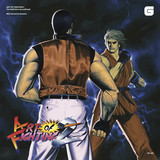
- A1: Theme Of Art Of Fighting 2 (Title)
- A2: I Chose This One (Player Select)
- A3: The Horse And Me (Ryo Sakazaki Bgm)
- A4: Ferrari Man (Robert Start Demo)
- A5: Swing The House (Robert Garcia Bgm)
- A6: Gang (Jack Turner Bgm)
- A7: Chinese Old Man -Neo Asian Mix- (Lee Pai Long Bgm)
- B1: The Pumpkin And The Clown (King Bgm)
- B2: Towards Glory (Mickey Start Demo)
- B3: Prelude To Glory (Mickey Rogers Bgm)
- B4: Bonus Game (Bonus M.e. ~ Bonus Select)
- B5: Acquisition (Bonus Success) ~ Again, In The Next Chance (Bonus Failure)
- B6: Initiation To The Super Special Moves (Old Temple ~ Old Factory)
- B7: Nature (Energy Enhancement Screen) ~ 100-Man Kumite
- B8: Next Stage (Movement Map Screen)
- C1: Mustang Man (John Crawley Bgm)
- C2: The Way Of The Shinobi (Eiji Kisaragi Bgm)
- C3: Foghorn (Temjin Bgm)
- C4: Diet (Yuri Sakazaki Bgm)
- C5: Master (Takuma Sakazaki Bgm)
- C6: Blue Moon Factory -Oh Oh Big Mix- (Mr.big Bgm)
- D1: Commissioner (Geese Taking Demo)
- D2: Huh Geese (Geese Appearance Demo)
- D3: A Kiss For Geese -Cyber Edit- (Geese Howard Bgm)
- D4: Towards "Fatal Fury" (Geese Escape Demo)
- D5: Let's Meet In "Fatal Fury" (Geese Epilogue)
- D6: Bright, Enjoyable (Ryo, Robert, Yuri, Temjin Ending)
- D7: Ambition (Jack, Big Ending)
- D8: Here Is A New Medicine (Lee Ending)
- D9: A New... (Mickey, John Ending)
- D10: The Way Of Fighting (Kisaragi Ending)
- D11: Hope (King, Takuma Ending)
- D12: Too Long!! (Staff Roll)
- D13: Continue ~ Game Over
Japanese Edition[20,38 €]
Beautiful and highly collectible item: 2xColored LP (Orange / Translucent) + Booklet + Gatefold. Both CDs and 2LP contains download code. Official licence with SNK.
The soundtrack for the sequel to SNK's classic fighting franchise, ART OF FIGHTING 2, is now available on vinyl! Featuring 34 breathtaking NEO GEO tracks across 2-LPs and CD, take the ART OF FIGHTING 2 soundtrack for a spin and relive the classic days of SNK music.
Liam Bailey follows up his 'Ekundayo' album with this heavy hitting remix 7" featuring two absolute legends. The A side is a remix of Champion featuring Black Thought of The Roots. Black Thought kills the first verse finding the pocket over the Leon Michels produced reggae banger designed to bust up woofers and blow out dance floors. Liam and Thought combine to sing praises to a woman worthy of all the admiration they can muster, and in doing so, they take what was already a classic to another level. The B side is straight from the far flung corners of outer space. Producer Leon Michels strips down and revamps the album cut Ugly Truth, making room for the most special of guests, the one and only, Mr. Lee "Scratch" Perry. The Upsetter switches between singing and talking, one minute proclaiming his powers and the next playing with the title of the original tune. Some proper Lee Perry business alongside the already unstoppable chemistry of Liam Bailey and Leon Michels...An absolute Big Crown Surehot.
- 1: Unlawful Assembly
- 2: Content 3. Before I Ask
- 4: Why Are We Waiting
- 5: Create The Visitor
- 6: We Can Really Feel Like We?Re Here
- 7: More Data
- 8: I Didn?T Know I Was Dead 9. Failure
- 10: Don?T Don?T Get Freaked Out
- 11: Anything Else
- 12: Attractive Target
- 13: Open Your Mouth
- 14: Incomprehensible Solution
- 15: The World Will Decide
Negativland’s mirror image sequel to last year’s True False, The World Will Decide turns the focus away from the very human inability to accurately define reality, and towards the technologies being built to do a better job at it. But if sorting true from false seemed like a full time job back when all one had to keep track of was one’s own mind, life alongside the machines built to connect everyone only seems to multiply the uncertainties. On The World Will Decide, those uncertainties are made almost deliriously danceable: a netweb of densely sampled voices melting speech back down into music and back again, into what everyone can agree are the real questions—did that firefly really land on your finger? Would you like to be arrested? Does this app connect you to people, or replace them? Is this post an example of inauthentic behavior? Do people have to die? Or, as one of the many sampled voices on this work assures the listener: we can really feel like we’re here.