Der nigerianische Musiker Fela Kuti gilt als Begründer des Afrobeat. Das Label Knitting Factory legt nun verschiedene Werke aus dem Backcatalogue als neue Vinyl-Edition vor. Diese entstammen ursprünglich dem von Brian Eno zusammengestellten Set "Vinyl Box 3/Compiled by Brian Eno" und waren einzeln nicht erhältlich. Schwarzes Vinyl / 180g. Das 1971 aufgenommene Album "Shakara" begründet das Genre des Afrobeat und experimentiert mit dem Einsatz musikalischer Mittel: Erstmals mit zwei Gitarristen, die ihre Riffs parallel anlegen, werden Überlagerungseffekte geschaffen, die der Musik einen starken Drive und eine hypnotische Wirkung verleihen. Über weite Passagen instrumental angelegt, ist "Shakara" von einem kurzen Text in Yoruba durchzogen.
Search:c da afro
Der nigerianische Musiker Fela Kuti gilt als Begründer des Afrobeat. Das Label Knitting Factory legt nun verschiedene Werke aus dem Backcatalogue als neue Vinyl-Edition vor. Diese entstammen ursprünglich dem von Brian Eno zusammengestellten Set "Vinyl Box 3/Compiled by Brian Eno" und waren einzeln nicht erhältlich. Schwarzes Vinyl / 180g. 1973 entstanden, ist "Gentleman" der direkte Vorläufer zum legendären Album "Alagbon Close" - und alle Zutaten des legendären Afrobeat sind hier schon perfekt angelegt. Thematisch pendelt das Album zwischen Kolonialismus (das Titelstück) und persönlichen Erlebnissen. "Fefe Naa Efe" zelebriert die Überwindung von Herzschmerz, während "Igbe" (zu Deutsch "Scheiße") durchdekliniert, wann ein Menschen "scheiße" handelt: von Verrat bis zur mangelnden Selbstachtung ist die Rede.
The next volume of Wonderwheel's long running Turntables on the Hudson series, curated by Nickodemus, heads down to the Caribbean encompassing diverse music made for the dancefloor. TOTC touches on the culturally rich shores of Cuba, Puerto Rico, Haiti, Jamaica, Belize, Mexico, Colombia and the USA and beyond with Island inspired vibes.
This double 7" taken with our favorite cuts from the compilation features tracks from DJ Jigoe, Captain Planet feat Chico Mann, Corrado Bucci, and Poirier. On the A side, Afro Cuban artist and recent US & UK Press Darling DJ Jigue gives us the stripped down, Cuban house stomper that is "RIVE", while on the B side Italian producer Corrado Bucci teams up with the classic Columbian group Los Corraleros de Majaguel for a brand new modern take on their Cumbia classic "La Cuidad De Eterna Primavera". On the C side, Captain Planet & Chico Mann's tropical AfroLatin dancefloor smash "Aguacero" finally sees vinyl release, while on the D side, Montreal producer Poirier delivers a jumping Haitian/Creole tune "Pale Mal" with Fwonte on vocals to round out the compilation.
The next volume of Wonderwheel's long running Turntables on the Hudson series, curated by Nickodemus, heads down to the Caribbean encompassing diverse music made for the dancefloor. TOTC touches on the culturally rich shores of Cuba, Puerto Rico, Haiti, Jamaica, Belize, Mexico, Colombia and the USA and beyond with Island inspired vibes.
This double 7" taken with our favorite cuts from the compilation features tracks from DJ Jigoe, Captain Planet feat Chico Mann, Corrado Bucci, and Poirier. On the A side, Afro Cuban artist and recent US & UK Press Darling DJ Jigue gives us the stripped down, Cuban house stomper that is "RIVE", while on the B side Italian producer Corrado Bucci teams up with the classic Columbian group Los Corraleros de Majaguel for a brand new modern take on their Cumbia classic "La Cuidad De Eterna Primavera". On the C side, Captain Planet & Chico Mann's tropical AfroLatin dancefloor smash "Aguacero" finally sees vinyl release, while on the D side, Montreal producer Poirier delivers a jumping Haitian/Creole tune "Pale Mal" with Fwonte on vocals to round out the compilation.
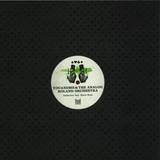
Poker Flat Recordings deliver another killer collaboration, this time between Berlin's youANDme and The Analog Roland Orchestra. The result is Reflection - an EP containing more than its fair share of pure dance-floor moments. The Analog Roland Orchestra is Michal Matlak, the Berliner whose intimate knowledge of dance music's most iconic machines has made him a much-in-demand producer and remixer. Teaming up with party starters youANDme as well as vocalist Black Soda, the title track of this release explores deep vibrations, merging 303 basslines, crisp 909 programming and a highly effective vocal. The Dub Tool reworks the vocals into a more spacey arrangement, adding atmosphere for DJs who like to keep their sets stripped back and trippy. The Hyenah remix flips the script and develops a deep afro-house inspired cut - the man from the Caymen Islands developing an irresistible groove stretched out over seven and a half minutes. The Acid mix gives an opportunity for the guys to get busy working the 303 to its full (un) natural potential, while the Morning Light mix locks into a cosmic vibe - shimmering synths over a smooth, rolling deep house vibe.
Ben Sun returns to Delusions for his 4th release on the label including three more tracks which show the Australian via London on his best form yet. Full Moon kicks off the Tides EP at full throttle with a muscular conga-led disco house roller. Slurping 909 hats and the most twisted of synth solos courtesy of regular collaborator Fantastic Man (and his beloved Juno 60) provide the icing on this simple bass-cake which never fails to energize the dancefloor in the most special of ways.
Star Ritual drops next, going heavy on the percussion once again for a minimal stripped back drum tool which packs a mighty punch. Dubbed out vocal hits punctuate the beautifully loose groove with subtle hints of afrobeat implied by the bassline making for a warm summer track dripping with tropical vibes.
Finally we have Glass Waves bringing the EP to a glorious close, all chiming synths, bouncing moog bass and waves of chords layering on top of a heavy drum track. Ben repping an early 90's blissed out Nu Groove mood on this one and managing to sound as fresh as ever in the process.
After spending much of the '70s humping his congos around New York as a session musician, Nigerian Aleke Kanonu pulled in some favours to record an album of his own. The result was Aleke, a criminally obscure Afrobeat/Funk/Jazz masterpiece featuring Buddy Williams on drums, George Davis on guitar and a cameo from Wynton Marsalis on flugelhorn. There are only four tracks on the album but they are all killers. N'Gwode sounds like Fela Kuti and Manu Dibangu hanging out with Bobby Womack, probably somewhere across 110th Street. 'Keep New York Clean' struts like Shaft after a successful bust. And 'Mothers Day' keeps things sweet and soulful, before Wynton Marsalis brings back the groove with his flugelhorn on 'Home Sweet Home'. Until recently you would have had to take out a second mortgage to get hold of Akele. And sold a kidney for the Happiness/Nwanne, Nwanne, Nwanne 12'' Kanonu released a year later. Thankfully PMG has re-issued the LP and the EP, with the CD version containing both. - Peter Moore,
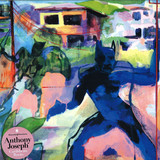
Strut team up for the first time with respected French label Heavenly Sweetness for the brand new album by the inspired poet, novelist and musician, Anthony Joseph.The Caribbean is an influence that runs through Joseph's discography, obliquely or headon, suggested or on full display. It resonates on each of his albums, from the furious trance of 'Bird Head Son' to the more polished 'Time'. On 'Caribbean Roots', he has now decided to turn a guiding thread and a reference point into a communications cable - a powerful bond that makes light of distance and braves the seas to link his island to that of his friends in the Caribbean arc, dancing to the strains of tumbélé and mendé only a few miles
from Port of Spain where people live it up to rapso and soca beats. Caribbean Roots' represents a return to his roots for Anthony Joseph, who has always remained true to a powerful, deep-seated sense of his Caribbean identity. Having started
out as a joint project with the outstanding percussionist Roger Raspail (Cesaria Evora, Papa Wemba, Kassav), 'Caribbean Roots' swiftly grew into a creative force incorporating
the rhythms, sounds and vibes that rock the Caribbean from San Fernando, Scarborough, Kingston and Les Abymes to Port-au-Prince and Havana. Backed by a band made up
of a blend of local musicians, the album attempts to unite the different islands into a single entity whilst ensuring that the identity of each is in no way diluted by the mix instead creating a richer and stronger alloy. The saxophones of Shabaka Hutchings (The
Heliocentrics) and Jason Yarde, the trumpet of Yvon Guillard (Magma), the bass of Mike Clinton (Salif Keita) and the trombone of Pierre Chabrèle (Creole Jazz Orchestra) all combine to form a group of Caribbean All Stars to which Andy Narrell, the master of the steel pans, brings ringing drum beats. The album features bursts of catchy rhythms and slow percussive riff progressions, as on a film soundtrack, incandescent voodoo funk and rhythmic high-speed frenzies shot through with free-jazz sax. This reunion of the Caribbean diaspora was never meant to come up with a formula divisible into eleven separate tracks - its goal was to explore and discover new sounds. And all of this under Anthony Joseph's guidance, as he spins his lyrical blend of afro-futurism and surrealism, commemorating the Caribbean people's sometimes violent resistance to colonialism. Anthony Joseph, one moment a chronicler reciting his text against a background of simple percussion, the next a storyteller possessed by the power of a hypnotic bassline, then an adventurer chanting among mangroves where the rhythm section and the brass have created an impenetrable thicket. At turns, an MC too, strutting to a fat, throbbing groove in vocal tandem with Sly Johnson or David Rudder to pay tribute to Mighty Sparrow, the undisputed and indisputable king of calypso
MONDO DISKO club has been, for over the past 16 years, the flagship for discerning electronic music lovers and dancers in Madrid. With a loyal and enthusiastic crowd and a booking policy that combines a selection of solid resident djs alongside a list of high quality international artists, creating a record label seemed to be the most reasonable step to follow..
MONDO DISCOS is born as an extension of the club, with the sole intention of bringing to light musical projects that excite us, projects with which we feel particularly identified.
For our first reference, which we found particularly important as it will set the tone, we have a very special and mysterious proposal called MENTHO. This is the brand-new side project of a well known house duo that wishes to remain anonymous for now, and wanted to dig deeper into their more experimental side
Teo's Sock consists basicaly on a mix of electronic, experimental music, halfway between mental electronic vibes and instropected techno. Polirithmic and intrincate patterns with an afro sounding background, deep and moody synth work and an overall endless melodic vibe.
Three years on from the release of the critically acclaimed debut album, Undergrass, Mushrooms Project return to Leng with a two-track taster or their forthcoming follow-up full-length.
In the intervening years, Giorgio Giri and Marco Lentano have hardly been slacking, further exploring their unique blend of glistening Balearica, dubbed- out disco, Italian Afro-cosmic and psychedelic nu-disco via EPs for Horn Wax, Uber and Hell Yeah! Recordings. Their latest two-track missive is undoubtedly amongst the Italian duo's strongest work to date. The A-side boasts 'Dirty Bolas', an effortlessly summery groover destined to soundtrack sultry evenings and sun-baked afternoons. Its' rolling, percussive funk groove and undulating electric bassline keep the action moving, but it's the tumbling guitar solos, toasty
keys, humid electronics and atmospheric feld recordings that catch the ear. Flip the 12' for 'Sunset Ballad', a near ten-minute epic that more than lives up to its' name. Soft, delay-laden acoustic guitar passages and yearning electric piano fourishes set the tone, before the Parma-based production duo
gradually ups the pressure via a shuffing groove, whispering acid lines and quietly bubbling synthesizers. It's undeniably rich and life affrming, but best appreciated while lying fat on your back.
Dirty Bolas will be featured on the duo's second album, which is slated for release in the fnal quarter of 2016. For now, you'll have to make do with these two slices of seductive, sun-bright brilliance.
We've had our eyes on Obas Nenor for a while and after his disco-meets-Detroit affair on 'Mahogani', and some great releases on his newly started own label 'Nenorian music' and 'Sol Power', we're happy to share his work for Heist with you. 'The Ceaper Buing EP" features 4 original cuts and a remix by Swedish "Mr. Tophat" that navigates somewhere between really weird, and really groovy. If you've seen any of his studio videos, you'll see he's has a great mix between live instrumentation, and sampling on his MPC, and each track on this EP has so many great elements working together, that it will be hard to pick a favourite. "The doors" has a great filtered funk loop going on with some roughed up disco percussion, whereas the Tophat remix twists and turns the original into somewhat of a tribal(ish) drum workout that is probably best enjoyed in a really really dark room. "Glimpse of light" has some really interesting sampling going on with a feel that is almost 'rock', but gets more and more disco with some lovely synth work as the track progresses. As a counterpart to the first part of the EP, 'Wacky' slows things down to give you a summery, afro inspired track that we forced him to send us after we saw a short clip online of him jamming away on his Korg x-911. UV lights is a somewhat special track for us that you wouldn't expect on Heist at first, but makes for a great addition to our musical world. It's perfect 'hands-in-the-air' end of the night material, with a serene and emotional vibe that is really hard not to love. Altogether, it's a great EP that we're really happy to share with you. Sincerely yours, Lars & Maarten
Gari Romalis and Lello Di Franco - Dreamin For the uninitiated, our man Gary Romalis is the unsung master of Detroit's house and techno scene. Having DJed across the motor city's top venues for the last three decades, Gary is somewhat of a seminal figure for many of Detroit's DJs currently at the forefront. Following a slew of high quality releases on various labels over the past few years, Gary now unleashes that special flavour on us for SKYLAX 142! He is not alone though. With him, he brings all round Italian partymaker, and top selector in his own right, Lello Di Franco. Let me tell you, this duo's collaboration is something to behold. Throughout all 3 tracks on the record, Gary and Lello maintain the essence of what the Detroit underground is all about; stripped back tracks with soul that never feel like they go 'big' for the sake of it. While Dreamin (Wanda Mix) may be packing a big kick and power clap combo, it's the elegantly filtered, jazzy sample that will leave you wishing that the track lasted forever. The vibe takes a dip right into the deep in Detroit Underground (Beat Dat Mix). Spacious pad synths alongside a mesmeric vocal carry us through. Taking a step back up, Afrobeat rounds off the EP, made with a solid toolkit of afro-centric samples.
A. Ayaléw Mèsfin ft. Black Lion Band - Ghedawou
Ethiopian dance floor Funk rarity originally released on Kaifa 7' (KF 31) in 1976. Hand claps, guitar lines and call and response lead vocals punctuate the driving bass line and understated drum groove.
Mesfin played primarily at the Lumumba Club in Addis Ababa's red light district and released many 45's and cassettes during the mid seventies.
He worked very closely with the Black Lion Band (or Tequr Ambessa Orchestra)
AA. Mulatu Astatke ft. Feqadu Amdé-Mesqel - Asmarina
Laid back, drum-heavy, Ethipian jazz taken from the legendary Ethio Jazz' LP on Amha (AELP 90). Typifies the sound of the country and the period, truly classic stuff.
Mulatu will be touring heavily in 2016, which we are very much looking forward to.
Hailing from Ghana, The Apagya Showband was formed by the legendary Ebo Taylor and Ambolley after they left 'Uhuru Dance Band'. The group produced only a couple of singles.
'Tamfo' is a joyous, uptempo Afro-funk groover, laced with horns and highlife guitar lines.
'Mumude' is a fast paced, drum and percussion-heavy, folklore-based song from 1974. Originally released on Essiebons 7'.
'Sidetracking - Part 1: Prologue' is the first vinyl taste of Jona's de- but album project for Alex Niggemann's forward-thinking AEON la-bel. The musical puzzle will be completed in February 2016 with the release of a second vinyl instalment, featuring 6 more original tracks, and the full 10-track album on CD format. Created over the course of two highly creative years, the concept for 'Sidetracking' was for Jona to invite some of his musician and producer friends to collaborate with him in the studio and compli- ment his album's solo productions. This impressive coming together (to be fully revealed over the coming months) features Varoslav (Rue de Plaisance, Paris), Usio (Studio Barnhus), David K (Cocoon), Bo- livian percussionist Daniel Aguilar, Italian pianist Giovanni Verga, and Edinburgh-based producer The Reverse Engineer. Driven by his desire to explore new sound perspectives and ideas, Jona has carefully forged his career path by consistently creating exciting and forward-thinking music. His previous label outings: 'Traffic' on 'Lost Tapes Volume 1' (AEON010) and 'Gemini EP' (AE- ON016) have seen him fine-tune his own unique sound. By incor- porating a wide range of styles into his tracks, Jona strives to break down unnecessary boundaries and explores new ideas and ways to ignite that hallowed dancefloor flame. It is therefore no wonder that his collaborative creations for 'Sidetracking' have yielded such stimulating aural delights. Fittingly, the album prologue opens with a track whose style is heav- ily influenced by the jazz music that Jona was so in love with dur- ing his formative years. Calling on the somewhat mysterious Usio (whose 'Kuwa Huru' LP on Studio Barnhus should be checked by everyone) to join him in a studio jam, has resulted in 'The Chase', an utterly compelling afro-beat influenced percussive groove, topped with swirling funk-fuelled stabs and strings, mesmerising chiming piano, and a large helping of pure, hip-swinging goodness. Taking 'The Chase' on an entirely different and yet perfectly com- plimentary twisted trip, AEON family members Simone Sinatti and Marco Paladin (aka Speaking Minds) conjure up a futuristic technoid disco demon that is all about throbbing energy, sweat, darkness and hissing smoke machines - perfect ingredients for an unforget- table strobelight serenade. Changing the mood entirely and cutting the tempo to a dublicious skank, 'Transmission Breakdown' sees Jona's experimental creative juices in full flow, as he teams up with Edinburgh-based digital com- poser and sound artist Dave House (aka The Reverse Engineer) for a delightfully hazy downtempo jam. Both as an artist and a DJ, Manchester's Marcus Intalex has been at the forefront of soulful, musical drum & bass for what seems like forever. A passion for techno has always run deeply through his music and under his Trevino moniker he is also a powerful creative force (check his recent 'Front' album to get the full picture). Here, he takes 'Transmission Breakdown' on a magical excursion, filled with subtle, hypnotic, evolving energy, anchored with an irresistible pul- sating bassline throb - a perfectly synergetic interpretation to round off Jona's 'Sidetracking' album prologue in style.
Ruff Daft returns, and after a various artist EP for number 7, number 8 on the label goes back to the founder, with three new tracks from Cottam'Washed Out' kicks things off, at the cross roads between Mood Hut & Basic Channel where dub techno sensibilities meet dreamy chords for a delectable deep house track. 'Horns' harks back to Cottam's earliest releases, with an afro-ish horn loop teased out over four minutes until the full loop and bass kick in to devastating effect.A Ruff Draft' sees Cottam look back towards his techno roots, with a killer kick drum and raw acid lending an abrasive edge to a well rounded EP of varied styles.
Amazones de Guinee - SambaPure vibes to start our series. Live and direct, high energy African funk with a powerful vocal, recorded live in Paris in 1983.Hailing from Guinea they were the countries first all female group, formed by members of Guinean army nonetheless. Their lead percussionist Kade Diallo was killed in a car crash just days after returning from a tour of France in the early 80's. The group did not record again until 2008, but they continue to tour now, with a new generation of fans.Taken from the sought after 1983 album 'Au Coeur De Paris', previously unreleased on 7'.Moussa Doumbia - SambaMalia born Moussa Doumbia and was a prolific saxophonist, composer and arranger, who lived in Abidjan, Ivory Coast.He fused African and Funk rhythms in his own unique style, comparable to the likes of Fela Kuti, Orchestre Poly Rythmo de Cotonou and Ebo Taylor. Moussa's voice is strongly reminiscent of the almighty James Brown. Similarly to Fela and The Shrine, Moussa played at 'Boule Noire', a club in the cosmopolitan area of his town, Treichville. Every night they would play their own styles for hours to rich businessmen and locals.'Samba' is taken from his 1980 LP 'Lassissi Presente Moussa Doumbia' released on Sacodis. Extremely hard to find.
- A1: Abayomy - Obatala (Pd)
- A2: Zebrabeat_Zebrabeat Afro - Amazônia Orquestra (Zebrabeat)
- A3: Burro Morto - Lúcifer Colômbia (Daniel Jesi/Burro Morto)
- A4: Ive Seixas - Cervejas Populares (Ive Seixas)
- B1: Iconili - O Rei De Tupanga (Iconili)
- B2: Zulumbi - Zulumbi (Rodrigo Brandão / Lúcio Maia / Pg / Dengue)
- B3: Passo Torto - Faria Lima Pra Cá (Kiko Dinucci / Rodrigo Campos)
- B4: André Sampaio E Os Afromandinga - Ecos De Niafunke (André Sampaio)
- B5: Fabrício - Feito Tamborim, Pará Céu (Fabrício.)
Over the past few decades, there has been a seismic shift in Brazil's musical landscape. A plethora of varying musical undergrounds has developed across the nation. While Rio and São Paulo have been overwhelmed with networks of talented musicians for a long time, creative life is now bursting all over the country. Amplificador exists to document and propagate the wonderfully diverse music currently blossoming from Brazil's vivacious and geographically varied musical undergrounds. Presenting an up-to date insight into Brazilian music, this compilation draws together some of the components of 'Novíssima Música Brasileira' (brand new Brazilian music), ranging from afro-grooves to rock, to modern samba and MPB. The music reaches back across Brazil's incredibly rich musical and cultural traditions, while also taking in influence from other movements around the globe.
Having begun life in 2012 as a Brazilian music blog run by Marcelo Monteiro, Eduardo Rodrigues, Mateus Campos, and Ricardo Calazans, the aim of Amplificador is to document and propel to wider audiences, Brazilian music of the '00s and '10s generation. This is a task made more significant by obvious changes in the way music is consumed. 'People are no longer obliged to listen to what the radio and TV are presenting. There is a whole new generation that wants to listen to new bands and new sounds and we try to connect those bands with other bands, producers, fans and even the mainstream.' These changes in technology and the way music is discovered and shared have developed parallel to the proliferation of these emerging scenes. The ostensible decentralization of the music industry means the promoting and filtering work of journalists and blogs, like Amplificador, have become increasingly important, as people try to keep up with the tsunami of new music and media flooding the country on a daily basis.
Marcelo uses the example of the Mangue Beat movement to explain a trend in contemporary Brazilian music that looks both inwards, to Brazil's own musical traditions and outwards, to movements around the world to create a novel, localised identity: 'The 90's Pernambuco art-social movement was inspired by Coco, Maracatu and Forró all mixed with modern riffs and grooves. The mythical
revolutionary Chico Science, his Nação Zumbi, Mundo Livre, Siba, and many others do this blend perfectly. There are also the references to the older generations and masters - Gil, Caetano, Luiz Gonzaga, João Gilberto, Tim Maia, Jorge Benjor - as a constant inspiration for all bands.' This is very much the case for the Brazilian artists of today.
Music is unquestionably informed by place. Brazil has always been famed for its regional differences in this sense. Indeed there are still pronounced variations between the scenes of Rio, Sao Paulo, Natal, Goiânia, Belo Horizonte and Belém for example, there are also great divergences within cities and while technology has brought changes to the way musical influences are shared, there are cultural differences, rooted in folkloric traditions, that aren't going away. Expressing his appreciation for this fact, while highlighting the potential of Brazil's spread of musical flavours, Marcelo explains that 'what we have now is new ingredients to make an even better mixture.'
This compilation heavily features music from a scene in Brazil's current musical make-up, which draws inspiration from African music, particularly Afro-beat music. Abayomy Afrobeat Orchestra from Rio formed because of their shared love of the music of Fela Kuti, uniting initially in 2009 for a jam session in his honour. But what sets Abayomy apart from other groups of a similar nature, is the fact that their sound also brings with it the songs and rhythms of candomblé. In this sense, Abayomy was the first band of its kind. The thirteen members of the orchestra have a palpable current of Rio's musical heritage - its rhythms and culture - running through them. So while their sound is distinctly African, it is also inherently Brazilian. Similarly, Zebrabeat Afro-Amazônia Orquestra draw upon traditional guitarradas and carimbos from the state of Pará and fuse these with the poly-rhythms of Afrobeat to create another regional hybrid, which stays true to both its Amazonian and African roots, yet which results in a very fresh, Brazilian sound. From Belo Horizonte (capital of Minas Gerais), Iconilli are another key band on Brazil's Afro-groove scene. With influences as varied as funk, jazz and psychedelic rock, congado, mining harmonies, maracatu, coco, ijexá, carimbó, Iconilli somehow manage to balance all of these sounds in such a way that makes it impossible to pin them down. From the Northeastern city of Joao Pessao, Parayba, Burro Morto's pshychadelic afro sound leans more towards rock and funk influences, with hint of regional Brazilian rhythms such as frevo and forro. They add another flavour to the Brazilian afro-groove scene: just one of the many exciting facets of Novíssima Música Brasileira.
While African-inspired music features heavily on the compilation, it is just one of the many styles within. Ive Seixas has a fresh approach to MPB, based on traditional rhythms and instrumentation, punctuated by a pop sensibility, coupled with a powerful female vocal. As an artist she is a product of a 'Do It Yourself' outlook to creativity, taken from her love of rock growing up. In 2013 she embarked on a project of street performance: wandering, like a lonely troubadour with just her guitar. Ive and her project began to gain notoriety and shortly after, her first EP was recorded, featuring some important names of South Rio's underground scene. 'Cervejas Populares' taken from the EP, is a beautiful, sombre piece of modern Brazilian pop, with a traditional samba rhythm. Another artist of the new MPB scene is Fabricio, from the city of Vitoria, who's 'Feito Tamborim' melds rock and funk and is also clearly reminiscent of the old Brazilian masters. It's an appreciation for the national musical heritage, alongside a keen ear for melody and an acceptance of foreign influences that results in these promising new sounds of Brazilian MPB.
Sao Paulo's super group of the underground 'Passo Torto' have been at the helm of an emerging scene in the city: an innovative approach to samba which draws in and experiments with afro grooves, jazz melodies and rock structures. Their sound is naturally very Brazilian, but the nylon twang of Faira Lima Pra Ca, interspersed with ominous strings and light rolling percussion, seems reminiscent of Captain Beefheart or Tom Waits, as the band lament their frustrations with their native city through their music.
The Future of Novíssima Música Brasileira looks very bright. The main challenge (and purpose of this album) is to get the music beyond Brazil's underground and into view of international audiences. In the last 10 years this goal has become somewhat more attainable, as the Brazilian government has begun to see the internationalisation of the nation's culture as a strategic objective, with public projects gaining increased investment and backing. The continuing project of Amplificador is to reinforce this international bridge by writing, filtering and promoting the scene as a whole. There is a wealth of great music currently blooming in Brazil and using new media tools, Marcelo and the team, alongside many others, will passionately continue to get the voices of Brazil's underground heard.
The enigmatic Amara Touré from Guinée Conakry finally getting a well deserved compilation showcasing all of the 10 songs ever released between 1973 and 1980. Cuban influenced music of a different kind featuring amazing spaced-out guitar works!! Analog Africa compiles a complete collection of Amara Touré's Afro-Cuban compositions, originally released between 1973 and 1980."Lamento Cubana and Temedy are the two finest Afro-Cuban compositions ever recorded. As if they were played in a smokey, poorly lit ballroom where dark rum was sipped ever so slowly" - Vikram Sohonie - Ostinato Records
Analog Africa to release a compilation by Amara Toure, the enigmatic Afro-Cuban musician from Guinea-Conakry, showcasing all of the 10 songs he ever released between 1973 and 1980.
"Latin music, is it really foreign to us Africans I don't think so. Listen to the drums, to the rhythm. It all seems very close to us - it feels like it's our own culture," declared enigmatic singer Amara Toure. It is the late 50s, and Senegal is going crazy to the groove of Son Montuno and Patchanga. Brought to West Africa by Cuban sailors in the early 40s, these styles were immediately adopted by a flourishing music scene that did not hesitate to embrace the Caribbean sound, mixed it with their own Folklore, and, in the process, created something new. Through the unique cultural fusion of West African and Caribbean influences, Latin music took on a new and unique sound - the format was reinvented. Producer Ibra Kasseì and his Miami nightclub acted as the spearheads of this movement. They brought a breath of fresh air into Dakar's nightlife, further energising one of West Africa's most exciting cities. The demand for ballroom parties and live acts exploded, attracting numerous musicians from surrounding countries. One of the musicians who answered this call was percussionist and singer Amara Toureì, from Guinea-Conakry. Spotted by Kasseì while performing with Dexter Johnson, Toureì was asked if he would like to be part of a new project. Little did he know that this project would become a phenomenon.Immensely important for the development of Senegalese modern music, Le Star Band de Dakar, led by Mady Konate, became a sort of musical incubator and workshop, where many musicians learned and practiced their trade before moving on to become stars in their own right. Toureì's talent on percussion was undeniable, but it was his powerful and raw voice that captivated the producer. The fascinating way Toure interpreted Cuban music was unparalleled, and it was this feature that encouraged Kasse to recruit the unknown artist.
Although already brimming with incredible talent, Amara Toure's joining of Le Star Band de Dakar in 1958 began the band's meteoric rise to the top. The band quickly became Dakar's number one orchestra, and it cemented the reputation of the Miami nightclub as the hottest spot in the country. The place was packed nightly, and Dakar was boiling.
Amara Toure's Senegalese adventure lasted for ten years when he received an irrefutable offer and in 1968, joined by a few talented Senegalese musicians, headed to Cameroon and immediately formed the Black and White ensemble. Many live gigs later and it was time for the first songs to be recorded. A total of three singles were produced between 1973 and 1976. These singles, representing the first six songs on this compilation, fully epitomise and distill the essence of what Toureì had learned during his career. His Mandingue roots fused with the Senegalese sound that he had mastered - the perfect foundation for the Toureì's Cuban interpretations.
If Toure's intention was to create the most sensual music ever recorded in Africa, he might very well have reached this goal. The musicians on the recording sound like they are playing in a smokey, poorly lit juke joint, where dark rum was sipped ever so slowly, and the pulse of the music took up a life of its own. How many couples have danced, swayed, and melted together to the distinct sound of Amara Toure Nobody can say for sure ...
Amara Toureì's success poured across the borders of Cameroon, and in 1980 he went to Libreville, Gabon, to team up with the powerful Orchestre Massako. Toureì recorded an LP at that time which is hailed by many music aficionados as one of the very best African albums. The songs from that LP are the last four on this compilation. It took only ten songs for Amara Toureì to become a legend. These ten treasures, representing Toure ìs complete discography, have been carefully re-mastered from original session tapes and vinyl records, and will be released by Analog Africa on 22 June 2015. After the release of his LP in 1980, Toureì seems to have disappeared. Apparently he was last seen in Cameroon but it is unknown if he is still alive today. His music though is definitely alive.
Collecting Eddie Ruscha's cassette recordings over two compilation albums has been one of the highlights of the
label, so it seemed right to hand over the choice tracks to a set of his contemporaries from the City of Angels.First up is rising star Suzanne Kraft. The alias of Diego Herrara, very much a young man to watch. With releases for Running Back, Young Adults and Noise In My Head, as well as possibly EP of the year already as Dude Energy, while holding down being a member of The Pharoahs (ESP Institute / Not Not Fun) and not forgetting, one half of Blase with Mr Ruscha himself, he's a busy man so getting this remix took some effort! However, it was all worth
it, as Diego takes the crazy afro-stylings of Afrobotics and pulls it towards the danceflor, adding percussion and sirens, forging the originals vibes in to a ethno-beat club jam that is all about that heads down moment. Next up is the quirksum individuality of The Samps. The project of one of LAs fiest, but hidden musicians,
Cole M.G.N. Working with Nite Jewel, Ariel Pink and Puro Instinct is cool enough, but his solo Samps project is another level, with a mind-altering exploration of funk warped electronics. Sure enough then, his take on Shockers is just that, a mash of beats, bass and sample cut ups. This is pyschedelic dance music for the mind.
Flipping things completely is LA's Mr Funk himself, Tom Noble. Taking the laid back grooves of Underdogs, Tom does his trademark good time, party vibes with a killer boogie style remix. Letting the groove do the work, keys and a good deal of wiggle just led it all ride home. Finally then is something Emotional Response is all about, highlighting producers the label is fans of, but letting them explore alternate spheres. While Cameron Stallones' Sun Araw project has become one of the names in
modern psychedelic experimentation, little is known of the alter-ego Aristrocrat P. Child. With just one cassette of warped disco edits to his name, here he closes the EP with exactly that, a re-edit of cut up irreverance, twisted and looped to distraction - an ethereal experimental and modern musical genius...just like Mr
Ruscha.