Metaphon is thrilled to present this collection of 14 phenomenal electronic and electro-acoustic works by French composer Fernand Vandenbogaerde, realized between 1967 and 1984.
After his science studies Fernand Vandenbogaerde (1946) studied at the Conservatoire de Roubaix and did various classes and courses with a.o. Jean-Etienne Marie, Olivier Messiaen, Pierre Schaeffer, György Ligeti, Karlheinz Stockhausen and Bruno Maderna. He wrote analytical essays on mathematic music, in particular the work of Iannis Xenakis. Vandenbogaerde taught electro-acoustic music at various institutions and was director at the National School of Music and Dance in Blanc-Mesnil, near Paris. As a composer he wrote works for orchestra, instrumental and chamber ensembles, sometimes in hybrid form including tape and electro-acoustic configurations. He also recorded numerous tape compositions in Bourges, Paris, Ghent and at his home studio. His works have been presented worldwide on various leading festivals and events.
The compositions included in this edition are primarily tape works, meticulously recorded and produced, radical and most of all timbre oriented which makes his compositions focus mainly on sound while other parameters hardly change. In Vandenbogaerde’s own words: “What determines my pieces, at least all the ones in this collection, is that it’s the material that dictates me, that will predetermine the form”. This particular approach distinguishes him quite a bit from many of his contemporaries within the field of electro-acoustic music.
Another interesting aspect in Vandenbogaerde’s work is the integration of micro tonal scales (conceived by Mexican composer Julian Carrillo), on the compositions 'Modifications III' and the intriguing trilogy 'Drei Nachdenken über Hymnen an die Nacht'. All tracks are previously unreleased except the proto power electronics piece 'Anschlag' which was self-released in 1971 on his own Point Radiant label, as a compilation LP which also included a track by Tristan Murail.
quête:c mos
First LP in the ‘Signature Series’, a small new series in the Metaphon catalog, documenting previously unreleased archive works of less known composers. Metaphon presents their ‘signature’ in the most personal and elementary way.
Raoul De Smet (1936), mainly known for his numerous instrumental and chamber music works, started composing in the early 1960’s. Between 1974 and 1989 he also recorded several electro-acoustic compositions at the IPEM in Ghent, one of the more approachable crossroads for experimental music creation at the time. His work carries different moods and contrasts, a sort of expressive eclecticism where straight forward evolution often prevails over far-fetched intemperance. However, his work is far from obvious. The four distinctive tracks on this album portray a fresh and unpretentious enthusiasm of a composer discovering new electronic tools.
The industrial treasure chest of Laurent Petitgand & Thierry Mérigout Geins’t Naït unit gets a third and final archival jag, playing to a spectrum of styles from misfit tape cut-ups to sludgy grooves and trampling sidewinds of the filthiest, sickest calibre.
The three volumes mining the Geins’t Naït Archive have parsed some 40 years of work for the most potent industrial blatz, culminating in some of the gnarliest and richest tackle on this final volume. As also highlighted on releases via Vladimir Ivkovic’s Offen Music label, it’s hard to fully surmise Geins’t Naït’s oeuvre, but you kinda know it when it hits. It’s industrial, or more specifically post-industrial, in the classic sense of everything after Throbbing Gristle and their famous label; buzzing with atonality and often heavily rhythm-driven, but not necessarily built for the club. In some senses, it's adjacent to freakier ‘floors in a way shared by the likes of Bourbonese Qualk or Din A Testbild, likeminded miscreants who emerged in TG’s shadow during the ‘80s.
‘Archives 3/3’ opens with a particularly Gallic slant on the paradigm in ‘Michel’, and shells a slew of thee crankiest gear that shares a certain tone and thrust toward trippy abstraction with Anne Gillis. ‘Abstrac 2’ finds them speaking in ogreish tongues on an uncanny waltz, before dialling up the pomp with near-EBM levels of muscularity and fanfare on ‘Poiro’, and unleashing reverse-looped heck like a La Peste joint in ‘GN is Good For You’. The keening pulse and nose attack of ‘Rappel’ reminds us of CHBB, and the evil slug of ‘Hate’ feels summoned from Parisian catacombs, whilst ‘Wladimir’ stands out for its phosphorous synth burn and prototypical Él-G poetry, leaving ‘Base Cour’ to souse the senses in distortion and barnyard squabble.
- Rabbits
- Rest Yr Skull
Punk Slime Recordings are proud to present a new double A-sided split 7" which features the return of two of Sweden's most exciting acts Stockholm slacker pop project Magic Potion and Nora Karlsson's acclaimed lo-fi pop project Boys. The 7" features first tastes of both bands' upcoming records with Magic Potion contributing "Rest Yr Skull", their first piece of new music since last year's acclaimed debut lp Pink Gum, and Boys showcases their first ever studio recording from the long-awaited debut lp which is set to be released early next year.The split 7" is due on October 20, but expect to hear music sooner than that with "Rest Yr Skull" arriving in early September ahead of Magic Potion's EU tour supporting Chastity Belt.
Sub Oscillator AKA Russ Gabriel has been part of the UK dance music scene since 1992, spanning everything from Breakbeat, Hardcore, Techno, Electro, House, Acid, Broken Beat and Ambient. But his first releases were under the guise of Sub Oscillator, releasing 3 EPs during 1992.
This is EP 2 that was originally released on Stu J’s Adrenalin Recordings out of Southampton and was dropped frequently at the legendary Madisons club in Bournemouth, where Stu was the resident DJ.
The most collectable of the 3 EPs under this name, it brings together the sounds of the hardcore rave scene, breakbeat and even some proper hardstyle Euro techno vibes too.
Synthesizer Evolution: From Analogue to Digital (and Back) author Oli Freke returns with a new volume in his Synthesizer Evolution A6 zine series. The modular resurgence of the past 25 years has been a wonder to behold. Where musicians were once chained to their DAWs, we are now liberated once again to wire, patch, and modulate in the real world, choosing from a mind-boggling array of options.
Modular Greats celebrates the fusion of art, logic, science, and serendipity in modular synthesis, highlighting some of the best-selling, most creative, and most impactful modules of the 21st century. Featured manufacturers include Make Noise, Mutable Instruments, TipTop Audio, Intellijel, Rossum Electro-Music, Doepfer—and many more!
The official re-release of this 1968 Garage grail in direct collaboration with lead signer & songwriter for The Outcasts, Al Collinsworth. As featured on DJ Shadow & Cut Chemist's 'Product Placement', this 45 has remained an iconic anthem across various scenes. We're honoured to contribute to The Outcasts legacy, showcasing their single close to 50 years since it was originally released.
In the words of Al:
'In the spring of 1968, I wrote the song 'Loving You Sometimes' and recorded it with a young group from Ashland, KY called The Outcasts. The group included Dick Hall, Nick Wickware, Ronnie Gibson, Ralph Morman and I. A local record company, Plato Records from Huntington, WV heard us at a local bar and signed us to a record deal. Queen City Recording Studio located in Cincinnati, Ohio, was our first experience with a multitrack studio in a big city. On the morning of the session, we piled into Nick's van and drove from Ashland to Cincinnati, with most of us sitting on the floor with our gear. When we stepped out of the van, we knew we had started an adventure, one that has lasted nearly half a century.'
Synthesizer Evolution: From Analogue to Digital (and Back) author Oli Freke returns with a new volume in his Synthesizer Evolution A6 zine series. The first two volumes (Vintage Synths and Drum Machines & Samplers) focused on vintage electronic instruments from the 1970s and 1980s. Volume three moves into the 21st century, showcasing a selection of the most interesting, impactful, and—arguably—best synthesizers of the past two decades.
The synths in this book celebrate the vast range of sonic possibilities now available to musicians and producers. From analogue wonders to extraordinary digital creations, from tightly designed monosynths to open-ended polyphonic beasts, each one is more marvellous than the last!
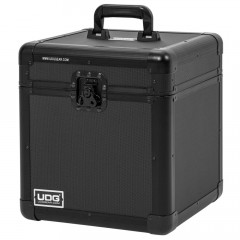
We, at UDG have further fined-tuned already a great design concept
of our flight case into one specially for the most discerning DJ/
producer. Constructed from aluminum thus providing an extremely
stable structure with lighter weight compared to traditional flight
cases.
The UDG Ultimate Record Cases are designed to keep your vinyl
protected from accidental damage when you transport it to and
from gigs. They’re compact and lightweight yet tough enough to
keep your valuable records safe.
FEATURES
• Fits approximately up to 80 12"/LP vinyl records
• Lighter weight than traditional flight cases
• Black Diamond finishing surface
• Corrosion resistant aluminum profiles with strong rounded corners
• Fully-lined with high density foam protective padding
• Ergonomic & sturdy carry handle
• Strong butterfly lock and solid metal hinges
• Rubber feet at the bottom for support in standing position
• Several additional rivets for improved solidity
• Capacity will depend on the thickness of the records & their packaging
"Equinox", Gianni Marchetti's 1977 twin album of "Solstitium", released in a handful of promo copies by RCA in their renowned "Original Cast" series, takes us on a journey through the author's groovier and wilder temperament, feeling as fresh and surprising today as the day it was made, offering immediate understanding of the reasons why it has remained one of his most sought after - and virtually impossible to find - titles over the decades.
RIYL: Piero Umiliani, Sandro Brugnolini, Stefano Torossi
The limited release as part of RCA's "Original Cast" series only increased its mystique, making it a coveted piece among collectors and connoisseurs. The album's distinctive character lies in its spontaneous, freewheeling approach, which contrasts with the more polished productions of the era. It's a perfect example of Marchetti's unique vision, where each track seems to evolve organically, offering both intricate musicianship and a sense of unrestrained creativity.
- A1: The King For A 1000 Years
- A2: The Invisible Man
- B1: Born On Judgment Day
- B2: Pleasure Drone
- B3: Mrs. God
- B4: Silent Rain
- C1: Occasion Avenue
- C2: Light The Universe (Ft. Candice Night)
- C3: Do You Know What You Are Fighting For
- C4: Come Alive
- D1: The Shade In The Shadow
- D2: Get It Up
- D3: My Life For One More Day
- D4: Run (The Name Of Your Enemy) (Bonus)
- D5: Revolution (Bonus)
Blue/Green[28,99 €]
After the release of their highly successful self-titled album in summer 2021 (#1 in Germany and Spain etc.), HELLOWEEN -- one of the most respectable German metal exports and pioneers of German melodic speed metal -- are finally bringing their new anthems to the packed arenas, leading them all around the globe with their »United Forces« tour. The creators of the albums »Keeper Of The Seven Keys, Pt. I & II« (87‘/88‘), which are considered to be among the most successful German metal records of all time and are reckoned internationally as absolute milestones of power metal, haven’t only cemented but even expanded their status as giants of the scene. Caused by the pumpkinheads‘ aforementioned triumphant wave of success, the group’s back catalogue albums are also more in demand than ever which is why Atomic Fire are now set to release a series of brand new vinyl editions including the following hot HELLOWEEN records: »The Dark Ride« (2000), »Rabbit Don’t Come Easy« (2003), »Keeper Of The Seven Keys - The Legacy« (2005), »Gambling With The Devil« (2007), »Straight Out Of Hell« (2013), »My God-Given Right« (2015), and last but not least their latest offering »Helloween« (2021).
Watkins Group returns to Frequency Consortium for its second release, pushing further into the murky depths of dubbed-out desolation. Dubh Dubs (Dark Dubs) takes its name literally—seven tracks of cavernous low-end pressure, submerged echoes, and spectral atmospheres, drawing inspiration from the voids between worlds, the unseen corners of deep space, and the eerie stillness of unknown places.
Where Beanntan a’ Bhròin charted a course through the bleak grandeur of the Highlands, Dubh Dubs plunges headfirst into the abyss, embracing the weight of isolation and the slow decay of time. Watkins Group crafts a sound that feels at once infinite and suffocating—pulsing, restrained, and heavy with the dread of something just beyond reach. Tape-warped textures and submerged percussive mutations unfold in glacial movements, calling to mind the nocturnal dub abstractions of Porter Ricks, the blackened ambience of Thomas Köner, and the sub-heavy spirals of Rhythm & Sound at their most ghostly.
A study in tension and negative space, Dubh Dubs marks another compelling entry in the Frequency Consortium catalog—an offering for those drawn to the darker recesses of sound, where every echo leads deeper into the unknown.
In loving memory of my brother and kindred spirit - Marcus Rafferty
(Limited edition to 500 copies, remastered audio, pressed and printed in Indonesia) The 13 tracks contained in this compilation “Begadang: Soneta Group Best Songs, 1975-1980” are some the most innovative music that came out of Indonesia’s music scene in the 1970s, tunes that has cemented Rhoma Irama’s status as the king of the genre.
Dangdut is the biggest musical genre in Indonesia. Dangdut, onomatopoetic name from the sound of hand drums used in this type of music, is what reggae to Jamaicans, country to Americans or skiffle to mid 20th century British people. And in this genre of dang dut, the name Rhoma Irama looms large. He is until today the undisputable king of dangdut and his role as pioneer of the music is already in the history book. In fact, there's one book documenting the outsized role of Rhoma in establishing dangdut as the father of this music. The book is aptly titled Dangdut Story, written by Pittsburgh University music professor Andrew N. Weintraub.
Among Indonesian fans of dangdut, there’s this one misconceptions that dangdut music is that it is an indigenous art form from Indonesia and that it constitutes an amalgamation of local, traditional music of this Southeast Asian nation, with Malay music being the most prominent feature in the mix.
Dangdut pioneer Rhoma Irama is among the first to reject this assertion. “Dangdut music may have originated in Deli (in North Sumatra) but then got the influences from the West and India”, he said.
Indeed, most of Rhoma’s well-known compositions may have been influenced by Indian tunes but some of his best quality works owed much to the West.
Rhoma had long found home in Western pop music. In the early 1960s, after honing his guitar playing skill, Rhoma set up his first band Gayhand to play the tunes of The Beatles, Paul Anka and Tom Jones. In 1972, Rhoma won best singer title in a Southeast Asia singing competition in Singapore playing Tom Jones “I Who Have Nothing.”
Yet, nothing changed Rhoma’s fortune in the music industry, to a point where he decided to leave pop and switched to playing Orkes Melayu (Malay Orchestra) music, first with Orkes Melayu Purnama and later with Soneta Group.
His career soon took off with Soneta, especially after he introduced what ethnomusicologist William H. Frederick considered as “theatre”, through which Rhoma borrows many elements from stage performances of British and American rock bands. These elements, kitsch and pomp, he liberally adopted and became an inseparable part of dangdut itself; tight pants, long hair, platform shoes, glitter and glamour which would not be out of place in Elton John and David Bowie stage show.
And this is actually the contradiction of Rhoma’s brand of Malay music. “One might legitimately ask how imaginative, not to say bizarre, costuming and dancing with abandon could be related to some of the objectives of Rhoma has set for himself and soneta group”, Frederick wrote on his seminal work on the singer, Rhoma Irama and the Dangdut Style: Aspects of Contemporary Indonesian Popular Culture, published in 1982.
From technical point of view, Rhoma not only replaced the acoustic elements from Melayu Music with electric instruments but also created new synthetic sounds that has never been attempted before in Indonesia’s music industry.
Detractors like to point out how much he was indebted to Deep Purple, but a closer inspection reveals how he in fact had mined his influences even deeper.
Notice how Rhoma reproduced funk, which is all the rage in early 1970s, in the song “Santai” (Relax), this album’s closer or “Credit Title (Instrumentalia)” which opens this Darah Muda (Young Blood) soundtrack. The rubbery bass lines that open both songs can easily find home in any Sly and the Family Stone’s or Isaac Hayes’ tunes from that era. Other highlights of the song is the funky guitar licks and the droning Hammond a la George Clinton that stabs deep in the record groove. In the guitar solo, you can also hear the bark of George Harrison’s licks from “Taxman”.
The 13 tracks contained in this compilation “Begadang: Soneta Group Best Songs, 1975-1980” are some the most innovative music that came out of Indonesia’s music scene in the 1970s, tunes that has cemented Rhoma Irama’s status as the king of the genre. Only 500 copies were pressed for this compilation.
- Bloodboy
- Once In A While
- Not Going Anywhere
- Easing In
- Wasting Your Love
- Sugar Tree
- Don't Fall Back So Easily
- This Time I Lost My Mind
- A Whole Life
- I Could Be Your Hands
- You & Your Boyfriend
Als Sänger, Songwriter und Komponist verwandelt Emile Mosseri die menschliche Erfahrung in Gesang. Musikalisches Geschichtenerzählen ist sein Lebenselixier - ein Talent, das er mit Songwritern und Regisseuren geteilt hat, indem er Filme wie Minari & The Last Black Man in San Francisco vertonte - und das in letzter Zeit in den Mittelpunkt seiner Arbeit als Künstler gerückt ist. Unterstützt von einer Band, bestehend aus Meg Duffy (Hand Habits), Dougie Stu und Kosta Galanopolous, zog sich Mosseri im Herbst 2023 mit seinem häufigen Kollaborateur, Komponisten und Produzenten Bobby Krlic (Midsommar, The Haxan Cloak) nach Altamira Sound zurück, um das Fundament für sein zweites Album Tryin to be born zu legen. Das Album folgt auf sein Debüt Heaven Hunters und gemeinsame Veröffentlichungen mit Sam Gendel und Kaitlyn Aurelia Smith.
- Citizens Of Earth
- Threat Level Midnight
- Can't Kick Up The Roots
- Kali Ma
- Gold Steps
- Lime St
- Serpents
- The Beach Is For Lovers (Not Lonely Losers)
- December
- Smooth Seas Don't Make Good Sailors
- I Hope This Comes Back To Haunt You
- Rock Bottom
Light Pink Coloured Vinyl[30,21 €]
Repressed Blood Red Vinyl of NECK DEEP's sencond full lenght proper, originally from 2015. Kerrang!: "Life's Not Out To Get You" is a must-listen for any fan of pop-punk." #31 Greatest Pop-Punk Albums of All Time - Alternative Press: "Neck Deep have solidified their position as one of the leading bands in the new wave of pop-punk. Top 10 Essential Records of 2015" - - NME: "Neck Deep have produced an album that is both anthemic and emotionally resonant." - Rock Sound: "Neck Deep have delivered their most mature and accomplished album to date." #3 on Rock Sounds Top 50 of 2015 Following "Wishful Thinking," with their second studio album, "Life's Not Out To Get You", Neck Deep, released what is easily one of their most career defining albums and one of the largest albums in the pop-punk genre. - Featuring fan favorite songs: "December," "Can't Kick Up the Roots," & "Serpents" - DIY wrote the "full-length feels both quintessential and refreshing, a modern classic_The hooks are glorious, the bounce is addictive and it's a little rough around the edges for good measure." In the little over a decade since Neck Deep formed in the Barlow brothers' spare room in Wrexham, Wales, a lot has changed. From the scrappy, naively hopeful beginnings that define the starting of so many teenage bands, the pop-punks have gone on to be one of British Rock music's most successful global exports in recent memory: top 5 records in both the US and UK, global touring, viral hits and over a billion plays, just some of the fruits of ten years spent mastering their craft. - For Fans Of | Blink-182, Green Day, & State Champs
- A1: Hallo Wie Gehts
- A2: Otto Hahn In Stahlgewittern
- A3: Ab Nach Indien
- A4: Frau Mit Stiel
- A5: In Mogadischu
- A6: Das Finde Ich Gut
- A7: Liebe Tut Weh
- A8: Lesezirkel Melodie
- A9: Ostblock Girl
- A10: Tu Den Hammelsprung
- B1: Verbotene Früchte
- B2: Wir Gehen In Den Zoo
- B3: Was Kostet Die Welt
- B4: Kinderparty
- B5: Gesundheit (Anspieltip)
- B6: Kleiner Polizist
- B7: Ich Habe Migräne
- B8: Mein Erster Freund
- B9: Ein Kind Für Helmut
2019 Repress of one of the most outstanding records in the history of german avantpop/punk. Originally released 1981 on the legendary ZickZack label, the debut LP by Freiwillige Selbstkontrolle soon reached cult status and became one of the most important NDW / german postpunk releases ever. Active since today (and right now working on their 13th longplayer) F.S.K. were one of John Peel's all time favourites and actually did more Peel Sessions than any other band - besides The Fall, of course. Comes with extensive liner notes by NDW-historiograph Frank Apunkt Schneider (in german).
- A1: Fiesta En La Jungla
- A2: Fuga En La Selva
- A3: Tu Partida
- A4: Agua De Cachilde
- A5: La Chicharra
- A6: Dolor Y Pena
- B1: Izango
- B2: El Shiringuero
- B3: A Jenny
- B4: Linda Tocachina
- B5: Para Mi Gente
- B6: Tragedia En Uchiza
Carrying the torch of psychedelic cumbia, with a healthy dose
of surf guitar and Amazonian dancefloor flourishes from Peru
and Brazil alike, Fiesta en la Jungla by Los Dexter’s de Uchiza
is the first release from the newly formed London-label Ritmo
del Barrio. Originally released in 1982, it captures the finest
cumbia being made in Peru at the time, decked out with
frenetic surf-rock guitar riffs, rhythms floating on crisp
cumbia percussion and occasionally punctuated by carimbó
breakdowns native to the Pará region of north-eastern Brazil.
The album is filled with energy, a gem that was always
intended to animate any dancefloor. Peruvian cumbia came to national attention in the late 60s
through the recordings of Juaneco y su Combo, Los Destellos
and Los Wembler’s de Iquitos, but it’s had many revivals, and
Fiesta en la Jungla arrived when the style was going through a
major transition. In 1977, a passenger plane carrying most of
the members of Juaneco y su Combo crashed, killing everyone
on board. In 1980, Los Destellos retired, and Los Wembler’s
released their tenth and final record, they were ready for a
break. This left a big void in Peruvian music. Wasting no time,
Los Dexter’s Emerson Ruiz Mosquera took the opportunity and
gave his band new life, filling the band’s ranks with young and
energetic musicians who were hungry for success. He built the
new band around a solid base of dexterous guitars, a dynamite
rhythm section, and added oodles of percussion and an electric
organ, giving them a powerful psychedelic sound that called
back to the sounds of the original chichamasters, but added a
new sheen. Along with bands like Los Shapis and Los Walkers
de Huánuco, Peruvian cumbia was reborn as chicha in the
1980s, and was now the sound of Peru’s barrios up and down
the country.
Based in the city of Uchiza, on the edges of the Amazon basin,
Los Dexter’s were uniquely located in central Peru, closer to the
largest urban centres of the country than Amazonian outposts
like Pucallpa or Iquitos, and therefore better positioned to
travel to the furthest reaches of the country with ease. In a
sense, Los Dexter’s were a bridge between the Amazon and the
rest of Peru, a bridge over which the sounds of Amazonian
cumbia could travel to the rest of the country on their way to
becoming one of the most ubiquitous elements of Peru’s musical
identity. Fiesta en la Jungla represents Los Dexter’s in their third
iteration. Led by Emerson Ruiz Mosquera, who was just a
young boy in 1970 when his older brother founded the group
with four of his friends, the ensemble by the time of Fiesta en la
Jungla included Orlando Abad on the timbales and lead vocals,
Lucho Bendezú on lead guitar, Javier Quiroz as second
guitarist, Alejandro Almeira on bass, Rufino Bustamante on
keyboard, Ramon Siu on bongos and bells, Ivan Rios on conga,
and Emerson as musical director and composer. Remarkably,
most of the group’s members helped to write at least one
track, Los Dexter’s were a collective endeavour.
Reissued on vinyl for the first time by Ritmo del Barrio, this
record is essential for any collector of Peruvian cumbia.
Showcasing the unique sound of Los Dexter’s, it carries hits
like “Fuga en la Selva” and “El Shiringuero”, which are sure to
set any dancefloor on fire, combined with slower, carimbó-
infused cumbias like “Fiesta en la Jungla,”and “Agua de
Cachilde.” Its closing track, “Tragedia en Uchiza'', is a key
piece of local history and tells of the flooding of the
Chontayacu River in 1982, a mortal tragedy that affected
thousands of people. Despite the subject matter, the album
maintains a joyful vibe throughout, with high energy riffs and
irresistible rhythms, contrasted with terse love ballads, like “A
Jhenny.” It is both a piece of musical history, and a sure-fire
tool for the dance floor.
Los Dexter’s became a fixture of festivals and celebrations in
the provinces of San Martin and Huánuco, and from expanded
across the country, taking Amazonian cumbia from the
Peruvian Amazon, to the heights of the Peruvian sierra, the
coastal plains, and the capital city of Lima.
- Candyman
- Richland Woman Blues
- Police Dog Blues
- Shake Sugaree
- Vestapol
- Stagolee
- Green Green Rocky Road
- Frankie
- Police Sergeant Blues
- Buck Dancers Choice
- Delia
- Freight Train
Cassette[21,22 €]
Muireann Bradley is a young blues, ragtime, roots and folk guitarist and singer based in Ballybofey in County Donegal Ireland. “This is my first album. Most of these tunes were originally recorded by the great blues men and women who were making records from the 1920s and 1930s right up in some cases to the early 1970s. I have also found inspiration for the renditions recorded here in the playing of some of the musicians who began recording this music in the 1960s and later, and who in some cases learned at the feet of the greats. Many of these guitarists played pivotal roles in the 1960s blues revival and subsequent “rediscovery” of many of the greats of country blues. I grew up steeped in these old blues in the hills overlooking the valley of the River Finn just outside the town of Ballybofey in County Donegal. My father would play this music constantly at home and wherever we went in the car and talk about it endlessly whether anyone was listening or not, telling stories about the lives of these musicians as if they were legend, mythology or the evening news. My father could of course play all this stuff on guitar, I remember watching him when I was very young and thinking “I want to be able to do that”. When I was nine he agreed to teach me and bought me my first little travel guitar. I worked hard to learn how to play but as time wore on I seemed to have less and less time to practice as I became more and more invested in the combat sports I was regularly training and competing in. Then in March 2020 the first Covid lockdowns happened and all contact sports were shut down. I was lost for a while but soon found my way back to the guitar. I was now listening, playing and practicing with a new intensity and focus. In a very serious moment, I wrote out a list of tunes I was going to learn. The first tune on that list was Blind Blake’s “Police Dog Blues”. I’m not sure now how long it took to get that arrangement together but when it was ready we videoed me performing it and posted it on YouTube. It ended up getting a lot of attention, I remember my parents being quite shocked and soon after that Josh Rosenthal got in touch… and here we are! Each individual track on this album was recorded live in the studio and represents one entire take with me singing and backing myself up on guitar simultaneously. Most are either first or second takes. Nothing has been added or taken away, no overdubs or modern recording tricks of any kind have been used at all so at least in some respects this album has been recorded in the same way as those classics of the 1920s and 1930s
- Elegy
- Whiplash
- Blackhole
- Everything Ends
- Brain Dead (Feat. House Of Protection)
- Evil Eyes
- Landmines
- Judgement Day (Feat. Amira Elfeky)
- Broken Mirror
- Curse
- Seeing Red
- Chandelier
ARCHITECTS are back and charging forward in the heavy rock world with their latest sonic masterpiece, The Sky, The Earth & All Between. After two relentless years on the road-featuring massive European summer tours with Metallica and top billing at festival stages across Europe, (Rock Am Ring, Rock Im Park, Hellfest, Download, Graspop, Full Force to name a few and headlining Bloodstock) - the band has returned to the studio to deliver their most powerful collection of songs yet. With the creative force of Jordan Fish (Bring Me The Horizon) behind the boards, Architects have captured the explosive energy of their live performances while elevating their signature melodic edge. This album reflects the perfect blend of raw intensity, emotional depth, and innovative production. Already making waves, singles like "Curse" and "Seeing Red" have drawn rave reviews from all major metal press worldwide. "Seeing Red" the "anthem powerhouse" landed because of global success in the top 10 of charts worldwide-amassing over 45 million streams along the way. The Sky, The Earth & All Between builds on the momentum of their 2022 album, the classic symptoms of a broken spirit, which stormed to the top of the UK Rock and Metal Charts. With this new release, Architects are once again set to push the boundaries of modern heavy music, cementing their status as one of the most exciting and essential bands of our time.
Oríkì is an album blending jazz, Fuji and Afrobeat in a powerful tribute to Yorùbá heritage. Featuring Mercury Prize-shortlisted Moses Boyd, Afronaut Zu (Steam Down, Rudimental) and spoken word artist Adesayo, Oríkì merges ancestral praise with contemporary expression.
Six years in the making, the album draws inspiration from NIJI’s great-grandmother, Matilda Taiwo (Mata), and serves as his personal statement on identity, history, and homecoming. The album is threaded with the evocative rhythms of the talking drum, grounding each composition in cultural authenticity. With Oríkì, NIJI invites listeners into his journey of reconnection, presenting a work both timeless and rooted—a musical expression of past, present and future converging.