Daniel Avery returns to fabric Originals with his second EP of 2024 following on from the ‘Wonderland / Running’ EP back in March, Avery’s only officially releases for this year.
“Broken euphoria. The other side of Room 1 that will crush your skull and fill your soul in equal measure. Being blinded by the most beautiful light you’ve ever seen.”
Daniel Avery plays fabric, 15th November – ALL NIGHT – Divided Love Party
Vinyl lands 6th December
Buscar:c mos
The Acidboychair music project started in the early noughties as a commentary on what journalist Simon Reynolds would summarise a few years later as Retromania. Initially conceived by Thomas Baldischwyler and Andreas Diefenbach as a performative revival travesty with large-format drum computers and synthesizers reconstructed from cardboard, everything took a surprising turn when DJ Mooner (the man behind the now defunct Munich music label Erkrankung Durch Musique) took an interest in the adventurous audio material produced by Baldischwyler. In 2005, the LP 1987 (EDM1016), produced almost exclusively with long-forgotten software (SoundEdit 16, RB-338, etc.), was released on Mooner's label. As a result of the growing number of bookings, Baldischwyler had to think about improving the performability of his intentionally amateurish productions. Fortunately, the Ableton Live programme became a DAW with a MIDI sequencer and support for VST plug-ins as early as 2004 - and this made it easier for him to execute his intuitive, error-friendly version of acid house. This can be heard on the first two sample-heavy tracks on the A-side of Come Down Easy, which were recorded in 2005 and 2006 respectively at Acidboychair gigs at Hamburg's Golden Pudel Club and Munich's Registratur. The first two tracks on the B-side (produced sometime between 2006 and 2008) were actually supposed to be part of a solo release on the Acido label run by Dynamo Dreesen, but this never materialised. However, the final tracks and the 133.3 BPM lock grooves that follow are the title and central to this catalogue number TBG123: Through ethno-musicologist Arthur Boto Conley, who had already released a one-sided 12 on his label with material from one of Baldischwyler's audio installations, he met Florian Meyer (Don't DJ) and Marc Matter (Spoken Matter), who introduced him to their collaborative project Institut F?r Feinmotorik (IFFM). Baldischwyler's attempt to approach the sound aesthetics of IFFM led to the tape 60 Minutes Of Barely Modified Lock Grooves (TCCC06), recorded in Rome in 2018. A buyer of this tape introduced him to the Detroit collective Pure Rave, which he immediately contacted and introduced to the work of the IFFM. It was important for Baldischwyler to have an analogue update made and so both the Detroiters and IFFM, who now live in Berlin, were given 8 copies of EDM1016's backstock to remix the material in their own way. At their jam in Detroit, Pure Rave opted for the almost identical material that IFFM had also used for a live performance in the Hamburg project space Beek. The dominant jumps in both arrangements come from the track Eightyseven, produced in the early 2000s for the LP 1987, an awkward remix of the Spacemen 3 track Come Down Easy, which is also referred to in the liner notes on the inner sleeve of TBG123. The almost two-decade-old revival idea thus turns into false memory syndrome and runs into a - in keeping with our times - clean-cut (endless) groove. Kassem Mosse (The KM of MM/KM) on Come Down Easy after a first listening session: I think it all works very well as a mix, no matter where you start it carries you further forward back in the loop. if I understand the liner notes correctly, it's about the music's turn from tradition preservation (doing everything right) to ecstatic delusion (not doing everything right when intoxicated). Now that I'm reading again instead of listening, the titles give me a different understanding of the connections; how the skipping belongs together, which playtime is connected. Now I can name my favourites. Thank you for the journey!
- 1: Libertude
- 2: 100-99 (Ft. Goldlink)
- 3: Memo Of Hate
- 4: Downtown Fred
- 5: Old Man
- 6: Home Again
- 7: I Got You
- 8: Darlin
- 9: 5. Thoughtful Distress (Ft. Matt Helders & Steve Stevens)
- 1: Fast Kitten
- 2: Caught By Night
- 3: I'd Never Leave
- 4: Dead Air
- 5: One Chance
- 6: Never Stop
- 7: False Alarm
- 8: 13. Remember (Ft. Rainsford)
- 9: 818
- 10: 19. Alright Tomorrow (Ft. Rainsford)
Orange splatter[28,57 €]
Pop/rock singer, songwriter, and guitarist Albert Hammond Jr. is the lead & rhythm guitarist and songwriting member of the GRAMMY® and BRIT Awards-winning band The Strokes. He has released 4 solo albums to date, most recently the acclaimed “Francis Trouble” in 2018 which spawned the radio single “Far Away Truths”. In the 4 years, since then, The Strokes released their US Top 10 charting GRAMMY® nominated rock record “The New Abnormal” and toured the world extensively. Albert also began the songwriting process for his 5th solo album “Melodies on Hiatus”, a 19-track album, crafted in a most experimental style. Albert teamed up with his writing partner, Canadian songwriter, and poet Simon Wilcox (whom he never met during the process) and had lengthy conversations via the telephone; Simon would jot down notes from Albert’s stream of consciousness, and draft the lyrics on her typewriter, and drop them into his letterbox! Albert then added the lyrics to the melodies he had already crafted. The songwriting process became a long distant “anonymous love affair of ideas & lyrics.” The album covers themes of childhood, surviving adolescence, adulthood, vulnerability, fame, relationship with self and others, and is Albert’s “deconstructed broken down ego reaction” to “Francis Trouble.” The album also features songs with GoldLink, Matt Helders (of the Arctic Monkeys), Steve Stevens and Rainsford, and was mixed by Tony Hoffer (known for his work with Beck, Air, M83, The Kooks, Fitz and the Tantrums, Metric, Chromeo, etc.) and mastered by Dave Cooley at Elysian Masters (Paramore, Spoon, Tame Impala, Jimmy Eat World, Peanut Butter Wolfe).
Special is the highly-anticipated upcoming album from global superstar & 3-time GRAMMY® winner Lizzo, which follows her multi-Platinum selling, top-10 debut album, CUZ I LOVE YOU, released in 2019. It will be released everywhere July 15th via Nice Life/Atlantic Records with the pre-order going live on April 14th. The album will feature her irresistible new single “About Damn Time,” out everywhere alongside the pre-order.
CUZ I LOVE YOU spent 24 consecutive weeks in the chart’s Top 10 whilst “Truth Hurts” also became the longest running #1 by a solo female rap artist in history after spending seven weeks atop the charts. In addition to gracing the cover of Rolling Stone, PEOPLE, Variety, Billboard’s GRAMMY® Preview Issue, British Vogue & Elle’s Women In Music Issue amongst others, her high-profile TV appearances include the opening performance at the 62nd Annual GRAMMY® Awards, 2019 American Music Awards, MTV Video Music Awards & BET Awards and she is set to return to Saturday Night Live, pulling double duty as host and musical guest. Most recently she has partnered with Logitech as the face of their 2022 “Defy Logic” campaign. Lizzo has also cemented herself as one of music’s most in-demand live performers with standout performances throughout her sold-out ‘CUZ I LOVE YOU’ & ‘CUZ I LOVE YOU TOO’ tours and a headline appearance at Lollapalooza.
EN:
Automatic ultrasonic record washing machine
Disco-Antistat Ultrasonic - The most thorough way to wash records!
Our record washing machine Disco-Antistat Ultrasonic combines over 40 years of experience in the pflege and cleaning of records with highly developed, state-of-the-art cleaning technology.
The combination of ultrasonic cleaning and our proven goat hair brush system ensures gentle, groove-deep cleaning of your records and an audible improvement in the sound image. During operation, the cleaningfluid is permanently clarified by a filter system and dirt particles are rausgefiltert to minimize impurities in the liquid and thus achieve the best possible cleaning result.
Through our special cleaner, the record is treated antistatically and thus permanently prevented from re-soiling by adhering dust. With only a few handgriffen our washer is ready for operation and the intuitive operability ensures optimal results from the first record!
The simple and intuitive handling as well as the operating elements reduced to the essentials enable best cleaning results from the first record.
The cleaning time can be conveniently adjusted to the degree of soiling of the record, supported by a functional display.
A clearly visible progress indicator provides information on the cleaning status at a glance.
After use, the gefilterte Reinigungsflüssigkeit can be conveniently filled back into the bottle at the touch of a button via a built-in pump.
The permanent filtering of the cleaner prevents the liquid from accumulating dirt. Thus, a consistent cleaning result is achieved.
Thanks to the innovative magnetic coupling, inserting and removing the record is simple and quick.
Driven by an electric motor, the record rotates evenly in the tank, whereby a homogeneous treatment with ultrasound is achieved.
Cleanliness you can hear! A powerful ultrasonic transducer generates so-called cavitation bubbles, which act directly on the dirt and remove it gently and effectively. The ultrasonic waves also reach places that are inaccessible to conventional cleaning methods and ensure cleanliness down to the depth of the groove. The loosened dirt particles are then wiped off on the soft goat hair brushes.
DE:
Automatische Ultraschall Plattenwaschmaschine
Disco-Antistat Ultrasonic – Die gründlichste Art der Schallplattenwäsche!
Unsere Schallplattenwaschmaschine Disco-Antistat Ultrasonic vereint über 40 Jahre Erfahrung in der Pflege und Reinigung von Schallplatten mit hochentwickelter, modernster Reinigungstechnik.
Die Kombination aus Ultraschallreinigung und unserem bewährten Bürstensystem aus Ziegenhaar sorgt für eine schonende, rillentiefe Reinigung Ihrer Schallplatten und einer hörbaren Verbesserung des Klangbildes. Während des Betriebs wird die Reinigungsflüssigkeit permanent durch ein Filtersystem geklärt und Schmutzpartikel herausgefiltert, um Verunreinigungen der Flüssigkeit zu minimieren und somit das bestmögliche Reinigungsergebnis zu erreichen.
Durch unseren speziellen Reiniger wird die Schallplatte antistatisch behandelt und so dauerhaft die erneute Verschmutzung durch anhaftenden Staub verhindert. Mit nur wenigen Handgriffen ist unser Waschgerät betriebsbereit und die intuitive Bedienbarkeit sorgt für optimale Resultate ab der ersten Platte!
Die einfache und intuitive Handhabung sowie die auf das wesentliche reduzierten Bedienelemente ermöglichen beste Reinigungsergebnisse ab der ersten Schallplatte.
Die Reinigungsdauer kann, unterstützt durch ein funktionales Display, bequem dem Verschmutzungsgrad der Schallplatte angepasst werden.
Eine gut sichtbare Fortschrittsanzeige informiert auf einen Blick über den Status der Reinigung.
Nach Gebrauch kann die gefilterte Reinigungsflüssigkeit auf Knopfdruck über eine eingebaute Pumpe bequem in die Flasche zurück gefüllt werden.
Durch die permanente Filterung des Reinigers wird verhindert, dass sich die Flüssigkeit mit Schmutz anreichert. Somit wird ein gleichbleibendes Reinigungsergebnis erzielt.
Das Einsetzen und Entnehmen der Schallplatte ist Dank der innovativen Magnetankopplung simpel und schnell erledigt.
Angetrieben von einem Elektromotor rotiert die Schallplatte gleichmäßig in der Wanne, wodurch eine homogene Behandlung mit Ultraschall erreicht wird
Sauberkeit, die man hören kann! Ein leistungsstarker Ultraschallschwinger erzeugt sogenannte Kavitationsblasen, die direkt an den Verschmutzungen wirken und diese schonend und effektiv ablösen. Die Ultraschallwellen erreichen auch Stellen, die für konventionelle Reinigungsverfahren nicht zugänglich sind und sorgen für Sauberkeit bis in die Tiefe der Rille. Anschließend werden die gelösten Schmutzpartikel an den weichen Ziegenhaarbürsten abgestreift.
2024 Repress ON BLACK VINYL
The album and single news follows closely on the heels of Daudi’s recent tracks “oMo” and “Fool Me As Many Times As You Like” which have received high praise from the likes of Gilles Peterson on Worldwide FM and BBC 6 Music as well as Lauren Laverne, and have been featured in several Spotify editorial playlists including The Most Beautiful Songs in the World, The Other list, The Listening Post, and Fresh Finds. Having released just two independent EPs – “A Brief Introduction to Failure” and “The Lingering Effects of Disconnection” – to date, Daudi has toured with GoGo Penguin, Keaton Henson, and Portico Quartet, whilst also being a participant of the Red Bull Music Academy in Montreal 2016. He also received a standing ovation at this years The Great Escape Festival, and plays as a member of Do Nothing’s live band, who he is currently on tour with. Through his unique brand of modern albeit reverent folk, Daudi continues to offer his listeners a space for understanding and introspection. Deft, melancholic picking reminiscent of Nick Drake is tempered by contemporary percussion and instrumentation. Matsiko’s vocals derive their strength from their seeming fragility. With every song, his confessional lyrics cut to the marrow.
Togo’s most celebrated vocalist, Bella Bellow, first achieved international attention in 1966, when she represented her country at the first World Festival of Negro Arts in Dakar, which caught the attention of the pioneering Paris-based Togolese musician/producer Gerard Akueson, who sought to market her as the next Miriam Makeba. Album Souvenir compiled singles cut for Akueson between 1968-71, including ‘Nye Dzi,’ ‘Zelie’ and ‘Bem Bem,’ all marked by the slick production values that aimed for international audiences, rather than the grassroots African niche. Tune in and understand the iconic Bellow’s commanding appeal!
“My introduction to “noise” came from a record shop in Lake Worth, Florida ran by a musician named Kenny 5. Kenny had left Detroit sometime in the mid nineties and had begun selling used records and CD’s from the downtown strip of this tiny southern Florida city in a humble shop sandwiched between a deli and a dog grooming business. Kenny previously was on labels like Amphetamine Reptile and timeSTEREO, and the records and videotapes that would be on repeat at his shop were a vast sonic expanse that spoke to the eclecticism of his experience as a touring musician participating and adjacent to American noise culture through the early to late 90’s. In 1998, I was eleven years old and I would order a pizza with him and watch VHS tapes of Japanese noise and deathmatch bootlegs, as well as any other sonic and subcultural rarities that far outstripped my age to comprehend (notably the RRR “Journey Into Pain” compilation and various Vanilla Tapes videos). This widecast net of information formed an introduction to a reality that did not fall deaf on me, but it took many years later for me to reorient the specific freedoms of what this dense and cathartic sound culture had imparted on my life and would continue onward to.
What does this have to do with this selection of choice recordings from the Secret Boyfriend catalog for the enmossed label? For the uninitiated, Secret Boyfriend is the long running moniker of Ryan Martin, North Carolina musician and label proprietor of the Hot Releases imprint. For over a decade from this writing I have watched Secret Boyfriend, and Hot Releases by extension as a curatorial and archival effort, embodying the multiplanal capacity that noise loosely functions from as an umbrella ideology and formalist avenue for sound creation. For anecdotal purposes, from (before) 2006 until roughly 2023 the East Coast of the United States showcased a vibrant network of eclectic regional festivals that saw wide swaths of artists addressing and negotiating the notion of what qualified “noise” from a conceptual and ideological perspective. Some festivals honed in on particularities in aesthetics and tropes, and others had a kind of “catch-all” implementation that allowed for a salvation of the sort of alienated and singular artistry that was amassing throughout these territories. While clear guidelines had been set from regional predecessors as to how noise with a capital “N” should maneuver, Secret Boyfriend is emblematic in the spirit of fluidity that was either implicitly coupled to the notion of the genre, or grew to evolve towards or devolve from.
Within Secret Boyfriend performances, I have seen and admired a mirroring from a ravenous appreciator of this culture at large back towards itself. Typical of a Secret Boyfriend set is an interchangeable narrative arc wherein blistering feedback laden scrap metal improvisations are forayed into naive ambient or “pop” songs, or skipping CDs, or mixer feedback play, or delayed Roland 707 drum workouts all at once and in a unique hegemony. Secret Boyfriend's stylistic mastery of each endeavor is at once an homage to a history of loving listening and enacting, while a brave step into the realm of actualizing the unique fluidity of his own practice. In performance and the action of network engagement, Secret Boyfriend operates a survey of that which he sought to hear and that which he cultivates around his work. His operations are mirrors, and the project (alongside his other peers) is a reflection on the ethos of his time.
Conversely his recording practice narrows in on these moments and allows for a different kind of intimacy or alienation for the non live listener. This record of selected “pop songs” (let's call them that) is particularly poignant at a time when the culture Martin mirrors is at a strange crossroads with itself. The aforementioned festival networks necessarily change and shift. The onlookers become the artists, the artists find new horizons, and the spaces for these cycles fade into locales of a distant memory. It seems, from my perspective, that audiences currently yearn for a more bottlenecked experience, searching for some ontologically vetted manifestation of an idea, of a sound and less for an experience that functions in opposition to our collective banalities. This makes sense in the face of general global catastrophism that plagues us. We need certainty of what something is somewhere, don’t we? Noise as an idea has expanded and contracted to so many iterations of itself it is hard to tell what it even is, and it is particularly difficult to identify in the absence of solid network activations a moment to reflect on its own complexities and nuances. In the face of so much change, I argue that the language of noise culture at large has on one hand become increasingly didactic and predictable, and laughably inclusive and non linear on the other. Probably has always been this way, but now we are in the midst of a moment of extreme access and indexicality, which somehow cauterizes expansion and naivety and chance.
This record highlights the Secret Boyfriend that obscures didacticism by highlighting output that opens up for more challenging catharsis and emotive signal processing. It provides an entry to the materialism of a cultural field full of ecstatic complexity and beautiful inconsistency. In these muted moments Secret Boyfriend has given us over his career we have an argument for evolving languages that further challenge our notions of what is supposed to happen and how it is supposed to be presented. In his more song oriented expansiveness, we can punctuate the ability to think in new modalities. Listening to these recordings reminds me of the polarity of sitting in the record store as a kid and understanding that His Name Is Alive is on 4AD and (gasp!) timeSTEREO. This trite early impression that nothing is really as different as our imaginations might want them to be, and that we can do whatever we want mostly within the creative realms we work through is an important filter to look through Secret Boyfriend as a project and a vessel. If we can achieve abandon and vulnerability through our artistic endeavors, then we have a sound model for, maybe, new potentialities. If that’s too much projection, or just complete liberal bullshit, I am fine with that. Secret Boyfriend's oeuvre at best offers us moments of reprieve to ponder these complexities, or at least a moment to zone out on a drive through North Carolina Highway 54.
You have one pocket of life that you must do whatever you want to inside of. Secret Boyfriend does it affectionately, in a variety of forms, and always with deep sentimentality. These recordings are a wonderful set of songs to begin further investigation from. Thank you Ryan for allowing as many avenues as possible to continue a broad cultural exchange and conversation that intersect and refract while being the kind of artist that is brave enough to not phone in the effort.”
- Nick Klein , May 2024
After a kickass track on the newArray0 V/A, along with Nineties Entities, Binary Digit, MAURER and bell hooks, Silent Manifesto now returns with full length power, still advocating the power of the rave, the acid and the electro to cleanse the soul and start anew.
Yet, the journey is dark and difficult: meadows of technological ruins, rivers of benzodiazepine, mountains of self-contrition and guilt, these are but a few of the obstacles on this record, but do not fear, dear listener, as the fattest of the fattest kicks and the most sinuous bass lines will be your best allies.
Whether you want to dance, to reflect upon the past, the present, the future, to get fucked up in your apartment, this record is perfect for you.
Whether you are an electrohead, an urban pessismist, an optimist pastoral raver, a nostalgic of a future past, this record is also perfect for you.
Traders, cops, bankers, neo-liberalism enthusiasts, start-uppers, neophiles, technological believers, soldiers of power, authority, domination and progress, you can go fuck yourselves.
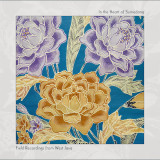
"We are delighted to be able to bring you these gorgeous field recordings from the Sumedang Province of West Java which, over their 50 minutes, present two distinct sides of Sundanese musical and devotional culture.
Although West Java is a Muslim country, these recordings highlight currents of pre-Islamic animist beliefs and practices that continue to flourish in the small towns and villages of the highlands of West Java. The recordings showcase two forms of trance music that are essential to the spiritual life of the Sundanese people in the highland regions.
Tarawangsa trance music is a traditional ceremonial genre known for its deep spiritual and hypnotic qualities. This music is made using only two instruments, the tarawangsa, a two-stringed fiddle, accompanied by the jentreng, a seven-stringed zither, creating a unique blend of resonant, droning sounds. Historically, tarawangsa music has been performed as part of sacred rituals and agricultural celebrations to honor local deities and ancestors, particularly associated with the Sunda culture. The minimalist, repetitive melodies gradually build, guiding participants and listeners into a meditative, trance-like state, during which dancers can be possessed by the spirits of ancestors or deities from the spirit realm, the music serving as a link between the two worlds.
In stark contrast to the calm, medititive sound of tarawangsa, we also present here two long pieces from Panca Buana Reak Group. Sundanese Reak trance music is like the punk rock of Sunda folk music, combining powerful and driving rhythms played on a number of hand drums and percussion instruments with the buzzing sound of the tarompet, a double reed wind instrument often amplified through whatever mobile speaker system might be at hand. Sometimes the group will play gamelan gongs, as heard on the first piece on the album, although this remains a music that is popular mainly with the working class youth of the rural villages, many of whom will also be fans of Indonesia's burgeoning metal and punk scenes. Reak performances are often wild, anarchic events that feature masked dancers, costumes, public trancing and spirit possession.
These recordings were made by Xenia At during her travels through West Java earlier this year. The tarawangsa recordings were made in a home in the village of Rancakalong on the evening of 17th January 2024, while Panca Buana Reak Group were recorded during rehersals in the village of Cinunuk on 19th and 20th January 2024."
Limited edition of 100 copies.
The musicians:
Overture (played by Panca Buana Reak Group, musicians: Rian Hidayat, Daffa, Rendi, Haswa, Doni, Aconk, Bayu, Zidan, Iwan Uwak, Mahadewa Sehu, Bebet, Adi, Bebet).
Reundeu - Master Yayat (kacapi), Tedi Kurniadi (tarawangsa).
Degung - Master Yayat (kacapi), Teguh Permana (tarawangsa).
Pamapag__Gelar Mataram__Panimang__Limbangan - Akbar Nendi (kacapi) & Tedi Kurniadi (tarawangsa).
Reak Lugay Pusaka Pajajaran (played by Panca Buana Reak Group, musicians: Aconk (tong), Rendi (brung), Hendrik (tarompet), Ade (kecrek), Riki (bedug), Doni (talingtit), Adi (badublag).
Xenia would like to extend gratitude to:
Master Yayat, Tedi Kurniadi, Akbar Nendi, and Teguh Permana for their incredible talent that turned this recording into a magical experience.
Ibrahim Adi Surya for technical support.
The Juarta Putra and Panca Buana Reak groups for explaining the cultural significance of local traditions.
Anggun Tresnasari for sharing her deep knowledge of regional music traditions.
Igor Moskalenko, Kate Snap, Stasya Frolova, Roman Gold, Misha Maltsev, Ilona Popychko, Galih Muhammad, Wildan Wiliansyah, Rizalu Ramadhan, Rahi Rahmat, Fahmi Solihin and Muhammad Ismael whose unwavering belief made this project possible.
Hive Mind would like to thank Luigi Monteanni (Artetetra) and Palmer Keen (Aural Archipelago) for their invaluable work and research in this region.
"Jake Amy is one of Australia’s most exciting nu-jazz outfits. Their sound synthesises up-tempo future-sonic jazz with hip-hop breakbeats, luscious synth harms, afro-cuban grooves & electronic music. 'Yoofee' and 'Graze' are both heavy-hitting tunes that go from high energy jazz-funk to darker drum&bass aesthetics, tightly executed in a live trio setting. Jake Amy is a Melbourne-based session pianist, producer, audio engineer, and social justice journalist. As a non-binary and queer artist, Jake’s music is deeply influenced by their experiences with gender visibility and their advocacy for non-binary representation. Their work is a bold, boundary-pushing exploration of identity and authenticity, reshaping the nu-jazz genre with every release."
Following up on the Hayal EP in 2023, Dutch techno refractor Konduku makes a welcome return to Bitta with another four cuts of prismatic club fuel. Throughout his consistent output Ruben Uvez applies non-standard ideas to the techno formula, toying with rhythm and eliciting transcendental atmospheres from unusual patterns. This mode of exploration continues unabated on Gazoz, with the title track in particular leaning on a full-frequency, one-note synth pulse which dominates the mix and becomes truly hypnotic in its relentless presence. In the wrong hands it would come off garish, but ?vez knows how to weave subtlety around such forthright sonics to create a sublime sonic experience. 'Mikros' aligns with Konduku's more recognisable palette -- taut, bell-like rhythmic threads that balance delicacy and impact while tunnelling into mysterious, introspective zones. Aimed squarely at the heads-down section of the night, 'Luna' strides forth with a decisive dub techno palette and finds space for expression and progression in the most linear of arrangements. In true B2 style, 'Inici' rounds the EP out with a more fractured approach centred on reversed kicks and psychoactive arps riding wide and slow pitch bends for a mind-melting finish running at a formidable pace. As well as showcasing Konduku at his best, the sound on Gazoz serves as an extension of Bitta boss DJ Nobu's own particular tastes in techno -- brain-tweaking machine music crafted from supple parts, honed for the club without being limited by it.
Record includes 2 page insert and download
Flipping rhythms from Guadeloupe, Cuba, Senegal and Puerto Rico, Time Capsule founder Kay Suzuki releases an acid-soaked collection of remixes that transcends time and space.
From the blacked-out basement of Plastic People to the psychedelic dancefloor of Beauty and the Beat, Kay Suzuki’s musical world has been shaped by some of London’s most iconic sound systems. High quality audio, he says, can open portals to new universes. Rhythm is time made plastic and beauty is the space between the beats.
Spanning over fifteen years of music from the prolific DJ, producer, Time Capsule label boss and one time Brilliant Corners sushi chef, this collection of remixes is the logical conclusion of Kay Suzuki’s musical thinking. Drawn to unique percussive or syncopated rhythms, he describes remixes as conversations between the original artist’s sense of time and his own. Weaving broken beat, house and dub influences into rhythms from across the Black Atlantic, these four tracks find each other kinship on the dance floor.
The A-side begins with a dubbed-out rework of the Gwoka celebration rhythm ‘A Ka Titine’ by Guadeloupe’s Gaoulé Mizik that was originally released by Beauty and the Beat in 2022. Layering electronic flares, dub sirens and space echo reverb across the shuffling toumblak beat, Suzuki leans into the track’s creole heritage, turning the track into a sought-after dancefloor jam, played by everyone from Colleen Cosmo Murphy and John Gomez to Yu-Su and Bradley Zero.
Skipping to Puerto Rico, Broki’s ‘Es Que Lo Es’ emerged from a collaboration between Bugz in the Attic’s Afronaut and Seiji and local musicians. Here Suzuki reworks the Afro-Latin percussion into a subtle bruk, conjuring a third space between London and San Juan that remains both of and outside the era in which it was made.
Blackbush Orchestra’s ‘Sortez, Les Filles!’ opens the B-side, taking apart the original and kneading the Senegalese percussion into a chugging Balearic house track, buoyant and full of life. Also first released by Beauty and the Beat, the track features new synth and structural elements that bring out the innate dancefloor potential beneath the surface of the original.
The final track on the collection heads back to the Caribbean and the island of Cuba, where Sunlightsquare a.k.a. Claudio Passavanti worked with vocalist Rene Alvarez and expert in Afro-Cuban percussion, Giovanni Imparato, on ‘Oyelo’. Here, Suzuki strips out the kick completely, leaving an implied rhythm which he calls an “imaginary four-to-the-floor” - a groove that is felt rather than heard, leaving the listener floating in another universe entirely.
- A1: January 1St 2022
- A2: Eyelar (Shutters)
- A3: Delilah (Pull Me Out Of This)
- A4: Kammy (Like I Do)
- A5: Berwyn (All That I Got Is You)
- A6: Bleu (Better With Time)
- B1: Nathan (Still Breathing)
- B2: Danielle (Smile On My Face)
- B3: Kelly (End Of A Nightmare)
- B4: Mustafa (Time To Move You) (Time To Move You)
- B5: Clara (The Night Is Dark)
- B6: Winnie (End Of Me)
- B7: September 9Th 2022
After high demand, Fred again.. releases a repress of Actual Life 3 (January 1 - September 9 2022) on March 31st after almost immediately selling out of vinyl copies upon the original release. the third in his series of Actual Life albums.
Actual Life 3 (January 1 - September 9 2022) is the third in his series of Actual Life albums, which saw Fred again.. resume his diary-esque approach to production using intimate use of voice notes from friends,
videos found whilst scrolling on Instagram and samples from important records in his life. It was an autobiographical
chapter of work that pushed forward the heritage of UK electronic music while standing as testament to the power of music in facilitating catharsis, healing and celebrating the realities of friendship, love and life. The album was
instrumental in his breakthrough as a global artist and debuted at #4 in the UK album charts, becoming the highest-
streaming new release globally on Spotify on its first weekend.
The album features his hit singles Danielle (smile on my face), Delilah (pull me out of this), Kammy (like i do) and Bleu (better with time). The repress remains on a clear vinyl, but this time round the vinyl comes in a black inner bag and the tracklist now mirrors the digital tracklist.
Fred has quickly become one of the most talked about live acts as he transformed his Actual Life records into an immersive, communal real-life experience for the first time, selling out shows across the UK and USA. Fred again.., Skrillex and Four Tet recently did a series of pop up events across New York, culminating in a record breaking sold out, 5 hour b2b set at Madison Square Garden. Also been announced that Fred will be performing the penultimate slot at this year’s Glastonbury Festival.
Fred’s recent Boiler Room performance remains one of the most viewed Boiler Rooms to date, surpassing over 16 million views.
180 Gram Vinyl LP Mono includes free hi-res download. This is a sensational previously unreleased live club performance from Yusef Lateef, the brilliant multi-instrumentalist whose mixing of jazz and Eastern music was a great influence on some of the finest musicians of the era including John Coltrane and Pharaoh Sanders. Accompanied at Ronnie Scott's by the house band of pianist Stan Tracey, double bassist Rick Laird and drummer Bill Eyden, most of the repertoire played comes from Lateef's earlier recordings for Savoy and Prestige such as Jazz Moods and Eastern Sounds. Lateef plays flute on The Dreamer and Last Night Blues (it was the last night of the run). He plays the shenai - a kind of oboe - on Blues For The Orient, the xun - a Chinese flute - on Song of Delilah, and tenor saxophone on Yusef's Mood. The evening's performance was recorded by Les Tomkins at the request of Ronnie Scott. The musicians were unaware they were being recorded as Scott believed they would be at their best and most unselfconscious this way.
Out of the murky, mystic world of Komodo Kolektif slides the Gamma Knife.
In the corner of a dank, dark mind, a nebulous notion condenses and solidifies, featureless and blind...and from that Komodo Klay a new kreature is hacked, molded and (mal)formed.
“The foundations of some of these pieces were laid almost a decade ago, others more recently. All of them came into being as sketches intended as Komodo Kolektif tracks to develop but for various reasons this didn't happen. The Seven Heavenly Elements was first presented to the group in 2019 but partly through personal differences in musical taste as well as COVID throwing a spanner in the works it was put aside and never worked on collectively. The two Disciple of the Drum 'dubs' are essentially rhythm tracks using the rhythm and percussion of Disciple Of The Drone, also from 2019, stripping away the drone, the gamelan melody and finally, even the bass line, which was initially intended to be the fundamental driving force of at least one of these dubs. In the end neither of these two tracks became anything like the idea that I had in mind, but that's how creativity works sometimes. The vocal parts in Cantation Dub were added most recently, just a few months ago. Fire Dub is just an exercise in me trying to rein in some insane delays and barely managing. The Ghost of Water is an anomaly because many of the fundamental parts are taken from the same jam session recorded in 2015 that led to Djakarta 3001 from the first EP. If you listen closely you'll hear Graeme Miller on guitar (back when guitar was still featured in our weekly jam sessions). I discovered this unedited hour-long jam session on an older hard drive in late 2023 and decided to fashion something from it until what became Ghost of Water materialised: the heavily delayed saron instruments, the jaw harp, the percussion and so on. What makes the track an anomaly is that it is in some ways both the oldest and newest piece of the five. The Seventh Element takes one of the seven elements of The Seven Heavenly Elements (in this case the Mopho synth tuned to the Indonesian pelog scale and ran through the Boss DE-200's depth modulator) to which I then added some gong parts and field recordings from Bali.
Once complete, I realised with an album's worth of material sitting there which was more “Komodo Kolektif” than anything I would normally produce solo, there came the problem of trying to work out what to do with this distinctly Komodo-esque, non-Komodo material. I came up with the idea of releasing it under the name Komodo Kuts...but a part of me felt I'd be cashing in on the Komodo name so ditched that part entirely...but the kuts remained, which seemed appropriate when used alongside my Gamma Knife moniker (which has a long story of its own...in a nutshell I had a benign brain tumour which only 1 in 10,000 people get and which is most frequently removed with a gamma knife (radiation). In medical parlance the device used in this treatment is often shortened to GK machine. I had been using the DJ name GK Machine, which came from my signature GK Mackinnon, since 1994, in other words long before this diagnosis. In the end I had brain surgery in Spain without use of gamma radiation...but the synchronicity of the name connection fascinated me nevertheless. Sometimes the world works in mysterious ways).
Lastly, now that I've sent these tracks out into the world, I feel somewhat liberated and can move on from this fairly niche and specific sound. The gamelan instruments have been returned to Gamelan Naga Mas, from who we'd borrowed them, and the masks hung up. This does not mean that Graeme Miller and I won't work together again in future...I'm sure we will...it just means we won't be tied to working within the constraints of gamelan, synths, percussion and dub that we became known for. So stay tuned...surely something lurks around the corner” GKM, November 2024
- Hoy Voy A Asesinarte
- Ponte En Mi Lugar
- (Aunque Esté En El Frenopatico) Te Tiraré Del Atico
- Mario (Encima Del Armario)
- Gusanos En Tu Alcoba
- Ayatolah!
- Juegas Al Palé
- No Me Gusta Bailar
- Emilio Cao
"Que no cunda el orden" comprises the first demos recorded by this iconic Spanish punk band in January 1982, seven original songs and two versions that would also become the band's live repertoire in their early years. Among these songs we find the only studio version of `Emilio Cao' and the previously unreleased `No me gusta bailar'. The sound of the original tape has been mixed and mastered for this very special edition. Siniestro Total were a Spanish punk band formed in Vigo in 1981. A big commercial success accompanied the band for over a decade, until the mid-late '90s, when the popularity of the groups from the so-called "movida madrileña" and other similar scenes from other parts of Spain such as Galicia, where Siniestro Total were formed, faded away. Many of their best and most popular songs, reflecting the punk and fun essence of the band, were written and recorded in the early days of Siniestro Total. This album comprises their very first recording sessions, unearthed here for the first time, when the early demo versions of some of those songs were captured. The band's lack of studio experience was balanced with tons of fun and laughter. This demo was sent to a radio DJ and all the songs were aired on his show at the most popular music station in Spain, Radio 3. In fact, the demo was awarded demo of the year (Maqueta de Oro del Diario Pop 1982). Four decades later, the sound of the original tape has been mixed and mastered for this very special release that Munster Records are honored to bring to fruition.
Air Texture Vol. VI selected by Steffi and Martyn
The Air Texture Series asks two Producers/ Performers to select a double CD worth of unreleased music. The only guidance is the music should not be main floor bangers, other than that we get out of the way, allowing them autonomy over their selection. This time Steffi and Martyn were asked to step up. Exciting, since as residents at Berghain/Panorama Bar - two of the most important dancefloors in the world... how would two such respected artists approach our experimental ethos.
Limited to 500 copies
Co-produced with New York based No Wave legend Arto Lindsay, “Mente”, Thiago Nassif’s 4th full-lengther (and debut on Gearbox Records), is his most thrilling, accessible and inventive yet. Drawing on Brazilian influences (Tropicalia, Bossa Nova) yet equally inspired by No Wave, Post Punk and peak period Bowie, this is an album that filters classic counter cultures through a modern lens. Crammed full of emerging talent from Rio die Janeiro’s current pop, art and film movements, the energy draws parallels to the influential Brazilian 60’s Tropicalismo scene at a time when the need for political expression is once again informing much of Brazil’s artistic output. File Under : Alt Rock / Alt Pop / Brazilian / Post Punk
Combining his influences from No-wave, electronic music and Tropicalismo and inspired by artists such as Tom Zé, Ricardo Villalobos, Alva Noto, and James Chance, the album received the seal of approval from the “Dean of American rock critics,” Robert Christgau, who graded it A-, and was heavily played on BBC 3’s Late Junction, with Thiago appearing on the show as a guest in July 2018, as well as on the Bandcamp Weekly programme earlier in the same year.
- 1: The Spanish Master
- 2: Cesca
- 3: Tigris
- 4: First Light
- 5: Village Of The Sun
- 6: Ted
Village Of The Sun return today with the announcement of their highly anticipated debut LP “First Light”. Due out 4th November on heavyweight vinyl via London analogue specialists Gearbox Records, the record follows their widely acclaimed double A-side single “Village Of The Sun / “Ted”. Village Of The Sun is an enigmatic collaboration between UK jazz virtuosos Binker Golding & Moses Boyd and electronic music legend Simon Ratcliffe of Basement Jaxx fame. Born out of a shared passion for improvised instrumental music, the new project sees all three of the artists steps into relatively new territory, combining their respective sensibilities to create something all at once atmospheric and danceable. Evocative of some of Simon’s inspirations such as Alice Coltrane, Airto Moreira and Masters at Work, Village Of The Sun embodies a hybrid of electronic beats, heady jazz improvisation, and sheer, raw energy, breaking ground between pseudo-Samba rhythms, dreamy ambient textures, and explosive sax and percussion. The new single “The Spanish Master” is a total embodiment of what Village Of The Sun is at it’s heart. Combining atmospheric synth lines with percussive electronics, which gently ebb around Boyd’s intricate drumming and Golding’s expressive sax. With tension building around every element the track careens into a movement of frenetic drumming, electronic idiosyncrasies, and fervent sax breakouts, which find the trio performing at their energetic, adrenaline-fuelled best. The album is truly a project of passion and exploration, and one that refuses to follow just one path. Tracks such as “Cesca” and “Tigris” emphasise Ratcliffe’s ability to weave shapeshifting keys and electronics around Golding and Boyd’s interplay, changing the mood and direction of the track at a moment’s notice. Whereas the title track “First Light” channels the sound of the current UK jazz scene with Ratcliffe imbuing a sense of dramatic tension and release with electronic atmospherics and keys that ferment alongside the almost shamanic, semi-free sax lines and uncomprimising drums. As part of one of British dance music’s biggest ever acts, Basement Jaxx, Ratcliffe and collaborator Felix Buxton led the progressive house sound in the 90s/00s with ground-breaking albums Remedy and Rooty, and by releasing a string of Top 10 singles including Red Alert, Rendez-Vu, Romeo, and Where’s Your Head At?. Ratcliffe’s own solo work includes the 1995 EP City Dreams and the 2011 EP Dorus Rijkers - both releases prove his musical versatility and virtuosity. Speaking about the Village of the Sun collaboration, Simon says, “I’ve always liked improvised instrumental music. It has this intensity and eccentricity that takes me places.