Reggae music in many ways reminds us of America’s Motown records. The music comes out of its stable fast and furious we tend to know the songs, the artists, the
studio but who? are the players. The unsung heroes that in many cases, cut most of our favourite tracks One such band this applies to in the Reggae field is the Soul Syndicate Band.
Each Jamaican record producer would have their favourite set of musicians they would use, availability permitting. Although several musicians crossed over into different named bands. For example, a set of players working with Producer Bunny 'Striker' Lee would go under the guise of The Aggrovators. The same group working with Producer Joe Gibbs would work under the name The Professionals. Soul Syndicate were the band of choice for Producer Niney the Observer, who used them for his own recordings and when you put that aside the other artists Niney produced, Dennis Brown, Max Romeo, Michael Rose, I Roy, The Ethiopians, Barry Brown, Gregory Issacs and Freddie McGregor. To name a few and not necessary all, you begin to see the amount of material this set of musicians played on.
Built around the rhythm section of Calton 'Santa' Davis and George 'Fully' Fullwood, drums and bass respectfully. They were usually accompanied by Earl 'Chinna' Smith, Tony Chin on guitars, Keith Sterling, Gladstone 'Gladdy' Anderstone, Bernard 'Touter' Harvey, organ/keyboards and Noel 'Skully' Simms, percussion. Niney's tracks tended to be rhythm heavy and thus Sound System favourites.But when brass was needed/called for ,this was provided by the likes of Tommy McCook, Bobby Ellis, Felix ' Deadley Headley' Bennett. Niney not having a studio of his own at the time used most of Kingston's studios, again availability and money providing. But most of these cuts
selected for this release were cut at Channel 1 and a few exceptions at Randy's Studio 17 and at Joe Gibbs studio at Burns Avenue.
Niney also worked closely with King Tubby on his dub plates, so tracks after the recording sessions were taken to King Tubbys for reconstruction and sometimes
re-voicing over an existing rhythm. These were then used as version sides to the vocal cuts, but most importantly used to nice up the dances, being played out on King Tubbys Hometown Hi-Fi Sound System. We have pulled together a selection of such dub plate specials cut by the Soul Syndicate band for this release. Dub sides that emphasise how well the band worked together, and with Niney at the reigns and the added bonus of some Tubby magic sprinkled on top. Please see our Niney the Observer at King Tubbys 1973-1975 (JRO11) for further examples of this work.
We at Jamaican Recordings hope we are not alone in saluting the musicians, that played such a big part in producing many of our favourite Reggae Sounds. Having released titles by The Revolutionaries (JR003), The Aggrovators (JR005), Sly and Robbie (JR006), we are now pleased to release a selection of rare Dub cuts by another one of Jamaica's finest, the Soul Syndicate band to our catalogue...
Respect Jah Floyd.
out of Stock
Last delivered 7 months ago available to reorder, subject to availability
After appearances on Freakadelle’s ’44’ compilation series as well as on a Night Defined Recordings 12inch alongside Mesak, Even Tuell and Mary Yalex, Nurah presents his debut album, which will also be the last release of the Freakadelle imprint before entering new waters.
CTRL aims to point out that the world of perception is strongly guided by frequencies in music. CTRL combines modified sounds with minimal sonic structures and creates rhythms that transcend genres. From an artistic point of view, CTRL auditorily as well as visually hints at the versatility of earthly sensations.
Nurah explores electronic music in its many facets and places his ever-gro-wing, musical challenges at the forefront of his work.
out of Stock
Last delivered 3 months ago available to reorder, subject to availability
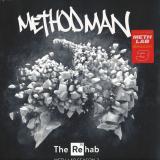
The Meth Lab returns for its third instalment with “Meth Lab Season 3: The Rehab,” a sharp, hard-hitting chapter that cements Method Man’s place as one of hip-hop’s most consistent and enduring voices. Executive produced by longtime collaborator Handz On, this project finds the Wu-Tang legend in rare form—polished, precise, and laser-focused.
“The Rehab” pulls listeners back into the world Meth has been building since the first Meth Lab sessions: a mixtape-style showcase blending razor-sharp lyricism with streetwise storytelling, packed with energy and attitude. Method Man’s flow remains timeless, weaving between gritty boom-bap, polished modern production, and the unmistakable Wu-Tang aesthetic. A strong lineup of guests brings extra fire to the set—Cappadonna, RJ Payne, Redman, KRS-One, JoJo Pellegrino, Jadakiss, Carlton Fisk, Hanz On, Intell, Iron Mic, 5th Pxwer, Chunk Bizza, Eddie I, Cortez, and more—each stepping into Meth’s world with their own hard-edged energy. Behind the boards, producers like P. Version, Rockwilder, Eric Sermon, Adam McLeer, Daniel C. Wells, Darnell Norman McConnell, and Joshua D. Zimmerman craft a gritty yet refined sonic framework that elevates every performance.
More than just another chapter, Season 3: The Rehab feels like a victory lap: a culmination of decades of craft, a celebration of the Staten Island movement, and a reminder that Method Man still out-rhymes rappers half his age. It’s a must-own for Wu-Tang fans, East Coast purists, and anyone who appreciates sharp writing and decades-deep mastery.
out of Stock
Last delivered 7 months ago available to reorder, subject to availability
In 1999, on December 23 to be precise, the electronic music landscape changed forever. On that day, the now legendary Icelandic band múm released their debut album “Yesterday Was Dramatic – Today Is OK”. The thing is though, back in the day, hardly anybody realized. It was Christmas after all, people were busy with potentially more important things and didn’t pay attention to some kids selling records on Reykjavík’s high street. Little did those shoppers know.
Thankfully, those 10 tracks weren’t overlooked for long. On the contrary: the album went on to become one of the most influential building blocks of what back then was called electronica and today is considered an art form playing a crucial and important role in shaping and defining the rich electronic music culture of the 21st century. Now, 20 years after the record dropped onto planet Earth, Morr Music is re-issuing the remastered album with its original artwork, adding newly commissioned re-works: A note-for-note representation of “Smell Memory“ by Kronos Quartet (with additional drums by múm’s Samuli Kosminen), a gentle reinterpretation of “Random Summer” by acclaimed pianist and composer Hauschka and an otherworldly new version of “Ballad Of The Broken String” recorded by label mate Sóley. Additionally, four remixes produced in the early 2000s are made available for the first time ever on vinyl here.
In 1999, electronic music was in full bloom. The dance floors were thriving worldwide.Yet the concept of using electronic sounds in acoustic-based productions (or vice versa) was still in its infancy. Many producers were trying, most of them failed. The results felt often forced, fabricated, unimaginative, random and forgettable. New ideas require new mindsets after all. With “Yesterday Was Dramatic – Today Is OK”, múm established a new approach in music production. Instead of setting a fixed agenda and working with a distinct hierarchy for their sonic palette, Gyða Valtýsdóttir, Kristín Anna Valtýsdóttir, Gunnar Örn Tynes and Örvar Smárason let each instrument and sound source be true to itself, creating an ever-evolving universe of sonic bliss. Listening to the album in 2019 still makes every music lover’s heart jump. Combining Drill-and-Bass-inspired beat-chopping, future-informed DSP-programming, ethereal vocal work, indie rock’s boominess, folk music’s soulful brittleness and a lofty feeling for melody and arrangement, the album is a rare example of musical transcendence and remains impossible to categorize.
Many of the ideas formulated and recorded for the album quickly became an integral part of the canonical self-conception musicians around the world were and still are aspiring to. How these ideas really came about, though, is not known – the dynamics, the struggles, the qualms, the sudden realization of having achieved something which might actually stick. Maybe that is a good thing. Örvar Smárason remembers that most of the album “was recorded in a tiny, sweaty room in the summer of 1999 with carpenters banging nails around us, but sometimes we put on headphones so we couldn’t hear them.” It is a good thing they did. As is often the case with classics, all one can do is listen closely and let the magic sink in – again and again.
out of Stock
Last delivered 7 months ago available to reorder, subject to availability
A house is something that is so deeply temporary, yet it can hold so much energy. How do we carry or leave behind those energies while transitioning into new spaces? How does each space we occupy for some time shape us and how do we tear ourselves away from it and its influence once it’s time to go? These are some of the core questions behind CC Sorensen’s new album for mappa, ‘Phantom Rooms’ – it’s a record about movement, change, transformation, family, juxtapositions… but most of all, home.
CC Sorensen was reflecting a lot on their childhood home in rural Kansas, USA while working on this music. The album could be characterised by a familial, chamber feel and both of CC Sorensen’s brothers, Ryan and Nyal Ruehlen, make an appearance on ‘Phantom Rooms’, among other instrumentalists. Using a wide palette of sounds – CC Sorensen alone in charge of keyboards, software instruments, voice, electronics, percussion, trumpet, guitar and field recordings, in addition to guests on pedal steel, voice, chimes, saxophone and drumset – the American musician crafts music as mysterious as it is inviting. The idea behind it would be almost surrealist – ghostly rooms in houses where we live – if we all didn’t know exactly what CC Sorensen means. Home isn’t something concrete, but it’s also not just an abstract concept. It’s a space beyond space; home in itself is a phantom room we enter. And what enables us to enter is the object of exploration here.
CC Sorensen’s approach is playful – tracks like “Beat Bot” and “Plastic Portals” are almost fun – but also contemplative. They make thoughtful, meandering chamber music intertwined with field recordings and electronics. Reeds, strings and percussion often set the atmosphere – sometimes airy, gentle, at other points more insistent – as the music grapples with departure, instability, deep reflection and imagined future spaces. Especially in the closing “Bexar” there’s a tangible yearning for a stable home, a longing to rekindle and keep ablaze this beautiful familial connection to a physical place. It’s both music that invites to reflect and music that in itself reflects; desires, hopes and dreams.
out of Stock
Last delivered 7 months ago available to reorder, subject to availability
Explicit isolation is the third album by the international collective E/I, led by composer and percussionist Szymon Pimpon Gąsiorek. The group’s seven core members came together while studying at Copenhagen’s Rhythmic Music Conservatory and the Royal Danish Academy of Music. For this latest release, they are joined by Slovenian musicians Samo Kutin (hurdy-gurdy) and Kaja Draksler (organ), alongside Danish tuba player Rasmus Svale.
The three compositions distill sound down to its essential elements, drifting freely through space. The material is minimal, moving in the geological rhythm of endless cycles of tension and release, formation and dissolution, density and lightness. Pimpon acts here more as a guide than a creator with a master plan. He is a navigator, leading us to the most crucial moments where sonic emissions merge into vibrating drones, building to an inevitable leap—an explosion after which the particles rearrange themselves once again. It feels like futuristic temple music infused with intergalactic spiritual jazz, the extensions of drone music, and acoustic ambient textures, all highlighted by the jolly grin of the navigator.
“I wrote the scores and asked each of the musicians to record their parts individually. What’s interesting for me about doing it this way is that it removes the element of immediate interaction and introduces a factor of randomness. I then edited and mixed it myself, also adding my own parts. Previously, it was strictly acoustic music, and the recordings were ‘live,’ meaning they were captured in one room at the same time, with no subsequent edits.” Pimpon has also incorporated electronics, which make the album even more airy and organically complement the sounds of the hurdy-gurdy and organ, recorded in Trboje, the small Slovenian village.
out of Stock
Last delivered 7 months ago available to reorder, subject to availability
When you listen to birds, they usually talk about food, sex/family, or anxiety. If they knew about the true nature of humanity's cruel and exploitative relationship with birds, they would be discussing rebellion. Humanity's current trajectory about birds is to cause the extinction of one-third of all bird species by the end of this century.
This record crystallises the borders between memory, beauty, and anxiety. At the core is an amalgam of all the birds we have met and heard, their sounds synthesised from a blend of memories. Esthetically it simulates the qualities of bird sounds, hitting similar frequential sweet spots. There is a great variety of birds captured here, from high to low frequencies, from solo voices to groups, from birds standing on their own to complex world-building, where the bird voices are part of an ecosystem, becoming one of the instruments.
You could stop there, enjoying this record on a musical level, but it invites us to do one step further, to consider reconfiguring our relationship with the Earth and its inhabitants. To question our impact, and to ask why we need synthetic bird music. Is it just a visionary endeavour or is it because we are failing at fostering a world in which organic birds and other creatures can thrive?
32 artists from the whole world, including our favourite artists from Eastern Europe, have contributed to this compilation both with new and previously released music. Their music is ordered from dawn to dusk and into the night. For many of the artists it's their first time on mappa, but some have previously released an album with us.
out of Stock
Last delivered 7 months ago available to reorder, subject to availability
The Coasters were, in the opinion of noted rock writer Dave
Marsh, ‘the funniest group in rock’n’roll history’, while author and
historian Arnold Shaw described their music as ‘ebullient,
energising, entertaining, expressive and danceable.’ High praise
indeed - and as this album confirms, well deserved. the
Coasters’ songs are more famous than the group themselves.
Their music will endure forever, a fact underlined by the
Broadway-staged musical revue Smokey Joe's Café that
received seven Tony nominations and won a Grammy Award.
The Coasters’ hits were a large part of the score.
out of Stock
Last delivered 7 months ago available to reorder, subject to availability
To decay is also to transform. Rusting metal is the visible traces of passing time, as the oxidation process accumulates dampness in our atmosphere and imprints it as unpredictable patterns onto hard iron and steel. Working in construction for a year now, Kensho Nakamura sees rust all the time, clambering up ageing chunks of material. Normally discarded as waste, Nakamura began discerning beauty in the phenomenon, organically spiralling around and consuming some of the very hardest of manufacturing stuffs into unique new forms.
‘Electric Rust’ continues the conceptual electronic composition mode of Nakamura’s previous works with a series of fractured musical dioramas. These scurrying notes, sparse hums, and quivering bleeps explore the topics of rust and the accumulation of time. The music ticks like a clock, drips like a tap, and manifests unknowable inorganic shapes. Recognisable musical snippets of bells, pianos, or murmured voices are buried inside counterintuitive synthetic rhythms and tension.
On ‘wet air’ piano notes tinkle and pipes gargle, digital detritus tap dances and arpeggios stumble. On ‘unique faces’, idle marimbas and malfunctioning animalistic squeaks flounder. This is music from the promethean space between being forgotten and being conceived. ‘Electric Rust’ is a topography of a world of rust, where corroding structures evolve into new — and beautiful — patterns of life.
out of Stock
Last delivered 7 months ago available to reorder, subject to availability
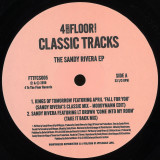
4 To The Floor is committed to delivering seminal house music to wax, making sought after heritage tracks readily available on vinyl for crate diggers to add to their collections. The fourth edition of the series pays homage to one of the most loved names in house music – Sandy Rivera. Known for his soulful dancefloor cuts he has produced timeless classics, with his long-lasting career and multitude of aliases captured by this 12” release. Opening the A-side is the Moodymann Edit of Kings of Tomorrow’s ‘Fall For You’, featuring the stunning vocals of long-time collaborator April Morgan, followed by Sandy’s grooving ‘Come Into My Room’ which features LT Brown. On the flip is Soul Vision’s ‘Don’t Stop’ with its atmospheric strings and gospel vocal. The release is closed with Kings Of Tomorrow featuring Elzi Hall ‘Show Me’, an atmospheric club cut that shows the versatility of this house legend.
out of Stock
Last delivered 3 months ago available to reorder, subject to availability
A chance meeting in Mexico City set Points of Inaccessibility into motion. When Ibero-American composer Rafael Anton Irisarri crossed paths with Dutch media artist Jaco Schilp at MUTEK in 2024, a conversation about how technology shapes perception revealed an unexpected common ground. Schilp invited Irisarri to a spring 2025 residency at Uncloud, the Utrecht-based collective he co-founded, where Irisarri's sound began to take form amid an environment shaped by Schilp’s visual research.
The Uncloud studio was located inside the former Pieter Baan Centre, a forensic psychiatric prison where suspects of violent crimes were once confined. Its long history of silence and containment shaped the atmosphere in which the project developed. Within this setting, Irisarri coaxed long bowed-guitar tones through a network of pedals and looping systems. The raw gestures thickened into a vaporous and architectural field of sound. Schilp processed the material through a custom point-cloud software patch that produced images in continuous flux. The visuals flickered, dissolved and reformed like memories that resist coherence, functioning as a digital Rorschach that reflected the observer’s own perception.
Amid these spectral echoes, the project evolved into an examination of how the past persists within present signals. Memory endures as residue and interference, continually shaping perception even when its source has faded.
Schilp’s visual process required a continuous stream of sound in real time. Irisarri improvised throughout the residency, generating material that allowed the visuals to develop in parallel. Once back in his New York studio, he began shaping the recordings by carving pathways through the improvisations and mapping selected passages into MIDI. This process allowed him to build outward from the bowed-guitar material with minimal overdubs, adding Prophet 5 textures, Moog bass and strings that expanded the harmonic field while keeping the original performances at the center. To refine the structure, Abul Mogard provided editorial input, working with Irisarri’s stems to guide transitions and strengthen the overall pacing. The material, originally created under conditions of immediacy and constraint, evolved into a fully realized work through careful revision, patience and sustained reworking.
The title engages the geographic concept of the Poles of Inaccessibility, locations defined solely by their distance from all surrounding points. Irisarri adapts this idea to the conditions of digital life, where new forms of inaccessibility arise through the informational enclosures that structure perception. What appears to be a fully connected network often produces a deeper kind of separation, one shaped by the filtering logic of the systems that mediate experience. In this sense, the digital sphere mirrors its geographic counterpart. We inhabit spaces saturated with signals, yet the possibility of genuine contact becomes increasingly remote.
At its core, Points of Inaccessibility considers what can be understood as the new rituals of capitalist realism. Irisarri uses the term digital shamanism to describe the forms of simulated connection that organize contemporary life. These systems promise comfort through algorithms, influencers and AI interlocutors, yet they often reproduce the same conditions that generate loneliness in the first place. What appears as connection becomes the echo of connection, a sequence of gestures that imitate solidarity while withholding it. Like the geographic poles, these rituals are defined by distance. They pull us into environments where everything is illuminated, yet meaningful proximity becomes increasingly rare. In this sense, the work approaches a hauntology of the present, a reflection on futures that have stalled and intimacies that have been thinned by the algorithmic infrastructures that surround us.
This thematic tension unfolds across the album’s four movements. Faded Ghosts of Clouds introduces the work with textures that rise and dissipate in slow cycles, creating an atmosphere that resists clear definition. Breaking the Unison occupies a pivotal position in the sequence and focuses on the moment when the individual and the system fall out of alignment. Its shifting patterns trace the scattering of signals that once suggested connection, revealing the instability at the heart of contemporary perception. Signals from a Distant Afterglow forms the center of the album and features vocals by Karen Vogt, whose presence enters the sound field like a fragile transmission shaped by distance and delay. The closing piece, Memory Strands, follows motifs that appear, recede and briefly intersect before returning to quiet. Across these movements, the album outlines a landscape in which emergence and disappearance continually inform one another.
Listening to Points of Inaccessibility is an encounter with a sound field that is constantly in flux. Elements surface briefly, shift position and recede, creating a sense of motion that resists stable interpretation. The music moves between closeness and vastness, carrying traces of memory while withholding a clear point of resolution.
The album’s visual identity completes the project’s conceptual arc. In Mexico City, where Irisarri and Schilp first met, Daniel Castrejón transformed stills from Schilp’s point-cloud visuals into the cover image. The final artwork captures a single suspended frame of the digital material, a moment extracted from a field that is normally in constant motion. Its surface recalls the texture and abstraction found in the work of Catalan artist Antoni Tàpies, where material presence and erasure coexist within the same plane.
What emerges is a work that examines the tension between technological systems and human presence. Points of Inaccessibility asks whether connection is still possible within environments shaped by mediation and delay, or whether we have become isolated points within the very networks that promise proximity. What possibilities for relation persist within environments organized by algorithms and interruption? And how are we meant to understand presence when so much of it is constructed at a distance?
Points of Inaccessibility will be released on BioVinyl on February 6, 2026, with audiovisual performances planned throughout 2026.
Mastered by Stephan Mathieu
Artwork by Jaco Schilp
Design and layout by Daniel Castrejón
Artist photo by Iulia Alexandra Magheru.
out of Stock
Last delivered 7 months ago available to reorder, subject to availability
Max In The World & Kroba is a collaboration between producer Max In The World and saxophonist Kroba.
The project began with the release of 2023’s Excursions on Bliss Point, a record that explored the space between club and home listening and became a favorite at many an early morning afters.
On Structures Of Feeling 1, the duo have conjured three cuts of dubby and expansive downtempo: dance music for dreaming, deep house for liminal states, body music awash in the feeling of living now, in these times, in these bodies.
out of Stock
Last delivered 4 months ago available to reorder, subject to availability
“Short Story” is the new album by Restive Plaggona. Eight new tracks of industrial techno beats and raw atmospheres. Over the course of 40 minutes the album takes us through different territories and landscapes of immense bass weight sound, sometimes dark and raw, sometimes droning and minimal, always energic.
Restive Plaggona is the music project of the Corfu-based artist Dimitris Doukas, known for his heavy and deep industrial soundscapes with subtle traces of darker forms of techno music. Dimitris is a particularly productive musician, having released more than a dozen records including his own imprint Several Minor Promises.
out of Stock
Last delivered 6 months ago available to reorder, subject to availability
Inspired by the soundtrack from the motion picture American Graffiti, this 3LP collection captures the sound of late night cruising, jukebox romance and early rock ’n’ roll rebellion. Spanning doo wop, rockabilly and classic pop, the set brings together era defining hits from the mid 1950s to early 1960s, featuring timeless favourites by Chuck Berry, The Beach Boys, Dion, Little Richard, Sam Cooke, The Platters and many more. Pressed across three vividly coloured vinyl records, red, blue and yellow, this set is both a nostalgic listening experience and a striking collector’s piece, celebrating the golden age of American rock and pop in authentic style.
out of Stock
Last delivered 7 months ago available to reorder, subject to availability
You don’t need to be Freud to regard teeth as a delicate issue. They can make joy look joyous and pain look painful, and on the cover of the new múm album they do both at the same time. As »Yesterday Was Dramatic – Today Is Okay« (2001), »Finally We Are No One« (2002) and »Sing Along To Songs You Don’t Know« (2009) »Smilewound« is another example of the band’s art of juxtaposing two conflicting meanings and taking advantage of the energy created through the tension between both.
Sparser in sound than many of its predecessors, »Smilewound« is an airy, relaxed record. The múm-core-duo of Örvar and Gunni doesn’t make you laugh out loud (except maybe for the quirky vintage Arcade-sound-start of »When Girls Collide«), but it will make you smile often - despite the heavenly voices singing about violence in one form or another in most songs. Musically, múm’s capability to build playful electronic sound-ornaments around simple melodies is in full bloom. And these days they know that trimming the ornamentation can strengthen the melody. Take »The Colorful Stabwound«: an aguish drum’n’bass piece and »Smilewound« gets close to a straight pop-song. Even that isn’t very close, but it combines its rhythmic strength with a simple yet effective piano-line and the soothing lushness of a female voice to something compelling that follows you like the smell of a delicate eau de toilette. Or »Candlestick« which started out as a little ditty strummed on an acoustic guitar many years ago and has grown into this bouncy piece of synth-pop that changes its musical colours every couple of beats until you feel comfortably dizzy. Perfect pop in very fancy clothes. No wonder that antipodean pop-princess Kylie Minogue wanted to collaborate with múm on the »Whistle«, the main song in 2012-movie »Jack & Diane«.
Recorded in, among other places, the band’s practice-space, an old baltic farmhouse and on the kitchen-table after dinner, the album was produced by múm themselves. And being the revolving collective they are, it comes as no surprise that we see the return of former member Gyda. Defining satellites as part of the core fits nicely with the band’s penchant for ambivalence - in fact that's part of the album's charm.
out of Stock
Last delivered 7 months ago available to reorder, subject to availability
A year and a half has passed since Slovak-Hungarian artist Adela Mede self-released her debut album ‘Szabadság’. Its liner notes described it as “a navigation”, a search through “the personal, familial, cultural, folkloric and geographic of her past and present.” Her second album, ‘Ne Lépj a Virágra’ no longer searches; here, she puts down roots and delves deeper into the earthy reality of her home, Central Europe. Mede sings in three languages with newfound conviction and grace – this is an album of profound faith and confidence in the potential of this fertile soil.
Composed and recorded during the last 18 months in Bratislava, Slovakia – a city where three countries meet, where the East and the West collide – 'Ne Lépj a Virárga' translates to “don't step on the flower”. Its themes – budding potential, recognizing the beauty in the ordinary, solidarity, turning despair into hope – emerged through Mede's wholehearted involvement with her community, teaching singing to both children and adults, and various grassroots volunteering initiatives. It features collaborations with local artists, Mede's singing students, as well as fellow Eastern European contemporary artists Martyna Basta and Wojciech Rusin.
Adela Mede embellishes carefully crafted songs with minimalist and folklore influences, but also embraces more experimental approaches. The result is a collection of quite varied yet consistent pieces which highlight Mede's proficiency as a singer, arranger, producer and improviser. It is a grounded, confident next step for the Bratislava-based artist. Whether her vocals are naked, heavily processed, warped and reversed, or looped and layered; whether the production is sparse and minimalist or overwhelming and swampy; none of that changes the fact that the gentle tentativeness of her debut is gone. This is “Central European music”, at its most striking and meaningful: patient, determined, embracing both complexity and possibility.
out of Stock
Last delivered 7 months ago available to reorder, subject to availability
At 19, Helviofox adds his signature to the batida template that by now seems to have been in existence since forever. Such is the strength of this primordial fountain, a source of rejuvenation. Also within the literal family: Helvio cites brothers Dadifox and Erycox as main influences.
Curiosity for the sound made him go into production by the time he was 13. A couple of years later (2020) he became co-founder of TLS with E8Prod, Alberfox, DiionyG and other mates. His talent fully developed since then, opening a slight detour that became a new path parallel to the main road.
Lively basslines anchor the beat directly lifted from tradition and clearly channeled to the dancefloor. Strong, well rounded grooves, a spot-on sense of timing and tempo, elegant atmospheres, all part of Helvio's notion of arrangement and his perception of dance music boundaries, stretching them just enough to present a challenge but not as far as to disconnect head and feet and risk losing the floor.
This liminal space between experimentation and popularity is both dangerous and attractive. There is no one formula. Precisely why it still retains plenty of fuel for current and future generations to contribute personal visions.
Lisboa, 2025
out of Stock
Last delivered 7 months ago available to reorder, subject to availability
Allowing yourself to find meaning or beauty in the mundane is an act of generosity, Whether it’s seeing a smiling face in an electrical outlet socket, or discerning cosmic design amidst the forest floor detritus, it comes from a place of kindness to yourself and senses – and openness to hidden spirit of the world. These tracks came together during a period of intense personal change for adaa, rooted in a fruitful reflection on the connections between spirit and body, “feeling my flesh so I can feel and understand my spirit,” as adaa puts it. The sense of a crossover and clash of multiple connected realities – on-screens, on-line, on-earth, off-world, after-life – unites adaa’s multifaceted productions.
Ostensibly an assemblage of found sounds. scribbled thoughts and poems from diaries, and musial snippets, the album's scattered production reflects adaa’s own many mirror worlds. Field recording sit behind most tracks, alongside VST synths, guitars, and a variety of voices, from adaa’s own mangled vox to EVP samples taken from YouTube (recorded sounds believed to be spirits or paranormal activity), all processed to varying degrees.
While the music was mostly produced either in adaa’s studio in Providence, Rhode Island, or in bed, the field recordings bring the outside world in. The result of walks in the woods, hum of roads and highways, hiss of beaches, warmth of walks with friends and past lovers “around the East Coast”. It sits behind tracks like ‘sight’ where a lilting piano lin bobs atop a pond of rustling and distant whistles. Is that birdsong? Or ghosts? Saccharine hyperpop arpeggiation crossfades sharply into noise guitar squall. Angelic demon voices yawn into a hefty crescendo. Pure drones duet with gales of undefinable field sounds.
“Sometimes I feel like a seed in frosted soil,” says adaa. “If i choose to be optimistic.”
out of Stock
Last delivered 7 months ago available to reorder, subject to availability
Inspired by witnessing the broken tension and renewed possibilities of a laptop breaking down at a gig – not to mention the void left behind by the sudden end of a relationship – Pentu’s latest release is a jump-cut menagerie of musical moments. Sewn together into ‘And I Saw My Devil And I Saw My Deep Blue Sea’, these fifteen tracks continue the London-based producer’s active departure from the soundscapes and song structures that dominated their previous writing style. These disparate pieces slice themselves off into sudden silence, or veer into unpredictable sidebars, hopping from hyperactive instrumentals to beautifully deconstructed YouTube samples. Described by Pentu as “emotionally intuitive to write”, this is music by and for the endlessly scrolling modern mind – “navigating the world alongside the splintered, interruptive emotional hyper realities of social media.”
The sudden silences, drones, and interruptions are perhaps less surprising than the guitar-based textures of metal & shoegaze woven into several vital passages by Pentu. The result is a collage that encapsulates the erratic feeling, not only of a relationship’s end, but simply of navigating online mediascapes.”I found myself realising that my phone, the constant interrupter of nothingness and silence, was both a cause of depression (reliving memories, dating apps) and a relief from it (creating new friendships, distractions, also dating apps)”, says Pentu.
Pentu’s attempt to overcome content overload by actively curbing his setup of laptop-guitar--synth does little to reduce the scope of this album’s sonic palette. YouTube vlog samples (from videos with next-to-no views) are an attempt to recontextualise and dramatise material that “would have otherwise been throwaway moments lost in the internet”, adding staccato moments of reality to Pentu’s beautiful and jarring album-length paean to overstimulation.
out of Stock
Last delivered 7 months ago available to reorder, subject to availability
Introducing Self Portrait, the latest chapter from the endlessly inventive one-man force Ryan Adams — a brand‐new, 24-track album that brings together fresh, unheard originals alongside spellbinding reinterpretations of classics by R.E.M., New Order and more.Capturing restless creativity and emotional depth across the two dozen songs, this bold collection once again proves why Ryan Adams is one of the most distinctive voices in modern music. Self Portrait shows Adams at his finest – poignant, unpredictable and sonically rich. For long-time fans, it’s another essential chapter in a prolific career, for newcomers, it is the perfect entry point into the world of Ryan Adams. This project isn’t just another album from Ryan Adams—it’s a dual‐mission: hear where he’s been, and where he’s going.
out of Stock
Last delivered 7 months ago available to reorder, subject to availability
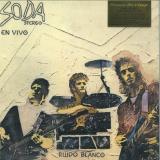
After the success of Soda Stereo’s three albums and their impressive Signos tour, the band released their first live album,
Ruido Blanco - En Vivo. This live album was recorded in Argentina, Chile, Peru, Venezuela and Mexico.
This shows how the band's already has a substantial fanbase across Latin America after just three studio albums.
The album features some of their biggest early hits, such as "Prófugos", "Persiana Americana", and "Signos",
and these live recordings give the songs really an extra kick.
Ruido Blanco - En Vivo is one of the most iconic live albums in Latin rock history, celebrating Soda Stereo’s status as pioneers of the Rock en Español movement and their enduring legacy.
out of Stock
Last delivered 7 months ago available to reorder, subject to availability
Quite out-of-the-blue, a stunning debut album from Movement And Soul's Nonna Fab...
An exceptional musicality permeates the cuts here, from Claussell / Trent style Deep House meditations, to tripped-out Jazz influenced electronica akin to Mills' recent Spiral Deluxe output.
We're also immersed in Minimal Vision type early 90's dream-House vibes, a dash of Broken Beat and a beautiful beatless piece to wrap it all up.
Incredibly accomplished work from this young new talent !!
out of Stock
Last delivered 10 days ago available to reorder, subject to availability
If there is a year zero for the introduction of reggae music to Japan, you’d be forgiven for thinking it was 1979 when Bob Marley and the Wailers toured the country, trailed by an entourage of journalists, photographers and fans ready to spread the message of the music into all corners of Japanese society.
But the story of Japanese reggae is not a linear one, and the music that is collected on Tokyo Riddim 1976-1985 captures the moment J-reggae entered the broader public consciousness, merging commercial city pop style with an infectious backbeat, that has drawn comparisons with the emergence of Lovers Rock in the UK.
Rather than look directly to Jamaica, many producers and artists in Japan were inspired instead by the more approachable sounds of The Police and UB40, their reggae fix arriving pre-filtered through the lens of new wave pop from the UK. Playful and groovy, these album deep cuts have been overlooked for too long.
Among them are Miki Hirayama, the idol singer who borrowed the bassline from Bob Marley’s Natural Mystic on ‘Denshi Lenzi’, Chu Kosaka, who headed to Hawaii to cut the Jimmy Cliff-inspired ‘Music’ and Marlene, the Philippine songstress whose cover of Roberta Flack’s ‘Hittin’ Me Wear It Hurts’ owed much to her producer’s obsession with Sly & Robbie’s Compass Point sound.
Then there was Izumi “Mimi” Kobayashi, who enlisted the Babylon Warriors to perform on a dubbed-out version of her own track ‘Lazy Love’, the city pop-meets-new wave reggae sound of Miharu Koshi’s ‘Coffee Break’, Junko Yagami’s anti-apartheid deep cut ‘Johannesburg’ and Lily, whose ‘Tenkini Naare’ was produced by Ryuichi Sakamoto and closes out the compilation with a flourish.
While these stories may not always conform to neat narratives, they do provide a more accurate reflection of the indirect ways in which styles infiltrate one another and, in their naivety, have the potential to create something beautifully strange and entirely new. Previously only available in Japan, the tracks on this compilation are a testament to that curious alchemy.
Tokyo Riddim 1976-1985 is released on vinyl and as a full album download (no streaming), featuring original artwork by Japanese Fukuoka-based artist Noncheleee, whose cover pays homage to the iconic dancehall album art of Wilfred Limonious.
Released on 1st September, Tokyo Riddim 1976-1985 is part of Time Capsule's Nippon Series, a loose series of compilations exploring different musical scenes from Japan between the 1960s and 2010s.
out of Stock
Last delivered 8 months ago available to reorder, subject to availability
Released by Fair Weather Friends Records, "Woven" marks a new chapter for the acclaimed Thessaloniki-based ensemble, featuring special guests Harris Lambrakis on ney and James Wylie on saxophone. Their collaboration expands the trio’s sound with new colors and textures, weaving together tradition and modern expression.
Its cover art is designed by the internationally celebrated and award-winning design studio Beetroot, giving the project a distinctive visual identity that mirrors its sonic depth.
This new quintet formation is a vision that Yako Trio have long aspired to bring to life. The collaboration with Lambrakis and Wylie adds new layers of texture and expression to the band’s music. The mystical, meditative tone of the ney intertwines with the emotive voice of the saxophone, expanding the trio’s sound into new territories. The result is a dialogue full of color, energy, and imagination — connecting tradition with modernism, East with West, and collective memory with contemporary creation.
We are super excited to have the legend that is DJ Seduction on Vinyl Fanatiks. We have managed to secure his Obscure Records releases for repress, so make sure you check for the other release if you are buying this one.
This listing is for DJ Seduction - Feel So Good / Solid Bass.
Do I need to say much about Seduction really... part of the scene since the start and still banging out the tunes. You all know how influential he was to the direction of the music we love.
out of Stock
Last delivered 5 months ago available to reorder, subject to availability
"Chuck Roth’s music wanders. The New York-based guitarist’s inquisitive style builds from rippling patterns that center the physicality of his instrument, roaming wherever they take him. watergh0st songs, his Palilalia debut, collects songs from the past half-decade, presenting an intimate snapshot of his music that draws from an eclectic background in classical guitar, electronic music, and improvisation." "The mark of watergh0st songs is its exploratory nature. Roth began his musical journey as a classical guitarist studying the canon works for the instrument, but he was never interested in playing fast or flashy. Instead, he wanted to roam down musical paths and see where they led him. He eventually became more interested in electronic music, where he found inspiration in subtractive properties and patterning. The music of watergh0st songs translates that electronic music to the guitar: many of the songs began as synth tones and later branched out through the physicality of his instrument." "When writing music, Roth wants melodies to feel comfortable in the body, focused less on setting a structure and more on letting music unfold how it happens in any given moment. His songs are fluid and his melodies are clear, plucked with careful attention but never too deterministically. His is the music of a traveler, floating around the strings of the guitar. It is about embracing the banal, or the everyday moments that shape a life." "Though Roth’s music often feels quite direct, there is a dreaminess that lives inside of it. His lyrics don’t feel too hot or cold, instead they have a wistfulness and melancholy of what it feels like to live through every passing day. His exploratory style bolsters these lyrics, giving the music its sense of ennui, as does his focus on texture. Each track takes on a different structure: 'Bunny Hop' unfolds like a squirrel jumping from branch to branch of a tree, while 'Private Boy' has a slower approach, growing from delayed harmonics that almost sound like bowed strings. His textures range from metallic and bristling to soft and feathery, evolving with gentleness. It is about ending up somewhere different than where it started, and watching the notes that fall in-between." The embrace of the routine colors Roth’s music. In it, there is a sense of presence, of admiring the smallest details and moments. Roth loves to take walks and look around, observing the beauty of his surroundings. Similarly, watergh0st songs feels like moving through the world at the pace of a comfortable trot and soaking in every sound as it emerges. It is a quiet evolution—but one that stays."—Vanessa Ague
Mess Esque are a duo featuring music and instruments by Mick Turner
and words and voice by Helen Franzmann. Their self-titled album is a
beguiling travelogue of restless, somnambulant wanderings.
Perhaps best known as one of the Dirty Three, Mick’s been playing
guitar and making music with many collaborators for forty years. He’s
loved his paintings too but revered especially for his solo music - since
1997, Drag City have released four of his albums, plus an EP and an
album of the Tren Brothers (Mick with percussionist and fellow Dirty
Three-ite, Jim White) and two EPs featuring Mick as the Marquis de Tren
with Bonnie ‘Prince’ Billy.
Mick’s last record was 2013’s ‘Don’t Tell the Driver’, a work that found
him departing from his traditional hermetic instrumental template by
employing a rhythm section and brass charts and even collaborating with
a vocalist. After all the purely instrumental music he’s made with Dirty
Three and solo, a singer is now part of the sound he’s hearing in his
head these days; while demoing new material, he realized that he was
again writing music that needed lyrics - and for that matter, someone
other than himself to sing them. But who? In 2019, he was introduced to
Helen through a mutual friend who’d produced her last album. Under the
name Mckisko, Helen has released three albums over the past 12 years,
working and touring with a range of Australian musicians along the way.
Her music has been described as numinous and transformative. Her
most recent album, ‘Southerly’, saw her moving into a more expansive
sound which led to an openness and excitement around further
collaboration.
Helen’s words are carefully observed, her phrasing responding intuitively
to Mick’s looping guitar figures with vocal repetitions of her own. Starting
with a feeling or a voicing, there are often no words - both players are
searching on their own paths. Then suddenly they have arrived and are
passing the emerging meaning back and forth, the rising intensity
forming a kind of undertow that pulls the listener deeper into their world.
Often, Helen would record her vocals in the middle of the night, seeking
that 2am flow, a moment of greatest isolation through which to trace her
melodie with fragility and strength. This crystallizes Mess Esque’s
intention: riding the sleepy drift through the blurred edges of the day…
time-traveling to that moment beyond stasis where sense and no sense
coincide and share space and time and energy. Viewing from afar the
immense peace of this planet when its ghost world of spirits below - the
madness of crowds, people sliding past each other faraway in the night -
are quieted at last.
ince its opening in spring 2021, JUBG, a still young Cologne gallery for contemporary art, has specialized in the broad field of artists and collaborations working along artistic interfaces, especially those between visual art and experimental and/or electronic music. For example, JUBG has already hosted exhibitions by Markus Oehlen, Kim Gordon, Wolfgang Voigt, Matthias and Aksel "Superpitcher" Schaufler, Sven-Åke Johansson, and Emil Schult. Albert Oehlen, who is a kind of mentor and supporter of the gallery, was also a guest at Albertusstraße this summer, where he presented the exhibition D-I-E ORPHEUSMASCHINE together with Michael Wertmüller, Thomas Stammer and the poet Rainald Goetz.
It is only logical that the gallery now expands its sphere of activity to include its own label, on which music appears that comes from similar contexts as the artists listed above already suggest.
As catalog number 1, JUBG is now releasing the official soundtrack to "The Painter" from 2021. The film, German title "Der Maler", is a mixture of feature film and documentary and a collaboration between German director Oliver Hirschbiegel, best known for his Oscar-nominated film "Downfall", and Albert Oehlen, with whom Hirschbiegel has a long friendship, as they both once studied together at the Hochschule der Bildenden Künste in Hamburg.
The docu-fiction shows Oehlen struggling with a painting and pondering the meaning of his work. Oehlen is played by German actor and musician Ben Becker, accompanied by the off-screen voice of Charlotte Rampling. In the film, Becker makes a painting that Oehlen himself creates step by step behind the camera, while the actor improvises the process in front of the camera.
The wonderful music for this film comes from no less than two outstanding personalities whose individual biographies and musical signatures could hardly be better suited to this project. On the A-side it is Gudrun Gut, icon not only of the German electronic music scene since at least the 90's, singer, composer, DJ, label owner (Monika Enterprise) and of course founding member of the legendary 80's New Wave band Malaria. On the B-side it’s the world famous and award winning US avant-garde trumpeter and improvisational musician Nathan "Nate" Wooley, who has played with Fred Frith and John Zorn among others.
Gudrun Gut's tracks bear such beautiful titles as "Bewegung", "Küste" or "Weinen" and she once again pulls out all the stops of her great skills and decades of experience as a producer of the most diverse electronic music genres. These are unusual and much more experimental musical paintings that she creates here than on her recent solo works. Edgy, angular, raw and unpolished, yet always elegant and clever, she subverts the male artist madness depicted extensively in the film in her own unique way.
Nathan Wooley answers with the instrument he has been familiar with since childhood, the trumpet, with which he is able to create a ravishingly virtuosic noise. His pieces are more like sketches, often only 90 seconds or a few minutes long, but in all their abstractness underpin the narrative of the film almost perfectly.
A limited edition of 20 copies in total, painted and signed by Ben Becker, can be purchased directly through JUBG.
JUBG, eine noch junge Kölner Galerie für zeitgenössische Kunst, hat sich seit ihrer Eröffnung im Frühjahr 2021 auf das weite Feld von Künstler:innen und Kollaborationen spezialisiert, die entlang künstlerischer Schnittstellen tätig sind, insbesondere an denen zwischen bildender Kunst und experimenteller und/oder elektronischer Musik. So hat JUBG bereits Ausstellungen von Markus Oehlen, Kim Gordon, Wolfgang Voigt, Matthias und Aksel "Superpitcher" Schaufler, Sven-Åke Johansson und Emil Schult gezeigt. Auch Albert Oehlen, der eine Art Mentor und stiller Unterstützer der Galerie ist, war im Sommer dieses Jahres zu Gast in der Albertusstraße, wo er zusammen mit Michael Wertmüller, Thomas Stammer und dem Dichter Rainald Goetz die Ausstellung D•I•E ORPHEUSMASCHINE präsentierte.
Es ist nur logisch und folgerichtig, dass die Galerie ihren Wirkungskreis nun um ein eigenes Label erweitert, auf dem Musik erscheint, die aus ähnlichen Zusammenhängen und Sphären stammt, wie es die oben aufgezählten Künstler:innen bereits vermuten lassen.
Als Katalog-Nummer 1 veröffentlicht JUBG nun den offiziellen Soundtrack zu "The Painter" aus dem Jahr 2021. Der Film, deutscher Titel “Der Maler”, ist eine Mischung aus Spiel- und Dokumentarfilm und eine Zusammenarbeit zwischen dem deutschen Regisseur Oliver Hirschbiegel, vor allem bekannt für seinen Oscar-nominierten Film "Der Untergang", und Albert Oehlen, mit dem Hirschbiegel eine lange Freundschaft verbindet, studierten sie doch beide zusammen einst an der Hochschule der Bildenden Künste in Hamburg.
Die Doku-Fiktion zeigt Oehlen, wie er mit einem Gemälde kämpft und über die Bedeutung seines Werks nachdenkt. Oehlen wird vom deutschen Schauspieler und Musiker Ben Becker gespielt und von der Stimme von Charlotte Rampling aus dem Off begleitet. Im Film erstellt Becker ein Gemälde, das Oehlen selbst hinter der Kamera Schritt für Schritt anfertigt, während der Schauspieler den Prozess wiederum vor der Kamera improvisiert.
Die wunderbare Musik zu diesem Film kommt von gleich zwei herausragenden Persönlichkeiten, die mit ihren individuellen Biographien und musikalischen Handschriften kaum besser zu diesem Projekt passen könnten. Auf der A-Seite ist dies Gudrun Gut, Ikone nicht nur der deutschen elektronischen Musikszene seit mindestens den 90er Jahren, Sängerin, Komponistin, DJ, Label-Betreiberin (Monika Enterprise) und natürlich Gründungsmitglied der legendären 80er Jahre New Wave-Band Malaria, auf der B-Seite der weltberühmte und Preisgekrönte US-amerikanische Avantgarde-Trompeter und Improvisationsmusiker Nathan “Nate” Wooley, der u.a. mit Fred Frith und John Zorn zusammengespielt hat.
Gudrun Gut’s Tracks tragen so schöne Titeln wie “Bewegung”, “Küste” oder “Weinen” und sie zieht hier einmal alle Register ihres großen Könnens und ihrer jahrzehntelangen Erfahrung als Produzentin der verschiedensten elektronischen Musikspielarten. Es sind ungewöhnliche und sehr viel experimentellere musikalische Gemälde, die sie hier entwirft als auf ihren jüngsten Solo-Werken. Kantig, eckig, roh und ungeschliffen und dabei immer elegant und schlau, unterläuft sie den im Film ausgiebig dargestellten männlichen Künstlerwahnsinn auf ihre ganz eigene Art und Weise.
Nathan Wooley antwortet mit dem ihm seit Kindesbeinen vertrauten Instrument, der Trompete, mit der er in der Lage ist, einen hinreißend virtuosen Lärm zu erzeugen. Seine Stücke sind eher Skizzen, oft nur 90 Sekunden oder ein paar wenige Minuten lang, die in all ihrer Abstraktheit das Narrativ des Films nahezu perfekt untermalen.
Eine auf insgesamt 20 Exemplare limitierte Edition, bemalt und signiert von Ben Becker, ist direkt über die JUBG zu erwerben.
out of Stock
Last delivered 8 months ago available to reorder, subject to availability
Sabine McCalla creates her own version of multi-cultural American roots music. It's a sound that crosses borderlines, pulling everything from Brazilian samba to southern soul to British rock & roll into its orbit. On Don't Call Me Baby, Sabine filters those influences through the lens of her Haitian heritage and her music community of New Orleans, creating a debut album that's every bit as multi-faceted as the woman who wrote its songs.
The daughter of first-generation Haitian immigrants, Sabine was raised in the suburbs of New York City, where she grew up alongside her sister Leyla McCalla (Sons of Our Native Daughters, Carolina Chocolate Drops). Introduced to chamber music at an early age, Sabine began playing classical violin in orchestras, music camps, and conservatory classes as an 8 year old. Back at home, she filled her head with Motown classics, girl group hits, Bob Marley albums, Beatles standards, and Haitian folk music. It was a wide constellation of sound that spanned more than a half century, and Sabine made it all her own, drawn to the connections binding everything together.
Don't Call Me Baby shines a light on those connections. The follow-up to her critically-acclaimed Folk EP, whose pre-war sound earned her a slot at the Newport Folk Festival in 2019, the album transcends genre and generation, creating a raw, rich mix of country, R&B, folk, and soul that exists on its own timeline. Co-produced by Sam Doores of the Deslondes and featuring a cast of New Orleans’ most spirited and gifted (including guest vocals from Riley Downing, Leyla McCalla, and The Lostines), Sabine McCalla reaches beyond her beloved New Orleans Americana scene with Don't Call Me Baby, building a bridge between the world-spanning sounds that have captured her attention.
Tilaye Gebre is one of Ethiopia’s most soulful saxophone giants, with a musical legacy that’s hard to surpass. A founding member of the Equators, later renamed the Dahlak Band, he was a key figure in Ethiopia’s vibrant hotel music scene and a sought-after musician and arranger for artists like Aster Aweke, Mahmoud Ahmed, Tilahun Gessesse, and Muluken Melesse.
Tilaye — still going strong — was at the epicenter of the Ethiopian music scene during one of the most turbulent periods in the country’s history. Tilaye’s musical trajectory, regardless of the forms it has taken over the decades, is simply ceaseless. The road to a musical career spanning six decades started out winding, and the first steps came almost as a fluke.
With the Dahlak Band, Tilaye had managed to secure a musical residency at the legendary Ghion Hotel, where they honed their skills and developed their musical expression to unparalleled levels. From the late sixties onwards, Dahlak Band lit up Addis Ababa with a mixture of James Brown and Wilson Pickett tunes, rhythm and blues, soul, funk, and the sound of the disco era — mixed with modern Ethiopian styles — serving up majestic concoctions with full-range instrumentation, featuring trumpet, keyboard, saxophone, bass, drums, and guitar. Through their hotel sessions, Tilaye developed further as an arranger, arranging fellow band member Muluken Melesse’s first solo album, Muluken Melesse with the Dahlak Band (Kaifa Records – LPKF 39), recorded during the turbulent years of 1975–1976, following the fall of Haile Selassie. Everything was in flux in this transitional period, but a constant was how Tilaye stood in the spotlight. On that record, there’s a loose vibe to the soundscape that lets Tilaye’s skills shine, while all the other musical contributions coalesce into a slowly cooking atmosphere where the groove at times fluctuates into psychedelic territory, making the music stand out from most contemporaries.
Most of their recorded output came from one-take live cassette recordings at the Ghion, or from music shops at that time — one microphone at the front, hit record: no EQ, no reverb, just some delay. Some of the Dahlak Band’s releases featured Tilaye as frontman, such as Tilaye’s Saxophone with the Dahlak Band from the late 1970s — typical of a rare groove on the Ethiopian scene — with excursions into reggae territory, including the band’s characteristic sound featuring Tilaye Gebre (tenor and alto saxophone), Dawit Yifru (organ), David Kassa (electric guitar), Shimelis Beyene (trumpet), Moges Habte (tenor saxophone), Abera Feyissa (bass guitar), Tesfaye Tessema (drums), and Muluken Melesse (cowbell). The Dahlak Band’s output was so prodigious that they simply couldn’t be pigeonholed.
No saxophonist in Ethiopia influenced the sound of popular music more than Tilaye in the 1970s, yet his recordings have been hard to come by for ages, which has meant that newcomers to the scene have gems to uncover in retrospect. Arguably, Tilaye shifted gears when he relocated to the U.S. to such an extent that his musicianship became even more renowned, accompanying the greatest of his contemporaries internationally. Tilaye is one of Ethiopia’s all-time greats, with a musical legacy — both as musician and arranger — that’s hard to surpass. It’s a wonder to be able to enjoy a recording like this half a century later.
out of Stock
Last delivered 3 days ago available to reorder, subject to availability
La Margarita (1994) is an unforgettable collaboration between iconic Uruguayan musician Jaime Roos and legendary writer and playwright Mauricio Rosencof. Blending the rich musical traditions of Uruguay-candombe, murga, tango, and milonga-with elements of folk and rock, as he is known for, Roos sets to music a cycle of sonnets that tell a tender, naive love story. These poems were written by Rosencof under harrowing conditions during his imprisonment by the Uruguayan dictatorship in the 1970s. Includes 16-page booklet. Jaime Roos and Mauricio Rosencof are two of Uruguay's most beloved and influential artists. Roos, a groundbreaking musician, redefined Uruguayan music in the 1980s with his signature fusion of deep-rooted local rhythms and cosmopolitan flair. Rosencof, a celebrated writer and playwright who emerged in the early 1960s, was also a prominent figure in the historic Tupamaros guerrilla movement. Their paths converged in 1987, when Roos composed the score for Rosencof's play El Regreso del Gran Tuleque. During this collaboration, Roos discovered a series of sonnets Rosencof had written while imprisoned under Uruguay's brutal dictatorship. Held in solitary confinement for over eleven years, Rosencof composed these poems as a lifeline-scribbled on cigarette papers and hidden in the hems of clothes his family collected for laundering. Against all odds, both the author and his poems survived. The sonnets tell a delicate, moving love story set in 1950s Montevideo. Roos, inspired and captivated, rose to the challenge of transforming them into music. The result was La Margarita-a groundbreaking project in which Roos masterfully fused Uruguay's rich musical traditions-candombe, murga, tango, and milonga-with elements of folk and rock, creating a deeply evocative set of songs as only he could deliver. Beyond its beautiful music, La Margarita stands as a testament to resilience, creativity, and the enduring power of love and art.
Wewantsounds is delighted to announce the reissue of Music By Lee Mason, the cult classic from the Chappell Recorded Music Library, originally released in the UK in 1971. Credited to Lee Mason & His Orchestra, the album is in fact the work of renowned British composer and arranger Pete Moore - best known for producing the iconic "Asteroid" theme in 1968 for the Pearl & Dean cinema advertising company. One of the funkiest library albums of its era, blending cinematic tension, funky grooves, and jazzy undertones, Music By Lee Mason features the track "Shady Blues," famously sampled by Madlib. Newly remastered and featuring liner notes by Kevin Le Gendre, this long-overdue reissue brings a lost classic back to vinyl for the first time since 1971.
(make of that what you will). FIG DISH were four high school friends: guitarists/ vocalists Rick Ness and Blake Smith, bassist/ vocalist Mike Willison, and drummer Andy Hamilton. In their day (a day that began in the late Winter of 1991 and ended in the early summer of 1998), they were known for catchy songs, memorable (often booze-fueled) live shows, and self-sabotage. In July 1995, FIG DISH's debut That's What Love Songs Often Do was released. And just like that, the band was catapulted from regional obscurity into national obscurity. MTV played the video for the band's first single, "Seeds" and FIG DISH toured the U.S. and Canada relentlessly with bands like Veruca Salt, The Muffs, Letters to Cleo, Juliana Hatfield, Local H, and The Rentals. In 1997, their sophomore album When Shove Goes Back To Push , was sunk by a risque music video for the single "When Shirts Get Tight" Featuring adult film stars that MTV refused to play and the band was dropped by an indifferent Polygram Records in the summer of 1998. FIG DISH returned from hibernation in 2024 with two sold out shows in Chicago and the release of Feels Like The Very First Two Times, the band's first "new" release in 27 years, collecting unreleased tracks recorded in the late 90s. On August 1, 2025, Forge Again Records reissued That's What Love Songs Often Do on vinyl for the first time, 30 years after the original CD release. The officially licensed 2xLP features white vinyl, reworked gatefold jacket art by Wall of Youth and vinyl mastering by Carl Saff. FIG DISH celebrated the 2025 re-release with live shows in Chicago and Milwaukee with old tour-mates Letters to Cleo and capped off the year with shows in Kenosha and Chicago with Local H and Fountains of Wayne.
With their upcoming sixth studio album, “What A Time To Be Alive” , The Lone Bellow embarks on a bold new chapter while honoring the deep bonds that have defined their journey. Written collaboratively for the first time with their full touring band—founding members Zach Williams, Brian Elmquist, and Kanene Pipkin joined by drummer Julian Dorio and multi-instrumentalist Tyler Geertsma—the album channels the raw, ecstatic energy of the band’s live show into a dynamic collection of songs that pulse with warmth, honesty, and human connection. Recorded live in Muscle Shoals, AL, after a writing retreat in a converted Kentucky firehouse, the album is both a celebration and a reckoning: of friendship, loss, love, and resilience. From the gritty, Stones-tinged opener “After The Rain” to the soul-stirring closer “What A Time To Be Alive,” the record captures the joy and vulnerability that have long defined The Lone Bellow’s sound—lush harmonies, heartfelt lyrics, and genre-blurring arrangements steeped in folk, rock, and gospel. The album’s creation was marked by setbacks, including the theft of early recordings, but the outpouring of support from their fanbase reaffirmed what the band has always known: their music is a shared experience. That spirit echoes throughout the album, whether in anthems like “Common Folk” and “I’m Here For You,” or in intimate reflections like “You Were Leaving” and “Night Goes Black.” Since their acclaimed 2013 debut, The Lone Bellow has appeared on The Tonight Show, Austin City Limits, and The Late Show, topped Americana charts, and headlined storied venues from Carnegie Hall to the Ryman Auditorium. But with their next album, they reaffirm their commitment not just to making music, but to building community—on stage, in song, and around the table.
BBE Music’s acclaimed J Jazz Masterclass returns with its 20th release, a super rare private press from one of the more laudable female jazz figures of Japan, saxophonist and composer Sachi Hayasaka, together with her band, Stir Up! Released in 1988 on the private label Mobys, Free Fight was Hayasaka’s debut album and announced the arrival of an essential and primal force onto the Japanese jazz scene. Part free jazz, part post-bop, and part heavy groove, Free Fight is one of the most varied yet engaging albums BBE Music has reissued in the J Jazz Masterclass Series, showcasing Hayasaka’s inventive and muscular playing as well as her highly original and surprising compositional powers. Given the album’s eclectic yet cohesive sound, it’s no surprise that it originally found a home at Mobys, the label established by esteemed jazz critic and promoter Teruto Soejima. Mobys only issued a handful of albums from some of the leading free and open players including J Jazz Masterclass alumnus, pianist Aki Takase, as well as free jazz guitar icon Masayuki Takayanagi, and free jazz figureheads Itaru Oki and the great Masahiko Satoh. Born in Tokyo in 1960, Hayasaka took lessons from saxophonist and recording artist Toki Hidefumi and fully immersed herself in the jazz life, working part-time at various jazz kissas including Peter-Cat, a kissa managed by novelist Haruki Murakami. She has performed regularly across Japan at venues like the famous Pit Inn and formed a strong alliance with the classic Tokyo jazz kissa Paper Moon, which continues to this day. Heavily influenced by players such as Roland Kirk, David Murray and Ornette Coleman, Hayasaka has played with free jazz legend Yosuke Yamashita and performed around the world (as well as up Mount Fuji!). In the late 1980s she moved to New York for several years and worked with notable musicians including drummer Pheeroan akLaff and pianist Cliff Korman. She has recorded a number of albums to her name for Japanese jazz labels such as Three Blind Mice and Kitty as well as leading European imprints such as Enja.
The late pedal-steel guitarist Susan Alcorn leaves a final surprise hinting at new directions left underexplored on her collaboration with Nomad War Machine, the improvising metal duo of drummer Julius Masri and guitarist James Reichard. Their death-metal-influenced pummel adds new fire to her molten flow across a suite of improvised tracks that show off the vast range and simpatico of the trio. Julius Masri and James Reichard of Nomad War Machine: “An unexpected opportunity arose out of a catching-up conversation where Susan had revealed a recent fascination with death metal, confessing, ‘I’m 70 years old—I think about death!’ She had learned a couple of Arch Enemy songs on her pedal steel, particularly compelled by their frontwoman’s intensity and vigor as a performer. Voicing an appreciation for the hook-oriented sound of Swedish death metal made sense for a melodic thinker whose roots as veteran pedal steel player reached into the Texan Western swing circuit in the ’60s and ’70s. For her, ever the explorer, metal was a new, appealing point of departure into fresh musical territory. When she expressed an interest in playing with Nomad War Machine, it felt like there was a whole world of shared or complementary interests to explore.” Though known for her fluency in jazz, country, and free improvisation, Alcorn had also studied Arabic, the oud, and maqam, with all holding a deep curiosity for her. Pre-’70s country & western music had also been a lifelong presence for both members Nomad War Machine. Masri, a Lebanese free-jazz and metal drummer, and devoted fan of Texas swing legends like Speedy West, Jimmy Bryant, Leon Rhodes, and Joe Maphis, was also steeped in Arabic music traditions. James Reichard, before coming to “freely” improvised metal, xenharmonic music, and non-Western tuning systems, had grown up being subjected to countless singalongs to numerous pre-’70s country records, entranced by the pedal steel.
"The Highwaymen were a country music super-group composed of four of the biggest outlaw country artists: Johnny Cash, Waylon Jennings, Willie Nelson, and Kris Kristofferson. The band was active as a group between 1985 and 1995.
In 1984 Glen Campbell first played the song ""Highwayman"" for Johnny Cash. The four were all together in Switzerland doing a television special and decided that they should do a project together. While the four were recording their first album, Marty Stuart again played the song for Cash, saying it would be perfect for them - four verses, four souls, and four of them. The quartet had the name for their new super-group ""The Highwaymen"", the name of their first album, Highwayman, and the name of their first single. It was a perfect name for them because they were always on the road and all four had the image of being outlaws in country music.
Both the album and the single eventually reached the top spot in the country music charts. Their cover of Guy Clark's ""Desperados Waiting for a Train"" reached the Top 20.
Highwayman is part of the Groove Classics collection and now available against a fair, budget-friendly price."
Which musical artists influenced David Bowie? Which records did he listen to over and over again during his youth and beyond? Who were his favorite songwriters and composers? What were his favorites? And in the case of such an artist, unique in his genre from the beginning to the end of his career, is the term “influences” the right one? As we delved into Bowie’s work, we learned that, even if he was the type to pick and choose from all over the place, he drew most of his inspiration from himself
"The Highwaymen were a country music super-group composed of four of the biggest outlaw country artists: Johnny Cash, Waylon Jennings, Willie Nelson, and Kris Kristofferson. The band was active as a group between 1985 and 1995.
In 1984 Glen Campbell first played the song ""Highwayman"" for Johnny Cash. The four were all together in Switzerland doing a television special and decided that they should do a project together. While the four were recording their first album, Marty Stuart again played the song for Cash, saying it would be perfect for them - four verses, four souls, and four of them. The quartet had the name for their new super-group ""The Highwaymen"", the name of their first album, Highwayman, and the name of their first single. It was a perfect name for them because they were always on the road and all four had the image of being outlaws in country music.
Both the album and the single eventually reached the top spot in the country music charts. Their cover of Guy Clark's ""Desperados Waiting for a Train"" reached the Top 20.
Highwayman is part of the Groove Classics collection and now available against a fair, budget-friendly price."