Im Februar 2024 kamen Tav Falco und seine unvergleichliche Band Panther Burns ins Sam Phillips Recording Studio in Memphis, Tennessee, um ihr 14. Studioalbum "Desire On Ice" aufzunehmen. Das Ergebnis ist eine Sammlung von Falcos Originalkompositionen, die seine gesamte Karriere umspannt und mit ausgewählten Songs verschiedene Phasen der 45-jährigen Karriere von Panther Burns neu beleuchten. Neben der aktuellen Besetzung der Band, darunter Gitarrist/Produzent Mario Monterosso, sind auf dem Album auch ehemalige Mitglieder von Panther Burns und Zeitgenossen wie Jon Spencer, Reverend Horton Heat, Kid Congo Powers, Bobby Gillespie und andere zu hören. Inspiriert von Künstlern, deren Vision und Musikalität gereift sind, gräbt dieses Werk die Unterströmungen einer Psyche aus, die für die Dekonstruktion mythischer Themen wie unerwiderte Liebe, Bruder gegen Bruder, verlorene Fälle und brennende Villen bekannt ist. "Desire On Ice" ist ein momentaner Ausschnitt aus unmittelbaren, schrägen Balladen, die bereits in die Zukunft geschleudert wurden.
Angel Bat Dawid's International Anthem debut The Oracle introduced her multifaceted voice to the world. The response to its modest, initial cassette/digital release in January of 2019 was immediate, and immense. Within a month of its announcement, Dawid was being featured on magazine covers and receiving offers from international festivals; and her subsequent activity marked the beginning of an epic run of creative output (including 2020's LIVE double LP, the same year's EP Transition East, 2021's Hush Harbor Mixtape Vol. 1 Doxology, and the sprawling opus Requiem for Jazz, released in 2023) that continues through the present.
The collection of compositions on The Oracle present a deep blend of powerful and emotive songs alongside heavy and free improvisation. In true DIY fashion, Dawid recorded and mixed the album using only her cell phone.
"Angel's fieldnote approach affirms that the everyday remains a legitimate site of creative production," says South Africa based percussionist, collaborator, and IARC labelmate Asher Gamedze in his liner notes for the album's IA11 Edition. Gamedze - the only other musician to appear on The Oracle besides Dawid, who constructed most of the album's tracks by layering, overdubbing, and arranging lo-fi symphonies of her own voice, wind instruments, percussions, and keyboards - waxes extensively about Dawid's significance in his notes, calling her "a living exemplar and extension of the spacious sonic horizons opened by the likes of the AACM and their refusal of any limitations on their creative vision and the destruction of the demarcation between composer and improviser."
"...a masterpiece, rich with dense improvisation and Afrocentric themes." - Suraya Mohamed, NPR
out of Stock
Last delivered 5 years ago available to reorder, subject to availability
"The Golden Age of Wireless is the debut album by English musician Thomas Dolby. The album was originally released in May 1982. Several tracks have a submerged, barely audible layer of almost random sound that serves as a constant (and disturbing) subtext, occasionally erupting into a song. This sonic underworld is all part of Dolby's mechanical wizardry. Rolling Stone magazine awarded The Golden Age of Wireless four stars out of five, calling it ""one of the most impressive debuts"" of 1982. They compared the album's melodicism to the works of Paul McCartney and concluded that ""unlike many synthesizer bands from England, Dolby eschews morbid, droogy drones."" Musician magazine said the album was ""the best damned record to come out of Europe's current fascination with synth-pop. Period."" Theye added, ""Dolby is purely amazing. And best of all, he writes songs.""
The Golden Age Of Wireless is available as a limited edition of 1000 individually numbered copies on silver coloured vinyl and includes an insert. "
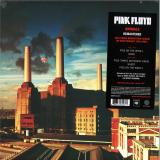
Im Januar 1977 veröffentlichten Pink Floyd ihr zehntes Studioalbum „Animals“. Das Werk eroberte Platz 1 der deutschen Charts, gilt als eines ihrer besten – und es wird nun, 45 Jahre später, als Deluxe Gatefold, CD, LP und Blu-ray wiederveröffentlicht. Zum ersten Mal überhaupt wird das Album in 5.1 Surround-Sound zu hören sein. Die einzelnen Versionen werden ab dem 16. September 2022 erhältlich sein, die Deluxe-Version folgt am 7. Oktober.
Pink Floyd – David Gilmour, Nick Mason, Roger Waters und Richard Wright – nahmen „Animals“ 1976 und Anfang 1977 in den bandeigenen Britannia Row Studios in London auf und produzierten auch selbst.
„Animals 2018 Remix“ wird als CD, LP (mit Klapphüllen-Artwork), Blu-Ray und als Deluxe-Gatefold-Format veröffentlicht. Die Deluxe-Gatefold-Version beinhaltet eine LP, CD, Audio-Blu-Ray, Audio-DVD und ein 32-seitiges Booklet. Die Audio-Blu-Ray und -DVD enthalten den Remix von 2018 in Stereo, in 5.1 Surround (beide von James Guthrie) und den ursprünglichen Stereo-Mix von 1977. Das 32-seitige Booklet gewährt mit selten gezeigten Fotos einen Blick hinter die Kulissen des Shootings für die Plattenhülle sowie Live-Bilder und Memorabilia. Das Album-Artwork wurde für diese Veröffentlichung mit einem zeitgemäßen Motiv neu interpretiert.
„Animals“ ist ein Konzeptalbum, das sich kritisch mit den sozialpolitischen Verhältnissen im Großbritannien der mittleren 1970er-Jahre auseinandersetzt und damit eine Abkehr vom Stil der früheren Arbeiten der Band markierte. Aus einer Ansammlung ursprünglich nicht miteinander zusammenhängender Songs entwickelten Pink Floyd ein Konzept, das den offenkundigen sozialen und moralischen Verfall der Gesellschaft beschreibt. Inspiriert von George Orwells „Farm der Tiere“, verbildlichen sie die menschliche Natur mit einer Analogie zum Tierreich und teilen die Menschen in drei Klassen von Tieren ein: Die Schweine stehen an der Spitze der sozialen Kette, die Schafe tun als hirnlose Herde, was man ihnen sagt, und die Hunde sind die Geschäftsbosse, die sich am Profit und ihrer Macht über andere schamlos bereichern. Seit 1977 ist viel Zeit vergangen – und dann wieder gar nicht, denn die Erzählung des Albums hat als Kommentar auf unsere gesellschaftliche und wirtschaftliche Situation nichts von ihrer Aktualität verloren.
Das berühmte Cover von „Animals“ zeigt ein aufblasbares Schwein (heute bekannt als Algie), das in luftigen Höhen zwischen zwei Schornsteinen der Battersea Power Station in London schwebt. Die Idee für das Cover kam von Roger Waters, die Umsetzung übernahm der langjährigen Kreativpartner der Band, Storm Thorgerson von Hipgnosis Studios. Für die jetzige Neuveröffentlichung wurde das Artwork von Storms Hipgnosis-Partner Aubrey „Po“ Powell für die heutige Zeit neu gestaltet. Basierend auf neuen Aufnahmen des Gebäudes während der jüngsten Umgestaltungsarbeiten (das ehemalige Kraftwerk wird für die kulturelle und gewerbliche Nutzung umgebaut, gestaltet von Frank Gehry und Norman Foster), experimentierte Po mit neuen Blickwinkeln und erschuf einige beeindruckende neue Varianten des berühmten Originals. Po dazu: „Das Original-Albumcover von 1977 ist ikonisch und steht so sehr für sich, dass ich eine Menge Respekt davor hatte, ihm ein Update zu verpassen. Doch Hipgnosis nahm die Gelegenheit zum Anlass, das Motiv neu zu fotografieren und damit eine sich verändernde Welt widerzuspiegeln. Durch den Einsatz moderner digitaler Färbetechniken konnte ich Pink Floyds düstere Botschaft des moralischen Verfalls beibehalten, und auch die Orwellsche Tier-Analogie in Form des Schweins Algie lebt in dem neuen Artwork fort.“
Pink Floyds „Animals 2018 Remix” kann ab jetzt hier vorbestellt werden.
out of Stock
Last delivered 30 days ago available to reorder, subject to availability
Wortgewaltig, rockig, wütend, melancholisch. Eigentlich, wie man ihn kennt – und doch ist einiges anders. Oder besser: direkter.
Heinz Rudolf Kunzes 47. Album ist ein gereiftes, meisterliches Spätwerk über die großen Themen des Lebens: Liebe, Alter, Herkunft, Vergänglichkeit, Krieg, Identität. Aber auch der Zustand unserer Gesellschaft, der politische Diskurs, das Auseinanderdriften – Kunze bleibt nicht an der Oberfläche, sondern taucht tief. Dabei gelingt ihm der seltene Spagat: Nachdenklichkeit ohne Pathos, Kritik ohne Bitterkeit, Emotionalität ohne Kitsch.
Musikalisch trägt ihn ein homogener, gewachsener Bandsound – mal kraftvoll, mal filigran, stets songdienlich. Produziert wurde das Album erneut von Udo Rinklin, mit dem Kunze in den letzten Jahren eine kreative Hochphase erreicht hat.
Angebot und Nachfrage“ ist Reise, Rückschau, Kommentar und ein mutiges Bekenntnis zu Sprache, Haltung und Musik. Ein Werk mit Persönlichkeit und Relevanz – nicht nur für Fans, sondern für alle, die in Musik mehr suchen als nur Unterhaltung.
On the cover of 8 Tips for Full Catastrophe Living, the new album by Asher White, The Statue of Liberty is in pieces but not destroyed - in progress, being built, not yet complete. Her torch is on the ground, her head somewhere out of frame. Before she was a symbol, she was metal, and living, sweating people riveted her together. The spirit of de/construction characterizes 8 Tips, White's 16th LP overall and first since signing to Joyful Noise. Like White's previous albums, 8 Tips for Full Catastrophe Living darts boldly among varied musical styles. Doom metal splits open into bossa nova; psychedelic rock and power pop flip into industrial techno. Each song emerges from its composite parts in the studio: White doesn't draft or demo before recording, but builds out her pieces sculpturally, sound by sound. "It's forever collage, forever assemblage," she says of her music. "To me, it has more to do with J Dilla, L.A. beat, and musique concrète than pop songwriting." The record's quick turns and vivid contrasts reflect White's cultural voraciousness. A writer, painter, and sculptor as well as a musician, she gathers materials constantly, always digging for new ideas in every possible form. The films of Claire Denis, the novels of Clarice Lispector, and the memoirs of Eve Babitz all funnel into White's reflection of 21st century disaster capitalism. 8 Tips is also White's first album to have been mixed outside her Providence studio; after recording it herself, she brought tracks to Seth Manchester (Lightning Bolt, Battles, The Body) who gave the album its brawny, unruly charge. "I was interested in making something that serves dually as a self-help book and a chronicle of self-destruction," says White. Overlaying autobiography onto character vignettes, 8 Tips for Full Catastrophe Living wrenches open the idea of apocalypse - an abrupt disaster rained down on uncomplicated innocents - and peers inside at its bursting, devastated particulars. Apocalypse is slow and uneven. Nations falter as do individual people, clinging fast to their old, dilapidated self-preservation strategies. What saved you in the past might destroy you in the future. Flip it around, shake yourself loose, ruin the person you've known yourself to be, and you might get the chance to become something else. "There have been so many end times, many other apocalypses." White says. "People were writing self-help tips, and people were partying." We have survived catastrophe before. Out of the ruins, people made work - art, books, culture. "I was interested in making something that sounds like a self-help book, but it's actually about self-destruction," says White. "In full catastrophe living, you just have to do a bunch of whippets. This album is mostly about doing whippets. I'm not even kidding."
Hahaha _ Will Paquin's debut full-length album, out this September _ is the sound of Paquin breaking out of the bedroom. It's loud, raw, and full of life. Much of the album feels a time capsule _ a collection of ideas and sounds that Paquin has been quietly nurturing for years. Now, for the first time, they've come together in a cohesive whole, shaped by the passage of time and Paquin's current perspective. "This album is kind of like re-centering what I actually like and what I want to put out to the world," he explains. Hahaha is a celebration of shared energy, of chaos, of the kind of laughter that erupts when you're fully alive in the moment. It's a guitar-forward, psych-laced, garage-rock catharsis.
*Long overdue reissue of the first album by The Hanging Stars to coincide with their tour support slot with Edwyn Collins – initial 300 copies come with 12 x 12 print*
“In late-Sixties California, the Byrds and Flying Burrito Brothers combined traditional country music with hippy rock to great success. The influence lingered and whatever cultural relevance it has this is a delightful, transporting listen” – The Times 4/5
London-based psych-folk outfit The Hanging Stars re-release their much-loved debut album Over the Silvery Lake on Crimson Crow. Blending folk pastoralism with swampy 60s Americana, they sound like the missing link between the California desert sun and the grey skies of London Town. The album was recorded between LA, Nashville and Walthamstow, with each of these vastly different places leaving an indelible mark on the songs.
Now signed to the Loose Records label and fronted by London-based songwriter, singer and guitarist Richard Olson (The See See, Eighteenth Day of May), The Hanging Stars are essentially a loose collective of people who weave together a blissed-out psychedelic tapestry. The rest of the core band is made up of Sam Ferman on bass and Paulie Cobra on drums, Horse on pedal steel and Patrick Ralla on banjo, guitar. They jam rather than write and hang out rather than rehearse, harnessing a kind of tipsy euphoria resplendent with luscious arrangements and glorious vocal harmonies.
During 2015, prior to this album’s original release the band released two critically acclaimed singles via The Great Pop Supplement (both of which also appear on the album). “Golden Vanity” was premiered by The Line of Best Fit who said; “you'd be forgiven for thinking you'd just unearthed a rare deep cut from the late 60s/early 70s boom of psychedelia infused Americana” and “The House on The Hill” was described by The Guardian as; "a hazy, desert-dream of a song, nicely sharpened with steely-eyed guitars, Mersey-laced harmonies and just a whiff of the Gun Club”.
There are a number of allusions to nature and the weather on the album, borne in part out of the contrasting surroundings in which it was produced. The band’s fascination with Americana led them to record some of the material Stateside, laying down some of the parts at Battle Tapes Studios in Nashville (Lambchop, Paperhead), as well as at Vision Quest Studios in Los Angeles with Rob Campanella. His work with The Quarter After, The Brian Jonestown Massacre, Beachwood Sparks The Tyde, and GospelbeacH was a perfect match to capture their sound and they even had San Franciscan legend Chrystof Certik step in on lead guitar for a couple of tracks.
Following the LA recordings, a trip to the Californian desert provided the core notion of what they wanted to produce - a shard of light that they clung on to whilst recording the rest of the album in the significantly more rain-soaked atmosphere of Walthamstow, London, under the watchful eye of Brian O'Shaughnessy at Bark Studios (The Clientele, Comet Gain). As the band explained at the time: “Ultimately we hope you can hear both the sand and the rain in this record.”
The Hanging Stars place themselves firmly as part of a long folk tradition encompassing European and North American influences – as a continuation rather than a pastiche of these styles. This is the sound of a band really coming in to their own, fully formed and in no doubt of their vision. With Over the Silvery Lake they succeeded in producing a record, which has the country, blues and folk traditions at its heart.
Zur Feier des 20-jährigen Jubiläums ihrer ursprünglichen Veröffentlichung kündigt Robyn eine besondere 2-LP-Vinyl-Neuauflage ihres ikonischen, selbstbetitelten Albums von 2005 an.
Weithin als ein Schlüsselmoment der modernen Popmusik angesehen, erscheint diese Jubiläumsausgabe auf Coke-Bottle-Vinyl und enthält das originale Tracklisting.
Ein Muss für langjährige Fans und Sammler gleichermaßen – diese Veröffentlichung rückt ein Album ins Rampenlicht, das die Zukunft der Popmusik entscheidend mitgeprägt hat.
out of Stock
Last delivered 13 months ago available to reorder, subject to availability
"Songs For Other People's Weddings" ist ein Begleitalbum zum gleichnamigen Buch von Jens Lekman und dem preisgekrönten Bestsellerautor David Levithan, das am 5. August 2025 über ABRAMS erscheint. Das Projekt wurde von der überraschenden Nebenkarriere des beliebten schwedischen Künstlers als Hochzeitssänger inspiriert, die zufällig zustande kam, nachdem Fans seinen Song "If You Ever Need A Stranger (To Sing At Your Wedding)" aus dem Jahr 2004 wörtlich nahmen und ihn einluden, auf ihren Hochzeiten aufzutreten. "Songs For Other People's Weddings" ist ein fiktives Werk über J, einen unglücklich verliebten Musiker, der nebenbei als Hochzeitssänger arbeitet. J trifft sich mit Paaren vor ihrem großen Tag, um mehr über die intimen, seltsamen Dinge zu erfahren, die sie zusammengebracht haben, um einen originellen Song zu schreiben, den er ihnen auf ihrer Hochzeit vorträgt. Aber trotz Js Vorliebe, die perfekten Worte für andere zu finden, scheint er nicht in der Lage zu sein, dasselbe für seine eigene Liebe zu seiner Freundin V. zu tun. Lekman bemerkt: "Die Idee, ein erzählerisches Konzeptalbum (eine Rockoper?) zu machen, fühlte sich verboten an. Was für mich normalerweise ein Zeichen dafür ist, dass ich auf dem richtigen Weg bin. Als ich mich mit dem Genre der narrativen Konzeptalben beschäftigte, wurde mir klar, dass eines meiner Lieblingsalben, Frank Sinatras "Watertown", genau das war - eine Platte, die eine chronologische Geschichte über die Länge einer LP erzählte. Da ich nie ein Fan von Musicals oder Rockopern war, diente mir dieses Album als Inspiration. Ich schrieb das Album, während das Buch noch in Arbeit war, und an einigen Stellen begann ich mir vorzustellen, was zwischen den Kapiteln des Buches geschah. Das Buch und das Album waren schließlich miteinander verflochten, gingen aber auch ihre eigenen Wege. Das Buch gab die Struktur der Geschichte vor, aber das Album schlich sich manchmal hinter die Kulissen. Geschichten aus den Liedern fanden ihren Weg in das Buch und umgekehrt." "Songs For Other People's Weddings" folgt der Beziehung von J und V und verändert sich musikalisch, während das Paar durch die Höhen und Tiefen der Liebe navigiert - wobei jede neue Hochzeit ihren eigenen klanglichen Hintergrund bietet. Das Album ist eine orchestrale, romantische Sammlung, die sich zwischen pastoralen Streichern, verträumtem Pop, sanftem Jazz-Saxophon und traurigen House-Beats bewegt. "Die Figur des J kann seine eigenen Emotionen nicht aus seinen Liedern heraushalten, und Jens unterstreicht dies auf eine Weise, die den Hörer immer wieder überrascht", sagt Levithan. "Oft wird er von Matilda Sargren begleitet, die Vs Gefühlen und Gedanken eine Stimme gibt. Ursprünglich sollte sie nur auf den Demos singen, aber als sie anfing, V zu singen, war es keine Frage, dass sie auf dem endgültigen Album zu hören sein würde. Wenn Jens und ich unsere Arbeit getan haben, erzählen der Roman und das Album beide Seiten von Js und Vs Geschichte - und die Spannung entsteht dadurch, wie diese Seiten zusammenpassen." Lekman fügt hinzu: "Auch wenn es in dieser Geschichte um eine Beziehung geht und darum, wie sie sich in den Beziehungen und Hochzeiten anderer widerspiegelt, denke ich, dass es vor allem eine Liebesgeschichte über Musik und ihren Wert in einer Zeit ist, in der sie von Tech-Unternehmen abgewertet und in Inhalte verwandelt wird. Ihre Fähigkeit, zu beruhigen und zu verbinden und ihre Rolle in den Übergangsmomenten unseres Lebens, wie zum Beispiel bei Hochzeiten. Es ist ein Liebeslied an Liebeslieder."
Artist and multi-instrumentalist Flaer embraces the search for quiet miracles on first full-length LP Translations.
In 2023, Realf Heygate - who makes music as Flaer - released his debut mini-album Preludes, composed on his mother’s piano and his childhood cello.Returning to ODDA for his debut full-length album, Heygate is now looking in another direction. A record that embraces transition and movement, Translations is in many ways more internal, less rooted to a single place and reflective of the process of laying new foundations in Cornwall.
Like Preludes, Translations is coloured with found sounds and field recordings, from the starlings which can be heard singing through the open window of his studio, to the brittle recordings of his mother, who was a linguist, learning Spanish on a set of language tapes. In both cases, Heygate embraced the translations and memories inherent to the sounds.
“When I digitised my mother’s tapes, they warped and stuttered in a very similar way to the starling’s song,” he explains. “They had this uncanny rhythm and pulse that I couldn’t quite decode, but was saying something." These decayed transmissions hint at loss, resisting clarity in favour of the ineffable.
Translations is also a record of ambiguities and in-betweens, suggested by the double meaning of the album’s opening track ‘Entre’. At once intricate and expansive, threaded with birdsong and acoustic guitar motifs, this and ‘Starling Descends’ (a reference to Vaughan Williams’ ‘The Lark Ascending’) act as a bridge away from the pastoral themes of Preludes towards a more assertive sound. At times intimate in its textured instrumentation and at others more overtly grand in orchestration, reflecting awider palette of influences.
“Flaer began in many ways when I picked up my mother’s instruments, seeking a form of reconnection. Where words evaded me, they became the tools through which I found a language for grief – and above all, for love.”
Recorded between 2023 and 2025 – what Heygate calls “A gradual process of sowing and harvesting ideas rather than a single intense creative period” - each track follows a rhythm similar to the small maquettes and sculptures he has been working on in his visual practice, whereby structures and melodies form intuitively in moments that are as rare as they are fleeting.
“It's that feeling of searching that I really enjoy,” Heygate continues. “I never know what the destination of the composition is going to be, and I never really find what it is."
Translations is released on limited edition off-white vinyl LP (500 copies worldwide) with one of five signed and numbered handmade risograph prints. It's also available as standard black vinyl LP and digitally.
Formed in the early 1980s, Primal Scream paid their indie rock dues and experimented with their sound for almost a decade before finding their feet with the era-defining dance/rock hybrid Screamadelica album. It spawned their first hit singles, ‘Loaded’, ‘Come Together’ and ‘Movin’ On Up’, after which they became a chart regulars for over a decade. This carefully curated 17-track collection, first issued in 2019, covers their fascinating journey from 1986 to 2000, taking in their most successful period but also detailing the evolution of their sound before they broke into the mainstream.
Echo Beach proudly presents: Don Letts - The Rebel Dread - legendary film and video director, disc jockey and musician. Don Letts, in his capacity as a selector (it"s not for nothing that he hosts his own show on BBC6 radio), enthusiastically accepted the invitation to create a compilation from Echo Beach"s extensive catalog to mark its 30th anniversary. A splendid and crisp selection.
Veteran of many scenes, Liar returns from a prolonged hiatus to dip his toes in TonTon's rising wave. His contribution ranges from balearic breakbeat workouts & intimate dub siestas, to impish takes on world music & electrofunk. Liar's knack for cultural & stylistic interbreeding pervades throughout - you will hear Paisley Park homages, falsetto crooning, comical cuicas, city pop ornaments, 70s radiophonic psychedelia & Final Fantasy samples alike, flamboyantly converging into an artifact of stubborn hope, love & peace.
out of Stock
Last delivered 13 months ago available to reorder, subject to availability
Legendary Indonesian musicianHarry Roesligets a fresh dancefloor-ready tribute with a special"Remiks"EP on vinyl, featuring four tracks reinterpreted by four top-notch producers from two countries.
From Indonesia,KomodoandMidnight Runnersbring their signature grooves, while Japan'sKaoru InoueandChidaadd their own unique flavor to the mix. This limited edition release, out onAugust 25, 2025, is brought to you byLamunai RecordsandMondo.
This isn't just another remix/re-edit EP it's a cross-cultural celebration of Harry Roesli's wildly eclectic sound, reimagined for today's global dance floors. From cosmic disco, deep house to techno textures, each producer offers a personal yet respectful take on Harry's original works, introducing his genius to a new generation of listeners.
"We wanted to shine a light on Harry Roesli's music in a way that connects with DJs, collectors, fans, and crate diggers around the world," says a rep from Lamunai Records. "These remixes breathe new life into his legacy timeless melodies meet modern club energy."
TheEP will be available in limited-edition vinyl starting August 25, perfect for collectors, selectors, and anyone looking to add something truly special to their set.
Get ready for a rare fusion of Indonesian roots, Japanese electronic finesse, and serious dancefloor vibes. Let's celebrate the past by dancing into the future.
out of Stock
Last delivered 13 months ago available to reorder, subject to availability
Born in Antwerp in 1939, Ferre became a true icon in the sixties, adored by youngsters and hippies and hated by the establishment. His successful debut album in 1966, which featured the hits “Ring Ring, I’ve Got to Sing,” “Crucified Jesus,” and “Drunken Sailor,” brought him an international breakthrough with concerts in Paris, London, and Hamburg, leading to a contract with the famous French Barclay label. The next three albums did not equal the initial commercial success — a pressure the music business was happy to put on his shoulders. Still, these three albums, reissued in their original packaging and artwork on vinyl for the very first time, are loaded with hidden gems, combining folk, blues, and psychedelics in Ferre’s original songs.
Grignard sadly succumbed to throat cancer in 1982 at the early age of 43.
Born in Antwerp in 1939, Ferre became a true icon in the sixties, adored by youngsters and hippies and hated by the establishment. His successful debut album in 1966, which featured the hits “Ring Ring, I’ve Got to Sing,” “Crucified Jesus,” and “Drunken Sailor,” brought him an international breakthrough with concerts in Paris, London, and Hamburg, and led to a contract with the famous French Barclay label. The next three albums did not match the initial commercial success — a pressure the music business was happy to put on his shoulders. Still, these three albums, reissued in their original packaging and artwork on vinyl for the very first time, are loaded with hidden gems, combining folk, blues, and psychedelics in Ferre’s original songs.
Born in Antwerp in 1939, Ferre became a true icon in the sixties, adored by youngsters and hippies and hated by the establishment. His successful debut album in 1966, which featured the hits “Ring Ring, I’ve Got to Sing,” “Crucified Jesus,” and “Drunken Sailor,” brought him an international breakthrough with concerts in Paris, London, and Hamburg, and led to a contract with the famous French Barclay label. The next three albums did not equal the initial commercial success — a pressure the music business was happy to put on his shoulders. Still, these three albums, reissued in their original packaging and artwork on vinyl for the very first time, are loaded with hidden gems, combining folk, blues, and psychedelics in Ferre’s original songs.
Grignard sadly succumbed to throat cancer in 1982 at the early age of 43.
Kimberly Claeys, known as Little Kim, has been pursuing her musical career for 20 years. She has performed with the Western Swing band Little Kim & The Alley Apple 3 in Belgium, the Netherlands, France, and Germany, and has released four albums. Since 2019, she has brought a breath of fresh air to the folk monument Kadril, with whom she released the album Jolie Flamande in 2022. Little Kim is also known as one of Guido Belcanto’s regular guest singers.
Her solo debut, Moederland (2022), was produced by Guido Belcanto, who also appears on several songs and lent her his band Het Broederschap. In addition to Belcanto, Bruno Deneckere and Lieven Tavernier wrote and interpreted songs for her, drawing from artists such as Gillian Welch, Nathalie Merchant, and Bob Dylan. The album was very well received by both the press and fans.
On 28 March 2025, her new album, Ademhalen, was released, featuring Dutch-language songs written especially for Little Kim by Bruno Deneckere, Lieven Tavernier, Lennaert Maes, and Wigbert.
Little Kim offers a mix of country, folk, roots, and Americana — you could call it Flandricana, or as record boss Felix Huybrechts describes it: “Country molded from Flemish clay.”
For the recording of Ademhalen, Kim was able to rely on her regular band and the support of Gianni Marzo (Marble Sounds, Isbells). Together, they created a new sound that can be abrasive at times and soothing at others, but always centered on the pure beauty of the song.
Her new single, Bij Jou, was featured on Radio 2's playlist for weeks.
Little Kim performs as a soloist, a trio, or with a full band.
LITTLE KIM & GROUP
With: Kimberly Claeys – vocals | Bruno Deneckere – vocals, guitar | Bart Vervaeck – pedal steel, guitar | Andries Boone – violin, mandolin, accordion | Jasper Hautekiet – double bass | Bert Huysentruyt – drums
Matt Watts (1987–2024) was born in Philadelphia, in the USA. He recorded his first songs along the banks of the Missouri River in Montana when he was 15, touring the north-western states extensively as a young troubadour. He arrived in Belgium at the tender age of 19 and grew into a full-fledged singer-songwriter that combines a profound respect for the folk tradition with contemporary influences.
His solo album, Songs from a Window, was released in 2014 by Starman Records and received glowing praise in the press.
Matt Watts played dozens upon dozens of shows in the Benelux, often together with Stef Kamil Carlens and Nicolas Rombouts. While his predecessor Songs from a Window was a true solo album, How Different It Was When You Were There includes personal stories by Watts that have been subtly seasoned with wonderful musicians such as Nathalie Delcroix, Bjorn Eriksson, Geert Hellings (Stanton, Guido Belcanto), Maarten Moesen (Guido Belcanto), and bassist and this album’s producer, Nicolas Rombouts (formerly with Dez Mona, Stef Kamil Carlens, The Colorist, Guido Belcanto, and many others).
One of the highlights of this album, which truly showcases Matt Watts’ awakening, is “Many a Friend Too Kind”: a fabulous duet with Stef Kamil Carlens. Watts also performed in Zita Swoon Group’s production, The Ballad of Erol Klof. Sadly, Matt Watts passed away in June 2024.
MORE QUOTES
“Watts, who washed up in Belgium, sings his personal, poetic lyrics in a high, whispering voice that immediately brings Nick Drake to mind.” 4/5 **** (De Standaard)
‘This is an album full of sincere sentiment and stimulating, evocative stories in fine songs that have been beautifully coloured by Watts and his band, and on which he brings the narrative aspect to the fore more than ever.’ (daMusic)
‘Sensitive songwriter, exceptional storyteller... Introverted, dark, more country, less Nick Drake.’ (OOR)
‘This is real, raw, authentic. Well done, Matt, very well done.’ (Keys And Chords)
‘And no matter how young Matt Watts may be, the singer/musician writes timeless songs reminiscent of those by David Blue and John Martyn...’ (Rootstime)
‘Matt knows how to strike that chord in the same way as Cohen, which immediately moves you. From the beginning to the end of this record.’ (Gigview)
‘A singer-songwriter who believes in simplicity (not a note too many), but grabs you by the scruff of the neck from the start and confronts you with the painful beauty of romance.’ (Luminous Dash)
‘Let's be honest here: Belgium has simply become too small for an album like “How Different It Was When You Were There”. Song material of this calibre deserves a much, much wider audience!’ 4.5***** (ctrl.alt.country)
Naarm/Melbourne trio Acopia return with Blush Response, their highly anticipated third album, and first release on Scenic Route. Arriving September 12, this 8-track LP captures the band at their most open and self-assured—an emotionally resonant work shaped by silence, space, and sincerity.
At its core, Blush Response is an exploration of emotional distance, unresolved feelings, and the quiet tension between vulnerability and strength. It’s introspective and melancholic, yet with an underlying clarity that marks a new chapter for the group.
Formed in 2018 by Kate Durman, Lachlan McGeehan, and Morgan Wright, Acopia began with a minimalist palette—slow tempos, sparse arrangements, and a distinct sense of restraint. Since then, they’ve evolved into a more fluid and expressive unit, blending elements of dream pop, downtempo, indie, and post-punk into a sound that’s as delicate as it is disarming.
Following the release of 2022’s Chances and their self-titled 2023 album, Acopia gained significant critical momentum with praise from Pitchfork, The Guardian, The FADER, and The Beat. Pitchfork described their work as “a nod to 1980s ennui and 2020s anxiety”—an apt summation of their unique place in today’s musical landscape. Their growing international footprint includes support slots for Bar Italia and Tirzah, festival appearances at Golden Plains, Rising, and NTS Naarm, and a sold-out 2024 headline show at London’s Lexington.
Recent collaborators include UK producer Daniel Avery, who’s shown strong support for the band—elevating their profile across both electronic and alternative audiences.
With Blush Response, Acopia deliver their most expansive and expressive project to date—anchored by the emotional depth fans have come to expect, but now sharpened by bold songwriting and a broader sonic reach. Their arrival on Scenic Route marks an exciting new era, one that’s already resonating with tastemakers, record buyers, and a fast-growing global fanbase.
out of Stock
Last delivered 10 months ago available to reorder, subject to availability
RNT introduces MOTEL PHANTASMA, a new project from two seasoned producers, with their incendiary Claptrap EP. A tasty double A-side 7inch, this pair of tracks establishes the MP sound as both club-tough and musically weighty.
The title track is a peaktime weapon of epic proportions, oozing slippery electronic percussion, razory synth work, and in-your-face vocal incantations delivered in Portuguese.
The flip side is a bouncey Afro-boogie number, a bit more organic in approach, and with a relentlessly catchy hook by featured singer Kaleta. With a gorgeous full color jacket to match the music’s punch, this one is an absolute late-summer essential.
out of Stock
Last delivered 8 months ago available to reorder, subject to availability
Classically trained, with a background in jazz, soul and gospel, Laura Mvula emerged from Kings Heath, Birmingham in 2012 with her first EP, She. The following year her debut album, Sing To The Moon, dropped to enthusiastic reviews; earning two MOBO awards (plus nominations for both the Mercury Prize and two Brits) and going gold. Preceded by Laura’s most popular single, ‘Green Garden’, a hymn to her west midlands home, Sing To the Moon was described in The Guardian as ‘Gospeldelia’, a genre unto itself, which may have been a small exaggeration but speaks to the album’s ambition, inventive arrangements and striking originality.
New 12 tracks album from turkish/french producer & musician Selman Faris, illustrating in sounds his journey from Turkey to Japan.BEN plg's second album is here.
11 amazing tracks
out of Stock
Last delivered 13 months ago available to reorder, subject to availability
Everything Is Recorded, the collaborative music project centred around producer Richard Russell, returns with a brand new single, “Porcupine Tattoo” - a stripped-back lament featuring two American musical icons - Noah Cyrus and Bill Callahan - who appear on record together for the very first time. The collaboration came together while Russell was hosting sessions for a forthcoming Everything Is Recorded album, one set to build on previous acclaimed releases including 2018’s eponymous, Mercury Prize-nominated debut album. Reaching out to Callahan - an artist he’s long admired and whose song “I’m New Here” was covered by, and provided the title for, Gil Scott-Heron’s final, Russell-produced studio album - Russell asked the simple question “who would you like to write a song for?”. “Noah Cyrus” was Callahan’s reply. The final single features Callahan’s original demo vocal, pitched down and resting on layers of sub bass and complemented by Cyrus’ crystalline counterpoint vocal. It was recorded during a rainy week of sessions in a bungalow at Los Angeles’ Chateau Marmont, which Russell described as “comfortable but haunted”. The song continues a lineage of Russell productions – from “I’m New Here” to Bobby Womack’s “Deep River” and Damon Albarn’s “History of a Cheating Heart” – that explore a sparser, more acoustic side of his sound. The limited edition 7” vinyl single is released on XL Recordings in partnership with Drag City, Bill Callahan’s long term label home. The 7” exclusively features a second collaboration between Everything Is Recorded and Callahan in the form of “Norm”, a tribute to the Austin-based singer songwriter’s favourite comedian Norm MacDonald”
out of Stock
Last delivered 13 months ago available to reorder, subject to availability
In Guadeloupe, many people think that jazz and ka music are like a ring and a finger. To some extent, the same could be said about so called Latin music and the music played in the French West Indies.
Both aesthetics were born in the Caribbean and bear so many connections that they can easily be considered cousins. In constant dialogue, there are lots of examples of their fruitful alliance and have been for a while. The English country dance that used to be practiced in European lounges came to be called kadrille in Martinique and contradanza in Cuba. They both featured additional percussion instruments inherited from the transatlantic deportation. Drawing from shared feelings about the same traumatized identity – later to be creolized – it would be hard not to assume that they were meant to inspire each other. The golden age of the orchestras that graced the Pigalle nights during the interwar period further proves the point. As soon as the 1930s, Havana-born Don Barreto naturally mixed danzón and biguine music in a combo based at Melody's Bar. In the following decade, Félix Valvert, a conductor who was born and raised in Basse-Terre in Guadelupe, also worked wonders in Montparnasse with La Coupole, which was an orchestra made up of eclectic musicians. Afro- Caribbean performers of various origins were often hired on rhythm and brass sections in jazz bands, which used to enliven the typical French balls of the capital. In the 1930s and onwards, Rico’s Creole Band was one of them.
Martinican violinist-clarinettist Ernest Léardée, who would become the king of biguine music as well as the main figure of French Uncle Ben's TV commercials (a dark stigma of post-colonial stereotypes), had musicians from the whole Caribbean sphere play at his Bal Blomet – and they all enchanted "ces Zazous-là" (according the words of Léardée's biguine-calypso piece). In les Antilles (French for French West Indies), music history started to speed up in the 1950s, when trade expanded and radio stations grew bigger. The Guadelupean and Martiniquais youth tuned in their old galena radio sets to South American and Caribbean music. As for the women traders, les pacotilleuses, they bought and sold goods across different islands (the "passing of items through various hands" was thought to be most pleasurable) and brought back countless sounds in their luggage. Such was the case of Madame Balthazar, who once returned from Puerto Rico with the first 45rpm and 33rpm to ever enter Martinique.
Out of this adventure was created the famous Martinican label La Maison des Merengues, a music business she opened and undertook with her husband and which proved to be a major landmark. At the end of the 1950s, in Puerto Rico, Marius Cultier competed in the Piano International Contest playing a version of Monk's Round 'Midnight. He won the first prize and this distinction foreshadowed everything that was to come. Cultier, the heretic Monk of jazz, was quickly praised for writing superb melodies, always tinged with a twist that conferred a unique sound to his music. It didn't take long for the gifted self-taught musician to get to play with Los Cubanos, making a name for himself thanks to his impressive maestria on merengues.
The rest is history. Besides, in the late 1950s, Frantz Charles-Denis, born into the upper middle class in Saint-Pierre and better known by his first name Francisco, went back home after working at La Cabane Cubaine – a club located rue Fontaine where he had caught the Latin fever. Francisco's music was therefore heavily marked by his Cuban cousins' influence, which gave the combos he led a specific style and also led to renewal. Things were swinging hard in La Savane, located in the main square in Fort-de-France. He set up the Shango club close by and tested out the biguine lélé there, a new music formula spiced up with Latin rhythms. Soon afterwards, fate had him fly to Puerto Rico and Venezuela.
As for percussionist Henri Guédon (percussions were only a part of his many talents), he was born in Fort-de-France in May 22nd 1944, the day marking the celebration of the abolition of slavery. As an old man, he could remember that in " his father's Teppaz, a lot of hectic 6/8 music was constantly playing...". In the opening lines of his Lettre à Dizzy, a small illustrated collection of writings published by Del Arco, he highlighted the huge impact that cubop had on him as a teenage boy, around 1960. He eventually turned out to be the lider maximo in La Contesta, a big band steeped in Latin jazz. He was also the one who originated the word zouk to describe music which brought the sound of the New York barrio to Paris. It was the culmination of a journey that started in Sainte-Marie: "a mythical place for bélé, the equivalent of Cuban guaguancó". In the early 1960s, the tertiary economy developed to the detriment of agriculture. Yet rural life was where roots music emerged in Martinique and in Guadeloupe.
Record companies played a major part in the process of Latin versions sweeping across the islands – before reaching everywhere else. Producer Célini, boss of the great Aux Ondes label, and Marcel Mavounzy, both the head of Émeraude records - a firm which was founded in 1953 - as well as the brother of famous saxophonist Robert Mavounzy, were big names to bear in mind. Although there were many of them - all of whom are featured on this record - Henri Debs was definitely the major figure in the recording adventure. He proved to be so influential that he even got compared to Berry Gordy. In the mid 1950s, when he acquired his first Teppaz, he worked on his first compositions: a bolero and a chachacha. Then, he became the one man who made people discover Caribbean music, from calypso to merengue. He was among the first ones to rush out to San Juan, Puerto Rico, to buy records and distribute them through a store run by one of his brothers in Fort-de-France. He had members of the Fania All Star come and perform there, which he was madly proud about. He was also the first one to pay attention to Haitian music, such as compas direct and various other rhythms which would soon flood the market. As a result, many of the combos hitting his legendary studio would end up boosted by widespread "Afro-Latin" rhythms. However, he never denied his identity: gwo ka drums were given a major role, although they were instruments which had long been banned from the "official" music spheres. The present selection bears witness to such a creative swarming. Here are fourteen tracks of untimely yet unprecedented cross-fertilization: all types of music rooted in the Creole archipelago have found their way, whatsoever, to the tracklisting. Whether originating from the city or being more rural, they all go back to what Edouard Glissant, in an interview about the place of West Indian music in the Afro-American scope, called "the trace of singing, the one which got erased by slavery." "It is so in jazz, but also in reggae, calypso, biguine, salsa... This trace also manifests through the drums, whether Guadelupean, Dominican, Jamaican or Cuban... None of them being quite the same. They all point to the idea of a trace, seeking it out and connecting to each other through it. This is the hallmark of the African diaspora: its ability to create something new, in relation to itself, out of a trace. It may be the memory of a rhythm, the crafting of a drum, a means of expression which doesn't resort to an old language but to the modalities of it." The opening track features one of the emblematic orchestras of this aesthetic identity, criscrossing many music types from the archipelago. The 1974 Ray Barretto guajira – Ray Barretto was a major New York drummer influenced by Charlie Parker and Chano Pozzo – is magnificently performed by Malavoi, a legendary Fayolais group (i.e from Fort-de-France). Additionally, the compilation ends on a piece by Los Martiniqueños de Francisco. It symbolically closes the circle as it is a genuine potomitan of Martinique culture which also functions as a tireless campaigner for Afro-Caribbean music. Practicing the danmyé rounds (a kind of capoeiria) to the rhythm of the bèlè drum, it delivers a terrific Caterete, a kind of champeta of Afro- Colombian obedience which was originally composed by Colombian Fabián Ramón Veloz Fernández for the group Wgenda Kenya. The icing on the cake is Brazilian Marku Ribas, who found refuge in Martinique in the early 1970s, bringing his singing to the last trance-inducing track. These two "versions" convey the whole tone of a selection composed of rarities and classics of the tropicalized genre, swarming with tonic accents and convoluted rhythms. It is the sort of cocktail that the West Indians never failed to spice up with their own ingredients. For instance, the Los Caraïbes cover of Dónde, a famous Cuban theme composed by producer Ernesto Duarte Brito, has a typical violin and features renowned Martinique singer Joby Valente and his piquant voice.
The track used to be – or so we think – their only existing 45rpm. The meaningful Amor en chachachá by L'Ensemble Tropicana, a band which included Haitian musicians among whom was composer and leader Michel Desgrotte, also recalls how Latin music was pervasive in the tropics in the mid-1960s. They were the ones keeping people dancing at Le Cocoteraie in Guadelupe and La Bananeraie in Martinique. Around the same time, another "foreign" band, Congolese Freddy Mars N'Kounkou's Ryco Jazz, achieved some success on both islands by covering Latin jazz classics – such as their adaptation of Wachi Wara, a "soul sauce" by Dizzy Gillespie and Chano Pozo whose interweaving of strings and percussions can have anyone hit the dancefloor. How can you resist Dap Pinian indeed, a powerful guaguancó by Eugene Balthazar, performed by the Tropicana Orchestra and published by the Martinique-founded La Maison des Merengues? It also acts as a symbol of the maelstrom at work. Going by the name Paco et L'orchestre Cachunga, Roger Jaffory used to play guaguancó too: his Fania-inspired Oye mi consejo is one example of his style. Baila!!!!! Dancing was also one of the Kings' focus points. Oriza is a Puerto Rican bomba and a "classic" originally composed by Nuevayorquino trumpeter Ernie Agosto, which reserves major space for brasses, giving it a special sheen.
Emerging from the New York barrios crucible was also La Perfecta, a Martinique group originating from Trinidad, whose name directly references the totemic Eddie Palmieri figure as well as his own band, also called La Perfecta. Here they borrow Toumbadora from Colombian producer and composer Efraín Lancheros and interpret it by emphasizing percussions, which set fire to the track even more than the wind instruments. The same goes for Martinique's Super Jaguars, who use Tatalibaba – a composition by Cuban guitarist Florencio "Picolo" Santana which was made famous by Celia Cruz & La Sonora Matencera – as a pretext for sending their cadences into a frenzy. In a more typically salsa vein, the Super Combo, a famous Guadelupean orchestra from Pointe-Noire that was formed around the Desplan family and had Roger Plonquitte and Elie Bianay on board, adapt Serana, a theme by Roberto Angleró Pepín, a Puerto Rican composer, singer and musician also known for his song Soy Boricua. Here again, their vision comes close to surpassing the original. In the 1970s, L'Ensemble Abricot provided a handful of tracks of different syles, hence reaching the pinnacle of the art of achieving variety and giving pleasure. They played boleros, biguines, compas direct, guaguancó and even a good old boogaloo - the type they wanted to keep close to their hearts for ever, "pour toujours", as they sang along together in one of their songs. Léon Bertide's Martinican ensemble excelled at the boogaloo which had been composed by Puerto Rican saxophonist Hector Santos for the legendary El Gran Combo.
Three years later, in 1972, Henri Guédon, with the help of Paul Rosine on the vibraphone, tackled the Bilongo made famous by Eddie Palmieri. Such a classic!!!!! And so were the Aiglons, the band from Guadelupe: choosing to execute Pensando en tí, a composition by Dominican Aniceto Batista, on a cooler tempo than the original, they noticeably used a wonderfully (un)tuned keyboard in place of the accordion. On the high-value collectible single – the first one released by Les Aiglons under the Duli Disc label – there is a sticker classifying the track under the generic name "Afro". Now that is what we call a symbol. Jacques Denis
out of Stock
Last delivered 7 months ago available to reorder, subject to availability
Introducing the Evil B-Side Twins — A New Era from Yazzus & DJ TOOL
Two of the most unpredictable forces in the underground are colliding at full velocity: YAZZUS and DJ TOOL are proud to launch Evil Twin Rekords — a label and collaborative project born from the wildest corners of their shared sonic imaginations.
Under the moniker The Evil B-Side Twins, the duo are setting out to warp time and space through a blazing fusion of trance, gnarly breaks, and techno rhythms. Their sound? Think hyper-speed rave transmissions beamed in from another galaxy — distorted basslines, and acidic euphoria intersecting 90’s psychedelic textures as they soundtrack a playful, alien-friendly universe. It’s high-energy, no-rules, evil as hell club music with a space-age edge. And their debut EP Relentless Spirit delivers just that.
Four rave-ready ‘in your face’ anthems, breaking the boundaries of modern electronic music. A collision of catchy grooves, iconic motifs from the old school trance world and mental melodies that you won’t forget easily.
Evil Twin Rekords isn’t just a label. It’s a wormhole into a sound that’s too futuristic, too feral, and too fun to fit into anyone’s algorithm. Expect inter-dimensional anthems, and records that feel like they’ve been smuggled from the B-side of a black hole.
This is rave culture turned inside out — full-throttle, unapologetically weird, and always one step ahead. From the UK to Scandinavia let the band expand your horizon and welcome you to the Evil Era. Listen without prejudice.
The artwork is a specially commissioned portrait of the twins, hand painted by friend and collaborator Ryo Koike, known for his eerie, whimsical fantastical style. Throughout his visual ident, he provides an imaginative window into the twins’ cosmos and beyond.
out of Stock
Last delivered 13 months ago available to reorder, subject to availability
Everything Is Recorded, ist das musikalische Kollaborationsprojekt von XL-Recordings Chef Richard Russell. Auf dem Album "Temporary" sind zu hören u.a. Sampha, Bill Callahan, Noah Cyrus, Florence Welch, Maddy Prior, Berwyn, Alabaster Deplume, Jah Wobble, Yazz Ahmed, Laura Groves, Kamasi Washington, Ricky Washington, Roses Gabor, Jack Penate, Samantha Morton, Clari Freeman-Taylor und Nourished By Time. "Temporary" entstand im Verlauf von vier Jahren in Russells Londoner Copper House Studio und während einiger zusätzlicher Sessions in Tottenham, Cumbria, Dorset, Los Angeles und Las Vegas Es schließt an die vorangegangenen Releases wie das 2018 für den Mercury Prize nominierte Debüt an. Auf dem neuen Album erfährt Russells musikalische DNA allerdings ein Reboot: Sein Cut & Paste Approach reicht in die Zeit vor Sampling-Helden wie The Bomb Squad und Prince Paul zurück bis hin zu Innovatoren wie Steve Reich, Robert Rauschenberg und William S. Burroughs. Während Russells Musik bislang geprägt war von Rhythmus, Worten und Melodie - in ebendieser Reihenfolge - tauschen zwei Aspekte diesmal ihre Rollen. Der Rhythmus tritt zugunsten der Melodie in den Hintergrund. Musikalisch ist "Temporary" vom Gedankenexperiment "what if folk music had "gone digital" in the 80s, just as reggae had?" geleitet, während sich in spiritueller und lyrischer Hinsicht vieles um Trauer und den Verlust von Freunden, Familienmitgliedern und Kollegen dreht. Im Ergebnis stehen leuchtende und gelassene Kompositionen, auch dank der faszinierenden und vielfältigen Gästeliste, die "Temporary" mitbringt. Die fragilen, zärtlichen und stillen Tracks liefern vielleicht eines der sanftesten Alben, die je über den Tod geschrieben wurden. "Das Album zu machen, war erfüllend, eine Art, das Leben zu heiligen", so Russell. "Temporary" ist die erste reguläre Veröffentlichung von Everything Is Recorded nach über vier Jahren. In der Zwischenzeit war Russell allerdings nicht untätig. Via Soundcloud und Bandcamp erschienen zuletzt "Summer Solstice", "Autumn Equinox", "Winter Solstice" und "Spring Equinox", die alle mit einer Reihe von Gastmusikerinnen und -.musikern im Rahmen ausgiebiger Jams an jeweils nur einem Tag entstanden. Mit der Schauspielerin und Regisseurin Samantha Morton tat er sich zum Duo Sam Morton zusammen, welches sein Debüt "Daffodils und Dirt" veröffentlichte. Für Peter Gabriels Comeback-Album "i/o" produzierte Russell den Song "Four Kinds of Horses".
out of Stock
Last delivered 13 months ago available to reorder, subject to availability
Mysterious amazing Detroit Techno! Admist this cultural famine, artists in the underground must survive many battles. With the starving wolfpack the battle within to remain true, and love, can feel impossible at times. But if we don’t do this for the love, we cannot endure.This is total heart and soul. If you dont believe in it I don't think you should get in it. All music is original, handcrafted and focuses on intrinsic groove.
"The Land of the Sun, the Moon and Cosmic Melodies" is a conceptual Opera of III movements, inspired by a cosmogony that features the planets of the sun and the moon. These two characters guides us on a journey of light and shadow, rising and setting in a cycle of unexplored musical territories.
The Collective Move presents its debut album with a broad palette of sounds, ranging from jazz to opera, from southern Italian folk music to northern Indian classical music, orchestrating a 60-minute "sonic narration" that ends with the fable "What do the birds tell?".
The Collective Move is an international group of young musicians formed in the Amsterdam Conservatory in 2022. The Collective's vision is to unite diverse artistic expressions and musical genres, inviting diverse artists and musicians from diverse cultures and countries to collaborate in flexible and interdisciplinary formations.
Friday Night in San Francisco is a live album by Al Di Meola, John McLaughlin, and Paco de Lucía.
It was recorded live at the Warfield Theatre in San Francisco,
on December 5 in 1980. The album is considered an iconic recording and was described by jazz author Walter Kolosky as
"a musical event that could be compared to the Benny Goodman Band's performance at Carnegie Hall in 1938...
it may be considered the most influential of all live acoustic guitar albums."
Al Di Meola is an acclaimed Italian American jazz fusion and Latin jazz guitarist, composer, and record producer.
He experienced a celebrated career that has spanned four decades and earned him critical accolades,
three gold albums and more than six million record sales worldwide.
Di Meola has amassed over 20 albums as a leader while collaborating on a dozen or so others.
John McLaughlin, also known as Mahavishnu, is an English guitarist, bandleader, and composer.
He is a pioneer of jazz fusion, combining elements of jazz with rock, world music,
Indian classical music, Western classical music, flamenco, and blues. He received multiple "Guitarist of the Year"
and "Best Jazz Guitarist" Awards from magazines such as Downbeat and Guitar Player and was ranked 49th in Rolling Stone
magazine's list of "100 Greatest Guitarists of All Time". Jeff Beck called him "the best guitarist alive".
Paco de Lucía was a Spanish virtuoso flamenco guitarist, composer, and record producer.
He was one of the first flamenco guitarists to branch into classical and jazz. De Lucía was noted for his fast and fluent fingerstyle runs
and gained popularity outside Spain after collaborating with McLaughlin and Di Meola. Richard Chapman and
Eric Clapton described de Lucía as a "titanic figure in the world of flamenco guitar."
Friday Night in San Francisco is available as a limited edition of 1000 individually numbered copies on purple coloured vinyl and includes an insert.
Back from the undead in the fresh (because we believe in upgrades & afterlifes!) is this new pressing of the first of all Gastr del Sol records, The Serpentine Similar. It is one of several distinct initiators of a definitive musical drift in the 1990s, and a drift all of its own, to boot! At the time, this album was largely heard within an underground whose boundaries were clearly defined - but if today"s sound-pool of "commercial" music is deeper and wider than it was back then, it is without a doubt due to the cracking open of certain doors of perception by Gastr del Sol, alongside their esteemed others. The year was 1992. After a bruising run of tour dates the year before, the final lineup of Bastro, a power-trio of David Grubbs, Ken (Bundy) Brown and John McEntire, retired, exhausted. Shortly thereafter, they were rebirthed, sans drums, via a new set of ideas composed in the cut-down configuration of Grubbs on guitars, keyboards and vocals and Brown on bass. Playing in duo format opened up sound and intention, leaving the need for speed (and the stock in rock) out, while letting in an expanse of brooding, droning acoustic space that highlighted the songs" serpentine shapes. This was something so radically different as to require a new calling card: henceforth, Gastr del Sol. Signing to Teen Beat, Gastr del Sol completed The Serpentine Similar in late 1992 for release the following year (the DC reissue came in "97). In the final rendering, Serpentine"s roof-rent, white-sky execution was attenuated with several percussion appearances from the prodigal John McEntire. Over the next five years, his cameo presence was a constant in Gastr del Sol"s steadily-evolving tradition of significant breaks from tradition at every turn. There would be an even more significant tradition-breaker onboard for all this; following the release of The Serpentine Similar, Jim O"Rourke joined Grubbs in Gastr as Brown exited (to focus on Tortoise, with McEntire et al). For the new Gastr duo, a world of new directions in music awaited, the future became the past, and the music of Gastr del Sol emerged from the thin air, then returned there. Now, The Serpentine Similar has been returned to vinyl from the temporal streams of contemporary music listening, a glorious rematerializing of all its spatial details on LP for the first time in 20 years.
One of the world’s most recognisable dance acts, with three No.1 albums, numerous Top 10 singles, album sales in excess of 20 million, Faithless stand in a class of their own as one of the world’s most celebrated dance acts. A leading force in electronic music for three decades, their distinctive style, powerful messaging, unforgettable live shows and continued ability to push the sonic envelope has seen them straddle the underground and mainstream like no-one else. They are a case in point that success can be achieved without ever diluting your message, ethos, or integrity with topics such as social justice and spiritual searching becoming a golden thread through their music. Few maintain the balance between depth and accessibility, while elevating a culture like Faithless continue to do.
JayWood - the nom de plume of Jeremy Haywood-Smith - is embracing new pastures having moved his music-making from Winnipeg, Manitoba to Montreal, and his new album Leo Negro chimes with a different tone as it looks to reconnect the self and grapple with one's identity. Marking a moment of meaningful change where controlled chaos takes the lead, it philosophises on what it truly means to be an experimentalist building a multi-faceted world where genre is infinite through sounds braver, more playful, and truthful than he's dared deliver before. Despite its astute sampling with layers of twists and turns, Leo Negro doesn't showboat but roars in the presence of vulnerability as it considers one's absolutes as a way of navigating the identity crisis. "Always looking for attention, I admit it, I can't help it, I'm a Leo," he reasons between vintage hip-hop scrubs on `Pistachios,' recalling a childhood need to be the centre of attention then stepping out of the spotlight as a grown-up. "Leos are confident and sure about themselves, but this record isn't that; so really, when translated, the title inspires `black confidence.' It's an uncomfortable, weird, and surreal term which bends the truth and embodies everything within." Experimenting in both life and music, Leo Negro and its first cut, `Big Tings' (feat. California, art-pop duo Tune-Yards) couldn't be further from 2023's Grow On EP and the previous year's slick LP Slingshot. Moving with flow akin to D'Angelo with Toro Y Moi textures, its twinkling intro of whirling synth and playful approach circles back to Jeremy's adolescence when he'd reverse, slow down, and speed up his favourite songs through the media player on his computer. Encouraged by his musical squad Will Grierson, Arthur Antony, Brett Ticzon, and enlisting his stylist and thrifter friends to capture the Leo Negro aesthetic, JayWood's big `in' for 2025 is collaboration, with the tight-knit crew of likeminded musical colleagues captured in session photo grins beaming from his Instagram grid. Nominated for Canada's coveted Polaris Music Prize, it'd be easy to be the cowardly lion; to rinse and repeat what's worked up to this point. But for JayWood, leaning into his natural `what if?' curiosity to make up his own rules as he goes along ("I never really knew what they were to begin with") and venture into honesty's unsafe space to seek comfort, confidence and make even greater connections, really is the only option. After all, he can't help it; he's a Leo.
Gastr del Sol"s second album returns at last to the vinyl format - its first physical manifestation in well over a decade. Once again, a drop of the needle may ignite any number of queries, summed simply in one: What IS this music? Such is the potent energy of Crookt, Crackt, or Fly, retaining its otherworldly qualities some 32 years and countless musical movements since. Crookt, Crackt, or Fly expands upon The Serpentine Similar"s minimalist stance in unexpected ways, imposing further austerity in the soundscape but for an unpredictable expansive quantity periodically overflowing, waves of blood sluicing through the elevator doors. This is partially due to a change within the group dynamic: the departure of bassist Ken "Bundy" Brown and the arrival of a new partner for guitarist and singer David Grubbs - guitarist and sound fuckerer Jim O"Rourke. O"Rourke"s initial work with Gastr involved editing and recomposing recordings of the Grubbs-Brown-&-sometimes-John-McEntire lineup, producing an utterly outré collage of cut-ups and other types of tape processing. This became the "20 Songs Less" single, after which he was invited to play with the group. It was a time of flux; Brown recalls playing a Gastr show at the Metro around this time featuring himself, John McEntire, Grubbs and O"Rourke - and one of the pieces played was a Tortoise song! Throughout these shifts, Gastr del Sol"s music was never less than fully considered and composed, even in moments redolent with the suggestion of the random and the non-sequitur. Grubbs and O"Rourke made no attempt to replicate Serpentine"s arrangement of thick, scaly drones and hypnotic song-visions in their own partnership, finding Crookt, Crackt,"s sound instead in spiny, gamelan-like interactions between their (mostly acoustic) guitars, played precisely in and out of formation with bright, fleet-fingered abandon. O"Rourke"s fondness for field recordings and his capacity for tape manipulation intersected with Grubbs" sensibilities, edifying his evolving song style: written with increased sharpness and sly surreal humor, sung closer to silence. Halfway into "Work from Smoke", the sudden collapse of the sound-walls around us signals Crookt, Crackt"s major departure. From the thicket of guitars, a swell of drones and free-jazz squeals, made up of bass clarinet, vibraphone and organ, pulls the listener into an entirely other acoustic space. "Every Five Miles" derails in similarly tactile fashion: a guitar duet boils up thunderously, then fragments and spirals apart. As a free electric guitar part crops up, improbably holding the center, the acoustic space around it continues to disintegrate in ambient stereo. A wedding of folk music idioms to classical, improvised and modern compositional modes (including Gastr"s own formative post-punk mode), Crookt, Crackt, or Fly is a song-based reality steadily giving way to its alternative alchemies playing out within.