The Godfather of Hardcore, Marc Acardipane, needs no introduction. His outstanding releases over the past 30 years speak for themselves. He has been instrumental in helping to create electronic music history, with countless well-known productions which have been unsurpassed by any other artist of this calibre. His timeless masterpieces have been and always will be heard at hardcore raves spanning the circumference of the Planet. With "9 Is A Classic", "Slaves To The Rave", "Pitch-Hiker", "Stereo Murder" and "We Have Arrived", just to name a few, he clearly proves who's the boss. "The Most Famous Unknown" is a well compiled collection of Marc's music, which showcases a mere portion of what he has composed and produced since the early nineties! The vinyl and digital selection of "The Most Famous Unknown" features remixes by Body Sushi a.k.a. VTSS & Randomer, Dasha Rush, Gabber Eleganza feat. Delirio, Jasss, Kilbourne, Minimum Syndicat, Nina Kraviz, Perc, Solid Blake, Stranger, Umwelt and VTSS, which all deliver excellent interpretations of tracks they have chosen to revamp. All original tracks have been re-mastered to the highest possible standard of quality.
Flexi is wrapping up their 40th-anniversary celebration with a bang, and trust me, the wait was worth it. This VA 12” is a heavy-duty blend of family ties and international heat.
The Breakdown
* Gratts: The Adelaide-based crate-digger returns to Flexi with "Ghost Swell." It’s a deep, atmospheric builder that keeps the soul intact.
* Slowaxx & Ai Lati: Pure "rollin" energy. This Tuscan duo delivers a rhythmic, four-handed organic groove that’s been the secret sauce in the Italian underground.
* Melchior Sultana: The Maltese Deep House maestro brings the sub-heavy vibes. Total class, total depth.
* Robotalco: Fresh off his LP, he drops an Acid House banger. This 303-laced heater is strictly for the warehouse heads.
* DJ Soch: the "Italian Stallion" puts his classic old-school vein aside and reveals a darker, more minimal side: sharp drums, soulful vocal touches, and an essential, hypnotic groove shape a timeless track.
Forty years of curation distilled into one essential plate. It’s raw, it’s solid, and it’s built for the crates. Don’t sleep.
Ein aufmerksamer Zuhörer der Welt zu sein, bedeutet, von Sprache umgeben zu sein. Sprache hallt durch fast jeden Raum, in dem sich Menschen aufhalten, ob unerwünscht oder erwünscht, banal oder tiefgründig. Worte stehen auf der Seite und klingen im Ohr nach, vermehren sich endlos. Diese Überfülle fasziniert den Komponisten und Musiker Ben Vida schon lange, aber in den letzten Jahren hat sie zu einer neuen Art des Musikmachens geführt, die die Vorrangstellung der Sprache in unserer Klang- und Kulturwelt gleichzeitig hervorhebt und hinterfragt. Sanft und spielerisch bricht Vida die Hierarchie von Bedeutung und Klang der Sprache auf, bis sie in egalitärer Harmonie existieren. Oblivion Seekers ist Vidas neuestes Album in diesem Kompositionsstil, nach der Zusammenarbeit mit dem New-Music-Ensemble Yarn/Wire The Beat My Head Hit aus dem Jahr 2023. Wie bei seinem Vorgänger liegt der Fokus der Musik auf koordinierten Duetten aus gesprochenem Wort in neutralem Ton, wobei die variablen Rhythmen der bewegten Worte komplexe interne rhythmische Strukturen schaffen. Er wird von den Stimmen von Nina Dante, Christina Vantzou, John Also Bennett und Félicia Atkinson, die einen einzigartigen Klang erzeugen, der weder ihrer noch seiner ist und in seiner Geschlechtsdarstellung, seinem Akzent und seiner Aussprache fließend ist. Die instrumentalen Kompositionen, die den Hintergrund des Albums bilden, haben den ungezwungenen Fluss eines Dialogs, gesprächig, aber zurückhaltend, selten als Motor der Veränderung. Es herrscht eine ruhige, konzentrierte Stimmung, die durch den zurückhaltenden Rhythmus der Stimmen noch verstärkt wird, sodass man das Gefühl hat, die Musik sei ein langes Mantra, das nie ganz zu seinem Ausgangspunkt zurückkehrt. Der Effekt ist bezaubernd, gleichermaßen einschläfernd und fesselnd, und suggeriert Wiederholung, ohne sich jemals genau gleich zu bewegen. Die Instrumentierung der vier Stücke des Albums variiert; ,Be Yr Own Abyss" wird durch den wellenartigen Kontrapunkt der Saxophone geprägt, während der mehrdeutige Klang des Vibraphons über ,Oblivion Seekers" schwebt und Frasers anschwellender Bass den einzigen dramatischen Auftritt des Albums liefert. Die Musik verändert sich im Ohr, während der Text die Form und Bewegung der Komposition ständig neu definiert und in einen neuen Kontext stellt, auch wenn sie in ihrem jenseitigen Glanz konsistent bleibt. Der Text besteht oft aus Sprachfetzen, denen Vida während seines Lebens beim Komponieren begegnet ist: zufällig mitgehörtes Gemurmel in der Schlange im Supermarkt, eindrucksvolle Sätze aus einem Roman, den er gerade las, Eindrücke von Musik, die er immer wieder auf seinem Plattenspieler hörte. Kleine, ansonsten unbedeutende Details sammeln sich an, nicht um eine Erzählung zu bilden, sondern um einen Eindruck vom komplexen Prozess der Bedeutungsfindung zu vermitteln, der im täglichen Leben stattfindet. Charaktere und Szenen tauchen im Bild auf und verschwinden wieder, und Sätze, die nach einer Erklärung verlangen, dürfen einfach vorbeiziehen. Vidas Liebe zu Robert Ashley ist gut dokumentiert, aber vielleicht noch bedeutender sind Mark E. Smith und The Fall, Neil Tennant und die gesprochenen Verse der Pet Shop Boys, die gesamte Geschichte des Hip-Hop und Meredith Monk. Die Art und Weise, wie die Worte dargeboten werden, ist genauso wichtig wie die Worte selbst und offenbart eine Intentionalität und Direktheit, die Vida mit den abstrakten Konstruktionsmustern des Textes hervorhebt und untergräbt. Auf Oblivion Seekers ist der omnidirektionale Lärm der Marmor, den Vida abträgt, um zu beleuchten, wie wir die unermessliche Fremdheit der Welt verarbeiten. Der Triumph des Albums besteht darin, dass wir nichts von dem schönen Geheimnis verlieren, wie diese Zeichen unsere äußere und innere Welt miteinander verbinden.
"After being praised as one of the best releases of 2025 by multiple platforms, the highly praised debut album from Obeka lands on vinyl via YUKU.
The rhythmic dynamics and emotive attitudes of A World No More captures the density of soundsystem culture in Obeka's ancestral roots. YUKU presents the Bermudians debut album capturing a Neo-Colonial dystopia, protest and Afro-Futurism hyperextended through decaying sonic structures of a dark past and its grievances which very much exist today.
Growing into adulthood within the walls of British and European Colonial systems meant the disconnection and lostness in a new country hid me from the world at a young age. Unlike London's vast and culturally engaging migrant communities, the industrial milling town of Stockport introduced a coldness towards people from other countries I experienced in my first year after relocating from Bermuda. I couldn't understand why. Whether cold words thrown towards me or actions upon other people who look like me, it has shown to be a dooming societal virus with no cure. The most comfort was found through what was familiar - drums and rhythmic spirituality of my homeland. It was a safe-haven, a place to empty the anger and confusion. It's been 15 years since relocating and as my sound evolved, it seems classism, racism, oppression and civil control of ethnic peoples has become worse - even now more legalised and normalised. Ogun (a powerful Yoruba deity associated with anger, justice and war) acts as the opening sequence of the record and its symbolism. Using distorted bass frequencies and dissected Regga-Dub immersed in live-sampled ghostly voices of the lost ones. This sonic exercising is also applied in Drillaman - a stampede of industrial framework and metallic instruments wielded over moody Dancehall MC'ing, magnifying two parallel worlds in cocooned evolution. The resurrection of Transatlantic African cultures and identity have never been silenced, rather carried elsewhere through trade routes of enslavement, which was pivotal when composing and completing the album upon returning home to the Caribbean for the first time ever. After reconnecting with my heritage my blurred vision of what's wrong in the world became so clear. Guidance in empty plains seek truth throughout the pain - A statement of finding oneself expressed on the poetic closing track A World No More.
On Fawohodie (A West African Adinkra symbol that represents independence, freedom, and emancipation stamped on the album cover) the motive and atmosphere begins to change. Afro-Caribbean idealism which refers to the philosophical concept that emphasizes the interconnectedness of individuals and the importance of community, often contrasting with Western individualism, begins to take shape in a new universe. We can co-exist. The track framework uses machine-led software forming frequencies we have no control over, then manipulated through decomposing soundscapes, scattered hand-drums and human-made weapons of control - exposing the hidden disparity that's been carried over generations whilst balancing hopeful and musical foundations towards equality and peace. On Pressure and Kuduro! the writing direction attempts to wake people up. Not settling for a composed approach like in past projects, quite the opposite. A call for native sonic awareness, dismantled vocals of protests, eroded percussion using chains, gears and motorised harmonies sculpted in challenging abstract behaviors far outside my comfort zone. A direct abrasiveness and weight I want people to feel, whilst finding hope and solace through enchanting choirs and hypnotic basslines in complete synchrony.
"Purity in sound manifests when you least expect it. The smallest memory or feeling grows from a seed into a sonic language that you, and only you can interpret and release back into the world." "
Gap Mangione's monumentally influential Diana In The Autumn Wind. AKA BEWITH200LP. And, without question, Be With's White Whale.
They said it could never be done. And with good reason.
We've spent the past 12 years trying to license this legendary 1968 recording from Gap and, after much work, it's finally here. Remarkably, this is the first ever vinyl reissue of Gap Mangione's Diana In The Autumn Wind, produced with the full and extensive participation of Gap. An exceedingly rare album, it's been coveted by funk, soul, jazz and hip-hop sample fiends for decades.
It's unarguably *the* most sought after album for J Dilla / Madlib sample collectors. It has also been brilliantly sampled by A Tribe Called Quest, Large Professor, Ghostface Killah, Kendrick Lamar and Talib Kweli.
But this record is so much more than a sample-spotters curio. It's solid gold throughout. Bursting with killer funky-jazz grooves and tracks adorned with warm electric piano, the release is notable for featuring some extremely significant players at the very outset of their careers; Tony Levin, at 21, whose superb playing on both acoustic and electric bass was the harmonic mainstay of the trio and Steve Gadd, at 23, one of the greatest drummers of his generation.
With acceptable copies of this holy grail changing hands for $400, to call this reissue "much-needed" underplays just how vital it is. Gap's story is told in his words alongside rare photos across a sumptuously designed 2-page insert and, to augment this deluxe edition further, its all wrapped up in a beautiful, no-expense-spared luxury tip-on sleeve, as per the original hens-teeth release. And, while we're talking packaging, just take a look at that cover - a work of art in and of itself.
The tracks are short but complex, with that extraordinary rhythm section backing the beautiful piano, organ and electric piano work of Gap. It's like the best ever library funk breaks record you never heard - but all your favourite golden age rap producers were all over it, long ago. It's a stunning blend of the vibrant, driving music of the Gap Mangione Trio coupled with the sensitive composition and superb orchestration of Gap's legendary brother, Chuck Mangione, who helmed an amalgam of seemingly disparate elements – rock, big band jazz, solo improvisation and "classical" music - into a spectacularly cohesive whole that has aged wonderfully well. As Gap himself notes in the liners, "with this group I was able to explore and add new and exciting elements from rock, Brazilian and then-current pop music."
Opener "Boy With Toys" triumphantly swaggers out the gate, all big band horns, flutes and dextrous organ work. The synthesis of everything going on is nothing short of stunning. When one wise YouTube commentator called this tune "old school superhero music", Gap agreed. Rap luminaries did, too, amongst them Talib Kweli, who rapped over DJ Scratch's chopped up intro for "Shock Body" on his Quality album back in 2002.
You've barely recovered from that incredibly affecting opener when you get hit over the head with the exquisite title-track. And now you see how two of the greatest beats of all time emerged from one single track produced nearly 50 years earlier. Unforgettably utilised by Dilla for Slum Village's heartbreakingly good "Fall In Love" and then Madlib for his "Official" beat for Dilla to rap over, on the Jaylib record. Regardless of the records it went on to spawn, this is just a staggering tune in its own right. Be beguiled by the flutes and the flutter tonguing, the counter-melody from the trombones, the soprano sax solo. All of it. Simply beautiful.
The questing organ and horn workout "Long Hair Soulful" deserves a lot more attention, overshadowed somewhat by the opening two monsters but no less fantastic. It swings, it grooves and Gadd and Levin truly cook. Up next, Gap's wonderfully percussive, mellifluously piano-heavy cover of "Yesterday" by some fellas called The Beatles. It's a subtly arresting gem. "The XIth Commandment" is damn fine, with thick, gorgeous electric piano and snappy drum work underpinning chaotic soundtracky horns. To close out the side, "St. Thomas" showcases the "fourth" member of the Gap Mangione Trio, conga drummer Dhui Mandingo. Having performed with the Trio since 1965, Dhui‘s African-based and jazz-latin-influenced style amazed listeners and its way to hear why.
Opening the B-Side, standard "You're Nobody Till Somebody Loves You" breezes along in the late-night jazz club fashion before things get super deep with the outstanding and - up to now - un-sampled "Pond With Swans". It's simply heavenly, and how its moody, melancholic intro has yet to be pilfered is anybody's guess. It oscillates between gentle, sombre movements and bombastic grooves, equally hypnotic and joyous. The rendition of "You Are My Sunshine" is yet another showcase for Gap's virtuoso playing and Gadd's mastery of the pocket. Indeed Gadd's drumming on "Free Again" is nothing short of neck-SNAPPING! Ghostface took it for not one but two "Iron's Theme" tracks across his seminal Supreme Clientele. It's got that Galt MacDermot "Coffee Cold" feel. Suuuuuper cool. The frantic "Dream On Little Dreamer" hurtles along and must've surely had the whole room absolutely swinging from the chandeliers back in Rochester in the late 60s. The album closes with the magnificent Graduate Medley, featuring memorable renditions of "Scarborough Fair", "The Sounds of Silence" and "Mrs. Robinson". The warm electric piano lines of the former were sampled by The Ummah (Dilla again!) for Tribe's "Pad & Pen" from their reappraised final album, The Love Movement, as well as by Large Professor on his much-loved "The LP (For My People)".
Under the watchful eye - and extremely attentive ears - of Gap Mangione himself, the audio for Diana In The Autumn Wind has been carefully remastered by Be With regular Simon Francis, with a few much needed tweaks here and there, according to the artist's wishes. At the prestigious Abbey Road Studios, Cicely Balston's expert skills have made sure nothing is lost in the cut whilst the records have been pressed to the highest possible standard at the always stellar Record Industry in Holland. The artwork restoration has taken place here at Be With HQ and has that drop-dead gorgeous cover artwork popping like new. Buy on sight!
Smallville is happy to welcome Axel Fischer aka El Kazed to the family, proudly presenting his very own SXB Deep Tales, hitting the stores worldwide in May 2026 as Part 1 & 2. El Kazed is a DJ & producer from Strasbourg, France. Together with a group of like-minded friends, he is running Ordinaire Records– a vinyl imprint fully dedicated to House music. The collective is throwing parties and a festival, building an underground house community in the heart of the Alsace Region.
Next to releases on his own imprint, El Kazed also appeared on Chez Damiers' „House Of Chez“ label, contributing a track to catalogue number 01, as well as releasing on Brawther's Interweaved label. On SXB Deep Tales, he delivers 8 amazing tracks, stretched onto two 12“ parts, containing all the quintessentials of house music, driving cuts next to deepest shades, solo work as well as collaborations with friends- the result is magical.
Full cover artwork from Stefan Marx – don't miss Part 2 of the series.
Die erfolgreiche Italo-Disco-Reihe „Best Of“ geht in die nächste Runde – und diesmal auf hochwertigem Vinyl!
Mit „Best Of – Duke Lake“ erscheint eine exklusive farbige LP, die die größten Hits des Italo-Disco-Kultkünstlers Duke Lake vereint.
Diese besondere Vinyl-Ausgabe bringt den authentischen 80er-Sound zurück auf den Plattenteller und lässt das Herz jedes Italo-Disco-Fans höherschlagen.
Mit dabei sind unter anderem die Klassiker:
Do You
Dance Tonight
Satisfaction, Love & Passion
Typische Italo-Disco-Synthesizer, treibende Drum-Machines und eingängige Hooklines machen diese Songs zu zeitlosen Dancefloor-Favoriten. Die sorgfältig zusammengestellte Tracklist präsentiert Duke Lakes stärkste Titel in einer hochwertigen Sammler-Edition.
Roberto Zanetti, better known as Savage or Robyx, is without a doubt a fully realized artist. When he stepped into the world of dance electronics in 1983, success came instantly. Not only across Italy, but far beyond its borders. Alongside his own chart-defining run as Savage, Zanetti was simultaneously shaping the scene from behind the desk, developing talent and refining a signature sound that would define an era. By the late ’80s, Robyx was already an established powerhouse producer. Around that time, he wrote three tunes for Maurizio Felici, performing under the alias Wilson Ferguson. These tracks carried all the hallmarks of Zanetti’s late-’80s aesthetic: lush melodies, smooth, flowing arrangements and high-energy grooves built for the dancefloor. In Europe, where house music was rapidly taking over, this sound faced tougher competition, but in Japan, where Eurobeat was exploding into the mainstream, these productions were untouchable. Felici’s rich, throaty vocal delivery gave the tracks an unmistakable emotional weight and identity.
Responding to long-standing requests from fans, Vintage Pleasure Boutique now revisits the most melancholic and emotionally charged of these three recordings: “I’m Singing Again”, a bittersweet tale of lost love told through the language of Italo disco. It’s a perfect fusion of Savage’s late-’80s sonic elegance and a truly distinctive vocal performance.
For this new release, the story is pushed one step further with a fresh remix, slightly faster in BPM and clearly nodding to Robyx’s classic Eurobeat instincts, a version built to move bodies while keeping the original’s emotional core intact.
Agustín Giri returns to Rummel with his first album, Universal Maps. The Argentinian producer moves from slower BPM's to faster club music through a dub-influenced selection that represents his unique sound.
Mark Reeve starts 2026 in prime form with ‘Body Drops’, a quick-fire follow-up to his recent A-Sides contribution ‘My Mind’.The veteran artist has an inimitable touch in the studio going back over 15 years and can always be relied upon to deliver high-impact techno creations. Tracks such as ‘Run Back’, ‘Distance’ and his collaboration with Adam Beyer ‘Nine of You’ make thrilling reference points.‘Body Drops’ found its way onto Drumcode via Bart Skils. “Bart and I have a very good musical understanding and we really respect eachother. So, when he said I think this would fit to Drumcode, I was like ok let me send it. Adam came back to me with a massive yes, and it went from there.”He continues: “I can see that a new peak-time sound is evolving. Very modern and groovy sounding, which is exactly what I like. I guess all the other tracks on Drumcode that have come out recently got me very inspired.”The track is a gem. Driven by an otherworldly stomping riff, it immediately strikes you with its unique sonic character. Huge without being banging, watch this fit a variety of high-impact moments.‘Feed My Fire’ is a rolling big-bodied track that sees elements of prog,techno, psy and silky chords combine for a chugging dancefloor cut.“This is a personal favourite of mine simply because it’s so groovy andfits more intimate sessions. But I also tested it in front of bigger crowds and it really does the job.
Our latest Holy Grail reissue is this private press spiritual jazz gem out of California from Rickey Kelly and his vibes & marimba. Features Diane Reeves (vocals) & Adele Sebastian (flute)!
Heavyweight 180g LP with tip-on sleeve, individually numbered 1-1000, card enclosed for liner notes & audio download
"Rickey, I know these are your friends, the guys you went to school with, but if you wanna record an album, you record with musicians who have been playing their whole life; whatever you write, they'll put their whole life into it. You play with your friends; they may not even play in tune."
These are the words of Slave guitarist Kevin Johnson, and they were to change the course of young Rickey Kelly's life.
It was 1978, and music student Kelly had approached Johnson with a tape of rough demos of some songs he'd written. A San Francisco native, Kelly had recently moved the short distance south to study music at LA City College in East Hollywood. He was a member of E.W. Wainwright Jr.'s African Roots of Jazz, and was spending up to 10 hours a day in practice on both vibes and marimba. He also played with Horace Tapscott, and had his own band made up of fellow students, but it was his ambition to make an album that led to the conversation with Johnson. It was a turning point in his education, and a decision was looming.
The next thing Johnson said was "You call the best jazz musicians. How'd you like to play with Billy Higgins?", a line that would seal it for anyone; for a youngster like Rickey just starting out in the business, you just don't turn down the opportunity to play with the likes of highly accomplished musicians, especially those of the calibre of legendary jazz drummer Billy Higgins.
Some calls were made and the date was set to record at Studio Masters on Beverly Blvd, a studio set up just a few years previous in 1973, owned and operated by Dot Records founder Randy Wood with his son John. Some of the other music professionals set to record with Kelley that day were flautist Adele Sebastian, bass player Tony Dumas, saxophonist Charles Owens and vocalist Diane Reeves, none of whom had previously played with Kelly before.
Kelly was impressed with the studio, with the gold records displayed on the walls and the famous musicians hanging out. 'It took a lot of humility for me to record with them, I mean I was nobody, nothing, and for not a lot of money either' remembers Rickey in a later interview with Calvin Lincoln, 'It taught me a lot, to practice hard, and study for the rest of your life, to give your all, and there's a lot of all to give'.
As the recording session took place, John Wood was listening in. He was impressed. Kelly didn't have the funds to manufacture and release the album himself, so Wood suggested it was pressed up on his in-house studio label, Los Angeles Phonograph Records, and thus the LP 'My Kind of Music' was released early in 1979. The album also saw a subsequent pressing soon afterwards on Dennis Sullivan's New Note label.
Kelly remains humble and proud of his debut album to this day. 'I was still a beginner' he says, 'These masters walked in, smiling, and gave me something worth gold'.
"There is a suspicion that no one really knows how to deal with the legacy of the past." — Siarhiej Kraŭčanka
Malenčyk / Lami is a double vinyl release pairing previously unpublished archival recordings of Belarusian fiddler Stanisłaŭ Malenčyk with a response to that archive by Italian sound artist Giovanni Lami.
Stanisłaŭ Malenčyk (1928–2007) was a self-taught fiddler from a small village in Western Biełaruś, born on land that was then Polish territory. He never studied music formally and never worked on a collective farm — he supported his family solely through playing, crafting his own violins and harmonicas by hand. The music he played was made for a community: weddings, christenings, a room full of people, a shared life. As life shifted toward the cities and the village dissolved, that music lost the only place it could exist. By the end of his life, Malenčyk — nearly blind — was playing for whoever happened to be there: at the local bazaar, on district buses, moving through the aisles. He simply couldn’t stay home. He had to play.
These recordings were made by ethnographer Mykoła Kozienka in Ščučyn in 1999 and have not been released until now.
Giovanni Lami approaches this archive from a distance that could hardly be greater — geographical, cultural, temporal.
Credits:
Record 1 (Side A/B) — performed by Stanisłaŭ Malenčyk,
recorded by Mykola Kozenka in Shuchyn, Grodno Region, Belarus in 1999.
Record 2 (Side C/D) — produced by Giovanni Lami.
Mastering by Siarhej Cviki and Anton Aniščanka
Archival research by Alaksej Krukoŭski and Alaksandr Baroŭski
Cover Artworks by Volha Savič
Cover design by Ihar Jukhnievič
Project curation by Anton Aniščanka
Project assistance by Alaksiej Šumakovič
Texts by Siarhei Kraŭčanka (essay, editing, translation),
Alaksej Krukoŭski and Alaksandr Baroŭski (Malenčyk biography),
Giovanni Lami (artist statement)
Introducing The Hard Line is available on translucent green vinyl
Neither Fish, Nor Flesh is available on red coloured vinyl
Symphony Or Damn is available on gold coloured vinyl
Vibrator is available on blue coloured vinyl
JUST 400 AVAILABLE IN UK!!
180 gram audiophile vinyl, Newly remastered audio, processed at Artone Studio, approved by Sananda Maitreya
Anti-static black poly lined inner sleeves, Deluxe heavyweight sleeves on uncoated paper
All 4 albums include separate inserts with brand new introduction liner notes written by Sananda Maitreya
Box set is a limited edition, Hype sticker
Sananda Maitreya proudly announces “JUVENILIA : The Columbia Years”, a meticulously curated 4-LP box set bringing together
his first four groundbreaking albums, originally released between 1987 and 1995 Introducing the Hardline, Neither Fish Nor Flesh, Symphony or Damn, and Vibrator.
Set for release on February 6th, 2026, JUVENILIA mark the first time these iconic works have been remastered and presented together on
premium 180-gram vinyl, complete with restored artwork and new liner notes by Sananda.
Produced in collaboration with Sony Music UK, Music On Vinyl and Treehouse Publishing, “Sananda Maitreya’s JUVENILIA : The Columbia Years”,
pays tribute to a pivotal creative era that helped redefine the sound and spirit of modern soul, pop, and rock in the late 1980s and 1990s.
In discotheques and dark rooms across Europe, Boys’ Shorts have earned the trust of the queer and wider clubbing communities as generous stewards of a timeless sound that, like themselves, never stops moving forward. The duo of Vangelis and Tareq initially met at an underground club in their native Greece. Sensing a rare sonic connection, the pair became friends, forming Boys’ Shorts to meet again and again, travelling from their adopted cities of Thessaloniki and London to appear as far afield as Berlin’s Panorama Bar and New York’s Le Bain, as well as supporting Goldfrapp and Hot Chip on tour. Their motivation? In their own words, “we make people dance!”
Following years of gradual, thoughtful studio sessions, and EP releases on tastemaking electronic labels including Phantasy Sound and Live At Robert Johnson, Boys’ Shorts establish their own imprint, ALL SORTS, in order to deliver a fantastically ambitious debut album, ‘What Does It Take To Make These Men Happy?’
The LP opens with the grandiose, cosmic vista of ‘The Space Between Us’, a classic passage of strings and synthesis, before the shared Boys’ Shorts vision falls back to earthier territory with deep groove of ‘Let’s Fall In Love’, mixing universal sentiment with a patient vision of human potential and the voice of Greek electronic pioneer, K.BHTA. ‘Come’ aligns with NYC’s Michael Cignarale, offering an excitable invitation to the mind and body sculpted by the way of a throbbing, warehouse-sized statement of nineties house sensuality. Channeling heroes Lowe and Tennant at their most introspective, ‘Short Life’ maintains the dance, yet dares to ask, “what if the parties aren’t enough anymore… Can you ask for something more?”
Out of the pet shop and straight into the strobe lights, ‘Disco Romantica’ makes true on the promise of its title, a lovelorn monologue giving way and slipping into rave stabs and whirring synthesis that looks forward to a memorable, emotionally-charged night ahead. Underpinning this feeling of anticipation, ‘Going Out Hoping To See You’ introduces the voice of Justin Strauss to Boys’ Shorts' musical world. A certified icon of club culture, spinning from The Mudd Club to modern day DJ booths, Strauss’s generation spanning experience of nightlife leans into the fundamentals of human connection and the pleasure of musical discovery, wrapped in irresistible chug.
Another transformative figure in club music, Fischerspooner’s own Casey Spooner dips into French for the Motorik cyber sleaze of ‘MECANIMAUX’, their own vocals pitching up and down with playful EBM abandon. ‘Montage’ offers a different kind of composition, conjuring an ecstatic club banger that finds inspiration in nineties indie rock motifs alongside the rave scene, while ‘Run’ promises to blow out sound systems before its weighty electro bassline succumbs to waves of glistening synths.
Such bombast into beauty perfectly sets up the record’s blissful conclusion; ‘The Stars Are Out For You’ is electro-pop so delicate as to heal aching feet (and mend broken hearts), while offering the final tender moments of the album as a form of tribute on ‘Untitled (For Mitsi)’. It’s a thoughtful ending to a thrilling trip through a shared passion for electronic and pop music in all its glorious potential. What does it take to make these men happy? It’s a pleasure to find out.
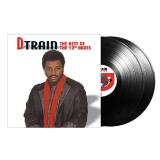
D Train delivered a run of early-’80s hits, earning multiple chart successes and becoming a staple in iconic clubs like New York’s Paradise Garage. Their influence has endured far beyond the original fanbase—from being sampled by The Notorious B.I.G. in 1997 to appearing in Grand Theft Auto V in 2013. The Best Of The 12" Mixes, which compiles extended 12-inch versions and remixes by legendary producers Paul Hardcastle and François K, was first released on CD in 1992. Now, for the first time and exclusively for Record Store Day, Unidisc presents the collection as a double LP pressed on 180-gram heavyweight vinyl.
When Henry Street & Sacred Rhythm Music join forces for a remix outing, it should be obvious the source material and resulting productions are of the utmost caliber. This record proves such a case in point: Johnny "D" DeMairo & Joe Claussell team up for two takes on Candi Staton’s 1979 disco opus 'When You Wake Up Tomorrow.’ The original, whose pedigree could be inferred simply by reading Patrick Adams’ and Jimmy Simpson’s names on the label, is a faultless dance floor cut featuring all the elements you’d expect—lavish horn and string arrangements, sparkling synthesizer accents, and plenty of hand-beat drumming—along with with Staton’s peerless voice. Johnny D’s mix starts carefully, the vocal refrain accented with auxiliary percussion until the rug is pulled out from under us, the ensuing chasm making the following thrust of the track that much more powerful. On the flip.
Claussell’s take starts with reinforced four-on-the-floor, along with a studio count-in, perhaps alluding back to his previous ‘It Seems To Hang On’ edit. As the track establishes itself, ample room is afforded for interplay between bass and guitar, with all the interlacing elements aggrandizing the mood with careful shots of delay and expertly-timed pivots in atmosphere. Both sides are proof of what shouldn’t need evidence: two masters of their craft assembling two wholly new mixes that far surpass the banal copy and paste, add and subtract methodology slung by the less blessed. Pressed on white vinyl, with a custom jacket to boot.
Introducing The Hard Line is available on translucent green vinyl
Neither Fish, Nor Flesh is available on red coloured vinyl
Symphony Or Damn is available on gold coloured vinyl
Vibrator is available on blue coloured vinyl
JUST 400 AVAILABLE IN UK!!
180 gram audiophile vinyl, Newly remastered audio, processed at Artone Studio, approved by Sananda Maitreya
Anti-static black poly lined inner sleeves, Deluxe heavyweight sleeves on uncoated paper
All 4 albums include separate inserts with brand new introduction liner notes written by Sananda Maitreya
Box set is a limited edition, Hype sticker
Sananda Maitreya proudly announces “JUVENILIA : The Columbia Years”, a meticulously curated 4-LP box set bringing together
his first four groundbreaking albums, originally released between 1987 and 1995 Introducing the Hardline, Neither Fish Nor Flesh, Symphony or Damn, and Vibrator.
Set for release on February 6th, 2026, JUVENILIA mark the first time these iconic works have been remastered and presented together on
premium 180-gram vinyl, complete with restored artwork and new liner notes by Sananda.
Produced in collaboration with Sony Music UK, Music On Vinyl and Treehouse Publishing, “Sananda Maitreya’s JUVENILIA : The Columbia Years”,
pays tribute to a pivotal creative era that helped redefine the sound and spirit of modern soul, pop, and rock in the late 1980s and 1990s.
Soda Stereo is a band that never made the same album twice. After the commercial success of Canción Animal, singer Gustavo Cerati went deeper into the art of sampling, electronic music, the Madchester scene from the UK, shoegaze and neo-psychedelia. This change in sound led to some confusion among fans, but also gathered a lot of praise for embracing modern genres. Up this day Dynamo is seen as an essential classic in the Soda Stereo catalogue and also a must have for 90s shoegaze fans.
Dynamo is available as a limited edition of 2000 individually numbered copies on transparent vinyl and includes an insert.
Anané’s colourful life in music has seen her do everything from singing at the famous pre-game show at Super Bowl XLI as part of the group Elements of Life, DJ at hotspots like Hi Ibiza, Pacha NYC and Ushuaïa to name a few, while also curating her own monthly residency Nulu Movement, now ten years strong at Le Bain NYC, release unique blends of Afro, house, and pop on labels like Vega Records, and head up her own imprints, Nulu Music and Nulu Electronic. The Cape Verdean-born DJ, producer, vocalist, and songwriter has had countless club hits and has released acclaimed albums like ‘Ananésworld’ and ‘Chapters Of Becoming’, often with a lush, live, and orchestrated style that is truly unique.
With this release, Anané steps forward with her first solo production to date. Here she serves up the sumptuous ‘It Looks Like Love’, a poised, elegant house sound with her own smoking, soulful vocals and classy strings bringing colour to an Afro groove packed with infectious bounce. Neat guitar riffs and silky synths all enrich this most sophisticated sound. The first mix sees Anané link up with veteran Italian Christian Mantini, who has hosted Sunset Ritual parties with Anané and Louie Vega since 2013. Their dub is rooted in warm, rubbery drums that are even deeper and more immersive than the original.
Manda Moor & Sirus Hood are a red-hot contemporary pair who run the Mood label and are defining the contemporary underground. Their remix is more driving, but it retains the soulful vibe with breezy pads and jazzy motifs drifting in and out above the swaggering groove.
Rotterdam-based Chicagoan Jamie 3:26 is a master at blending disco, soul, and house into timeless sounds, and here he delivers a loopy rework that pairs deep drive and sun-kissed vibes with funky, Chic-style bass guitar motifs.
Houseworx is back with VOL.9 of the"Lost Housetracks" mini compilation series.
This time we present tracks from long time fellows Amaury Trevino on A1 with a peaktime summer house anthem and Franco Strato feat. Ale Castro on A2 with a perfect matching house tool for club entertainment.
On B side we welcome 2 new faces to the Label: Lucia Scholtus originally from Argentina now based in Hamburg / Berlin with a funky oldskool flavoured tune and Sebastian Habben from the cologne collective and Label I'm in Love with a deep house mover called "Neighbors" that perfectly rounds up the ep.
House music all night long!
Glasgow’s Fortified Audio returns after at least a ten years long hiatus (No pun intended) and now returns to the world of bass with a full length album from local music firestarter Ten Years Lost. Modern day trap instrumentals at its core whilst sub-consciously giving hints of Drexciya, Moroder and the Memphis & Croydon bass music regions alongside some real deft sampling but still remains Glasgow at its core!
Music never exists in a vacuum — every scene and sound evolves from the non-stop exchange of ideas between different groups and cultures. Traditions get passed down from one generation to the next, and then individual heads take influence from their own unique perspective. Sometimes, certain people strike upon fusions that spark massive new movements, but even those rarest innovations came from somewhere.
Jon E Cash knows this more than most — the legendary beats he started putting out at the turn of the millennium had their own disparate roots and influences which he had the motivation to put together into a sound he called sublow. There wasn't any other reference point for this music — when he took the first white labels of 'Drop Top Bimmer Kid' into Blackmarket Records in Soho, London, he had to describe it to a puzzled Nicky Blackmarket and J Da Flex as being, "between garage and hip-hop."
Playing catch-up in 2004, Rephlex Records nodded to sublow when trying to introduce a wider audience to the sounds which had been tearing up the London underground. "Grime. Sublow. Dubstep... It's Music. Different people call it different things depending on when they discovered it." But Jon E Cash's sound was rooted in more than the UK garage that had dominated the clubs through the late 90s, reaching way back to his pre-teen days when the first waves of hip-hop culture crossed the Atlantic and broke in the UK.
25 years on, it's a fine time to reflect on the impact of the music Cash made at the turn of the millennium. History looks back favourably on what he and the Black Ops crew were doing with sublow in the early 00s. The timing meant it ran in parallel with what was happening over East with Pay As U Go, Roll Deep et al, and of course there was crossover. Every DJ and every MC was on the hunt for the best beats they could find. But there's a whole different swagger to sublow — a different web of influences, a different intention and so a different outcome. It's still there in the beats Cash is making more than 20 years later — his 3dom Music label is carrying upfront productions with that sublow DNA coursing through their veins. Whatever the beat or the tempo, the drums are still hard as nails, and the bass is tuned for maximum rave damage.
Fresh Hold Releases presents Helen Ripley-Marshall's mysterious Australian ambient electronic album "Green Chaos", reissued for the first time on vinyl LP. Originally released in 1988 on Sydney based private press label Freefall, "Green Chaos" marks the sole release from Ripley-Marshall.
In the late 80's Ripley-Marshall lived a Bohemian lifestyle in inner city Sydney; "surrounded by musicians, actors and artists, there was an amazing creative experimental vibe going on". While playing in new wave/art rock band "D Face" she began Green Chaos as a personal project to counteract the creative friction sometimes experienced within a group dynamic, heavily inspired by Arnold Frolows' "Ambience" radio show on Australia's Triple J and particularly the music of Tangerine Dream, Harold Budd and Brian Eno.
Initially a solitary endeavour, once she decided to record in a studio Green Chaos morphed into a somewhat collaborative, improvisational project with other musicians invited into the studio to improvise and add their own interpretations and ideas, additional layers and dimensions, resulting in a work that combines a clear influence from the electronic repetition of the Berlin school with a meandering, futuristic lyricism. Although influenced by the long form sonic journeys of artists like Tangerine Dream, Ripley-Marshall's background in art rock and new wave brings a more concise approach, each song a self-contained universe that says only what is necessary in the arrangement.
After completing a sound engineering course Ripley-Marshall recorded the album at Sydney's Exeter House Studio over several months alongside studio engineer Andrew Knight, met through a fellow member of D Face. Knight ran Freefall, a private press recording label releasing folk and bluegrass music, which had Green Chaos as its sole ambient release. Ripley-Marshall self distributed the album to local inner city record stores and dropped a copy to Triple J, where it became a regular staple of Arnold Frolows' show.
These days Ripley-Marshall has moved away from music and is predominantly focused on visual art. "Green Chaos" stands as the only released product of her musical years, both a personal window into the vibrant experimental art scene of late 1980s Sydney and a deep, timeless anomaly of Australian electronic music.
Death Is Not The End collaborate with Uzbek label Maqom Soul to deliver an LP counterpart to last year's mixtape of the same title, compiling specially picked & fully licensed individual belters from the ex-soviet studios of Central Asian republics between 1978 and 1989 - incl. Uzbek, Tajik, Kurdish & Uyghur artists pulling traditional folk motifs together with pop & rock and psych elements.
"These recordings do not form a smooth or coherent history. They feel more like a sequence of discoveries made at different moments and in different circumstances. Songs and instrumental pieces that once lived inside specific contexts radio broadcasts, philharmonic programs, touring routes now sit side by side, revealing hidden connections as well as clear fractures between them.
Nasiba Abdullaeva appears here as a voice from the end of an era. Trained within a conservatory system, she worked inside the format of the Soviet pop song while filling it with melodic logic that did not come from Moscow or Leningrad. Her voice is soft and sustained, shaped by Eastern melisma, and it never functions as decoration. Even in tightly structured songs there is a sense of resistance, an effort to preserve a musical language rooted in Uzbek tradition rather than fully adapted to an all Union standard.
The ensemble Sintez, later renamed Navo, represents a different path. Beginning as a student rock group, the band was gradually absorbed into the official VIA system with all its limitations and compromises. Yet it was precisely within those boundaries that Sintez and Navo developed a recognizable sound. Electric guitars and jazz rock harmonies do not overpower the folk material but remain in tension with it. Their recordings feel like negotiations between what the musicians wanted to play and what they were allowed to perform.
The Tajik ensemble Gulshan reflects an institutional approach carried to a high professional level. Formed under television and radio structures, the group treated folk material almost as a written score. Carefully constructed arrangements, close attention to orchestration, and restrained use of pop techniques define their sound. There is less spontaneity here, but a strong sense of discipline and structure, where national melody becomes part of a carefully controlled sonic framework.
Koma Wetan occupies a very different space. Formed in the 1970s, this Kurdish rock group approached poetry and folklore as tools of cultural assertion. Their psychedelic rock never feels like a stylistic borrowing. Instead it functions as a contemporary vessel for language and themes that might otherwise have remained unheard. Even today these recordings sound fragile and stubborn at the same time.
The Uyghur ensemble Yashlik, closely connected to a musical drama theatre, operated somewhere between stage performance and popular music. Their songs are built on folk melodies but shaped for wide audiences. What emerges is a constant attempt to preserve the recognizability of Uyghur musical identity without freezing it in a folkloric frame. Yashlik's music exists in a state of balance between representation and development.
Digging Central Asia does not attempt to establish hierarchies or offer a single wayof listening. Names and dates matter less than the sound itself. Tape noise, abrupt transitions, and unexpected timbres remain part of the material rather than flaws to be corrected. This music existed at the crossroads of multiple routes geographic, cultural, and ideological. Heard today in a new context, it no longer feels peripheral. Instead it stands as a reminder that the history of popular music is far more fragmented, layered, and polyphonic than it is usually allowed to be."
Guests is the home recording project of Jessica Higgins and Matthew Walkerdine. Vaguely named as such to avoid any problems with the poster if they pull out of a gig (which has only happened once, about a year and half before any songs were actually written to be fair) but also to capture a sense of reverse hospitality. That is, arriving at your door with a bottle of good wine (can’t turn up empty handed) or a fist full of savoury or sweet snacks (time of day dependant); oversharing at the afters (and then passing out on your couch); reading to your toddler while you make their lunch or put everything back where it was meant to go (only to get torn apart again). So, something about what happens when private worlds meet each other, making or having been made a space for. But at times, it’s a different kind of intimacy, a temporal or material one, like the feeling of crisp fresh sheets, and abundant and soft, body-part appropriate towels in a hotel in a city you’ve been to before and love to go back to.
Their debut record, “I wish I was special”, was variously described as “a collage of concrète experiments and outerzone pop gestures, music that sounds as if it’s been written from the depths of a dream”; “music for people who love music but also hate it too”; “something like chasing ghosts or befriending a wild animal”; “pulling apart nervous sensations with haphazard ease and requisite humour”; and “a melody of refusal, of being all-in (…) finding the exact right WRONG sound to express the discontent”. Common Domestic Bird continues in this vein, layering synthesiser, keyboards and samples over rudimentary drum rhythms and field recordings, which are in turn sung or spoken with to create nine new songs.
Written and recorded between autumn 2024 and summer 2025 in Reading, Berkshire, the music has matured since its last outing, in a way, leaning less into collage and more toward structured composition and melodic depth, yet retains a healthy dose of indeterminacy and off-kilter rhythms for the forever-amateur. The songs on Common Domestic Bird hint at some “about”-ness through a series of discrete vignettes which sound a bit like architecture or end of year lists, gossip or over-thinking subjectivity, like disappearances and impressions, the support structure of the spine, letters and signs offs, things you could really do without and where they should go, hoping you’ll see something that isn’t there, pretences and performance. At times they feel kind of funny, others kind of sad or a bit angry and annoyed, a bit like you really.
The long-awaited reissue of Toba makes it clear, once and for all, to fans and industry insiders that disco music produced in Italy between the late 70s and early 80s had no chance of success. What was disparagingly called "spaghetti disco", considered a poor imitation of real American disco music, only good for Japanese cartoons. This was the main reason that prompted Italians to record their songs abroad, as Fratelli La Bionda with their pseudonym D.D.Sound in Munich. Luigi Figini, with "Supercool" and "Percussion Sundance" by Edo Martin and Pino Santapaga (the same as "Step By Step" by Koxo), claimed that Kash was a one-off Swedish disco project, a lie that came to light when an Italian test pressing from the previous year, made by GDB, was posted !!! Amin-Peck followed the trend of passing off their songs as foreign music on the intuition of their Roman producers. So ''Love Disgrace'' was released on 7'' by a label called Connection, which never really existed, created for the purpose by Giancarlo Meo, confident that this would bring success to the Bolognese duo who were already creating 'proto Italo-Disco tracks' with a new-wave trend. To make the whole operation seem real, the London agency Ellie Jay Ltd. was involved, contacting Andy Fernbach of Jacobs Studios Ltd. The vinyl was also produced in the UK, otherwise the deception would have been discovered, then imported to Italy by Best Record. Italo-Disco was officially born after this, in 1982, not before! Everything makes sense now ! Real events that actually happened and purely invented names and anecdotes. Just think, even the image of Tony Balch used for the cover of Toba was taken from Grand Theft's 1978 album "Have You Seen This Band?" and reproduced on the new redesigned cover, as were the heads of the other musicians. The idea of a real band called Toba had finally come to fruition and would lead to a second sensational success the following year. Now it all makes sense! Facts and anecdotes that really happened and names and circumstances that are purely fictional. Finally, everything adds up! Real things and invented names of musicians and collaborators. It's important to clarify what we've said above, but we haven't talked about "Make Your Mind Up" and "Don't Take It" and the two masterful remixes performed by Dave Mathmos. In short: with the original versions we'll make Italo-Disco purists happy, with the remix versions we'll please new younger followers with more modern sounds and versions more in line with today's tastes and trends.
Gaudi’s Jazz Gone Dub is a masterclass in genre fusion, seamlessly blending the improvisational essence of jazz with the heavy atmospheric grooves of dub. Known for his eclectic approach to music production, Gaudi pushes the boundaries yet again, creating a sonic landscape that feels both nostalgic and refreshingly innovative.
Four years in the making, from the opening track it’s clear that Jazz Gone Dub is more than just a mashup of styles—it's a thoughtful exploration of the intersections between two rich musical traditions.
Gaudi’s multi-instrumental talents are on full display, and the presence of reggae royalty is palpable, courtesy of rootsy melodies from David Hinds (Steel Pulse), Jah Wobble’s iconic bass grooves, Ernest Ranglin’s intricate guitar lines and Sly & Robbie’s rhythmic genius. Add Sardinia’s Train to Roots band, Manu Chao collaborator Roy Paci, veteran guitarist Marcus Upbeat, Mr Woodnote and Tim Hutton’s brass work, Gavin Tate-Lovery’s sultry sax and flute, Horseman’s percussive flair plus Colin Edwin and Vlastur’s serious basslines, and the
result is a rhythmic foundation that’s both solid and fluid, allowing the jazz elements to float freely above the dub undercurrents.
Despite this star-studded line-up, Gaudi remains the glue that holds this gem together: his production is meticulous yet organic, allowing each track to breathe and evolve naturally. The use of space, delays and reverb—a hallmark of dub music—is expertly handled, giving the album a dreamy, immersive quality. Tracks like Susceptible and Alabaster Moon showcase Gaudi’s ability to create mood and atmosphere without sacrificing melodic and rhythmic complexity.
In Jazz Gone Dub Gaudi has crafted an album that feels both timeless and forward-thinking, a celebration of musical synergy where the free-spirit of jazz meets the deep resonance of dub. Whether you’re a fan of either genre or simply appreciate masterful musicianship and innovative production, this album is a must-listen.
Limited Edition: Box with holographic hot foil logo print and five printed inner sleeves - No Repress
SHDW's label, Mutual Rytm hits a notable milestone at the start of 2024 as it turns two years old and hits its 20th release. To mark the occasion, the carefully curated compilation 'Federation Of Rytm III' arrives on February 2nd with a 30-track 5 x 12" boxset vinyl release and a further 6 digital bonus tracks.
Mutual Rytm is synonymous with serious, no-frills techno. It is a go-to for the world's most influential DJs and a home to some of the scene's most innovative producers. Over the last two years, it has explored several shades of sound, always with high-quality production and forward-thinking styles. A fine balance has always been struck between new and emerging talents and established names with plenty more to say, and that is the case on this collection which features the legendary likes of Blawan, Gary Beck, Colin Benders, The Advent and Dax J next to ANNE, Alarico, JakoJako, Chlar, LDS and many more.
Founder SHDW says, "I've poured my heart into curating a compilation of 36 tracks, a reflection of my deepest musical passions. The lineup is stacked with incredible artists, and it captures the label's essence - a fusion of artists spanning generations, united by a shared spirit and aesthetic, creating a seamless 'mutual rhythm'."
Although all 36 tracks stand alone as high-grade and club-ready dynamite, they also collectively form a versatile listening experience thanks to how they've been carefully assembled into a perfectly sequenced journey.
Each one dives into a different nuance within the world of techno and there is a range of moods from dark and driving to more energising and uplifting. The collection not only shows how far Mutual Rytm has come in a short space of time but also that it remains in a constant state of evolution and has a bright future ahead in 2024 and beyond.
SHDW's vision at Mutual Rytm was always to present a cohesive yet varied musical experience, and Federation Of Rytm III does exactly that.
Back in 2022, Is It Balearic? Recordings founders Coyote (AKA long-serving producers Richard Hampson aka Ampo and Timm Sure) took time out from releasing music on their own labels to deliver a near perfect mini-album on Phil Cooper’s similarly mind-ed NuNorthern Soul imprint, Everything Moves, Nothing Rests.
A superb exploration of their trademark sound, where gentle downtempo rhythms and nods to dub came cloaked in colourful ambient chords, sun-bright melodic motifs, organic instrumenta-tion and quirky spoken word samples, Everything Moves, Nothing Rests deserved a sequel. So, three and a half years on, the duo has delivered just that: a fine six-track EP that offers an even deeper and more atmospheric exploration of their signature sound.
It is a sonic approach that should now be familiar to Balearic en-thusiasts the world over. Aside from delivering a steady stream of singles, albums and remixes on their own imprint, Hampson and Sure have also showcased their skills and loved-up musical mis-sives on International Feel, Music For Dreams, Needwant, MM Discos and Citizens of Vice.
The Higher The Sky, The Deeper The Ocean, their hotly anticipated NuNorthern Soul return, is named in honour of a quote from Ped-ro Alonso’s documentary series On the Ship of Enchantment, an extended voyage in which the Money Heist movie star meets healers and masters of ancestral medicine across his native Mexi-co.
There’s naturally a meditative and slightly psychedelic sound to much of The Higher The Sky, The Deeper The Ocean, which offers a subtly varied exploration of Coyote’s style and influence. Yearning, soft-focus opener ‘Muted Beauty’ – the kind of immersive, effects-laden and sample-sporting ambient bliss found nestling on Fila Brazillia albums of the mid 1990s – is followed by the similarly gentle ‘Go All The Way’, where delay-laden acoustic guitars, spo-ken word snippets and gaseous chords stretch out atop a languid, slow-motion groove.
‘A Drop in the Ocean’ picks up the pace a little via a glorious hat-tip to turn of the 90s ambient house – all dub-wise bass, heady deep house sonics, spaced-out chords and half-buried references to sunrise-ready Balearic synth-pop records of the late 1980s. Late psychedelic guru Terrence McKenna appears in sampled form on ‘Dolce Far Niente’, a tabla-driven drift and musical hallucination which conjures mental images of lying in the Mexican desert, gazing intently at a starry sky.
In contrast, ‘Riviera Sound’ is a chunkier, brighter and more sun-splashed affair – all deep, dubby bass, sustained piano parts, punchy downtempo breaks and the duo’s trademark ambient pads – while superb closing cut ‘No Coincidences’ fixes jazzy double bass samples, twinkling keyboard motifs, subtle acid lines and Latin-laced percussion to a street soul-adjacent beat.
Heady, impeccably crafted and thoroughly enveloping, The Higher The Sky, The Deeper The Ocean is Coyote at their dazzling best. It marks another significant chapter in their ever-evolving musical journey.
Stevie Cox and Ansboy: two powerhouses of the Glaswegian club scene join forces for their collaborative debut EP on Rhythm Section INTL- ‘Twice Like Rice’. It’s a weighty four-track EP designed for the dancefloor, taking in myriad influences from dub techno, breaks, trance and good old fashioned house music. The Ep is full of deep, pulsating rhythms, lush textures and emotive peaks - all road tested in Stevie’s Iconic home turf: Sub Club.
Stevie Cox has long been a name long ruminating on everyone's lips, as a resident DJ of the iconic ‘Sub Club’ with an ever-growing tour schedule and back catalogue of releases via the likes of Klasse Wrecks and Optimo. Whilst the name Ansboy may be new to some, it is a fresh alias for the grammy nominated producer and mixdown engineer Robert Etherson who has long been a staple in the Scottish scene with an international touring repertoire under his belt.
The two friends met in their hometown of Glasgow and began their musical journey together last year after Robert taught Stevie how to do mixdowns. The pair clicked effortlessly, quickly discovering they shared the same passion for emotive, deep and progressive dance music. Their first track together - which took shape in the form of ‘Drift’ - a high-energy synth led anthem, came out with a special selection of tracks curated by Bradley Zero for his exclusive SHOUTS Summer sampler in 2025.
For the Twice Like Rice EP, their work evokes all corners of the dancefloor, kicking things off with ‘GC’ - a peak time breaks-infused trancey-heater - a master class in building dancefloor tension which gives way into a searing crescendo. Things spin towards a darker percussive focus on the more intense ‘Twice Like Rice’.
On the b-side things return to blissful euphoria with ‘Virgil’ - a warm up dub-techno ballad, before the emotional release of ‘Subculture closure’ inspired ‘Carter21’.
With Neolithic Neon, Appleblim creates a kaleidoscopic reflection of the spirituality inherent within electronic music — the ineffable frequencies and communal traditions that spring from exploratory synthesis, deep-rooted rhythms and myriad other sonic codes.
Throughout his third album for Sneaker Social Club, Laurie Osborne continues to express a fascination with the ancient resonance held within modern rave as he guides his own studio practice towards more purposefully analogue processes. It's reflective of his desire to let go and trust his instincts within the more chaotic realm of voltages and signals, not to mention turning to a wider spread of instrumentation and opening up to noisier avenues. This direction defines the character of Neolithic Neon, which bristles with the living imperfections of the gear in the context of incisive and wide-ranging cuts touching on jungle, dubstep, techno, electro, acid and experimental electronic music of all stripes.
Across Osborne's solo output from 2018's Life In A Laser to 2021 tape Infinite Hieroglyphics, a strong melodic sensibility spills out of the richly layered production. It's equally audible in his Wrecked Lightship collaboration with Adam Winchester, and it charges Neolithic Neon with its star-gazing, contemplative streak. From the knotty plucks and licks weaving through opener 'Moorland' to the vaporous synths darting across the top of hardcore conductor 'Thunderstorm', a dreamlike evocation takes the sound off terra firma, musing on cosmic events and our connection to the enormity of the universe.
Eternally in thrall to the maverick vocabulary of pioneering beat scientists and fuelled by the inspiration of great thinkers dwelling on our purpose and place, Neolithic Neon unfurls big ideas without heavy-handed messaging. Instead, it trusts in the universal and time-honoured language of experimentation and rhythm to present its ideas, true to Appleblim's legacy to date while opening a new chapter in his ongoing sonic quest.
Ubisoft and Laced Records have forged a new trade alliance, expanding their economic tree to bring the lavish music of Anno 117: Pax Romana to glorious vinyl.
This vinyl set celebrates the ornate score for Ubisoft's richly detailed city builder, capturing the spirit and splendour of the Roman Empire at its peak. From the beautiful heartland of Latium to the mysterious Celtic wetlands of Albion (where no civilized Roman wants to be), every musical cue is steeped in world-building and crafted with remarkable care.
The outer sleeve features striking landscape art from the game, while the inner sleeves present detailed track lists framed with ornate motifs inspired by Roman architecture and pattern work. The result is a set that feels like a treasure from the imperial archives.
The soundtrack charts a journey across the empire, weaving together atmospheric strings, ancient-inspired instrumentation, and sweeping orchestral cues that capture both the serenity of prosperous provinces and the political tensions throughout. The music reflects every choice you, the governor, must make. Diplomacy or domination, tradition or transformation. An emotionally rich and immersive soundtrack worthy of Rome itself.
Manuel Darquart returns to WOLF with this season’s must-have EP, Dream House Factory Vol. 1. Following his sublime 2023 release, The Del Sol EP, and a standout appearance on Permanent Vacation Records, he once again delivers a collection rich in Italo house influences, all filtered through his unmistakable signature style.
Seamlessly blending house, Italo and acid flourishes, Manuel Darquart continues to showcase why he’s a master of that sun-soaked Balearic sound. There’s a strong sense of nostalgia throughout, yet it’s balanced with a sharp, contemporary edge.
Adding further weight to the package, Malik Kassim aka Retromigration steps up to deliver a killer, remix of Pammy’s Craft. Injecting the track with extra drive and peak-time energy, he transforms it into a dancefloor weapon while retaining the character and charm of the original.
Think Ibiza via Hackney, with a pit stop in Amsterdam for a late-night pick-me-up. Balearic to the core!
DJ Support: Paul Woolford, Machinedrum, Kettama, LDLDN, Sinistarr, A.Fruit, Machine Woman, Octo Octa, Paco Osuna, Bradley Zero, Tzusing, Lefto, Synkro, John Tejada, 12x12 and many more
BBC6Music - Gilles Peterson
NTS - LDLDN
BBC6Music - SHERELLE - DJ Mix and Interview
NTS - Ross Allen
Enter the kaleidoscopic world of Lone - returning to Greco-Roman for his first album in five years, ‘Hyperphantasia’
An artist who has been soundtracking dancefloors since the early 2000s, Lonemade his production debut in 2008 with “Lemurian”, a hip-hop inspired release before moving into the vibrant future-facing soundscapes we have come to know. His back catalogue ranges through house, rave, ambient and electronica, and on ‘Hyperphantasia’, Cutler sets himself the challenge to bring all of those influences together for one body of work that he describes ‘like an album in my mind’. Referring back to the album title, the definition of hyperphantasia is a condition characterized by exceptionally vivid and detailed mental imagery and for this album he tested himself to see how close he could get the music to sound exactly like what he was hearing in his imagination.
On Hyperphantasia, Lone deepens his relationship with vocals. Having previously relied on vocal samples or more abstract live vocal treatments, this latest album marks a shift toward richer, more pop-leaning sensibilities. Cutler makes a clear lyrical statement, enlisting a diverse and carefully chosen cast of collaborators: London-based artists and fellow Greco-Roman affiliates Ell Murphy and Lou Hayter, Barcelona’s breakthrough singer Bikôkô, cult Nottingham rapper Juga-Naut, and Hong Kong-born, London-based musician Merry Lamb Lamb. Together, they contribute to what stands as a career-defining project.
The end result is a cinematic experience exploding full of colour. You are introduced to the album with an old school rave anthem ‘Life Spark’ and an interlude welcoming you into this musical world. Like chapters in a novel, the album ebbs and flows beautifully between stripped-back melodies ‘Opening A Portal’, ‘Photographs That Don’t Exist’, ‘Sickly, Sweetly, Summer Movie’ and ‘Fruit Rots, Water Floats Downstream’, bubbling feel-good house ‘Affinity (Cloud Four Four Mix)’, ‘Triton’ and ‘ Wemove’, the rap-influenced ‘Throw The Ember’ and epic future-pop tracks ‘Miracle Mile’, ‘Big World’, ‘Scattergun’ and ‘Home’. The album ends with a full circle moment, back to the early hardcore and jungle rave scene, on ‘Ascenscion.png’.
Atjazz presents his long-awaited 27-track long player "Starbase 17" — an epic odyssey through song and sound, offering a rich tapestry of styles that draws listeners into a wondrous sonic realm where rhythm, harmony, and imagination intertwine.
Taking inspiration from his extensive body of work, Martin "Atjazz" Iveson fuses his signature deep musicality with cutting-edge production to reach new creative heights. This time, he brings an exceptional ensemble of world-renowned collaborators aboard his cosmic vessel, each adding their own distinct brilliance to the voyage
Together, this stellar lineup consisting of Fred Everything, Nathan Haines, Sio, Karizma, LyricL, Peacey, Pete Simpson, OVEOUS, Charles Webster, Kaidi Tatham, Clyde Beats, Natasha Watts, Omar, Max Beesley, Josh Milan, Rona Ray, Osunlade, and Clara Hill joins Atjazz on a journey through sound, space, and emotion — where each track is a world of its own, yet all are united by a shared creative vision and boundless imagination.
Nickodemus is a globally respected DJ and producer who has been touring nonstop since the mid-1990s, consistently drawing capacity crowds at clubs and festivals worldwide. As a producer, he has released five acclaimed albums (Soul & Science, A Long Engagement, Endangered Species, Sun People and Moon People) and curated eleven volumes of the influential Turntables on the Hudson compilation series. His work bridges hip-hop, house, jazz, and global sounds, highlighted by collaborations and cultural milestones including the Jungle Brothers' genre-defining legacy and the enduring house-rap classic "I'll House You" with Todd Terry. Nickodemus' hit "Mi Swing Es Tropical" (with Quantic & the Candela All-Stars) has surpassed 50 million streams and featured prominently in the film Chef. He has received extensive international press (Billboard, Rolling Stone, The FADER, Paste) and widespread radio support from tastemakers such as Gilles Peterson, BBC 6 Music, KCRW, and KEXP.
Nitai Hershkovits and Daniel Dor return with Found & Found, their second collaborative album and a natural continuation of the musical dialogue initiated with The Garden Suite.
Born out of pure curiosity - "there was more to say, more to explore," explains Dor - the album expands the duo's sonic language beyond the synth-only framework of their previous work. While the Moog remains central, Found & Found introduces clarinet and acoustic guitar, gently dissolving the boundaries between electronic and acoustic sound.
Each composition unfolds through interlocking, mantra-like patterns. Repetition becomes a space for transformation: melodies circle, textures shift, and subtle harmonic movements invite the listener inward. The music is structured with care, yet it feels open and fluid. intimate, spacious and quietly immersive. If their previous record explored orchestral depth through synthesizers, this new chapter embraces air and clarity. Acoustic gestures emerge within electronic landscapes, creating a sound world that is both grounded and weightless.
Nitai Hershkovits brings with his fellow partner Daniel Dor a refined harmonic sensitivity shaped by both jazz and classical traditions. Together they continue to refine a shared language that moves between structure and freedom, precision and emotion.
Scissor and Thread presents Tailored Cuts, Vol. 06, a four-track selection that accompanies the digital compilation album. All four tracks appear on vinyl for the first time. Opening the A-side is a brand new and exclusive dub mix of Soela & Module One’s Drowning, reworked by Matthias Reiling (one half of Session Victim). Originally taken from Soela’s Dark Portrait album, the track is reshaped here into a spacious and hypnotic dub that emphasizes texture, atmosphere and patient groove. "I have been a fan of both Soela's and Module One's music for quite a while now," says Reiling, "so getting the chance to remix their collaboration from Soela's beautiful Dark Portrait album is a huge honor. I tried to keep the elegant and somewhat tender synth work close to it's original spirit and combine it with simple drumkit samples, acoustic guitar, electric bass and a dash of space echo. The process put me in a slightly eerie, yet romantic mood, which, so I hope, translates a little when listening to the result."
Also on the A-side, Black Light Smoke’s Love Triangle appears in ZG’s remix, a lush and understated reimagining that balances warmth with rhythmic precision. On the B-side, Hidden Spheres remix of Francis Harris’ Earth Moves feat. Eliana Glass appears alongside DaRand Land’s Passion Motion from his album Wander Being, "a more upbeat ride, with melodic overtones that drive the “passion”. Personally, it’s my interpretation of some of the sounds from mid-90’s Chicago." says DaRand Land.
King Street Remixed – Dam Swindle revisits classic material from the legendary King Street Sounds catalogue, with Dutch duo Dam Swindle delivering three fresh interpretations of timeless house cuts.
Featuring vocals and productions from house mainstays Arnold Jarvis, DJ Pierre and 95 North, the EP blends classic King Street with Dam Swindle’s signature deep house sound.
Warm basslines, musical chords and groove-driven drums give these remixes strong crossover appeal between soulful house fans and modern deep house DJs, with all three cuts built for dancefloor play.
Importantly, this marks the first time these Dam Swindle remixes have been available on vinyl, making the release appealing for both DJs and collectors of the King Street catalogue.