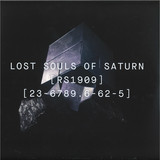
R&S present the eponymous, debut, full length album transmission from Lost Souls Of Saturn.
Epic in scope, time and space, this multidimensional mind trip is for fans of Mark Leckey's 'Fiorucci Made Me Hardcore', David Morales' Red Zone dubs, Don Cherry's 'Organic Music Society', The Orb's 'Ultraworld' and KLF's 'Space' and much more besides.
This ambient house masterpiece combines flavours gathered from across the galaxy, stewing them up into a delicious primordial soup. Old sci-fi soundtracks, acid, free jazz, avant garde, musique concrete, world music and more all whirl around an underground-dance-music axis.
Primarily LSOS are Seth Troxler and Phil Moffa, plus further opaque participants congregating to combine music, imagery, and storytelling into an inextricably linked whole, all wrapped-up in a philosophy of their own making.
quête:c o r e system
In early 2018, Jas Shaw, one half of Simian Mobile Disco was diagnosed with a rare health condition – AL amyloidosis – a disorder of bone marrow cells. Having just completed SMD’s 7th studio album Murmurations and with a special show at the Barbican scheduled for April, things were thrown into confusion. At the time, no one, including Shaw, knew how the prognosis would pan out. Jas had to start chemotherapy almost immediately, which meant cancelling the tour. The duo decided to go ahead with the Barbican show in spite of Shaw’s illness, which was especially poignant as all involved knew it could potentially be SMD’s last ever live performance – in the end it turned out to be a tour-de-force. If this was SMD’s swansong, so be it.
In the year that followed, Jas spent months receiving weekly chemotherapy, learning to live with his condition, and when he felt well enough, spending hours in his studio making music.
The result of this was twofold, firstly a collaborative album with Derwin Dicker (Gold Panda), released as Selling – On Reflection, on City Slang Records Secondly, a growing archive of solo work, which is now ready for release. Entitled “The Exquisite Cops”, this 20+ track growing body of work will see the light of day via SMD’s Delicacies label – with a 2-track single released every fortnight /month and a limited
edition double LP scheduled for 27th September.
At the end of 2018 a difficult year was capped with hopeful news. With his condition in remission, able to stop chemotherapy Jas is able to start DJing and playing live again.
Jas: “The Exquisite Cops tracks seem to have made their own system for creation. Normally I record electronic music like a band would, as a take. So, it’s kind of surprising to me that that this batch of tracks wasn’t made this way. Instead of a single take that gets edited and developed these tracks were all made in bits, usually months apart. Some days I’d make a drum track, often editing it down so that it’s some sort of semblance of a structure; on other days I’d end up just making a synth sound or texture. This wasn’t something that I gave into reluctantly, it’s nice to be able to give a feedback based pad your whole attention rather than just set it up and only attend to it if it gets really out of hand.
The process of matching these misfits together was originally born out of laziness, rather than break open the synths to make something to develop an idea, what if I could just use something that I already had; slack. The interesting thing was that in pulling two takes together that were done months apart, they cast each other in a different light and though sometimes making them fit together was a hatchet job, sometimes they locked up together in an improbable way, making the rough structures that I’d improvised make a different sort of sense; often a more interesting sort of sense.
The more I did this the more it felt like this was not just a slacker’s way to use up offcuts, this resulted in combinations that I’d probably not have chosen if I’d done the tracks in one go. Also, and I know this isn’t something that’s important to everyone, there was a level of fastidious detail that I’d never have got if I’d had the textural and rhythmic elements playing together. It’s a longwinded process but it’s changed how I record and how I think about recordings I’ve made; plus I enjoy all parts of it so why cut it short?”
The original freaks SES are back for another mind melting EP called “Saboteur”.
Completely tuned for a sweaty underground club system, the kicks in ‘Sounds Like’ hit deeper then your typical sound-boy bass lines of 2019.
Europa is on some dystopian Kraftwerk transeuropean express tip with all the attitude you’d hope to squeeze into four and a half minutes.
Hijacker kicks off the B side with continuing paranoid themes of the SES back catalog.
Flesh Tone simply jacks you in half and makes you throw shapes like it’s 1989. Only in Hi Def.
- all tracks blend with each other flawlessly, so buy two copies why don’t you.
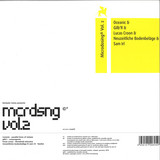
Microdosing is a series of compilation 12”s selected by Julienne Dessagne aka Fantastic Twins, and designed in collaboration with French visual artist Geff Pellet. Microdosing is a collective experiment aimed at helping you fighting back your modern obsession with happiness. You may deserve a nice day but the day does not need a nice you, nothing should be forced, everything is permitted. Microdosing will provide you with sonic healing weapons on regular basis and at irregular dosage. Those doses will favour psychedelic social techniques against self help tyranny, creation over soma, provoking over numbing, our outer-selves over our inner-selves. Microdosing refuses the fatality of the pleasure principle. Life is a struggle, time to embrace it. —— "My battery is low and it’s getting dark” We at Microdosing will make Opportunity’s famous last words fully ours. Some would see these as an epitaph on a black screen, we embrace them as a reclaimed fragility. Are we grains of sand wandering in space, hoping for a goal? No. We are the cosmos, the cosmos is us, unafraid of the end, unafraid of the void. Before the rise of the infinite silence, Microdosing brings you new guiding lights, white sun or black hole being a simple permutation of the kinetic rainbow. Oceanic’s “Parallel Lines Of Stripes” is a meandering mantra, an synthesised Moebius ring, a mission to your heart, that furthest star in the sky. Gilb’R’s “Cosmogonie” simply reminds us of the profound relation between spatial systems and the holy act of birth (cosmo, world and gon, conceive). The universe is a body, your body is your universe. Lucas Croon’s “Threshold Stimulus” is the soundtrack of a never ending voyage, the man is on a trip to the core sanctum. Imagine Space as a reverberation room cladded with bakelite. Losing yourself in delay repeats sometimes is the shortest way. Neuzeitliche Bodenbeläge & Sam Irl’s “Faeden” is another hymn to the umbilical chords joining us to the outer world, a black monolith of kraut acid, a pagan dance as portal to a destination only you can choose. Microdosing will be back soon with more enablers, helping to turn your petty struggles into a search for a meaning of life. The Quest lives on.
The Ryote EP is the aptly titled debut from Ryote, featuring 5 tracks of raw, leftfield house and techno inspired by grimy basements and late
night mischeif. Ryote also has releases with Minneapolis labels Always Human Tapes and Abstrakt Xpressions. The co-founder of Kajunga and co-owner of Detroit-based Clave House stays active in the Midwest circuit, performing regularly at a varity of events and festivals such as: Even Furthur, Sacred Earth, SYSTEM, Communion and Elixir.
* The original sister label to Ram Records from the old Ram HQ studio in Essex, Liftin Spirit Records now celebrates it’s 25th year with a special ‘RELOADED’ limited vinyl series of remastered classics, alongside rare and previously unreleased tracks since the beginning in1992.
* DATs from artists such as Andy C, Ant Miles, Shimon, Joint Venture, Flatliner, Interrogator and Red One have been located in the archives. Also from the Ram & Liftin HQ came tracks for the Deep Seven label in 1993 and all these rare DAT masters have been located and now re-cut by Simon, the original Ram & Liftin vinyl masterer at ‘The Exchange’. Initially, Deep Seven remasters will present on a printed white label and unreleased tracks will have a black label.
* The year is 1994 and the awesome combination of Flatliner & Ant Miles gave life to the infamous tracks ‘The Big Bang’ / ‘No Boundaries’. Release no 9 on RAM records tore up sound systems at every Rave in the country. A follow up was on the cards and ‘Flatline’ was born. Put to one side to make way for the Big Bang/No Boundaries remixes, somehow it never resurfaced again... until now!
* A similar story evolved for the A side ‘Just Stop’. A track made in the latter part of 1995, Flatliner comes with yet another amen monster, but this time taking things on more of a rolling Drum & Bass vibe. A golden nugget to own on vinyl for any true Jungle/Drum & Bass fan.
Inner space centurion and local star command operative Tommy Walker III returns with a new mission directive this DATE...
Hardwiring to the Red Laser network and initiating an advanced, beta-tested programme of futuro-manctalo cybernetics, TWIII's meta-level hybridisation of Italian synth disco & northern English rave styles, combined with an expert deciphering of modernised club dynamics has resulted in a faultless system capable of withstanding the most extreme sonic test environments. RL30's eight tracks are RL Corp. operation-certified to work alongside Human2.0's electrostatic discharge profile. Universally approved usage for sentient earth dwellers offering portals into dancefloor ecstasy and inter-dimensional transcendence. This programme begins with 'Pocsy', and sees euphoric holograms burst through galloping Italo mechanics, fusing retro-tinged optimism with a nu-age release. 'Shoiab' (named after a fellow starship captain tasked to MCR and in alliance with RL Corp...) unleashes red shifted synths and carnal cowbells for the cyberotic lap-dancers to get jizzy too. 'Autopilot' allows the on-board crew to reassemble, a well automated array of arpeggios guiding the shuttle during the first phase, until reconsolidating in the latter stages for full-on interdimensional 5-D funk jam. 'Lightwork' is pure RL endorsed synth-jizz, erupting out of Tommy's arsenal like a mis-timed giant alien cumshot; minus any Manga references.
'Astral Projectile Vomit' address a common problem endemic to protectors of our star cluster; then channels a shiny, serpentine chrome sequence and thrusts it down the rainbow road for maximum belly aches.
More hydraulic collisions between electronic disc-boogie and newly mined atomic particles from passing asteroids ensures Srg. Walker has enough mainroom material to keep the Sharons and Traceys of the main hub dancing in between injections of dimethyltryptamine. Closing with a trio of humanoid hits that'll have Jonny5 ordering kryptonite margaritas for the entire ship, Tommy Walker celebrates with the cosmic conge, 'Gary Blast'.
RL Corp is confident RL30's internal algorithm is a future-proofed, cross-species platform for auditory excitement, and will continue to stimulate listeners across a multitude of environments.
- A1: Jacques Thollot - Cécile
- A2: Philippe Besombes - La Plage
- A3: Igor Wakhévitch - Materia-Prima
- A4: Mahjun - Les Enfants Sauvages
- B1: Lard Free - Warinobaril
- B2: Etron Fou Leloublan - Le Désastreux Voyage Du Piteux Python
- B3: Jean Cohen-Solal - Captain Tarthopom
- C1: Z. N. R. - Solo Un Dia
- C2: Red Noise - Sarcelles C’est L’avenir
- D1: Pierre Henry - Générique (Thème De Myriam)
- D2: Horrific Child - Freyeur
- D3: Dashiell Hedayat - Fille De L’ombre
- D4: Jean Guérin - Triptik 2
After years of mythology, misinterpretation and procrastination Nurse With Wound’s Steven Stapleton finally chooses Finders Keepers Records as the ideal collaborators to release “the right tracks” from his uber-legendary psych/prog/punk peculiarity shopping list known as The Nurse With Wound List, commencing with a French specific Volume One of this authentically titled Strain Crack Break series. Featuring some Finders Keepers’ regulars amongst galactic Gallic rarities (previously presumed to be imaginary red herrings) this deluxe double vinyl dossier demystifies some of the essential French feee jazz and Parisian prog inclusions from the alphabetical “dedication” inventory as printed the anti-bands 1979 industrial milestone debut.
When Steven Stapleton, Heman Pathak and John Fothergill’s anti-band Nurse With Wound decided to include an alphabetical dedication to all their favourite bands on the back of their inaugural LP the notion of creating a future record dealers’ trophy list couldn’t have been further from their minds. By adding a list of untravelled European mythical musicians and noise makers to their own debut release of unchartered industrial art rock they were merely providing a suggestive support system of existing potential likeminded bands, establishing safety in numbers should anyone require sonic subtitles for Nurse With Wound’s own mutant musical language. Luckily for them, the record landed in record shops in the midst of 1979’s memorable summer of abject apathy and its sound became a hit amongst disillusioned agit-pop pickers and artsy post-punks, thus playing a key role in the bourgeoning “Industrial” genre that ensued. On the most part, however, the list , like most instruction manuals, remained unreadable, syntactic and suspiciously sarcastic... As potential “real musicians” Nurse WIth Wound became an Industrial music fan’s household name, but in contrast many of the names on The Nurse With Wound List were considered to be imaginary musicians, made-up bands or booby traps for hacks and smart-arses. It took a while for the rest of the record collecting community to catch on or finally catch u
Since then, many of the rare, obscure and unpronounceable genre-free records on The Nurse With Wound List have slowly found their own feet and stumbled in to the homes of open-minded outernational vinyl junkies, D’s and sample hungry producers, self-propelled and judged on their own merit, mostly without consultation of the enigmatic NWW map. But, to the inspective competitive collector’s chagrin, one resounding fact recurs, NWW got there first! Via vinyl vacations, on cheap flights and Interrail tickets, buying bargain bin LPs on a shoestring while oblivious to the pending pension worthy price tags after their 40 year vintage, Stapleton and Fothergill, even if you’ve never heard of them, were at the bottom of the pit before “digging” became paydirt. And NOW at huge international record fairs that occur in massive exhibition halls (or within the confines of your one-touch palm pilot) amongst jive talk acronyms such as SS, PP, BIN, DNAP and BCWHES the coded letters NWW have begun to appear on stickers in the corner of original copies of the same premium progressive records accompanied by a customary 50% price hike to titillate/coerce the initiated as dealers extort the taught. Like “psych” “PINA” or “Krautrock” did before, “NWW” has become a buzzword and in the passed decades since its first publication The List has been mythologised, misunderstood and misconstrued. It’s also been overlooked, overestimated and under-appreciated in equal measures, but with a growing interest it has also come to represent a maligned genre in itself, something that all members of the original line-up would have deemed sacrilegious. Bolstered by the subtitle “Categories strain, crack and sometimes break, under their burden,” all bands on the inventory (many chosen on the strength of just one track alone) were chosen for their genre-defying qualities... A check-list for the unchart
Forty years after Nurse With Wound’s first record, Finders Keepers Records, in close collaboration with Steve Stapleton remind fans of THIS kind of “lost” music, that there once existed a feint path which was worn away decades before major label pop property developers built over this psychedelic underground. As long-running fans and liberators of some of the same records, arriving at the same axis from different-but-the-same planets, Finders Keepers and Nurse WIth Wound finally sing from the same hymn sheet resulting in a collaborative attempt to officially, authentically and legally compile the best tracks from the list, succeeding where many overzealous nerds have deferred (or simply, got the wrong end of the stick). Naturally our lavish metallic gatefold double vinyl compendium would only scratch the surface of this DIY dossier of elongated punk-prog peculiarities hence out decision to release volume one in a series which, in accordance with Steve’s wishes, focusses exclusively on individual tracks of French origin, the country that unsurprisingly hosted the highest content of bands on the list. Comprising of musique concrète, free jazz, Rock In Opposition, Zeuhl School space rock, macabre ballet music, lo-fi sci-fi, and classic horror literature inspired prog, this first volume of the series entitled Strain Crack And Break throws us in at the deep end, where the Seine meets the in-sane, introducing the space cadets that found Mars in Marseilles.
Like the Swedish flat-pack record shelves that attempt to house the vast amounts of vintage vinyl that goes into a multi-volume compilation like this, its time to prepare your own musical penchants and preconceived ideas about DIY music and hear them slowly strain, crack and b
Concentric Circles presents ''For the Moment'', which features tracks from some of Di Stefano's early cassette releases, as well as a number of unheard explorations of Indian polyrhythms from the early 90s. Di Stefano’s prescient and unique work will appeal to fans of Cybe, Joel Graham, UnknownmiX, Zru Vogue, and provides a fascinating view of the 80s US electronic underground.
American-born, Japan-based composer John Di Stefano self-released a number of cassettes as part of the 80s DIY underground on his own imprint Oktron Produktions, including Klang's Drift, a collaboration with Joel Graham.
Living in San Francisco, Di Stefano had access to multiple University electronic music studios, where he had an impressive array of synthesizers at his fingertips, including both Buchla and Serge modular systems. Combining his knowledge of modular synthesis with a background in percussion, his early releases were a uniquely human approach to electroacoustic music, with flourishes of post punk in the mix. Di Stefano developed an interest in world music, studying Indian music theory and tabla, and after an extended trip to Indonesia in the mid 80s, he was particularly drawn to Javanese gamelan music. Future recordings would forever be indebted to the sounds he heard during those travels.
Originally a Library oriented Music label, Apollo Sound by the mid 70s commissioned contemporary musical pieces from new composers, aiming presumably to provide atmospheric backgrounds for film, television and advertising, and to feed the burgeoning demand for ‘New Age’ music. Therefore comes Following The Light.
While certainly melodic, Owen’s music makes no concessions to mid-afternoon mindfulness or commercial use and reuse. Instead, Following The Light - whose title is taken from the Tao. Number 27 - is a deep and immersive listening experience, clearly the work of a singular musical imagination following its own rules in its own way.
With the help of Katherine Sweeney on violin and Milada Polasek on electric piano and organ, Albert Alan Owen recorded Following The Light in “live” condition, taking profit of a strong use of the digital effects which were in its infancy at this time; the music was written to make the most of what technology was available, resulting a singular piece of music of sheer beauty
The record demands to be considered as a stand-alone unit, its three sections unfolding elegant and propulsive by turns, as reoccurring themes answer each other through the layers. There are echoes of Reich and Riley in the use of delay, that warm rolling repetition and those bass pulses. But this is not in the service of a system. There is something more lyrical, more humane at work in the music.
With Following the Light, Albert Alan Owen has given us a record that stands outside of time and place, it’s familiar elements made strange and new, all bathed in magic hour light.
Daughter of the mighty George Kerr, Sandy set the scene alight in ’82 with the explosive classic, ‘Thug Rock’. Badass slap basslines, zapping synths, ethereal pads and Sandy’s iconic rap were a timeless recipe of pure ‘80s, boogie-infused power that’s blasted from many a boombox, sung on all manner of club systems and sound tracked endless open road cruises over the years.
Released on the South Carolina label Catawba Records, two prolific duos blessed ‘Thug Rock’ alongside Sandy and co. Her father, who produced for the likes of Alice Clark and The O’Jays and Sugarhill wizard, Reggie Griffin, headed up the production and arrangement, with ever-dependable M&M aka John Morales & Sergio Munzibai taking the reins on the mix. Their combined talents can be heard in the tangible weight of the track, each element getting the space it deserves to facilitate that crystal-clear clout - from the huge bass riffs and sublime keys, to the punchy drums and Kerr’s infectious rap. An earworm if ever there was one!
Take to the flip to find the much in-demand dub version, echoing out choice snippets of Sandy’s rap to focus in more on that killer boogie-funk groove. Original copies are tough to come by in the UK, so an official reissue will be music to many an ear.
Having broken a decade's silence with 2016's 'System', LA-based electronic musician Joseph Fraioli, a.k.a. Datach’i, returns this summer with his eighth album 'Bones'.
Released on Venetian Snares' Timesig imprint, 'Bones' features 12 tracks of mind expanding electronica, once again recorded on his custom-built Eurorack modular system. Much like its predecessor, 'Bones' manages to make the most of the possibilities modular systems offer, whilst avoiding their many pitfalls that can often turn such music into little more than a dry academic exercise. Indeed 'Bones' is a remarkably intimate album, written and recorded in the time following his father's death, and reflects this intense period of personal change in Joseph's life.
"Creating this music was a therapy of sorts," Joseph recalls. "It was almost like a close friend being there for me, and it's something that I hope others can perhaps utilize in the same way."
The connection to his father is something that is reflected not just in the emotional intensity of 'Bones', but in the actual production itself. "My father and I were very close," he explains. "Whilst he was sick with cancer I bought him a guitar as he wanted to learn how to play, just to have something to do while he was getting treated. After he passed away my mother gave me the guitar to have as a sort of memory of him. I had the idea to record some sounds and music on the guitar and load it onto granular sample players on the modular synth so I could make new music from those sounds as a sort of tribute to my dad. You can hear some of those sounds on a few of the tracks here like 'Arrivals', 'Motion in the Living Room' and 'Undimension'."
The resulting album grapples with the intensity of these emotions. But for all their weight, tracks like 'Saugerties Road', ‘Rockledge 3A’ and ‘Antumalal’ transform that heaviness into something warm and comforting whilst the aforementioned 'Arrivals' or ‘Wand’ ultimately achieve some kind of escape velocity and soar. Even though 'Bones' is about endings and finding closure, it also looks forward to new beginnings.
"It was something very much on my mind throughout recording this album," he relates, "ends being beginnings and beginnings being the end. Cycles of time and how time works, it's all reflected throughout the album right down to how the tracks are ordered."
Ranging from blissful ambience and guileless, starry eyed melodies, to intricate claustrophobic rhythms that forever sound close to collapsing in on themselves before expanding into bold new patterns, 'Bones' is the work of a producer who, twenty years on from his debut, continues to push the boundaries of electronic music.
To mark his second artist album on his own Millionhands label in July, Tee Mango teases with a fantastic second EP from it featuring remixes from Hidden Spheres (Lobster Theremin, NTS), Kiwi (Futureboogie, Optimo, Life & Death) and Hubie Davison (Regraded).
The fantastic full length finds the UK artist stretch himself and serve up a dazzling array of soul-drenched, vocal-laced songs featuring his own singing and influenced by the likes of Prince and Bon Iver, alongside awesome gyuest vox from Detroit funk legend and former Funkadelic member Amp Fiddler.
Opening up EP 2, Tee Mango serves up a fizzing and arpeggiated electronic disco track, ‘Woo Hoo’ which will undoubtedly be rocking festival tents this summer. Irishman and Leisure System man Hubie Davison then steps up to the plate with a heart-warming, tripped out and twinkling organic house mix of ‘Down Down Down’, featuring warm oaky melodies and Mango’s fragmented falsettos.
Then comes a dazzling techno-not-techno mix of ‘Woo Hoo’ from Londoner Kiwi, an associate for labels like Correspondent and Optimo Music. This superb version keeps the galloping arpeggiated feel of the original but swaps the broken beat for a straight four to dizzying effect. Following that is acclaimed Lobster Theremin, Rhythm Section and NTS regular Hidden Spheres with a hip house basement re-rub of ‘Down Down Down’ with more of Tee Mango’s fragmented falsetto over a beat Prince would be proud of.
Finally, Tee Mango himself then steps out with the excellent balearic skit ‘Don’t Worry About the Rain’ with deliciously soothing Rhodes and synth whines topped with Mango’s vocals imploring us to ignore the weather.
This is a top package that bristles with brilliant club sounds for a range of different settings and more than whets the whistle for the forthcoming album.
“Stop here!” exclaimed Robert Oumaou as we passed a mango tree on the side of the road just outside of Point-a-Pitre, the balmy capital of Guadeloupe. He filled a plastic bag with ripe fruit, and we set off on our journey across the small Caribbean island in search of musicians he hadn’t seen in years. On the way, we shared stories in broken French and English, stopping at truck stops to eat delicious fried fish. Robert took me to his hometown, and placed a mango and a flower on the grave of his teacher and mentor, a local poet. The seeds of Vwayajé (Traveller) were sewn on this trip, but shortly after returning home, I heard that Robert was ill, and he sadly passed away in 2018. This compilation was originally intended as a way to share Robert’s brazen work with a wider global audience, but it now also serves to immortalize his indomitable spirit.
Gwakasonné is the ecstatic articulation of Robert Oumaou’s artistic and political vision, a unified expression of his interests in American jazz, pre-colonial rhythms, Guadeloupian independence, and Créole poetics. Over the course of three albums, all released in the 80s, Robert piloted a revolving cast of musicians, a venerable who’s-who of Point-a-Pitre avant-jazz pioneers, to deftly intone his creative communal concepts. The songs on Vwayajé are compiled from these three releases, Gwakasonné, Temwen, and Moun, along with an electronic mantra taken from his 2007 solo album Sang Comment Taire. Viewed from our current artistic and cultural landscape, Robert’s work is exceptionally enduring, grounded in its declarations of freedom and foundational use of the Ka (drum) and voice, and prescient in its borderless explorations of protest folk, electronics, ambient atmosphere, music from the African diaspora, and spiritual jazz. The long-form hive-mind expression of the group has parallels with similar explorations by The Grateful Dead, electric
Miles, Pharaoh Sanders, and even the Boredoms, but these are only oblique references for a truly peerless sound. Like other conceptual children of Gérard Lockel, the group was part of a progressive movement of like-minded musicians, such as Serge Fabriano, Dao, Erick Cosaque, and Gaoulé Mizik, who embraced Lockel’s modernist ideals, fusing Gwo Ka drumming and tuning systems with contemporary jazz and vanguard recording technologies. Robert’s ecstatic phrasings, embrace of electronic instruments, and daring lyrics set the group apart as the beatific expression of a sagacious soul.
Wilcoxia poselgeri can be found primarily in South and West
Texas, as well as the adjoining Mexican state of Coahulia.
Sometimes referred to as the “Lead Pencil Cactus” or “Dahlia
Hedgehog Cactus” due to its slender stems and tuberous
Dahlia-like root system, Wilcoxia poselgeri grows in the sandy
soils of hills and valleys on either side of the Rio Grande. When
in bloom Wilcoxia poselgeri produces large, moderately
fragrant pink flowers that open during the day and close at
night. Initially erect, Wilcoxia poselgeri gradually begins
sprawling amongst its surroundings as it matures to support
the growing weight of new stems. Regarded as a slow-growing
yet uniquely beautiful specimen, Wilcoxia poselgeri’s relative
ease of cultivation makes it a remarkable addition to any
collection. Our botanists strive to source and produce highquality specimens to enrich your mind as well as your ears.
After many months in the field our team has returned with a
diverse selection of sonic seedlings. Following a series of
meticulous experiments in our research facility each seedling
has been deemed safe for general propagation and cleared for
release.
- A1: Mr Nanof\\\'S Tango
- A2: Tom Thumb
- A3: Between The Scale And The Apple
- A4: Scene Of The Madmen
- A5: Waiting For The Fête
- A6: My Dad Had Two Mommies And Two Daddies
- A7: Graffiti
- A8: Towards The Tree In Front Of The House
- B1: The Procession
- B2: The Figurations - The Braid, The Rhombus, The Star
- B3: The Presence Of The City
- B4: The Waterfall
Archival reissue of the ethereal wonder from Italian architect / music installation & soundtrack master Piero Milesi. This lush adventure of mediative synth and melodic scores for lyricon and small chamber ensemble contains tracks from films "The Nuclear Observatory Of Mr. Nanof" (L'Osservatorio Nucleare Del Sig. Nanof, 1985), "The Oversize House" (La Casa Fuori Misura, 1985), theatre play "King's Night" (La Notte Dei Re, 1986), and video "The Presence Of The City" (La Presenza Della Citta, 1984) produced by The University For Architecture of Milan.
- For fans of library music, soundtracks, leftfield, synth, WRWTFWW Records, Vladimir Cosma, Piero Umiliani, sci-fi, experimental movies, and astronautic mineral engineers of the mental system.
Following the release of grime legend Jamakabi's “Wickedest Ting” EP, grime fans and vinyl collectors alike have been screaming for the bass remixes by Truth and Ghosty to be released on vinyl.
We heard, we listened and we can now deliver!
Rhythm Rollers is proud to present “The Bass Remixes” of Wickedest Ting on limited edition 12” vinyl.
Track A is an absolute monster brought to you by LA based dubstep veterans “TRUTH” which incorporates all the lyrical energy of the original while providing atmospheric low sub baselines that Truth are so well known for around the globe. If you love your dubstep this is a must for your collection and sets!
Track B is a whole different take on Jamakabi and D Double E's 2018 grime anthem. Ghosty steps up to the plate for this one and rises to the occasion in superb style. The Reaper Recording head honcho is quickly becoming renowned for his high energy amen drum patterns and this does not disappoint! If you get a chance to play this on a large system, be warned! The low subby basslines and heavy hitting drums will bring the roof down, and the rest of the building for that matter!
It's not often Grime greats like D Double & Jamakabi bless these type of styles and its even rarer to find them available on vinyl. If you love your Grime, dubstep or your amens this release has to be an immediate addition to your vinyl collection!!