Camelot, the legendary seat of King Arthur's court in Early Middle Ages Britain, was probably not a real place. A corruption of the name of a real Romano-Briton city, the word "Camelot" accumulated symbolic, mythic resonances over centuries, until achieving its present usage as a near-synonym of "utopia." In the mid-20th century alone, Camelot inspired an explosion of representations and appropriations, among them the violent, affectless Arthurian court of Robert Bresson's 1974 film Lancelot du Lac and the absurdist iteration of Monty Python's 1975 Holy Grail, both of which feature armored knights erupting into fountains of blood; the mystical Welsh world of novelist John Cowper Powys's profoundly weird 1951 novel Porius, with its Roman cults, wizards and witches, and wanton giants; and the nationalist nostalgia of President John F. Kennedy's White House. Unsurprisingly there are fewer Camelots in more recent memory. Camelot, Canadian songwriter Jennifer Castle's extraordinary, moving 2024 chronicle of the artist in early middle age, charts a realer, more rooted, and more metaphorical place than the fabled Camelot of the Early Middle Ages (or its myriad depictions), but it too is a space more psychic than physical. In Castle's Camelot, the fantastic interpenetrates the mundane, and the Grail, if there is one, distills everyday experience into art and art into faith, subliming terrestrial concerns into sublime celestial prayers to Mother Nature, and to the unfolding process of perfecting imperfection in one's own nature. Co-produced by Jennifer and longtime collaborator Jeff McMurrich, her seventh record is at once her most monumental and unguarded to date, demonstrating a mastery of rendering her verse and melodies alike with crisply poignant economy. For all their pointedly plainspoken lyrical detail and exhilarating full-band musical flourishes, these songs sound inevitable, eternal as morning devotions. "Back in Camelot," she sings on the lilting, vulnerable title track, "I really learned a lot / circles in the crops and / sky-high geometry." The album opens with a candid admission of sleeping "in the unfinished basement," an embarrassing joke that comes true. But the dreamer is redeemed by dreaming, setting sail in her airborne bed above "sirens and desert deities." If she questions her own agency_whether she is "wishing stones were standing" or just "pissing in the wind"_it does not diminish the ineffable existential jolt of such signs and wonders. This abiding tension between belief and doubt, magic and pragmatism, self and other, sacred and profane, and even, arguably, paganism and monotheism, suffuses these ten songs, which limn an interior landscape shot through with sunstriped shadows of "multi-felt dimensions" both mystical and quotidian. The epic scale and transport of "Camelot," with its swooning strings, gives way dramatically to "Some Friends," an acoustic-guitar-and-vocals meditation in miniature on Janus-faced friends and the lunar and solar temperatures of their promises_"bright and beaming verses" versus hot curses_which recalls her minimalist last album, 2020's achingly intimate Monarch Season. (In a symmetrical sequencing gesture, the penultimate track, the incantatory "Earthsong," bookends the central six with a similarly spare solo performance and coiled chord progression, this time an ambiguous appeal to _ a wounded lover? a wounded saint? our wounded planet?) Those whom "Trust" accuses of treacherous oaths spit through "gilded and golden tooth"_cynics, critics, hypocrites, gurus, scientists, doctors, lovers, government, the so-called entertainment industry_sow uncertainty that can infect the artist, as in "Louis": "What's that dance / and can it be done? What's that song / and can it be sung?" Answering affirmatively are "Lucky #8," an irrepressible ode to dancing as a bulwark against the "tidal pools of pain" and the "theory of collapse," and "Full Moon in Leo," which finds the narrator dancing around the house with a broom, wearing nothing but her underwear and "big hair." But the central question remains: who can we trust, and at what cost faith, in art or angels or otherwise? Castle's confidence in her collaborators is the cornerstone of Camelot. Carl Didur (piano and keys), Evan Cartwright (drums and percussion), and steadfast sideman Mike Smith (bass) comprise a rhythm section of exquisite delicacy and depth. This fundamental trio anchors the airiness of regular backing vocalists Victoria Cheong and Isla Craig and frames the guitars of Castle, McMurrich, and Paul Mortimer (and on "Lucky #8," special guest Cass McCombs). Reprising his decennial role on Castle's beloved 2014 Pink City, Owen Pallett arranged the strings for Estonia's FAMES Skopje Studio Orchestra. On the ravishing country-soul ballad "Blowing Kisses"_Pallett's crowning achievement here, which can be heard in its entirety in the penultimate episode of the third season of FX's The Bear_Jennifer contemplates time and presence, love and prayer_and how songwriting and poetry both manifest and limit all four dimensions: "No words to fumble with / I'm not a beggar to language any longer." Such rare moments of speechlessness_"I'm so fucking honoured," she bluntly proclaims_suggest a state "only a god could come up with." (If Camelot affirms Castle as one of the great song-poets of her generation, she is not immune to the despairing linguistic beggary that plagues all writers.) Camelot evinces a thoroughgoing faith not only in the natural world_including human bodies, which can, miraculously, dance and swim and bleed and embrace and birth_but also in our interpretations of and interventions in it: the "charts and diagrams" of "Lucky #8," a daydreamt billboard on Fairfax Ave. in LA in "Full Moon in Leo," the bloody invocations of the organ-stained "Mary Miracle," and all manner of water worship, rivers in particular. (Notably, Jennifer has worked as a farmer and a doula.) The album ends with "Fractal Canyon"'s repeated, exalted insistence that she's "not alone here." But where is here? The word "utopia" itself constitutes a pun, indicating in its ambiguous first syllable both the Greek "eutopia," or "good-place"_the facet most remembered today_and "outopia," or "no-place," a negative, impossible geography of the mind. Utopia, like its metonym Camelot, is imaginary. Or as fellow Canadian songwriter Neil Young once sang, "Everyone knows this is nowhere." "Can you see how I'd be tempted," Castle asks out of nowhere, held in the mystery, "to pretend I'm not alone and let the memory bend?"

Buscar:c theory
. For Fans Of: The Weather Station, Weyes Blood, Adrianne Lenker, Phoebe Bridgers, Joan Shelley, Lana Del Rey, Cass McCombs, Angel Olsen & Neil Young. Camelot, the legendary seat of King Arthur’s court in Early Middle Ages Britain, was probably not a real place. A corruption of the name of a real Romano-Briton city, the word “Camelot” accumulated symbolic, mythic resonances over centuries, until achieving its present usage as a near-synonym of “utopia.” In the mid-20th century alone, Camelot inspired an explosion of representations and appropriations, among them the violent, affectless Arthurian court of Robert Bresson’s 1974 film Lancelot du Lac and the absurdist iteration of Monty Python’s 1975 Holy Grail, both of which feature armoured knights erupting into fountains of blood; the mystical Welsh world of novelist John Cowper Powys’s profoundly weird 1951 novel Porius, with its Roman cults, wizards and witches, and wanton giants; and the nationalist nostalgia of President John F. Kennedy’s White House. Unsurprisingly there are fewer Camelots in more recent memory. Camelot, Canadian songwriter Jennifer Castle’s extraordinary, moving 2024 chronicle of the artist in early middle age, charts a realer, more rooted, and more metaphorical place than the fabled Camelot of the Early Middle Ages (or its myriad depictions), but it too is a space more psychic than physical. In Castle’s Camelot, the fantastic interpenetrates the mundane, and the Grail, if there is one, distills everyday experience into art and art into faith, subliming terrestrial concerns into sublime celestial prayers to Mother Nature, and to the unfolding process of perfecting imperfection in one’s own nature. Co-produced by Jennifer and longtime collaborator Jeff McMurrich, her seventh record is at once her most monumental and unguarded to date, demonstrating a mastery of rendering her verse and melodies alike with crisply poignant economy. For all their pointedly plainspoken lyrical detail and exhilarating full-band musical flourishes, these songs sound inevitable, eternal as morning devotions. “Back in Camelot,” she sings on the lilting, vulnerable title track, “I really learned a lot / circles in the crops and / sky-high geometry.” The album opens with a candid admission of sleeping “in the unfinished basement,” an embarrassing joke that comes true. But the dreamer is redeemed by dreaming, setting sail in her airborne bed above “sirens and desert deities.” If she questions her own agency whether she is “wishing stones were standing” or just “pissing in the wind” it does not diminish the ineffable existential jolt of such signs and wonders. This abiding tension between belief and doubt, magic and pragmatism, self and other, sacred and profane, and even, arguably, paganism and monotheism, suffuses these ten songs, which limn an interior landscape shot through with sunstriped shadows of “multi-felt dimensions” both mystical and quotidian. The epic scale and transport of “Camelot,” with its swooning strings, gives way dramatically to “Some Friends,” an acoustic-guitar-and-vocals meditation in miniature on Janus-faced friends and the lunar and solar temperatures of their promises—“bright and beaming verses” versus hot curses which recalls her minimalist last album, 2020’s achingly intimate Monarch Season. (In a symmetrical sequencing gesture, the penultimate track, the incantatory “Earthsong,” bookends the central six with a similarly spare solo performance and coiled chord progression, this time an ambiguous appeal to … a wounded lover? a wounded saint? our wounded planet?). Those whom “Trust” accuses of treacherous oaths spit through “gilded and golden tooth” cynics, critics, hypocrites, gurus, scientists, doctors, lovers, government, the so-called entertainment industry sow uncertainty that can infect the artist, as in “Louis”: “What’s that dance / and can it be done? What’s that song / and can it be sung?” Answering affirmatively are “Lucky #8,” an irrepressible ode to dancing as a bulwark against the “tidal pools of pain” and the “theory of collapse,” and “Full Moon in Leo,” which finds the narrator dancing around the house with a broom, wearing nothing but her underwear and “big hair.” But the central question remains: who can we trust, and at what cost faith, in art or angels or otherwise? Castle’s confidence in her collaborators is the cornerstone of Camelot. Carl Didur (piano and keys), Evan Cartwright (drums and percussion), and steadfast sideman Mike Smith (bass) comprise a rhythm section of exquisite delicacy and depth. This fundamental trio anchors the airiness of regular backing vocalists Victoria Cheong and Isla Craig and frames the guitars of Castle, McMurrich, and Paul Mortimer (and on “Lucky #8,” special guest Cass McCombs). Reprising his decennial role on Castle’s beloved 2014 Pink City, Owen Pallett arranged the strings for Estonia’s FAMES Skopje Studio Orchestra. On the ravishing country-soul ballad “Blowing Kisses” Pallett’s crowning achievement here, which can be heard in its entirety in the penultimate episode of the third season of FX’s The Bear Jennifer contemplates time and presence, love and prayer and how songwriting and poetry both manifest and limit all four dimensions: “No words to fumble with / I’m not a beggar to language any longer.” Such rare moments of speechlessness “I’m so fucking honoured,” she bluntly proclaims suggest a state “only a god could come up with.” (If Camelot affirms Castle as one of the great song-poets of her generation, she is not immune to the despairing linguistic beggary that plagues all writers.) Camelot evinces a thoroughgoing faith not only in the natural world including human bodies, which can, miraculously, dance and swim and bleed and embrace and birth but also in our interpretations of and interventions in it: the “charts and diagrams” of “Lucky #8,” a daydreamt billboard on Fairfax Ave. in LA in “Full Moon in Leo,” the bloody invocations of the organ-stained “Mary Miracle,” and all manner of water worship, rivers in particular. (Notably, Jennifer has worked as a farmer and a doula.) The album ends with “Fractal Canyon”s repeated, exalted insistence that she’s “not alone here.” But where is here? The word “utopia” itself constitutes a pun, indicating in its ambiguous first syllable both the Greek “eutopia,” or “good-place” the facet most remembered today and “outopia,” or “no-place,” a negative, impossible geography of the mind. Utopia, like its metonym Camelot, is imaginary
"Texas hardcore behemoths Kublai Khan TX return with their brand-new album, “Exhibition of Prowess”. Featuring singles “Theory of Mind”, “Low Tech” and upcoming single “Supreme Ruler”, the album sees the band at their brutal, pummelling best. HOT OFF A SOLD OUT US TOUR IN THE SPRING, KUBLAI KHAN TX WILL BE SUPPORTING DEATH METAL SENSATIONS LORNA SHORE IN THE US IN SEPT/OCT. THEY ALSO HAVE SOLD OUT HEADLINE TOURS OF THE UK, EU AND AUSTRALIA LINED UP IN SUPPORT OF THE ALBUM. Available on:
- 1CD Digisleeve - Softpak/wallet
- 1LP with insert on 3 colour (black, silver, sky blue) smush vinyl"
»lacuna and parlor« is anchored in the left-field chamber music and incidental recordings that have long accented more eaze’s roving sound. Composed with one ear pressed to the rich textures of instrumental recording environments, this is a resonant and tactile collection tinged in rephrased space and skewed time.
Taking the rudiments of tonal music theory as her conceptual base, more eaze formed the compositions around her own manipulations of these core principles. Simple chord progressions stretch over minutes rather than seconds, for example, while elsewhere specific tonal signifiers were deleted from harmonic progressions, altering the expectations of these tropes.
These and many other bespoke techniques underpin compositions that span Americana-inflected ambient ballads and jaunty string recitals. With wistful vocals, bursts of improvisatory noise, loose chatter and overdubbed room sounds flowing in and out of the mix, more eaze invites us to lounge and linger in these lacunate moments, at once heard, felt and imagined.
Sasu Ripatti presents the fourth volume in his "Dancefloor Classics" series with five 10" releases coming throughout 2023. Music for imaginary dancefloors, released on Ripatti's own label "Rajaton".
”Look up, into the light” she said, while the camera shutter clicked. ”Like this? Does it look holy?” His neck felt stiff. Her reply: ”Yes, just like that. What do you mean holy? Like religious? ”No, more like trying to look very far, somewhere beyond what we can see.” ”Okay, stand still, I’m going to come close to you now. The light hits your face great.” click, click, click.
He noticed her fingernails. They were not polished. Natural. Even somewhat rugged, as if something wore out the fingers slightly. What had these hands held besides the camera? What made the edges of her fingernails drift off?
He thought it’s weird to look straight into the camera. The photographer had closed her left eye, the one not looking into the lens. Then it opened, she looked up, perusing the surroundings, then she closed her eye again, then looked up, closed, looking up, very quickly. It all seemed very professional. Maybe she calculated the light, making sure it’s close to perfect. ”What will these photos look like?” – the thought popped into his head briefly. It was liberating to think it wouldn’t matter.
”What’s that song playing?” he asked. ”Wait a sec, Ol’ Dirty Bastard?” she replied. ”Oh yeah, right. But the sample?” ”Hey, could you look up again, like that. No, lower.”
New directions: ”Look out from the window, turn left.” ”My left or yours?” ”Yours, I always try to think from the direction of my model.” How professional! This is a good shoot, so natural. Should I worry about how the photos look like? No, I don’t want to. His thoughts bounced around. What would the story be like? It’s a big newspaper, everyone will read it. Maybe someone drinks coffee and eats a stroopwafel while they do it. Will they place the waffle on top of the mug for a brief while, so that it gets hot and the syrup melts a little? Then it feels wet, and you can bend the cookie.
She broke his train of thought off midway through: ”Now turn right, but look left, and slightly up, but don’t turn your face right.” ”Umm, like this? Sounds like a set of pilates instructions.” she laughed ”You do pilates?” ”Yeah, it’s hard sometimes. Have you tried?” ”No”, she said. ”I’m not good for sports that are done in groups.” ”Yeah, but in pilates you can just be inside your mind, drowning in your private thoughts.”
”What are you thinking in pilates?” she asked, taking more photos. ”Well, mostly just which way is right. And which left.” click, click.
Q&A with Sasu Ripatti:
1) Tell us something about the EP series ”Dancefloor Classics”, what’s the idea and what can we expect?
I’ve been slowly writing these sort of dance music pieces and finally curated them together for a conceptual release. I like to create music for a dancefloor that exists only in my imagination and doesn’t try to suck up to the standardized reality.
2) Your vinyl format is 10” which is quite special (as opposed to LP / 12”). Why did you choose it?
It’s my favourite format, absolutely. The size is perfect, and you can make it sound really good @ 45 rpm. And you still can make great artwork.
3) You seem interested in sampling/repurposing, what does it mean to you as an artist to approach something already existing from a new angle? How does the source material inform you about the approach to take?
I guess i could flip it around and just say I’ve outgrown synths or electronic sounds to a great extend, and having gotten rid off all my synths already good while ago I’ve used samples as my main source material a lot. It’s obvious on this series that i’ve sampled existing music, but I also sample instruments and things in the studio and resample my own library that I have built over the years, it’s quite large. To me the end result matters, not so much how I get there. Once I have something on my keyboard and play around, it’s all an instrument, though with sampling other music it becomes a really interesting and complex one as you’re possibly playing rhythm, but also harmonic content and maybe hooks or whatever, all at once.
I never sample premeditadedly, like listening to records and looking for that mindblowing 3 sec part. I just throw the cards in the air and see what lands where, just full intuition and hopefully zero mind involved, playing tons of stuff, trying things, just recording hours of stuff. Then comes the interesting part to listen to hours of mostly crazy stuff and finding that mindblowing 3 sec part.
4) What is your relationship with the dancefloor (conceptually and/or in experiences / as a performer)?
Very complicated. I have never really felt comfortable on a dancefloor but have always wanted to. There’s something in club music, in theory, that really speaks to me. It has never really materialized for me – speaking mainly from a performer’s point of view who goes to check on a dancefloor for a moment after a concert. I never have DJ’d or felt much interest towards it. But again, I love the idea and concept of DJing. As well as producing music for imaginary DJs. Lately, as in the past 10+ years, I haven’t even performed in any sort of club spaces. So my relationship to the dancefloor is quite removed and reduced, but there’s quite a bit of passion and interest left.
All tracks composed and produced by Sasu Ripatti.
Artwork & photography by Marc Hohmann.
Mastering by Stephan Mathieu for Schwebung Mastering.
Vinyl cut by SST Brueggemann.
Publishing by WARP Music Ltd.
- A1: The King & Eye (Feat Dmc Of Run Dmc)
- A2: Czarwyn's Theory Of People Getting Loose (Feat Kendra Morris)
- A3: Mando Calrissian
- A4: Doom Unto Others
- B1: Jason & The Czargonaut (Feat Del The Funky Homosapien)
- B2: Break In The Action
- B3: A Name To The Face
- B4: This Is Canon Now
- B5: So Strange (Feat Godforbid Of Thd)
- B6: Young World
Superhero? Supervillain? Super WHAT? CZARFACE & MF DOOM's newest team-up record Super What? is, much like the Avengers' arch-enemy Thanos...inevitable (and all-powerful!).
The icon MF DOOM unleashes his wizardry and wordplay throughout the record, while CZARFACE (bolstered by the legendary Wu-Tang Clan's Inspectah Deck and Esoteric) slash through each of the Czar-Keys' produced tracks as the team raises the bar on their previous LP, Czarface meets Metalface (2018). Featuring golden-age superhero DMC (of RUN-DMC) and Hieroglyphics' leader Del The Funky Homosapien, with art by longtime CZARFACE co-creator Lamour Supreme, this album will bring all
the thrills of a cosmic summer blockbuster.
Recorded and slated for an early 2020 release, and paused while COVID raged, this collaboration of masked men is finally finding its way to you on all formats.
- 1: The Three ‘O’ Clock - Jet Fighter
- 2: The Rain Parade - Don’t Feel Bad
- 3: True West - Lucifer Sam
- 4: Bangles - Going Down To Liverpool
- 5: Thin White Rope - Down In The Desert
- 6: Game Theory - 24
- 7: The Dream Syndicate - Definitely Clean
- 8: The Long Ryders - Too Close To The Light
- 9: Green On Red - Illustrated Crawling
- 10: 28Th Day - Pages Turn
- 11: The Dream Syndicate - That’s What You Always Say
- 12: The Pandoras - In And Out Of My Life (In A Day)
- 13: The Long Ryders - Ivory Tower
- 14: The Three ‘O’ Clock - With A Cantaloupe Girlfriend
- 15: Bangles - All About You
- 16: The Rain Parade - Talking In My Sleep
- 17: The Three ‘O’ Clock - Her Heads Revolving
- 18: True West - Shot You Down
- 19: Wednesday Week - If Only
- 20: Thin White Rope - Exploring The Axis
- 21: The Rain Parade - Mystic Green
- 22: Green On Red - Lost World
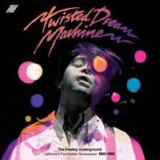
Futurismo proudly present a celebration of the Paisley Underground scene with TWISTED DREAM MACHINE The Paisley Underground / California’s Psychedelic Renaissance: 1982-1986, the next volume in their Altered Vision compilation series.
This collection draws from the neo psychedelic movement that took hold in California during the early to mid 80’s, one that melded the psychedelia, country, garage rock, avant-garde and pop of the 60’s with the DIY ethos of the then burgeoning punk scene, a hypnotic amalgamation of sound that came in staunch contrast to the blown out sonic excesses of the time.
Twisted Dream Machine takes you on a trip from the city to the desert, as the kaleidoscope of noise drifts from the The Dream Syndicate’s Velvet Underground inspired take on Crazy Horse and The Three O’Clock’s chiming baroque powerpop, to Rain Parade’s dreamy Beatlesesque melodies and the Bangles hook-laden Love inspired pop. Also featured are the wondrous sounds of Green On Red, The Long Ryder’s, Game Theory, True West, Thin White Rope and others highly worth your attention. If you are not familiar with some of the bands here, you will surely question how that is possible. The Paisley Underground, if anything, encapsulated a certain musical mindset, an outlook where the past and the future would collide in the moment. This thread would bond the bands, yet each honed it’s own sound in a twisted incarnation of the seeds planted two decades earlier. Whilst the ‘scene’ did remain contained, its influence did in fact spread throughout mainstream culture as the Bangles stuck a chord into the heart of MTV, whilst Prince took inspiration from the movement in his own songwriting and the naming of Paisley Park, as well as signing The Three O’Clock to his label and writing one of the Bangles biggest hits.
As you listen to the tracks on Twisted Dream Machine you will be reminded that there is still music left to discover and inspire, this compilation is aimed to hopefully delight longtime fans, as well as ignite a passion for those new to the bands. The Paisley Underground was the sound of neo psychedelic rock, it was subterranean pop...in
the classic sense, it was alternative rock before the term existed, a distillation of the fundamentals present at the dawn of rock ‘n’ roll, with a twist. The bands of the Paisley Underground may have been writing out of their own time, but as you listen to them in today’s context these songs should be heard as landmarks, rather than throwbacks. After all, nothing this good should stay underground. This 2xLP comes on limited edition coloured vinyl, it is housed in a gloss laminated outer sleeve with colour inner sleeves and contains a large fold-out poster with unseen photos and liner notes by Lisa Fancher of Frontier. Also available on CD with Gloss laminated Sleeve and Fold Out Poster.
After releasing their early punk classic Pure Mania and touring with Iggy Pop, The Vibrators continued with the follow-up album V2 ten months later. V2 was a commercial success, landing in the UK album top 40. The single The single ""Automatic Lover"" even led to a Top of the Pops appearance. The album also contains the punk classic ""Troops Of Tomorrow"", which became a highly acclaimed cover by Scottish punk band The Exploited. V2 is available as a limited edition of 750 individually numbered copies on translucent red colored vinyl and includes an insert.
Rain and experimental music have had an interesting connection for decades. Under the umbrella of American film music promotion, Hanns Eisler was already looking for "Vierzehn Arten, den Regen zu beschreiben” (fourteen ways to describe the rain) in 1941. A good 20 years later, The Cascades interpreted the periodicity of rain as a rhythm of mourning. For the Beatles ("If the rain falls, they run and hide their heads"), the precipitation inspired the band to use backward running tapes. However, it seems that there has always been a lot of rainfall in popular music. In the early seventies, David Toop and Paul Burwell even had a band project with the great name Rain In The Face...
That was a long time ago and today, rain, which in the age of climate catastrophe mainly occurs as heavy rain or an enervating endless loop, has lost a great deal of its inspiring quality. Perhaps as a reminder of the musical quality of rain, but knowing full well that it can only be enjoyed in theory, Razen call their new album "Rain Without Rain". In the music of the Brussels collective led by the two multi-instrumentalists Brecht Ameel and Kim Delcour, it certainly pours down on the roofs. In fact, the album opens with the sound of pouring rain before we hear the sequence of an oscillator played through a guitar amp on the first track „Lazy, Lazy Eye“.
The album is the captivating result of an one-night mobile studio field recording in an abandoned pedestrian tunnel in the centre of Düsseldorf, and it is finding beauty with brutal(ist) means: recorder, oscillator, guitar amp and reverberation, two musicians and four microphones, early electronics versus Early Music. “Suicide meet Hildegard von Bingen”, as Stefan Schneider, who recorded the session, admits. “Ghostly occurrences”, he adds.
Brecht Ameel states: “We do put a lot of weight and care on acoustics. On some of our recordings, the room acts as another band member, or as the main ‘mixing board’. Most of the albums we have recorded so far are not mixed in the traditional sense: they are simply „captured”, and we let the room decide what is left on the tapes. The studio recordings, then, give us the possibility of bringing other elements to the fore; precision of interplay, or tiny variations in breathing.”
The group Razen exists since 2010 and has since released numerous records on labels such as KRAAK, Marionette and Hands In The Dark. "Rain Without Rain" is their debut on the Düsseldorf label TAL. If there has been an increased international interest in experimental music from Belgium in recent years, this is not least due to musician collectives such as Razen. In terms of its electro-folkloristic intensity and instrumentation, Razen's music is quite unique worldwide. What does Razen actually mean? “We took the word from a poem by Paul Van Ostaijen, not specifically because of its meaning but because of the way it looked on paper”, Ameel explains. “But the meaning goes in the direction of ‘thundering / raging / speeding’ … although we prefer playing with a strong notion of restraint, building our world from (and with) silence.”
Olaf Karnik, Köln 2024
Blue Glitter Vinyl. One Step Closer has always believed that hardcore is limitless. On All You Embrace, the band puts that theory into practice. Every release from the Wilkes-Barre, Pennsylvania band has seen them exploring the sonic overlaps of hardcore, emo, and '90s alternative rock without an iota of self-consciousness, or pretension, creeping into the mix. All You Embrace is a collection of 11 songs that show One Step Closer reaching for something deeply honest and, as always, authentic."I wanted to showcase One Step Closer in its fullest state," says vocalist Ryan Savitski. "Every single part of the band, I wanted it to be there. I wanted us to be 100% ourselves and be as authentic to our band as we could possibly be." For fans of their first EP From Me To You, there are songs like "Blur My Memory," which show the passionate melodic hardcore the band built its name on is still part of the program. But it's immediately followed by "The Gate," a song that taps into the expansive reaches the band hinted at on This Place You Know and put on full display with the powerful follow-up EP, Songs For The Willow. Every element of One Step Closer is on display throughout the record, as they expound upon every idea until each one has achieved its full potential. The result is a record that's bigger, catchier, and moodier than anything they've done before, while still feeling exactly like OSC.Taken in full, All You Embrace is the sound of One Step Closer honoring their past while building a future that looks more open, more creative, and more expansive. It's a place where records like Start Today, Diary, and Floral Green are all in conversation with one another. Even the album's cover art marks a new direction for the band - the dizzying, frigid blur of blues & blacks colliding is a painting of guitarist Ross Thompson spinning in place, evoking how it feels to listen to these eleven tracks about change, grief, anger and the growing up. One Step Closer feels like the next in a line of revered bands coming from the crescent-shaped depression of Wilkes-Barre - and All You Embrace is the perfect introduction to the most exciting version of the band to date.
This eponymous release from Three Body fuses digital futurism with cosmic organica. Hedonistic breakbeats, woodwind and keys interpolate six melodious tracks, stemming from live recordings, revolving around percussive conversations. With the band's raw minimal approach and combination of natural and synthetic instrumentation, this elemental EP offers an innovative study of contemporary electronic music and its relationship with ethnic rhythms and tones.
With the world in the throws of lockdown, the record never received its live inauguration, but it got nuff love on radio, with 6Music, WWFM and NTS all championing the release. It's since gained cult status amongst DJs with an ear for earthy tones, with tracks 'Palm Leaf' and 'Jampa Gawa' regularly spreading their wings. The trio's unique approach to sound is shaped by years of impromptu improvisations. The characterful drums and synthesis of Tom Towle, masterful sampling and engineering from Guohan and the wandering woodwind of Pete Beardsworth form the skeleton of this record, meticulously fleshed out in subsequent studio sessions.
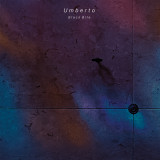
Black Bile compiles some of Umberto"s most resplendent, sanguine music to date The solo work of LA composer Matt Hill draws heavily from the world of cinema, spinning immersive narratives and rich atmospheres using sound alone. Hill, an active composer for film and television, recently scored the 2022 Jerry Pyle film Loveseat (soundtrack was released in 2023). Other recent scores include the 2020 thriller Archenemy, from the producers of cult classic Mandy. Inspired by the ancient Greek theory of the "four humors," an early medical theory linking the inner workings of the human body to the elements. "Black bile" specifically links the feelings of melancholy with autumn. Hill"s celestial compositions are an autumnal soundtrack conveying beauty, yearning, reflection and comfort. Many of the album"s phrases are constructed from just two notes or sounds, arranged by Hill into complex patterns that undulate with an organic pulse. The spare melodic structure holds a myriad of small and beautiful details. The songs began with Hill improvising on the piano, to find the notes and patterns that created the musical and emotional structure from which he could expand with textural detail. Hill then would often remove the initial structure leaving a sparer and more skeletal one which he could again expand upon to create a full piece. The careful attention to each detail gives his minimal compositions emotional heft. The album masterfully stakes Umberto"s claim among other avant-ambient boundary pushers such as Lawrence English or Laurel Halo.
- A1: Jóhann Jóhannsson The Theory Of Everything: Cambridge 1963
- A2: Olivia Belli Sapias
- A3: Nils Frahm Hammers
- A4: Ludovico Einaudi Dna
- A5: Mário Laginha Coisas Da Terra
- A6: Bryce Dessner Aheym
- B1: Franz Schubert Piano Quintet In A Major, D 667, Op. 114
- B2: Hania Rani Glass
- B3: Max Richter She Remembers (From The Leftovers)
- B4: Steve Reich Duet
- B5: Bryce Dessner Song For Octave
Das Erlebnis, Mutter zu werden, prägte LIFE, die neue farb- und kontrastreiche Aufnahme der norwegischen
Geigerin. Samuelsen ist bekannt für ihre fantasievolle Programmgestaltung. Hier reflektiert sie musikalisch
in virtuosen Interpretationen über die unterschiedlichen Gefühle, die mit Elternschaft einhergehen können. Das Album präsentiert Musik von Olivia Belli, Bryce Dessner, Ludovico Einaudi, Nils Frahm, Jóhann
Jóhannsson, Mário Laginha, Hania Rani, Max Richter sowie Steve Reich, und auch Schubert findet sich
im Mix. Samuelsen wird auf dem Album von Musikerkollegen begleitet, darunter die Streicher von Scoring
Berlin unter der Leitung von Jonathan Stockhammer.
Die Idee zu LIFE kam Samuelsen nach der Geburt ihres ersten Kindes. Als sie mit ihrem zweiten Kind
schwanger wurde, nahm der Gedanke Gestalt an. Die Magie ihres leidenschaftlichen Spiels verbindet die
elf Titel, die junge Eltern ebenso ansprechen wie Menschen, die sich an die eigene Kindheit erinnern. »Ich
mache Musik, weil ich Geschichten erzählen will«, sagt Samuelsen. »Zwar sind es persönliche Geschichten,
aber ich möchte, dass sich so viele Menschen wie möglich darin wiederfinden.«
- A1: She Looked Like Me! (3 16)
- A2: Killing Time (3 52)
- A3: True Blue Interlude (1 46)
- A4: Image (3 34)
- B1: Death & Romance (5 19)
- B2: Fear, Sex (2 28)
- B3: Vampire In The Corner (3 21)
- B4: Watching Tv (4 11)
- C1: Tunnel Vision (5 07)
- C2: Love Is Everywhere (3 12)
- C3: Feeling Diskinserted? (0 56)
- C4: That's My Floor (3 31)
- D1: Cry For Me (5 12)
- D2: Angel On A Satellite (4 01)
- D3: The Ballad Of Matt & Mica (4 19)
"Magdalena Bay, the Los Angeles-based duo of Mica Tenenbaum and Matthew Lewin, create magical pop music that floats in the ether of our collective social cosmos. While they call California home, their essence lies in the clouds, emitting unique yet familiar frequencies of synthesized nostalgia, kitschy catchiness, and warped neo-hooks. Suited for the times, Magdalena Bay blends the known and felt with innovative sonic landscapes.
Tenenbaum and Lewin met as teenagers in a Miami high school music program. Tenenbaum, who moved from Buenos Aires to Florida at age one, and Lewin, a guitar shredder influenced by his dad’s prog and concept rock records, quickly recognized their kindred spirits. They formed a prog band called Tabula Rasa and began a romance. Both were skilled musicians; Tenenbaum a pianist and singer, and Lewin self-taught in production and music theory. Despite attending different colleges, they maintained their band, traveling hours to rehearse before realizing two things: their relationship was undeniable, and prog rock wasn’t resonating with young audiences.
Shifting their focus to pop, they explored its craft, leading to the creation of Magdalena Bay. They learned the complexities of pop writing and production, striving to create something interesting within the genre. Describing their music broadly as ""pop,"" they released several EPs and singles before debuting their album, ""Mercurial World,"" in 2021. Praised for its melodic hooks and meticulous production, it was often labeled as ""synth-pop.""
Their success is reflected in streaming numbers, social media followers, and festival appearances. Magdalena Bay's stylized online aesthetic complements their music, creating a cohesive artistic vision. Tenenbaum says, “We love extending the world of our music past sound into videos or graphics.” Lewin adds, “We’re trying to create an atmosphere or an emotional quality with it.” This integrated approach, termed ""world-building,"" is central to their artistry."
Resonance is one of the most powerful forces this world has,
simply because there is no way to stop it. A drop of
condensed water separates itself from the concrete ceiling.
Propelled only by its own weight, it plummets down towards
a cacophony of naked bodies and §ailing arms to shatter on
a the forehead of an ecstatic dancer. And while all this is
happening, a voice resonates through the entire room,
making the walls shake and the crowd lose themselves even
further : “Move Your Body, Move Your Soul”. Narciss emerges
from a grimey basement in Berlin to bring us two heavy
utility dance§oor cuts on Actions Speak Louder Than Words,
his ¦rst Solo EP on Seelen. The title track is truly something
to behold. With a breakneck tempo, hard hitting percussions
and a legendary house vocal, it wields an absolutely
hypnotizing power that, before you know it, will make
everyone in attendance grind and juke till the early morning
hours. There is a palpapable vibe of mid 90s Detroit-Techno
but still it manages to cut out an identity for its own, with
razor sharp sound-design and a very uplifting attitude for its
genre. And while the tracks arrangement and sound-design is
very minimal, it is on Brennpunkt that Narciss really §exes
his trademark way of building tension with remarkably few
elements. Everything here is stripped down to its most
functional core. The synth-lead is simple yet menacing, the
kick-drum hits like a boxer, and you can be pretty sure that
the hihats will leave burns if you get too close to the record.
As is custom on this label, the B-side is dedicated to thereconstructive efforts of friends or family. This time the
mastermind of Manhigh and Grounded Theory, Mr. Henning
Baer, and Seelen’s very own Shaleen have both let their
actions speak. Henning Baer has taken on the title track in
his Remix and has transformed it into a true vintage electro
cut. A distorted synth and pad add heavy grit to the original’s
vocal, and the warehouse sized kickdrum will knock anyone
unprepared off their feet. Meanwhile Shaleen’s reinterpretation of Brennpunkt strips it down even further,
swirling the original’s elements into a groovy maelstrom.
This version rumbles, clicks and sneers, with sampled voices
from a Shakespeare play giving the whole ordeal a truly
macabre feeling. This is a tool for only the most darkest of
warehouses when the night is at its peak. So now, to
summarize this record : it is a call to action. And because of
this, it continues to resonate, even when the last track has
been played. And a resonance can never be stopped.
A1 - String Theory
Senses arrives on Curvature in epic form, String Theory opening with a memorable pad melody before the track bursts into life with a stunning amen workout - edited and chopped impeccably with finely honed skills from a storied history in drum & bass. A subtly pleasant female vocal graces the track in the breakdown as a cacophony of melodies dance around in the mix, before the amens rip back to the forefront in style.
A2 - Cosmic Telemetry
Continuing a fine exploration of sounds of yesteryear, Cosmic Telemetry showcases a delicately jazzy vibe with breaks that hark back to classics such as Planetary Funk Alert, modernised with an atmospheric twist. Rolling out with a plethora of familiar samples and keys as synths elevate and rise in the backdrop, Cosmic Telemetry is an elegant pastiche for the ears and the dancefloor alike.
AA1 - Papillon
Clean old school breaks introduce Papillon, an earthy track with deep room-filling bass underpinning tight analogue drums, playfully decorated with an assortment of wavy synths, horns and flutes, plinky melodies and delicious female vocal samples in the breakdown before Senses subtly edits the breaks as a voice declares "I'm all yours" to synths pitching up and down at will to great effect.
AA2 - Past Lives
Closing the EP on an intensely atmospheric tip, Past Lives is full of heavily reminiscent rhythms from the classic 90s atmospheric era with sharp drum samples and ethereal synthwork that transport you to a nostalgic dreamscape, seamlessly blending the past and the present with classic 808 basslines and fluid, harmonious strings that perfectly complement the dramatic, all-encompassing padwork.
Words by Chris Hayes (Spatial / Red Mist)
Veiga lands straight on the dancefloor, no ambiguity about it. Spurred by the guys from RS Produções, he's been honing his DJ skills since he was 17 (currently 23), initially with partner Nunocoox, who gave him even more motivation. Production came naturally sometime in 2020. We venture: maybe one of the good things coming out of the lockdown? Summer of '22, his debut at Musicbox (at the Príncipe monthly residency) is recorded as a festive, lively set, punctuated by the kind of crowd shouts only heard when things go really happy and sweaty. Since then, Veiga's name has been spotted regularly in the afro club scene, growing in reputation
This side of kuduro, "Leandro" is as expressive as it gets, with percussive forces pulling in deceitfully different directions, much in the same style as the slower form of tarraxo. But we can call this house, yeah? No niceties, however: little over 3 minutes and the track abruptly cuts into silence, exuding the raw power of something made for the mix, not in the least "for the people". In a similar pragmatic mode, the stabs in "Sem Nome" get the party started unannounced. Full mode, for the duration. Minimal groove, broken beats and emotive highlights. "Boiler Room" may be wishful thinking, an interpretation of what is required to rock the place or, ultimately, just a title to wrap up the project. In any case, here's a feisty vocal-and-whistle driven stormer, building up to perfection over three and a half minutes. All elements exactly where they belong. Relentless pace in "X de Destroi", a dark side operation, unreal ambiance, breakneck beats, a purgation?
The title "Tudo É No Guetto" contains all the necessary theory. Everything happens in the ghetto. This uplifting house slab celebrates life as it is, freezing hardships for a moment, the ghetto seen as welcoming, a natural place to be. Vocals stashed away in his cell phone come from the animação crew Os Twinni (he joined them for a while). Clipped, repeated and manipulated to convey the very simple feeling of good times. Veiga himself talks about growing up with minimum resources but still happy. That is the memory he retains from being a kid in the ghettos of Amadora, just outside of Lisbon, born to a Cape Verdean father and Portuguese mother. Though the music sounds carefree and the message is chilled, let us not be tempted to rebrand Reality.
The word Simultaneity is a technical term from the theory of Special Relativity representing two distinct events happening at the same time. This fluidity is embodied in the musical exploration of Ari Tsugi. Comprised of mostly self-taught musicians, the soundscape is a unique melting pot of UK Jazz scenes and the raw energy that comes from psychedelic rock. Produced and mixed by Glasgow-based musician Sam Bancroft (Starsky-Rae) alongside engineer-producer Villus Vilo Jokubaitis, the album features offerings from Liam Shorthall and India Blue (Azamiah) alongside the original Ari Tsugi trio -Clement Gaud, Joe Weisberg and Mashu Harada - with keys from Angus MacDonald being added later down the line.
New sounds from the gaullic underground on Violent Cases’ latest release, the first one since many moons. Two long tracks born out of myths and mist to take you on a mental journey.
Side A’s „Chaos Theory“ sets off at 145 bpm. Synth layers and strings over deep bass create the atmosphere. Drama. Then a brilliant incorporation of a classic guitar solo in mid track. Unique.
Side B „Pagan Blade“ is a joint venture with Ciklo and ups the tempo to 160 bpm. Rolling and riding it’s pushing the dance floor while the pagan assassin whispers the rhythm.
You can tell the artists have honed their skills playing live, these tracks will unfold their full potential and deepness on a proper system.
Stunning full sleeve artwork by Darkam. Graphically edited and arranged by TDSIGNZ. Mastered by Stefan ZMK in the low countries.
Each copy includes an artwork poster, artwork sticker and digital download link.
Seit mehr als drei Jahrzehnten kreieren EVERGREY Songs, die mit einer Symbiose aus Härte und Melancholie direkt ins Herz gehen und ziehen damit Fans weltweit in ihren Bann. Mit ihrem 14. Album Theories Of Emptiness schreiben die Poeten aus Schweden um Bandgründer, Sänger und Gitarrist Tom S. Englund ihre Erfolgsgeschichte weiter und beweisen, warum sie zu Recht unangefochten an der Spitze des Genres stehen.
Das Album Theories Of Emptiness wurde von Tom S. Englund und Jonas Ekdahl produziert und von Adam „Nolly“ Getgood (Ex-Periphery) gemischt, mit dem EVERGREY während des gesamten Entstehungsprozesses eng zusammengearbeitet haben, um das klangliche Profil bestmöglich zu entfalten.
Gemastert wurde Theories Of Emptiness von Thomas „Plec” Johansson, der durch seine Arbeit mit Soilwork, The Night Flight Orchestra, Onslaught, The Gems, Eleine und vielen weiteren Bands bekannt ist.
Seit ihrem Debüt The Dark Discover (1998) haben EVERGREY 13 Alben veröffentlicht und bewegen sich in einem Spektrum zwischen hartem Progressive und düsterem Melodic Metal. Theories Of Emptiness ist der Nachfolger des 2022 erschienenen A Heartless Portrait (The Orphean Testament), mit dem EVERGREY weltweit Charterfolge verbuchen konnten (#3 in Schweden Metal, #5 der Top New Artist Albums USA, #7 in Finnland und #12 in Deutschland).