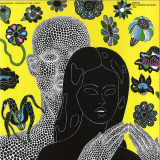
Ganze acht Jahre haben sich die schwedischen Viking-Metaller THYRFING Zeit gelassen, um ihr achtes Album zu präsentieren: VANAGANDR ist eine alternative Bezeichnung für den Fenriswolf aus der nordischen Mythologie!
Auch diesmal geht es bei THYRFING inhaltlich um Mythen, Märchen und Geschichten aus Skandinavien. Der kraftvolle, schwere und aggressive Opener DÖP DEM I ELD eröffnet das neue Album mit Groove und Melodie, es folgt mit TRÄLDOMSORD der wohl intensivste Song der Band bis dato, das Epos JORDAFÄRD schliesst voller schwermütiger und stimmungsvoller Sehnsucht das Werk perfekt ab. Co-produziert wurde VANAGANDR von Jakob Herrmann (In Flames, Machine Head, Evergrey) in den Göteborger Top Floor Studios, während Jacob Hansen (Volbeat, U.D.O., Katatonia) Mix und Mastering und Niklas Sundin von Cabin Fever Media (ex-Dark Tranquillity) das Artwork beisteuerten. VANAGANDR ist ein eindrucksvolles Statement, mit dem sich THYRFING zurückmelden, nachdem sie in den letzten Jahren ihren Fokus auf Livegigs legten und u.a. das Wacken Open Air, Summer Breeze und das Sweden Rock Festival zum bersten brachten.
Поиск:cab
Все
Dans le Sable is the first new album in over 40 years by composer, pianist, and digital audio pioneer Loren Rush (b. 1935). Active in the Bay Area new music scene since the late 1950s alongside composers such as Robert Erickson and Pauline Oliveros, he also co-founded the Stanford University’s Center for Computer Research in Music and Acoustics in 1975. His music has been performed by the Boston Symphony, the New York Philharmonic, and the San Francisco Symphony Orchestra amongst others.
The title piece "Dans le Sable" (1967-68, 70) covers the first side of the record, of which Charles Shere in the Oakland Tribune (1972) writes: “A surreal opera scene. A narrator dwells on the significance of passing time. A soprano sings Barbarina's cabaletta from Figaro, which describes her distraught search in the sand for a lost pin. The chamber orchestra—mostly solo instruments—plays soft, half-forgotten tunes reminiscent of the Parisian music hall. If Marcel Duchamp wanted to put painting once more at the service of the mind, so did Rush seem to want to make a composition that speaks directly to that thing behind the mind—the point where it connects with the soul. And he succeeded. But only because the work is so brilliantly constructed, so careful in its structure and the timing of its phrases, so well balanced in the disposition of its parts that it quite overcomes the audience.”
The second piece on the album “Song and Dance” begins with the watery held tones of “Song.” Melancholy phrases are deconstructed and stretched in different retellings, invoking a harmonic fog. We are then thrust into “Dance,” one of the first orchestral pieces to employ computer-generated digital synthesis. A hypnotic and percussive march is propelled into a storm of early computer-processed cannonades.
Recital is proud to now illuminate the deeply overlooked composer Loren Rush, whose meticulous attention to detail has perhaps kept his toiled-upon works in the shadows these past decades. Dans le Sable is among the most gorgeous records I have heard.
- 1: Novocaine/Astronaut Mile Thunder
- 2: Novocaine
- 3: The Needle And The Damage Done
- 4: The Little Drummer Boy
- 5: Astronaut
- 6: Treasure Chest
- 7: Furnace
- 1: Bear Catching Fish . Bear Catching Fish
- 2: Rockford Files
- 3: Treasure Chest
- 4: Cabin Fever
- 5: 1/4 Mile Thunder
- 6: Bullfight
- 7: Mountain High
- 8: Winter Time
- 1: Angel Wings . Holes To Fight In
- 2: Windsheildn
- 3: Nailgun
- 4: Fanbelt
- 5: Anchor
- 6: Herbie Hancock
- 7: Expressionists
- 8: Jumper Cables
- 9: Stitches
- 10: A Quinn Martin Production
- 11: Angel Dust
- 12: Lies Like Knives
- 13: Olé
- 1: Split With Iceburn & Everything Left . Trailhead At Lake 22
- 2: Hiking The Circumference Of The Mountaintop Lake
- 3: The Shining Path
- 4: Insulate
- 5: Thigh With A Desolate Thorn
- 6: Breakdown
- 7: The Heater Sweats Nails
- 8: Husk
VERY LIMITED COPIES OF THIS PREVIOUSLY RSD U.S. ONLY RELEASE
Engine Kid, the post hardcore collective featuring Greg Anderson (Southern Lord label owner, also in Sunn O))), Goatsnake & Thorr's Hammer) announce a special Record Store Day 6 x LP box set release Everything Left Inside, featuring the Novocaine/Astronaut 12 inch, Bear Catching Fish 2xLP, Angel Wings 2xLP and Split w/ Iceburn / Everything Left Inside 12 inch.
Almost 30 years since the inception of Engine Kid and the trio find themselves comprehending the enormity of their creation, honouring and celebrating the mountains they formed and the canyons they created.
Engine Kid was born in Seattle, WA 1991. The band's original lineup consisted of guitarist/vocalist Greg Anderson (Southern Lord, Sunn O))), Thorr's Hammer, Goatsnake), drummer Chris Vandebrooke & bassist Art Behrman. The three had all been in hardcore/punk bands around town and all had a burning desire to create a sound that was unlike anything they had done in the past. After just a few months of existence they quickly recorded and self-released the Novocaine 7”. Circa 92’ a close friend and bassist Brian Kraft (Krafty) replaced Behrman, and at that moment the entire aesthetic and execution of sound became heavier, darker and extremely dynamic. The power trio was picked up by local label C/Z records and set out upon recording the new music they were quickly creating. In 1993 the band had two releases on C/Z; their first offering was the Astronaut five song EP recorded by John Goodmanson. The songs were primitive and exemplified the bands worship of Slint and their loud/quiet song dynamic In the summer of 93’ the band drove all the way to Chicago to record with their hero Steve Albini in the basement of his house. They emerged with the eight song album they called: Bear Catching Fish. Albini intuitively captured the band exactly as they were at that moment: raw, vulnerable and mammoth.
Shortly after the albums’ release Jade Devitt replaced Vandebrooke on drums. This transition was extremely crucial in the “second phase” of the group. Devitt was an absolute beast and his power helped launch the band miles beyond where they had ever been before. The sound of “The Kid” started to transform into a sound much more of their own. The three dudes were hellbent on pushing the bounds of sonic exploration to its absolute fullest. Suddenly there was an abundance of depth within the sounds they were creating. Eclectic influences of punk/hardcore (Black Flag, Die Kreuzen), Metal (Entombed, Carcass) and even jazz (Mahavishnu Orchestra, Miles Davis electric era) were in a full collision course with the already dynamically heavy foundation of the band. The levee had broken and the resulting flood of sound completely saturated everything in its path.
Engine Kid toured relentlessly. They were constantly on the road playing every nook and cranny they possibly could. Any moment not spent on the road was instead spent focused on making their new material as potent as possible. Early in 94' the band decided to pay homage to their mutual love of jazz/fusion and recorded three instrumental pieces that would become a split album with like minded powerhouse Iceburn. The Engine Kid/Iceburn album showcased each group's love of jazz loosely framed by the intense enthusiasm of underground music. The album was released by Revelation records in 1994.
During the summer of 94’ the band reconvened with producer John Goodmanson at Bad Animals & AVAST! studios to record the new material that was literally bleeding out of the reinvigorated trio. These recorded songs were much more progressive, heavier, harder and more focused than past works. They even tackled John Coltranes’ “OLE” adding saxophone and trumpet from their brothers in Silkworm. In March of 1995, Revelation Records released these recordings as the Angel Wings album. Unfortunately "the Kid" flew too close to the sun and broke up very shortly after the album's release.
Everything Left Inside 6xLP box set (RSD release) includes:
LORD 288.1 Engine Kid-“Novocaine/Astronaut” 12”
LORD 289 Engine Kid-Bear Catching Fish 2xLP
LORD 290 Engine Kid-Angel Wings 2xLP
LORD 288.2 Engine Kid-Split w/ Iceburn /Everything Left Inside 12”
16-page color photo/liner note booklet.
- A1: Woman You Made Me (Instrumental)
- A2: Love Our Love Affair (Instrumental)
- A3: Remember Me (Instrumental)
- A4: Help Me (Save Me From Myself)
- A5: Ain&Apos;T That Love (Instrumental)
- B1: This Is What Love Looks Like! (Instrumental)
- B2: You Gonna Need Me (Instrumental)
- B3: I&Apos;D Better (Instrumental)
- B4: We&Apos;Re All We Got (Instrumental)
- B5: I Can&Apos;T Love You Anymore (Instrumental)
Around the year, the sturdy red brick walls of an old Cable Factory stand there like a mountain, facing weathers of all kinds rising from the Gulf of Finland. It might be freezing winter winds whipping the whole shore line into submission, fog heavy as concrete, or the relentless sun of the summer months, softening the asphalt to a boiling point. Whatever the weather may be, the narrow courtyard of the old factory embraces those musicians, who are looking to get down. They gather from all directions, making their way towards a pair of doors that lead towards a flight of stairs, again through a few doors all the way to the last portal, where an open padlock and a loosely hangin crossbar signal that Cold Diamond & Mink are inside, locked in a groove.
Who could it be with them this time, perhaps the jazz prophet Jimi Tenor beaming out of his space ship, maybe it's the golden voiced knight of soul Tuomo "Pratt" Prättälä, the number one trumpet wielding dandy Jukka Eskola or the saxman Pope Puolitaival, who loses nothing in coolness compared to the former? The reel to reel is always there in the monitoring room, catching each analog layer of sound, even the silences and banter between takes. Seppo lays down the guitar and tries to catch the riff on organ instead, Jukka throws a rare tune on the turntable, hoping to guide their unit through that wobbly chorus, Sami waits there bass in hand, maybe already thinking about the next production.
After a whole lot of playing instruments, arranging and taking care of business, after the moon has travelled around the old industrial building for some rotations, Carlton Jumel Smith comes waltzing through those same doors. There's a handful of unnamed tracks waiting for him. He sits there listening and then starts writing, maybe echoes of soul classics from his own record collection in New York projecting inside his mind. Then the tape is rolling again. Starting with a short intro rap Carlton lets it out, singing on the edge of shouting "Woman you made me...". After the vocals are in the can, Carlton ascends out of the basement and heads out to entertain an audience somewhere. Some months later, after the mix is said and done, there's the question of the instrumentals. It seems they're pretty good as they are. And here they are.
d 04: Help Me (Save Me From Myself) Instrumental
Love returns with 'Lavender', the follow up to the Canadian crooner’s LP, 'Night Songs' (Taxi Gauche Records, February 2020).
A reflective timeline of dusty folk, 'Lavender' aims to capture the modern loneliness of the 21st century. A sorrowful soundtrack, inspired by the production of great crooners and folk artists of the 70s/80s like Cohen, Lightfoot, and Nick Drake, to name a few, Love achieves a similar quality on Lavender. Like a Chris Isaak trapped in a David Lynch film, Love’s haunted
vocals guide the listener through poetic verses on the archetypes of love and truth, posthumous poetry by his grandfather circa 1930s, and escapism, all melting and flowing into a pool of celestial wisdom.
Acoustic guitars sweep across desolate sonic landscapes of global narcissism, social media and the universal need for connection. Hypnotic bass grooves and lush 3D string ensembles, wrap the listener in a familiar cinematic romance, embraced and mystified. 'Lavender' explores the universal threads that make us feel and experience what we do, in a time when the need to peer into ourselves has never been more important. 'Lavender' draws you inwards, like staring up at the stars at night, or standing alone with the silence of the forest, 'Lavender' wants you to find your own meaning. Self-recorded in a variety of spaces through out Turtle Island (Canada & The USA). Specifically, Toronto Island, a basement in Edmonton, AB, various apartments and motels in Los Angeles and around the United States, on a road trip west via the Trans-Canada highway and ending at a cabin in the foothills of the Rocky Mountains.
“There’s a lonesome vibe to his brand of heartland rock, evoking late nights on a deserted road, or neon-lit streets just after a rainstorm.” (Brooklyn Vegan)
super rare psychedelic folk lp from 1969, which with Shide & Acorn and Parameter is one of only three genuine Psychedelic Folk lp privately issued in england in that authentic era. only 70 copies were made by Hollick and Taylors custom pressing plant. very little was known about this lp and until this edition and it had been thought of as a solo folk lp, very very WRONG, its a band, and completely in the hallucinogenic and magical english Incredible String Band and Donovan style, with mystical lyrics, flutes, and a serene vibe throughout. the original 48 page booklet of lyrics and poems is reproduced, and errors by the original printers, such as the use of the wrong font on the cover, have been corrected according to the bands original wishes. for any fans of ISB, classic Donovan (Gift From A Flower era), Dr Strangely Strange and Shide & Acorn this lp is manna from heaven. Their unusual name was inspired during a train trip on magic mushrooms when a band member saw a poster from the train window depicting a lion and three similar words, emblazoned above the image, the lion appeared wreathed in flames and spoke to him as he passed.
Thyrfing emerged from the ever-growing underground scene in Sweden
back in 1995.
After seven full-length albums and numerous live performances all over the
world, the band have gained a strong following over the years and an exquisite
standing within the metal scene.
They are considered one of the top bands within the so-called Viking/pagan
metal genre - but on the other hand, Thyrfing are so much more with their truly
outstanding and self-contained musical offering.
The name of the band is taken from the sword “Tyrfing” in Norse mythology - a
cursed blade that appears in several tales and myths. Ever since the start, the
mythology has played a huge part in the scenery and imagery of the band’s
music and lyrics, something which is still intact today.
‘Vanagandr’ (an alternate name for the wolf creature known by the more familiar Fenrir) is a celebration of the tales and stories of Scandinavia - the track
‘Undergangens lankar’ is a conceptual piece focusing on Vanagandr/Fenrir and
a track that carries the spirit and hallmarks that make Thyrfing so unique.
‘Dop dem i eld’ is both the opening song on the album and the first video, one
of two produced for the band by Patric Ullaeus (Dimmu Borgir, Europe, Arch
Enemy). A powerful, heavy, and aggressive track packed with groove and melody. Elsewhere ‘Tr ldomsord’ is regarded as possibly the band’s most intense
song to date, whereas ‘Jordaf rd’ closes the album in epic fashion - a mournful
and moody longing for the end to come. The perfect way to end the album!
Co-recorded and co-produced by Jakob Herrmann (In Flames, Machine Head,
Evergrey) in Top Floor Studios, Gothenburg, with the renowned Jacob Hansen
(Volbeat, U.D.O., Katatonia) looking after the mix and mastering, all of which
ensures at ‘Vanagandr’ sounds massive!
The art concept was executed perfectly by Niklas Sundin of Cabin Fever Media
(ex-Dark Tranquillity) who reconnects with the band once again (he also did
the “Vansinnesvisor” album back in 2002.)
‘Vanagandr’ is the first release via the band’s new record label, Despotz Records. Who recently also signed over the rights to the band’s first four albums
Thyrfing (1998), Valdr Galga (1999), Urkraft (2000), Vansinnesvisor (2002) and
have announced exclusive physical re-issues are in the making.
“... a successful voyage into an oaken woods where death metal, traditional
thrash, and Scandinavian folk commingle harmoniously” // John Serba, Allmusic
“This album gives you an epic feel, and that’s the big strength of Thyrfing,
their music can do something like that to you.” // folk-metal.nl
Thyrfing emerged from the ever-growing underground scene in Sweden
back in 1995.
After seven full-length albums and numerous live performances all over the
world, the band have gained a strong following over the years and an exquisite
standing within the metal scene.
They are considered one of the top bands within the so-called Viking/pagan
metal genre - but on the other hand, Thyrfing are so much more with their truly
outstanding and self-contained musical offering.
The name of the band is taken from the sword “Tyrfing” in Norse mythology - a
cursed blade that appears in several tales and myths. Ever since the start, the
mythology has played a huge part in the scenery and imagery of the band’s
music and lyrics, something which is still intact today.
‘Vanagandr’ (an alternate name for the wolf creature known by the more familiar Fenrir) is a celebration of the tales and stories of Scandinavia - the track
‘Undergangens lankar’ is a conceptual piece focusing on Vanagandr/Fenrir and
a track that carries the spirit and hallmarks that make Thyrfing so unique.
‘Dop dem i eld’ is both the opening song on the album and the first video, one
of two produced for the band by Patric Ullaeus (Dimmu Borgir, Europe, Arch
Enemy). A powerful, heavy, and aggressive track packed with groove and melody. Elsewhere ‘Tr ldomsord’ is regarded as possibly the band’s most intense
song to date, whereas ‘Jordaf rd’ closes the album in epic fashion - a mournful
and moody longing for the end to come. The perfect way to end the album!
Co-recorded and co-produced by Jakob Herrmann (In Flames, Machine Head,
Evergrey) in Top Floor Studios, Gothenburg, with the renowned Jacob Hansen
(Volbeat, U.D.O., Katatonia) looking after the mix and mastering, all of which
ensures at ‘Vanagandr’ sounds massive!
The art concept was executed perfectly by Niklas Sundin of Cabin Fever Media
(ex-Dark Tranquillity) who reconnects with the band once again (he also did
the “Vansinnesvisor” album back in 2002.)
‘Vanagandr’ is the first release via the band’s new record label, Despotz Records. Who recently also signed over the rights to the band’s first four albums
Thyrfing (1998), Valdr Galga (1999), Urkraft (2000), Vansinnesvisor (2002) and
have announced exclusive physical re-issues are in the making.
“... a successful voyage into an oaken woods where death metal, traditional
thrash, and Scandinavian folk commingle harmoniously” // John Serba, Allmusic
“This album gives you an epic feel, and that’s the big strength of Thyrfing,
their music can do something like that to you.” // folk-metal.nl
Francesco Cavaliere and Tomoko Sauvage embody a tactile audio visual display, radiating the color green into sounds and painting meditative music. By transforming collected objects into invented instruments and scenography, each motif becomes a dedication to a specific situation, an anecdote or a symbol, sometimes real and other times absurd, that the artists have encountered through their travels and conversations: the Chinese myth about a man wearing a green hat, naming convention of Japanese traffic lights, or even the imaginary chants of frolicking twin dolphins. This inspired the duo’s personal research on experimenting with raw and synthesized idiophones, stage landscape design, spontaneous field recording and organized improvisation.
For their installation and performance, Cavaliere and Sauvage assemble a green cabinet of curiosities - instrumentarium combining water, glass, clay, bamboo xylophones, metallophones and synthesizers. Tomoko describes in an interview: “When you are actually surrounded by green musical instruments, it has a calming effect as if you were looking at a forest or mountain.” Surrounding themselves with amulets and fluorescent fluids, the duo transcend into a musical imagination that connects scores, choreography and sculpture. Motions like crisscrossing the stage, feeling the presence of a perfectly plump leaf as it strikes a glass bowl, minerals slipping through fingers, all resonate to the soothing sounds of splashing water. There’s an intuitive yet methodical nature to this conceptual approach to composition reminiscent of the fluxus art movement. The pair’s initial motif was to play Henning Christiansen’s Green Music, whose score turned to be nonexistent. By then, their green dream was already flourishing in their mind, retracing the path of so-called environmental music from Walter Tilgner, Knud Viktor, to the likes of Kankyo-Ongaku and Hiroshi Yoshimura.
Since there is a strong visual element to their work, witnessing this captivating site specific performance may be imperative in understanding the range and influence of the color green and the impact on the sounds they create together. On ‘Viridescens’, the first release by Cavaliere and Sauvage, we are invited to experience these recordings in a more musical context. Acting like an intermediary, the duo transport us to their special planet, enlivened by animal voices, wind, and aquatic creatures dancing across a luminous aurora.
- 1: All I Need
- 2: Kiss Like The Sun
- 3: About Last Night
- 4: Downtown
- 5: Rabbit Hole
- 6: Lost
- 7: Scene
- 8: Lonely Hours
- 9: Maybe It’s Today
- 10: Screaming
- 11: Hold Tight
It may be his fifth album, but Saturday Night, Sunday Morning marks the start of chapter two for Jake Bugg. Arguably his most complete and coherent record to date, Saturday Night, Sunday Morning manages to combine a love of ABBA, the Beach Boys, Supertramp and the Bee Gees, with a contemporary pop sound: one that’s already spawned his most ubiquitous song in years via euphoric lead single, All I Need. “I knew what I was looking for this time around,” the 27-year-old says, firmly. “And I feel like I accomplished it.” It’s almost 10 years since a two-fingered Bugg burst onto the scene with his eponymous debut, one that topped the UK album charts and saw the then 18-year-old from Nottingham fêted as the next Bob Dylan. A Rick Rubin-produced follow up, Shangri La, quickly followed. But progress stalled with Bugg’s third, largely self-produced, record, On My One, in 2016. “I was having a hard time on that third record,” Bugg admits, five years removed. “The support from the industry wasn’t what it was. All those people telling you how great you are weren’t there anymore. It does feel like the rug’s been swept from under your feet.” What that record provided, however – along with its comparatively stripped-back follow up, Hearts That Strain (2017) – was a much-needed course corrector: one that set Bugg on the upward trajectory he finds himself on today. “When I came to terms with that was when I left the ego at the door,” he says. “It didn’t work out. But it led here. And this is probably my strongest record." It’s testament to Bugg’s rediscovered confidence that Saturday Night, Sunday Morning – a nod to the debut novel by Nottingham author Alan Sillitoe – sees him working with some of his highest profile collaborators to date, most notably American songwriters Andrew Watt and Ali Tamposi, best known for their work with pop heavyweights Post Malone, Dua Lipa, Miley Cyrus, Camila Cabello. “I was looking for how I can incorporate my sound for a more modern era. And I kind of struck gold working with Andrew Watt and Ali Tamposi,” Bugg says. Convening in LA, the first track the trio wrote together is the jealousy-inflected About Last Night, a song about the “insecurities you go through as a young person in a relationship with someone.” “It’s got such dark undertones, which I love,” Bugg says, of a song that showcases a newly discovered, Beach Boys-esque falsetto. “But it’s also very, very pop. That’s what I’ve always loved. With ABBA, with Supertramp. I love pop music. But when you can get it to be dark, I love it even more.” It’s a trick the trio repeated again on Scene, Bugg’s personal favourite from the album and a song that best encapsulates the combination of old and new: Watt’s George Harrison-esquire guitar brushing up against contemporary melodic choices by Tamposi. “I love writing with her,” Bugg says of the Havana hitmaker. “She brought that women’s perspective. And I knew that I’d got that balance of what I wanted. That old school chorus with contemporary verses. That to me was my favourite song when I wrote it, and it still is.” Perhaps the biggest example of Bugg’s newfound ego-less approach to writing, however, came in the shape of Downtown, a song that grew from an idea by Jamie Hartman (Celeste, Lewis Capaldi, Rag'n'Bone Man), and sees Bugg deploy the higher range of his voice to ethereal, ’60s Bee Gees effect. “Usually, the initial spark of an idea comes from me. And when it doesn't, it sometimes loses my attention,” Bugg admits. On Downtown, however, he relished his role as arranger: “Because there were a lot of moving parts and chords, it was almost like a puzzle,” he says. “I’d never approached a song like that before. “What I’ve been enjoying on this record is the collaborative process,” he continues. Working with people, writing with people. Because I’ve realised all I really want to achieve is to be the best writer I can possibly be. And I think by working with other people, it allows you to learn a lot as well.” It’s a theory Bugg has put to the test during lockdown, when he was approached by his manager about writing the soundtrack to an upcoming documentary, The Happiest Man In The World, about Brazilian footballer Ronaldinho. “It’s kind of a completely different experimental outlet,” Bugg explains of his first ever score. “I approach my own work quite professionally. But with this I can just switch off and go into a different world. And it’s been brilliant – I’ve had to learn different styles of guitar: bossa nova, samba. It’s a bit Vangelis, who’s probably my favourite artist – which may surprise people.” Possibly. But you get the impression that surprising is what Bugg likes to do. “I don’t like to be stuck doing the same thing,” he admits. “And that’s what this record Saturday Night, Sunday Morning was. I wanted to push myself. I’m always learning new influences. I’m careful not to get stuck on the same thing. “It’s not going to be right every time. It’s not going to be good every time,” he continues. “But if that’s the process it takes to get to this record, where people are loving the songs again, then that’s the journey we have to take.” For Jake Bugg, chapter two starts now. New album ‘Saturday Night, Sunday Morning’ is out August 20th on RCA Records
Thirteen turbocharged tracks indebted to the pleasures and pitfalls of their lives in the modern city of Sydney and to the the first and second waves of international extreme music freaks and loonies: pure fucking aggression. The Oily Boys have graced us with a beast of an album that swells between direct, gripping, tangible hardcore punk and near nauseating psychedelia and throb which at moments feels like either ritual trance or a nervous breakdown. Cro Memory Grin contains near equal measures of tension and release; an exercise in high catharsis. It’s rare that a punk record can give the listener anywhere near the same intoxicating feel of an “everything louder than everything else” live show, but that’s what Oily Boys have done. That lightning in a bottle feeling of excitement, chaotic energy, delirium, presence in a moment and frenzied flight into a mind state both frightening and ecstatic. The stone has been carved, the fire has been lit, and this is it... Cro. Memory. Grin. *** Best played LOUDEST ***
The System 108 anniversary record sums up the label's five-year work without words. The new collection is an impression of everything that the team has become during its existence. System 108 has matured nominally and stylistically, defining for itself three main directions: post-industrial, techno and break-beat, disco and house. Each of the three parts of the new collection reveals one of the musical trajectories of System 108 development: (Part 3) -- house with a touch of classics -- hear the echoes of Detroit and Chicago.
Lift-top box including the first 10 numbered records and objects, with a 60-page exhibition style book, plus a bonus 12” single and 2CDs of unheard Joy Division interviews. Strictly limited and numbered to 4000 units WW.
Use Hearing Protection: Factory Records 1978-1979 contains facsimile editions of the first 10 numbered Factory items: 4 vinyl records, 3 posters, a short film, Factory stationery and an egg-timer design. The early history of the label is traced in a 60 page book with text by James Nice, photos by Kevin Cummins and archival interviews with Tony Wilson, Rob Gretton, Joy Division and more.
All 3 original Factory posters are contained in the box as well as the first 4 records: The Factory Sample EP (Fac 2), including the Fac2 stickers, All Night Party by A Certain Ratio (Fac 5), Electricity by Orchestral Manoeuvres in the Dark (Fac 6) and classic album Unknown Pleasures by Joy Division (Fact 10).
Bonus items include a white label 12” single by The Tiller Boys (originally intended as FAC3 but ultimately not released), and a lengthy audio interview with Joy Division, Tony Wilson and Rob Gretton, conducted in August 1979 by journalist Mary Harron, never before heard and now restored across two CDs. Also newly restored, and seldom seen since 1979, is evocative 8mm short No City Fun (Fac 9), featuring music by Joy Division.
28 Wednesdays Later is the 4th installment of Chris Webby’s Wednesday album series, and is a body of work packed to the brim with more songs than any of its predecessors. Given that Webby is usually touring for 1/3 of the year, the pandemic allowed him an opportunity to try new, more experimental sounds while sharpening his traditional lyrical skill set even more acutely in the studio. 2020 was taxing on everyone’s headspace, but in this case it seems to have at least made for some good music.
"Transitional Being reveals another side of XVARR’s production palette — characteristically tranceinducing, this release highlights the transformational potential of dance music.
Spanning the last ten years, these six tracks handpicked by Aural Medium align with a particular relationship to technology that has formed the central pillar to the XVARR studio set up. Often starting with a drum pattern and sequenced bass-line, the physical rhythm is stripped out and surrounding elements are drawn out and manipulated to convey the ‘hidden’ intention behind the track. With the tracks compiled here, he lets the rhythms ride. The influence of more ‘club-orientated’ music has remained firmly embedded in XVARR’s psyche, although typically the trip has been more introverted. The approach here may differ from other XVARR outputs, but the mood most definitely remains the same, with an overarching desire to channel emotion and passion from the other side of nowhere.
XVARR recognizes the parallels between the ritualistic dance of the Witches’ Sabbath and a dark room filled with sweat, smoke, and sound. It is in this parallel void of transcendent possibilities that tracks such as “Running out of Time”, “The Crooked Path” (a nod to Andrew Chumbley) and “Universal” reside. There’s also a subtle presence of influences from Industrial music, with groups such as SPK, Conrad Schnitzler, Chris Carter and Cabaret Voltaire paving the way for XVARR’s early experiments with electronic music. The alchemical results on this EP float in a universe populated by such luminaries as AFX, Drexciya, and the constellation created by Chain Reaction, within a cosmos governed by the gravitational pull of Baldelli and Weatherall."
Let’s Stick Together by Bryan Ferry was his third solo release, his first following the disbanding of Roxy Music earlier in the year of 1976. Unlike Ferry’s two previous solo recordings, Let’s Stick Together was not a dedicated album project, instead being made up of material released as singles, B-sides and an EP. Five of the tracks on the album were re-recordings of Bryan Ferry songs previously recorded with Roxy Music. “Re-Make/Re-Model”, “2HB”, “Chance Meeting” and “Sea Breezes” were from the band’s eponymously titled debut album (1972), while “Casanova” was taken from Country Life (1974). In most cases the re-recordings were smoother and more oriented to jazz and R&B than the original Roxy Music versions. The other six tracks on the album were covers. The sax-driven “Let’s Stick Together” was written and originally recorded by Wilbert Harrison. Other up-tempo numbers were The Everly Brothers’ “The Price of Love” and Jimmy Reed’s “Shame, Shame, Shame” (which includes a counter-vocal by the backing singers which quotes Marvin Gaye’s “Can I Get A Witness”). The remaining covers, which included The Beatles’ “It’s Only Love”, were performed in a mellow cabaret style. Lovingly Re-Mastered from the original tapes by Frank Arkwright at Abbey Road Studios. London. Featuring artwork that has been faithfully restored to reflect its original first press “Let’s Stick Together” is presented on 180g heavy weight vinyl and is one of those classic albums that would not look out of place in any record collection.
Another year has passed, and so it’s time for the latest installment in TAU’s huge compilation series, Spektrum. The Adana Twins have been collecting and curating hot new productions from a variety of sources, new and more established, compiling a V/A that distills that ineffable TAU sound into 16 diverse cuts. A few familiar names are representing alongside some fresh faces, introducing new talent as we do with each Spektrum release. With this special release you’ll receive the Spektrum zine, a printed publication with features on all of the artists who’ve contributed to this release (+DL Code). As a record label it’s our intention to innovate and entertain our supporters with creative treats and alternate ways of reppin’ our artists and music. We hope you enjoy it, and we’re sure this Spektrum release will keep you rocking, whether you’re at home or on the dance floor...
Lesley Rankine (Silverfish) and Mark Walk (Skinny Puppy) formed Ruby in 1995. Ruby’s first album, Salt Peter, was released in 1995. The album would produce three singles, all of which would chart in the UK. It was made almost entirely using computers and without a band. Salt Peter’s first single was “Paraffin”, released in November 1995. The compilation New Voices vol. 3 from Rolling Stone featured this song as its second track. It was followed up with what is perhaps Ruby’s best known song, “Tiny Meat”, which was also released in 1995. It would be the only song by the band to chart in the United States, reaching at #22 on the Modern Rock Tracks list. This song was also included in the compilation MTV Fresh 2. Another single, “Hoops” came out in early 1996. Later in that year the promotion-only single for the track “Swallow Baby” was put out for radio play. Additionally, the song “This Is” was used on the soundtrack to the popular 1996 film The Cable Guy.
Salt Peter is a dark, eerie fusion of trip-hop and industrial, with quietly menacing beats and droning synths. Provocative, as well as well- written. Salt Peter remains a promising debut. It is released as a limited edition of 500 individually numbered copies on “Tiny Meat” (transparent red & black mixed) coloured vinyl.