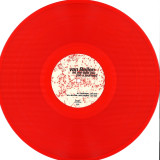
In the year 1997 a German house label called Superfly caused a stir in electronic club land. One of the most remarkable releases on this imprint was van Bellen‘s „Let me take you (on a journey)“.
The track introduced a new genre with grovvy and pumpin‘ beats meeting a harmonic composition of warm and chilly pads and strings.
Now it‘s time to reissue this timeless tune remastered plus a brandnew interpretation of noone else than Belgium‘s finest house export Maxim Lany plus two already released but still hot mixes by Guy Mantzur & Roy Rosenfeld plus Sebastien Leger (All Day I Dream).
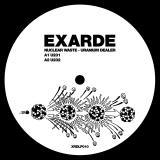
Nuclear Waste is arriving to the LP series with the album called “Uranium Dealer”. The Spanish based artist is a long friend of the label who has already appeared on Exarde, therefore is a great honour to welcome him back with such profound and complete body of work. Per usual completed with the art of graffiti artist Gkoner the album is really shining through with the radioactive particles it consists of. Whether it’s brutal electro numbers or more spiritually infused dense techno the album may find a home with its listener. The elements appearing to be colliding at an intensive speed to form the fuel for the nuclear audio warfare.
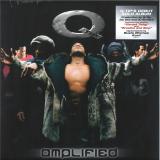
It's the solo debut that confirmed Q-Tip could flourish well beyond the formidable confines of A Tribe Called Quest: Amplified. The signs had been there for years, of course, though this was the first time his instinct for jazz-inflected grooves and immaculately sculpted production stood entirely on its own, embracing a more radio-facing disposition and preserving the musicality that had long distinguished his work. 'Breathe And Stop' and the irrepressible 'Vivrant Thing' became the obvious calling cards, then 'Higher' and the Busta Rhymes-assisted 'N.T.' show just how effortlessly Q-Tip could reconcile crossover appeal with genuine artistic finesse.
Straddling an intriguing intersection of Drum & Bass, Jazz, Fusion and unidentifiable electronica, ‘You Won't Find Your Way From Here’ is the debut album from Jhauk.
An extremely talented multi-instrumentalist from Sheffield, UK, Jhauk came to Blu Mar Ten’s attention when, in 2017, he created a wild prog-rock inflected remix of BMT’s track ‘Titans’
Further conversations with Jhauk revealed the depth of his unorthodox approach to electronic music and unearthed a treasure trove of production skills, culminating in the album before you.
Oscillating between the late-night, moody calm of late 50s Miles Davis, John Coltrane & Bill Evans, the riotous 70s instrumentation of Weather Report, the modern cool stylings of Matthew Halsall and the gritty edges of modern D&B production, it’s scarcely believable that this collection of tracks came from one person working alone in their studio. With tempos and time signatures skittering all over the place, Jhauk uses genres as catalysts rather than containers, he finds the interesting stuff in the hinterlands of their structural relationships and tensions.
Talking about the album, Jhauk has strong opinions:
“Drum & Bass emerged as club music, and club music comes with its own logic. Specific structures, specific build-ups, a formula that supports that context.
That's fair enough, but almost 40 years later, why is 99% of D&B still made the exact same way when 99% of the time it's never heard in a club? The same structure, the same formula, barely any development beyond the core idea. Tracks where you can hear 10 seconds of the drop and know almost beat-for-beat how the next 5 minutes sound. No real musical depth or exploration. People regurgitating the same material ad-nauseum but never actually saying anything for themselves.
This period of composition for me was about taking what I love about D&B, the rhythmic energy and potential for creative freedom it presents and really stretching it to its limits. Of taking drum & bass as a starting point and seeing where it ends up without an idea of what that destination might be. Most people would probably never call a lot of the results D&B, but that's okay because it was never the point.”
Dripping with melancholy, euphoria, longing and pure urgency ‘You Won't Find Your Way From Here’ is unlike anything else you’ll hear this year. The sound of an artist entirely unconcerned with impressing peers or performing on ‘socials’; you're hearing a true musician at work, expressing ideas through the skill of his hands, mind and ears. The album’s secrets aren’t revealed with a single play-through, but bears (or even requires) multiple listens to expose its layers.
In previous times, they called this ‘art'.
First up the return of Black Blood on vinyl after a hiatus of well over 20 years. This release is a reworking of the EXITUS002 vinyl that came out on that Italian label back in 1999. This one has a bonus track from that period of time too called “Avalanche Of Fear”. Pressed on “Blood Splatter” vinyl and limited to 150 copies. Each sleeve has been hand-painted, stamped and numbered by Black Blood himself (along with a little help from the family). Random copies have limited postcards inside. The sleeves that were hand printed are the same stock of sleeves from 2000 that were used on F.O.S. number 2 & 3. The 2026 mastering has made this release even better than the super-rare original.
Straddling an intriguing intersection of Drum & Bass, Jazz, Fusion and unidentifiable electronica, ‘You Won't Find Your Way From Here’ is the debut album from Jhauk.
An extremely talented multi-instrumentalist from Sheffield, UK, Jhauk came to Blu Mar Ten’s attention when, in 2017, he created a wild prog-rock inflected remix of BMT’s track ‘Titans’
Further conversations with Jhauk revealed the depth of his unorthodox approach to electronic music and unearthed a treasure trove of production skills, culminating in the album before you.
Oscillating between the late-night, moody calm of late 50s Miles Davis, John Coltrane & Bill Evans, the riotous 70s instrumentation of Weather Report, the modern cool stylings of Matthew Halsall and the gritty edges of modern D&B production, it’s scarcely believable that this collection of tracks came from one person working alone in their studio. With tempos and time signatures skittering all over the place, Jhauk uses genres as catalysts rather than containers, he finds the interesting stuff in the hinterlands of their structural relationships and tensions.
Talking about the album, Jhauk has strong opinions:
“Drum & Bass emerged as club music, and club music comes with its own logic. Specific structures, specific build-ups, a formula that supports that context.
That's fair enough, but almost 40 years later, why is 99% of D&B still made the exact same way when 99% of the time it's never heard in a club? The same structure, the same formula, barely any development beyond the core idea. Tracks where you can hear 10 seconds of the drop and know almost beat-for-beat how the next 5 minutes sound. No real musical depth or exploration. People regurgitating the same material ad-nauseum but never actually saying anything for themselves.
This period of composition for me was about taking what I love about D&B, the rhythmic energy and potential for creative freedom it presents and really stretching it to its limits. Of taking drum & bass as a starting point and seeing where it ends up without an idea of what that destination might be. Most people would probably never call a lot of the results D&B, but that's okay because it was never the point.”
Dripping with melancholy, euphoria, longing and pure urgency ‘You Won't Find Your Way From Here’ is unlike anything else you’ll hear this year. The sound of an artist entirely unconcerned with impressing peers or performing on ‘socials’; you're hearing a true musician at work, expressing ideas through the skill of his hands, mind and ears. The album’s secrets aren’t revealed with a single play-through, but bears (or even requires) multiple listens to expose its layers.
In previous times, they called this ‘art'.
2026 REPRESS
BOY Records re-issues Time Modem - Der Mantel Der Nacht from 1991!
This special vinyl edition will include for the first time also the track called "Alien Elements" which was only available on the maxi-cd.
re-mastered and highy recommended!
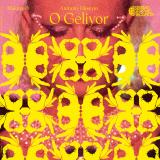
Anthony Hüseyin presents their new album O Geliyor (Making O), in which they return to the rediscovery of their gender, their childhood, and their attachment to Zeki Müren.
Müren is widely regarded as the most important queer exponent in the history of Turkish Art Music (Türk Sanat Müzigi). This genre of music was open to musical hybridism, and Müren himself also included elements of jazz and pop music.
Stylistically, O Geliyor (Making O) is a combination of contemporary discoid electro-pop music, based on Turkish Art Music by Zeki Müren. After successful current re-interpretations of Turkish music styles like neo-Anatolian pop and neo-Arabesk, this album provides a first take on neo-Turkish Art Music.
The album title is referring to the third genderless person pronoun in Turkish called "O", which encompasses all gender possibilities in one word. The album reflects on the memories that haunt us and the indescribable wounds of displacement. Set against the backdrop of Berlin, home to many immigrants and political and queer refugees, it exposes the profound emptiness in a metropolis wishing to imagine itself as a safe haven for the free-spirited, yet always reminding the Other that they don't belong. At the same time, it delivers anthems for the displaced, for the queer migrants who traverse internal and external landscapes in search of a place called home.
Anthony Hüseyin is a non-binary musician and performance artist of Kurdish-Turkish and Arabic descent who works with voice, text, film, dance, and installation. Raised in Urfa in Southeastern Turkey, where they learned traditional local music, they went on to study both classical and jazz singing in Istanbul and Rotterdam. Their works combine the personal and political to explore memory, identity, community, collective consciousness, and the body.
After years of being lost at sea, the ancient scrolls containing the long sought after fragments of X-Coast were discovered. It was decided that the transcripts be pressed onto plates and scattered throughout the realms, so that the age-old knowledge may never be forgotten.
On the front side of the disc, we deciphered two XTC transmissions. The first, "XTC I" dates from the original session. The second is the final attempt known to us, "XTC V".
The reverse side unfolds with an interpretation of "XTC V" by the prophet known as Foamek, who brings it to new, uncharted reaches of euphoria. The next scroll, titled "Horns" is a real collector's gem, played just once before during the inaugural X-Coast Boiler Room - transmission Belgrade.
The plate ends with what we believe is the first X-Coast session ever recorded. Simply called "Horizon”, it was evident that the inhabitants of the island stumbled upon something legendary.
This is a one-time opportunity to obtain the scrolls. Do not let them fall into the wrong hands!
DJ Antoine without a doubt can be called one of the biggest selling commercial dance-artists of the 2010’s. Between 2010 and 2015 he ruled the charts in Belgium (golden records for Welcome To St.Tropez & Sunlight), France (Platinum record for Ma Chérie, gold for Sunlight and Welcome To St.Tropez), Germany, Poland, Spain, Switserland, Romania, Holland,…
Antoine was rewarded by some of the biggest awards in Europe such as the NRJ Music Awards, was a juror in the successful TV-show “Deutschland Such Den Superstar” and he even had a cooking show “Kochen Mit DJ Antoine”
Just to say….Antoine was everywhere….And still is. “Ma Chérie” and “Welcome To St.Tropez” went on to become genuine club classics.
DJ Antoine without a doubt can be called one of the biggest selling commercial dance-artists of the 2010’s. Between 2010 and 2015 he ruled the charts in Belgium (golden records for Welcome To St.Tropez & Sunlight), France (Platinum record for Ma Chérie, gold for Sunlight and Welcome To St.Tropez), Germany, Poland, Spain, Switserland, Romania, Holland,…
Antoine was rewarded by some of the biggest awards in Europe such as the NRJ Music Awards, was a juror in the successful TV-show “Deutschland Such Den Superstar” and he even had a cooking show “Kochen Mit DJ Antoine”
Just to say….Antoine was everywhere….And still is. “Ma Chérie” and “Welcome To St.Tropez” went on to become genuine club classics.
Twenty years ago, somewhere in Scotland, an album that was the missing link between The Black Dog, Chain Reaction and Irdial was released by an enigmatic Glasgow producer called Pub, on his equally mysterious label Ampoule.
The album ‘Do You Ever Regret Pantomime?’ (2000) has become the stuff of local folklore, a key work in the UK’s rich history of IDM and ambient, and one of the most celebrated albums of the early noughties. Bizarrely, it even infiltrated the Billboard Top 100.
‘Do You Ever Regret Pantomime?’ is also very much a key statement from a producer who has chosen to stay in their own space, where everyone is welcome. Records like these are about losing yourself in the sound and creating your own universe to explore.
Over the record's 70 minutes or so you’re instantly wrapped in a deep matrix of spacious chords, abstract textures and gently shifting rhythms.
The 2020 reissue has been re-mastered and cut at Berlin’s Dubplates & Mastering, pressed as a 2x12” and features new artwork and a bonus track.
This release also heralds the return of Ampoule, the Glasgow label which released music from the likes of Lucky & Easy, Omens Jot and Moped Endo among others. Forthcoming releases will be a mixture of new music and re-issues from the archives.
At the cusp of a new millennium, British electronic music was rapidly changing. Jungle and garage had broken into the mainstream, but were running out of creative gas – what fresh movement would next captivate the underground? On the outer edges of London, a small group of bass lovers had the answer. Through a new strain of subloaded beats that stripped jungle, rave, techno and garage for parts, this scene returned to the dub roots, prizing the fundamentals of soundsystem culture: bass, space and togetherness. They called it dubstep.
In Aftershock: The Seismic Impact of Dubstep, seasoned music writer Lauren Martin charts the origins of one of the 21st century’s most innovative music genres in an oral history format. Through the testimonies of its architects and an immersive array of photography, flyers and unseen scene history, Aftershock chronicles the rise of artists like Skream, Mala, Coki, Loefah, Horsepower Productions and Rusko, as well as labels and parties such as Hyperdub, Tempa, DMZ, FWD>> and Skull Disco.
Together, this movement shook the British underground, exploded onto the internet and, within a decade, had rocked global music at unprecedented scale. Through first-hand storytelling, Aftershock is a testament to how the imagination and persistence of a few can transform culture.
Quotes
“Written via interviews with 28 leading scene figures from London and beyond, Lauren Martin’s oral history of dubstep is a landmark document of British club culture. This heavy, asymmetric music, informed by Jamaican soundsystem culture, garage, grime, breaks and more, could only have mutated in the UK, and Martin’s cast of characters take you back to the Croydon record shops, Shoreditch clubs and online forums where it came together. Amid funny tales of infighting and the inside stories of classic tracks, the artists’ pluck and passion are what shine through brightest, and make this such an inspirational read.” – Ben Beaumont-Thomas, Editor at Guardian Music
Bikini Kill Records is excited to reissue of The Singles, on both vinyl and compact disc. This is the first time that it has been released as a 12-inch (special note for all you vinyl fanatics, we managed to keep it at 45rpm for better sound quality)! The Singles was initially released in 1998 as a CD only compilation of all of BIKINI KILL's 7's. Once called "their defining document" by Pitchfork it includes Bikini Kill's legendary collaboration with JOAN JETT on the New Radio (1993) single as well as the long out of print Anti Pleasure Dissertation (1995) and I Like Fucking (1995) singles.
Turn On The Sunlight is the long-running project of Texas-born, Maui-based musician and producer Jesse Peterson.
Originally formed in New York in the late 2000s, Turn On The Sunlight has evolved into a fluid, location-spanning practice rooted in collaboration, intuition and process. Now based on Maui, Peterson’s work draws together a wide network of musicians and environments, with recordings taking shape across Los Angeles, Tokyo, London, San Miguel de Allende and Haʻikū.
Loosely situated within a framework of organic, ambient-leaning jazz, 'Iseo' unfolds as a series of open, exploratory pieces, with electronics sitting subtly beneath acoustic and environmental elements. Built from layered instrumentation including synthesizers, guitar, zither, flutes, voice and field recordings, Peterson moves between grounded, tactile detail and more expansive, immersive states. A sense of warmth and permeability runs throughout: organic percussion, environmental textures and drifting rhythmic elements lend the record a gently saturated humidity, reflecting Peterson’s base in Hawaii, where the presence of nature is felt as much as it is heard.
Underlying the project is a way of working rooted in gathering, listening and tending. Instruments, ensemble sessions, field recordings and everyday environments are approached with attentiveness, shaped through collecting, refining and allowing things to settle. Relationships, landscape and lived experience shape the sound, giving 'Iseo' a tactile, almost hand-made quality.
Rather than fixed arrangements, the album feels as if it has been organically and lovingly assembled through a process of listening and response, each element finding its place within a wider, evolving whole. This approach reaches a natural centre point in the 15-minute piece 'Medianoche En La Calle Aurora', which unfolds patiently, bending through shifting environments as motifs and textures emerge and dissolve with quiet continuity.
Peterson’s role as both instigator and facilitator is central to the project. Bringing together a diverse group of collaborators including Carlos Niño, Mia Doi Todd, Laraaji, Ko Ishikawa, Luis Pérez Ixoneztli and Miles Spilsbury, he creates space for individual voices to emerge within a shared language. The result is a music defined by openness and generosity.
'Iseo' takes its title from Peterson’s son’s middle name, a word that can be understood to mean ‘one-world life’. The piece itself takes the form of a gentle lullaby, its melody loosely shaped around the syllables of his name and sung to Peterson’s son by Luis Pérez Ixoneztli, a close collaborator whose presence across the record reflects a long-standing relationship that extends beyond the music itself.
Sleeve art and design by Michael Willis.
RAWAX proudly welcomes Cassy to the artist family! We are more than happy to present you soon two releases fom the Grande Dame of Electronic Music.
You will love this very deep and personal piece of art. The first ep called "CBM 1".
For our third celebratory release for 30 years of Ten Lovers Music we have another Various Artist selection called Frisson EP Part B. Kicking off the A side we have Mike Perras from Canada with Handle With Care, a superb opener, deep house with a saxophone solo that certainly gave us Frisson the first time we heard it. Following on is Takahiro Fuchigami from Japan with Wired City, another dark broken beat masterpiece made for the dancefloor. Onto to the AA side we have someone who is an integral piece of the Ten Lovers Music family Jose Rico from Spain who joins forces with Ruben Valero for Harmonies & Melodies, they draft in Anthonious on the Rhodes and it’s a deep house masterpiece. Finally Lobos Marinos from Japan, band leader Kazutaka Miya brings in Miki Hirose on the Trumpet and Shin Kowaka on Drums.
With Panorama, Frank Maston pays homage to the classic era of library records and Italian soundtracks of the 70s. A blissed-out, grooving collection of filmic cues, it continues the unique brilliance of Tulips and Darkland. Elegant and easy, subtle and stylish, breezy and beautiful; this is his Maston-piece. Commissioned by legendary label KPM, Panorama cements Maston as a master of modern classics and the most mesmeric of contemporary composers.
In early 2020, Be With suggested to Frank that he should make a KPM record. He wasn't aware that they were still putting out new library records - but he was super keen: "It was completely surreal and it still hasn't fully sank in that I have a record in that catalog, sitting alongside those incredible albums that were so influential to me."
Frank was visiting family in his hometown of LA in March 2020 when the world ground to a halt so the KPM project arrived at a fortuitous moment. Having fantasised about committing to a record with no distractions, with a proper budget, access to his gear and space to work in - to really dig in and try to write and arrange the best work he could possibly make - it was a real "be careful what you wish for" moment. But, as Frank explained, "it completely saved my year and sanity to have something to focus on and get excited about. It was my lifeline." He spent seven months on it, working almost every day.
Maston had already been making library-influenced music so when KPM outlined the criteria for the tracks it was exactly what he had been doing all along. He thought the best approach would be to make a follow-up to Tulips that had a parallel life as a KPM record. Enjoying complete creative freedom, “gave me the drive to power through and dig in deep. I'm not sure if I could have kept myself on such a rigorous recording schedule under my own steam, and I think the momentum I had writing and recording it is part of the strength of this record."
Maston’s sleek retro-groove instrumentals emulate the classic KPM “Greensleeve” reel-to-reel recordings that provided mood-setting music for mid-century cinema, television, and radio programs. Apparently in close conversation with the John Cameron-Keith Mansfield KPM pastoral masterclass Voices In Harmony, Maston's Panorama could be heard as that record's funky follow-up. Yes, it's *that good*. Another reference point from the hallowed library would be Francis Coppieter's wonderful Piano Viberations.
Opener "First Class" is a blissed-out groove, featuring the soothing vocals of Molly Lewis and a glistening harp over drums, a two-note bass motif (from Eli Ghersinu of L'Eclair) and an assemblage of guitars, synths, French horn and glowing vibraphone. Acid Lounge, anyone? The irresistibly funky "Easy Money" is a gorgeous cut led by more of Molly's vocals, pastoral flute and Rhodes, underpinned by drums and percussion, grooving bass, chilled guitars and synth strings. Kicking the tempo up, the percussive "Storm" is a vibin' filmic-fusion jam where psychedelic guitars (courtesy of Pedrum of Allah Las/Paint) organ, jazzy flute, Rhodes and vibes all compete for a place in the sun, over drums and walking bassline.
The heavenly "You Shouldn't Have" is a delicate, melancholic wonder; a dreamy instrumental where the melody is shared by a whistle, harpsichord and celeste, over a cyclical piano chord sequence and bass, synths, guitars, organ and distant French horn. The tempo rises again with the passionate, sticky "Fling", a summery, nostalgic groove with skipping drums and percussion, warm bass and electric guitar, yearning flute and synth strings. The brilliantly titled "Fool Moon" has that Voices In Harmony sound down pat. A romantic slow-mo dreamscape of Rhodes and harpsichord, piano, light drums and softly strummed acoustic guitar.
Side B opens with "Medusa", a hopeful, mellowed-out track with shuffling drums, feel-good flute, muted horns, glowing Rhodes and synth strings. The soft and gentle "Morning Paper" is an elegant way to start the day; a beatless blend of flute, guitar, percussion, ambient synths and vibes. The upbeat head-nod jam "Scenic" has that widescreen car-chase feel, uptempo drums and percussion, grooving bass, piano, synths and ambient electric guitar. "Adieu" is a smooth summer vibe, relaxing with brushed drums, Rhodes, flutes and horns. Molly Lewis's gorgeous vocals steal the show, alongside vibes, jamming organ and synth strings.
"Hydra" is another laid-back 70s-sounding retro cinema cue with light drums and percussion, walking bass, spacey synths, clavinet, glowing vibraphone, vintage organ and electric guitar. Closer "Jet Lag" is a laconic bow out; bass-driven drum machine soul, featuring hand percussion, Rhodes, vibes, synths and organ.
Multi-instrumentalist Frank played a bit of everything across Panorama. Yet, humble as ever, he believes the time, energy, and enthusiasm of all of the musicians invited to the sessions helped him realise his vision: "There were two Italian flautists who really understood what I was going for. Two french horn players, cor anglais, a vibraphonist and a flügel horn player. I've never involved this many people in my projects before, and yet the result is the most "me" record I've ever made."
Musically, a strong Italian theme runs through the record. Frank is fascinated by ancient Rome and both his parents are Italian (Maston was originally Mastrantonio before anglicisation). So, it felt natural to fully embrace these strands and tie everything together with the striking artwork. The Romans were influenced by Greek culture, emulating their art and architecture, which, in turn, influenced Renaissance era artists. Frank acknowledged this tradition when reflecting on his place in the lineage of library and soundtrack composers. He then asked his friend Mattea Perrotta, a painter and sculptor, for some sketches. What he received was exactly what he had in mind: "Especially the theater mask, which really captures the range of moods on the album". Frank arranged them as per the cover and it soon felt right: "I wanted to make a cover that was reminiscent of the classic KPM albums without making it too pastiche - so it has its own identity and looks at home alongside other library records, while still fitting in nicely in the KPM catalogue." The last step was for us to introduce Frank to Be With-KPM’s Rich Robinson, who helped put together the back and centre labels and align it all within the KPM standard.
Panorama is a perfect title for the album. With no opportunity to travel for tours or recording projects, Frank arranged postcards from his collection on his desk with beautiful views of the mediterranean coast, the Roman Colosseum and Cinque Terre. These also served as visual prompts: "That was part of the sonic concept - imagining myself driving down the mediterranean coast with this music on, with the top down." Additionally, the range of moods and vibes - "I tried to make each song very different from the previous one in terms of tempo and arrangement and feeling" - speaks to the idea of a Panorama of music and sounds and emotions. The last track was originally called Panorama, but KPM already had that title in their catalogue so it was changed to "Jet Lag", which, as Frank notes, "is perhaps even more fitting, since the trip is over".