For our next release, we welcome Eduardo de la Calle. An artist whose music has long moved beneath the surface of electronic music, shaping minds and dancefloors through depth, restraint and timeless vision. This EP drifts through hypnotic rhythms, deep pulses and evolving textures, inviting the listener into a space where time softens and movement becomes instinct. A meeting of two currents, flowing in the same direction, guided by depth, energy and a shared love for the spaces between sound. Eduardo de la Calle Synthetic Collapse CRRT02 A1 Eduardo de la Calle - Subverse A2 Eduardo de la Calle - Black Input B1 Eduardo de la Calle - Protocol Remain B2 Eduardo de la Calle - Systemic Error All tracks written and produced by Eduardo de la Calle except Black Input and Subverse written and produced by Eduardo de la Calle and Andres Fusaro under the project RSCA. Brighter Days Vocals from Karen Gordon - Djaè - extract from - CAJ201 1992 Mastered by Javier KTC Mastering
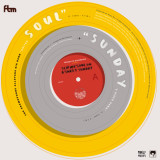
Slip My Soul Where A Sweet Sunday brings together four versions by Fundación Tony Manero in charge of three projects from the Catalan jazz scene: The Gramophone All Stars Big Band, The Changes and ·I·. At the hands of these interpreters, the songs by Manero (all taken from “Sweet Movimiento”, their second studio LP) wander through different spectrums of jazz. From the Jamaican-tinged ska of the Gramophone to the dragging, hip-hop groove of ·I· through the swing -more classical or more avant-garde depending on the subject- of The Changes, these four pieces prove that jazz and disco music are family. Or what is the same: that jazz has always been dance music. Slip My Soul Where A Sweet Sunday celebrates the legacy on the one hand, the Fundación Tony Manero, which is retiring from the stage after more than 25 years paving the way for new generations and new projects. Among others, those who now take the baton in this EP.
The next EP on the label comes from our friend and legend Eduardo De La Calle with three classy tracks blending techno and electro with strong jazz influences and a clear nod to Detroit!
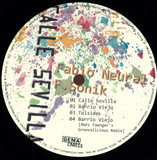
Its always exciting for us to be introduced to new artists. Here comes the next EP on Cellaa Music, this time from the irresistible electronic Duo formed by Fabio Neural and F.Sonik, whose previous outings have been on labels like SCI+TEC, Antura, Serkal, KD Music, K9 Records, Monique Music. Cellaa is very happy to welcome our Friends to the fold.
Lead track is - Calle Sevilla' that immediately commands attention with it's locked tight Groove, Piano licks and warm Rhodes Keys that lead us to the mighty bassline and we're already feeling the intensity. A Synth riff comes in and builds to the main break and creates an atmosphere that takes us on a trip to the sunshine coast of maybe Ibiza, right before it drops back in!
Second up is- Bario Viejo' which has rolling percussions and a attention grabbing groove that brilliantly leading into the playful piano chords and vocal hook. The break creates a feeling of suspense, hence the name, until the moment in which it explodes to create a track that is sure to cause mass devastation on dance-floors this summer.
Finally Fabio Neural and F.Sonik delivers - Tulside'. Another massive Groover from start to end. Featuring a solid pulsating basslines that works in harmony with an impressive array of percussions, chunky hats and tingling keys peppered with fascinating Vocals. Sunrise or sunset, - Tulside' create a quite stunning balearic moment thats sure to hypnotize any crowd.
The ep is supported with an excellent remix from Cellaa label mate Marc Faenger.
- Barrio Viejo Groovalicious' feeds off its infectious bassline and it is is built upon some deep, rolling grooves. Marc Faenger's remix picks up the pace, adding a signature percussion sound, stripping back the vocals to create a more techier focused version of the track.
Cellaa Music delivers a Winter Smash with this EP.
Mole Audio 08 is coming up, and we’re proud to welcome RSCA with their debut release.
RSCA is a collaborative project by Eduardo de la Calle and Aureal, born from a shared vision to expand the boundaries of techno into a more minimalist, abstract, and experimental territory.
Driven by the use of analog machines, the duo delves into hypnotic repetition, rich sonic textures, and the pursuit of both a physical and emotional experience through sound.
RSCA invites listeners into a deep, sensory journey, where rhythm transforms into a medium for introspection and connection.
out of Stock
Last delivered 9 months ago available to reorder, subject to availability
Grupo Yoyi's rare gem 'Paco La Calle' comes from 1977 and is now available on its own 45rpm for the first time ever, and is a fine window into the artist's pioneering blend of Afro-Cuban rhythms, jazz, funk and disco. Originally released on Cuba's iconic Egrem label, it's the only known solo project from producer Jorge Soler. It's brimming with lush horn arrangements and warm analogue synths, so both sides effervesce with genre-crossing spirit that feels timeless even now, almost half a century on. These are the sort of sounds that are perfect for both soundtracking a sunlit afternoon or heating up a dancefloor and will have Latin fusion freaks and crate-diggers alike in a spin.
out of Stock
Last delivered 10 months ago available to reorder, subject to availability
LP-Veröffentlichung der erfolgreichen CD-Aufnahme bei Brilliant Classics
Diese neue Aufnahme präsentiert Bearbeitungen für Violine und Gitarre von populären Werken von Piazzolla: Calle 92, Milonga,
Calambre, Tango choc, und viele andere
Gespielt mit unwiderstehlichem Gefühl für den Stil von Piercar-
lo Sacco (Violine) und Andrea Dieci (Gitarre)
VALIS continues his climb with a new Ep with 3 cuts per side of pure techno tools for plastic lovers. The EP includes work from Eduardo De La Calle plus some work belonging to his new project RSCA alongside Aureal, which previously released work on Jamaika Suk's Gradient label and soon on the Berlin label Mole Audio.
out of Stock
Last delivered 9 months ago available to reorder, subject to availability
The four tracks on offer here bear testimony to De La Calle's search for the perfect loop. They are hypnotic grooves, almost entirely devoid of arrangement in a classical sense. But the tracks are not static. They suck you in by means of constant modulations, build free flowing structures of their own, hints of peaks emerging at the mercy of the low frequency oscillators' cleverly set phase relationships. These tracks do not need the in-your-face kick drums and squashed dynamics of the Brickwall Generation. By leaving space, they work on a different level than solely sound pressure emanated. The simple, repetitive structure coupled with the unhasty development find their way into the dancer's brain. Moving your mind—your ass to follow suit.
No represses are planned at present.
out of Stock
Last delivered 21 months ago available to reorder, subject to availability
VALIS is a new ongoing project that was initiated over a year ago by Reeko and Eduardo De La Calle. The project is a tribute to Philip K. Dick, the author of the novel that inspired the iconic film Blade Runner. Given the ambitious and extensive nature of the project, the artists have focused on transposing the cinematic and dystopian sci-fi feel that characterises the author's work on a sonic level.
out of Stock
Last delivered 23 months ago available to reorder, subject to availability
Compay Segundo war der Godfather der kubanischen Musik. Im Alter von 88 Jahren erlangte er internationalen Erfolg und war der größte Künstler des Buena Vista Social Club-Phänomens. Compays Musik ist in der Lage, einem ein Lächeln ins Gesicht zu zaubern, und einige seiner Lieder ("Chan Chan", "Sarandonga", "Yo vengo aquí") gehören zu den Klassikern des Son Cubano, des Genres, das er in der ganzen Welt verbreitet hat. Auch einige seiner Coverversionen klassischer kubanischer Lieder wie "Guantanamera", "La Negra Tomasa" oder "Lágrimas negras" gehören zu den besten der lateinamerikanischen Musik. Wir feiern sein Werk mit Vinyl-Veröffentlichungen im Jahr 2023, "Duets", "Las flores de la vida" und "Calle salud"
World renowned producer Dez Andres, one of Detroit’s underground heroes returns with a fresh slice of latin hip hop. Since the late 90's, Dez has built a respectable catalog that blurs the boundaries between genres. One of motor city’s most prolific artists, his music can be summed up in one word: Quality. This is best exemplified in this release.
out of Stock
Last delivered 19 months ago available to reorder, subject to availability
Out of the many artists, both new and established, that Futurepast has welcomed to its family, Spanish producer and DJ Eduardo De La Calle is one that we can definitively call a legend. His vast discography includes many of dance music's most appreciated labels, so we're humbled to present a full EP from him.
His EP "Kardama" emerged as the winter of 2022 bled into 2023, a period where he'd actually been producing more downtempo works, so "Kardama" is his most recent take on techno; a genre he is certainly well-versed in with over 25 years experience.
As a reflective work, De La Calle processes emotions and thoughts with analog methods, reverse delays and pedals on "Kardama". The emotions that he holds close to himself show up in the detail that sits deeper within each track.
"I simply make music with the intention of feeling better" says De La Calle, "it is a therapy for my mind and for my spiritual state. Through a creative process, I feel calm and useful for the world and for myself."
out of Stock
Last delivered 2 years ago available to reorder, subject to availability
Calle Sound System est un mini-album conçu par Sidi Wacho en réponse à la crise sanitaire. Leur univers musical est constamment en
renouvellement pour sortir des stéréotypes et des étiquettes.
Leur groove binaire s’inspire de la cumbia chilienne avec des arrangements inspirés des fanfares balkaniques.
Rap, rythmes latinos et reggae peuvent aussi plonger dans cette sauce relevée à souhait !
out of Stock
Last delivered 3 years ago available to reorder, subject to availability
Orthogonal Eigenstates is the title of the new full-length album by Quantum Collapse aka Eduardo de La Calle where the author definitively moves away from dance music and starts a new period of exploration strongly influenced by the English Glicht IDM trends from early 90's and styles that goes from Soundtrack to Experimental Jazz ,Cinematic Electronica or Abstract Hiphop
out of Stock
Last delivered 2 years ago available to reorder, subject to availability
Launch of a new series of Various Artists 12inches to be released on Night Defined Recordings, which will serve as a platform for the existing NDR label family as well as for new faces. NDVAX01 gathers four tracks by Șerb, SW., Roger 23 and Eduardo De La Calle, which find common ground when it comes to depth and space as well as to walk away from established song structures in favor of establishing a forward-thinking type of club music.
out of Stock
Last delivered 3 years ago available to reorder, subject to availability
The MINDFULNESS HIPERNORMALISATION album itself marks a new turn in Eduardo's work, breaking away from any musical style or stereotype and always trying to seeking freedom of expression,marked also by a strong connotation of voluntary ostracism.A new stage in which Eduardo uses this double vinyl like a tool to mark a distance with the current international scene and also support the Adam Curtis theories shown on his acclamed documentary "The HiperNormalisation" 2016 . The album show influences that goes from romantic ambient melodies to the most complex and experimental electronica,also including easy listening techno where it is difficult to differentiate the line between techno and ambient.
Francois Kervorkian,DJ and official engineer of albums belonging to Depeche Mode or Kraftwerk, gives support to this great work of Eduardo which will remain in the near future and without any doubt as a cult album.
out of Stock
Last delivered 5 years ago available to reorder, subject to availability
Eduardo De La Calle presents his new 12 inches in the new Rhod platform...
4 very sequential techno cuts with synoptic reviews and clearly syncopatic reactions produced with the intention and need of an intense search for new sounds and structures.
Eduardo always shows influences from the early and old pioneers who took control in the techno music business on previous decades...
we can name a few artists like New World Aquarium, Luke Slater or more recently Aubrey that have strongly influenced Eduardo in recent and format times also labels like Shelter Records or Solid Groove are important to be mentioned, they are platforms where Eduardo has also received notable influences when making this record.
In general terms a very solid 12" inch with character an over all... a work with personality for the most demanding DJs.
Mastered by Javier 'KTC Mastering'
Design - Antonio Romero
Eduardo De La Calle s recent Distortion Theory III EP on Abstract Reasoning was another impressive piece of work from the prolific producer. Now come four diverse remixes of the title track, each with their own unique twist on the warped machinations of the original.
J - Keel kicks off proceedings with a droning, tense interpretation which toughens up the original considerably. Reversed chord stabs pitch up and down as ominous bass bores a steady course through the track s underbelly, with ticking percussive elements ensuring a motorik pulse.
The masterful Roman Fl gel teases out the chime motif of the original and supplements them with muted marimba-esque arpeggios for a soothing, underwater feel. The beats are kept to a succinct minimum, with subtle swathes of strings bringing a majestic, dreamlike tinge to this refined, minimalistic production.
Fellow Spaniard ORBE brings an ambient feel to the hazy, delicate melodics of his mix, with the delayed, warped synth patterns that struggle to be heard and beautiful atmospherics recalling Carl Craig. Moments of distorted pressure seep through and remind us of the buggedout flavour of the original.
Holland s Conforce rounds things off with plump low end throbs and sparse synth pulses reminiscent of Basic Channel, with gently shuffling hi-hats underpinning the murky yet warm textures and broad, heavily reverbed swathes of chord drama.
out of Stock
Last delivered 6 years ago available to reorder, subject to availability
Eduardo De La Calle has been doing his thing since the early 2000s, but the last couple of years have seen him move into overdrive. Releases on Planet E, Hivern Discs, Nitsa Trax, Turbo Recordings, Gigolo and Darkroom Dubs to name just a few have shown he is both prolific and consistent, and this new four-track collection is just as compelling as his recent output.rnrnDistortion Theory III is a whirring hypnotic machine jam that melds shimmering synth snippets to mind-bending FX undulations and throbbing low end. Disorientating and wonky as hell, it's the sound of a funky computer malfunction somewhere in deep space.rnrnLight Tunnel continues the theme, coming across like the dying throes of space station spinning out of control due to excessive amounts of sub bass. It's a dizzying, disorientating ride.rnrnAcid Aaron C (Edit) wastes no time getting down to business with its gurgling, incessant 303 line present from the get-go. Shuffling percussion rubs up against heady female vocal lines and wonky detuned 8-bit synth blips, the undercurrent of the track swelling and calming seemingly at will. rnrnThe Dub Math takes things down a notch with hazy sounds and plodding sub bass combining with heavily reverbed vocal incantations which all combine to bring together the vibe referenced in the title.
The following electronic soundscape features music from Eduardo De La Calle, Brendon Moeller, Tobias. and Mike Dehnert. All profits generated from this record will be donated to the Oceanic Preservation Society.
Suns out, guns out: Darkroom Dubs ease into 2018 slowly with a new addition to their limited vinyl series courtesy of Madrid analogue scientist Eduardo De La Calle.
Last spotted on Planet E and boasting a 15 year back-cat on the likes of Cadenza, Biologic, Just This, Hivern Discs and Mule Muziq, Eduardo is a man you're already well acquainted with. And you're going to want to get even closer once you've digested these four straight-to-business stripped-back traxx. Each cut designed for deep mix tailoring that you can really bend minds with.
'It's Me... The Apple Knocker' ignites the fire with a flash as we're hurled into a hypnotic frenzy from the first loop. A whirlwind comprised of so few parts yet causing a riot in your senses, this stutters and slurs with a precision sense of unease. The troubled ebb and flow of 'Opsimath' follow suit with a twinkling feeling of unknown. An extensive groove weighing in at nearly nine minutes, its unhurried nature alludes to its title; the longer you leave it sizzle, the more enriching it gets.
Flip for 'Breatharian'. The deepest, most disarming cut of the collection laced with yearning strings and poignant chords, it's a solar-inspired sunset piece that gradually morphs into something much darker and serious as the track progresses. Finally we conclude with 'Cybersquatting', a timeless mildly dubbed-out darkroom groove that flows with liquid insistency. Subtly mutating and rotating, forever pumping, it's a true calm before the storm piece, tailored for those moments when you need a little suspense and space in your set.
Four crystal jams. Endless variations. Infinite mixes: Darkroom Dubs have delivered once again. And there's more en route... Watch out for a new Deadstock 33s release and a new compilation 'Darkroom Dubs Presents Summer Love'. Both due before the summer is out. Don't put those guns away anytime soon...
Eduardo always delivers quality music, but this is a very special record, we can say that "this is a showcase of electronic music".
Four tracks with four different styles of electronica: deep and marvelous keys in 'Wondrous Punia', a mastely detroit house lesson in 'Knockout Sakshi', the minimal techno monster in 'Great Manojar', and the psichodelic electronic cult song 'Georgeous Shiama
The word 'Icosahedrite' refers to the geometric figure icosahedron, and arises from the idea that the EP is an amalgam of electronic music styles with many other aspects of traditional musical genres, like jazz or blues. Metaphorically, those genres act as the multiple sides of an imaginary icosahedron. Something complex yet solid that sits outside of the conventional emerges as the final result. A1 'Phason Jazz' - This is a track where conventional jazz structures converge with electronica, and the influences Eduardo gets from Miles Davis and John Coltrane shine themselves. Twisted keyboards patterns mixed with delays and deafening effects form a place to get lost, and eventually repetition becomes hypnotism and turns into an automatic trance. B1 ' Mr Dewey D' - Mr Dewey D is referring again to Miles, and his first and second surnames.This song is much more influenced by Dark Comedy (aka Kenny Larkin) and all the records that he throws out on the french label 'Poussez' titled 'FunkFaker: Music Saves My Soul' Blues breath tirelessly in this composition where there is not much time for an objective analysis and where everything finally leads to an insane ending. B2 'Rhythmic Soundscapes ' - This track is, I guess, the most conventional part of the EP, Nonetheless, it retains special qualities. Floating pianos with delays are combined with bass sounds that go back and forth, forming a musical piece with techno sensibilities that I hope will give opportunities to the most daring DJs.
Just a few months after its first release, Nitsa Traxx comes back with a very special 12'.
The project started with a file exchange between Eduardo de La Calle and Ferenc. They decided to work each track on their own side using only a few isolated sounds from the other. This way none of the tracks could never be treated as a full original, but proper remixes of tracks that never existed, building an uncanny, almost dreamlike emotion.
A Side is for Ferenc's 'Parón Largo', where synthetic strings are omnipresent and time and space unbends, evolving to an anticlimax where an eerie vocal and the longest possible drop are the leading trademark. A never ending and emotional standstill that goes deeper than the Mariana Trench.
Eduardo De La Calle uses his distinctive signature sound in the B Side. 'Cloaking Tech D Fly D' is an obsessive yet beautiful track that reminds us of the Somewhere in Detroit series. This is a mental and heart-warming tribute to the Motor City sound that just a producer like Eduardo could do.
Next releases are on the corner already, and we can't wait to share them with you.
Biotop proudly welcomes the Spanish master of machines, Eduardo De La Calle, for his debut Biotop EP. Eduardo is well known for his countless analog releases on labels such as Cadenza, Mule Musiq, Be As One, Planet Rhythm, Mental Groove, and his own delicious imprint, Analog Solutions, to mention just a few. Biotop boss Patrick Zigon is a big fan of De La Calle's music from the early days, so he's honored to extend the Biotop family with this exceptional artist.
"Hyde Numbers" is a typical De La Calle EP featuring multilayered masterpieces built on Eduardo's unique analog studio rig. The first two tracks, "Hyde Number 1.34." and "Hyde Number 8.47." are uncompromising driving techno tracks built on hypnotic chords and roaring synths with rousing snares and effects, ready to destroy the dance floors of dark techno clubs worldwide. In contrast, "Hyde Number 66.4." convinces with its melancholic pads and lush deepness; the clever disharmonic approach makes its beauty more than special, and it was already featured on Patrick Zigon's exclusive mix compilation for the 15th anniversary of the legendary "Macarena Club Barcelona", released in October.
"Hyde Numbers" is out digitally in November and on vinyl in early 2017, complete with delicate mastering by Werner Niedermeier, full analog vinyl mastering by Kotec (KTC Mastering) and with a beautiful cover design by Ninaj Noori.
Our beloved record label ANALOG SOLUTIONS presents this time to V / A Signed by Kristina and ORBE and where Eduardo De La Calle label owner add as well a special detroitish techno soul tool on side B2. It's been several months since the last vinyl release of the record label But it certainly strike back again with a sonic quantum force! Dropping the catalog reference number 019 which is full of
usefull and mesmerized ideas dj tools for worldwide DJs that deserve it ! It would be nice to pay attention to this great job that will be available only in vinyl format for the first few weeks. Pure " shake that ass science " on 12 " ... special design for the dance floor .. DON,T LET IT GO !!
Spell PETS backwards to get STEP. Spell STEP forwards to find PETS going back to basics. STEP is the new concept vinyl only label from the founder of PETS, Catz 'N Dogz, that highlights the rawest forms and root functions of quality club music. STEP finds the fundamental groove with undertheradar house and techno that is isn't afraid to be rough around the edges. STEP is limited promo and all about the music. Each new STEP will be released every four months on vinyl only.
Following Markus Suckut debut on the label, it's now the first time on Be As One for Eduardo de la Calle, one of the most interesting and passionate producer we've had the pleasure to work with, a master in its own craft: deep, melodic and thoughtful Techno. For this release we've picked up two very special cuts from Eduardo, pushing Eduardo's limits to the next level.
out of Stock
Last delivered 6 years ago available to reorder, subject to availability
Machinefunk Veteran ''Eduardo De La Calle'' is bound to make his Planet Rhythm debut
with a 4-track analog synth laden voyage into the the more hypnotizing side of electronic music.
Opening track ''Alex Blaney Says No Again'' dives heavy into original synthesis and shakey drum/perc combinations for one of the most spiritual PRRUK releases thusfar. The follow up track called ''It's On My Brain''is just as emotive. Eduardo cleverly uses repetitive hats and unclear vocal samples to emphasize on that underwater atmosphere he so well puts together. On the B side we find ''I Love You" which thrives on wonderful pads and uplifting melodies which together, create a very uneasy, yet euphoric vibe. Govindaya Namah Dub is the closing down track of this 12'' as the name suggests, it's quite a dubby voyage which contains loads of FX tricks and should be very soothing for those 6 O clock in the morning spiritual club moments.
Spanish talent Eduardo de la calle is ranging between timeless hypnotic Techno and Berlin-House.
spanish talented artist "eduardo de la calle" who release on superwax rec, mentalgroove and name a few... we loved his latest release on cadenza. it's hypnotic minimal but quite musical. it reminds me early villalobos. on a side, "the ranchor's time" is timeless hypnotic techno.on b side, both tracks are more berlin house style. they are for the fan of kink or levon vincent stuff. we are very happy with this 12", hope you enjoy!
London's Release/Sustain imprint returns this April with a four-track package featuring material from Eduardo De La Calle, XDB, Joey Anderson Moody Waters feat. Carolina Damas.
The Release/Sustain imprint has gone from strength to strength over the years, welcoming the likes of Alton Miller, DJ Aakmael, Benjamin Brunn, Losoul, Norm Talley and many more respected names in underground house and techno over its past twenty nine releases.
Here we see this continue with some more welcome additions, first up is Eduardo De La Calle with 'The Protosoul' and as always the Spanish artist offers up a perfectly crafter slice of hazy, groove-driven Techno, led by bleepy arps, winding stabs and robust analogue rhythms. XDB then offers up heady, subtly blooming leads, pulsing subs and shuffled drums with 'Another Night' next.
Opening the flip is New York's Joey Anderson with 'Drum Play' which as the name suggest sees the percussive aspects dynamically evolve throughout amongst choppy bass hits, stutter arpeggio blips and warm string melodies. Moody Waters then teams up with Carolina Damas, vocalist on anthemic house cut 'Sueno Latino' for 'Acid Lovin'', edging into deeper territory with ethereal pads, crunchy drums and squelching 303 licks while Damas' soft, spoken-word Latin vocals wander within.
out of Stock
Last delivered 82 days ago available to reorder, subject to availability
Keysound Recordings are proud to announce the unearthing and release of a collection of lost deep tech dubs from Hugo Massien. After releases on labels such as XL Recordings, E-Beamz, Tectonic and Audio Rehab comes a 12' of tracks that date from 2014 -2016. Dark, percussive yet catchy, the productions originate from the peak years of London's underground deep tech scene, at a time where the movement bubbled with an abundance of energy and creative possibilities. Massien was one
Inmotion Music LTD brings back two dynamic artists Marco Effe and James Mile. Both Marco and James have been firmly cementing themselves in the Techno and House music scene for several years while gaining well wide support from DJ's across the globe..
The Mehringdamm EP consists of 3 original tracks and a remix by Spain's Eduardo De Callle.The first track, Mehringdamm is a classic rhythmic-driven belter that packs a hefty punch. The jacking 909 drums and lush synth keep the tension through out.The B-Side is slightly more experimental but has expertly captured the Eduardo De Calle.vibe. James Miles ends the EP with a jacking 909 work out named Stomp.
Just This is a Milan based label collective.
Just This is the expression of a social, metropolitan and underground movement we are living and going through all together.
Our Mission is to give room and importance to Art and Music which are still evolving day by day.
Just This is aimed to frame these changes, which are going to be the picture of today and the future memory of the cultural movement of this age, throughout a series of messages, images and sensation drawn inside the audience.
Furthermore, thanks to the energy, the happiness and the magic charm of our parties and events, talented and unique artists, from all over the world, use their way to interpret music to communicate people the real core of this change:
the future is changing...
Just This 's first Various Artists aims to the research of a mix of sounds by producers from different countries, to a journey into a variegated world. Melancolic vibes, deep ambient athmospheres.
The Ep is composed by three tracks. The first one, Perù, is a fine production born from the collaboration between Tom Trago and Pisetzky, a blowing wind from overseas, a shiny path into a flashing jungle, a merge of their different styles that combine in a magic theme.
Eduardo Della Calle - Mondo8 Is a constant beat that hits straight to the point with an hypnotic melody and raw vibe
Kelpe - Dry Riser - expressing his own unique unclassified genre, it grabs you into an unspringy flow bringing the listener to a vintage ambient atmospherest
in the past ten years lots of little and big stories happened in the music culture. house literally disappeared almost from the scene in order to come back as strong as never before.
minimal morphed back into techno while leaving the question mark why the term minimal ever got invented. some originators like frankie knuckles or romanthony passed away, while others like larry heard just stopped to perform.
in-between countless new artists appeared, twisted dance music with new perspectives on the old, and released their fresh ideas on even more countless labels out there in the void called music market.
one of the rare platforms that stayed solid as a rock in all these years is mule musiq, the tokyo based label that spreads miscellaneous sound vibes that long from jazz to disco, house, and unobtrusive ambient since 2004.
with a versatile artist roster consisting of producers such as henrik schwarz, lawrence, dj sprinkles, dj jus-ed, kuniyuki, eddie c, roedelius, or new kids on the blog like barnt or lord of the isles the japan based record company developed a status of her own for being one of the most free spirited organisations in contemporary music.
'if the music is good, any kind of music is welcome. i don't like labels which release one style music.'
mule musiq's mastermind toshiya kawasaki once said in a rare interview. now he celebrates a ten years of freedom jubilee with the sixth instalment of his famed 'i'm starting to feel ok' compilation serial. a real massive international anniversary celebration that is ventilating all what happened in the past ten years in order to form something that travels right into the future. and that is where mule musiq tries to be since a decade to tell some unheard musical stories that stay for good even when the future is long past.
Kvrk makes a debut on Distant Gaze with Synthetic Memories, a four-track EP exploring shadowy electronics where organic textures and synthetic forms constantly blur into one another.
Opening with Pulsewidth, the EP begins as a slow burn – a restrained piece of synthwave shaped by drifting ambience, hypnotic sequences and a steady sense of tension.
The pace gradually lifts with Void Caller and title track Synthetic Memory, pushing deeper into prog sound. Straight, driving rhythms form the backbone, occasionally dissolving into broken-beat passages, while warped synths and psychedelic details keep everything in constant motion.
Beneath the electronic framework runs something more primal: forest-like soundscapes, mystic undertones and subtly shamanic motifs give the music an earthy, ritualistic dimension.
Closing the release, Blu:sh reworks Void Caller through his signature deep and trippy approach, stretching the original into a spacious late-night interpretation with a submerged, dreamlike pull.
Heavyweight psychedelic improvisers EarthBall are back with their third and most monstrous record to date: ‘Outside Over There’, released on Upset The Rhythm (Nov 7th). Born from the haunted basements of Nanaimo, Canada, the quintet thrives on spontaneity, shaping improvisation into jagged hallucinations and ecstatic eruptions.
Recorded live-off-the-floor in 2024 in Jeremy, Izzy, and Kellen’s basement, and mixed by drummer John Brennan, ‘Outside Over There’ is an album that feels both summoned and inevitable. Each track lands with uncanny purpose, as if uncovered rather than written.
The opener, 100%, features a cameo from comedian and English icon Stewart Lee, who lent his blessing for the band to use a fragment of his stand-up. The album was mastered by John Dieterich (Deerhoof), with liner text contributed by longtime comrade John Olson (Wolf Eyes). Olson describes the album in his unmistakable style:
“This eight-track odyssey unfolds like a dreamscape, where whispered incantations brush against the shadowy fringes of the cosmos, and wild, Cézanne-inspired rock anthems erupt like geysers of color in the midst of a western warm and wet rain storm… culminating in the sprawling eleven minute masterpiece, ‘And The Music Shall Untune The Sky,’ aptly dubbed the Earth Crusher. A creation so utterly deconstructed and intertwined with the pulse of nature itself that if AI was called upon to conceive ‘Outside Over There’ anew, it would just spit back, “F.U. in Tree Font”. An enchanting invitation for even the flat-earthers to join the circle, if only just a little.”
EarthBall’s trajectory has been relentless. Their 2024 album ‘It’s Yours’ was praised by The Quietus as “fully aggressive and fully life-affirming,” and by The Wire as "a boisterous mind-melting album”. The band’s live double set LP ‘Actual Earth Music Vol. 1 & 2’ (2025) captured blistering performances: a performance opening for Wolf Eyes at the Fox Cabaret, and a Café OTO improvised throw-down featuring Chris Corsano and Steve Beresford. These releases on their own confirm them as one of Canada’s most vital experimental exports, not to mention the impressive self-released discography on their Bandcamp. The band’s reach has stretched far beyond their west coast roots with a UK tour May 2024, plus this past June, EarthBall closed Montreal’s Suoni Per Il Popolo Festival alongside Pulitzer Prize-winning composer Raven Chacon. This November they will perform at Le Guess Who? Festival in Utrecht, with a European tour to follow (tour dates below). Outside of EarthBall, each member carries their own torch. Jeremy Van Wyck, founding member of the legendary Shearing Pinx, has toured extensively, released over 100 records, and has been a vital force in the Vancouver and West Coast underground for the past 25 years. He and Isabel Ford (Izzy) play together not only in EarthBall, but also in Psychedelic Dirt, Shearing Pinx, Behaviours, and Crotch.
John Brennan collaborates widely, including recently with Endlings (Raven Chacon and John Dieterich), Evichen (Victoria Shen), Francesco Fonassi, Plan Your Future (with Greg Saunier of Deerhoof), Brennan/Corsano duo and Physics with John Dieterich. Kellen Maclaughlin performs with KVMP and Ora Corgan, while saxophonist Liam Murphy is a west coast staple, playing with the best across Vancouver Island and the mainland. On three of the tracks of ‘Outside Over There’, the band is joined by their comrade Justin Patterson, who also plays with Brennan in the duo Modale. This cross-pollination fuels EarthBall’s sound - a collective improvisation, psychically overdriven, and grinding into bloom.
Outside Over There’ is more than an album though, it is a ritual, a gathering of sound at the forest’s edge; where feedback, saxophone screams, and ecstatic vocals dissolve the boundary between chaos and clarity. EarthBall invite you into their circle, to share in the joyful terror of spontaneous creation. ‘Outside Over There’ will be released on November 7th through Upset The Rhythm digitally and as a limited blue-in-black vinyl LP.
Les Disques du Crepuscule presents a new 180 gm vinyl edition of Fidelity, the 1996 studio album by cult Manchester ensemble The Durutti Column.
Limited to just 500 copies, this special double disc edition is pressed on heavyweight 180 gm vinyl and features cover artwork by Crepuscule design director Benoit Hennebert, based on a portrait by Vini Reilly of filmmaker Carol Morley.
Originally released by Crepuscule on CD only in April 1996, Fidelity featured 10 tracks written and performed by Vini Reilly, with occasional guest vocals by Eley Rudge. In addition to Vini’s trademark guitar stylings, the album showcased sleek electronic textures and programmed beats.
This 2019 vinyl re-master features two bonus tracks: My Only Love was originally released in 1995 on a covermount CD with a specialist guitar magazine, while experimental piece The New Fidelity was issued on a Portuguese compilation album from 1992 called Hare, Hunter, Field.
A phenomenon involving audio messages transmitted through underground virtual communities from a city called BARKI. Soundtracks of a lost but never forgotten town
The premise of this compilation is simple: music we’d like to hear at the airport.
The idea came after learning that Honolulu’s international airport has been playing AI-generated music over its speakers since November 2025. First reported by Civil Beat, the news has caused frustration and disappointment among residents and visitors, as well as within the local music community.
Everyone knows Hawaii is one of the most musically rich regions in the world — why then is the airport using AI music? 'Music For The Airport' is our response.
Located in the middle of the Pacific at the outskirts of one the most remote cities on the planet, Honolulu’s Daniel K. Inouye International Airport (HNL) is for most people the first place they encounter when they arrive in Hawaii. Warm sun, tropical tradewinds, playful palm trees and majestic mountains welcome every traveler, as do the sounds of birds, familiar music from Hawaiian artists like Aunty Genoa Keawe and Israel Kamakawiwo’ole, and—at least for now—seventeen “island-themed” AI-generated songs.
In late 1977, while sitting in Germany’s Cologne Bonn Airport on a Sunday morning, Brian Eno noticed how terribly uncomfortable he felt hearing the airport’s “muzak” overhead. For a harried, hurried place like the airport where travelers scramble to their gates, stand in long border control lines, and wait impatiently for their luggage at the carousels, music can create more anxiety than calm. Asking himself, "What should we be hearing here?", Eno soon created ‘Ambient 1: Music For Airports’, a sonic remedy aimed at reducing nervousness in public spaces.
When we heard the news that HNL airport is playing AI-generated “muzak”, we were immediately reminded of Eno’s genre-defying 1978 album. And we were similarly inspired to react. But how? Recreating an ambient masterpiece wasn’t in our wheelhouse. We started digging through our catalog of licensed music which we haven’t yet re-released. We quickly realized this was our chance to highlight some of favorite songs from the so-called CD era: the 1990s and 2000s (with a few exceptions). In less than 20 minutes, we pulled 17 original songs recorded by local artists between 1984 and 2017.
The speed at which this project came together surprised us; reactionary gut instinct often produces swift and lasting results. Ironically, our new compilation likely took less time than it did for the state Department of Transportation to commission its AI songs in question. But even though ‘Music for the Airport’ came together in less than one week, the truth is that this collection of 17 songs is the result of years of hard work, trust, sacrifice, patience, and understanding. Building relationships with and licensing music from artists doesn’t happen overnight, but more importantly: these songs are the result of people pouring their hearts and souls into something they believe in. This music wouldn’t exist today without the artists and their loved ones who supported them along the way.
As of this writing, the DOT states its intention in creating AI-generated songs is to “highlight different aspects of the islands, aviation and the airport” and that “no state funds were used to produce them”. Okay, but at what cost? Technology disrupting the music industry isn’t news to anyone. AI music in public spaces are cost-saving measures, since its users (airports, for example) don’t have to pay the licensing fees typically required, which can be a worthwhile source of revenue for artists. But what happens when a place like HNL airport, which hosts more than 21 million passengers annually, uses music created by machines instead of people to represent Hawaii? The identity of a place beings to erode, diluted by a language learning model’s conceptual summary of what a people and its culture sounds like. To echo Brian Eno: what should we be hearing here? In other words: what should the music of Hawaii sound like?
We believe in the power of music, especially when it comes from the soul. We believe in supporting artists, especially as AI disrupts our lives. We believe that Hawaii must be represented authentically, especially when it comes to song. And of course we believe in vinyl, especially since it was a record from 1978 (Mackey Feary Band’s debut LP) that inspired Aloha Got Soul’s origins in 2010.
We hope you find as much joy in this compilation as we have. Perhaps it’ll soundtrack your next journey to Hawaii. At the very least, we hope some people take a moment to hear these sounds: in your headphones for now‚ maybe someday overhead at the airport in Honolulu.
There is a hush most of us only knew as children, the warm drift between familiar household sounds and being carried to bed, a place that belongs to you and to some self you have not met yet. June McDoom’s debut full-length, Follow the Light, lives in that dream space and then keeps walking, slipping out of time and waking somewhere new, barely familiar enough to feel like home yet wholly your own. She came up in a Jamaican household on the edge of the Florida Everglades, an existence built of extended family, communal care, bass and harmonics. Her father, a carpenter and a student of sound, built his own speakers and kept three sound systems going across as many rooms. His low end would rise through her bedroom floor like some wayward cat while she lay above it with folk records, finding harmonies that were new and hers alone. Two musics in one room. Lushness as past and premonition. She found folk on her own, somewhere between the cast recording of The Sound of Music and Simon and Garfunkel, while everyone around her called it sleepy music. She did not mind being the only one. The solitude let her fall for harmony first, before words, before anything else, and harmony is still the thing she reaches for. Generationally speaking, the music was already in the air. Her grandfather, Colin Smith, is a distinguished mento man who played banjo and guitar and built his own rumba boxes, worked to keep Jamaica’s oldest acoustic folk form alive. Mento is the root of all of it: ska, rock steady, reggae, dub and everything after. He is the one who put a guitar in her hands. An inheritance, a gift and a map. Even her name is part of it, though she will tell you she landed on it more by feel than reason. She records as June McDoom, born Alyssa, June being a nickname one of her grandmothers, Joan, went by, a name she thought was cool to carry and simply liked the sound of. An etheric channel that reverberates all the same. A dub all its own.
Made slowly and by hand with her longtime partner Evan Wright, Follow the Light lays the harmony of folk over the rhythm of dub, with Dionne Warwick, Minnie Riperton, Pentangle and the washed guitars of Cocteau Twins haunting its outer edges. Voice and guitar seeking each other out first, then everything else stacked across long days in the studio they keep at home, restraint kept on purpose. The lead single “Without You” is the whole method surfacing, split open and sparkling like a geode in a creek bed. Angelic heroics, and nothing less.
At the heart is family. Her grandmother Aggie, the light behind “Memory,” guiding still. And underneath, the quieter truth the record keeps: none of us are only one person, but a continuum of selves, the ones who shaped us and the ones we have yet to meet. Future you is an ancestor your current self gets to greet. Press play and the same invitation is yours: A few minutes out of time, a place that turns familiar the longer you stay until you surface somewhere new and find it was yours all along
There is a hush most of us only knew as children, the warm drift between familiar household sounds and being carried to bed, a place that belongs to you and to some self you have not met yet. June McDoom’s debut full-length, Follow the Light, lives in that dream space and then keeps walking, slipping out of time and waking somewhere new, barely familiar enough to feel like home yet wholly your own. She came up in a Jamaican household on the edge of the Florida Everglades, an existence built of extended family, communal care, bass and harmonics. Her father, a carpenter and a student of sound, built his own speakers and kept three sound systems going across as many rooms. His low end would rise through her bedroom floor like some wayward cat while she lay above it with folk records, finding harmonies that were new and hers alone. Two musics in one room. Lushness as past and premonition. She found folk on her own, somewhere between the cast recording of The Sound of Music and Simon and Garfunkel, while everyone around her called it sleepy music. She did not mind being the only one. The solitude let her fall for harmony first, before words, before anything else, and harmony is still the thing she reaches for. Generationally speaking, the music was already in the air. Her grandfather, Colin Smith, is a distinguished mento man who played banjo and guitar and built his own rumba boxes, worked to keep Jamaica’s oldest acoustic folk form alive. Mento is the root of all of it: ska, rock steady, reggae, dub and everything after. He is the one who put a guitar in her hands. An inheritance, a gift and a map. Even her name is part of it, though she will tell you she landed on it more by feel than reason. She records as June McDoom, born Alyssa, June being a nickname one of her grandmothers, Joan, went by, a name she thought was cool to carry and simply liked the sound of. An etheric channel that reverberates all the same. A dub all its own.
Made slowly and by hand with her longtime partner Evan Wright, Follow the Light lays the harmony of folk over the rhythm of dub, with Dionne Warwick, Minnie Riperton, Pentangle and the washed guitars of Cocteau Twins haunting its outer edges. Voice and guitar seeking each other out first, then everything else stacked across long days in the studio they keep at home, restraint kept on purpose. The lead single “Without You” is the whole method surfacing, split open and sparkling like a geode in a creek bed. Angelic heroics, and nothing less.
At the heart is family. Her grandmother Aggie, the light behind “Memory,” guiding still. And underneath, the quieter truth the record keeps: none of us are only one person, but a continuum of selves, the ones who shaped us and the ones we have yet to meet. Future you is an ancestor your current self gets to greet. Press play and the same invitation is yours: A few minutes out of time, a place that turns familiar the longer you stay until you surface somewhere new and find it was yours all along
Back in November 2015, after years of collaborations with such as Ghostface Killah, Raekwon, Obie Trice, Sean Price, Kool G Rap, Eternia and countless others, Toronto-based producer MoSS released his debut producer album entitled "Marching To The Sound Of My Own Drum". Since the beginning of his career, the Canadian beatsmith, record digger and music connoisseur has been making a name for himself with his signature sound and on this record he gives an amazing display of what he's capable of doing being backed up by an all stars team that features AZ, Havoc, Slum Village, Onyx, Inspectah Deck, Ill Bill, Skyzoo, Guilty Simpson and 20+ other legendary MC's. A few years after its original release, we've decided to team up with MoSS to bring you this masterpiece on wax and, for the occasion, he's also added an unreleased bonus track called "We Here" that features Smif-N-Wessun that, together with "Emotional Redux", we've put on a 7" together with its instrumental. Limited edition of 500 hand-numbered copies, with the first 200 pressed on orange/black A-side B-side vinyl, and 300 on black vinyl.
BONUS 7”
A1. Emotional Redux (feat. Big Gov, Guilty Simpson, Jon Connor, Vstylez, Willie The Kid)
B1. We Here (feat. Smif-N-Wessun) UNRELEASED
B2. We Here (Instrumental)
Over & Even was a breakout album for Joan Shelley. Originally released in 2015 and recorded in Louisville, Kentucky - with Shelley and her then neighbor Nathan Salsburg on guitar. The record was an album of the year at NPR Music and in The Los Angeles Times. Rolling Stone called it, "a masterfully turned set of folk reflections" in their 4 star review. This expanded edition features 8 never before heard demos, performed and recorded solo by Shelley who shared them only with Salsburg so he could learn the songs.
Boss Capone from The Upsessions teams up with Keith Rowe from the iconic Jamaican duo Keith & Tex. A love inspired rock steady gem on the A-side with a roots orientated banger at the flipside.
Boss Capone: "I recorded a song called 'My Girl Tomorrow'. I was in a fight with the song (.), I was looking for a voice full of soul. Keith was so nice to record his voice and that was the last piece of a beautiful puzzle". Two non-album tracks with insert.
Love or its absence dominates the intimate songs on the new album from ARBORIST – the musical outlet of Mark McCambridge. Looking For Love, Arborist’s fourth album of exquisitely inventive Americana, places us firmly in his hometown of Belfast, allowing it to act as a microcosm of the wider-world, with all its foibles and charms. We find fictional protagonists scouring the dark corners of the city, wiling-away afternoons in strip clubs, wandering the streets in all weather and reflecting on the harsh reality of modern society, all in search of an elusive love – emphasising our need for it now more than ever.
Looking for Love is ARBORIST’s first album to be self-produced by McCambridge, largely from his home studio in Belfast – and at times it feels like we are in the room with him. It’s a different kind of record for him as previously he has always sought collaboration; whether it be with Kim Deal who chose to sing intertwined harmony on his debut single “Twisted Arrow”, or recording in The Curfew Tower owned by The KLF’s Bill Drummond who described Mark’s songwriting as being “riven with more loss than any record since Leonard Cohen quit this world”, and who Matthew E White and his Spacebomb band collaborated with to such astonishing effect on the previous Arborist LP, 2023’s An Endless Sequence of Dead Zeros, winner of the prestigious Northern Ireland Music Prize. This time, with no outside producer steering the way, McCambridge found that the quiet hours were where he felt most at ease, despite periods of trial and error, and, by his own admission, moments of feeling genuinely lost in it all.
Despite playing many of the parts himself, McCambridge still called upon old friends from the community around him; Spacebomb’s resident bassist Cameron Ralston (Bonnie Light Horseman, Hiss Golden Messenger) again features throughout the record, alongside Eamon Ferris (The Waterboys) on drums, with the great and the good from Belfast’s vibrant music scene. Grainne Meyer plays concert harp and Aga Olek plays violin for the quasi-title track “Looking 4 Love” – an off-kilter love-letter to Belfast. Meilana Gillard provides a sleazy saxophone on “Bye Bye Johnny Cash” – a seedy tale of a man obsessively visiting a dancer in a club, and The Larne Community Youth Choir provide backing vocals for “Go Kill The Fatted Calf” – a song Mark wrote about his son growing up, a take on the parable of the prodigal son, with Jonny Ashe’s blistering guitar solo adding an album highlight. The Errigal Ensemble String Quartet and Aisling Agnew’s breathtaking flute solo feature on “What Is It You’re Asking” – a song about love, or its absence, both personally and universally in these times.
McCambridge was recently honoured with a “Fellowship” by the Seamus Heaney Centre at Queen's University Belfast where he collaborated with such illustrious names from the literary world as Nick Laird, Caoilinn Hughes and Conor McPherson. Through the University he was given access to the music department's Steinways and pipe organs, and decided to try one out for the album’s centrepiece “I’ve Been A Flaneur”. As Mark explains, "The drone on the pipe organ — and the sound of it starting and stopping — was so visceral that I decided to try a half-written song against it right there and then, and this came out in one take… The song was a breakthrough artistically - I don't think I'll ever record in the same way again after this."
The album was engineered by longtime collaborator Ben McAuley (Van Morrison) and mixed by Jimmy Robertson (Anna Calvi, Beth Gibbons, Fat Dog). The results are staggering, devastating and uplifting in equal measure, calling to mind albums such as Songs Ohia’s Magnolia Electric Co., The Divine Comedy’s Regeneration, The Blue Nile’s Hats and Wilco’s Ode to Joy, as well as early-70s records from John Cale, John Lennon and Bill Fay.
Belfast native Mark McCambridge played his first show as Arborist supporting James Yorkston. A solo tour followed, and impressive performances led to notable support slots alongside Low, Cat Power, Echo & The Bunnymen and Guy Garvey. Arborist's debut single, the Americana-tinged "Twisted Arrow," caught the attention of the critics with an astonishing duet with Kim Deal of The Breeders. The debut album Home Burial (2016) and its follow-up, A Northern View, both received glowing praise, from The Guardian ("instant classic" ----) to MOJO ("devastatingly bleak… upliftingly beautiful" ----) to Uncut (8/10), with BBC 6 Music play from Cerys Matthews, Cillian Murphy, Lauren Laverne, Radcliffe and Maconie and Gideon Coe — and Steve Lamacq calling single "Taxi" "one of those records that makes you immediately stop what you're doing." He went on to even greater success with the 2023 Northern Irish Music Prize winning third LP, An Endless Sequence of Dead Zeroes, which was recorded at SpaceBomb Studios in Virginia with musician and producer Matthew E White. For his fourth LP, Looking For Love, he has signed with Fika Recordings and with a tour approaching in November, 2026 looks set to be a seminal year for the Irish artist.
Teen of Denial: Joe’s Story is a freshly reimagined take on Car Seat Headrest’s beloved breakout, Teens of Denial, now celebrating its 10th anniversary.
On the original album, Toledo often used the name “Joe” as a pseudonym – a sly homage to Daniel Johnston. Revisiting Teens in the run-up to its 10th birthday, he felt called to give Joe a unique backstory and began tweaking the album to tell that tale. The group returned to the studio with Teens producer Steve Fisk to update accordingly – tweaking lyrics, revising arrangements, and recording new songs in the “Denial-style,” including ‘Optimistic Son” and the anthemic ‘Joe Drives Again’. The result retains Teens’ dark edge and youthful cynicism, but allows a bit of hard-won compassion into the mix.
From Will Toledo:
Sometime last year, it was suggested to me that we do something for the ten-year anniversary of ‘Teens of Denial,’ so I started looking back on the album to see what we might do. In spite of some of its songs being a regular part of my life for the past decade, it wasn’t a record I’d thought much about as a whole since it came out. Most of the songs I’d come up with over a two-year period at the end of my college days, when I was struggling a lot with cynicism and misplaced aggression. But by the time the songs were done, I was living in Washington, Car Seat Headrest was a full band with a record label, and in spite of the turmoil of the writing process, the final album was pretty enjoyable for everyone to work on.
This time, looking back at the songs, I started to feel like there was a story being told through the album, though I’d never imagined it as being a narrative work. On ‘Hi, How Are You?’ Daniel Johnston had used the name “Joe” in the titles of a few tracks –“No More Pushing Joe Around,” “Keep Punching Joe” – as a sort of joke, a stand-in for himself. I borrowed the idea, and the name, for titling songs on ‘Denial.’ This time, I started thinking - who is Joe? And how do the songs, in the way they’re sequenced on the album, reflect what he’s going through? As I started asking this question, a story emerged with startling wholeness and clarity, like finding the foundations of an ancient city while digging in my backyard. As I kept digging, certain songs from the original album fell by the wayside, as they seemed misplaced in this new context; others asked for new lyrics, to fully give birth to the story contained in the music.
The resulting work feels more like the album ‘Teens of Denial’ was meant to be. When you’re writing from a dark space, it’s hard to have perspective on where you’re at. This time, I could pull from memories of that darkness, and use the distance and additional perspective of ten years of life to shed a fuller light on the experience. Joe is a character going through some of what I experienced, and some of his own problems. Telling his story, and not just my own impressions of life at the end of the teen years, brought a new level of compassion and wholeness to the album. It gave us the opportunity to write new material in “Denial style”, embracing a snappy and simple(ish) rock aesthetic, and in an additional blessing, we were able to team up once with Steve Fisk, a joy and inspiration to get back into the studio with after ten years. We mixed the material at his house in Tacoma, and were constantly amazed at the lack of divide between past and present, as we’d punch in vocal overdubs ten years later into the same gear, hearing my voice now running alongside a 2015 Will. For someone coming across this album or this band for the first time, this is how they’d hear the record, not as a relic of the past but as a new piece. It was immensely rewarding to experience that on our side.
For anyone familiar with ‘Teens,’ comparisons with the original will be inevitable, but I do hope that as much as possible, people can come to this album on its own terms, approaching it as a teen, hearing the music and story for the first time. I believe music is an ongoing story, and albums don’t always do justice to its dynamic, ongoing nature. What gives it life is the new ears that hear it, and the new hearts that engage with it. I’m so grateful that this is a work that people have kept coming to, and I hope that this presentation does them honor with a fresh offering to the conversation. We’ve known that “it doesn’t have to be like this”; now we can wonder - “what it if were like this?”
Over & Even was a breakout album for Joan Shelley. Originally released in 2015 and recorded in Louisville, Kentucky - with Shelley and her then neighbor Nathan Salsburg on guitar. The record was an album of the year at NPR Music and in The Los Angeles Times. Rolling Stone called it, "a masterfully turned set of folk reflections" in their 4 star review. This expanded edition features 8 never before heard demos, performed and recorded solo by Shelley who shared them only with Salsburg so he could learn the songs.
With 'Songs For Tova' Dolly introduces a brand new producer called Afik Naim. This rough diamond was pulled out of a cave near Jerusalem. He has a cinematic experimental take on what you would call Techno but he is rather hard to classify to be honest. Exactly what we like, somebody who stands out with his typical sound pallet! Another perfect player on this 'Songs For Tova' team is the never disappointing Kassem Mosse with a killer remix to wrap up this high class 4 tracker!
A tasty slice of early 90s New Jersey hip-hop makes this inaugural release from Concrete Flowers a real doozy. Apache's 'Gangsta Bitch' was produced by Q-Tip and taken from his 1993 debut Apache Ain't Shit, so it is a portal back to the raw, unfiltered energy of a time when the Flavour Unit collective was at its most vital. Apache had already appeared alongside Naughty By Nature, Queen Latifah and 2Pac before this record landed and the Q-Tip production connection to A Tribe Called Quest gives it a lineage that still hits hard. The Beatnuts' 'Hit Me With That' on the flip doubles down on the era's boozy, sample-heavy swagger, making this a perfectly paired two-sider that reminds you exactly why the golden era was so golden.
RAWAX welcomes Jakobin to the artist family!
We are very happy to present you this fulminant debut by Georg Nadler on CHIWAX.
Somehow we feel this is just the first of many great releases fo us.
Highly recommended!
Paraiso has been doing vital work in Portugal - documenting the underground dance scene's history and pioneers in various mediums while also showcasing equally brilliant artists from newer generations. And they've been doing it for a decade now: we all know that a label dedicated to its local scene through and through is something rare and should be celebrated. This compilation 'X - 10 Years of Underground House Music from a Paradise Called Portugal' is a manifestation of that cross-generational spirit, with ten never-before-heard pieces of music by initiators and legends like The Advent alongside more recent veterans like Roundhouse Kick and Vil or younger talent like Phoebe or Van Der. Things start off with Salbany's 'Trax 10', oozing a techno elegance and irrefutable groove that wonderfully portrays the spirit of the Lisbon sound: raw yet ethereal, disarming in its simplicity while containing rave, romance and rhythmic complexities. Label founders Maria Amor & Shcuro firmly carry on the torch with 'Intracellular', gelled by dubby washes, syncopated drums, infectious rhythmic sense and layered with a melodic vocal motif. Vil's 'Cave' brings in stone-cold tight percussion offset by rich, evocative pads and technoid know-how for days. The Advent steps in with an ode to acid-minimalism, raw and slow-burning, with curious and twisted moments peppered with the skill of an expert. Van Der storms in with a piece of hybrid qualities, impeccably blending a swing onto industrial territories for a hypnotic-yet-banging hands in the air dancefloor moment. Scam Dust (the duo of Tiago and Shcuro, from adjacent generations) picks up on the industrial flavours, adds furious jacking rhythmics and live sonic experimentation that takes us to peak-quality effect and noise manipulation. 'Subvert' follows and goes deeper, as if into the depths of the ocean, with aquatic arpeggios and sparse drums that morph into an 303-driven state of mysterious oceanfloor mania - Roundhouse Kick sending us messages from the South. Violet and her 'Dream Machine' emerge with its mutant noisy motif, delay-drenched percussion and steady beat interrupted by keys, drum variations - and a u-turn to its paranoid loopy beginnings. Phoebe enters the chat and brings sonic sun rays in 'Galaxia 2000', a wide-eyed moment lead by colourful, open synthesisers with gates and filters taking us on a beautiful ride on tense, swingy drum patterns. The tenth track comes from Lisbon's rkeat and is full of closing act ear-candy with its beautifully chiseled, groovy as hell percussion, organic sonics and metallic instruments that seem to announce that the next decade is about to be just as good, if not better than this lovely 2016-2026 stint of boundary and scene-pushing.
Communique Records continues with the next re-issue of the sublabel Country Western. This time in the re-bound the most wanted of the series from David Spaans called 3D Bingo. Originally released in 1997. The 20205 version is re-mastered!
The Nu’rons were a family group consisting of two sets of brothers and cousins, the four young men in question being brothers Daryl Howard and Raymond Gibson (Daryl’s mother registered him under his father’s surname of Howard and Raymond under her maiden name of Gibson) together with Otho Bateman and Charles Bateman. They were all born and raised in Salem, New Jersey and from the age of ten and eleven began singing with a fifth member and Gibson brother Rudolph as a group called The Gospel 5. They eventually decided to crossover to secular music and as a group known for their energetic dance routines they came up with the new performing name of ‘The Nu’rons’ (taken from the word ‘Neuron’ which is a cell that transmits nerve impulses). However Rudolph was soon to leave the group due to physical illness. Also Daryl Howard and Charles Bateman had also been part of a working group known as The Devotions prior to becoming The Nu-Ron’s.Following hours of practice The Nu’rons eventually felt confident enough to put their own shows together and began to perform at local dances and parties around New Jersey and Philadelphia, often being used as a non-paid warm up act for bigger named artists. They moved between several different managers including Jimmy Bishop (Duo Dynamic Productions) until they came under the tutelage of WDAS radio DJ Georgie Woods (his wife Gilda, being the owner of the Philadelphia Gil, Dion and Top & Bottom record Labels). It was Georgie who introduced them to Manny Campbell who in turn invited them to an audition at his and partner Charles Bowen’s Emandolynn Music studio in Chester P.A. The song The Nu’rons chose to audition with was the self penned “I’m A Loner”, the audition went well, as during late January/early February of 1970 Manny and Charles took The Nu’rons into the Sigma Sound Studio’s with Tom Bell and the TSOP musicians to record “I’m A Loner” and “All My Life” which was released on the Nu-Ron label in April of the same year. The two studio takes presente don this release came short after the band moved on from the collaboration with producer Emanuel Campbell to take music matters in their own hands. Beside recording "Disco Hustle" to be part of the disco boom in Philly of the times, they recorded also “You Came Thru”, a rough yet beautiful heavy bassline driven soul funk recording, and the just amazing “Hurry Up Tomorrow”, here presented in one of the original Studio takes.
In Gianfranco Rosi’s portrait of Naples, Sotto le Nuvole, the ground shakes periodically. Between Mount Vesuvius and the Tyrrhenian Sea, the fumaroles of the Phlegraean Fields hiss volcanic gas and steam. Below the sleeping volcano, modern day Naples emerges in black and white and fills with voices, with lives. From the traces of history and the concerns of the present, Rosi documents a city immersed in its continuous past, with Daniel Blumberg’s minimal soundscape hovering in a sonic space between liquid and air.
Tasked with creating a soundscape that would suspend space within Rosi’s film, Blumberg called upon the extended technique of saxophonists Seymour Wright and John Butcher to create a gossamer fabric of traces and sounds abstracted from their instruments. Having transitioned from theoretical physics to the saxophone, John Butcher has always deeply considered space in the context of his playing. His concerns are with flow, density and how the saxophone is situated in the living world. Zeroing in on the core sonic properties of the mechanical and acoustic components of the saxophone, Seymour Wright has integrated its every breath, reed vibration, keypad clatter and hissed microtone of his alto into his own, unique improvisational language. In his work with these two seminal players, Blumberg makes his most concentrated soundtrack to date - reinforcing the film's sense of overlapping time and space, and pushing at the limits of experimentation.
Initially recorded in Daniel’s flat in London, Butcher and Wright centre themselves around long, consistent tones, so soft that it seems breath is being gently pulled from the saxophone's bell by an invisible hand. Blumberg himself adds haunting bass harmonica, and recordings of Wright’s launeddas - a traditional and ancient triple pipe polyphonic reed instrument from Sardinia, Italy. Blumberg then travelled to the volcanic region of Baia, next to Pompeii. Once a flourishing classical Roman city loved by Nero, Baia slowly sank under hydrothermal pressure, leaving the city in a kind of geological purgatory. Using specialised geophones and hydrophones, Blumberg took those initial recordings and amplified them underwater, sending them calling out across the ruins of Baia’s mosaics, Nymphaeum statues and villas.
“It was important to me that the music was whispered in the same landscape that Gianfranco has worked for the past three years, so that you can hear the volcanic air gulping, the lapping of the waves, the steam and bubbles popping against John and Seymour’s saxophone breaths – an echo from a suspended time.”
What emerges is deeply melancholic, tender, subtle and right at the edges of audio technology. Submerged in an aquarian mausoleum, the mysterious vibrations of the saxophone and its bell become an echo of an echo, wading from the future into the past. ‘Sotto le Nuvole’ is less a soundtrack than a process of aeration - a sonic puncture in the material of the film which allows its central message to breathe, and a remarkable experiment at the limits of the saxophone’s possibility.
You wake up abruptly on cold floorboards, your body aching as if from a great fall. White light floods your vision. Where are you? Last thing you can remember you were hurtling through the Genesis Domain at breakneck speed, but this is definitely somewhere different. As your eyes come into focus you see the hall is grand, intimidatingly opulent. A full house of seated onlookers peers at you expectantly. You’re on a stage, you realize. Flames creep up the walls, engulfing the room and lighting the faces in the audience; the heat is oppressive, but nobody seems to notice. A voice booms out.
“And now, ladies and gentlemen, the moment you’ve all been waiting for! Presenting: a performer of great renown all across the land, yours for one night only… introducing—”
Tiny bells jangle around your head as you shift your weight, obscuring whatever name the announcer just called out. You try to sit up. The jester’s hat tumbles off with a clatter. Not this again, you groan. Your head spins with vertigo. You grimace, trying to remember something. You had just gleaned an urgent and existential truth in the Genesis Domain, but it’s slipping away now… what was it?
Off to your left, a whip cracks. The impresario glares at you from the wings, fist clenched around a diamond-encrusted whip, mouthing at you to get up.
You try to run, but the weight of an incorporeal authority bears down upon you. The impresario cracks his whip again, an impish smirk forming on his lips.
With resignation, you begin to work the room. What else can you do? Tendrils of giggling and gossip creep through your periphery. The heat is suffocating and the smoke stings your eyes, but the show goes on. Remembering your bag of tricks as if from a dream, you raise your hands in the air, invoking the universal call to audience participation. The crowd goes wild. You feel the rush of a familiar thrill. Being the Fool comes naturally to you, you realize, as the palace burns around you.
Trumpet player Freddie Hubbard's fusion jazz on Red Clay is something that the younger generations within jazz and hip hop admire and aspire to. The title track "Red Clay" was sampled by both A Tribe Called Quest on "Jazz (We've Got)" and Freestyle Fellowship in "Parkbench People", only to be covered by today's new vocal jazz singer José James.
It would take half a day to explain the intricacies of a song like "The Intrepid Fox". Red Clay seamlessly blends bop with soul jazz and fusion in a way that will remain unsurpassed for a long time. Red Clay was Hubbard's first album on CTI Records, after his long stint with Blue Note Records. Accompanying Freddie on this album are Joe Henderson (sax), Herbie Hancock (piano), Ron Carter (bass) and Lenny White (drums). The album was produced by Creed Taylor and recorded and engineered by Rudy Van Gelder in his legendary studio in Englewood Cliffs, New Jersey.
Often credited as the father of multi-media theatre, Alwin Nikolais (1910-1993) took complete creative control over his productions - including cutting-edge approaches to lighting and costume that transformed human bodies into shifting sculptural shapes, while also composing wildly innovative electro-acoustic and synth-based audio as accompaniment.
After initially experimenting with musique concrète and tape manipulation (as demonstrated on the 1959 LP Choreosonic Music of the New Dance Theatre of Alwin Nikolais) Nikolais became the first owner of Robert Moog's synthesizer at the Audio Engineering Society convention in New York in late 1964. Relying heavily on the Moog and later the Synclavier synth/sampler, these 21 tracks document Nikolais' highly-prescient compositions across the mid 1960s through to the late 1980s - existing not only as extensions of his other-worldly choreographic productions, but standalone pieces of foundational mid-century American electronic and experimental music.
"Born in Southington, Connecticut in 1910, Nikolais’s early years and early career were in acting, music and puppetry. It was not until the late 1930s that he began his work as dancer/choreographer in Hartford, Connecticut, where he was commissioned by the Avery Memorial Theatre, a part of the Wadsworth Atheneum, to create an evening-length work to the music of Ernst Krenek. Previously his work and study as a pianist-organist found him accompanying silent films. This sort of accompaniment required from the musician not only a playing skill but also a versatility in improvisation, matching movement to sound, and evoking mood to situation.
Nik was drawn initially to dance by his involvement with the percussion scores used by the illustrious early twentieth century German dancer Mary Wigman. In trying to learn more about percussion, he was lured into dance class and thus his career began. His development of music and dance occurred simultaneously. His introduction to the twelve-tone technique opened his mind to the expanding areas of atonal music, and his dealing with music as sound per se. In 1948, after being appointed director of the Henry Street Playhouse in New York, Nikolais formed the Playhouse Dance Company, later known as the Nikolais Dance Theater, and began his aesthetic orientation toward dance as a study of motion. By the 1950s, he had ceased creating literal dances and began his explorations and eventual milieu as an abstractionist.
Sound became an important part of his abstract theatre. For his first dances, which involved his new thinking of dance as both a visual and kinetic art, he used live percussion scores in which he directed his dancers to play instruments of all nature. There was a combination of children’s toy instruments as well as harsh and resonant automobile brake drums, and other pitched auto parts which he also used to accompany classes. Once he installed his own tape recording machines, he quickly used the limited range these instruments provided in a new way, slowing and increasing speed and reversing sound. He also made the sounds adhere to the choreographic structure (not the other way around), thereby giving the dance its independence from the musical phrasing. But the real need remained: the search for new sound. Nik made a sound library, recording noises and percussion and vocal sounds, which the French aptly called musique concrète. Needless to say, he became a master at splicing bits and pieces.
From 1956 to 1962 Nikolais composed eleven major scores for his theatre pieces using such techniques. In 1963, James Seawright, who at the time was assisting Nik in his productions and also working at the Columbia-Princeton Center for Electronic Music, recorded a sound bank for the production Imago (1963). With this material, Nikolais created his first synthesizer score. Imago won the Paris Grand Prix in 1968 and launched the Nikolais Dance Theatre towards its national and primarily international acclaim.
During the same period, Seawright came to Nik and told him of a young man who had invented and constructed a simplified synthesizer and insisted that Nik visit the electronic fair currently being held in New York. Nik did so and met Robert Moog. He was completely taken by the new machine and after making some suggestions to Moog, (which Moog made), Nik bought the inventor’s first machine with the aid of a Guggenheim Fellowship. Moog himself was astonished by what his machine could produce for Nik. This machine was later acquired by the Museum of Musical Instruments at the University of Michigan at Ann Arbor as the first Moog synthesizer. The Synclavier was Nik’s next source of sound and since the mid-1970s remained the major instrument in the Nikolais soundroom.
Alwin Nikolais has been honored and awarded throughout the world. He has received the French Legion of Honor, the Kennedy Center Honors, National Medal of the Arts, two Guggenheim Fellowships, as well as Mellon, Ford, and Rockefeller grants. He has been a recipient of NEA grants since 1966, been awarded five honorary doctorates, all for his remarkable achievements in Dance Theater. His genius has influenced several generations of artists."
—Murray Louis
The vibraphone may have gone quiet, but the groove hasn't. Roy Ayers passed away on March 4, 2025, in New York City, at the age of 84, but the man they called the Godfather of Neo-Soul left behind a vault deep enough to keep dancefloors moving for generations. BBE Music now hands the keys to Berlin's own Delfonic, whose second volume of reworks digs even further into that treasure chest for six fresh, floor-ready reimaginings. The series began when Delfonic shared a spontaneous edit with BBE founder Pete Adarkwah, and listener demand for a vinyl pressing turned the idea into a full official release. Volume 1 sold out fast and moved through collector circles at speed; Volume 2 arrives with even higher expectations attached, and record heads who missed out the first time won't want to sleep twice. Everything here is pulled from deep, previously-vaulted Ayers sessions. The reworks draw from BBE's celebrated Virgin Ubiquity compilations, a trove of unreleased Roy Ayers recordings cut between 1976 and 1981. These are the rarer cuts serious collectors have been chasing for years, now given a second life courtesy of BBE Music Delfonic is the alias of Markus Lindner, a Berlin lifer. He's been DJing professionally since 2004, building his name across Berlin and wider Europe with a sound rooted in hip-hop but stretched across many genres. For anyone who needs the primer: Ayers pioneered jazz-funk through his group Roy Ayers Ubiquity and was widely regarded as the godfather of neo-soul. His breakthrough came young; he got his first vibraphone mallets at age five after watching Lionel Hampton's band, and by 1963 he had his own recording contract. His records have been sampled for decades by artists including Mary J. Blige, A Tribe Called Quest, Common, and Kanye West, cementing him as one of the most sampled figures in soul-jazz history; a status that only grows with every year that passes. About BBE Music: This is a label with real archival credibility on Ayers specifically. BBE has held the license to the Virgin Ubiquity sessions since 2004, and this rework series is a natural extension of that decades-long relationship. Buyers trust the BBE stamp on soul-jazz reissues and edits precisely because of that history and the care, thought and quality that goes into every physical release, as BBE celebrates 30 years of real music for real people.
Following up 2007s well received X-dub was the Phalaenopsis 12inch that came out later that year. A track selection that came from the same hyped mysterious MySpace track folder, but now transmitted through Frustrated Funks subsidiary, the now defunct Frantic Flowers imprint that was emerging through the early Clone channels. Signing there, without the staffs knowledge of the producers identity, further muddied the waters. Exploring a more housy dub-techno vibe and diving deeper into experimental dub territory. And with it deploying an even bigger smokescreen around Ovatows real identity. Both Phalaenopsis versions re-appear now, for the first time after almost 20 years, fully retouched and remastered, together with an unknown unreleased track (edit) called So It Goes. This is the second in a series of Ovatow work, revived for the heads that appreciate the foggy deep of the Undacurrnt.
In the realm of past-life regression hypnotherapy, there is a concept known as “Life Between Lives,” wherein a sacred exchange of energy occurs between two souls in the spirt world, helping a spirit fully understand and forgive a being who hurt them in a past life. This exchange – called “passing the cup of sorrows” – became the unexpected inspiration for William Basinski’s first new album in six years.
While sinking deeper into the daily abyss of our collective negativity bias, William Basinski stumbled upon a video describing the spiritual hypnotherapy exercise known as “passing the cup of sorrows.” Fixed on the glow of a screen that projected mounting anxiety and cynicism at a seemingly interminable pace, Basinski found the testimonials of this fascinating therapeutic practice to be profoundly moving. He sat at his piano, translating the transformation of those traumatic memories of past lives into cathartic tears of the present day.
Channeling the quiet curiosity and asymmetrical patterns of pioneering 20th Century composer, Morton Feldman, Passing the Cup of Sorrows is a single 40-minute piece that employs a solitary piano and subtle electronics to truly haunting effect. It recalls fragments of traumatic memories and projects them as fractals in a slow-moving soft focus that’s as eerie as it is enlightened.
In the realm of past-life regression hypnotherapy, there is a concept known as “Life Between Lives,” wherein a sacred exchange of energy occurs between two souls in the spirt world, helping a spirit fully understand and forgive a being who hurt them in a past life. This exchange – called “passing the cup of sorrows” – became the unexpected inspiration for William Basinski’s first new album in six years.
While sinking deeper into the daily abyss of our collective negativity bias, William Basinski stumbled upon a video describing the spiritual hypnotherapy exercise known as “passing the cup of sorrows.” Fixed on the glow of a screen that projected mounting anxiety and cynicism at a seemingly interminable pace, Basinski found the testimonials of this fascinating therapeutic practice to be profoundly moving. He sat at his piano, translating the transformation of those traumatic memories of past lives into cathartic tears of the present day.
Channeling the quiet curiosity and asymmetrical patterns of pioneering 20th Century composer, Morton Feldman, Passing the Cup of Sorrows is a single 40-minute piece that employs a solitary piano and subtle electronics to truly haunting effect. It recalls fragments of traumatic memories and projects them as fractals in a slow-moving soft focus that’s as eerie as it is enlightened.
If the name The Midnight Hour isn't immediately familiar, the music almost certainly is. Ali Shaheed Muhammad is a founding member of A Tribe Called Quest, one of the most beloved groups in hip hop history. Adrian Younge is the Los Angeles-based composer, multi-instrumentalist, and producer who has shaped the sound of some of the most critically admired records of the past two decades. Together, they have been architects of the sound that serious listeners point to when they try to describe what great music feels like.
The music they had been making together had a life of its own. By 2018, it had become The Midnight Hour: their self-titled debut album, recorded to tape with a live rhythm section and a full orchestra, and released to widespread acclaim. In 2020, the duo were deep into sessions for a second album. But then the world shut down, the recordings were shelved. The album never came and remained unfinished and unheard. But now, via their Jazz Is Dead label, The Lost Tapes have been unearthed
If the name The Midnight Hour isn't immediately familiar, the music almost certainly is. Ali Shaheed Muhammad is a founding member of A Tribe Called Quest, one of the most beloved groups in hip hop history. Adrian Younge is the Los Angeles-based composer, multi-instrumentalist, and producer who has shaped the sound of some of the most critically admired records of the past two decades. Together, they have been architects of the sound that serious listeners point to when they try to describe what great music feels like.
The music they had been making together had a life of its own. By 2018, it had become The Midnight Hour: their self-titled debut album, recorded to tape with a live rhythm section and a full orchestra, and released to widespread acclaim. In 2020, the duo were deep into sessions for a second album. But then the world shut down, the recordings were shelved. The album never came and remained unfinished and unheard. But now, via their Jazz Is Dead label, The Lost Tapes have been unearthed
Dich lieb ich, Erde! trauerst du doch mit mir! Und unsre Trauer wandelt wie Kinderschmerz In Schlummer sich und wie die Winde Flattern und flüstern im Saitenspiele
The third stanza of Friedrich Hölderlin’s poem ‘Dem sonnengott’ evokes a narrator who is tortured by Spleen until slumber makes his childlike gloom disappear with music. Although today’s readers might judge these nineteenth century musings of the Imagination as mere stylistic platitudes, they also still speak beyond the grave as universal truths. A mere two hundred years later similar anxieties and hopes are still channeled through various art forms, with changing success and reverberation. Brannten Schnüre are one of those neo-romantic music experimentalists who add to a long tradition of celebrating folk tale and exoticism. Their meticulously crafted loops, hesitant melodies and heavily nostalgic lyricism could easily be translated to what the late philosopher and music critic Mark Fisher called ‘hauntology’, a postmodern longing for a lost future. To describe the beauty of ‘Geträumt hab’ ich vom Martinszug’, however, the term seems somewhat dissatisfying. Romanticism is a hard nut to crack in the Anthropocene, and Brannten Schnüre’s realms of the cerebral are too deeply ingrained in a German tradition of story telling to define them within popular paradigm.
‘Geträumt hab’ ich vom Martinszug’ was recorded in 2014 in Würzburg and functions as the autumn part of the band’s seasonal cycle quadrilogy (the other segments being ‘Aprilnacht’ (SicSic), ‘Sommer im Pfirsichhain’ (Aguirre) and ‘Durch unser zugedecktes Tal’ (Youdonthavetocallitmusic)). It deals with the Saint Martin’s parade, a mostly European tradition to celebrate the medieval spirit of Saint Martin of Tours, friend of children and patron of the poor. Around 11 November children come out on the streets with lanterns and sing ancient songs in exchange for sweets. It’s a period of snugness and expectation, of yearning and dreaming, and therefore a consummate subject for the duo to scrutinize.
To the adult’s ear the dream of the Saint Martin’s parade isn’t all that consolatory. The dark and slow loops of Christian Schoppik rather sound like motifs for a welcome paralysis. Sometimes as a gentle backdrop for vocals by Katie Rich and Schoppik himself, the repetitive structures serve as tricksters that trade innocence for the uncanny. The dream becomes a fever dream which quickly absorbs the listener into a vacuum, an eternal post-panic attack semi-relief. Maybe that’s the amazing paradox of Brannten Schnüre. The space they occupy is never comforting – as if being locked up inside a Carl Grossberg painting – but it’s also a subliminal aural zone you do not want to leave. It’s music as being, as a stream, devoid of climax or catharsis. And because it is flux and being, and exists to be taken, it speaks in art’s purest form. ‘In place of a hermeneutics we need an erotics of art’ Susan Sontag famously concluded her essay ‘Against Interpretation’ with. Well, look no further …
RAWAX welcomes Enzo Leep to the artist family!
Aftrer checking his demo, we decided to release two records with him.
The first release called "Ojo al Gato" is an amzing trip back in time!
Highly recommended!
The label's seventh release is a five-track vinyl VA, a real coup de theatre. They've called upon a strong selection of artists behind the EP's artistic direction, including Alessio Collina , V.I.C.A.R.I. , Nicola Brusegan & Carlo Di Roma, Shacklo and the label's founder, Vito Fattore.
Black Box Records has proven once again that they are a company that produces classy, mature and dancefloor-ready house tracks, with many more to come this year.
Phillip George Allison was born and raised in Denham Town, West Kingston, the last of six children and the only boy. As a boy he sang hymns at his mother's side. Before long he was singing radio hits at school concerts, where he did Curtis Mayfield, Smokey Robinson and Eddie Kendricks in a falsetto so close to theirs that friends called him "George Smokey."
With Delroy Williams and Shirley Forbes he formed The Mad Lads. Leroy Sibbles auditioned them at Studio One and called Coxsone Dodd over to listen, and they recorded the same day, with Sylvan Morris as engineer and the Sound Dimensions backing them. Ten To One, Losing You and You Never Know were big with the sound systems. George then left music to study electrical engineering at CAST. Years later producer Carl Prince of Gibbous Records asked him to re-record Ten To One, and that brought him back into the studio for the 1984 album So Unusual, where both of these sides first appeared.
Gypsy Woman was one of the first songs he ever sang in class. "Gypsy Woman was originally done by Curtis Mayfield and the Impressions, one of my favourite groups. I chose to do it a little differently, in my falsetto style, like Ten To One that I recorded while singing lead with the Mad Lads."
War Is Ugly "I wrote War Is Ugly during the politically motivated tensions and killings between rival gangs and gunmen all over the island in that period. My message was to the gunmen: turn in their arms and come. War is ugly, love is lovely."
History has shown that the greatest bands–bands with that certain, ever elusive quality called lasting power–neither conform to nor buck the trends of their time, but rather force the times to catch up to them. Sheer Mag has such lasting power in droves. After almost a decade spent carving out a career that has already become the stuff of modern underground legend, the band’s new stand-alone single, “All Lined Up,” comes alongside the announcement of their signing to Third Man Records–their first partnership with a larger independent label–who will also be physically and digitally re-releasing the entirety of Sheer Mag’s back-catalogue, including their cult-beloved early EPs I (2014), II (2015), and III (2016), as well as their first two breakthrough LPs, Need To Feel Your Love (2017) and A Distant Call (2019). Sheer Mag’s sensibility, as fervently beloved by baseball-tee clad garage rockers and tattoo-less indie kids as it is by leather-and-stud-loyal punks, finds its strength in an unconventional mixture of refined complexity and straight-forward pop prowess. Seamlessly trading between head-turning guitar heroics and a charmingly timeless blend of disco, hard rock, and garage inflected hooks, Sheer Mag’s oft-referenced, never-replicated sound has played an undeniably large role in stoking the current resurgence of interest power-pop forward rock music. While quickly adopted as a fan-favorite amongst the sweat-caked crowds of the early 2010’s underground, time has attested to Sheer Mag’s singular cultural mutability: though never straying too far from their home-town Philadelphian origins
The much-admired southern soul singer Eddie Giles’ final single for his local Shreveport label Murco, was a self-penned bluesy plodder called ‘Ain’t Gonna Worry No More’. Hiding on the flip was ‘Tingling’ a catchy, atmospheric song written by Murco executive Dick Martin and Jimmy Johnson whose pop group the Peermonts were label-mates. His subsequent release by the same production team appeared on the Silver Fox label so his management may have felt his time at Murco was up - the few pressings of ‘Tingling’ are now in the rare soul big price league.
Around the same time Eddie cut a version of a 40s Country song written by Fred Rose which leant itself to being an excellent mid-tempo soul number; though not released at the time. Despite its sparse instrumentation, it is a very good performance, now on vinyl for the first time.
Toy Tonics Italomania Vol. 4 is a compilation dedicated to new ITALIAN DISCO. Not ITALO DISCO.
10 new tracks made by young producers from Italy, exclusively made for Toy Tonics. All songs with Italian vocals.
Made with a lot of love by
Cleeeo, Giorgio Lopez, Magnolia, Juan Soto & Sam Ruffillo, KOKO, Luca Averna, Ricardo Baez, Euro Nettuno, The Cube Guys and Paccone.
The Italomania compilation was initiated by Mathias ‚Kapote‘ Modica. Creative mind behind Toy Tonics and half italian producer himself.
The series is a manifesto to show the status of Italian disco of today.
Kapote invited the most relevant producers to show different new styles of modern Italian disco and house music.
With a wide range of influence: Live disco, indie dance, italo pop, and italo house.
Italian disco is not Italo disco. The last few years saw a big revival of the trashy pop music of the 1980s called Italo disco, mostly with English lyrics.
But this compilation is about something else. It is about this new Italian disco. Toy Tonics wants to show a new way to combine Italianity with dance culture.
The Italomania Vol. 4 Artists
Cleeeo - Come Tocchitu: A sexy and sophisticated disco house track by 22 year old newcomer DJ and producer Cleeeo. Driven by a warm, uplifting groove and strong dancefloor energy. The record is dedicated to Brazil. The vocals move between Italian and Portuguese. This creates a natural bridge between two cultures.
Giorgio Lopez - Italiani Brava Gente: Giorgio Lopez is an important player from the much talked about new music scene from Napoli.
For "Italiani Brava Gente," he teams up with Los Angeles artist Sueño. The track is a tongue-in-cheek take on the stereotypical Italian male. It pays homage to late Italodisco legend Pino D’Angiò. The story unfolds from the perspective of a foreign tourist navigating the contradictions of self-proclaimed Casanovas.
The Cube Guys - Saper Ringraziare: The legendary italo house duo shows their Italian vibes and musical taste with “Saper Ringraziare”. The track captures the warmth of summer and the infinity of urban nights. A combination of early Italo disco elements mixed with their typical groovy beats.
Magnolia - Vesuvio: Magnolia’s “Vesuvio” is a cover version of a song from the 1960s by artist E’ Zezi. While the original is more in a folk vibes, the new version is an irresistible piano house track with groovy, sun-soaked vibes. It is made for the dance floor. This track blends Mediterranean roots with the euphoric energy of modern house. Some might know the vocals already from another cover version by Nu Genea from the previous album.
Juan Soto & Sam Ruffillo - Italomexicano: What happens when a Toy Tonics artist hangs out in Mexico city and teams up with the local scene? The result is here. A blend a Toy Tonics sound and tons of vintage synthesizers and some additional production by Mexican producer talent Juan Soto.
You get "Italomexicano". A fuse of the mystique of Mexican mariachi with the magnetic pulse of Italo disco.
KOKO feat. Elena Moroder - I Can't Understand: This melancholic piano house track is a serious floorfiller! Goosebumps! Italian DJ and producer KOKO teams up with Elena Moroder on "I Can’t Understand". Elena delivers a captivating vocal performance. The track explores the misunderstandings of a relationship where emotions were never fully expressed. It blends an iconic piano melody with warm, uplifting grooves.
Luca Averna - Le Luci Della Pista: Luca Averna is a DJ, producer, and resident at the iconic Pikes Hotel in Ibiza. "Le Luci Della Pista" is an energetic track designed for peak-time Ibiza moments while keeping a strong groove and a playful spirit.
Ricardo Baez - È Venerdì: Ricardo Baez is an Italian-Venezuelan DJ and producer. He is known for his distinctive blend of house, dark electro, italo disco, and leftfield electronics. Well respected in Italy's contemporary electronic scene he has been releasing on labels such as Running Bag, Permanent Vacation, Bordello a Parigi, Correspondant, Mule music, Live at Robert Johnson.
Euro Nettuno - La Notte Chiama: These guys are hot! Part of the Polyamore Crew, one of the rising italian new disco collectives their sound mixes Italo house from the 1990ies, electro and Pop in a very cool new way.
Paccone - J'Adore Napoli: Vincenzo Paccone is a DJ, producer but also very renowned graphic designer. He is co-founder of NSS. A fashion agency that is by now one of the leading italian fashion crews. He has been also working as a designer for Circoloco Ibiza for many years and organizes some of the hottest parties in Napoli currently. He makes his official debut as a producer with “J’Adore Napoli”. It is a vibrant tribute to the house music culture born in Naples. The track draws inspiration from the late 1990s and early 2000s. And is part of a NSS campaign about the ’new coolness of the city of Napoli“.
Hanne Lippard and Renato Grieco's Today's Special is a suite of language works synthesising melody and diction that integrates the literary and the audible in a repertoire of songs that bask in the melody of voice and the punctuations of structured composition. Working with methods of reduction rather than opulence in both tonal composition and rhetoric, each piece pegs the poetic to the musical with compositional schematics and methods. It is important to state that there is little to none improvisation here, instead, the duo set up matrices, rules and structural links that facilitated meaningful locus of exchange between their two practices. Lippard's texts are a collection of new and previously completed works. In these, as is typical for her work, she enjoys the easy pleasure of wordplay, iterative language, and decontextualised anecdote, as in opener Portrait of a Betrayal, a piece about the loss of a phone and the way it haunted the owner who dropped it, based on a lived experience. Grieco's instrumentation works with Lippard's language art as a form of acoustic typography. "I studied graphic design and I think about how you can express typography through voice," she says. "Renato's use of the viola da gamba becomes like an underline, or a font's brushstrokes, in ways that feel typographical." In this, the classically-trained composer Grieco often finds and echoes the pitch movements of Lippard's voice, intonation mirrored and revealed, linguistic meaning doubled and shadowed by plucked, strummed or bowed strings. His main instrument is the viola da gamba, the instrument considered closest to the human voice for its tonal range and ability to mimic inflections and timbre, and here he brings it even closer to the voice, building systems by which it moves with and around Lippard. He also plays piano and Wurlitzer, and joins her in speaking on Receiver and in conversation for final track The Black Rose. "Hanne's voice is an artist's voice, embodied as the artwork itself," he says. "But where my approach is from the perspective of a composer, hers is around rhetoric and language. We worked towards each other in this sense, Hanne finding a space to welcome my voice, and me designing an acoustic space to enhance her vocal persona." In some tracks the structural connections are obvious - the matched tumbling delivery and stepped pitches of voice and piano in Aficionado sounding like two tipsy friends descending a staircase. In others, like the triptych of tracks Three Rungs Ladder, structured with rules derived from nursery rhymes, or cumulative song (akin to the 12 Days of Christmas). For the Colour 1 and Colour 2 pieces, the duo worked from palettes of colours connected to clusters of harmonies, which underlined the power of the word and its articulation. The absurd Labradorable personifies a people pleaser, A Story About Being Blue is an imagined playful monologue from the Deep Blue supercomputer - requesting in sing-song stop motion to be called Debbie, and Larry - as Grieco echoes in factual reportage. Hurtbeat unpacks and recomposes a tweeted non-apology by a Russian art collector about owning a piece of racist art, Grieco shadowing Lippard's generating a third `drop-shadow' performer from the resonances between the duo, typographic re-articulation of the source material. The Receiver includes lines from Robert Ashley's Improvement (Don Leaves Linda), Ashley existing as a spiritual parent of sorts to the practices contained on Today's Special, and here interpolated as if he is being quoted and written through within the audible world of the piece in a palimpsest of borrowed sentences. Closing track The Black Rose contains its own self-aware comedy, a lightly distorted conversation sourced from a Reddit thread about whether black roses exist, recorded as if it were an internet radio or a low budget podcast, the casual exchange stilted in the delivery of platitudes as scripted speech. Today's Special was developed in person over the course of a series of small residencies - at Deutsche Akademie Rom Villa Massimo, Rome; Fondazione Morra, Napoli; Callie's, Berlin. In these limited periods that rarely stretched beyond a week, Lippard and Grieco developed strategies for the works, keeping tightly locked to musical concepts. This, for Grieco, is about maintaining a solid, meaningful connection within the compositions, and committing to everything having a purpose for existing within the work. Each element pulls its weight; has something to say, literally and metaphorically speaking. In the same way that Lippard's work leaves nowhere for her to hide, he wants the music to exist with its own naked purpose: "It's is about exposing nudity via reduced materials," says Grieco. "This is a form of courage we want to embrace. Once we take off everything, it needs to be extremely precise to maintain a connection with the audience. We have a lot of tools to hide behind now, to protect ourselves and our identities as artists, performers, and in life more generally. It's something I don't want to do. I want extreme reduction: no hiding."