Michael Mayer albums don’t come round too often, which is one of many reasons why his fourth collection, The Floor Is Lava, is a genuine event. It’s been eight years since his last one, the collaborative & released on !K7; its predecessors, Mantasy (2012) and Touch (2004), took their sweet time, too. It’s no real surprise, given the many hats Mayer wears – globetrotting DJ, revered remixer, inveterate collaborator, and boss of both Kompakt and Imara – that his solo productions are relatively sparing. But this also speaks to their quality: Mayer’s name on a record sleeve is a sign of quality, of music that’s both looking to the future and calling back to the past, that balances the imperatives of the dancefloor and the loungeroom, that’s as exploratory as it is functional.
On The Floor Is Lava, Mayer seems to be taking the temperature of both the music that surrounds him (past and present), and the ides of the industry he works within. There’s that iconic album title, for a start. “The album’s mindset,” he says, reflecting on those four words together. For Mayer, it’s partly a critique of the way the industry boxes in both producer and listener, focuses them on genre, on market, on the next new thing: “Being a free minded spirit that transcends genres has become an uphill battle.” A battle worth fighting, though, and with The Floor Is Lava, the result is an album that’s varied, quixotic, idiosyncratic, charming, and deeply, addictively listenable.
Throughout, Mayer finds thrills in exploration and juxtaposition, allowing unexpected things to blossom and giving them their life, their platform, throwing the listener exciting curveballs: “It’s a DJ album by a DJ that’s easily bored.” Either easily bored, or endlessly curious, The Floor Is Lava is rich with ideas. It opens with “The Problem”, which looks back to look forward, embracing the rickety way early house productions threw samples together with gleeful abandon. Mayer mentions Pal Joey, and the scene around Rockers Hi-Fi and their Different Drummer imprint, as reference points, and you can hear that freewheeling spirit throughout.
It’s followed by “Vagus”, a slinky, sensual minimal house number that Mayer describes as his “musical catnip”. The flow of these two opening cuts defines the dynamic of The Floor Is Lava, defining the dialectical drive at its core: thesis and antithesis leads to synthesis, but with a welcome prickliness that means you’re always excited, always engaged. It’s also productive in the way it derives energy from rubbing genres and sounds against each other, in unexpected ways, for maximum musical frisson. There’s psychedelic techno on “Feuerstuhl”, more minimal techno with “Ardor” (Mayer mentions ‘Immer 1’ era 90s minimal as inspiration), slippery, Shepard-tone breakbeat through “Sycophant”, a lovely, lush vocal turn on the poppy “The Solution”.
The album closes with the melancholy “Süßer Schlaf”, where Mayer sets a poem by Goethe to one of his most haunted, moving pieces of music yet, in abstract tribute to a lost friend. It’s one of the most affecting moments on The Floor Is Lava. There’s also an update on 2020’s wild Brainwave Technology EP, with the surrealist glitter-stomp of “Brainwave 2.0” (check out those handclaps!),where Mayer’s thinking about the socio-political precipice of the now: “I’m reading with great interest about this whole complex of how humanity is about to cross so many lines and the implications that the resulting financial and educational inequality will bring.”
That’s The Floor Is Lava: then and now, brainwaves and nerve structures, problems and solutions, genres on fire; the real, the unreal, and the surreal. An album for the easily bored and the endlessly curious. Mayer has the last word, telling us all you need to know about the album’s spirit: “Burning for the cause, being zealous, being addicted to the heat of the night, the exuberant powers of music.”
Michael Mayer veröffentlicht nicht oft Alben, was einer von vielen Gründen ist, warum ‘The Floor Is Lava’ ein echtes Ereignis ist. Es sind acht Jahre vergangen seit seinem letzten Werk, dem Kollaborationsalbum &, das auf !K7 erschien; seine Vorgänger, Mantasy (2012) und Touch (2004), ließen ebenfalls auf sich warten. Es überrascht nicht wirklich, da Mayer viele Rollen gleichzeitig erfüllt – weltreisender DJ, vielbeschäftigter Remixer, unermüdlicher Kollaborateur und Chef von sowohl Kompakt als auch Imara – weshalb seine Solo-Produktionen eher sparsam ausfallen. Doch das spricht auch für deren Qualität: Ein Album mit Mayers Namen auf dem Cover steht für Qualität, für Musik, die sowohl in die Zukunft blickt als auch auf die Vergangenheit verweist, die das Gleichgewicht zwischen den Anforderungen des Dancefloors und des Wohnzimmers hält, die genauso erforschend wie funktional ist.
Auf The Floor Is Lava scheint Mayer sowohl die Musik um ihn herum (vergangen und gegenwärtig) als auch die Strömungen der Branche, in der er arbeitet, zu reflektieren. Da wäre zunächst der ikonische Albumtitel. „Die Grundhaltung des Albums“, sagt er, drückt sich in diesen vier Worte aus. Für Mayer ist es teilweise eine Kritik daran, wie die Industrie sowohl Produzenten als auch Hörer in Schubladen steckt, sie auf Genres, auf den Markt und auf das nächste große Ding fokussiert: „Ein freier Geist zu sein, der Genres überschreitet, ist zu einem steinigen Weg geworden.“ Ein Kampf, der sich jedoch lohnt, und mit The Floor Is Lava ist das Ergebnis ein Album, das vielfältig, eigenwillig, charmant und tiefsinnig, aber auch süchtig machend ist.
Im gesamten Album findet Mayer Freude an der Erforschung und Gegenüberstellung von Stilen, lässt unerwartete Dinge erblühen und gibt ihnen Raum, überrascht den Hörer mit spannenden Wendungen: „Es ist ein DJ-Album von einem DJ, der sich schnell langweilt.“ Entweder langweilt er sich schnell oder er ist unendlich neugierig – The Floor Is Lava ist reich an Ideen. Es beginnt mit „The Problem“, das in die Vergangenheit blickt, um nach vorne zu schauen, und die wilde Art, wie frühe House-Produktionen Samples mit fröhlicher Unbekümmertheit zusammenwarfen, aufgreift. Mayer nennt Pal Joey und die Szene um Rockers Hi-Fi und ihr Label Different Drummer als Referenzpunkte, und dieser freie Geist zieht sich durch das gesamte Album.
Es folgt „Vagus“, eine sinnliche Minimal-House-Nummer, die Mayer als seine „musikalische Katzenminze“ beschreibt. Der Fluss dieser beiden Eröffnungstracks definiert die Dynamik von The Floor Is Lava und den dialektischen Antrieb im Kern: These und Antithese führen zu einer Synthese, jedoch mit einer willkommenen Schärfe, die dafür sorgt, dass man immer aufgeregt und engagiert bleibt. Zudem gewinnt das Album Energie, indem es Genres und Klänge auf unerwartete Weise aneinanderreibt, um maximalen musikalischen Nervenkitzel zu erzeugen. Es gibt psychedelischen Techno in „Feuerstuhl“, mehr Minimal Techno mit „Ardor“ (Mayer erwähnt ‘Immer’ Ära Minimal als Bezugspunkt), gleitenden Shepard-Ton-Breakbeat in „Sycophant“ und einen lieblichen, üppigen Vocal-Auftritt im poppigen „The Solution“.
Das Album schließt mit dem melancholischen „Süßer Schlaf“, in dem Mayer ein Gedicht von Goethe vertont und eine seiner bisher eindringlichsten und bewegendsten musikalischen Kompositionen schafft, als abstrakten Tribut an eine verschiedene Freundin. Es ist einer der ergreifendsten Momente auf The Floor Is Lava. Ebenfalls gibt es ein Update der wilden Brainwave Technology-EP von 2020, mit dem surrealistischen Glitzer-Stampfer „Brainwave 2.0“ (hör dir diese Handclaps an!), in dem Mayer über den sozio-politischen Abgrund der Gegenwart nachdenkt: „Ich lese mit großem Interesse über diesen ganzen Komplex, wie die Menschheit dabei ist, so viele Grenzen zu überschreiten und welche Auswirkungen die daraus resultierende finanzielle und bildungstechnische Ungleichheit haben wird.“
Das ist The Floor Is Lava: Damals und heute, Gehirnwellen und Nervengeflechte, Probleme und Lösungen, brennende Genres; das Reale, das Unreale und das Surreale. Ein Album für die schnell Gelangweilten und die unendlich Neugierigen. Mayer hat das letzte Wort und sagt uns alles, was wir über den Geist des Albums wissen müssen: „Brennen für die Sache, leidenschaftlich sein, süchtig nach der Hitze der Nacht, den überschwänglichen Kräften der Musik.“

Buscar:can dee
- A1: The Slow Cancellation Of The Future
- A2: The Future Is Now The Past
- A3: Generic Protocols
- A4: Stockhausen Was Right
- B1: Consumer Tethering
- B2: New Times End
- B3: The Failure Of Modernity
- B4: Airport 3
- B5: Core Planning
- C1: Rem Kiss
- C2: Agency
- C3: Null
- C4: Deep Isolation
- D1: Shuggy
- D2: Human Latch
- D3: Floatation
- D4: Internal Sunrise
“Sleep Deprivation” began in 2006, during a time when our sleep patterns were drastically altered by constant travel and late-night gigs. This relentless cycle of broken sleep became a persistent part of our lives, and over time, we noticed something remarkable: our music became more emotional, raw, and vulnerable. Sleep, or the lack of it, affects every aspect of life, and its influence on our creative process was undeniable. For this album, we chose to embrace that emotional intensity, allowing it to take centre stage over traditional arrangements. Sleep deprivation blurs the lines of logic, and the part of the brain that usually handles structure and order begins to falter. In that haze, deeper feelings rise to the surface, unfiltered and honest. With this album, we surrendered to that experience, letting the emotional chaos shape the music, and the result is an exploration of what happens when you’re pushed to your limits, both physically and creatively.
Following appearances on our first three releases and on Chez Damier's latest label 'House Of Chez', El Kazed is back with his first solo EP !
Over the years, El Kazed's sound has become more refined, but you can still recognise his own touch.
On that matter, the A side is a prime example : DeePulse and Yunni perfectly blends that famous FM bass with dreamy pads and a strong 90s Italian house influence.
On the B-side, The Positive stands out with a more club-friendly vibe. Our friend Lea Lisa did her own version of it, driving it even more in that direction.
Stefano De Santis makes his debut on Quattro Bambole with five captivating tracks, delivering some blend of jazzy house, broken-beat rhythms and city-pop oriented synth-boogie, including a remix of Sean McCabe. Stefano is a young musical maestro from Rome involved in the jazz and deep-house scene for several years and he released music for ZRecords, Colin Curtis Presents, Local Talk, Ramrock, Tenlovermusic, Cognitiva. Even new listeners can dive into this small ocean of constantly evolving sounds and that the often changes of rhythm and mood.take us by surprise... with enormous joy!
From London to Ibiza via Berlin, inspired by Chigago and Detroit, Ceri finds her truth in proper house music. ‘Can’t Pay My Bills’ EP provides a message of hope during uncertain times. Acknowledged as a “rising selector” by Crack Magazine, producer, label boss and record digger Ceri steps into 2024 with a brand-new EP ‘Can’t Pay My Bills” via her imprint “Find Your Own Records”.
“The title track is inspired by the current economic situation in the world, and also features a positive message that reflects the values and true origins of house music, reinforcing the belief that we can overcome our circumstances and improve our situation” - Ceri
The new four track EP drips with Chicago, New York and Detroit jackin’ house with garage influence, and a sprinkle of ripping UK breakbeat for good measure. The people’s producer D'Julz steps up, on remix duties, contributing not one but two remixes to the label’s ongoing message of artist authenticity and collaboration. The remixes will be vinyl only, and the originals will see a digital release later in the year.
“I have collected D'Julz music for many years, his label started around the same time I started DJing, and it was and still is, one of the few labels that I buy on sight. I know it will always be quality. Something I aspire to do with my label too.”– Ceri
As an artist led label 'Find Your Own Records’ has become a home for genuine house legends Mr G, Fred P, Alex Arnout, and has rightly gained support from Mixmag, Resident Advisor, BBC Radio 1, BB6Music and BBC1Xtra.
Support for the label so far comes from the likes of:
Midland, Ben UFO, Move D, K-HAND, Fumiya Tanaka, Fred P, Paranoid London, Steve O'Sullivan, Tristan Da Cunha, Ryan Elliot, Lakuti, DJ Deep, Kerri Chandler, Chloe Caillet, Fred P, Jeremy Underground, Cici, D’Julz, Chez Damier and more…
As a DJ Ceri has performed marathon sets at Fabric, Corsica Studios, Pikes Ibiza, Thisishaven, and recently made her debut at the legendary Panorama Bar/Berghain. Confidently sharing the booth with club favourites Ryan Elliot, Jeremy Underground, Paranoid London and Objekt it’s certain the next year of live shows will be ones to remember for the UK artist. Inspiring far beyond the dancefloor, Ceri also regularly steps up as a masterclass host / panelist on creativity, mental health, meditation and wellness with renowned platforms Beatport, ADE, RedBull, Point Blank and Native Instruments, earning her a distinctive reputation as a multifaceted artist and
thought leader.
Ceri – ‘Can’t Pay My Bils’ EP is out on Find Your Own Records. Vinyl end of Feb tbc. The remixes re vinyl only. And the originals will be released digitally in the summer.
Music From Memory is thrilled to introduce Dead Sound, the collaborative project of Marco Sterk (aka Young Marco) and Berlin-based pop-auteur John Moods. Both artists are no strangers to the label; Sterk forms one third of the trio Gaussian Curve, while Moods released the 2022 album ‘Hidden Gem’ with The Zenmenn.
Their collaboration was both planned and spontaneous; Sterk initially reached out in 2022 expressing his desire to work with Moods. The pair finally got together in 2024 to produce ‘Into The Void’, an album that burst into life over the course of a few creatively charged days in each other’s company.
Moods’ dream-like, emotionally charged music wears its heart on its sleeve; its very human vulnerability makes it a perfect match for Sterk’s strong sense of melody and textural sonic visions.
‘Into The Void’ carries these psychedelic traits in its DNA, but they exist layered deep amongst the shadows. Painting on a wide canvas that effortlessly skips between genres, the pair weave anything that inspires them into a truly unique tapestry; a bold attempt to touch at the beyond.
Exploring the space between perception (level of the mind) and the nature of the universe (actual level of reality) seems traditionally like an impossible task. But there’s gotta be a time and a space for the profound and this album invites the listener to go deep, letting go of concepts such as love and opening oneself up to one’s own authentic journey. This transformative force of healing is a central theme of ‘Into The Void’, a path that is lined with light and darkness in equal measure. But, as Moods says, “do not skip the darkness, let that door open and swallow you. And maybe you’ll find, it's not as dark as you perceived at first."
Sleeve art by Michael Willis.
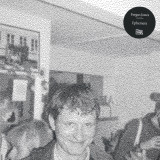
Ephemera is the debut album by Fergus Jones, the artist formerly known as Perko, an Edinburgh-born, Copenhagen-based producer, DJ, and founder of the FELT record label. The nine-track release is out on Numbers on 18 October 2024.
Ephemera was developed with collaborative energy as the creative priority, produced by Jones alongside an extensive list of like-minded musicians, lyricists and vocalists including Huerco S, James K, Koreless, Birthmark, ELDON and Withdrawn of Bristol’s Cold Light crew, Laila Sakini and Lia T. The album embodies Jones’ inner journey as he ranges further than ever sonically and emotionally, emphasising instinct, intensity, tactility and rapture.
“Heima” was written and produced with Huerco S and James K between Iceland, Copenhagen and the United States’ East Coast. Developed during and named after the same Icelandic artist residency that birthed Perko & Huerco S’ debut collaboration “Prang,” “Heima” is a shimmering piece of fortified trip-pop featuring vocals from James K, appearing here following solo releases for AD 93 and collaborations with Yves Tumor. “Tight Knit” aligns Jones’ graceful production with the raw emotions thundering from the performances of Birthmark, ELDON and Withdrawn of Cold Light, the shadowy Bristolian collective channelling the city’s deep sonic history into an equally rich future.
In his own words, Jones says “This album was made over the last five years in various studio and outdoor locations around the world, reflecting my ongoing emphasis on natural collaboration as a creative ideal. It’s my most personal record yet, written with experimentation and an open attitude as guiding lights.”
The album makes a distinctive impact that reverberates and glows long after its runtime. Analogue audio sculpting, adaptive processes and imaginative approaches to creating sound are at the forefront – whether resulting from an endless exchange of iterative stems with Huerco S, or hydrophone recordings with Koreless. Evocative vocal performances and songwriting combine with weighty sound design, gliding easily between the organic and synthetic to reflect and expand the thin spaces of transcendence in each.
Enigmatic producer bullet tooth makes Crosstown Rebels debut with ‘IF I CAN’T BE YOURS’. UKG meets melodic house on the four-track EP, featuring remixes from Enamour and SICARIA.
If you haven’t heard of bullet tooth yet, you soon will. Brimming with UKG, rave, and rap influences made deviously dark with heavy low-end basslines, this faceless newcomer’s captivating sound has seen him enjoy a meteoric rise since emerging on the scene in 2023. Graduating from Soundcloud bootlegs, the elusive artist made his Parklife debut this summer alongside rapper Capo Lee, with whom he produced ‘Keep It Rolling’. Featuring in sets for the likes of Sammy Virji, Main Phase, and Interplanetary Criminal, the aforementioned collab proved an instant hit, gracing BBC Radio 1 and 1Xtra airwaves via Sarah Story, Jeremiah Asiamah, DJ Target and more. Add supporters such as Floating Points, Laurent Garnier and Bicep to the mix, and it’s easy to see why there’s so much hype and intrigue.
Concluding his summer with a bang, the UK artist joined Damian Lazarus for his Hï Ibiza residency alongside Black Coffee, and now the DJ/producer ventures into melodic landscapes via Lazarus’ Crosstown Rebels with ‘IF I CAN’T BE YOURS’. The four-track EP also features additional remixes from LA-based talent Enamour and London’s hotly sought-after Moroccan dubstep favourite SICARIA. Leading with the powerful, ‘IF I CAN’T BE YOURS’, bullet tooth takes his sound to the club, featuring nostalgic 90s-esque vocals over dubby bass that lean towards the dancefloor. Second up is the uniquely melancholic-euphoric ‘YOU THINK YOU CAN FIX ME’, where UKG-style rhythms journey deep into melodic realms with purpose and precision. On the b-side, California’s Enamour reworks ‘IF I CAN’T BE YOURS’, directing his energy into a high-energy remix destined for festival grounds. To close out the EP, SICARIA leans into breakbeats with a climbing rendition of her own, infusing the track with lingering afro-leaning flavours.
- A1: Erik Tagg / Got To Be Lovin' You
- A2: Lui / Oh, Oh(I Think I'm Fallin' In Love
- A3: Chocolateclay / The Cream Is Rising To The Top
- A4: Ted Coleman Band / If We Took The Time (Where Do We Go From Here)
- A5: Babadu! / All I've Got To Give
- A6: Danny Dee / My Girl Friday
- B1: Positive Force / Everything You Do
- B2: Jim Schmidt / Love Has Taken It All Away
- B3: Matthew Larkin Cassell / Fly Away
- B4: Moonpie / Sunshine Of My Life
- B5: Cantaro Ihara / Twiny
Soul, funk, jazz, Brazilian, Latin music... P-VINE's Groove-Diggers series has unearthed quality records that transcend genres, nationalities and ages since the series was launched in 2006. Now, we have decided to release a compilation album containing a selection of great sound sources from our vast collection. It is no exaggeration to say that this compilation, which includes a wide selection of previously overlooked finds and popular tracks that everyone has probably heard at least once, would not have been possible without the Groove Diggers team.
In July 2019, eleven years after Jay-Z became the first hip-hop artist to headline Glastonbury, Stormzy became the first English rapper to follow suit. Wearing a customised stab-proof vest designed by Banksy, the South London rapper delivered an explosive performance and finished by thanking the “legends for paving the way,” name-checking Wiley, Dizzee Rascal, and Giggs. Despite how unlikely it seemed for decades, UK rap was now firmly a part of pop music and the greater hip-hop canon.
Rich, nuanced, and often misunderstood, the history of UK rap is a story of music that refused to stand still. Factoring in socioeconomics, gender, identity, music industry disruption, and innovation, What Do You Call It? charts the artform’s first four decades, beginning when rap landed on our island in the early 1980s. Shaped by sound system culture, inspired by punk, and accelerated by rave, it has evolved from Britcore, UK hip-hop, and trip-hop of the late twentieth century to garage, grime, and drill.
Through cultural theory, historical research, and original interviews with key figures and collaborators in the UK rap scene, from pioneers like Malcolm McLaren, Soul II Soul, Tricky, Roots Manuva, and Roll Deep to modern artists like Dave, CASISDEAD, Little Simz, Loyle Carner, and Skengdo x AM, adds a rich human dimension to the UK rap story — one that helped change British music and culture forever.
“A long overdue exploration of rap music in the UK and its longstanding – albeit overlooked – legacy and influence. In an era when UK rappers dominate the charts, star in major movies and TV shows and front huge advertising campaigns for multi-national corporations, Kane traces back the arduous journey from maligned sub-culture to celebrated mascot of neoliberal capitalism.” Jehst
“David Kane writes with a deft touch and possesses a disarming and deeply insightful interview style. Sparking life, humour, and sorrow across every page of more than three decades of UK rap history.” Charlie Dark MBE
“Kane builds bridges in a rich musical universe full of heroes and villains—and plot twists. With an inimitable style, he merges culture high and low to bring new meaning to the music. What Do You Call It? is a landmark tome for UK rap music.” Brian DiGenti, Wax Poetics
“A mind rich in ideas” Stanley Ledbetter, The New Yorker
A sense of destiny hangs over Sentir Que No Sabes, Mabe Fratti’s fourth solo-credited album released in a five year span. Her work has always possessed a finely tuned sense of drama capable of expressing a range of emotional states, and across this new album, she conveys the struggle to process various relationships or situations–and the actions that come next. Sentir Que No Sabes is urgent and clear, poppy, generous and approachable, while showcasing a considerable emotional hinterland. It is also, as Fratti is quick to mention, “groovy.”
Written and recorded with her partner, multi-instrumentalist, and co-composer Héctor Tosta (I.La Católica, Titanic), Sentir Que No Sabes is the result of an intense, detail-oriented process. Fueled by a new confidence gained in their collaborative project, Titanic, and its critically acclaimed 2023 LP, Vidrio, the two hunkered down in the familiarity of their studio (aka Tinho Studios) to bash out the initial sonic coordinates of her new record. “We talked and talked, and discussed ways of playing and recording, until things became inevitable,” Fratti explains. “We recorded a bunch of demos at our home studio and that meant we had a lot of time to re-edit and experiment. We really dug in. We were super focused on detail.” Tosta also took up the controls as producer and arranger-in-chief for all additional instruments. The album was later completed at Willem Twee Studios in Den Bosch in the Netherlands, and Pedro y el Lobo Studios and Soy Sauce Studios, in Mexico City.
For the final studio recordings, the pair were joined by drummer Gibran Andrade and trumpetist Jacob Wick to fill out and expand on Tosta’s percussion and brass arrangements. This small group of friends were able to work quickly and openly, and without fear: a testament to the exhaustive groundwork put in at Tinho Studios. This can be heard in three short, intermediary tracks that also manage to be the most aggressive on the record: “Kitana” (a scratch-laden instrumental that acts as a strange prelude for the last track, “Angel nuevo”) and a pair of two-minute instrumental interludes, “Elastica” I and II. None are throwaway mood pieces; rather they act as emotional cue cards, and hint at the way Fratti and Tosta created the overall atmosphere of Sentir Que No Sabes.
A strong sense of rhythm irrigates the sound from the jump, as heard on the glorious opening track, “Kravitz.” Here, the brilliant plucked cello line acts as a bassline and props up the steady thump of the kick drum. The cello’s growl serves as a conduit for a set of slightly paranoid lyrics that tell us “Quizás haya oídos en el techo” (“maybe there are ears in the ceiling”), while the song also introduces another staple of the record: the clever brass stabs, whistles, parps, and other interjections that paint a canvas of traffic in a city. It’s a postmodern, widescreen sound that for some might recall The Blue Nile’s Hats.
Sentir Que No Sabes is a record full to the brim with a modern pop sensibility, invoked by the sort of magpie spirit that ensnares anything it can find, repositioning sounds for the here and now. The keys and melody on the melancholy “Pantalla azul” (“Blue screen error”) transport us back to the glossy mid-1980s. “Oídos” (“Ears”) is a beautiful slice of contemporary, hybrid pop, in which Fratti’s vocal lines delicately spin themselves around the lean structures erected by the brass and drums, and the descending “plink” of a set of piano chords. Then we have a gloriously strong ending with the swell of “Angel nuevo” (“New angel”), another cinematic track full of gentle, instrument-rich swells and eddies that manages to be almost endless in its range–and yet intensely personal, as Fratti’s voice is close, almost whispering in your ear. A much needed lullaby for our fractious times.
The lyrics, for their part, have a stop-start quality to them, and hint at the small, incremental emotional taxes we pay through just living our lives. They circle around the music like birds waiting to swoop. There is something of the spiritual in all of Fratti’s work that expresses itself in a form of yearning: she looks to new horizons while personal dramas find themselves internalized, contextualized, and then dealt with through metaphor. Here, she was keen to mention Tosta’s constant encouragement in her finding a path to best sing or phrase her words to impart their maximum effect. “Hector was super inquisitive about my lyrics and asked me questions about what I meant, which sometimes is something you don't wonder so much about in isolation,” Fratti explains. “Besides, he is a great poet, and you can see that in what he did on the Titanic record. This made me go deeper into my lyric writing and definitely transformed it into something that I feel super happy about now.”
Take “Enfrente” (“In Front”), a track that initially comes across as a languid, glossy number, with plucked cello strings standing in for a bass line and brittle synth parts. Soon we catch on to a brilliant minor chord switch, which mirrors the fear and doubt expressed in the lyrics as someone “trembles up to the podium” in a “search for meaning.” There’s also the startling introduction of a vocoder in “Quieras o no” (“Whether you want it or not”); it comes precisely at the point Fratti sings “Quieras o no es un desastre” (“Whether you want it or not, it's a disaster”). Moments like these leave room for interpretation and, over time, create a strong bond between the listener and the record.
In fact, across Sentir Que No Sabes, each phrase–whether instrumental or vocal–becomes at some level emblematic of acts and moods that impart deep emotional significance. We see this best on “Intento fallido” (“Failed attempt”), which could be the score to feeling trapped in self-doubt, only to suddenly be sprung free by the song’s gloriously upbeat ending. On “Márgen del índice” (“Index margin”), the quicksilver switch between initial disharmony and a beautiful melody is breathtaking, all augmented by evocative arrangements, textured production, and the slightly playful, gnomic lyrics. The track’s emotional ecosystem allows another brilliant ending, which uses the simple repeated phrase, “Cómo lo va a ver?” (“How are you going to see it?”).
So what to make of Sentir Que No Sabes? High gloss Pastoralism? The sound of a city-bound, post-post modern soulscape? No matter the emotions evoked, it's the work of an artist coming into their own, and creating a benchmark record.
Eaux proudly announces a new collaborative mini-album from label boss Rrose and Polygonia. Containing six tracks and over 40 minutes of music housed in a fully printed sleeve with artwork by Jon-Paul Villegas, the record focuses squarely on the dancefloor while infusing it with the kinds of psychoactive drones, intricate polyrhythms, and relentless modulations that have come to identify both of their approaches to sound. Featured heavily are their shared interests in sonic shapes that resemble natural forms and conjure tactile feelings, in this case related to themes of skin-like surfaces and circulatory systems experienced simultaneously on a micro and macro level. While several of the tracks hover in a flexible tempo range between 125 and 130 bpm, "Stretcher" reaches up to 142, and the closing track "Vena Cava" trades the kick drums for spectrally processed percussion and endlessly diverging high-frequency pulses.
The story behind the release starts in 2022, when Rrose reached out to Polygonia after noticing that her tracks were appearing in their sets more frequently than any other artist. Never before had Rrose proposed a collaboration with someone they hadn't met before, but there was such an obvious connection in their approach to sound that it felt necessary. As it turns out, Polygonia had only become interested in techno after hearing Rrose perform at a festival in 2018. It all made sense, and they began sharing sketches and unfinished ideas with each other, trading them back and forth until they reached completion. Without any announcement of their collaboration, the two artists have since been asked to share the stage together several times. It seems there are other people out there sensing a connection...
Bios:
RROSE
Rrose is an alias of the multi-disciplinary artist Seth Horvitz, born and raised in California, and currently based in London. Active since 2011, the Rrose project explores the intersection of hypnotic techno, experimental composition and psychoacoustic phenomena with a meticulous touch. The first major breakthrough was 2012's "Waterfall" for Sandwell District which followed "Motormouth Variations," a collaborative project with composer, improviser, and activist Bob Ostertag. After the shuttering of Sandwell District, Rrose established Eaux, a home for further solo productions and collaborations. Building on his studies in electronic composition and history at Mills College, Rrose's electronic pieces blur the lines between thrillingly claustrophobic club tracks and destabilizing sound art explorations. In 2015, she released an extended version of James Tenney's postcard composition "Having Never Written a Note For Percussion" for solo gong, and in 2018 collaborated with Charlemagne Palestine on "The Goldennn Meeenn + Sheeenn" for two grand pianos. These works overlapped with the development of Rrose's singular techno: EPs like "Vanishing Pools," "The Ends of Weather" and "Arc Unknown" as well as 2019's debut LP "Hymn to Moisture" and last year's follow up "Please Touch." Rrose is also active as a touring DJ and live performer, equally comfortable commanding sweaty warehouse dancefloors and seated audiences in historic concert halls. Appearances include Unsound, Atonal, Semibreve, Dekmantel, Mutek, Sonic Acts, Nuit Sonore, Mostra, Parallel, Theatre Graslin, Nextones, and Berghain.
-----
POLYGONIA
Polygonia represents a multidisciplinary music and art project conceived by Lindsey Wang from Munich, Germany.
She draws inspiration from her many years of practicing various acoustic instruments and her keen interest for other cultural forms of expression, which she translates into the digital language of electronic music and art.
Her productions' soundscape exudes a mystical, organic quality, featuring intricate and compelling rhythms. Polygonia's sound palette ranges from energetic, groovy Deep Techno, Downtempo, Grey Area to textural and/or harmonic Ambient. Besides, she is not afraid to include influences from the genres House, Drum and Bass, Electro etc.. In addition inspiration from nature play a major role in many of her productions. Exemplary for her style are for instance her 'Otro Mundo' EP (2023) on Bambounou's Bambel Imprint, her 'Bloom' EP (2022) on the American record label Sure Thing, the release 'Deformed Human Nature' (2021) on her own label IO, as well as the album 'Abbilder einer vergessenen Welt' (2021) on the Korean label Huinali.
Her DJ and live sets too reflect her passion for different genres. Depending on the time of day and setting, Polygonia shows a different musical side. What unites all her dance music sets is the hypnotizing effect that invites to completely lose oneself in the world of sounds for a longer period of time. Several voices from the audience also confirm that the musician always tells a complex story within her mixes, allowing for very clear highs and lows. In the same set there can be very harmonic passages, which provide emotional moments and on the other hand extremely texture-heavy dark tracks, which establish a connection with the subconscious and put the listener in a kind of trance.
Polygonia has already visited numerous of prestigious venues. She is now a regular at Tresor or Berghain in Berlin and additionally started her residency in 2023 at Munich-based BLITZ club.
TRANCE ATLANTYK is dropping some serious heat with the upcoming release of EARLY ZEROS, the latest EP from label founders PANKOFF & DJ VARIUS TRAX. After experimenting with some polish vocals on their “Sound of Poldon” debut EP, the duo serves us this time a modern high-energy tribute to the early 2000s—an era when progressive house and trance ruled the dance floors.
The EP kicks off with "Early Zeros," a track that’s pure nostalgia wrapped in a slick, modern package. Think of it as a sonic time machine, zooming you back to those legendary nights when the bass was thumping, and the vibe was electric. It’s got that uplifting, feel-good energy that’s impossible to resist.
Next up is "Schemes," a track that’s as deep as it is groovy. This one’s all about the journey, with layered beats and hypnotic rhythms that build and evolve, taking you on a ride through the trippy side of progressive house and early trance music. It’s got that classic, boundary-pushing vibe that’ll have you lost in the music.
On the B side the duo slows down the tempo with the track “We Can Rebuild Him” that pays homage to the 6 Million Dolar Man, one of Pankoffs favourite TV series. Piercing cascading synths, a driving bass line and some breakbeat percussion thrown into the mix make this one a great choice for the eclectic dj’a out there.
And just when you think it couldn’t get any better, Bliss inc steps in with a remix of "We Can Rebuild Him" that flips the script in all the right ways. This remix increases the tempo of the chuggy original and transfoms the track into a stomping peak time banger that some might label as furious progressive tech trance.
EARLY ZEROS isn’t just an EP—it’s a party, a flashback, and a forward leap all rolled into one
Ambien Baby is the collaborative project by D Tiffany and NAP, which serves as a borderless zone for both friends to channel a freewheeling experimentation with whatever sounds they happen to be jiving with in the moment. Simply put, Ambien Baby is two BFF's letting loose with no rules, just pure freak and joy. The nature of this joint exploration is clearly evident throughout their raucous and varied releases, which have ranged from downtempo to electro and deep into techno and trance regions.
We're delighted to have Ambien Baby landing on Turbo for their collaborative debut on the label. The Canadian connection bears fruit with the Masa EP, which lifts off from a psychedelic foundation drenched in Latin influence. Across the three original tracks, D Tiffany & NAP shift through percussive breakbeats, dubbed-out techno, and trippy vocal chops a-plenty. Roza Terenzi & DNGDNGDNG provide remixes for the late-night affairs.
Ever more secure in her chosen path, Nídia radiates gloriously in all moods for the dancefloor in this, her album number 3. Consistent with her fiery nature and mixed roots in Guinea-Bissau and Cape Verde, »95 MINDJERES« is framed by the decisive role of women freedom fighters in PAIGC's struggle for the independence of Guinea-Bissau from Portuguese colonial domination during the 1960s and 1970s. Among others, the names of Teodora Gomes and Titina Silá shine brightly as leaders of a group of 95 women, providing them with military training and political awareness.
The album starts righteously with a question-themed banger; ambiguous in its sense of curiosity, even mischief, or perhaps it is a passionate commentary on the hard atavic realities of the world. It sets the tone for the wonderfully bouncy »Deep«, pads gently pulling at the legs, longing for action.
All of Nídia’s work has been basically concerned with pushing forward, instant piece by instant piece, a particular, some would say peculiar, view of what culture is, what role it plays in social life. She exercises her experimental inclination within the groove, interweaving percussion sequences and melodies in a very lean way - track durations are generally within range of what many would call "sketches" but the music just says what needs to be said. Beats are never artificially extended for the dancefloor, there's not a hint of that culture in »95 MINDJERES«. Closest would be "cp", an actual drum tool. Ideas are in motion now. And they fly out during the following »Mindjeres«, marked by gentle stabs as if counting the steps skyward. Unexpected turns near the end make final songs "abcd" and "Paradise" accentuate a longing sensation.
Stuff is ready, bodies alert, mind is sharp with warmth and fellowship, detoxed, we can now hear the overall tone of the album, a clear view on self nurture, freedom and responsibility. We believe it is sustained by Nídia’s progressive interpretations and approaches to promote harmony in never-ending family entanglements, reconcile notions of ancestry and uproot, and try out means to resist and fight. In praise of Love.
Part 2 Album Sampler[18,45 €]
For over a decade, Mako has been a distinctive presence, both as an individual and through his music, a talent we've proudly showcased at Metalheadz.
This September, we are honoured to release his third album on the label, and his second solo endeavour, which serves as a seamless continuation of his earlier work. His 2020 album, 'Oeuvre', represented years of dedication and refined production, solidifying Mako's esteemed place within the Metalheadz family.
Now, four years later, we're thrilled to present 'Oeuvre – Part 2'. This 12-track album is a celebration of Mako's deep passion for music, while also reflecting his sometimes disillusioned views on a modern era that often seems to pass us by. In a world where individuality can struggle to shine amidst an overwhelming flood of content, Mako's superior production stands out as a beacon, demanding not just recognition, but active listening.
Mako's commitment to his musical community is evident throughout the album, with contributions from long-time collaborators Fields, Hydro, Villem, and Mikal, each bringing their unique expertise to the project. The album also features a special collaboration with the late Marcus Intalex, a friendship that blossomed in the years before Marcus' untimely passing and one that continues to bear fruit.
Diving into the heart of the album reveals Mako's charm as a producer: from the captivating vocals in 'Feed You', the sleek homage to techstep in "Suspension', to the pure dancefloor energy of 'Direct Source', a track long favoured by Goldie. As expected, Mako also delivers deeper, more contemplative pieces like the album's opener 'True Expression' and the graceful melodies of 'Overshare'.
Part 2 Album[18,45 €]
For over a decade, Mako has been a distinctive presence, both as an individual and through his music, a talent we've proudly showcased at Metalheadz.
This September, we are honoured to release his third album on the label, and his second solo endeavour, which serves as a seamless continuation of his earlier work. His 2020 album, 'Oeuvre', represented years of dedication and refined production, solidifying Mako's esteemed place within the Metalheadz family.
Now, four years later, we're thrilled to present 'Oeuvre – Part 2'. This 12-track album is a celebration of Mako's deep passion for music, while also reflecting his sometimes disillusioned views on a modern era that often seems to pass us by. In a world where individuality can struggle to shine amidst an overwhelming flood of content, Mako's superior production stands out as a beacon, demanding not just recognition, but active listening.
Mako's commitment to his musical community is evident throughout the album, with contributions from long-time collaborators Fields, Hydro, Villem, and Mikal, each bringing their unique expertise to the project. The album also features a special collaboration with the late Marcus Intalex, a friendship that blossomed in the years before Marcus' untimely passing and one that continues to bear fruit.
Diving into the heart of the album reveals Mako's charm as a producer: from the captivating vocals in 'Feed You', the sleek homage to techstep in "Suspension', to the pure dancefloor energy of 'Direct Source', a track long favoured by Goldie. As expected, Mako also delivers deeper, more contemplative pieces like the album's opener 'True Expression' and the graceful melodies of 'Overshare'
- A1: India
- A2: Child Of Nature
- A3: Anna Was Mine (Demo Version)
- A4: Nature Boy (Mantovani Orchestra)
- A5: Land Of Love (Come My Love And Live With Me)
- A6: Hey Jacque (Hey Jacque)
- A7: Palm Springs (The Ray Anthony Orchestra)
- A8: Umgowah
- B1: Wild Boy ( With Mort Wise & The Wisemen And Rocky Holman)
- B2: Surfer John (Nature Boy & Friends)
- B3: Eden’s Island (Arthur Lyman)
- B4: Monterey (With John Harris And Paul Horn)
- B5: Overcomers Of The World (With John Harris)
- B6: The Clam Man
Black Vinyl[26,85 €]
“Wild Boy …” is a reissue of the well-known 2016 release curated by Brian Chidester, renowned researcher and biographer of Eden Ahbez. Especially for this album, Brian wrote an interesting text about Abi’s life, which definitely became the decoration of the release.
With the new 2020 re-release, we went a little further and kept what is commonly referred to as studio cuts. It’s a few more minutes in the studio with ahbez himself, full of emotion and life. In addition, to the delight of fans, the edition includes an additional composition Nature Boy (Mantovani Orchestra).
Especially, it is worth noting the outstanding mastering prepared from practically decomposed tapes by the Grammy-nominated Jessica Thompson, which guarantees the deepest and warmth possible sound. Jessica a huge ahbez fan and we’re highly appreciated for what she has done to save his music for the future.
Eden Ahbez is definitely at the origin of psychedelic music and this release can be taken as further proof. Over the past twenty years, the iconic figure of the world’s first hippie Eden ahbez has become famous primarily for his 1948 song “Nature Boy”, praising universal love, and his amazingly solo album from the 1960s called “Eden’s Island” – one from the first concept albums in the history of music and probably the first psychedelic music album. “Wild Boy: The Lost Songs Of Eden Ahbez” deepens understanding of the origins of the psychedelic movement in the 1950s.
The disc contains a musical selection of works by Eden ahbez himself, written by him in the period after Nature Boy. The inclusion of songs such as “Palm Springs” – Ray Anthony Orchestra and “Hey Jacques” by Erta Kitt gives the listener the chance to discover for the first time the little-known recordings of world-famous artists composed by Eden ahbez. Through “Wild Boy” and “Surfer John” you can hear the author’s handling of absurd rock and exotic experimentation, as well as sweet psychedelic pop like Monterey (with Paul Horn on flute). Overall, Wild Boy: The Lost Songs Of Eden Ahbez offers an overview of the lost works of 1949-1971 with seven unpublished recordings and eight rare singles.
If in 2020 you are missing the hallucinogenic content in Eden Ahbez, it amazingly makes up for that deficiency with simple chords, expansive arrangements, and lyrics about travel, relaxation, free love, and spirituality. Thus creating the standard of psychedelic music. Eden Ahbez’s songs weren’t only fantasy and his personal philosophy was the real thing that he lived.
reviews:
“This carefully and extensively researched compilation culls covers by top notch mainstream artists juxtaposed with unreleased Eden recordings. What might sound like a mixed bag is actually more like a chronological, musical non-fiction novel about Eden Ahbez. While Eden was writing hundreds of songs and performing live and making recordings in various styles, his songs were also being picked up by popular artists like Nat King Cole and Eartha Kitt who recorded with a more polished mainstream style. There are also some early rock n roll style recordings here. Eden’s professionally recordings often end up as Novelty Pop records such as “Child of Nature” and “The Clam Man” but if you read between the lines and listen to the lyrics it is pretty eye-opening that he is singing about Eastern-religion-style and pre-hippie philosophies about being at one with the planet Earth.
All of this is explained in the lengthy liner notes inside the lp along with a few choice photos that establish Eden as a founding father of Southern California mystic/psychedelic music.” – Tiki_News
“Eden Ahbez’s life philosophy was summed up in the lyrics of his most famous song, “Nature Boy,” a 1948 hit for Nat King Cole: the song describes a “strange enchanted boy” who wanders the world in search of truth. “The greatest thing you’ll ever learn,” he concludes, “is to love and be loved in return.” Ahbez was a pre-cursor of California’s beatniks and hippies, and an exalted icon of ex-otica via his rare 1960 album Eden’s Island. Beyond “Nature Boy” and Eden’s Island, though, there were nu-merous lesser-known Ahbez record-ings. Ahbez biographer Brian Chidester has been doing an exemplary job of archiving and documenting that catalog of work. The Exotic World of Eden Ahbez (reviewed in UT#38) appeared a few years ago, gathering together 14 Ahbez-related rarities” – Ugly Things
Berlin-based record label, Equilibrisme, has just revealed its third vinyl release.
This EP continues the tradition of its predecessors by offering a skillful blend of deep minimal techno, chords, and dubby groove to energize the dancefloor. The release includes tracks from producer Man-L, a collaboration between Man-L and Berlin-based Uruguayan producer and musician Martin Teysera, and Canadian dub techno legend Altitude aka Matt Thibideau.
Sometimes, we have the tendency to run away from distress because we do not want to deal with the feeling of pain, but the first step in spiritual healing is overcoming the fears and recognizing the pain. The sooner you address the cause of your difficulty, the sooner you’ll get freedom from the pain. Be aware of your situation.
Once you have faced the source of anxiety, you need to acknowledge the pain. Feel your emotions and question what their sources are. Be honest about your feelings. In this stage, it is normal to feel like situations are beyond your control, which can transfer the feeling of hopelessness. However, by allowing yourself to feel rage, it becomes easier for your wounds to heal. Honor your feelings.
Honoring your pain will teach you self-forgiveness. You should be able to feel the kindness within you and experience all the love you have for yourself. You will feel a conflict between the instinct to heal on your own, and the desire to accept the situation and seek support to get healed. You prove that you have an unwavering determination to get healed by choosing the latter. When you want spiritual healing, you have to place your faith in the universe, too.
Surrendering the pain means releasing the pain and seeking support from the universe. It will help you ease your sufferings.
The negative ego vanishes from within you and makes your heart feel lighter once you release your pain. This is a sign of spiritual wellness. You will start to feel a deep openness towards things and think with a peaceful mind. You will become whole again and you will develop the ability to deal with the disruptions of your life with tolerance. The inner peace will be restored. Feal.