Ltd indie exclusive vinyl version of "the best" GG Allin studio album, originally released in 1988 pressed on shit colored vinyl Vinyl edition of what is probably GG Allin's greatest studio album. This was GG's fourth album when it was originally released on Homestead Records in 1988."Die When You Die" is arguably the most famous GG Allin song and this album features the original, best version of the live warhorse. . It also includes GG's rewrite of David Allen Coe's "Longhair Redneck" titled "Outlaw Scumfuc." The punkest man alive (at the time) at his peak. Pressed on blue and bile colored vinyl, sounds interessting...
The instrumentals Hip Hop label CDR-SI has the honor of advertise the new double LP of the successful collections of Hip Hop instrumentals. Now is the turn of the CLAN!!! Here you have the Vol.1 containing the most importants tracks of the legendary Hip Hop band WU - TANG CLAN, the most importants cuts and tracks of its trayectory in instrumental version in a double lp format. This is a esential and powerful weapon for all the Hip Hop creators and DJ's.
pas en stock
Dernière livraison il y a 3 ans réapprovisionnement sans garantie
Emotional Response presents Elektronik Body Girl, a musical alter-ego of artist Shelbatra Jashari, with production by soFa elsewhere. Spontaneously born out of 2 souls in an imaginary industrial wasteland of earthly survivors, this Belgo-Albanian postpunk extravaganza is perfectly suited for our unreal times.
Infused with raw attitude and improvisational approach, Shelbatra is an artist, dancer, performer, and singer in search of challenges and expressive forms into new territory, with an individual way in dealing with the ""empowering feminine" and its representation - a vision central to her artistic creation.
Teaming up with Brussels based soFa DJ, they debut an EP of challenging story-telling comes backed with a wonderfully conjured beatdown remix by label associate, Tolouse Low Trax, to act as a seal of (dis)approval.
First known as a DJ and selector and then compilation curator of the "elsewhere" series of albums across multiple labels - including Emotional Response (ERS042) - soFa recent collaborations as Mameen 3 on Bongo Joe, CCCVVV on Strangelove Music and the highly praised album with Houschyar and Okay Temiz on Second Circle, has established him as a producer of repute in an incredibly short time space.
Taking a production backseat to underpin Jashari's performance, his percussive, atmospheric oeuvre allows her vocals to explore roots in both Kosova and Belgium, molding a focus on the art of "the other" or the outsider. Outside the "normality"", a different energy is heard. Exploring elements of the human body, the human condition and its representation in various "thinking" systems and political contexts, EBG is manifestation in sound and movement.
pas en stock
Dernière livraison il y a 3 ans réapprovisionnement sans garantie
Social Joy Records presents Natural Lateral's new album "Tapestry of life", a superb excursion in fusion jazz with a wonderful blend of electronics and subtle elements of spiritual Jazz.
Undeniably on the rise after the success of their first album, "Cogito Ergo Jam", which received support from the British Jazz scene and was featured on Gilles Peterson's BB6 broadcast,the North London Based collective goes a step further this time by carefully crafting a new release of a tapestry of music stemming from rich jam sessions at the Lazy Robot Studio and representing the band's phenomenal musical canvas. Echoing jazz legends like Azymuth, Roy Ayers, Alice Coltrane and Miles Davis by paying tribute to those who paved the way but always searching for new musical territories, this six-track LP is moving, thought-provoking and engaging. It is a musical questing where each band member searches for meaning through sounds and rhythms - giving a new life to Jazz music and dropping the full spectrum of a vibrant tapestry of life into the listener's ears.
The band's work ethic is based on a sense of freedom in the studio filled with live jam sessions where it's all about "catching a moment" and letting the inspiration flow. "We just want to feel a sense of freedom and connection through playing. In the studio, it's the music which connects us all, and we just want to allow that process to unfold".
pas en stock
Dernière livraison il y a 3 ans réapprovisionnement sans garantie
Pique-nique Recordings is proud to present People’s Dream, the latest solo release from NYC-based vibraphonist and electronic producer Will Shore.
Inspired by Francis Bebey and Don Cherry’s electronic music from the 70s and 80s, People’s Dream draws heavily from modal jazz, minimalism, and dance music. It blends tightly composed percussive phrases with freely moving melodic improvisations that feel as much at home in a DIY loft space as they do on a custom-built sound system at Nowadays.
Shore says: “The vibraphone is the thing that I know best, but I’ve always found the instrument quite limited. Its pure bell-like tone can seem too pretty to evoke a wide range of feelings. I normally find ways to obscure that pure sound: I distort it, pitch it down, or layer rougher textures over it. But for People’s Dream and Lucid, instead of obscuring the sound quality, I decided to embrace it.
I used the vibraphone for not only melodic parts but also as a driving rhythmic element. I let the entrances and exits of melodies appear and disappear in a dream-like way, and added electronics and percussion as texture, to create a more cinematic atmosphere.”
On the B-side, UK producer and label-head Tom Blip (Blip Discs) flips Lucid into a driving, bass-oriented club track, fit for vibrant dancefloors this summer. On the back of successful collaborations with East African artists Swordman Kitala and Mubashira Mataali Group, Blip unleashes a trademark peak-time drum track designed to elude any dream-like state.
People’s Dream is the seventh release on NYC/Sydney label Pique-nique Recordings, which worked with Shore in 2019 on their signature event, Take Two. Shore led a nine-piece band through a reinterpretation of Albert Ayler’s Spiritual Unity for the occasion, utilizing his mentor Butch Morris’ conduction technique to rapturous effect.
pas en stock
Dernière livraison il y a 23 mois réapprovisionnement sans garantie
From the success of "Thrive" which was released on a 7" vinyl by LRK Records and sold out in a day. Comes a brand new single "Long Gone "
Toronto based retro-soul artist Claire Davis serves up her latest soulful banger "Long Gone" from forthcoming 7" vinyl release on LRK Records. A jewel of Canada's Soul scene, Claire Davis takes it up a notch and showcases her mighty vocals on the fiery breakup single "Long Gone". Drawing from her influences of the likes of Etta James and Sharon Jones & the Dap-Kings, the unrelenting rhythm and sassy background vocalsof this track complement the "take-no-mess" message of Davis' lyrics and vocal delivery. A song about knowing your worth and walking away from those who don't! Claire Davis is an analog enthusiast, opting to record to tape whenever possible to best capture the feel and energy of a live performance and this single does not disappoint. The track was co-written by Toronto based artist Kyla Charter and producer Scott McCannell whom Davis has excitedly collaborated with for years on various other projects in Toronto's R&B/Soul scene. The saucy background vocal arrangement from composer/arranger La-Nai Gabriel provided the icing on the cake for this record which features dynamic background vocals from Joanna Mohammed, Tegan Michelle Gordon, and Chynna Lewis.
Jazzfm have listed the single "Long Gone" on their B list playlist
In the official retro soul spotify playlist
CBC gave it a spin on "Big city small world" by Errol Nazareth
"Times Have Changed" was added as brekkie track of the week and added to the C list on Jazz Fm
pas en stock
Dernière livraison il y a 3 ans réapprovisionnement sans garantie
Debut album by Dutch producer w1b0, who passed away in August, to be released in November on U-TRAX.
Wibo Lammerts' sudden death on August 15thshocked the worldwide electro community, and also left the record label, that had been working on the debut album with the artist known as w1b0 for the past two years, dumbfounded and in grief.
Wibo had jokingly always called his upcoming debut album 'his legacy', which now sadly has become a painful truth. With the support of Wibo's family, U-TRAX is now doing the only thing that doesn't feel totally wrong: proceed as planned, and release 'When Humans Ruled The Earth' on November 11.
W1b0 made quite a name for himself with heavy electro tracks that he released on labels like Bass Agenda, Hilltown Disco and Discos Antónicos. Standing at 202 meters, and combined with a cheerful character, most people remember him as the gentle giant of electro.
For this album, Wibo wanted to steer away from the dark and heavy electro he mostly made until then. The idea of having a platform to create delicate electronic music in different styles, and make it a showcase of his versatility, was very appealing to him. And that is where he and U-TRAX found each other.
The full-length album (over 75 minutes on cd and digital) comes after 'The Pilex Program EP', released in October, that featured a remix by Detroit's Ectomorph of 'Pilex Driver' and saw 'Program Yourself To Feel' remixed by a well-known Dutch producer that recently created the new 'techno alias' Human Form.
As usual with U-TRAX, the album comes in three different editions, with the 11-track double vinyl version containing the Ectomorph and Human Form remixes. The CD and digital version boast original versions only, plus four additional tracks: 'Alternate Reality Interface', 'Mixed Matter Fluctator', 'Synthetic', and 'In There'. The cassette version more or less has the same track list as the CD/digi version, but has both aforementioned remixes and a bonus track in the incredibly hypnotizing 'I Wanted You', a track that unfortunately couldn't be on the CD and vinyl versions.
Buyers of the physical releases get treated on superior quality products, another trademark of U-TRAX. The vinyl edition boasts over one hour of music, on two 180 grams, green vinyl discs, in a black & white & neon green gatefold sleeve. The eye-catching artwork is created by Utrecht artist Leffe Goldstein, known amongst others for his psychedelic beer can designs for Utrecht brewery Maximus. Wibo, being the beer lover he was, had zero doubts about having Leffe Goldstein do the cover for his album. The CD has a total playing time of 75 minutes and comes in a beautiful 6-panel digipack, while the cassette will have full-color on-body print and comes in a plastic-free Maltese cross fold-up sleeve.
Buyers of the physical releases get treated on superior quality products, another trademark of U-TRAX. The vinyl edition boasts over one hour of music, on two 180 grams, green vinyl discs, in a black & white & neon green gatefold sleeve. The eye-catching artwork is created by Utrecht artist Leffe Goldstein, known amongst others for his psychedelic beer can designs for Utrecht brewery Maximus. Wibo, being the beer lover he was, had zero doubts about having Leffe Goldstein do the cover for his album. The CD has a total playing time of 75 minutes and comes in a beautiful 6-panel digipack, while the cassette will have full-color on-body print and comes in a plastic-free Maltese cross fold-up sleeve.
Opener 'Acid Whip' is one of the oldest compositions on this album, in which a dark 303 bassline hums over layers of spacey strings. Wibo named it after the legendary Whip It party in Amsterdam's De Melkweg. 'Alternate Reality Interface' then presents bouncy rhythms toying around with all sorts of analog (bass) synthesizers, before we go really deep with the epic ambient techno track 'Wandering Souls'.
Then things get a little lighter spirited: 'Mixed Matter Fluctator' is an electro track that builds on sounds created by Matt Buggins. It has very strong Detroit influences, the city Wibo loved so much and that he made a pilgrimage to with a group of friends that called themselves 'The Techno Tourists'. The tempo goes up a notch in 'Program Yourself To Feel', that halfway opens up in wide science fiction strings that evoke memories of Star Wars, the movie series that Wibo was a great fan of, and that was the source of many of his tracks' names. The Human Form remix opens the vinyl edition of this album and is a downright belter of a track.
Next is a somewhat experimental intermezzo named 'Synthetic'. Erratic beats and pounding bassdrums get accompanied by very subtle eerie-sounding strings, before melancholic synthesizers and piano chords take over. This is an excellent prelude to the epic 'Hologram Computing', a track that is one of our favorites. It slowly and softly builds and builds, before a pounding bassdrum breaks loose and a hypnotic arpeggio takes you to higher planes.
Not ready to letting the listener relax, w1bo then serves 'Beilstein Reference', which again presents his trademark cocktail of down-to-earth electro rhythms and catchy melodies, covered in all sort of little sounds and noises, giving the song a lot of energy. What follows is 'Hit me', a track loosely based on a song by Dutch indie rock band Mr. Joe Abe. Wibo met the band's singer on a camping site while being on holidays and the two decided Wibo should do a remix of one of their songs. Nothing was left of the original except the vocals, and the result is a remarkable cheerful, poppy electro song.
'Anticipated Input' is one of the more recent tracks Wibo made for this album, combining electro, acid and, yes: epic strings. But not all is peace and quiet on this album, as 'Pilex Driver' shows. This is w1b0 going experimental in a danceable fashion: Industrial sounds make the track sound like we're passing a construction site that is playing loud electro music. On the vinyl version of this album, Ectomorph totally decomposed the original and made it into a mysterious, almost subdued, and totally brilliant electro track that sees a main role for the retro Roland CR drum machines sounds.
TFHats, Wibo's fellow member of the Transhumanism collective, added lyrics to 'Cartesian Coordinates'. His vocals add a pleasant New Wave flavor to this song, that has breaks that remarkably reminds one of Nirvana's 'Smells Like Teen Spirit'. What follows is the most personal track on this album. 'Fornan' is a song that Wibo made for his wife Nanette, and was added as the last piece of the puzzle that creating an album is. The warm Detroit techno atmosphere in this electro song couldn't be a more beautiful tribute to his love, and mother of their two young boys.
The album then takes a surprising detour through a 1980s landscape with 'In There', that features the Joy Division-esque vocals of another one of Wibo's friends, indicated only as Vincent. The super slow and gloomy track is a treat for anyone that loved the darker side of New Wave. The album has a worthy closer in the sensitive, yet playful 'Schlegel Diagram'.
h 08: Hit Me (w1b0's Slugfest Assault Dub) feat. Mr Joe Abe
pas en stock
Dernière livraison il y a 3 ans réapprovisionnement sans garantie
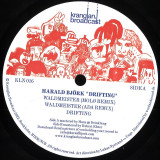
In May 2020 Cocoon Recordings released the third album of Harald Björk. With the club scene on Covid-hold , tours canceled and all of our favorite DJ’s locked up at home… not the optimal conditions to release an album on a nr.1 world wide club empire as Cocoon. How ever we decided not to let a virus kill our beloved culture, as Mr. Sven Väth put it „I would like to share with you the album of Harald Björk… which has soothed me and I hope will also give you a soundtrack for these uneasy days“. It felt right to release it.
The release was shrinked from a thought of vinyl box to a digital release with future plans on vinyl. However covid decided to stay and time went. The queue at the vinyl factories didn’t make the process easier… But at one point the dream factory of Kranglan Broadcast decided, enough! , the world has to keep on dreaming. And what is a better way to embrace dreams then to release a vinyl full of of dreamers, groundbreaking in their corners of the electronic umberella. Dreamers doing their thing not even looking at the norm or what’s the recent hype.
Aditional info:
Houndtooth finest Throwing Snow who Harald met in New York 2013 during their term at RBMA brings a bassdriven rollercoaster with the arpeggios from Spektrum bouncing like rubberballs through an impressive broken drum work. The remix came delivered with a text saying „I like my drums slamming“ and so do we.
Ada takes the eteric pads of Waldmeister and place them in a auditive dreamstate, an emotional hybrid of space and vacuum. Large feelings, yet so close. It builds, stretches and builds until we are shown the enlighted truth in the end of the tunnel. Harald is a long time fan and colector of Adas music which he got to know through the lovely label of Areal and has continued to love through the Pampa era. First remix from Ada on Kranglan was the epic remake of Sabor Latino, Sabor de Ada! We are delighted to have her art on the label once again.
The pandemic 2020 took away the most fun of beeing in the club scene, sharing stages with brilliant interesting dreamers showing and exchanging visions performing music. Under these strange conditions Molø and Harald ended up sharing a physical stage at the stream festival United We Stream. One thing led to the other and Harald took a deep dive in to Molø‘s great melodic techno universe. Some times you find gold in your own hometown. Molø’s take on Waldmeister build on the mellow arpeggio from the original track and brings them to a perfect chilled out afterhours. Imagine watching the sunrise to this beauty.
Swedes are a people of high integracy but as loyal citizens we allways attend formal events by the state. Skudge and Harald met at the Swedish National Radio price anouncement, both nominated for „electronic act of the year 2011“. It was an akward event with radio interviews and canapés, not very techno, the signum of Skudge. How ever Skudge won it all leaving both Avicii and Swedish House Mafia empty handed. Landberg, the swing king of Skudge is the kind of person that will tell you why the TR-909 has to be master clock to get the right groove in a techno performance, if you ask… which you do ??! If you’re looking for techno with groove look no further, Skudge is king! In his take on Walking Path he display the power of minimalistic dirty grooves, a 909 and a 303 what else do we need?
The 12“ vinyl comes with a fresh re-master of album single Medan Du Sov and an unreleased bonus track, Drifting, a balearic sundazed love story.
pas en stock
Dernière livraison il y a 16 mois réapprovisionnement sans garantie
Boggiedown Base has been a producer and remixer since debuting as part of Die Reimbanditen in 1993. His CV includes productions for Die Coolen Säue/DCS, Albino, Chaoze One, and Die Deutsche Reimachse. In 2005 he met the Backspin-Magazine-DJ DJ 12 Finger Dan and the two formed a production duo. As Soulbrotha, the two produced mainly for and with American artists such as Sadat X from Brand Nubian, DJ Premier from Gangstarr, Large Professor, Big Shug, Blaq Poet, Masta Ace, Beneficience, Cella Dwellas, El Da Sensei, Kev Brown, Edo G and much more. The two came into contact with the producer Roccwell from Munich by chance. Through the common love for soul samples, hard drums, the clanking of the E-MU SP-1200, dope raps and spectacular cuts, the idea of a collabo-album came up.
"In Good Company" is a celebration of the classic boom bap sound and comes up with top-class feature guests. Among others, the New York cult rapper J-Live was won for the song "Real Reconize Real". Q Ball & Curt Cazal aka QnC from the legendary D&D Studios in New York show on "Classic Position" why they are still relevant after more than 20 years in the game and the Boston MC M-Dot proves on "Toil" why there is a hype around his person. But there are also other top artists on the guest list, such as DJ Eclipse, DJ Riz or KORE. "In Good Company" is to be understood as a homage to the many rap classics of the last three decades and sees itself in their tradition, but always remains modern thanks to the contributions of many young and talented artists such as Wildelux, Duo Pesci, Resolute or Empulse.
pas en stock
Dernière livraison il y a 3 ans réapprovisionnement sans garantie
Heavenly Recording’s final long player release of 2022 is set to close the year on the dancefloor at home or in the clubs. More classic Heavenly remixes on wax and CD formats for your collection. Artwork by Luke Insect.
Released on Friday November 25th, these compilations follow Heavenly Remixes Volume 1 & 2 and Heavenly Remixes Volumes 3 & 4 (Andrew Weatherall Remixes).
Since the first Heavenly recording, there have been striking remixes that reframe the original track. These remakes offer a parallel reading of the last four decades of releases; they take the music to places where genres can be pulled inside out before being reassembled for different dancefloors, or for a different state of mind.
It’s a selection of those secret sounds that make up the latest in this series of flawless compilations. Each presents a parallel reading of the Heavenly Recordings story, a version that’s best heard as the light fades and the furniture gets shoved to one side of the room in decent work places the world over.
pas en stock
Dernière livraison il y a 3 ans réapprovisionnement sans garantie
After his previously successful outings with Vol. 1 & 2, Nicolas Laugier aka The Reflex is back with the third instalment of his Revisions series of Salsoul catalogue classics. Adding his familiar touch to update the labels renowned disco hits, there’s four tracks to choose from - all with that unique The Reflex flavour. Gaz’s “Sing Sing” and Edwin Birdsong’s “Win Tonight” get the Revision treatment while Rafael Cameron makes a double appearance, with a fresh version of “All That’s Good To Me” and a Cosmic Dub Revision of “Boogie’s Gonna Get Ya”.
With three volumes under his belt, if there’s one person who can be trusted with the legendary Salsoul vault it’s The Reflex.
pas en stock
Dernière livraison il y a 16 mois réapprovisionnement sans garantie
Death Is Not The End launch sub-label 333 with a first-time vinyl reissue for the late Devon Russell's Darker Than Blue LP - put together as a tribute to the great Curtis Mayfield. First issued in 1993 but featuring material originally recorded as far back as 1979, the collection includes a cast of prominent players across it's 10 tracks - featuring musical contributions from Sly Dunbar, Aston "Family Man" Barrett, Earl "Wire" Lindo, Dean Fraser, Bobby Ellis, Leroy "Horsemouth" Wallace, Prince Lincoln Thompson and many others - plus production & arrangment from Earl "Chinna" Smith, Sly Dunbar & King Tubby's Firehouse Crew alongside Russell himself. Limited to 333 copies.
"The concept for Darker Than Blue dates back to 1979. Returning from South Amerrica with my partner (in duo Lloyd & Devon) Lloyd Robinson, we did "Red Bum Ball" which had been a massive hit in the 60's. It was around this time that Earl Chinna Smith (of The Wailers and Soul Syndicate fame) approached me with the idea of re-making some Curtis Mayfield songs. "Darker Than Blue" was the first track we did, followed by "Move On Up" in 1981, both of which received great reviews.
On returning to Jamaica from a UK tour in 1986, my good friend King Tubby had taken on five men from my school of music, from which the Firehouse Crew were born. Within 3 years they had matured to become Jamaica's No.1 instrumental band, winning the Rockers award. Then in the spring of 1990, together we managed to record the album "Money, Sex & Violence", during a tour of the UK & France, on which we did Mayfield's "Give Me Your Love". The track was played to Steve Barrow who suggested we do more Curtis tracks.
Sly Dunbar and I have known each other for as long as I can remember. We grew up in the same hood and used to jam regularly in our youth. I told Sly about the further Mayfield tracks I wanted to do and he agreed that it would be a good idea. So Sly, myself and The Firehouse Crew went to work at the Leggo Studios in Kingston, Jamaica and created the remaining tracks for the Darker Than Blue LP, a tribute to Curtis Mayfield.
We grew up on the sounds of Curtis Mayfield and The Impressions. Everyone in Jamaica loved them. His death was a terrible thing, but while there is life, there is hope."
- Devon Russell, 1994.
333, under license from Prestige Elite Records Ltd.
pas en stock
Dernière livraison il y a 3 ans réapprovisionnement sans garantie
100% GALCHER was by all accounts a game-changer when it landed in 2013 as an hour of original music from a relatively unknown producer ushered in by the beloved mix series Blowing Up The Workshop. Galcher Lustwerk's signature sound _ a smoky stream-of-consciousness baritone shadow-boxing with beats, informed by funk, rap, rhythm, and blues _ felt like an epiphany, impossibly hypnotic and complete. Resident Advisor writes, "100% GALCHER laid out a louche, lysergic and resolutely black take on deep house." Pitchfork remembers the music's immediate impact: "It's the sort of gem you felt inclined to pass around" _ and by year-end list time, word-of-mouth intensified. It was Resident Advisor and Juno's mix of the year, and earned a top-ten placement in FACT Magazine's albums list, as well as Philip Sherburne's personal rundown for Spin." Since then, select songs from 100% GALCHER have seen small-run pressings, while the album has lived primarily on SoundCloud and YouTube as a low-key cult legend. The gateway into Lustwerk's now well-established catalog, known for its reliability as a late-night listen and its prophetic vision for the near future of underground dance music. RA would later name it a mix of the decade, citing its influence and imagination: "Original in every sense _ unknown, unheard and unbelievably good." In late 2022, marking ten years since he first recorded the material, Lustwerk returns to Ghostly International to release 100% GALCHER as a remastered limited-edition double LP. Lustwerk is a product of the Midwest. Growing up in Cleveland, he'd tape over his parents' cassettes and spend hours at his family computer recording loops and designing artwork for the jewel cases of burned CDs. In high school, he turned to Ableton Live and absorbed every electronic music magazine he could find at the local Borders Books store. As a college student at RISD, he played in noise bands, plugged into Providence's DIY scene via Myspace, and started DJing weeknights at bars downtown. There he connected with Young Male and DJ Richard, who would go on to found White Material Records and offer their third release to Galcher Lustwerk, an alias realized via CAPTCHA test, a perfect artifact of its internet age. By 2012, Lustwerk had drifted to New York City and settled into a graphic design job, quickly growing disenfranchised by office culture. "Some days I felt like a token, other days I felt invisible." At night, he and his friends were carving out their own space, throwing parties in small basements, office buildings, and off-beat karaoke bars in Manhattan, influenced by series such as Mr. Sunday in Gowanus and The Bunker at Public Assembly. The lifestyle started to bleed into Lustwerk's musical vision. He remembers the night it clicked in Providence, partying and listening to tunes with Morgan Louis and Alvin Aronson. He went back to New York and pieced together his bedroom setup: a Dave Smith Tempest drum machine, a Waldorf Blofeld synthesizer, and a TEAC cassette recorder. Early snippets went straight to SoundCloud, where Lustwerk tested the crowd. Comments and messages offered instant feedback. One DM proved to be the greenlight: from Matthew Kent, an invitation to his burgeoning mix series Blowing Up The Workshop. 100% GALCHER traveled fast and far. A phenomenon he could only enjoy for a short period before discovering that nearly all the masters of the tracks got wiped by water damage to his computer. "The only copies were now on the 192kbs mp3 mix I sent Matt." Until now, after Lustwerk revived the lost tracks and handed them to Josh Bonati for remastering. "The original mix was never mastered so I hope older fans can find something new here." Hearing the enhanced set for the first time delineated by tracklist reveals this was a proper album all along. Sly synth interludes (all titled "Stem") clear the air for raspy house anthems like "Fifty" and "Parlay," the set's original breakout. Themes present across Lustwerk's catalog first materialize in this iconic run _ the link between the meditative state of Midwest driving and the solitary comedowns of nightlife. Lust- werk, the narrator, is an elusive character, a secret agent of the club, embodied by the hooks: "One minute I'm on / next minute I'm gone," he reminds us on cult-favor- ite "Put On." These narcotic, one-line refrains stick with you; look no further than the original YouTube upload of "Kaint" to know that fans can't let these phrases go. While recorded alone, 100% GALCHER was a collective moment. A decade later, Lustwerk sees the legacy as shared: "Making music can be an alienating experience, especially for DJs who travel a lot, it's all super isolating. It's easy to express lone- liness in the music itself, but when it comes down to getting things done, putting music out, you def should go on that journey w other people, friends, or maybe just a group of people online, build things with your friends then they can build to help you."
pas en stock
Dernière livraison il y a 3 ans réapprovisionnement sans garantie
Some are looking for gold or oil and others are passionately looking for forgotten music treasures! Those who can be described as "sound gold diggers" criss cross record shops or confidential places to unearth musical nuggets previously kept in the dark. This practice began with sampling in the 80s and has now become a way of safeguarding the world's musical heritage. With our new "Diggin' Collection", we invite you to discover soul, funk or disco gems from the 70s and the 80s available on three nice vinyls for your pleasure.
pas en stock
Dernière livraison il y a 3 ans réapprovisionnement sans garantie
In hugo, there’s a central question that Loyle Carner keeps coming back to: “I’m young, Black, successful and have a platform - but where do I go next?” The answer is explored in this epic scream of a third album. With urgent delivery and gloriously widescreen production, Carner confronts both the deeply personal (“You can’t hate the roots of a tree, and not hate the tree. So how can I hate my father without hating me?) and the highly political (“I told the black man he didn’t understand I reached the white man he wouldn’t take my hand”). Cinematic in scale and scope, hugo is both a rallying war cry for a generation forged in fire and a study of the personal internal conflict that drives the rest of the album - as a mixed-race Black man, as an artist, as a father and as a son. With Mercury and Brits nominations, NME Awards and appearances in global brand campaigns (Nike, YSL, Timberland), Carner has undoubtedly had a meteoric rise to the top, culminating with his second album Not Waving, But Drowning charting at number 3 in the UK albums chart in 2019. However, hugo sees Carner taking a sharp detour from his previous work, putting it down to lockdown and the “hedonistic side of career being stripped away. There were no shows, no backstage, no festivals, no photoshoots”. By continuing to write in these tumultuous times with a renewed clarity and sense of artistic freedom, Carner reached deeper beneath the surface than he ever had before. The result is his most cathartic and ambitious record yet, a coruscating journey into the heart of what it means to be alive in these tumultuous times, and one which looks set to neatly cement his position as one of the most potent and vital young talents around today. Working alongside renowned producer kwes. (Solange, Kelela, Nao), Carner leaves no stone unturned on this album, in both its sound and its stories. In a 10-track album that moves from gorgeous neo-soul moments to thundering hip hop, with immediate, infectious bangers and sampled interludes from non musicians (mixed-race Guyanese poet John Agard and youth activist and politician Athian Akec) Carner shifts seamlessly from micro to macro, confronting everything from strained relationships with family to the societal tears caused by class stratification. It also lays bare bruises in his personal life that he has never revealed before – often in painful, deeply uncomfortable ways, focusing on Carner's experience of becoming a father in the context of growing up without contact with his biological father. With the song “Polyfilla”, against the backdrop of a warm melodic beat, Carner explores his desire to “break the chains in the cycle” of dysfunctional Black fatherhood, commenting on the narrative of fatherhood in the genre, and saying a key part of the process was realising that his father “grew up in a world where nobody showed him how to love or nurture”. The follow up track “A Lasting Place” is an exploration of the MC’s failure and inability to be perfect in this mission. The album closer is a powerful statement of love and forgiveness; with his signature lyrical dexterity, Carner declares his relentless commitment to his son and sees forgiving his father as a key part of this. The song closes with an emotional ending of Carner telling his dad “still I’m lucky yo that we talk”. There’s a striking duality of hugo’s bold, multilayered tracks and its often starkly intimate and tender lyricism, and that dichotomy is deliberate - it is a message for young Black men, but really, anyone, who is listening. Cognizant of the immense pain and fear and confusion that we are faced with everyday, Carner has thrown down the gauntlet, defying us not to rise above the fray, wake up each day and be ambitious. Ambitious in building strong personal relationships. Ambitious in our pursuit of our goals. Ambitious in never refusing to back down against injustice. Rejecting the title of leader, Loyle Carner sees himself “as holding up a mirror”, and that clearly translates into the album's universal messages.
pas en stock
Dernière livraison il y a 3 ans réapprovisionnement sans garantie
‘Runner is a calmly luminous orchestral piece with the pulsating, propulsive
rhythms that animate much of Mr. Reich’s music.’ – New York Times
‘Reich interweaves the two groups to create a dense textural tapestry that sounds like his most native orchestral thinking to date. A beautiful and dramatically charged masterpiece.' – San Francisco Chronicle
Nonesuch Records releases the first recordings of Steve Reich’s Runner (2016) and Music for Ensemble and Orchestra (2018), performed by the Los Angeles Philharmonic and conducted by Susanna Mälkki.
Reich says Runner is written “for a large ensemble of winds, percussion, pianos, and strings. While the tempo remains more or less constant, there are five movements, played without pause, that are based on different note durations. First, even sixteenths, then irregularly accented eighths, then a very slowed-down version of the standard bell pattern from Ghana in quarters, fourth a return to the irregularly accented eighths, and finally a return to the sixteenths but now played as pulses by the winds for as long as a breath will comfortably sustain them. The title was suggested by the rapid opening and my awareness that, like a runner, I would have to pace the piece to reach a successful conclusion.”
“Music for Ensemble and Orchestra is an extension of the Baroque concerto grosso where there is more than one soloist,” the composer continues. “Here there are twenty soloists – all regular members of the orchestra, including the first stand strings and winds, as well as two vibraphones and two pianos. The piece is in five movements, though the tempo never changes, only the note value of the constant pulse in the pianos. Thus, an arch form: sixteenths, eighths, quarters, eighths, sixteenths. Music for Ensemble and Orchestra is modeled on my Runner, which has the same five movement form.”
Nonesuch has recorded every new piece of music by Steve Reich since 1985, beginning with The Desert Music and continuing through 2018’s Pulse/Quartet, resulting in 22 albums and the two box sets Phases in 2006 and Works: 1965-1995 in 1997. Most recently, the label released his Reich/Richter, performed by Ensemble intercontemporain and conducted by George Jackson, in June 2022. The Times said, ‘What a delight to be able to focus on the music, delivered here with a clever mix of pinprick precision and reverberant haze by 14 members of Ensemble Intercontemporain. The more intently you listen, the more subtleties emerge among the shifting, criss-crossing textures and phrases, sometimes coloured with gentle melancholy but decisively upbeat by the end. Reich/Richter is an ear-tickling tonic and a happy companion to Reich’s newly published book, Conversations.’ Nonesuch will put out a collection of Reich’s complete works in 2023.
Reich released a book earlier this year, Conversations, that includes dialogues with past collaborators, fellow composers, musicians, and visual artists who have been influenced by his work, including: David Lang, Brian Eno, Richard Serra, Michael Gordon, Michael Tilson Thomas, Russell Hartenberger, Robert Hurwitz, Stephen Sondheim, Jonny Greenwood, David Harrington, Elizabeth Lim-Dutton, David Robertson, Micaela Haslam, Anne Teresa de Keersmaeker, Julia Wolfe, Nico Muhly, Beryl Korot, Colin Currie, and Brad Lubman. The Wall Street Journal called the book ‘a testament to the influence of an idea – one that triggered a cultural turning point,’ and the New York Times said, ‘The joy of the book is to hear artists from a variety of disciplines and backgrounds rhapsodizing about their relationship to Reich’s music and how it influenced their own creative processes.’
Steve Reich has been called ‘America’s greatest living composer’ (Village Voice), ‘the most original musical thinker of our time’ (New Yorker), and ‘among the great composers of the century’ (New York Times). His music has influenced composers and mainstream musicians all over the world. Music for 18 Musicians and Different Trains have earned him two Grammy Awards, and in 2009, his Double Sextet won the Pulitzer Prize. Reich’s documentary video opera works – The Cave and Three Tales, done in collaboration with video artist Beryl Korot – have been performed on four continents. His recent work Quartet, for percussionist Colin Currie, sold out two consecutive concerts at Queen Elizabeth Hall in London shortly after tens of thousands at the Glastonbury Festival heard Jonny Greenwood (of Radiohead) perform Electric Counterpoint followed by the London Sinfonietta performing his Music for 18 Musicians.
In 2012, Reich was awarded the Gold Medal in Music by the American Academy of Arts and Letters. He has additionally received the Praemium Imperiale in Tokyo, the Polar Music Prize in Stockholm, the BBVA Award in Madrid, and the Golden Lion at the Venice Biennale. He has been named Commandeur de l’Ordre des Arts et des Lettres and has been awarded honorary doctorates by the Royal College of Music in London, The Juilliard School, and the Liszt Academy in Budapest, among others. ‘There’s just a handful of living composers who can legitimately claim to have altered the direction of musical history and Steve Reich is one of them,’ states the Guardian.
Redefining what an orchestra can be, the Los Angeles Philharmonic (LA Phil) is as vibrant as Los Angeles, one of the world's most open and dynamic cities. Led by Music & Artistic Director Gustavo Dudamel, this internationally renowned orchestra harnesses the transformative power of live music to build community, foster intellectual and artistic growth, and nurture the creative spirit. This is the third recent recording by the orchestra on the label; the others were the Louis Andriessen pieces The only one and Theatre of the World. Additionally, the Los Angeles Philharmonic’s recordings of The Gospel According to the Other Mary and Must the Devil Have All the Good Tunes?, with Yuja Wang, released on Deutsche Grammophon, are included in this year’s John Adams Collected Works boxed set. Nonesuch also released an LA Phil recording of Adams‘ Naïve and Sentimental Music in 2002.
Susanna Mälkki is sought-after at the highest level by symphony orchestras and opera houses worldwide. About to embark on her final season as Chief Conductor of the Helsinki Philharmonic Orchestra, she concludes a seven-year tenure with a distinctive dynamism and imaginative flair to her programming. In addition to a full season in Finland, she will lead the Helsinki orchestra on tour to the prestigious Lucerne and Edinburgh festivals, New York’s Carnegie Hall, and Washington’s Kennedy Centre this season.
Inspiration comes in many forms; the city in which we live, the culture from countries across the globe and our love for TV, film and books.This rings true for FFF as a move from his home of Vlissingen in 98 to Rotterdam, combined with his love for UK sounds and comic books created a unique, outward-looking perspective. The DJ, producer and long term party thrower now turns in a record for Low Battery; so come and see for yourself.
Opening track 'In Toom' launches a satellite straight into deep space, picking up transmissions from an unknown source. The track deploys alien electronics and other-worldly vocal snippets, building a curious and ghostly atmosphere. Bass lures heavy around the mid-way point creating an increasing sense of unease, as unidentifiable objects head straight for earth. The aptly titled 'Desperately Seeking Summer' is a giant leap toward the good times ahead. You can sense its energy in the air; the smell of freshly cut grass, the charcoal from a newly lit BBQ and the coastal breeze on a warm summer's day. Summer is almost here and we could all do with a serotonin boosting elixir.
The B-side opens with 'Voices' as candy-floss vocals topped with xtra sugar taste even better with every play; while ascending basslines and frenetic drums join hands to produce that FFF energy we all know and love. 'Full of Light' provides tranquility at the end of a wild ride, as shimmering synths shine with radiant bliss with the power to transcend "bathed in light and lifted in what I can only call another dimension."
pas en stock
Dernière livraison il y a 2 ans réapprovisionnement sans garantie
Jazzrausch Bigband has more or less invented a new art form,
techno jazz, and has become well-known for performances of it. But
the band also has another, different story to tell. It has invented its
own tradition of hitting the road and touring at the end of each year
with a programme consisting of Christmas music, and has been doing
this ever since the band first emerged eight years ago. Bandleader
and founder Roman Sladek explains: “Whereas our regular projects -
the most recent album, ‘Emergenz’, is a good example - are all about
working through a specific theme and finding new ways to reinvent
ourselves, our Christmas thing is something we do for one reason
alone: to have fun. It was our very first programme, we still love it, and
we’re still nurturing, developing and growing it. Being able to devote
one month a year entirely to the big band tradition is something we’re
all really passionate about.”
Some bands might have been tempted just to throw together an
album of Christmas chestnuts any old how, but the Jazzrausch way of
doing things is not like that at all. Unlike any other album by the band,
for the first time we hear purely instrumental music. Furthermore,
Kuhn has taken ten classic Christmas songs - each one of them
rarely heard in jazz, and tunes which can often come across as a bit
staid in their original settings - from ‘Tochter Zion, freue dich# to
‘Adeste fideles’ or ‘Ihr Kinderlein, kommet’. The title track, ‘Alle Jahre
wieder!’ (based on the 1830s carol to music by Silcher which is very
familiar to children and adults in the German-speaking world) appears
here in completely new orchestral garb.
Sometimes the listener will recognise the kind of swing typical of
Glenn Miller. At other moments it is the incomparable big band
elegance of, say, Artie Shaw. ‘Es wird scho glei dumpa’ (an Austrian
carol) is given the full extra high pressure Tijuana brass treatment.
‘Maria durch ein’ Dornwald ging’ gets the touch of the Thad Jones /
Mel Lewis Orchestra after a Henry Mancini-like intro, and ‘Ich steh’ an
deiner Krippe hier’ recalls more of the great swing heritage.
Once again Jazzrausch Bigband has succeeded in a way that only
very few in the jazz field can, notwithstanding the openness of the
genre: they have brought young and old together, tradition and
revolution, the familiar and the new. Which is why it feels so
completely natural and right that they should continue to do this
‘again every year’, as the album title tells them: ‘Alle Jahre wieder’.
Guitar and bass duo Gong Gong Gong charge out from Beijing's underground scene with a distinct vision and uncompromising sense of purpose. The duo taps into a wavelength uniting musical cultures, drawing on inspirations as wide-ranging as Bo Diddley, Cantonese opera, West African desert blues, drone, and electronic music.
Despite the band's decision to eschew traditional rock percussion, on their debut LP Phantom Rythm, the locomotive chug of Tom Ng's guitar combines with Joshua Frank's thumping, harmonics-laden basslines to conjure an aura of ghostly snare hits and timpani overtones. Over Frank's enigmatic melodies, Ng sings in Cantonese, piecing together abstract tales of absurdity, doubt, desire, and lust. Synchronized to the point of near-telephathy, "the Gongs" use their minimalistic tools and idiosyncratic playing style to challenge the notions of rock n' roll and strip the form down to its bare essentials: rhythm, melody, and grit.
Comprehensive box of 6 LPs / EPs and the band's first rare 7inch.
Aroma Di Amore is/was Belgian’s premier cult band. Since the early eighties ADA innovatively combined electronics with rock. With a mix of razor-sharp Flemish lyrics and unconventional song structures the group earned a cult status in Belgium and abroad. 40 years later they conclude their career with a few last concerts and a vinyl box set spanning the years 1983-1987.
At the notorious Rock Rally of 1982 Aroma Di Amore stands out with their wonderful handling of the Flemish language, a deep bass, typical cold new wave drums, biting guitar riffs with the occasional flavor of absolute madness. Frontman Jos Verlooy adopts the stage name Elvis Peeters. The explanation for this remarkable pseudonym choice: in 1977 – the period of the singer's musical awakening – one of the two famous rocking Elvises (not Costello, but Presley) succumbs to his pill addiction. So, dixit Verlooy, there is an Elvis vacant. A banal surname belongs next to that exotic first name. A combination that breathes rock 'n' roll, according to the singer.
His companion Gerry Vergult – who very much determines the sound with his metallic riffs, somewhat indebted to Jean-Marie Aerts – adopts the stage name Fred Angst. Completely in line with the depressing zeitgeist of the 1980s. Gerry eats and breathes music. Besides composing most of ADA’s songs, he records & self-produces a few fantastic dark en loner solo minimal wave tracks as Fred Angst. He is still musically active, more towards the electronic leftfield nowadays under the moniker Zool.
It is clear from an early age that companion Elvis Peeters possesses the gift of the word. As an adolescent he published the punkzine “Dus”. The punk spirit stimulates Peeters. He begins to transform the poetry that he has been entrusting to paper for some time into song lyrics. It is on a whim and without any stage experience that punk friends Peeters and Angst register for the Rock Rally as Aroma di Amore. On a bed of post-punk and cold wave (Joy Division, Wire and Sisters of Mercy are the main influences), they initially let out playful, minimalist and nonsensical slogans such as "Doe De Mafia" (1982) and "Gorilla Dans De Samba" (1983). Later on, the tone becomes more serious, although Peeters' choice of words continues to show a penchant for absurdism and sarcasm. No one in Dutch songwriting imitates this verbal elasticity, certainly at that time.
The numerous songs about war are downright horrifying. In the 1980s, an arms race is underway. When the Belgian government decides to install nuclear missiles in 1981, Aroma di Amore asks for one minute of silence in the hall during performances. In "Lauwe Oorlog" (1983), Peeters exposes the core of his unrest: “paraat voor de parade / de vrede wordt begraven / met militaire eer”. To this day, the frontman of AdA still proudly wears his at least 30 year old 'atomic energy, no thanks!' button.
In 1984 Aroma releases Koude Oorlog on the new and independent Brussels label Play It Again Sam. The traditional press and radio ignore the record, but in the alternative circuits the mini-album does not go unnoticed, and the group starts to build a solid fan base, resulting in more and more offers for gigs. There's also interest in the Netherlands, and due to the international contacts of PIAS, the record also ends up in France, Switzerland, Spain and Canada.
Encouraged by this modest success, the group returns to the studio for a 12" single. With new group member Frits De Cauter on sax, they record "Voor De Dood". To this day, Voor De Dood remains the most popular AdA song, as evidenced by the countless compilations on which the song has appeared.
AdA goes to the Netherlands to record their next album “De Sfeer Van Grote Dagen”. The people from Nasmak have built a new studio in Eindhoven and one of the members, Theo Van Eenbergen (later Henry Rollins), will be the producer. “De Sfeer Van Grote Dagen” is the group's most adventurous album, and the reviews are again unanimously favorable. However, sales are disappointing and PIAS proposes to recruit Chris Reed of Red Lorry Yellow Lorry and record a new single with him. "Zonder Omzien" is recorded at the prestigious Pyramid Studio. However, PIAS is waiting to release the album and in the meantime AdA is recording a number of extra tracks with producer Ludo Camberlin, including "Koekoek In De Stad". Towards the end of the year, Lo and Elvis travel to Africa for a few months and as a result the group comes to a standstill. In this period, Zonder Omzien is released.
At the beginning of 1986, Peeters and Meulen return, and Andrea Smits leaves the group. Luc Pillards is hired as a replacement, and when Ludo Camberlin presents himself as a new label boss and producer (Anything But Records), they start recording their first full album for the label. “Harde Feiten" kicks in immediately, and the group is back up to cruising speed. In the first week of release, the record even appears in the bestseller list of the record stores.
At the beginning of 1987 the recordings for the second album start, this time in a production by Peeters and Angst themselves. Shortly after the shooting, AdA goes to Switzerland for a short but successful tour, with Men 2nd and Cas & Organized Crime as support act. "Koudvuur" is published in the autumn and considered to be their strongest record so far by the group, the reactions are rather low. Both the reviews in the press and the sales are disappointing and put a damper on the joy. Nevertheless, the group is invited to perform in Valencia, Spain, where they have an unexpected success.
MUTANT SOUNDS BLOG
Aroma Di Amore have always been outsiders, even within the confinement of the alternative rock circuit. Their peculiar blend of raw guitars, electronics, Dutch lyrics and unconventional song structures was too hybrid for many. Those howewer who, without prejudice, would lend an ear to the band's music, discovered an energetic, authentic and uncompromising collective that stood above all trends. While so many Belgian "connaisseurs" had their doubts about the possibilities of international recognition for a band singing in Dutch, Aroma Di Amore toured France, Switzerland and Spain; their records figured in alternative charts from Poland to Canada.
From beginning to end the nucleus of Aroma Di Amore consisted of Elvis PEETERS, who in a inimitable, possessed way delivered his highly original lyrics, and Fred ANGST, guitarist mastering the heaviest riffs as well as refined tapestries of sound. Furthermore, the line-up varied throughout the band's carreer with:- H.K. (Guitarist from 1982 until 1983)- Andrea SMITS (Organ from 1982 until 1985)- Luc PILLARDS (Synthsizer in 1986)- Jan WANDELAAR (Guitar and synthesizer in 1986)- Pulcherie (Saxophone in 1983)- Wout DOCKX (Bass from 1987 until 1988)and especially- Lo MEULEN (Bass from 1983 until 1987)and the late Frits DE CAUTER (Saxophone from 1984 until 1986) contributing to the music.
Box Set includes: Gorilla Dans De Samba 7" (1983), Voor De Dood 12" (1984), Koude Oorlog LP (1984), De Sfeer Van Grote Dagen 12" (1985), Zonder Omzien 12" (1986), Harde Feiten LP (1986), Koudvuur LP (1987)
First-time reissue of Aroma Di Amore's debut album, originally released in 1984.
Aroma Di Amore is/was Belgian’s premier cult band. Since the early eighties ADA innovatively combined electronics with rock. With a mix of razor-sharp Flemish lyrics and unconventional song structures the group earned a cult status in Belgium and abroad. 40 years later they conclude their career with a few last concerts and a vinyl box set spanning the years 1983-1987.
At the notorious Rock Rally of 1982 Aroma Di Amore stands out with their wonderful handling of the Flemish language, a deep bass, typical cold new wave drums, biting guitar riffs with the occasional flavor of absolute madness. Frontman Jos Verlooy adopts the stage name Elvis Peeters. The explanation for this remarkable pseudonym choice: in 1977 – the period of the singer's musical awakening – one of the two famous rocking Elvises (not Costello, but Presley) succumbs to his pill addiction. So, dixit Verlooy, there is an Elvis vacant. A banal surname belongs next to that exotic first name. A combination that breathes rock 'n' roll, according to the singer.
His companion Gerry Vergult – who very much determines the sound with his metallic riffs, somewhat indebted to Jean-Marie Aerts – adopts the stage name Fred Angst. Completely in line with the depressing zeitgeist of the 1980s. Gerry eats and breathes music. Besides composing most of ADA’s songs, he records & self-produces a few fantastic dark en loner solo minimal wave tracks as Fred Angst. He is still musically active, more towards the electronic leftfield nowadays under the moniker Zool.
It is clear from an early age that companion Elvis Peeters possesses the gift of the word. As an adolescent he published the punkzine “Dus”. The punk spirit stimulates Peeters. He begins to transform the poetry that he has been entrusting to paper for some time into song lyrics. It is on a whim and without any stage experience that punk friends Peeters and Angst register for the Rock Rally as Aroma di Amore. On a bed of post-punk and cold wave (Joy Division, Wire and Sisters of Mercy are the main influences), they initially let out playful, minimalist and nonsensical slogans such as "Doe De Mafia" (1982) and "Gorilla Dans De Samba" (1983). Later on, the tone becomes more serious, although Peeters' choice of words continues to show a penchant for absurdism and sarcasm. No one in Dutch songwriting imitates this verbal elasticity, certainly at that time.
The numerous songs about war are downright horrifying. In the 1980s, an arms race is underway. When the Belgian government decides to install nuclear missiles in 1981, Aroma di Amore asks for one minute of silence in the hall during performances. In "Lauwe Oorlog" (1983), Peeters exposes the core of his unrest: “paraat voor de parade / de vrede wordt begraven / met militaire eer”. To this day, the frontman of AdA still proudly wears his at least 30 year old 'atomic energy, no thanks!' button.
In 1984 Aroma releases Koude Oorlog on the new and independent Brussels label Play It Again Sam. The traditional press and radio ignore the record, but in the alternative circuits the mini-album does not go unnoticed, and the group starts to build a solid fan base, resulting in more and more offers for gigs. There's also interest in the Netherlands, and due to the international contacts of PIAS, the record also ends up in France, Switzerland, Spain and Canada.
Encouraged by this modest success, the group returns to the studio for a 12" single. With new group member Frits De Cauter on sax, they record "Voor De Dood". To this day, Voor De Dood remains the most popular AdA song, as evidenced by the countless compilations on which the song has appeared.
AdA goes to the Netherlands to record their next album “De Sfeer Van Grote Dagen”. The people from Nasmak have built a new studio in Eindhoven and one of the members, Theo Van Eenbergen (later Henry Rollins), will be the producer. “De Sfeer Van Grote Dagen” is the group's most adventurous album, and the reviews are again unanimously favorable. However, sales are disappointing and PIAS proposes to recruit Chris Reed of Red Lorry Yellow Lorry and record a new single with him. "Zonder Omzien" is recorded at the prestigious Pyramid Studio. However, PIAS is waiting to release the album and in the meantime AdA is recording a number of extra tracks with producer Ludo Camberlin, including "Koekoek In De Stad". Towards the end of the year, Lo and Elvis travel to Africa for a few months and as a result the group comes to a standstill. In this period, Zonder Omzien is released.
At the beginning of 1986, Peeters and Meulen return, and Andrea Smits leaves the group. Luc Pillards is hired as a replacement, and when Ludo Camberlin presents himself as a new label boss and producer (Anything But Records), they start recording their first full album for the label. “Harde Feiten" kicks in immediately, and the group is back up to cruising speed. In the first week of release, the record even appears in the bestseller list of the record stores.
At the beginning of 1987 the recordings for the second album start, this time in a production by Peeters and Angst themselves. Shortly after the shooting, AdA goes to Switzerland for a short but successful tour, with Men 2nd and Cas & Organized Crime as support act. "Koudvuur" is published in the autumn and considered to be their strongest record so far by the group, the reactions are rather low. Both the reviews in the press and the sales are disappointing and put a damper on the joy. Nevertheless, the group is invited to perform in Valencia, Spain, where they have an unexpected success.
MUTANT SOUNDS BLOG
Aroma Di Amore have always been outsiders, even within the confinement of the alternative rock circuit. Their peculiar blend of raw guitars, electronics, Dutch lyrics and unconventional song structures was too hybrid for many. Those howewer who, without prejudice, would lend an ear to the band's music, discovered an energetic, authentic and uncompromising collective that stood above all trends. While so many Belgian "connaisseurs" had their doubts about the possibilities of international recognition for a band singing in Dutch, Aroma Di Amore toured France, Switzerland and Spain; their records figured in alternative charts from Poland to Canada.
From beginning to end the nucleus of Aroma Di Amore consisted of Elvis PEETERS, who in a inimitable, possessed way delivered his highly original lyrics, and Fred ANGST, guitarist mastering the heaviest riffs as well as refined tapestries of sound. Furthermore, the line-up varied throughout the band's carreer with:- H.K. (Guitarist from 1982 until 1983)- Andrea SMITS (Organ from 1982 until 1985)- Luc PILLARDS (Synthsizer in 1986)- Jan WANDELAAR (Guitar and synthesizer in 1986)- Pulcherie (Saxophone in 1983)- Wout DOCKX (Bass from 1987 until 1988)and especially- Lo MEULEN (Bass from 1983 until 1987)and the late Frits DE CAUTER (Saxophone from 1984 until 1986)contributing to the music.
First-time reissue of Aroma Di Amore's 2nd album, originally released in 1986.
Aroma Di Amore is/was Belgian’s premier cult band. Since the early eighties ADA innovatively combined electronics with rock. With a mix of razor-sharp Flemish lyrics and unconventional song structures the group earned a cult status in Belgium and abroad. 40 years later they conclude their career with a few last concerts and a vinyl box set spanning the years 1983-1987.
At the notorious Rock Rally of 1982 Aroma Di Amore stands out with their wonderful handling of the Flemish language, a deep bass, typical cold new wave drums, biting guitar riffs with the occasional flavor of absolute madness. Frontman Jos Verlooy adopts the stage name Elvis Peeters. The explanation for this remarkable pseudonym choice: in 1977 – the period of the singer's musical awakening – one of the two famous rocking Elvises (not Costello, but Presley) succumbs to his pill addiction. So, dixit Verlooy, there is an Elvis vacant. A banal surname belongs next to that exotic first name. A combination that breathes rock 'n' roll, according to the singer.
His companion Gerry Vergult – who very much determines the sound with his metallic riffs, somewhat indebted to Jean-Marie Aerts – adopts the stage name Fred Angst. Completely in line with the depressing zeitgeist of the 1980s. Gerry eats and breathes music. Besides composing most of ADA’s songs, he records & self-produces a few fantastic dark en loner solo minimal wave tracks as Fred Angst. He is still musically active, more towards the electronic leftfield nowadays under the moniker Zool.
It is clear from an early age that companion Elvis Peeters possesses the gift of the word. As an adolescent he published the punkzine “Dus”. The punk spirit stimulates Peeters. He begins to transform the poetry that he has been entrusting to paper for some time into song lyrics. It is on a whim and without any stage experience that punk friends Peeters and Angst register for the Rock Rally as Aroma di Amore. On a bed of post-punk and cold wave (Joy Division, Wire and Sisters of Mercy are the main influences), they initially let out playful, minimalist and nonsensical slogans such as "Doe De Mafia" (1982) and "Gorilla Dans De Samba" (1983). Later on, the tone becomes more serious, although Peeters' choice of words continues to show a penchant for absurdism and sarcasm. No one in Dutch songwriting imitates this verbal elasticity, certainly at that time.
The numerous songs about war are downright horrifying. In the 1980s, an arms race is underway. When the Belgian government decides to install nuclear missiles in 1981, Aroma di Amore asks for one minute of silence in the hall during performances. In "Lauwe Oorlog" (1983), Peeters exposes the core of his unrest: “paraat voor de parade / de vrede wordt begraven / met militaire eer”. To this day, the frontman of AdA still proudly wears his at least 30 year old 'atomic energy, no thanks!' button.
In 1984 Aroma releases Koude Oorlog on the new and independent Brussels label Play It Again Sam. The traditional press and radio ignore the record, but in the alternative circuits the mini-album does not go unnoticed, and the group starts to build a solid fan base, resulting in more and more offers for gigs. There's also interest in the Netherlands, and due to the international contacts of PIAS, the record also ends up in France, Switzerland, Spain and Canada.
Encouraged by this modest success, the group returns to the studio for a 12" single. With new group member Frits De Cauter on sax, they record "Voor De Dood". To this day, Voor De Dood remains the most popular AdA song, as evidenced by the countless compilations on which the song has appeared.
AdA goes to the Netherlands to record their next album “De Sfeer Van Grote Dagen”. The people from Nasmak have built a new studio in Eindhoven and one of the members, Theo Van Eenbergen (later Henry Rollins), will be the producer. “De Sfeer Van Grote Dagen” is the group's most adventurous album, and the reviews are again unanimously favorable. However, sales are disappointing and PIAS proposes to recruit Chris Reed of Red Lorry Yellow Lorry and record a new single with him. "Zonder Omzien" is recorded at the prestigious Pyramid Studio. However, PIAS is waiting to release the album and in the meantime AdA is recording a number of extra tracks with producer Ludo Camberlin, including "Koekoek In De Stad". Towards the end of the year, Lo and Elvis travel to Africa for a few months and as a result the group comes to a standstill. In this period, Zonder Omzien is released.
At the beginning of 1986, Peeters and Meulen return, and Andrea Smits leaves the group. Luc Pillards is hired as a replacement, and when Ludo Camberlin presents himself as a new label boss and producer (Anything But Records), they start recording their first full album for the label. “Harde Feiten" kicks in immediately, and the group is back up to cruising speed. In the first week of release, the record even appears in the bestseller list of the record stores.
At the beginning of 1987 the recordings for the second album start, this time in a production by Peeters and Angst themselves. Shortly after the shooting, AdA goes to Switzerland for a short but successful tour, with Men 2nd and Cas & Organized Crime as support act. "Koudvuur" is published in the autumn and considered to be their strongest record so far by the group, the reactions are rather low. Both the reviews in the press and the sales are disappointing and put a damper on the joy. Nevertheless, the group is invited to perform in Valencia, Spain, where they have an unexpected success.
MUTANT SOUNDS BLOG
Aroma Di Amore have always been outsiders, even within the confinement of the alternative rock circuit. Their peculiar blend of raw guitars, electronics, Dutch lyrics and unconventional song structures was too hybrid for many. Those howewer who, without prejudice, would lend an ear to the band's music, discovered an energetic, authentic and uncompromising collective that stood above all trends. While so many Belgian "connaisseurs" had their doubts about the possibilities of international recognition for a band singing in Dutch, Aroma Di Amore toured France, Switzerland and Spain; their records figured in alternative charts from Poland to Canada.
From beginning to end the nucleus of Aroma Di Amore consisted of Elvis PEETERS, who in a inimitable, possessed way delivered his highly original lyrics, and Fred ANGST, guitarist mastering the heaviest riffs as well as refined tapestries of sound. Furthermore, the line-up varied throughout the band's carreer with:- H.K. (Guitarist from 1982 until 1983)- Andrea SMITS (Organ from 1982 until 1985)- Luc PILLARDS (Synthsizer in 1986)- Jan WANDELAAR (Guitar and synthesizer in 1986)- Pulcherie (Saxophone in 1983)- Wout DOCKX (Bass from 1987 until 1988)and especially- Lo MEULEN (Bass from 1983 until 1987)and the late Frits DE CAUTER (Saxophone from 1984 until 1986)contributing to the music.
First-time reissue of Aroma Di Amore's 3rd album, originally released in 1987.
Aroma Di Amore is/was Belgian’s premier cult band. Since the early eighties ADA innovatively combined electronics with rock. With a mix of razor-sharp Flemish lyrics and unconventional song structures the group earned a cult status in Belgium and abroad. 40 years later they conclude their career with a few last concerts and a vinyl box set spanning the years 1983-1987.
At the notorious Rock Rally of 1982 Aroma Di Amore stands out with their wonderful handling of the Flemish language, a deep bass, typical cold new wave drums, biting guitar riffs with the occasional flavor of absolute madness. Frontman Jos Verlooy adopts the stage name Elvis Peeters. The explanation for this remarkable pseudonym choice: in 1977 – the period of the singer's musical awakening – one of the two famous rocking Elvises (not Costello, but Presley) succumbs to his pill addiction. So, dixit Verlooy, there is an Elvis vacant. A banal surname belongs next to that exotic first name. A combination that breathes rock 'n' roll, according to the singer.
His companion Gerry Vergult – who very much determines the sound with his metallic riffs, somewhat indebted to Jean-Marie Aerts – adopts the stage name Fred Angst. Completely in line with the depressing zeitgeist of the 1980s. Gerry eats and breathes music. Besides composing most of ADA’s songs, he records & self-produces a few fantastic dark en loner solo minimal wave tracks as Fred Angst. He is still musically active, more towards the electronic leftfield nowadays under the moniker Zool.
It is clear from an early age that companion Elvis Peeters possesses the gift of the word. As an adolescent he published the punkzine “Dus”. The punk spirit stimulates Peeters. He begins to transform the poetry that he has been entrusting to paper for some time into song lyrics. It is on a whim and without any stage experience that punk friends Peeters and Angst register for the Rock Rally as Aroma di Amore. On a bed of post-punk and cold wave (Joy Division, Wire and Sisters of Mercy are the main influences), they initially let out playful, minimalist and nonsensical slogans such as "Doe De Mafia" (1982) and "Gorilla Dans De Samba" (1983). Later on, the tone becomes more serious, although Peeters' choice of words continues to show a penchant for absurdism and sarcasm. No one in Dutch songwriting imitates this verbal elasticity, certainly at that time.
The numerous songs about war are downright horrifying. In the 1980s, an arms race is underway. When the Belgian government decides to install nuclear missiles in 1981, Aroma di Amore asks for one minute of silence in the hall during performances. In "Lauwe Oorlog" (1983), Peeters exposes the core of his unrest: “paraat voor de parade / de vrede wordt begraven / met militaire eer”. To this day, the frontman of AdA still proudly wears his at least 30 year old 'atomic energy, no thanks!' button.
In 1984 Aroma releases Koude Oorlog on the new and independent Brussels label Play It Again Sam. The traditional press and radio ignore the record, but in the alternative circuits the mini-album does not go unnoticed, and the group starts to build a solid fan base, resulting in more and more offers for gigs. There's also interest in the Netherlands, and due to the international contacts of PIAS, the record also ends up in France, Switzerland, Spain and Canada.
Encouraged by this modest success, the group returns to the studio for a 12" single. With new group member Frits De Cauter on sax, they record "Voor De Dood". To this day, Voor De Dood remains the most popular AdA song, as evidenced by the countless compilations on which the song has appeared.
AdA goes to the Netherlands to record their next album “De Sfeer Van Grote Dagen”. The people from Nasmak have built a new studio in Eindhoven and one of the members, Theo Van Eenbergen (later Henry Rollins), will be the producer. “De Sfeer Van Grote Dagen” is the group's most adventurous album, and the reviews are again unanimously favorable. However, sales are disappointing and PIAS proposes to recruit Chris Reed of Red Lorry Yellow Lorry and record a new single with him. "Zonder Omzien" is recorded at the prestigious Pyramid Studio. However, PIAS is waiting to release the album and in the meantime AdA is recording a number of extra tracks with producer Ludo Camberlin, including "Koekoek In De Stad". Towards the end of the year, Lo and Elvis travel to Africa for a few months and as a result the group comes to a standstill. In this period, Zonder Omzien is released.
At the beginning of 1986, Peeters and Meulen return, and Andrea Smits leaves the group. Luc Pillards is hired as a replacement, and when Ludo Camberlin presents himself as a new label boss and producer (Anything But Records), they start recording their first full album for the label. “Harde Feiten" kicks in immediately, and the group is back up to cruising speed. In the first week of release, the record even appears in the bestseller list of the record stores.
At the beginning of 1987 the recordings for the second album start, this time in a production by Peeters and Angst themselves. Shortly after the shooting, AdA goes to Switzerland for a short but successful tour, with Men 2nd and Cas & Organized Crime as support act. "Koudvuur" is published in the autumn and considered to be their strongest record so far by the group, the reactions are rather low. Both the reviews in the press and the sales are disappointing and put a damper on the joy. Nevertheless, the group is invited to perform in Valencia, Spain, where they have an unexpected success.
MUTANT SOUNDS BLOG
Aroma Di Amore have always been outsiders, even within the confinement of the alternative rock circuit. Their peculiar blend of raw guitars, electronics, Dutch lyrics and unconventional song structures was too hybrid for many. Those howewer who, without prejudice, would lend an ear to the band's music, discovered an energetic, authentic and uncompromising collective that stood above all trends. While so many Belgian "connaisseurs" had their doubts about the possibilities of international recognition for a band singing in Dutch, Aroma Di Amore toured France, Switzerland and Spain; their records figured in alternative charts from Poland to Canada.
From beginning to end the nucleus of Aroma Di Amore consisted of Elvis PEETERS, who in a inimitable, possessed way delivered his highly original lyrics, and Fred ANGST, guitarist mastering the heaviest riffs as well as refined tapestries of sound. Furthermore, the line-up varied throughout the band's carreer with:- H.K. (Guitarist from 1982 until 1983)- Andrea SMITS (Organ from 1982 until 1985)- Luc PILLARDS (Synthsizer in 1986)- Jan WANDELAAR (Guitar and synthesizer in 1986)- Pulcherie (Saxophone in 1983)- Wout DOCKX (Bass from 1987 until 1988)and especially- Lo MEULEN (Bass from 1983 until 1987)and the late Frits DE CAUTER (Saxophone from 1984 until 1986)contributing to the music.
First-time reissue of Aroma Di Amore's 3rd EP, originally released in 1985.
Aroma Di Amore is/was Belgian’s premier cult band. Since the early eighties ADA innovatively combined electronics with rock. With a mix of razor-sharp Flemish lyrics and unconventional song structures the group earned a cult status in Belgium and abroad. 40 years later they conclude their career with a few last concerts and a vinyl box set spanning the years 1983-1987.
At the notorious Rock Rally of 1982 Aroma Di Amore stands out with their wonderful handling of the Flemish language, a deep bass, typical cold new wave drums, biting guitar riffs with the occasional flavor of absolute madness. Frontman Jos Verlooy adopts the stage name Elvis Peeters. The explanation for this remarkable pseudonym choice: in 1977 – the period of the singer's musical awakening – one of the two famous rocking Elvises (not Costello, but Presley) succumbs to his pill addiction. So, dixit Verlooy, there is an Elvis vacant. A banal surname belongs next to that exotic first name. A combination that breathes rock 'n' roll, according to the singer.
His companion Gerry Vergult – who very much determines the sound with his metallic riffs, somewhat indebted to Jean-Marie Aerts – adopts the stage name Fred Angst. Completely in line with the depressing zeitgeist of the 1980s. Gerry eats and breathes music. Besides composing most of ADA’s songs, he records & self-produces a few fantastic dark en loner solo minimal wave tracks as Fred Angst. He is still musically active, more towards the electronic leftfield nowadays under the moniker Zool.
It is clear from an early age that companion Elvis Peeters possesses the gift of the word. As an adolescent he published the punkzine “Dus”. The punk spirit stimulates Peeters. He begins to transform the poetry that he has been entrusting to paper for some time into song lyrics. It is on a whim and without any stage experience that punk friends Peeters and Angst register for the Rock Rally as Aroma di Amore. On a bed of post-punk and cold wave (Joy Division, Wire and Sisters of Mercy are the main influences), they initially let out playful, minimalist and nonsensical slogans such as "Doe De Mafia" (1982) and "Gorilla Dans De Samba" (1983). Later on, the tone becomes more serious, although Peeters' choice of words continues to show a penchant for absurdism and sarcasm. No one in Dutch songwriting imitates this verbal elasticity, certainly at that time.
The numerous songs about war are downright horrifying. In the 1980s, an arms race is underway. When the Belgian government decides to install nuclear missiles in 1981, Aroma di Amore asks for one minute of silence in the hall during performances. In "Lauwe Oorlog" (1983), Peeters exposes the core of his unrest: “paraat voor de parade / de vrede wordt begraven / met militaire eer”. To this day, the frontman of AdA still proudly wears his at least 30 year old 'atomic energy, no thanks!' button.
In 1984 Aroma releases Koude Oorlog on the new and independent Brussels label Play It Again Sam. The traditional press and radio ignore the record, but in the alternative circuits the mini-album does not go unnoticed, and the group starts to build a solid fan base, resulting in more and more offers for gigs. There's also interest in the Netherlands, and due to the international contacts of PIAS, the record also ends up in France, Switzerland, Spain and Canada.
Encouraged by this modest success, the group returns to the studio for a 12" single. With new group member Frits De Cauter on sax, they record "Voor De Dood". To this day, Voor De Dood remains the most popular AdA song, as evidenced by the countless compilations on which the song has appeared.
AdA goes to the Netherlands to record their next album “De Sfeer Van Grote Dagen”. The people from Nasmak have built a new studio in Eindhoven and one of the members, Theo Van Eenbergen (later Henry Rollins), will be the producer. “De Sfeer Van Grote Dagen” is the group's most adventurous album, and the reviews are again unanimously favorable. However, sales are disappointing and PIAS proposes to recruit Chris Reed of Red Lorry Yellow Lorry and record a new single with him. "Zonder Omzien" is recorded at the prestigious Pyramid Studio. However, PIAS is waiting to release the album and in the meantime AdA is recording a number of extra tracks with producer Ludo Camberlin, including "Koekoek In De Stad". Towards the end of the year, Lo and Elvis travel to Africa for a few months and as a result the group comes to a standstill. In this period, Zonder Omzien is released.
At the beginning of 1986, Peeters and Meulen return, and Andrea Smits leaves the group. Luc Pillards is hired as a replacement, and when Ludo Camberlin presents himself as a new label boss and producer (Anything But Records), they start recording their first full album for the label. “Harde Feiten" kicks in immediately, and the group is back up to cruising speed. In the first week of release, the record even appears in the bestseller list of the record stores.
At the beginning of 1987 the recordings for the second album start, this time in a production by Peeters and Angst themselves. Shortly after the shooting, AdA goes to Switzerland for a short but successful tour, with Men 2nd and Cas & Organized Crime as support act. "Koudvuur" is published in the autumn and considered to be their strongest record so far by the group, the reactions are rather low. Both the reviews in the press and the sales are disappointing and put a damper on the joy. Nevertheless, the group is invited to perform in Valencia, Spain, where they have an unexpected success.
MUTANT SOUNDS BLOG
Aroma Di Amore have always been outsiders, even within the confinement of the alternative rock circuit. Their peculiar blend of raw guitars, electronics, Dutch lyrics and unconventional song structures was too hybrid for many. Those howewer who, without prejudice, would lend an ear to the band's music, discovered an energetic, authentic and uncompromising collective that stood above all trends. While so many Belgian "connaisseurs" had their doubts about the possibilities of international recognition for a band singing in Dutch, Aroma Di Amore toured France, Switzerland and Spain; their records figured in alternative charts from Poland to Canada.
From beginning to end the nucleus of Aroma Di Amore consisted of Elvis PEETERS, who in a inimitable, possessed way delivered his highly original lyrics, and Fred ANGST, guitarist mastering the heaviest riffs as well as refined tapestries of sound. Furthermore, the line-up varied throughout the band's carreer with:- H.K. (Guitarist from 1982 until 1983)- Andrea SMITS (Organ from 1982 until 1985)- Luc PILLARDS (Synthsizer in 1986)- Jan WANDELAAR (Guitar and synthesizer in 1986)- Pulcherie (Saxophone in 1983)- Wout DOCKX (Bass from 1987 until 1988)and especially- Lo MEULEN (Bass from 1983 until 1987)and the late Frits DE CAUTER (Saxophone from 1984 until 1986)contributing to the music
First-time reissue of Aroma Di Amore's 4th EP, originally released in 1986.
Aroma Di Amore is/was Belgian’s premier cult band. Since the early eighties ADA innovatively combined electronics with rock. With a mix of razor-sharp Flemish lyrics and unconventional song structures the group earned a cult status in Belgium and abroad. 40 years later they conclude their career with a few last concerts and a vinyl box set spanning the years 1983-1987.
At the notorious Rock Rally of 1982 Aroma Di Amore stands out with their wonderful handling of the Flemish language, a deep bass, typical cold new wave drums, biting guitar riffs with the occasional flavor of absolute madness. Frontman Jos Verlooy adopts the stage name Elvis Peeters. The explanation for this remarkable pseudonym choice: in 1977 – the period of the singer's musical awakening – one of the two famous rocking Elvises (not Costello, but Presley) succumbs to his pill addiction. So, dixit Verlooy, there is an Elvis vacant. A banal surname belongs next to that exotic first name. A combination that breathes rock 'n' roll, according to the singer.
His companion Gerry Vergult – who very much determines the sound with his metallic riffs, somewhat indebted to Jean-Marie Aerts – adopts the stage name Fred Angst. Completely in line with the depressing zeitgeist of the 1980s. Gerry eats and breathes music. Besides composing most of ADA’s songs, he records & self-produces a few fantastic dark en loner solo minimal wave tracks as Fred Angst. He is still musically active, more towards the electronic leftfield nowadays under the moniker Zool.
It is clear from an early age that companion Elvis Peeters possesses the gift of the word. As an adolescent he published the punkzine “Dus”. The punk spirit stimulates Peeters. He begins to transform the poetry that he has been entrusting to paper for some time into song lyrics. It is on a whim and without any stage experience that punk friends Peeters and Angst register for the Rock Rally as Aroma di Amore. On a bed of post-punk and cold wave (Joy Division, Wire and Sisters of Mercy are the main influences), they initially let out playful, minimalist and nonsensical slogans such as "Doe De Mafia" (1982) and "Gorilla Dans De Samba" (1983). Later on, the tone becomes more serious, although Peeters' choice of words continues to show a penchant for absurdism and sarcasm. No one in Dutch songwriting imitates this verbal elasticity, certainly at that time.
The numerous songs about war are downright horrifying. In the 1980s, an arms race is underway. When the Belgian government decides to install nuclear missiles in 1981, Aroma di Amore asks for one minute of silence in the hall during performances. In "Lauwe Oorlog" (1983), Peeters exposes the core of his unrest: “paraat voor de parade / de vrede wordt begraven / met militaire eer”. To this day, the frontman of AdA still proudly wears his at least 30 year old 'atomic energy, no thanks!' button.
In 1984 Aroma releases Koude Oorlog on the new and independent Brussels label Play It Again Sam. The traditional press and radio ignore the record, but in the alternative circuits the mini-album does not go unnoticed, and the group starts to build a solid fan base, resulting in more and more offers for gigs. There's also interest in the Netherlands, and due to the international contacts of PIAS, the record also ends up in France, Switzerland, Spain and Canada.
Encouraged by this modest success, the group returns to the studio for a 12" single. With new group member Frits De Cauter on sax, they record "Voor De Dood". To this day, Voor De Dood remains the most popular AdA song, as evidenced by the countless compilations on which the song has appeared.
AdA goes to the Netherlands to record their next album “De Sfeer Van Grote Dagen”. The people from Nasmak have built a new studio in Eindhoven and one of the members, Theo Van Eenbergen (later Henry Rollins), will be the producer. “De Sfeer Van Grote Dagen” is the group's most adventurous album, and the reviews are again unanimously favorable. However, sales are disappointing and PIAS proposes to recruit Chris Reed of Red Lorry Yellow Lorry and record a new single with him. "Zonder Omzien" is recorded at the prestigious Pyramid Studio. However, PIAS is waiting to release the album and in the meantime AdA is recording a number of extra tracks with producer Ludo Camberlin, including "Koekoek In De Stad". Towards the end of the year, Lo and Elvis travel to Africa for a few months and as a result the group comes to a standstill. In this period, Zonder Omzien is released.
At the beginning of 1986, Peeters and Meulen return, and Andrea Smits leaves the group. Luc Pillards is hired as a replacement, and when Ludo Camberlin presents himself as a new label boss and producer (Anything But Records), they start recording their first full album for the label. “Harde Feiten" kicks in immediately, and the group is back up to cruising speed. In the first week of release, the record even appears in the bestseller list of the record stores.
At the beginning of 1987 the recordings for the second album start, this time in a production by Peeters and Angst themselves. Shortly after the shooting, AdA goes to Switzerland for a short but successful tour, with Men 2nd and Cas & Organized Crime as support act. "Koudvuur" is published in the autumn and considered to be their strongest record so far by the group, the reactions are rather low. Both the reviews in the press and the sales are disappointing and put a damper on the joy. Nevertheless, the group is invited to perform in Valencia, Spain, where they have an unexpected success.
MUTANT SOUNDS BLOG
Aroma Di Amore have always been outsiders, even within the confinement of the alternative rock circuit. Their peculiar blend of raw guitars, electronics, Dutch lyrics and unconventional song structures was too hybrid for many. Those howewer who, without prejudice, would lend an ear to the band's music, discovered an energetic, authentic and uncompromising collective that stood above all trends. While so many Belgian "connaisseurs" had their doubts about the possibilities of international recognition for a band singing in Dutch, Aroma Di Amore toured France, Switzerland and Spain; their records figured in alternative charts from Poland to Canada.
From beginning to end the nucleus of Aroma Di Amore consisted of Elvis PEETERS, who in a inimitable, possessed way delivered his highly original lyrics, and Fred ANGST, guitarist mastering the heaviest riffs as well as refined tapestries of sound. Furthermore, the line-up varied throughout the band's carreer with:- H.K. (Guitarist from 1982 until 1983)- Andrea SMITS (Organ from 1982 until 1985)- Luc PILLARDS (Synthsizer in 1986)- Jan WANDELAAR (Guitar and synthesizer in 1986)- Pulcherie (Saxophone in 1983)- Wout DOCKX (Bass from 1987 until 1988)and especially- Lo MEULEN (Bass from 1983 until 1987)and the late Frits DE CAUTER (Saxophone from 1984 until 1986)contributing to the music.
Bingo Harry sprang out of nowhere a few years back, when Martin Bramah of Blue Orchids was shocked by their opening set for his band, Blue Orchids. Bramah's enthusiasm went so far as to lead Blue Orchids to recording a then-unreleased Bingo Harry composition, "If They Ever Lay A Finger On Us", a subtle yet unusually powerful and enigmatic revolutionary song of caution to oppressors. The original recording was later released on Bingo Harry's self-titled debut, which sold well, and merited more studio sessions. These days, Bingo Harry is more a often solo vehicle for songwriter Benny Jones than a band. Currently living on a houseboat in northern England (which somehow manages to contain his home studio as well), Benny spent the past few years recording dozens of songs before winnowing them down to fit on Bingo Harry's second album, "Where Do We Go?", not to mention constructing the collage of the album cover. The cosmic inheritor of a certain Marc Bolan-esque knack for simple yet spiritual and thrilling tunes, Benny's songs span seemingly glam-induced groovers to a handful of gentle-but-trippy epics which would be overwrought in lesser hands, but here manage to capture a beautiful bit of the cosmos alongside their relevance to the wearying state of the world today. "Shine If You Can", the album's final track, works as well for an anthem of the times as anything you'll hear in the next few years. Tracks: Gullible / Fearsome Tannoy / Melted / Evolution / Rope Over The Wall / Where Do We Go? / Safe In Human Form / Weapon Against The Dark / Rabbit Hole / Did You Hear That? / Shine If You Can
By its very nature, intuition is something of which we easily lose sight. Music however, as both bridge and secret technology, connects the natural, artificial, and the earned. It can act as both a reminder of cultures and people gone, while materialising and alchemising from thin air elements not to be found on any periodic tables, and visions no human can see.
»Pin down the dust« is the first meeting of Nighte - Christina Carter (Charalambides) and Mari Maurice (more eaze) - and it feels both automatic and natural. The collaboration stems from a spontaneous decision by the duo to start playing together weekly. “That's how this music was made,” explains Carter, “with gut feeling as the guiding principle. Mari understands the music I've made on such a deep level that playing with her feels so natural.”
The result of this meeting is inarguably some of the most beautiful music to ever emerge from either Carter or Maurice. The structures are spacious, generous, and gentle, with scraped violin strings and seemingly ancient moans strewn sparingly like falling leaves on a picnic blanket. Having begun life as freeform interplays between the duo recorded live at Maurice’s house, overdubs were later added and the material mixed by Maurice alone into finalised pieces.
Maurice’s varied instrumentation litters the background with distant and oneiric miscellanies, from groaned saxophone phrases and heavenly organ drones to glissandi guitars. Carter’s voice sits in the centre, embodying and channelling (mostly) wordless human ecstasy - and at times unease - amidst the allotment of blossoming sounds. Maurice & Carter’s clairvoyant connection notwithstanding, music always offers a portal back to our buried intuitions. “Pin Down The Dust” is both a tribute and a guide to this spontaneity and instinct, putting aside thought in favour of feeling.
Der Longplayer von 1978 wird jetzt offiziell als Vinyl im Original-Coverartwork wiederveröffentlicht! Hier finden sich acht weitere wunderbare Aufnahmen aus den Sessions zu 'Two Sevens Clash'. Produziert von Joe Gibbs & Errol Thompson (aka The Mighty Two) - als Backing Band fungierten The Professionals mit Sly & Robbie.
Repress of the 2010 classic “The Jazz Files” by Dexter from the legendary Hi-Hat Club series. Jazz is the subject!
Dexter is taking an new look at the long going love affair between hip-hop and jazz. From Stetsasonic to Gang Starr to Madlib, it is not an easy path to follow, but the 26 year old producer is adding a new and fresh style to it. The sound design of Dexter's "Jazz Files" is dusty but with an unmistakable 2010 twist. As much inspired by Wes Montgomery and Ramsey Lewis as by Sun Ra and Dave Pike, Dexter's tracks are never just "jazzy". They live and breathe jazz by combining the freedom and artisty of jazz with the craft of a free-thinking beatsmith.
And the "Jazz Files" are fun too. By implanting quotes an samples from interviews and tv shows such as the classic NBC program "The Subject Is Jazz", Dexter is telling his own little story of jazz. One that had it's starting point in the massive record collection of his father and grew into shape during a long hot summer blasting nothing but Ahmad Jamal and Sun Ra.
About Dexter: The 26 year old producer, DJ and MC is part of the Wortsport collective from Heilbronn. He has made beats for Morlock Dilemma, Damion Davis, Jaques Shure, Audio 88 & Yassin and Retrogott. He likes Flylo, Madlib and Oh-No as much as libary music, psych rock and Amiga Schlager. Dexter is one of the founding member of the Generation Tapedeck blog and has just started a new project with Suff Daddy.
About the Hi-Hat Club: MPM have teamed up with photographer Robert Winter to take a look behind the beat, into the bedrooms and makeshift studios of today's beat generation. Every Hi-Hat Club volume consits of an LP packaged with Rob's photos and accompanied by more pics on the Hi-Hat Club blog plus additional infos, free beats and drinks. Exhibitions in records stores and galleries are in the making too. Hi-Hat Club parties have been taken place in Cologne and Berlin so far. Watch out for more nights in 2010.
Musically the Hi-Hat Club promotes total artistic freedom. We are not bound to any sound or school. A Hi-Hat Club record can be anything from boom-bap to aqua crunk or whatever is fresh and dope.
pas en stock
Dernière livraison il y a 3 ans réapprovisionnement sans garantie
Jamaican love songs always came across as heartfelt poetry whether they conveyed a broken heart, unrequited love or even the message ‘it’s all over don’t bother to come back’ anecdotes. But whatever the mood the singers of these songs were so good and versatile that putting such
subject matter over in a few verses was always so moving and believable.
Jamaican love songs were a constant in the ever evolving sounds and
journey’s that reggae music took us on, from ska to rocksteady to the early reggae sounds of the late 1960’s early 1970’s. We have complied a great selection of songs that all deal with that timeless subject matter. Max Romeo’s heartfelt ‘Sometimes’ opens our set in fine style, known more for his roots singing this song proves what a great singer he is. The Melodians a great Jamaican vocal group are featured here with ‘Best Girl’. The Sensations provide us with our title track ‘Born To Love You ‘and the theme for this compilation a great rocksteady tune with fantastic harmonies. Alton Ellis gives us the soulful ‘Room Full Of Tears’. Ken Boothe
provides us with his rendition of Dennis Brown’s ‘Money In My Pocket’ the ode that money cannot buy you everything. Cornell Campbell sings one of his most overlooked classic songs with his prideful `She Wears My Ring’. The great singer of love songs himself Mr John Holt tells us that we should all `Reconsider’, before giving up on love and a great lost singer Monty Morris gives us two great examples of how to find love in `Do It My Way’ and `Magic Moments’.
A great selection delivered as only Jamaica can do with style and feeling…….
Hope you enjoy the set …greetings from Jamaica… love songs for all…
pas en stock
Dernière livraison il y a 3 ans réapprovisionnement sans garantie
Bill Summers is a latin jazz percussionist from New Orleans who ventured in to jazz funk and soul in the 70s and early 80s. He also played with Herbie Hancock’s Headhunters and worked on film scores such as “The Color Purple”. He recorded four albums for the Prestige label from which these two rare groove vocal tracks are taken. The two-stepper “Come Into My Life” was written by Alphonse Mouzon and produced by Skip Scarborough (Earth Wind & Fire). Originals on both songs sell for £50 each, if you can find them, two for price of one here. “Don’t Fade Away” features vocals by Leo Miller and was produced by Ndugu (Chocolate Jam Company/The Crusaders). From The period, Bill Summers had a disco hit with “Straight To The Bank”.
Ibrahim Alfa Jnr released techno music since the age of 17. He started to play piano when was six years old and has a master degree in sonic arts. As a Live Act and DJ he is world wide known.
His first album on Mille Plateaux is a fine example of Hypercussion, which implies a new rhythmic A-logic when beats split or shoot each other off, or when they overlap and mutate into high-pitched hums and rattlesnake breaks; accelerating, before music again blurs into the grains of noise or calm science fiction landscapes and at the same time builds gigantic sound walls. And such music, as far as its conceptualization is concerned, does not have to submit itself to technology at all, but must understand itself as a form that can be recombined with technology.
pas en stock
Dernière livraison il y a 3 ans réapprovisionnement sans garantie
Patås premieres his new label LEK with 4 tracks toying around in the Techno/broken beat spectrum. "Måsans dødsleie" (Måsans deathbed) starts the EP following the last journey of Måsan, a character that everybody knows; the one guy in every group of friends that just cant stop partying, the re-uper to re-up them all.
Glitchy percussion, freaky synthriffs, and a heart monitor guides him all the way to the great beyond. Ethereal "Atlantic Potion" (made in collaboration with Canadian Jamie Cox) closes the side out with its cold lushness. On the other side the theme music from Final Fantasy 6 gets reharmonized and redrummed in "Hommage a Uematsu", for some guaranteed nerd chills to all you JRPG clubbers.
Last track "TMA 4ever (Patås remix)" turns Kim Dürbecks epic ambient tune into a broken beat journey with accompanying bird sounds and hectic percussion.
pas en stock
Dernière livraison il y a 3 ans réapprovisionnement sans garantie
Labi Siffre’s third album was the first to be produced by Labi himself, who declares it to be “the one where it all
came together… singing some of my best songs”.
• Issued in 1972, it features the beautiful original version of “It Must Be Love”, a # 14 hit for Labi nine years
before Madness took it to the top. Also featured is “My Song”, as sampled by Kanye West for “I Wonder”, and
the # 11 hit title song, also covered by Rod Stewart and Olivia Newton-John.
• This new edition has been expertly cut by Barry Grint at AIR Mastering from the original stereo tapes using
precision half-speed mastering.
• Half-speed mastering is a vinyl cutting technique that improves groove accuracy and transient information
creating an incredibly detailed stereo image with a natural high frequency response.
• Presented in its original gatefold sleeve, pressed on180 gram heavyweight vinyl, featuring an obi strip and
housed in a poly-lined inner sleeve, with all the lyrics on the 4 page insert.
Módulo 1000 were not messing around when they made 'Não Fale Com Paredes’. It holds its own, not just as a raw, heavy, experimental “Brazilian” psychedelic rock album, but as a raw, heavy, experimental psychedelic rock album, full-stop!
Formed in Rio de Janeiro in 1969, Módulo 1000 honed their craft as the house band in clubs and resorts in São Paulo where they predominantly covered American artists such as Jimmy Hendrix as well as British giants, Led Zeppelin. After acquiring a taste for fame following the performance of one of their tracks at the Rio International Song Festival, the band focussed their attention on composing original material. Their manager, Marinaldo Guimarães, encouraged the band to explore their experimental and creative sides. This, in parallel with the explosion of experimental music in Brazil, resulted in the band performing alongside heavyweights such as O Têrço; there was a happening in the air.
Módulo 1000 recorded just one album. Released on Top Tape records in 1972, it featured Eduardo Leal on bass, Candido Faria on drums, Daniel Cardone on guitar, violin and vocals, and Luiz Paulo Simas on organ, piano, and vocals. 'Não Fale Com Paredes' was produced by the popular DJ, Ademir Lemos, and came housed in a fold-out cover featuring tripped-out artwork and design by Wander Borges. However, due the uncompromising nature of its wild, heavy psychedelic rock sound, the album was destined not to be played on the radio in Brazil. Rumours suggest that the label didn't understand the album, and as a result, it wasn't promoted or marketed. Thus, like many other underground cult classics, it was lost in the ether, only later to be rediscovered by a new audience at a different time.
One thing is certain, you definitely know when you've heard Módulo 1000. The sound is raw, heavy and at points quite aggressive, more Black Sabbath than Os Mutantes. It floats between psychedelic rock, prog rock, early metal, and dare we say, displays elements of proto-math-rock.
The band’s discography includes a 7" single, as well as their music being featured on several compilations for Odeon Records, additionally they released a 7" single under their alias 'Love Machine' for Top Tape Records. These compositions are included as bonus tracks on the CD version of our reissue.
Strut present 3 separate reissues of the 1970s album trilogy from Idris Ackamoor & The Pyramids. As students at Antioch college, Ohio, alto saxophonist Idris Ackamoor, flautist Margaux Simmons and bass player Kimathi Asante created three lasting monuments in sound — Lalibela, King of Kings, and Birth / Speed / Merging, a trio of albums produced without any label backing or distribution between 1972 and 1976. Their music is unique among the varied canon of avant-garde and experimental music of 1970s America: high intensity African-styled percussion topped with songs, chants, and horns, laced with African instruments and arranged into long, flowing suites that surge and roll.
The debut album by the Pyramids was inspired by the group's visit to the Lalibela monastery in Egypt, and was recorded in Yellow Springs Ohio in early 1973. Drawing on the teachings of Cecil Taylor and the influence of John Coltrane, combined with a barrage of intense percussion, the album evolves over several long-form pieces, Initially only 500 copies were pressed and sold to friends and followers in the local area.
pas en stock
Dernière livraison il y a 3 ans réapprovisionnement sans garantie
Following two manifesto-albums, which quickly became an influence of marginal musics in France, Olivier Demeaux & Armelle Oberlé asked artists whose directions they share to revisit some of the flagship titles of their catalog.
We thus find there the priest of the English pysché Sonic Boom, the cantor of slow techno Toloose Low Trax, the experimenter of the modular_synths Le Crabe or Zohar, UVB76, PlimPlim and many others.
pas en stock
Dernière livraison il y a 3 ans réapprovisionnement sans garantie
If you've been in the club scene for many years like David Dorad, you will one day face the big, essential, serious questions that each of us will ask ourselves sooner or later:
Are marmots pack animals?
Can marmots sign language?
Do marmots plan their lives according to European or Chinese zodiac signs?
Do marmots need a special passport, after all they don't have a thumb to turn the pages?
What happens when a marmot eats Coke and Mentos at the same time?
And with all those questions whistling, hissing and muttering in his head, David grabbed piano, baton and BioBassline to crochet his new EP.
This is called "Marble" and offers 6 different approaches to solve these big questions.
As a source of ideas, he has competent partners at his side in Roman Flügel, Mira, Christopher Schwarzwälder, Canson and Sascha Cawa.
A1 -
Murmeli - original
The marmot tribe awakens. Get up to brush your teeth. Gets your toes tapping. Makes you snap your fingers. Dare to roll your hips. Later rhythmically to turn. To look elegant at the same time. Eyes closed - eyes open.
Murmeli, the regular leader, sits at the piano.
Everyone is dancing, toothpaste in the corners of their mouths and a smile that takes the toothpaste by the hand.
A normal morning in marmot houses.
B1 -
Murmeli - Mira & Christoph Schwarzwald RMX
Mira and Christoph Schwarzwalder take over from Murmeli. They vary, combine and subtract. The first marmots raise their thumbless fists in the air - showing their passports, ready to take off.
B2 -
Murmeli - Canson RMX
Canson also sits next to Murmeli. Caress the theme, tickle the groove.
Murmeli has the best ideas early on: "Boy, let's try Mentos with Cola, we'll definitely take off."
Canon is in!
C1 -
Murmelot - Original
The sun goes down in Murmelhausen too. Then Murmelot is ready. Gives his advanced Pilates class, which the whole tribe takes. The village wants to remain mobile.
Murmelot's motto is "Why not stretch while walking?"
And so shall it be. He sets the rhythm on his wooden Fairtrade 303 and our furry friends shave shaky and obscene messages down each other's backs while impatiently hopping for the drop.
D1 -
Murmelot - Roman Flügel Remix
Roman Flügel and Murmelot are old buddies. Struck while carving the 303.
Roman happily takes over the Pilates class, the dancing crowd. Enchanted until the razor's batteries are empty and only dancing remains, only dancing is important.
D2 -
Murmelot - Sascha Cawa RMX
Sascha Cawa takes his trunk by the hand, wants to motivate her again shortly before the second sunset of the day. Whispers little obscene Pilates positions in their ears. That motivates. Murmelot switched from piano to percussion.
The marmots' sweat feeds the golden orchids in the clearing for the next six months.
pas en stock
Dernière livraison il y a 18 mois réapprovisionnement sans garantie
Creative offspring of Tushen Rai and Cornelius Doctor’s musical fantasies, Hard Fist has been a non-profit project encompassing producers, graphic designers, djs and dreamy party worshippers since its inception in 2017.
“We would never have thought that this collective story would bring us this far, that it would take such a place in our lives and that it would bring us so many beautiful encounters. It was only possible to celebrate our 5th anniversary with the unreasonable idea of making something out of the ordinary.
So we thought big, a digger’s dream: a double vinyl in limited edition with 20 artists from 17 countries gathered around exceptional collaborations: producers who have marked the history of the label these last 5 years, friends, but also peers, people who inspired us and gave us the desire to create Hard Fist.
In this Unidentified Noisy Object (U.N.O), you can expect borderless music flirting with Nu-Rave and No Wave, Cosmic Dub and Post-Punk, a slice of Psychedelic Electronica, a lot of Acid and a bit of Slow Goa Trance. As well as some beats of Krautrock played with an Afrobeat groove and a few Darkwave’s synths. But not only that. It’s never only that. But what is it then? Just a label without label, to dance and to explore.
pas en stock
Dernière livraison il y a 2 ans réapprovisionnement sans garantie