
Disponible
En el almacen y preparando para el envío
Ültimo hace: 2 Años
25,17 €
En el almacen y preparando para el envío

debe ser publicado en 16.06.2025
Black Vinyl[24,79 €]
Irish rock band The Murder Capital Return with their third studio album ‘Blindness’ recorded in Los Angeles earlier this year with producer John Congelton (St Vincent, Angel Olsen, Sharon Van Etten) and featuring the recently released single ‘Can’t Pretend To Know’ and coming single ‘Words Lost Meaning’. ‘Blindness’ is the vividly realised, clear-sightedly ambitious new album from The Murder Capital. A record that’s both momentous and charged with momentum. That’s intimate and simultaneously expansive. Eleven songs that don’t hang about in terms of grabbing the listener.
debe ser publicado en 05.05.2025
Black Vinyl[13,66 €]
Irish rock band The Murder Capital Return with their third studio album ‘Blindness’ recorded in Los Angeles earlier this year with producer John Congelton (St Vincent, Angel Olsen, Sharon Van Etten) and featuring the recently released single ‘Can’t Pretend To Know’ and coming single ‘Words Lost Meaning’. ‘Blindness’ is the vividly realised, clear-sightedly ambitious new album from The Murder Capital. A record that’s both momentous and charged with momentum. That’s intimate and simultaneously expansive. Eleven songs that don’t hang about in terms of grabbing the listener.
debe ser publicado en 21.02.2025

The beats on Capital Punishment, from RZA, Rockwilder, Domingo, and other A-list maestros, are grimy, radio- friendly, yet low-ley cutting-edge, affirming its status as an undisputed classic. Big Pun was as much a visionary — conceptualizing every song — as a consummate pro in the booth. Citing Picasso and Baby Jesus while purporting to “twist your temples into pretzels,” Pun made Minute Rice out of multi-syllables. There’s no way to describe Pun’s febrile liberties with the king’s English. He doesn’t really breathe; when he does, it’s a sharp gasp for air that almost mimics his Ginsu-like wordplay. Pun’s habit of sucking wind before spitting an ill verse mimics the effect of a lit grenade about to land and decimate entire sections of the population. If Pun’s dense rhymes invoke mixed metaphors, that’s likely because he’s an impossible amalgam of wanton wooer and lyrical hitman, an overweight lover with a murderous mouthpiece.
debe ser publicado en 08.11.2024

Are you a mannequin in the eyes of your beloved? Does your partner compare your relationship to a factory that emits plumes of smoke? Are you in love with a seductive and destructive Credit Default Swap? Someone who sucks you in with skyrocketing short term erotic returns - only to ghost you until you crash so hard that you end up broke(n) in your own bed? Do you pay $300 an hour out of pocket to a psychiatrist who promises to help you strike a deal with a difcult parent - one that will produce more stable long term returns on your psychic investments? If so, then you, my friend, may be drowning in the sea of Love in the Time of Capital. It's where everyone would love to drown. It's a new album from John Davis of The Folk Implosion that fnds him backed with confdence by Eli Moore and Andrew Dorsett of the indie pop band Lake. It was recorded by Nich Wilbur at the Unknown, a cavernous recording studio in Anacortes, WA that has been a favorite destination for indie rockers around the nation. Ben Brodin recorded Megan Siebe playing strings on two tracks at his Hidden Branch studio in Omaha, and the album was mixed by Scott Solter in Durham NC. Arrangements are based on the classic power pop trio of drums, bass and electric guitar. Those elements are tastefully embellished with organs and pianos that call to mind records by classic rock bands like Tom Petty's Heartbreakers. That is, if the Heartbreakers were fltered through the Northwestern International Pop Underground tradition, and cast a critical eye on how commodity culture shapes the way we think of ourselves and our intimate relationships. The album also features four ballads, three drum and electric guitar free, for all you late night introspective heads.
debe ser publicado en 09.08.2024

debe ser publicado en 30.04.2024

debe ser publicado en 30.04.2024

debe ser publicado en 30.04.2024

debe ser publicado en 30.04.2024

'Capital Punishment is the debut studio album by Puerto Rican rapper Big Pun, released by RCA Records, Loud Records and Fat Joe's Terror Squad Productions. Released on April 28, 1998, it is the only album released during his lifetime and was regarded as "super groundbreaking" upon release. The album peaked at number five on the Billboard 200 charts and number one on the Top R&B Albums chart for two weeks. It was nominated for Best Rap Album at the 1999 Grammy Awards. Ltd double Black LP Vinyl
Zum 25-jährigen Jubiläum von Big Puns legendärem Debütalbum "Capital Punishment" erscheint diese 2xLP-Edition auf schwarzem Vinyl. Das ursprünglich 1998 veröffentlichte Album etablierte Big Pun als einen der begabtesten Songschreiber in der Geschichte des Hip-Hop und zeigt seinen unglaublichen Flow und seinen brillanten Wortwitz. Durch die Zusammenarbeit mit Hip-Hop Schwergewichten wie Fat Joe, Inspectah Deck und Busta Rhymes enthält "Capital Punishment" einige der kultigsten Hip-Hop Tracks, darunter "I'm Not A Player", "Twinz (Deep Cover 98)" und "You Came Up".
Haga su pedido ahora y le encargaremos el artículo en nuestro proveedor.

A heavy old school sound reverberates from the Midlands reggae scene, one which remains unrivalled across the UK and is perfectly summed up by Capital Letters, whose mixing from 1985 is of an impeccable quality, here rereleased for reggae fans everywhere. Reality by Capital Letters should be a collectors favourite and a new generations introduction, it is a brilliant revival of classic authentic material and overall vibrant piece of work.
debe ser publicado en 24.02.2023

The Murder Capital’s second studio album Gigi’s Recovery, produced by John Congleton, will be released on January 20, 2023 via Human Season Records. The CD will be housed in a printed inner sleeve in a recycled wallet-style jacket. Painting by Peter Doyle and designed by Aidan Cochrane.
debe ser publicado en 20.01.2023

debe ser publicado en 08.07.2022

debe ser publicado en 10.12.2021

debe ser publicado en 10.12.2021

Bertrand Burgalat's new album, RÊVE CAPITAL, will be released on Friday June 11, 2021 by Tricatel.
How many of Burgalat's songs have accompanied difficult afternoons, happy evenings and lonely mornings? The list is long. And it gets longer with this album, each track of which widens the rift between the plates of space and time.
Jean-Pierre Montal
Burgalat makes crackle what we like most in his universe: the reality of things and their discrepancy, the intimate and the universal.
Stéphane Lerouge
Haga su pedido ahora y le encargaremos el artículo en nuestro proveedor.

Called out by The Irish Times as “Ireland’s best new rock band” and named as an one of NME's “100 Essential New Artists for 2019," When I Have Fears is the debut album from Dublin, Ireland's The Murder Capital.
Produced by Flood (PJ Harvey, New Order, Foals) the album features both singles from the band so far, "Feeling Fades" and "Green & Blue", as well as the first studio recording of breakthrough track "More Is Less".
An exercise in both darkness and light, “When I Have Fears” only serves to highlight the early ambition in the band's sound. From the post-rock build and breakdowns of the two-part "Slowdance", to the tender, bruised confessional of "On Twisted Ground" and industrial pulse of closer "Love, Love, Love", there's a consistent intensity throughout that marks out The Murder Capital as a band arriving fully formed on their debut album.
Following sell-out shows on their April tour, the group have also announced a new string of UK & European headline dates for October and November 2019 - see below.
Haga su pedido ahora y le encargaremos el artículo en nuestro proveedor.
![The Murder Capital - Green & Blue (INDIE EXCLUSIVE) [12’’ VINYL]](https://www.deejay.de/images/l/9/0/934390.jpg)
“Featuring the rumbling scowls of James McGovern's vocals… a gloriously well-crafted narrative, it's abrasive punk stance and places itself, front row, in the eyes of those yearning for someone to die for.”
– THE LINE OF BEST FIT
Overview
“Green & Blue” is The Murder Capital’s second single, following their official debut single “Feeling Fades,” produced by Flood (Foals, PJ Harvey, Depeche Mode), digitally via their own label Human Season Records on January 11th and as a 7” on April 5th (April 19th in the US). "Green & Blue" was released digitally on April 25th and will be released on a limited edition 12" on June 14th via Human Season Records.
Haga su pedido ahora y le encargaremos el artículo en nuestro proveedor.

CHIWAX welcomes Andre Red Hand to the Family!
Dubbed by Igloo Magazine as the 'Romanian Detroit electro/techno pioneer' and by the late Aaron Carl as 'the Romanian Underground Resistance himself', Andrew Red Hand from Romania's spiritual capital of lasi stands up as an unwavering militant of the underground, a true Detroit spirit possessed as Romanian humanoid!
From his early gigs throwing parties as one of the first generation DJs in lasi since 1997, ARH continues to break boundaries as part of the Romanian resistance scene and numerous time portals as they open around Europe. His blistering, mind-bending sets such as at Berlin's Tresor and Griessmuehle see the DJ with the red hand fuse pure Detroit electro and techno with the sounds of techno-bass, raw Chicago acid house, classics and futuristic beats. His mixes for Radio UR (Underground Resistance) and The Grid (Detroit Techno Militia) remain some of the best frequency transmissions to surface to air.
Armed with a Soviet Union reel to reel Majak 203, his scorching raw analogue and searing acid productions have been picked up by foundational Detroit labels such as Twilight 76, Matrix, Detroit Underground, Databass, Detroit Techno Militia, Cratesavers Intl, Visillusion as well as around the world from Holland's iconic M>O>S Recordings to 1Ø Pills Mate (Lobster Theremin), Bass Agenda and Land Of Dance. On his remix list includes work for Scan 7, Santonio Echois, Thomas Barnett, Sean Deason, Niko Marks, Six Foe, T.Linder and more while support from Anthony Shake Shakir, DJ Bone, Dave Clarke, DJ Godfather has been garnered for our sonic warrior... Beware of the Red Hand!
Haga su pedido ahora y le encargaremos el artículo en nuestro proveedor.

LIMITED COPIES
Capital Bass continues to gather Russian names under one roof and expand stylistic variations. Next big thing is a three-track EP from Ponty Mython (Alex).
This is the second EP by sir Ponty Mython on Capital Bass. It has been two years since his bulletproof Jesus EP in 2013.
During these two years Ponty Mython has been working with such iconic house imprints as Arma, Quintessential, Dirt Crew and others. His new Adverbs EP is a quite eclectic thing.
Side A is a filtered house banger Gracefully - a result of sampling games with Moscow house star Lay-Far (Local Talk, In-beat-ween). Side B - Afterwards tune is a real one-loop thriller, dirty and raw, with African samples and invisible sub bass line.
On B side you can also find a psychedelic version of Afterwards by Saint Petersburg techno artist Nocow (Roots United, Fauxpas Musik). (Roots United, Fauxpas Musik)
Haga su pedido ahora y le encargaremos el artículo en nuestro proveedor.
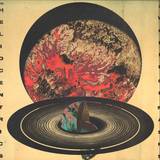
The Heliocentrics are a group for which genres are meaningless and boundaries invisible. Since first appearing on DJ Shadow's 2006 album The Outsider the group have gone on to release a string of records that float through jazz, hip-hop, psych, krautrock, and musique concrete whilst collaborating with numerous genre heavyweights from Mulatu Astake to Gaslamp Killer and picking up prestigious fans along the way, such as Madlib and the recently departed David Axelrod.
The primarily instrumental group, who operate out of their vintage analogue studio in East London called the Quatermass Sound Lab, bring in a new singer on album number four - a young Slovakian singer called Barbora Patkova. The result is an album that takes the band, already solidified in ever-expanding grooves and rhythms into new previously unexplored dimensions.The group's deep-set ability to craft music intuitively and impulsively stems from a desire to avoid typical processes or generic structures. Since its conception, the band's music has mainly been created from live improvisation. This musical approach gives the band its own sound and identity -'for anything to happen it must be at that time from the people in the room, and on the spot'. A decade of such sonic adventures has resulted in a tightly knit bond that the group refer to as almost a form of telepathy' with musical changes that otherwise would be near impossible to write.
Haga su pedido ahora y le encargaremos el artículo en nuestro proveedor.

Repress!
Last year's release of "The Midlands Roots Explosion Volume One", saw the culmination of many years work spent tracking down artists and tapes to shine a light on one of England's greatest, yet most overlooked musical scenes, the home grown take on reggae that briefly flourished from the mid-seventies and had almost disappeared little more than a decade later.
Volume Two starts off in exactly the same way as its predecessor with Handsworth's biggest musical exports, the legendary Steel Pulse and "Bun Dem produced by the legendary Dennis Bovell. Our first act new to the series are Natural Mystique with their 1982 single "Generals" whilst tracks 3, 4 and 5 round off the missing A and B sides from some of the most popular artists we included last time with Iganda's "Mark Of Slavery", Carnastoan's "Sweet Melody" and yet another Generals, this one from Musical Youth featuring the same line up that caused so much surprise and positive feedback with their inclusion on Volume One.
"Africans" from Bass Dance featuring a second appearance from former Steel Pulse guitarist/vocalist Basil Gabbidon, is the first of four previously unreleased tracks. The other three that we've managed to track down on long forgotten tapes, are Leicester's Groundation with "Rebel" recorded a few years before "Fa Ward" which we included last time, "Cannot Take It Away", another lost gem from Handsworth's Mystic Foundation and "Equalisation" another lost slice of early eighties roots from Wolverhampton's Capital Letters.
The late Linton Haughton is another new name with his scarce Shield label 12" cut "Hustling Man". Also making their first appearances, are Afrikan Star with "Run And Hide" originally issued in 1980 on Black Vinyl Records and from the Crucial Music stable, Sledge Hammer with "Ruled By The Stone" released as a 7" single on the Crucial Music Inc. label. The remaining three tracks are provided by label favourites and key players in the Birmingham scene, Black Symbol, Sceptre and Eclipse and showcase songs from the individual albums we've previously released by each band.
British roots reggae at its finest.
debe ser publicado en 20.10.2023

Repress!
Volume 1 of dubs from legendary UK soundman Lloydie Coxsone, originally released in 1975.
Haga su pedido ahora y le encargaremos el artículo en nuestro proveedor.

Zu ihrer letzten Tour pilgerten insgesamt mehr als 130.000 Fans, die Tour für 2019 ist bereits
angekündigt und die Jubiläums-Show in der Berliner Wuhlheide im August 2019 mit 17.000
Besuchern, war nach nur 20 Tagen restlos ausverkauft. Ihre Musikvideos zählen über 350 Mio. Views
auf YouTube, Sie spielen unzählige Headliner-Slots auf allen großen Festivals und halten den Status,
als eine der erfolgreichsten deutschen Bands im Streaming-Bereich. Die letzten beiden Alben sind
bereits vergoldet und mehrere Singles haben Gold- und Platinstatus erreicht. In den
Mainstream-Medien bleiben Vincent und Dag dabei, zum Teil ganz bewusst, weitestgehend unter dem
Radar. In der großen Vielfalt, des am 1. März erscheinenden Albums - Die Unendlichste Geschichte'
ist das Lied - Unikat' tatsächlich ein Einzelstück. Der beinah klassische Pop-Song trägt eine Botschaft,
die für SDP eine besondere Bedeutung hat und zeigt erneut die emotionale Seite des Musikduos.
Gerade in heutigen Zeiten, in denen der Erfolgs- und Anpassungsdruck, besonders auf junge
Menschen, enorm hoch ist, sind solche Songs wichtig. Unikat rundet den famosen Genre-Wahnsinn
des Albums perfekt ab.
Haga su pedido ahora y le encargaremos el artículo en nuestro proveedor.

The Analog Africa label delves into the amazing history of music from 1970s Benin and Togo.
This compilation highlights forgotten raw and psychedelic Afro sounds, and the well-researched liner notes tell fascinating stories to accompany the mind-blowing music. The essence of Analog Africa is clear, searching in dusty warehouses for forgotten music to keep the sound alive!
Haga su pedido ahora y le encargaremos el artículo en nuestro proveedor.

Following his incredible debut album 'Talisman', Whiney has stepped back into the lab to cook all manner of big, beefy dancefloor beasts. The 'Waystone' LP boasts his most widespread set of influences yet with drum & bass fusions of trip-hop, grime, UK hip hop and ambient across 14 outstanding tracks.
Album highlights include the tumbling jungle rumbler 'The Capital' that scatters down with snappy amens in a perfect storm. Plus the unmissable 'Triple Duppy Demon'; a menacing tribal stalker rearing its head in a display of raw beats and bars from Manchester's own Levelz crew member Truthos Mufasa, alongside a production pairing with Hugh Hardie.
'Waystone' also sees the triumphant return of the dream-team-supreme! Hospital's wordsmith Inja joins forces with Whiney on 'Mission'. This certified heater is a grisly tirade of dancefloor chaos, a worthy successor to fan favourites 'Flashlight' and 'She Just Wanna Dance'.
Of course Whiney's second long-player is also packed with showstopping solo productions such as 'Dismissed', 'Slingshot' and half-time triphop switch up 'Darkest Night'
Haga su pedido ahora y le encargaremos el artículo en nuestro proveedor.

The Leap is the new project of Dutch producers Tripeo & Doka who are now taking the logical next step in their musical journey and present an EP that touches on genres all across the electronic board. The Leap is about more than just music, which will reflect in the track titles. Current developments in the world take center stage and inspiration is taken out of politics, literature, media, (green) activism and much more.
The opening track 'Shock Doctrine' is a slow building yet powerful piece of gloomy, hypnotic techno, followed by the exceptionally deep and undulating 'Borrowed Time' that combines soft atmospheric textures with distinct fragile melodies and could easily be the soundtrack of a dystopian reality. On the flip side the duo showcases once again seamless production skills and with 'Green Capital' they set a nostalgic mood, a trancey journey filled with crisp hi-hats and snares, resulting in an effective techno tool. The mind bending closing track 'Sustainable Communities' creates dance floor tension with its piercing metallic synthlines & just like the whole EP it provokes the listener to think outside of the techno sphere.
Haga su pedido ahora y le encargaremos el artículo en nuestro proveedor.

Sought-after Brazilian LP from 1974 that touches on MPB, soul, jazz, disco and boogie. Official Mr Bongo reissue. Replica original artwork.
Extremely expensive theses days, this one has been on our list for a while. As sampled by Andres on his 'Sing About It' collaboration with Kenny Dixon Junior aka Moodymann and on Kaytranada's Janet Jackson flip, 'Alright'. Championed by the likes of Jazzanova, Floating Points, Hunnee and co.
The record features Arthur Verocai and Luis Bonfa (composer Octavio Burnier's uncle) on production/arrangement.
Haga su pedido ahora y le encargaremos el artículo en nuestro proveedor.
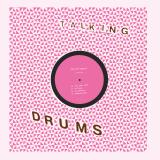
Phwoar! TD go four for the floor on Volume 9, letting loose with a set of sure-shot hits from all corners of their sonic spectrum.
A tag team match up, this action spectacular trades peak-time pump, Balearic cool, Italo thrust and dance-punk theatrics on its way to snatch the championship.
Obviously TD ooze subtlety and taste, so as we sat sipping Schnapps from our Stanley cups, we couldn't help but take a little inspo from our kitchen decor. 'Live Love Pump' - what a mantra. In musical form, this philosophy takes the shape of a capital D-isco delight, equal Pats Cowley & Adams, EQ-freaked and filtered into something dafter than a pair of chrome clad millionaires. Big room mirrorball magic if ever we've heard it.
The A2 sees the drunk AOR funk of 'Sure Line' take a leisurely stroll down the coast, a Gauloises in the gob and tattered Baldwin in the back pocket, flipping and flopping along the prom to buoyant bass, melting brass and more than a little melancholy.
Booting off the B-side, 'Un America' is a massive mid-tempo chugger replete with laser fire, synth scree and nipple high guitar. Powering along on a serious bass sequence armed with hooks-a-plenty, mostly incomprehensible lyrics and a groove which won't quit, this has all the ingredients required for an Italo all-timer.
The finale finds us in the company of some punk pioneers at their absolute silliest, bringing the kind of whacky vocal vibe, surf-centric style and off kilter groove the B-52s made a career of. Add in animal chatter and scratchy guitars and you've got the sort of secret weapon the Idjuts unleash waaaay post peak.
Limited Press - Numbered Insert - Drum Fun Guaranteed
debe ser publicado en 30.09.2026

vinyl 2x12"[34,66 €]
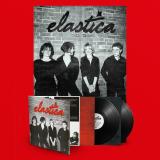
Elastica’s iconic self-titled debut album is set to be reissued by Rough Trade Records on 2 October in a new edition boasting rarities and b-sides.
Striking their own, distinct path in March 1995, Elastica proved uniquely fresh-sounding as the London four-piece delivered on the reputation they had built up gigging around the capital beyond in the months ahead its release.
Home to the likes of Line Up, Waking Up and Connection, singles at once timeless yet in the moment, Elastica’s debut captured the fraying emotions, hazy experience and burning energy of life, love and after-hours adventure.
Absorbing atmospheres and attitudes of their post-punk and new wave forbears, Justine Frischmann (vocals, guitar), Annie Holland (bass), Donna Matthews (guitar, vocals) and Justin Welch (drums) poured their own identities into the album’s 15 tracks which balancing youthful swagger, with sage-like observation and a knowing cool that made Elastica and their debut effortlessly timeless.
debe ser publicado en 02.10.2026
Tape[16,60 €]
Elastica’s iconic self-titled debut album is set to be reissued by Rough Trade Records on 2 October in a new edition boasting rarities and b-sides.
Striking their own, distinct path in March 1995, Elastica proved uniquely fresh-sounding as the London four-piece delivered on the reputation they had built up gigging around the capital beyond in the months ahead its release.
Home to the likes of Line Up, Waking Up and Connection, singles at once timeless yet in the moment, Elastica’s debut captured the fraying emotions, hazy experience and burning energy of life, love and after-hours adventure.
Absorbing atmospheres and attitudes of their post-punk and new wave forbears, Justine Frischmann (vocals, guitar), Annie Holland (bass), Donna Matthews (guitar, vocals) and Justin Welch (drums) poured their own identities into the album’s 15 tracks which balancing youthful swagger, with sage-like observation and a knowing cool that made Elastica and their debut effortlessly timeless.
debe ser publicado en 02.10.2026

Lone Ark and The 18th Parallel join forces again! Five years after the critically acclaimed debut ‘Showcase Vol. 1’ (2021), the two spearheads of the European roots reggae scene return with the second volume of this showcase series. Recorded on 2” tape between Geneva, Switzerland and Cueto, Spain, this new project is another masterpiece of production. It dives deep into the roots sound and playing of the 70s and 80s Jamaican reggae with heavyweight drums and bass, razor-sharp rhythm section, and sophisticated horns, flute, synth and vocals arrangements. Roberto Sánchez, the voice behind Lone Ark, sings about themes more relevant than ever such as activism through music (Ammunition), the absurdity of ongoing wars in the world justified by religious beliefs (Man Kill Man), anti-capitalism (Money) and the appreciation of life’s blessings (Morning Blessing). The six songs of this ‘Showcase Vol. 2’ are followed by their dub counterparts expertly mixed by Roberto Sánchez himself. In the age of AI, this album takes the opposite direction. It is all about the human touch and the analogue warmth. No trick here, this is 100% real organic roots music!
debe ser publicado en 02.10.2026
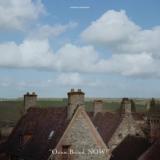
Rome, late afternoon, 1974. The light comes in over the colossal hills, the way it only does for an hour before the city forgives itself for the day's noise. Axefield is on an urgent quest to create cinema in the form of sound as a romantic alternative to disposable tools. He is looking for a sound so effortless he is not sure it can truly exist, but only be felt - somewhere between a film score, a heartbeat and a late night dinner at his favourite trattoria.
Ostuni Bound, NOW! is the debut album from Amsterdam-based electronic artist and composer Axefield, bringing club-heavy bass music together with the drama and romance of 70s Italian cinema. The narrative and emotions within the record stem from a romantic setting in Southern Italy that unexpectedly turned violent, forcing Axefield to flee the city after receiving the death threat "non provocare morte".
At its heart is the belief that romanticising life can lead us towards deeper human meaning, offering a different route from the hyper-capitalist pursuit of efficiency that increasingly shapes how we live and create. Throughout the album, Axefield worked through three characters representing innocence, control and destruction, using each as a framework for decisions in production, composition and mixing.
The album features Amsterdam-based rising UKG talent DANN and Johannesburg-based Kamohelo, frontman of Swedish electronic group Off The Meds. It's all starting to feel like cinematic time travel in which beauty is reintroduced in the realm of contemporary dance.
Released on Intercept alongside a beautifully crafted vinyl edition, Ostuni Bound, NOW! feels like the soundtrack to a film that was never shot. Somewhere behind him, a projector he cannot see begins to turn, playing a film for an audience that has not arrived yet.
As they arrive, he is the one who ultimately presses play.
And just like that, Ostuni Bound, NOW! Begins where Rome has always begun: beyond function and beauty and all that lingers in between.
debe ser publicado en 02.10.2026
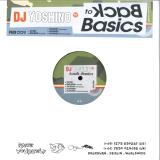
Impossibly rare slab: a capital-C-cult bit of millennial business from perhaps the most enigmatic member of the Gush Collective crew, who in the early 00s not so much redefined, but refined UKG… and then some. Alongside folks like Herb-LF and Lorenzo, Yoshino was a stalwart: releasing and remixing on the legendary but somewhat overlooked German labels Draft Recordings and Gush. It was here these cats smoothed out the UKG sound with a spliffed out vibe that fucked with the raw warm herby sounds of Tyree Cooper and QX-1; Yoshino, more than most though, flirted with sounds you wouldn’t expect to find in the UKG realm: think ethereally stuff man, I’m talking Placid Angels with the pseudo Japanese pop sensibilities of Faye Wong - but when when the cards fall down, his productions equally bang. So: splice in a bit of Serious Danger and Makesome Breaksome, light a phat one or zwei… & welcome to the wheelhouse.
‘Back to Basics' is a celebration of Yoshino as an artist: featuring a repress from our favourite Gush Collective stash (which is now so dear it makes me wish I’d better taken care of my records at after parties); three first time cuts of his on wax that we’ve curated from over the years that feature appearances from Peaky Beats and Miss Angel - and of course, there’s a killer remix from deep digging DJ and producer, Enchanted Rhythms (whose Youtube archive is packed to the veritable rafters with the most overlooked gems and updated with such frequency that it is hard to keep up). Apart from being a head’s head, Rich is also part of the Pace familia, so we're happy to welcome him to the catalogon a terrain he has endlessly kept fresh since day dot - he knows his shit here, and of course, he taps into that Yoshino flava big time.
En el almacen y preparando para el envío

Follow up to Goodge's 2023 album Echoes Of Yesterday. Previous releases found on Hip Dozer and Cascade Records. Tracks found on the popular Spotify Mellow Beats playlist. 11th in 'Jet Set' Cold Busted series. Designed and manufactured similar to the vintage 60's style rice paper sleeves. In his latest EP, Sunday Soul, Goodge takes listeners on a four-track journey through the heart of funk, masterfully blending elements of R&B, jazz, and chilled lo-fi. Released as part of Cold Busted's Jet Set series, this four-song offering follows Goodge's 2023 album Echoes Of Yesterday and showcases his dedication to crafting timeless music. "Lights Out" kicks off the EP with heavy funk and stirring breakbeats, accompanied by a scratchy guitar that summons the revolutionary spirit of the '70s. Horns serve as a call to action, while a rollicking bass line and chunky electric piano might inspire listeners to go out and fight crime. "Promised Land" follows, featuring a formidable funk bass guitar and lead guitar chords that rhythmically play off the delightfully busy drums, creating an atmosphere reminiscent of the city's bustle. The title track, "Sunday Soul," is a rowdy affair with a speech-over-beats leading to crispy snare rolls and chiming electric piano. Shaker magic, staccato horn bleats, and spiral flute bits combine to create a swirling vintage-hued photograph of sound. The EP concludes with "Within Myself," a spacier sonic experience that could serve as the soundtrack for chasing someone across rooftops. It's funk spelled with a capital K. Sunday Soul is a must-listen for fans of of the heavier side of funk, solidifying Goodge's position as a master of his craft, creating a nostalgic yet fresh soundscape that keeps listeners grooving back for more.
debe ser publicado en 05.10.2026

Xzibit – Kingmaker markiert die lang erwartete Rückkehr der Westcoast-Legende, sein erstes Album seit 2012. Vollgepackt mit Heavyweight-Kollaborationen präsentiert Kingmaker Branchengrößen wie Dr. Dre, Ice Cube, Busta Rhymes, Redman, Royce Da 5'9", Ty Dolla $ign und viele mehr. Mit einer knallharten Produktion und Xzibits charakteristischer, messerscharfer Darbietung verbindet dieses Album rohe Lyrik mit erstklassigen Beats und bekräftigt Xzibits Status als Hip-Hop-Powerhouse. Kingmaker ist ein Muss für Shops und Fans gleichermassen und wird in der gesamten Kulturszene für Aufsehen sorgen.
debe ser publicado en 05.10.2026

Hailing from Paris, Wonderkidz reveals their very first Various Artists compilation, a project featuring exclusively producers from the Parisian scene. Through this compilation, the collective spotlights a new generation of artists who share a common vision of electronic music, while asserting an identity deeply rooted in the capital.
Spanning house, tech house, and minimal, the tracks explore different facets of contemporary club culture while maintaining a distinctly Parisian flair. Each track reflects the energy, diversity, and creativity of a constantly evolving local scene.
This debut release naturally centers on artists close to the collective, in keeping with the philosophy Wonder Kidz has upheld since its inception: building bridges between the talents in its circle, showcasing producers with whom it shares a history, a vision, or a common artistic sensibility, and providing a platform for expression to a vibrant independent scene.
En el almacen y preparando para el envío

Beneath the sleek, confident guitar line that powers “Overdrive,” the lead single of All Over You, another guitar marks the time more impatiently, as if the groove its locked into is the timebomb- tightness of a pre-hookup heartbeat. Its energy isn’t nervous — after all, it’s hard to be nervous with Will Schwartz cooing come-ons like “I just wanna get you in the bed / Light you up like a cigarette” in your ear — but it is urgent. Excited. Titillated.
That’s the word that best describes the prospect of a new Imperial Teen record: titillating. They come out every five or six years, each new album acting as, to quote Roddy Bottum, “an episodic piece of where we are now, where the world is now, who we have become, and the geography of our collective consciousness.” There is considerable distance between Imperial Teen, its members — Bottum (guitars, keyboards, vocals), Schwartz (vocals, guitars, keyboards), Jone Stebbins (bass, vocals), and Lynn Truell (drums, vocals) — having made lives for themselves in different cities, but the collective consciousness that exists between them makes distance and time seem immaterial to the listener.
Time, especially time together, is not immaterial to Imperial Teen: it is precious. “For the last few records,” Stebbins explains, “the process has been similar. We live great distances away from each other, so initially, we get together to collaborate, write, and create. When we have enough material, we reconvene to record. Both scenarios, creating and recording, take multiple trips, sometimes with big lapses of time in between due to our various schedules.” Bottum concurs: “The biggest challenge in writing and recording is the distance between us, but the longing and desire and the ultimate coming together becomes more potent as a result.”
All Over You is a triumph of maximized moments together, four people bringing the force of their personalities to bear on years of built-up ideas. Title track “All Over You,” initially built over the computer, gained its charming sneer in the studio, where Stebbins’ buoyant, fuzzed out bassline added bounce to the song’s punchy, sloganeering lyrics, a perfect set-up for Truell to drive the song home, screaming the last line of the chorus, “We’ve got nothing to do,” like a rallying cry for a generation that’s been given nothing and told to deny themselves everything. “In my head,” Truell says, “I just went back to punk, to that feeling of prowling around looking for anything to do and being so mad about how boring everything is that you just have to yell.” The track had an attitude, it had an unexpected texture thanks to Truell’s playing improvised percussion, but her scream is what took it to the next level, transforming it into a signature Imperial Teen song.
One of Imperial Teen’s less magical concerns on All Over You is the effect capitalism has on the creation of art. This expresses itself in the headspinning rush of music industry success and disappointment that plays out in “Hands All Up,” and also in Imperial Teen’s sound. All Over You features the band’s most expansive, textured palette to date, and much of it’s steeped in — bubblegum music and boy/girl harmonies, electro beats and grungy distortion, power pop mall anthems and kiss-off lyricism — has been dismissed, at one point or another, as a fad. Time, of course, has proven otherwise, and All Over You makes a case for Imperial Teen as four of that time’s architects, inheriting, preserving, and pushing the boundaries of what pop music can be from one song to the next.
“We want to make people dance and think and feel,” says Schwartz. In all of those ambitions, All Over You crushes, brought to life by four musicians who found each other in the clubs of San Francisco over three decades ago and have remained family ever since. It is less a return from hiatus than a broadcast from the sonic utopia Imperial Teen has long ruled over, where the music is bratty and sexy and the parties don’t stop until everyone’s found euphoria. A raveup for mind, body, and soul, best enjoyed in a dark room packed with as many sweaty bodies as possible
debe ser publicado en 09.10.2026
Black Vinyl[22,48 €]
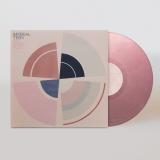
Beneath the sleek, confident guitar line that powers “Overdrive,” the lead single of All Over You, another guitar marks the time more impatiently, as if the groove its locked into is the timebomb- tightness of a pre-hookup heartbeat. Its energy isn’t nervous — after all, it’s hard to be nervous with Will Schwartz cooing come-ons like “I just wanna get you in the bed / Light you up like a cigarette” in your ear — but it is urgent. Excited. Titillated.
That’s the word that best describes the prospect of a new Imperial Teen record: titillating. They come out every five or six years, each new album acting as, to quote Roddy Bottum, “an episodic piece of where we are now, where the world is now, who we have become, and the geography of our collective consciousness.” There is considerable distance between Imperial Teen, its members — Bottum (guitars, keyboards, vocals), Schwartz (vocals, guitars, keyboards), Jone Stebbins (bass, vocals), and Lynn Truell (drums, vocals) — having made lives for themselves in different cities, but the collective consciousness that exists between them makes distance and time seem immaterial to the listener.
Time, especially time together, is not immaterial to Imperial Teen: it is precious. “For the last few records,” Stebbins explains, “the process has been similar. We live great distances away from each other, so initially, we get together to collaborate, write, and create. When we have enough material, we reconvene to record. Both scenarios, creating and recording, take multiple trips, sometimes with big lapses of time in between due to our various schedules.” Bottum concurs: “The biggest challenge in writing and recording is the distance between us, but the longing and desire and the ultimate coming together becomes more potent as a result.”
All Over You is a triumph of maximized moments together, four people bringing the force of their personalities to bear on years of built-up ideas. Title track “All Over You,” initially built over the computer, gained its charming sneer in the studio, where Stebbins’ buoyant, fuzzed out bassline added bounce to the song’s punchy, sloganeering lyrics, a perfect set-up for Truell to drive the song home, screaming the last line of the chorus, “We’ve got nothing to do,” like a rallying cry for a generation that’s been given nothing and told to deny themselves everything. “In my head,” Truell says, “I just went back to punk, to that feeling of prowling around looking for anything to do and being so mad about how boring everything is that you just have to yell.” The track had an attitude, it had an unexpected texture thanks to Truell’s playing improvised percussion, but her scream is what took it to the next level, transforming it into a signature Imperial Teen song.
One of Imperial Teen’s less magical concerns on All Over You is the effect capitalism has on the creation of art. This expresses itself in the headspinning rush of music industry success and disappointment that plays out in “Hands All Up,” and also in Imperial Teen’s sound. All Over You features the band’s most expansive, textured palette to date, and much of it’s steeped in — bubblegum music and boy/girl harmonies, electro beats and grungy distortion, power pop mall anthems and kiss-off lyricism — has been dismissed, at one point or another, as a fad. Time, of course, has proven otherwise, and All Over You makes a case for Imperial Teen as four of that time’s architects, inheriting, preserving, and pushing the boundaries of what pop music can be from one song to the next.
“We want to make people dance and think and feel,” says Schwartz. In all of those ambitions, All Over You crushes, brought to life by four musicians who found each other in the clubs of San Francisco over three decades ago and have remained family ever since. It is less a return from hiatus than a broadcast from the sonic utopia Imperial Teen has long ruled over, where the music is bratty and sexy and the parties don’t stop until everyone’s found euphoria. A raveup for mind, body, and soul, best enjoyed in a dark room packed with as many sweaty bodies as possible
debe ser publicado en 09.10.2026
