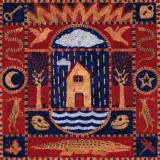
Georgie Jesson was born in London to a Bosnian mum and British father. One, a communist turned neurotic capitalist, the other a private school boy cast-off turned heroin addict. Georgie fell in love with poetry through music and lyric writing at an early age. She has since performed her work to music, written extensively for various music magazines as a journalist and culture writer, and written biographies and forewords for acclaimed artists including Baxter Dury and photographer Ewen Spencer.
Her debut collection traverses grief and love in equal measure, reflecting on family memories with a sharp honesty and a blurred edge. The book charts the changing ways the passing of time can affect us. They are conversational and confessional poems, coloured by images of bittersweet family holidays and hospital trips; sleepy Balkans bars and long London nights. Poems from the heart, about the effects of life on the heart.
“we collect figurines to make a monument of memory / to help ignore the wastage of life”.
The collection features illustrations by Greek artist Maro Michalakakos, whose work has been displayed internationally in galleries including MCA - Chicago, The Guggenheim, Tate, FNAC - Paris and many private collections. The book’s foreword is written by musician Grian Chatten, notably the lead singer & lyricist of critically acclaimed band Fontaines D.C. and whom has also released solo work under his own name.
quête:capital j
Shadows Lifted from Invisible Hands is an autobiographical record, comprised of four songs that Hoff refers to as ambient media. Each track is composed from sources drawn from his own involuntary aural landscape, specifically musical earworms and tinnitus frequencies.
Neither sound nor a daydream, the earworm (or stuck song) emblematizes music as a commercial form—immediate, ubiquitous, and persistent. Likewise, tinnitus is inaudible and unscrupulous, manifesting across a spectrum of frequencies at will. The cognitive swirling of these phenomena provides an ambivalent, internal soundtrack that scores a person’s movement through the world.
Those suffering from tinnitus or those who have grown accustomed to the “Tinnitus Effect” in movies will likely recognize the buzzing pitches on the record, but will likely not recognize the songs. Distorted and distilled, Shadows Lifted from Invisible Hands features altered versions of four commercial pop songs: Blondie’s “Heart of Glass,” David Bowie’s “Space Oddity,” Madonna’s “Into the Groove,” and Lou Reed’s “Perfect Day.”
Having been haunted by these songs on and off for years, Hoff tweaks the tracks, transposing and recomposing them for orchestral instrumentation. Speaking back to these involuntary echoes, these tracks go to great lengths to obfuscate their sources; to be sure not to simply re-introduce each earworm, as though they were samples. Otherwise, what’s the point? No one needs another stream.
Besides, earworms are not music, although we perceive them as such. They are non-cochlear and exist as an affective force that is neither subjective nor objective, which is to say they are an invasive—and alien—phenomenon. Like tinnitus, they are aggravated by economic, social, and environmental forces as well as emotional states, mental health, and aging. Hoff doesn’t underplay his own struggles with mental health in discussing the record—noting a long history of depression and its acuteness over the last few years, which serve as the backdrop to the composition of this record.
Scratch any pop song hard enough and you’ll find sadness underneath it. Subdermal, the songs on this record evoke a type of ephemeral weariness and despair. By recasting the original songs through their shadowy doubles, Hoff provides a window into the dark core of pop music. At the center of which lies capitalism’s desperate attempt to replicate itself through a cheap high built on echoing refrains. Just below the surface the listener finds a hangover of shadows dancing through the mind.
Swan Song
The vinyl LP at the heart of this éthiopiques 31 tracks 2 to 11 was one of the very last vinyl records ever released in Ethiopia. But above all it represents, we felt, the absolute masterpiece of the Ethiopian Groove – the Swan Song of Swinging Addis. The album leaves a clear idea for posterity of the level of sophistication and mastery that modern Ethiopian music had achieved, before being crushed under the Stalino-military heel of the Derg – as the bloody revolution that was unfolding came to be called.
Ethiopia1976.
The Revolution that broke out in February 1974 rolled on in a ruthless march. The whole of Ethiopian society was utterly stunned. The bouquets of flowers handed joyfully to the first tanks of the coup d'état were to wilt very rapidly. From September 1976 to February 1978, 18 months of Red Terror (the name given by the junta itself) spilled blood throughout the country. This fratricidal conflict took its heaviest toll among students and youth. The shift from feudalism to a cruel and primitive Stalinism left the country's citizens deeply traumatised, and snuffed out any pretence of activism, whatever the sector of society. This ice age was to last for seventeen long years.
ሙሉቀን፡መለሰ Mulukèn Mellèssè Muluqän Mälläsä
It was three tracks by Muluken that served as the opener for éthiopiques-1 more than 25 years ago. Seven more tracks appeared on éthiopiques-3 and 13, all accompanied by The Equators, which was soon to become the Dahlak Band.
The first track, Hédètch alu, also the very first piece that Muluken ever recorded, left audiences both unsettled and amazed. Reflecting the singer's extremely young age (he was just 17 at the time), this angelic voice mystified many, who thought they were in fact listening to a feminine voice. He was not yet 22 when he released his last vinyl record in 1976 with Kaifa Records (KF 39LP), one of the very last to be issued in Ethiopia, before the cassette tape became the dominant medium for music distribution – and before the new revolutionary regime put a stop to all independent musical life, via an unspeakable barrage of prohibitions and other persecutions.
Mulu qèn, literally, “A well filled day”. This tender maternal intention wasn't enough to ward off the cruelty of fate. His mother's premature death drove Muluken to leave his native Godjam, in northeast Ethiopia, to live with an uncle in Addis Ababa. Born Muluken Tamer, he took his uncle's last name – Mèllèssè.
The spelling Muluken appeared in his administrative records. Transcription of Amharic to the Latin alphabet, both in Ethiopia and for scholars, gives rise to controversies and quibbles that can never be neatly settled. French allows for a closer approximation of the original pronunciation, thanks to its battery of accent marks, confusing as they may be to anglophones.
Between rather accommodating administrative record-keepers and the various versions that pop up in interviews given by the artist, Muluken's year of birth oscillates between 1953 and 1955…
1954? One thing is certain: the artist's talent made itself known very early indeed, because he got his start in 1966-67, at the age of 13 or 14. Photos from the period attest to his extreme youth. It's a strange sort of initiation for a very young teenager to become a sensation in the heart of Addis's nightlife at the time, Woubé Bèrèha – the Wilds of Woubé. And what's more, in the club of the Queen of the Night, the Godjamé Assègèdètch Alamrèw herself, the very same that was portrayed by Sebhat Guèbrè-Egziabhér in his novel-memoir Les Nuits d’Addis Abeba2… The legendary female club owner who is remembered to this day by the capital's ageing boomers.
Muluken first tried his hand at the drums, before he grabbed the microphone. He emigrated briefly to the Zula Club, across the street from the old Addis Post Office, one of the ground-breaking bars of the burgeoning musical scene, before joining the Second Police Band in 1968, for around three years. He spent a few months with the short-lived Blue Nile Band founded by saxophonist Besrat Tammènè. As the musical scene grew increasingly successful, and pulled slowly but decisively away from its institutional ties, Muluken released his first 45rpm single in February 1972 (Amha Records AE 440). It was included in two LP Ethiopian Hit Parade compilation albums in September of the same year. All in all, Muluken released eight two-track 45s and the same number of original cassette tapes between February 1972 and 1984, the year that he departed for permanent exile in the USA. After converting to Pentecostalism in 1980, Muluken gradually abandoned all secular musical activity. In 1985, at the end of a concert in Philadelphia, he decided to quit concerts and recording for good. Mèlakè Gèbré, the historic bass player from the Walias band who was playing with him that night, recalls that everything appeared so irredeemably diabolical in Muluken's eyes, that it was to be the end of his contribution to Ethiopian Groove.
The end of the story, the beginning of a legend.
Dahlak Band, forgotten by History
Aside from his personal history and vocal talents, it must be remembered that Muluken Mèllèssè was one of the biggest names in the musical innovations that marked the end of the imperial period. These éthiopiques aim to convince those who are just discovering this hidden gem... As for Ethiopians themselves, they are to this day captivated by this singular and atypical figure in the Abyssinian pop landscape – even though he withdrew from public life some 40 years ago. Incorrigible devotees of poetic twists, of more or less hidden meanings, Ethiopians appreciate above all the care Muluken took in choosing his lyrics and the writers who penned them, such as Feqerte Haylou, Alemtsehay Wodajo and, here, Shewalul Mengistu (1944-1977). Love songs, written by women, a far cry from the conventional drivel that pleases sappy sentimentalists.
Muluken is equally acclaimed for his perfectionism when it came to music, the opposite of the overly casual approach that is all too common. He remained a faithful partner of musicians who came from a lineage that borrowed from several inventive and pioneering bands (Venus, Equators, Dahlak). Amongst them were certain artists who began their musical lives with Nersès Nalbandian at the Haile Sellassie Theatre and who come of age in around 1973 – at just the wrong time, you might say. Among them were the pillars Shimèlis Bèyènè (trumpet), Dawit Yifru (keyboards) and Tilayé Gèbrè (sax & flute). Most notably Tilayé Gèbrè, certainly one of the most important musicians, composers and arrangers of his generation, of the end of the imperial era, and of the early years of the Derg.
It was only in 1981 that a miraculous opportunity arose for Tilayé to escape the Stalinist paradise of the dictator Menguistou Haylè-Maryam. Once again it was Amha Eshèté (1946-2021) who provided a solution. The spirited and courageous producer, who had been in exile in Washington since 1975, succeeded, thanks to his incredible perseverence, in bringing the Walias Band to the USA. It was, in fact an extended Walias Band comprising ten musicians3, six of whom chose to slip away after a few concerts and the recording of an LP (The Best of Walias, WRS 100). Tilayé Gèbrè was one of these. He has been living in the USA ever since. There he joined the then-nascent Ethiopian diaspora, which lived largely unto itself, and was making only very modest headway in the American musical market. It seems unfair that Tilayé Gèbrè and the Dahlak Band were not able to benefit earlier from the public recognition that they do deserve.
A similar draining away of the top-rate talents would lead to the reorganization of the major groups of the “Derg Time”. The remaining artists spread themselves around between Ibex Band (renamed Roha Band), Ethio Star Band and a remodeled Walias Band. That spelled the end of the Dahlak Band.
With this record, produced by the essential Ali Abdella Kaifa a.k.a. Ali Tango, we can appreciate everything that the Derg not only destroyed, but also prevented from flourishing. This gem of Ethiopian-style afrobeat came out in 1976 (and, by way of a parenthesis, before the FESTAC 1977 in Lagos, which was attended by an impressive delegation of Ethiopian musicians — although Fela was already personna non grata in his own country). Despite everything that might distinguish this ethio-groove from Fela’s music – no colonial axe to grind, no question of political confrontation with the authorities, no claims to negritude or Africanism for the Ethiopian musicians, and less extrovertion! –, this LP fits beautifully into the saga of intense and electrified soul of the new “African” groove that Fela and Manu Dibango embodied so well from that point onwards.
In restoring this record to its place in the afrobeat epic, it can be seen that, if nothing else, the timeline bestows a legitimate pedigree and a historical primacy to works that had no international impact when they were originally released.
Warning! Masterpiece!
Sam Bhok releases his debut album, Sloom. Influenced by experimental club sounds as well as the filmic emotion of post-rock and film scores, Sloom resists minimalism in favour of dense, interlocking layers. Euphoric synth textures and fractured drum patterns drive the record, pairing club energy with reflective undercurrents as hardware synths and drum machines are set against caustically digital, hyper-modern sounds.
Known for his behind-the-scenes work with Gilles Peterson, most notably as an integral part of the Worldwide FM team, Sloom represents Sam stepping into focus as a skilled producer of forward thinking electronic music. Written between 2020 and 2025, the record is a statement of identity and a creative shift away from the world of the selector, and towards something more personal and expansive.
Mastered and cut by legendary engineer Beau Thomas on eco-mix marbled vinyl, Sam Bhok draws from analogue and modular synthesis, processed and twisted into restless forms that reflect the unease of the digital age. Sloom is charged with anxieties about technology, capitalism, culture, and climate, delivered both through introspective, IDM-informed tracks and moments of dancefloor catharsis.
The Sound Systems of Jamaica were always the people's radio station.
Tunes were tried and tested in the lion's den of the dance to see which songs rose to the top and became the most popular.
This was the litmus test and the first step to a tracks commercial release to capitalise its hotness on the circuit.
Then the Dub/Version hit big in Jamaica in the early to mid 70's this was also the case and many times the version cut of a track would even prove more popular than its vocal counterpart.
We have compiled some great 70's dub plates that rocked the Sound Systems in fine style...
Hope you enjoy the set....
- A1: Femoral
- A2: Missing Teeth
- A3: Capital Gains (Feat. Pro Dillinger)
- A4: Dance Of The Drunken Mantis
- A5: Clicquot Fountains
- A6: Courtleigh Chemist
- B1: Chalk Brothers (Feat. Lord Juco)
- B2: Iron Leash (Feat. Family Gang Black)
- B3: Talon Claw
- B4: Call Me
- B5: Sharing Needles (Feat. Mooch)
- B6: Fall Breeze
"Hare Brained Schemes" is the long-awaired follow-up to Daniel Son and Finn's critically acclaimed 2020 collaboration, "Dirty Dishes". The Canadian duo returns with a vengeance, delivering an album that’s as gritty, unpredictable and vicious as its title suggests. In "Hare Brained Schemes", Daniel Son's sharp, incisive lyrics cut through Finn's raw, hard-hitting production, creating a sonic landscape that's both chaotic and captivating.
The title, captures the wild, unpredictable nature of this offering, bold ideas and daring experimentation, where every track is a testament to the duo's commitment to pushing the boundaries of their craft.
Guest appearances by heavy hitters such as Pro Dillinger, Mooch, Lord Juco, and Family Gang Black add further depth and intensity to the project, each bringing their own unique flavor to the mix. The album cover, designed by Alejandro Torrecilla, perfectly encapsulates the anarchic energy and raw aesthetic that defines "Hare Brained Schemes".
Prepare for a journey through dark, uncompromising soundscapes and razor-sharp lyricism that leaves no stone unturned. Daniel Son and Finn have crafted an album that’s not just heard, but felt—a relentless exploration of the underbelly of hip-hop.
- A1: Cyrus
- A2: Things I Had To Do (Capitalism)
- A3: Election Year In The Trap
- A4: Delay. Deny. Defend
- A5: City To City (Feat. Logic & Coach Nym)
- A6: Tsdw Mantra
- B1: There’s More Of Us Than Them (Feat. Galeano)
- B2: Palestine (Additional Vocals Galeano)
- B3: No Rap
- B4 6: Million
- B5: Carhartt Bomber
- B6: N.i.g.g.a. Power
- B7 3: Am In Little Haiti (Outro)
Ne$$ and Baby J’s 3rd album comes after a long collaborative working relationship from previous group A-Alikes. Ne$$ has recently done a series of UK shows in London, Leicester and Birmingham as well as an upcoming feature on 05.21 YouTube channel and interviews on Itch FM. The tracks have also been supported on Soho radio and by Shotry Blitz. The album represents an original voice in hip-hop, addressing working-class proletariat stories of street life, and the effects of capitalism on black and poor people. Ne$$ has been a successful part of the US hip-hop seen over the past two decades, working with the likes of Mos Def, Dead Prez and Bilal. Baby J is an established UK, hip-hop producer whose production credits include Amy Winehouse, Skinnyman, Dead Prez, Plan B and Mark Ronson. The album is sonically broken and dark with a raw purist Hip Hop sound.
Blue Vinyl[24,58 €]
The brilliantly named duo - formed by Adam Morrow and Jamie Sego - might be based in "the hit recording capital of the world", Muscle Shoals, Alabama, but somehow, they have made a concept album about the ancient religious outpost off the coast of northeast England. It's a stunning record that mixes fuzzy guitars with folk horror and fantastic melodies - for fans of Ride, Slowdive, Galaxie 500, Talk Talk, Yo La Tengo and The Clientele. Despite its lyrical inspiration lying thousands of miles away, it comes imbued with the soulfulness of their surroundings - not least because it was recorded in the old Muscle Shoals Sound studio by the Tennessee River, now Portside Sound, which is run by Jamie. "The story of Lindisfarne gave us a framework for what were otherwise very abstract ideas and emotions," explains Adam. "It became a way to make sense of our own moment in history. We really want our lives and societies to always get better, and to be left alone to make that happen. But we are stuck in these cycles of progress and regression, and I think most people are really driven to make sense of it and assign meaning. Lately, we've lived through a global pandemic, a devaluation of truth and reality, and a resurgence of far-right politics into the mainstream. Not really what I expected out of life in 2025." He is keen to point out that, despite the seriousness of its inspirations, the duo had a lot of fun making the album and really want it to be "a living and breathing thing". "We want people to be able to engage with it regardless of whether they care about it as a concept record," he says. "For me, it's just another reason to expand the pedalboard," concludes Jamie. "We hope you enjoy it. Peace, love and reverb from Alabama." Coloured Vinyl LP, and Bonustrack CD available, this version is `Lindisfarne Sky' Blue & White Vinyl and adds a postcard.
"The five-year anniversary release of Orion Sun’s Hold Space For Me, pressed on tangerine vinyl. Her story, that of an early 20s woman of color dealing with and learning about life's obstacles and celebrations, is understood best through her song lyrics; citing J Dilla, Nancy Wilson, Jodeci, Kirk Franklin, Hazel Scott and Digable Planets as just some of her many influences. She's a career artist with a long road ahead and her sound defies trends; capitalizing on a velvety and familiar voice with timeless jazz / folk / R&B instrumentals.
“...a pinch-yourself song that steps lightly with the thrill of a love seemingly too good to be true (and the fear that it might be)” – Philadelphia Inquirer on “Ne Me Quitte Pas”
“stark and lightly poetic.” – Pitchfork
“A smooth, serene downbeat groove and a blissed vocal finds Orion Sun singing about sudden and deep connection — “It feels so good to know ya” — and despite the sadness implied in the title, the outlook is positive and pure.” – WXPN/The Key on “Ne Me Quitte Pas”
“While the track shares the same title as covers done by Nina Simone, Regina Spektor, and Wyclef Jean, she presents a completely different vibe, slowing down a flipped sample with smooth guitar loops and resonating drums. Still, with all of the stellar instrumentation, the 23-year-old’s voice cuts through as poignant as ever.” – Refinery 29 on ”Ne Me Quitte Pas”"
After returning from Australia, Brian Baker has wasted no time in making an impact on the NZ scene with much heralded and reviewed singles and film clips, and in particular his solo show which has seen him perform at gigs and Festivals across the country. Now he"s joined two local Whanganui Musicians, Stu Duncan and pro drummer Brad MacMillan, both seasoned performers. The act is called BB and The Bullets and has a focus on the blues, doing tracks by Albert King, BB King, Muddy Waters plus some Stevie Ray Vaughan and other blues classics. They also feature some of Brian"s excellent releases and have a few of their own recorded. These tracks make up their debut LP which will soon be released on vinyl, CD and digital through Nixon Street Recordings, Whanganui"s own international record label. Yes, the guitaring that made Brian"s solo show stand out is heavily on display here, now backed by a tight, live rhythm section. Their shows have been very well received wherever they have performed, getting standing ovations at the recent Bay Of Islands Jazz and Blues Festival where they played six standout shows over three days ! They are drawing crowds wherever they appear, have been invited back to the Capital Blues Inc in Wellington after a knock em dead show there, and were a solid crowd pleaser at Snells Beach this summer for Auckland city council"s Music In Parks series. They are delighting audiences with rock solid, emotive performances of classic blues tracks underlined by undoubtedly one of the finest guitarists New Zealand has produced !
- A1: Un-Muting Beyond Misspelt Borders ()
- A2: Un-Muting Beyond Misspelt Borders ()
- A3: Un-Muting Beyond Misspelt Borders (A3)
- A4: Un-Muting Beyond Misspelt Borders ()
- A5: Un-Muting Beyond Misspelt Borders ()
- B1: Un-Muting Beyond Misspelt Borders ()
- B2: Un-Muting Beyond Misspelt Borders ()
- B3: Un-Muting Beyond Misspelt Borders ()
- B4: Un-Muting Beyond Misspelt Borders ()
- B5: Un-Muting Beyond Misspelt Borders ()
"Visual artist, musician and composer Satch Hoyt will release a new 10” vinyl album, Un- Muting, on 3 October 2025 on newly minted record label traza, run by Andrea Zarza Canova and distributed by Honest Jon’s Records. This album is the first to document Hoyt’s ongoing, long-term project of un-muting historical African instruments held in Western museum collections and includes his composition: Un-Muting Beyond Misspelt Borders.
Originally commissioned by Nottingham Contemporary for the exhibition Your Ears Later Will Know to Listen, Hoyt’s composition invites listeners to engage with what he calls ‘sonic restitution’, a performative challenge to the silent confinement of instruments within Western conservation standards and ethnographic museums, awakening and celebrating the hybridity, resilience and creativity of the transnational African diaspora.
The composition began with a recording session in October 2023 at the British Museum in London, where Hoyt was granted access to a selection of African instruments held by the British Museum’s Department of Africa, Oceania and the Americas. In the presence of curators and conservation staff, he played the instruments without written scores, responding instead to their physical and sonic presence.
The recordings were then further developed in Hoyt’s studio, combined with additional performances on both African and Western instruments from his own collection."
For Hoyt, un-muting is both a creative and political act:
"To Un-Mute is to gain access into ethnographic museum collections where I play and simultaneously record the abandoned ancient African musical instruments. These restituted recorded motifs and rhythms accompany my live concerts and recordings. Un-Muting is also concerned with the chapters of patriarchal and racist supremacy which accompany the instruments’ abductions, vehemently opposing the current continuum of this supremacy, its ongoing colonial expansion and continued capital extractivism. It remains focused on the retention of spiritual belief and stalwart visions of liberation leading to eventual global emancipation and self-realisation."
- Satch Hoyt, June 2025
The 10” vinyl record includes a newly commissioned text by critic and scholar Tavia Nyong’o.
The album will be released on vinyl and digital formats on 3 October to coincide with the opening of Satch Hoyt’s solo exhibition Satch Hoyt: Afro-Sonic Mapping Chapter 4 at KARST Plymouth.
Ancient African instruments: Trumpets (Kuba), Sanzas (Chokwe, Lega, Kongo, Yao), Ilimba (Nyamwezi), Whistles (Chokwe, Luba, Pende, Bambara), Talking Drum (Yoruba), Slit Drum (Kuba, Yaka, Tetela, Songye), Bell (Tetela), Rattles (Yoruba, Luba, Bamileke, Pende) and Flutes (Kuba, Kongo, Mossi, Bambara)
Western instruments: Flute, Electric Flute, Roland Handsonic, Synthesizers, Glockenspiel, Wooden Xylophone and assorted hand percussion
Composed, arranged, produced and performed by Satch Hoyt
Engineered and co-produced by Dirk Leyers
Recordings of musical instruments held by the Department of Africa, Oceania and the Americas at the British Museum by Adam Laschinger
Studio recordings of African instruments from Satch Hoyt's collection by Dirk Leyers
Uncredited Female Chant on wax cylinder recording by Karl Edvard Laman (c. 1910), held by the Berlin Phonogramm-Archiv
Additional sound design and production by Call & Response Studios
Mixed by Hendrick Valera (Cali, Colombia)
Mastering and lacquer cut by Kassian Troyer at Dubplates & Mastering
Cover art: Satch Hoyt, Score #1, 2020
Design by Elisabeth Klement
Direction by Andrea Zarza Canova
"Imagine More is the follow-up to Lophae's acclaimed debut Perfect Strangers (January 2025).
Recorded live to 2-inch,16-track analogue tape with the band all in one room, engineered and mixed by Benedic Lamdin (Nostalgia 77), and mastered by Caspar Sutton-Jones (Gearbox Studios), this second offering from guitarist and composer Greg Sanders' quartet ventures deeper into their distinctive blend of modern jazz, psychedelic exploration, and world music flourishes.
Four gifted improvisers navigate Sanders' compositions with mercurial dialogue and musical communion, weaving melodic elegance with rhythmic complexity, creating sound-worlds that echo Jeff Parker, Joao Gilberto, and Blake Mills while channeling the sophistication of Stan Getz, Bill Frisell, and Edu Lobo.
Fizzing electric guitar, flowing saxophone lines, and skittering rhythmic interplay transport listeners from north-west London's Fish Factory recording studio to the musical capitals of New York, New Orleans, Rio De Janeiro, Bamako, and Johannesburg - anchored by Sanders' unmistakable compositional voice and the quartet's intuitive sensitivity."
Phylipe Nunes Araújo's songs are as rich and varied as the diverse landscapes they were written in. The hills of Pernambuco, the lagoons of Alagoas, and the beaches of Bahia are all woven into his stripped-back, folk-inspired Brazilian songwriting. As part of a wider movement of musicians originating from Brazil's Northeast, Phylipe sees the process of music-making as the search for beauty itself.
Collaborating with fellow Northeastern artists Bruno Berle, Batata Boy and Nyron Higor among others, Phylipe's debut album represents the latest flowering of this exceptionally talented community's creative search.
The Northeast holds an almost sacred importance in Brazil's collective cultural imagination. The region bore witness to the brutal histories of Portuguese colonization and the African slave trade, while simultaneously amalgamating the diverse cultures, religions and traditions of those who have called it home. Countless Brazilian music greats - Gilberto Gil, Caetano Veloso, Hermeto Pascoal, Djavan and Luiz Gonzaga - have emerged from this vast cultural melting pot.
Born in Caruaru, Pernambuco state, and raised in the city of Santa Cruz do Capibaribe (famed for its textiles industry), Phylipe describes his music simply as "Brazilian music from the Agreste of Pernambuco". His masterful compositions thread together regional rhythm, folk poetry and sophisticated harmony.
Phylipe's musical foundations were laid in youth, listening to the local elders rehearsing their forrós, attending São João street parties in front of his house and watching the Junina Quadrilhas dance through his neighborhood. At street fairs he would read the Literatura de Cordel (handcrafted pamphlets of Brazilian folk literature), and watch the rhyme battles between cantadores, violeiros, and repentistas, who improvise verses on daily life, social commentary and philosophy. This tradition of Northeastern folk poetry proved particularly formative for Phylipe as a lyricist. "I always try to write things as simply as possible. I believe that beauty must be easily understood. If I can facilitate the path to the message, there's no reason not to. It's something I learned from the traditional poetry here: it's more beautiful if everyone understands."
At the age of 11, Phylipe first got access to the internet. As he explains: "Still in adolescence I was also able to discover things like The Beatles and Nick Drake - I started to get to know music from the rest of the world and later to correlate that with my local musical experiences." Rich with extended chords and artful dissonances, it's clear from his compositions that jazz and bossa nova also took hold, but he's quick to eschew stereotypes. "Inevitably, people associate a Brazilian musician playing a nylon-string guitar with bossa nova..." "But the foundation is another story," he asserts, "It's the Northeast."
On the guitar Phylipe experiments with the binary rhythms inherent in traditional Northeastern music. Coco, frevo, maracatu and baião are recontextualised, placed alongside Brazilian popular music (MPB), gentle lullabies and stunning ballads. "In these 10 songs, I am experimenting with making pop music on a nylon-string guitar with my foundation in the Northeastern songbook."
The contemporary musical community which Phylipe belongs to developed initially in Pernambuco's neighbouring state Alagoas. Phylipe lived in its capital Maceió for three years, where he built friendships and musical bonds with Bruno Berle and Batata Boy who together produced his album. Bruno also sings in unison with Phylipe on the duet "Valise", a song Phylipe wrote aged just 15.
In recent years, Phylipe, Bruno and Batata have migrated south to São Paulo, where the majority of the album was recorded. Other collaborators on the album include Alici, who provides vocals for the ebb and flow of "Temperim", Nyron Higor who plays drums on lead single "Asa" and the sweet indie moment "Ziz"", bassist Meno Del Picchia who plays on the mystical baião "Bixin" and the propulsive "Subindo a Ladeira", and Raphael Coelho who joins Bruno and Batata on percussion for "Santa Cruz", Phylipe's hypnotically powerful portrait of his hometown.
Blang Records are thrilled to announce another two vinyl album re-releases from Jeffrey Lewis's back catalogue: The debut classic The Last Time I Did Acid I Went Insane (originally Rough Trade 2001) and The critically acclaimed 4th album 12 Crass Songs (originally Rough Trade 2007). The Last Time I Did Acid I Went Insane (VV001LP) : The fragile poetry and lo-fi warmth of JL's home-recorded debut paint vivid scenes of downtown Manhattan life with cracked sincerity, comic book absurdity and charm. This groundbreaking album continues to charm listeners but has completely run out of stock. Press Quotes: "Jeffrey Lewis: `The Last Time I Did Acid I Went Insane' - Best Indie Album of 2002; like his drawings, his music is witty, animated and true." - New York Daily News "Bizarre but brilliant_ slugging it out to be New Rock capital of the universe, Jeffrey Lewis could well be New York's ace in the hole."- Uncut "Modestly brilliant." [Critic's Choice]- The Village Voice "He claws through the bullshit and pretence ingrained in society. [Jeffrey Lewis' work] _should be cherished."- TimeOut London "Jeffrey Lewis isn't simply a singer, but a creative comic mastermind_ brilliant_ a staggering work of_ genius." - (9 stars of 10) Addicted to Sound Blang Records and Jeffrey Lewis have history: before Blang was a label, it started life as a live night at the 12 Bar Club in Denmark Street, hosting many a set of the NY Antifolk artists over on UK shores, including Jeffrey Lewis. Now 20+ years since Jeffrey first played Blang. Native New Yorker Jeffrey Lewis is a comic book writer/artist and a musician. A cult hero birthed from the now infamous antifolk movement that sprung up on Manhattan's Lower East Side in the 90s, Jeffrey has released dozens of albums showcasing his unique blend of bleakly witty observations, scratchy, lo-fi punk and croaky folk/anti-folk, all firmly rooted in a strong DIY sensibility. Jeffrey and his band have toured the world multiple times over, released albums on Rough Trade, Moshi Moshi and Don GIovanni Records, and have been featured by NPR, The History Channel, The NY Times and more.
ULURU is a large sandstone rock formation in Australia. It's sacred to the Anangu, the local Indigenous of the area. For many years it had been deprived of its spiritual significance, due to mass tourism, capitalism, as well as greedy and selfishness of people who just want to make money out of it. However, as a result of the Anangu’s resilience, care and staunchness, huge changes took place in the national park around Uluru as well as in the broader public's consciousness, giving again to the Uluru the sacred identity that had been lost.
You might be reading and thinking now: so what's the point? Actually, there's no real point. I would rather say, there’s hope. The hope of seeing humans all around the world following the example of the Anangu. The hope of seeing humans finally stopping to treat the earth and all what’s part of it, what’s on and what’s in it, as a slave without soul. The hope of changing today, and if not today at latest by tomorrow. This system is failing. It's no longer sustainable, and there's no much time left. So everybody, don't sleep, be critical.
ULURU is a large sandstone rock formation in Australia. It's sacred to the Anangu, the local Indigenous of the area. For many years it had been deprived of its spiritual significance, due to mass tourism, capitalism, as well as greedy and selfishness of people who just want to make money out of it. However, as a result of the Anangu’s resilience, care and staunchness, huge changes took place in the national park around Uluru as well as in the broader public's consciousness, giving again to the Uluru the sacred identity that had been lost.
You might be reading and thinking now: so what's the point? Actually, there's no real point. I would rather say, there’s hope. The hope of seeing humans all around the world following the example of the Anangu. The hope of seeing humans finally stopping to treat the earth and all what’s part of it, what’s on and what’s in it, as a slave without soul. The hope of changing today, and if not today at latest by tomorrow. This system is failing. It's no longer sustainable, and there's no much time left. So everybody, don't sleep, be critical.
- Dimmed Sun
- Se Sufre Pero Se Goza
- No Pilgrim
- Beware The Centrist
- Oubliette
- Captagon
- Dissolving
- Reject All And Submit
- Th
- Auguries Of Guilt
- For Those Who Will Outlive Us
The World Is a Beautiful Place & I Am No Longer Afraid to Die return October 17 with Dreams of Being Dust, an album that finds the Connecticut-formed collective plumbing the depths of emotional ruin and emerging with their most scorched, unrelenting work yet. Co-produced by guitarist Chris Teti (Fiddlehead, Anxious) and Greg Thomas (END, Misery Signals), the album exchanges the band"s usual sprawl for something more serrated-folding djent-like heft and post-hardcore volatility into their post-everything DNA. Dreams of Being Dust is the band"s fifth studio album, and follows up their well- received 2021 album, Illusory Walls, which arrived as their "heaviest, proggiest, most audacious release to date" according to Stereogum. Tackling complex social and political themes like religion and capitalism, Pitchfork praised its scathing indictments as "fuming with resentment for the ruthless greed and self-interest fueling societal collapse. If Illusory Walls was their grand reckoning, Dreams Of Being Dust is the aftermath: raw, furious, alive. But even amid the chaos, the band"s core remains intact-a belief in community, resistance, and making sense of the world through sheer volume and vulnerability. TWIABP have always blurred the lines between hope and despair, and here, that duality feels sharper than ever. Now a decade in, the band- David F. Bello (vocals), Chris Teti (guitar/ vocals), Joshua Cyr (bass), Katie Dvorak (synth/vocals), Steven K. Buttery (drums), and Anthony Gesa (guitar/ vocals)-deliver a message that sounds less like a eulogy and more like a rallying cry.
- Santa Maria (Del Buen Ayre)
- La Cumparsita
- Cite Tango
- Round About Midnight
- Confianzas
- The Man (El Hombre Remix)
- Percusion (Part 1)
- La Del Ruso (Calexico Version)
- El Capitalismo Foraneo (Antipop Consortium Remix)
- Tres Y Dos (Tango)
- M.a.t.h
- Triptico (Peter Kruder Trip De Luxe)
l 12Santa Maria (Del Buen Ayre) Pepe Bradock Wider Remix
[l] 12Santa Maria (Del Buen Ayre) [Pepe Bradock Wider Remix]
[l] Santa Maria (Del Buen Ayre) [Pepe Bradock Wider Remix]
Ryan Silva, known professionally as Plato III, is an American rapper, producer, and songwriter. He is recognized for his introspective lyrics, fusing personal narratives with sharp insights on race, class, and identity. His music blends hip-hop with influences ranging from indie rock to r&b and funk, creating a sound that is both boundary-pushing and deeply rooted in his experiences.
After self-releasing several projects throughout the 2010s, Plato III gained wider attention with his 2022 Polyvinyl debut, The Devil Has Texas, a vivid exploration of his trailer park upbringing in West Texas. On his new album, Grown, Silva pushes his artistry even further, with a more pop-forward approach that showcases his innovative sound and compelling storytelling. Produced by Phillip Odom (Militarie Gun, Say Anything), Grown features Silva’s most mature work to date, examining the weight of responsibility and aging under the strain of capitalism. Musically, the album bridges modern rap with "grown folks music," drawing inspiration from the soul of Al Green and Marvin Gaye to the funk and boogie of Prince and Earth, Wind & Fire. Grown offers a fascinating look at Silva’s reflective inner dialogue, cementing his status as one of contemporary music’s most original voices.
- Tired
- We Were Punk First
- Moving Day
- The Punchline
- Bad Indian
- The Art Of Savagery
- Rage
- Dreamcatcher
- World Up My Ass
- This Is Not A Political Song
- Doom Indian
- No One Owns Anything And Death Is Real
Crystal Clear Vinyl, limited to 1000 copies. Who were the first punks? Do The Damned have more of a shout than The Sex Pistols? The Stooges or Ramones? Gregg Deal, the acclaimed visual and performance artist behind his new project Dead Pioneers, is making a claim that Indigenous Americans were the first real punks. Deal suggests that the overarching theme of the album is "an introduction to the band itself". Created with a DIY disposition and the "love of a scene that saves lives", they reel off a roll call of marginalised groups and protected characteristics: "Indigenous rights, Black rights, Brown rights, Asian rights, Gay rights, Trans rights, Workers rights and beyond_". This is central to their identity and focus, saying that "with a North American Indigenous person as the vocalist, being unapologetically upfront on the social, political and cultural side of things doesn't seem necessary, but paramount to the overall tone of the band." This self-titled debut, coming in at a lithe 22 minutes with only one of the twelve tracks exceeding three minutes, is almost over before it begins, but covers a huge amount of ground in that time. Blistering opener 'Tired' sets out their stall; as with the whole album, it is passionate, but never preaching. Capitalised 'Political Music' can be hard to land without coming across as hectoring or earnest, but Deal's literary, humorous lyrics effortlessly cut through complex issues of marginalisation and colonialism.
Give It Up Or Turnit a Loose (Edit) by James Brown b/w Web (Edit) by Hampton Hughes / Give It Up or Turnit a Loose (Bonus Breaks) by James Brown| Galaxy Sound Company — GSC45-044, test pressing | The long-running @galaxy_sound_company imprint has been responsible for some superb re-edits over the years, most of which are pleasingly purist in tone — meaning they are pro rearrangements with no added effects but & needless new beats or cheap trickery like so many out there— making any of their releases cop-on-site. & as you can hear from the test pressing, the 44th in the stellar series delivers yet again.
Side A is a masterclass in breakbeat editing of a b-boy classic sample source. Yes, there are many killer JB edits out in the universe, but when you see that the legendary Black Cash & Theo AKA Thelonious Beats take a turn, you know you gotta cop this mutha on site. Here the edit master bravely returns to one of the main sources of the dawn of hip-hop — JB’s comp “In The Jungle Groove” which was released in 1986 to capitalize on it’s popularity in the genre at the time. The comp is named for a breakdown section that appears in “Give It Up Or Turnit a Loose” which is the workout we have here. JB quiets the band down to handclaps, footstomps & congas played by Johnny Griggs. After he raps a little, JB cues legendary drummer Clyde Stubblefield back in, followed by bassist Bootsy Collins & the rest of the band. JB wasn’t intentionally trying to create a perfect batch of hip-hop samples in the late 60s & early 70s, but he couldn’t have succeeded any better if he had been. This edit may enter well-worn territory but he uniquely delivers an edit that showcases why it inspired so many & still delivers the goods to help you get your party started off right & quickly.
Next up on the flipside we are treated to an edit of “Web” by Hampton Hughes, from his 1974 David Axelrod produced & arranged album “Northern Windows”. Heads will recall it as the core sample for “Off the Record” by Hieroglyphics, from the 1998 LP “3rd Eye Vision”. This jazz-funk burner features a stellar line-up:
Piano/keyboards = Hawes
Trumpet = Allen DeRienzo, Snooky Young
Trombone = George Bohanon
Sax/flute = Jackie Kelso, Jay Migliori, William Green
Electric Bass = Carol Kaye
Drums = Spider Webb
But wait, GSC ain’t done yet! We get some bonus beats from the A-side. Another reason why doubles are highly recommended when you need assistance in your set.
- The Sink Thank You
- Beers With My Name On Them
- Why I Bought The House
- Travel Safe
- Cobalt Room: Good Work / Silver Saab
- Voice Memo
- Like Another Planet Instrumental
- Country Girls
- Falls
On the cover of 8 Tips for Full Catastrophe Living, the new album by Asher White, The Statue of Liberty is in pieces but not destroyed - in progress, being built, not yet complete. Her torch is on the ground, her head somewhere out of frame. Before she was a symbol, she was metal, and living, sweating people riveted her together. The spirit of de/construction characterizes 8 Tips, White's 16th LP overall and first since signing to Joyful Noise. Like White's previous albums, 8 Tips for Full Catastrophe Living darts boldly among varied musical styles. Doom metal splits open into bossa nova; psychedelic rock and power pop flip into industrial techno. Each song emerges from its composite parts in the studio: White doesn't draft or demo before recording, but builds out her pieces sculpturally, sound by sound. "It's forever collage, forever assemblage," she says of her music. "To me, it has more to do with J Dilla, L.A. beat, and musique concrète than pop songwriting." The record's quick turns and vivid contrasts reflect White's cultural voraciousness. A writer, painter, and sculptor as well as a musician, she gathers materials constantly, always digging for new ideas in every possible form. The films of Claire Denis, the novels of Clarice Lispector, and the memoirs of Eve Babitz all funnel into White's reflection of 21st century disaster capitalism. 8 Tips is also White's first album to have been mixed outside her Providence studio; after recording it herself, she brought tracks to Seth Manchester (Lightning Bolt, Battles, The Body) who gave the album its brawny, unruly charge. "I was interested in making something that serves dually as a self-help book and a chronicle of self-destruction," says White. Overlaying autobiography onto character vignettes, 8 Tips for Full Catastrophe Living wrenches open the idea of apocalypse - an abrupt disaster rained down on uncomplicated innocents - and peers inside at its bursting, devastated particulars. Apocalypse is slow and uneven. Nations falter as do individual people, clinging fast to their old, dilapidated self-preservation strategies. What saved you in the past might destroy you in the future. Flip it around, shake yourself loose, ruin the person you've known yourself to be, and you might get the chance to become something else. "There have been so many end times, many other apocalypses." White says. "People were writing self-help tips, and people were partying." We have survived catastrophe before. Out of the ruins, people made work - art, books, culture. "I was interested in making something that sounds like a self-help book, but it's actually about self-destruction," says White. "In full catastrophe living, you just have to do a bunch of whippets. This album is mostly about doing whippets. I'm not even kidding."
- A1: Lobby - Aerwave
- A2: Starlight - Baton
- A3: Discorde - Adieu Aru X A.l.i.s.o.n
- A4: Gravity Assist - Space Cassette
- A5: Boundless Path - Euan Ellis
- A6: Strand - Ogster
- A7: Synthetic - Viq
- B1: Pyramids - Cenit85
- B2: Lasting - Hotel Pools X Boy From Nowhere
- B3: Align - Virtua X Akraa
- B4: Dream Sailing - Boy From Nowhere
- B5: Warp - Downtown Binary
- B6: Limits - Yoens
- C1: Hang On - Dreamẅalker
- C2: Signals - Soundgo
- C3: Infinity - Neonspace X Lost & Proud
- C4: Digital Sunset - Akraa X Virtua
- C5: Waves In The Capital - Bhxa
- C6: Time Warp - Budsy
- C7: Binary Dreams - Protocols
- D1: Starburst - Schimmerlicht
- D2: Sidelines - Indo Silver X Redshifting
- D3: Silent Skylines - Sheath
- D4: Dreamer's Path - Megas
- D5: Rebirth Island - Le Metroid
- D6: Brightspark - Rogue Vhs
We’re excited to present this special edition vinyl celebrating Lofi Girl’s collaboration! For the second year running, we’re proud to sponsor the Champions Chess Tour 2024—the largest online chess tournament in history with a $1.7 million prize fund and the world’s top players competing for glory.
This vinyl features our curated compilation, synthwave beats to play chess to, blending the focus and creativity of synthwave music with the strategy and brilliance of chess.
Thank you for joining us on this journey—let the games (and the beats) begin!
- A1: Malavoi - Te Traigo Guajira
- A2: Los Caraibes - Donde
- A3: Tropicana - Amor En Chachacha
- A4: Ryco Jazz - Wachi Wara
- A5: Eugene Balthazar - Dap Pignan
- A6: Roger Jaffort - Oye Mi Consejo
- A7: Les Kings - Oriza
- B1: Les Supers Jaguars - Tatalibaba
- B2: Super Combo De Pointe A Pitre - Serrana
- B3: L'ensemble Abricot - Se Quedo Boogaloo
- B4: Henri Guedon - Bilonga
- B5: Les Aiglons - Pensando En Ti
- B6: Los Martiniquenos - Caterate
In Guadeloupe, many people think that jazz and ka music are like a ring and a finger. To some extent, the same could be said about so called Latin music and the music played in the French West Indies.
Both aesthetics were born in the Caribbean and bear so many connections that they can easily be considered cousins. In constant dialogue, there are lots of examples of their fruitful alliance and have been for a while. The English country dance that used to be practiced in European lounges came to be called kadrille in Martinique and contradanza in Cuba. They both featured additional percussion instruments inherited from the transatlantic deportation. Drawing from shared feelings about the same traumatized identity – later to be creolized – it would be hard not to assume that they were meant to inspire each other. The golden age of the orchestras that graced the Pigalle nights during the interwar period further proves the point. As soon as the 1930s, Havana-born Don Barreto naturally mixed danzón and biguine music in a combo based at Melody's Bar. In the following decade, Félix Valvert, a conductor who was born and raised in Basse-Terre in Guadelupe, also worked wonders in Montparnasse with La Coupole, which was an orchestra made up of eclectic musicians. Afro- Caribbean performers of various origins were often hired on rhythm and brass sections in jazz bands, which used to enliven the typical French balls of the capital. In the 1930s and onwards, Rico’s Creole Band was one of them.
Martinican violinist-clarinettist Ernest Léardée, who would become the king of biguine music as well as the main figure of French Uncle Ben's TV commercials (a dark stigma of post-colonial stereotypes), had musicians from the whole Caribbean sphere play at his Bal Blomet – and they all enchanted "ces Zazous-là" (according the words of Léardée's biguine-calypso piece). In les Antilles (French for French West Indies), music history started to speed up in the 1950s, when trade expanded and radio stations grew bigger. The Guadelupean and Martiniquais youth tuned in their old galena radio sets to South American and Caribbean music. As for the women traders, les pacotilleuses, they bought and sold goods across different islands (the "passing of items through various hands" was thought to be most pleasurable) and brought back countless sounds in their luggage. Such was the case of Madame Balthazar, who once returned from Puerto Rico with the first 45rpm and 33rpm to ever enter Martinique.
Out of this adventure was created the famous Martinican label La Maison des Merengues, a music business she opened and undertook with her husband and which proved to be a major landmark. At the end of the 1950s, in Puerto Rico, Marius Cultier competed in the Piano International Contest playing a version of Monk's Round 'Midnight. He won the first prize and this distinction foreshadowed everything that was to come. Cultier, the heretic Monk of jazz, was quickly praised for writing superb melodies, always tinged with a twist that conferred a unique sound to his music. It didn't take long for the gifted self-taught musician to get to play with Los Cubanos, making a name for himself thanks to his impressive maestria on merengues.
The rest is history. Besides, in the late 1950s, Frantz Charles-Denis, born into the upper middle class in Saint-Pierre and better known by his first name Francisco, went back home after working at La Cabane Cubaine – a club located rue Fontaine where he had caught the Latin fever. Francisco's music was therefore heavily marked by his Cuban cousins' influence, which gave the combos he led a specific style and also led to renewal. Things were swinging hard in La Savane, located in the main square in Fort-de-France. He set up the Shango club close by and tested out the biguine lélé there, a new music formula spiced up with Latin rhythms. Soon afterwards, fate had him fly to Puerto Rico and Venezuela.
As for percussionist Henri Guédon (percussions were only a part of his many talents), he was born in Fort-de-France in May 22nd 1944, the day marking the celebration of the abolition of slavery. As an old man, he could remember that in " his father's Teppaz, a lot of hectic 6/8 music was constantly playing...". In the opening lines of his Lettre à Dizzy, a small illustrated collection of writings published by Del Arco, he highlighted the huge impact that cubop had on him as a teenage boy, around 1960. He eventually turned out to be the lider maximo in La Contesta, a big band steeped in Latin jazz. He was also the one who originated the word zouk to describe music which brought the sound of the New York barrio to Paris. It was the culmination of a journey that started in Sainte-Marie: "a mythical place for bélé, the equivalent of Cuban guaguancó". In the early 1960s, the tertiary economy developed to the detriment of agriculture. Yet rural life was where roots music emerged in Martinique and in Guadeloupe.
Record companies played a major part in the process of Latin versions sweeping across the islands – before reaching everywhere else. Producer Célini, boss of the great Aux Ondes label, and Marcel Mavounzy, both the head of Émeraude records - a firm which was founded in 1953 - as well as the brother of famous saxophonist Robert Mavounzy, were big names to bear in mind. Although there were many of them - all of whom are featured on this record - Henri Debs was definitely the major figure in the recording adventure. He proved to be so influential that he even got compared to Berry Gordy. In the mid 1950s, when he acquired his first Teppaz, he worked on his first compositions: a bolero and a chachacha. Then, he became the one man who made people discover Caribbean music, from calypso to merengue. He was among the first ones to rush out to San Juan, Puerto Rico, to buy records and distribute them through a store run by one of his brothers in Fort-de-France. He had members of the Fania All Star come and perform there, which he was madly proud about. He was also the first one to pay attention to Haitian music, such as compas direct and various other rhythms which would soon flood the market. As a result, many of the combos hitting his legendary studio would end up boosted by widespread "Afro-Latin" rhythms. However, he never denied his identity: gwo ka drums were given a major role, although they were instruments which had long been banned from the "official" music spheres. The present selection bears witness to such a creative swarming. Here are fourteen tracks of untimely yet unprecedented cross-fertilization: all types of music rooted in the Creole archipelago have found their way, whatsoever, to the tracklisting. Whether originating from the city or being more rural, they all go back to what Edouard Glissant, in an interview about the place of West Indian music in the Afro-American scope, called "the trace of singing, the one which got erased by slavery." "It is so in jazz, but also in reggae, calypso, biguine, salsa... This trace also manifests through the drums, whether Guadelupean, Dominican, Jamaican or Cuban... None of them being quite the same. They all point to the idea of a trace, seeking it out and connecting to each other through it. This is the hallmark of the African diaspora: its ability to create something new, in relation to itself, out of a trace. It may be the memory of a rhythm, the crafting of a drum, a means of expression which doesn't resort to an old language but to the modalities of it." The opening track features one of the emblematic orchestras of this aesthetic identity, criscrossing many music types from the archipelago. The 1974 Ray Barretto guajira – Ray Barretto was a major New York drummer influenced by Charlie Parker and Chano Pozzo – is magnificently performed by Malavoi, a legendary Fayolais group (i.e from Fort-de-France). Additionally, the compilation ends on a piece by Los Martiniqueños de Francisco. It symbolically closes the circle as it is a genuine potomitan of Martinique culture which also functions as a tireless campaigner for Afro-Caribbean music. Practicing the danmyé rounds (a kind of capoeiria) to the rhythm of the bèlè drum, it delivers a terrific Caterete, a kind of champeta of Afro- Colombian obedience which was originally composed by Colombian Fabián Ramón Veloz Fernández for the group Wgenda Kenya. The icing on the cake is Brazilian Marku Ribas, who found refuge in Martinique in the early 1970s, bringing his singing to the last trance-inducing track. These two "versions" convey the whole tone of a selection composed of rarities and classics of the tropicalized genre, swarming with tonic accents and convoluted rhythms. It is the sort of cocktail that the West Indians never failed to spice up with their own ingredients. For instance, the Los Caraïbes cover of Dónde, a famous Cuban theme composed by producer Ernesto Duarte Brito, has a typical violin and features renowned Martinique singer Joby Valente and his piquant voice.
The track used to be – or so we think – their only existing 45rpm. The meaningful Amor en chachachá by L'Ensemble Tropicana, a band which included Haitian musicians among whom was composer and leader Michel Desgrotte, also recalls how Latin music was pervasive in the tropics in the mid-1960s. They were the ones keeping people dancing at Le Cocoteraie in Guadelupe and La Bananeraie in Martinique. Around the same time, another "foreign" band, Congolese Freddy Mars N'Kounkou's Ryco Jazz, achieved some success on both islands by covering Latin jazz classics – such as their adaptation of Wachi Wara, a "soul sauce" by Dizzy Gillespie and Chano Pozo whose interweaving of strings and percussions can have anyone hit the dancefloor. How can you resist Dap Pinian indeed, a powerful guaguancó by Eugene Balthazar, performed by the Tropicana Orchestra and published by the Martinique-founded La Maison des Merengues? It also acts as a symbol of the maelstrom at work. Going by the name Paco et L'orchestre Cachunga, Roger Jaffory used to play guaguancó too: his Fania-inspired Oye mi consejo is one example of his style. Baila!!!!! Dancing was also one of the Kings' focus points. Oriza is a Puerto Rican bomba and a "classic" originally composed by Nuevayorquino trumpeter Ernie Agosto, which reserves major space for brasses, giving it a special sheen.
Emerging from the New York barrios crucible was also La Perfecta, a Martinique group originating from Trinidad, whose name directly references the totemic Eddie Palmieri figure as well as his own band, also called La Perfecta. Here they borrow Toumbadora from Colombian producer and composer Efraín Lancheros and interpret it by emphasizing percussions, which set fire to the track even more than the wind instruments. The same goes for Martinique's Super Jaguars, who use Tatalibaba – a composition by Cuban guitarist Florencio "Picolo" Santana which was made famous by Celia Cruz & La Sonora Matencera – as a pretext for sending their cadences into a frenzy. In a more typically salsa vein, the Super Combo, a famous Guadelupean orchestra from Pointe-Noire that was formed around the Desplan family and had Roger Plonquitte and Elie Bianay on board, adapt Serana, a theme by Roberto Angleró Pepín, a Puerto Rican composer, singer and musician also known for his song Soy Boricua. Here again, their vision comes close to surpassing the original. In the 1970s, L'Ensemble Abricot provided a handful of tracks of different syles, hence reaching the pinnacle of the art of achieving variety and giving pleasure. They played boleros, biguines, compas direct, guaguancó and even a good old boogaloo - the type they wanted to keep close to their hearts for ever, "pour toujours", as they sang along together in one of their songs. Léon Bertide's Martinican ensemble excelled at the boogaloo which had been composed by Puerto Rican saxophonist Hector Santos for the legendary El Gran Combo.
Three years later, in 1972, Henri Guédon, with the help of Paul Rosine on the vibraphone, tackled the Bilongo made famous by Eddie Palmieri. Such a classic!!!!! And so were the Aiglons, the band from Guadelupe: choosing to execute Pensando en tí, a composition by Dominican Aniceto Batista, on a cooler tempo than the original, they noticeably used a wonderfully (un)tuned keyboard in place of the accordion. On the high-value collectible single – the first one released by Les Aiglons under the Duli Disc label – there is a sticker classifying the track under the generic name "Afro". Now that is what we call a symbol. Jacques Denis
- Para Chachita
- Caminando
- La Rosa
- Mi Lamento
- Ritmo Oriental
- Marita
- Cuarto Oscuro
- Nadando
- Toro En Rbita
- Descarga De Los Zheros
- Maril
- El Pusanguero
"Psychedelic Cumbia Party" brings together for the first time the best recordings of Los Zheros, a pioneering band of Amazonian cumbia from Peru. Their sound blends fast, percussive cumbia rhythms with surf-style electric guitars. The album features their psychedelic rock hit 'Cuarto oscuro,' a highly sought-after track not only among cumbia collectors but also garage and psych DJs. This compilation is a joint release with Peruvian label Rey Record and includes an insert with never-before seen photos of the band, as well as liner notes by expert Víctor Zela (creator of the acclaimed project "La Cumbia de mis Viejos"). DESCRIPTION This compilation brings together for the first time the best songs by Los Zheros, one of the most renowned cumbia bands to emerge in the early 1970s in Iquitos-alongside groups like Los Rogers and Los Wemblers-in the heart of Peru's Amazon capital. The unique Amazonian sound blended fast, percussive cumbia rhythms with electric guitars in a surf style-a distinctive fusion that came to define Peruvian-recorded cumbia, markedly different from the traditional cumbia styles that developed in other cumbia-producing countries like Colombia. The album includes their psychedelic rock hit 'Cuarto Oscuro,' a highly sought-after track not only by cumbia collectors but also by garage and psychedelic DJs. This song also marked the beginning of their recording career in 1973. This compilation is a joint release with the Peruvian label Rey Record and comes with an insert featuring never- before-seen photos of the band, as well as liner notes by genre expert Víctor Zela (the mind behind the prestigious project "La Cumbia de mis Viejos").
- Buenos Das Juventud El Zigui Y Una Luz
- Dama Gentil Grupo Espiga
- Viendo La Lluvia Grupo Syma
- Lgrimas En Tus Ojos La Fe Perdida
- People Ladies W.c
- Quiero Claridad Los Fabricantes De Muñecas
- El Cielo Est En Tu Mente Los Memphis
- Sed De Amor La Cuarta Calle
- Joropo Nº 2 Grupo C.i.m
- Amor Y Felicidad Grupo Pan
- Stormy Los Rangers
- Regresa Junto A Mi Los Chicos Malos
- Siembra Tus Sueños Ciruela
- Conoce El Amor The Four Blues
- Di Quién Es Feliz La Cuarta Calle
Welcome to a kaleidoscopic picnic where you can feast on a music scene that was rich, sparkling, multi-colored, ground-breaking and it'll blow your mind. A prodigious soundscape that blends the Caribbean and the Amazon sophistication and flavors; raw yet delicate textures. "Joropop. Psych Pop & Folk in Venezuela, 1968-1976" features infectious Latin rock rhythms and timeless folk melodies across 15 ultra-rare tracks-most of which have never been reissued until now. Let's set off together to discover the magic of Caracas in the late '60s! DESCRIPTION Welcome to a kaleidoscopic picnic where you can feast on a music scene that was rich, sparkling, multi-colored, ground-breaking and it'll blow your mind. A prodigious soundscape that blends the Caribbean and the Amazon sophistication and flavors; raw yet delicate textures. "Joropop. Psych Pop & Folk in Venezuela, 1968-1976" features infectious Latin rock rhythms and timeless folk melodies across 15 ultra-rare tracks-most of which have never been reissued until now. The golden age of Caracas pop started in 1965. It replaced the wave of cloyingly romantic song writing as fresh talents leant into richer and more complex styles: folk-rock, psychedelia, soul, hard blues, symphonic pop, Latin rock etc. Singer-songwriters, experimental electric guitars and jam sessions all appeared on the scene, creating music that became increasingly refined and free. The industry took a while to catch on to this new trend and leave behind the teen idols and dream lifestyles. By the late 60s, there was a long list of new bands in the capital city. Young people finally found their voice. Let's set off together to discover the magic of Caracas in the late '60s!
Indonesian duo Kuntari make music that's so distinctive, they had to devise their own genre: primal-core. On Mutu Beton, multiinstrumentalist Tesla Manaf and percussionist Rio Abror dialog with both history and their tropical surroundings in Bandung, West Java's mountainous capital. Using the cornet and hulusi, a free reed instrument made from a bottle gourd and bamboo pipes, Manaf echoes the bellows of local elephants, orangutans and rhinos, grazing Abror's ancestral Indonesian rhythms with potent overdriven riffs and evocative microtonal chimes.
It's music that's profoundly atmospheric and simultaneously raw, recorded live to fully encapsulate the dynamic and deeply human interaction between the two seasoned players. There are elements of sludge metal, noise and post-hardcore, references to traditional folk music and jazz, and gestures towards sound art, 20th century minimalism and dark ambient, but what Kuntari do is completely idiosyncratic -- it's hardly surprising it needed a similarly unique categorization.
Manaf started Kuntari as a solo project, debuting in 2020 with Black Shirt Attracts More Feather and animating his nimble instrumental improvisations with bold electronic processes and booming synthetic drums. And by the time he recorded 2022's acclaimed Last Boy Picked, his approach had evolved significantly; prioritizing organic sounds, he played prepared cornet and piano, bringing in additional percussionists to help devise a ritualistic rhythm section. Abror was one of those performers, and ended up sticking around, playing on 2023's furious LARYNX/STRIDULA, the stylistic precursor for Mutu Beton. At this stage, the duo have racked up a litany of accolades and collaborated with a spectrum of like-minded artists, from noise deity Keiji Haino to fellow Indonesian free-thinker Rully Shabara, who's best known for his work with Senyawa and avant-garde supergroup Osmium. Mutu Beton plays like a lap of honor, showcasing their most kinetic and most feral recordings to date. Kuntari surpass their own high standards, folding history and geography in on itself and suggesting a trailblazing Indonesian cultural movement that's not restricted by highbrow Western conventions. It's not just automation and technology that drives progression, it's interaction and observation. And there's nothing more primal, or revolutionary, than that.
ULURU is a large sandstone rock formation in Australia. It's sacred to the Anangu, the local Indigenous of the area. For many years it had been deprived of its spiritual significance, due to mass tourism, capitalism, as well as greedy and selfishness of people who just want to make money out of it. However, as a result of the Anangu’s resilience, care and staunchness, huge changes took place in the national park around Uluru as well as in the broader public's consciousness, giving again to the Uluru the sacred identity that had been lost.
You might be reading and thinking now: so what's the point? Actually, there's no real point. I would rather say, there’s hope. The hope of seeing humans all around the world following the example of the Anangu. The hope of seeing humans finally stopping to treat the earth and all what’s part of it, what’s on and what’s in it, as a slave without soul. The hope of changing today, and if not today at latest by tomorrow. This system is failing. It's no longer sustainable, and there's no much time left. So everybody, don't sleep, be critical.
ULURU is a large sandstone rock formation in Australia. It's sacred to the Anangu, the local Indigenous of the area. For many years it had been deprived of its spiritual significance, due to mass tourism, capitalism, as well as greedy and selfishness of people who just want to make money out of it. However, as a result of the Anangu’s resilience, care and staunchness, huge changes took place in the national park around Uluru as well as in the broader public's consciousness, giving again to the Uluru the sacred identity that had been lost.
You might be reading and thinking now: so what's the point? Actually, there's no real point. I would rather say, there’s hope. The hope of seeing humans all around the world following the example of the Anangu. The hope of seeing humans finally stopping to treat the earth and all what’s part of it, what’s on and what’s in it, as a slave without soul. The hope of changing today, and if not today at latest by tomorrow. This system is failing. It's no longer sustainable, and there's no much time left. So everybody, don't sleep, be critical.
- 1: Airport Scene 03:8
- 2: Blackbird 05:15
- 3: Dropouts 02:56
- 4: Free Form Future 02:30
- 5: Higher Path 0:3
- 6: Kill All Indies 04:35
- 7: Naked West 05:14
- 8: Oleo Skull 04:11
- 9: The Cat 05:48
Brazilian Psychedelic Rock Artist Firefriend via Cardinal Fuzz and Little Cloud Records announce a first time vinyl pressing for the classic - “999 to 666 ts Street” Prepare to take the long way through the void — Brazilian sonic architects Firefriend present the searing “999 to 666 TS Street”, a full-length LP that bends time, bleeds color, and dives deeper into the cracked corridors of psychedelic rock. With roots tangled deep in the underground of São Paulo and their eyes forever fixed on the cosmic unknown, Firefriend has carved out a space uniquely their own — a distorted dreamscape where shoegaze meets fuzz, noise folds into melody, and every track is a doorway. “999 to 666 TS Street” is a concept record that navigates a haunted psychogeography: an address etched between realities, where spiritual unrest collides with dystopian daydreams.
A Journey Through Sound and Shadow Drenched in fuzzed-out guitars, whispered vocals, analog synths, and pulsing rhythms, this LP sees the trio — Yury Hermuche (guitar/vocals), Julia Grassetti (bass/vocals), and Cacau Bandeira (drums) — begin to forge the fearless vision they seek. From the opening surge to the final fractured lullaby, “999 to 666 TS Street” is both a destination and a transmission: a call to the wanderers, the outsiders, and the seekers. But Firefriend's mission isn’t just sonic — it’s political.
As proudly left-wing artists with an internationalist vision, the band channels the disillusionment and resistance of a generation watching the world teeter. Their music radiates both critique and hope, connecting the dystopia of late capitalism with a dream of liberation. Whether playing São Paulo basements or European festivals, Firefriend brings an urgent message beneath the haze: solidarity is louder than silence. "This album is a street you can't find on any map — it's the place your mind goes when you turn the lights off," says frontman Yury Hermuche. "It's noise, beauty, and a little bit of danger." "We wanted to build a record that feels like a fever dream on vinyl," adds bassist Julia Grassetti. "Something physical, something that glows in the dark." About Firefriend Known for their hypnotic live shows and cult international following, Firefriend has shared stages with underground legends and graced the grooves of multiple celebrated independent releases.
They’ve become essential listening for fans of Spacemen 3, The Brian Jonestown Massacre, and The Velvet Underground — yet remain wholly, defiantly themselves. “999 to 666 TS Street” marks the start and is another milestone in their prolific catalog, pushing the limits of psychedelic rock while remaining anchored in the beautifully bleak emotionalism that defines their sound. Beneath the distortion lies a worldview — anti-authoritarian, borderless, and defiantly alive.
- Balenos Overture
- Serendia Overture
- Calpheon Overture
- Kamasylvia Overture
- O'dyllita Overture (Piano Concerto)
- Calpheon - Calpheon, The Capital City
- Valencia - Valencia City
- Kamasylvia - Grána
- Atoraxxion - Sycrakea
- Atoraxxion - Yolunakia
- Land Of The Morning Light - Sunset Tainted With Remorse
- Balenos - Velia
- Serendia - Glish
- Calpheon - Keplan
- Balenos - Olvia
- Serendia - Alejandro Farm
- Balenos 42Nd Street
- Mediahn Panorama
- Sunday In Serendia
- Olvian Blue (Live Version)
- 2: Nd Moon - The Shai From Serendia
- 2: Nd Moon - The Busker's Prologue
- Nd Moon - Memories Of Balenos
- 2: Nd Moon - Bustling Tavern Of Calpheon
- Park Juwon - Blood, Roses And Desert
- Koh Sangji - Sycrakea
- Koh Sangji - Velia
- Lim Heonil - Breathtaking Calpheon
- Lim Heonil - A Journey Beyond Keplan
Triple LP pressed on oxblood red, silver and deep ocean pearl vinyl. Pearl Abyss, in collaboration with Black Screen Records, is announcing the release of a special vinyl album set, commemorating the 10th anniversary of its flagship MMORPG, Black Desert. The 3xLP collection celebrates a decade of the game's rich musical legacy, marking a milestone in the globally successful Black Desert IP. Music has been a core pillar of Black Desert's immersive experience since its inception. The anniversary vinyl set pays tribute to that legacy, offering fans an opportunity to revisit their in-game memories through the iconic compositions that have accompanied them on their adventures. The album features a handpicked selection of tracks, composed by Hwiman Ryu and his team, spanning a wide range of genres including jazz, ethnic fusion and alternative rock. Each piece reflects the emotional depth and cultural vibrancy of the Black Desert universe. "I believe vinyl is a journey through time, through music," said Hwiman Ryu, music director at Pearl Abyss. "Since it's common to listen to one side in its entirety, each track builds on the next, complementing each other and deepening the emotional experience. When you listen to the Black Desert soundtrack on vinyl, we hope it will stir something in your adventuring heart and bring about unforgettable memories." In addition to the music, the album's richly designed sleeves are collectible artworks in themselves, making the 10th anniversary set a must-have for audiophiles and longtime fans alike.
- A1: Intro
- A2: Quit Rappin
- A3: Tell You The Truth
- A4: Gta Vi
- A5: Backflip Or Sumn
- B1: Keep It 100
- B2: R.i.p. Barneys
- B3: Bad Timing
- B4: Social Media Can't Help You
- B5: Maestro's Tension
- C1: Fuck The Party Up (Feat. Rio Da Yung Og)
- C2: Chalkzone (Feat. Lil 9)
- C3: Pressure
- C4: I Want It All
- C5: It's A Secret (Feat. Allblack)
- D1: Spousal Abuse
- D2: Ice Chili
- D3: To Be Honest
- D4: Fictional
Thank You For Using GTL is a 2020 album from vaunted Los Angeles rapper, Drakeo the Ruler. The album contains verses recorded entirely through phone service from GTL while Drakeo the Ruler was incarcerated at Men’s Central Jail in Los Angeles, California. The album focuses on topics such as the targeting of rap and rappers by the US criminal justice system, the prison-industrial complex, incarceration, capitalism, and the gray area between what’s real versus fiction in hip-hop. Lauded by Pitchfork as “Likely the greatest rap album ever recorded from jail,” and included at number 32 on their 50 Best Albums of 2020, the album serves as an interesting moment in hip-hop, further cementing Drakeo the Ruler as one of LA’s most beloved rap luminaries. For the very first time, for any album, on any format, Drakeo’s music will be available on vinyl for fans. Pressed on Green & Blue A Side B Side vinyl and limited to 1700 copies.
- A1: Design - Premonition
- A2: Vision - Lucifer’s Friend
- A3: Richard Bone - Alien Girl
- A4: John Howard - I Tune Into You
- A5: Ian North - We’re Not Lonely
- A6: Selwin Image - The Unknown
- B1: Harry Kakoulli - I’m On A Rocket
- B2: Rich Wilde - The Lady Wants To Be Alone
- B3: Billy London - Woman
- B4: Alan Burnham - Science Fiction
- B5: The Microbes - Computer
- B6: The Goo-Q - I’m A Computer
- C1: Gerry & The Holograms - Gerry & The Holograms
- C2: The Warlord - The Ultimate Warlord
- C3: Die Marinas - Fred From Jupiter
- C4: Dee Jay Bert & Eagle - I Am Your Master
- C5: Peta Lily & Michael Process - I Am A Time Bomb
- C6: Sole Sister - It’s Not What You Are But How
- D1: Alasdair Riddell - Do You Read Me?
- D2: Karel Fialka - Armband (The Mystery Song)
- D3: John Springate - My Life
- D4: Idncandescent Luminaire - Famous Names
- D5: Disco Volante - No Motion
- D6: Dream Unit - A Drop In The Ocean
Compiled by Philip King
“And then came the rise of synth pop : blokes with dodgy haircuts hunched over keyboard-operated
machines stuffed with wires and do-it-yourself tone oscillators making sounds like a brood of geese
passing gas in a wind tunnel. Whoopee! This is the way the ‘70s ended : not with a blood-curdling bang
bang but with a cheap, synthesized, emasculating whimper.”
NICK KENT, NME.
All The Young Droids: Junkshop Synth Pop 1978-1985 is a new compilation that charts the
underbelly of the epoch-defining sound of the synthesiser in 80s popular music. Compiled by Philip
King (previously seen compiling All The Young Droogs, Glitterbest and Boobs - The Junkshop
Glam Discotheque), the music here connects the dots between DIY synth enthusiasts grappling with
new, cheap synthesisers at the tail-end of punk and wannabe, jobbing songwriters enthral to the new
music pioneered by Gary Numan, Depeche Mode and Daniel Miller’s Mute Records. Featuring rare
tracks of auto-didactic progressive pop music, proto-techno punk, shoot-for-the-stars-land-in-the-gutter
chart flops and heralded, underground synth classics, School Daze paints a picture of beautiful failure.
Complete with extensive sleeve notes written by King and never before seen imagery, all 24 tracks
were remastered by RPM in-house engineer Simon Murphy, many from vinyl copies due to lost master
tapes. The story told on All The Young Droids is one of the dawning opportunity presented by both the
emergence to the market of cheaper analog synthesisers and the distribution networks plus indie labels
that exploded with the advent of punk music in 1976. While the music that sprouted out all over the
globe in the wake of these factors was decried as fake, plastic, a refutation of punk’s guitar-led
revolution, it’s telling that much of the music on All The Young Droids.. was created in bedrooms,
ramshackle studios and home-made set ups with often borrowed equipment. In the era of record labels
jumping to capitalise on the success of The Sex Pistols, The Clash (both on major labels, of course)
these artists struggled to stand out from a new gold-rush with next to no budget or PR team. With radio
and labels desperate for the new Yazoo, what resulted was a testament to necessity being the mother
of invention.
At the time, the synthesiser was the music of the future, a shiny new machine that could paint like an
orchestra with a single finger and a 4-track. In the hands of Manchester avant-pranksters Gerry & The
Holograms it’s a pulsing, sardonic weapon.. the only instrument on the Messthetics classic lampooning
of New Wave fashion. In Hamburg, a 16 year old Andreas Dorau used it to write and record (with his
female classmates on vocals) a global smash in Fred Vom Jupiter (later licensed to Mute Records).
The hard-to-find English version (Fred From Jupiter, natch) is included here. Many artists with alreadystoried careers caught the bug and recorded synthesiser-fuelled peons to space, computers, the future
and, of course, love-interests. Harry Kakoulli, late of Squeeze, recorded a solo album in 1979 that
included the incredible power-synth-pop smash-that-never-smashed I’m On A Rocket. Similarly, Ian
North of Neo and American Power Pop stalwarts Milk ’n’ Cookies bought a Korg MS20 and used a
tape machine to record We’re Not Lonely, an absolute lost-classic of minimal synth pop. We’re Not
Lonely also features on the Junkshop Synth Pop sampler 7” twinned with John Howard unreleased
track You Will See, released April 12th 2025.
There are plenty of compilation debuts in evidence. Sole Sister were a mysterious trio who were
featured on the Scaling Triangles compilation of female-fronted, queer-adjacent post-punk /
underground music that also featured The Petticoats. Selwin Image were from San Francisco and
featured members of the recently defunct power pop/punk group The Pushups. Their stupidly catchy
The Unknown fizzes with New Wave energy - think XTC to Sparks but remains unreleased until now.
Dream Unit’s A Drop In The Ocean is an early synth wave cut, positively teaming with Joy Division
instrumentation, previously only released on a long-forgotten and super rare, self-released EP.
Incandescent Luminaire’s Famous Names belies an archetypal struggle of a small-town trying to
make it in a cruel industry but is a thrilling New Romantic-Synth Wave cross over with a OMD
gloominess that’s a joy to hear. Feminist Minimal Wave track I Am A Time Bomb by performance artist
Peta Lilly and Michael Chance is a revelation destined for new found cult status. It was released on 7”
and lost until now.
The flipside to the subterranean, never-made-it synth pop mentioned above are the ambitious, even
fruity attempts at success that have a perennial elegance to their confidence. New Jersey-ite Billy
London (real name Ed Barth) tried to cash in on the synth boom with Woman, released by a major
label, a lurching new wave track built on the Louie Louie rhythm and a wonderfully camp Lou Reedstyle sleazy vocal before exploding in the synthesised chorus. The song bombed but with a chorus like
this, you have to wonder why? Ex-Glitter Band member John Springate’s My Life is truly epic, with
doomed chord progressions and massive sounding drums turning into at least 3 different songs in the
course of the track. Before you wonder what’s going on the song resolves with a glorious return to the
main refrain.
The dry-ice-dressed dance floor is well catered for too. Design’s Premonition and Vision’s Lucifer’s
Friend are stone-cold minimal synth bangers, well loved but given a new lease of life here. The
Warlord’s The Ultimate Warlord was released in 1978, a homespun proto Hi NRG banger that was
later re-recorded by The Immortals in Canada who had a club hit with it. One-man- band Disco
Volante’s No Motion was re-issued by Synth wave label Medical in 2012 but makes its first vinyl
compilation appearance here. Close your eyes and you can imagine what Lawrence of Felt would have
sounded like with some cheap Korgs a little earlier in his career. Gibraltar-based trio The Microbes
imagined a computer programming people to dance - how prescient - and ended up with a propulsive,
robo-funk track with splendid rubbery bass playing over a tectonic drum machine. Previously picked up
by Belgian label Stroom TV, Dee Jay Bert & Eagle’s heavily Euro-accented I Am Your Master
demands the listener to “come to paradise!” In a frankly terrifying manner.
All The Young Droids is the first compilation to peel away from the narrative that dour, Minimal Synth
and Cold Wave were the only musical children of the first rush of synth pop. Philip King and School
Daze Records describe a much more complicated world: along with the austere, Brutalist children of
Daniel Miller (who produced Alan Burnham’s Bowie-Low-influenced Science Fiction here) was a
plethora of desperate cash-ins, accidental mainstream hits, ambitious pop dramas and major label
punts that went nowhere. Crucially, the compilation blurs the line between junk and treasure. What if the
two things are interchangeable. What if it’s all science fiction?
- A1: Design - Premonition
- A2: Vision - Lucifer’s Friend
- A3: Richard Bone - Alien Girl
- A4: John Howard - I Tune Into You
- A5: Ian North - We’re Not Lonely
- A6: Selwin | Image - The Unknown
- B1: Harry Kakoulli - I’m On A Rocket
- B2: Rich Wilde - The Lady Wants To Be Alone
- B3: Billy London - Woman
- B4: Alan Burnham - Science Fiction
- B5: The Microbes - Computer
- B6: The Goo-Q - I’m A Computer
- C1: Gerry & The Holograms - Gerry & The Holograms
- C2: The Warlord - The Ultimate Warlord
- C3: Die Marinas - Fred From Jupiter
- C4: Dee Jay Bert & Eagle - I Am Your Master
- C5: Peta Lily & Michael Process - I Am A Time Bomb
- C6: Sole Sister - It’s Not What You Are But How
- D1: Alasdair Riddell - Do You Read Me?
- D2: Karel Fialka - Armband (The Mystery Song)
- D3: John Springate - My Life
- D4: Incandescent Luminaire - Famous Names
- D5: Disco Volante - No Motion
- D6: Dream Unit - A Drop In The Ocean
Compiled by Philip King
“And then came the rise of synth pop : blokes with dodgy haircuts hunched over keyboard-operated
machines stuffed with wires and do-it-yourself tone oscillators making sounds like a brood of geese
passing gas in a wind tunnel. Whoopee! This is the way the ‘70s ended : not with a blood-curdling bang
bang but with a cheap, synthesized, emasculating whimper.”
NICK KENT, NME.
All The Young Droids: Junkshop Synth Pop 1978-1985 is a new compilation that charts the
underbelly of the epoch-defining sound of the synthesiser in 80s popular music. Compiled by Philip
King (previously seen compiling All The Young Droogs, Glitterbest and Boobs - The Junkshop
Glam Discotheque), the music here connects the dots between DIY synth enthusiasts grappling with
new, cheap synthesisers at the tail-end of punk and wannabe, jobbing songwriters enthral to the new
music pioneered by Gary Numan, Depeche Mode and Daniel Miller’s Mute Records. Featuring rare
tracks of auto-didactic progressive pop music, proto-techno punk, shoot-for-the-stars-land-in-the-gutter
chart flops and heralded, underground synth classics, School Daze paints a picture of beautiful failure.
Complete with extensive sleeve notes written by King and never before seen imagery, all 24 tracks
were remastered by RPM in-house engineer Simon Murphy, many from vinyl copies due to lost master
tapes. The story told on All The Young Droids is one of the dawning opportunity presented by both the
emergence to the market of cheaper analog synthesisers and the distribution networks plus indie labels
that exploded with the advent of punk music in 1976. While the music that sprouted out all over the
globe in the wake of these factors was decried as fake, plastic, a refutation of punk’s guitar-led
revolution, it’s telling that much of the music on All The Young Droids.. was created in bedrooms,
ramshackle studios and home-made set ups with often borrowed equipment. In the era of record labels
jumping to capitalise on the success of The Sex Pistols, The Clash (both on major labels, of course)
these artists struggled to stand out from a new gold-rush with next to no budget or PR team. With radio
and labels desperate for the new Yazoo, what resulted was a testament to necessity being the mother
of invention.
At the time, the synthesiser was the music of the future, a shiny new machine that could paint like an
orchestra with a single finger and a 4-track. In the hands of Manchester avant-pranksters Gerry & The
Holograms it’s a pulsing, sardonic weapon.. the only instrument on the Messthetics classic lampooning
of New Wave fashion. In Hamburg, a 16 year old Andreas Dorau used it to write and record (with his
female classmates on vocals) a global smash in Fred Vom Jupiter (later licensed to Mute Records).
The hard-to-find English version (Fred From Jupiter, natch) is included here. Many artists with alreadystoried careers caught the bug and recorded synthesiser-fuelled peons to space, computers, the future
and, of course, love-interests. Harry Kakoulli, late of Squeeze, recorded a solo album in 1979 that
included the incredible power-synth-pop smash-that-never-smashed I’m On A Rocket. Similarly, Ian
North of Neo and American Power Pop stalwarts Milk ’n’ Cookies bought a Korg MS20 and used a
tape machine to record We’re Not Lonely, an absolute lost-classic of minimal synth pop. We’re Not
Lonely also features on the Junkshop Synth Pop sampler 7” twinned with John Howard unreleased
track You Will See, released April 12th 2025.
There are plenty of compilation debuts in evidence. Sole Sister were a mysterious trio who were
featured on the Scaling Triangles compilation of female-fronted, queer-adjacent post-punk /
underground music that also featured The Petticoats. Selwin Image were from San Francisco and
featured members of the recently defunct power pop/punk group The Pushups. Their stupidly catchy
The Unknown fizzes with New Wave energy - think XTC to Sparks but remains unreleased until now.
Dream Unit’s A Drop In The Ocean is an early synth wave cut, positively teaming with Joy Division
instrumentation, previously only released on a long-forgotten and super rare, self-released EP.
Incandescent Luminaire’s Famous Names belies an archetypal struggle of a small-town trying to
make it in a cruel industry but is a thrilling New Romantic-Synth Wave cross over with a OMD
gloominess that’s a joy to hear. Feminist Minimal Wave track I Am A Time Bomb by performance artist
Peta Lilly and Michael Chance is a revelation destined for new found cult status. It was released on 7”
and lost until now.
The flipside to the subterranean, never-made-it synth pop mentioned above are the ambitious, even
fruity attempts at success that have a perennial elegance to their confidence. New Jersey-ite Billy
London (real name Ed Barth) tried to cash in on the synth boom with Woman, released by a major
label, a lurching new wave track built on the Louie Louie rhythm and a wonderfully camp Lou Reedstyle sleazy vocal before exploding in the synthesised chorus. The song bombed but with a chorus like
this, you have to wonder why? Ex-Glitter Band member John Springate’s My Life is truly epic, with
doomed chord progressions and massive sounding drums turning into at least 3 different songs in the
course of the track. Before you wonder what’s going on the song resolves with a glorious return to the
main refrain.
The dry-ice-dressed dance floor is well catered for too. Design’s Premonition and Vision’s Lucifer’s
Friend are stone-cold minimal synth bangers, well loved but given a new lease of life here. The
Warlord’s The Ultimate Warlord was released in 1978, a homespun proto Hi NRG banger that was
later re-recorded by The Immortals in Canada who had a club hit with it. One-man- band Disco
Volante’s No Motion was re-issued by Synth wave label Medical in 2012 but makes its first vinyl
compilation appearance here. Close your eyes and you can imagine what Lawrence of Felt would have
sounded like with some cheap Korgs a little earlier in his career. Gibraltar-based trio The Microbes
imagined a computer programming people to dance - how prescient - and ended up with a propulsive,
robo-funk track with splendid rubbery bass playing over a tectonic drum machine. Previously picked up
by Belgian label Stroom TV, Dee Jay Bert & Eagle’s heavily Euro-accented I Am Your Master
demands the listener to “come to paradise!” In a frankly terrifying manner.
All The Young Droids is the first compilation to peel away from the narrative that dour, Minimal Synth
and Cold Wave were the only musical children of the first rush of synth pop. Philip King and School
Daze Records describe a much more complicated world: along with the austere, Brutalist children of
Daniel Miller (who produced Alan Burnham’s Bowie-Low-influenced Science Fiction here) was a
plethora of desperate cash-ins, accidental mainstream hits, ambitious pop dramas and major label
punts that went nowhere. Crucially, the compilation blurs the line between junk and treasure. What if the
two things are interchangeable. What if it’s all science fiction?
Peter Cunnah and Al Mackenzie, a.k.a D:Ream land with their brand new, fifth studio album Do It Anyway, a well crafted, feel good blend of pop-electronic songs. Do It Anyway's songs draw on a combination of the duos current & past life experiences, a 30 year journey through pop music and UK club culture plus some wry geo-political commentary. When added to some finely honed song-writing skills that delivered ten Top 40 hit singles Do It Anyway proves to be an accomplished album. Do It Anyway is preceded by the release of the self-titled lead single, D:Ream's homage to the not-so-innocent golden days of 90s clubbing adventures and will be priority promoted to radio & press alongside the album, aiming at mainstream national radio, BBC Radio 2, 6 Music, Capital plus red top and broadsheet press. A further single, The Geek Who Rules The World, is slated for release post-album to continue the campaign through the summer and will similarly be promoted as a priority single. D:Ream are probably best known for their hits Things Can Only Get Better and UR The Best Thing. However, there is so much more than that to discover. They scored two UK Top 10 albums: 1993's D:ream On Vo1 and 1995's World, plus ten Top 40 singles! Things Can Only Get Better was no.1 for four weeks in 1994 then was famously co-opted as the anthem in 1997 by Tony Blair's Labour Party, writing D:Ream into English history; pop, political and otherwise!
- Fever Dream
- Guitar
- Heart Of Stone
- When We Go There
- Burnt Sky
- One Door Closes
- None Of This Is Real
- Year In Review
- Fire Over Me
- Juno
- Bright Side Of The Sun
Though they may not have intended to do so, Naptown's trinity, also known as 81355 (pronounced BLESS), rang out as revolutionaries with their 2021 debut record This Time I'll be of Use. When Oreo Jones, Sirius Blvck, and Sedcairn come together, genre evaporates into enthralling poeticism and sonic hypnosis. Their sophomore LP Bad Dogs, releasing July 11th on Joyful Noise Recordings, acts as an expansive continuation of 81355's signature sound: an angelic, gritty, enthralling urban hymnal for the disillusioned mind. The history of 81355 stretches far back into the history of Naptown's creative scene. Jones and Blvck struck a match as one of Indy's most influential hip-hop collectives, Ghost Gun Summer, before they brought on Sedcairn (Moose Adamson) in 2020. Before Adamson infused 81355 with his melodic soundscapes, he produced Grampall Jookabox, an underground indie meets jangle pop project. Though they may be known primarily for their musical notoriety, the members of 81355 are steadfast in their commitment to uplifting their community with collective creative expansion. Sean (Oreo Jones), alongside his partner Jane Sun Kim, produces and curates Chreece, the largest Midwestern Hip-Hop festival hosted in the heart of Naptown. Niq (Sirius Blvck) is pivotal in the empowerment and advancement of Indy Hunger Network, a local non profit that addresses food insecurity across Indianapolis. Moose (Sedcairn) is a key contributor to Joyful Noise, an Indy based independent label cutting records for artists of all genres. For the first time, the project's live band is part of the production, with Sharlene Birdsong on bass guitar, Dimitri Morris on guitar, and Pat Okerson on drums. The Bad Dogs listening experience also seeps into visual realms: a short film titled Sleep Study will be released in tandem. Sleep Study_soundtracked, written, and produced by 81355, who also star in the film alongside friends and fellow artists from the community_features afrofuturistic sci-fi undertones that explore the toxifying implications of algorithmic control, postmodern brain rot, and late-stage capitalism. As the texturally emotive punctum of its cover art (painted by Stockholm based artist Julia de Ruvo) conveys, the heart of Bad Dogs draws its perseverance from the wild reservation dogs pulsing through the rust-hued indigenous lands of New Mexico and beyond. They are untethered in their roaming, sacred in their fierce communal belonging, yet undefined by a physical place. A vital essence mirrored by 81355: boundaryless, primal creative cultivation that defies what some may attempt to categorize as hip hop or progressive rap.
- A1: (20:54)
- B1: (21:52)
‘With Time, We Learned To Ask Less’ is the first duo album by Giuseppe Ielasi and Riccardo D. Wanke after decades of friendship and the occasional artistic collaboration. Working with only electric guitar and electric piano as well as a gentle dose of reverb, these improvisation-based recordings showcase the rapprochement of two artists whose interests are perfectly aligned. Their carefulness, attention to detail, and shared desire to sculpt space through music instead of just occupying it create a unique harmony between these two exceptional musicians who consistently stay mindful of the old adage that music is the space between the notes. Following up on solo albums sees them seamlessly combining the sparse but lush aesthetics of those experiments throughout these 44 minutes. Having lived close to each other in Northern Italy, where the prolific mastering engineer Ielasi still resides to this day, he and Wanke were members of the group Medves together with Andrea Belfi, Renato Rinaldi and Stefano Pilia before Wanke relocated to Lisbon. When Ielasi, who had mastered Wanke’s recent solo albums including 2023’s »i« for electric pianos, was invited to play a concert in the Portuguese capital in the summer of that year, the two took the opportunity to go on stage together. Infatuated by the results of this fully improvised set, they organised a two-day session in Ielasi’s Monza studio shortly thereafter and edited the recordings over the course of the following months. The resulting album shows them moving slowly through sonic space and time, complementing and counterpointing each other’s playing. They leave each other room in which to unfold and let short moments of silence speak for themselves. ‘With Time, We Learned To Ask Less’ is the closest you will get to hearing the air sing.
Support from: Dino Lenny, Sabo, 1979, Alex Neri, Cioz, Just Her, Lonya, Hyenah, Nhar, Don Diablo, Luke Garcia, Underspreche, Francesco Chiocci, Adriatique
Undiscovered Recordings is a London- and Naples-based independent record label founded in 1994. Showcasing new and exciting production talent, Undiscovered was founded by a crack team of music industry experts, the two Angelos, Doug and Mario, in the midst of the dance music movement of the 1990s.
The Angelos met while working at UMM and Flying Records. Founding Undiscovered allowed them to move
away from the traditional dance music of the time and to highlight lesser-known artists and styles. Angelo
Tardio, in-house A&R, capitalised on his trail-blazing career as a DJ, as the founder of iconic label U.M.M., and his production career as Kwanzaa Posse, where he collaborated with huge talents such as Mano Negra, Manu Chao, King Chango, MC Solaar and Les Negresses Vertes, to name just a few. Doug Osborne, British DJ & Producer and co-founder. Angelo Bernardo brought his years of experience in the music industry to take over the business side of the company, and Mario Nicoletti came on board as a true living musical encyclopaedia and expert. Alberto Faggiana joined in 1998 to contribute his industry know-how to curate the legal and administrative aspects. And so the Undiscovered team was complete.
Undiscovered has since moved with the times, from classic dance genres into Balearic chill-out, all the while
maintaining its goals to showcase emerging producers and artists. After a long hiatus, and following a number of forced changes in the company, Undiscovered are back in full force. Kwanzaa Posse achieved success back in the 90's with such hits as "Wicked Funk", "African Vibrations" and "Musika!", all of which attracted collaborations with remixes by Massive Attack, Jam & Spoon, and Ralph Falcon & Oscar Gaetan - aka Murk Boys. Now the production unit responsible for such seminal tracks is back with a magical new track called 'Mali Chant'.