Cerca:car

Generi
Tutto
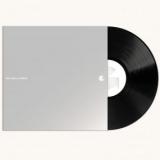
Annihilator - Carnival Diablos (2x12")

Annihilator

Carnival Diablos (2x12")

2x12inch4029759175254
Ear Music
17.04.2026
  • A1: Denied
  • A2: Battered
  • A3: Hunter Killer
  • A4: Time Bomb
  • A5: Carnival Diablos
  • B1: The Perfect Virus
  • B2: The Rush
  • B3: Insomniac
  • B4: Epic Of War
  • B5: Liquid Oval
  • B6: Shallow Grave
  • B7: Chicken And Corn (Hidden Track)

Carnival Diablos is an album of red-blooded metal that connected Annihilator’s legacy to their present-day and re-established Jeff Waters’ place in the thrash pantheon. From the frenzied call-and-response of album opener ‘Denied’ to the progressively-edged mid-tempo sway of the title track, Carnival Diablos is a wholly satisfying offering of steak and potatoes heavy metal thrash – more heavy metal, less thrash, but 100% Annihilator at one of their many peaks.

pre-ordina ora17.04.2026

dovrebbe essere pubblicato su 17.04.2026

25,59
FAITH NO MORE - WHO CARES A LOT? THE GREATEST HITS

Who Cares A Lot? The Greatest Hits spotlights some of the biggest tracks released by Faith No More between 1987 and 1997. It includes massive hits such as “Epic”, “Easy”, “Evidence” and their first single “We Care A Lot.”

Presented in chronological order, this collection highlights the journey Faith No More went on, starting with tracks such as “We Care A Lot” and “Introduce Yourself”; tracks sung by original lead singer Chuck Mosley. After his departure in 1988, the band turned to current frontman Mike Patton, who’s first album with the band was the renowned “The Real Thing.”

Faith No More have maintained a cult status, being widely credited for developing alternative metal and having influence on bands such as Limp Bizkit and Slipknot. Founding member and bassist of Nirvana, Krist Novoselic, cites Faith No More as one of the bands who paved the way for Nirvana. This record presents a true celebration of Faith No More’s music and is on gold vinyl for the first time.

The band had previously announced a European tour in 2020, which had to be postponed due to the COVID-19 pandemic. These dates have now been rearranged for dates across the UK and rest of Europe during June and July of 2021, with an Australia and New Zealand tour to follow.

pre-ordina ora17.04.2026

dovrebbe essere pubblicato su 17.04.2026

39,18
Various - Randy's 50th Anniversary  Chapter Two (2x12")
 
25
disponibile anche

Chapter One[36,35 €]


RANDY'S 50th ANNIVERSARY CHAPTER ONE / VARIOUS - First time on vinyl for Chapter Two second part of the acclaimed previously CD only set that was released to celebrate the 50th Anniversary of Randy's Records. From Augustus Pablo's groundbreaking 'Java' to Carl Malcolm's UK pop crossover hit 'Fattie Bum Bum' Chapter Two showcase classic after classic from a all-star line up of the 70's reggae music greats including Black Uhuru, Horace Andy, Dennis Brown, Gregory Isaacs, The Heptones & Big Youth. Beautifully packaged with inner sleeves featuring rare photos and liner notes by reggae historian, Dennis Katz.

pre-ordina ora17.04.2026

dovrebbe essere pubblicato su 17.04.2026

36,35
The Bluebeaters - Trinity (7")

The Bluebeaters

Trinity (7")

7"-VinylCARIBB701
Caribb Roots
17.04.2026

The Bluebeaters enjoyed a revival with their 2025 album Everybody Knows, released by Record Kicks. In 2023, to be included in a compilation created by Freedom Sounds Festival in Cologne (Germany), we reworked an extra track entitled TRINITY that had been left off the album. In addition to being included in the compilation, it became the first single on 7-inch vinyl released by the newly formed Caribb Roots.

Although we played it live, the recording of the song had been left half-finished, so we picked it up again, recorded the horns and vocals, and finished mixing it.

The song is linked to the very Italian tradition of Western film soundtracks, and Trinity is a seminal song in this sense.

pre-ordina ora17.04.2026

dovrebbe essere pubblicato su 17.04.2026

11,98
John Frusciante - The Empyrean

John Frusciante

The Empyrean

2x12inchRCM101120LP
Record Collection
17.04.2026

Repress of the 10 year anniverssary vinyl reissue of “The Empyrean” By John Frusciante cut for the original analog tapes at Bernie Grundman’s mastering. includes hi res audio download card. THE EMPYREAN is the eighth solo album by JOHN FRUSCIANTE. It was originally released in January of 2009, reaching number 151 on the US Billboard 200, 105 on UK Albums Chart and number 7 on the Top Heatseekers. It contains contributions from RHCP bandmate FLEA and former guitarist of The Smiths Johnny Marr. John Frusciante is an American guitarist, singer, composer, and producer. He is best known as the guitarist of the rock band Red Hot Chili Peppers. He recorded five studio albums with them and was recently inducted into the ROCK & ROLL HALL OF FAME. Frusciante has an active solo career, having released twelve solo albums and five EPs; his recordings include elements ranging from experimental rock and ambient music to new wave and electronica. He has also recorded with numerous other artists, including the Mars Volta, for whom he was a studio guitarist (and occasional live performer) from 2002 until 2008; Josh Klinghoffer and Joe Lally, with whom he released two albums as Ataxia; and various collaborations with both Klinghoffer and Omar Rodríguez-López. He has also produced and/or recorded with Duran Duran, Wu-Tang Clan, Swahili Blonde, Black Knights, The Bicycle Thief, Glenn Hughes, Ziggy Marley, Johnny Cash, George Clinton, Johnny Marr, Dewa Budjana and others.

pre-ordina ora17.04.2026

dovrebbe essere pubblicato su 17.04.2026

28,95
Carmy Love - In The Morning / Together Again

Carmy Love is mainstay of the Big AC Records label by now with the likes of 'Rebel', 'Together Again' and 'Thinkin Bout You' all establishing her sound. Here she embodies a love of, or certainly respect for, Southern Soul here with a bog and bold stomper that has brassy horns and loose tambourines backing a lung busting vocal that is powerful and emotive. It's a track that has an authentic old school sound but with modern production heft. Flip it over and you'll find the equally magical 'Together Again' which is a slower sound that sinks in deeper and with more pain.

pre-ordina ora17.04.2026

dovrebbe essere pubblicato su 17.04.2026

18,03
Twoosty Mayonez - Niezłe Bagno

Twoosty Mayonez is a duo consisting of Bartosz Wolert (drums) and Kornel Karolak (synthesizers), creating post-jazz music and is considered to be part of the new Polish wave of this genre. The album is a continuation of the story begun in 2123, when Captain Harrison Focus, as a result of an emergency landing of his rocket, lands on the unknown planet Carmin. This story was described and released by U Know Me Records and this is how the (universe) world learned about Twoosty Mayonez. Their latest album is a story about what happens on the surface of the mysterious planet Carmin. This time, the main character of the album is Triceradiplodocus. The songs show changes in mood and atmosphere. The music is full of energy, harmony and emotions that reflect the diversity of the world the hero goes through.

All compositions were created on a weekend in September 2023, as a result of the duo's collective improvisation. The recordings were made at the Twoosty Room studio in Warsaw by the band's drummer.

The album features guest appearances by: Alicja Sobstyl (flute), Ola Szmidt (vocals), Wojtek Mazolewski (double bass), Olaf Węgier (sax). The cover was designed by Dominika Kiszkiel, and the mix and mastering was done by Maciek Goliński (Envee). The album, released in LP and digital formats by U JAZZ ME Records, is scheduled for January 9, 2025.

pre-ordina ora17.04.2026

dovrebbe essere pubblicato su 17.04.2026

37,77
ISAO SUZUKI - STRING BAND (1978)
  • A1: Nica's Dream
  • A2: Avenue
  • B1: Greensleeves
  • B2: Lamento
  • B3: Sheila's Song

This album was recorded by Isao Suzuki with an international string band lineup featuring Hank Jones, Roy Haynes, and Ron Carter. Widely supported by jazz fans both in Japan and abroad, it remains highly sought after and continues to command strong popularity on the used market.

Bass (Piccolo Bass): Isao Suzuki
Bass: Ron Carter
Piano: Hank Jones
Drums: Roy Haynes

pre-ordina ora17.04.2026

dovrebbe essere pubblicato su 17.04.2026

43,49
Various - Tchic Tchic: French Bossa Nova 1963-1974  Colored Edition LP 2x12"
  • A1: Les Masques - Il Faut Tenir (1969)
  • A2: Isabelle Aubret - Casa Forte (1971)
  • A3: Christianne Legrand - Hlm Et Ciné Roman (1972)
  • A4: Jean Constantin - Pas Tant D'chichi Ponpon (1972)
  • A5: Billy Nencioli & Baden Powell - Si Rien Ne Va (1969)
  • B1-: Marpessa Dawn - Le Petit Cuica (1963)
  • B2: Jean-Pierre Sabar - Vai Vai (1974)
  • B3: Sophia Loren - De Jour En Jour (1963)
  • B4: Isabelle - Jusqu’à La Tombée Du Jour (1969)
  • B5: Sylvia Fels - Corto Maltesse (1974)
  • C1: Frank Gérard - Comme Une Samba (1972)
  • C2: Ann Sorel - La Poupée Des Favellas (1971)
  • C3: Charles Level - Un Enfant Café Au Lait (1971)
  • C4: Andrea Parisy - Les Mains Qui Font Du Bien (1970)
  • C5: Audrey Arno - Quand Jean-Paul Rentrera (1969)
  • C6: Aldo Frank - T’as Vu Ce Printemps (1970)
  • D1: Christianne Legrand - Cent Mille Poissons Dans Ton Filet (1972)
  • D2: Clarinha - Lemenja (1970)
  • D3: Hit Parade Des Enfants - Aquarela (1976)
  • D4: Jean-Pierre Lang - Tendresse (1965)
  • D5: Magalie Noël - Une Énorme Samba (1970)
  • D6: Françoise Legrand - La Lune

Ever since the late 1950s bossa-nova revolution, Brazil’s influence on French music has been undeniable. Pierre Barouh, Georges Moustaki and a vast array of lesser known artists, all made the Musica Popular Brasileira (MPB) an axis of promotion at the service of a cool and metaphysical, modern and mixed Brazilian lifestyle. Some were seduced by the poetic languors of the bossa, some were looking for fun, and others just loved the American hybridization of jazz-bossa, jazz-samba.


What is bossa nova? One of its creators, Joao Gilberto said: "Its style, cadence, everything is samba. At the very start, we didn't call it bossa nova, we sang a little samba made up of a single note - Samba de uma nota so .... The discussion around the origins of bossa nova is therefore useless”. It is nevertheless useful to remember that these magnificent Brazilian songs, which the guitarist describes as samba, were shifted and balanced around improbable chords. "I like things that lean, the in-betweens that limp with grace," said Pierre Barrouh, quoting Jean Cocteau.


With emotion, arrangements for violin and supple guitar licks, bossa nova rapidly changed. A transformation that can be heard in the Tchic, tchic, French Bossa Nova 1963-1974 compilation, the result of a cultural reappropriation, which traveled through the United States and supplemented itself in France.

A musical revolution that has remained significant, bossa nova was born in Rio. From 1956 to 1961, Brazil lived through its golden years. In five years, the country had invented its modernist style. Elected president in 1956, Juscelino Kubitschek de Oliveira, an elegant man with a broad forehead, brandished a promising slogan: "Fifty years of progress in five years". He quickly got to work. Not worried about increasing debt, he launched the project for a new federal capital, Brasilia, designed by the communist architect Oscar Niemeyer. Volkswagen opened state-of-the-art factories and created the “fusquinha”, the Beetle. In Rio, the Vespa made its first appearance. The Arpoador Surf Club crew run into the “girl” from Ipanema, Helô Pinheiro - the tanned garota ("chick"), between a flower and mermaid, who at 17 walked by the Veloso bar, where the fiery author and composer, Tom Jobim and Vinicius de Moraes, were getting drunk on whiskey. From then on, bossa symbolized cool.

In 1958, Joao Gilberto recorded Chega de Saudade, which the directors of Philips denied, calling it "music for fagots". The marketing director, who believed in it, secretly pressed 3000 78-inch vinyls and distributed them at schools around Rio, creating a tidal wave.

American jazzmen then took over. In particular, trumpeter Dizzy Gillespie and guitarist Charlie Byrd. In November 1962, the Brazilian Ministry of Foreign Affairs funded a "Bossa-Nova" concert at Carnegie Hall in New York, inviting the genre’s pioneers. Unprepared, the show soon turned to disaster. But the troupe was invited to the White House by Jackie Kennedy. The first lady loved "the new beat" and in particular Maria Ninguem, a song by Carlos Lyra, later covered by Brigitte Bardot.

In Brazil, the 1964 military coup quickly ended this euphoria. The destructive atmosphere that ensued pushed many Brazilian musicians to leave, if not to exile. Thus, Tom Jobim, Sergio Mendes and Joao Gilberto arrived to the United States. In New York, Joao Gilberto met saxophonist Stan Getz. At the time, he was married to the Bahianese Astrud Weinert Gilberto, who had a German father. She had never sung before, but she knew how to speak English. Getz therefore asked her to replace her husband on The Girl From Ipanema. The Getz/Gilberto record with Tom Jobim on piano, was released in March 1964. Phil Ramone, the "pope of pop" was in charge of sound.

Bossa nova arrived in Paris through the classic “guitar-voice” channel (Pierre Barouh, Baden Powell, Moustaki…) But France loved jazz and Paris had already welcomed its American contributors. All these good people were to pass through Saint-Germain-des-Prés. The cabaret l'Escale became the Mecca of Latin American sound where one could find Pierre Barrouh and his friends, such as the Camara Trio, samba-jazz aces, whose only record was published by the Saravah label. With a band strangely called Les Masques (a band that included Nicole Croisille and Pierre Vassiliu, among others), the Camara Trio recorded an interesting Brazilian Sound, including the track Il faut tenir which is present on this tasty compilation of rarities.

Other enlightened musicians can also be found on the compilation, such as Jean-Pierre Sabar (songwriter for Hardy, Auffray, Leforestier ...) and the French pop rock organist Balthazar. In 1975, Sabar recorded Aurinkoinen Musiikkimatka on a Finnish label, which featured the crazy Vai, Vai, included on this record. We are now following the footsteps of Brazilian electronic musicians such as Sergio Mendes, Eumir Deodato or Marcos Valle who created funk and disco sounds on their keyboards and synthesizers. A style that influenced Véronique Sanson when she wrote Jusqu’à la Tombée de la nuit in 1969 for Isabelle de Funès, the niece of Louis and a great friend of Michel Berger - Sanson did end up singing this track on her 1992 Sans Regret record.


The pinnacle of exoticism and travel, Sylvia Fels’ Corto Maltese includes bongos, sea mist and ocean sounds. The title was taken from Jacky Chalard’s concept album written in 1974, Je suis vivant, mais j’ai peur (I am alive, but I am scared), based on Gilbert Deflez’s science fiction novel.


However, bossa nova extended the scope of popularity. "In the 1970s, I was a fan of Sergio Mendes, Getz / Gilberto. I fell in love with this music that I knew because I had been an orchestral singer, " explained Isabelle Aubret, who in 1971 delivered a composite record of covers by the very funky Jorge Ben, Orfeu Negro, Tom Jobim, Vinicius de Morais and Jean Ferrat. "I recorded this album for Meys Records in Paris, far from Brazil, with wonderful musicians, François Raubert, Roland Vincent, Alain Goraguer...". The latter wrote the arrangements for Casa Forte, a very percussive title borrowed from Edu Lobo, one of the initiators of the bossa who spent time in California. "Jazz and bossa came together and produced very rhythmic music. I love singing, it allows me to dream, to have fun, to feel a high on stage, and these songs brought me joy, made me swing, my singing felt like a dance.”


The world tours of French singers and their desire for the tropics, often brought them to Rio with its hills, forests, caipirinhas and tanned bodies. There are surprises though, like this Iemenja (Iemenja is the goddess of the sea in the Afro-Brazilian candomblé religion). Not unlike the composer and musician Jean-Pierre Lang, based in Sao Paulo, Claire Chevalier taught Brazil to Brazil. In 1970, the singer and painter published a 45-inch vinyl, Mon mari et mes amants (My husband and my lovers), under the improbable pseudonym of Clarinha (little Claire). She was then living in Rio, with her husband, Joël Leibovitz, who founded a band called Azimuth, and who owned a record label specialized in "sambas enredos" songs for samba school parades.


For its B side, she asked Pierre Perret to come up with lyrics for a song composed by Carlos Imperial: "Oh goddess of the sea, o goddess Iemenja, I bring a white rose to adorn your long hair ..." . "Perret came to see us, and we had fun, remembers Joël Leibovitz. We wrote Lemenja for fun, we recorded it at the Havaí studio, behind the Central do Brasil the central station. Erlon Chaves, the arranger who worked with Elis Regina, joined us" adding his share of Afro-Brazilian percussions and funky brass to the mix.

There is a common misunderstanding in Franco-Brazilian history: that bossa, admittedly hedonistic, is perceived as funny, even though the poets who wrote the texts are often philosophizing on the human condition. Its French interpreters pull it towards a carnival inspired universe, far removed from its fundamental essence. Thus, Jean Constantin covered the famous Samba da minha terra, an ode to the art of samba written by the classic Bahian composer Dorival Caymmi, renaming it with the enticing title of Pas tant de tchi tchi pompon: "On your pier there is no tchi tchi / when you arch your back, you know everything is alright ”(lyrics by Gérard Calvi). This expedited bossa aims for the absurd, but retains a certain elegance.

Indeed, Jean Constantin was not an idiot, the rather large man had a huge mustache and liked fantasy, (Les pantoufles à papa, Le pacha, inspired by cha-cha-cha-cha, salsa and jazz) but he was also the lyricist of Mon manège à moi interpreted by Edith Piaf, the composer of Mon Truc en plume by Zizi Jeanmaire and the soundtrack of François Truffaut’s 400 Blows. Le Poulpe, published in 1970, from which this bossa is extract, was arranged by Jean-Claude Vannier, an accomplice of Serge Gainsbourg’s Melody Nelson. In short: "There is enough of samba / By looking at the parasol / Because my poor cabeza / Is going to die in the sun".

Even the American actress Marpessa Down, who was at the heart of the bossa nova revolution with her role as Euridyce in Marcel Camus’ film Orfeu Negro, winner of the 1959 Cannes Palme d'or, fed the clichée with Je voudrais parler au petit cuica - "Tell me how you manage to always make people want to dance / It's true, I must admit that I cannot resist your magic" - in consequence, once can hear the cuica, a little drum inherited from the Bantu.


But bossa nova had many angles. Societal, of course, pushing actresses who were symbols of women's liberation like Brigitte Bardot, Jeanne Moreau, or Sophia Loren to engage in the exercise of accelerated bossa. In February of 1963, Sophia Loren made a record in French in Rome, Je ne t'aime plus, featuring the song De jour en jour, a bossa written by two Italians, Armando Trovajoli and Tino Fornai, which was released a little later by Barclay. Bossa accompanied the 1960s, a decade of moral liberation. Ann Sorel, who interpreted La Poupée des favellas, caused a sensation with L’amour à plusieurs, a provocative song written by Frédéric Bottom and Jean-Claude Vannier. As for the actress Andrea Parisy, she displayed her bourgeois cheekiness in Marcel Carné's Les Tricheurs before interpreting Les mains qui font du bien. And Magalie Noël, the friend of Boris Vian, who sung Johnny fais-moi mal, was hired to sing Une énorme Samba, composed by Alain Goraguer (arranger to Gainsbourg, Bobby Lapointe and Jean Ferrat) with lyrics by Frédéric Botton.

But in the end, of what wood is bossa nova made of? The answer is given by Christianne Legrand, daughter of Raymond the conductor, and sister to Michel the composer: "With me, with jà" - jà means "immediately" in Portuguese. In 1972, the singer, an expert in vocal jazz and a member of the Double Six, published Le Brésil de Christianne Legrand. Two songs included on the Tchic Tchic compilation that demonstrate how bossa, jazz, funk, rock, etc. work like a swiss army knife: the music is used to denounce broken systems, or miracles, HLM et ciné roman, Cent mille poissons dans ton filet, two songs from the O Cafona soundtrack, a successful telenovela broadcast, at the time in black and white, on TV Globo. The first was adapted in French by the fighter and friend of the Legrand tribe, Agnès Varda. The second is content with a play on words, jostling them into a summer fun.


Véronique Mortaigne

pre-ordina ora17.04.2026

dovrebbe essere pubblicato su 17.04.2026

27,31
WALTER G & JAY CARUSO - FROM EAST TO WEST 12"

Walter G & Jay Caruso deliver a warm, groove-led Soulful Disco version of “From East To West”, built for DJ’s who appreciate real disco dynamics. Rolling basslines, bright piano chords and lush strings wrap around an emotive vocal, creating a timeless club-ready moment that bridges classic 70s soul-disco with modern dancefloor aesthetics. Ben Liebrand delivers a classic 12-inch reconstruction rather than a modern nu-disco vibe. It leans into Ben Liebrand’s signature extended format philosophy, letting the groove breathe. His is a rhythm-first reconstruction with crisp percussion, dynamic low-end and long instrumental sections. The vocal sits naturally within the groove, while the arrangement allows DJs space to build, ride and transition with ease. Less modern sheen, more heritage authority, a purist disco tool with timeless floor appeal.

pre-ordina ora17.04.2026

dovrebbe essere pubblicato su 17.04.2026

15,34
Dan The Drum x Stuart Patterson ft. Carmy Love - UK House Sermon
  • 01: Original-E Vocal Mix
  • 02: No'west 'Black Market' Vocal Mix
  • 01: X-Press 2 Wild Pitch Remix
  • 02: X-Press 2 Give Thanks Remix

‘UK House Sermon’ stands proudly alongside many US house fables and its delivery pays homage to the likes of The Streets, ‘Weak Become Heroes’, Ashley Beedle and Earl Zinger’s ‘Ghost Dancers’ and Daft Punk’s ‘Teachers’.

The 'UK House Sermon' trilogy is a behemoth of a project. The original concept of saluting the trailblazing UK House DJs was conceived by producer/remixer/DJ, Dan The Drum. He enlisted the amazing team of Stuart Patterson narrating, Carmy Love on vocals and musical maestro, Darren Morris on co-production and all additional instrumentation.

Legendary remix combo, X-Press 2 have waded in and rolled up their remixing sleeves to deliver two massive slabs of prime time house niceness. The 'Wild Pitch' remix is a dance floor destroyer of epic proportions with the 'Give Thanks' remix creeping up on you like a thief in the night. A magnificent brace of musical interpretations. Hats off to everyone involved.

pre-ordina ora17.04.2026

dovrebbe essere pubblicato su 17.04.2026

25,00
VARIOUS - INGERABLE (10")

INGERABLE, which means “inedible” or “unpalatable” in French, was the adjective a record label used to describe Cathy Claret when she showed them the song inspired by a Caló poem that is now part of our upcoming release, “Por el Chiben.” The piece was born in 1987 when the artist was living in Can Tunis (Barcelona), inspired by a poem she heard from Uncle Bastián. Years later, when recording her first album, she included this composition, but the artist was censored for not fitting commercial standards. Now, Alhaja Records revives it in an album with two versions: a flamenco one, featuring Emilio Caracafé on guitar, and an electronic one, produced by Wará.

pre-ordina ora17.04.2026

dovrebbe essere pubblicato su 17.04.2026

21,22
Various - Carnal Savana vol. 1

Solar Operandi is a new Parisian label born from a B2B project and developed into a curated platform rooted in electro and exploring its darker intersections with techno, acid and trance. It's focusing on peak-time energy with depth and character.

Its first various artists release, Carnal Savana Vol. 1, brings together standout producers from across the globe, each delivering a distinctive yet cohesive vision of modern electro. The compilation balances raw club functionality with refined sound design, built for powerful systems and late-night intensity.

pre-ordina ora17.04.2026

dovrebbe essere pubblicato su 17.04.2026

12,56
Morita Vargas - III

“III” is an intimate, cinematic and dream-like body of work — written, produced and mixed by Morita Vargas, and recorded in Buenos Aires between 2014 and 2025. The album was mastered by Rafael Anton Irisarri at Black Knoll Studio (NY), adding depth and clarity to its carefully built sonic landscape.

The visual world of the record is an essential part of the release. The cover artwork was crafted by Juliana Guglielmi, Ariadna Aylen Barrios, and Noelia Garreffa, whose combined vision creates a unified visual narrative that reflects the album’s emotional depth and atmospheric essence. The LP layout and full manufacturing realization were carefully executed by Ilja Tulit, translating the complex design ideas into their final tangible form of a vinyl release.

“III” marks a special release for Hidden Harmony Recordings. Morita Vargas was among the first artists released when the label began in 2020–2021, and her work played an important role in shaping the spirit and direction of Hidden Harmony.

pre-ordina ora17.04.2026

dovrebbe essere pubblicato su 17.04.2026

27,52
JULIE CHROME - STOP - DRAGGIN' MY HEART AROUND EP

Some records feel like they should have existed. This is one of them.Originally buried as an album cut in the catalog of C. C. Catch, ‘Stop – Draggin’ My Heart Around’ never received the maxi single treatment it always deserved. For decades, fans of Dieter Bohlen’s signature sound have been left wondering what could have been… no extended mix, no dub, no proper club version… Until now.

Julie Chrome steps in with a strikingly faithful reinterpretation, capturing the emotional tone and melodic essence of the original, while Ryan Benson carefully reconstructs the sonic blueprint, staying true to that unmistakable mid-80s German disco aesthetic of Luis Rodriguez. Think shimmering synths, tight Linn-style drums and that bittersweet, dramatic tension Bohlen/Rodriguez and Co. perfected. But this release goes further than nostalgia. On this maxi, the track finally unfolds the way it always should have. Fully extended, club-ready, and built for the dancefloor. The Long Version delivers that essential 80s arc: slow build, emotional lift, and extended instrumental passages made for mixing. The Dub Version strips it back into a hypnotic tool, pure drums, synth stabs and atmosphere, tailored for late-night transitions and deeper sets. The Radio Version and Alternative Radio Version complete the package, offering two concise takes that still retain all the charm, drama and melodic punch of the original composition. This is more than a tribute, it’s a carefully crafted time capsule. From the production to the artwork and label aesthetics, everything here is designed to transport you straight back to 1986. For fans of classic German disco, collectors of lost Italo-adjacent gems, and DJs who know the power of a well-placed nostalgic moment – this one hits deep. A record that finally corrects history.

pre-ordina ora17.04.2026

dovrebbe essere pubblicato su 17.04.2026

18,91
Various - Digging Central Asia: Musical Archaeology Along the Silk Road LP

Death Is Not The End collaborate with Uzbek label Maqom Soul to deliver an LP counterpart to last year's mixtape of the same title, compiling specially picked & fully licensed individual belters from the ex-soviet studios of Central Asian republics between 1978 and 1989 - incl. Uzbek, Tajik, Kurdish & Uyghur artists pulling traditional folk motifs together with pop & rock and psych elements.

"These recordings do not form a smooth or coherent history. They feel more like a sequence of discoveries made at different moments and in different circumstances. Songs and instrumental pieces that once lived inside specific contexts radio broadcasts, philharmonic programs, touring routes now sit side by side, revealing hidden connections as well as clear fractures between them.

Nasiba Abdullaeva appears here as a voice from the end of an era. Trained within a conservatory system, she worked inside the format of the Soviet pop song while filling it with melodic logic that did not come from Moscow or Leningrad. Her voice is soft and sustained, shaped by Eastern melisma, and it never functions as decoration. Even in tightly structured songs there is a sense of resistance, an effort to preserve a musical language rooted in Uzbek tradition rather than fully adapted to an all Union standard.

The ensemble Sintez, later renamed Navo, represents a different path. Beginning as a student rock group, the band was gradually absorbed into the official VIA system with all its limitations and compromises. Yet it was precisely within those boundaries that Sintez and Navo developed a recognizable sound. Electric guitars and jazz rock harmonies do not overpower the folk material but remain in tension with it. Their recordings feel like negotiations between what the musicians wanted to play and what they were allowed to perform.

The Tajik ensemble Gulshan reflects an institutional approach carried to a high professional level. Formed under television and radio structures, the group treated folk material almost as a written score. Carefully constructed arrangements, close attention to orchestration, and restrained use of pop techniques define their sound. There is less spontaneity here, but a strong sense of discipline and structure, where national melody becomes part of a carefully controlled sonic framework.

Koma Wetan occupies a very different space. Formed in the 1970s, this Kurdish rock group approached poetry and folklore as tools of cultural assertion. Their psychedelic rock never feels like a stylistic borrowing. Instead it functions as a contemporary vessel for language and themes that might otherwise have remained unheard. Even today these recordings sound fragile and stubborn at the same time.

The Uyghur ensemble Yashlik, closely connected to a musical drama theatre, operated somewhere between stage performance and popular music. Their songs are built on folk melodies but shaped for wide audiences. What emerges is a constant attempt to preserve the recognizability of Uyghur musical identity without freezing it in a folkloric frame. Yashlik's music exists in a state of balance between representation and development.

Digging Central Asia does not attempt to establish hierarchies or offer a single wayof listening. Names and dates matter less than the sound itself. Tape noise, abrupt transitions, and unexpected timbres remain part of the material rather than flaws to be corrected. This music existed at the crossroads of multiple routes geographic, cultural, and ideological. Heard today in a new context, it no longer feels peripheral. Instead it stands as a reminder that the history of popular music is far more fragmented, layered, and polyphonic than it is usually allowed to be."

pre-ordina ora17.04.2026

dovrebbe essere pubblicato su 17.04.2026

22,48
Purple Disco Machine - Dished (Male Stripper)

Collecting Orders For 2025 Repress

Backing it up can mean so many things. According to the urban dictionary, it means to carry on drinking the next day in spite of a rather large one the night before. According to Apple, it means to take your I-phone and attach it to an I-pad or Apple Mac - and copy the information to the cloud. Or the device. But in music.....what we mean is basically this....."Damn......that was a big hit......how the hell are they going to emulate that success on the next one."And it's hard for so many reasons. Was it luck Timing That one in a million sample With all the pressure, soon the artist can start second guessing themselves........and that's when backing it up becomes a real problem.But not for our boy PURPLE DISCO MACHINE. If BODY FUNK, his last outing on CLUB SWEAT, wasn't one of THE biggest songs of last year, from Ibiza to Miami and back again.....played by every single DJ under the sun, from BLACK MADONNA to JAMIE JONES to your mama......then I'm not sitting at my lap top writing this shpeel....which I'm very sure I am. AND I'm going to back myself (see what I did there) - and say that DISHED (MALE STRIPPER) is the best way to back up a hit ever. With another hit. Doesn't sound the same....doesn't worry about what the last one did...just does what it does.....which to be honest - is GO OFF!!!! It builds and builds and builds and......In the same way that BODY FUNK masterly made the sum of 2 disco songs bigger than their parts had ever been, this time PDM takes some Italo Disco from MAN TO MAN MEET MAN PARRISH's MALE STRIPPER and mashes it with the aptly named ELLIS D's DISHAPELLA to create a 12/10. Back it up PDM - you are a legend!!!!

pre-ordina ora17.04.2026

dovrebbe essere pubblicato su 17.04.2026

13,66

Last In: 2 years ago
Gigi - Illuminated Audio (2x12")

180g Heavy double vinyl LP with liner notes by Tyran Grillo. Limited Japanese Obi for the first pressing. Original artwork by Russell Mills and photography by Jean-Baptiste Mondino.

The third Time Capsule is a body of dub reinterpretations by celebrated producer Bill Laswell of Ethiopian singer Gigi. Curated by Tokyo record collector, music researcher and seasoned reissue supervisor Ken Hidaka, it is the first time Illuminated Audio is pressed to vinyl after its CD release in 2003.

Ejigayehu Shibabaw was born in 1974 in Chagni, northwestern Ethiopia and by pursuing a career as a singer, went against her father’s strict, traditional gender roles. As Gigi, she embraced the same musical freedom she had strived for in her personal life, incorporating the Ethiopian church, funk, hip-hop, West and South African music into her work. She first settled in Nairobi, then Addis Ababa, where she quickly established herself as one of the city’s leading singers. A move to San Francisco in 1998 led to a long and fruitful creative partnership with bassist and producer Bill Laswell.

Around the same time, Chris Blackwell had stepped away from Island Records to start the art house film company and label Palm Pictures. He took an interest in Gigi and together with Laswell, pulled together an all-star cast of musicians for her self-titled US debut album, including Herbie Hancock, Pharoah Sanders and Wayne Shorter. It won international critical acclaim, not just for its musicianship but for making Gigi a “defining voice for the Ethiopian expatriate community”, as journalist Tyran Grillo praises in his Time Capsule liner notes. From the nation-defining 1896 victory over Italian invaders to the quiet revolutionaries who wear simple shemma garments, Grillo believes the themes in Gigi make it “a shower of sunlight on her homeland for those ignorant of its struggles.”

After its success, Blackwell encouraged them to go back into the studio to rethink the album and Illuminated Audio was born. “Anyone can make a voice sound worldly”, Grillo remarks, “but rare are those who can make one sound inner-worldly.” Gigi was clear with Laswell to give her vocals a minor role “because it’s already been done.” Instead her Amharic verse is fleeting, exhaling through the textures like ghostly fragments; soaring yet muted. Yet the album is still titled under her name, an assertion by Laswell of her central role in the album’s creation. Not only was it a fully endorsed project by Gigi, but she would be present throughout its development, giving feedback on half-finished ideas as Laswell played them back in the studio. “It works perfectly”, she reflected after the album’s release. “We wanted to capture the whole spirit of each track, and Bill’s remixes create a different music language that really puts you in a pleasant place”.

This new vocabulary takes its lead from a technical approach that Laswell had been perfecting during a furtive creative period at the turn of the millennium. Much like his ambient interpretations of Miles Davis (Panthalassa, 1998), Bob Marley (Dreams of Freedom, 1997), and Carlos Santana (Divine Light, 2001), Laswell approached Illuminated Audio by returning to the original multitrack masters. Gigi wasn’t just reworked, but recomposed into an expansive lattice of instruments, submerged in a watery ambience of dub and trance undercurrents.

Sonically, this new language that Gigi refers to, is manifested by the original album’s more understated parts being pushed to the fore. Explaining his contrasting methods, Laswell saw Gigi as being “put together in a way that fits”. Contrastingly, in Illuminated Audio, “a lot of things that I featured in the remix weren’t as audible in the original.” Instrumentation laying near-dormant, deep in the mix, are brought to the fore: the acid rock guitar and Wayne Shorter’s saxophone on ‘Tew Ante Sew’, Graham Haynes’ flugelhorn on ‘Nafekeñ’, Laswell’s bass on ‘Kahn’, the melodica in Mengedegna or the floating synths and talking drums in ‘Gud Fella’.

Brought to his attention by mentor DJ Nori, Hidaka describes Illuminated Audio as a “masterful sonic exploration into ethereal ambience and dub” and made sure this reissue also contained a full remaster to give its “deep musicality” much better dynamics and density in the overall sound. Hidaka admits that Laswell's music “is sometimes so out-there, it is often misunderstood” and, indeed, to dub album non-believers this might seem like a prolific producer imposing himself on another artist’s work; eternally developing rearrangements that never quite get to its destination. But that’s missing its true power and triumph. This is more than the reissue of a remix, but “a wholly unique musical entity”, as Hidaka describes. Illuminated Audio refers to the illuminated manuscripts that comprise the major part of Ethiopian art and its new compositions stand in proud solitude as a rare body of reworks that both informs and enhances their originals.

pre-ordina ora17.04.2026

dovrebbe essere pubblicato su 17.04.2026

18,07
Kamal Abdul-Alim - Dance

Accomplished trumpeter, composer, bandleader and educator, Kamal Abdul-Alim has been actively involved in creative music for decades. He has toured Africa, Europe, the Caribbean and the United States. He has recorded with all kinds of bands, large and small, and performed in festivals all over the world. “He takes the postbop of the 50s and free-form jazz of the 60s and turns it into an even balance of fine textures. Alim, who is highly underrated, has one of the most beautiful tones and concepts of jazz. A master of improvisation, he knows the art of weaving different ideas, whether they stem from Manhattan’s lower East Side or Europe” (Hugh Wyatt, New York Daily News). “Dance” was recorded in 1983 but first released on vinyl in 1987. Rhythm section includes drummer Idris Muhammad. Original pressings are extremely rare and expensive. “Brotherhood” is a much sought after track on the jazz dance scene. There is a high demand for this title again on vinyl and pressings are limited to 1000 copies, all individually hand numbered.

pre-ordina ora17.04.2026

dovrebbe essere pubblicato su 17.04.2026

28,53

Last In: 4 years ago
Articoli per pagina:
N/ABPM
Vinyl