A sunny and flamboyant spirit, the brazilian João Selva carries us away with his new wave album “Onda” - Underdog Records /2025.
Navegar (“to sail”) in 2021, Passarinho (“lit-tle bird”) in 2023... through the titles of these last two albums, João Selva will have displayed his ambitions and ideals: to fluidly and swiftly connect the musical components of a Black Atlantic that would extend from Brazilian samba to Angolan Semba, from Cape Verdean funaná to Caribbean zouk via Congolese rumba and American funk. His new album Onda continues to ride this same wave, crowning a luminous transatlantic artwork, imbued with sensuality and joie de vivre.
quête:cari
Einige nannten Studio, das Projekt der schwedischen Musiker Dan Lissvik und Rasmus Hägg, "das fehlende Glied zwischen The Cure und Lindstrom", Pitchfork hörte Durutti Column und Can, als das Duo sich als Teil einer sich locker entwickelnden Szene entfaltete - zunächst neben dem Label Service (Jens Lekman, The Whitest Boy Alive) und später Sincerely Yours (The Tough Alliance, jj) - und den Boom der 2010er Jahre an der Schnittstelle von elektronischer und psychedelischer Musik, angeführt von Indie-Größen wie Caribou, Four Tet und Darkside, vorwegnahm. "West Coast, ihr bahnbrechendes Debüt aus dem Jahr 2006, fängt eine ferne Romantik der Balearen ein, die auf Krautrock, Disco, Dub und Afrobeat trifft, mit Pop-Lyrik aus dem New Wave, modernisiert von zwei Göteborger Kunsthochschulabsolventen. Sie zitieren DJ Screw, J Dilla und Joy Division sowie fühe 80s Live-DJ-Sets von Beppe Loda, DJ Mozart und Baldelli. Damals auf Vinyl gepresst in limitierter Auflage über ihr eigenes Information-Label und bis heute auf den meisten Streaming-Diensten nicht zu finden. Im Nachglühen des Albums im Jahr 2007 verschwanden Studio hinter einem Berg von Remix-Anfragen (darunter ein Remix für Kylie Minogue, der veröffentlicht wurde) und der Bürokratie des Labels. Eine erweiterte Version des Albums erschien unter dem Titel "Yearbook 1" auf CD und erreichte Platz 23 der Pitchfork-Jahresliste der Top-Alben des Jahres 2007. "West Coast" landete schließlich auf Platz 57 auf der "Best Albums of the Decade"-Liste von FACT Magazine.
Mint Condition - A record label focused on excavating the outer fringes of classic House and Techno. Unreleased mixes, classics, overlooked gems and never heard before material, mined from the last 30+ years of contemporary dance music are the order of the day. From Chicago, Detroit and New York, London, Leeds, Berlin and beyond. Mint Condition have got their digging hats on to bring you exclusive heat and those rarer than rare jams that have been in your wants list for years. Dig in......
Following on from highly successful releases on seminal labels such as Surreal, Low Pressings and their own Geek imprint, Andy Davies & Dave Clements, aka Spincycle, unleashed 'Making Faces' on Bushwacka's legendary Oblong Imprint. Originally released in 2002, this release perfectly showcases the duo's unique take on the tech-house & garage sounds that fuelled the UK underground. Over the next 2 decades this classic would become an in demand rarity, as the eye watering discogs prices will attest, so a reissue has been long overdue.
'Making Faces' opens with infectious bongo led percussion, building with crisp hats and snares, the heavyweight bass is deep and warm, dreamy chords add to the atmosphere, before a soaring lead line that oozes with techy soul, builds and drops in all the right places. Next up, UKG inspired 'Twister' is more raw and uncompromising in its approach. Energetic swinging rhythms underpin a monstrous sub bass line to die for, as if that wasn't enough, the duo manage to add yet another rolling bass line showcasing production and programming skills of the highest order.
This is indeed a killer 12", packed with energy and heat that sounds as fresh and exciting as ever, and what's more your dancefloors will shudder!! 'Making Faces' has been legitimately re-released with the full involvement of Spincycle, lovingly remastered by London's Curve Pusher from the original DATs especially for Mint Condition. 100% legit, licensed and released. Dug, remastered, repackaged and brought to you by the caring folks at your favourite reissue label - Mint Condition!!
- A Boq Adama Stvoriv Rukama
- Marijo Deli Bela Kumrijo
- Koj Ce Ti Kupi Al Kanarice
- A Sto Ti Je Mila Kceri
- Gusta Mi Magla
- Oy Ne Xodi Barabasu
- Mire Lukaviy
- Oy U Poli Verba
- Oy Çiy To Kinn Stoit
- Poroy Odinokoy Uniloy (Live)
- Tuman Yarom, Tuman Dolinoyu (Live)
- A Boq Adama Stvoriv Rukama (Live)
- Ixav, Ixav Kozak Mistom (Live)
- Qey, Nalivayte Povnii Çari (Live)
- Spivsya Kozak, Spivsya (Live)
- Kales Bre Ando (Live)
- Vixoyu Odin Ya Na Doroqu (Live)
- Tixo Nad Riçkoyu (Live)
Experience the unfiltered essence of Carín León with the Latin GRAMMY-nominated album, Boca Chueca, Vol. 1. The chart-topping album dives into the artist's struggles and personal demons, offering raw, street-inspired lyrics and bold storytelling. It's a powerful journey of self-reconciliation and reinvention, set to captivate and resonate deeply. The album includes 19 tracks and showcases Carín experimenting with a variety of genres such as rock, country and pop.
- 01: Alejandro Mendoza - Cumbia Indígena
- 02: Alejandro Mendoza - María
- 03: Alejandro Mendoza - Solo Botas
- 04: Andrés Narváez - No Tengo Na&Apos;
- 05: Andrés Narváez - Me Voy Pa&Apos; La Europa
- 06: Ismael Ortíz - Los Aguacatales
- 07: Ismael Ortíz - Suénale El Tambó
- 08: Ismael Ortíz - Acabación De Ismael
- 09: Marqueza Mercado - Cumbia En El Magdalena
- 10: Marqueza Mercado - Mujer Costeña
- 11: Marqueza Mercado - Que No Muera El Folclor
In 2019, Resistencia Sonora was launched as a collaborative project where urban resistances and ethnic-peasant rural resistances converge in the greater area of Montes de Maria, situated in Colombia's western Caribbean region. This initiative originates in one of the musical epicenters of ancestral sounds that have fostered a now global recognition for styles such as gaita, cumbia, bullerengue, son palenque and son de negro, as well as Sabanero accordion music like porros and pajaritos.
The aim of this extensive project has been to serve as a rare living archive of festive gatherings, conversations, knowledge exchange, and co-creative processes that have spawned specifically from the municipality of Ovejas, which sits in the Sucre Department of Montes de Maria. Resistencia Sonora's documentation in Ovejas is more than just a musical recording, rather an all-encompassing snapshot of a very real folkloric life within neighborhoods such as El Bolsillo, El Corea and La Ciudadela. The initial inspiration of the project can be credited to a specific call to arms from composer Andrés Narváez, who expressed the dream to record his own original compositions set amongst this region's local history. Andrés, like many leaders from the old sabanas beyond Montes de Maria, is a social leader and land-rights activist. He proposed not only to record his songs but also to invite other musicians and composers to take part in this documentation, an extended hand to uphold the legacies, knowledge, and traditions of the region's elders.
All songs recorded between 2022-23 on location in Ovejas and Bogotá, Colombia. Mixed in Brooklyn by Names You Can Trust and mastered by Frank Meritt at The Carvery, London. Limited Edition 250 vinyl press with included 12-page booklet and liner notes in English and Spanish.
no UPS shipping possible !!
EN: Now NEW with changed recipe - without alcohol!
With the purchase of the DISCO-ANTISTAT MIXTURE, you have taken a decisive step towards cleaning and caring for your valuable records.
As of today, you can effortlessly clean old and heavily soiled vinyl records thoroughly and make them antistatic. Even vinyl records that have been played wet can be played back dry.
But even new vinyl records become immediately antistatic by a bath in the DISCO-ANTISTAT MIXTURE, even with sensitive measuring devices a static charge can no longer be detected.
Now also very suitable for shellac records!
DE: Jetzt NEU mit geänderter Rezeptur - ohne Alkohol!
Mit dem Kauf der DISCO-ANTISTAT MIXTURE haben Sie einen entscheidenden Schritt zur Reinigung und Pflege Ihrer wertvollen Schallplatten getan.
Ab heute können Sie alte und stark verschmutzte Schallplatten mühelos gründlich säubern und antistatisch machen.
Selbst nass abgespielte Schallplatten können wieder trocken abgespielt werden.Aber auch neue Schallplatten werden durch ein Bad in der DISCO-ANTISTAT MIXTURE sofort antistatisch, auch mit empfindlichen Messgeräten ist eine statische Aufladung nicht mehr feststellbar.
Jetzt auch sehr gut für Schellackplatten geeignet!
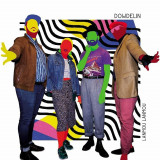
No spot in music is immovable. No music can sit still but it’s hardly ver as true as it is for Dowdelin, a band that can’t be tied down to a single geography and genealogy. The creole language, Caribbean rhythms, urban energies, dazzling virtuosity, sensual electro: The group evolves in a unique place where genres and colors, heritage and audacity can merge.
Record includes 2 page insert and download
Flipping rhythms from Guadeloupe, Cuba, Senegal and Puerto Rico, Time Capsule founder Kay Suzuki releases an acid-soaked collection of remixes that transcends time and space.
From the blacked-out basement of Plastic People to the psychedelic dancefloor of Beauty and the Beat, Kay Suzuki’s musical world has been shaped by some of London’s most iconic sound systems. High quality audio, he says, can open portals to new universes. Rhythm is time made plastic and beauty is the space between the beats.
Spanning over fifteen years of music from the prolific DJ, producer, Time Capsule label boss and one time Brilliant Corners sushi chef, this collection of remixes is the logical conclusion of Kay Suzuki’s musical thinking. Drawn to unique percussive or syncopated rhythms, he describes remixes as conversations between the original artist’s sense of time and his own. Weaving broken beat, house and dub influences into rhythms from across the Black Atlantic, these four tracks find each other kinship on the dance floor.
The A-side begins with a dubbed-out rework of the Gwoka celebration rhythm ‘A Ka Titine’ by Guadeloupe’s Gaoulé Mizik that was originally released by Beauty and the Beat in 2022. Layering electronic flares, dub sirens and space echo reverb across the shuffling toumblak beat, Suzuki leans into the track’s creole heritage, turning the track into a sought-after dancefloor jam, played by everyone from Colleen Cosmo Murphy and John Gomez to Yu-Su and Bradley Zero.
Skipping to Puerto Rico, Broki’s ‘Es Que Lo Es’ emerged from a collaboration between Bugz in the Attic’s Afronaut and Seiji and local musicians. Here Suzuki reworks the Afro-Latin percussion into a subtle bruk, conjuring a third space between London and San Juan that remains both of and outside the era in which it was made.
Blackbush Orchestra’s ‘Sortez, Les Filles!’ opens the B-side, taking apart the original and kneading the Senegalese percussion into a chugging Balearic house track, buoyant and full of life. Also first released by Beauty and the Beat, the track features new synth and structural elements that bring out the innate dancefloor potential beneath the surface of the original.
The final track on the collection heads back to the Caribbean and the island of Cuba, where Sunlightsquare a.k.a. Claudio Passavanti worked with vocalist Rene Alvarez and expert in Afro-Cuban percussion, Giovanni Imparato, on ‘Oyelo’. Here, Suzuki strips out the kick completely, leaving an implied rhythm which he calls an “imaginary four-to-the-floor” - a groove that is felt rather than heard, leaving the listener floating in another universe entirely.
Cuban music has a new global ambassador: Cimafunk. With a name and image that pays tribute to the Cimarrons – Cubans of African descent that resisted slavery – and music and showmanship that re-embodies funk legends from the last century, the medical-school student turned funk artist has developed into a musical force crafting the sonic future of the island and a global, cultural phenomenon that unites and celebrates blackness across borders, oceans and languages.
After the success of El Alimento, Cimafunk delves even further into his exploration of the intersections between funk and the sounds of the continent and gives us Pa' Tu Cuerpa (Mala Cabeza Records), his most polished and mature production to date. For this occasion, Cimafunk has summoned a constellation of extraordinary artists and musicians.
"Collaboration is something I really enjoy," he confesses. "This album has artists that I had always wanted to work with, of whom I am a fan and of whom I have a lot of influence from them." From the legendary touch of funk master George Clinton, who also appeared on Cimafunk’s last album, to the jazz mastery of top AfroCuban pianist Gonzalo Rubalcaba, through the vibe of Colombian rockstars Monsieur Periné, to the Caribbean rhythms and melodies of Haitian producer Michael Brun, and the youthfulness from Havana’s urban street scene of Cuban newcomer Wampi, each guest works like a piece of clockwork in this masterpiece.
“Cuchi Cuchi” is the track that immediately takes you to the Cimafunk of 2024. Catchy, danceable and super funky, “Cuchi Cuchi,” which is a playful way to say “hooking up,” is a Cuba meets New Orleans mashup ready to explode when performed live. “It’s really funky and you can envision me on stage with my band and feel the way I dress, dance and live life just by playing the track,” says Cimafunk. “My musical director Dr. Zapa is the producer and he’s been with me since the beginning. ‘Cuchi Cuchi’ is Cimafunk & La Tribu after a few years of exploring the world thru festivals, venues, dressing rooms and parties.”
New Orleans – Cimafunk’s new home – jumps out track-after-track on “Pa’ tu cuerpa.” The explosive flow of New Orleans bounce-icon Big Freedia on “Pretty” and the unreplicated, powerful horns of Trombone Shorty on “I don’t care” highlight Cimafunk’s affinity with and full-on embrace of New Orleans music and culture. He’s now a regular performer at the New Orleans Jazz Festival and leads an annual New Orleans – Cuba festival and cultural exchange program, Getting Funky in Havana, that has brought New Orleans top artists and musicians to Cuba to perform for the Cuban people and do work in the schools. The result is a sonic experience as innovative as it is impossible to label; Caribbean but borderless, rooted in Havana but with echoes of Detroit funk and New Orleans bass, horns and street-corner vibes.
The Equatoguinean Norberto de Nöah established in Madrid in the early 80s, where he became a firebrand of African culture in the vibrant Movida. In 1988 he self-released his first solo album, a blend of homeland sounds —modern and traditional— with new synth and drum machine touches. The vanished album finally gets its well-deserved reissue.
Edition of 500 albums on vinyl (Bandcamp download code included) - Original artwork with new 14 pages insert and poster
In the mid-1980s, the European media, music industry and public became increasingly interested in African music. This was a period of international success for King Sunny Adé, Salif Keita, Youssou N’Dour, Ray Lema, Touré Kunda, etc. Spain, with its own particular conditions, wasn’t oblivious to the phenomenon and the Equatoguinean Norberto de Nöah may be its best exponent.
Norberto moved in the early eighties from his hometown in the island Fernando Po (now known as Bioko) to its former colonial capital, Madrid. While studying dramatic arts, he created and led the band Nohkis, made up of African and Spanish musicians. In 1985 they released the maxi-single “Mujer española” / “África, ¿dónde está tu gloria?”, and the song “El loco”, was released on a compilation LP called Esto es increíble, both on the label Lollipop. According to the journalist Patricia Godes, they were first artists to record an African music record in Spain. It received positive reviews and a great impact on the most independent side of Madrid’s La Movida movement. Very soon afterwards, Nohkis’ band split up.
Afterwards, Norberto would concentrate on his solo career, and Norberto de Nöah and The Böhöbé Spirits Müsic was released in 1988, definitely a solo album. Norberto created his own label, Kilimandjaro Productions, and composed, arranged and produced all the songs of the LP. Moreover, he sang and played all the instruments: a vast selection of organic instruments, a Yamaha RX-5 drum machine and a Roland D-50 synthesizer.
In the album he exposed his deepest roots, updating the lexicon of traditional Bubi music, the musician’s ethnic group, a compendium of ceremonial melodies that ancient troubadours composed for the court. Doing so he showed new possibilities to one of the oldest ethnic groups in the world. Besides all this, he was also inspired by American music such as funk, R&B, Latin American music and also by a wide range of African and Caribbean rhythms.
Mixing the traditional and the avant-garde in a spontaneous and natural way, the music contained in the record’s grooves flows freely and takes you to places full of magic and mystery, while still transmitting new and exciting sensations. Even more, according to the Equatoguinean musician and writer Baron Ya Búk-Lu based in Madrid, the album’s sound was “the perfect combination of all characteristics that defined the Equatoguinean Afropop music made in Madrid during the 1980s”, a story that still needs to be told in all its depth and intensity!
Following the release of two LPs and several singles, the activity of Norberto de Nöah and Kilimandjaro Productions (and the subsequent Bananas Podridas) ceased. Nevertheless, Norberto’s links to music continued, as a promoter and DJ in Madrid’s nightlife.
Norberto de Nöah contributed greatly to changing Spain’s musical landscape, breaking barriers and mental frameworks. He was the first to make contemporary and popular Guinean music known to the Spanish public.
The repercussions in the African market of a Spanish (and Bube) speaking African musical project, where English and French dominate, was very difficult. In addition, the passage of time and changes in phonographic formats have diluted the memory of Norberto's legacy. Now it’s time to reverse the situation and break all the outdated frontiers!
Norberto de Nöah and The Böhöbé Spirits Müsic, as every important music piece, was at the same time part of a universal phenomenon of recognition of African music and a very personal project, based on the artist’s nostalgic and heartfelt need to show and homage his ethnic group, the Bubis. In this process he also refreshed his hometown music legacy, giving it a new air and opening the door to lots of other great Equatoguinean artists coming afterwards, as well as being an inspiration for many musicians in Spain.

Coloured[25,17 €]
Ben Lukas Boysen’s new album, Alta Ripa, signifies a seismic shift in his artistic journey. It revisits the foundational impulses of his youth, shaped amidst the serene beauty of rural Germany—a bucolic backdrop where his creative palette flourished. However, it was his move to Berlin in the early 2000s that electrified his sound, infusing it with the city’s pulsating energy and diverse cultural influences. Alta Ripa captures this transformative experience, blending the introspective melodies of his rural beginnings with the bold, experimental tones born from Berlin’s vibrant electronic music scene. This album is a testament to Boysen’s evolution, showcasing how geographical shifts can profoundly shape artistic expression.
Boysen’s fourth studio album under his own name, Alta Ripa is a nod to his beginnings as much as a hint to his future, and as a work, it’s almost contradictory in its boldness and humility. He invites the listener on a journey of self-discovery; both for himself and for them, describing the music as “something the 15-year-old in me would have liked to hear but only the grown-up version of myself can write.”
His last two albums involved working closely with other musicians, including cellist Anne Müller, flugelhorn player Steffen Zimmer, and drummer Achim Färber. However, inspired in part by a recent return to live performance, Alta Ripa sees Boysen circling back to his passion for pure computer music.
For Boysen, the return to his youthful musical language marks a major turning point in his career. It represents a departure from his roots in classical music – his mother was an opera singer and his father an actor with an appreciation for Wagner, Arvo Pärt, Keith Jarrett, and Stockhausen. Although these are still important influences, Alta Ripa encapsulates a new, exploratory interplay between Boysen’s careful craft and his ability to let go of some of the process.
The album’s title comes from the original Roman name of the town that Boysen grew up in, Altrip, where he lived until his early twenties. This formative period is central to the ideas behind this album, from Boysen’s parental ‘schooling’ in classical music through to his sonic journeys through drum and bass, Aphex Twin, and Autechre — all of which changed his idea of what music could be. The extreme energy of tracks like ‘Acperience 1’ by Hardfloor, ‘Tracks & Fragment’ by Cari Lekebusch, ‘Focus2 Implan’ by Jiri.Ceiver, and ‘Low On Ice’ by Alec Empire are also pivotal influences.
For Boysen, this time of his musical development also involved knocking down the pillars that he previously thought had carried his world. A key moment for Boysen was being given a precious (pre-internet) club cassette at school that featured artists like Source Direct, Photek and Goldie. Excited by this new discovery, he introduced his father to the song ‘Dred Bass’ by Dead Dred. After the song finished, Boysen Sr. turned off the tape and proclaimed it was “the end of all music”. This heated exchange sparked a new, and more mature dialogue between the two that involved them sharing and discussing music on a regular basis.
Boysen’s classical and jazz music upbringing might not be easily noticeable from the electronic palette that he uses. But it can be found in its bones; the structure of the tracks and their dynamic shifts. On Alta Ripa, he intentionally embraces a spirit of controlled chaos, churning out sonic ideas to see what sticks.
One of Brian Eno’s Oblique Strategy cards contains the phrase “gardening, not architecture”, and the trajectory of Boysen’s creative path reflects this metaphor. In much of his previous work he followed a sort of Brutalist architect’s approach; here, he was fully responsible for the tracks’ austere structures and planned them with deliberate care. But by sacrificing some of that control on Alta Ripa, he sets the right conditions for a dark and unpredictable, organic growth. It’s a push forward into a new world.
- A1: Mckennai Beat
- A2: What Wood Feat. Brother Portrait
- A3: Ladybug
- A4: Modern Ifa
- A5: Fm Feat. Max Mckenzie
- A6: Austral Mood
- A7: Slave Cemetery
- A8: Cari And Whales
- B1: Meditation & Heartbreak
- B2: For Nahel Feat. Selina Jones
- B3: Cosmic Psylo
- B4: Norwood Junction
- B5: Ears
- B6: Unrooted Maskossa
- B7: Last Bantu (Outro)
Releasing now for well over a decade - Neue Grafik: known to friends as Fred, has successfully transplanted from Parisian rookie to one- man London Institution. Beginning as a solo producer and DJ,Fred spread his wings upon relocating to South London - at first with his Neue Grafik Ensemble and later with his now iconic twice-weekly Orii Jam - the latter of which has given agency to an entire new generation of musicians; spawning an aesthetic, nurturing a unique sound and becoming a launchpad for countless artists.
Dalston Tape Volume 1 is Fred’s attempt to fall back in love with beatmaking - taking it back to the roots of
where the project began. I say “attempt” because he’s simply learnt too much and made too many friends
along the way to make a mere DIY beat tape. Since his early MPC-led productions on Parisian label, Beat
X Changers, Fred has learnt to play the keys to a concert hall standard, he has become proficient in double bass and built up a dense network of collaborators who he has composed, recorded, engineered and produced for both at home in SE London and in the iconic Total Refreshment Centre Studios in Dalston.
This experience adds unavoidable dimensions to his toolbox - resulting in something more akin to a miniature-magnum-opus than a simple beat-tape.
Yes, we hear the influences of Pete Rock, Mad Lib, J Dilla and Al Dobson Jr but we also hear the musicality of D’Aneglo, James Blake and live contributions from an ever growing army of young graduates of the Orii School.
- A1: Ela E Carioca
- A2: O Amor Em Paz
- A3: Coisa No.2
- A4: Desafinado
- A5: Primitivo
- A6: Olhou Para Mim
- A7: Love For Sale
- A8: On Green Dolphin Street
- B1: Nana
- B2: Corcovado
- B3: Noa Noa
- B4: Garota De Ipanema
- B5: Neurotico
- B6: Influenza Do Jazz
- B7: Tema Sem Palavras
- B8: Diagonal
Limited edition 180g vinyl - the complete LP + 6 bonus tracks.
An essential figure in the fusion between jazz and bossa nova, pianist/composer Sergio Mendes, who passed away on the 6th of September (1941-2024), recorded over 55 releases under his own name.
This release presents the complete original album 'Voce Ainda No Ouviu Nada', (literal translation: You Still Haven't Heard Anything), originally released in the US as 'The Beat of Brazil'.
Black[23,49 €]
Ben Lukas Boysen’s new album, Alta Ripa, signifies a seismic shift in his artistic journey. It revisits the foundational impulses of his youth, shaped amidst the serene beauty of rural Germany—a bucolic backdrop where his creative palette flourished. However, it was his move to Berlin in the early 2000s that electrified his sound, infusing it with the city’s pulsating energy and diverse cultural influences. Alta Ripa captures this transformative experience, blending the introspective melodies of his rural beginnings with the bold, experimental tones born from Berlin’s vibrant electronic music scene. This album is a testament to Boysen’s evolution, showcasing how geographical shifts can profoundly shape artistic expression.
Boysen’s fourth studio album under his own name, Alta Ripa is a nod to his beginnings as much as a hint to his future, and as a work, it’s almost contradictory in its boldness and humility. He invites the listener on a journey of self-discovery; both for himself and for them, describing the music as “something the 15-year-old in me would have liked to hear but only the grown-up version of myself can write.”
His last two albums involved working closely with other musicians, including cellist Anne Müller, flugelhorn player Steffen Zimmer, and drummer Achim Färber. However, inspired in part by a recent return to live performance, Alta Ripa sees Boysen circling back to his passion for pure computer music.
For Boysen, the return to his youthful musical language marks a major turning point in his career. It represents a departure from his roots in classical music – his mother was an opera singer and his father an actor with an appreciation for Wagner, Arvo Pärt, Keith Jarrett, and Stockhausen. Although these are still important influences, Alta Ripa encapsulates a new, exploratory interplay between Boysen’s careful craft and his ability to let go of some of the process.
The album’s title comes from the original Roman name of the town that Boysen grew up in, Altrip, where he lived until his early twenties. This formative period is central to the ideas behind this album, from Boysen’s parental ‘schooling’ in classical music through to his sonic journeys through drum and bass, Aphex Twin, and Autechre — all of which changed his idea of what music could be. The extreme energy of tracks like ‘Acperience 1’ by Hardfloor, ‘Tracks & Fragment’ by Cari Lekebusch, ‘Focus2 Implan’ by Jiri.Ceiver, and ‘Low On Ice’ by Alec Empire are also pivotal influences.
For Boysen, this time of his musical development also involved knocking down the pillars that he previously thought had carried his world. A key moment for Boysen was being given a precious (pre-internet) club cassette at school that featured artists like Source Direct, Photek and Goldie. Excited by this new discovery, he introduced his father to the song ‘Dred Bass’ by Dead Dred. After the song finished, Boysen Sr. turned off the tape and proclaimed it was “the end of all music”. This heated exchange sparked a new, and more mature dialogue between the two that involved them sharing and discussing music on a regular basis.
Boysen’s classical and jazz music upbringing might not be easily noticeable from the electronic palette that he uses. But it can be found in its bones; the structure of the tracks and their dynamic shifts. On Alta Ripa, he intentionally embraces a spirit of controlled chaos, churning out sonic ideas to see what sticks.
One of Brian Eno’s Oblique Strategy cards contains the phrase “gardening, not architecture”, and the trajectory of Boysen’s creative path reflects this metaphor. In much of his previous work he followed a sort of Brutalist architect’s approach; here, he was fully responsible for the tracks’ austere structures and planned them with deliberate care. But by sacrificing some of that control on Alta Ripa, he sets the right conditions for a dark and unpredictable, organic growth. It’s a push forward into a new world.
- Mi China
- Close Your Eyes
- Mambo At The M
- Contigo
- Bonita
- The Lady Is A Tramp
- Black Orchid
- Happiness Is A Thing Called Joe
- I've Waited So Long
- Out Of Nowhere
- Guajira At The Blackhawk
- Imagina
- Melodia Sentimental
- Drume Negrita
- Alfonsina Y El Ma
- Porque Llorax Blanca Nina
- Eu Sei Que Vou Te Amar
- If The Moon Turns Green
- A Rita
- Senhorinha
- Algo Contigo
- Oracion Del Remanso
- Carinhoso