Suche:carl craig

Styles
Alle
Random Factor - Convergence

Random Factor

Convergence

12inchVIS099R
20/20 Vision
30.11.2025

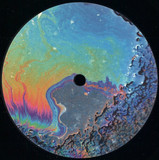
Electro don Carl Finlow dropped 'Convergence' under his Random Factor alias back in 2005. It was a definitive showcase of the talent that continues to stand him out two decades on and is completely devoid of samples. Every note is carefully crafted as part of an emotional electro-pop classic that track gained legendary status thanks to Craig Richards, who has made it a regular in his sets at Fabric and Houghton Festival. John Tejada injects glitchy textures and stuttered vocals into his rework, and this reissue includes a subtly remastered version with improved fidelity and brand-new artwork by Finlow himself.

nicht am Lager

Bestelle jetzt und wir bestellen den Artikel für dich beim Lieferanten.

18,70

Last In: vor 5 Monaten
K’Alexi Shelby feat. Tony Loveless - Ancestral Rhythm

A legend of the Chicago house scene, befriending Ron Hardy and Frankie Knuckles in his teens before forming influential house trio Risque III, and still prolific today via releases on Marcel Dettman’s ‘Bad Manners’ imprint, K'Alexi Shelby partners with Tony Loveless for their Planet E debut, ‘Ancestral Rhythm’.

Across a rolling nine-minute odyssey of old-school but future-facing jack, ‘Ancestral Rhythm’ finds the pair tapping into their most uncompromising rhythmic instincts, melding the tough machines of their studio with organic percussion and oscillating plunges into raw, escalating electronics.

In complimentary fashion, Carl Craig expands on the existing material for a subtle, tight C2 edit of the pair’s original material. Roadtested over the summer season in Ibiza and beyond, Craig masterfully sharpens the original’s frenetic edges, while adding another chorus of chants to Shelby and Loveless’s psychedelic soup.

nicht am Lager

Bestelle jetzt und wir bestellen den Artikel für dich beim Lieferanten.

14,71

Last In: vor 4 Monaten
TORRE - PHOCAEA VOL.1

TORRE

PHOCAEA VOL.1

12inchMV01
MusiqVoyage
14.11.2025

Musiq Voyage sets sail with its debut release by TORRE Bros, a producer duo from Aix-en-Provence. A heartfelt tribute to Marseille and the Mediterranean through two shimmering Space Disco cuts: Gyptis and La Pointe Rouge.
Remixed by the legendary Moplen, Alex From Tokyo, and Julien HBT, this EP blends house, boogie, and balearic vibes into a warm and elegant sonic journey.
//
After cruising their native Provence and spinning on the mythical shores of Ibiza with their iconic pink-and-blue DJ truck, the Musiq Voyage crew is proud to launch their new label with a sun-soaked debut EP.
Rooted in Mediterranean soul, Phocaea Vol. 1 features longtime friends and local legends TORRE Bros (Jean-Marc & Patrick Torre), producers from Aix-en-Provence with over two decades of musical exploration—from disco and house to hybrid electronic jams. Known for underground hits like Corps à Corps and Baleora, supported by artists such as Carl Craig, the duo now pays tribute to Marseille, their beloved coastal city.

A1 – Gyptis
Named after the legendary princess said to have founded Marseille, Gyptis is a lush space-disco homage to the city’s ancient roots—where Greek sailors met local tribes, and myth met the Mediterranean.
A2 – Gyptis (Moplen Remix)
Italian disco don Moplen (Chaka Khan, Talking Heads, Loose Change) delivers a floor-ready rework—elevating the groove with cosmic flair while keeping the original’s dreamy vibe.
B1 – La Pointe Rouge
A sonic postcard of one of Marseille’s most iconic seaside spots—sunsets, sailing, and slow walks by the sea. Built on a strong boogie beat, 80s synths, and balearic textures.
B2 – La Pointe Rouge (Alex From Tokyo & Julien HBT Remix)
Legendary DJ/producer Alex From Tokyo (Tokyo Black Star, Innervisions) teams up with Parisian underground figure Julien HBT (Demented, with François X) for a deep, syncopated reimagining. Infused with Chicago house and leftfield boogie influences, this remix flips the original into a spaced-out late-night groover.
More than just a legendary DJ, Alex From Tokyo has built a global career bridging cultures and sounds. After growing up in Japan, he returned to Paris in the early ’90s and co-founded A Deep Groove with DJ Deep and DJ Gregory, launching one of France’s first underground dance radio shows on FG 98.2 FM.
A key link between Europe and Japan, Alex worked with labels like F Com, Mr Bongo, and Yellow Productions, before living in NYC, Berlin, and beyond.

nicht am Lager

Bestelle jetzt und wir bestellen den Artikel für dich beim Lieferanten.

13,87

Last In: vor 3 Monaten
Bandulu - Guidance LP 2x12"

Bandulu

Guidance LP 2x12"

2x12inchRX-02LP
Rawax Records
21.10.2025

RAWAX proudly presents BANDULU 's first and timeless longplayer called Guidance!
Originally released on Infonet in 1993. The 2025 version on RAWAX includes a new mastering.

nicht am Lager

Bestelle jetzt und wir bestellen den Artikel für dich beim Lieferanten.

25,67

Last In: vor 5 Monaten
Caiado LDA - Neverending Dream EP

Carpet & Snares boss Jorge Caiado is back under a new Caiado LDA alias with two tracks originally commissioned by Thomas Melchior for his My King Is Light project, now released through the Carpet/Patterns sublabel. 


Both sides strike a philosophical, almost spiritual tone, but for quite different ends. The A side ‘Process’ uses its tight skippy groove and central acid line as the foundation for peak-building Carl Craig drama, while the B side ‘Neverending Dream’ lands on a more tripped-out mood for the after- afters. Watch this space for more Caiado LDA material on the way!

nicht am Lager

Bestelle jetzt und wir bestellen den Artikel für dich beim Lieferanten.

13,24

Last In: vor 56 Tagen
STACEY KENT - SONGS FROM OTHER PLACES
  • A1: I Wish I Could Go Travelling Again, Songwriter – Jim Tomlinson, Kazuo Ishiguro
  • A2: Bonita, Songwriter – Antonio Carlos Jobim, Gene Lees, Ray Gilbert
  • A3: Craigie Burn, Songwriter – Jim Tomlinson, Kazuo Ishiguro
  • A4: Les Voyages, Songwriter – Raymond Lévesque
  • A5: American Tune, Songwriter – Paul Simon
  • B6: Tango In Macao, Songwriter – Jim Tomlinson, Kazuo Ishiguro
  • B7: Blackbird, Arranged By – Art Hirahara, Songwriter – Lennon-Mccartney
  • B8: My Ship, Songwriter – Ira Gershwin, Kurt Weill
  • B9: Imagina, Songwriter – Antonio Carlos Jobim, Chico Buarque
  • B10: Landslide, Songwriter – Stevie Nicks
vorbestellen26.06.2025

erscheint voraussichtlich am 26.06.2025

27,10
Milton Jackson & Brian Kage - Fire Emoji EP

It’s always a pleasure to welcome Scottish producer Milton Jackson back on Freerange and this time he joins forces with a trio of Detroit heavyweights to deliver the Fire Emoji EP. Brian Kage is a producer / DJ, founder of record label Michigander and has released on esteemed labels such as FXHE and Planet E. Here, Brian is on co-production and mastering duties and helps bring a raw yet musical quality to all four tracks. HazMat Live is a Detroit native known for his unique approach to music and live performances having graced records and live shows with the likes of Kenny Dixon Jr, Amp Fiddler, Bilal, Soul Clap and Delano Smith. Finally, Jon Dixon adds his own inimitable touch to the release with his deft keyboard work. Jon Dixon not only leads the Underground Resistance live acts Galaxy 2 Galaxy and Timeline but has also performed with everyone from Jeff Mills, Carl Craig and Mike Banks through to Goldie, Leon Ware and Dwele.

Lead track Fire Emoji is probably best described as a serious stomper. A paired back club tool which pumps hard and will keep the energy levels simmering on any dance floor worth its salt. Echoing vocals and reverb-drenched hits add a trippy edge whilst an extended break adds extra drama and tension to the arrangement.

The Sunsetters lightens the mood with a euphoric slice of chunky, deep house which acts as the foundation for HazMat Live to deliver his epic synth solo, accompanied by lush strings, deep pads and punctuating 909 snares.

Wanna C U fuses US and UK Garage sounds to form a taught, muscular club groove which will lock you in with it’s fat stabs, swinging beats and repeating sampled vocal hook.

nicht am Lager

Bestelle jetzt und wir bestellen den Artikel für dich beim Lieferanten.

15,55

Last In: vor 10 Monaten
Mister Joshooa - Settle Down EP

Mister Joshooa

Settle Down EP

12inchPLE65412-6
Planet E
23.05.2025

Planet E looks to the heart of Detroit’s club culture for the debut appearance on the label from Motor City mainstay, Mister Joshooa. A DJ and sound engineer closely intertwined with the city’s music scene, regularly found behind the decks at clubs like TV Lounge and Lincoln Factory and having previously appeared on Carl Craig’s celebrated Detroit Love compilation, ‘Settle Down’ introduces four tracks that cement Mister Joshooa’s lucid, far-out take on house.

Lead track ‘Settle Down’ distills the energies and influence of the scene into a rubber-jointed, rolling introduction that vibrates with energy and anticipation, nailing a bassline that could run for hours and injecting trippy effects, live percussion and out-there vocals drawing in dancers. ‘Snake Oil’ meanwhile strips things way back, squeezing plenty of juice for the floor from a tunnelling, lightly psychedelic arrangement, offering bang-for-buck deepness that’s no scam.

‘Stop Me’ continues to drive Mister Joshooa’s productions in even wonkier, even mysterious directions, its oscillating crawl and hypnotic melody primed to create a heady atmosphere, giving surreal or even sinister, depending on each dancer’s perspective. Finally, ‘Step Up’ offers the roughest, readiest ride to close, where classic drum machine programming reverberates against throbbing sonics and all manner of analogue weirdness, transforming into an outsider techno stepper from the darker side.

nicht am Lager

Bestelle jetzt und wir bestellen den Artikel für dich beim Lieferanten.

14,71

Last In: vor 3 Monaten
Inner City - Ahnonghay

Inner City

Ahnonghay

12inchNWKT22B
Network Records
14.05.2025

Inner City’s sojourn at Network resulted in a series of classic recordings.

As well as perfectly crafted vocal tracks including “Your Love”, “Share My Life” and “Do Me RIght” it meant that Kevin Saunderson could also return to his Techno roots with underground Inner City tracks.

None more so than the wonderful “Ahnonghay” which perfectly joined the dots between electronica and the brutal urgency of Kevin’s Reese persona which helped shape the early Detroit Techno landscape.

This 12 contains the Saunderson original plus wonderfully contrasting remixes from Detroit’s Carl Craig and the UK’s Dave Clarke which were equally acclaimed when released on Network’s six6 label.

Another reissued gem from Network.

nicht am Lager

Bestelle jetzt und wir bestellen den Artikel für dich beim Lieferanten.

13,87

Last In: vor 4 Monaten
Gershon Kingsley - Music To Moog By
  • Hey, Hey
  • Scarborough Fair
  • For Alisse Beethoven
  • Sheila
  • Pop Corn
  • Twinkle, Twinkle
  • Nowhere Man
  • Sunset Sound
  • Trumansburg Whistle
  • Paperback Rider

Bob Moog’s invention of the analog Moog synthesizer ignited an explosion of creativity across the music spectrum. On the classical side, there was Isao Tomita and Wendy Carlos; on the more avant-garde side, such artists as Mort Garson and Craig Leon used the new technology to explore the limits of sound production while rockers like Keith Emerson incorporated the technology into their music. And, of course, there was also a silly pop side to the synth mania, or “moogsploitation” as some wags put it; albums by The Moog Machine, The Happy Moog, and other similarly-entitled acts provide good examples of that. But the one man straddling all these camps was Gershon Kingsley. Kingsley studied with John Cage before making a pair of groundbreaking albums with fellow electronic music pioneer Jean-Jacques Perry (their “Baroque Hoedown” was the theme for the Main Street Electrical Parade attractions in Walt Disney theme parks). Kingsley then embarked on a solo career and scored an instant hit with this album, 1968’s Music to Moog By, and its signature track, “Pop Corn.” “Popcorn” (one word) became an international smash for Hot Butter four years later, but Music to Moog By also caught consumer ears with its blend of originals, classical, and especially versions of Beatles tunes (though you will have to excuse the egregious misspelling of “Paperback Writer” as “Paperback Rider”)! Ever in pursuit of pop music’s most eccentric manifestations, we at Real Gone are proud to reissue Music to Moog By for the first time in the U.S., complete with the 8-page “The Book of Moog” that was inside some original copies. Strawberry with black swirl pressing limited to 900 copies!

vorbestellen09.05.2025

erscheint voraussichtlich am 09.05.2025

46,01
Helder Russo - Nha Joia

Helder Russo

Nha Joia

12inchPRCBSLP031
Percebes Música
25.04.2025

Lisbon-based producer & DJ, Helder Russo is a standout figure in Portugal's electronic music scene. Helder's work has gained acclaim since his early releases on Groovement, Tomorrow Is Now, Kid! & most recently, Percebes.

His 2019 release 'Onfrico' & the 2021 anthem 'Cascalho' showcased his unique blend of Chicago House, Detroit Techno, London-inspired breaks & rich African influences. As a true ambassador for Portuguese dance music, his music is highly regarded.

Now, Helder presents his debut album 'Nha Joia' (Creole for 'My Jewel'), a heartfelt tribute to his beloved mother. This collection features the 80's cop show inspired 'Parsley park', the infectious 'Whippit', the emotional 'Nha Joia', the Outkast-reminiscent 'Muscanite', the futuristic techno soul of '11.22' & the gritty 'Badio' & 'Sampa'.

This album is brilliant, honest, & complete - Recommended for fans of Carl Craig, Underground Resistance, Larry heard, Kamasi Washington & Thundercat. Sleep now, cry later.

vorbestellen25.04.2025

erscheint voraussichtlich am 25.04.2025

24,33
Triola - Triola Im Fünftonraum (Remastered 2025)  (LP)

Originally released on CD only – those were the days – “Triola im Fünftonraum“ counts as one of the most iconic albums of the early Kompakt era. Experience this timeless masterpiece of lush electronica lovingly restored and remastered for the first time on vinyl – 21 years after its inception.

We found this review from back in the days that perfectly sums up what “Triola im Fünftonraum” is all about:

The press material for “Triola im Fünftonraum” made allusions to home listening, when the album is mostly about movement… in a car …preferably a fast one … on a muggy spring day.

This might catch followers of producer Jörg Burger off guard. Up until this point, the producer’s Triola tracks – limited to three consecutive appearances on Kompakt’s yearly Pop Ambient series and a spot on “Leichtes Hören Teil 1” – were free-floating ambient washouts (albeit wondrous free-floating ambient washouts) with no pulse. The album, on the other hand, is beat-driven. Though still resolutely ambient – more an update of Burger’s lushest Bionaut tracks, only fully engaging instead of mildly diverting.

The soft, synthetic hand drums and tranquil vapors of “Leuchtturm” from Pop Ambient 2003, remain untouched and begin the album. Two other tracks that might sound familiar receive dynamic overhauls, now supported with quick dance rhythms and additional layers of synth gauze; the whispy flute trills and lightly flickering keys of “AG Penthouse”, for instance, are melted into a churning rhythm and some singing keyboard vamps that resemble a relaxed take on Tangerine Dream’s suspenseful soundtrack work for “Thief” (minus the crazy guitars).

What really makes the whole thing glow is the manner in which the tracks are attached, flowing in and out of another, rising and cresting and receding, with supreme poise – even if its title provides no indication, the album is as much a travelogue as Carl Craig’s “Landcruising”, Morgan Geist’s “Driving Memoirs” and Model 500’s “Deep Space”.

These are some of Burger’s most inventive productions, a remarkable feat since he’s been doing this so long. Catch yourself in the right frame of mind and you’ll wonder if everything he has released has been one extended ramp-up to this. In this age, it’s also refreshing to have a purely ambient techno album with absolutely no connection to “Boards of Canada”.

In other words, it’s a landmark for both its label and its genre.

Andy Kellman

Copyright 2025 TiVo Corporation
Ursprünglich nur auf CD veröffentlicht – das waren noch Zeiten – zählt „Triola im Fünftonraum“ zu den ikonischsten Alben der frühen Kompakt-Ära. Dieses zeitlose Meisterwerk schwelgerischer Electronica erscheint nun 21 Jahre nach seiner Entstehung erstmals liebevoll restauriert und remastered auf Vinyl.

Wir haben diese zeitgenössische Rezension gefunden, die perfekt zusammenfasst, worum es bei „Triola im Fünftonraum“ geht:

Das Pressematerial für „Triola im Fünftonraum“ spielt auf das Zuhören zu Hause an, obwohl es in dem Album hauptsächlich um Bewegung geht … in einem Auto … vorzugsweise einem schnellen … an einem schwülen Frühlingstag.

Das könnte die Fans des Produzenten Jörg Burger überraschen. Bis zu diesem Zeitpunkt waren die Triola-Tracks des Produzenten – beschränkt auf drei aufeinanderfolgende Auftritte in der jährlichen Pop-Ambient-Reihe von Kompakt und einen Platz auf „Leichtes Hören Teil 1“ – frei schwebende Ambient-Auswaschungen (wenn auch wundersame frei schwebende Ambient-Auswaschungen) ohne Puls. Das Album hingegen ist beatgetrieben, obwohl es immer noch entschieden Ambient ist – eher eine Aktualisierung von Burgers üppigsten Bionaut-Tracks, nur dass es voll und ganz fesselt, statt nur leicht abzulenken.

Die sanften, synthetischen Handtrommeln und die ruhigen Dämpfe von „Leuchtturm“ aus Pop Ambient 2003 bleiben unangetastet und bilden den Auftakt des Albums. Zwei weitere Stücke, die einem bekannt vorkommen könnten, erhalten eine dynamische Überarbeitung, die nun von schnellen Tanzrhythmen und zusätzlichen Schichten von Synthesizer-Gaze unterstützt wird; die flüsternden Flötentöne und leicht flackernden Tasten von „AG Penthouse“ zum Beispiel verschmelzen zu einem aufgewühlten Rhythmus und einigen singenden Keyboard-Vamps, die an eine entspannte Version des spannenden Soundtracks von Tangerine Dream erinnern, der für „Thief“ (ohne die verrückten Gitarren) verwendet wird.

Was das Ganze wirklich zum Leuchten bringt, ist die Art und Weise, wie die Tracks miteinander verbunden sind, wie sie ineinander fließen, ansteigen und ihren Höhepunkt erreichen und wieder abklingen, und das mit höchster Gelassenheit – auch wenn der Titel nichts darauf hindeutet, ist das Album ebenso ein Reisebericht wie Carl Craigs „Landcruising“, Morgan Geists „Driving Memoirs“ und Model 500s „Deep Space“.

Dies sind einige von Burgers einfallsreichsten Produktionen, eine bemerkenswerte Leistung, wenn man bedenkt, wie lange er schon dabei ist. Wenn man sich in die richtige Stimmung versetzt, fragt man sich, ob alles, was er bisher veröffentlicht hat, eine einzige Vorbereitung auf dieses Album war. In der heutigen Zeit ist es auch erfrischend, ein reines Ambient-Techno-Album zu hören, das absolut nichts mit „Boards of Canada“ zu tun hat.

Mit anderen Worten: Es ist ein Meilenstein für das Label und das Genre.

Andy Kellman

Copyright 2025 TiVo Corporation

nicht am Lager

Bestelle jetzt und wir bestellen den Artikel für dich beim Lieferanten.

21,81

Last In: vor 13 Monaten
PA Presents - Entangled

Papresents

Entangled

12inchM-GEN02
Marvo Genetic
11.04.2025

Finally after all those years, Dutch producer Peter Aarsman presents the re-issue of his iconic peak-time tracks called Entangled. Originally released on Deviate in 1995, this 13 minute techno trip caused mayhem on dancefloors across the world. Peter's love for early Detroit techno in can be heard in the beautiful Res*lute. Warm strings, deep basslines and a repetitive synth theme provide for a stunning track which was used by Carl Craig in his selection for the influential DJ Kicks series. Res*lute also comes in a rawer house remix by Frame Of Mind label head Gerd.

nicht am Lager

Bestelle jetzt und wir bestellen den Artikel für dich beim Lieferanten.

12,82

Last In: vor 11 Monaten
Various - ECHOES OF ITALY – THE BIRDS OF PARADISE – EARLY 90S HOUSE VIBES VOL.2 (2x12")

Googling “paradise house”, the first results to pop up are an endless list of European b&b’s with whitewashed lime façades, all of them promising “…an unmatched travel experience a few steps from the sea”. Next, a little further down, are the institutional websites of a few select semi-luxury retirement homes (no photos shown, but lots of stock images of smiling nurses with reassuring looks). To find the “paradise house” we’re after, we have to scroll even further down. Much further down.

It feels like yesterday, and at the same time it seems like a million years ago. The Eighties had just ended, and it was still unclear what to expect from the Nineties. Mobile phones that were not the size of a briefcase and did not cost as much as a car? A frightening economic crisis? The guitar-rock revival?! Certainly, the best place to observe that moment of transition was the dancefloor. Truly epochal transformations were happening there. From America, within a short distance one from the other, two revolutionary new musical styles had arrived: the first one sounded a bit like an “on a budget” version of the best Seventies disco-music – Philly sound made with a set of piano-bar keyboards! – the other was even more sparse, futuristic and extraterrestrial. It was a music with a quite distinct “physical” component, which at the same time, to be fully grasped, seemed to call for the knotty theories of certain French post-modern philosophers: Gilles Deleuze, Félix Guattari, Paul Virilio... Both those genres – we would learn shortly after – were born in the black communities of Chicago and Detroit, although listening to those vinyl 12” (often wrapped in generic white covers, and with little indication in the label) you could not easily guess whether behind them there was a black boy from somewhere in the Usa, or a girl from Berlin, or a pale kid from a Cornish coastal town.

Quickly, similar sounds began to show up from all corners of Europe. A thousand variations of the same intuition: leaner, less lean, happier, slightly less intoxicated, more broken, slower, faster, much faster... Boom! From the dancefloors – the London ones at least, whose chronicles we eagerly read every month in the pages of The Face and i-D – came tales of a new generation of clubbers who had completely stopped “dressing up” to go dancing; of hot tempered hooligans bursting into tears and hugging everyone under the strobe lights as the notes of Strings of Life rose up through the fumes of dry ice (certain “smiling” pills were also involved, sure). At this point, however, we must move on to Switzerland.

In Switzerland, in the quiet and diligent town of Lugano, between the 1980s and 1990s there was a club called “Morandi”. Its hot night was on Wednesdays, when the audience also came from Milan, Como, Varese and Zurich. Legend goes that, one night, none less than Prince and Sheila E were spotted hiding among the sofas, on a day-off of the Italian dates of the Nude Tour… The Wednesday resident and superstar was an Italian dj with an exotic name: Don Carlos. The soundtrack he devised was a mixture of Chicago, Detroit, the most progressive R&B and certain forgotten classics of old disco music: practically, what the Paradise Garage in New York might have sounded like had it not closed in 1987. In between, Don Carlos also managed to squeeze in some tracks he had worked on in his studio on Lago Maggiore. One in particular: a track that was rather slow compared to the BPM in fashion at the time, but which was a perfect bridge between house and R&B. The title was Alone: Don Carlos would explain years later that it had to be intended both in the English meaning of “by itself” and like the Italian word meaning “halo”. That wasn’t the only double entendre about the song, anyway. Its own very deep nature was, indeed, double. On the one hand, Alone was built around an angelic keyboard pattern and a romantic piano riff that took you straight to heaven; on the other, it showcased enough electronic squelches (plus a sax part that sounded like it had been dissolved by acid rain) to pigeonhole the tune into the “junk modernity” section, aka the hallmark of all the most innovative sounds of the time: music that sounded like it was hand-crafted from the scraps of glittering overground pop.

No one knows who was the first to call it “paradise house”, nor when it happened. Alternative definitions on the same topic one happened to hear included “ambient house”, “dream house”, “Mediterranean progressive”… but of course none were as good (and alluring) as “paradise house”. What is certain is that such inclination for sounds that were in equal measure angelic and neurotic, romantic and unaffective, quickly became the trademark of the second generation of Italian house. Music that seemed shyly equidistant from all the rhythmic and electronic revolutions that had happened up to that moment (“Music perfectly adept at going nowhere slowly” as noted by English journalist Craig McLean in a legendary field report for Blah Blah Blah magazine). Music that to a inattentive ear might have sounded as anonymous as a snapshot of a random group of passers-by at 10AM in the centre of any major city, but perfectly described the (slow) awakening in the real world after the universal love binge of the so-called Second Summer of Love.

For a brief but unforgettable season, in Italy “paradise house” was the official soundtrack of interminable weekends spent inside the car, darting from one club to another, cutting the peninsula from North to centre, from East to West coast in pursuit of the latest after-hours disco, trading kilometres per hour with beats per minute: practically, a new New Year’s Eve every Friday and Saturday night. This too was no small transformation, as well as a shock for an adult Italy that was encountering for the first time – thanks to its sons and daughters – the wild side of industrial modernity. The clubbers of the so-called “fuoriorario” scene were the balls gone mad in the pinball machine most feared by newspapers, magazines and TV pundits. What they did each and every weekend, apart from going crazy to the sound of the current white labels, was linking distant geographical points and non-places (thank you Marc Augé!) – old dance halls, farmhouses and business centres – transformed for one night into house music heaven. As Marco D’Eramo wrote in his 1995 essay on Chicago, Il maiale e il grattacielo: “Four-wheeled capitalism distorts our age-old image of the city, it allows the suburbs to be connected to each other, whereas before they were connected only by the centre (…) It makes possible a metropolitan area without a metropolis, without a city centre, without downtown. The periphery is no longer a periphery of any centre, but is self-centred”.

“Paradise house” perfectly understood all of this and turned it into a sort of cyber-blues that didn’t even need words, and unexpectedly brought back a drop of melancholic (post?)-humanity within a world that by then – as we would wholly realise in the decades to come – was fully inhuman and heartless. A world where we were all alone, and surrounded by a sinister yellowish halo, like a neon at the end of its life cycle. But, for one night at least, happy."

nicht am Lager

Bestelle jetzt und wir bestellen den Artikel für dich beim Lieferanten.

28,99

Last In: vor 36 Tagen
Quiet Village - Reunion

Quiet Village announces new label, The Quiet Village, and new single, ‘Reunion'. Matt 'Radio Slave' Edwards and Joel Martin's critically acclaimed project's first official single under the Quiet Village name in seventeen years!

Beginning life as a 'heady 6/8-time urban jazz odyssey, 'Reunion is a stunning piece of modern, Hi-Tech Jazz that draws influences from Pat Metheny, Timeline, Innerzone Orchestra, and Clyde Stubbelfield's drumming.

While previous Quiet Village material was hewn from a myriad of samples extracted from Edwards' and Martin's notorious digging, 'Reunion' and its follow-ups are drawn from a tight-knit crew of session musicians, including the likes of Jon Hester and Thomas Gandey, adding further depth and feel to the QV sound. Already a firm favourite with Gilles Peterson and Luke Una, the latter of which leaked a clip of the release via his inimitable Instagram presence and called it 'something so fucking beautiful. Tony Allen, Sun Ra meets Carl Craig, Underground Resistance, house, tech, funk, everything rolled into one'.

'Reunion’ is the first single on The Quiet Village, Quiet Village's new imprint. Despite continually producing new music and a slew of remixes, most recently for Running Back and Isle of Jura, the long-term friends and collaborators have been unable to release under their Quiet Village moniker since their LP 'Silent Movie' in 2008. While a few releases under QV and their sometime DJ aliases of Maxxi (Edwards) and Zeus (Martin) have emerged, 'Reunion' is the beginning of a new and re-energised Quiet Village that will see more original material and remixes, DJ and live touring that began in Japan in May and curated compilations of treasures, old and new, in the coming months and years.

nicht am Lager

Bestelle jetzt und wir bestellen den Artikel für dich beim Lieferanten.

13,03

Last In: vor 4 Monaten
MARTIN CIRCUS - EVOLUTION FRANCAISE - 1969/1985
  • Tout Tremblant De Fièvre (1969, Single "Tout Tremblant De Fièvre")
  • Fac,On De Parler (1971, Album "Acte Ii")
  • Annie, Christine Ou Patricia (1972, Single "Il Faut Rêver")
  • A Bas Tous Les Privilèges (1973, Compilation "La Révolution Française")
  • Les Indiens Du Dernier Matin (1974, Album "Acte Iii")
  • Mon Premier Hold-Up (1975,Album "N°1 Usa Hits Of The 60'S")
  • Disco Circus (François K Edit) (1978, 12" Single)
  • Bains Douches (1980, Album "De Sang Froid")
  • J't'ai Vu Dans Le Canoe' (1983, Single "Solange")
  • Pourquoi Tu M'la^ches Pas? (1985, Single "Trop Sentimental")

As soon as Martin Circus was born in 1969, the band laid foundations for the French "Pop Musique" genre, deliberately turning its back on both French yéyés and rock'n'roll to better embrace psychedelia and the French language. In 1971, they were a pioneering, innovative group moving as fast as a speeding train, building upon everything they found on the way. However, faced with band members changing often, management issues and music evolution, Martin Circus ended up trying to fit in every style: soul, R&B, glam rock, disco, new wave, 80s mainstream music. To follow their journey is to listen to the world shifting along music charts. Behind the scenes, since the very first days of the band, one man had been pulling all the strings. Manager and artistic director Gérard Hugé used to work for both the band and the label - this has never been good news. What he cared about the most was getting records out, no matter who played on them. In the mid-70s, he registered the Martin Circus name, granting himself full power over the band. Deciding that it no longer had either a lyricist or a composer, he made the remaining musicians embark on a series of American 60s hits adaptations. As a result, they made tons of money : "Marylène" was a huge hit and gave them a new impulse. The Martins adopted a new look by wearing shiny Courrèges-style suits and platform boots, and on stage they performed dance moves choreographed by the eccentric Amadeo. They completely fit into the disco craze which was about to take over. Still, their music blended doo-wop and rockabilly with glam rock and funk music. They eventually hit disco with a soundtrack in the mannerof French disco groups such as Space and Voyage. Effortlessly, they released the epic 14- minute "Disco Circus", a track which was to become a real underground gem. DJ and remixer François Kevorkian then released it on the American Prelude label in a self-edited version, shortened to 7 minutes while retaining all the dazzling passages of the original track. It came to be a hit in the clubs of New York and Chicago, making a lasting impression on everyone who heard it. It got sampled on at least 40 tracks over the following decades and featured in dozens of bootlegs and prestigious compilations - by Laurent Garnier, Carl Craig, Juan Atkins, Joey Negro, The Beatnuts, The Rapture, and by Danny Krivit in the DJ culture film Maestro. As the 80s arrived, Martin Circus once again changed the way they looked and their style. Inspired by Devo and their cold dance music, by Buggles' synthpop and Plastic Bertand's postpunk. Throughout their career full of ups and downs, Martin Circus nonetheless managed to keep up with one stable element: contrary to what they seemed, the musicians never took the easy way out. Their playing and arrangements were consistently flawless and polished, they relentlessly dedicated themselves to playing quality music and this can only compel admiration. As Coco Chanel once said, "Fashion goes out of fashion, style never does."

vorbestellen14.02.2025

erscheint voraussichtlich am 14.02.2025

22,06
Various - ECHOES OF ITALY - ARTISTS IN WONDERLAND – EARLY 90S HOUSE VIBES VOL.1 LP 2x12"

Volume 1 of this expertly curated project of 90s Italian House - put together by Don Carlos.

If Paradise was half as nice… by Fabio De Luca.

Googling “paradise house”, the first results to pop up are an endless list of European b&b’s with whitewashed lime façades, all of them promising “…an unmatched travel experience a few steps from the sea”. Next, a little further down, are the institutional websites of a few select semi-luxury retirement homes (no photos shown, but lots of stock images of smiling nurses with reassuring looks). To find the “paradise house” we’re after, we have to scroll even further down. Much further down.

It feels like yesterday, and at the same time it seems like a million years ago. The Eighties had just ended, and it was still unclear what to expect from the Nineties. Mobile phones that were not the size of a briefcase and did not cost as much as a car? A frightening economic crisis? The guitar-rock revival?! Certainly, the best place to observe that moment of transition was the dancefloor. Truly epochal transformations were happening there. From America, within a short distance one from the other, two revolutionary new musical styles had arrived: the first one sounded a bit like an “on a budget” version of the best Seventies disco-music – Philly sound made with a set of piano-bar keyboards! – the other was even more sparse, futuristic and extraterrestrial. It was a music with a quite distinct “physical” component, which at the same time, to be fully grasped, seemed to call for the knotty theories of certain French post-modern philosophers: Gilles Deleuze, Félix Guattari, Paul Virilio... Both those genres – we would learn shortly after – were born in the black communities of Chicago and Detroit, although listening to those vinyl 12” (often wrapped in generic white covers, and with little indication in the label) you could not easily guess whether behind them there was a black boy from somewhere in the Usa, or a girl from Berlin, or a pale kid from a Cornish coastal town.

Quickly, similar sounds began to show up from all corners of Europe. A thousand variations of the same intuition: leaner, less lean, happier, slightly less intoxicated, more broken, slower, faster, much faster... Boom! From the dancefloors – the London ones at least, whose chronicles we eagerly read every month in the pages of The Face and i-D – came tales of a new generation of clubbers who had completely stopped “dressing up” to go dancing; of hot tempered hooligans bursting into tears and hugging everyone under the strobe lights as the notes of Strings of Life rose up through the fumes of dry ice (certain “smiling” pills were also involved, sure). At this point, however, we must move on to Switzerland.

In Switzerland, in the quiet and diligent town of Lugano, between the 1980s and 1990s there was a club called “Morandi”. Its hot night was on Wednesdays, when the audience also came from Milan, Como, Varese and Zurich. Legend goes that, one night, none less than Prince and Sheila E were spotted hiding among the sofas, on a day-off of the Italian dates of the Nude Tour… The Wednesday resident and superstar was an Italian dj with an exotic name: Don Carlos. The soundtrack he devised was a mixture of Chicago, Detroit, the most progressive R&B and certain forgotten classics of old disco music: practically, what the Paradise Garage in New York might have sounded like had it not closed in 1987. In between, Don Carlos also managed to squeeze in some tracks he had worked on in his studio on Lago Maggiore. One in particular: a track that was rather slow compared to the BPM in fashion at the time, but which was a perfect bridge between house and R&B. The title was Alone: Don Carlos would explain years later that it had to be intended both in the English meaning of “by itself” and like the Italian word meaning “halo”. That wasn’t the only double entendre about the song, anyway. Its own very deep nature was, indeed, double. On the one hand, Alone was built around an angelic keyboard pattern and a romantic piano riff that took you straight to heaven; on the other, it showcased enough electronic squelches (plus a sax part that sounded like it had been dissolved by acid rain) to pigeonhole the tune into the “junk modernity” section, aka the hallmark of all the most innovative sounds of the time: music that sounded like it was hand-crafted from the scraps of glittering overground pop.

No one knows who was the first to call it “paradise house”, nor when it happened. Alternative definitions on the same topic one happened to hear included “ambient house”, “dream house”, “Mediterranean progressive”… but of course none were as good (and alluring) as “paradise house”. What is certain is that such inclination for sounds that were in equal measure angelic and neurotic, romantic and unaffective, quickly became the trademark of the second generation of Italian house. Music that seemed shyly equidistant from all the rhythmic and electronic revolutions that had happened up to that moment (“Music perfectly adept at going nowhere slowly” as noted by English journalist Craig McLean in a legendary field report for Blah Blah Blah magazine). Music that to a inattentive ear might have sounded as anonymous as a snapshot of a random group of passers-by at 10AM in the centre of any major city, but perfectly described the (slow) awakening in the real world after the universal love binge of the so-called Second Summer of Love.

For a brief but unforgettable season, in Italy “paradise house” was the official soundtrack of interminable weekends spent inside the car, darting from one club to another, cutting the peninsula from North to centre, from East to West coast in pursuit of the latest after-hours disco, trading kilometres per hour with beats per minute: practically, a new New Year’s Eve every Friday and Saturday night. This too was no small transformation, as well as a shock for an adult Italy that was encountering for the first time – thanks to its sons and daughters – the wild side of industrial modernity. The clubbers of the so-called “fuoriorario” scene were the balls gone mad in the pinball machine most feared by newspapers, magazines and TV pundits. What they did each and every weekend, apart from going crazy to the sound of the current white labels, was linking distant geographical points and non-places (thank you Marc Augé!) – old dance halls, farmhouses and business centres – transformed for one night into house music heaven. As Marco D’Eramo wrote in his 1995 essay on Chicago, Il maiale e il grattacielo: “Four-wheeled capitalism distorts our age-old image of the city, it allows the suburbs to be connected to each other, whereas before they were connected only by the centre (…) It makes possible a metropolitan area without a metropolis, without a city centre, without downtown. The periphery is no longer a periphery of any centre, but is self-centred”.

“Paradise house” perfectly understood all of this and turned it into a sort of cyber-blues that didn’t even need words, and unexpectedly brought back a drop of melancholic (post?)-humanity within a world that by then – as we would wholly realise in the decades to come – was fully inhuman and heartless. A world where we were all alone, and surrounded by a sinister yellowish halo, like a neon at the end of its life cycle. But, for one night at least, happy.

nicht am Lager

Bestelle jetzt und wir bestellen den Artikel für dich beim Lieferanten.

28,99

Last In: vor 36 Tagen
Uf0 - FTV004

Uf0

FTV004

12inchFTV004
Fourier Transform
07.01.2025

FTV004 is an artist mini album from Spains Sergio Garcia recording under his Uf0 Alias. His recognisable breaks and electronic melodies keep in style of previous releases on Altered Sense, Further Electronix, Gated and Withhold, which drift in and out of lush pad heaven breakdowns and skipping breakbeats. Limited to 140 copies worldwide on eco coloured vinyl in eitherblue, pink or purple. Comes with an insert instructions of how to make a crop circle/Uf0 landing site. 5/5 reactions from Carl Craig, Ame, Michel De Hey, Doc Scott, Moy, Nick Warren.

nicht am Lager

Bestelle jetzt und wir bestellen den Artikel für dich beim Lieferanten.

15,59

Last In: vor 17 Monaten
FUSE - 30YRS OF MAKING NOISE (BOOK)

30 years of Fuse. That’s 1,560 weekends of love, techno, I LOVE TECHNO, Motion Room, party flyers, La Demence, renovations, label nights, sound isolations, Jeu de Balle, long shifts, noise complaints, stylus replacements, after-hours, legendary b2bs, compilations, resident DJs, On The Beach, emergency loops, and an unfathomable amount of tickets boisson.

2024 marked the nightclub Fuse’s 30th year of continuous operation on Rue Blaes in Brussels. Belgium is home to cultural visionaries, break-the-mould characters, and prolific producers who helped shape the foundations of the electronic music scene we enjoy today. As a result, Fuse’s story traces the outlines of the house and techno history at large. Through striking visuals, quotes, research, and storytelling, this book connects the dots between the rise of renowned artists and uniquely Belgian characters that crystallised Fuse as a temple of underground dance music.

From Detroit to the Marolles, Ricardo Villalobos to DJ Pierre, Carl Craig to Trish Van Eynde, Daft Punk to Deg, Laurent Garnier to Charlotte de Witte, Warp to Music Man Records, even Depeche Mode to Björk, this book documents not only the iconic performances and moments over the years but also the stories of those who took the risk of running a nightclub and the tens of thousands of dancers who poured their love, sweat, and tears into the labyrinthine walls of Fuse.

An essential for any raver or lover of electronic music history, this book is an archival work dedicated to the music heads who have kept their minds and ears open since 1994.

nicht am Lager

Bestelle jetzt und wir bestellen den Artikel für dich beim Lieferanten.

44,75

Last In: vor 9 Monaten
Frost* - Life In The Wires lp 2x12"

The album is Frost* at its most ambitious, offering nearly 90 minutes of music over 14 exquisite tracks. The album is the brainchild of Godfrey who was inspired to create the conceptual world for the album based on the group’s previous release Day and Age (2021).

Fans of the band’s masterful debut album Milliontown (2006) will enjoy the band revisiting the style that made that debut album one of the most successful prog rock albums of the last 20 years, a fact that was not lost on Godfrey as he was writing this new record. “With Day and Age, we made it a very specific point: we're not doing any solos, we'll do clever arrangements. And we enjoyed that discipline, but this time I thought it might be good to row back on that position a bit. Plus I wanted to have a little bit of a nod to Milliontown with this album, because it's been nearly 20 years since Milliontown came out and I’m still proud of it. The 15-minute title track has a few of those Milliontown moments in it which were great fun to do again.”
Mitwirkende
wird veröffentlicht am 18. Oktober 2024

Line-Up:
Jem Godfrey – Keyboards, guitar, vocals
Nathan King – Bass, vocals
John Mitchell – Guitars, vocals
Craig Blundell - drums
"Jede Prog-Band, die etwas auf sich hält, sollte eigentlich ein Doppelalbum machen, oder?", fragt Frost*-Frontmann Jem Godfrey. Das war eine der ersten Ideen, als der Songwriter/Keyboarder/Sänger der Band die Arbeit an Frost*s 5. Studioalbum "Life in the Wires" in Angriff nahm. Das Album ist Frost*s ehrgeizigstes Werk und bietet fast 90 Minuten Musik auf 14 exquisiten Tracks. Das Album ist das Geistesprodukt von Godfrey, der von der vorherigen Veröffentlichung "Day and Age" (2021) der Gruppe inspiriert wurde, die konzeptionelle Welt für das Album zu erschaffen. Fans des meisterhaften Debütalbums "Milliontown" (2006) werden sich freuen, dass die Band den Stil wieder aufgreift, der das Debütalbum zu einem der erfolgreichsten Prog-Rock-Alben der letzten 20 Jahre gemacht hat - eine Tatsache, die Godfrey nicht entgangen ist, als er das neue Album schrieb. "Bei Day and Age haben wir es sehr genau genommen: Wir machen keine Soli, wir machen clevere Arrangements. Und wir haben diese Disziplin genossen, aber dieses Mal dachte ich, es wäre gut, in dieser Position ein wenig zurückzurudern. Außerdem wollte ich mit diesem Album eine kleine Anspielung auf Milliontown machen, denn es ist schon fast 20 Jahre her, dass Milliontown herauskam, und ich bin immer noch stolz darauf. Der 15-minütige Titeltrack enthält ein paar dieser Milliontown-Momente, die zu wiederholen mir großen Spaß gemacht hat." "Life in the Wires" wird als limitierte 2CD Edition, als Gatefold 2LP und als Digitales Album erhältlich sein, mit atemberaubendem Artwork von Carl Glover (Steven Wilson).

nicht am Lager

Bestelle jetzt und wir bestellen den Artikel für dich beim Lieferanten.

27,52

Last In: vor 18 Monaten
Artikel pro Seite:
N/ABPM
Vinyl