Buscar:carlo del

Estilos
Todo
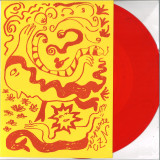
Serpente / CZN - Oferendas

Serpente / CZN

Oferendas

12inchDE010/L&L#146
Discos Extendes
08.08.2024

A split between Discos Extendes and the label Lovers & Lollypops, puts side by side two of the most relevant and prolific artists in music made in Portuguese territory: Bruno Silva and his project “Serpente” and João Pais Filipe, Leon Marks and Valentina Magaletti with “CZN”. Two projects that developed in parallel, but with a mutual interest in the strength of the rhythm and the textures and timbral richness of percussion sounds. The similarities are undeniable. A mutual admiration, also.

Comes in a Tranparent Red Vinyl in PVC Sleeve. Includes A4 risograph print by Cláudia Lancaster.

Side A written and produced by Bruno Silva with collaboration of Kelly Jayne Jones on "Perda Outra" and Maxwell Sterling on "Em Vida Traz”. Side B written and produced by João Pais Filipe, Leon Marks and Valentina Magaletti. Master by Carlos Nascimento at Qualia Audio Lab Artwork by Cláudia Lancaster Design by Conhecido João.

Disponible

En el almacen y preparando para el envío

11,35
Les Belgicains - Na Tango Ya Covadia 1964-1970 LP

The compilation ‘Les Belgicains – Na Tango Ya Covadia 1964-1970’ (‘Les Belgicains’ during the time of Covadia 1964-1970) tells the remarkable story of the first Congolese student orchestras in Belgium. During that time Congolese referred to countrymen living in Belgium as ‘Les Belgicains’. The Congolese Rumba presented on this compilation blew a new, fresh wind through the musical landscape of Congolese popular music under the supervision of the legendary editor and producer Nikiforos Cavvadias (Ngoma label).  

All tracks are remastered from the original tapes. This album is available in a deluxe vinyl edition with gatefold sleeve (1LP) + insert.

Disponible

En el almacen y preparando para el envío

23,95
HoneyLuv / Roland Clark - This Is My Life

DJ Support: Danny Howard, Pete Tong, Sarah Story, Triple J, Groove Armada, Jamie Jones, Marco Carola,Nic Fanciulli, Sam Divine, Carlo Lio, Mat.Joe, Todd Terry, Jansons, Eskuche, Moon Boots, Format:B, Low Steppa, Robosonic, Dantiez Saunderson, Charlotte Van De Peer, Dario D’Attis, Shiba San, Dennis Cruz, Pirupa, DJ Rae, Danny Tenaglia, Rene Amesz, Juliet Fox, Ashibah, Boris, Carly Wilford, Booker T, Dateless, Melvin & Klein, Paco Osuna, DJ Lora

Nothing Else Matters is proud to bring an exciting new vinyl from HoneyLuv who makes her debut on Danny Howard’s imprint, teaming up with New York DJ, producer, singer-songwriter and vocalist Roland Clark for their brand-new single, ‘This Is My Life’. Crowned Radio 1’s Future Star of 2023, HoneyLuv has taken the Dance scene by storm in recent years with support from Seth Troxler, The Martinez Brothers, Nicole Moudaber, Kevin Saunderson, Maya Jane Coles, Loco Dice, Idris Elba and more, with releases signed to Black Book, Insomniac, Tuskegee, Three Six Zero and more. On the other hand, Roland has worked and co-produced music with many of the greats, including Fatboy Slim, Mark Knight, Todd Terry and Bob Sinclair, with his vocals considered the “voice of House” and one of the rare few that can bring you an electrifying DJ set while getting on the mic and giving you a performance unlike no other. Making for the perfect pairing, ‘This Is My Life’ is set to propel both artists to even greater heights and will surely be a firm favourite at clubs and festivals worldwide this year. Kicking off the B-side is a killer rework from the legendary Carl Cox who brings his A-game with this one infusing his signature grooving basslines and high-energy, hypnotic percussive grooves. Rounding off the package, Bontan’s rework delivers organic drums and captivating Afro-House rhythms catapulting the track to new audiences and new heights.

Disponible

En el almacen y preparando para el envío

14,50
musclecars - Sugar Honey Iced Tea! LP 2x12"

Sugar Honey Iced Tea! is the highly anticipated debut album from musclecars, set for a May 2024 release on BBE Music. Having already established their presence in the club scene, from the joyous atmosphere of their Coloring Lessons parties to their residency at Nowadays in NYC, and with genre-bending performances worldwide, musclecars are eager to unveil this new world they've intentionally crafted. This forthcoming album comprises 13 tracks that sonically come together to offer a profound lens into the Afro-American experience. Themes range from joy, to loss, intimacy, helplessness, perseverance, and all the facets that lie in between. From the very first tune, musclecars set the tone with an exploration of afro-dystopia, carrying listeners through the entire album whilst creating imaginary futures born out of self-preservation and self-discovery. Through their practice of sonic storytelling, native New Yorkers Brandon Weems and Craig Handfield use this album to speak to the nuances of their daily lives and their environment. Join them on this musical journey as they delve into a collection that captures the essence of the black experience with authenticity, emotion, and rhythm. This album stands as one of their favorite bodies of work in recent memory, and they're so excited to share it with you.

Disponible

En el almacen y preparando para el envío

36,93
The Black 80s - For The Rest Ep

Warehouse Find!

The Black 80s make a long overdue return to Freerange following their 2014 release Move On (from which the Kollektiv Turmstrasse remix become something of an underground anthem). The duo hailing from Montreal and consisting of Hollis P Monroe and Overnite have been responsible for some seriously influential tracks over the years, not least Hollis' bonafide classic from 1997 - I'm Lonely. For The Rest is a slice of sultry, stripped back house heaven which drips with soul and will melt the hearts of all who hear it. The key to the tracks beauty is in the minimalism of the production keeping everything paired back to the bare bones and placing all the focus on Overnite's vocal which twists and mutates thanks to some clever use of FX. Who better to work their magic on the remix than German producer Show-B
who comes fresh off his incredible Jaap Ligthart Remix and Washint EP on his own Lossless label . Here he pushes the original through his sonic mangle, injecting steely atmospherics and layers of synths to forge a driving, muscular version which will sit perfectly amongst the sounds of Dixon, Mano et al and has already been getting early spins from Ame´. A second remix from Carlos Sanchez completes the package (on the digital
version) staying truer to the original vibe but adding delicate pads and whispering strings for some late night bliss.

Disponible

En el almacen y preparando para el envío

12,56
Delone - Romanticismo Siempre LP

Delone

Romanticismo Siempre LP

12inchLMNK80LP
Lovemonk
29.04.2024

To describe an album as "electronic music" has long been an understatement. "Romanticismo siempre" is a good example. Recorded mainly using synthesizers, the album travels a territory that borders on the experimental and the dancefloor, entering at times in both fields.

Andrés Téllez, Delone, states in its title a clear commitment: "an ode to life, to never lose that passion that is the engine that pushes everything, no matter how many obstacles there are along the way, such as love, madness or death". The need to express this is at the origin of the record.

His musical language is rich and varied. Among synthesizers, analog experimentation, drones and psychedelia, many of the subcultures that have shaped what was once called "electronic music" appear. Flashes of trip hop, new age and proto-electronics are amalgamated throughout the album, together with hints of mutant house, breakbeats, IDM and trance. Other genres peripheral to club sounds, such as post-rock or kraut, also appear.

The idea of creating something that could almost be considered a soundtrack is present, but Delone's singularity has taken the album down a different path, using his own musical vocabulary to articulate a narrative that leads him towards his desired destination, keeping experimentation and dance culture, constants in his career, very much in mind.

In 2014 and together with his partner and friend Carlos Trujillo, Andrés created Riverette, a record label that became a record store in the center of Madrid, with his studio in the basement. From there he unleashed his productions as Dos Attack and his first works as Delone. Riverette quickly became a key creative pole in the Spanish electronic underground, and the label has released records by Legowelt, Kornel Kovacs or HAAi.

Throughout the eleven tracks of "Romanticismo siempre", a story materializes in which the protagonism falls on the adrenaline of passion. Through a very personal sound, with a certain introspective vocation, Andrés tells us a wonderful tale with the help of exquisite arrangements and a rich expressiveness.

"Romanticismo siempre" is a polyhedral album that can change with every listen, with every track, and reinterpret itself almost with every playback. It is a complex record, delicate and full of nuances, at the same time charged with a powerful and primitive energy.

Disponible

En el almacen y preparando para el envío

23,32
Grèn Sémé - Maloya gazé EP

Reunion's major musical genre, Maloya, becomes "gazé" (crazy) through the sounds composed by Grèn Sémé for this new EP.
A gassed maloya that combines direct inspiration from the purest line of this traditional réunionese music with the highly contemporary evolution that is the Grèn Sémé group's signature.
Composed during the studio sessions for their latest album, "Zamroza", the first three tracks on this new EP reveal the sunny side of the Creole band.
You can taste their love of lyrics and their thirst for discovery. And the right mix of compositions. Inspired by the tradition of the greatest song/percussion pieces in the island's history, Grèn Sémé offers three anthems that lend themselves perfectly to the remix exercise.

Deluxe bonus: the 3 Remixes of Voilaaa + La Dame + Guiss Guiss Bou bess
Voilaaa and the fabulous Bruno Patchworks take on "Siko" to create a Cape Verdean ballroom hit.
funana with its heady melodies, it's ultra danceable!
La Dame, producer and DJ from Belgium, remixes the eponymous track into an effective batida for the dancefloor, DJs and dancers alike.

Guiss Guiss Bou Bess take remixing a step further, adding Senegalese sabars and the vocals of group leader Mara Seck to Carlo de Sacco's Alkol.

Disponible

En el almacen y preparando para el envío

17,61
Lagoss / Banha Da Cobra - Aquapelagos Vol.1 Atlantico

Introducing the first volume on the “Aquapelagos" series - a collection of split LPs where selected artists offer their own take into water surrounded cultures and communities. After the initial release of the Anthology compilation Aquapelago in 2022 (Discrepant ,CREP91) this first volume opens up the series with a sound journey inspired by the majestic and sometimes furious Atlantic Ocean. The music was recorded throughout special artists residencies held during the Keroxen Festival in 2020 in Santa Cruz de Tenerife where throughout a week each band recorded their own free vision of an aquapelagic Atlantic culture. Philip Hayward, the Australian researcher who coined the term Aquapelago also joins the proceedings with extensive sleeve notes.

Side 1 is provided by LAGOSS – a band comprised of Tenerife based veteran producers, Gonçalo F. Cardoso, Mladen Kurajica and Daniel García while Side 2 is provided by Banha da Cobra, comprising Lisbon-based musicians Mestre André and Carlos Godinho. Both ensembles have addressed aquatic themes in their prior work, LAGOSS having represented phantom islands on a series of vivid cameo tracks released as Imaginary Island Music Volume 1 (Discrepant, 2020) and Banha da Cobra having staged a performance within the Mãe D'Água reservoir in Lisbon in 2018, drawing on recordings of place and objects within it to conjure the liquid history of the city.

Disponible

En el almacen y preparando para el envío

20,13
Various - Tens Across the Board

Celebrating a Decade of Dark Entries with a compilation titled ‘Tens Across The Board’. We revisit our roster and chose 10 songs from 10 bands from 10 different countries spanning the years 1981-1993. The songs flow in chronological order and have never appeared on vinyl, with 7 of the songs previously unreleased.

The compilation begins in 1981 with Parade Ground from Belgium, the duo of brothers Pierre and Jean-Marc Pauly with help from Patrick Codenys and Jean-Luc of Front 242. “The Light’s Gone” was one of their earliest experiments and employs a stark minimalism with modular synthesizers, guitar reverb and tape delay. Next we venture to Granada, Spain in 1982 to meet the trio of Diseño Corbusier. Influenced by Cabaret Voltaire and Dadaism, “La Esperanza está en Antenas” was the band’s take on melancholic pop fueled by a robotic DR-55 bass-line. Sailing the Mediterranean Sea to Athens to meet Greek electronic goddess Lena Platonos who shares a demo from 1983. “Μια Γάτα Σασ Περιμένει Στη Γωνία” translates to “A Cat Is Waiting On The Corner” and is possibly the witchiest sounds we’ve shared yet, ending with a blood curdling scream. Frozen in 1983 we cross Ionian Sea to Messina, Italy and visit Victrola, the duo of Antonino “Eze” Cuscinà and Carlo Smeriglio. They’ve unearthed a melodic instrumental version of “Luca” fueled by a Korg Polysix and TB-303. Traveling across the Adriatic to Slovenia circa 1984, where Borghesia are working on their album ‘Ljubav Je Hladnija Od Smrti’. “Magla” translates to “Fog” fitting for the thick, somber electronics of Aldo Ivancic providing a dense atmosphere for the baritone vocals of Dario Seraval.

On Side B we go down under to Sydney and excavate a hidden Tom Ellard song recorded in 1984 under the alias Lord Metal, an anagram of his name for copyright reasons. “Ga Duum Blitzfonika” is a slow-motion, unadulterated dance groove originally released on the cassette compilation "Independent World”. Skipping ahead to 1986 in Tours, France we salute X-Ray Pop the minimum new wave duo of Didier "Doc" Pilot and Zouka Dzaza. They contribute the hypnotically fragile “Corto Maltese” that originally appeared on the cassette compilation ‘Plop’. Crossing the German boarder we arrive in Dortmund at the apartment of Andreas Sippel of Second Decay who recorded the instrumental demo “Lübeckerstrasse” in 1988 with partner Christian Purwien. Utilizing an TR-808, SH-101 and Arp Odyssey this cold slice of futurism was named after the street Andreas lived on. Traveling westward to England, specifically Basildon, Essex to the teenage bedroom of From Nursery To Misery, the trio of identical twin sister vocalists Gina and Tina Fear and keyboard player Lee Stevens. “Contentment” is an introspective, ethereal pop song with child-like vocals that originally appeared on the Belgian tape compilation ‘Heartbeat Vol.4’ in 1989. Finally, we return home to San Francisco and close out the compilation with Cyrnai the moniker of multi-instrumentalist Carolyn Fok. “Digital Grit Box (Demo)” was an outtake from the ‘Transfiguration’ album sessions recorded in 1993, utilizing dark dance drum beats made with MIDI sequencer programs Studio Vision and Sample Cell.

All songs have been remastered by George Horn at Fantasy Studios. The vinyl is housed in a custom designed jacket by Eloise Leigh featuring our label’s colors black-white-red with connect-the-dots pattern linking the 10 songs via maps/timeline/location, all relating to the reissue process, plus source images from San Francisco, our hometown. For this landmark release we've also printed a 2-sided fold-out wall poster that includes every artist we've released in our first 10 years 2009-2019 in black, red and silver metallic ink, plus an 8x11 insert with lyrics, notes and photos.

Disponible

En el almacen y preparando para el envío

17,86
Sascha Kloeber - Schickimicki Scheisse Ep

After a long development with several releases for Labels like Microtonal and Inclusion Records
Sascha finally decided to set up his own playground to release music with heart and emotions.
The debut EP is pretty much showing his large variety of producing unique music.

Played & supported by Laurent Garnier, Toni Rios, Max Cooper, Slam (Soma), Alexi Delano, Paco Osuna (Plus 8),
Anderson Noise, Alex Flatner (Cocoon, Poker Flat), Patrick Kunkel (Cocoon), Tim Xavier (Clink),
Kolombo (Kompakt, Systematic), Carlos Sanchez (8bit Supernature), Patrick Lindsey, Franco Bianco (Argentina),
Hanne and Lore, Microtrauma (Traum), Alec Troniq (Ipoly), Beatamines, Summer - Brendon Collins (Manual Music),
Fine Cut Bodies (Chi Recordings, Resopal), Turm 3 (Seenplatte), Laurent N. (France) and more

Disponible

En el almacen y preparando para el envío

7,14
Various - Tchic Tchic: French Bossa Nova 1963-1974  Colored Edition LP 2x12"
  • A1: Les Masques - Il Faut Tenir (1969)
  • A2: Isabelle Aubret - Casa Forte (1971)
  • A3: Christianne Legrand - Hlm Et Ciné Roman (1972)
  • A4: Jean Constantin - Pas Tant D'chichi Ponpon (1972)
  • A5: Billy Nencioli & Baden Powell - Si Rien Ne Va (1969)
  • B1-: Marpessa Dawn - Le Petit Cuica (1963)
  • B2: Jean-Pierre Sabar - Vai Vai (1974)
  • B3: Sophia Loren - De Jour En Jour (1963)
  • B4: Isabelle - Jusqu’à La Tombée Du Jour (1969)
  • B5: Sylvia Fels - Corto Maltesse (1974)
  • C1: Frank Gérard - Comme Une Samba (1972)
  • C2: Ann Sorel - La Poupée Des Favellas (1971)
  • C3: Charles Level - Un Enfant Café Au Lait (1971)
  • C4: Andrea Parisy - Les Mains Qui Font Du Bien (1970)
  • C5: Audrey Arno - Quand Jean-Paul Rentrera (1969)
  • C6: Aldo Frank - T’as Vu Ce Printemps (1970)
  • D1: Christianne Legrand - Cent Mille Poissons Dans Ton Filet (1972)
  • D2: Clarinha - Lemenja (1970)
  • D3: Hit Parade Des Enfants - Aquarela (1976)
  • D4: Jean-Pierre Lang - Tendresse (1965)
  • D5: Magalie Noël - Une Énorme Samba (1970)
  • D6: Françoise Legrand - La Lune

Ever since the late 1950s bossa-nova revolution, Brazil’s influence on French music has been undeniable. Pierre Barouh, Georges Moustaki and a vast array of lesser known artists, all made the Musica Popular Brasileira (MPB) an axis of promotion at the service of a cool and metaphysical, modern and mixed Brazilian lifestyle. Some were seduced by the poetic languors of the bossa, some were looking for fun, and others just loved the American hybridization of jazz-bossa, jazz-samba.


What is bossa nova? One of its creators, Joao Gilberto said: "Its style, cadence, everything is samba. At the very start, we didn't call it bossa nova, we sang a little samba made up of a single note - Samba de uma nota so .... The discussion around the origins of bossa nova is therefore useless”. It is nevertheless useful to remember that these magnificent Brazilian songs, which the guitarist describes as samba, were shifted and balanced around improbable chords. "I like things that lean, the in-betweens that limp with grace," said Pierre Barrouh, quoting Jean Cocteau.


With emotion, arrangements for violin and supple guitar licks, bossa nova rapidly changed. A transformation that can be heard in the Tchic, tchic, French Bossa Nova 1963-1974 compilation, the result of a cultural reappropriation, which traveled through the United States and supplemented itself in France.

A musical revolution that has remained significant, bossa nova was born in Rio. From 1956 to 1961, Brazil lived through its golden years. In five years, the country had invented its modernist style. Elected president in 1956, Juscelino Kubitschek de Oliveira, an elegant man with a broad forehead, brandished a promising slogan: "Fifty years of progress in five years". He quickly got to work. Not worried about increasing debt, he launched the project for a new federal capital, Brasilia, designed by the communist architect Oscar Niemeyer. Volkswagen opened state-of-the-art factories and created the “fusquinha”, the Beetle. In Rio, the Vespa made its first appearance. The Arpoador Surf Club crew run into the “girl” from Ipanema, Helô Pinheiro - the tanned garota ("chick"), between a flower and mermaid, who at 17 walked by the Veloso bar, where the fiery author and composer, Tom Jobim and Vinicius de Moraes, were getting drunk on whiskey. From then on, bossa symbolized cool.

In 1958, Joao Gilberto recorded Chega de Saudade, which the directors of Philips denied, calling it "music for fagots". The marketing director, who believed in it, secretly pressed 3000 78-inch vinyls and distributed them at schools around Rio, creating a tidal wave.

American jazzmen then took over. In particular, trumpeter Dizzy Gillespie and guitarist Charlie Byrd. In November 1962, the Brazilian Ministry of Foreign Affairs funded a "Bossa-Nova" concert at Carnegie Hall in New York, inviting the genre’s pioneers. Unprepared, the show soon turned to disaster. But the troupe was invited to the White House by Jackie Kennedy. The first lady loved "the new beat" and in particular Maria Ninguem, a song by Carlos Lyra, later covered by Brigitte Bardot.

In Brazil, the 1964 military coup quickly ended this euphoria. The destructive atmosphere that ensued pushed many Brazilian musicians to leave, if not to exile. Thus, Tom Jobim, Sergio Mendes and Joao Gilberto arrived to the United States. In New York, Joao Gilberto met saxophonist Stan Getz. At the time, he was married to the Bahianese Astrud Weinert Gilberto, who had a German father. She had never sung before, but she knew how to speak English. Getz therefore asked her to replace her husband on The Girl From Ipanema. The Getz/Gilberto record with Tom Jobim on piano, was released in March 1964. Phil Ramone, the "pope of pop" was in charge of sound.

Bossa nova arrived in Paris through the classic “guitar-voice” channel (Pierre Barouh, Baden Powell, Moustaki…) But France loved jazz and Paris had already welcomed its American contributors. All these good people were to pass through Saint-Germain-des-Prés. The cabaret l'Escale became the Mecca of Latin American sound where one could find Pierre Barrouh and his friends, such as the Camara Trio, samba-jazz aces, whose only record was published by the Saravah label. With a band strangely called Les Masques (a band that included Nicole Croisille and Pierre Vassiliu, among others), the Camara Trio recorded an interesting Brazilian Sound, including the track Il faut tenir which is present on this tasty compilation of rarities.

Other enlightened musicians can also be found on the compilation, such as Jean-Pierre Sabar (songwriter for Hardy, Auffray, Leforestier ...) and the French pop rock organist Balthazar. In 1975, Sabar recorded Aurinkoinen Musiikkimatka on a Finnish label, which featured the crazy Vai, Vai, included on this record. We are now following the footsteps of Brazilian electronic musicians such as Sergio Mendes, Eumir Deodato or Marcos Valle who created funk and disco sounds on their keyboards and synthesizers. A style that influenced Véronique Sanson when she wrote Jusqu’à la Tombée de la nuit in 1969 for Isabelle de Funès, the niece of Louis and a great friend of Michel Berger - Sanson did end up singing this track on her 1992 Sans Regret record.


The pinnacle of exoticism and travel, Sylvia Fels’ Corto Maltese includes bongos, sea mist and ocean sounds. The title was taken from Jacky Chalard’s concept album written in 1974, Je suis vivant, mais j’ai peur (I am alive, but I am scared), based on Gilbert Deflez’s science fiction novel.


However, bossa nova extended the scope of popularity. "In the 1970s, I was a fan of Sergio Mendes, Getz / Gilberto. I fell in love with this music that I knew because I had been an orchestral singer, " explained Isabelle Aubret, who in 1971 delivered a composite record of covers by the very funky Jorge Ben, Orfeu Negro, Tom Jobim, Vinicius de Morais and Jean Ferrat. "I recorded this album for Meys Records in Paris, far from Brazil, with wonderful musicians, François Raubert, Roland Vincent, Alain Goraguer...". The latter wrote the arrangements for Casa Forte, a very percussive title borrowed from Edu Lobo, one of the initiators of the bossa who spent time in California. "Jazz and bossa came together and produced very rhythmic music. I love singing, it allows me to dream, to have fun, to feel a high on stage, and these songs brought me joy, made me swing, my singing felt like a dance.”


The world tours of French singers and their desire for the tropics, often brought them to Rio with its hills, forests, caipirinhas and tanned bodies. There are surprises though, like this Iemenja (Iemenja is the goddess of the sea in the Afro-Brazilian candomblé religion). Not unlike the composer and musician Jean-Pierre Lang, based in Sao Paulo, Claire Chevalier taught Brazil to Brazil. In 1970, the singer and painter published a 45-inch vinyl, Mon mari et mes amants (My husband and my lovers), under the improbable pseudonym of Clarinha (little Claire). She was then living in Rio, with her husband, Joël Leibovitz, who founded a band called Azimuth, and who owned a record label specialized in "sambas enredos" songs for samba school parades.


For its B side, she asked Pierre Perret to come up with lyrics for a song composed by Carlos Imperial: "Oh goddess of the sea, o goddess Iemenja, I bring a white rose to adorn your long hair ..." . "Perret came to see us, and we had fun, remembers Joël Leibovitz. We wrote Lemenja for fun, we recorded it at the Havaí studio, behind the Central do Brasil the central station. Erlon Chaves, the arranger who worked with Elis Regina, joined us" adding his share of Afro-Brazilian percussions and funky brass to the mix.

There is a common misunderstanding in Franco-Brazilian history: that bossa, admittedly hedonistic, is perceived as funny, even though the poets who wrote the texts are often philosophizing on the human condition. Its French interpreters pull it towards a carnival inspired universe, far removed from its fundamental essence. Thus, Jean Constantin covered the famous Samba da minha terra, an ode to the art of samba written by the classic Bahian composer Dorival Caymmi, renaming it with the enticing title of Pas tant de tchi tchi pompon: "On your pier there is no tchi tchi / when you arch your back, you know everything is alright ”(lyrics by Gérard Calvi). This expedited bossa aims for the absurd, but retains a certain elegance.

Indeed, Jean Constantin was not an idiot, the rather large man had a huge mustache and liked fantasy, (Les pantoufles à papa, Le pacha, inspired by cha-cha-cha-cha, salsa and jazz) but he was also the lyricist of Mon manège à moi interpreted by Edith Piaf, the composer of Mon Truc en plume by Zizi Jeanmaire and the soundtrack of François Truffaut’s 400 Blows. Le Poulpe, published in 1970, from which this bossa is extract, was arranged by Jean-Claude Vannier, an accomplice of Serge Gainsbourg’s Melody Nelson. In short: "There is enough of samba / By looking at the parasol / Because my poor cabeza / Is going to die in the sun".

Even the American actress Marpessa Down, who was at the heart of the bossa nova revolution with her role as Euridyce in Marcel Camus’ film Orfeu Negro, winner of the 1959 Cannes Palme d'or, fed the clichée with Je voudrais parler au petit cuica - "Tell me how you manage to always make people want to dance / It's true, I must admit that I cannot resist your magic" - in consequence, once can hear the cuica, a little drum inherited from the Bantu.


But bossa nova had many angles. Societal, of course, pushing actresses who were symbols of women's liberation like Brigitte Bardot, Jeanne Moreau, or Sophia Loren to engage in the exercise of accelerated bossa. In February of 1963, Sophia Loren made a record in French in Rome, Je ne t'aime plus, featuring the song De jour en jour, a bossa written by two Italians, Armando Trovajoli and Tino Fornai, which was released a little later by Barclay. Bossa accompanied the 1960s, a decade of moral liberation. Ann Sorel, who interpreted La Poupée des favellas, caused a sensation with L’amour à plusieurs, a provocative song written by Frédéric Bottom and Jean-Claude Vannier. As for the actress Andrea Parisy, she displayed her bourgeois cheekiness in Marcel Carné's Les Tricheurs before interpreting Les mains qui font du bien. And Magalie Noël, the friend of Boris Vian, who sung Johnny fais-moi mal, was hired to sing Une énorme Samba, composed by Alain Goraguer (arranger to Gainsbourg, Bobby Lapointe and Jean Ferrat) with lyrics by Frédéric Botton.

But in the end, of what wood is bossa nova made of? The answer is given by Christianne Legrand, daughter of Raymond the conductor, and sister to Michel the composer: "With me, with jà" - jà means "immediately" in Portuguese. In 1972, the singer, an expert in vocal jazz and a member of the Double Six, published Le Brésil de Christianne Legrand. Two songs included on the Tchic Tchic compilation that demonstrate how bossa, jazz, funk, rock, etc. work like a swiss army knife: the music is used to denounce broken systems, or miracles, HLM et ciné roman, Cent mille poissons dans ton filet, two songs from the O Cafona soundtrack, a successful telenovela broadcast, at the time in black and white, on TV Globo. The first was adapted in French by the fighter and friend of the Legrand tribe, Agnès Varda. The second is content with a play on words, jostling them into a summer fun.


Véronique Mortaigne

Reservar17.04.2026

debe ser publicado en 17.04.2026

27,31
VARIOUS - [QR]V.093.STTP!.26

Various

[QR]V.093.STTP!.26

12inch[QR]V093STTP!26
COD3 QR
03.04.2026

From his roots in House, Alex Finkin is a renowned producer and creative director. Working in his Paris studio he has developed numerous projects, notably his own (Roseaux), as well as commissions for radio and television. Meanwhile, with 30 years of production and DJing under his belt, Rocco Rodamaal belongs to the elite circle of House innovators who continue to influence the scene. He's played alongside some of the best in the industry showcasing his versatility and deep understanding of the genre, and remixed artists including Marshall Jefferson, Kerri Chandler, Louie Vega & Moodymann, Todd Terry, Barbara Tucker and Robert Owens to name just a few. Alex Finkin befriended Rocco Rodamaal, who he met via the soulful Parisian club Djoon, where Alex was resident from 2006 to 2014. They have since collaborated on a number of projects together, including "In Da Hood" released on COD3 QR in 2023. Kenny Dope's "O'Gutta" remixes are a series of house and club-focused reworks characterized by raw, gritty and often stripped-back percussion, which he now brings to "In Da Hood".

Ross McMillan, known professionally as Carlos Nilmmns, is a Scottish electronic music producer, DJ and composer originally from Glasgow. Over the years he has collaborated with a range of notable artists, including Grammy-nominated and Grammy-winning figures, including Kenny Dope, Carl Craig, Kevin Saunderson and Davina Bussey, plus respected artists like Niko Marks, Rolando, Laurent Garnier, Santiago Salazar, Hardrock Striker, Karl The Voice, Zadig, Ben Sims, Andrés (who worked with Jay Dilla and Moodymann), and YouANDme. His music has been released on Planet E, Trax, Cocoon, Ornaments, Circus, Virgin, Skylax/Universal Music France and more. His style draws from house, techno and jazz influences, often combining analogue and digital production methods. A returning regular and COD3 QR favourite, he's back with another stunner in "Latin Quarter".

K' Alexi Shelby is a prominent figure in electronic music and with a career spanning decades, he's established a significant influence on House and Techno. Throughout his career he's worked with many well-known artists and remixed tracks that are now key pieces. The cultivation of his massive musical catalogue has overflowed into albums and the three labels he heads. It's also led to legendary collaborations with artists such as The Pet Shop Boys, Robert Owens, Kenny Dixon, Roy Davis Jr., Maurice Joshua, Terry Hunter, Joe Smooth, Steve Silke Hurley, Tyree Cooper, Ron Trent, Glenn Underground, Larry Heard, DJ Pierre, Carl Craig, Felix da Housecat, Marshall Jefferson, Will Smith and countless others. Already respected around the world as a true underground House legend, he delivered "Flame" in 2025 for COD3 QR. Now he's back with "When I", another deep and sexy cut.

Benny Rodrigues a.k.a. ROD unveiled his new moniker, The Lost Souldancer when he dropped "No More Voices" for COD3 QR last year. In his own words, Benny says: "The Lost Souldancer is about coping with the loss of what once was. Finding comfort in the invisible rather than what can be seen. Disconnect to connect in order to be loved rather than liked." He continues this ethos with the delicate and melodic closing track "Life and Death".

No en stock

Haga su pedido ahora y le encargaremos el artículo en nuestro proveedor.

15,92

Ültimo hace: 2 Días
Disco Pogo - Issue 9 TOMORA cover (BOOK)

The new issue of Disco Pogo features 20 pages on Prince’s influence on electronic music marking 10 years since his passing.

Our other two cover stars are Warp’s Nightmares on Wax, who is celebrating 30 years since his classic album ‘Smokers Delight’ having just sold out The Royal Albert Hall, and TOMORA who are a new duo made up of Tom from The Chemical Brothers and Scandi pop star Aurora.

Plus features on The Durutti Column, Wendy Carlos’ ‘Clockwork Orange’ soundtrack, Burial, Lorraine James, DJ Hell, DJ
Shadow, Hot Chip’s Alexis Taylor, Speedy J, Tiga and much more!

194 pages of quality music journalism by the world’s best music writers plus beautiful photography and design in a quality print magazine.

Reservar27.03.2026

debe ser publicado en 27.03.2026

16,39
Demetrio Castellucci & Massimo Pupillo - Sleep Technique LP
  • 1: Skull Chamber
  • 2: The Venus And The Sorcerer
  • 3: Panel Of The Lions
  • 4: Hillaire Chamber
  • 5: Candle Gallery
  • 6: Chamber Of The Bear Hollows (North)
  • 7: Chamber Of The Bear Hollows (South) & Brunel Chamber
  • 8: Entrance Chamber

Demetrio Castellucci and Massimo Pupillo present the music of Sleep Technique, a performance by Dewey Dell inspired by the Chauvet cave and its ancient cave paintings.
The music comes to life anew on record, an immersion into the depths of sonic particles, moist electroacoustic rhythms, the repeated forms of speleothems, and the electric bass that scrapes the walls, shaping them into concave or convex surfaces. A voice that moves incredibly slowly, yet is in constant motion, like the millennia-old, unceasing erosion of water.
The album’s journey follows the geography of the cave in reverse, moving from its deepest chamber back to the entrance.

Demetrio Castellucci is a composer and sound designer who has been involved in theater productions, choreography, and film since 2004. Around the same time, he began performing as a DJ, favoring an omnitemporal approach geared toward dance that transcends musical genres. Since 2006, he has been a member of the dance company Dewey Dell, and since 2007, he has been active as Black Fanfare, a maximalist electroacoustic project. He has collaborated on performances by Andreco and Enrico Ticconi/Ginevra Panzetti, as well as on films by Ahmed Ben Nessib, Beatrice Pucci, and Ilaria di Carlo. After living in London and Berlin, he settled in Vilnius, where in 2018 he founded Unarcheology, a digital platform that publishes music and radio programs. He is also active as Airport Gad, an ambient project which, together with Unarcheology, launched its own “Airline Company”: concerts in a flight simulator built from cardboard, where the pilots are also the musicians.

Massimo Pupillo is best known as a founding member of the band Zu, with whom he has released 18 albums and performed over 2,000 live shows worldwide. He has maintained a highly open and multidisciplinary approach that has led him to work with some of the most acclaimed figures in the contemporary art world: South African photographer Roger Ballen, actors Malcolm McDowell and Marton Csokas, Romeo Castellucci and Chiara Guidi of Societas Raffaello Sanzio, American choreographer Meg Stuart, poet Anne Waldman, and Italian poet Gabriele Tinti, among others. He has collaborated live and in the studio with avant-garde musicians and composers such as Alvin Curran, piano duo Katia & Marielle Labèque, and classical virtuosos like Viktoria Mullova and Giovanni Sollima. He has also worked with some of the most influential names in the international rock scene, including Mike Patton, Thurston Moore, Jim O’Rourke (Sonic Youth), Guy Picciotto & Joe Lally (Fugazi), Buzz Osborne (Melvins), and Damo Suzuki (CAN).

In the field of improvised music, he has collaborated with Peter Brötzmann, Toshinori Kondo, Mats Gustafsson, Ken Vandermark, and Tony Buck, among others. Within the experimental music scene, his collaborations include Oren Ambarchi, David Tibet (Current 93), Thighpaulsandra (Coil), Stephen O’Malley (Sunn O))), Abul Mogard, Mick Harris (Scorn), Gordon Sharp (This Mortal Coil), FM Einheit (Einstürzende Neubauten), and many more. In cinema, he composed the score for Kirill Serebrennikov’s film LIMONOV, presented at Festival de Cannes in 2024.

Reservar13.03.2026

debe ser publicado en 13.03.2026

25,17
FABIANO DO NASCIMENTO & VITTOR SANTOS ORCHESTRA - VILA

Hidden away amidst the bustle of Rio de Janeiro’s Catete neighbourhood is a small alleyway behind a cast iron gate. At its end is Bairro Saavedra, the courtyard surrounded by Neo-colonial houses where Brazilian guitar virtuoso Fabiano do Nascimento spent much of his childhood. Built in 1928, this secluded neighbourhood with its wooden shutters, tiled floors and tranquil benches, provides the inspiration for the title of Do Nascimento’s new album VILA, a collaborative project with a sixteen piece orchestra led by trombonist and arranger Vittor Santos.

Recorded between Rio de Janeiro and Los Angeles, VILA is grand, tender, warm, playful and nostalgic. On this stunningly ambitious work, the delicate compositions led by Nascimento's guitar, which sits central in the mix, are surrounded by Santos’ breathtaking orchestral arrangements which swirl in all directions: complimenting, questioning, responding; in constant conversation.

Like the eclecticism of the architecture Do Nascimento grew up surrounded by, his music straddles many worlds at once. He is known as a Brazilian acoustic guitar master and as such has collaborated with Arthur Verocai, Airto Moreira and Itibere Zwarg. But equally at home in Los Angeles's jazz and experimental music scenes, Do Nascimento is also known for his work with artists like Sam Gendel and Carlos Nino.

Vittor Santos is an arranger and Trombonist who has worked extensively with many of the greats of Brazilian music, including João Donato, Marcos Valle, Toninho Horta, and Elza Soares.

=====================================
Credits:

Fabiano do Nascimento – 6, 7 and soprano guitars.
All orchestral arrangements and production by Vitor Santos.
Recorded at Electro-Sound studio, Los Angeles and Estúdio Fibra, Rio de Janeiro
Engineered by Jason Hiller and Garbiel Lucchini
Mastered by Mike Bozzi

Oboe – Francisco Gonçalves
Contrabaixo – Rodrigo Villa
Drums – Márcio Bahia
Violino - Ricardo Amado
Violino – Thiago Teixeira
Violin – Daniel Albuquerque
Violin – Márcio Sanches
Viola – Ivan Zandonade
Viola – Dhyan Toffolo
Cello - Hugo Pilger
Cello – Janaína Salles
Double Bass – Rômulo Gomes
Clarinet – José Batista
French Horn – Philip Doyle
Trombones - Vittor Santos
Violin – Daniel Guedes

No en stock

Haga su pedido ahora y le encargaremos el artículo en nuestro proveedor.

23,11

Ültimo hace: 28 Días
Carlo Maria Giulini, Los Angeles Philharmonic Orchestra - Beethoven: Sinfonie Nr. 3 »Eroica« (Original Source Series #10) LP 2x12"

Carlo Maria Giulini, Los Angeles Philharmonic Orchestra

Beethoven: Sinfonie Nr. 3 »Eroica« (Original Source Series...

2x12inch4868045
Deutsche Grammophon
06.02.2026

Beethoven begann mit der Komposition seiner Dritten Symphonie, kurz nachdem seine zunehmende Taubheit und seine Selbstmordgedanken öffentlich bekannt geworden waren. Der „heroische“ Stil dieser Symphonie kann als musikalischer Ausdruck seines Triumphs über sein persönliches Leiden interpretiert werden.
Aber die Symphonie hat auch eine enorme musikalische Bedeutung: Mit der „Eroica“ erweiterte Beethoven
die symphonische Form und veränderte damit die Erwartungen an eine vierteilige Symphonie für die nächsten zwei Jahrhunderte.
Giulinis Aufnahme mit dem Los Angeles Philharmonic Orchestra gilt als Referenzaufnahme.
Die audiophile Vinyl-Serie The Original Source präsentiert herausragende Aufnahmen der 1970er Jahre
in ganz neuer Klangqualität. Dafür haben die renommierten Emil Berliner Studios die originalen Vier- und
Achtspur-Bänder mit eigens für die Produktion der Serie entwickelten Technologien in 100% analoger Qualität (AAA) neu gemastert und geschnitten. Die klanglichen Unterschiede zu den Originalveröffentlichungen sind beträchtlich: Größere Klarheit, mehr Feinheiten und Verbesserungen im Frequenzgang, zugleich
weniger Nebengeräusche, Verzerrungen und Komprimierungen ermöglichen ein audiophiles Hörerlebnis wie
nie zuvor.
Auf 180g Vinylplatten und in einer Deluxe-Gatefold Edition mit Originalcovers und -texten werden die
Exemplare dieser Serie limitiert und nummeriert veröffentlicht, begleitet von zusätzlichen Fotos und Faksimiles der Aufnahmeprotokolle und Bandkartons.

Reservar06.02.2026

debe ser publicado en 06.02.2026

59,03
Various - Infinite Brain

A1 | Carlos Native – Be Yourself
Andalusian producer Carlos Native unfolds an almost cinematic sensibility: a slow, introspective piece where a hypnotic bassline and wide, horizontal backgrounds build an inner journey rather than a track aimed at immediate impact.

A2 | Slit Observers – Synthmek
The Galician duo present a hard, high-energy work. Industrial-driven drums demand movement, while an aggressive, sharp arpeggiated bass defines a sonic identity with no concessions.

A3 | Negocius Man – 8N8
The Madrid-based veteran constructs 8N8 with modular precision: each sound falls into place with an almost architectural logic. The result is a synthetic, measured and structured piece shaped by years of experience.

B1 | Allumynd – Chestcollider
Making their debut on the electro scene, Allumynd delivers an original and daring track. An otherworldly snare and a woven vocal structure turn this piece into a clear example of new-generation electro: atmospheric and bold.

B2 | Komatssu – Non Servian
The Asturian producer, under his Komatssu alias, opts for continuous evolution without a kick drum as support. The track works like an organism that grows and transforms as it progresses, generating a hypnotic and mature effect.

B3 | Irrational Language feat. Lucky – We Are Comming Back
Irrational Language dives into braindance with meticulous technical production: drums filled with micro-artifacts, luminous synthesizers, and Lucky’s vocals processed and spatialized to reinforce a narrative of rebirth and emerging from darkness.

No en stock

Haga su pedido ahora y le encargaremos el artículo en nuestro proveedor.

14,08

Ültimo hace: 74 Días
Various - Gente Seria Viste Chandal 07

Gente Seria Viste Chándal ataca de nuevo con el Volumen 7, esta vez con motivo del supercoche Renault 5 Copa Turbo. Como siempre, motivos que hemos vivido en nuestros barrios.

En el Vol. 7 encontrarás 6 cortes de puro electro, que van desde el New Old School hasta el sonido más espacial o contundente, con un guiño/homenaje a los padres de todo esto: los robots alemanes.

Da Vektah_ Chandalwerk – No hace falta decir nada más; solo con escuchar, lo entenderás. Todo un homenaje a Kraftwerk.

Sace2_ La malla (The Mesh) – Un grande del New Old School, con una canción cargada de ritmos electro-funk, voces con pitch y mensaje directo.

David Pasajero_ The Knight of the Revolution – Canción combativa y muy espacial que invita a coger la nave y viajar por el universo musical.

Carlos Native_ Sculpture – Temazo con subgraves que te penetran hasta el fondo de la médula. Delays, leads y pads y voces místicas… todo un rompe-pistas.

Slit Observes_ Biodex – Este dúo gallego nos entrega un tema contundente y pistero, con bajos punzantes y mucha mala leche. Este dúo promete.

Gerard Braions & The Bandit_ Cortocircuito en la ciudad – Toda una declaración de intenciones. Electro-rap que promete ser (y será) un nuevo himno para nuestra escena.
“Si no escucho electro me da ansiedad”. The Bandit y Gerard Braions lo han vuelto a hacer.

No en stock

Haga su pedido ahora y le encargaremos el artículo en nuestro proveedor.

15,92

Ültimo hace: 65 Días
Various - Hot Creations Sampler I

Hot Creations new Vinyl Sampler featuring four of the Hottest recent release on Hot Creations.

The A Side features Kolter’s superb slice of old school House, ‘Red Alert’ a stomping powerhouse of a trackk, delivering relentless grooves and serious intensity. The A Side also features and Jamie Jones’s hugely popular rework of ‘XTC by HoneyLuv & Mason Maynard, a head bobbing hypnotic groover an exemplary, underground dubby take on the Original, intertwining layered effects and hypnotic atmospherics for the ultimate dancefloor weapon.

On the flip we have Lauren Lane’s monstrous Ryde Or Die Anthem, a inspired rework of DMX - Ruff Ryder's Anthem, a robust house cut that weaves hypnotic guitar strums, driving beats, and a mix of rolling low-ends and rapped vocals, coming together for a tripped-out ride with a deep bass and playful groove. Finally, we have Carloh’s ‘Quisiera Tenerte’ is a magnetic dancefloor filler, pulsing with a lively Latin groove and dripped in resonant basslines groove-led percussion, and hooky as hell vocal’s.

No en stock

Haga su pedido ahora y le encargaremos el artículo en nuestro proveedor.

14,50

Ültimo hace: 8 Días
Various - Wizzz! French Psychorama Volume 5 (67-75)

The journey through French-speaking pop archives continues with this fifth volume, packed with fuzz, gimmicks, and dissent. Far from the charts, the selected tracks display a great creative freedom, often backed by corrosive humor. Welcome to the surprising, kaleidoscopic, and colorful world of the late sixties and early seventies, Wizzz!
Born in Montauban, Robert Pico stumbled into music by chance when he met René Vaneste, then artistic director at Pathé-Marconi. René brought him to Paris to record his first 45 RPM EP in 1964. A year later, Pierre Perret introduced him to Vogue, where he recorded his second album with Claude Nougaro’s orchestra. Sylvie Vartan then introduced him to RCA, where he recorded four singles, including the astonishing "Chien Fidèle," a track backed by a hair-rising fuzz guitar. Alongside his solo career, he also composed for other artists like Alain Delon (the song was recorded but remains unreleased), Magali Noël, Bourvil, and Georges Guétary. In the Paris of the sixties, he mingled with Mireille Darc, Elsa Martinelli, Marie Laforêt, France Gall, Françoise Hardy, Petula Clark, Régine, Dani, Serge Gainsbourg, Joe Dassin, Franck Fernandel, Charles Level, and Roland Vincent. Despite his efforts and winning a Grand Prix Sacem for his final record, Robert Pico didn’t achieve the expected success in show business and decided to leave Paris and return to the Southwest, where he devoted himself to writing. He is the author of 23 books (including Delon et Compagnie, Jean-Marc Savary Editions 2025, a memoir about his youth and his many encounters). Today, he is relieved to never have become a celebrity and devotes himself to his work with passion.
In 1969, the Franco-Italian movie Erotissimo was released, directed by Gérard Pirès (who later directed Taxi in 1998, written and produced by Luc Besson). This pop comedy features Annie Girardot, Jean Yanne, Francis Blanche, Serge Gainsbourg, Nicole Croisille, Jacques Martin, and Patrick Topaloff. The soundtrack was written by Michel Polnareff and William Sheller, with lyrics by Jean-Lou Dabadie. "La Femme Faux-cils," performed by Annie Girardot. It recounts the feelings of a rich CEO's wife who seeks to develop her sex appeal under the influence of advertisement and magazines. Groovy, sparkling and light, this track, with ITS lush arrangements humorously critiques consumer society and feminine beauty standards.
“Je suis l’Etat” (1967) is the flagship track of the first EP by singer-songwriter Spauv Georges, aka Georges Larriaga, better known as Jim Larriaga (1941-2022). Born into a family of bakers, the young man was initially planning to become a hairdresser when he discovered English-speaking music through Elvis Presley and the Beatles. After this revelation, he decided he would become a songwriter and gave himself five years to succeed. He recorded his first two EP’s independently for RCA under the pseudonym Spauv Georges; meaning “that poor George”, a nickname given to him by the mother of her friend Jean-Pierre Prévotat (future drummer of the Players, Triangle, or Johnny Hallyday). Portraying a depressed and eccentric young man, Spauv Georges created corrosive and amusing songs that didn’t reach a wide audience, despite a TV appearance with Jean-Christophe Averty.
Supported by his loyal friend and fellow songwriter Jean-Max Rivière, Georges Larriaga met the future singer Carlos in the early '70s, then Sylvie Vartan’s assistant. He wrote songs for Carlos, including the popular "La vie est belle," "Y’a des indiens partout," and "La cantine", which went onto become a huge hit in 1972. He also composed for Claude François (“Anne-Marie”, 1971), Charlotte Julian (“Fleur de province”, 1972), helped launch child singer Roméo (who sold 4 million records), and later wrote the hit "Pas besoin d’éducation sexuelle" (1975) for the young Julie Bataille. In 1971, Jim recorded an album for Disc'Az: “L’univers étrange et fou de Jim Larriaga”, which featured pop gems like “La maison de mon père”.
The story of the song "Zoé" began when Pierre Dorsay, artistic director at Vogue Records, asked Swiss singer and musician Pierre Alain to write a song for a new female singer. The inspiration came when he realized that Zoé (the artist's name) was also the name of France's first atomic battery, created in 1948, which consisted of uranium oxide immersed in heavy water! The lyrics reflect a bubbling energy that must be handled with caution, while the instrumentation echoes this atomic theme, notably with the use of a theremin.
Zoé’s career lasted only as long as a single 45 RPM, but it seems Christine Fontane was the vocalist behind this pseudonym, who is known for several EPs, a good "popcorn" album in 1964, and a handful of children’s singles in the '70s. Regardless, the photograph on the cover is of a different girl entirely.
Later, Pierre Alain continued his career, writing songs for himself, Marie Laforêt, Danièle Licari, Alice Dona, Arlette Zola (3rd place in Eurovision 1982), and achieving multiple gold and platinum records in Canada. Also an inventor with several patents, president of the Romande Academy, and head of the French Alliance in Geneva, he now composes atonal music, books, and poetry. Moreover, he is also the host of "Les Mardis de Pierre Alain" at "Le P'tit Music'Hohl" in Geneva.
Filled with oriental choruses and fuzz guitar, "Fou" is from Jacques Da Sylva's only EP released by Vogue in 1967. Despite the quality of this recording, all traces of this singer disappear after this first effort.
Valentin is a baroque pop singer born in Belgium. He is the songwriter and composer of most of the tracks on his three singles released in the late 60s in Canada. A legend says that he reincarnated himself as Jacky Valentin during the 1970s for a rock'n'roll revival career in Belgium, but his older brother sadly debunked this story. Valentin's first two singles were arranged by Claude Rogen, a Parisian session pianist who had come to Canada to promote the song “Mister A Gogo”, a cover of David Bowie’s “Laughing Gnome”, adapted by singer Delphine, his wife at the time. Far from his usual network, Claude Rogen arranged music for Polydor, including the arrangements for “Je suis un vagabond” in 1969, a jerk tune with string arrangements and a furious optimism.
Jacques Malia wrote, composed, and recorded his only 45 EP for Festival in 1966. “Histoire de gitan” is an incredible beat track with bohemian scat that tells the story of a gypsy musician who came to Paris to make it in the Music-Hall, to no avail. The hero of the song and its author probably shared a similar fate, as Jacques Malia faded into anonymity after this remarkable attempt.
Bernard Jamet recorded two EPs for Barclay in the late sixties and co-wrote several songs with Christine Pilzer, Pascal Danel, and prolific songwriters Michel Delancray and Mya Simile. The track “Raison Légale” (1968), his masterpiece, immerses the listener in a courtroom right when a murderer is being judged, with jerk rhythm and free arrangements. A unique, paranoid, judicial, and psychedelic oddity.
Jean-Pierre Lebrot-Millers started his career in show business in 1967 as a singer and songwriter for the Philips label. After three singles, he wrote several songs of a new kind with his friend Pierre Halioche, in the midst of the sexual liberation movement and the democratization of drugs. With provocative lyrics, “Les filles du hasard” and “Barbara au Chapeau Rose” were released on a Philips singles in 1968. The character of Barbara was inspired by a queen of Parisian nightlife during the psychedelic years: model Charlotte Martin, who dated Eric Clapton from 1965 to 1968, then Jimmy Page from 1970 to 1983. Jean-Claude Petit’s arrangements, with a table-filled intro, soul brass, and Hendrixian guitar, emphasize the flamboyance of a hedonistic and sexy character, whose dog is named Junkie because “Junkie est un nom exquis”! The track was recorded live in three takes with a full orchestra.
Upon its release, the record was censored by Europe 1 and RTL due to its references to drug use. Jean-Pierre Lebrot was then banned from the airwaves and later dismissed by his record label. He changed his artist name to Jean-Pierre Millers, while his companion Pierre Halioche became D. Dolby for a new dreamy composition, “Chilla”, which Jean-Pierre produced himself with arrangements by Jean Musy. Once again, the song was immediately censored everywhere. After this setback, he decided to stop singing and started taking on odd jobs to support his Swedish wife and their son until the day he met Jean-Pierre Martin, then production manager at Decca, who had worked with Manu Dibango. Martin offered Jean-Pierre Lebrot-Millers, then employed at Rank Xerox, the position of artistic director at Decca. He accepted and became, a year later, promotion director (radio, press, TV). He worked on Julio Iglesias’s first album for Decca, which became a massive hit and allowed him to meet Claude Carrère. The latter asked him to write new songs and find their performers, much like a “talent scout.” It’s through him that Jean-Pierre discovered Julie Pietri and Corinne Hermès. He composed “Ma Pompadour” for Ringo, Sheila’s husband, and took the microphone again for the syncope hit “Rendez-Vous” in 1982.
That same year, Jean-Pierre Lebrot-Millers tried to release a track for which he had heavily gone into debt: “Si la vie est un cadeau”. Having recorded it in London, he presented it to numerous professionals, all of whom refused to get involved. The same thing happened with Antenne 2 and the Sacem when he proposed the song as France’s entry for Eurovision. He then met Haïm Saban, who was producing cartoon soundtracks and had just launched the Goldorak theme song. Saban, having listened to the song, declared it had the potential to become a hit. He sent Jean-Pierre and Corinne Hermès to meet the CEO of the Luxembourg radio and television network. The latter received them, asked to hear a verse and chorus a cappella in his office, and immediately hired them to represent Luxembourg at Eurovision 1983. They reworked the arrangements and recorded a new version with Haïm Saban as co-producer. The song ended up winning Eurovision 1983, a great comeback for our hero. He continued producing and hung out with the band Nacash in Belgium when a couple came to introduce their daughter for an impromptu audition in a hotel room. The girl sang “Les démons de minuit” while dancing to a radio cassette. Impressed, he had her take singing lessons for a year and composed a song for her (for which he had the melody and title, but no lyrics). This required him to go on the hunt for a lyricist, who ended up being Guy Carlier. They recorded the song, which was initially a ballad, at Bernard Estardy’s CBE studio, and gave the singer a new name: Melody. They showed the song around their industry network without success. Later, Estardy called Jean-Pierre to suggest changing the rhythm and making it pop-rock. Orlando, Dalida’s brother, liked the result and decided to co-produce the track. “Y’a pas que les grands qui rêvent » became a classic hit. The song has since been covered by Juliette Armanet (as a ballad, like the original) and Valentina.

Born into an aristocratic Breton family, Hervé Mettais-Cartier worked as a DJ at Queen Kiss, a nightclub in Poitiers, where he formed the band Les Concentrés with Michel (an actor) and Christian (a radio technician). Together, they created a repertoire of whimsical songs (“Ma bique est morte”, “J’suis un salaud”, “Fils de dégénéré”...) that they performed on stage dressed in white (in homage to “concentrated milk”). They performed at Bliboquet and Olympia in 1968 for the 10th edition of the “Relais de la chanson Française” organized by L’Humanité-Dimanche and Nous les Garçons et les Filles, sponsored by Pepsi Cola. Winners in the author-composer category, alongside Danish singer Dorte, their visibility allowed them to record a 45, and appear on television in Jean-Christophe Averty’s show. The A-side of the disc features Bruno le ravageur, a casatchok dedicated to Bruno Caquatrix, the director of Olympia, nicknamed in the song “Coq Atroce” or “croque-actrices”. The B-side is dedicated to “Fils de dégénéré”, a quirky tribute to Hervé's aristocratic roots, mixing absurdity with sophisticated vocal harmonies.
After Les Concentrés, Hervé Mettais-Cartier formed the duo La Paire et sa Bêtise with his friend Olivier Robert. They performed in Parisian cabarets and toured with Pierre Vassiliu. In the late 1970s, Hervé began a solo career. He recorded two albums for the Motors label in 1978 and 1979, which did not achieve their anticipated success due to lack of promotion. In 1980, he met Bernadette, with whom he started a family and created a “Chansons à voir” (songs to see) show that he performed until his death at the end of 2024.

Publicité comes from the final EP by the Missiles (Ducretet Thomson, 1966), a disc that also includes “La (nouvelle) guerre de cent ans”, featured on Volume 4 of our Wizzz! series. Please refer to the booklet for the story of the band.

“He’s 1.82 meters tall, 28 years old, weighs 135 kg, is black and Belgian”: this is the description of singer Hegesippe on the back of his sole single (Decca, 1967). He appears on the album cover wearing a Greek toga, like a hippie gag – we are at the end of the year 1967. In “Le crédo d’Hegesippe”, this former bodyguard of Antoine and the Charlots plays the delightful card of the thick brute converted to Flower-Power and non-violence, with arrangements by Jean-Daniel Mercier, aka Paul Mille.
“Ethéro-disco” was released on a promotional record for clients of the Maréchal company (Liège, Belgium) for the New Year 1979. Over a funky rhythm, celebrity impersonations (Brigitte Bardot, Jacques Dutronc, Fernandel…) deliver an enigmatic text about pharmaceutical products like ether, bismuth, and aspartate. The track was composed by Dan Sarravah (responsible for Joanna's “Hold-up inusité” featured on Wizzz! Volume 3) and Tony Talado, who was also a singer (one 45 in 1967), songwriter (with over a dozen credits between 1964 and 1985 in various styles from surf music to disco), author (Devenez Végétarien, Dricot Editions, 1985), ad designer, and psychologist.

Décollez-les is on the A-side of Mamlouk's only single, a pseudonym for Marsel Hurten, who is known for his work on several EPs in the late sixties, as well as composing music for Hervé Vilard’s “Capri, c’est fini”, Claude Channes' “La Haine”, Annie Philippe’s “On m’a toujours dit”, and Nancy Holloway’s “Panne de Cœur”.
This strange song, with Afrobeat horns and absurd dialogues between a chef and his kitchen staff, is the result of a collaboration between Marsel Hurten and one of his neighbors, a photographer from Pavillon-sous-Bois (93), where the musician settled after returning from the Algerian War. A music video was shot to promote the record.
Marsel Hurten was born in Tourcoing (59) into a musical family. At a young age, he joined the brass band founded by his grandfather, playing the piston before studying trumpet at the conservatory, as well as teaching himself how to play the guitar. As an orchestra musician, he toured in France, Belgium, Germany, and England. He released a series of solo 45’s between 1965 and 1968 for the DMF and Az labels before stopping recording to focus on working for other artists (Gilles Olivier, Noëlle Cordier…).
“L’amour nu” (Vogue, 1971) is the work of the short-lived Belgian band Mozaïque. The track, written by singer Jacques Albin, closely resembles another of his compositions, “Carré Blanc”, which he recorded in 1969 for Disc’AZ.
Represented by the Lumi Son micro-label based in Marignane (Côte d'Azur), Jean-Marc Garrigues released two 45 RPMs in the late sixties, defending the French jerk sound. The song “Je dis Non” is a short, joyful ode to youth, pop music, and rebellion.
Songwriter and performer Jacques Penuel released three singles. The first one, “Astronef 328” (Fontana, 1969), features a dizzying series of chords punctuated by sound effects, a sci-fi story, and arrangements by Jean-Claude Vannier.

We would like to sincerely thank Pierre Alain, Moon Blaha, Marsel Hurten, Bastien Larriaga, Jean-Pierre Lebrot-Millers, Bernadette Mettais-Cartier, Robert Pico, Olivier Robert, Claude Rogen, Micky Segura.
No en stock

Haga su pedido ahora y le encargaremos el artículo en nuestro proveedor.

23,11

Ültimo hace: 77 Días
Artículos por página
N/ABPM
Vinyl

